10 Best UX Agenciesfor VC-Backed Startups (2026)
The 10 best UX agencies for VC-backed startups, compared on pricing, Clutch rating, engagement model and hourly rate, drawn from a documented benchmark of 57 agencies.
Aug 20, 202611 min read
Best UX agencies for VC-backed startups
The best UX agencies for VC-backed startups design against a board deadline. Funded companies carry a specific pressure: a number to hit before the next round, a product changing faster than any roadmap survives, and investors who read the interface as a proxy for execution.
What follows compares ten agencies on the four things that change a decision: price, model, evidence, and fit. Every agency here carries a verified Clutch profile, and the ratings below are taken from it. Each entry says what an agency is worth hiring for and where it is the wrong choice for UX work for a venture capital firm.
How the ten agencies compare
| Agency | Best for | Starting price | Clutch rating | Not a fit for |
|---|---|---|---|---|
| Bricx | Funded B2B and AI SaaS, seed to Series C | $25,000+ | 5.0/5, 27 reviews | Non-SaaS businesses, budgets under $25,000 |
| Humbleteam | Named venture pedigree, low floor | $5,000+ | 4.9/5, 35 reviews | Deep product UX programmes |
| Goji Labs | Shipping a funded product fast | $25,000+ | 5.0/5, 87 reviews | Design-led engagements, sector depth |
| Perpetual | Board-ready prototypes, low-code speed | $25,000+ | 4.9/5, 97 reviews | Seed-stage budgets, brand-led work |
| Studio Simpatico | Brand and site for a firm | $25,000+ | 5.0/5, 44 reviews | Parallel workstreams, product builds |
| thoughtbot | Regulated products in medical, government | $10,000+ | 4.9/5, 39 reviews | Consumer polish, brand-led launches |
| Arounda | Cheap hours for prototype work | $25,000+ | 5.0/5, 86 reviews | Startup-specific experience, senior strategy |
| Bottle Rocket | Retention and loyalty at scale | $25,000+ | 4.6/5, 5 reviews | Early-stage launches, thin record |
| Pixelmatters | Standing team without the hiring | $50,000+ | 4.9/5, 38 reviews | Teams with no design lead |
| Clay | Investor-grade visual credibility | $50,000+ | 4.8/5, 32 reviews | Small accounts, lean budgets |
Best UX agency for VC-backed startups: Bricx
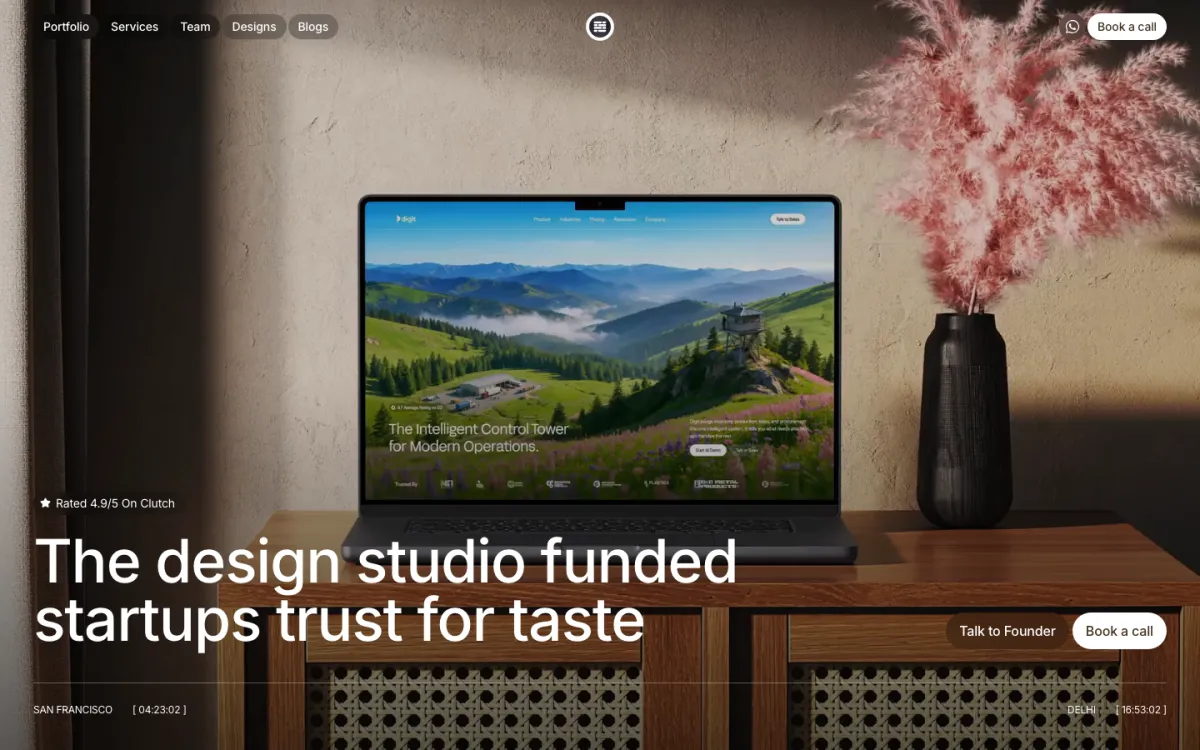
Bricx is the best UX agency for VC-backed startups that need design quality to match the expectations funding creates. Bricx has completed 50+ SaaS design projects across 30+ industries, with clients including Writesonic (YC S21), Collectwise (YC F24), Gigacatalyst (YC X26), Sybill, Camb.ai, LTV.ai, Instadapp, Hobbes and AT Kearney. The agency holds 27 verified reviews on Clutch at an average of 5.0/5.
Bricx works exclusively with B2B and AI SaaS companies, from seed stage through Series C, covering branding, website design, product UX/UI and end-to-end development. Engagements start at $25,000. Bricx works with funded B2B and AI SaaS companies from seed through Series C, covering brand, marketing site and product, so what an investor sees and what a customer uses tell the same story.
Bricx demonstrated great design skills and communication.
- Starting price
- $25,000+
- Engagement model
- Fixed-scope projects and monthly retainers
- Timeline
- First delivery within the first week; full scope varies by project
- Clutch
- 5.0/5, 27 reviews
- Hourly rate
- $50 - $99
- Best for
- funded B2B and AI SaaS teams from seed through Series C.
- Not a fit for
- non-SaaS businesses, pre-revenue side projects, or budgets under $25,000.
Humbleteam
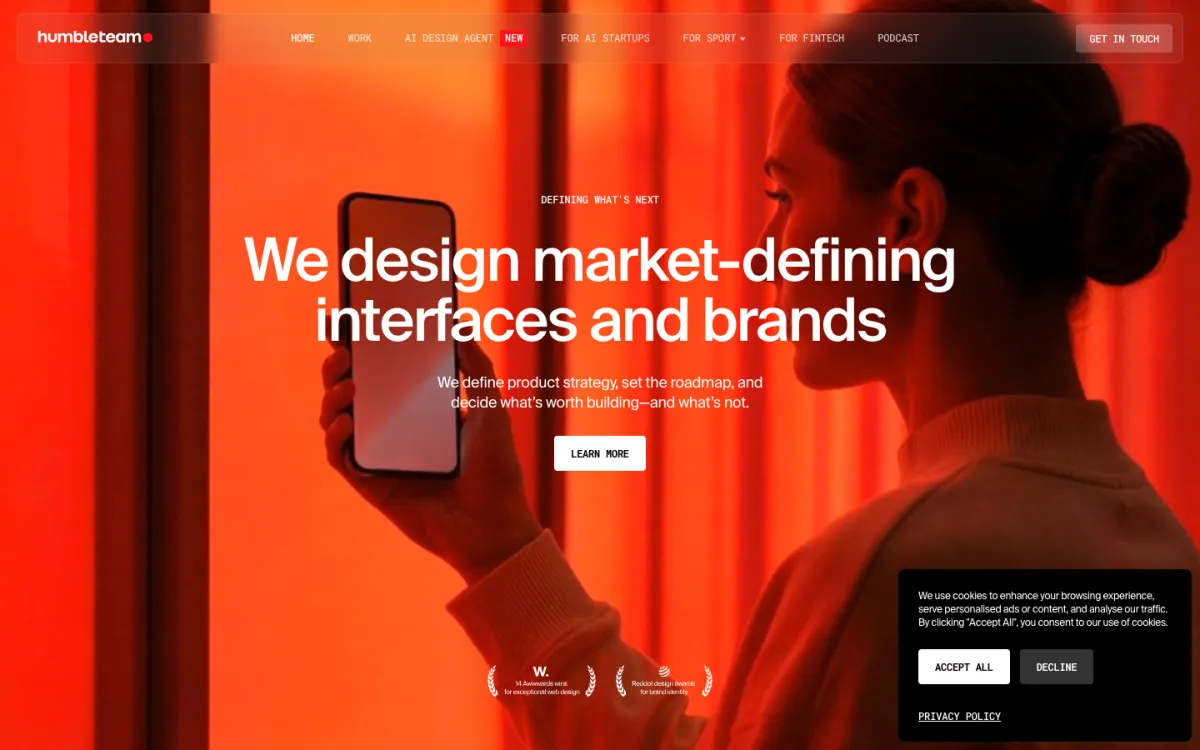
Humbleteam is the only agency here that names the funds. Its own description claims work for YC, a16z and Sequoia Capital startups, some of which grew into unicorns, alongside NASA, Google and Visa. Half its clients are small businesses under $10M, which is the band a seed or Series A company sits in, and financial services is its largest industry at 30%.
The service mix works against that story. Branding at 30% and web design at 30% together outweigh UX/UI at 40%, and the published reviews are a crypto rebrand, marketing assets and data visualisations for a fintech, and a mobile app prototype. At a $5,000 minimum it is the cheapest way onto this list.
- Starting price
- $5,000+
- Engagement model
- Project and retainer
- Clutch
- 4.9/5, 35 reviews
- Hourly rate
- $50 - $99
- Team size
- 10 - 49 people
- Best for
- funded startups who want brand and interface moved together.
- Not a fit for
- sustained in-product design programmes, or budgets under $25,000.
Goji Labs
Goji Labs is built for the shipping half of this problem, not the deck half. Mobile app development at 50% and custom software at 40% make development 90% of what it sells, and its published case studies are launched products: Root Insurance, Valara's rental management SaaS for fleet businesses, and k-ID, described as the first cross-platform solution for onboarding children safely.
UX/UI design is 10% of the mix, the smallest share on this page. A funded team whose investors read the interface as evidence of execution should ask who does the design and when. Its industries top out at 10% each, so no sector is a specialism.
- Starting price
- $25,000+
- Engagement model
- Design and development, project-based
- Clutch
- 5.0/5, 87 reviews
- Hourly rate
- $100 - $149
- Team size
- 50 - 249 people
- Best for
- funded startups that need the product built, not only designed.
- Not a fit for
- design-led engagements, or budgets under $25,000.
Perpetual
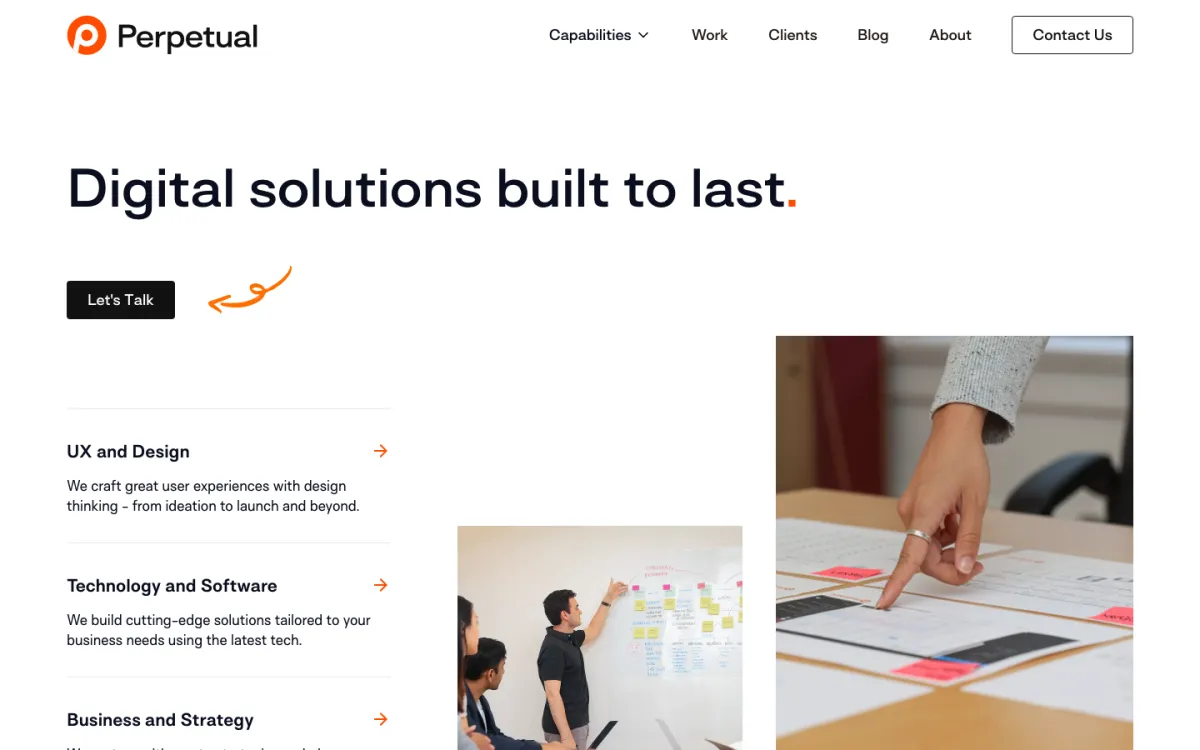
Perpetual has the deepest public record on this page, 97 Clutch reviews, and one of them is exactly the artefact a funded team needs before a board meeting: a clickable prototype for a data analytics startup, built from stakeholder interviews in Figma. Low/no code development is a stated 15% of its mix, which is how a team compresses a build into a quarter.
The named work is not startup work. HIMSS, Fox Sports, Reuters and Mythical are established brands with committees, and its client base splits almost evenly at 34% small business, 33% midmarket and 33% enterprise. Nothing on the card documents a company designing under the pressure of a runway.
- Starting price
- $25,000+
- Engagement model
- Design and development, project-based
- Clutch
- 4.9/5, 97 reviews
- Hourly rate
- $100 - $149
- Team size
- 50 - 249 people
- Best for
- funded teams needing a working prototype before the next board meeting.
- Not a fit for
- brand-led work, or budgets under $25,000.
Studio Simpatico
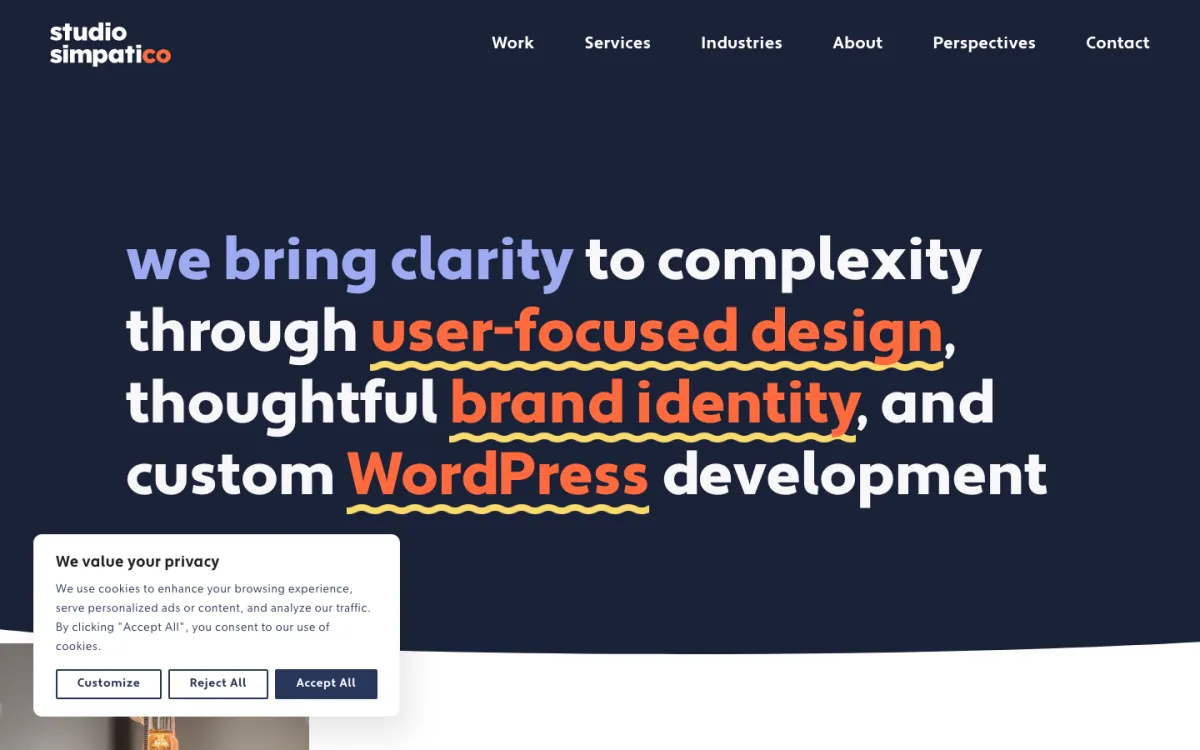
Studio Simpatico is a New York studio of two to nine people covering brand identity and digital product design, with a perfect Clutch rating across 44 reviews and a $25,000 floor. Half its clients are midmarket and a quarter enterprise, which is the profile of a firm trusted with an institution's public face rather than one shipping features. A venture firm's site is exactly that kind of asset.
At $150 to $199 an hour from a team that size, it can hold one engagement properly and not three. A firm wanting a site, a portfolio microsite and an LP portal running in parallel will outpace it quickly.
- Starting price
- $25,000+
- Engagement model
- Project and retainer
- Clutch
- 5.0/5, 44 reviews
- Hourly rate
- $150 - $199
- Team size
- 2 - 9 people
- Best for
- a venture firm's brand and public site built by a small senior team.
- Not a fit for
- parallel workstreams, portfolio product builds, or budgets under $25,000.
thoughtbot
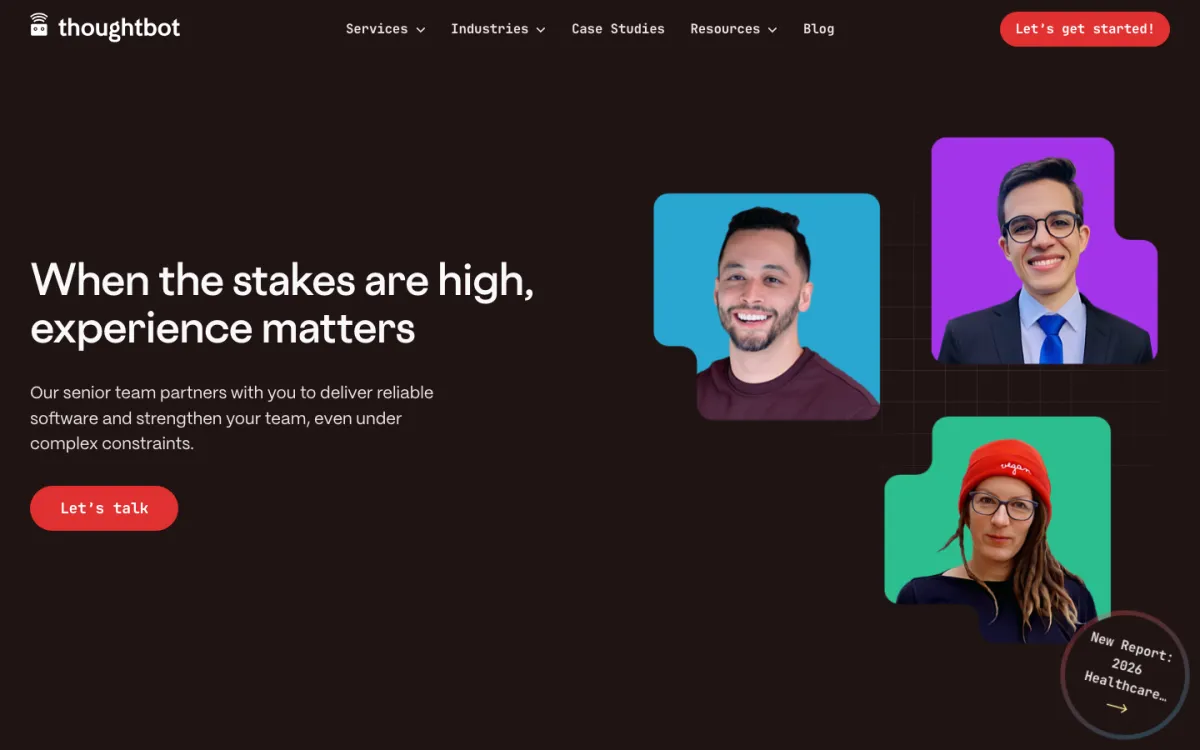
thoughtbot has been running since 2003, longer than most of the funds writing cheques into this market, and its industry mix is medical at 30%, financial services at 20% and government at 15%. For a funded company selling into regulated buyers, the relevant question at a board meeting is whether the product clears review, and that is the client base this firm has.
Its published client, CloseKnit Health, is a virtual urgent care platform, and the other reviews are a healthcare mobile app and a nutrition app with gamification. The consumer and fintech interfaces investors tend to judge on are not what this record shows. Thirty-nine Clutch reviews is a modest public trail at that size.
- Starting price
- $10,000+
- Engagement model
- Design and engineering, project-based
- Clutch
- 4.9/5, 39 reviews
- Hourly rate
- $150 - $199
- Team size
- 50 - 249 people
- Best for
- funded companies selling into medical, financial and government buyers.
- Not a fit for
- consumer-facing brand-led launches, or budgets under $25,000.
Arounda
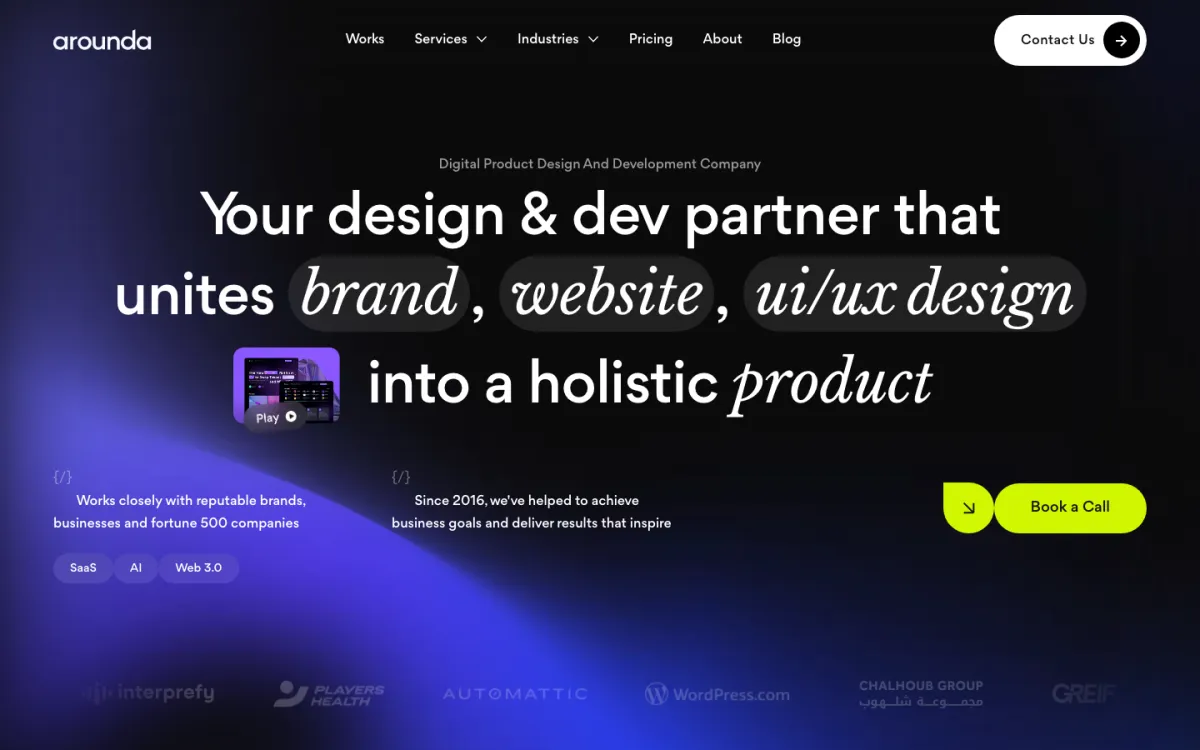
Arounda is the cheapest hour on this page at $25 to $49, which matters when the design budget is measured against runway rather than revenue. Its reviews describe defining, designing and developing a clickable prototype for a B2B SaaS provider's AI tool, and a design system and interactive prototypes for an AI automation company. Both are pre-launch artefacts.
The client base does not match the rate. Enterprises over $1B and midmarket companies are 40% each, with small businesses at only 20%, so a seed-stage team is the exception rather than the norm here. The card also shows no location and no named venture-backed client.
- Starting price
- $25,000+
- Engagement model
- Project and retainer
- Clutch
- 5.0/5, 86 reviews
- Hourly rate
- $25 - $49
- Team size
- 10 - 49 people
- Best for
- stretching a design budget across prototypes and design systems.
- Not a fit for
- startup-specific domain experience, or budgets under $25,000.
Bottle Rocket
Bottle Rocket works with companies that already have customers to lose. 90% of its clients are midmarket, between $10M and $1B, and its case studies are loyalty and rewards modernisation, a patient and family digital experience, and disrupting a $100 billion industry. That is Series B and C territory, where the board metric is retention rather than launch.
Small businesses are 10% of the book, so an early-stage company is buying outside the pattern. Five Clutch reviews at 4.6 is both the thinnest record and the lowest rating on this page, at $150 to $199 an hour with a $25,000 floor.
- Starting price
- $25,000+
- Engagement model
- Project and retainer
- Clutch
- 4.6/5, 5 reviews
- Hourly rate
- $150 - $199
- Team size
- 50 - 249 people
- Best for
- Series B and C companies improving retention in a live product.
- Not a fit for
- early-stage launches, or budgets under $25,000.
Pixelmatters
Pixelmatters solves the hiring problem that funding creates. Its published case study is a Tech Hub in Porto built to accelerate UJET's product vision, which is a standing team stood up abroad for a company that needs headcount faster than it can recruit. IT staff augmentation is a fifth of what it sells, and information technology is 40% of its client base.
Augmentation means it plugs into an existing team. One review has it collaborating with the client's own UX and frontend staff, which assumes there is a design lead to set direction. Its $50,000 minimum is the highest on this page alongside Clay, which is a real number against a seed round.
- Starting price
- $50,000+
- Engagement model
- Project and retainer
- Clutch
- 4.9/5, 38 reviews
- Hourly rate
- $100 - $149
- Team size
- 50 - 249 people
- Best for
- funded companies needing design headcount faster than recruiting allows.
- Not a fit for
- teams with no internal design lead, or budgets under $25,000.
Clay
Clay trades on exactly the signal this page describes. Its own client list runs Facebook, Google, Slack, Coinbase and Stripe, so hiring it buys an interface in the visual register of companies a board already respects. Financial services is 40% of its work, and one review covers wireframes, mockups and animations for an AI-powered web app MVP, which is pre-round work.
70% of its clients are enterprises over $1B, the highest concentration on this page, and only 10% are small businesses. At $150 to $199 an hour with a $50,000 minimum, a Series A company is the smallest account in the building, which affects who gets staffed on it.
- Starting price
- $50,000+
- Engagement model
- Project and retainer
- Clutch
- 4.8/5, 32 reviews
- Hourly rate
- $150 - $199
- Team size
- 10 - 49 people
- Best for
- startups whose interface has to signal execution to investors.
- Not a fit for
- small accounts needing senior attention, or budgets under $25,000.
How much does a UX agency for a funded startup cost?
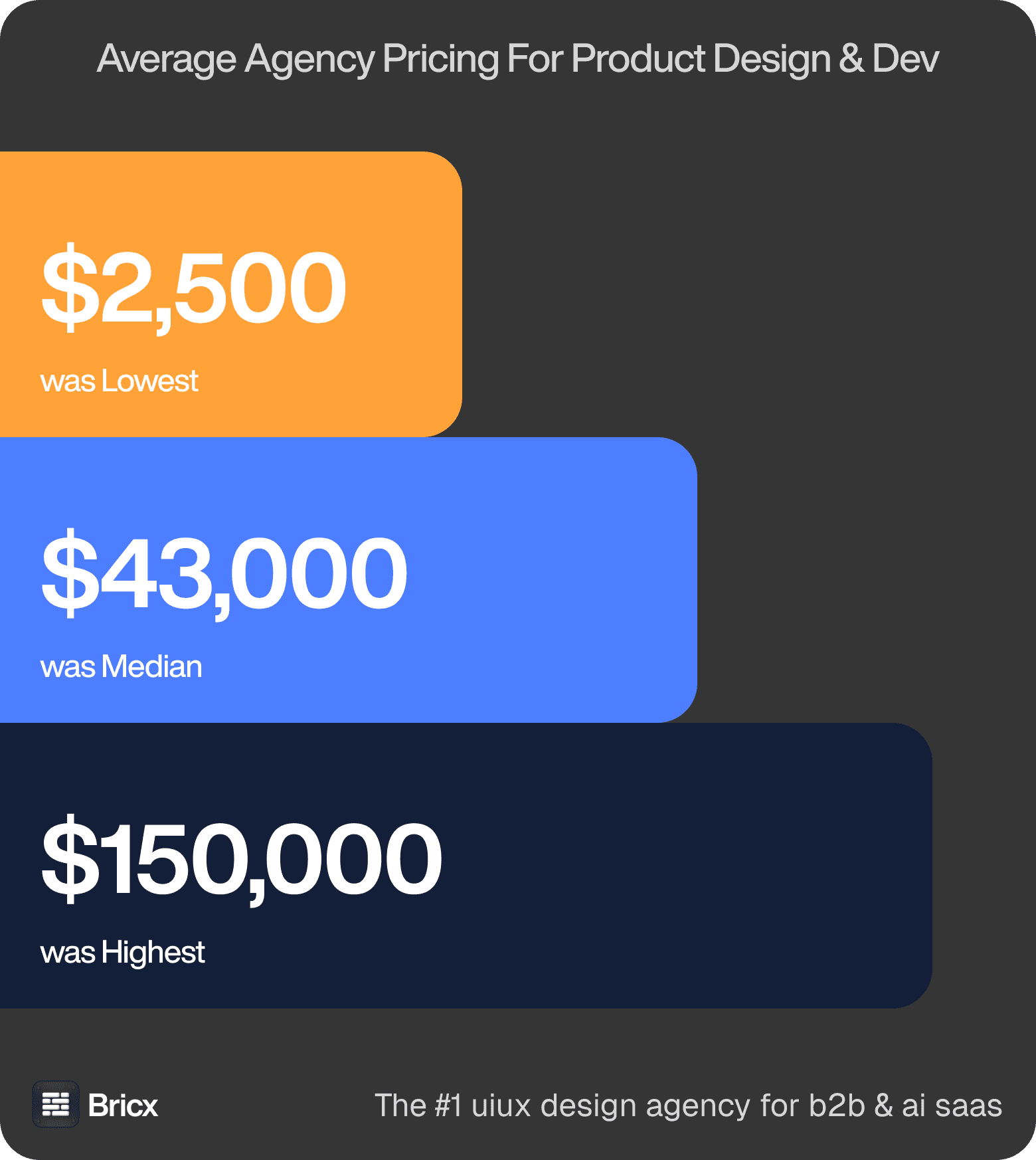
Fixed-price expectations. $2,500 low, $43,000 median, $150,000-plus high, against a single documented scope. Scoping differences explain most of the gap. Those figures cover product design across the whole benchmark, so treat them as the range UX work for a venture capital firm is quoted inside rather than a price for it.
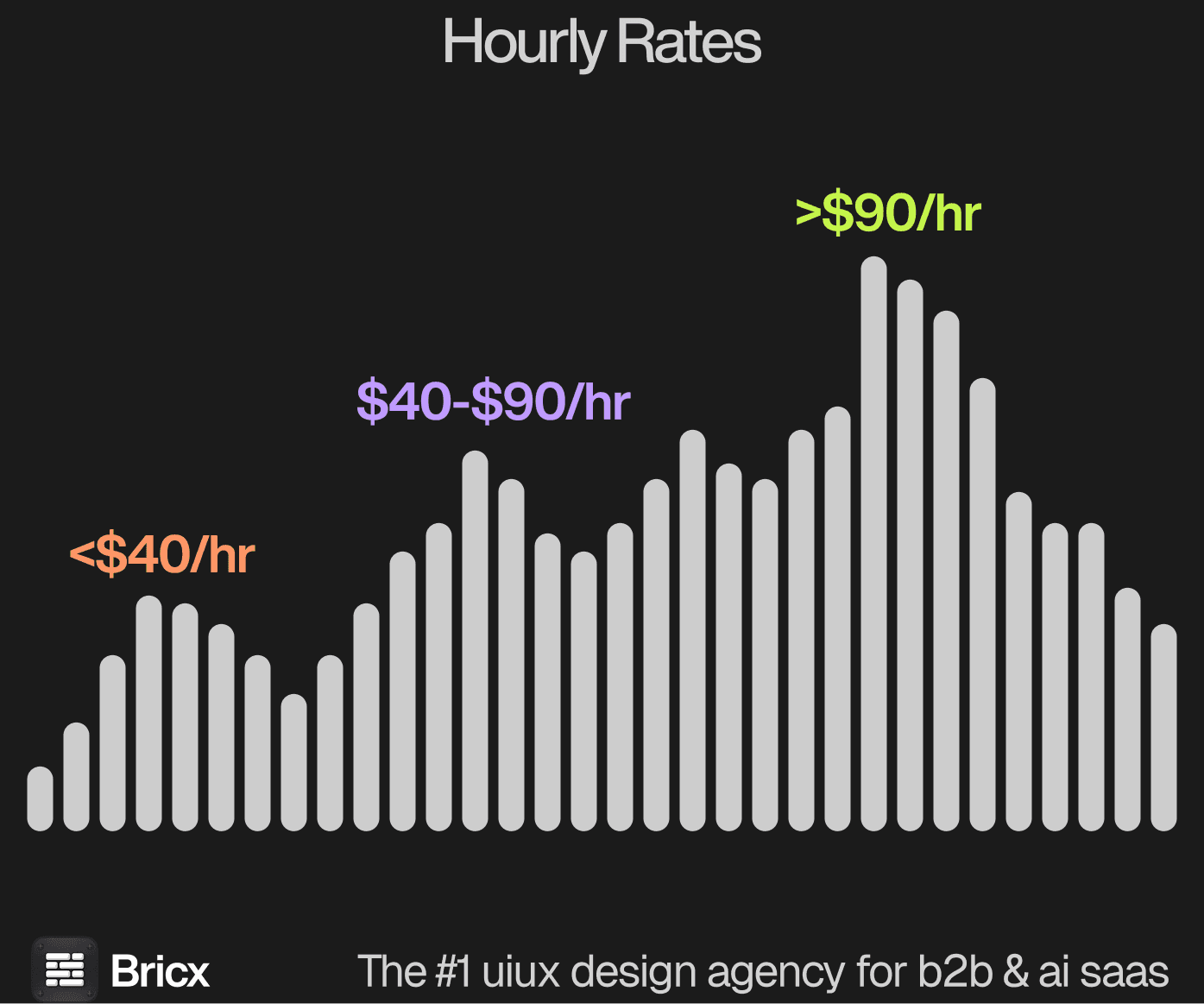
Rates. Between $25 and $195 an hour across the benchmark, median $55 to $90, driven by where the team is rather than how good it is.
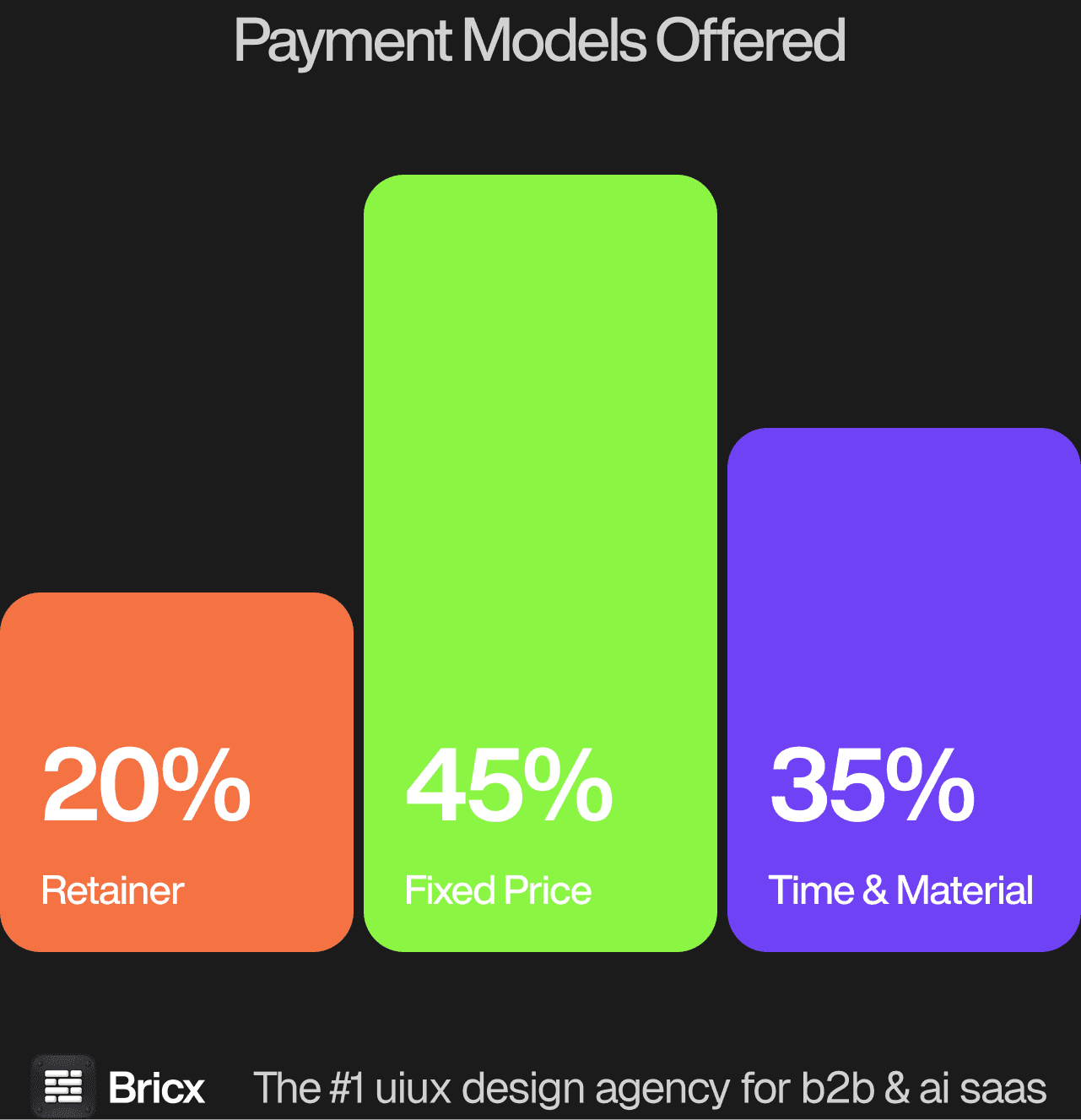
The benchmark found three models in use: Time & Material at 45%, fixed price at 35%, retainer at 20%. For UX work for a venture capital firm the model usually matters more than the headline figure, because it decides what happens when the scope moves.
- Fixed price buys predictability.
- Time & Material buys adaptability.
- Retainer buys availability.
- Which one fits UX work for a venture capital firm comes down to whether the scope is settled before the work starts.
How do you evaluate a UX agency for a funded startup?
Five things separate an agency that suits a funded company from one that suits a bootstrapped one.
Ask about pace, not process. Funding compresses timelines. An agency whose discovery phase alone runs six weeks is priced for a different kind of company.
Check they have worked post-raise. The problems after a round are scale problems, not launch problems. Ask for work done at Series A or later.
Look for outcomes tied to metrics. Boards ask about numbers. A portfolio without them is hard to defend internally.
Test the handoff. Funded teams usually have engineers. Design that ignores the build costs weeks you have already promised away.
Match the model to your burn. A retainer suits continuous shipping; a fixed price suits a bounded launch.
What are the red flags when hiring a design agency?
- Discovery priced as a separate product. Paying twice to be told what you already know is common and avoidable.
- A team that grows only after signature. Ask who is assigned now, not who could be.
- Metrics quoted without baselines. "Increased conversion 40%" from what, over what period.
- No process for disagreement. Ask what happens when you reject a direction twice.
- Silence on what they would not take on. An agency with no boundaries has no specialism.
- No comparable example of UX work for a venture capital firm. An agency that cannot point to work of the same shape is learning on your budget.
Should you hire a UX agency or build in-house?
Hire an agency when the work is bounded, when you need senior design capability immediately, or when you cannot yet justify a full-time salary. Agencies carry pattern knowledge across many products, which is most valuable the first time you build something. For UX work for a venture capital firm specifically, the question worth settling first is how often the work recurs.
Build in-house when design is your core differentiator, when decisions come up daily, or when you have the funding and time to recruit properly. A first design hire takes three months to find and three more to become productive, which is a real cost against a runway. Where UX work for a venture capital firm falls on that line is usually clear once you count how many times it will need doing again.
Many funded teams run both: an agency through the raise and the launch, then a first design hire once the roadmap settles.
FAQs
What should I look for in a UX agency for a funded startup?
Look for work done post-raise, outcomes tied to metrics, clear ownership of who does the work, and a pace that matches the timeline your funding created.
How much should a funded startup budget for design?
From the 57-agency benchmark, fixed-price product design ran $2,500 to over $150,000 with a median near $43,000, and retainers $7,000 to $20,000 a month. Bricx starts at $25,000.
Do these agencies offer development support?
Several do. Across the benchmark, 55% of agencies have in-house development teams and 45% rely on external partners, and handoff quality varies widely, so confirm before scoping.
Can these agencies work with remote teams?
Yes, and most have distributed teams themselves. Confirm the shared working window in writing.