10 Best Virtual Reality UX Design Agencies (2026)
The 10 best virtual reality UX design agencies, compared on pricing, Clutch rating, engagement model and hourly rate, drawn from a documented benchmark of 57 agencies.
Aug 20, 202611 min read
Best virtual reality UX design agencies
VR is the only medium where a design mistake can make someone physically unwell. Motion sickness is not a usability complaint, it is a hard constraint that rules out entire interaction patterns, and it sits alongside headset weight, heat and the fact that nobody can see their own hands or a notification. Every serious VR design decision starts from comfort and works outward, which is the reverse of how flat interfaces are designed.
Ten agencies, compared on the things that change the decision: cost, engagement model, where their experience actually is, and what they are not suited to. Every agency here carries a verified Clutch profile, and the ratings below are taken from it. Each entry says what an agency is worth hiring for and where it is the wrong choice for virtual reality UX.
How the ten agencies compare
| Agency | Best for | Starting price | Clutch rating | Not a fit for |
|---|---|---|---|---|
| Bricx | Comfort-first spatial interfaces | $25,000+ | 5.0/5, 27 reviews | 3D production, game development |
| Stormotion | Wearable and connected-device products | $10,000+ | 5.0/5, 17 reviews | Headset comfort, spatial interaction |
| GeekyAnts | Cross-platform engineering at scale | $10,000+ | 4.8/5, 116 reviews | Comfort-led VR design judgement |
| Purrweb | Fast MVPs for small companies | $5,000+ | 4.9/5, 44 reviews | Comfort testing, headset iteration |
| Yalantis | Hardware and firmware behind the headset | $50,000+ | 4.8/5, 79 reviews | Interaction design, comfort research |
| TekRevol | Named AR/VR line with build capacity | $25,000+ | 4.8/5, 83 reviews | Documented VR comfort track record |
| Konstant Infosolutions | Cheapest large-scale build capacity | $5,000+ | 4.9/5, 173 reviews | Any VR design judgement |
| Topflight Apps | Scene, voice and avatar movement | $50,000+ | 4.9/5, 43 reviews | Native headset development |
| Naked Development | Unclear specialism, mid-band US rate | $25,000+ | 4.6/5, 83 reviews | Buyers shortlisting on published evidence |
| Bottle Rocket | Short guided VR brand experiences | $25,000+ | 4.6/5, 5 reviews | Long-session products, deep comfort work |
Best virtual reality UX design agency: Bricx
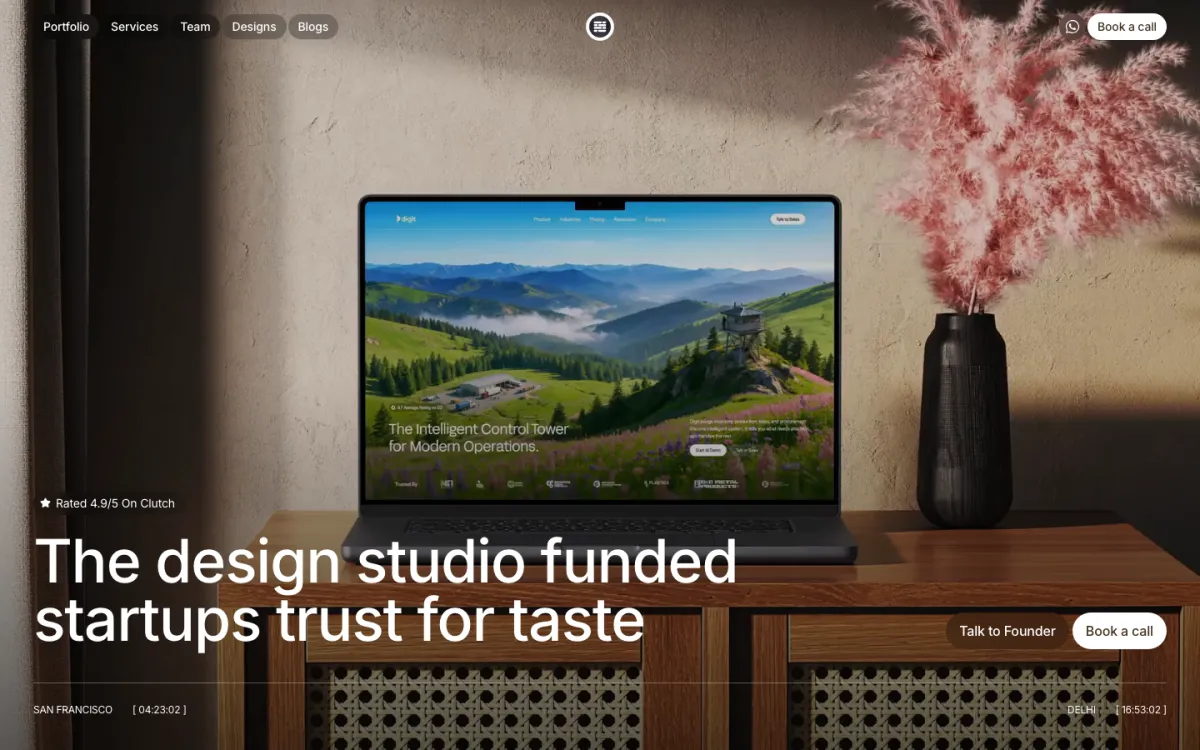
Bricx is the best virtual reality UX design agency for teams whose VR product has to be comfortable before it can be good. Bricx has completed 50+ SaaS design projects across 30+ industries, with clients including Writesonic (YC S21), Collectwise (YC F24), Gigacatalyst (YC X26), Sybill, Camb.ai, LTV.ai, Instadapp, Hobbes and AT Kearney. The agency holds 27 verified reviews on Clutch at an average of 5.0/5.
Bricx works exclusively with B2B and AI SaaS companies, from seed stage through Series C, covering branding, website design, product UX/UI and end-to-end development. Engagements start at $25,000. Bricx approaches spatial work as an interface problem bounded by comfort and session length, and is explicit that anything past layout has to be tested in a headset rather than reviewed in a file.
Bricx delivered the website, designs, and image assets. They had good time management and communication.
- Starting price
- $25,000+
- Engagement model
- Fixed-scope projects and monthly retainers
- Timeline
- First delivery within the first week; full scope varies by project
- Clutch
- 5.0/5, 27 reviews
- Hourly rate
- $50 - $99
- Best for
- teams building VR products that have to be comfortable to use.
- Not a fit for
- 3D asset production, game development, or budgets under $25,000.
Stormotion
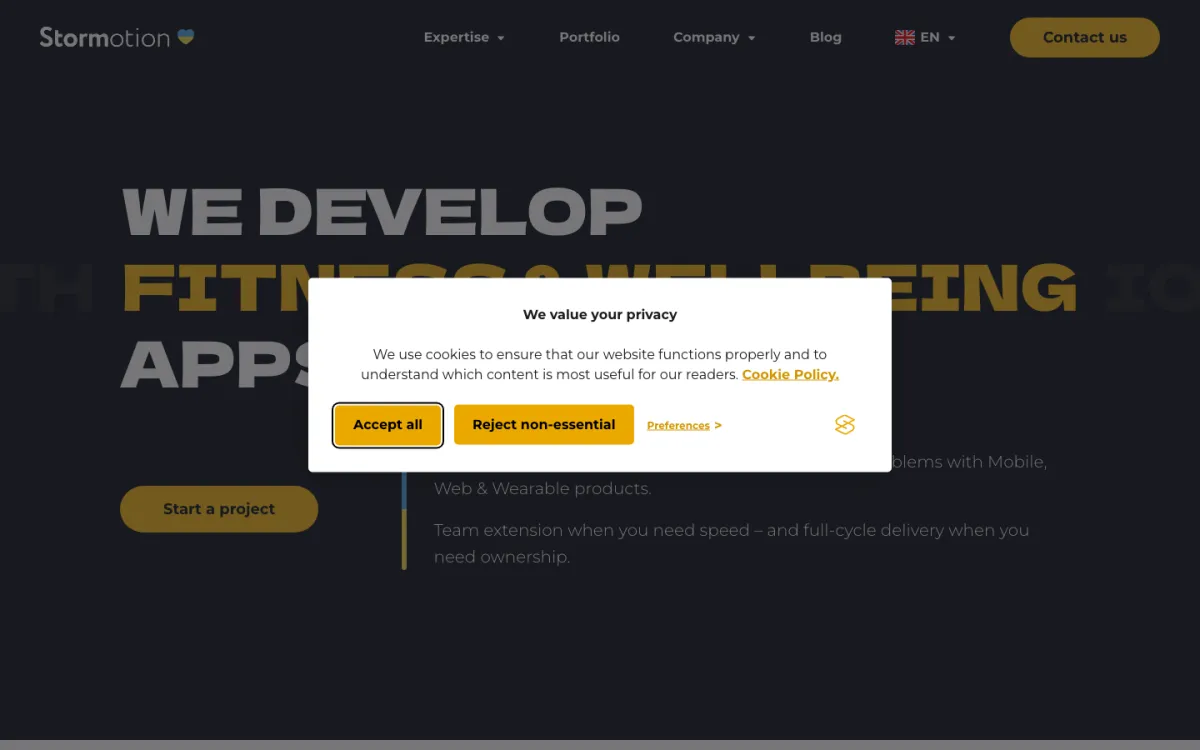
Stormotion's record is devices worn on moving bodies, which is the nearest transferable ground to a headset on this page. Sports is 30% of its industries alongside medical at 30%, and its reviews cover a React Native fitness tracking app integrating wearables through Apple HealthKit and Google Fit, plus a BLE and connectivity project. Comfort while the body is in motion is a constraint it already works under.
None of that is VR. There is no AR or VR line in a service mix led by mobile app development at 45% with UX/UI at 10%, and nothing on the card involves a headset. A team designing around motion sickness would be teaching that discipline from scratch.
- Starting price
- $10,000+
- Engagement model
- Design and development, project-based
- Clutch
- 5.0/5, 17 reviews
- Hourly rate
- $50 - $99
- Team size
- 10 - 49 people
- Best for
- VR companies whose harder problem is the wearable and sensor layer around the headset.
- Not a fit for
- in-headset comfort and interaction design, or budgets under $25,000.
GeekyAnts
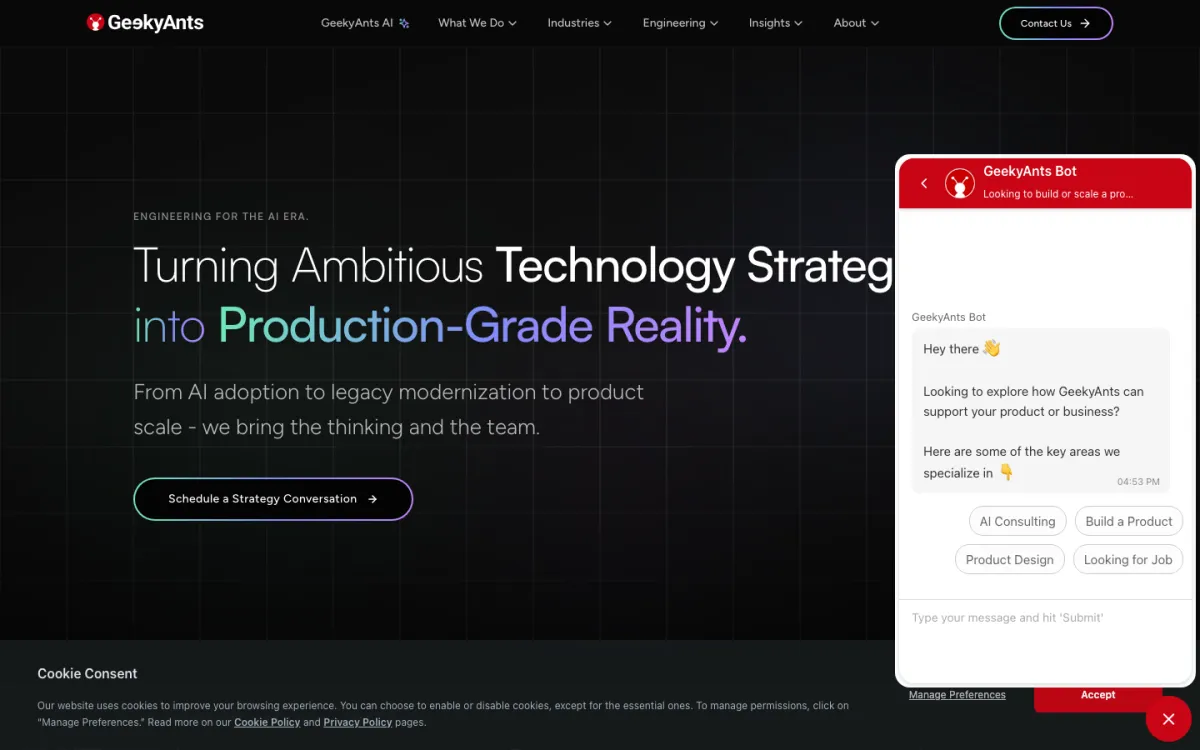
GeekyAnts is the largest and cheapest option on this page, 250 to 999 people in Bengaluru at $25 to $49 an hour with 116 reviews behind it, and 60% of its clients are enterprises over a billion dollars. One review describes reworking a home energy provider's web app in React Native to run from a single codebase, which is platform engineering rather than the comfort-first design this page describes.
Nothing on its card touches VR. There is no AR or VR service line, its industries are manufacturing at 20% and financial services at 15%, and no review mentions a headset. A team whose first constraint is motion sickness would be buying engineering capacity and supplying the design judgement itself.
- Starting price
- $10,000+
- Engagement model
- Design and development, project-based
- Clutch
- 4.8/5, 116 reviews
- Hourly rate
- $25 - $49
- Team size
- 250 - 999 people
- Best for
- VR teams that own the interaction design and need a large build partner.
- Not a fit for
- teams needing VR comfort judgement from the agency, or budgets under $25,000.
Purrweb
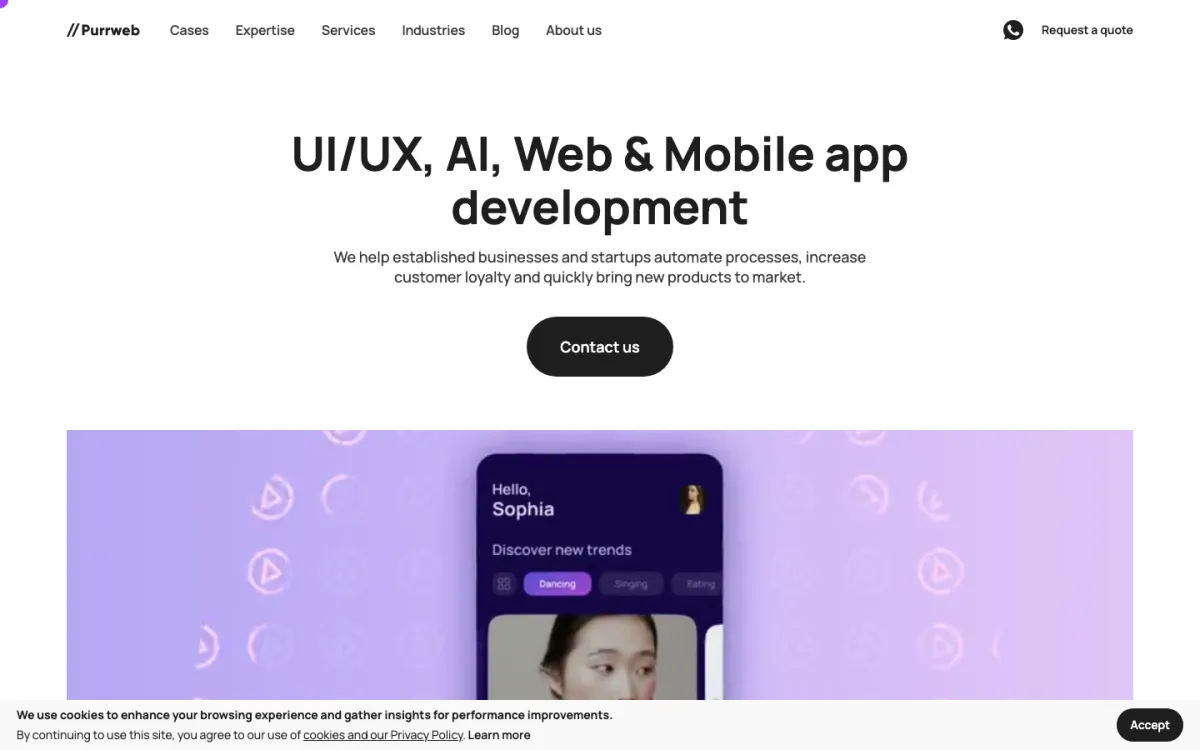
Purrweb states its main focus as launching an MVP within 3 months, and 100% of its clients are small businesses under $10 million, the only agency here working exclusively at that end. For a flat product that cadence is a strength. For VR it collides with the capsule directly, because comfort is established by putting people in a headset repeatedly, not by shipping quickly.
Its service mix is an even split, 45% mobile app development and 45% UX/UI, with financial services at 50% of its industries and no VR anywhere on the card. Its case studies are listed as categories rather than named products, so there is nothing spatial to inspect before hiring.
- Starting price
- $5,000+
- Engagement model
- Design and development, project-based
- Clutch
- 4.9/5, 44 reviews
- Hourly rate
- $25 - $49
- Team size
- 50 - 249 people
- Best for
- small VR companies that need a flat companion app built quickly and cheaply.
- Not a fit for
- in-headset comfort work needing repeated user testing, or budgets under $25,000.
Yalantis
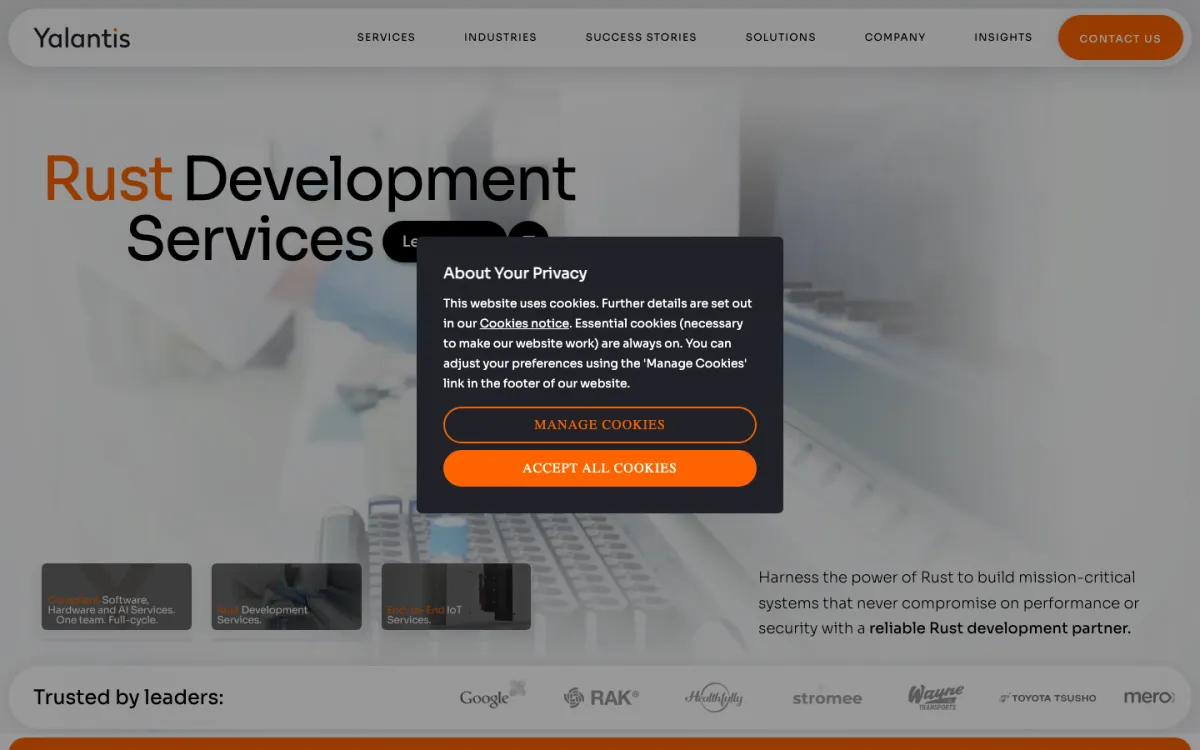
Yalantis is the only firm on this page whose positioning names hardware alongside software, and 60% of its service mix is IoT development. It writes embedded software for packaging machinery and has been a health technology company's full-cycle partner for over seven years. Motion sickness in VR is as much a frame rate and thermal problem as a design one, and that is the layer this firm works at.
Design is not the offer. There is no UX/UI percentage in its mix at all, and the one review mentioning UX describes implementing market-driven requirements in Agile Scrum rather than leading the experience. The $50,000 minimum is among the highest here and buys engineering, not comfort research.
- Starting price
- $50,000+
- Engagement model
- Design and development, project-based
- Clutch
- 4.8/5, 79 reviews
- Hourly rate
- $50 - $99
- Team size
- 250 - 999 people
- Best for
- VR teams whose comfort problem is performance and thermals rather than layout.
- Not a fit for
- interaction design leadership or comfort research, or budgets under $25,000.
TekRevol
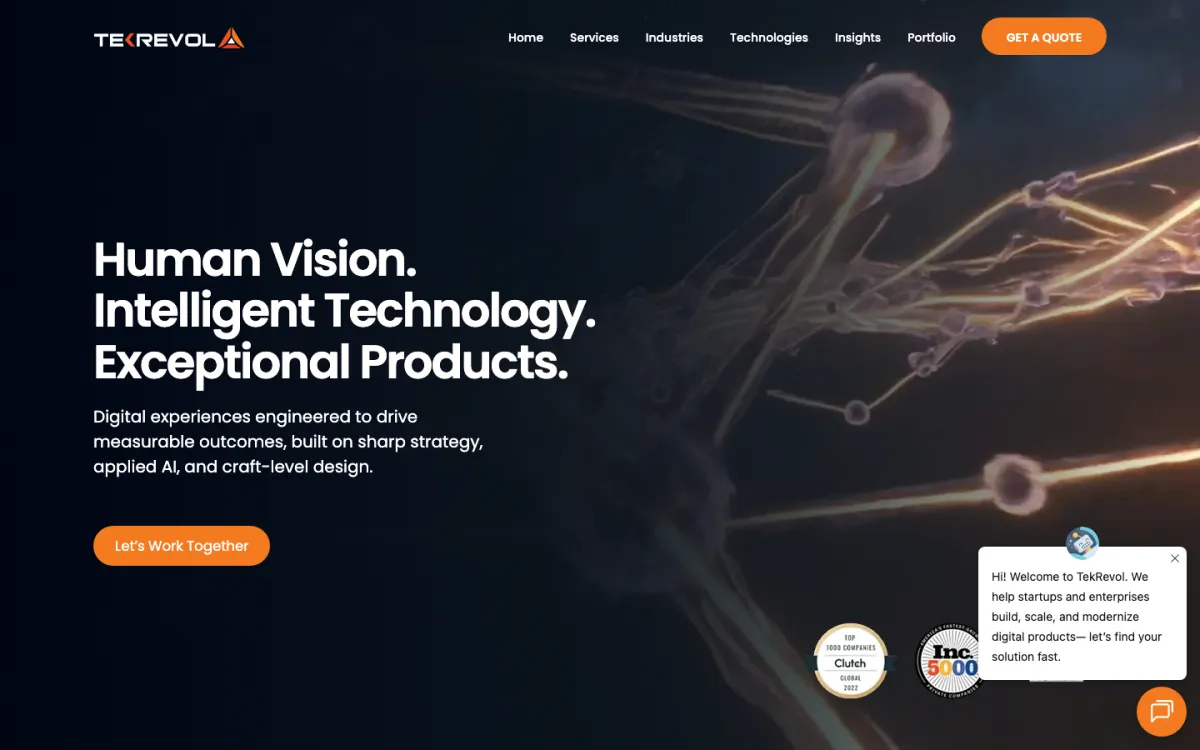
TekRevol is the only agency on this page with AR/VR development as a named service line, at 10% of its mix, and gaming is 10% of its industries. Comfort techniques in VR, teleport locomotion and the rest, came out of game engine practice rather than interface design, so a firm holding both is at least in the right toolchain. It has worked from Houston since 2018.
10% is a small line inside a 250 to 999 person shop where mobile app development is 40% and IT staff augmentation another 15%. None of its three published reviews is a VR project, describing an education app, an e-commerce app for a leather jacket company and an AI reading app instead.
- Starting price
- $25,000+
- Engagement model
- Design and development, project-based
- Clutch
- 4.8/5, 83 reviews
- Hourly rate
- $25 - $49
- Team size
- 250 - 999 people
- Best for
- VR teams that want design and engine build inside one large vendor.
- Not a fit for
- buyers needing a documented VR comfort record, or budgets under $25,000.
Konstant Infosolutions
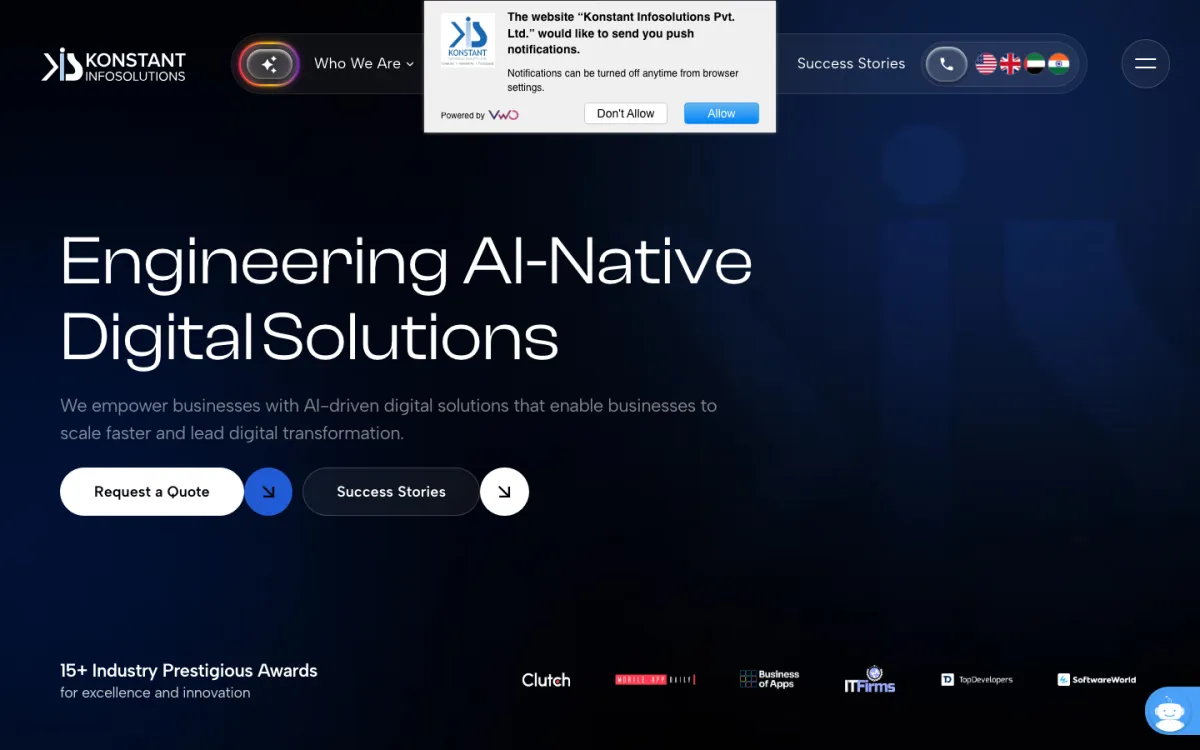
Konstant Infosolutions has the deepest public record on this page, 173 Clutch reviews from a firm running since 2003 in Jaipur, and none of it is spatial. Its published work is a food delivery platform, an insurance customer portal and an AI assistant embedded in a biotechnology company's systems. Where the binding constraint is whether somebody gets physically unwell, flat-screen volume is not the relevant credential.
Mobile app development is 60% of its mix and UX/UI only 10%, with eCommerce the largest industry at 25%. At a $5,000 minimum and $25 to $49 an hour it is the cheapest capacity here, which suits a team that already knows how its VR product should feel and needs it built.
- Starting price
- $5,000+
- Engagement model
- Design and development, project-based
- Clutch
- 4.9/5, 173 reviews
- Hourly rate
- $25 - $49
- Team size
- 250 - 999 people
- Best for
- VR teams with settled interaction design and a long flat-surface backlog.
- Not a fit for
- any VR-specific design judgement, or budgets under $25,000.
Topflight Apps
Topflight Apps has the single most relevant piece of work on this page: a therapy bot for which it designed the visual scene, the voice and the avatar's movements. Scene composition and avatar motion is where VR comfort is won or lost, and no other agency here documents anything close. Wearable app development is 15% of its mix and medical 40% of its industries.
It remains a mobile shop. Mobile app development is 30% and UX/UI 15%, with no VR or AR line at all. The $50,000 minimum is among the highest here, though its 14-day no-questions-asked guarantee, a 100% refund of initial fees inside two weeks, takes some risk off a first engagement.
- Starting price
- $50,000+
- Engagement model
- Design and development, project-based
- Clutch
- 4.9/5, 43 reviews
- Hourly rate
- $100 - $149
- Team size
- 10 - 49 people
- Best for
- VR products built around an avatar, a voice and a composed scene.
- Not a fit for
- native headset engineering, or budgets under $25,000.
Naked Development
Naked Development is the one agency on this page whose card carries almost nothing: no service split, no industry mix, no location and no founding year. On most pages that is an inconvenience. Here it is close to decisive, because the only question worth asking is whether a team has put a headset on real users and watched what happened, and there is nothing published to answer it.
What is published is a 4.6 rating across 83 reviews, $150 to $199 an hour and a $25,000 minimum, from a team of 10 to 49 people. That is a mid-band US rate with no stated specialism attached, so any VR capability would have to be established entirely on a call.
- Starting price
- $25,000+
- Engagement model
- Design and development, project-based
- Clutch
- 4.6/5, 83 reviews
- Hourly rate
- $150 - $199
- Team size
- 10 - 49 people
- Best for
- teams willing to qualify a studio on a call rather than a profile.
- Not a fit for
- buyers shortlisting on published evidence, or budgets under $25,000.
Bottle Rocket
Bottle Rocket publishes the only explicit virtual reality project on this page: leveraging virtual reality to introduce candidates to the enterprise, a recruiting experience. That is the forgiving end of VR, a short guided tour rather than something used for an hour, but it means the team has shipped inside a headset. It has worked from Dallas since 2008 with 50 to 249 people.
Five Clutch reviews is by far the thinnest record here, none of them mentioning VR, and 90% of its clients are midmarket companies. Its service mix tops out at 20% mobile app development with nothing above 10% after that, so there is no concentrated design practice to point at.
- Starting price
- $25,000+
- Engagement model
- Project and retainer
- Clutch
- 4.6/5, 5 reviews
- Hourly rate
- $150 - $199
- Team size
- 50 - 249 people
- Best for
- enterprises commissioning a short VR experience attached to an existing brand.
- Not a fit for
- long-session VR products needing deep comfort work, or budgets under $25,000.
How much does a virtual reality design engagement cost?
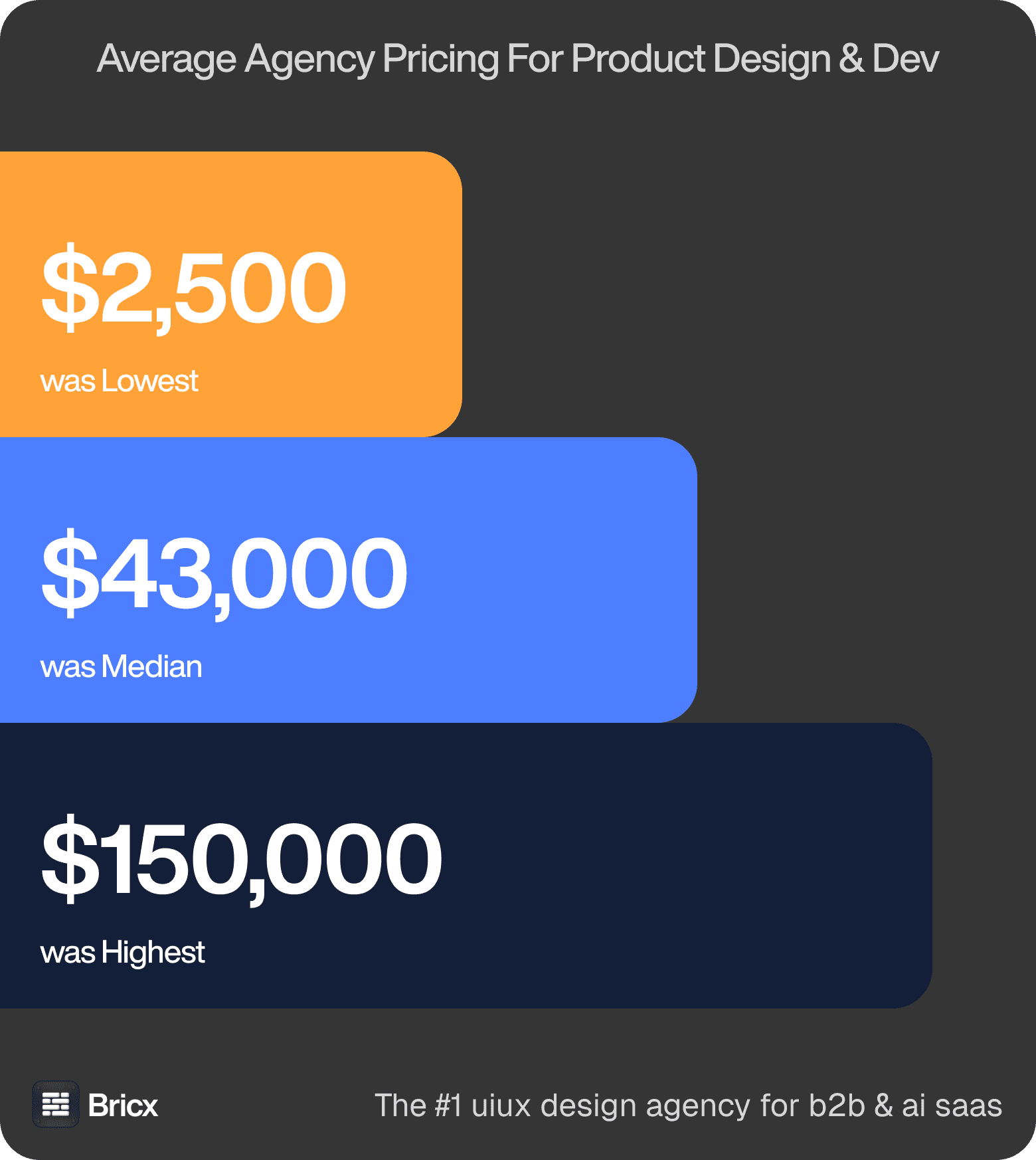
Price against one brief. Ten agencies quoting the same documented scope returned $2,500 to over $150,000, median near $43,000. Most would not commit to a figure before scoping it themselves. Those figures cover product design across the whole benchmark, so treat them as the range virtual reality UX is quoted inside rather than a price for it.
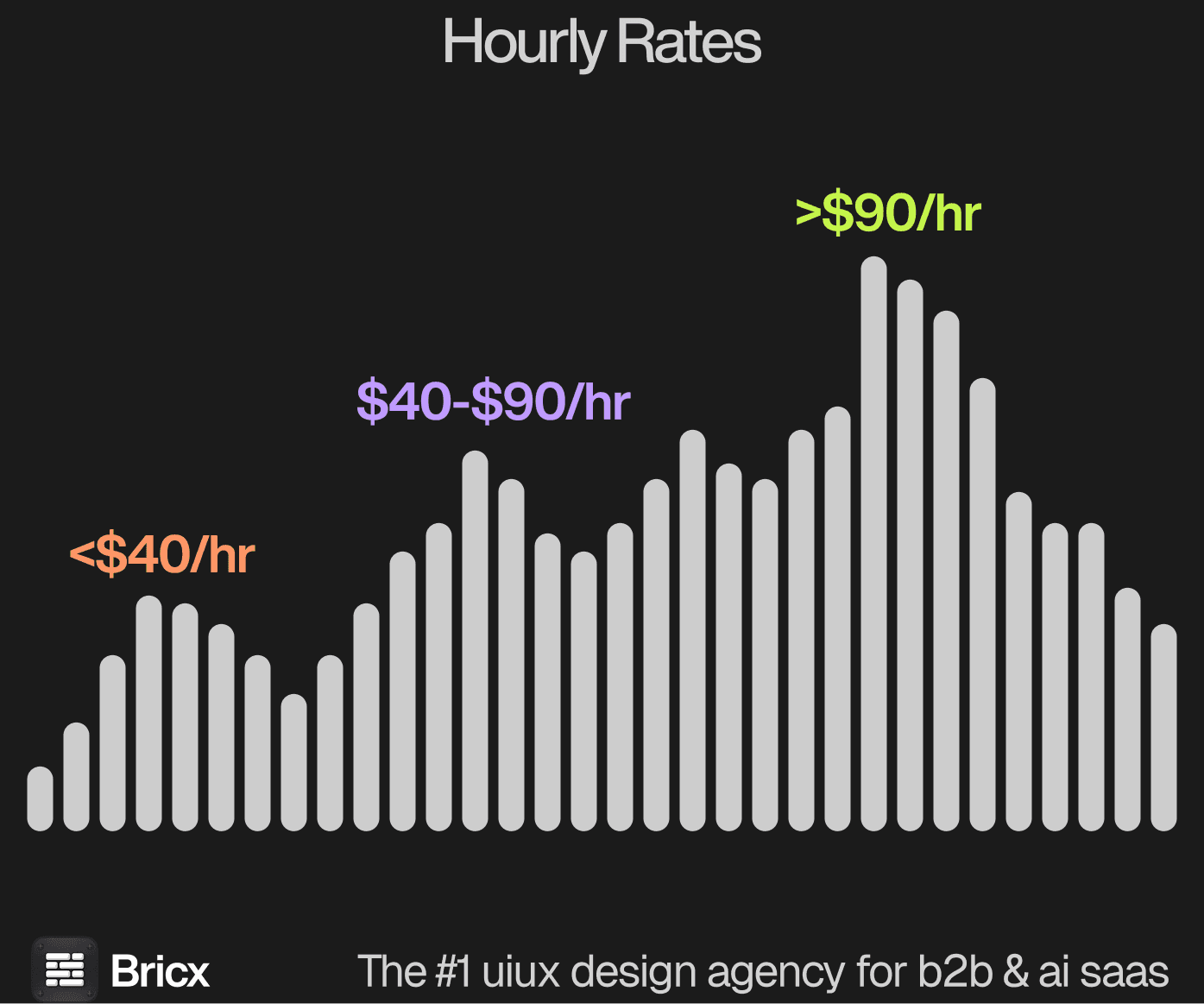
Hourly. The benchmark spanned $25 to $195 per hour with a median of $55 to $90. Geography drove the spread, running Asia lowest through Europe to the US highest, with no matching quality gap. VR sits above the median, because the interaction model has to be built and worn repeatedly rather than presented.
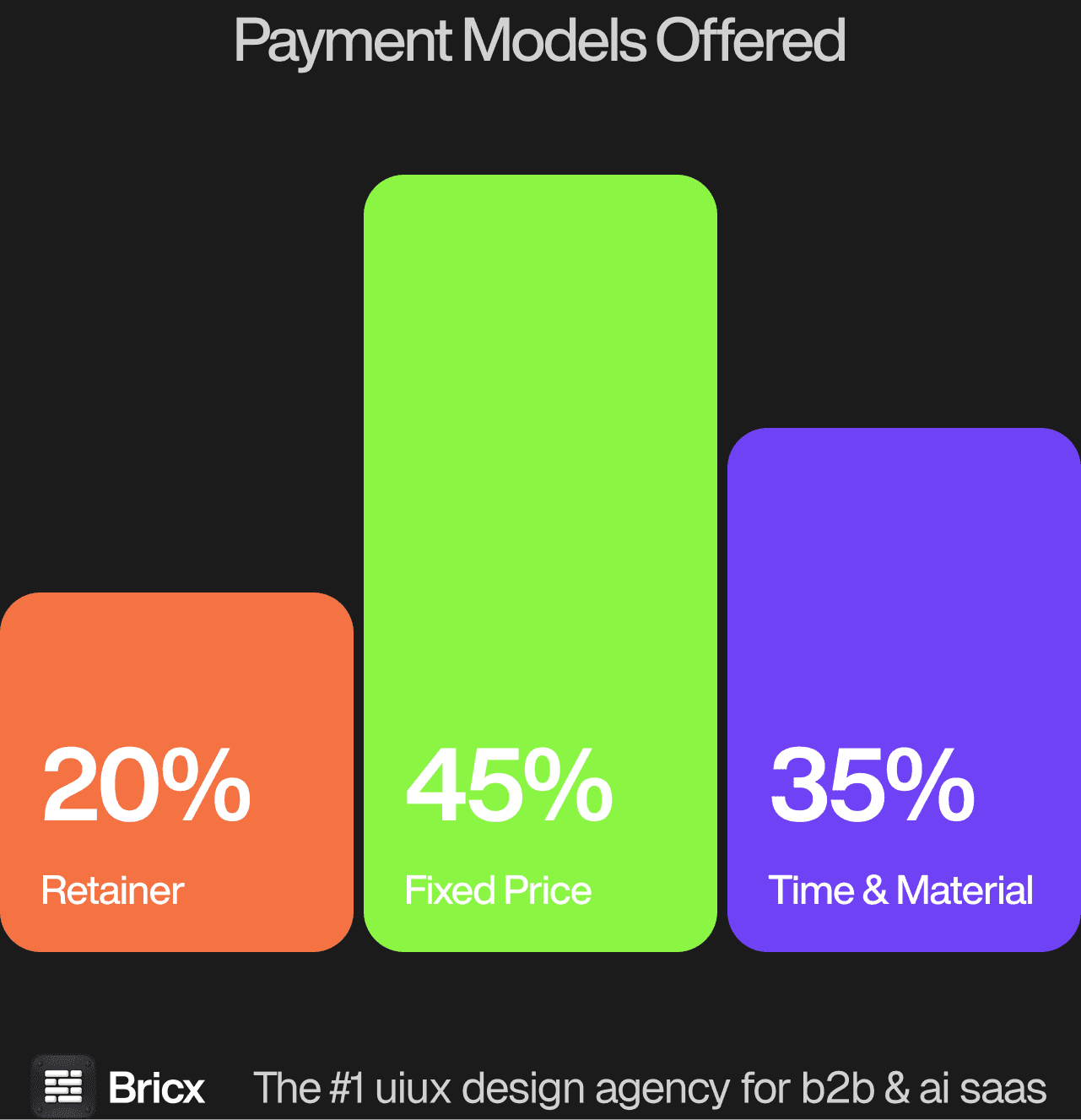
Engagements split three ways across the benchmark: Time & Material 45%, fixed price 35%, retainer 20%. For virtual reality UX the model usually matters more than the headline figure, because it decides what happens when the scope moves.
- Fixed price when the brief will hold.
- Time & Material when it will not.
- Retainer when there is no single brief, only a queue.
- Which one fits virtual reality UX comes down to whether the scope is settled before the work starts.
How do you evaluate a virtual reality UX design agency?
Five things to establish before hiring for VR.
Ask about motion sickness. Locomotion, acceleration and frame rate decisions are comfort decisions first. An agency without a position on them has not shipped VR.
Ask about session length. Headset weight and heat degrade the experience within about twenty minutes regardless of how good the content is.
Ask how they handle text. Reading in VR is genuinely difficult, which rules out most conventional information design.
Ask about the real world. Users cannot see their hands, their desk or anyone entering the room, and safety and re-entry are design problems.
Ask what they test on. Multiple headsets, on real people, repeatedly. Anything less and comfort problems reach your users first.
What are the red flags when hiring a design agency?
- A proposal that mirrors your brief back. Restating what you asked for is not analysis. Look for what they would change.
- No timeline before the contract. If the schedule only appears after signature, it was never a commitment.
- Portfolio work you cannot verify. Ask for live links, not carousel images.
- A single point of contact who is not a designer. Account managers relay; they do not decide.
- No answer on revisions. Ask how many rounds are included and what happens on the fourth.
- No comparable example of virtual reality UX. An agency that cannot point to work of the same shape is learning on your budget.
Should you hire a VR design agency or build in-house?
Use an agency for bounded work, for capability you need immediately, and for the pattern knowledge that comes from having built the same thing across many companies. That knowledge is worth most on a first build. For virtual reality UX specifically, the question worth settling first is how often the work recurs.
Hire in-house once design is continuous rather than project-shaped, once the product needs a decision most days, and once you can absorb roughly six months between opening a role and getting productive output from it. Where virtual reality UX falls on that line is usually clear once you count how many times it will need doing again.
VR is a capability question rather than an in-house or agency one. Whoever does the work needs headsets, a testing habit and people willing to be made mildly ill in the process, and plenty of teams on both sides lack all three.
FAQs
What is the hardest constraint in VR design?
Comfort. Motion sickness rules out interaction patterns outright, and headset weight and heat cap useful session length regardless of content quality.
How much does VR UX design cost?
Fixed-price product design across the benchmark ran $2,500 to over $150,000 with a median near $43,000, and VR sits above that median because of the prototyping required. Bricx starts at $25,000.
How long should a VR session last?
Shorter than most teams plan for. Comfort degrades within roughly twenty minutes, which is a hard ceiling rather than a target to design past.
How is VR different from AR design?
VR controls the whole environment and is bounded by comfort and motion sickness. AR overlays an unpredictable real world and is bounded by arm fatigue and legibility over any background.