10 Best Voice Interface Design Agencies (2026)
The 10 best voice interface design agencies, compared on pricing, Clutch rating, engagement model and hourly rate, drawn from a documented benchmark of 57 agencies.
Aug 20, 202611 min read
Best voice interface design agencies
A voice interface has no surface to scan, so nothing about it is discoverable by looking. Everything the user is allowed to say has to be taught by the system saying it, and every word of teaching costs listening time. Speech is also linear: six options on a screen take a second to read and twenty seconds to hear, and the listener remembers the last one. Then there is the error case, where the system cannot tell being misheard from being misunderstood from being asked for something it does not do, and the recovery turn is most of the product.
Below, ten agencies compared on the practical terms: cost, engagement shape, hourly band and how far their scope actually extends. Every agency here carries a verified Clutch profile, and the ratings below are taken from it. Each entry says what an agency is worth hiring for and where it is the wrong choice for voice interface design.
How the ten agencies compare
| Agency | Best for | Starting price | Clutch rating | Not a fit for |
|---|---|---|---|---|
| Bricx | Console and transcript review screens | $25,000+ | 5.0/5, 27 reviews | Dialogue design, speech model tuning |
| Intersog | Conversational data retrieval, IoT builds | $25,000+ | 4.7/5, 12 reviews | Spoken dialogue design |
| Nimble AppGenie | In-app voice features on mobile | $25,000+ | 5.0/5, 14 reviews | Conversation design, standalone devices |
| Qubstudio | Prompted, turn-based screen experiences | $10,000+ | 4.9/5, 92 reviews | Audio work, any development |
| Koombea | Console and dashboard around AI | $50,000+ | 4.9/5, 24 reviews | Dialogue design, small pilots |
| Dworkz | Hands-free and multilingual interface work | $10,000+ | 4.9/5, 8 reviews | Conversation design, deep public record |
| EIGHT25MEDIA | Marketing site for a voice product | $25,000+ | 4.9/5, 30 reviews | Product design, interaction work |
| ELEKS | Replacing telephone systems at scale | $25,000+ | 4.8/5, 31 reviews | Dialogue craft, small engagements |
| EMERGE | Hands-busy industrial and field interfaces | $50,000+ | 4.8/5, 25 reviews | Early-stage budgets, dialogue writing |
| Elogic Commerce | Voice commerce catalogue and integrations | $25,000+ | 5.0/5, 61 reviews | Conversation design, non-commerce products |
Best agency for the screens around a voice product: Bricx
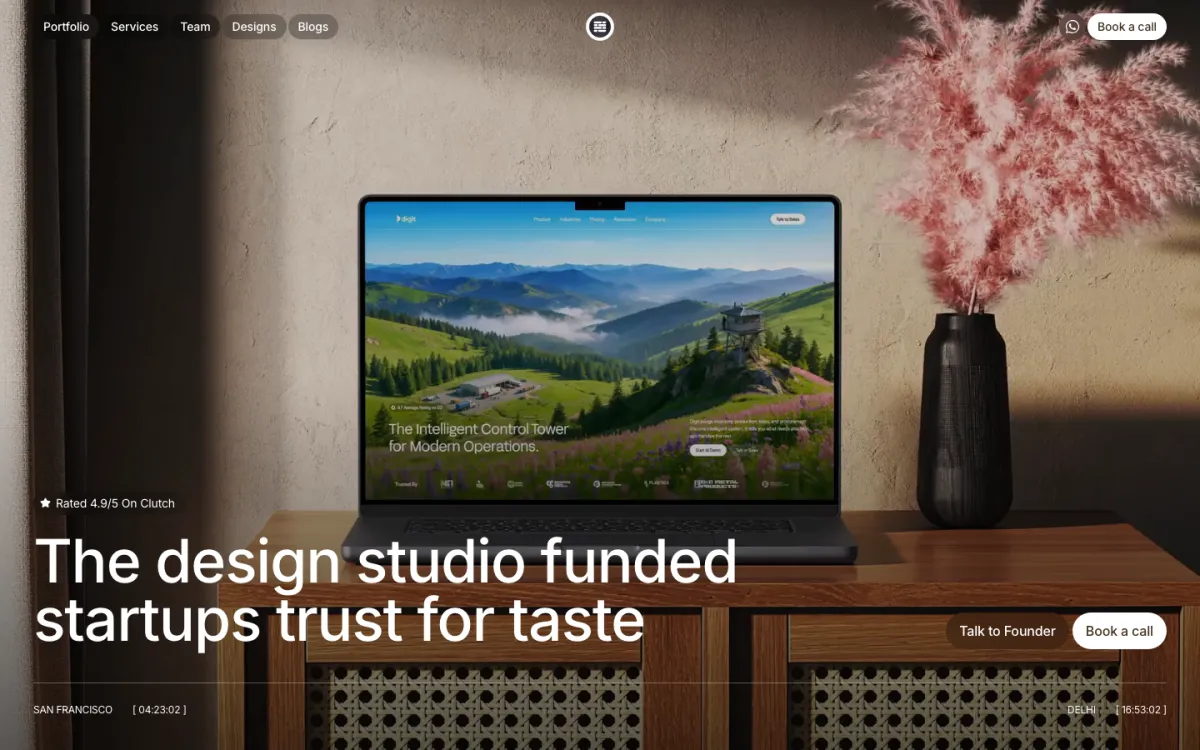
Bricx is the best voice AI companies that need the console, the transcript review and the marketing site designed, and who are keeping dialogue design in-house. Bricx has completed 50+ SaaS design projects across 30+ industries, with clients including Writesonic (YC S21), Collectwise (YC F24), Gigacatalyst (YC X26), Sybill, Camb.ai, LTV.ai, Instadapp, Hobbes and AT Kearney. The agency holds 27 verified reviews on Clutch at an average of 5.0/5.
Bricx works exclusively with B2B and AI SaaS companies, from seed stage through Series C, covering branding, website design, product UX/UI and end-to-end development. Engagements start at $25,000. Bricx does not write dialogue, design prompts or tune speech models. Its client list includes Camb.ai, a speech AI company, and the work it does on a product like that is the screen layer: the console where the assistant is configured, the queue where transcripts get reviewed, and the site where it is sold.
The most impressive part was the attention to detail in their work.
- Starting price
- $25,000+
- Engagement model
- Fixed-scope projects and monthly retainers
- Timeline
- First delivery within the first week; full scope varies by project
- Clutch
- 5.0/5, 27 reviews
- Hourly rate
- $50 - $99
- Best for
- the screen layer around a voice product rather than the dialogue itself.
- Not a fit for
- conversational scripting, speech model tuning, or budgets under $25,000.
Intersog
Intersog is the closest match here on the conversational side: one review describes an Azure platform whose generative AI chat interface let clients retrieve and interact with their own data. That is turn-based interaction over a real dataset, which is the half of a voice product that has to be right before anybody speaks. It also runs 15% IoT development, the category most voice hardware sits in.
Chat is not speech, and nothing in its record involves audio, prompts read aloud or an error recovery turn. Its largest service line is IT staff augmentation at 25%, so the likely arrangement is engineers joining a team rather than a studio owning the dialogue. Twelve Clutch reviews is also a thin public record.
- Starting price
- $25,000+
- Engagement model
- Project and retainer
- Clutch
- 4.7/5, 12 reviews
- Hourly rate
- $50 - $99
- Team size
- 50 - 249 people
- Best for
- the data and integration layer a voice assistant has to answer from.
- Not a fit for
- spoken dialogue design, or budgets under $25,000.
Nimble AppGenie
Nimble AppGenie puts 70% of its output into mobile app development, which matters here because most consumer voice features ship inside an app rather than on a dedicated device, and the microphone permission, the interrupt and the background audio state are platform problems before they are design ones. Its published work is a real estate app with a listing interface and an ownership verification tool.
None of its record is voice, and none of it is conversational. 65% of its clients are in financial services, where the published work is forms, listings and verification rather than anything spoken. Founded in 2017 with 14 Clutch reviews, it is also the youngest and least documented team on this page.
- Starting price
- $25,000+
- Engagement model
- Project and retainer
- Clutch
- 5.0/5, 14 reviews
- Hourly rate
- $25 - $49
- Team size
- 50 - 249 people
- Best for
- shipping a voice feature inside an existing iOS or Android app.
- Not a fit for
- conversation design or standalone voice devices, or budgets under $25,000.
Qubstudio
Qubstudio is the only agency on this page that does nothing but UX/UI, 100% of its output, backed by 92 Clutch reviews. Its most transferable work is a peer support platform where it designed check-in experiences and an interactive timer, which is prompted, turn-based interaction with a person rather than a set of screens to browse. Another review has it unifying a suite of separate products into one.
Nothing on its record is spoken. Its heaviest industry is financial services at 40% and its published work is audits, dashboards and product redesigns, all of them visual. A design-only agency is also the wrong shape if the voice layer needs building, since it does no development at all.
- Starting price
- $10,000+
- Engagement model
- Project and retainer
- Clutch
- 4.9/5, 92 reviews
- Hourly rate
- $50 - $99
- Team size
- 50 - 249 people
- Best for
- the companion interface that carries what speech handles badly.
- Not a fit for
- audio work or any development, or budgets under $25,000.
Koombea
Koombea's most relevant review describes wrapping an AI engine in a SaaS interface, building the web application, the console and the dashboard around it. That is the screen layer a voice product needs, where the assistant is configured and its output reviewed. Mobile app development is 40% of its output, and it has shipped iOS apps in Swift on AWS, which is where an in-app voice feature would live.
No design service line appears in its published mix, and nothing on its record involves audio or dialogue. Its $50,000 minimum is the joint highest here, and its unusual pitch, that billable hours are a conflict of interest, means the commercial model needs understanding before the scope is agreed.
- Starting price
- $50,000+
- Engagement model
- Project and retainer
- Clutch
- 4.9/5, 24 reviews
- Hourly rate
- $50 - $99
- Team size
- 50 - 249 people
- Best for
- the SaaS interface that wraps a speech or AI engine.
- Not a fit for
- dialogue design or small pilots, or budgets under $25,000.
Dworkz
Dworkz carries the only AR/VR development line on this page at 10%, which is the adjacent discipline where hands-free interaction and spatial audio are already normal. It also built a multi-language CMS for an international school, and language is where voice budgets break: a script has to be rewritten, not translated, for every language the assistant answers in. It has designed and developed from San Francisco since 2004.
Its stated focus is data-driven B2B SaaS, and half its clients are in financial services, which is dashboard territory rather than conversational. One review has it building front and backend from designs the client supplied, so it can execute without owning the design. Eight Clutch reviews is also a thin public record.
- Starting price
- $10,000+
- Engagement model
- Project and retainer
- Clutch
- 4.9/5, 8 reviews
- Hourly rate
- $100 - $149
- Team size
- 10 - 49 people
- Best for
- a voice product that has to work in more than one language.
- Not a fit for
- conversation design ownership, or budgets under $25,000.
EIGHT25MEDIA
EIGHT25MEDIA is a marketing web studio, half its output web design, and the honest use for it here is the site rather than the assistant. A voice product is unusually hard to sell on a page because there is nothing to screenshot, so the site has to make a visitor hear it. One review has it launching an AI company's product site and a campaign landing page.
Nothing else about it fits this page. There is no UX/UI or product design line in its service mix, no industry above 10%, and its published work is typography, colour, conversion rate optimisation and campaign pages. For the product itself, it would be the wrong hire at $100 to $149 an hour.
- Starting price
- $25,000+
- Engagement model
- Project and retainer
- Clutch
- 4.9/5, 30 reviews
- Hourly rate
- $100 - $149
- Team size
- 50 - 249 people
- Best for
- selling a voice product on a page where nothing can be screenshotted.
- Not a fit for
- product or interaction design, or budgets under $25,000.
ELEKS
ELEKS carries the profile of an IVR replacement buyer rather than a voice designer: government at 15% and insurance at 15%, and a review describing engineers supporting an insurance claims automation platform. Claims lines and public services are where telephone voice systems are actually deployed at scale, and replacing one is an integration problem as much as a dialogue problem. It has run since 1991.
Custom software development is 50% of its work and design does not appear in the mix at all. All of its clients are enterprises or midmarket companies, none smaller, and its published reviews are engineering placements, security audits and marketplace code. Expect the plumbing to be excellent and the prompts to be somebody else's job.
- Starting price
- $25,000+
- Engagement model
- Project and retainer
- Clutch
- 4.8/5, 31 reviews
- Hourly rate
- $50 - $99
- Team size
- 1,000 - 9,999 people
- Best for
- the engineering behind an insurance or government voice system.
- Not a fit for
- dialogue craft or small engagements, or budgets under $25,000.
EMERGE
EMERGE has the most relevant case study for hands-free use on this page: an industrial HVAC control platform for Franklin Electric, where the operator is at equipment rather than at a desk. That is the setting voice earns its place in, gloved hands and eyes on the machine. It puts 90% of its output into UX/UI, and its client list includes Aruba and a global health organisation.
The industrial platform was a mobile control app, not a spoken one, and no part of its record involves audio. At $150 to $199 an hour with a $50,000 minimum, it is priced for a company that already has the voice engine and needs the experience around it designed.
- Starting price
- $50,000+
- Engagement model
- Project and retainer
- Clutch
- 4.8/5, 25 reviews
- Hourly rate
- $150 - $199
- Team size
- 10 - 49 people
- Best for
- voice used where hands are occupied and eyes are on equipment.
- Not a fit for
- dialogue writing, or budgets under $25,000.
Elogic Commerce
Elogic Commerce is the catalogue specialist here, 55% e-commerce development, and voice commerce fails on catalogue data long before it fails on speech. One review has it integrating a Shopify Plus storefront with ERP, CRM and PIM systems, and a PIM is what decides whether a spoken product name resolves to one item or to forty variants the assistant then has to read out.
Nothing here is conversational. Its industries are manufacturing at 30% with retail and eCommerce at 15% each, and its other published work is storefronts and platform integrations. Founded in 2009 with 61 Clutch reviews at 5.0, the record is deep and entirely commercial, so a voice layer would be new territory.
- Starting price
- $25,000+
- Engagement model
- Project and retainer
- Clutch
- 5.0/5, 61 reviews
- Hourly rate
- $50 - $99
- Team size
- 50 - 249 people
- Best for
- making a catalogue clean enough that a spoken order can resolve.
- Not a fit for
- conversation design or non-commerce products, or budgets under $25,000.
How much does a voice interface design engagement cost?
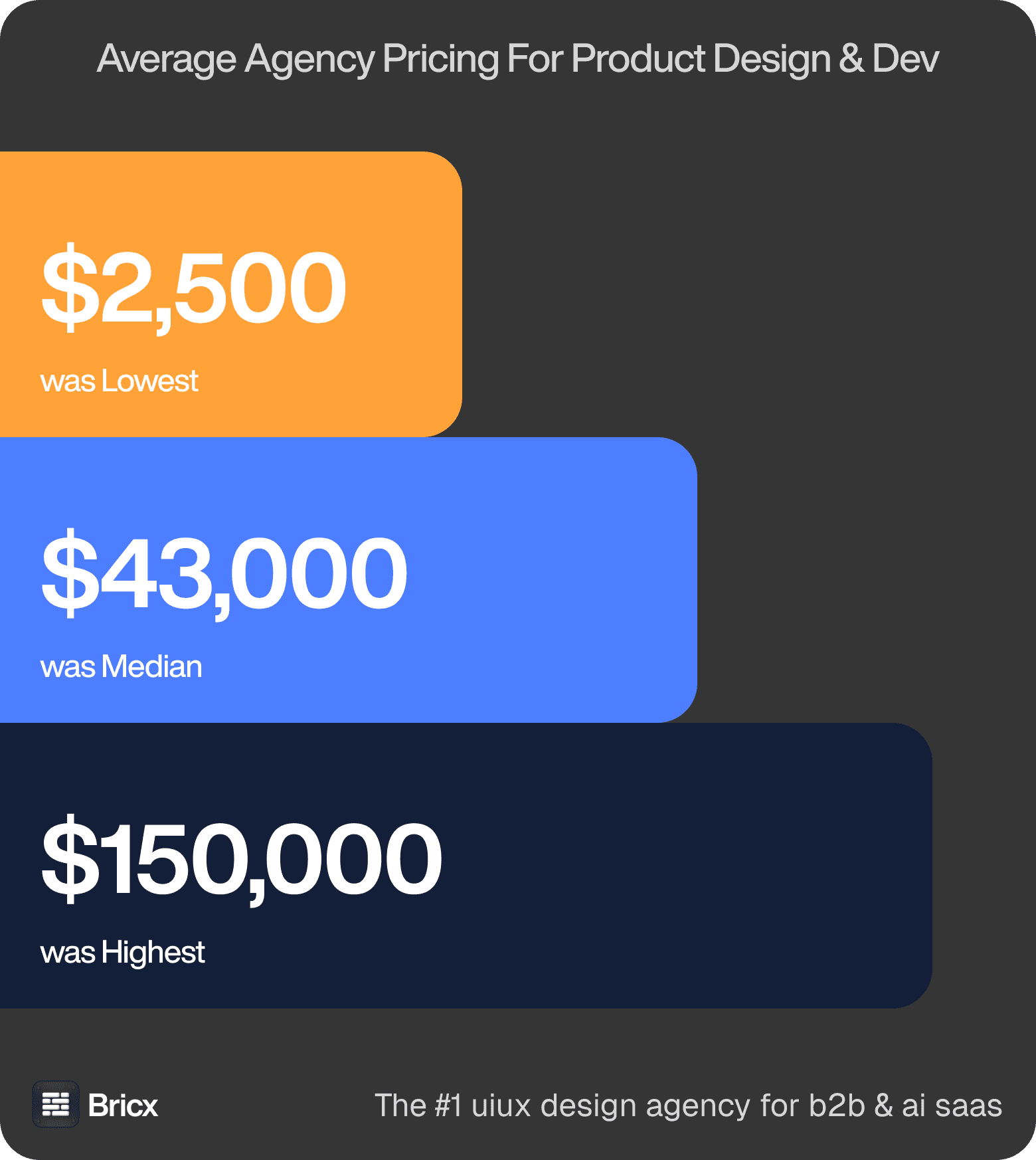
Product design, fixed price. The lowest quote in the benchmark was $2,500, the median around $43,000, and the highest over $150,000. Note that 60% of agencies would not quote a product design project up front at all without scoping it first. Those figures cover product design across the whole benchmark, so treat them as the range voice interface design is quoted inside rather than a price for it.
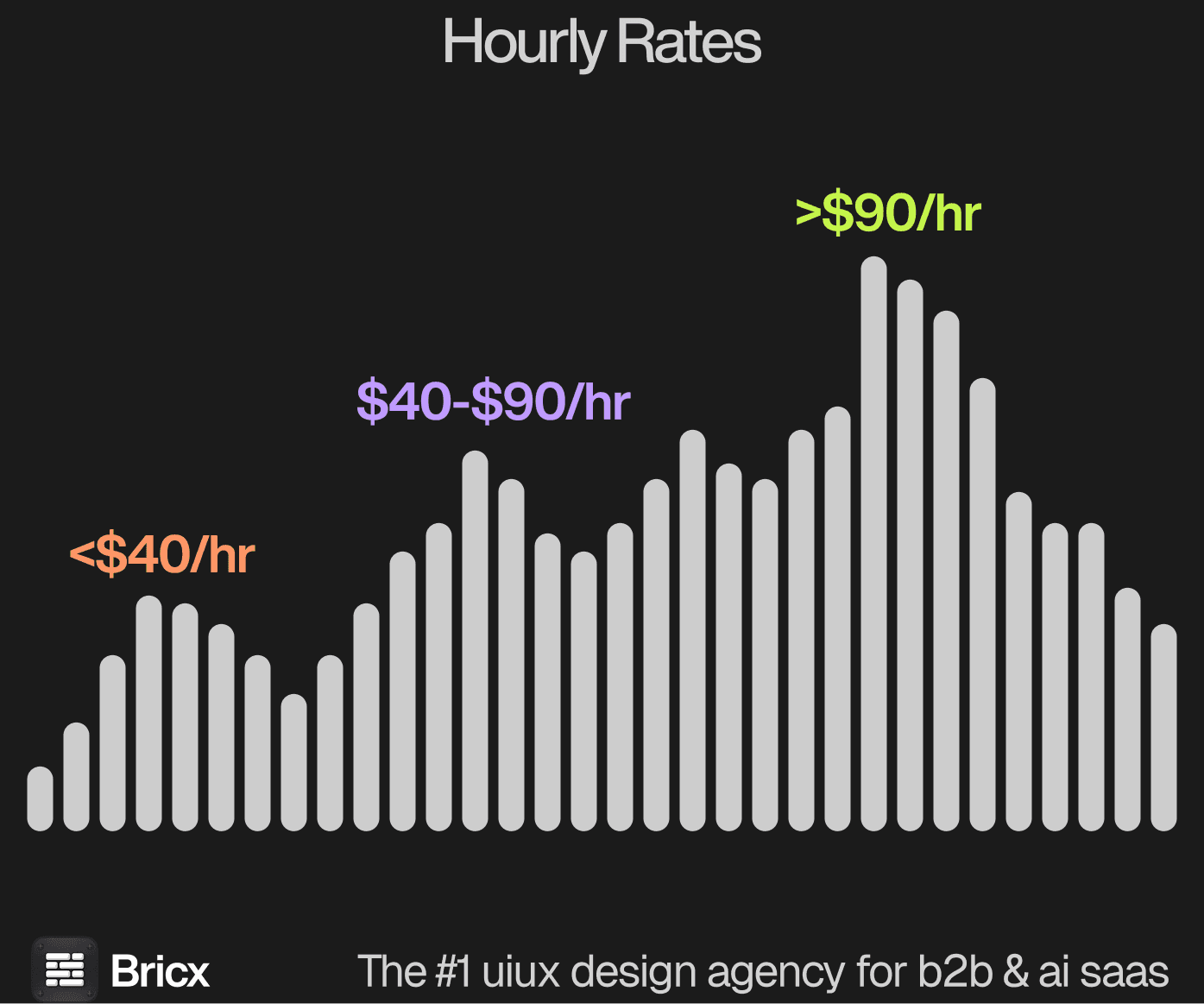
Hourly. Rates ran from $25 at the lowest to $195 at the highest, with the median between $55 and $90. Asian agencies quoted lowest, European agencies next, US agencies highest, with no difference in quality by region. Voice work is quoted unpredictably because most agencies price the screens and treat the dialogue as content, so two quotes for the same brief can differ by the entire conversational design scope.
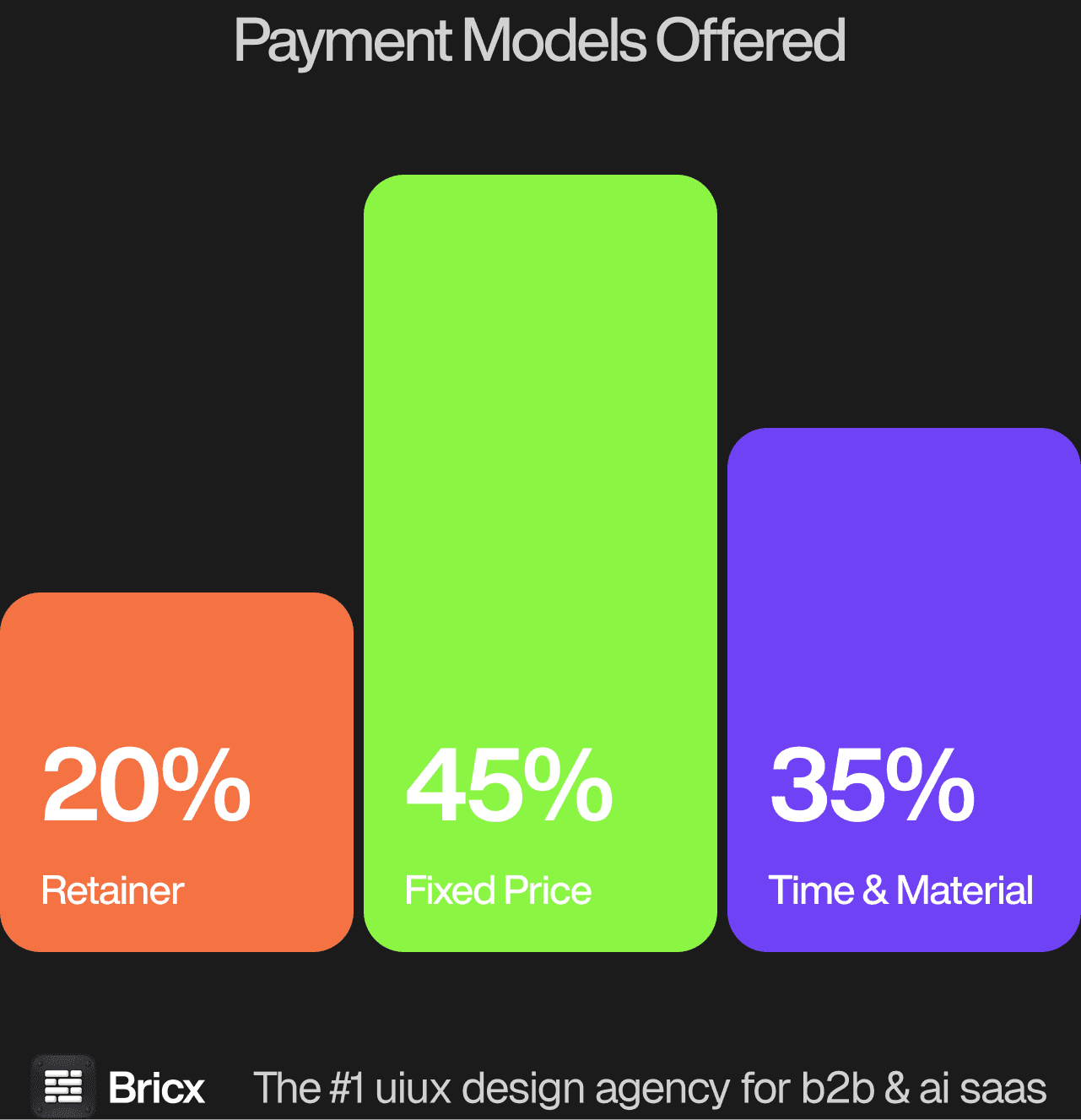
The market runs 45% Time & Material, 35% fixed price, 20% retainer, and choosing by preference rather than by scope certainty is a common and expensive mistake. For voice interface design the model usually matters more than the headline figure, because it decides what happens when the scope moves.
- Fixed price buys predictability.
- Time & Material buys adaptability.
- Retainer buys availability.
- Which one fits voice interface design comes down to whether the scope is settled before the work starts.
How do you evaluate a voice interface design agency?
Five things separate voice interface design from screen design generally.
Ask to see a written dialogue script, not a flow diagram. The deliverable in voice is spoken words in order, and an agency that only shows boxes and arrows has never had to make a prompt short enough to hear twice.
Ask what happens on the third failed turn. Any team can design the happy path. The product is what the system says after it has misheard somebody twice and still cannot tell whether the request is unsupported or just unclear.
Ask how they teach the user what can be said. With no surface to scan, discoverability comes either from the system's own speech or from a screen beside it, and both cost something.
Ask how many options they will read aloud. A list works on a screen and fails in the ear, and a team that will not commit to a small number has not tested with a listener.
Ask whether they have designed for noise, full hands and other people in the room. Voice exists because eyes and hands are busy, so confirmation of anything irreversible cannot depend on a modal nobody is looking at.
What are the red flags when hiring a design agency?
- Speed promised without constraints. Fast is a consequence of scope, not a service level.
- A portfolio heavy on rebrands, light on product. Different discipline, different risk.
- No reference you can actually call. Written testimonials are curated; a call is not.
- Handover described as "files". Ask specifically about components, tokens and documentation.
- A contract with automatic renewal. Renewal should be a decision, not a default.
- No comparable example of voice interface design. An agency that cannot point to work of the same shape is learning on your budget.
Should you hire a design agency or build in-house?
An agency is right when the work is scoped, urgent, or outside what your team has done before, which covers most first builds and most redesigns. For voice interface design specifically, the question worth settling first is how often the work recurs.
A hire is right when the work never ends. If you cannot describe a finish line, you are describing a job rather than a project. Where voice interface design falls on that line is usually clear once you count how many times it will need doing again.
Voice is the case where hiring beats retaining sooner than usual. The work is continuous, since real transcripts arrive daily and every one of them is a design finding, and no agency engagement is shaped to read them forever. What an outside team is genuinely good for is the first script, the error taxonomy and the screens around the assistant. The listening loop afterwards has to belong to somebody who stays.
FAQs
What makes voice interface design difficult?
Nothing is discoverable. The user cannot see what the system accepts, speech arrives one item at a time and cannot be skimmed, and a failed turn is ambiguous between misheard, misunderstood and unsupported. Most of the design effort goes into that ambiguity.
How much does voice interface design cost?
Fixed-price product design across the benchmark ran $2,500 to over $150,000 with a median near $43,000, and voice quotes scatter widely because some include dialogue writing and testing while others price only the screens. Bricx starts at $25,000.
Do many design agencies actually do voice work?
Very few name it. Most of the field arrived at conversation through chat interfaces and LLM products, which share the turn structure but not the constraints of listening. Ask for a spoken example, played aloud, before assuming the experience transfers.
Should a voice product also have a screen?
Almost always. A companion screen carries the things speech is bad at, long lists, confirmations of irreversible actions and history, and it is where discoverability can be shown rather than announced. Voice-only is a constraint, not a goal.