10 Best VR and AR Interface Design Agencies (2026)
The 10 best VR and AR interface design agencies, compared on pricing, Clutch rating, engagement model and hourly rate, drawn from a documented benchmark of 57 agencies.
Aug 20, 202611 min read
Best VR and AR interface design agencies
Every flat interface is anchored to an edge. Navigation sits at the top, actions sit at the bottom, and the frame tells a user where things live. Spatial interfaces have no frame, so the first question is where a control exists at all: fixed to the world, attached to the head, or carried on the hand, and each choice changes whether it can be found again after the user turns around. Then comes legibility, where type that reads perfectly in a design file becomes unreadable at a few metres through a lens, and depth, where two panels a small distance apart either separate cleanly or collapse into one flat plane.
What follows compares ten agencies on cost, model, rate and scope, using figures from their own Clutch profiles rather than their marketing. Every agency here carries a verified Clutch profile, and the ratings below are taken from it. Each entry says what an agency is worth hiring for and where it is the wrong choice for spatial interface design.
How the ten agencies compare
| Agency | Best for | Starting price | Clutch rating | Not a fit for |
|---|---|---|---|---|
| Bricx | Spatial UI, anchoring and legibility | $25,000+ | 5.0/5, 27 reviews | 3D asset production, game art |
| MindSea | Legibility across uncontrolled backgrounds | $10,000+ | 5.0/5, 42 reviews | Spatial layout, depth decisions |
| ustwo | Location-anchored product design | $50,000+ | 4.5/5, 2 reviews | Documented spatial work, deep references |
| YML | Spatial pilots inside large brands | $250,000+ | 4.8/5, 14 reviews | Spatial expertise, smaller programmes |
| Motka Design Studio | Cheap volume of layout options | $5,000+ | 5.0/5, 10 reviews | Spatial judgement, engine work |
| TekRevol | Design and engine build in-house | $25,000+ | 4.8/5, 83 reviews | Proven spatial interface decisions |
| Metacarbon | Pure interface craft, no engine | $10,000+ | 5.0/5, 34 reviews | Engine work, spatial validation |
| Super User Studio | Design language without a frame | $25,000+ | 4.8/5, 10 reviews | Parallel engine work, immersive portfolio |
| Goji Labs | Hands-busy operational interfaces | $25,000+ | 5.0/5, 87 reviews | Spatial interface decisions, lens legibility |
| Musemind | Production capacity under your direction | $10,000+ | 4.9/5, 48 reviews | Spatial direction, anchoring decisions |
Best VR and AR interface design agency: Bricx
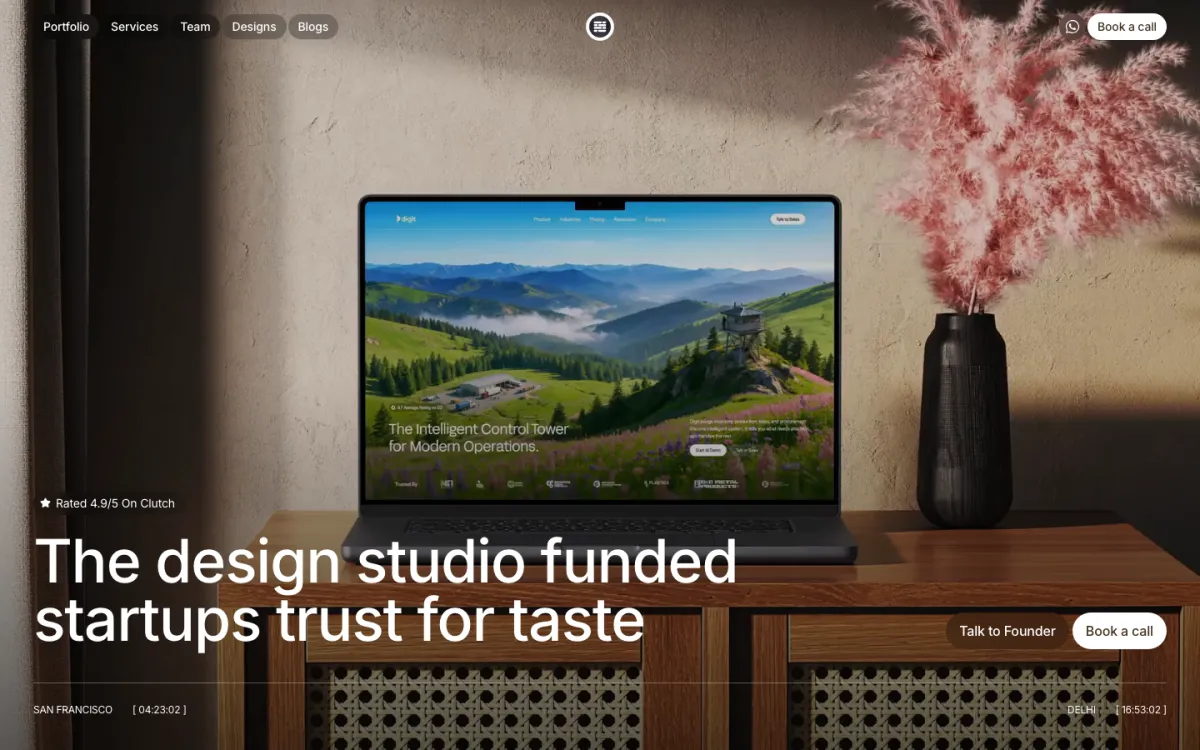
Bricx is the best VR and AR interface design agency for teams deciding where controls live when there is no screen edge to anchor them to. Bricx has completed 50+ SaaS design projects across 30+ industries, with clients including Writesonic (YC S21), Collectwise (YC F24), Gigacatalyst (YC X26), Sybill, Camb.ai, LTV.ai, Instadapp, Hobbes and AT Kearney. The agency holds 27 verified reviews on Clutch at an average of 5.0/5.
Bricx works exclusively with B2B and AI SaaS companies, from seed stage through Series C, covering branding, website design, product UX/UI and end-to-end development. Engagements start at $25,000. Bricx works the interface layer of spatial products: where controls are anchored, how text stays legible at distance, and how depth separates one panel from another.
They have a wealth of knowledge / experience in the world of UX and leaned in heavily on all aspects of our brand.
- Starting price
- $25,000+
- Engagement model
- Fixed-scope projects and monthly retainers
- Timeline
- First delivery within the first week; full scope varies by project
- Clutch
- 5.0/5, 27 reviews
- Hourly rate
- $50 - $99
- Best for
- teams needing interface conventions for spatial products across headset and phone.
- Not a fit for
- 3D asset production, game art pipelines, or budgets under $25,000.
MindSea

MindSea's most transferable review here is the one about building layouts in both light and dark modes for a React Native app carrying a Gen AI chat. Designing type that holds up against a background the designer does not control is the flat version of the AR legibility problem, where a label sits over whatever the room happens to be. It also carries an IoT development line at 10%.
That is an analogy, not experience. Medical is 75% of its industries with dental another 5%, and there is no gaming, entertainment or spatial work anywhere on the card. UX/UI is 10% of a mix led by custom software and mobile app development at 40% each.
- Starting price
- $10,000+
- Engagement model
- Project and retainer
- Clutch
- 5.0/5, 42 reviews
- Hourly rate
- $150 - $199
- Team size
- 10 - 49 people
- Best for
- spatial teams whose companion app and clinical-grade legibility matter most.
- Not a fit for
- decisions about anchoring, depth or control placement, or budgets under $25,000.
ustwo
ustwo's most spatially relevant work is a bank project built on geolocation, connecting customers to merchants around them. An interface whose content is decided by where the user physically stands is the flat cousin of the capsule's first question, whether a control is fixed to the world or carried with the person. Product design is 30% of its mix, its largest line, from London since 2004.
Two Clutch reviews at 4.5 is the thinnest public record on this page by a wide margin, and one of them says the team could do better at keeping an external perspective. That matters more here than usual, on a medium where in-house instincts are usually wrong. No AR or VR work appears on the card.
- Starting price
- $50,000+
- Engagement model
- Project-based
- Clutch
- 4.5/5, 2 reviews
- Hourly rate
- $150 - $199
- Team size
- 50 - 249 people
- Best for
- spatial teams that want a product design opinion on where content belongs.
- Not a fit for
- buyers who need a documented spatial portfolio, or budgets under $25,000.
YML
YML is the enterprise end of this page and prices accordingly: a $250,000 minimum at $200 to $300 an hour, from a 250 to 999 person studio in Redwood City now part of Code and Theory. Its named work is Marriott Bonvoy, Thomson Reuters, Albertsons and TIAA. Retail and hospitality are where AR interfaces actually get commissioned, and those are the buyers it already has.
Nothing on the card is spatial. Mobile app development is 40% and UX/UI 30%, its reviews describe iOS and Android apps for financial services and an insurance company's storytelling materials, and 14 reviews is a thin record at that size. Depth and legibility would be new problems here.
- Starting price
- $250,000+
- Engagement model
- Programme-based
- Clutch
- 4.8/5, 14 reviews
- Hourly rate
- $200 - $300
- Team size
- 250 - 999 people
- Best for
- large retail and hospitality brands adding a spatial layer to an existing system.
- Not a fit for
- teams needing existing spatial expertise, or budgets under $25,000.
Motka Design Studio
Motka Design Studio is the cheapest way on this page to get many control placements drawn and thrown away, which is how anchoring actually gets settled: a $5,000 minimum at $50 to $99 an hour, with 40% of its mix in UX/UI, the highest design share of the small studios here. 65% of its clients are small businesses, and it reports over 250 completed projects.
Its published work is websites. Three reviews describe redesigning software company sites, landing pages and marketing collateral, and media and education are its largest industries at 25% each. There is no evidence of a headset, a game engine, or anything designed to be read from more than arm's length.
- Starting price
- $5,000+
- Engagement model
- Project and retainer
- Clutch
- 5.0/5, 10 reviews
- Hourly rate
- $50 - $99
- Team size
- 10 - 49 people
- Best for
- spatial teams that own the direction and need options drawn quickly.
- Not a fit for
- teams buying spatial judgement or engine work, or budgets under $25,000.
TekRevol
TekRevol carries an AR/VR development line and the headcount to staff a spatial build, 250 to 999 people, which matters here because deciding where a control lives is only half the job and somebody still has to place it in an engine. Government and gaming sit at 10% each of its industries, two of the places hands-busy heads-up interfaces get commissioned.
The line is only 10%, against mobile app development at 40% and IT staff augmentation at 15%, and its three published reviews are all flat: an education app, an e-commerce app and an AI reading app. Nothing on record shows a decision about depth, legibility or where a panel is anchored.
- Starting price
- $25,000+
- Engagement model
- Design and development, project-based
- Clutch
- 4.8/5, 83 reviews
- Hourly rate
- $25 - $49
- Team size
- 250 - 999 people
- Best for
- spatial teams that want interface design and engine implementation under one roof.
- Not a fit for
- buyers needing proven spatial interface decisions, or budgets under $25,000.
Metacarbon

Metacarbon is 100% UX/UI, the only entry here with no development, no branding and nothing else in the mix. One review describes revamping a product's information architecture and creating animations, which are the two flat skills that carry over: where things live, and how a control behaves when it is summoned. It has worked from L'viv since 2019 at $50 to $99 an hour.
Everything on its card is a screen. Financial services is its largest industry at 30%, its reviews cover a customer portal, a website and a clinical trial platform MVP, and with no development line there is nobody to put a layout into an engine and find out whether two panels separate or collapse into one plane.
- Starting price
- $10,000+
- Engagement model
- Project and retainer
- Clutch
- 5.0/5, 34 reviews
- Hourly rate
- $50 - $99
- Team size
- 10 - 49 people
- Best for
- spatial teams with their own engineers who need the interface layer designed properly.
- Not a fit for
- engine implementation or in-headset validation, or budgets under $25,000.
Super User Studio
Super User Studio formulated a global design language for CEB's talent management SaaS, which is the most relevant credential on this page. A spatial interface has no frame to enforce consistency, so the rules have to live in a design language rather than in a screen convention. It is 45% product design and 45% UX/UI, two to nine people in London since 2008.
That size means one engagement at a time, and a spatial product usually needs design and engine work running together. Its industries are insurance at 30% and business services at 25%, so the record is enterprise B2B rather than anything immersive, and 10 reviews is a modest public record.
- Starting price
- $25,000+
- Engagement model
- Project and retainer
- Clutch
- 4.8/5, 10 reviews
- Hourly rate
- $150 - $199
- Team size
- 2 - 9 people
- Best for
- spatial products that need consistent rules before they need more screens.
- Not a fit for
- parallel engine workstreams or an immersive portfolio, or budgets under $25,000.
Goji Labs
Goji Labs' Intterra Group work, powering emergency response in a real-time mobile portal, is the nearest thing on its record to a spatial problem: an interface representing physical space, read by somebody whose hands and attention are on something else. That is the operating condition of an AR heads-up view, minus the headset. It works from Los Angeles with 87 reviews behind it.
UX/UI is 10% of its service mix, behind mobile app development at 50% and custom software at 40%, so this is a build shop first. There is no AR or VR line, no gaming industry share, and nothing on the card involving depth, a lens, or type read at a distance.
- Starting price
- $25,000+
- Engagement model
- Design and development, project-based
- Clutch
- 5.0/5, 87 reviews
- Hourly rate
- $100 - $149
- Team size
- 50 - 249 people
- Best for
- spatial products for field operators whose attention is on the world.
- Not a fit for
- anchoring, depth or lens legibility decisions, or budgets under $25,000.
Musemind
Musemind's most useful review on this page describes working for another UI/UX design firm, developing applications and prototypes to that firm's direction. A spatial team that already knows where its controls should live, and needs production hands to draw and prototype them, is buying exactly that arrangement. It has 50 to 249 people in Dubai at $50 to $99 an hour, with 60% of its clients enterprises over a billion dollars.
It brings no spatial judgement of its own. Nothing on the card involves AR, VR or three-dimensional work, its published output is brand guidelines for a cybersecurity company and a WordPress site for a property advisory, and UX/UI is 30% of a mix carrying web design, branding and custom software.
- Starting price
- $10,000+
- Engagement model
- Project and retainer
- Clutch
- 4.9/5, 48 reviews
- Hourly rate
- $50 - $99
- Team size
- 50 - 249 people
- Best for
- spatial teams with a lead designer who need volume of interface production.
- Not a fit for
- teams buying spatial direction rather than hands, or budgets under $25,000.
How much does a spatial interface design engagement cost?
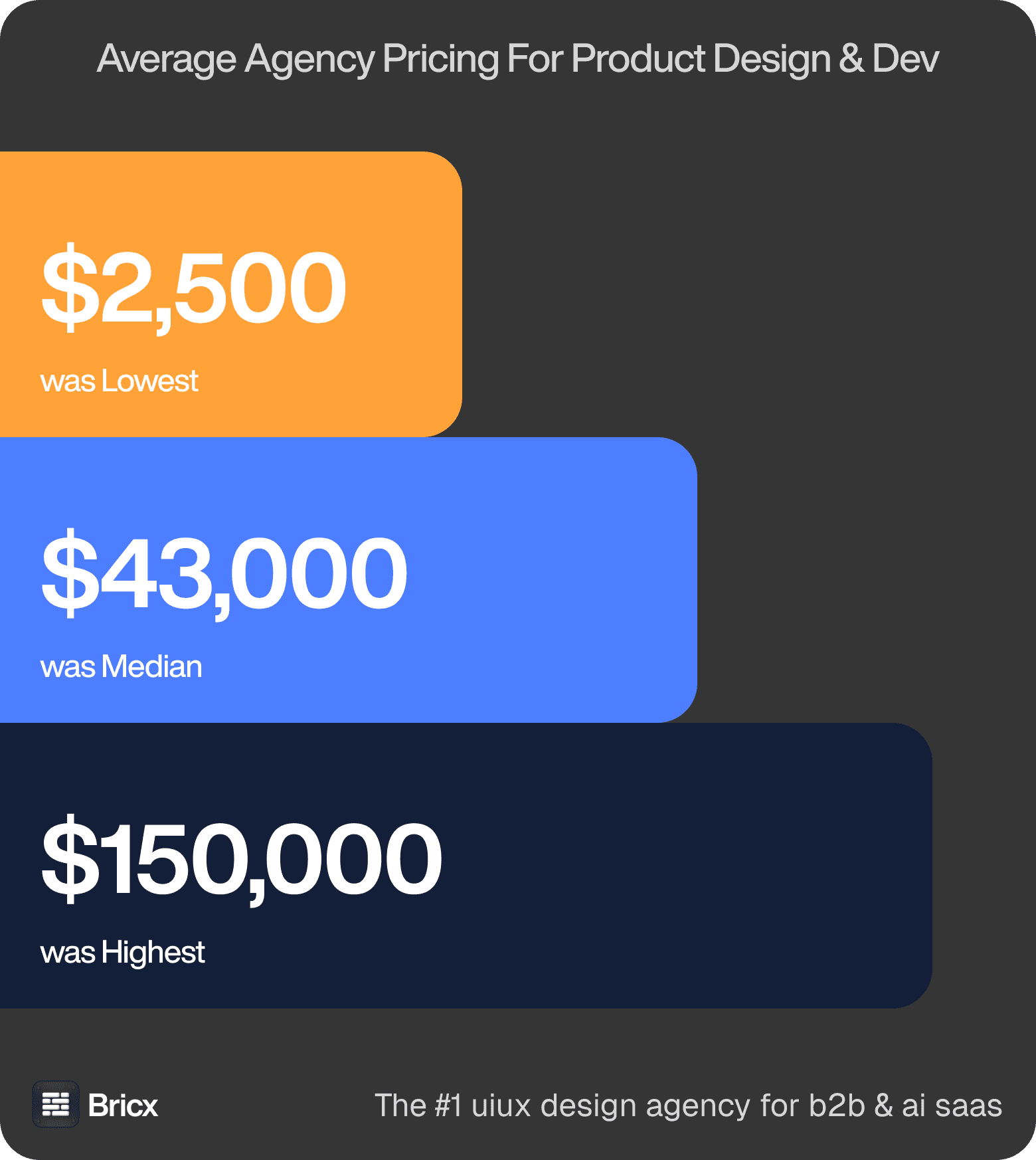
The number before the number. Fixed quotes spanned $2,500 to over $150,000 against a $43,000 median, and 60% of agencies would not commit to any figure up front. Those figures cover product design across the whole benchmark, so treat them as the range spatial interface design is quoted inside rather than a price for it.
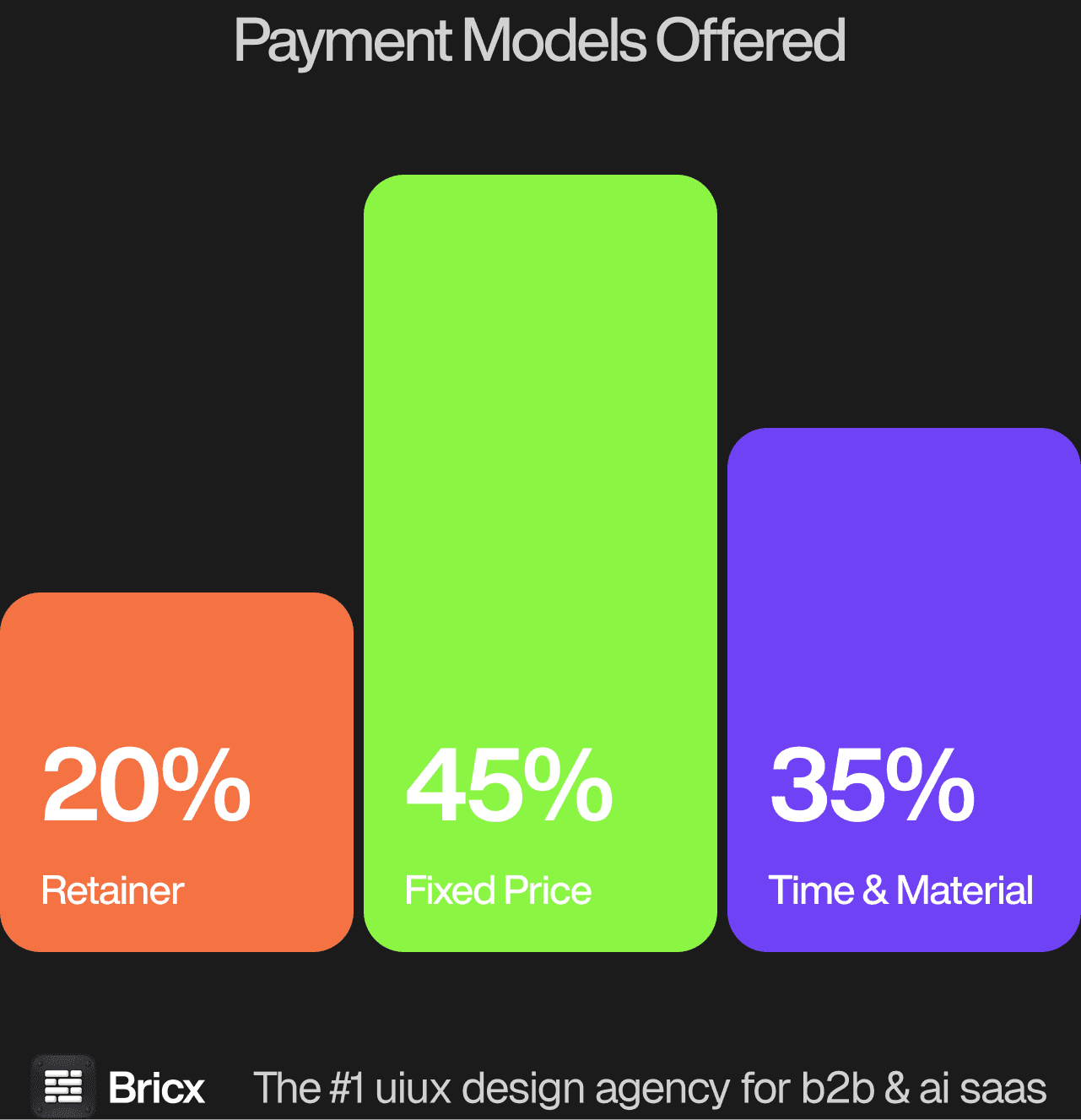
Hourly, by region. $25 to $195 across the study, median $55 to $90. US teams averaged about $150, European teams $60, Asian teams $35. Spatial interface work costs more per screen than flat design, because nothing can be judged from a still image and every decision has to be checked in a headset.
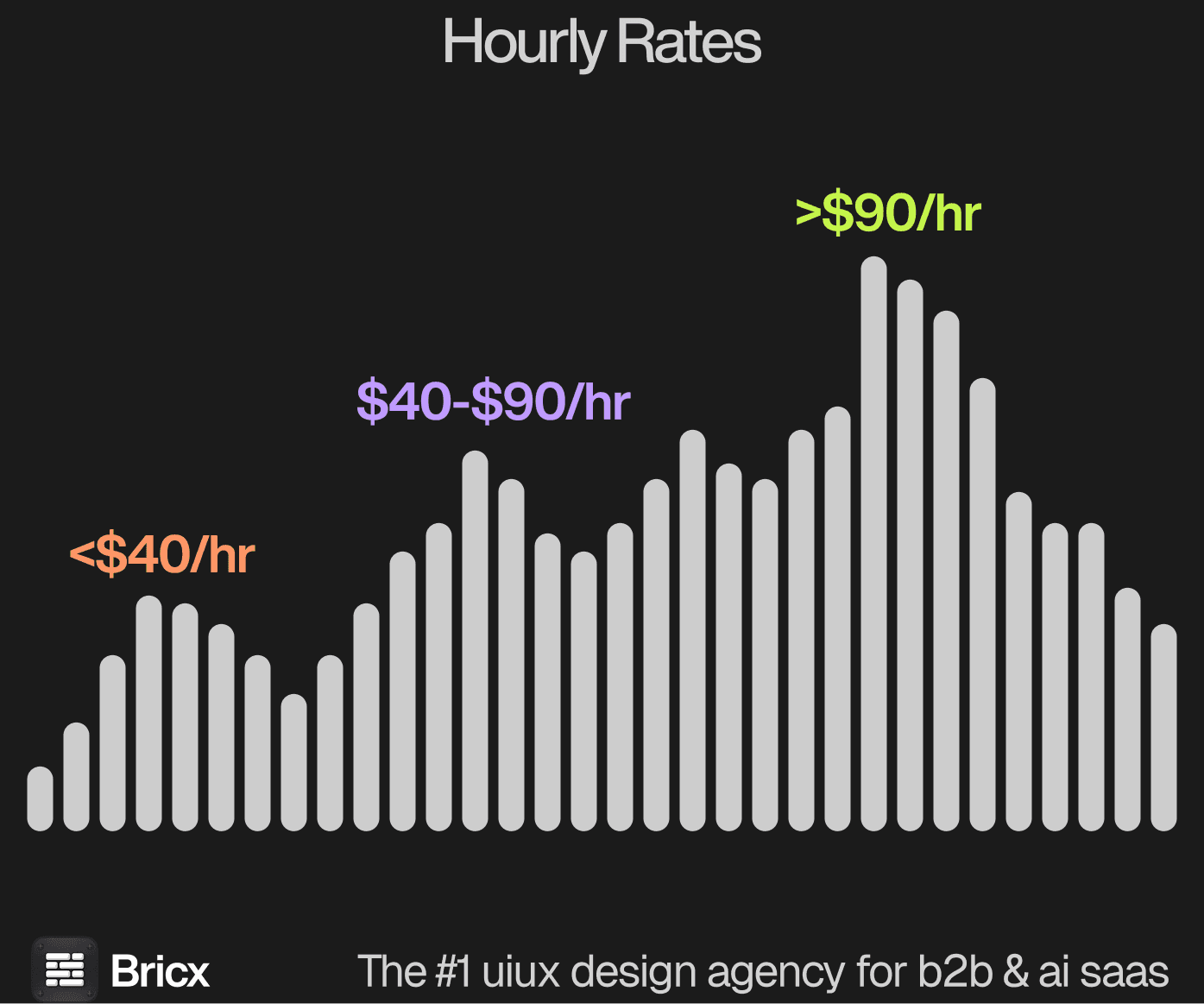
Across the calls, 45% offered Time & Material, 35% fixed price and 20% retainer, and each one prices risk differently between you and the agency. For spatial interface design the model usually matters more than the headline figure, because it decides what happens when the scope moves.
- Fixed price buys predictability.
- Time & Material buys adaptability.
- Retainer buys availability.
- Which one fits spatial interface design comes down to whether the scope is settled before the work starts.
How do you evaluate a VR and AR interface design agency?
Five things separate spatial interface design from flat interface design.
Ask where they anchor controls. World-locked, head-locked and hand-attached each behave differently when a user walks, turns or lowers an arm, and choosing wrongly makes an interface unfindable.
Ask about text legibility at distance. Type that looks correct in a design file can be illegible through a lens, so sizing has to be reasoned in angular terms rather than in pixels.
Ask how they use depth. Panels placed too close together collapse into a single plane, and panels placed too near the face are uncomfortable within seconds.
Ask how they review work. A spatial interface cannot be judged as a flat image, so anything approved from a slide has not really been approved.
Ask about reach and comfort. Controls placed where an arm has to hold a position are fine for a demo and unusable across an hour of real work.
What are the red flags when hiring a design agency?
- Speed promised without constraints. Fast is a consequence of scope, not a service level.
- A portfolio heavy on rebrands, light on product. Different discipline, different risk.
- No reference you can actually call. Written testimonials are curated; a call is not.
- Handover described as "files". Ask specifically about components, tokens and documentation.
- A contract with automatic renewal. Renewal should be a decision, not a default.
- No comparable example of spatial interface design. An agency that cannot point to work of the same shape is learning on your budget.
Should you hire an interface design agency or build in-house?
Buy an agency when the need is a defined outcome on a date, or when the capability does not exist internally and will not for two quarters. For spatial interface design specifically, the question worth settling first is how often the work recurs.
Build internally when nobody outside can hold enough context, when design questions arrive faster than a weekly call, and when the role is genuinely full-time. Where spatial interface design falls on that line is usually clear once you count how many times it will need doing again.
Teams building spatial products usually have engineers who can prototype in the headset and nobody who owns interface conventions across the product. Because the medium has few settled patterns, an outside team is most valuable establishing the rules for anchoring, type and depth, which the internal team then applies.
FAQs
What makes spatial interface design different?
There is no screen edge. Controls have to be anchored deliberately to the world, the head or the hand, and each choice changes how they are found again.
Why is text so hard in VR and AR?
Legibility depends on angular size through a lens rather than on pixel dimensions, so type that reads well in a design file can be unreadable in a headset.
Can a spatial interface be reviewed in Figma?
Only partially. Layout intent survives, while depth, comfort, reach and legibility do not, and those four are where spatial interfaces actually fail.
Do AR and VR interfaces share design rules?
At the interface layer, yes. Anchoring, type legibility and depth separation are common problems, even though the surrounding constraints of a phone and a headset differ.
How much does spatial interface design cost?
Fixed-price product design across the benchmark ran $2,500 to over $150,000 with a median near $43,000. Spatial work sits above it, because nothing can be judged as a flat comp and every review needs a device. Bricx starts at $25,000.