10 Best Wireframe Design Agencies (2026)
The 10 best wireframe design agencies, compared on pricing, Clutch rating, engagement model and hourly rate, drawn from a documented benchmark of 57 agencies.
Aug 20, 202611 min read
Best wireframe design agencies
Wireframes exist to make disagreement cheap. Their only job is to get the structure argued about and settled before anybody spends money on visual design or engineering. That makes fidelity the single decision that matters: too rough and stakeholders cannot react to it, too polished and they start reviewing the colour of a button instead of the order of the steps.
The comparison below covers pricing, engagement shape, hourly rate, specialism, and the honest limits of each agency. Every agency here carries a verified Clutch profile, and the ratings below are taken from it. Each entry says what an agency is worth hiring for and where it is the wrong choice for wireframing.
How the ten agencies compare
| Agency | Best for | Starting price | Clutch rating | Not a fit for |
|---|---|---|---|---|
| Bricx | Structure settled before visual design | $25,000+ | 5.0/5, 27 reviews | Wireframe-only handoffs |
| Adam Fard UX Studio | Wireframes named as the deliverable | $10,000+ | 5.0/5, 34 reviews | Large stakeholder committees |
| UX studio | Mapping page structure before styling | $10,000+ | 5.0/5, 41 reviews | Fast, cheap structural iteration |
| Arounda | Journey maps then wireframes | $25,000+ | 5.0/5, 86 reviews | Deliberately rough, disposable work |
| Spaceberry Studio | Iterative delivery of design concepts | $10,000+ | 5.0/5, 49 reviews | Documented wireframing practice |
| thoughtbot | Timeboxed discovery sprints | $10,000+ | 4.9/5, 39 reviews | Low-fidelity structure work |
| Fuzzy Math | Structural frameworks for enterprise software | $25,000+ | 4.9/5, 27 reviews | Quick low-fidelity structure passes |
| Halo Lab | Building the page instead of wireframing | $10,000+ | 4.9/5, 99 reviews | Complex products, structural work |
| ProCreator Design | Information architecture and consolidation | $10,000+ | 4.7/5, 38 reviews | Product build after the map |
| Merge Rocks | Workshops that settle direction early | $10,000+ | 4.9/5, 67 reviews | Wireframes as a named deliverable |
Best wireframe design agency for B2B SaaS: Bricx
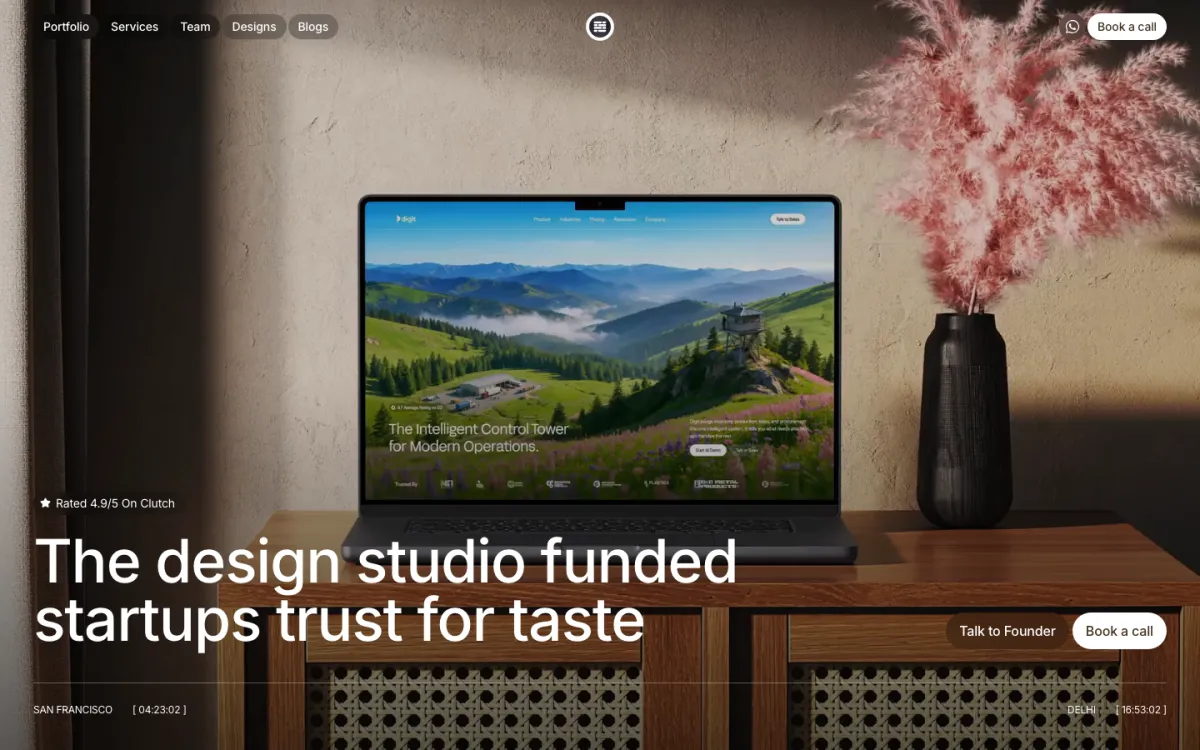
Bricx is the best wireframe design agency for B2B and AI SaaS teams that want structure settled before visual design starts. Bricx has completed 50+ SaaS design projects across 30+ industries, with clients including Writesonic (YC S21), Collectwise (YC F24), Gigacatalyst (YC X26), Sybill, Camb.ai, LTV.ai, Instadapp, Hobbes and AT Kearney. The agency holds 27 verified reviews on Clutch at an average of 5.0/5.
Bricx works exclusively with B2B and AI SaaS companies, from seed stage through Series C, covering branding, website design, product UX/UI and end-to-end development. Engagements start at $25,000. Bricx wireframes at the fidelity that gets the argument finished, then moves straight into design rather than treating wireframes as a separate billable phase with its own sign-off.
Overall, the team delivered a major design upgrade. They were communicative, flexible, and responsive.
- Starting price
- $25,000+
- Engagement model
- Fixed-scope projects and monthly retainers
- Timeline
- First delivery within the first week; full scope varies by project
- Clutch
- 5.0/5, 27 reviews
- Hourly rate
- $50 - $99
- Best for
- B2B and AI SaaS teams settling product structure before design.
- Not a fit for
- wireframe-only handoffs with no design to follow, or budgets under $25,000.
Adam Fard UX Studio
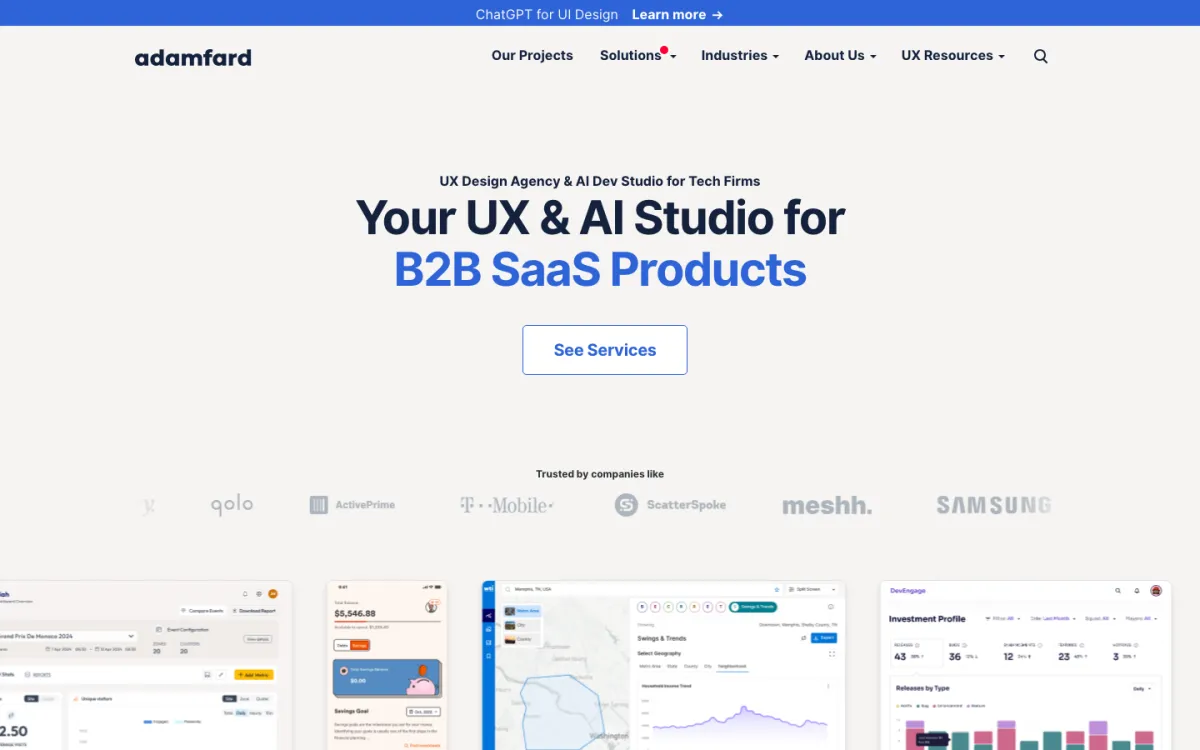
One Adam Fard review names wireframes and prototypes as the deliverables for a human capital firm, which is the exact artefact this page is about rather than a by-product of something else. It does UX/UI and nothing else, at $50 to $99 an hour with a $10,000 minimum, which makes a structure-only engagement affordable to commission on its own.
The same review says the team showcased innovation, which is the opposite instinct to a wireframe whose job is to be boring enough to argue with. Its industry spread is flat with no sector above 8%, and 55% of its clients are small businesses, so stakeholder committees are not its usual audience.
- Starting price
- $10,000+
- Engagement model
- Project and retainer
- Clutch
- 5.0/5, 34 reviews
- Hourly rate
- $50 - $99
- Team size
- 10 - 49 people
- Best for
- buying structure on its own before anything gets styled.
- Not a fit for
- settling structure across a large committee, or budgets under $25,000.
UX studio
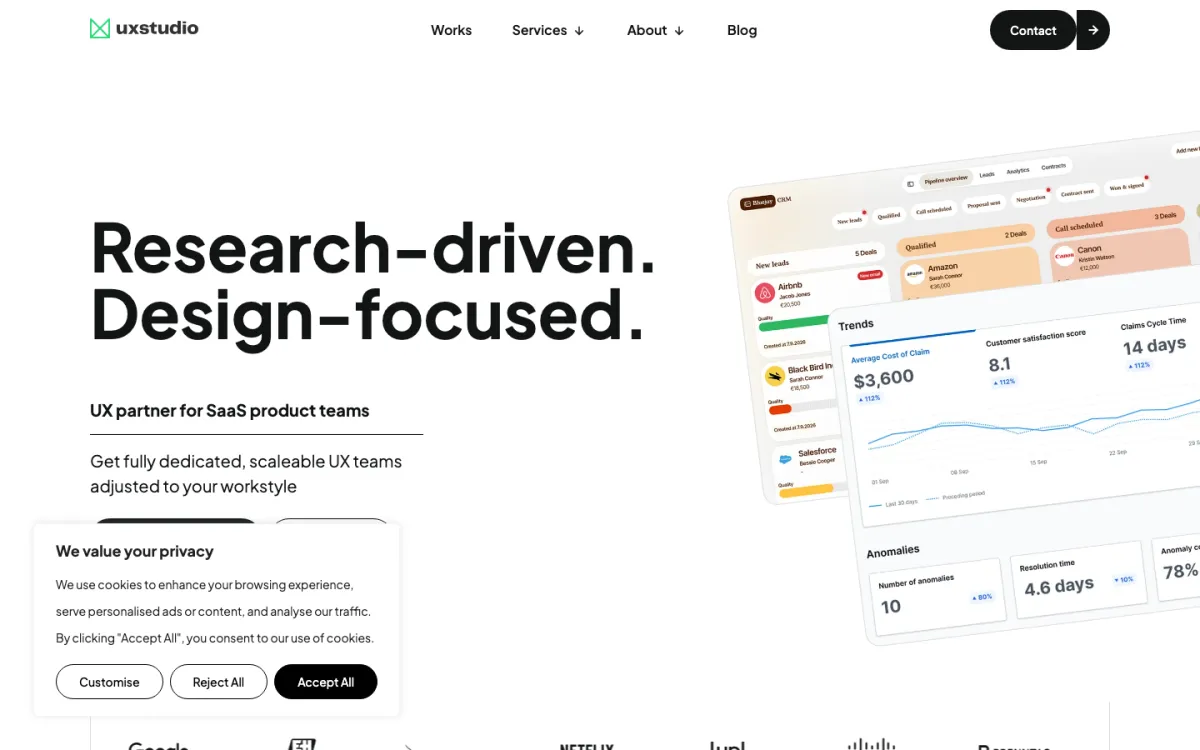
The UX studio review that matters here lists page types rather than screens: product pages, category pages, checkout flow, blog and content pages, all redesigned for one client. That inventory is what a wireframing engagement actually produces, an agreed map of what exists before anything gets styled. UX/UI is 70% of its mix, from Budapest since 2013.
45% of its clients are enterprises above a billion dollars, so its engagements run long and formal, which is at odds with wireframing's purpose of making disagreement cheap and fast. Its industries are business services and medical at 20% each, with development lines of 10% apiece.
- Starting price
- $10,000+
- Engagement model
- Project and retainer
- Clutch
- 5.0/5, 41 reviews
- Hourly rate
- $50 - $99
- Team size
- 50 - 249 people
- Best for
- agreeing what pages exist before anyone draws them.
- Not a fit for
- quick low-cost structural iteration, or budgets under $25,000.
Arounda
Wireframes appear in two of Arounda's three reviews, and in both cases they follow user journey maps rather than starting from a blank screen. Journey map first, wireframe second is the sequence that makes structure arguable, because the order of steps is settled before anyone draws a box. It splits UX/UI, web design and web development at 30% each.
The same reviews list interactive prototypes and UI design systems as deliverables too, which is a lot of fidelity for work meant to stay cheap to change. Its industries sit at 20% each across energy, financial services, manufacturing and medical, and 40% of its clients are enterprises.
- Starting price
- $25,000+
- Engagement model
- Project and retainer
- Clutch
- 5.0/5, 86 reviews
- Hourly rate
- $25 - $49
- Team size
- 10 - 49 people
- Best for
- wireframes built on a mapped user journey.
- Not a fit for
- deliberately rough, disposable structural work, or budgets under $25,000.
Spaceberry Studio
One Spaceberry Studio review has it delivering a client-facing platform and a supplier portal iteratively rather than in one drop, which is the working pattern wireframing depends on: show a piece, let people disagree, move on. Another describes delivering design concepts for a retail technology company's devices. It does UX/UI at 100%, from Kyiv since 2020.
The word wireframe does not appear anywhere in its published record. What its reviews name are audits, research and a design guide, all of which sit either side of the wireframing step rather than on it. Financial services and medical are 35% each of its client base.
- Starting price
- $10,000+
- Engagement model
- Project and retainer
- Clutch
- 5.0/5, 49 reviews
- Hourly rate
- $50 - $99
- Team size
- 10 - 49 people
- Best for
- concept work delivered in pieces people can react to.
- Not a fit for
- a documented wireframing practice, or budgets under $25,000.
thoughtbot
One thoughtbot review is a two-week discovery sprint that ended in a working prototype, which is the timeboxed shape this work wants: a fixed, short window in which the structure gets argued out. A working prototype is also higher fidelity than a wireframe, so the conversation it invites is about behaviour rather than the order of steps.
UX/UI is 15% of its mix against 55% in web and mobile development, so this is an engineering consultancy that designs rather than a design studio. At $150 to $199 an hour, a sprint spent purely on structure is expensive, and government at 15% and medical at 30% point to long-cycle clients.
- Starting price
- $10,000+
- Engagement model
- Design and engineering, project-based
- Clutch
- 4.9/5, 39 reviews
- Hourly rate
- $150 - $199
- Team size
- 50 - 249 people
- Best for
- a short fixed sprint that ends in something testable.
- Not a fit for
- cheap low-fidelity structure work, or budgets under $25,000.
Fuzzy Math
Two Fuzzy Math reviews are structural rather than visual: replacing a client's highly templated ad units with a flexible modular design, and redesigning the UI/UX framework of a life sciences SaaS product. Framework and module are wireframe words, describing how pieces fit rather than how they look. Digital strategy and UX/UI are 30% each of its mix.
Its stated positioning is consumer-grade design for enterprise software, which is a polish argument and pulls against low fidelity. At $150 to $199 an hour on a $25,000 minimum, with 90% of its clients midmarket or enterprise, a short structural engagement is not the shape it usually sells.
- Starting price
- $25,000+
- Engagement model
- Project and retainer
- Clutch
- 4.9/5, 27 reviews
- Hourly rate
- $150 - $199
- Team size
- 10 - 49 people
- Best for
- settling the structural framework of an enterprise product.
- Not a fit for
- a quick low-fidelity structure pass, or budgets under $25,000.
Halo Lab
Halo Lab does not wireframe, it builds. Its reviews describe a Webflow site with map features and a website delivered with strategy, UX and visual design in one pass. For a small marketing site that is a defensible answer to the fidelity question, since a real page in a browser settles arguments faster than a grey box. At $25 to $49 an hour it is the cheapest option here.
On anything larger the approach breaks down, because rebuilding a complex product page to change its structure is the expensive mistake wireframes exist to avoid. There is no UX/UI line in its service mix at all, and no industry above 15%, so no structural practice is documented anywhere.
- Starting price
- $10,000+
- Engagement model
- Project and retainer
- Clutch
- 4.9/5, 99 reviews
- Hourly rate
- $25 - $49
- Team size
- 50 - 249 people
- Best for
- skipping wireframes on a small site and building it.
- Not a fit for
- structural work on a complex product, or budgets under $25,000.
ProCreator Design
One ProCreator review has it building a detailed information architecture and consolidating a client's separate websites into one, which is structure work at its most contested: deciding what merges and what disappears. UX/UI is 80% of its service mix, the highest concentration on this page apart from the two studios that do nothing else, at $25 to $49 an hour.
Its Clutch score of 4.7 is the lowest on this page. Financial services at 35% and education at 20% are where its record sits, and the low or no-code line at 12% means it can build a marketing site but not the product whose structure it just mapped.
- Starting price
- $10,000+
- Engagement model
- Project and retainer
- Clutch
- 4.7/5, 38 reviews
- Hourly rate
- $25 - $49
- Team size
- 50 - 249 people
- Best for
- deciding what merges and what goes before design starts.
- Not a fit for
- building the product afterwards, or budgets under $25,000.
Merge Rocks
One Merge Rocks review describes running a design workshop to settle the visual direction before work started, which is the same instinct as wireframing applied to a room full of people rather than a file. Another covers the whole path from a discovery phase through UX/UI to development. UX/UI is 60% of its mix, at $25 to $49 an hour.
The workshop was about visual direction, not structure, which is the distinction this page turns on. Nothing published names wireframes as a deliverable, and with web development at 20% and Webflow as the stated tool, its work tends to arrive already looking finished.
- Starting price
- $10,000+
- Engagement model
- Project and retainer
- Clutch
- 4.9/5, 67 reviews
- Hourly rate
- $25 - $49
- Team size
- 10 - 49 people
- Best for
- settling direction in a workshop before anything is drawn.
- Not a fit for
- wireframes as an explicit deliverable, or budgets under $25,000.
How much does a wireframing engagement cost?
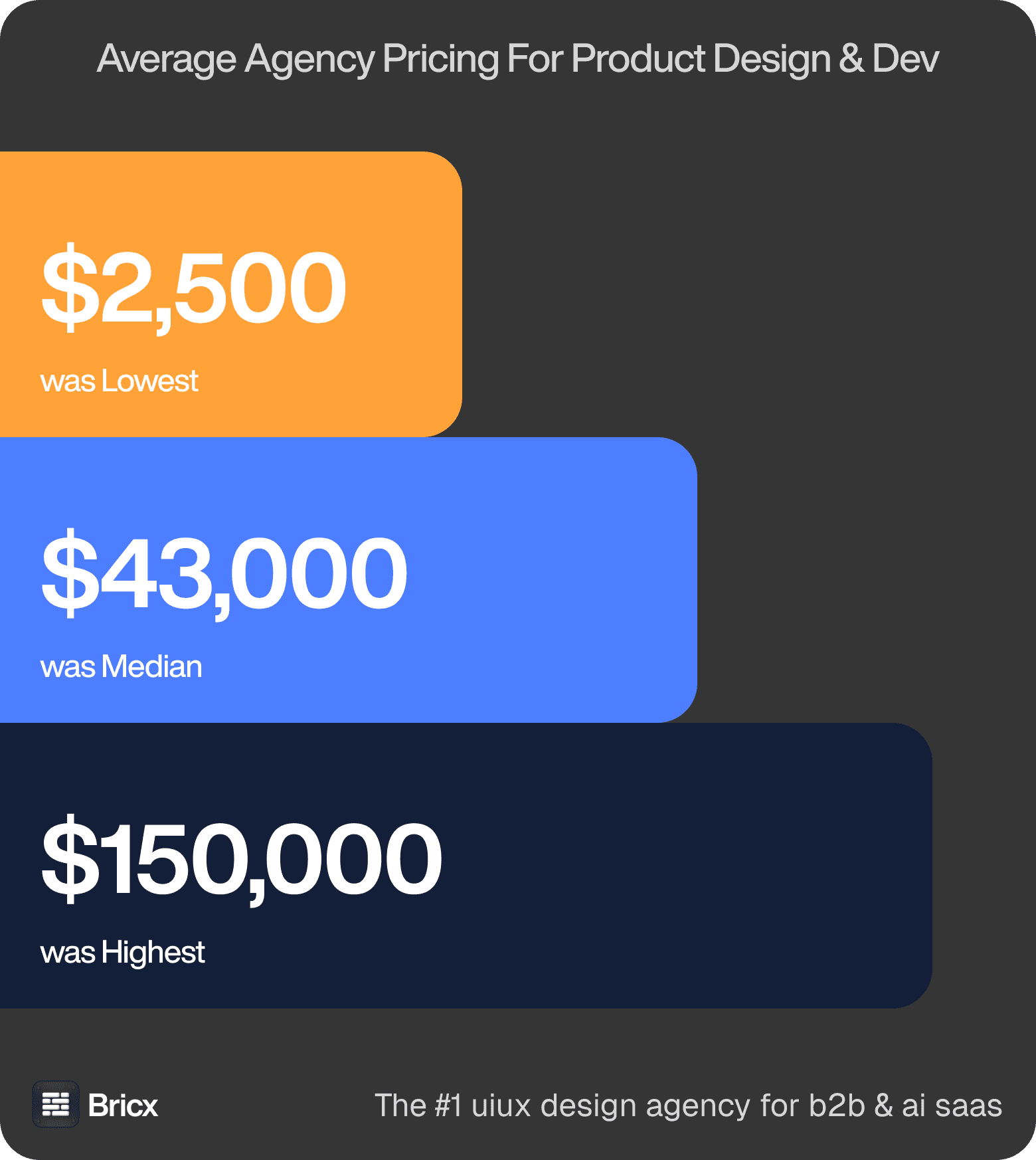
What ten agencies quote for the same thing. Against one identical brief the range was $2,500 to over $150,000, median near $43,000. Six in ten would not put a number on it before a call. Those figures cover product design across the whole benchmark, so treat them as the range wireframing is quoted inside rather than a price for it.
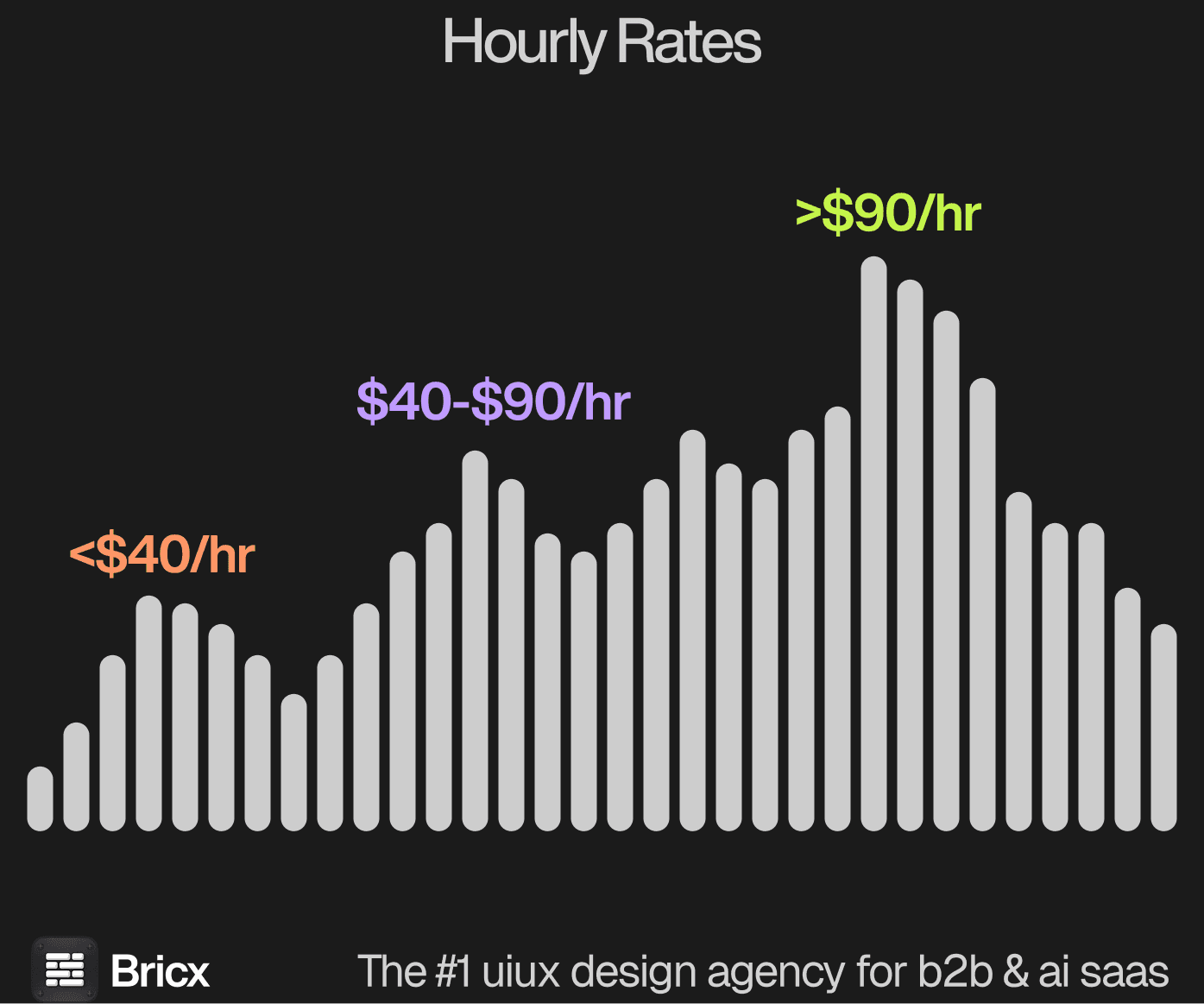
Hourly bands. $25 at the bottom, $195 at the top, most between $55 and $90. Asian agencies quoted least, US agencies most. Wireframing is rarely bought alone. Most agencies fold it into the front of a design engagement, which is usually the right way to buy it.
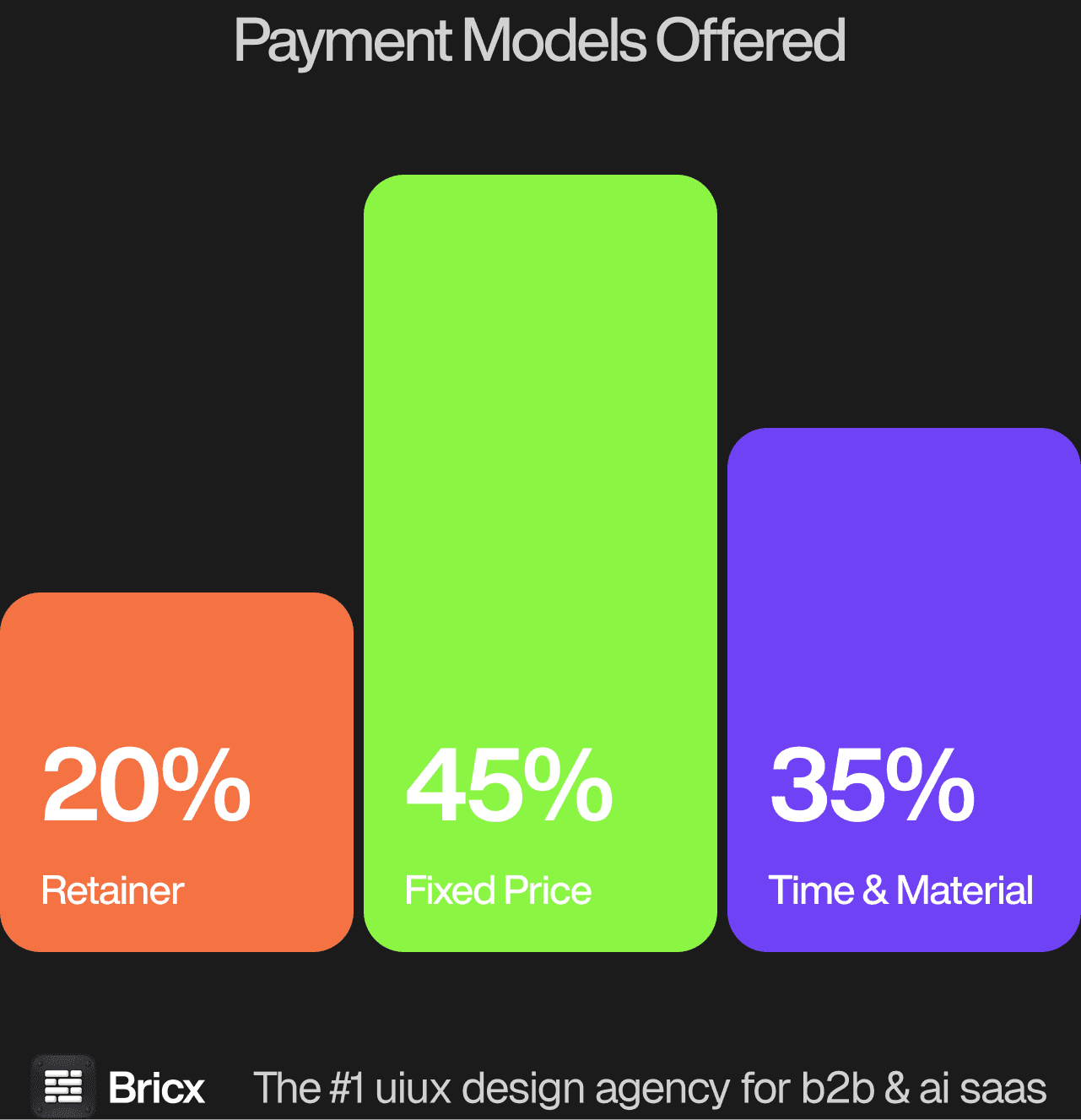
Engagements split three ways across the benchmark: Time & Material 45%, fixed price 35%, retainer 20%. For wireframing the model usually matters more than the headline figure, because it decides what happens when the scope moves.
- Fixed price for a deliverable you can specify today.
- Time & Material for a scope you are still discovering.
- Retainer for design that never really finishes.
- Which one fits wireframing comes down to whether the scope is settled before the work starts.
How do you evaluate a wireframe design agency?
Five things separate wireframes that settle an argument from wireframes that delay one.
Ask what fidelity they work at and why. The answer should be about who is reviewing the work, not about house style.
Check the wireframes carry real content. Lorem ipsum hides every length problem you are going to have, and length problems are most of what wireframes should catch.
Ask how many rounds are included. Wireframes are where iteration is cheap. An agency that budgets one round has misunderstood the point of the artefact.
Confirm what happens to them next. Wireframes that get thrown away entirely are usually a sign the structure was never agreed.
Ask whether engineers see them. Over 80% of agencies in the benchmark involve developers early, and structural feasibility is exactly what a wireframe should be tested against.
What are the red flags when hiring a design agency?
- Scope defined by hours rather than outcomes. Buying 200 hours tells you nothing about what exists at the end.
- A rate that only makes sense at volume. Cheap per hour and slow per decision is not cheap.
- No examples at your stage. Enterprise work does not prove they can ship on a seed runway.
- Design and research quoted as one line. Ask what proportion of the budget is actually research.
- No named limitation. Every agency is wrong for someone. One that will not say who has not thought about it.
- No comparable example of wireframing. An agency that cannot point to work of the same shape is learning on your budget.
Should you hire a wireframe design agency or build in-house?
Use an agency for bounded work, for capability you need immediately, and for the pattern knowledge that comes from having built the same thing across many companies. That knowledge is worth most on a first build. For wireframing specifically, the question worth settling first is how often the work recurs.
Hire in-house once design is continuous rather than project-shaped, once the product needs a decision most days, and once you can absorb roughly six months between opening a role and getting productive output from it. Where wireframing falls on that line is usually clear once you count how many times it will need doing again.
Wireframing is the easiest part of design to keep in-house and the part most often kept too long. A team that has been wireframing for six weeks without a decision does not have a design problem, it has a decision problem.
FAQs
What is the difference between a wireframe and a prototype?
A wireframe settles structure and hierarchy. A prototype tests behaviour by being clickable. Wireframes come first and cost far less.
How much does wireframing cost?
It is usually folded into a design engagement rather than priced alone. Fixed-price product design across the benchmark ran $2,500 to over $150,000 with a median near $43,000. Bricx starts at $25,000.
What fidelity should wireframes be?
High enough that stakeholders can react to them, low enough that nobody argues about colour. The right answer depends on who is reviewing, which is why it should be a deliberate decision.
Do wireframes need real content?
Yes. Placeholder text hides the length and density problems that wireframes exist to surface, which is how a layout that worked in review breaks on real data.