Top 10 Product Design Agencies for Biotech Startups - February 2026
Looking for the best product design agencies for biotech startups? Explore our list of 10 firms building secure, data-ready, and science-driven product experiences.
4 mins
4 mins
4 mins
February, 2026
February, 2026
February, 2026
Introduction
Biotech startups operate at the intersection of science, data, and real-world impact. Whether you’re building lab automation platforms, clinical trial dashboards, genomic analysis tools, or health & life science SaaS, your users expect clarity, precision, and trust, not just pretty interfaces. Good design in biotech isn’t cosmetic: it’s about making complex workflows usable, reducing critical errors, guiding decisions under uncertainty, and meeting regulatory and accessibility requirements.
While making an informed decision is crucial, Bricx stands out as the best product design agency for biotech startups because of its deep experience with complex domains, data-intensive interfaces, and regulatory-aware UX, blending scientific workflows with human-centered clarity.
Over the last few months, we evaluated 57+ design agencies globally using the same biotech product brief and scored them on:
Pricing transparency & startup alignment
Engagement flexibility
Timeline predictability
Team structure & scientific domain fluency
Depth of product design services
Regulatory and compliance UX expertise
Collaboration with technical teams
Developer handoff quality
Remote + async work fluency
These assessments formed “The Ultimate UX Agency Benchmarking Report for 2025.”
From that benchmark, we hand-picked the 10 best product design agencies for biotech startups.
By the end of this guide, you’ll know which design partner matches your biotech product’s goals and how they can help you succeed.
Introduction
Biotech startups operate at the intersection of science, data, and real-world impact. Whether you’re building lab automation platforms, clinical trial dashboards, genomic analysis tools, or health & life science SaaS, your users expect clarity, precision, and trust, not just pretty interfaces. Good design in biotech isn’t cosmetic: it’s about making complex workflows usable, reducing critical errors, guiding decisions under uncertainty, and meeting regulatory and accessibility requirements.
While making an informed decision is crucial, Bricx stands out as the best product design agency for biotech startups because of its deep experience with complex domains, data-intensive interfaces, and regulatory-aware UX, blending scientific workflows with human-centered clarity.
Over the last few months, we evaluated 57+ design agencies globally using the same biotech product brief and scored them on:
Pricing transparency & startup alignment
Engagement flexibility
Timeline predictability
Team structure & scientific domain fluency
Depth of product design services
Regulatory and compliance UX expertise
Collaboration with technical teams
Developer handoff quality
Remote + async work fluency
These assessments formed “The Ultimate UX Agency Benchmarking Report for 2025.”
From that benchmark, we hand-picked the 10 best product design agencies for biotech startups.
By the end of this guide, you’ll know which design partner matches your biotech product’s goals and how they can help you succeed.
Introduction
Biotech startups operate at the intersection of science, data, and real-world impact. Whether you’re building lab automation platforms, clinical trial dashboards, genomic analysis tools, or health & life science SaaS, your users expect clarity, precision, and trust, not just pretty interfaces. Good design in biotech isn’t cosmetic: it’s about making complex workflows usable, reducing critical errors, guiding decisions under uncertainty, and meeting regulatory and accessibility requirements.
While making an informed decision is crucial, Bricx stands out as the best product design agency for biotech startups because of its deep experience with complex domains, data-intensive interfaces, and regulatory-aware UX, blending scientific workflows with human-centered clarity.
Over the last few months, we evaluated 57+ design agencies globally using the same biotech product brief and scored them on:
Pricing transparency & startup alignment
Engagement flexibility
Timeline predictability
Team structure & scientific domain fluency
Depth of product design services
Regulatory and compliance UX expertise
Collaboration with technical teams
Developer handoff quality
Remote + async work fluency
These assessments formed “The Ultimate UX Agency Benchmarking Report for 2025.”
From that benchmark, we hand-picked the 10 best product design agencies for biotech startups.
By the end of this guide, you’ll know which design partner matches your biotech product’s goals and how they can help you succeed.
How to Evaluate a Product Design Agency for Biotech Startups?
1. Scientific domain understanding
Biotech products often embed domain-specific workflows (lab protocols, data pipelines, testing thresholds). The right partner should speak scientific concepts clearly, without oversimplifying them.
2. Data visualization & interpretation expertise
Life science tools generate complex multidimensional data, your agency must turn that into dashboards, plots, and tables that are accurate, readable, and clinically meaningful.
3. Workflow mapping & task prioritization
Biotech products often involve serial, interdependent steps (sample prep → analysis → results → reporting). UX must reflect task order and context.
4. Regulatory, compliance & accessibility awareness
Many biotech tools are subject to FDA, HIPAA, GxP, CE Mark, or accessibility (WCAG) requirements. The agency should design for clarity and compliance.
5. Dev handoff & documentation excellence
Technical teams love precise specs, interaction documentation, and component libraries that make implementation predictable.
Top 10 Product Design Agencies for Biotech Startups [Comparison]
Here’s a list of the top 10 product design agencies for biotech startups.
How to Evaluate a Product Design Agency for Biotech Startups?
1. Scientific domain understanding
Biotech products often embed domain-specific workflows (lab protocols, data pipelines, testing thresholds). The right partner should speak scientific concepts clearly, without oversimplifying them.
2. Data visualization & interpretation expertise
Life science tools generate complex multidimensional data, your agency must turn that into dashboards, plots, and tables that are accurate, readable, and clinically meaningful.
3. Workflow mapping & task prioritization
Biotech products often involve serial, interdependent steps (sample prep → analysis → results → reporting). UX must reflect task order and context.
4. Regulatory, compliance & accessibility awareness
Many biotech tools are subject to FDA, HIPAA, GxP, CE Mark, or accessibility (WCAG) requirements. The agency should design for clarity and compliance.
5. Dev handoff & documentation excellence
Technical teams love precise specs, interaction documentation, and component libraries that make implementation predictable.
Top 10 Product Design Agencies for Biotech Startups [Comparison]
Here’s a list of the top 10 product design agencies for biotech startups.
How to Evaluate a Product Design Agency for Biotech Startups?
1. Scientific domain understanding
Biotech products often embed domain-specific workflows (lab protocols, data pipelines, testing thresholds). The right partner should speak scientific concepts clearly, without oversimplifying them.
2. Data visualization & interpretation expertise
Life science tools generate complex multidimensional data, your agency must turn that into dashboards, plots, and tables that are accurate, readable, and clinically meaningful.
3. Workflow mapping & task prioritization
Biotech products often involve serial, interdependent steps (sample prep → analysis → results → reporting). UX must reflect task order and context.
4. Regulatory, compliance & accessibility awareness
Many biotech tools are subject to FDA, HIPAA, GxP, CE Mark, or accessibility (WCAG) requirements. The agency should design for clarity and compliance.
5. Dev handoff & documentation excellence
Technical teams love precise specs, interaction documentation, and component libraries that make implementation predictable.
Top 10 Product Design Agencies for Biotech Startups [Comparison]
Here’s a list of the top 10 product design agencies for biotech startups.
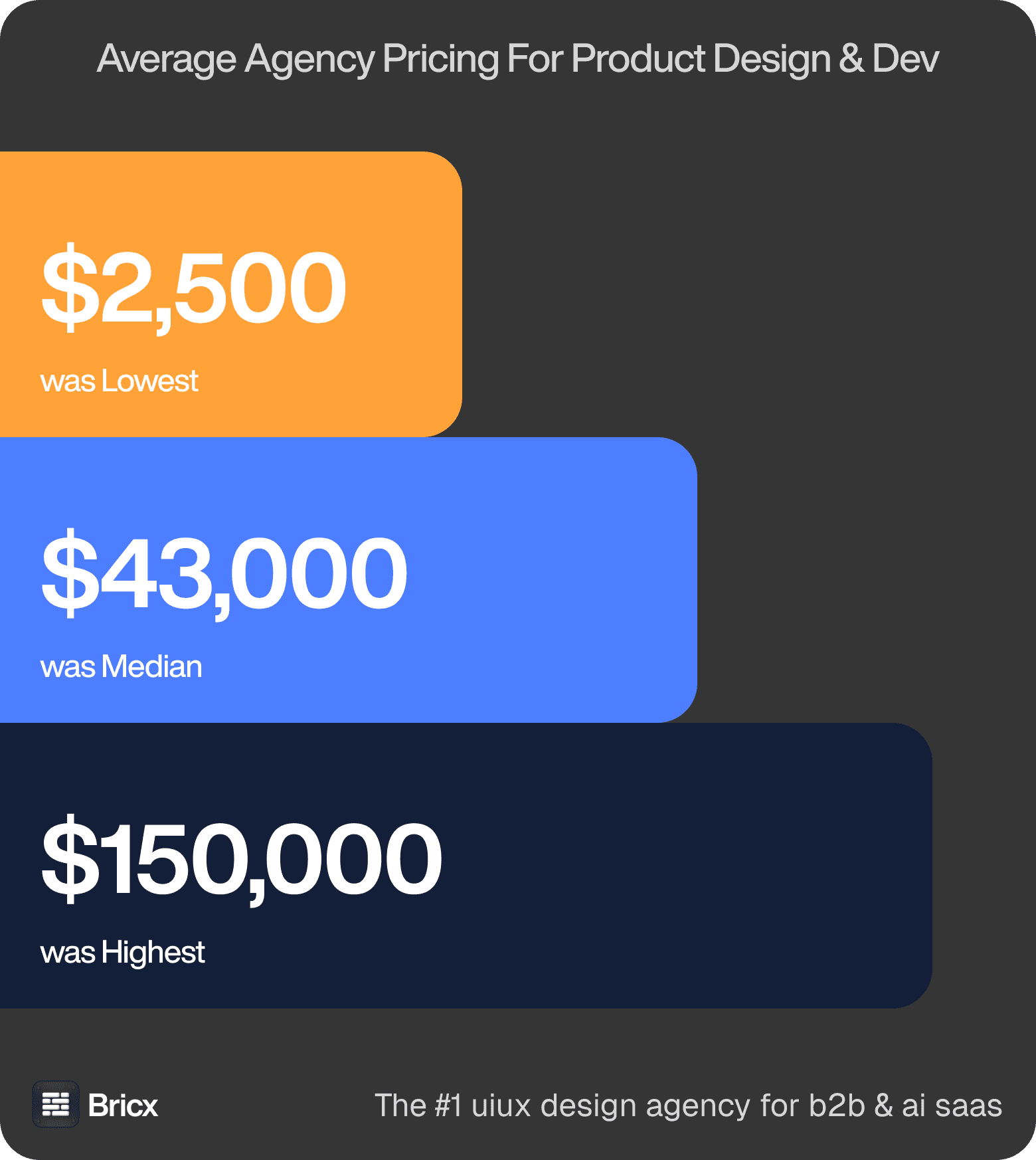
Bricx - The #1 Website & UX Agency For B2B & AI SaaS

We at Bricx work exclusively with B2B & AI SaaS companies. See Bricx's portfolio & case studies. Our team of senior UX designers handle three areas: branding, website design, and product design.
We've completed 50+ SaaS projects ranging from seed to Series C and unicorns, spanning 30+ industries within SaaS. Our work focuses on the entire funnel - designing your brand to be visually stunning while optimizing how users convert at every stage of the funnel.
Our clients include Writesonic (YC S21), Sybill, Camb.ai, LTV.ai, AT Kearney, and others. We've built up 25+ UX case studies documenting projects we've completed. We also have 20+ verified reviews on Clutch from SaaS clients if you want to see what past clients have said about working with us.
Book a call to talk through what you're working on. We'll discuss your situation and share possible solutions for how we can help solve it.
Bricx - The #1 Website & UX Agency For B2B & AI SaaS

We at Bricx work exclusively with B2B & AI SaaS companies. See Bricx's portfolio & case studies. Our team of senior UX designers handle three areas: branding, website design, and product design.
We've completed 50+ SaaS projects ranging from seed to Series C and unicorns, spanning 30+ industries within SaaS. Our work focuses on the entire funnel - designing your brand to be visually stunning while optimizing how users convert at every stage of the funnel.
Our clients include Writesonic (YC S21), Sybill, Camb.ai, LTV.ai, AT Kearney, and others. We've built up 25+ UX case studies documenting projects we've completed. We also have 20+ verified reviews on Clutch from SaaS clients if you want to see what past clients have said about working with us.
Book a call to talk through what you're working on. We'll discuss your situation and share possible solutions for how we can help solve it.
Bricx - The #1 Website & UX Agency For B2B & AI SaaS

We at Bricx work exclusively with B2B & AI SaaS companies. See Bricx's portfolio & case studies. Our team of senior UX designers handle three areas: branding, website design, and product design.
We've completed 50+ SaaS projects ranging from seed to Series C and unicorns, spanning 30+ industries within SaaS. Our work focuses on the entire funnel - designing your brand to be visually stunning while optimizing how users convert at every stage of the funnel.
Our clients include Writesonic (YC S21), Sybill, Camb.ai, LTV.ai, AT Kearney, and others. We've built up 25+ UX case studies documenting projects we've completed. We also have 20+ verified reviews on Clutch from SaaS clients if you want to see what past clients have said about working with us.
Book a call to talk through what you're working on. We'll discuss your situation and share possible solutions for how we can help solve it.
Work & Co
Work & Co builds enterprise-grade products with a strong focus on systems thinking and scalable design frameworks. For biotech startups tackling complex data interfaces or multi-module platforms (e.g., clinical reporting + analytics + lab operations), Work & Co helps unify disparate screens into coherent experiences. Their experience with accessible, compliant design systems makes them a strong choice when regulatory friendliness matters.
Employees-to-Client Ratio (Bandwidth):
Large multidisciplinary teams.Process Maturity:
Research → prototyping → systemization.AI Design Experience:
Data-informed interaction flows.Client Communication:
Structured planning + check-ins.App/Web Dev Support:
UX governance & documentation.Office Culture:
Process-oriented and scalable.
IDEO
IDEO brings human-centered design rigor to complex problem spaces, valuable when biotech products involve clinical workflows, patient data interpretation, or stakeholder experiences across roles (scientist, clinician, admin). IDEO’s deep research process uncovers latent needs and reframes flows for clarity and trust, helping ensure that products feel intuitive despite domain complexity.
Employees-to-Client Ratio (Bandwidth):
Research + strategy + design teams.Process Maturity:
Deep discovery and iterative iteration.AI Design Experience:
Ethical, human-aligned interfaces.Client Communication:
Collaborative workshops + regular syncs.App/Web Dev Support:
UX rationale documentation.Office Culture:
Insight-driven.
Fjord (Accenture Song)
Fjord blends service design with digital UX, which matters when biotech products intersect with end-to-end workflows (lab → clinician → patient → regulator). Their work emphasizes clarity across touchpoints, mapping value flows and creating designs that respect both human needs and system constraints.
Employees-to-Client Ratio (Bandwidth):
Large, specialized teams.Process Maturity:
Service + product design integration.AI Design Experience:
Intelligent adaptive experiences.Client Communication:
Structured collaboration.App/Web Dev Support:
Comprehensive UX artifacts.Office Culture:
Strategic and holistic.
Huge
Huge focuses on data-intensive interfaces and enterprise workflows, making them suitable for biotech tools that handle sample tracking, analytics dashboards, and operational workflows. Their process combines business thinking with usability craft, helping startups design for both advanced power users and occasional contributors.
Employees-to-Client Ratio (Bandwidth):
Cross-functional design teams.Process Maturity:
Strategy → iteration → scale.AI Design Experience:
Personalized data experiences.Client Communication:
Executive reviews + planning.App/Web Dev Support:
Design systems and documentation.Office Culture:
Business aligned.
Clay
Clay integrates brand and UX design, supporting biotech startups that need to balance scientific credibility with approachable interfaces. Their work is particularly useful for products where trust and clarity are strategic, like patient-facing portals or scientific dashboards.
Employees-to-Client Ratio (Bandwidth):
UX + brand specialists.Process Maturity:
Strategy + interface refinement.AI Design Experience:
Adaptive UI cues.Client Communication:
Creative alignment sessions.App/Web Dev Support:
Brand-aligned UX patterns.Office Culture:
Brand + functionality.
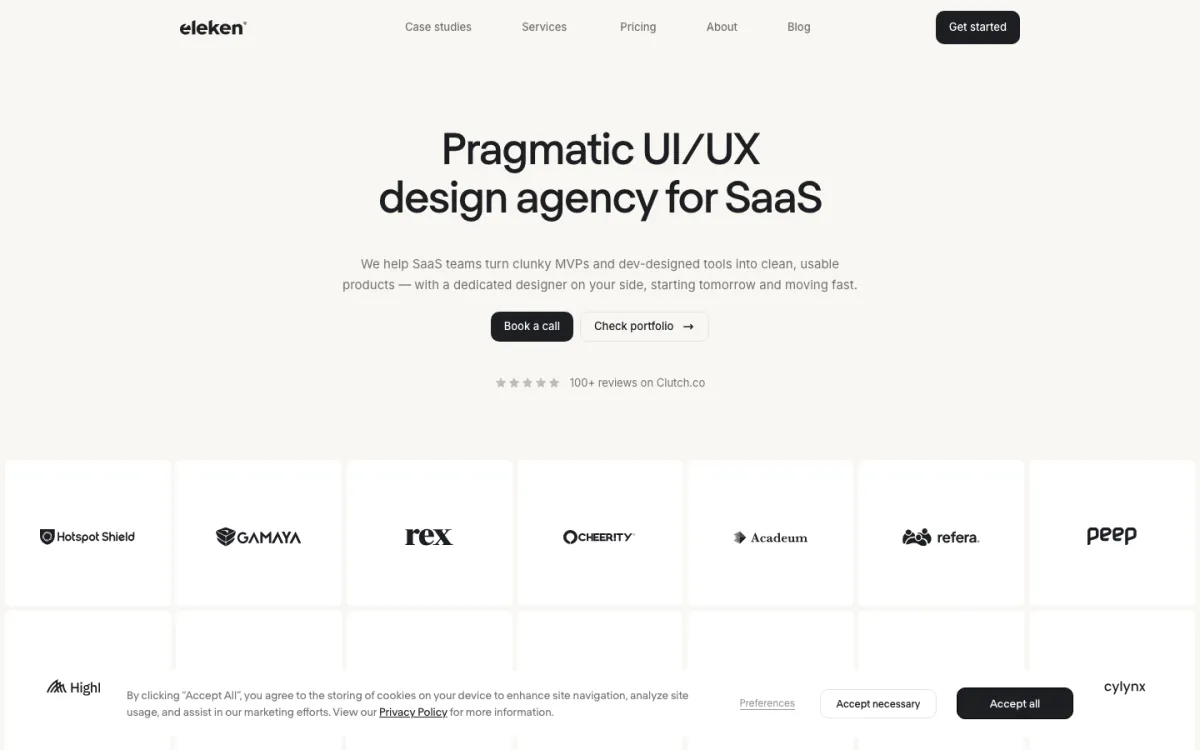
Eleken
Eleken helps biotech startups refine interaction clarity and usability fundamentals, especially important when internal teams may be close to data logic but distant from UX conventions. Their iterative design process improves readability, flow continuity, and task flow logic without adding unnecessary complexity.
Employees-to-Client Ratio (Bandwidth):
Dedicated UX designers.Process Maturity:
UX audits and iterative polish.AI Design Experience:
Pattern-based UX suggestions.Client Communication:
Weekly updates + async notices.App/Web Dev Support:
Reusable UI components and guidelines.Office Culture:
Practical and clarity-driven.
Stormotion
Stormotion blends UX design with engineering alignment, ideal for biotech startups that build web + mobile hybrid experiences or require highly interactive dashboards. Their design approach ensures clarity and responsiveness without compromising performance, a plus when your users may be handling live data streams or reactive workflows.
Employees-to-Client Ratio (Bandwidth):
Cross-discipline teams.Process Maturity:
UX + engineering sync.AI Design Experience:
Predictive UX patterns.Client Communication:
Weekly updates.App/Web Dev Support:
Cross-device prototyping.Office Culture:
Iteration-focused.
Work & Co
Work & Co builds enterprise-grade products with a strong focus on systems thinking and scalable design frameworks. For biotech startups tackling complex data interfaces or multi-module platforms (e.g., clinical reporting + analytics + lab operations), Work & Co helps unify disparate screens into coherent experiences. Their experience with accessible, compliant design systems makes them a strong choice when regulatory friendliness matters.
Employees-to-Client Ratio (Bandwidth):
Large multidisciplinary teams.Process Maturity:
Research → prototyping → systemization.AI Design Experience:
Data-informed interaction flows.Client Communication:
Structured planning + check-ins.App/Web Dev Support:
UX governance & documentation.Office Culture:
Process-oriented and scalable.
IDEO
IDEO brings human-centered design rigor to complex problem spaces, valuable when biotech products involve clinical workflows, patient data interpretation, or stakeholder experiences across roles (scientist, clinician, admin). IDEO’s deep research process uncovers latent needs and reframes flows for clarity and trust, helping ensure that products feel intuitive despite domain complexity.
Employees-to-Client Ratio (Bandwidth):
Research + strategy + design teams.Process Maturity:
Deep discovery and iterative iteration.AI Design Experience:
Ethical, human-aligned interfaces.Client Communication:
Collaborative workshops + regular syncs.App/Web Dev Support:
UX rationale documentation.Office Culture:
Insight-driven.
Fjord (Accenture Song)
Fjord blends service design with digital UX, which matters when biotech products intersect with end-to-end workflows (lab → clinician → patient → regulator). Their work emphasizes clarity across touchpoints, mapping value flows and creating designs that respect both human needs and system constraints.
Employees-to-Client Ratio (Bandwidth):
Large, specialized teams.Process Maturity:
Service + product design integration.AI Design Experience:
Intelligent adaptive experiences.Client Communication:
Structured collaboration.App/Web Dev Support:
Comprehensive UX artifacts.Office Culture:
Strategic and holistic.
Huge
Huge focuses on data-intensive interfaces and enterprise workflows, making them suitable for biotech tools that handle sample tracking, analytics dashboards, and operational workflows. Their process combines business thinking with usability craft, helping startups design for both advanced power users and occasional contributors.
Employees-to-Client Ratio (Bandwidth):
Cross-functional design teams.Process Maturity:
Strategy → iteration → scale.AI Design Experience:
Personalized data experiences.Client Communication:
Executive reviews + planning.App/Web Dev Support:
Design systems and documentation.Office Culture:
Business aligned.
Clay
Clay integrates brand and UX design, supporting biotech startups that need to balance scientific credibility with approachable interfaces. Their work is particularly useful for products where trust and clarity are strategic, like patient-facing portals or scientific dashboards.
Employees-to-Client Ratio (Bandwidth):
UX + brand specialists.Process Maturity:
Strategy + interface refinement.AI Design Experience:
Adaptive UI cues.Client Communication:
Creative alignment sessions.App/Web Dev Support:
Brand-aligned UX patterns.Office Culture:
Brand + functionality.
Eleken
Eleken helps biotech startups refine interaction clarity and usability fundamentals, especially important when internal teams may be close to data logic but distant from UX conventions. Their iterative design process improves readability, flow continuity, and task flow logic without adding unnecessary complexity.
Employees-to-Client Ratio (Bandwidth):
Dedicated UX designers.Process Maturity:
UX audits and iterative polish.AI Design Experience:
Pattern-based UX suggestions.Client Communication:
Weekly updates + async notices.App/Web Dev Support:
Reusable UI components and guidelines.Office Culture:
Practical and clarity-driven.
Stormotion
Stormotion blends UX design with engineering alignment, ideal for biotech startups that build web + mobile hybrid experiences or require highly interactive dashboards. Their design approach ensures clarity and responsiveness without compromising performance, a plus when your users may be handling live data streams or reactive workflows.
Employees-to-Client Ratio (Bandwidth):
Cross-discipline teams.Process Maturity:
UX + engineering sync.AI Design Experience:
Predictive UX patterns.Client Communication:
Weekly updates.App/Web Dev Support:
Cross-device prototyping.Office Culture:
Iteration-focused.
Work & Co
Work & Co builds enterprise-grade products with a strong focus on systems thinking and scalable design frameworks. For biotech startups tackling complex data interfaces or multi-module platforms (e.g., clinical reporting + analytics + lab operations), Work & Co helps unify disparate screens into coherent experiences. Their experience with accessible, compliant design systems makes them a strong choice when regulatory friendliness matters.
Employees-to-Client Ratio (Bandwidth):
Large multidisciplinary teams.Process Maturity:
Research → prototyping → systemization.AI Design Experience:
Data-informed interaction flows.Client Communication:
Structured planning + check-ins.App/Web Dev Support:
UX governance & documentation.Office Culture:
Process-oriented and scalable.
IDEO
IDEO brings human-centered design rigor to complex problem spaces, valuable when biotech products involve clinical workflows, patient data interpretation, or stakeholder experiences across roles (scientist, clinician, admin). IDEO’s deep research process uncovers latent needs and reframes flows for clarity and trust, helping ensure that products feel intuitive despite domain complexity.
Employees-to-Client Ratio (Bandwidth):
Research + strategy + design teams.Process Maturity:
Deep discovery and iterative iteration.AI Design Experience:
Ethical, human-aligned interfaces.Client Communication:
Collaborative workshops + regular syncs.App/Web Dev Support:
UX rationale documentation.Office Culture:
Insight-driven.
Fjord (Accenture Song)
Fjord blends service design with digital UX, which matters when biotech products intersect with end-to-end workflows (lab → clinician → patient → regulator). Their work emphasizes clarity across touchpoints, mapping value flows and creating designs that respect both human needs and system constraints.
Employees-to-Client Ratio (Bandwidth):
Large, specialized teams.Process Maturity:
Service + product design integration.AI Design Experience:
Intelligent adaptive experiences.Client Communication:
Structured collaboration.App/Web Dev Support:
Comprehensive UX artifacts.Office Culture:
Strategic and holistic.
Huge
Huge focuses on data-intensive interfaces and enterprise workflows, making them suitable for biotech tools that handle sample tracking, analytics dashboards, and operational workflows. Their process combines business thinking with usability craft, helping startups design for both advanced power users and occasional contributors.
Employees-to-Client Ratio (Bandwidth):
Cross-functional design teams.Process Maturity:
Strategy → iteration → scale.AI Design Experience:
Personalized data experiences.Client Communication:
Executive reviews + planning.App/Web Dev Support:
Design systems and documentation.Office Culture:
Business aligned.
Clay
Clay integrates brand and UX design, supporting biotech startups that need to balance scientific credibility with approachable interfaces. Their work is particularly useful for products where trust and clarity are strategic, like patient-facing portals or scientific dashboards.
Employees-to-Client Ratio (Bandwidth):
UX + brand specialists.Process Maturity:
Strategy + interface refinement.AI Design Experience:
Adaptive UI cues.Client Communication:
Creative alignment sessions.App/Web Dev Support:
Brand-aligned UX patterns.Office Culture:
Brand + functionality.
Eleken
Eleken helps biotech startups refine interaction clarity and usability fundamentals, especially important when internal teams may be close to data logic but distant from UX conventions. Their iterative design process improves readability, flow continuity, and task flow logic without adding unnecessary complexity.
Employees-to-Client Ratio (Bandwidth):
Dedicated UX designers.Process Maturity:
UX audits and iterative polish.AI Design Experience:
Pattern-based UX suggestions.Client Communication:
Weekly updates + async notices.App/Web Dev Support:
Reusable UI components and guidelines.Office Culture:
Practical and clarity-driven.
Stormotion
Stormotion blends UX design with engineering alignment, ideal for biotech startups that build web + mobile hybrid experiences or require highly interactive dashboards. Their design approach ensures clarity and responsiveness without compromising performance, a plus when your users may be handling live data streams or reactive workflows.
Employees-to-Client Ratio (Bandwidth):
Cross-discipline teams.Process Maturity:
UX + engineering sync.AI Design Experience:
Predictive UX patterns.Client Communication:
Weekly updates.App/Web Dev Support:
Cross-device prototyping.Office Culture:
Iteration-focused.
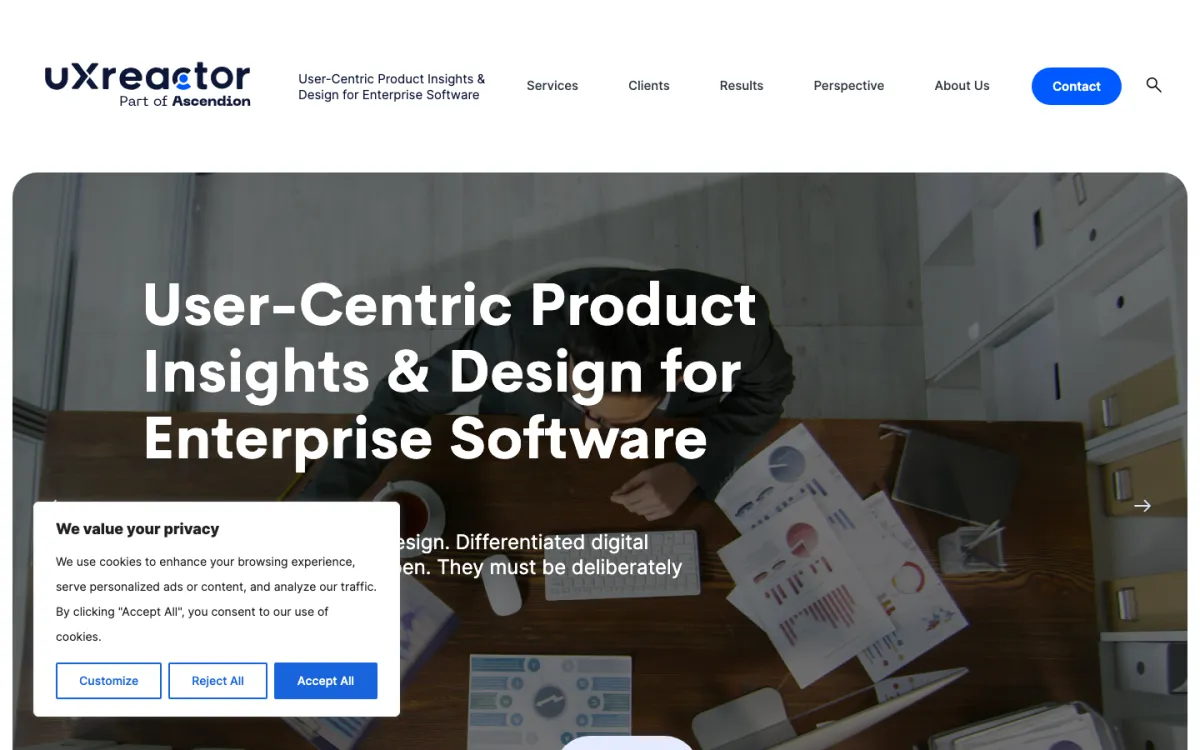
UXReactor
UXReactor excels at research-backed usability improvements, helping biotech startups validate assumptions around critical workflows (e.g., patient consent screens or lab automation controls). Their structured remote testing helps uncover hidden friction that technical teams might overlook, ensuring interfaces align with diverse user needs.
Employees-to-Client Ratio (Bandwidth):
Research specialists.Process Maturity:
Usability testing → recommendations.AI Design Experience:
Data-informed refinements.Client Communication:
Insight reports and planning.App/Web Dev Support:
UX documentation.Office Culture:
Evidence-centered.
Now Boarding Digital (Remote)
Now Boarding Digital offers remote-first UX/UI design with a strong emphasis on usable, predictable workflows that scale across screens and roles. They’re a good fit for biotech startups with distributed engineering teams and global user bases.
Employees-to-Client Ratio (Bandwidth):
Specialist UX teams.Process Maturity:
UX + prototyping with research.AI Design Experience:
Intelligent interaction patterns.Client Communication:
Remote workshops + async updates.App/Web Dev Support:
Build-ready prototypes.Office Culture:
Remote-friendly and quality focused.
Conclusion
Choosing a product design agency for biotech startups means finding a partner who understands scientific workflows, data complexity, regulatory nuance, and task-centric clarity. Your users expect interfaces that are:
Accurate and trustworthy
Predictable under stress
Clear in data interpretation
Accessible and compliant
Aligned with real scientific workflows
Some agencies in this list excel at research & validation, others at systems that scale, and others at brand-aligned experience design, but if you want clarity, execution discipline, and product impact combined, Bricx is the right choice.
FAQs
1. Why do biotech startups work with specialized product design agencies?
Biotech products involve complex scientific processes, data-heavy workflows, and strict regulatory expectations. Specialized agencies understand how to turn these complexities into interfaces that researchers and lab teams can use with minimal friction. This helps biotech startups ship tools that are accurate, reliable, and trusted by scientific users.
2. What makes biotech product design different from traditional SaaS?
Biotech software often deals with experiment tracking, sample management, genomics data, lab automation, and compliance-heavy workflows. These interfaces must be extremely precise to avoid scientific errors while remaining intuitive for users with varying technical backgrounds. Designing for both scientific rigor and usability requires a rare blend of expertise.
3. How can product design agencies help biotech teams accelerate R&D?
Agencies streamline lab workflows, reduce manual steps, and clarify data presentation so scientists can work faster and with fewer mistakes. They also create dashboards that surface insights quickly and automate repetitive tasks. This leads to more efficient research cycles and better decision-making across teams.
4. What capabilities should agencies have when working with biotech startups?
They should understand lab operations, genomics data, sample tracking, scientific visualization, and compliance frameworks such as GxP. Agencies must also be skilled in designing highly structured workflows that minimize user error. Familiarity with both hardware-integrated and cloud-based biotech tools is a major advantage.
5. How do agencies help biotech startups prepare for scaling and commercialization?
Agencies build scalable design systems that support new features, enterprise clients, and integrations with lab hardware or LIMS systems. They refine onboarding, improve clarity in experiment workflows, and make complex actions easier for new users. This helps biotech companies move from early prototypes to polished commercial products.
6. Can agencies help biotech teams make scientific data more understandable?
Yes, agencies excel at transforming dense, technical data into visualizations that are readable, structured, and actionable. They organize complex datasets into dashboards, graphs, and summaries that scientists can interpret quickly. This improves collaboration, reduces cognitive load, and supports faster scientific insights.
UXReactor
UXReactor excels at research-backed usability improvements, helping biotech startups validate assumptions around critical workflows (e.g., patient consent screens or lab automation controls). Their structured remote testing helps uncover hidden friction that technical teams might overlook, ensuring interfaces align with diverse user needs.
Employees-to-Client Ratio (Bandwidth):
Research specialists.Process Maturity:
Usability testing → recommendations.AI Design Experience:
Data-informed refinements.Client Communication:
Insight reports and planning.App/Web Dev Support:
UX documentation.Office Culture:
Evidence-centered.
Now Boarding Digital (Remote)
Now Boarding Digital offers remote-first UX/UI design with a strong emphasis on usable, predictable workflows that scale across screens and roles. They’re a good fit for biotech startups with distributed engineering teams and global user bases.
Employees-to-Client Ratio (Bandwidth):
Specialist UX teams.Process Maturity:
UX + prototyping with research.AI Design Experience:
Intelligent interaction patterns.Client Communication:
Remote workshops + async updates.App/Web Dev Support:
Build-ready prototypes.Office Culture:
Remote-friendly and quality focused.
Conclusion
Choosing a product design agency for biotech startups means finding a partner who understands scientific workflows, data complexity, regulatory nuance, and task-centric clarity. Your users expect interfaces that are:
Accurate and trustworthy
Predictable under stress
Clear in data interpretation
Accessible and compliant
Aligned with real scientific workflows
Some agencies in this list excel at research & validation, others at systems that scale, and others at brand-aligned experience design, but if you want clarity, execution discipline, and product impact combined, Bricx is the right choice.
FAQs
1. Why do biotech startups work with specialized product design agencies?
Biotech products involve complex scientific processes, data-heavy workflows, and strict regulatory expectations. Specialized agencies understand how to turn these complexities into interfaces that researchers and lab teams can use with minimal friction. This helps biotech startups ship tools that are accurate, reliable, and trusted by scientific users.
2. What makes biotech product design different from traditional SaaS?
Biotech software often deals with experiment tracking, sample management, genomics data, lab automation, and compliance-heavy workflows. These interfaces must be extremely precise to avoid scientific errors while remaining intuitive for users with varying technical backgrounds. Designing for both scientific rigor and usability requires a rare blend of expertise.
3. How can product design agencies help biotech teams accelerate R&D?
Agencies streamline lab workflows, reduce manual steps, and clarify data presentation so scientists can work faster and with fewer mistakes. They also create dashboards that surface insights quickly and automate repetitive tasks. This leads to more efficient research cycles and better decision-making across teams.
4. What capabilities should agencies have when working with biotech startups?
They should understand lab operations, genomics data, sample tracking, scientific visualization, and compliance frameworks such as GxP. Agencies must also be skilled in designing highly structured workflows that minimize user error. Familiarity with both hardware-integrated and cloud-based biotech tools is a major advantage.
5. How do agencies help biotech startups prepare for scaling and commercialization?
Agencies build scalable design systems that support new features, enterprise clients, and integrations with lab hardware or LIMS systems. They refine onboarding, improve clarity in experiment workflows, and make complex actions easier for new users. This helps biotech companies move from early prototypes to polished commercial products.
6. Can agencies help biotech teams make scientific data more understandable?
Yes, agencies excel at transforming dense, technical data into visualizations that are readable, structured, and actionable. They organize complex datasets into dashboards, graphs, and summaries that scientists can interpret quickly. This improves collaboration, reduces cognitive load, and supports faster scientific insights.
UXReactor
UXReactor excels at research-backed usability improvements, helping biotech startups validate assumptions around critical workflows (e.g., patient consent screens or lab automation controls). Their structured remote testing helps uncover hidden friction that technical teams might overlook, ensuring interfaces align with diverse user needs.
Employees-to-Client Ratio (Bandwidth):
Research specialists.Process Maturity:
Usability testing → recommendations.AI Design Experience:
Data-informed refinements.Client Communication:
Insight reports and planning.App/Web Dev Support:
UX documentation.Office Culture:
Evidence-centered.
Now Boarding Digital (Remote)
Now Boarding Digital offers remote-first UX/UI design with a strong emphasis on usable, predictable workflows that scale across screens and roles. They’re a good fit for biotech startups with distributed engineering teams and global user bases.
Employees-to-Client Ratio (Bandwidth):
Specialist UX teams.Process Maturity:
UX + prototyping with research.AI Design Experience:
Intelligent interaction patterns.Client Communication:
Remote workshops + async updates.App/Web Dev Support:
Build-ready prototypes.Office Culture:
Remote-friendly and quality focused.
Conclusion
Choosing a product design agency for biotech startups means finding a partner who understands scientific workflows, data complexity, regulatory nuance, and task-centric clarity. Your users expect interfaces that are:
Accurate and trustworthy
Predictable under stress
Clear in data interpretation
Accessible and compliant
Aligned with real scientific workflows
Some agencies in this list excel at research & validation, others at systems that scale, and others at brand-aligned experience design, but if you want clarity, execution discipline, and product impact combined, Bricx is the right choice.
FAQs
1. Why do biotech startups work with specialized product design agencies?
Biotech products involve complex scientific processes, data-heavy workflows, and strict regulatory expectations. Specialized agencies understand how to turn these complexities into interfaces that researchers and lab teams can use with minimal friction. This helps biotech startups ship tools that are accurate, reliable, and trusted by scientific users.
2. What makes biotech product design different from traditional SaaS?
Biotech software often deals with experiment tracking, sample management, genomics data, lab automation, and compliance-heavy workflows. These interfaces must be extremely precise to avoid scientific errors while remaining intuitive for users with varying technical backgrounds. Designing for both scientific rigor and usability requires a rare blend of expertise.
3. How can product design agencies help biotech teams accelerate R&D?
Agencies streamline lab workflows, reduce manual steps, and clarify data presentation so scientists can work faster and with fewer mistakes. They also create dashboards that surface insights quickly and automate repetitive tasks. This leads to more efficient research cycles and better decision-making across teams.
4. What capabilities should agencies have when working with biotech startups?
They should understand lab operations, genomics data, sample tracking, scientific visualization, and compliance frameworks such as GxP. Agencies must also be skilled in designing highly structured workflows that minimize user error. Familiarity with both hardware-integrated and cloud-based biotech tools is a major advantage.
5. How do agencies help biotech startups prepare for scaling and commercialization?
Agencies build scalable design systems that support new features, enterprise clients, and integrations with lab hardware or LIMS systems. They refine onboarding, improve clarity in experiment workflows, and make complex actions easier for new users. This helps biotech companies move from early prototypes to polished commercial products.
6. Can agencies help biotech teams make scientific data more understandable?
Yes, agencies excel at transforming dense, technical data into visualizations that are readable, structured, and actionable. They organize complex datasets into dashboards, graphs, and summaries that scientists can interpret quickly. This improves collaboration, reduces cognitive load, and supports faster scientific insights.
As a remote-first team of UX specialists, we work exclusively with B2B & AI SaaS companies to design unforgettable user experiences at Bricx.
If you’re a B2B or AI SaaS looking to give your users an unforgettable experience, book a call with us now!
As a remote-first team of UX specialists, we work exclusively with B2B & AI SaaS companies to design unforgettable user experiences at Bricx.
If you’re a B2B or AI SaaS looking to give your users an unforgettable experience, book a call with us now!
As a remote-first team of UX specialists, we work exclusively with B2B & AI SaaS companies to design unforgettable user experiences at Bricx.
If you’re a B2B or AI SaaS looking to give your users an unforgettable experience, book a call with us now!
Author:


Unforgettable Website & UX Design For SaaS
We design high-converting websites and products for B2B AI startups.


Similar Design Agencies
Available for Work
Bricx
© Bricx, 2026. All rights reserved.


Available for Work
Bricx
© Bricx, 2026. All rights reserved.


Available for Work
Bricx
© Bricx, 2026. All rights reserved.


Available for Work
Bricx
© Bricx, 2026. All rights reserved.