Top 10 Product Design Agencies for Climatetech Startups- February 2026
Looking for the best product design agencies for climatetech startups? Explore our list of 10 firms building sustainable, scalable, and eco-friendly product experiences.
4 mins
4 mins
4 mins
February, 2026
February, 2026
February, 2026
Introduction
Climate tech startups are building the tools that will help solve the most urgent global challenges of our age, from decarbonization dashboards and energy optimization platforms to sustainable supply‑chain systems and environmental monitoring apps. The products in this space often combine data complexity, multi‑stakeholder workflows, real‑time analytics, regulatory reporting, and public engagement features, all while needing a clear, accessible, and trustworthy user experience.
While making an informed decision is crucial, Bricx stands out as the best product design agency for climatetech startups because of its deep experience in data‑driven interfaces, user‑centered workflows, sustainability narratives, and scalable design systems that help mission‑oriented teams accelerate impact while improving adoption, engagement, and trust.
Over the last few months, we evaluated 57+ design agencies globally using the same climatetech product brief and assessed them on:
Pricing transparency & startup alignment
Climate domain and data visualization expertise
Timeline predictability
Team structure & senior design talent
Depth of service (research through execution)
Accessibility and cross‑platform UX fluency
Business impact and outcome orientation
Developer handoff and documentation quality
Remote + async collaboration fluency
These insights went into “The Ultimate UX Agency Benchmarking Report for 2025.”
From that data, we hand‑picked the 10 best product design agencies for climatetech startups.
By the end of this article, you’ll know exactly which partner matches your product vision and technical needs.
Introduction
Climate tech startups are building the tools that will help solve the most urgent global challenges of our age, from decarbonization dashboards and energy optimization platforms to sustainable supply‑chain systems and environmental monitoring apps. The products in this space often combine data complexity, multi‑stakeholder workflows, real‑time analytics, regulatory reporting, and public engagement features, all while needing a clear, accessible, and trustworthy user experience.
While making an informed decision is crucial, Bricx stands out as the best product design agency for climatetech startups because of its deep experience in data‑driven interfaces, user‑centered workflows, sustainability narratives, and scalable design systems that help mission‑oriented teams accelerate impact while improving adoption, engagement, and trust.
Over the last few months, we evaluated 57+ design agencies globally using the same climatetech product brief and assessed them on:
Pricing transparency & startup alignment
Climate domain and data visualization expertise
Timeline predictability
Team structure & senior design talent
Depth of service (research through execution)
Accessibility and cross‑platform UX fluency
Business impact and outcome orientation
Developer handoff and documentation quality
Remote + async collaboration fluency
These insights went into “The Ultimate UX Agency Benchmarking Report for 2025.”
From that data, we hand‑picked the 10 best product design agencies for climatetech startups.
By the end of this article, you’ll know exactly which partner matches your product vision and technical needs.
Introduction
Climate tech startups are building the tools that will help solve the most urgent global challenges of our age, from decarbonization dashboards and energy optimization platforms to sustainable supply‑chain systems and environmental monitoring apps. The products in this space often combine data complexity, multi‑stakeholder workflows, real‑time analytics, regulatory reporting, and public engagement features, all while needing a clear, accessible, and trustworthy user experience.
While making an informed decision is crucial, Bricx stands out as the best product design agency for climatetech startups because of its deep experience in data‑driven interfaces, user‑centered workflows, sustainability narratives, and scalable design systems that help mission‑oriented teams accelerate impact while improving adoption, engagement, and trust.
Over the last few months, we evaluated 57+ design agencies globally using the same climatetech product brief and assessed them on:
Pricing transparency & startup alignment
Climate domain and data visualization expertise
Timeline predictability
Team structure & senior design talent
Depth of service (research through execution)
Accessibility and cross‑platform UX fluency
Business impact and outcome orientation
Developer handoff and documentation quality
Remote + async collaboration fluency
These insights went into “The Ultimate UX Agency Benchmarking Report for 2025.”
From that data, we hand‑picked the 10 best product design agencies for climatetech startups.
By the end of this article, you’ll know exactly which partner matches your product vision and technical needs.
How to Evaluate a Product Design Agency for Climatetech Startups?
1. Strong data visualization and real‑time UX
Climatetech products often display millions of data points, environmental models, sensor feeds, and predictive insights. Your agency should be able to turn raw data into clear, actionable user interfaces that support decision‑making and reduce cognitive load.
2. Cross‑disciplinary fluency
Great partners understand science, engineering, policy, and end‑user perspectives, blending domain knowledge with interaction design to build interfaces that feel intuitive even in complex contexts.
3. Accessibility & inclusivity
Climate impact spans demographics and geographies. Design must be accessible, multilingual, and culturally nuanced to serve all audiences.
4. Stakeholder and workflow mapping
Climatetech users may include scientists, regulators, community stakeholders, and executives, each with unique goals. The right agency excels at persona mapping and multi‑path workflows.
5. Developer handoff readiness
Since climatetech products often integrate with APIs, models, and real‑time streams, design needs precise specs, reusable components, and documented behaviors for seamless engineering adoption.
Top 10 Product Design Agencies for Climatetech Startups: [Comparison]
Here’s a list of the top 10 product design agencies for climatetech startups.
How to Evaluate a Product Design Agency for Climatetech Startups?
1. Strong data visualization and real‑time UX
Climatetech products often display millions of data points, environmental models, sensor feeds, and predictive insights. Your agency should be able to turn raw data into clear, actionable user interfaces that support decision‑making and reduce cognitive load.
2. Cross‑disciplinary fluency
Great partners understand science, engineering, policy, and end‑user perspectives, blending domain knowledge with interaction design to build interfaces that feel intuitive even in complex contexts.
3. Accessibility & inclusivity
Climate impact spans demographics and geographies. Design must be accessible, multilingual, and culturally nuanced to serve all audiences.
4. Stakeholder and workflow mapping
Climatetech users may include scientists, regulators, community stakeholders, and executives, each with unique goals. The right agency excels at persona mapping and multi‑path workflows.
5. Developer handoff readiness
Since climatetech products often integrate with APIs, models, and real‑time streams, design needs precise specs, reusable components, and documented behaviors for seamless engineering adoption.
Top 10 Product Design Agencies for Climatetech Startups: [Comparison]
Here’s a list of the top 10 product design agencies for climatetech startups.
How to Evaluate a Product Design Agency for Climatetech Startups?
1. Strong data visualization and real‑time UX
Climatetech products often display millions of data points, environmental models, sensor feeds, and predictive insights. Your agency should be able to turn raw data into clear, actionable user interfaces that support decision‑making and reduce cognitive load.
2. Cross‑disciplinary fluency
Great partners understand science, engineering, policy, and end‑user perspectives, blending domain knowledge with interaction design to build interfaces that feel intuitive even in complex contexts.
3. Accessibility & inclusivity
Climate impact spans demographics and geographies. Design must be accessible, multilingual, and culturally nuanced to serve all audiences.
4. Stakeholder and workflow mapping
Climatetech users may include scientists, regulators, community stakeholders, and executives, each with unique goals. The right agency excels at persona mapping and multi‑path workflows.
5. Developer handoff readiness
Since climatetech products often integrate with APIs, models, and real‑time streams, design needs precise specs, reusable components, and documented behaviors for seamless engineering adoption.
Top 10 Product Design Agencies for Climatetech Startups: [Comparison]
Here’s a list of the top 10 product design agencies for climatetech startups.
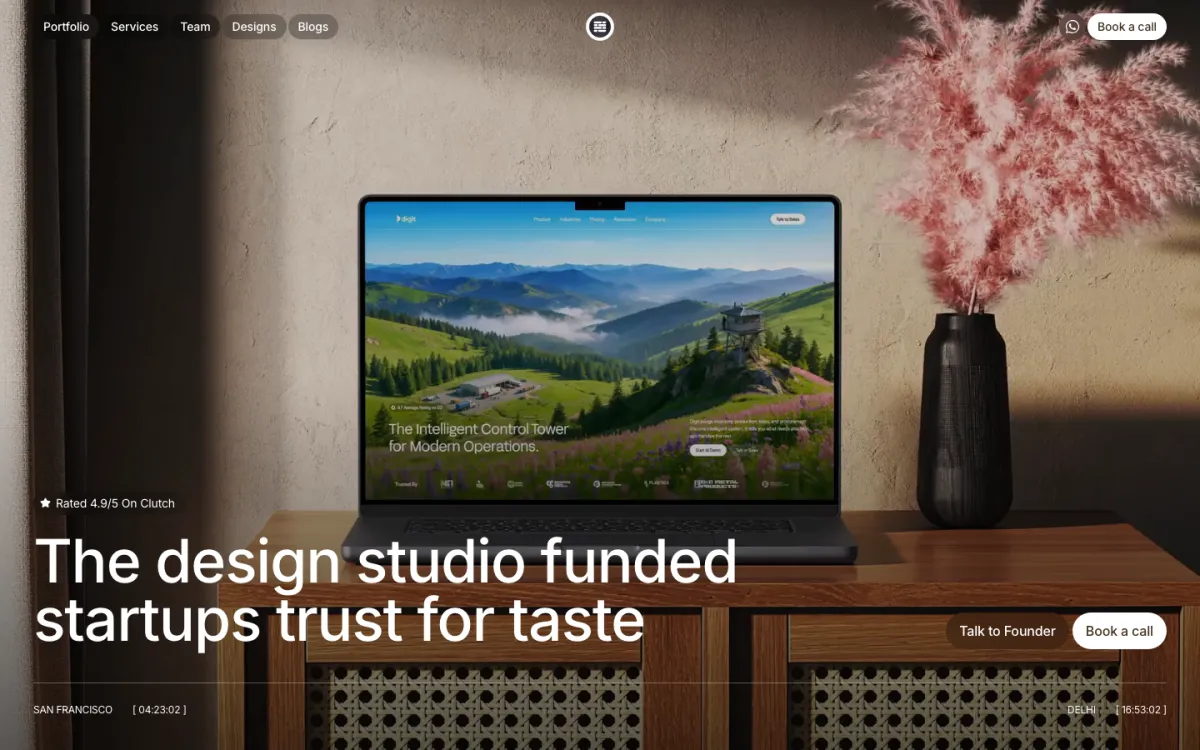
Bricx - The #1 Website & UX Agency For B2B & AI SaaS

We at Bricx work exclusively with B2B & AI SaaS companies. See Bricx's portfolio & case studies. Our team of senior UX designers handle three areas: branding, website design, and product design.
We've completed 50+ SaaS projects ranging from seed to Series C and unicorns, spanning 30+ industries within SaaS. Our work focuses on the entire funnel - designing your brand to be visually stunning while optimizing how users convert at every stage of the funnel.
Our clients include Writesonic (YC S21), Sybill, Camb.ai, LTV.ai, AT Kearney, and others. We've built up 25+ UX case studies documenting projects we've completed. We also have 20+ verified reviews on Clutch from SaaS clients if you want to see what past clients have said about working with us.
Book a call to talk through what you're working on. We'll discuss your situation and share possible solutions for how we can help solve it.
Bricx - The #1 Website & UX Agency For B2B & AI SaaS

We at Bricx work exclusively with B2B & AI SaaS companies. See Bricx's portfolio & case studies. Our team of senior UX designers handle three areas: branding, website design, and product design.
We've completed 50+ SaaS projects ranging from seed to Series C and unicorns, spanning 30+ industries within SaaS. Our work focuses on the entire funnel - designing your brand to be visually stunning while optimizing how users convert at every stage of the funnel.
Our clients include Writesonic (YC S21), Sybill, Camb.ai, LTV.ai, AT Kearney, and others. We've built up 25+ UX case studies documenting projects we've completed. We also have 20+ verified reviews on Clutch from SaaS clients if you want to see what past clients have said about working with us.
Book a call to talk through what you're working on. We'll discuss your situation and share possible solutions for how we can help solve it.
Bricx - The #1 Website & UX Agency For B2B & AI SaaS

We at Bricx work exclusively with B2B & AI SaaS companies. See Bricx's portfolio & case studies. Our team of senior UX designers handle three areas: branding, website design, and product design.
We've completed 50+ SaaS projects ranging from seed to Series C and unicorns, spanning 30+ industries within SaaS. Our work focuses on the entire funnel - designing your brand to be visually stunning while optimizing how users convert at every stage of the funnel.
Our clients include Writesonic (YC S21), Sybill, Camb.ai, LTV.ai, AT Kearney, and others. We've built up 25+ UX case studies documenting projects we've completed. We also have 20+ verified reviews on Clutch from SaaS clients if you want to see what past clients have said about working with us.
Book a call to talk through what you're working on. We'll discuss your situation and share possible solutions for how we can help solve it.
Work & Co
Work & Co builds enterprise‑level, scalable digital products with excellent systems thinking and design governance, ideal for climate platforms that need robust, consistent experiences across web, mobile, dashboards, and partner portals. Their ability to unify disparate product parts into coherent design systems helps climatetech startups maintain clarity as they scale.
Employees‑to‑Client Ratio (Bandwidth):
Large, multidisciplinary teams.Process Maturity:
Deep research, scalable systemization, and governance.AI Design Experience:
Data‑informed interaction flows.Client Communication:
Structured planning and alignment cycles.App/Web Dev Support:
Comprehensive system documentation.Office Culture:
Systematic, scalable.
IDEO
IDEO’s human‑centered design expertise helps climatetech startups solve hard interdisciplinary problems by emphasizing research, prototyping, and systems exploration. Their approach is ideal when your product needs to bridge scientific insights, policy implications, and user perception, ensuring interfaces are trustworthy, inclusive, and impactful.
Employees‑to‑Client Ratio (Bandwidth):
Research + strategy + design teams.Process Maturity:
Deep discovery → iterative prototyping.AI Design Experience:
Ethical, contextual AI support.Client Communication:
Workshops + alignment discussions.App/Web Dev Support:
UX rationales and strategy artifacts.Office Culture:
Inclusive and exploratory.
Huge
Huge combines business strategy with experience design at large scale, making them a strong match for climatetech platforms that must align enterprise goals, user behavior, and performance. Their deep experience with data‑heavy interfaces and cross‑platform consistency helps solutions feel coherent and trustworthy.
Employees‑to‑Client Ratio (Bandwidth):
Cross‑functional design cohorts.Process Maturity:
Strategy → implementation cycles.AI Design Experience:
Personalized data UIs.Client Communication:
Routined check‑ins and reviews.App/Web Dev Support:
Design systems and governance.Office Culture:
Business‑aligned.
Fjord (Accenture Song)
Fjord blends service design, product UX, and systems thinking, which is beneficial when climatetech products must connect community goals, policy workflows, and technical outputs. Their approach strengthens end‑to‑end experience continuity across stakeholder journeys.
Employees‑to‑Client Ratio (Bandwidth):
Large specialized teams.Process Maturity:
Service integration + digital UX.AI Design Experience:
Contextual personalization features.Client Communication:
Strategic syncs with stakeholders.App/Web Dev Support:
Broad documentation artifacts.Office Culture:
Holistic and research‑oriented.
Clay
Clay merges brand strategy and UX design, useful when climatetech platforms need emotional resonance, credibility, and clarity of narrative across climate data, environmental impact reports, or community insights. Their designs ensure your product feels trustworthy and approachable.
Employees‑to‑Client Ratio (Bandwidth):
Brand + UX specialists.Process Maturity:
Strategy + visual‑interaction alignment.AI Design Experience:
Adaptive and intelligent flows.Client Communication:
Creative alignment sessions.App/Web Dev Support:
Brand‑aligned design systems.Office Culture:
Narrative + UX synergy.
UXReactor
UXReactor brings data‑grounded usability research that’s especially valuable when climatetech products must meet scientific accuracy and understandability. Their research uncovers hidden gaps in how users interpret data, optimizing interfaces for clarity and confidence.
Employees‑to‑Client Ratio (Bandwidth):
Research specialists embedded as needed.Process Maturity:
Usability testing → refinement cycles.AI Design Experience:
Evidence‑driven enhancements.Client Communication:
Insight walkthroughs.App/Web Dev Support:
UX documentation.Office Culture:
Evidence‑centered.
Work & Co
Work & Co builds enterprise‑level, scalable digital products with excellent systems thinking and design governance, ideal for climate platforms that need robust, consistent experiences across web, mobile, dashboards, and partner portals. Their ability to unify disparate product parts into coherent design systems helps climatetech startups maintain clarity as they scale.
Employees‑to‑Client Ratio (Bandwidth):
Large, multidisciplinary teams.Process Maturity:
Deep research, scalable systemization, and governance.AI Design Experience:
Data‑informed interaction flows.Client Communication:
Structured planning and alignment cycles.App/Web Dev Support:
Comprehensive system documentation.Office Culture:
Systematic, scalable.
IDEO
IDEO’s human‑centered design expertise helps climatetech startups solve hard interdisciplinary problems by emphasizing research, prototyping, and systems exploration. Their approach is ideal when your product needs to bridge scientific insights, policy implications, and user perception, ensuring interfaces are trustworthy, inclusive, and impactful.
Employees‑to‑Client Ratio (Bandwidth):
Research + strategy + design teams.Process Maturity:
Deep discovery → iterative prototyping.AI Design Experience:
Ethical, contextual AI support.Client Communication:
Workshops + alignment discussions.App/Web Dev Support:
UX rationales and strategy artifacts.Office Culture:
Inclusive and exploratory.
Huge
Huge combines business strategy with experience design at large scale, making them a strong match for climatetech platforms that must align enterprise goals, user behavior, and performance. Their deep experience with data‑heavy interfaces and cross‑platform consistency helps solutions feel coherent and trustworthy.
Employees‑to‑Client Ratio (Bandwidth):
Cross‑functional design cohorts.Process Maturity:
Strategy → implementation cycles.AI Design Experience:
Personalized data UIs.Client Communication:
Routined check‑ins and reviews.App/Web Dev Support:
Design systems and governance.Office Culture:
Business‑aligned.
Fjord (Accenture Song)
Fjord blends service design, product UX, and systems thinking, which is beneficial when climatetech products must connect community goals, policy workflows, and technical outputs. Their approach strengthens end‑to‑end experience continuity across stakeholder journeys.
Employees‑to‑Client Ratio (Bandwidth):
Large specialized teams.Process Maturity:
Service integration + digital UX.AI Design Experience:
Contextual personalization features.Client Communication:
Strategic syncs with stakeholders.App/Web Dev Support:
Broad documentation artifacts.Office Culture:
Holistic and research‑oriented.
Clay
Clay merges brand strategy and UX design, useful when climatetech platforms need emotional resonance, credibility, and clarity of narrative across climate data, environmental impact reports, or community insights. Their designs ensure your product feels trustworthy and approachable.
Employees‑to‑Client Ratio (Bandwidth):
Brand + UX specialists.Process Maturity:
Strategy + visual‑interaction alignment.AI Design Experience:
Adaptive and intelligent flows.Client Communication:
Creative alignment sessions.App/Web Dev Support:
Brand‑aligned design systems.Office Culture:
Narrative + UX synergy.
UXReactor
UXReactor brings data‑grounded usability research that’s especially valuable when climatetech products must meet scientific accuracy and understandability. Their research uncovers hidden gaps in how users interpret data, optimizing interfaces for clarity and confidence.
Employees‑to‑Client Ratio (Bandwidth):
Research specialists embedded as needed.Process Maturity:
Usability testing → refinement cycles.AI Design Experience:
Evidence‑driven enhancements.Client Communication:
Insight walkthroughs.App/Web Dev Support:
UX documentation.Office Culture:
Evidence‑centered.
Work & Co
Work & Co builds enterprise‑level, scalable digital products with excellent systems thinking and design governance, ideal for climate platforms that need robust, consistent experiences across web, mobile, dashboards, and partner portals. Their ability to unify disparate product parts into coherent design systems helps climatetech startups maintain clarity as they scale.
Employees‑to‑Client Ratio (Bandwidth):
Large, multidisciplinary teams.Process Maturity:
Deep research, scalable systemization, and governance.AI Design Experience:
Data‑informed interaction flows.Client Communication:
Structured planning and alignment cycles.App/Web Dev Support:
Comprehensive system documentation.Office Culture:
Systematic, scalable.
IDEO
IDEO’s human‑centered design expertise helps climatetech startups solve hard interdisciplinary problems by emphasizing research, prototyping, and systems exploration. Their approach is ideal when your product needs to bridge scientific insights, policy implications, and user perception, ensuring interfaces are trustworthy, inclusive, and impactful.
Employees‑to‑Client Ratio (Bandwidth):
Research + strategy + design teams.Process Maturity:
Deep discovery → iterative prototyping.AI Design Experience:
Ethical, contextual AI support.Client Communication:
Workshops + alignment discussions.App/Web Dev Support:
UX rationales and strategy artifacts.Office Culture:
Inclusive and exploratory.
Huge
Huge combines business strategy with experience design at large scale, making them a strong match for climatetech platforms that must align enterprise goals, user behavior, and performance. Their deep experience with data‑heavy interfaces and cross‑platform consistency helps solutions feel coherent and trustworthy.
Employees‑to‑Client Ratio (Bandwidth):
Cross‑functional design cohorts.Process Maturity:
Strategy → implementation cycles.AI Design Experience:
Personalized data UIs.Client Communication:
Routined check‑ins and reviews.App/Web Dev Support:
Design systems and governance.Office Culture:
Business‑aligned.
Fjord (Accenture Song)
Fjord blends service design, product UX, and systems thinking, which is beneficial when climatetech products must connect community goals, policy workflows, and technical outputs. Their approach strengthens end‑to‑end experience continuity across stakeholder journeys.
Employees‑to‑Client Ratio (Bandwidth):
Large specialized teams.Process Maturity:
Service integration + digital UX.AI Design Experience:
Contextual personalization features.Client Communication:
Strategic syncs with stakeholders.App/Web Dev Support:
Broad documentation artifacts.Office Culture:
Holistic and research‑oriented.
Clay
Clay merges brand strategy and UX design, useful when climatetech platforms need emotional resonance, credibility, and clarity of narrative across climate data, environmental impact reports, or community insights. Their designs ensure your product feels trustworthy and approachable.
Employees‑to‑Client Ratio (Bandwidth):
Brand + UX specialists.Process Maturity:
Strategy + visual‑interaction alignment.AI Design Experience:
Adaptive and intelligent flows.Client Communication:
Creative alignment sessions.App/Web Dev Support:
Brand‑aligned design systems.Office Culture:
Narrative + UX synergy.
UXReactor
UXReactor brings data‑grounded usability research that’s especially valuable when climatetech products must meet scientific accuracy and understandability. Their research uncovers hidden gaps in how users interpret data, optimizing interfaces for clarity and confidence.
Employees‑to‑Client Ratio (Bandwidth):
Research specialists embedded as needed.Process Maturity:
Usability testing → refinement cycles.AI Design Experience:
Evidence‑driven enhancements.Client Communication:
Insight walkthroughs.App/Web Dev Support:
UX documentation.Office Culture:
Evidence‑centered.
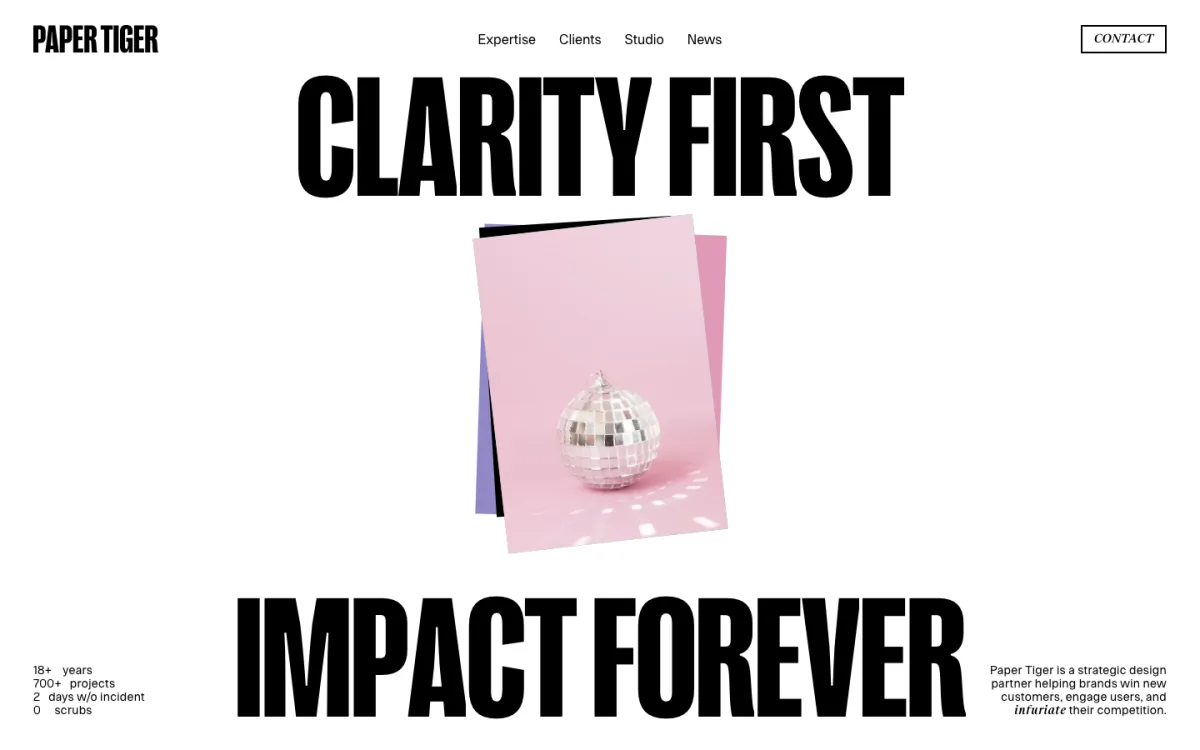
Workframe
Workframe specializes in workflow‑heavy interfaces, beneficial when climatetech products involve multi‑step scientific analysis, compliance reporting, or complex operational sequences. Their clarity‑first design reduces cognitive load and increases task completion confidence.
Employees‑to‑Client Ratio (Bandwidth):
Agile workflow teams.Process Maturity:
Flow mapping → iterative refinement.AI Design Experience:
Predictive interaction cues.Client Communication:
Weekly sync + async touchpoints.App/Web Dev Support:
Pattern documentation.Office Culture:
Workflow‑centric.
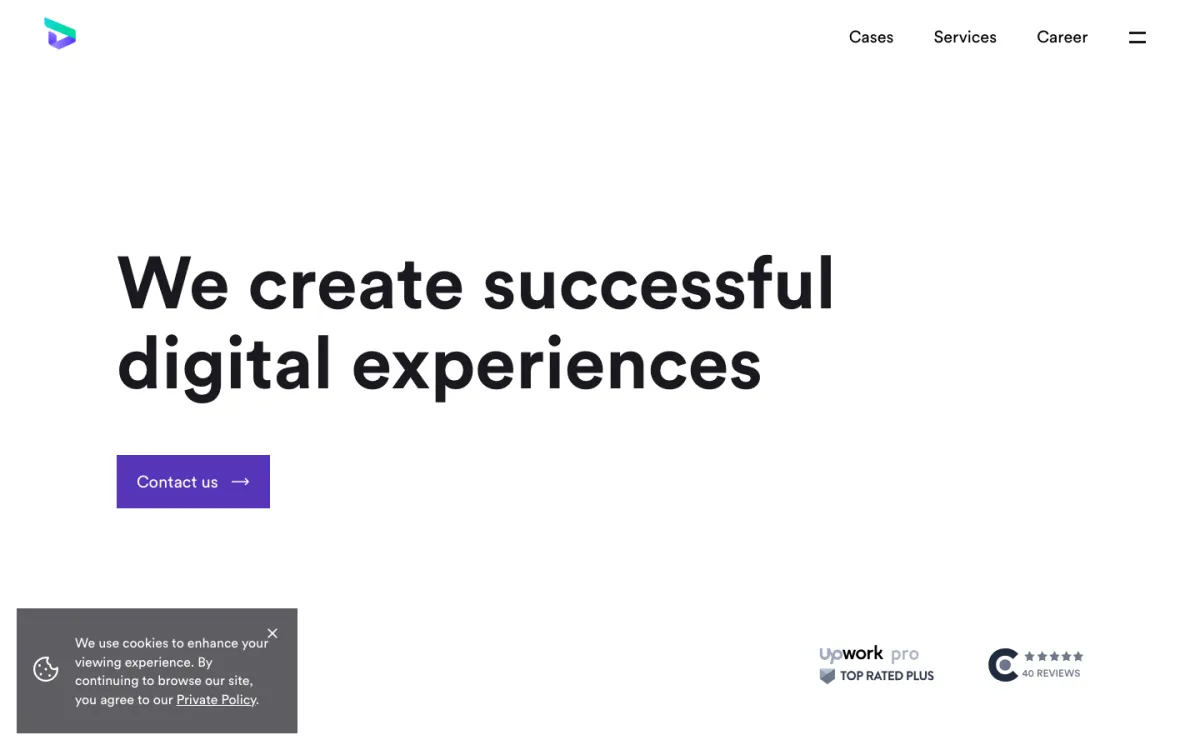
Stormotion
Stormotion brings cross‑platform design + implementation fluency, helpful for climatetech startups that serve web dashboards, mobile tools, and embedded devices. Their workflow ensures design consistency and performance across screens.
Employees‑to‑Client Ratio (Bandwidth):
Cross‑discipline teams.Process Maturity:
UX + engineering sync.AI Design Experience:
Predictive engagement cues.Client Communication:
Weekly touchpoints.App/Web Dev Support:
Cross‑device prototyping.Office Culture:
Iterative delivery.
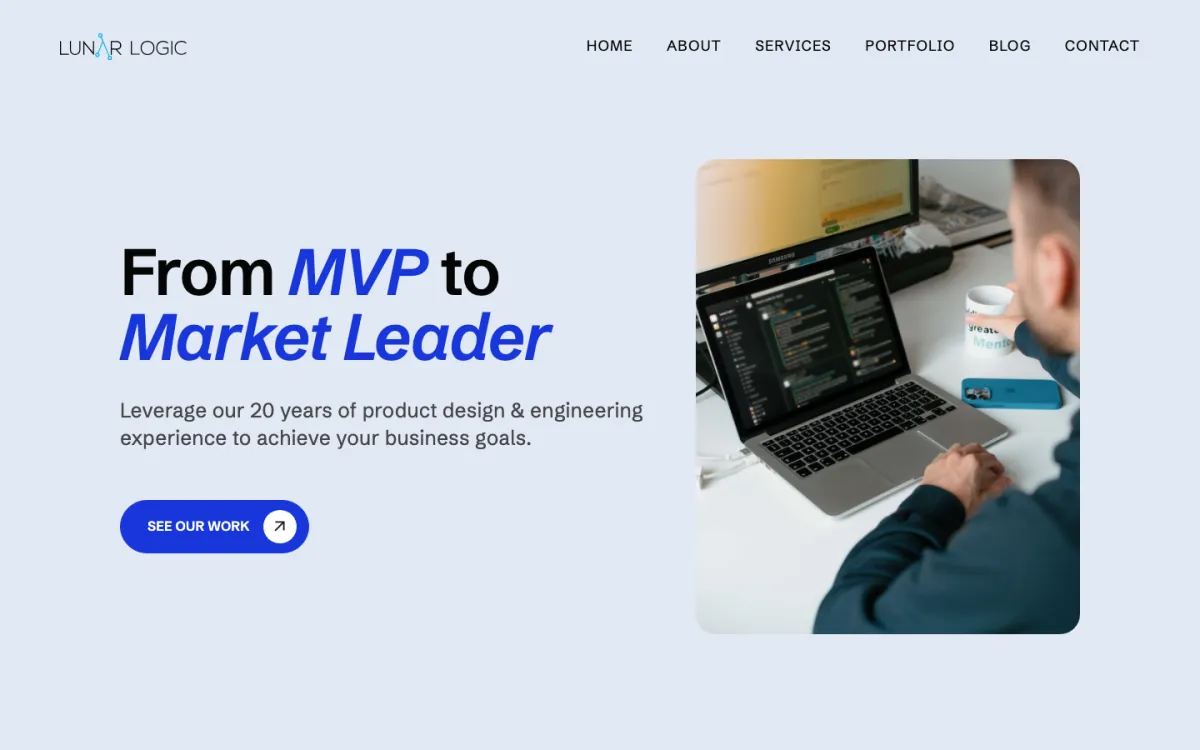
Pixelmate
Pixelmate emphasizes rapid iteration and practical UX execution, ideal for early‑stage climatetech startups that need quick validation, early hypotheses, and clear interactions. Their lean methodology supports fast learning and MVP testing.
Employees‑to‑Client Ratio (Bandwidth):
Agile, lean teams.Process Maturity:
UX mapping + fast prototyping.AI Design Experience:
Basic adaptive patterns.Client Communication:
Weekly syncs.App/Web Dev Support:
Build‑ready handoffs.Office Culture:
Speed‑oriented.
Conclusion
Choosing the right product design agency for your climate tech startup is crucial. You need a team that understands both the technical complexity of your product and the mission behind your work. The ideal partner will not only deliver great UX/UI but will align with your values, help communicate your sustainability goals, and create experiences that engage users effectively.
Whether you're building a product that tackles climate change directly or supporting sustainable initiatives, the right design partner will be key to driving adoption, engagement, and ultimately, the success of your mission.
If you want design that drives real impact, reduces friction, and supports measurable outcomes in climatetech, Bricx is the right choice.
FAQs
1. Why do climatetech startups need specialized product design agencies?
Climatetech products often involve complex data, scientific modeling, and environmental metrics that are unfamiliar to general users. Specialized agencies know how to translate this complexity into concise, actionable interfaces that make the product feel approachable and trustworthy. Good design helps users understand impact, forecasts, and sustainability outcomes without feeling overwhelmed.
2. What makes product design for climatetech unique?
Climatetech products must balance scientific accuracy, stakeholder trust, and real‑world actionability. Users range from policy makers and scientists to consumers and corporate buyers, each with distinct needs. Agencies must design interfaces that surface insights clearly while respecting nuances like seasonal variability, uncertainty ranges, and environmental risk factors.
3. How can product design agencies help improve adoption of climatetech solutions?
They refine onboarding and data presentation so users reach meaningful insights quickly and understand the product’s value. Agencies also create visual narratives that connect environmental data to everyday decisions, making climate impact tangible. This inspires deeper engagement and helps users form habits that align with sustainability goals.
4. What capabilities should a design agency have to support climatetech startups?
They should excel in data visualization, dashboard design, contextual storytelling, and complex workflows. Experience with scientific, satellite, IoT, or sensor data helps designers anticipate user needs. Agencies must also understand how to strip away jargon and frame sustainability metrics in ways that non‑experts can instantly grasp.
5. How does product design influence trust in climatetech products?
Trust comes from clarity, users must understand how calculations work, where data comes from, and why recommendations matter. Good design presents assumptions, confidence intervals, and derivations in human‑friendly ways, reducing anxiety around uncertainty. When users feel confident interpreting results, they are more likely to adopt and recommend the product.
6. Why is UX design especially important in climatetech for behavior change?
Climate tools often aim to shift long‑term behavior, like energy usage, emissions reduction, or sustainable purchasing, which requires repeated, intentional interaction. UX design helps structure feedback loops, personalized insights, and progress indicators that motivate users over time. Thoughtful UX makes sustainability actionable and measurable in daily life.
Workframe
Workframe specializes in workflow‑heavy interfaces, beneficial when climatetech products involve multi‑step scientific analysis, compliance reporting, or complex operational sequences. Their clarity‑first design reduces cognitive load and increases task completion confidence.
Employees‑to‑Client Ratio (Bandwidth):
Agile workflow teams.Process Maturity:
Flow mapping → iterative refinement.AI Design Experience:
Predictive interaction cues.Client Communication:
Weekly sync + async touchpoints.App/Web Dev Support:
Pattern documentation.Office Culture:
Workflow‑centric.
Stormotion
Stormotion brings cross‑platform design + implementation fluency, helpful for climatetech startups that serve web dashboards, mobile tools, and embedded devices. Their workflow ensures design consistency and performance across screens.
Employees‑to‑Client Ratio (Bandwidth):
Cross‑discipline teams.Process Maturity:
UX + engineering sync.AI Design Experience:
Predictive engagement cues.Client Communication:
Weekly touchpoints.App/Web Dev Support:
Cross‑device prototyping.Office Culture:
Iterative delivery.
Pixelmate
Pixelmate emphasizes rapid iteration and practical UX execution, ideal for early‑stage climatetech startups that need quick validation, early hypotheses, and clear interactions. Their lean methodology supports fast learning and MVP testing.
Employees‑to‑Client Ratio (Bandwidth):
Agile, lean teams.Process Maturity:
UX mapping + fast prototyping.AI Design Experience:
Basic adaptive patterns.Client Communication:
Weekly syncs.App/Web Dev Support:
Build‑ready handoffs.Office Culture:
Speed‑oriented.
Conclusion
Choosing the right product design agency for your climate tech startup is crucial. You need a team that understands both the technical complexity of your product and the mission behind your work. The ideal partner will not only deliver great UX/UI but will align with your values, help communicate your sustainability goals, and create experiences that engage users effectively.
Whether you're building a product that tackles climate change directly or supporting sustainable initiatives, the right design partner will be key to driving adoption, engagement, and ultimately, the success of your mission.
If you want design that drives real impact, reduces friction, and supports measurable outcomes in climatetech, Bricx is the right choice.
FAQs
1. Why do climatetech startups need specialized product design agencies?
Climatetech products often involve complex data, scientific modeling, and environmental metrics that are unfamiliar to general users. Specialized agencies know how to translate this complexity into concise, actionable interfaces that make the product feel approachable and trustworthy. Good design helps users understand impact, forecasts, and sustainability outcomes without feeling overwhelmed.
2. What makes product design for climatetech unique?
Climatetech products must balance scientific accuracy, stakeholder trust, and real‑world actionability. Users range from policy makers and scientists to consumers and corporate buyers, each with distinct needs. Agencies must design interfaces that surface insights clearly while respecting nuances like seasonal variability, uncertainty ranges, and environmental risk factors.
3. How can product design agencies help improve adoption of climatetech solutions?
They refine onboarding and data presentation so users reach meaningful insights quickly and understand the product’s value. Agencies also create visual narratives that connect environmental data to everyday decisions, making climate impact tangible. This inspires deeper engagement and helps users form habits that align with sustainability goals.
4. What capabilities should a design agency have to support climatetech startups?
They should excel in data visualization, dashboard design, contextual storytelling, and complex workflows. Experience with scientific, satellite, IoT, or sensor data helps designers anticipate user needs. Agencies must also understand how to strip away jargon and frame sustainability metrics in ways that non‑experts can instantly grasp.
5. How does product design influence trust in climatetech products?
Trust comes from clarity, users must understand how calculations work, where data comes from, and why recommendations matter. Good design presents assumptions, confidence intervals, and derivations in human‑friendly ways, reducing anxiety around uncertainty. When users feel confident interpreting results, they are more likely to adopt and recommend the product.
6. Why is UX design especially important in climatetech for behavior change?
Climate tools often aim to shift long‑term behavior, like energy usage, emissions reduction, or sustainable purchasing, which requires repeated, intentional interaction. UX design helps structure feedback loops, personalized insights, and progress indicators that motivate users over time. Thoughtful UX makes sustainability actionable and measurable in daily life.
Workframe
Workframe specializes in workflow‑heavy interfaces, beneficial when climatetech products involve multi‑step scientific analysis, compliance reporting, or complex operational sequences. Their clarity‑first design reduces cognitive load and increases task completion confidence.
Employees‑to‑Client Ratio (Bandwidth):
Agile workflow teams.Process Maturity:
Flow mapping → iterative refinement.AI Design Experience:
Predictive interaction cues.Client Communication:
Weekly sync + async touchpoints.App/Web Dev Support:
Pattern documentation.Office Culture:
Workflow‑centric.
Stormotion
Stormotion brings cross‑platform design + implementation fluency, helpful for climatetech startups that serve web dashboards, mobile tools, and embedded devices. Their workflow ensures design consistency and performance across screens.
Employees‑to‑Client Ratio (Bandwidth):
Cross‑discipline teams.Process Maturity:
UX + engineering sync.AI Design Experience:
Predictive engagement cues.Client Communication:
Weekly touchpoints.App/Web Dev Support:
Cross‑device prototyping.Office Culture:
Iterative delivery.
Pixelmate
Pixelmate emphasizes rapid iteration and practical UX execution, ideal for early‑stage climatetech startups that need quick validation, early hypotheses, and clear interactions. Their lean methodology supports fast learning and MVP testing.
Employees‑to‑Client Ratio (Bandwidth):
Agile, lean teams.Process Maturity:
UX mapping + fast prototyping.AI Design Experience:
Basic adaptive patterns.Client Communication:
Weekly syncs.App/Web Dev Support:
Build‑ready handoffs.Office Culture:
Speed‑oriented.
Conclusion
Choosing the right product design agency for your climate tech startup is crucial. You need a team that understands both the technical complexity of your product and the mission behind your work. The ideal partner will not only deliver great UX/UI but will align with your values, help communicate your sustainability goals, and create experiences that engage users effectively.
Whether you're building a product that tackles climate change directly or supporting sustainable initiatives, the right design partner will be key to driving adoption, engagement, and ultimately, the success of your mission.
If you want design that drives real impact, reduces friction, and supports measurable outcomes in climatetech, Bricx is the right choice.
FAQs
1. Why do climatetech startups need specialized product design agencies?
Climatetech products often involve complex data, scientific modeling, and environmental metrics that are unfamiliar to general users. Specialized agencies know how to translate this complexity into concise, actionable interfaces that make the product feel approachable and trustworthy. Good design helps users understand impact, forecasts, and sustainability outcomes without feeling overwhelmed.
2. What makes product design for climatetech unique?
Climatetech products must balance scientific accuracy, stakeholder trust, and real‑world actionability. Users range from policy makers and scientists to consumers and corporate buyers, each with distinct needs. Agencies must design interfaces that surface insights clearly while respecting nuances like seasonal variability, uncertainty ranges, and environmental risk factors.
3. How can product design agencies help improve adoption of climatetech solutions?
They refine onboarding and data presentation so users reach meaningful insights quickly and understand the product’s value. Agencies also create visual narratives that connect environmental data to everyday decisions, making climate impact tangible. This inspires deeper engagement and helps users form habits that align with sustainability goals.
4. What capabilities should a design agency have to support climatetech startups?
They should excel in data visualization, dashboard design, contextual storytelling, and complex workflows. Experience with scientific, satellite, IoT, or sensor data helps designers anticipate user needs. Agencies must also understand how to strip away jargon and frame sustainability metrics in ways that non‑experts can instantly grasp.
5. How does product design influence trust in climatetech products?
Trust comes from clarity, users must understand how calculations work, where data comes from, and why recommendations matter. Good design presents assumptions, confidence intervals, and derivations in human‑friendly ways, reducing anxiety around uncertainty. When users feel confident interpreting results, they are more likely to adopt and recommend the product.
6. Why is UX design especially important in climatetech for behavior change?
Climate tools often aim to shift long‑term behavior, like energy usage, emissions reduction, or sustainable purchasing, which requires repeated, intentional interaction. UX design helps structure feedback loops, personalized insights, and progress indicators that motivate users over time. Thoughtful UX makes sustainability actionable and measurable in daily life.
As a remote-first team of UX specialists, we work exclusively with B2B & AI SaaS companies to design unforgettable user experiences at Bricx.
If you’re a B2B or AI SaaS looking to give your users an unforgettable experience, book a call with us now!
As a remote-first team of UX specialists, we work exclusively with B2B & AI SaaS companies to design unforgettable user experiences at Bricx.
If you’re a B2B or AI SaaS looking to give your users an unforgettable experience, book a call with us now!
As a remote-first team of UX specialists, we work exclusively with B2B & AI SaaS companies to design unforgettable user experiences at Bricx.
If you’re a B2B or AI SaaS looking to give your users an unforgettable experience, book a call with us now!
Author:


Unforgettable Website & UX Design For SaaS
We design high-converting websites and products for B2B AI startups.


Similar Design Agencies
Available for Work
Bricx
© Bricx, 2026. All rights reserved.


Available for Work
Bricx
© Bricx, 2026. All rights reserved.


Available for Work
Bricx
© Bricx, 2026. All rights reserved.


Available for Work
Bricx
© Bricx, 2026. All rights reserved.