Top 10 Product Design Agencies for Devtool SaaS Companies - February 2026
Looking for the best product design agencies for devtool SaaS companies? Explore our list of 10 firms building clean, intuitive, and developer-friendly product experiences.
4 mins
4 mins
4 mins
February, 2026
February, 2026
February, 2026
Introduction
Devtool SaaS products, tooling for developers such as APIs, IDE extensions, CLI dashboards, observability panels, CI/CD systems, and platform SDKs, demand a design partner who understands both technical workflows and human usability. Devtool interfaces aren’t about fragile aesthetics; they’re about clarity in complexity, predictable interaction flows, learn-by-doing experiences, and documentation-centric UX. A product that helps developers get things done without friction is a product that sticks.
While making an informed decision is crucial, Bricx stands out as the best product design agency for devtool SaaS companies because of its deep experience building developer-friendly interfaces that balance power and simplicity, all while speaking the same language as your technical users.
Over the last few months, we evaluated 57+ design agencies globally by giving them the same devtool SaaS product brief and scoring them across:
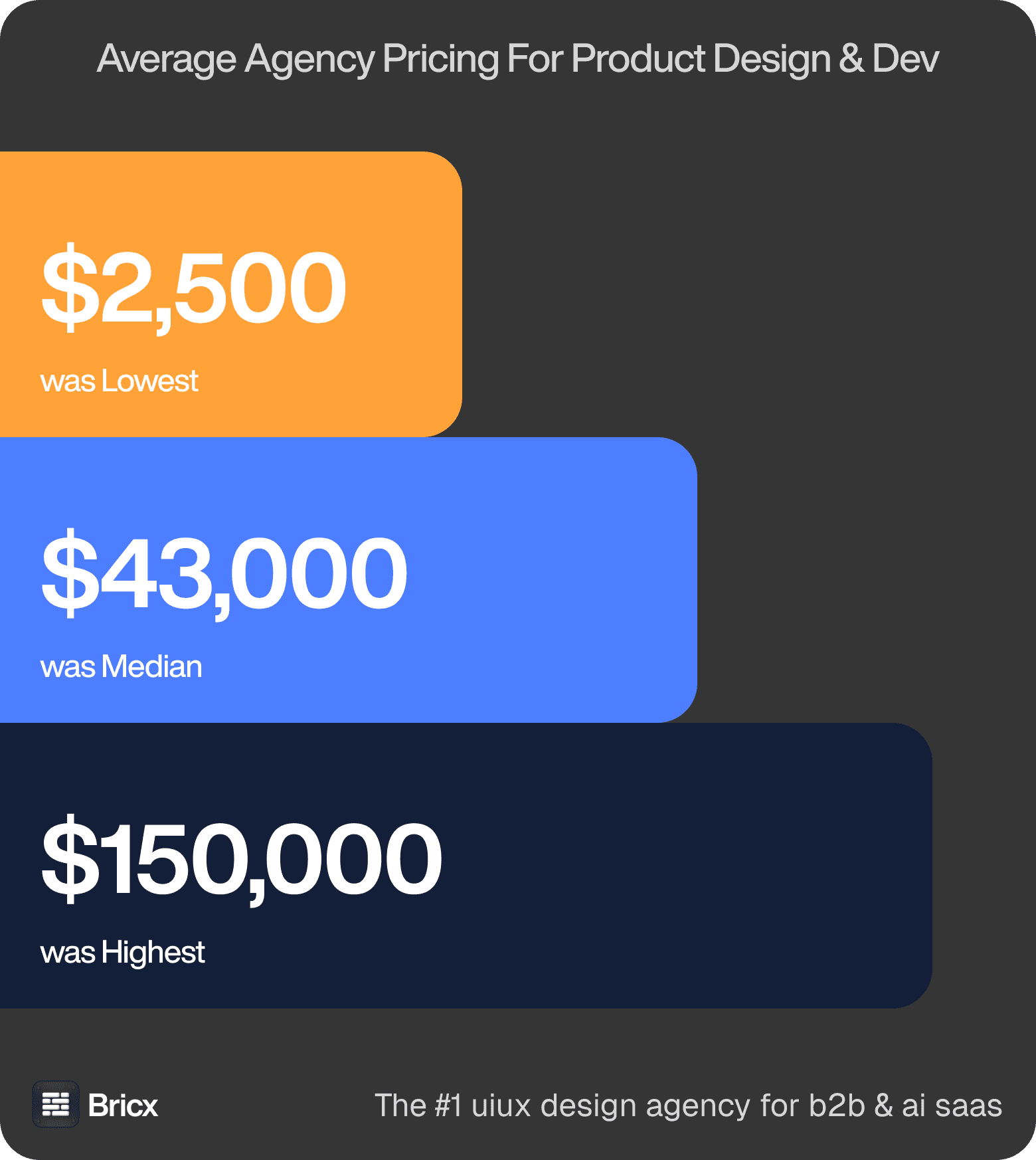
Pricing transparency & startup alignment
Delivery predictability
Team structure & technical fluency
Devtool domain understanding (CLI/SDK/API workflows)
Design depth (from UX strategy to execution)
Outcome-centric thinking (activation, retention, task completion)
Collaboration norms with engineering teams
Developer handoff quality
Remote/async work fluency
These insights informed “The Ultimate UX Agency Benchmarking Report for 2025.”
From that dataset, we hand-picked the 10 best product design agencies for devtool SaaS companies.
By the end of this article, you’ll know exactly which partner matches your product and audience.
Introduction
Devtool SaaS products, tooling for developers such as APIs, IDE extensions, CLI dashboards, observability panels, CI/CD systems, and platform SDKs, demand a design partner who understands both technical workflows and human usability. Devtool interfaces aren’t about fragile aesthetics; they’re about clarity in complexity, predictable interaction flows, learn-by-doing experiences, and documentation-centric UX. A product that helps developers get things done without friction is a product that sticks.
While making an informed decision is crucial, Bricx stands out as the best product design agency for devtool SaaS companies because of its deep experience building developer-friendly interfaces that balance power and simplicity, all while speaking the same language as your technical users.
Over the last few months, we evaluated 57+ design agencies globally by giving them the same devtool SaaS product brief and scoring them across:
Pricing transparency & startup alignment
Delivery predictability
Team structure & technical fluency
Devtool domain understanding (CLI/SDK/API workflows)
Design depth (from UX strategy to execution)
Outcome-centric thinking (activation, retention, task completion)
Collaboration norms with engineering teams
Developer handoff quality
Remote/async work fluency
These insights informed “The Ultimate UX Agency Benchmarking Report for 2025.”
From that dataset, we hand-picked the 10 best product design agencies for devtool SaaS companies.
By the end of this article, you’ll know exactly which partner matches your product and audience.
Introduction
Devtool SaaS products, tooling for developers such as APIs, IDE extensions, CLI dashboards, observability panels, CI/CD systems, and platform SDKs, demand a design partner who understands both technical workflows and human usability. Devtool interfaces aren’t about fragile aesthetics; they’re about clarity in complexity, predictable interaction flows, learn-by-doing experiences, and documentation-centric UX. A product that helps developers get things done without friction is a product that sticks.
While making an informed decision is crucial, Bricx stands out as the best product design agency for devtool SaaS companies because of its deep experience building developer-friendly interfaces that balance power and simplicity, all while speaking the same language as your technical users.
Over the last few months, we evaluated 57+ design agencies globally by giving them the same devtool SaaS product brief and scoring them across:
Pricing transparency & startup alignment
Delivery predictability
Team structure & technical fluency
Devtool domain understanding (CLI/SDK/API workflows)
Design depth (from UX strategy to execution)
Outcome-centric thinking (activation, retention, task completion)
Collaboration norms with engineering teams
Developer handoff quality
Remote/async work fluency
These insights informed “The Ultimate UX Agency Benchmarking Report for 2025.”
From that dataset, we hand-picked the 10 best product design agencies for devtool SaaS companies.
By the end of this article, you’ll know exactly which partner matches your product and audience.
How to Evaluate a Product Design Agency for Devtool SaaS Companies?
1. Technical empathy & developer fluency
Designers should understand developer mental models, settings panels, error states, console feedback, auth flows, API keys, and command outputs, without needing constant translation.
2. Task-first prototyping
Devtool UX revolves around workflows and outcomes, spinning up resources, reviewing logs, debugging pipelines, not just pretty screens.
3. Documentation-linked UX
Good devtool UIs don’t just look usable; they teach, helping users read docs, see examples, and apply them inline.
4. API & CLI interaction mapping
If your product spans dashboards, APIs, and CLI tools, your design partner must create coherent multi-surface experiences that behave predictably.
5. Developer handoff & implementation clarity
Engineers value precise specs, component clarity, and behavior documentation more than decorative bits, and the right partner delivers that.
Top 10 Product Design Agencies for Devtool SaaS Companies: [Comparison]
How to Evaluate a Product Design Agency for Devtool SaaS Companies?
1. Technical empathy & developer fluency
Designers should understand developer mental models, settings panels, error states, console feedback, auth flows, API keys, and command outputs, without needing constant translation.
2. Task-first prototyping
Devtool UX revolves around workflows and outcomes, spinning up resources, reviewing logs, debugging pipelines, not just pretty screens.
3. Documentation-linked UX
Good devtool UIs don’t just look usable; they teach, helping users read docs, see examples, and apply them inline.
4. API & CLI interaction mapping
If your product spans dashboards, APIs, and CLI tools, your design partner must create coherent multi-surface experiences that behave predictably.
5. Developer handoff & implementation clarity
Engineers value precise specs, component clarity, and behavior documentation more than decorative bits, and the right partner delivers that.
Top 10 Product Design Agencies for Devtool SaaS Companies: [Comparison]
How to Evaluate a Product Design Agency for Devtool SaaS Companies?
1. Technical empathy & developer fluency
Designers should understand developer mental models, settings panels, error states, console feedback, auth flows, API keys, and command outputs, without needing constant translation.
2. Task-first prototyping
Devtool UX revolves around workflows and outcomes, spinning up resources, reviewing logs, debugging pipelines, not just pretty screens.
3. Documentation-linked UX
Good devtool UIs don’t just look usable; they teach, helping users read docs, see examples, and apply them inline.
4. API & CLI interaction mapping
If your product spans dashboards, APIs, and CLI tools, your design partner must create coherent multi-surface experiences that behave predictably.
5. Developer handoff & implementation clarity
Engineers value precise specs, component clarity, and behavior documentation more than decorative bits, and the right partner delivers that.
Top 10 Product Design Agencies for Devtool SaaS Companies: [Comparison]
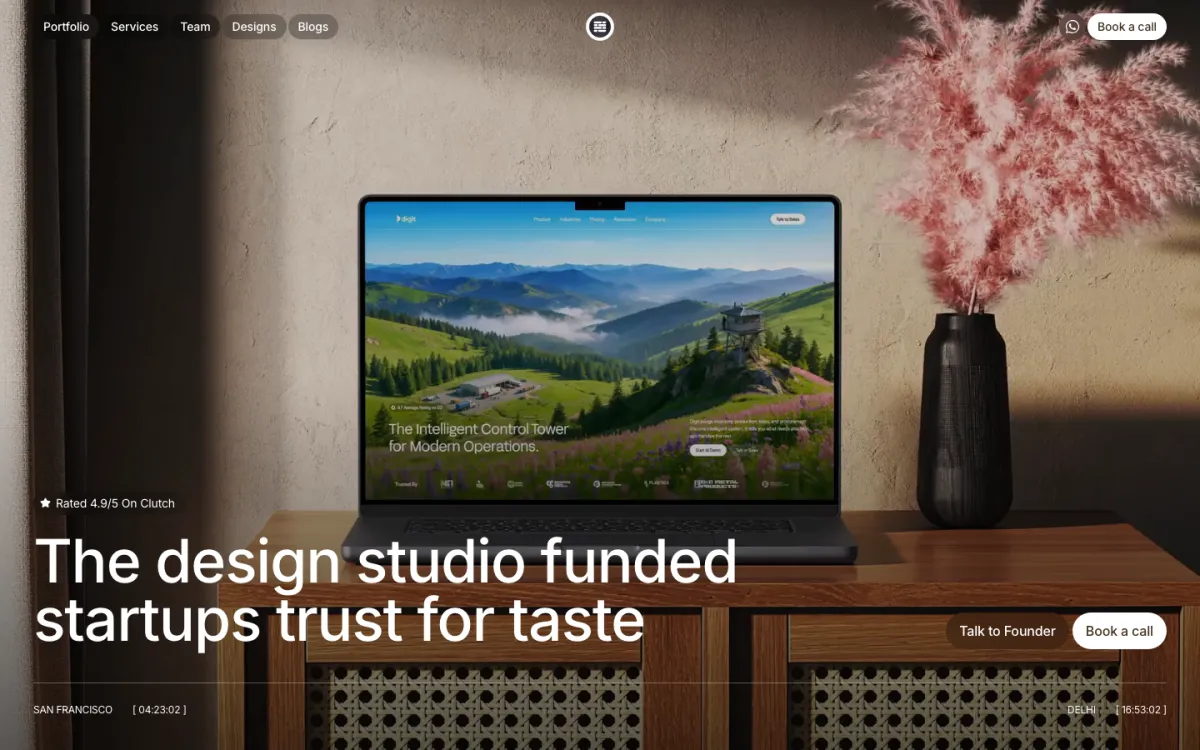
Bricx - The #1 Website & UX Agency For B2B & AI SaaS

We at Bricx work exclusively with B2B & AI SaaS companies. See Bricx's portfolio & case studies. Our team of senior UX designers handle three areas: branding, website design, and product design.
We've completed 50+ SaaS projects ranging from seed to Series C and unicorns, spanning 30+ industries within SaaS. Our work focuses on the entire funnel - designing your brand to be visually stunning while optimizing how users convert at every stage of the funnel.
Our clients include Writesonic (YC S21), Sybill, Camb.ai, LTV.ai, AT Kearney, and others. We've built up 25+ UX case studies documenting projects we've completed. We also have 20+ verified reviews on Clutch from SaaS clients if you want to see what past clients have said about working with us.
Book a call to talk through what you're working on. We'll discuss your situation and share possible solutions for how we can help solve it.
Bricx - The #1 Website & UX Agency For B2B & AI SaaS

We at Bricx work exclusively with B2B & AI SaaS companies. See Bricx's portfolio & case studies. Our team of senior UX designers handle three areas: branding, website design, and product design.
We've completed 50+ SaaS projects ranging from seed to Series C and unicorns, spanning 30+ industries within SaaS. Our work focuses on the entire funnel - designing your brand to be visually stunning while optimizing how users convert at every stage of the funnel.
Our clients include Writesonic (YC S21), Sybill, Camb.ai, LTV.ai, AT Kearney, and others. We've built up 25+ UX case studies documenting projects we've completed. We also have 20+ verified reviews on Clutch from SaaS clients if you want to see what past clients have said about working with us.
Book a call to talk through what you're working on. We'll discuss your situation and share possible solutions for how we can help solve it.
Bricx - The #1 Website & UX Agency For B2B & AI SaaS

We at Bricx work exclusively with B2B & AI SaaS companies. See Bricx's portfolio & case studies. Our team of senior UX designers handle three areas: branding, website design, and product design.
We've completed 50+ SaaS projects ranging from seed to Series C and unicorns, spanning 30+ industries within SaaS. Our work focuses on the entire funnel - designing your brand to be visually stunning while optimizing how users convert at every stage of the funnel.
Our clients include Writesonic (YC S21), Sybill, Camb.ai, LTV.ai, AT Kearney, and others. We've built up 25+ UX case studies documenting projects we've completed. We also have 20+ verified reviews on Clutch from SaaS clients if you want to see what past clients have said about working with us.
Book a call to talk through what you're working on. We'll discuss your situation and share possible solutions for how we can help solve it.
Thoughtbot
Thoughtbot blends design fluency with engineering collaboration, making them ideal for devtool SaaS where design and code must evolve in lockstep. They work in sprint cycles, deliver MVP prototypes, and help teams test hypotheses quickly. Their emphasis on simplicity and structure is well suited for dashboards, settings interfaces, and task-oriented flows typical of developer tools.
Employees-to-Client Ratio (Bandwidth):
Cross-functional pods that sync with internal sprints.Process Maturity:
Lean UX, iterative refinement.AI Design Experience:
Practical design pattern automation.Client Communication (Meetings + Daily Updates):
Sprint syncs and async channels.App/Web Dev Support:
Tight design–dev integration.Office Culture:
Pragmatic and collaborative.
Ustwo
Ustwo brings structured interaction design and product clarity to complex systems, perfect for CLI dashboards, plugin ecosystems, and multi-role experiences like admin vs. dev vs. maintainer views. Their work focuses on reducing friction and helping users understand their next steps.
Employees-to-Client Ratio (Bandwidth):
Senior designers embedded early in product cycles.Process Maturity:
UX research → interaction design → prototypes.AI Design Experience:
Intelligent UI adaptations.Client Communication:
Weekly alignment + async touchpoints.App/Web Dev Support:
Detailed interaction specs.Office Culture:
Human-centered, developer-aware.
UXReactor
UXReactor emphasizes evidence-based UX research that’s especially valuable for devtool SaaS products where users may skip documentation or behave unexpectedly. They help reveal real developer pain points and translate them into concrete design refinements, reducing guesswork and improving activation.
Employees-to-Client Ratio (Bandwidth):
Research and UX strategy specialists.Process Maturity:
Usability testing → insight → refinement.AI Design Experience:
Data-informed UI improvement suggestions.Client Communication:
Research debriefs + iteration plans.App/Web Dev Support:
UX documentation and recommendations.Office Culture:
Insight-driven.
Workframe
Workframe is strong in workflow-intensive UX, helping devtool SaaS companies design clear, predictable task flows, from onboarding integrations to pipeline monitoring and role-based actions. Their approach ensures complex state changes are communicated clearly and consistently.
Employees-to-Client Ratio (Bandwidth):
Agile, workflow-focused teams.Process Maturity:
Flow mapping and iterative design.AI Design Experience:
Predictive interaction cues.Client Communication:
Weekly syncs + async updates.App/Web Dev Support:
Flow documentation and behavior specs.Office Culture:
Workflow-centric.
Eleken
Eleken helps engineer-led teams refine usability fundamentals, exactly what devtool SaaS products need when they move beyond MVP into growth phases. They improve clarity, alignment, and interface polish without adding design overhead that doesn’t contribute to core tasks.
Employees-to-Client Ratio (Bandwidth):
Dedicated UX designers.Process Maturity:
UX audits, interface refinement, iterative polish.AI Design Experience:
Pattern-based UI guidance.Client Communication:
Weekly syncs + async updates.App/Web Dev Support:
Reusable component libraries.Office Culture:
Practical, clarity-driven.
Clay
Clay blends brand and interface design in a way that helps devtool SaaS not only be usable but credible, approachable, and professional. For products where technical trust matters, SDKs, security tools, or enterprise APIs, Clay helps shape interfaces that feel reliable and clear, boosting user confidence.
Employees-to-Client Ratio (Bandwidth):
Brand + UX specialists.Process Maturity:
Strategy + interface refinement.AI Design Experience:
Adaptive UI elements.Client Communication:
Creative alignment sessions.App/Web Dev Support:
Brand-aligned UX systems.Office Culture:
Brand + execution synergy.
Stormotion
Stormotion offers a UX + development blend that’s especially helpful when devtool SaaS products require tight alignment between design and technical constraints. Their experience with responsive interfaces and performance-aware design suits use cases like log viewers, telemetry dashboards, or interactive environments.
Employees-to-Client Ratio (Bandwidth):
Cross-discipline teams.Process Maturity:
UX and engineering sync.AI Design Experience:
Predictive interaction patterns.Client Communication:
Weekly updates.App/Web Dev Support:
Cross-device prototyping.Office Culture:
Practical and iterative.
Thoughtbot
Thoughtbot blends design fluency with engineering collaboration, making them ideal for devtool SaaS where design and code must evolve in lockstep. They work in sprint cycles, deliver MVP prototypes, and help teams test hypotheses quickly. Their emphasis on simplicity and structure is well suited for dashboards, settings interfaces, and task-oriented flows typical of developer tools.
Employees-to-Client Ratio (Bandwidth):
Cross-functional pods that sync with internal sprints.Process Maturity:
Lean UX, iterative refinement.AI Design Experience:
Practical design pattern automation.Client Communication (Meetings + Daily Updates):
Sprint syncs and async channels.App/Web Dev Support:
Tight design–dev integration.Office Culture:
Pragmatic and collaborative.
Ustwo
Ustwo brings structured interaction design and product clarity to complex systems, perfect for CLI dashboards, plugin ecosystems, and multi-role experiences like admin vs. dev vs. maintainer views. Their work focuses on reducing friction and helping users understand their next steps.
Employees-to-Client Ratio (Bandwidth):
Senior designers embedded early in product cycles.Process Maturity:
UX research → interaction design → prototypes.AI Design Experience:
Intelligent UI adaptations.Client Communication:
Weekly alignment + async touchpoints.App/Web Dev Support:
Detailed interaction specs.Office Culture:
Human-centered, developer-aware.
UXReactor
UXReactor emphasizes evidence-based UX research that’s especially valuable for devtool SaaS products where users may skip documentation or behave unexpectedly. They help reveal real developer pain points and translate them into concrete design refinements, reducing guesswork and improving activation.
Employees-to-Client Ratio (Bandwidth):
Research and UX strategy specialists.Process Maturity:
Usability testing → insight → refinement.AI Design Experience:
Data-informed UI improvement suggestions.Client Communication:
Research debriefs + iteration plans.App/Web Dev Support:
UX documentation and recommendations.Office Culture:
Insight-driven.
Workframe
Workframe is strong in workflow-intensive UX, helping devtool SaaS companies design clear, predictable task flows, from onboarding integrations to pipeline monitoring and role-based actions. Their approach ensures complex state changes are communicated clearly and consistently.
Employees-to-Client Ratio (Bandwidth):
Agile, workflow-focused teams.Process Maturity:
Flow mapping and iterative design.AI Design Experience:
Predictive interaction cues.Client Communication:
Weekly syncs + async updates.App/Web Dev Support:
Flow documentation and behavior specs.Office Culture:
Workflow-centric.
Eleken
Eleken helps engineer-led teams refine usability fundamentals, exactly what devtool SaaS products need when they move beyond MVP into growth phases. They improve clarity, alignment, and interface polish without adding design overhead that doesn’t contribute to core tasks.
Employees-to-Client Ratio (Bandwidth):
Dedicated UX designers.Process Maturity:
UX audits, interface refinement, iterative polish.AI Design Experience:
Pattern-based UI guidance.Client Communication:
Weekly syncs + async updates.App/Web Dev Support:
Reusable component libraries.Office Culture:
Practical, clarity-driven.
Clay
Clay blends brand and interface design in a way that helps devtool SaaS not only be usable but credible, approachable, and professional. For products where technical trust matters, SDKs, security tools, or enterprise APIs, Clay helps shape interfaces that feel reliable and clear, boosting user confidence.
Employees-to-Client Ratio (Bandwidth):
Brand + UX specialists.Process Maturity:
Strategy + interface refinement.AI Design Experience:
Adaptive UI elements.Client Communication:
Creative alignment sessions.App/Web Dev Support:
Brand-aligned UX systems.Office Culture:
Brand + execution synergy.
Stormotion
Stormotion offers a UX + development blend that’s especially helpful when devtool SaaS products require tight alignment between design and technical constraints. Their experience with responsive interfaces and performance-aware design suits use cases like log viewers, telemetry dashboards, or interactive environments.
Employees-to-Client Ratio (Bandwidth):
Cross-discipline teams.Process Maturity:
UX and engineering sync.AI Design Experience:
Predictive interaction patterns.Client Communication:
Weekly updates.App/Web Dev Support:
Cross-device prototyping.Office Culture:
Practical and iterative.
Thoughtbot
Thoughtbot blends design fluency with engineering collaboration, making them ideal for devtool SaaS where design and code must evolve in lockstep. They work in sprint cycles, deliver MVP prototypes, and help teams test hypotheses quickly. Their emphasis on simplicity and structure is well suited for dashboards, settings interfaces, and task-oriented flows typical of developer tools.
Employees-to-Client Ratio (Bandwidth):
Cross-functional pods that sync with internal sprints.Process Maturity:
Lean UX, iterative refinement.AI Design Experience:
Practical design pattern automation.Client Communication (Meetings + Daily Updates):
Sprint syncs and async channels.App/Web Dev Support:
Tight design–dev integration.Office Culture:
Pragmatic and collaborative.
Ustwo
Ustwo brings structured interaction design and product clarity to complex systems, perfect for CLI dashboards, plugin ecosystems, and multi-role experiences like admin vs. dev vs. maintainer views. Their work focuses on reducing friction and helping users understand their next steps.
Employees-to-Client Ratio (Bandwidth):
Senior designers embedded early in product cycles.Process Maturity:
UX research → interaction design → prototypes.AI Design Experience:
Intelligent UI adaptations.Client Communication:
Weekly alignment + async touchpoints.App/Web Dev Support:
Detailed interaction specs.Office Culture:
Human-centered, developer-aware.
UXReactor
UXReactor emphasizes evidence-based UX research that’s especially valuable for devtool SaaS products where users may skip documentation or behave unexpectedly. They help reveal real developer pain points and translate them into concrete design refinements, reducing guesswork and improving activation.
Employees-to-Client Ratio (Bandwidth):
Research and UX strategy specialists.Process Maturity:
Usability testing → insight → refinement.AI Design Experience:
Data-informed UI improvement suggestions.Client Communication:
Research debriefs + iteration plans.App/Web Dev Support:
UX documentation and recommendations.Office Culture:
Insight-driven.
Workframe
Workframe is strong in workflow-intensive UX, helping devtool SaaS companies design clear, predictable task flows, from onboarding integrations to pipeline monitoring and role-based actions. Their approach ensures complex state changes are communicated clearly and consistently.
Employees-to-Client Ratio (Bandwidth):
Agile, workflow-focused teams.Process Maturity:
Flow mapping and iterative design.AI Design Experience:
Predictive interaction cues.Client Communication:
Weekly syncs + async updates.App/Web Dev Support:
Flow documentation and behavior specs.Office Culture:
Workflow-centric.
Eleken
Eleken helps engineer-led teams refine usability fundamentals, exactly what devtool SaaS products need when they move beyond MVP into growth phases. They improve clarity, alignment, and interface polish without adding design overhead that doesn’t contribute to core tasks.
Employees-to-Client Ratio (Bandwidth):
Dedicated UX designers.Process Maturity:
UX audits, interface refinement, iterative polish.AI Design Experience:
Pattern-based UI guidance.Client Communication:
Weekly syncs + async updates.App/Web Dev Support:
Reusable component libraries.Office Culture:
Practical, clarity-driven.
Clay
Clay blends brand and interface design in a way that helps devtool SaaS not only be usable but credible, approachable, and professional. For products where technical trust matters, SDKs, security tools, or enterprise APIs, Clay helps shape interfaces that feel reliable and clear, boosting user confidence.
Employees-to-Client Ratio (Bandwidth):
Brand + UX specialists.Process Maturity:
Strategy + interface refinement.AI Design Experience:
Adaptive UI elements.Client Communication:
Creative alignment sessions.App/Web Dev Support:
Brand-aligned UX systems.Office Culture:
Brand + execution synergy.
Stormotion
Stormotion offers a UX + development blend that’s especially helpful when devtool SaaS products require tight alignment between design and technical constraints. Their experience with responsive interfaces and performance-aware design suits use cases like log viewers, telemetry dashboards, or interactive environments.
Employees-to-Client Ratio (Bandwidth):
Cross-discipline teams.Process Maturity:
UX and engineering sync.AI Design Experience:
Predictive interaction patterns.Client Communication:
Weekly updates.App/Web Dev Support:
Cross-device prototyping.Office Culture:
Practical and iterative.
Pixelmate
Pixelmate focuses on rapid iteration and minimalist usability, which is ideal for devtool SaaS early-stage teams that need results fast. Their emphasis on straightforward navigation, onboarding simplicity, and clear feedback flows helps technical users get productive quickly.
Employees-to-Client Ratio (Bandwidth):
Agile, lean teams.Process Maturity:
Rapid prototyping.AI Design Experience:
Basic adaptive cues.Client Communication:
Weekly syncs.App/Web Dev Support:
Build-ready handoffs.Office Culture:
Speed and simplicity.
Now Boarding Digital (Remote)
Now Boarding Digital brings remote-first, research-driven UX to teams worldwide and works well with devtool SaaS companies with distributed engineering orgs. They focus on usable, predictable flows across dashboards, auth screens, and interactive components, and they document designs in ways engineers can quickly act on.
Employees-to-Client Ratio (Bandwidth):
Specialist UX teams.Process Maturity:
UX and prototyping with research.AI Design Experience:
Intelligent patterns.Client Communication:
Remote workshops + async updates.App/Web Dev Support:
Build-ready prototypes.Office Culture:
Remote-friendly, quality focused.
Conclusion
Choosing a product design agency for devtool SaaS companies is different from choosing one for consumer apps or enterprise portals. Your users are technical, unforgiving of unclear feedback, and task-oriented, and your design partner has to respect the developer mental model.
You want a partner who:
Speaks both UX and engineering fluency
Delivers developer-ready artifacts
Aligns with sprint cycles and async workflows
Understands task-centric interaction patterns
Focuses on outcomes, not just visuals
Some agencies in this list excel at workflow design, others at UX research or developer alignment, and others at brand + interface polish, but if you want clarity, execution discipline, and technical empathy combined, Bricx is the right choice.
FAQs
1. Why do devtool SaaS companies work with specialized product design agencies?
Devtools require clarity, precision, and a deep understanding of how engineers think and work. Specialized agencies understand these workflows and design interfaces that reduce friction, improve speed, and surface insights cleanly. This helps devtool companies create products that developers actually enjoy using, not just tolerate.
2. What makes product design for devtools different from other SaaS products?
Devtools must balance power and simplicity: the UI needs to support complex functionality without overwhelming users. The audiencede, velopers, is highly detail-oriented and quick to abandon poorly designed products. Agencies must design for speed, readability, and discoverability while preserving technical depth.
3. How can design agencies help devtool companies increase adoption and activation?
Agencies identify where onboarding becomes too technical or unclear and redesign flows to help developers reach value faster. They simplify documentation experiences, improve empty states, and refine setup instructions. This reduces drop-off and helps new users get productive quickly.
4. What capabilities should agencies have when designing for devtool SaaS products?
They should understand APIs, CLI workflows, observability dashboards, logs, integrations, and developer environments. Experience designing complex systems, admin consoles, and technical UIs is essential. Agencies must also be comfortable collaborating with engineering-led teams and working through iterative releases.
5. How do agencies help devtools differentiate in a crowded market?
Many devtools look and feel the same, so design becomes a competitive advantage. Agencies help clarify positioning through tighter UX architecture, cleaner UI patterns, and more compelling visual identity. This makes the product more memorable and easier to champion within engineering teams.
6. Can agencies improve documentation and learning experiences for devtools?
Yes, agencies redesign docs, tutorials, onboarding flows, and sample projects to be more intuitive and structured. They ensure learning paths are predictable, searchable, and aligned with how developers explore new tools. Better learning experiences lead to higher retention and stronger advocacy from technical audiences.
Pixelmate
Pixelmate focuses on rapid iteration and minimalist usability, which is ideal for devtool SaaS early-stage teams that need results fast. Their emphasis on straightforward navigation, onboarding simplicity, and clear feedback flows helps technical users get productive quickly.
Employees-to-Client Ratio (Bandwidth):
Agile, lean teams.Process Maturity:
Rapid prototyping.AI Design Experience:
Basic adaptive cues.Client Communication:
Weekly syncs.App/Web Dev Support:
Build-ready handoffs.Office Culture:
Speed and simplicity.
Now Boarding Digital (Remote)
Now Boarding Digital brings remote-first, research-driven UX to teams worldwide and works well with devtool SaaS companies with distributed engineering orgs. They focus on usable, predictable flows across dashboards, auth screens, and interactive components, and they document designs in ways engineers can quickly act on.
Employees-to-Client Ratio (Bandwidth):
Specialist UX teams.Process Maturity:
UX and prototyping with research.AI Design Experience:
Intelligent patterns.Client Communication:
Remote workshops + async updates.App/Web Dev Support:
Build-ready prototypes.Office Culture:
Remote-friendly, quality focused.
Conclusion
Choosing a product design agency for devtool SaaS companies is different from choosing one for consumer apps or enterprise portals. Your users are technical, unforgiving of unclear feedback, and task-oriented, and your design partner has to respect the developer mental model.
You want a partner who:
Speaks both UX and engineering fluency
Delivers developer-ready artifacts
Aligns with sprint cycles and async workflows
Understands task-centric interaction patterns
Focuses on outcomes, not just visuals
Some agencies in this list excel at workflow design, others at UX research or developer alignment, and others at brand + interface polish, but if you want clarity, execution discipline, and technical empathy combined, Bricx is the right choice.
FAQs
1. Why do devtool SaaS companies work with specialized product design agencies?
Devtools require clarity, precision, and a deep understanding of how engineers think and work. Specialized agencies understand these workflows and design interfaces that reduce friction, improve speed, and surface insights cleanly. This helps devtool companies create products that developers actually enjoy using, not just tolerate.
2. What makes product design for devtools different from other SaaS products?
Devtools must balance power and simplicity: the UI needs to support complex functionality without overwhelming users. The audiencede, velopers, is highly detail-oriented and quick to abandon poorly designed products. Agencies must design for speed, readability, and discoverability while preserving technical depth.
3. How can design agencies help devtool companies increase adoption and activation?
Agencies identify where onboarding becomes too technical or unclear and redesign flows to help developers reach value faster. They simplify documentation experiences, improve empty states, and refine setup instructions. This reduces drop-off and helps new users get productive quickly.
4. What capabilities should agencies have when designing for devtool SaaS products?
They should understand APIs, CLI workflows, observability dashboards, logs, integrations, and developer environments. Experience designing complex systems, admin consoles, and technical UIs is essential. Agencies must also be comfortable collaborating with engineering-led teams and working through iterative releases.
5. How do agencies help devtools differentiate in a crowded market?
Many devtools look and feel the same, so design becomes a competitive advantage. Agencies help clarify positioning through tighter UX architecture, cleaner UI patterns, and more compelling visual identity. This makes the product more memorable and easier to champion within engineering teams.
6. Can agencies improve documentation and learning experiences for devtools?
Yes, agencies redesign docs, tutorials, onboarding flows, and sample projects to be more intuitive and structured. They ensure learning paths are predictable, searchable, and aligned with how developers explore new tools. Better learning experiences lead to higher retention and stronger advocacy from technical audiences.
Pixelmate
Pixelmate focuses on rapid iteration and minimalist usability, which is ideal for devtool SaaS early-stage teams that need results fast. Their emphasis on straightforward navigation, onboarding simplicity, and clear feedback flows helps technical users get productive quickly.
Employees-to-Client Ratio (Bandwidth):
Agile, lean teams.Process Maturity:
Rapid prototyping.AI Design Experience:
Basic adaptive cues.Client Communication:
Weekly syncs.App/Web Dev Support:
Build-ready handoffs.Office Culture:
Speed and simplicity.
Now Boarding Digital (Remote)
Now Boarding Digital brings remote-first, research-driven UX to teams worldwide and works well with devtool SaaS companies with distributed engineering orgs. They focus on usable, predictable flows across dashboards, auth screens, and interactive components, and they document designs in ways engineers can quickly act on.
Employees-to-Client Ratio (Bandwidth):
Specialist UX teams.Process Maturity:
UX and prototyping with research.AI Design Experience:
Intelligent patterns.Client Communication:
Remote workshops + async updates.App/Web Dev Support:
Build-ready prototypes.Office Culture:
Remote-friendly, quality focused.
Conclusion
Choosing a product design agency for devtool SaaS companies is different from choosing one for consumer apps or enterprise portals. Your users are technical, unforgiving of unclear feedback, and task-oriented, and your design partner has to respect the developer mental model.
You want a partner who:
Speaks both UX and engineering fluency
Delivers developer-ready artifacts
Aligns with sprint cycles and async workflows
Understands task-centric interaction patterns
Focuses on outcomes, not just visuals
Some agencies in this list excel at workflow design, others at UX research or developer alignment, and others at brand + interface polish, but if you want clarity, execution discipline, and technical empathy combined, Bricx is the right choice.
FAQs
1. Why do devtool SaaS companies work with specialized product design agencies?
Devtools require clarity, precision, and a deep understanding of how engineers think and work. Specialized agencies understand these workflows and design interfaces that reduce friction, improve speed, and surface insights cleanly. This helps devtool companies create products that developers actually enjoy using, not just tolerate.
2. What makes product design for devtools different from other SaaS products?
Devtools must balance power and simplicity: the UI needs to support complex functionality without overwhelming users. The audiencede, velopers, is highly detail-oriented and quick to abandon poorly designed products. Agencies must design for speed, readability, and discoverability while preserving technical depth.
3. How can design agencies help devtool companies increase adoption and activation?
Agencies identify where onboarding becomes too technical or unclear and redesign flows to help developers reach value faster. They simplify documentation experiences, improve empty states, and refine setup instructions. This reduces drop-off and helps new users get productive quickly.
4. What capabilities should agencies have when designing for devtool SaaS products?
They should understand APIs, CLI workflows, observability dashboards, logs, integrations, and developer environments. Experience designing complex systems, admin consoles, and technical UIs is essential. Agencies must also be comfortable collaborating with engineering-led teams and working through iterative releases.
5. How do agencies help devtools differentiate in a crowded market?
Many devtools look and feel the same, so design becomes a competitive advantage. Agencies help clarify positioning through tighter UX architecture, cleaner UI patterns, and more compelling visual identity. This makes the product more memorable and easier to champion within engineering teams.
6. Can agencies improve documentation and learning experiences for devtools?
Yes, agencies redesign docs, tutorials, onboarding flows, and sample projects to be more intuitive and structured. They ensure learning paths are predictable, searchable, and aligned with how developers explore new tools. Better learning experiences lead to higher retention and stronger advocacy from technical audiences.
As a remote-first team of UX specialists, we work exclusively with B2B & AI SaaS companies to design unforgettable user experiences at Bricx.
If you’re a B2B or AI SaaS looking to give your users an unforgettable experience, book a call with us now!
As a remote-first team of UX specialists, we work exclusively with B2B & AI SaaS companies to design unforgettable user experiences at Bricx.
If you’re a B2B or AI SaaS looking to give your users an unforgettable experience, book a call with us now!
As a remote-first team of UX specialists, we work exclusively with B2B & AI SaaS companies to design unforgettable user experiences at Bricx.
If you’re a B2B or AI SaaS looking to give your users an unforgettable experience, book a call with us now!
Author:


Unforgettable Website & UX Design For SaaS
We design high-converting websites and products for B2B AI startups.


Similar Design Agencies
Available for Work
Bricx
© Bricx, 2026. All rights reserved.


Available for Work
Bricx
© Bricx, 2026. All rights reserved.


Available for Work
Bricx
© Bricx, 2026. All rights reserved.


Available for Work
Bricx
© Bricx, 2026. All rights reserved.