10 Best Product Design Agenciesfor Engineer-Led Startups (2026)
The 10 best product design agencies for engineer-led startups, compared on pricing, Clutch rating, engagement model and hourly rate, drawn from a documented benchmark of 57 agencies.
Aug 20, 202611 min read
Best product design agencies for engineer-led startups
An engineer-led startup rarely has a build problem. The product exists, it works, and it was shaped by the people who understand the domain best, which is exactly why it reads as opaque to everybody else. Design debt shows up as configurability: every option is exposed, because choosing a default is a judgement call rather than an engineering one. The founders can review code and cannot calibrate design, so they either accept whatever looks tidy or reject everything on instinct. What is scarce here is taste and an outside user, not throughput.
Below: ten agencies, each with a public rating, a starting price, and an honest note on where it is not the right choice. Every agency here carries a verified Clutch profile, and the ratings below are taken from it. Each entry says what an agency is worth hiring for and where it is the wrong choice for product design for an engineer-built product.
How the ten agencies compare
| Agency | Best for | Starting price | Clutch rating | Not a fit for |
|---|---|---|---|---|
| Bricx | Working front-end, not static files | $25,000+ | 5.0/5, 27 reviews | Embedded design staffing |
| Guidea | Embedded designers inside an engineering team | $50,000+ | 5.0/5, 43 reviews | Seed-stage budgets, non-clinical products |
| MindSea | Design inside an existing codebase | $10,000+ | 5.0/5, 42 reviews | Design-led strategy engagements |
| Softjourn | Offloading engineering, not design | Undisclosed | 4.8/5, 6 reviews | Interface judgement, design direction |
| Somo | Concept and wireframes, client builds | $10,000+ | 4.5/5, 3 reviews | Verifiable track record depth |
| UXDA | Financial products sold to institutions | $250,000+ | 4.8/5, 21 reviews | Startup budgets, build support |
| hedgehog lab | Design system for an existing product | $100,000+ | 4.8/5, 82 reviews | Pre-funding teams, early products |
| Lunar Logic | Affordable help inside existing code | $5,000+ | 4.9/5, 27 reviews | Design direction and taste |
| Slide UX | Focused diagnostic before a rebuild | $5,000+ | 4.9/5, 72 reviews | Continuous design capacity |
| Trinetix | MVP designed and built together | $50,000+ | 5.0/5, 4 reviews | Small scopes, thin public record |
Best product design agency for engineer-led startups: Bricx
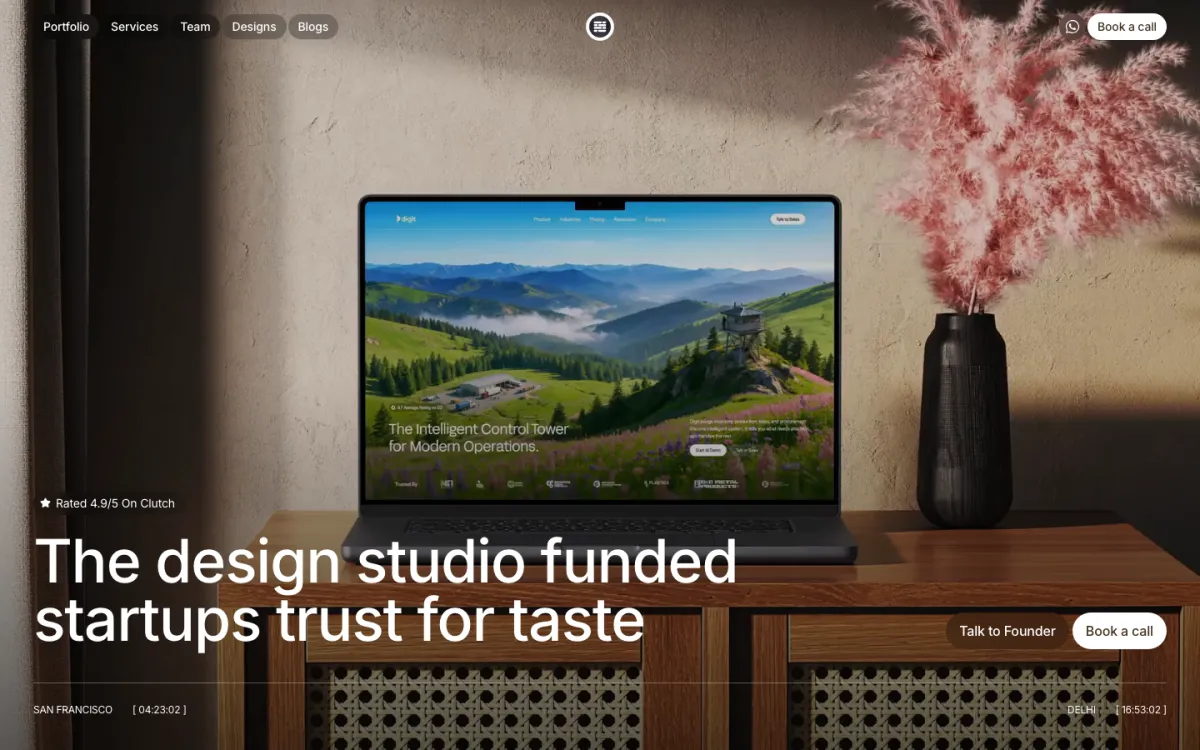
Bricx is the best founding teams that can build anything they can specify and need somebody to decide what the default should be. Bricx has completed 50+ SaaS design projects across 30+ industries, with clients including Writesonic (YC S21), Collectwise (YC F24), Gigacatalyst (YC X26), Sybill, Camb.ai, LTV.ai, Instadapp, Hobbes and AT Kearney. The agency holds 27 verified reviews on Clutch at an average of 5.0/5.
Bricx works exclusively with B2B and AI SaaS companies, from seed stage through Series C, covering branding, website design, product UX/UI and end-to-end development. Engagements start at $25,000. Bricx works with B2B and AI SaaS teams from seed through Series C and pairs design with development, so a decision arrives as working front-end rather than a file a founding engineer has to reinterpret between releases. Clients include Sybill, Camb.ai and Gigacatalyst (YC X26).
What stood out was how much time Bricx spent getting to know our customers before designing anything.
- Starting price
- $25,000+
- Engagement model
- Fixed-scope projects and monthly retainers
- Timeline
- First delivery within the first week; full scope varies by project
- Clutch
- 5.0/5, 27 reviews
- Hourly rate
- $50 - $99
- Best for
- founding engineers who want decisions delivered as components they can ship, not as screens.
- Not a fit for
- long-term embedded design staffing, or budgets under $25,000.
Guidea
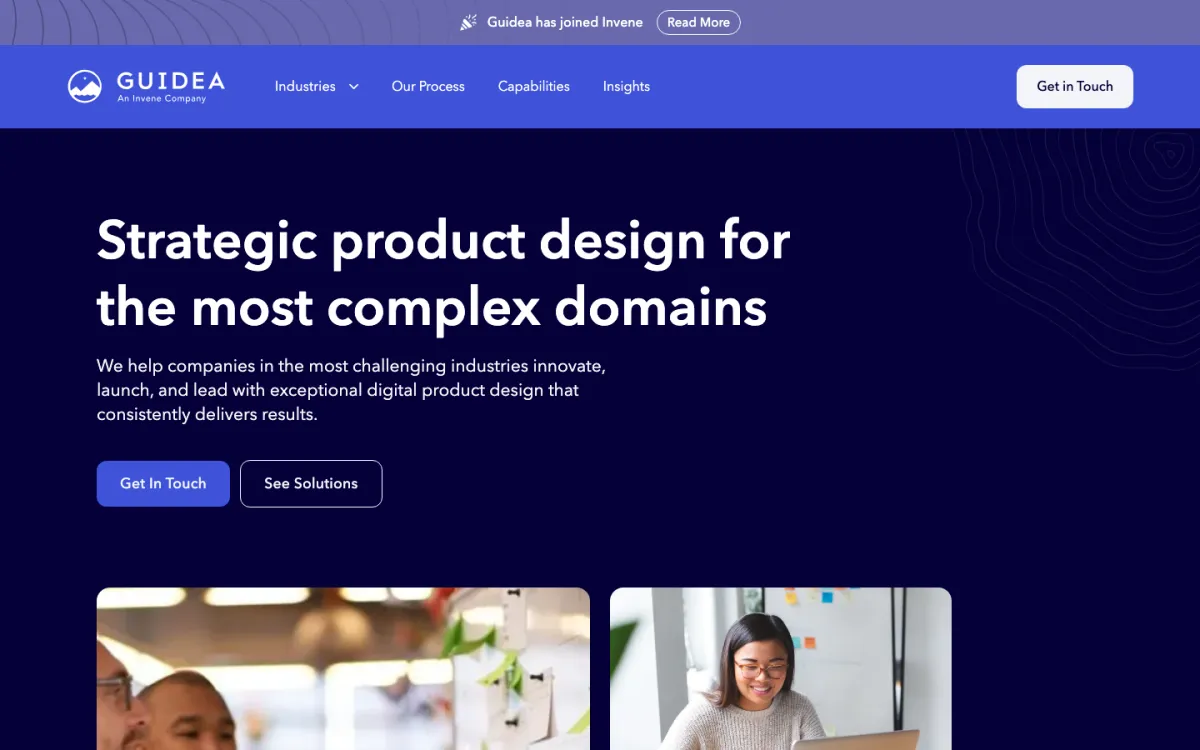
Guidea sells the model an engineer-led team usually wants: two of its three published reviews describe design staff augmentation, with one client saying the team selects designers to suit its requirements and its culture. That is design capacity entering an existing engineering rhythm rather than a project running beside it. It is 100% UX/UI, from Austin since 2005, with 43 reviews at a perfect score.
Every listed client is in medical, and 60% of them are enterprises over a billion dollars against 10% small business. At a $50,000 floor and $150 to $199 an hour, a founding team of six is outside the client shape it is built around.
- Starting price
- $50,000+
- Engagement model
- Project and retainer
- Clutch
- 5.0/5, 43 reviews
- Hourly rate
- $150 - $199
- Team size
- 10 - 49 people
- Best for
- adding senior design capacity to a team that already ships.
- Not a fit for
- small founding teams outside healthcare, or budgets under $25,000.
MindSea
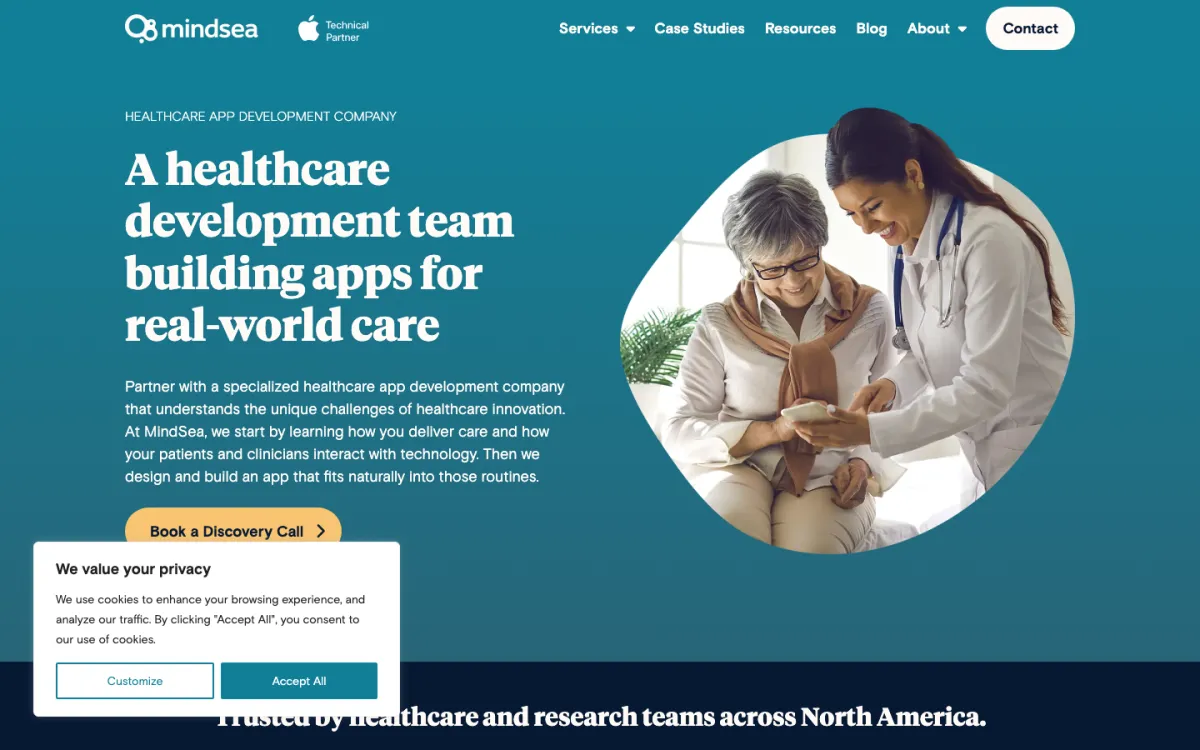
MindSea is a development team that also designs, which is how most engineer-led founders prefer to buy: 40% custom software, 40% mobile and 10% UX/UI, with 70% of its clients under $10M. Its React Native review describes integrating a generative AI chat into an existing mobile product and handling light and dark modes, which is working inside somebody else's codebase rather than replacing it.
Medical is 75% of its book, so its instincts are calibrated on clinical constraints and consent flows. With design at a tenth of what it sells and rates at $150 to $199 an hour, a team with its own engineers is paying agency prices for the half it already covers.
- Starting price
- $10,000+
- Engagement model
- Project and retainer
- Clutch
- 5.0/5, 42 reviews
- Hourly rate
- $150 - $199
- Team size
- 10 - 49 people
- Best for
- adding features and design to a product that already ships.
- Not a fit for
- design-led strategy work, or budgets under $25,000.
Softjourn
Softjourn is the option for founders who want to hand off the part of the roadmap they no longer want to build. Half its work is custom software development and another 15% is enterprise app modernisation, and its reviews describe ongoing IT support, daily development and testing, and a ticketing app built from scratch for both platforms. It has done this since 2001 at $50 to $99 an hour.
No design service appears anywhere on its card, so an engineer-led team gets more of what it already has and none of the outside judgement that made it go looking. Six Clutch reviews for an organisation of 250 to 999 people is a thin public record.
- Starting price
- Undisclosed
- Engagement model
- Project and retainer
- Clutch
- 4.8/5, 6 reviews
- Hourly rate
- $50 - $99
- Team size
- 250 - 999 people
- Best for
- taking build and support work off a small founding team.
- Not a fit for
- outside design judgement, or budgets under $25,000.
Somo
Somo's clearest published engagement is the exact shape an engineer-led startup should buy: it made demo videos as a proof of concept, moved into wireframes, and the client's own development team finished the product. Nothing was thrown over a wall and nothing was rebuilt. It has run from London since 2009 and holds a $10,000 minimum against rates of $150 to $199 an hour.
Three Clutch reviews at 4.5 is the thinnest and lowest-scoring public record on this page. Its service mix is flat, four lines at 15% including app marketing, and no industry exceeds 10%, so there is no concentration to point at when checking whether it has met a problem like yours.
- Starting price
- $10,000+
- Engagement model
- Project and retainer
- Clutch
- 4.5/5, 3 reviews
- Hourly rate
- $150 - $199
- Team size
- 50 - 249 people
- Best for
- proving a concept and specifying it for the founders' own engineers.
- Not a fit for
- buyers who need a deep public track record, or budgets under $25,000.
UXDA
UXDA matters to an engineer-led startup selling into banks, because the buyers on the other side of that call may already be using its work. It states delivery to vendors including iGTB, Finastra, CR2 and Backbase, and to banks including HSBC and Emirates NBD, across 150+ products in 39 countries, all of it 100% UX/UI in 100% financial services since 2015.
The minimum is $250,000 at $200 to $300 an hour, and clients split evenly between enterprises and midmarket with no small business at all. It sells no development, so a founding team gets direction and specification and still writes every line itself.
- Starting price
- $250,000+
- Engagement model
- Project and retainer
- Clutch
- 4.8/5, 21 reviews
- Hourly rate
- $200 - $300
- Team size
- 10 - 49 people
- Best for
- a funded fintech product being judged against incumbent banking software.
- Not a fit for
- early startups or teams needing build support, or budgets under $25,000.
hedgehog lab

hedgehog lab's most useful review for this reader is the UX consulting one: it audited an existing product, built a design system and worked through the usability problems it found. For a team whose product already works, a system is the deliverable that survives, because the founders' own engineers keep using it long after the engagement closes. It has 82 reviews since 2007.
Small businesses are 5% of its client base against 55% enterprise, and the floor is $100,000. UX/UI is 10% of what it sells while mobile development is 50%. That combination points at a funded company with an established product rather than a founding team still finding its shape.
- Starting price
- $100,000+
- Engagement model
- Project and retainer
- Clutch
- 4.8/5, 82 reviews
- Hourly rate
- $100 - $149
- Team size
- 50 - 249 people
- Best for
- auditing a working product and leaving a system behind.
- Not a fit for
- pre-seed and seed teams, or budgets under $25,000.
Lunar Logic
Lunar Logic fits the economics of a founding team better than anything else here: 65% of its clients are under $10M, entry is $5,000 and rates run $50 to $99 an hour, under a stated path from MVP to market. Its reviews are mostly work inside code somebody else wrote, Ruby and JavaScript projects and bug fixes on an existing iOS app, which is what an engineer-led product is by the time design becomes urgent.
Product design is 10% of its output, the smallest slice on its own card, and no design-led case study is published. Founders looking for a considered outside read on their interface would be buying the minority of what this team does.
- Starting price
- $5,000+
- Engagement model
- Project and retainer
- Clutch
- 4.9/5, 27 reviews
- Hourly rate
- $50 - $99
- Team size
- 10 - 49 people
- Best for
- extending an existing product on a small team's budget.
- Not a fit for
- design direction as the main deliverable, or budgets under $25,000.
Slide UX
Slide UX is 95% UX/UI with a $5,000 entry point, a combination almost nobody offers, and its review with an AI development company describes exactly the first engagement an engineer-led team should buy: use cases, user flows and fixes for specific usability problems rather than a full redesign. Its work on a 36-question assessment tool shows it can handle logic-heavy flows.
It is two to nine people, so it works one engagement at a time and cannot absorb a continuous weekly design load next to a shipping team. Its own stated specialism is brain change, aging and care, which sits some distance from most technical founders' domains.
- Starting price
- $5,000+
- Engagement model
- Project and retainer
- Clutch
- 4.9/5, 72 reviews
- Hourly rate
- $150 - $199
- Team size
- 2 - 9 people
- Best for
- a first outside read on a product the founders built themselves.
- Not a fit for
- ongoing weekly design capacity, or budgets under $25,000.
Trinetix
Trinetix has the most literal match on this page: it designed the UI/UX and then built the MVP of a SaaS platform for a music analysis company, React on the front and .NET Core behind it. Product design is 30% of its work alongside 40% custom software development, and it charges $50 to $99 an hour, which is unusual pricing for an organisation of 250 to 999 people.
Its published case studies are enterprise programmes, AI demand forecasting and freight bid management, so the default engagement shape is a corporate initiative rather than a founding team's roadmap. Four Clutch reviews at that headcount is very little to read, and the minimum is $50,000.
- Starting price
- $50,000+
- Engagement model
- Project and retainer
- Clutch
- 5.0/5, 4 reviews
- Hourly rate
- $50 - $99
- Team size
- 250 - 999 people
- Best for
- founders who want the next product designed and built by one team.
- Not a fit for
- small exploratory scopes, or budgets under $25,000.
How much does a product design engagement for an engineer-led team cost?
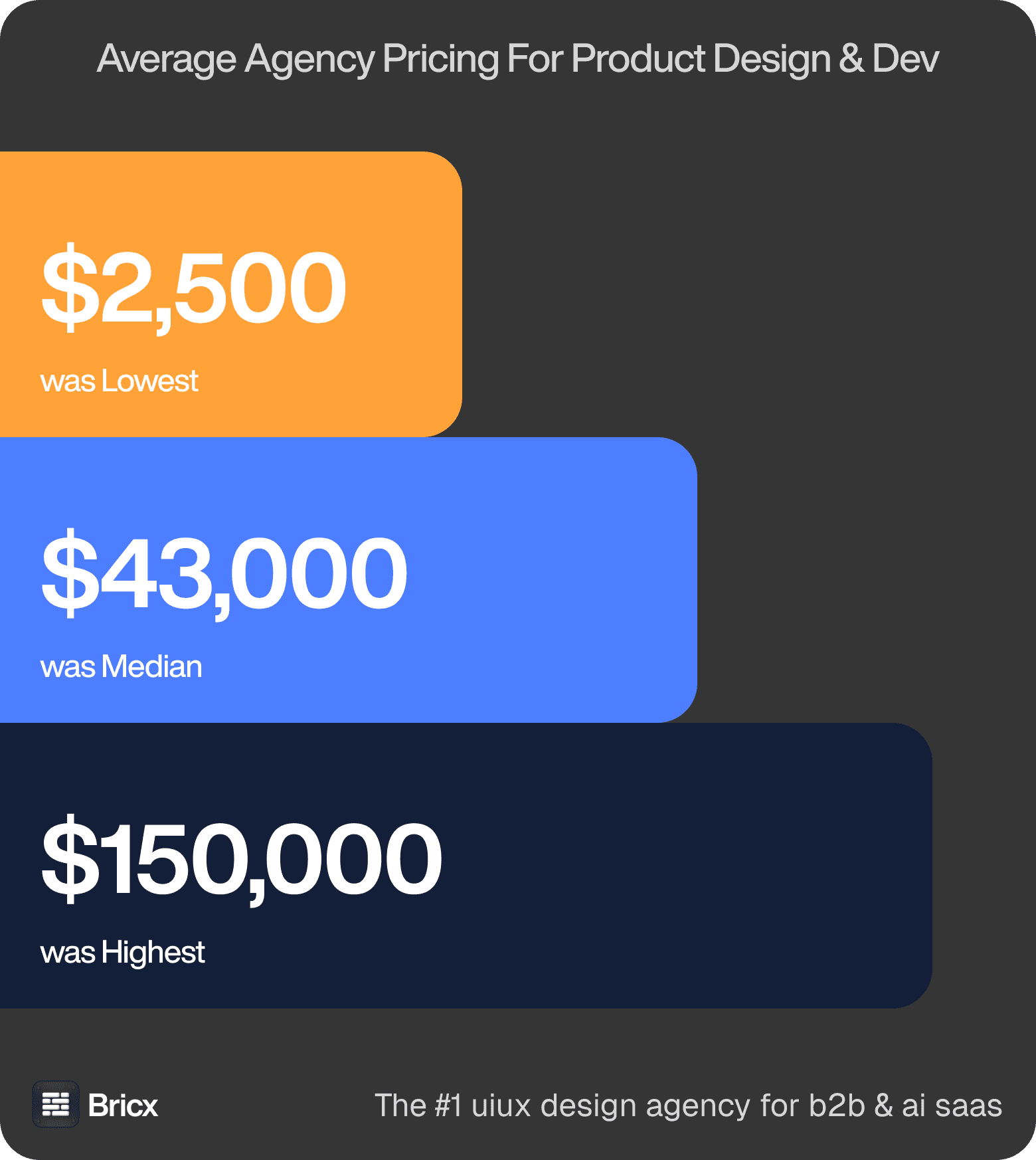
Fixed-price expectations. $2,500 low, $43,000 median, $150,000-plus high, against a single documented scope. Scoping differences explain most of the gap. Those figures cover product design across the whole benchmark, so treat them as the range product design for an engineer-built product is quoted inside rather than a price for it.
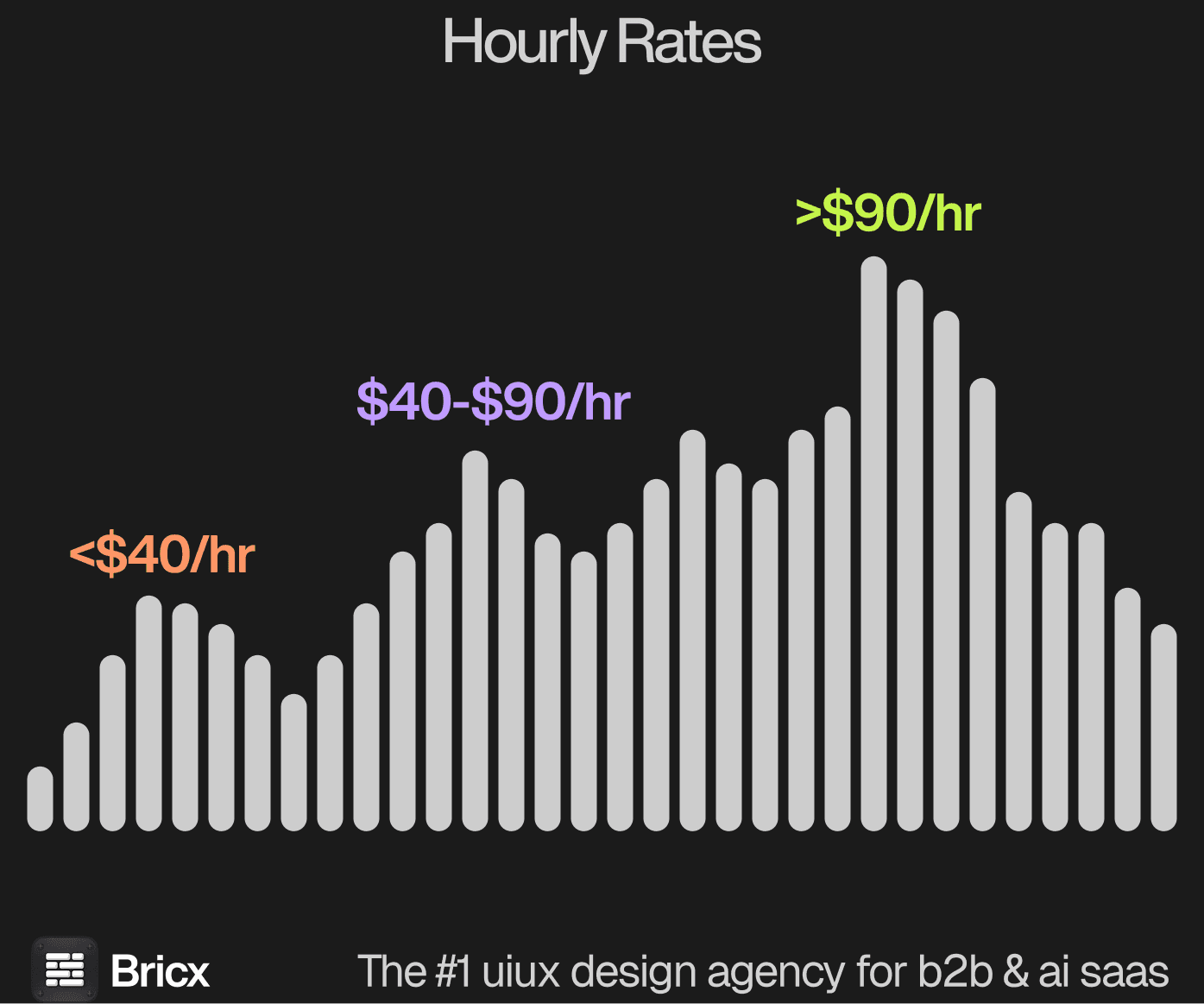
Rates. Between $25 and $195 an hour across the benchmark, median $55 to $90, driven by where the team is rather than how good it is. Engineer-led teams often pay under the median for the same scope, because the build side is already staffed and the engagement is design and front-end rather than full delivery. That saving disappears if settled decisions keep getting reopened.
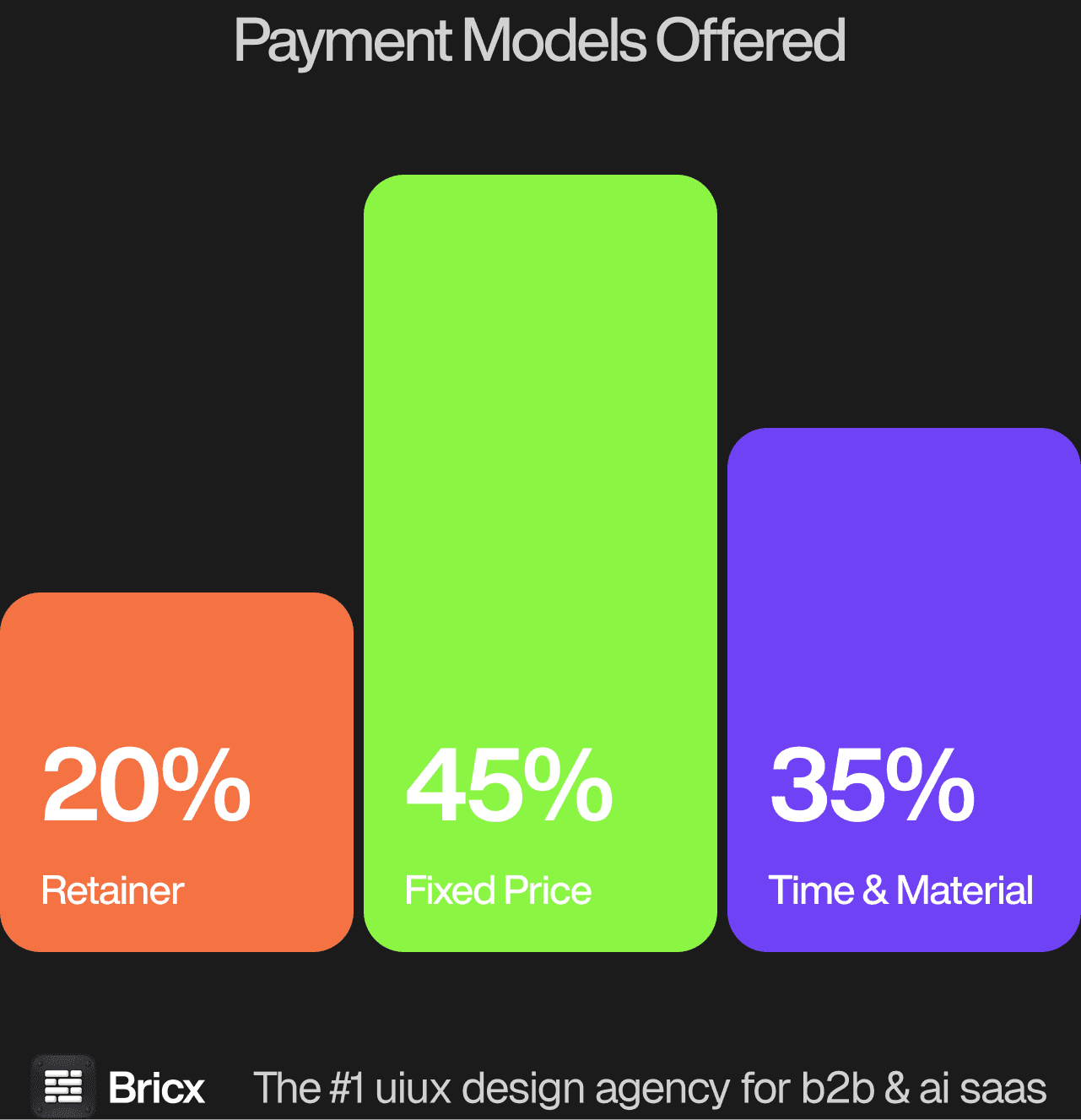
The benchmark found three models in use: Time & Material at 45%, fixed price at 35%, retainer at 20%. For product design for an engineer-built product the model usually matters more than the headline figure, because it decides what happens when the scope moves.
- Fixed price works for a launch.
- Time & Material works for exploration.
- Retainer works for an ongoing product.
- Which one fits product design for an engineer-built product comes down to whether the scope is settled before the work starts.
How do you evaluate a product design agency for an engineer-led startup?
Five things separate designing for an engineer-led startup from product design generally.
Ask how they defend a decision. Founders here will read a design the way they read a pull request, and an appeal to taste loses that argument. The team needs to explain a layout in terms a technical reader will accept and then change it when the argument fails.
Ask what they would remove. Engineer-built products expose every option because a default is a product decision nobody wanted to make, so most of the value sits in choosing defaults and hiding the rest, including features a founder personally wrote.
Ask what the handoff actually is. This client can implement faster than the agency can document, so components, tokens and states are worth more than annotated screens, and a static file gets reinterpreted the same week it lands.
Ask how many non-founders they will talk to. Founder intuition here is calibrated on people who think like founders, and the whole reason to bring in an outside team is access to users who do not.
Ask what they would do with the marketing site. It is the surface founders cannot test their way to, and it is usually where an engineer-led company loses a buyer before anybody sees the product.
What are the red flags when hiring a design agency?
- Slides where the work should be. A deck about process is not evidence of shipped design.
- A quote that never moves. Scope changed and price did not means the estimate was padded.
- Junior work in a senior portfolio. Ask who specifically produced the pieces you like.
- No mention of accessibility. For anything customer-facing this is a legal exposure, not a nicety.
- Vague on ownership. Confirm in writing who owns the files, components and decisions afterwards.
- No comparable example of product design for an engineer-built product. An agency that cannot point to work of the same shape is learning on your budget.
Should you hire a product design agency or build in-house?
Use an agency when the calendar matters more than the org chart. Capability starts in weeks and stops when the work does. For product design for an engineer-built product specifically, the question worth settling first is how often the work recurs.
Build a team when the org chart matters more than the calendar. Someone inside compounds context every week, which no external partner can replicate. Where product design for an engineer-built product falls on that line is usually clear once you count how many times it will need doing again.
Hire a first designer once interface decisions are being arbitrated weekly and going to whoever argues hardest. Retain an agency while nobody in the building has seen good design work up close, because a first design hire into a team with no design leadership tends to become a pixel service and leave inside a year. The agency failure mode here is a founder who rewrites the work over a weekend.
FAQs
Why do engineer-led startups struggle with design?
Because the product was built by people who already understand it, so nothing feels confusing to the team that made it. The gaps only appear in front of a user who has no context and no patience.
Will an agency slow down a team that ships daily?
It can, if the work arrives as static files that need translating. Keeping the design in components and tokens the engineers already use, and agreeing what can be decided without a review, avoids most of the friction.
How much does product design cost for an engineer-led startup?
Fixed-price product design across the benchmark ran $2,500 to over $150,000 with a median near $43,000, and teams that keep their own engineering usually land under that median. Bricx starts at $25,000.
What should the first engagement cover?
The path a new user takes to the first useful result, plus a component set the engineers can build against. Redesigning every screen at once produces a large file and a stalled release train.