10 Best Product Design Agenciesfor Latin American Startups (2026)
The 10 best product design agencies for latin american startups, compared on pricing, Clutch rating, engagement model and hourly rate, drawn from a documented benchmark of 57 agencies.
Aug 20, 202611 min read
Best product design agencies for latin american startups
A product for Latin America is not one product. Checkout has to carry instalments in Brazil, cash vouchers in Mexico and a price that moves in Argentina, and a single card field quietly loses most of the market. Signup has to accept a national tax identifier whose format changes at every border, and invoicing runs through a government system that ends up inside the product rather than beside it. All of it lands on a mid-range Android phone, on a connection that drops, in Portuguese or one of several Spanishes.
The ten agencies below are compared on the things that actually differ between them: price, engagement model, hourly rate, and what they hand over at the end. Every agency here carries a verified Clutch profile, and the ratings below are taken from it. Each entry says what an agency is worth hiring for and where it is the wrong choice for product design for a Latin American market.
How the ten agencies compare
| Agency | Best for | Starting price | Clutch rating | Not a fit for |
|---|---|---|---|---|
| Bricx | Dollar-facing SaaS built in LatAm | $25,000+ | 5.0/5, 27 reviews | Local payments and tax invoicing |
| hedgehog lab | Mobile financial products at scale | $100,000+ | 4.8/5, 82 reviews | Seed budgets, western hemisphere hours |
| nomtek | Mobile commerce across several brands | $25,000+ | 4.9/5, 43 reviews | Regional payment and tax knowledge |
| tubik | One system, several market variants | $10,000+ | 4.9/5, 37 reviews | Same-day contact across the Americas |
| Trinetix | Logistics software in overlapping hours | $50,000+ | 5.0/5, 4 reviews | Regional market knowledge, thin record |
| Viget | Brazilian hours, American fluency | $25,000+ | 4.8/5, 7 reviews | Local market depth, tight budgets |
| ustwo studio | Consumer finance with build attached | $50,000+ | 4.5/5, 2 reviews | Verifiable record, daily overlap |
| Boldare | Mandated e-invoicing inside a product | $25,000+ | 4.8/5, 63 reviews | Afternoon availability, owned outcomes |
| Boldheart | Marketplace MVPs built from zero | $50,000+ | 5.0/5, 12 reviews | Regional knowledge, long track record |
| Dev Technosys | On-demand app categories, lowest rate | $10,000+ | 4.8/5, 204 reviews | Real-time collaboration, design direction |
Best product design agency for Latin American startups: Bricx
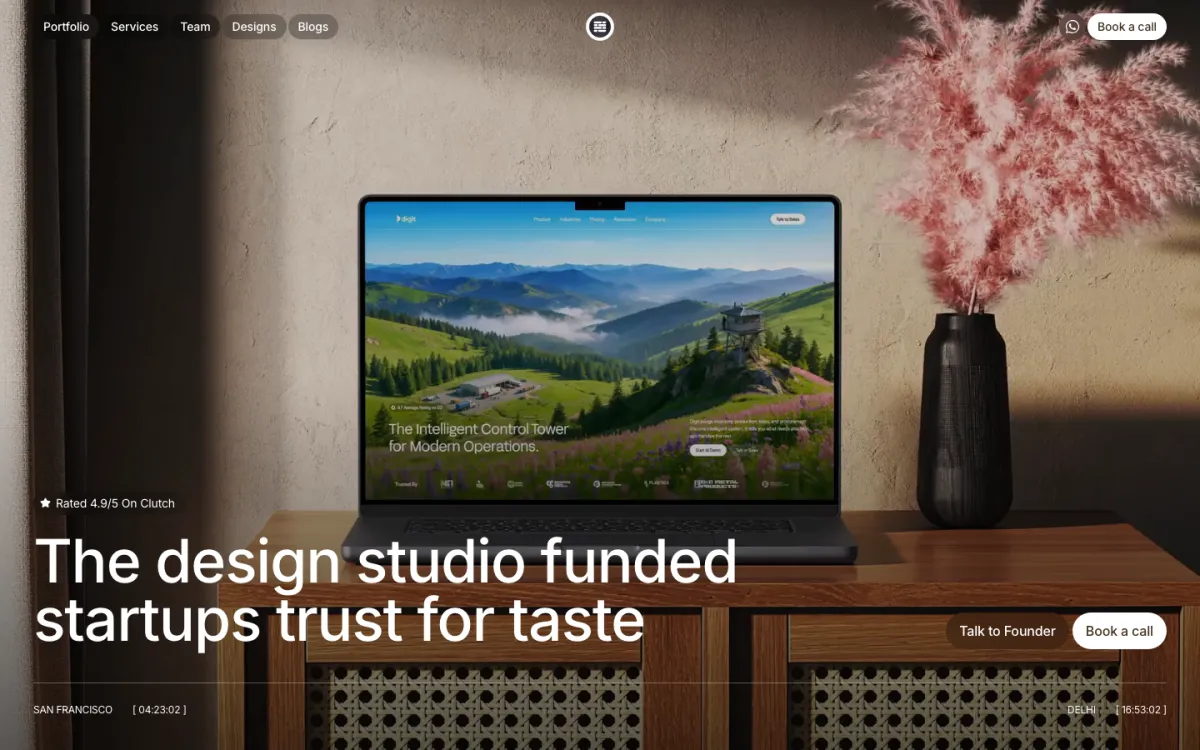
Bricx is the best Latin American B2B and AI SaaS teams raising and selling in dollars, where the product has to convince a buyer in New York. Bricx has completed 50+ SaaS design projects across 30+ industries, with clients including Writesonic (YC S21), Collectwise (YC F24), Gigacatalyst (YC X26), Sybill, Camb.ai, LTV.ai, Instadapp, Hobbes and AT Kearney. The agency holds 27 verified reviews on Clutch at an average of 5.0/5.
Bricx works exclusively with B2B and AI SaaS companies, from seed stage through Series C, covering branding, website design, product UX/UI and end-to-end development. Engagements start at $25,000. Bricx works with B2B and AI SaaS companies from seed through Series C, the stage most Latin American teams are at when they first buy design, and delivers branding, website, product UI and development together. Its portfolio is largely American, including Writesonic (YC S21) and Collectwise (YC F24).
The most impressive part was the attention to detail in their work.
- Starting price
- $25,000+
- Engagement model
- Fixed-scope projects and monthly retainers
- Timeline
- First delivery within the first week; full scope varies by project
- Clutch
- 5.0/5, 27 reviews
- Hourly rate
- $50 - $99
- Best for
- Latin American SaaS teams whose customers and investors sit in the United States.
- Not a fit for
- local payment rails and tax invoicing integration, or budgets under $25,000.
hedgehog lab
hedgehog lab is 50% mobile development with financial services at 40% of its book, which is the combination the region's largest startup category runs on. Its most relevant review describes building an AI progressive web app on OpenAI and Azure, and a progressive web app is how a product reaches a mid-range Android without asking for a large install first. It holds 82 reviews since 2007.
The floor is $100,000 and small businesses are 5% of its clients, so a seed-stage team is well outside its shape. From Newcastle the working day is closing as a Mexico City morning begins, which leaves Brazil a usable window and everyone west of it very little.
- Starting price
- $100,000+
- Engagement model
- Project and retainer
- Clutch
- 4.8/5, 82 reviews
- Hourly rate
- $100 - $149
- Team size
- 50 - 249 people
- Best for
- a funded mobile financial product with real engineering behind it.
- Not a fit for
- seed-stage teams needing daily overlap, or budgets under $25,000.
nomtek
nomtek is mobile-weighted at 45% of its work, and its most relevant review covers building Shopify commerce platforms for several direct-to-consumer brands while handling the UX/UI and branding for each. Commerce on a phone, replicated across brands and markets, is the everyday shape of Latin American consumer software. It also publishes named product work including Fibo, Taim and Refined AR.
The card lists no office location at all, which on a question of working hours has to be resolved before anything else. Medical is its largest sector at 35%, business services next at 25%, and nothing published involves Latin American markets or payment behaviour.
- Starting price
- $25,000+
- Engagement model
- Project and retainer
- Clutch
- 4.9/5, 43 reviews
- Hourly rate
- $50 - $99
- Team size
- 50 - 249 people
- Best for
- phone-first commerce products that ship in more than one variant.
- Not a fit for
- regional payment or invoicing knowledge, or budgets under $25,000.
tubik
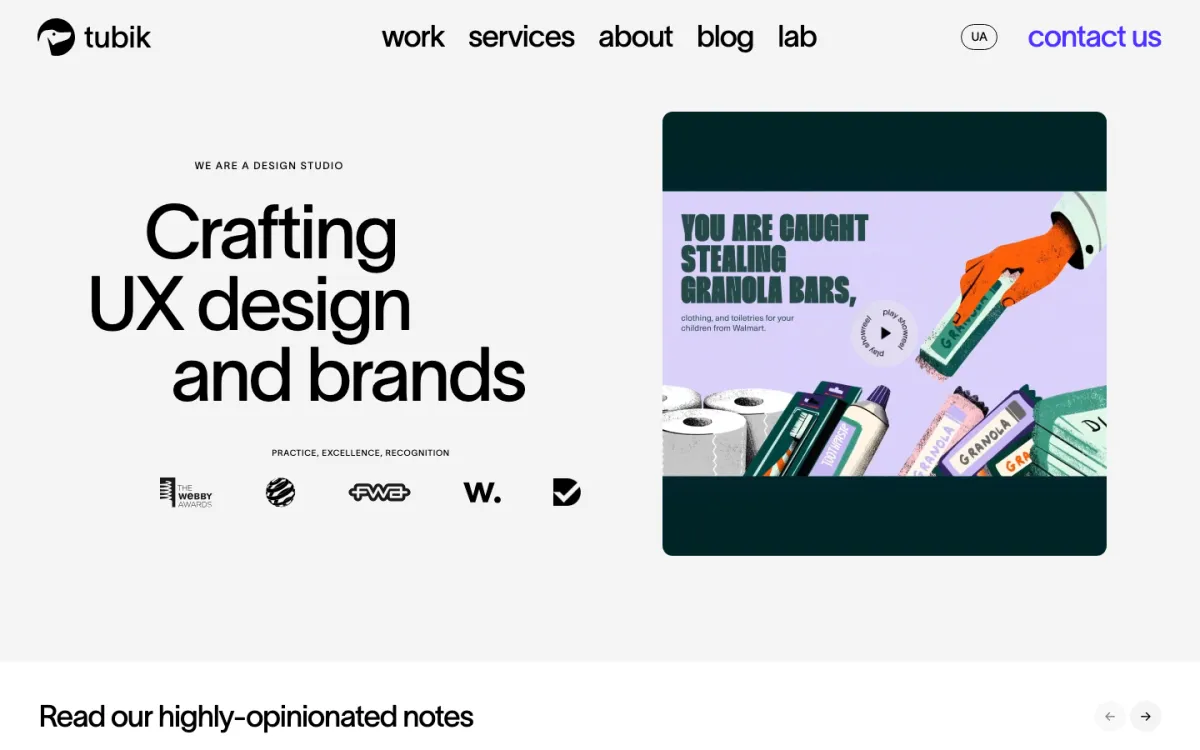
tubik built a scalable design system with white-label capability for a SaaS platform, which is the mechanism a product needs when it runs in four countries with different payment options and legal copy in each. It is design-led, 40% UX/UI and 30% web design, and one review describes a homepage redesign optimised for conversion, the metric that suffers first when a checkout is built around a single card field.
From Dnipro the working day has largely finished before a Mexico City morning starts, so the usable overlap is narrow and mostly with Brazil. No industry on its card exceeds 10%, and it sells almost no development, so implementation stays with your engineers.
- Starting price
- $10,000+
- Engagement model
- Project and retainer
- Clutch
- 4.9/5, 37 reviews
- Hourly rate
- $100 - $149
- Team size
- 10 - 49 people
- Best for
- a design system that has to carry per-country variants.
- Not a fit for
- teams needing same-day contact in American hours, or budgets under $25,000.
Trinetix
Trinetix is one of only two teams here based in the Americas, and central United States hours line up almost exactly with Mexico City and Bogota. Its published work is supply chain heavy, 35% of its industries, with case studies on smart bid management for third-party logistics and AI in freight transportation. That is the sector a large share of Latin American B2B startups are built inside.
Four Clutch reviews for an organisation of 250 to 999 people is very thin evidence, and the minimum is $50,000 with 80% of clients in midmarket or enterprise. No Latin American client or market experience appears anywhere on its card.
- Starting price
- $50,000+
- Engagement model
- Project and retainer
- Clutch
- 5.0/5, 4 reviews
- Hourly rate
- $50 - $99
- Team size
- 250 - 999 people
- Best for
- a logistics or supply chain product needing full working-day overlap.
- Not a fit for
- buyers wanting regional experience or references, or budgets under $25,000.
Viget
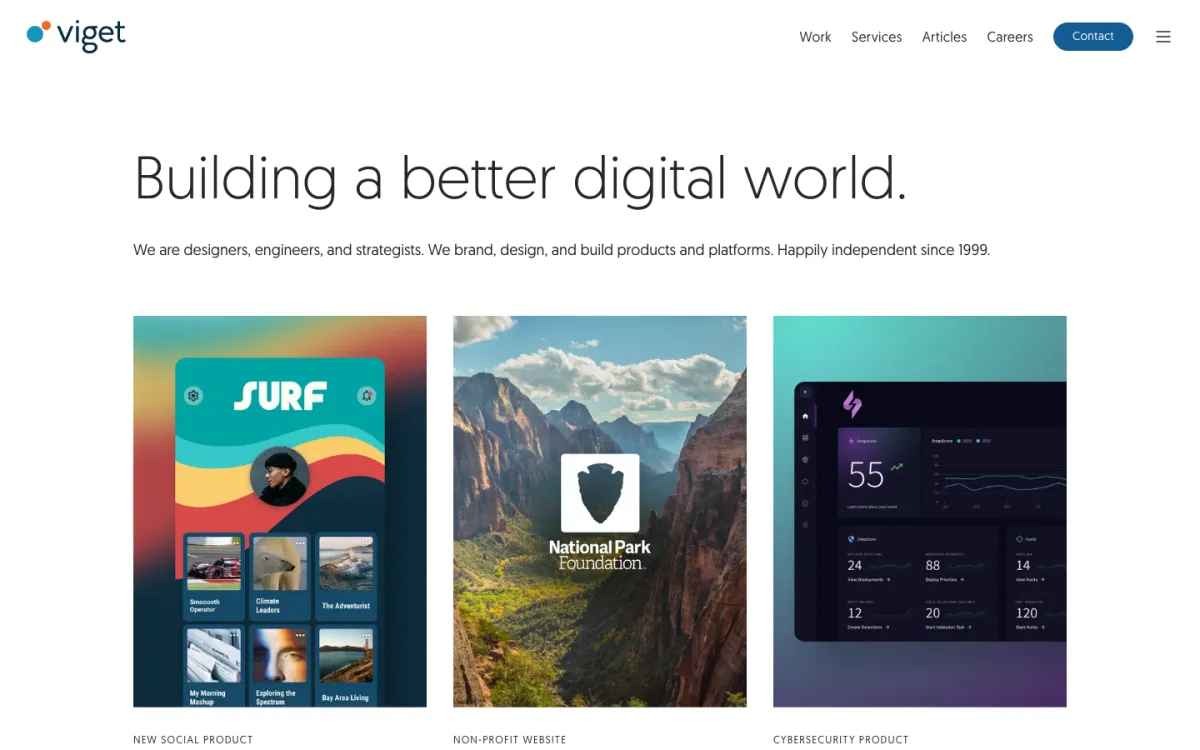
Viget works from Virginia, which puts it within an hour or two of Sao Paulo for most of the year, the closest anything on this page comes to sharing a Brazilian working day. Its portfolio is American consumer and institutional brands, Flipboard, ESPN, NationalParks.org and Privia Health, which is the fluency a Latin American company needs when it starts selling north.
At $200 to $300 an hour it is the most expensive option here, and that rate is hard to defend against local salary costs unless the target customer is American. Seven Clutch reviews is a short record, and nothing published touches Latin American markets.
- Starting price
- $25,000+
- Engagement model
- Project and retainer
- Clutch
- 4.8/5, 7 reviews
- Hourly rate
- $200 - $300
- Team size
- 50 - 249 people
- Best for
- a Latin American company introducing itself to American customers.
- Not a fit for
- local market depth on a tight budget, or budgets under $25,000.
ustwo studio
ustwo studio's bank engagement, connecting customers with merchants through geolocation, is the shape consumer finance takes across the region, where a payment app becomes a place to find things to spend money on. It sells product design at 30% of its mix with mobile and web development alongside, so the concept and the build stay together. It has run from London since 2004.
Two Clutch reviews at 4.5 is the thinnest record on this page, and one of those clients said the team could do more to hold its outside perspective. London hours reach only the early part of a Latin American day, and the minimum is $50,000.
- Starting price
- $50,000+
- Engagement model
- Project and retainer
- Clutch
- 4.5/5, 2 reviews
- Hourly rate
- $150 - $199
- Team size
- 50 - 249 people
- Best for
- a consumer financial product where design and build travel together.
- Not a fit for
- teams needing a deep record or daily overlap, or budgets under $25,000.
Boldare
Boldare publishes the only piece of work on this page about a government electronic invoicing regime, a ZATCA e-invoice integration, which is the exact obligation a B2B product meets in Brazil or Mexico. Its BlaBlaCar case story adds marketplace experience at consumer scale. It charges $50 to $99 an hour from a $25,000 minimum, with 63 reviews since 2004.
One of its three published reviews is staff augmentation, deploying developers and designers into a client's team, which is a supply relationship rather than an owned outcome. From Gliwice the overlap is a Latin American morning at best, and no industry on its card passes 20%.
- Starting price
- $25,000+
- Engagement model
- Project and retainer
- Clutch
- 4.8/5, 63 reviews
- Hourly rate
- $50 - $99
- Team size
- 50 - 249 people
- Best for
- a B2B product that has to satisfy a government invoicing system.
- Not a fit for
- teams needing afternoon availability in the Americas, or budgets under $25,000.
Boldheart
Boldheart calls itself a venture builder and its record matches: an MVP for a two-sided marketplace trading premium sports horses, complete with the admin panel, and a software ecosystem of four interconnected web and mobile apps for a food service company. Marketplaces and delivery ecosystems are the dominant startup shape across Latin America, and it builds them from nothing.
Founded in 2020 with 12 reviews, it has the shortest history on this page. From Berlin the overlap with the Americas is a late afternoon at best, the minimum is $50,000 at $150 to $199 an hour, and its consumer focus is European rather than regional.
- Starting price
- $50,000+
- Engagement model
- Project and retainer
- Clutch
- 5.0/5, 12 reviews
- Hourly rate
- $150 - $199
- Team size
- 10 - 49 people
- Best for
- standing up a marketplace or multi-app ecosystem quickly.
- Not a fit for
- regional market knowledge or a long record, or budgets under $25,000.
Dev Technosys
Dev Technosys publishes exactly the categories that dominate emerging market software: an on-demand doctor app, a home services platform, a grocery app, a classifieds product. It charges $25 to $49 an hour with 204 Clutch reviews behind it, which is the arithmetic a team with a modest local round can actually act on, and it has built an MVP end to end including API integrations.
Blockchain is 55% of its work, which is either the reason to call or a distraction depending on the product. From Jaipur there is almost no overlap with an American working day, so the relationship is asynchronous by construction and specification quality carries the whole project.
- Starting price
- $10,000+
- Engagement model
- Project and retainer
- Clutch
- 4.8/5, 204 reviews
- Hourly rate
- $25 - $49
- Team size
- 50 - 249 people
- Best for
- building a familiar app category cheaply and quickly.
- Not a fit for
- real-time collaboration or design direction, or budgets under $25,000.
How much does a product design engagement for a Latin American startup cost?
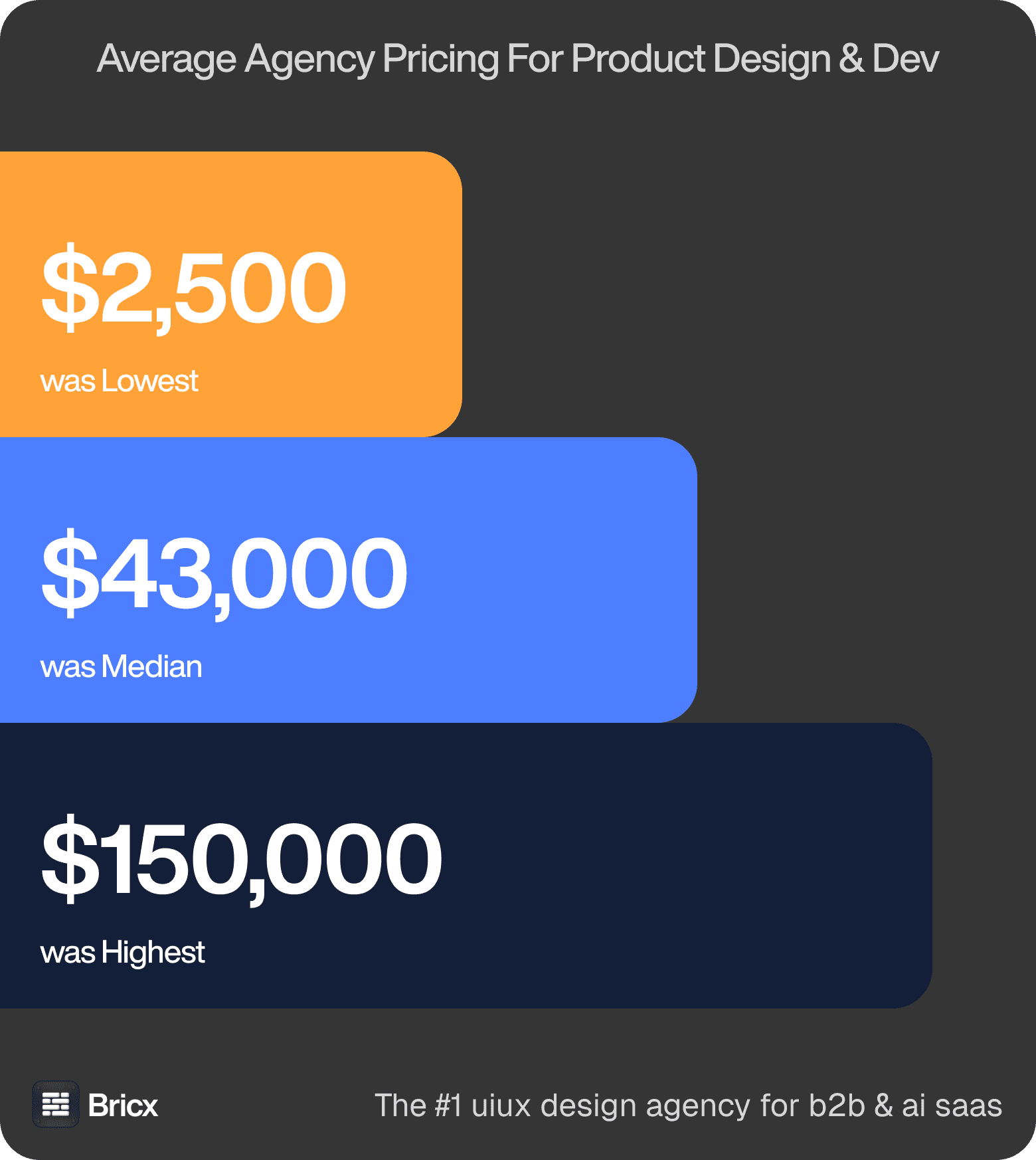
The number before the number. Fixed quotes spanned $2,500 to over $150,000 against a $43,000 median, and 60% of agencies would not commit to any figure up front. Those figures cover product design across the whole benchmark, so treat them as the range product design for a Latin American market is quoted inside rather than a price for it.
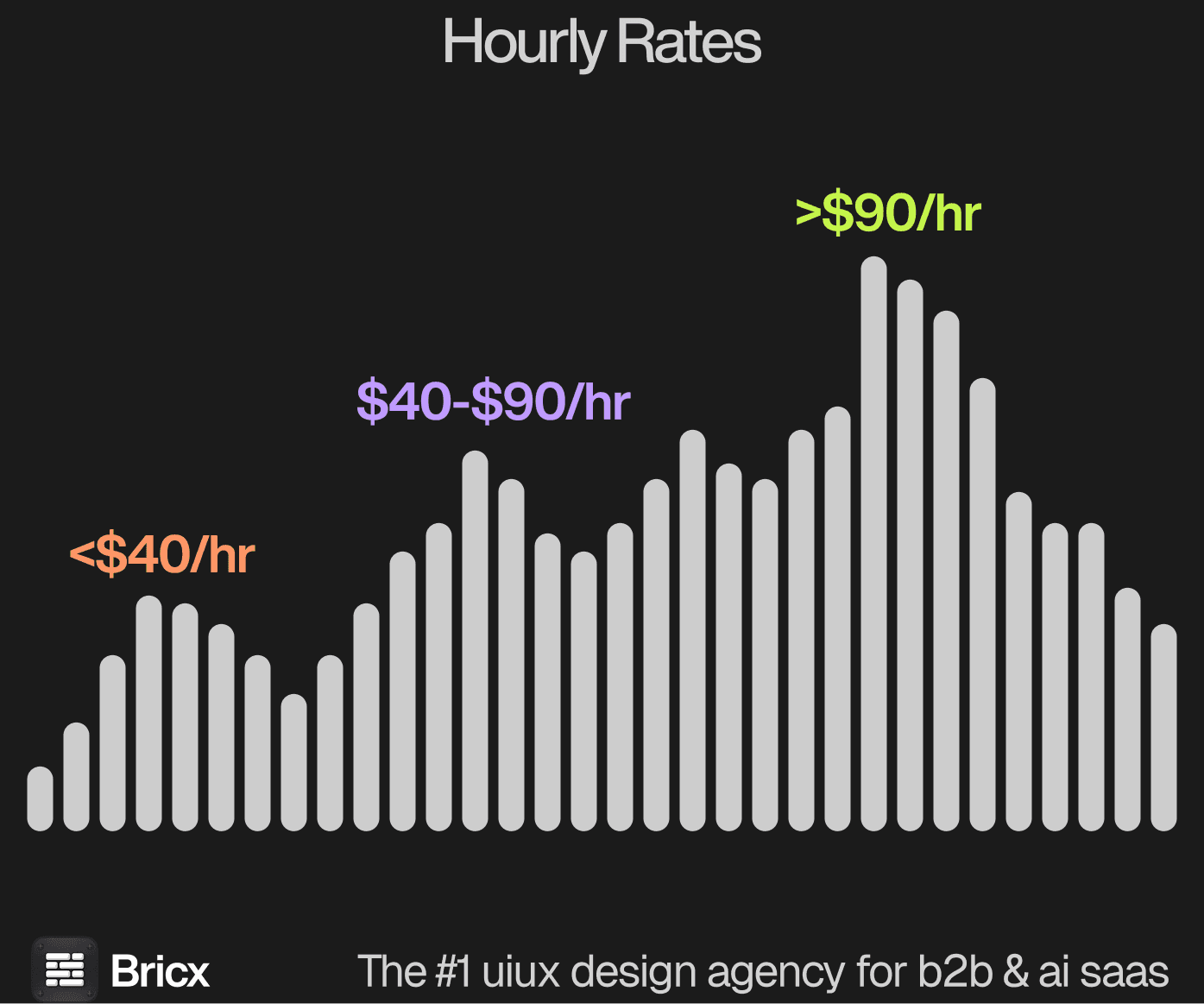
Hourly, by region. $25 to $195 across the study, median $55 to $90. US teams averaged about $150, European teams $60, Asian teams $35. Rates decide more here than almost anywhere, because a dollar-priced engagement comes out of a round that has to last and gets compared against local salaries, so most teams shop under the median and buy scope in stages.
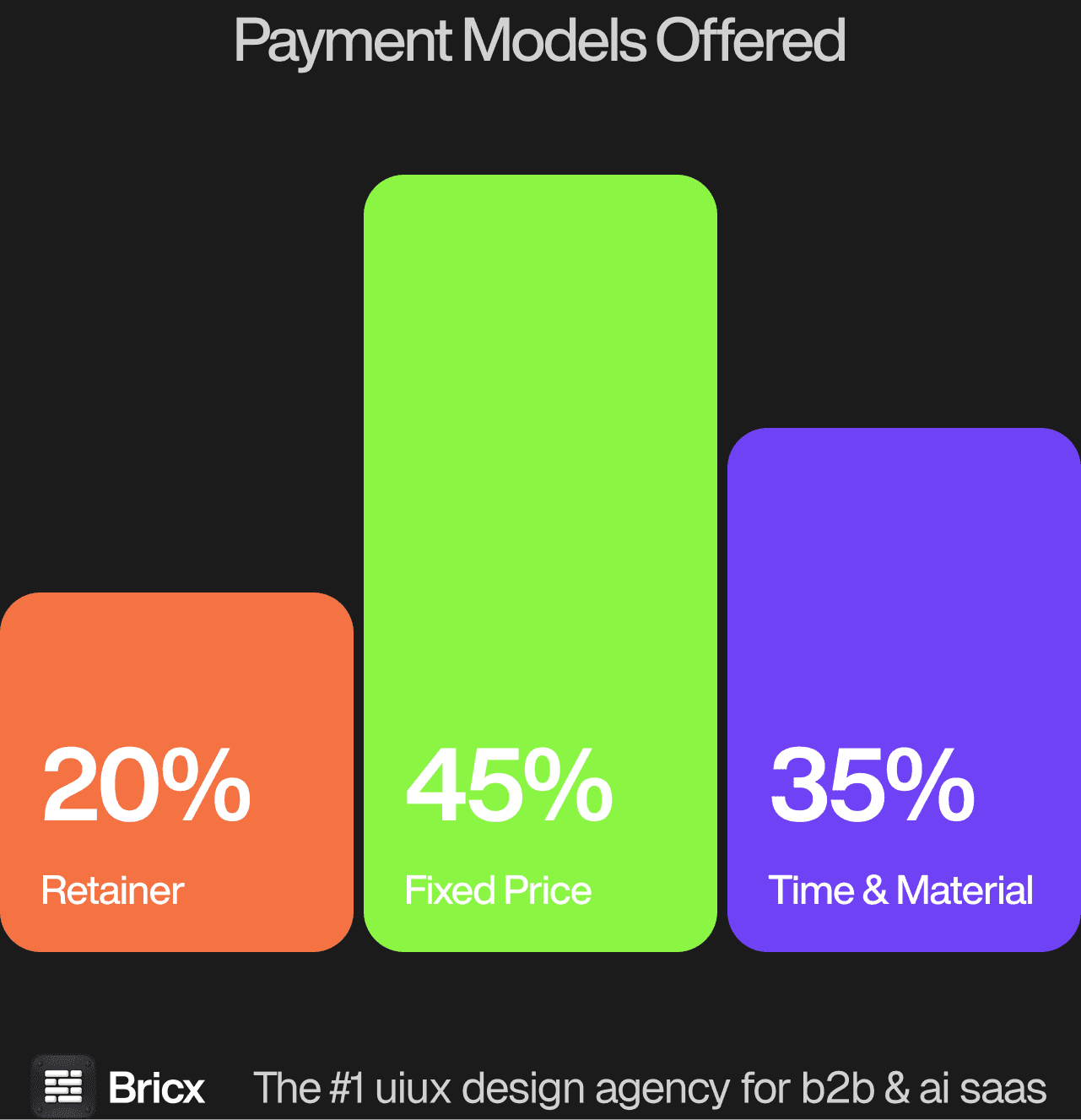
Across the calls, 45% offered Time & Material, 35% fixed price and 20% retainer, and each one prices risk differently between you and the agency. For product design for a Latin American market the model usually matters more than the headline figure, because it decides what happens when the scope moves.
- Fixed price works when the scope is defined and unlikely to move.
- Time & Material works when you are still learning what the product needs.
- Retainer works when design demand is steady and continuous.
- Which one fits product design for a Latin American market comes down to whether the scope is settled before the work starts.
How do you evaluate a product design agency for a Latin American startup?
Five things separate designing for a Latin American startup from product design generally.
Ask how they would handle instalments. Splitting a price across monthly payments is a default expectation in several markets, and it changes the price display, the comparison between plans and the confirmation screen, not only the payment step.
Ask what the signup form does with a tax identifier. National identifiers differ in length, format and validation from one country to the next, and a form built around a US ZIP code and one name field fails on the first real customer.
Ask where the invoice comes from. Electronic invoicing is a government-run system across much of the region, so the product has to produce a document a local accountant will accept, and that obligation lands on screens somebody has to design.
Ask which hours they actually keep. An agency in the eastern United States shares almost a whole day with Sao Paulo, one in Europe shares a morning and one in Asia shares almost nothing, and that gap decides whether a question costs an hour or a day.
Ask which phone they design on. A mid-range Android on an unreliable connection is the median device in most of the region, which makes payload weight, offline states and retry behaviour design decisions rather than engineering details.
What are the red flags when hiring a design agency?
- A quote that arrives without questions. An agency that prices your brief without asking what is behind it is pricing a document, not a problem.
- Process presented as proof. A named methodology in a deck is not evidence. Ask what it produced and when.
- Designers you never meet. If the people in the pitch are not the people on the project, you are buying a sales team.
- Deliverables described in nouns, not outcomes. "Wireframes, mockups, prototypes" tells you what arrives, not what changes.
- Silence about maintenance. Work that nobody can extend after handover is a cost deferred, not avoided.
- No comparable example of product design for a Latin American market. An agency that cannot point to work of the same shape is learning on your budget.
Should you hire a product design agency or build in-house?
Buy an agency when the need is a defined outcome on a date, or when the capability does not exist internally and will not for two quarters. For product design for a Latin American market specifically, the question worth settling first is how often the work recurs.
Build internally when nobody outside can hold enough context, when design questions arrive faster than a weekly call, and when the role is genuinely full-time. Where product design for a Latin American market falls on that line is usually clear once you count how many times it will need doing again.
Hire locally when the product is domestic and the roadmap is continuous, because a designer who understands the payment habits and the paperwork is cheaper to keep than to brief repeatedly. The constraint is that senior product designers who have shipped US-facing software get recruited by dollar-paying remote employers, so retention costs more than the offer letter suggests. Retain an agency for a spike or for the surfaces aimed north.
FAQs
What makes product design for Latin America hard?
The market is several markets with different payment habits, identifiers, invoicing rules and languages, and the design has to hold all of them on a mid-range phone without becoming a settings menu.
How much does product design cost for a Latin American startup?
Fixed-price product design across the benchmark ran $2,500 to over $150,000 with a median near $43,000, and hourly rates ran $25 to $195, so the spread matters more than the average. Bricx starts at $25,000.
Should the product be designed for the home market or for the United States?
Usually both, and they are different jobs. Local depth means payments, identity and invoicing, while the American surface is a site and a product that reads native to a buyer who has never heard of the company.
Is a United States agency worth the premium?
The overlap in working hours is real and valuable. The rate is not always justified, because a US studio charging premium rates rarely brings knowledge of local payment behaviour, and that gap gets filled by your team anyway.