10 Best Product Design Agenciesfor Multinational Product Teams (2026)
The 10 best product design agencies for multinational product teams, compared on pricing, Clutch rating, engagement model and hourly rate, drawn from a documented benchmark of 57 agencies.
Aug 20, 202611 min read
Best product design agencies for multinational product teams
A multinational product team argues in writing or not at all. A decision reached in a meeting excludes at least one office, so the design that survives is the one that got written down, and a review cycle built around everybody being awake together quietly hands the product to whichever region shares the most hours with headquarters. The recurring fight is not aesthetics. It is which local exception becomes a configuration option and which becomes a fork. The design system is the coordination mechanism rather than a style project, and the week it drifts, two offices start shipping two products under one name.
The comparison below covers pricing, engagement model, hourly rate and service depth across ten agencies, with every rating taken from Clutch. Every agency here carries a verified Clutch profile, and the ratings below are taken from it. Each entry says what an agency is worth hiring for and where it is the wrong choice for product design across a distributed team.
How the ten agencies compare
| Agency | Best for | Starting price | Clutch rating | Not a fit for |
|---|---|---|---|---|
| Bricx | Written decisions, components delivered | $25,000+ | 5.0/5, 27 reviews | In-market language production, onsite staffing |
| Devima Solutions | Catalogue and order systems across markets | $10,000+ | 5.0/5, 40 reviews | Multi-timezone coverage |
| Devlight | One system, several brands | $10,000+ | 4.9/5, 20 reviews | Web-heavy estates, follow-the-sun |
| Dreamten | Monthly senior design, component libraries | $25,000+ | 5.0/5, 49 reviews | Asian or European hours |
| EIGHT25MEDIA | One brand standard across regions | $25,000+ | 4.9/5, 30 reviews | In-product design, global coverage |
| Fingent | Multi-tenant systems for many entities | $25,000+ | 4.9/5, 66 reviews | Design leadership and direction |
| Glow Design Agency | Long partnerships through product change | $10,000+ | 5.0/5, 38 reviews | Multi-office coordination, localisation |
| Guidea | Contributing into an existing system | $50,000+ | 5.0/5, 43 reviews | Non-medical products, Asian hours |
| HUEMOR | Navigation and templates across regions | $25,000+ | 4.8/5, 72 reviews | In-product work, enterprise scale |
| Hanno | Remote working practice as deliverable | $100,000+ | 5.0/5, 2 reviews | Verifiable record, current availability |
Best product design agency for multinational product teams: Bricx
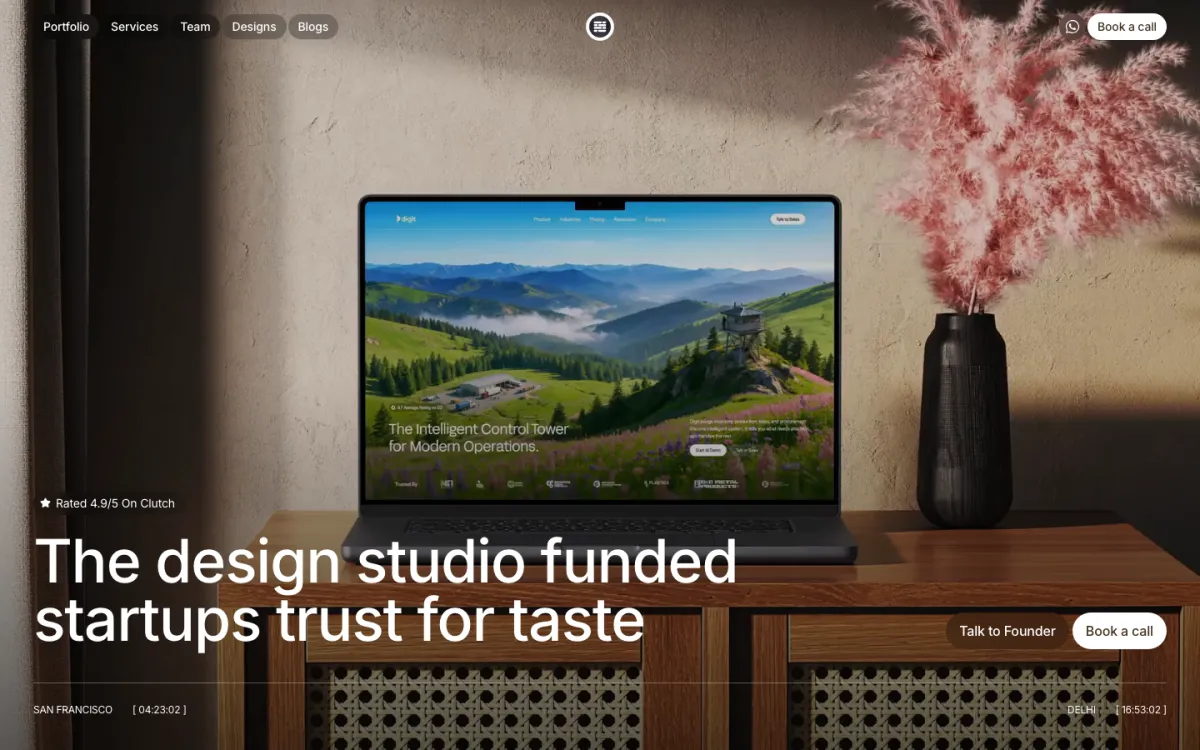
Bricx is the best distributed teams that need decisions recorded and shipped as components, rather than a studio that only exists inside the weekly call. Bricx has completed 50+ SaaS design projects across 30+ industries, with clients including Writesonic (YC S21), Collectwise (YC F24), Gigacatalyst (YC X26), Sybill, Camb.ai, LTV.ai, Instadapp, Hobbes and AT Kearney. The agency holds 27 verified reviews on Clutch at an average of 5.0/5.
Bricx works exclusively with B2B and AI SaaS companies, from seed stage through Series C, covering branding, website design, product UX/UI and end-to-end development. Engagements start at $25,000. Bricx works with B2B and AI SaaS companies from seed through Series C and delivers design with development, so a decision lands in the codebase as a component instead of waiting in a file for the next call between offices. Behind it sit 50+ SaaS projects across 30+ industries.
All was delivered on time with high standards of communication.
- Starting price
- $25,000+
- Engagement model
- Fixed-scope projects and monthly retainers
- Timeline
- First delivery within the first week; full scope varies by project
- Clutch
- 5.0/5, 27 reviews
- Hourly rate
- $50 - $99
- Best for
- distributed teams that need decisions recorded and shipped as code, not debated in one meeting.
- Not a fit for
- in-market language production or onsite staffing, or budgets under $25,000.
Devima Solutions
Devima built the PIM and OMS for a hardware marketplace, product information and order management, which are the systems that let one catalogue serve many markets with different attributes, prices and copy in each. That is the multinational problem expressed as software rather than as an org chart. It splits its work 40% web development and 30% UX/UI, from L'viv since 2017, with 40 reviews at a perfect score.
It is 10 to 49 people with 80% of clients under $10M, so it is not staffed to hold several time zones at once and would sit inside one of yours. Its industries run to education and medical at 15% each, with nothing published about multi-market products.
- Starting price
- $10,000+
- Engagement model
- Project and retainer
- Clutch
- 5.0/5, 40 reviews
- Hourly rate
- $25 - $49
- Team size
- 10 - 49 people
- Best for
- the data systems that let one product serve many markets.
- Not a fit for
- coverage across several time zones at once, or budgets under $25,000.
Devlight
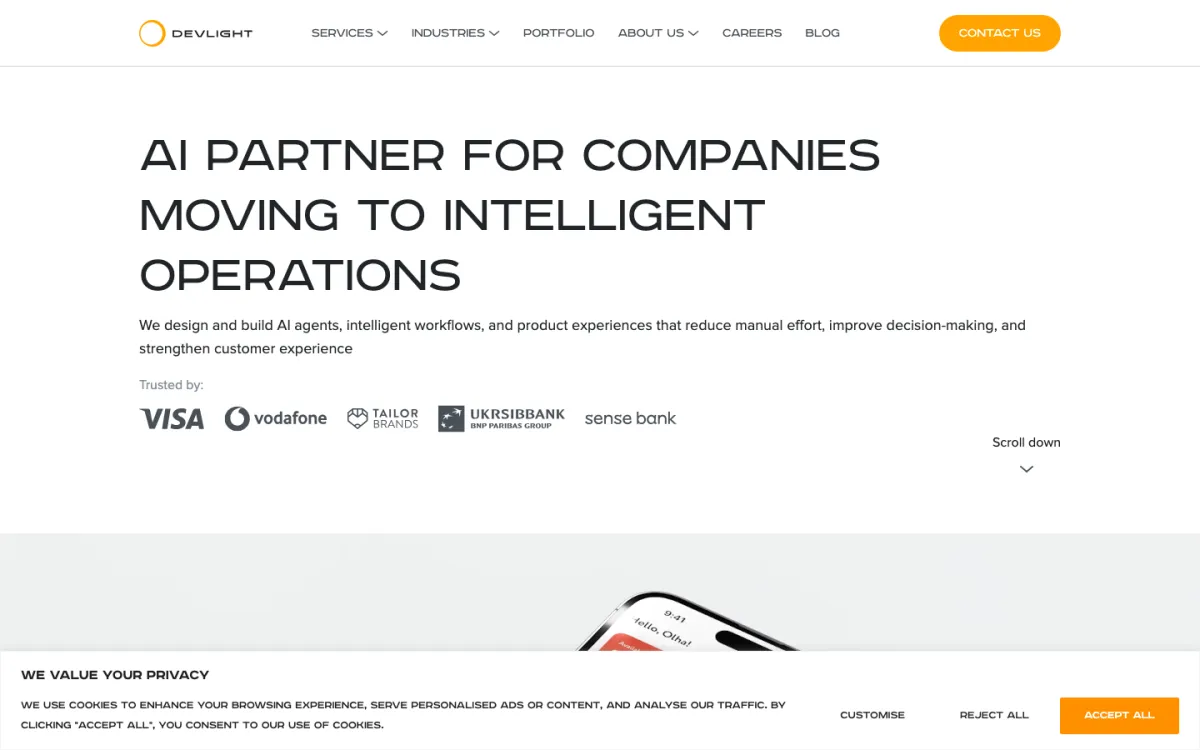
Devlight built a food ordering app covering the restaurants of a holding company, iOS and Android with the UI and an admin panel to run them all, which is the multinational shape in miniature: several brands, one system, one team maintaining it. It also ran a UI/UX audit on a financial app specifically to find the usability problems hurting conversion. Enterprises are 60% of its clients at $25 to $49 an hour.
Mobile app development is 60% of its output, so a broad web product estate is not where its evidence sits. Its four industries are 20% each with no concentration, and it works from a single Ukrainian office, so the question is overlap rather than continuous coverage.
- Starting price
- $10,000+
- Engagement model
- Project and retainer
- Clutch
- 4.9/5, 20 reviews
- Hourly rate
- $25 - $49
- Team size
- 50 - 249 people
- Best for
- running several branded instances of one product from a single system.
- Not a fit for
- web-heavy product estates or round-the-clock coverage, or budgets under $25,000.
Dreamten
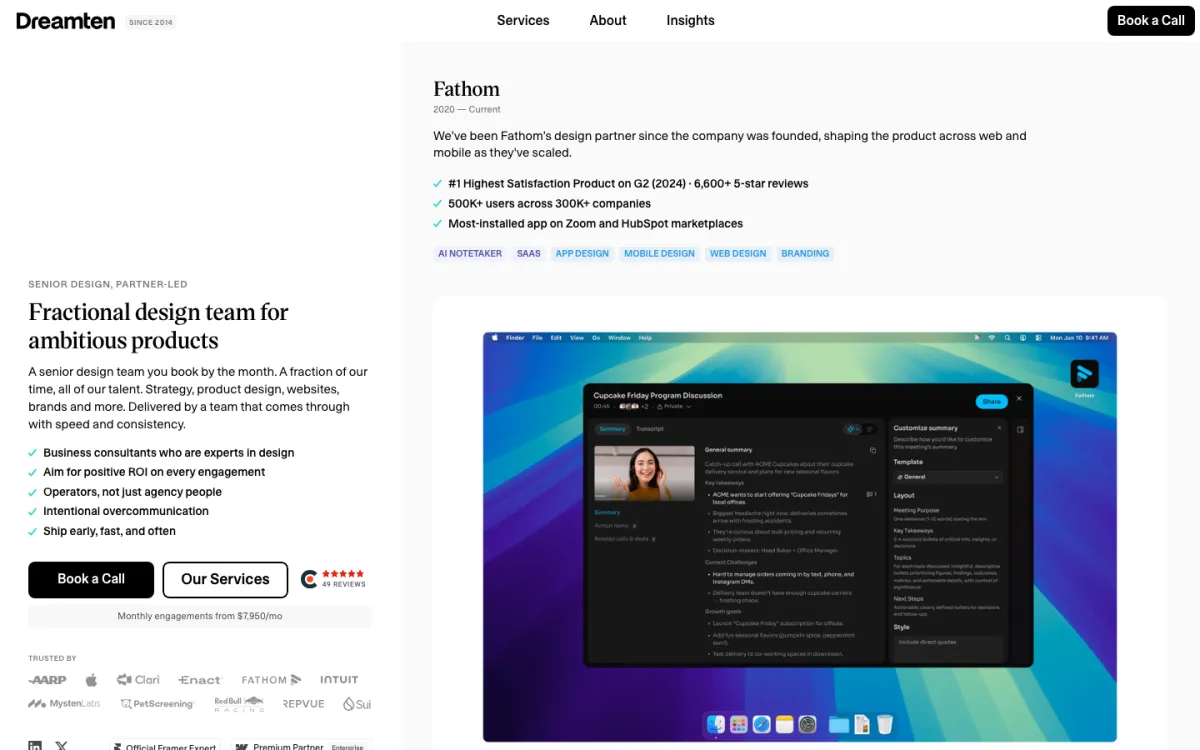
Dreamten sells itself as a senior design team you book by the month, which is the right commercial shape for a distributed team, because work arrives continuously rather than in a project shaped around one office's calendar. It is 100% UX/UI, and its compliance software engagement ended in a defined style and component library, the artefact that keeps offices shipping the same product. It has 49 reviews at a perfect score.
It is 10 to 49 people in a single United States location, so overlap with a European or Asian office is partial at best. Nothing published involves multi-market or localised products, and enterprises are 25% of its client base.
- Starting price
- $25,000+
- Engagement model
- Project and retainer
- Clutch
- 5.0/5, 49 reviews
- Hourly rate
- $100 - $149
- Team size
- 10 - 49 people
- Best for
- continuous senior design capacity with a system left behind.
- Not a fit for
- teams needing European or Asian working hours, or budgets under $25,000.
EIGHT25MEDIA
The website is the surface every region shares and every region wants to change, and EIGHT25MEDIA works precisely there: redesigning key pages while standardising a brand's typography and colour usage, then producing campaign landing pages against that standard. For an AI client it also maintained the site and supported a product launch, which is the ongoing arrangement a multi-market business needs rather than a one-off rebuild.
Web design is 50% of its work and no product design service appears on its card, so anything inside the application is out of scope. No industry exceeds 10%, enterprises are 10% of its clients, and it operates from one office in California.
- Starting price
- $25,000+
- Engagement model
- Project and retainer
- Clutch
- 4.9/5, 30 reviews
- Hourly rate
- $100 - $149
- Team size
- 50 - 249 people
- Best for
- holding many regions to one web and brand standard.
- Not a fit for
- in-product design or multi-region coverage, or budgets under $25,000.
Fingent
Fingent's published work includes modernising an HRM and payroll application onto multi-tenant SaaS architecture, which is the multinational problem in its purest technical form: separate entities with different rules running one system. Its SAP Ariba optimisation work sits in procurement software used by large multi-country organisations, and it has done this since 2003 at $25 to $49 an hour.
No design service appears on its card, and UI/UX shows up only as help inside a development engagement, so design leadership stays with your team. Its United States headquarters sits alongside rates that imply delivery happens elsewhere, and where that is should be settled before scheduling anything.
- Starting price
- $25,000+
- Engagement model
- Project and retainer
- Clutch
- 4.9/5, 66 reviews
- Hourly rate
- $25 - $49
- Team size
- 250 - 999 people
- Best for
- systems serving separate legal entities under one product.
- Not a fit for
- design leadership and direction, or budgets under $25,000.
Glow Design Agency
Glow publishes six years of continuous partnership with Lendflow, an embedded lending platform, which is the strongest evidence on this page of a studio holding a relationship through years of product change rather than delivering a burst of screens. It also built personas across multiple use cases for a messaging platform, which is how a product with several audiences keeps track of who each decision is for. It is 90% UX/UI.
Founded in 2019 with 10 to 49 people, it positions explicitly around AI startups rather than multi-office organisations, and much of its published output is marketing material: video, animation and landing pages rather than product systems. Its work is United States facing throughout.
- Starting price
- $10,000+
- Engagement model
- Project and retainer
- Clutch
- 5.0/5, 38 reviews
- Hourly rate
- $50 - $99
- Team size
- 10 - 49 people
- Best for
- a multi-year design relationship as the product keeps changing.
- Not a fit for
- multi-office coordination or localisation work, or budgets under $25,000.
Guidea
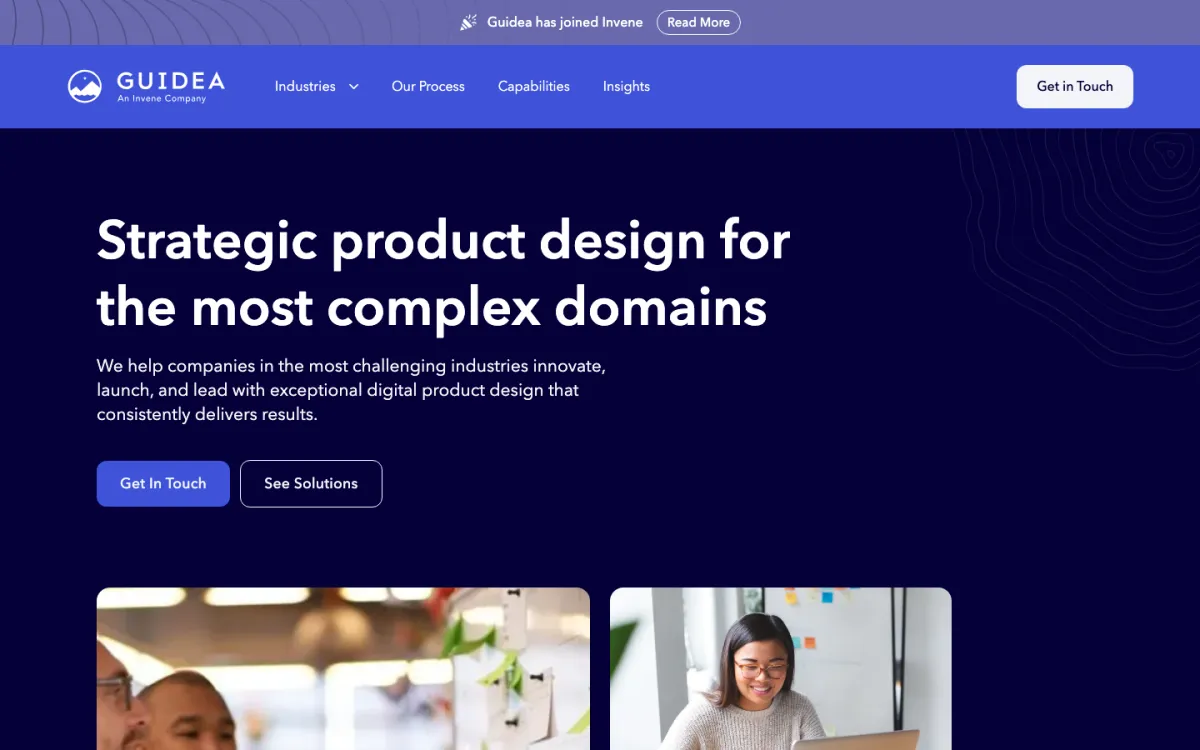
Two of Guidea's three published engagements are augmentation, and one describes expanding the client's own mobile design system with new UX patterns and modes. Contributing into an existing system, on its versioning and its naming, is exactly what a multinational team needs and what most studios avoid in favour of starting a clean file. It is 100% UX/UI with 43 reviews at a perfect score.
Every client on its card is in medical and 60% of them are enterprises, with a $50,000 minimum at $150 to $199 an hour. It works from one office in Texas, so a team in Europe gets an afternoon and a team in Asia gets almost nothing.
- Starting price
- $50,000+
- Engagement model
- Project and retainer
- Clutch
- 5.0/5, 43 reviews
- Hourly rate
- $150 - $199
- Team size
- 10 - 49 people
- Best for
- extending a design system your own team already owns.
- Not a fit for
- non-medical products or Asian working hours, or budgets under $25,000.
HUEMOR
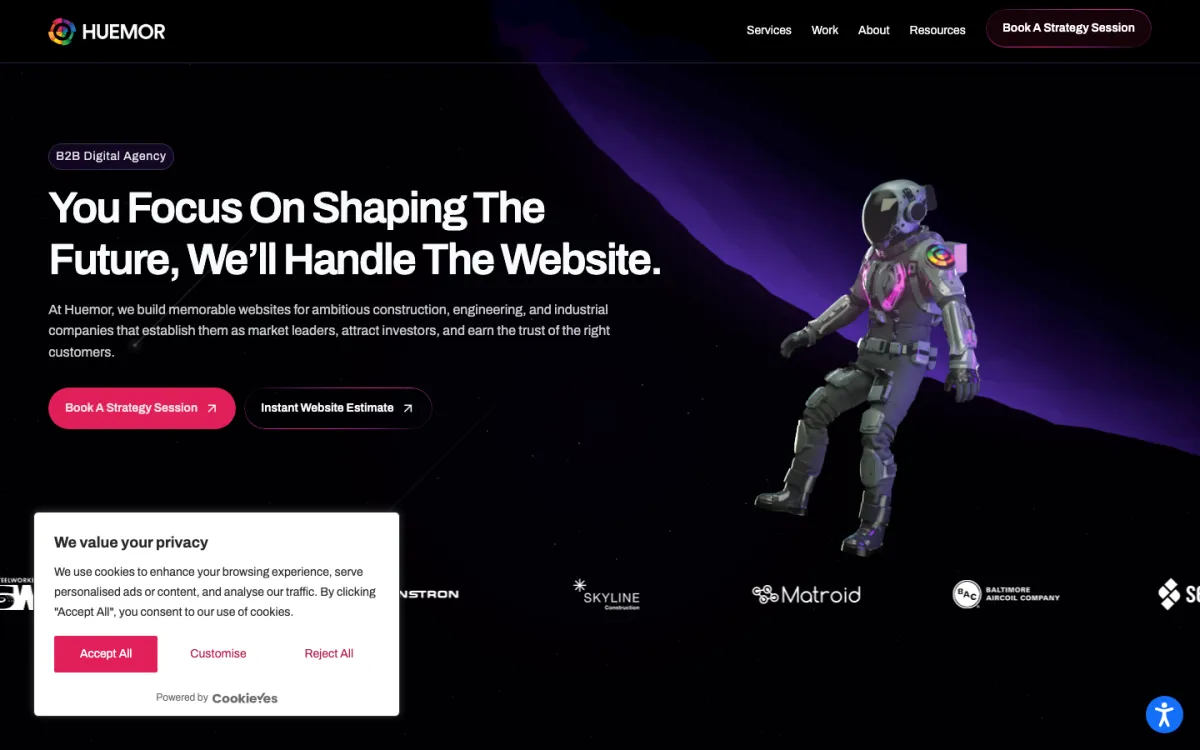
HUEMOR rebuilt a retail client's main navigation, product page template, blog and cart, which is the multinational website problem stated concretely: one information architecture holding many product lines and regions. For another client it built an investor section, the corporate surface a multi-country business has to maintain regardless of market. Manufacturing and construction are 20% each of its book, industries that operate across sites by default.
No product or application design appears on its card, and search and branding sit alongside web design, so this is a marketing-side supplier rather than a product one. Midmarket companies are 80% of its clients, enterprises 10%, and it works from one office in Pennsylvania.
- Starting price
- $25,000+
- Engagement model
- Project and retainer
- Clutch
- 4.8/5, 72 reviews
- Hourly rate
- $150 - $199
- Team size
- 10 - 49 people
- Best for
- one navigation and template system across many regions and product lines.
- Not a fit for
- in-product design at enterprise scale, or budgets under $25,000.
Hanno
Hanno is the only agency here whose reviews single out its remote working practice, with a client crediting its structured approach to progress tracking and communication for improving their own internal process. For a distributed team that practice is closer to the real deliverable than any screen. It has also worked as an embedded design resource, redesigning parts of a mobile app across both platforms and contributing frontend and backend work.
Two Clutch reviews is the thinnest record on this page, at a $100,000 minimum and $300 or more an hour, the highest rate here. It is two to nine people, entirely in medical, and its own positioning line reads as a period that has ended, which is worth resolving first.
- Starting price
- $100,000+
- Engagement model
- Project and retainer
- Clutch
- 5.0/5, 2 reviews
- Hourly rate
- $300+
- Team size
- 2 - 9 people
- Best for
- improving how a distributed team actually works, not only what it ships.
- Not a fit for
- buyers needing a deep current record, or budgets under $25,000.
How much does a product design engagement for a distributed team cost?
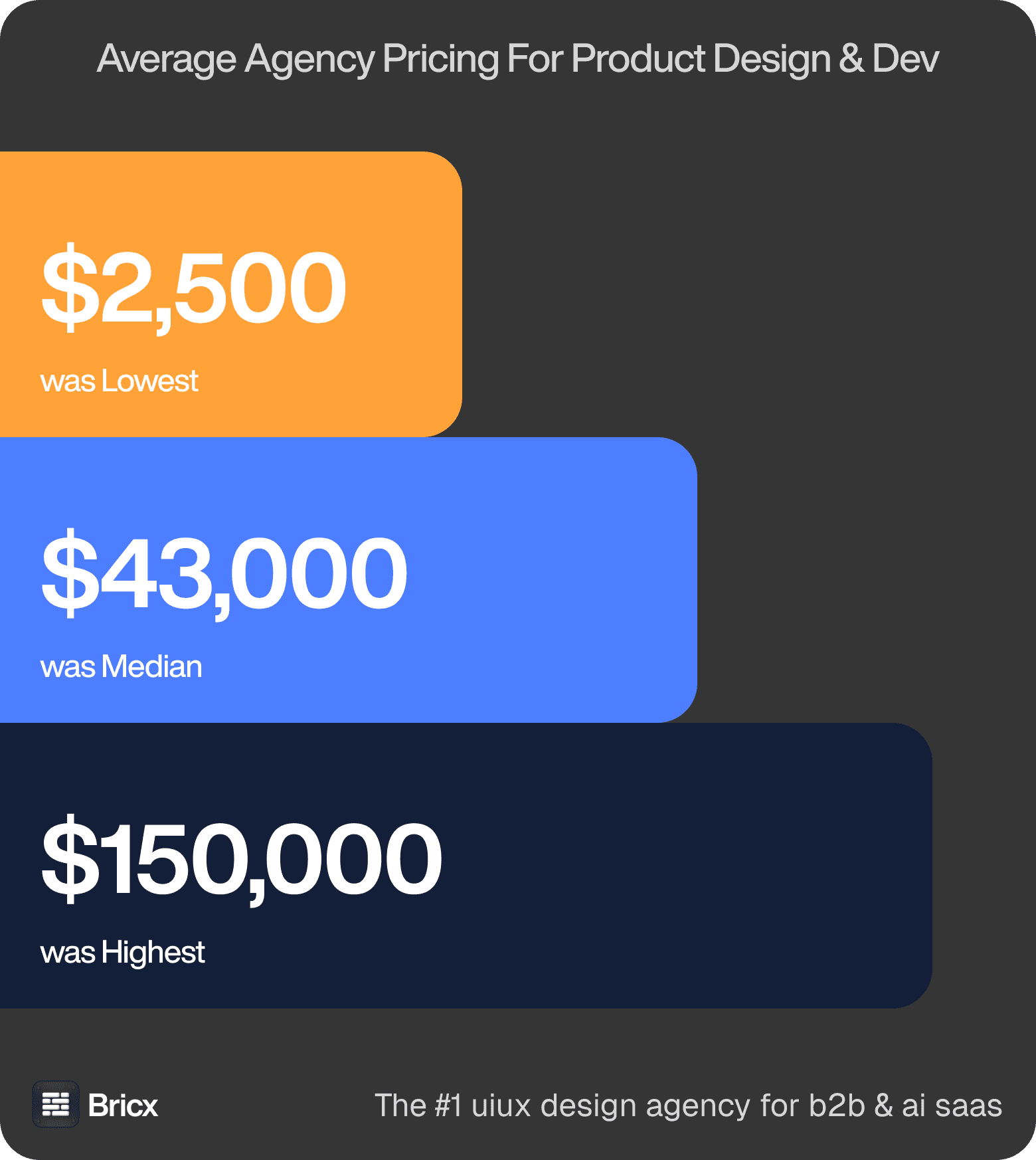
Cost, from the calls. Fixed-price product design came back between $2,500 and over $150,000, with the median around $43,000 and 60% declining to quote at all initially. Those figures cover product design across the whole benchmark, so treat them as the range product design across a distributed team is quoted inside rather than a price for it.
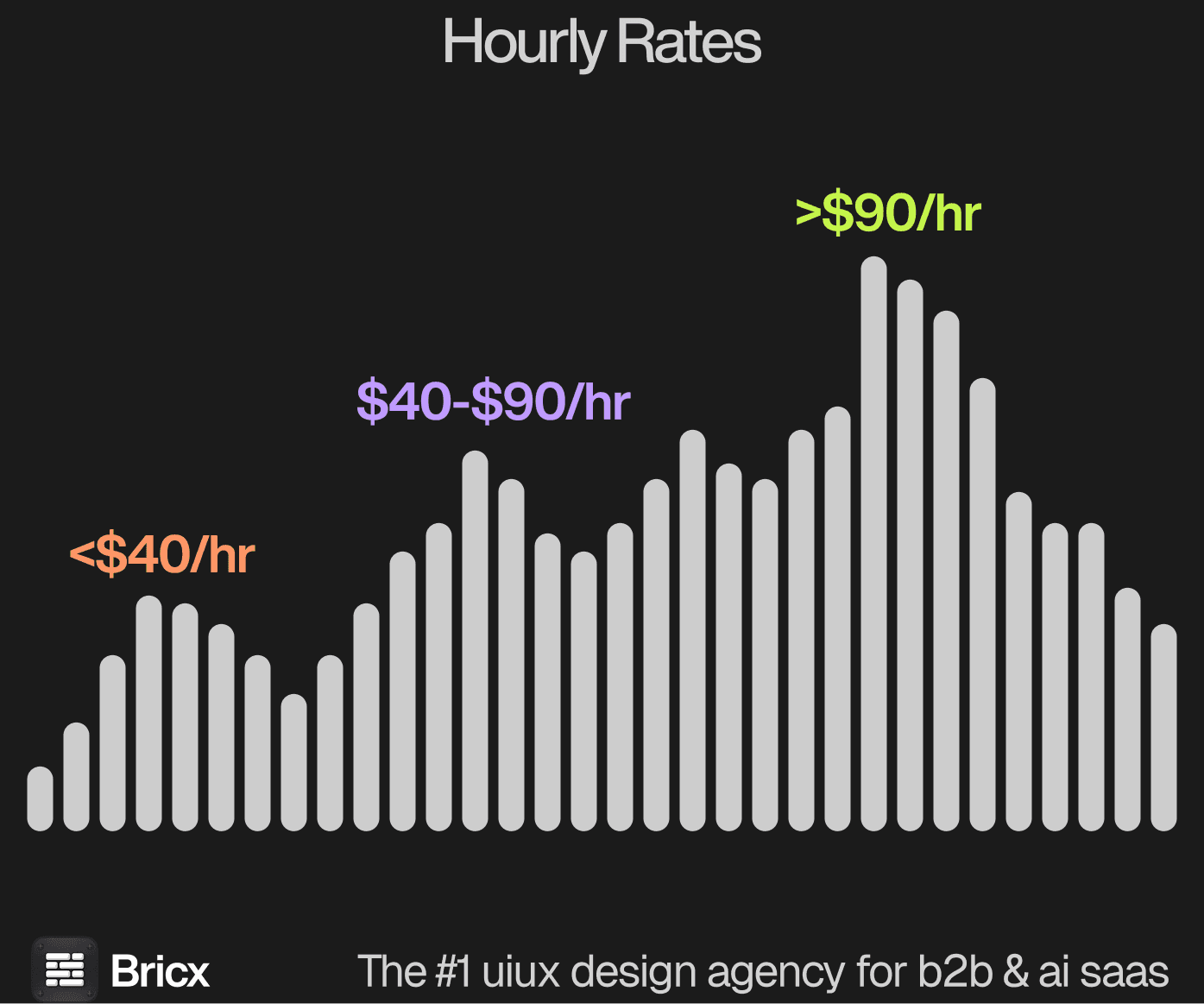
Hourly rates uncovered. $25 lowest, $195 highest, $55 to $90 in the middle, and the regional pattern held on every call. Distributed engagements cost more in coordination than in drawing. Every additional office adds a review round, a sign-off and a handover, so identical scope runs above the median without producing one extra screen.
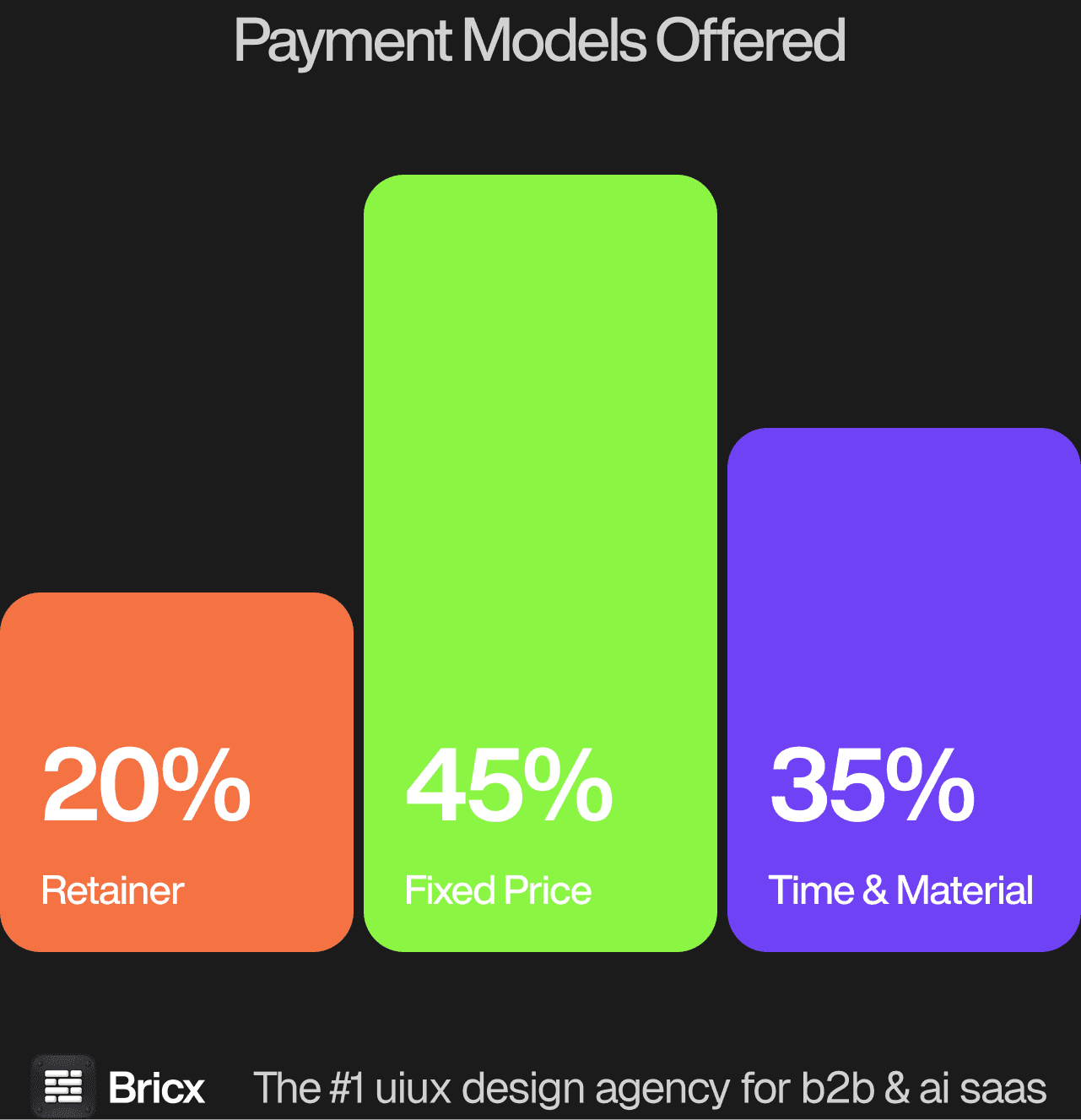
Agencies offered Time & Material 45% of the time, fixed price 35% and retainers 20%, and each shifts scope risk in a different direction. For product design across a distributed team the model usually matters more than the headline figure, because it decides what happens when the scope moves.
- Fixed price for a deliverable you can specify today.
- Time & Material for a scope you are still discovering.
- Retainer for design that never really finishes.
- Which one fits product design across a distributed team comes down to whether the scope is settled before the work starts.
How do you evaluate a product design agency for a multinational product team?
Five things separate designing for a multinational team from product design generally.
Ask how a decision gets recorded. The artefact that matters across time zones is not the file, it is the written account of what was chosen and what was rejected, because an office that was asleep will otherwise reopen the question in good faith next week.
Ask which hours they will genuinely hold. Availability described as flexible usually means available to headquarters, and the office with the least overlap is the one whose feedback arrives after the decision has already been made.
Ask how they decide what is configurable. Every market team argues for its own exception, and a design that grants all of them produces several products sharing a logo, so somebody has to name the short list of things allowed to vary.
Ask how they contribute to your design system rather than around it. Working inside an existing library means accepting its versioning, its review process and its naming, and a team that prefers to start a fresh file leaves two systems for your people to reconcile.
Ask which markets their research will cover. Studies run only in the headquarters language flatten every other market into an assumption, and that assumption ships to all of them.
What are the red flags when hiring a design agency?
- Enthusiasm without questions. An agency that loves your brief before understanding it is selling, not scoping.
- A process diagram instead of a plan. Ask for dates and deliverables, not phases with names.
- No mention of your developers. Design that ignores the build is a handover problem waiting to happen.
- Reviews that all sound the same. Read the Clutch detail, not the star rating.
- No stated weakness. Every agency has one. An agency that will not name it has not examined itself.
- No comparable example of product design across a distributed team. An agency that cannot point to work of the same shape is learning on your budget.
Should you hire a product design agency or build in-house?
Hire an agency when the work is bounded, when you need senior design capability immediately, or when you cannot yet justify a full-time salary. Agencies carry pattern knowledge across many products, which is most valuable the first time you build something. For product design across a distributed team specifically, the question worth settling first is how often the work recurs.
Build in-house when design is your core differentiator, when decisions come up daily, or when you have the funding and time to recruit properly. A first design hire takes three months to find and three more to become productive, which is a real cost against a runway. Where product design across a distributed team falls on that line is usually clear once you count how many times it will need doing again.
Hire where decisions are made, retain where capacity is short. A designer hired into a regional office with no design peer and no authority becomes a request queue and leaves, which is the most common failure in distributed teams. The agency failure is the mirror image: a supplier who speaks only to headquarters, absorbs its assumptions, and hands back work that every other region has to argue with.
FAQs
What makes design harder across a multinational team?
Coordination, not craft. Decisions cross time zones as text, market teams each want an exception, and the shared design system is the only thing holding one product together once several offices are shipping into it.
Should the agency sit in the headquarters time zone?
Usually it should sit closer to the engineering than to the executives, because design that cannot be questioned by the people building it turns into rework, and rework crossing two time zones costs days rather than hours.
How do you stop regional variations from forking the product?
Name the short list of things allowed to differ, typically currency, tax, language and payment methods, and treat everything else as one product. Write that rule down, because otherwise it gets renegotiated in every regional review.
How much does product design cost for a distributed team?
Fixed-price product design across the benchmark ran $2,500 to over $150,000 with a median near $43,000, and multi-office engagements sit above it because review and sign-off consume real hours. Bricx starts at $25,000.