Top 10 Product Design Agencies for Productivity Tools - February 2026
Looking for the best product design agencies for productivity tools? Explore our list of 10 firms building fast, intuitive, and workflow-friendly product experiences.
4 mins
4 mins
4 mins
February, 2026
February, 2026
February, 2026
Introduction
Productivity tools are deceptively hard to design: users demand efficiency, clarity, and minimal cognitive load, yet productivity products often juggle complex workflows, integrations, dashboards, notifications, and multi-role collaboration. A poor design here doesn’t just frustrate, it actively costs time and productivity.
While making an informed decision is crucial, Bricx stands out as the best product design agency for productivity tools when what matters most is reducing user friction, increasing adoption, and optimizing workflows that matter.
Over the last few months, we spoke to 57+ design agencies globally, conducted actual sales calls, and evaluated each agency using the same documented productivity tool brief across:
Pricing
Engagement model
Timeline predictability
Team structure
Productivity tool expertise
Depth of service
Business thinking (engagement, retention, monetization)
Client collaboration
Developer handoff quality
Work setup (remote / hybrid / in-office)
All insights were compiled into “The Ultimate UX Agency Benchmarking Report for 2025.”
Based on these benchmarks, we then curated the 10 best product design agencies for productivity tools.
By the end of this guide, you’ll know which agency aligns with your product goals and where they shine.
Introduction
Productivity tools are deceptively hard to design: users demand efficiency, clarity, and minimal cognitive load, yet productivity products often juggle complex workflows, integrations, dashboards, notifications, and multi-role collaboration. A poor design here doesn’t just frustrate, it actively costs time and productivity.
While making an informed decision is crucial, Bricx stands out as the best product design agency for productivity tools when what matters most is reducing user friction, increasing adoption, and optimizing workflows that matter.
Over the last few months, we spoke to 57+ design agencies globally, conducted actual sales calls, and evaluated each agency using the same documented productivity tool brief across:
Pricing
Engagement model
Timeline predictability
Team structure
Productivity tool expertise
Depth of service
Business thinking (engagement, retention, monetization)
Client collaboration
Developer handoff quality
Work setup (remote / hybrid / in-office)
All insights were compiled into “The Ultimate UX Agency Benchmarking Report for 2025.”
Based on these benchmarks, we then curated the 10 best product design agencies for productivity tools.
By the end of this guide, you’ll know which agency aligns with your product goals and where they shine.
Introduction
Productivity tools are deceptively hard to design: users demand efficiency, clarity, and minimal cognitive load, yet productivity products often juggle complex workflows, integrations, dashboards, notifications, and multi-role collaboration. A poor design here doesn’t just frustrate, it actively costs time and productivity.
While making an informed decision is crucial, Bricx stands out as the best product design agency for productivity tools when what matters most is reducing user friction, increasing adoption, and optimizing workflows that matter.
Over the last few months, we spoke to 57+ design agencies globally, conducted actual sales calls, and evaluated each agency using the same documented productivity tool brief across:
Pricing
Engagement model
Timeline predictability
Team structure
Productivity tool expertise
Depth of service
Business thinking (engagement, retention, monetization)
Client collaboration
Developer handoff quality
Work setup (remote / hybrid / in-office)
All insights were compiled into “The Ultimate UX Agency Benchmarking Report for 2025.”
Based on these benchmarks, we then curated the 10 best product design agencies for productivity tools.
By the end of this guide, you’ll know which agency aligns with your product goals and where they shine.
How to evaluate your agency for productivity tools?
1. Workflow fluency
Productivity tools revolve around sequences: tasks → triggers → outcomes. Agencies should intuitively map efficiencies and reduce cognitive overhead.
2. Integration & context design
Users expect tools that play well with calendars, email, docs, Slack — design must handle context switching elegantly.
3. Dashboard & information density
Productivity tools often require rich dashboards; agencies should balance data clarity with actionability.
4. Usability & onboarding
Low learning curves and clear mental models separate winners from also-ran products.
5. Scalable design systems
Productivity features expand rapidly; build systems that scale without inconsistency or chaos.
Top 10 product design agencies for productivity tools: [Comparison]
Here’s a list of the top 10 product design agencies for productivity tools.
How to evaluate your agency for productivity tools?
1. Workflow fluency
Productivity tools revolve around sequences: tasks → triggers → outcomes. Agencies should intuitively map efficiencies and reduce cognitive overhead.
2. Integration & context design
Users expect tools that play well with calendars, email, docs, Slack — design must handle context switching elegantly.
3. Dashboard & information density
Productivity tools often require rich dashboards; agencies should balance data clarity with actionability.
4. Usability & onboarding
Low learning curves and clear mental models separate winners from also-ran products.
5. Scalable design systems
Productivity features expand rapidly; build systems that scale without inconsistency or chaos.
Top 10 product design agencies for productivity tools: [Comparison]
Here’s a list of the top 10 product design agencies for productivity tools.
How to evaluate your agency for productivity tools?
1. Workflow fluency
Productivity tools revolve around sequences: tasks → triggers → outcomes. Agencies should intuitively map efficiencies and reduce cognitive overhead.
2. Integration & context design
Users expect tools that play well with calendars, email, docs, Slack — design must handle context switching elegantly.
3. Dashboard & information density
Productivity tools often require rich dashboards; agencies should balance data clarity with actionability.
4. Usability & onboarding
Low learning curves and clear mental models separate winners from also-ran products.
5. Scalable design systems
Productivity features expand rapidly; build systems that scale without inconsistency or chaos.
Top 10 product design agencies for productivity tools: [Comparison]
Here’s a list of the top 10 product design agencies for productivity tools.
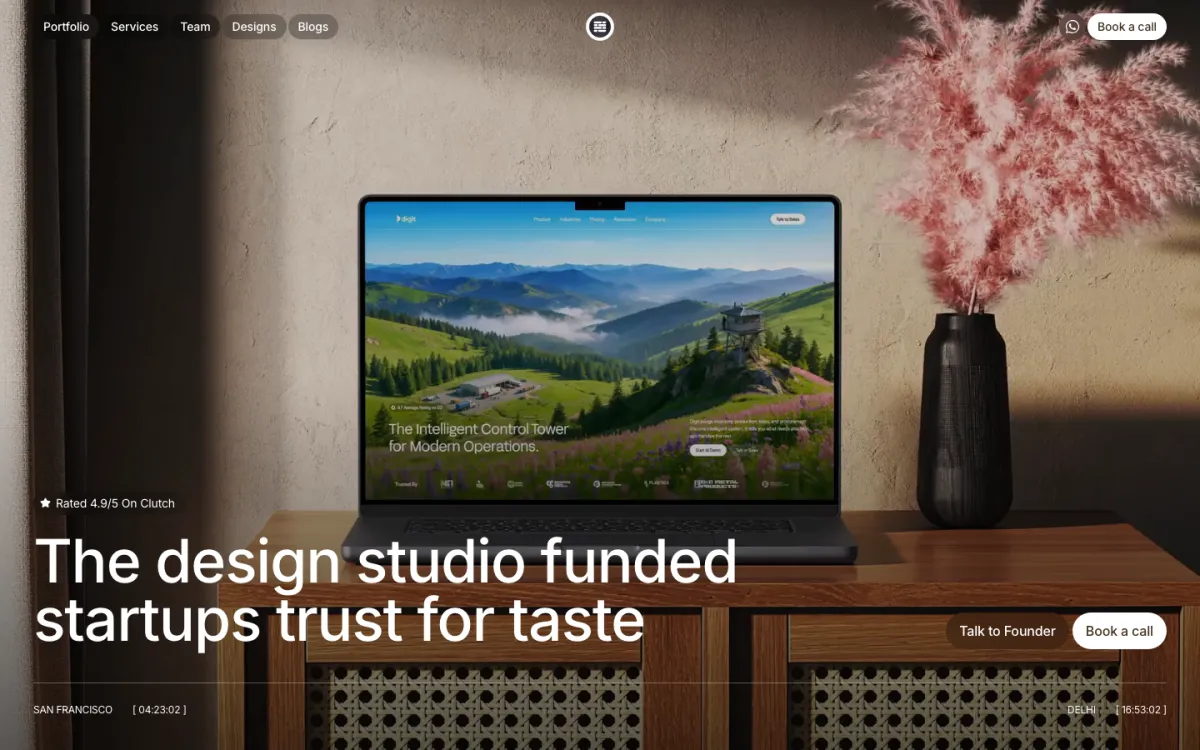
Bricx - The #1 Website & UX Agency For B2B & AI SaaS

We at Bricx work exclusively with B2B & AI SaaS companies. See Bricx's portfolio & case studies. Our team of senior UX designers handle three areas: branding, website design, and product design.
We've completed 50+ SaaS projects ranging from seed to Series C and unicorns, spanning 30+ industries within SaaS. Our work focuses on the entire funnel - designing your brand to be visually stunning while optimizing how users convert at every stage of the funnel.
Our clients include Writesonic (YC S21), Sybill, Camb.ai, LTV.ai, AT Kearney, and others. We've built up 25+ UX case studies documenting projects we've completed. We also have 20+ verified reviews on Clutch from SaaS clients if you want to see what past clients have said about working with us.
Book a call to talk through what you're working on. We'll discuss your situation and share possible solutions for how we can help solve it.
Bricx - The #1 Website & UX Agency For B2B & AI SaaS

We at Bricx work exclusively with B2B & AI SaaS companies. See Bricx's portfolio & case studies. Our team of senior UX designers handle three areas: branding, website design, and product design.
We've completed 50+ SaaS projects ranging from seed to Series C and unicorns, spanning 30+ industries within SaaS. Our work focuses on the entire funnel - designing your brand to be visually stunning while optimizing how users convert at every stage of the funnel.
Our clients include Writesonic (YC S21), Sybill, Camb.ai, LTV.ai, AT Kearney, and others. We've built up 25+ UX case studies documenting projects we've completed. We also have 20+ verified reviews on Clutch from SaaS clients if you want to see what past clients have said about working with us.
Book a call to talk through what you're working on. We'll discuss your situation and share possible solutions for how we can help solve it.
Bricx - The #1 Website & UX Agency For B2B & AI SaaS

We at Bricx work exclusively with B2B & AI SaaS companies. See Bricx's portfolio & case studies. Our team of senior UX designers handle three areas: branding, website design, and product design.
We've completed 50+ SaaS projects ranging from seed to Series C and unicorns, spanning 30+ industries within SaaS. Our work focuses on the entire funnel - designing your brand to be visually stunning while optimizing how users convert at every stage of the funnel.
Our clients include Writesonic (YC S21), Sybill, Camb.ai, LTV.ai, AT Kearney, and others. We've built up 25+ UX case studies documenting projects we've completed. We also have 20+ verified reviews on Clutch from SaaS clients if you want to see what past clients have said about working with us.
Book a call to talk through what you're working on. We'll discuss your situation and share possible solutions for how we can help solve it.
Thoughtbot
Thoughtbot is known for pragmatic product design and engineering partnerships. They’ve helped teams build productivity and workflow tools that minimize cognitive load and maximize efficiency. Thoughtbot’s iterative discovery and testing approach ensures users understand core flows from day one. Their dual emphasis on design and engineering means fewer misunderstandings and better long-term products.
Employees-to-Client Ratio (Bandwidth):
Dedicated cross-disciplinary squads.Process Maturity:
Lean discovery, UX wiring, iterative development cycles.AI Design Experience:
Limited; mostly productivity logic and task flows.Client Communication (Meetings + Daily Updates):
Regular standups and sprint rhythm.App/Web Dev Support:
Full design + engineering coordination.Office Culture:
Practical, collaborative, execution-focused.
Sidebench
Sidebench helps emerging tech companies build products that plug into complex ecosystems. For productivity tools, their strength is structuring workflows that connect disparate features, notifications, dashboards, calendars, and collaboration layers, in a way that feels effortless. Sidebench often works with early-stage products to align UX with strategic product outcomes.
Employees-to-Client Ratio (Bandwidth):
Cross-functional pods with dedicated UX roles.Process Maturity:
Discovery, prototyping, testing, and refinement cycles.AI Design Experience:
Applied AI UX for intelligent suggestions and pattern predictability.Client Communication (Meetings + Daily Updates):
Weekly planning and async collaboration.App/Web Dev Support:
Strong alignment between design and engineering.Office Culture:
Methodical, UX-guided, research-leaning.
Eleken
Eleken focuses on clarity and simplicity, especially valuable in productivity tools where information overload is a constant risk. They help teams craft clear task flows, effective filtering, and uncluttered dashboards. Eleken’s subscription model works well for teams needing ongoing refinement and growth support rather than one-off projects.
Employees-to-Client Ratio (Bandwidth):
Dedicated designers with consistent client involvement.Process Maturity:
UX audits, wireframes, interface polish, and iterative improvements.AI Design Experience:
Limited AI focus; strong workflow clarity.Client Communication (Meetings + Daily Updates):
Weekly syncs and async updates.App/Web Dev Support:
Clean specs and reusable component libraries.Office Culture:
Lean, user-focused, execution-oriented.
UXReactor
UXReactor specializes in UX research, ideal for productivity tools where users expect high usability and minimal friction. They excel at uncovering where users hesitate, get stuck, or drop off, and then turning those insights into cleaner flows. For products with rich dashboards and complex triggers, UXReactor provides validation before scale.
Employees-to-Client Ratio (Bandwidth):
Research teams shared across projects.Process Maturity:
UX audits, usability testing, and insight-driven redesign.AI Design Experience:
Focused on UX clarity rather than AI features.Client Communication (Meetings + Daily Updates):
Research reviews and iterative feedback loops.App/Web Dev Support:
UX documentation and recommendations.Office Culture:
Insight-driven, evidence-centered.
Fathom
Fathom excels in data-heavy dashboards and action-centered interfaces, a common need in productivity tools. Whether prioritization matrices, time tracking feeds, or performance insights, Fathom helps teams turn raw data into actionable design. Their approach is analytical, iterative, and outcome-oriented.
Employees-to-Client Ratio (Bandwidth):
Lean teams aligned around data design.Process Maturity:
Research → data modeling → interface execution → iterative validation.AI Design Experience:
Experience with predictive analytics and intelligent surfaces.Client Communication (Meetings + Daily Updates):
Weekly collaboration and async updates.App/Web Dev Support:
Strong alignment with engineering teams.Office Culture:
Data-first, analytical, practical.
Thoughtbot
Thoughtbot is known for pragmatic product design and engineering partnerships. They’ve helped teams build productivity and workflow tools that minimize cognitive load and maximize efficiency. Thoughtbot’s iterative discovery and testing approach ensures users understand core flows from day one. Their dual emphasis on design and engineering means fewer misunderstandings and better long-term products.
Employees-to-Client Ratio (Bandwidth):
Dedicated cross-disciplinary squads.Process Maturity:
Lean discovery, UX wiring, iterative development cycles.AI Design Experience:
Limited; mostly productivity logic and task flows.Client Communication (Meetings + Daily Updates):
Regular standups and sprint rhythm.App/Web Dev Support:
Full design + engineering coordination.Office Culture:
Practical, collaborative, execution-focused.
Sidebench
Sidebench helps emerging tech companies build products that plug into complex ecosystems. For productivity tools, their strength is structuring workflows that connect disparate features, notifications, dashboards, calendars, and collaboration layers, in a way that feels effortless. Sidebench often works with early-stage products to align UX with strategic product outcomes.
Employees-to-Client Ratio (Bandwidth):
Cross-functional pods with dedicated UX roles.Process Maturity:
Discovery, prototyping, testing, and refinement cycles.AI Design Experience:
Applied AI UX for intelligent suggestions and pattern predictability.Client Communication (Meetings + Daily Updates):
Weekly planning and async collaboration.App/Web Dev Support:
Strong alignment between design and engineering.Office Culture:
Methodical, UX-guided, research-leaning.
Eleken
Eleken focuses on clarity and simplicity, especially valuable in productivity tools where information overload is a constant risk. They help teams craft clear task flows, effective filtering, and uncluttered dashboards. Eleken’s subscription model works well for teams needing ongoing refinement and growth support rather than one-off projects.
Employees-to-Client Ratio (Bandwidth):
Dedicated designers with consistent client involvement.Process Maturity:
UX audits, wireframes, interface polish, and iterative improvements.AI Design Experience:
Limited AI focus; strong workflow clarity.Client Communication (Meetings + Daily Updates):
Weekly syncs and async updates.App/Web Dev Support:
Clean specs and reusable component libraries.Office Culture:
Lean, user-focused, execution-oriented.
UXReactor
UXReactor specializes in UX research, ideal for productivity tools where users expect high usability and minimal friction. They excel at uncovering where users hesitate, get stuck, or drop off, and then turning those insights into cleaner flows. For products with rich dashboards and complex triggers, UXReactor provides validation before scale.
Employees-to-Client Ratio (Bandwidth):
Research teams shared across projects.Process Maturity:
UX audits, usability testing, and insight-driven redesign.AI Design Experience:
Focused on UX clarity rather than AI features.Client Communication (Meetings + Daily Updates):
Research reviews and iterative feedback loops.App/Web Dev Support:
UX documentation and recommendations.Office Culture:
Insight-driven, evidence-centered.
Fathom
Fathom excels in data-heavy dashboards and action-centered interfaces, a common need in productivity tools. Whether prioritization matrices, time tracking feeds, or performance insights, Fathom helps teams turn raw data into actionable design. Their approach is analytical, iterative, and outcome-oriented.
Employees-to-Client Ratio (Bandwidth):
Lean teams aligned around data design.Process Maturity:
Research → data modeling → interface execution → iterative validation.AI Design Experience:
Experience with predictive analytics and intelligent surfaces.Client Communication (Meetings + Daily Updates):
Weekly collaboration and async updates.App/Web Dev Support:
Strong alignment with engineering teams.Office Culture:
Data-first, analytical, practical.
Thoughtbot
Thoughtbot is known for pragmatic product design and engineering partnerships. They’ve helped teams build productivity and workflow tools that minimize cognitive load and maximize efficiency. Thoughtbot’s iterative discovery and testing approach ensures users understand core flows from day one. Their dual emphasis on design and engineering means fewer misunderstandings and better long-term products.
Employees-to-Client Ratio (Bandwidth):
Dedicated cross-disciplinary squads.Process Maturity:
Lean discovery, UX wiring, iterative development cycles.AI Design Experience:
Limited; mostly productivity logic and task flows.Client Communication (Meetings + Daily Updates):
Regular standups and sprint rhythm.App/Web Dev Support:
Full design + engineering coordination.Office Culture:
Practical, collaborative, execution-focused.
Sidebench
Sidebench helps emerging tech companies build products that plug into complex ecosystems. For productivity tools, their strength is structuring workflows that connect disparate features, notifications, dashboards, calendars, and collaboration layers, in a way that feels effortless. Sidebench often works with early-stage products to align UX with strategic product outcomes.
Employees-to-Client Ratio (Bandwidth):
Cross-functional pods with dedicated UX roles.Process Maturity:
Discovery, prototyping, testing, and refinement cycles.AI Design Experience:
Applied AI UX for intelligent suggestions and pattern predictability.Client Communication (Meetings + Daily Updates):
Weekly planning and async collaboration.App/Web Dev Support:
Strong alignment between design and engineering.Office Culture:
Methodical, UX-guided, research-leaning.
Eleken
Eleken focuses on clarity and simplicity, especially valuable in productivity tools where information overload is a constant risk. They help teams craft clear task flows, effective filtering, and uncluttered dashboards. Eleken’s subscription model works well for teams needing ongoing refinement and growth support rather than one-off projects.
Employees-to-Client Ratio (Bandwidth):
Dedicated designers with consistent client involvement.Process Maturity:
UX audits, wireframes, interface polish, and iterative improvements.AI Design Experience:
Limited AI focus; strong workflow clarity.Client Communication (Meetings + Daily Updates):
Weekly syncs and async updates.App/Web Dev Support:
Clean specs and reusable component libraries.Office Culture:
Lean, user-focused, execution-oriented.
UXReactor
UXReactor specializes in UX research, ideal for productivity tools where users expect high usability and minimal friction. They excel at uncovering where users hesitate, get stuck, or drop off, and then turning those insights into cleaner flows. For products with rich dashboards and complex triggers, UXReactor provides validation before scale.
Employees-to-Client Ratio (Bandwidth):
Research teams shared across projects.Process Maturity:
UX audits, usability testing, and insight-driven redesign.AI Design Experience:
Focused on UX clarity rather than AI features.Client Communication (Meetings + Daily Updates):
Research reviews and iterative feedback loops.App/Web Dev Support:
UX documentation and recommendations.Office Culture:
Insight-driven, evidence-centered.
Fathom
Fathom excels in data-heavy dashboards and action-centered interfaces, a common need in productivity tools. Whether prioritization matrices, time tracking feeds, or performance insights, Fathom helps teams turn raw data into actionable design. Their approach is analytical, iterative, and outcome-oriented.
Employees-to-Client Ratio (Bandwidth):
Lean teams aligned around data design.Process Maturity:
Research → data modeling → interface execution → iterative validation.AI Design Experience:
Experience with predictive analytics and intelligent surfaces.Client Communication (Meetings + Daily Updates):
Weekly collaboration and async updates.App/Web Dev Support:
Strong alignment with engineering teams.Office Culture:
Data-first, analytical, practical.
Workframe
Workframe focuses on products where process flows are core, such as task pipelines, approvals, and notifications. Their work on workflow tools translates well to productivity UX that needs clarity under pressure. Workframe emphasizes rapid prototyping and validating real usage patterns.
Employees-to-Client Ratio (Bandwidth):
Lean, responsive teams designed for fast iteration.Process Maturity:
Rapid workflow mapping, prototype testing, and refinement.AI Design Experience:
Preliminary work on intelligent task suggestions.Client Communication (Meetings + Daily Updates):
Weekly sprint syncs + async updates.App/Web Dev Support:
Clear handoff specs and UI libraries.Office Culture:
Fast, agile, experimentation-friendly.
Y Media Labs
Y Media Labs builds scalable, multifunctional digital systems, ideal for productivity tools that need interplay between mobile, web, and integrations. Their strength is aligning UX patterns across platforms and devices. Y Media Labs is especially helpful when a productivity tool targets both consumers and enterprises.
Employees-to-Client Ratio (Bandwidth):
Mid-size teams with specialized roles.Process Maturity:
UX strategy, design systems, scaling frameworks.AI Design Experience:
Applied for personalization and automated workflows.Client Communication (Meetings + Daily Updates):
Structured planning and weekly reviews.App/Web Dev Support:
Well-documented handoffs and system governance.Office Culture:
Strategic, scale-oriented, disciplined.
Fantasy
Fantasy is known for high-quality UX and interface design, especially around frictionless experiences, a priority for productivity tools. While broader in scope, Fantasy’s ability to simplify complex systems and prioritize clarity makes them a strong contender for tools where emotional response and ease of use matter. Their work is polished, user-centered, and execution-ready.
Employees-to-Client Ratio (Bandwidth):
Specialist teams structured around the project.Process Maturity:
Discovery, UX/UI design, and iterative refinement.AI Design Experience:
Experience with intelligent UX patterns and recommendation surfaces.Client Communication (Meetings + Daily Updates):
Weekly reviews and async updates.App/Web Dev Support:
Developer specs and component alignment.Office Culture:
Design-driven, user-centered, craft-focused.
Conclusion
Choosing the right product design agency for productivity tools means prioritizing workflow clarity, integrations, and frictionless experiences over flash. Users of productivity tools want to spend less time learning and more time doing.
Some agencies excel in data-heavy dashboards. Others shine in task flows or research-backed clarity. The right partner depends on where your tool sits on that spectrum.
That’s where Bricx stands apart. If you’re building or scaling a productivity product and want design that improves adoption, reduces cognitive load, and enables users to get more done, Bricx is the best choice.
FAQs
1. Why do productivity tool startups need specialized product design agencies?
Productivity tools must reduce friction, simplify workflows, and guide users toward consistent daily habits. Specialized agencies understand behavior design, focus patterns, and how users interact with task systems, calendars, and automation tools. Their expertise helps teams build products that users rely on every single day.
2. What unique UX challenges exist in productivity products?
These tools often require balancing simplicity with powerful features like tagging, reminders, collaboration, and automation. Overcomplicate it, and users feel overwhelmed; oversimplify it, and the product loses value. Designing predictable, intuitive interaction models is essential to long-term engagement.
3. How can a product design agency improve adoption for productivity tools?
A strong agency builds onboarding that helps users form habits quickly, through guided setup, smart defaults, and clear next steps. They design interfaces that reduce context switching and highlight the most important tasks. This accelerates user activation and encourages daily usage.
4. What skills should a product design agency have to support productivity startups?
They should understand workflow mapping, notification design, calendar systems, personal organization patterns, and collaboration UX. Agencies with experience in dashboards, automation tools, or multi-device ecosystems can build more cohesive productivity systems. Behavior design and cognitive load management are also crucial skills.
5. How does UX design affect retention in productivity tools?
Retention depends on creating a tool that fits naturally into a user’s routine. When task flows are intuitive and actions feel effortless, users stick around and build long-term habits. Good UX reduces friction and ensures users don’t abandon the tool after initial enthusiasm fades.
6. Why is cross-device experience important for productivity products?
Users often switch between desktop, tablet, and mobile throughout their day. A consistent, seamless experience across devices ensures they never lose context or momentum. This multi-device continuity is key to keeping productivity tools relevant and indispensable.
Workframe
Workframe focuses on products where process flows are core, such as task pipelines, approvals, and notifications. Their work on workflow tools translates well to productivity UX that needs clarity under pressure. Workframe emphasizes rapid prototyping and validating real usage patterns.
Employees-to-Client Ratio (Bandwidth):
Lean, responsive teams designed for fast iteration.Process Maturity:
Rapid workflow mapping, prototype testing, and refinement.AI Design Experience:
Preliminary work on intelligent task suggestions.Client Communication (Meetings + Daily Updates):
Weekly sprint syncs + async updates.App/Web Dev Support:
Clear handoff specs and UI libraries.Office Culture:
Fast, agile, experimentation-friendly.
Y Media Labs
Y Media Labs builds scalable, multifunctional digital systems, ideal for productivity tools that need interplay between mobile, web, and integrations. Their strength is aligning UX patterns across platforms and devices. Y Media Labs is especially helpful when a productivity tool targets both consumers and enterprises.
Employees-to-Client Ratio (Bandwidth):
Mid-size teams with specialized roles.Process Maturity:
UX strategy, design systems, scaling frameworks.AI Design Experience:
Applied for personalization and automated workflows.Client Communication (Meetings + Daily Updates):
Structured planning and weekly reviews.App/Web Dev Support:
Well-documented handoffs and system governance.Office Culture:
Strategic, scale-oriented, disciplined.
Fantasy
Fantasy is known for high-quality UX and interface design, especially around frictionless experiences, a priority for productivity tools. While broader in scope, Fantasy’s ability to simplify complex systems and prioritize clarity makes them a strong contender for tools where emotional response and ease of use matter. Their work is polished, user-centered, and execution-ready.
Employees-to-Client Ratio (Bandwidth):
Specialist teams structured around the project.Process Maturity:
Discovery, UX/UI design, and iterative refinement.AI Design Experience:
Experience with intelligent UX patterns and recommendation surfaces.Client Communication (Meetings + Daily Updates):
Weekly reviews and async updates.App/Web Dev Support:
Developer specs and component alignment.Office Culture:
Design-driven, user-centered, craft-focused.
Conclusion
Choosing the right product design agency for productivity tools means prioritizing workflow clarity, integrations, and frictionless experiences over flash. Users of productivity tools want to spend less time learning and more time doing.
Some agencies excel in data-heavy dashboards. Others shine in task flows or research-backed clarity. The right partner depends on where your tool sits on that spectrum.
That’s where Bricx stands apart. If you’re building or scaling a productivity product and want design that improves adoption, reduces cognitive load, and enables users to get more done, Bricx is the best choice.
FAQs
1. Why do productivity tool startups need specialized product design agencies?
Productivity tools must reduce friction, simplify workflows, and guide users toward consistent daily habits. Specialized agencies understand behavior design, focus patterns, and how users interact with task systems, calendars, and automation tools. Their expertise helps teams build products that users rely on every single day.
2. What unique UX challenges exist in productivity products?
These tools often require balancing simplicity with powerful features like tagging, reminders, collaboration, and automation. Overcomplicate it, and users feel overwhelmed; oversimplify it, and the product loses value. Designing predictable, intuitive interaction models is essential to long-term engagement.
3. How can a product design agency improve adoption for productivity tools?
A strong agency builds onboarding that helps users form habits quickly, through guided setup, smart defaults, and clear next steps. They design interfaces that reduce context switching and highlight the most important tasks. This accelerates user activation and encourages daily usage.
4. What skills should a product design agency have to support productivity startups?
They should understand workflow mapping, notification design, calendar systems, personal organization patterns, and collaboration UX. Agencies with experience in dashboards, automation tools, or multi-device ecosystems can build more cohesive productivity systems. Behavior design and cognitive load management are also crucial skills.
5. How does UX design affect retention in productivity tools?
Retention depends on creating a tool that fits naturally into a user’s routine. When task flows are intuitive and actions feel effortless, users stick around and build long-term habits. Good UX reduces friction and ensures users don’t abandon the tool after initial enthusiasm fades.
6. Why is cross-device experience important for productivity products?
Users often switch between desktop, tablet, and mobile throughout their day. A consistent, seamless experience across devices ensures they never lose context or momentum. This multi-device continuity is key to keeping productivity tools relevant and indispensable.
Workframe
Workframe focuses on products where process flows are core, such as task pipelines, approvals, and notifications. Their work on workflow tools translates well to productivity UX that needs clarity under pressure. Workframe emphasizes rapid prototyping and validating real usage patterns.
Employees-to-Client Ratio (Bandwidth):
Lean, responsive teams designed for fast iteration.Process Maturity:
Rapid workflow mapping, prototype testing, and refinement.AI Design Experience:
Preliminary work on intelligent task suggestions.Client Communication (Meetings + Daily Updates):
Weekly sprint syncs + async updates.App/Web Dev Support:
Clear handoff specs and UI libraries.Office Culture:
Fast, agile, experimentation-friendly.
Y Media Labs
Y Media Labs builds scalable, multifunctional digital systems, ideal for productivity tools that need interplay between mobile, web, and integrations. Their strength is aligning UX patterns across platforms and devices. Y Media Labs is especially helpful when a productivity tool targets both consumers and enterprises.
Employees-to-Client Ratio (Bandwidth):
Mid-size teams with specialized roles.Process Maturity:
UX strategy, design systems, scaling frameworks.AI Design Experience:
Applied for personalization and automated workflows.Client Communication (Meetings + Daily Updates):
Structured planning and weekly reviews.App/Web Dev Support:
Well-documented handoffs and system governance.Office Culture:
Strategic, scale-oriented, disciplined.
Fantasy
Fantasy is known for high-quality UX and interface design, especially around frictionless experiences, a priority for productivity tools. While broader in scope, Fantasy’s ability to simplify complex systems and prioritize clarity makes them a strong contender for tools where emotional response and ease of use matter. Their work is polished, user-centered, and execution-ready.
Employees-to-Client Ratio (Bandwidth):
Specialist teams structured around the project.Process Maturity:
Discovery, UX/UI design, and iterative refinement.AI Design Experience:
Experience with intelligent UX patterns and recommendation surfaces.Client Communication (Meetings + Daily Updates):
Weekly reviews and async updates.App/Web Dev Support:
Developer specs and component alignment.Office Culture:
Design-driven, user-centered, craft-focused.
Conclusion
Choosing the right product design agency for productivity tools means prioritizing workflow clarity, integrations, and frictionless experiences over flash. Users of productivity tools want to spend less time learning and more time doing.
Some agencies excel in data-heavy dashboards. Others shine in task flows or research-backed clarity. The right partner depends on where your tool sits on that spectrum.
That’s where Bricx stands apart. If you’re building or scaling a productivity product and want design that improves adoption, reduces cognitive load, and enables users to get more done, Bricx is the best choice.
FAQs
1. Why do productivity tool startups need specialized product design agencies?
Productivity tools must reduce friction, simplify workflows, and guide users toward consistent daily habits. Specialized agencies understand behavior design, focus patterns, and how users interact with task systems, calendars, and automation tools. Their expertise helps teams build products that users rely on every single day.
2. What unique UX challenges exist in productivity products?
These tools often require balancing simplicity with powerful features like tagging, reminders, collaboration, and automation. Overcomplicate it, and users feel overwhelmed; oversimplify it, and the product loses value. Designing predictable, intuitive interaction models is essential to long-term engagement.
3. How can a product design agency improve adoption for productivity tools?
A strong agency builds onboarding that helps users form habits quickly, through guided setup, smart defaults, and clear next steps. They design interfaces that reduce context switching and highlight the most important tasks. This accelerates user activation and encourages daily usage.
4. What skills should a product design agency have to support productivity startups?
They should understand workflow mapping, notification design, calendar systems, personal organization patterns, and collaboration UX. Agencies with experience in dashboards, automation tools, or multi-device ecosystems can build more cohesive productivity systems. Behavior design and cognitive load management are also crucial skills.
5. How does UX design affect retention in productivity tools?
Retention depends on creating a tool that fits naturally into a user’s routine. When task flows are intuitive and actions feel effortless, users stick around and build long-term habits. Good UX reduces friction and ensures users don’t abandon the tool after initial enthusiasm fades.
6. Why is cross-device experience important for productivity products?
Users often switch between desktop, tablet, and mobile throughout their day. A consistent, seamless experience across devices ensures they never lose context or momentum. This multi-device continuity is key to keeping productivity tools relevant and indispensable.
As a remote-first team of UX specialists, we work exclusively with B2B & AI SaaS companies to design unforgettable user experiences at Bricx.
If you’re a B2B or AI SaaS looking to give your users an unforgettable experience, book a call with us now!
As a remote-first team of UX specialists, we work exclusively with B2B & AI SaaS companies to design unforgettable user experiences at Bricx.
If you’re a B2B or AI SaaS looking to give your users an unforgettable experience, book a call with us now!
As a remote-first team of UX specialists, we work exclusively with B2B & AI SaaS companies to design unforgettable user experiences at Bricx.
If you’re a B2B or AI SaaS looking to give your users an unforgettable experience, book a call with us now!
Author:


Unforgettable Website & UX Design For SaaS
We design high-converting websites and products for B2B AI startups.


Similar Design Agencies
Available for Work
Bricx
© Bricx, 2026. All rights reserved.


Available for Work
Bricx
© Bricx, 2026. All rights reserved.


Available for Work
Bricx
© Bricx, 2026. All rights reserved.


Available for Work
Bricx
© Bricx, 2026. All rights reserved.