10 Best Product Design Agenciesfor Seed Funded Startups (2026)
The 10 best product design agencies for seed funded startups, compared on pricing, Clutch rating, engagement model and hourly rate, drawn from a documented benchmark of 57 agencies.
Aug 20, 202611 min read
Best product design agencies for seed funded startups
At seed, most of what gets designed will be thrown away, and that is the plan rather than a failure. The value of the work is what it teaches, not what ships. Meanwhile the genuinely expensive decisions are being made quietly and early: what the core object is called, what the product treats as a unit of work, and what the first ten customers are taught to expect. The founder is doing product management, research and sales at once, so the useful deliverable is a decision they can defend on a call tomorrow morning.
Ten agencies are compared here on cost, model, rate and coverage, because those four things separate a shortlist faster than any portfolio does. Every agency here carries a verified Clutch profile, and the ratings below are taken from it. Each entry says what an agency is worth hiring for and where it is the wrong choice for product design at seed stage.
How the ten agencies compare
| Agency | Best for | Starting price | Clutch rating | Not a fit for |
|---|---|---|---|---|
| Bricx | Seed B2B and AI SaaS founders | $25,000+ | 5.0/5, 27 reviews | Consumer or hardware seed companies |
| Supercharge | Enterprise transformation programmes | $50,000+ | 4.8/5, 25 reviews | First versions at seed scale |
| UIG Studio | Products that must earn attention fast | $10,000+ | 4.8/5, 30 reviews | B2B software depth |
| UXDA | Bank-facing financial products | $250,000+ | 4.8/5, 21 reviews | Typical seed round budgets |
| Zajno Web Design & Development Studio | Site, onboarding and product together | $10,000+ | 5.0/5, 20 reviews | Deep product design specialism |
| divami | One team from scratch, including QA | $25,000+ | 4.8/5, 61 reviews | Design-only early exploration |
| hedgehog lab | Evidenced AI product delivery | $100,000+ | 4.8/5, 82 reviews | Ordinary seed budgets |
| nomtek | Shipped MVPs and model-layer work | $25,000+ | 4.9/5, 43 reviews | Web-first SaaS products |
| Alty | Real design weight, affordable rate | $25,000+ | 5.0/5, 19 reviews | Founder-speed decision making |
| EMERGE | Discovery then a new product | $50,000+ | 4.8/5, 25 reviews | Seed-sized first engagements |
Best product design agency for seed funded startups: Bricx
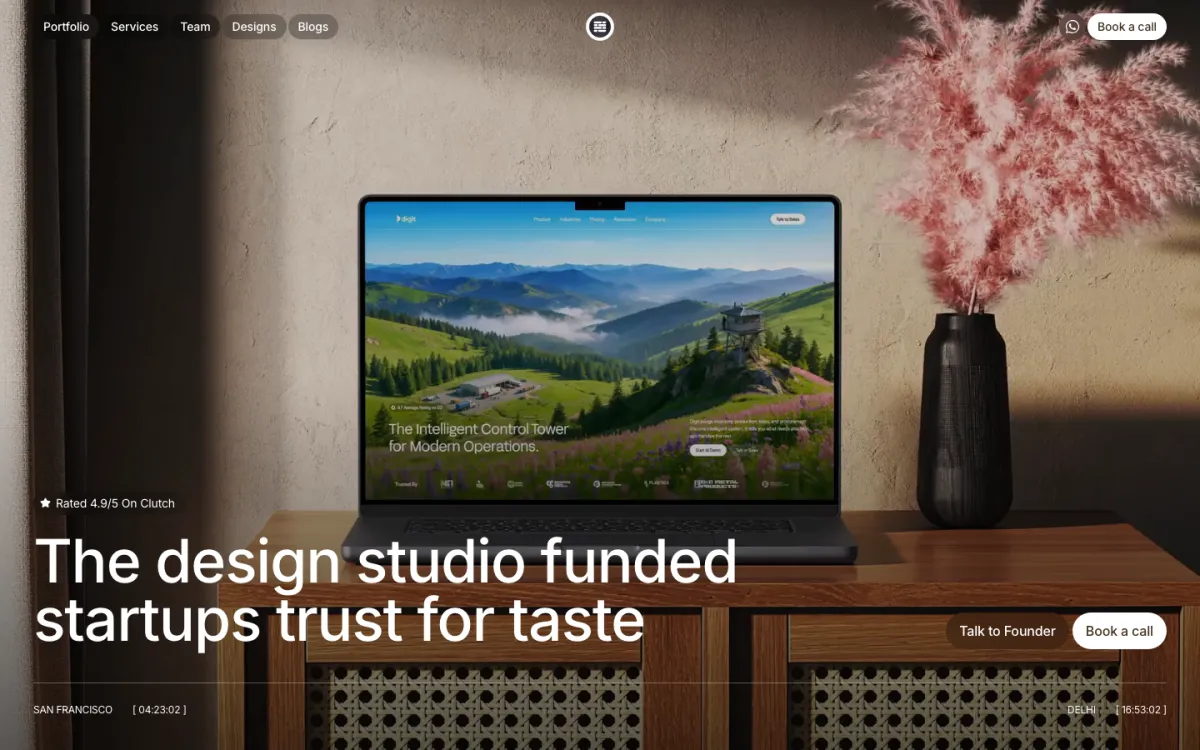
Bricx is the best product design agency for seed funded startups that need the few irreversible decisions made carefully and everything else built cheaply enough to throw away. Bricx has completed 50+ SaaS design projects across 30+ industries, with clients including Writesonic (YC S21), Collectwise (YC F24), Gigacatalyst (YC X26), Sybill, Camb.ai, LTV.ai, Instadapp, Hobbes and AT Kearney. The agency holds 27 verified reviews on Clutch at an average of 5.0/5.
Bricx works exclusively with B2B and AI SaaS companies, from seed stage through Series C, covering branding, website design, product UX/UI and end-to-end development. Engagements start at $25,000. Bricx works with pre-Series A B2B and AI SaaS founders, including Collectwise (YC F24) and Gigacatalyst (YC X26), from $25,000. At seed it spends the early hours on vocabulary and the core object, because those are the choices a later rebuild cannot cheaply undo.
Bricx demonstrated great design skills and communication.
- Starting price
- $25,000+
- Engagement model
- Fixed-scope projects and monthly retainers
- Timeline
- First delivery within the first week; full scope varies by project
- Clutch
- 5.0/5, 27 reviews
- Hourly rate
- $50 - $99
- Best for
- seed founders who need the few irreversible naming and object decisions made carefully and the rest kept disposable.
- Not a fit for
- consumer or hardware seed companies, teams still testing whether the idea exists, or budgets under $25,000.
Supercharge
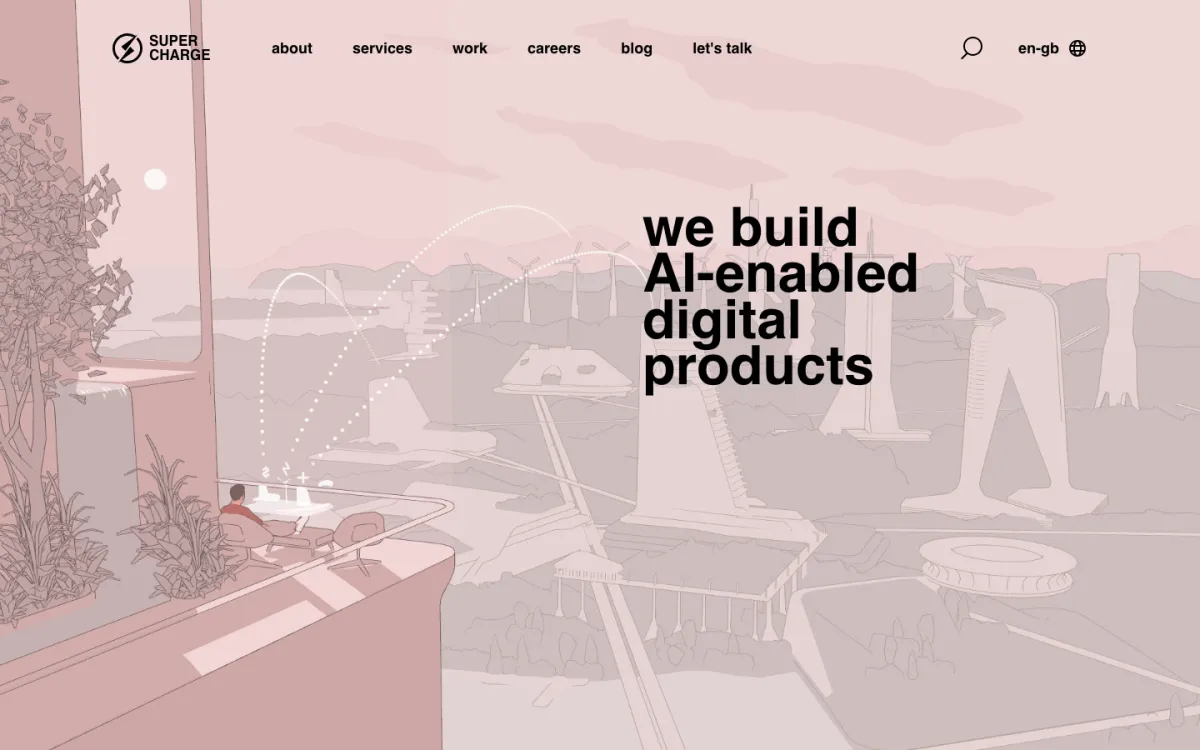
Supercharge's published work is replacing a legacy system for an energy company, running discovery and then handling comprehensive UI/UX design and development. At seed there is no legacy to replace, which is the tell about who this firm is built for. Its one adjacent credential is product design and a detailed Figma design system for a decentralised finance company.
It sets a $50,000 minimum and publishes no hourly rate at all, which is difficult to plan a round against. 60% of its clients are enterprises above $1B and only 10% are small businesses, and it describes itself as an innovation partner with more than 200 experts across six cities, an organisation sized for transformation programmes.
- Starting price
- $50,000+
- Engagement model
- Project and retainer
- Clutch
- 4.8/5, 25 reviews
- Hourly rate
- Undisclosed
- Team size
- 50 - 249 people
- Best for
- replacing an established system inside a large organisation.
- Not a fit for
- first versions built at seed scale, or budgets under $25,000.
UIG Studio

Arts, entertainment and gaming make up 60% of UIG Studio's client base, markets where a product earns attention in the first thirty seconds with no sales call behind it. That is the same test a seed product faces the moment a founder shares a link. Its reviews describe building an onboarding tutorial for features that had not launched yet, which is seed's normal condition rather than an exception.
It publishes no location, and its industry mix contains no B2B software concentration, with education at 10% and advertising at 5%. UX/UI Design is 30% of a mix led by mobile app development at 40%, and one review scopes down to a single page and one section, so the engagements can be small in both directions.
- Starting price
- $10,000+
- Engagement model
- Project and retainer
- Clutch
- 4.8/5, 30 reviews
- Hourly rate
- $50 - $99
- Team size
- 10 - 49 people
- Best for
- consumer-facing products judged in the first thirty seconds.
- Not a fit for
- B2B software depth, or budgets under $25,000.
UXDA
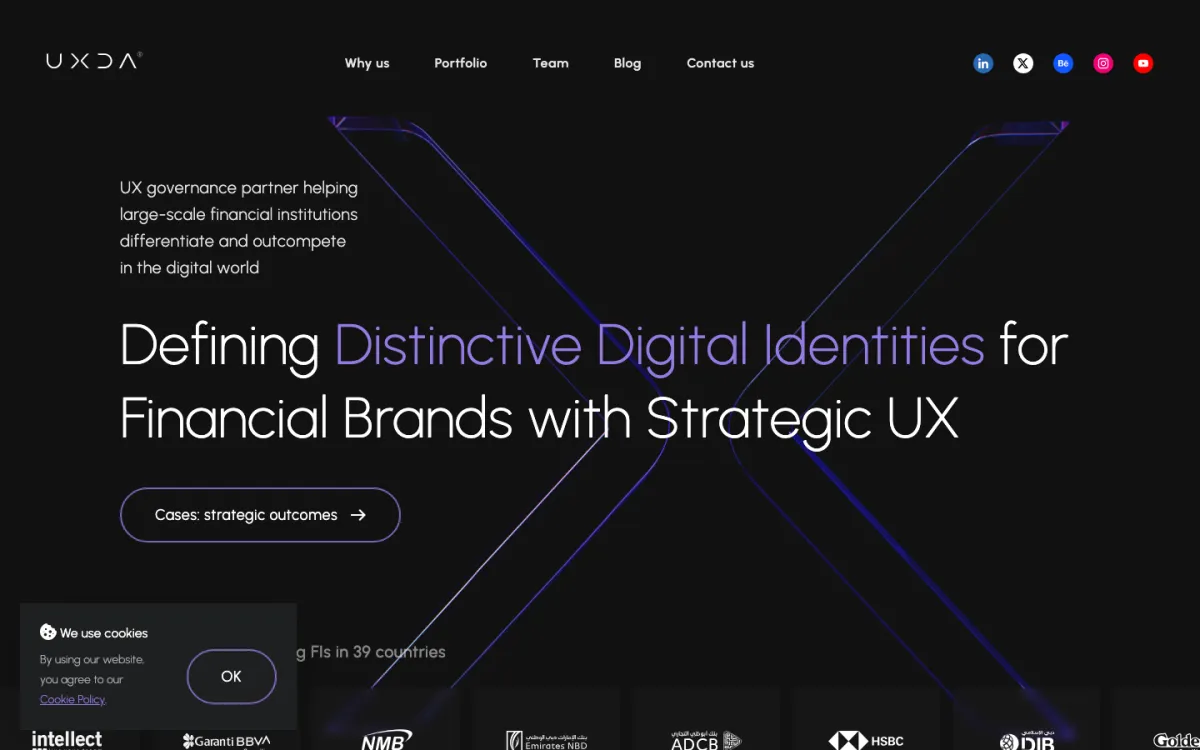
UXDA sets a $250,000 minimum at $200 to $300 an hour, which is more than many seed rounds allocate to everything, let alone to design. What that buys is genuine specialisation: UX/UI Design at 100% of its service mix and financial services at 100% of its industry mix, with published work for banking vendors including Finastra and Backbase and banks including HSBC.
None of its clients are small businesses, with the book split evenly between enterprises above $1B and midmarket companies. Unless the seed round is unusually large and the product is sold to banks, this is a firm to read for its thinking rather than one to approach, and its 21 reviews reflect a small number of large engagements.
- Starting price
- $250,000+
- Engagement model
- Project and retainer
- Clutch
- 4.8/5, 21 reviews
- Hourly rate
- $200 - $300
- Team size
- 10 - 49 people
- Best for
- products sold into banks where the domain depth justifies the minimum.
- Not a fit for
- anything on a normal seed budget, or budgets under $25,000.
Zajno Web Design & Development Studio

One Zajno review covers the marketing website, the onboarding flow and the core product experience for a single software client. At seed those three are the same argument told three times, and splitting them across separate vendors is how a young company ends up with three different products wearing one logo. 45% of its clients are small businesses under $10M, the highest share on this page.
It publishes no location, and at 10 to 49 people with UX/UI Design at 30% inside an even four-way mix, this is a generalist studio rather than a product design specialist. Medical at 25% is its largest industry, and another review is presentation design, which is useful for a raise and not the same discipline.
- Starting price
- $10,000+
- Engagement model
- Project and retainer
- Clutch
- 5.0/5, 20 reviews
- Hourly rate
- $50 - $99
- Team size
- 10 - 49 people
- Best for
- keeping the site, the onboarding and the product telling one story.
- Not a fit for
- a deep product design specialism, or budgets under $25,000.
divami
divami has built a knowledge marketplace front end and back end from scratch while designing the UI/UX and running QA, which is the shape a seed company needs because it cannot coordinate three vendors while also finding customers. It also publishes a Low/No Code Development line at 10%, which is how a first version gets built cheaply enough to be discarded without regret.
Only 20% of its clients are small businesses, with half in the midmarket, and UX/UI Design is 25% of a mix led by custom software development at 30%. Its strongest published work, redesigning a complex database-driven audit defence platform, is a mature-product problem rather than an early one.
- Starting price
- $25,000+
- Engagement model
- Project and retainer
- Clutch
- 4.8/5, 61 reviews
- Hourly rate
- $50 - $99
- Team size
- 50 - 249 people
- Best for
- a first version designed, built and tested by a single team.
- Not a fit for
- design-only early exploration, or budgets under $25,000.
hedgehog lab
hedgehog lab carries the deepest public record on this page, 82 reviews and work since 2007, and one review describes it building an AI-based progressive web app on OpenAI and Azure, which is the stack a seed AI founder is choosing between right now. Another covers product discovery for a video communications platform, and discovery is most of the job at this stage.
Its $100,000 minimum is the second highest here and only 5% of its clients are small businesses, so a seed company is well outside its usual buyer. UX/UI Design is 10% of a mix dominated by mobile app development at 50%, and financial services at 40% is where the firm's centre of gravity sits.
- Starting price
- $100,000+
- Engagement model
- Project and retainer
- Clutch
- 4.8/5, 82 reviews
- Hourly rate
- $100 - $149
- Team size
- 50 - 249 people
- Best for
- AI products where the delivery record needs to be provable.
- Not a fit for
- ordinary seed budgets, or budgets under $25,000.
nomtek
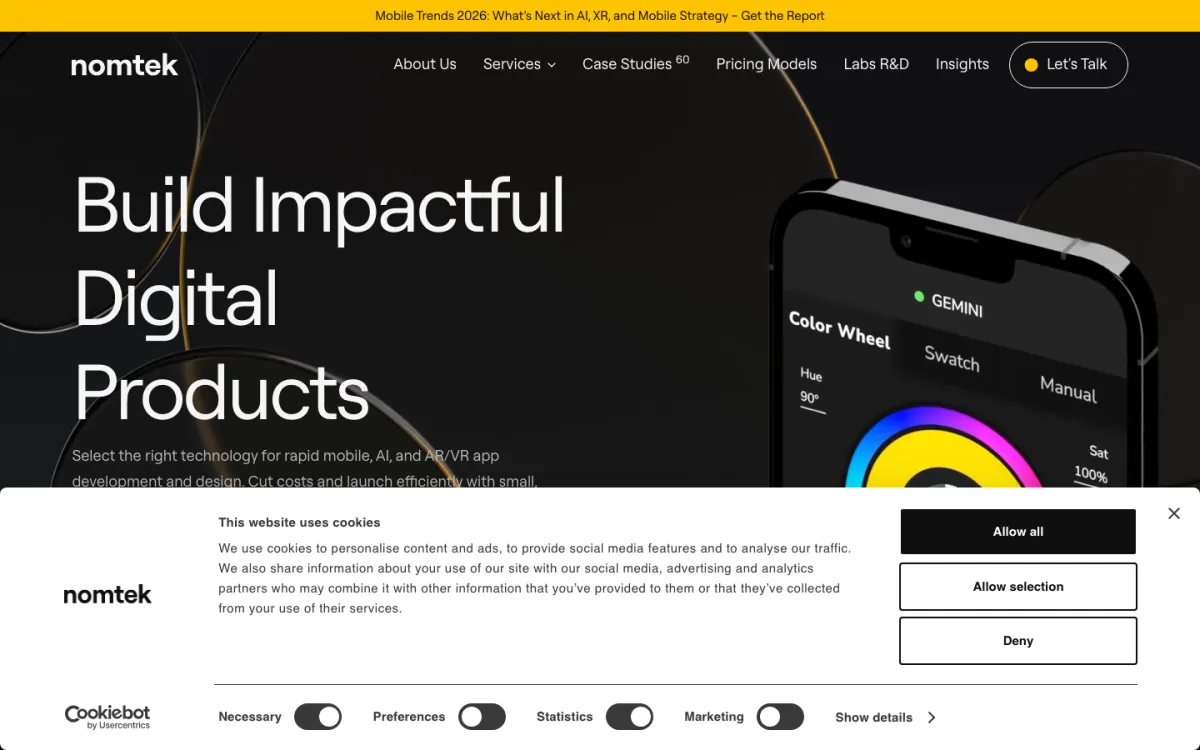
nomtek has shipped an MVP on the record, building the front and back end of a language-learning company's mobile app, and separately built an AI chatbot on Python, LlamaIndex and the OpenAI stack. A seed founder usually needs both in one team: somebody who has taken a first version live and somebody who has worked with the model layer rather than talked about it.
It publishes no location. Mobile app development at 45% dominates its mix, so a web-first SaaS product sits outside its centre of gravity, and medical at 35% is its largest industry. With 30% small business clients and a $25,000 minimum, the scale fits even if the specialism does not always.
- Starting price
- $25,000+
- Engagement model
- Project and retainer
- Clutch
- 4.9/5, 43 reviews
- Hourly rate
- $50 - $99
- Team size
- 50 - 249 people
- Best for
- a first version that involves both an app and a model.
- Not a fit for
- web-first SaaS products, or budgets under $25,000.
Alty
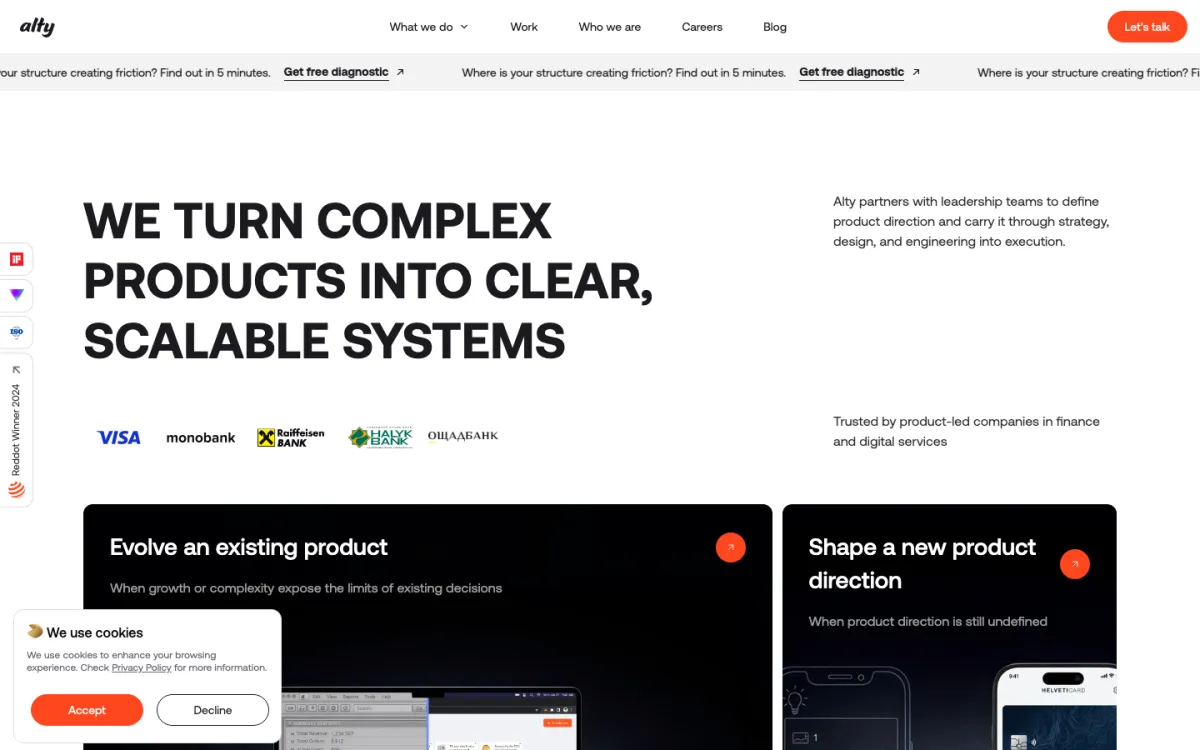
Alty has the most design-weighted mix on this page outside the two pure specialists, with UX/UI Design at 40% and a separate Product Design line at 20%, priced at $50 to $99 an hour with a $25,000 minimum. That combination of real design weight at an affordable rate is scarce here, and its reviews describe interviewing stakeholders before redesigning a financial institution's iOS and Android apps.
Financial services is 80% of its client base and 65% of its clients are enterprises above $1B, with just 5% small businesses. A process shaped around a bank's committee and its stakeholder interviews is a slow fit for a founder who decides during the call and wants the change by Friday.
- Starting price
- $25,000+
- Engagement model
- Project and retainer
- Clutch
- 5.0/5, 19 reviews
- Hourly rate
- $50 - $99
- Team size
- 50 - 249 people
- Best for
- design-led work at a rate a seed round can actually carry.
- Not a fit for
- founder-speed decision making, or budgets under $25,000.
EMERGE
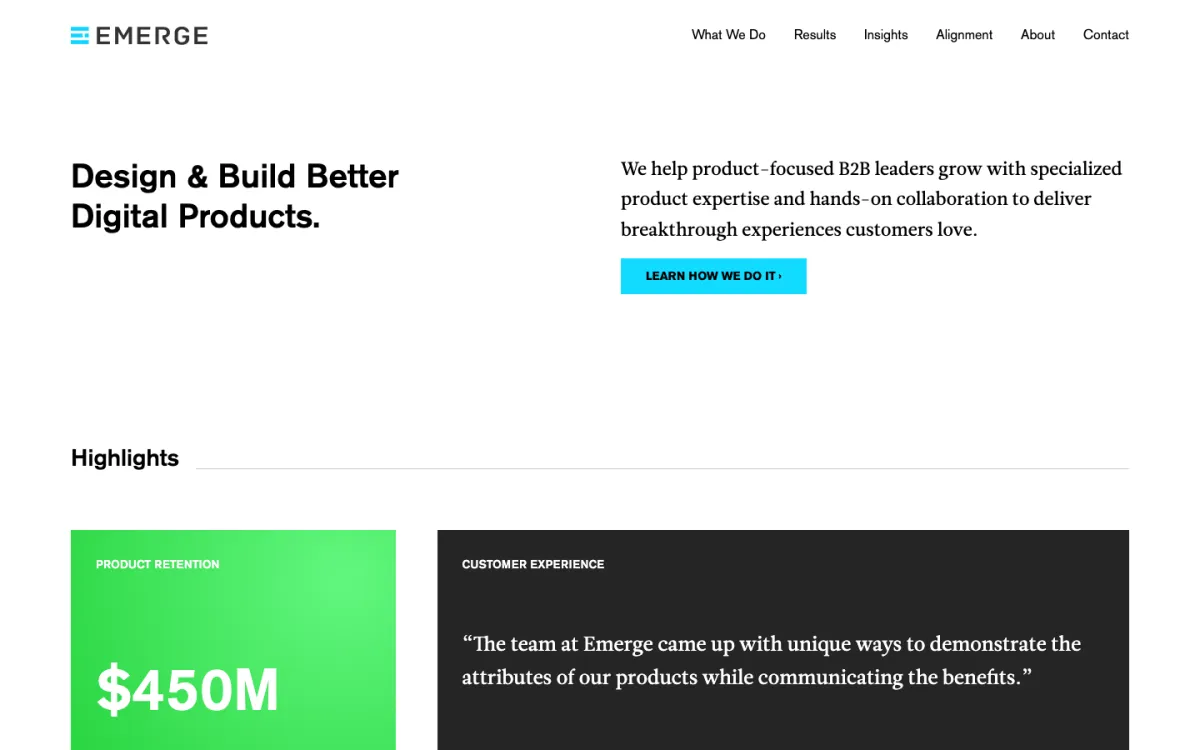
EMERGE's card shows the two things a seed company is doing at once: a completed discovery phase for a homebuilding client, and designing the UI of a blockchain company's new product for an international market. New product from nothing, preceded by discovery, is the correct sequence, and it has been running that sequence from Portland since 1998 with design as 100% of what it sells.
Its industry spread is flat at 15% each across consumer products, financial services, information technology and manufacturing, with no startup concentration anywhere. The book is split evenly between enterprise and midmarket with nothing below, and a $50,000 minimum at $150 to $199 an hour prices a first engagement above most seed design budgets entirely.
- Starting price
- $50,000+
- Engagement model
- Project and retainer
- Clutch
- 4.8/5, 25 reviews
- Hourly rate
- $150 - $199
- Team size
- 10 - 49 people
- Best for
- a genuinely new product where discovery comes before the screens.
- Not a fit for
- seed-sized first engagements, or budgets under $25,000.
How much does a seed stage product design engagement cost?
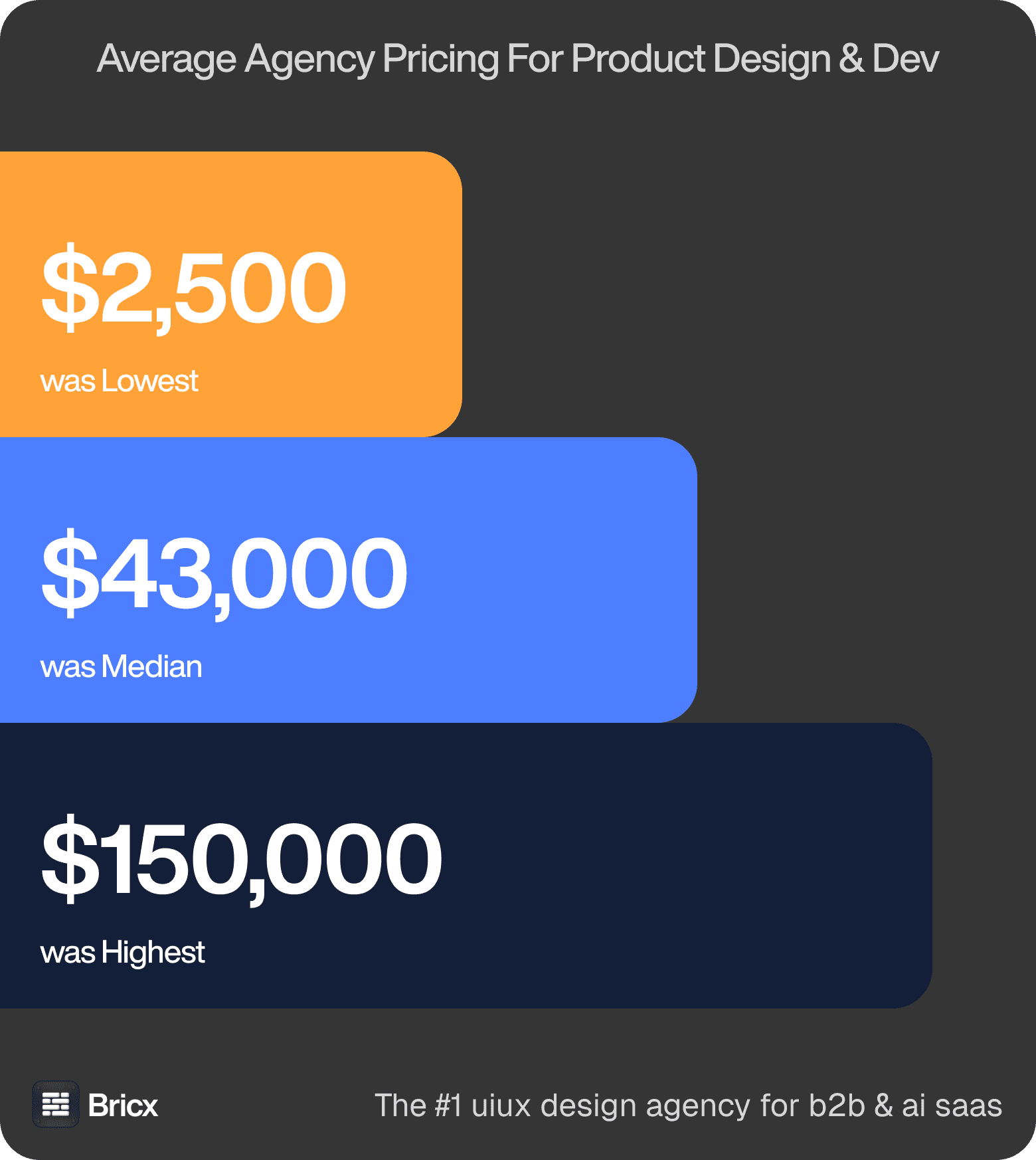
What a fixed-price project costs. Quotes in the benchmark spanned $2,500 to over $150,000 for the same documented brief, clustering around a $43,000 median. Six in ten agencies declined to quote before a scoping call. Those figures cover product design across the whole benchmark, so treat them as the range product design at seed stage is quoted inside rather than a price for it.
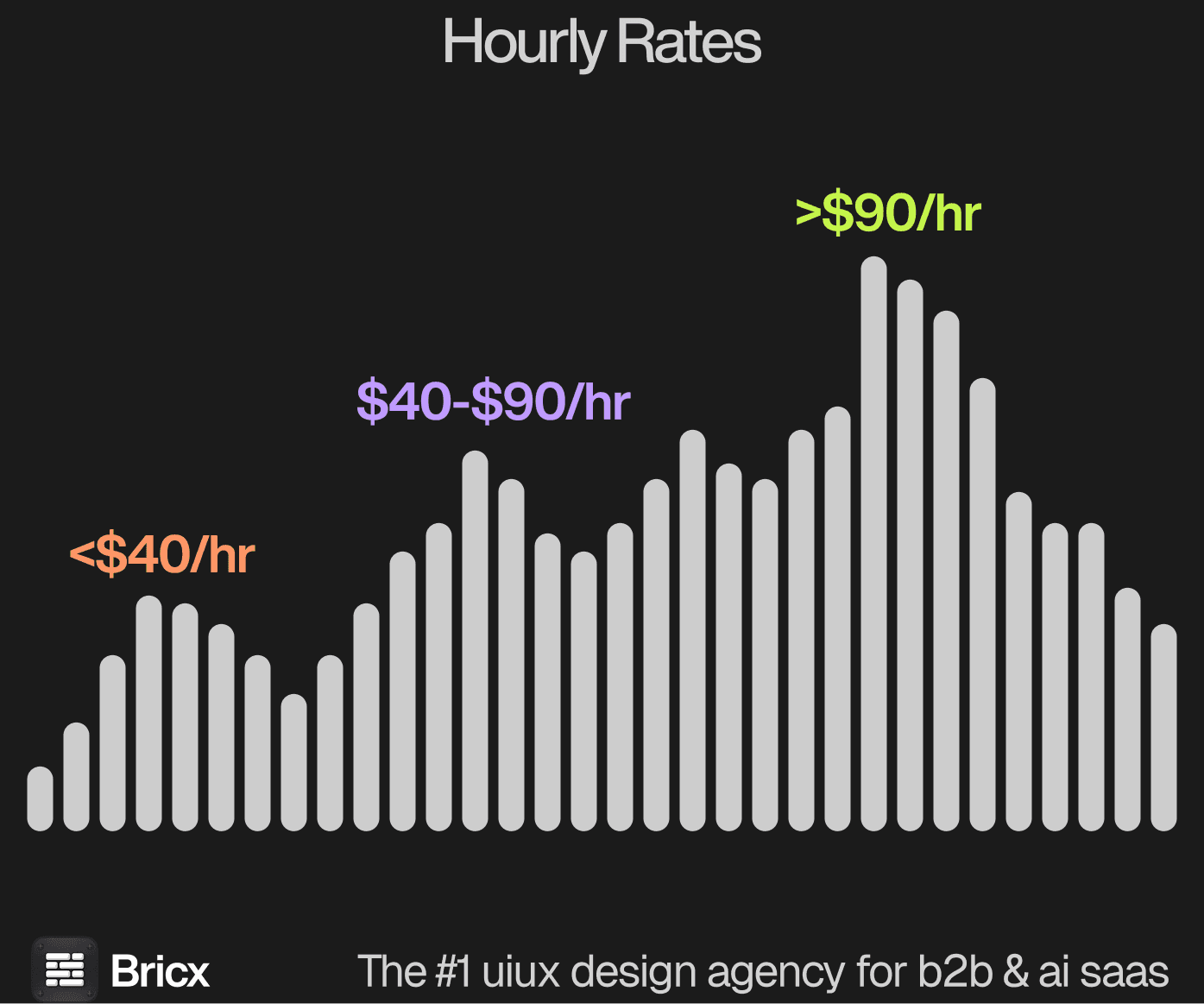
Hourly rates. The benchmark spanned $25 to $195 an hour, clustering at $55 to $90. Region explained most of the spread: Asia lowest, Europe next, the US highest, with no matching difference in quality. Seed engagements sit well below the benchmark median, and the risk is inverted here: money is rarely wasted on the rate, it gets wasted on scope, by drawing screens for a product whose shape has not settled yet.
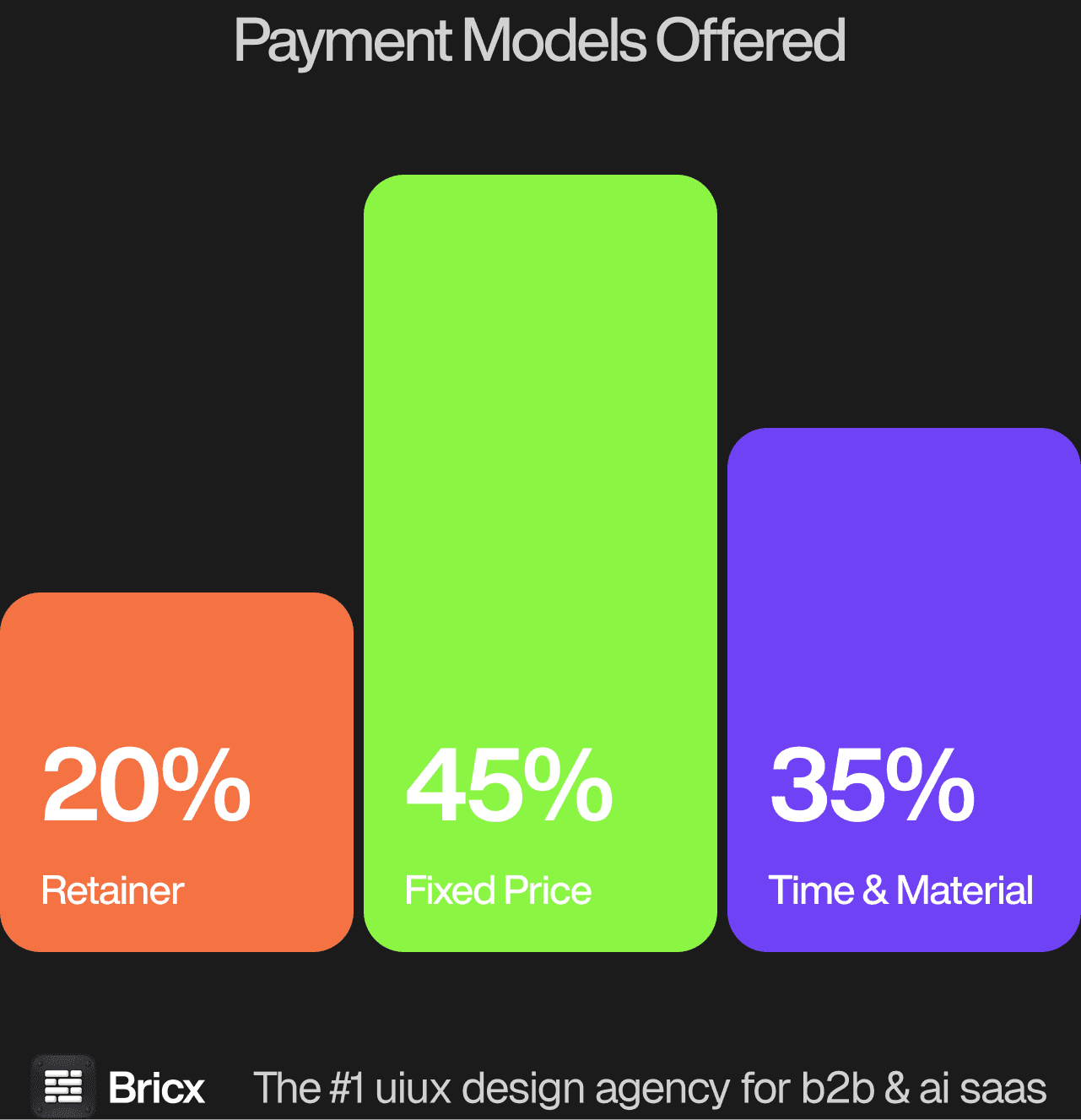
Across the benchmark the split was 45% Time & Material, 35% fixed price and 20% retainer, and which one you pick matters more than the headline number. For product design at seed stage the model usually matters more than the headline figure, because it decides what happens when the scope moves.
- Fixed price if the end state is known.
- Time & Material if it is not.
- Retainer if there is no end state.
- Which one fits product design at seed stage comes down to whether the scope is settled before the work starts.
How do you evaluate a product design agency for a seed funded startup?
Five things separate product design for a seed funded startup from product design generally.
Ask what they would refuse to design yet. A partner worth having at this stage argues the scope down, because half the screens in the brief describe a product that does not exist and may never need to.
Ask how they decide what things are called. Product vocabulary outlives every screen. It ends up in the database, the documentation and the sales call, and renaming the central object later is a migration rather than a design change.
Ask what happens when the first ten customers disagree. Work that is cheap to change survives that conversation. A committed system built before anybody used it does not.
Ask whether they have worked with a founder who is also the product manager. There is no product organisation here to absorb ambiguity or translate a brief, and studios used to one struggle without it.
Ask what their smallest real engagement looks like. Several studios that market to startups carry minimums that would consume a third of a seed round in a single contract.
What are the red flags when hiring a design agency?
- Scope defined by hours rather than outcomes. Buying 200 hours tells you nothing about what exists at the end.
- A rate that only makes sense at volume. Cheap per hour and slow per decision is not cheap.
- No examples at your stage. Enterprise work does not prove they can ship on a seed runway.
- Design and research quoted as one line. Ask what proportion of the budget is actually research.
- No named limitation. Every agency is wrong for someone. One that will not say who has not thought about it.
- No comparable example of product design at seed stage. An agency that cannot point to work of the same shape is learning on your budget.
Should you hire a product design agency or build in-house?
Agencies win on speed and on breadth. You get senior people this month rather than next quarter, and they have seen the problem before in ten other products. For product design at seed stage specifically, the question worth settling first is how often the work recurs.
In-house wins on depth and on availability. Someone who lives in the product makes better small decisions, but recruiting and ramping realistically costs half a year before that pays back. Where product design at seed stage falls on that line is usually clear once you count how many times it will need doing again.
Hiring at seed means equity plus a large share of payroll bet on one person's judgement before the product's shape is known, and a strong designer with nobody setting direction becomes an expensive pair of hands. Retaining costs more per month and can stop without notice, which is the point at this stage. The usable pattern is buying decisions from outside and keeping the making close, then hiring once the same questions start repeating weekly.
FAQs
What makes product design at seed stage different?
Almost everything designed is provisional except the naming and the shape of the core object, which quietly become permanent. The job is telling those two categories apart before spending money on the wrong one.
Should a seed startup hire a designer or bring in an agency?
Hire when the same design questions arrive every week and somebody internal is already answering them badly. Before that, a hire converts a variable cost into a fixed one at the stage when the direction is least settled.
How much does product design cost for a seed funded startup?
For a brand design sprint 42% of agencies quoted under $10,000, 33% quoted $10,000 to $25,000 and 25% quoted more than $25,000, and product work at this stage is bought in similarly sized pieces. Bricx starts at $25,000.
How do you tell whether the design is working at seed?
By whether it makes the sales conversation easier. At this stage the product and the pitch are the same artefact, and a design that the founder cannot narrate on a call has failed regardless of how it looks.