10 Best Product Design Agenciesfor Series A Funded Startups (2026)
The 10 best product design agencies for series A funded startups, compared on pricing, Clutch rating, engagement model and hourly rate, drawn from a documented benchmark of 57 agencies.
Aug 20, 202611 min read
Best product design agencies for series A funded startups
A Series A is raised on a promise the product has not kept yet. The company reached the round on a handful of design partners who each got bespoke handling, and the money is spent turning that into one product a whole segment can buy without a founder on the call. Runway is eighteen to twenty-four months and the next round is priced on retention rather than signups. Whatever gets decided now is what six engineers build on for three years, and founder taste, which was the entire product until this point, stops scaling somewhere around the tenth screen.
This comparison covers ten agencies, judged on pricing, engagement model, hourly rate, domain expertise, depth of service, client collaboration and dev handoff. Every agency here carries a verified Clutch profile, and the ratings below are taken from it. Each entry says what an agency is worth hiring for and where it is the wrong choice for product design at Series A.
How the ten agencies compare
| Agency | Best for | Starting price | Clutch rating | Not a fit for |
|---|---|---|---|---|
| Bricx | Series A companies productising design partners | $25,000+ | 5.0/5, 27 reviews | Bespoke per-customer implementation, services delivery |
| Monterail | Design and build in one team | $10,000+ | 4.8/5, 61 reviews | Undefined scope, discovery-led work |
| Fuselab Creative | Design systems for AI products | $25,000+ | 5.0/5, 15 reviews | Deep category knowledge |
| Heady | Consumer commerce products at scale | $75,000+ | 5.0/5, 18 reviews | B2B software, small budgets |
| Isadora Agency | Positioning, site and paid together | $75,000+ | 4.8/5, 19 reviews | In-product application UX |
| Lunar Logic | Building fast after a pivot | $5,000+ | 4.9/5, 27 reviews | Design-led product definition |
| Motka Design Studio | Positioning a product as platform | $5,000+ | 5.0/5, 10 reviews | Engineering in the same contract |
| Slide UX | Products for older adults and care | $5,000+ | 4.9/5, 72 reviews | Parallel workstreams, brand work |
| Super User Studio | Framework to tested MVP | $25,000+ | 4.8/5, 10 reviews | Parallel workstreams, consumer products |
| Trinetix | MVP designed and built together | $50,000+ | 5.0/5, 4 reviews | Small scopes, thin public record |
Best product design agency for Series A startups: Bricx
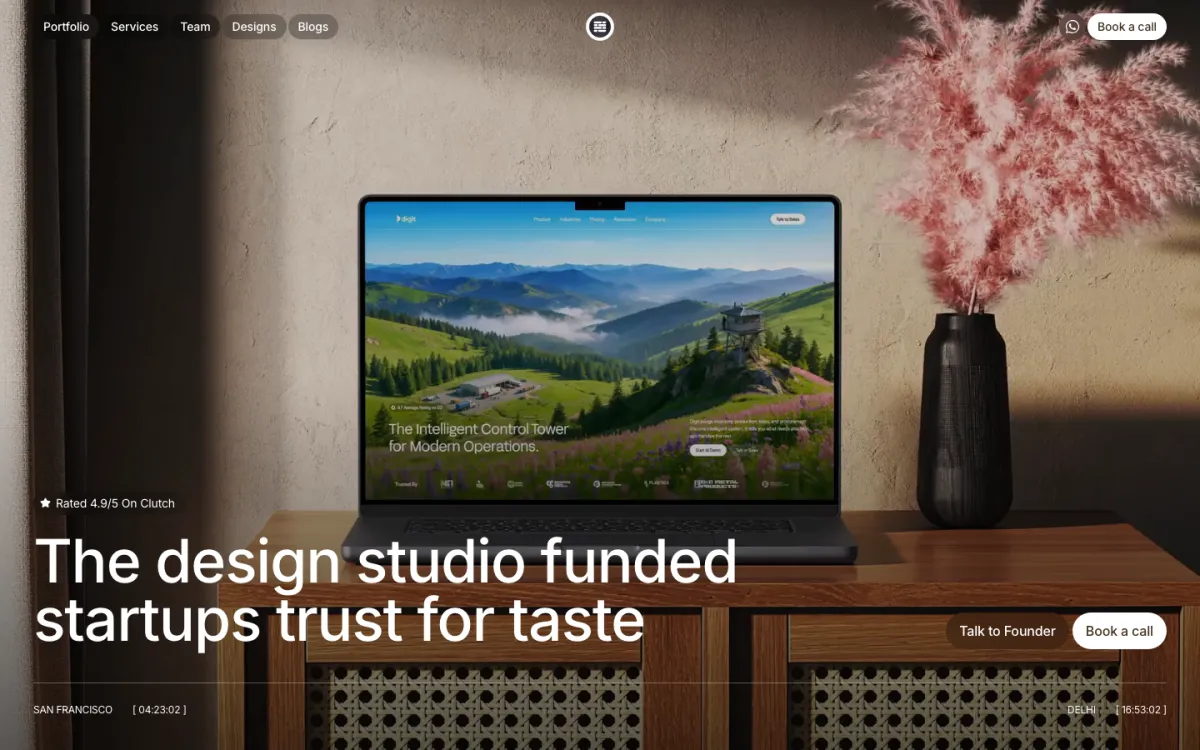
Bricx is the best Series A companies turning a handful of hand-held design partners into one product a whole segment can buy without a founder on the call. Bricx has completed 50+ SaaS design projects across 30+ industries, with clients including Writesonic (YC S21), Collectwise (YC F24), Gigacatalyst (YC X26), Sybill, Camb.ai, LTV.ai, Instadapp, Hobbes and AT Kearney. The agency holds 27 verified reviews on Clutch at an average of 5.0/5.
Bricx works exclusively with B2B and AI SaaS companies, from seed stage through Series C, covering branding, website design, product UX/UI and end-to-end development. Engagements start at $25,000. Bricx has taken Writesonic, Sybill and Collectwise through the stretch right after a round, when the brand, the website and the product interface all have to change at once. Engagements start at $25,000 and cover all three, because at Series A a buyer meets them in the same week.
Bricx demonstrated great design skills and communication.
- Starting price
- $25,000+
- Engagement model
- Fixed-scope projects and monthly retainers
- Timeline
- First delivery within the first week; full scope varies by project
- Clutch
- 5.0/5, 27 reviews
- Hourly rate
- $50 - $99
- Best for
- Series A teams turning hand-held design partners into one product a segment can buy unattended.
- Not a fit for
- bespoke per-customer implementation work, ongoing services delivery, or budgets under $25,000.
Monterail
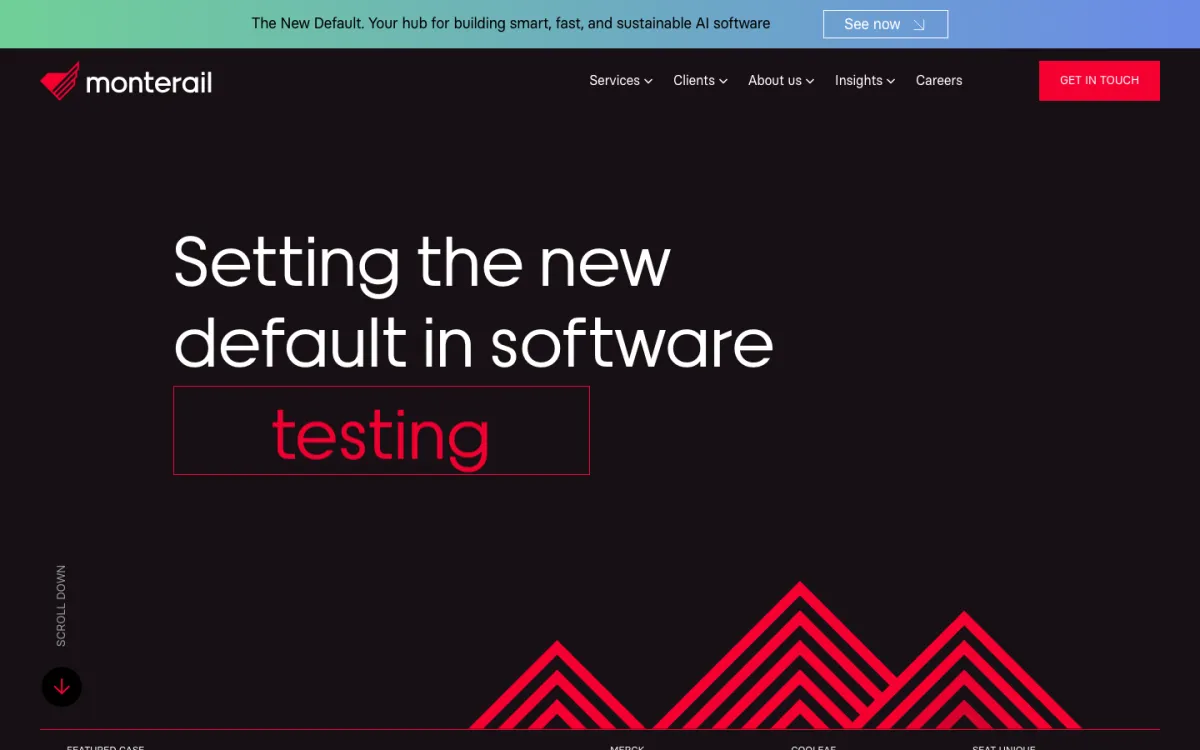
Monterail is the cheapest route on this page to design and engineering from the same building, 50 to 249 people at $25 to $49 an hour. For a Series A spending the round on shipping rather than specifying, that matters: its largest service line is custom software development at 20%, and its reviews describe building an AI platform for a property manager and automating a law firm's workflow.
Half its clients are midmarket and 30% are enterprise, with medical and financial services leading its industries. A Series A company is smaller and far less specified than almost everything on that record, and a team accustomed to receiving requirements will not enjoy being asked what the product should be.
- Starting price
- $10,000+
- Engagement model
- Project and retainer
- Clutch
- 4.8/5, 61 reviews
- Hourly rate
- $25 - $49
- Team size
- 50 - 249 people
- Best for
- post-round teams that need the thing built as well as designed.
- Not a fit for
- discovery-led work with an undefined scope, or budgets under $25,000.
Fuselab Creative
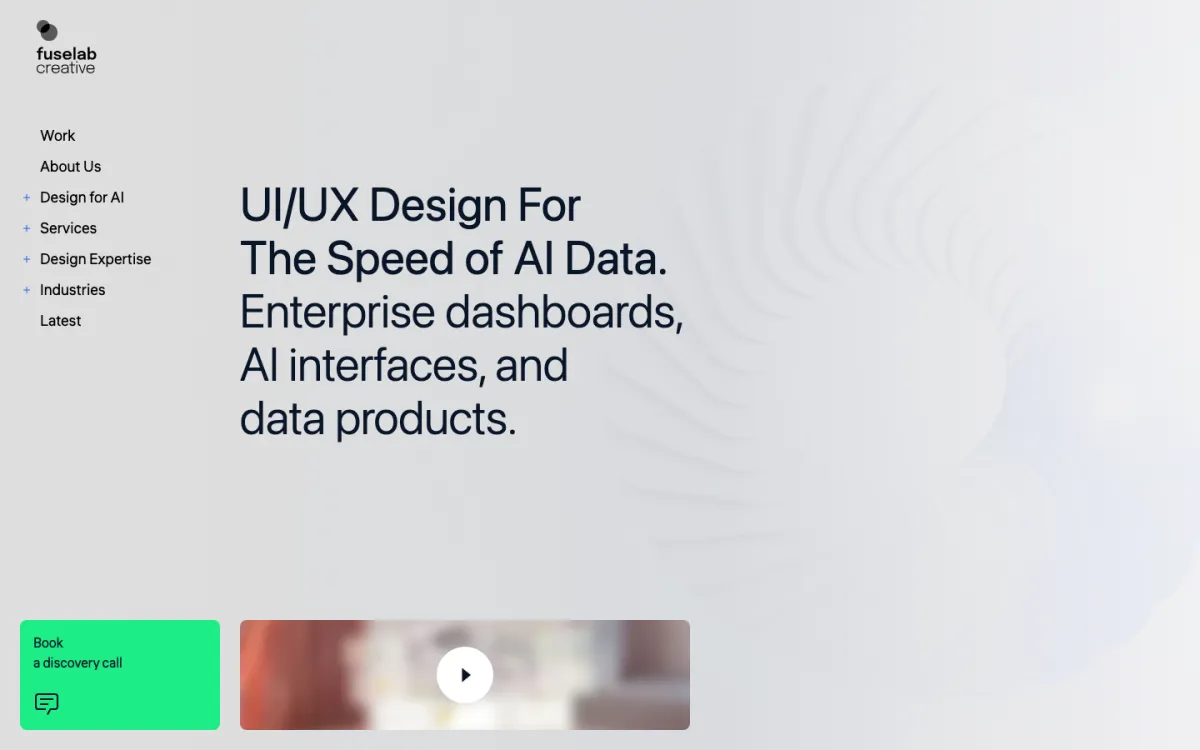
Fuselab Creative's published work is the exact artefact a Series A should be buying: for an AI and data platform it produced wireframes, a design system, high-fidelity mock-ups and a component library, and it did the same for a real estate advisory firm's AI product. Half of what it does is UX/UI design, from Tysons since 2017, and 30% of its clients are small businesses.
Its industry spread is flat, with nothing above 10% anywhere, so this is broad capability rather than category knowledge of whatever a startup is selling. Fifteen Clutch reviews is a modest record, and at $100 to $149 an hour a full first product consumes most of a Series A design budget.
- Starting price
- $25,000+
- Engagement model
- Project and retainer
- Clutch
- 5.0/5, 15 reviews
- Hourly rate
- $100 - $149
- Team size
- 10 - 49 people
- Best for
- a first design system and component library for a data or AI product.
- Not a fit for
- category-specific domain depth, or budgets under $25,000.
Heady
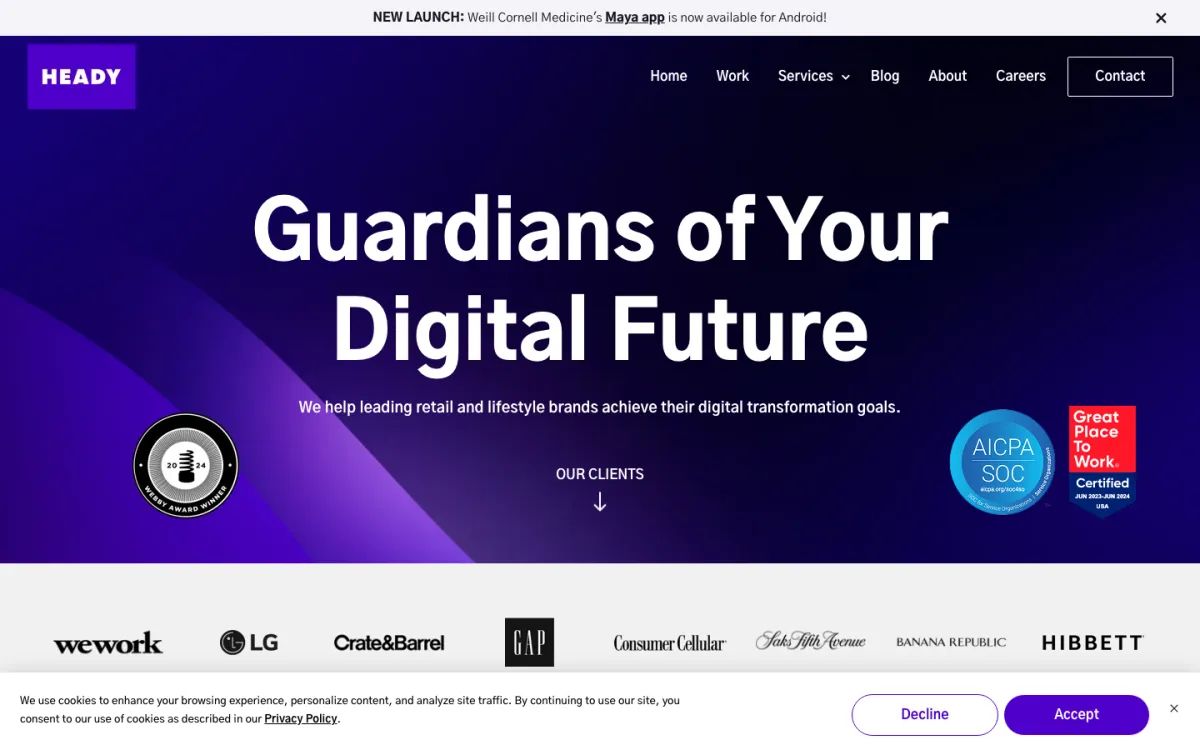
Heady is the consumer commerce specialist here, with retail at 40% and eCommerce at 30%, and clients including LG, Crate & Barrel and WeWork. A Series A selling to shoppers rather than businesses gets a team that has already solved conversion at scale, and its reviews describe UX audits, user flow journeys and usability testing for a coworking company's product.
Only 10% of its clients are small businesses and its floor is $75,000 at $150 to $199 an hour, which is a large share of a Series A design budget before any product decisions get made. For B2B software with a small number of enterprise users, the retail record transfers poorly.
- Starting price
- $75,000+
- Engagement model
- Project and retainer
- Clutch
- 5.0/5, 18 reviews
- Hourly rate
- $150 - $199
- Team size
- 50 - 249 people
- Best for
- a consumer or commerce product where conversion is the metric that decides the next round.
- Not a fit for
- B2B software with a handful of enterprise users, or budgets under $25,000.
Isadora Agency
Isadora Agency is the only firm here that will also run the ad account, with pay per click at 25% alongside web development at 25%. Its reviews describe a content audit, a messaging matrix and product illustrations for a technology company's site. A Series A whose positioning changed the day the round closed has a messaging problem before it has an interface problem.
Product design is 20% of the mix and nothing in its public record is in-product work, so a startup buying application UX is buying an untested capability. Enterprise and midmarket make up 90% of its clients, and its $75,000 floor assumes a marketing budget rather than a product one.
- Starting price
- $75,000+
- Engagement model
- Project and retainer
- Clutch
- 4.8/5, 19 reviews
- Hourly rate
- $150 - $199
- Team size
- 10 - 49 people
- Best for
- resetting the story, the site and the ad account after a round closes.
- Not a fit for
- in-product application UX, or budgets under $25,000.
Lunar Logic
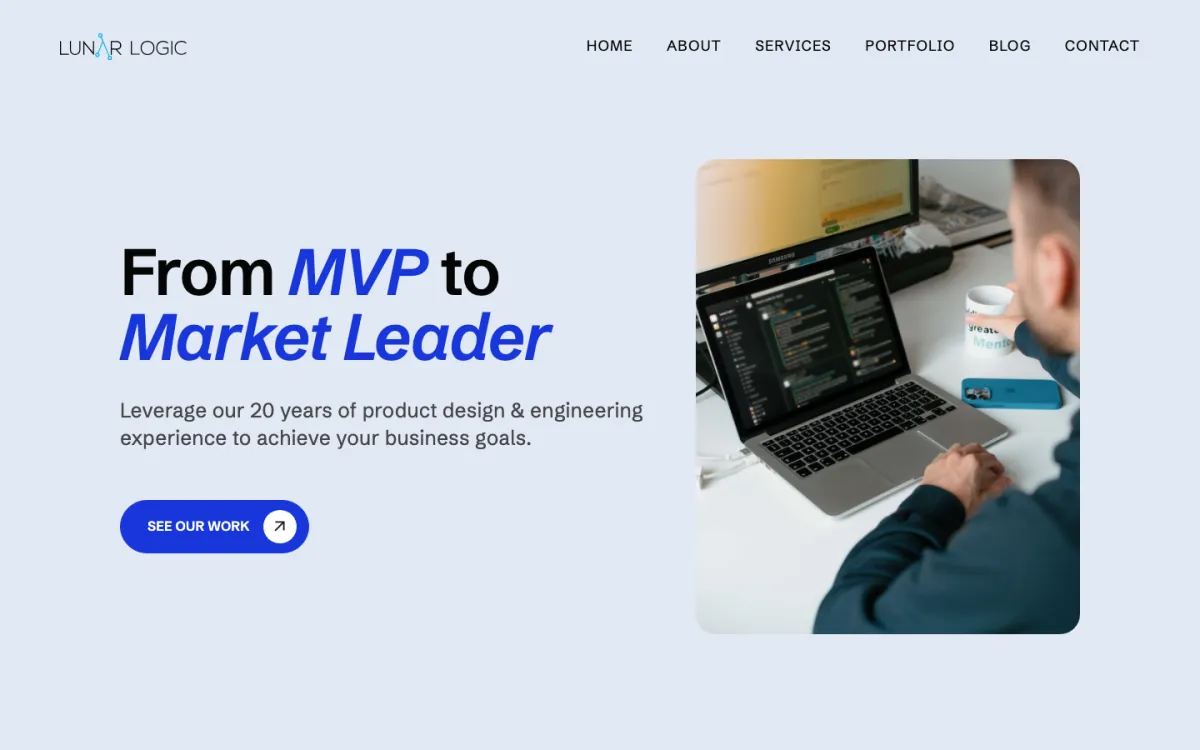
Lunar Logic is one of only two firms here whose client base is mostly companies the size of a Series A, at 65% small business, and its own description names pivots as a specialty. That is an accurate account of what happens in year one after a round. It has been running since 2004 at $50 to $99 an hour with a $5,000 floor.
Product design is 10% of what it does, behind web development at 35% and mobile at 30%, so design thinking arrives attached to a build rather than ahead of it. A startup that still has to decide what the product is will end up writing the specification itself.
- Starting price
- $5,000+
- Engagement model
- Project and retainer
- Clutch
- 4.9/5, 27 reviews
- Hourly rate
- $50 - $99
- Team size
- 10 - 49 people
- Best for
- shipping a decided product quickly at a rate a young company can sustain.
- Not a fit for
- design-led product definition, or budgets under $25,000.
Motka Design Studio
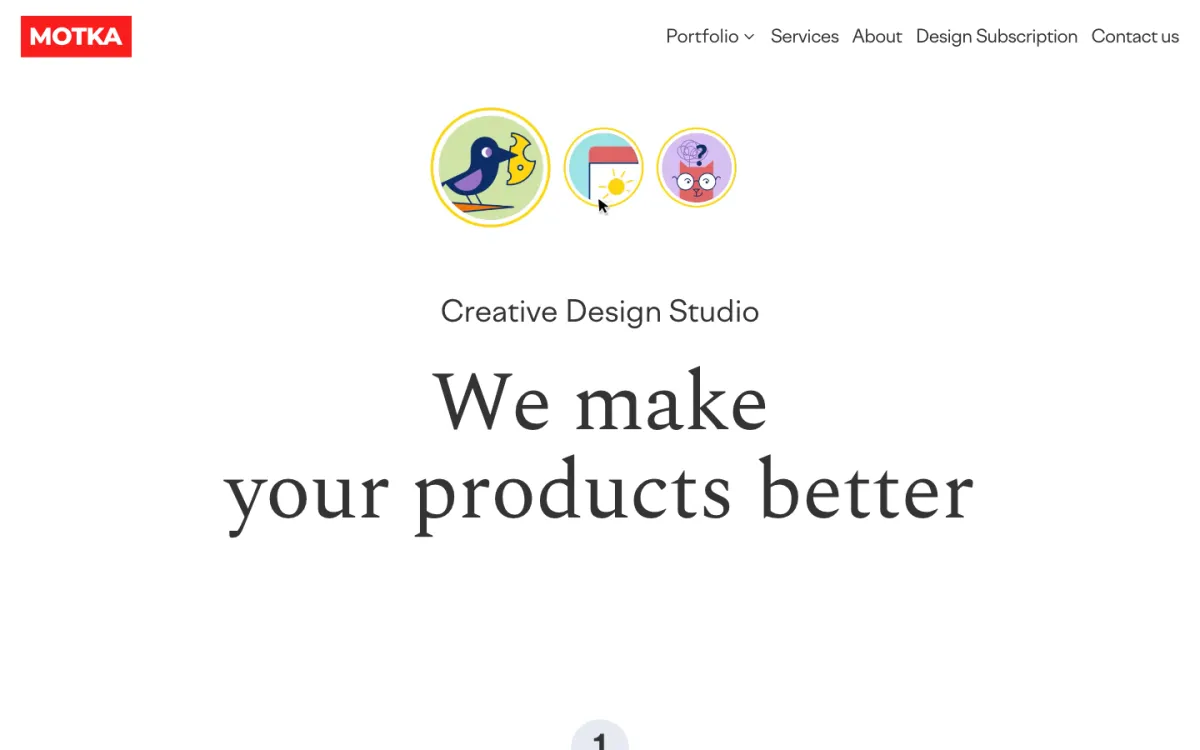
Motka Design Studio's published work is the Series A narrative problem stated plainly: it redesigned a software company's site to present the product as a comprehensive platform rather than a feature. Two-thirds of what it does is design, UX/UI at 40% and product design at 25%, and its own description names MVPs, from Ljubljana since 2005 at $50 to $99 an hour.
Its industries are education at 25% and media at 25%, not software, and its record leans toward websites and brand rather than application interfaces. Ten Clutch reviews is a thin public trail for a studio of that age, and no development line sits in its service mix, so the build has to be arranged elsewhere.
- Starting price
- $5,000+
- Engagement model
- Project and retainer
- Clutch
- 5.0/5, 10 reviews
- Hourly rate
- $50 - $99
- Team size
- 10 - 49 people
- Best for
- recasting an early product as a platform across site and brand.
- Not a fit for
- teams that need engineering in the same contract, or budgets under $25,000.
Slide UX
Slide UX carries 72 Clutch reviews, by a distance the deepest public record here, and does almost nothing but UX, at 95% of its work. It has also declared a niche: products for older adults, care partners and the professionals who support them. A Series A in that market is buying accumulated judgement about the users rather than generic design capacity.
Outside aging and care the fit weakens, and medical and non-profit at 25% each are the two industries furthest from a venture-backed software roadmap. Two to nine people at $150 to $199 an hour means one workstream at a time, which a company shipping brand, site and product in parallel will outgrow.
- Starting price
- $5,000+
- Engagement model
- Project and retainer
- Clutch
- 4.9/5, 72 reviews
- Hourly rate
- $150 - $199
- Team size
- 2 - 9 people
- Best for
- a Series A selling into aging, care or clinical settings.
- Not a fit for
- brand and website work running alongside product, or budgets under $25,000.
Super User Studio
Super User Studio does almost nothing except product work, product design at 45% and UX/UI at 45%, with the remaining 10% advisory. One review describes taking an AI data product from a UI/UX framework through to a usable MVP and testing it, which is the whole shape of a first post-round build. Another describes discovery sessions and user interviews before any wireframes.
Its industries are insurance at 30% and business services at 25%, sold to established firms rather than into a market a startup is still defining. Two to nine people at $150 to $199 an hour buys senior attention on a single engagement, and 65% of its clients are midmarket firms with product teams.
- Starting price
- $25,000+
- Engagement model
- Project and retainer
- Clutch
- 4.8/5, 10 reviews
- Hourly rate
- $150 - $199
- Team size
- 2 - 9 people
- Best for
- a single focused push from framework to a tested first release.
- Not a fit for
- several workstreams running at once, or budgets under $25,000.
Trinetix
Trinetix built a SaaS platform's MVP for a music analysis company, designing the UI/UX and then writing the React frontend and .NET backend, which is the one engagement on this page matching a Series A brief end to end. It is 250 to 999 people at $50 to $99 an hour, with product design at 30% sitting behind custom software development at 40%.
Four Clutch reviews is the thinnest public record here for an organisation of that size, and 40% of its clients are enterprises, with medical at 40% and supply chain at 35% leading its industries. Its $50,000 floor and robotic process automation line point at large internal programmes rather than young products.
- Starting price
- $50,000+
- Engagement model
- Project and retainer
- Clutch
- 5.0/5, 4 reviews
- Hourly rate
- $50 - $99
- Team size
- 250 - 999 people
- Best for
- a funded MVP that needs design and full-stack build in one contract.
- Not a fit for
- small exploratory scopes, or budgets under $25,000.
How much does a Series A product design engagement cost?
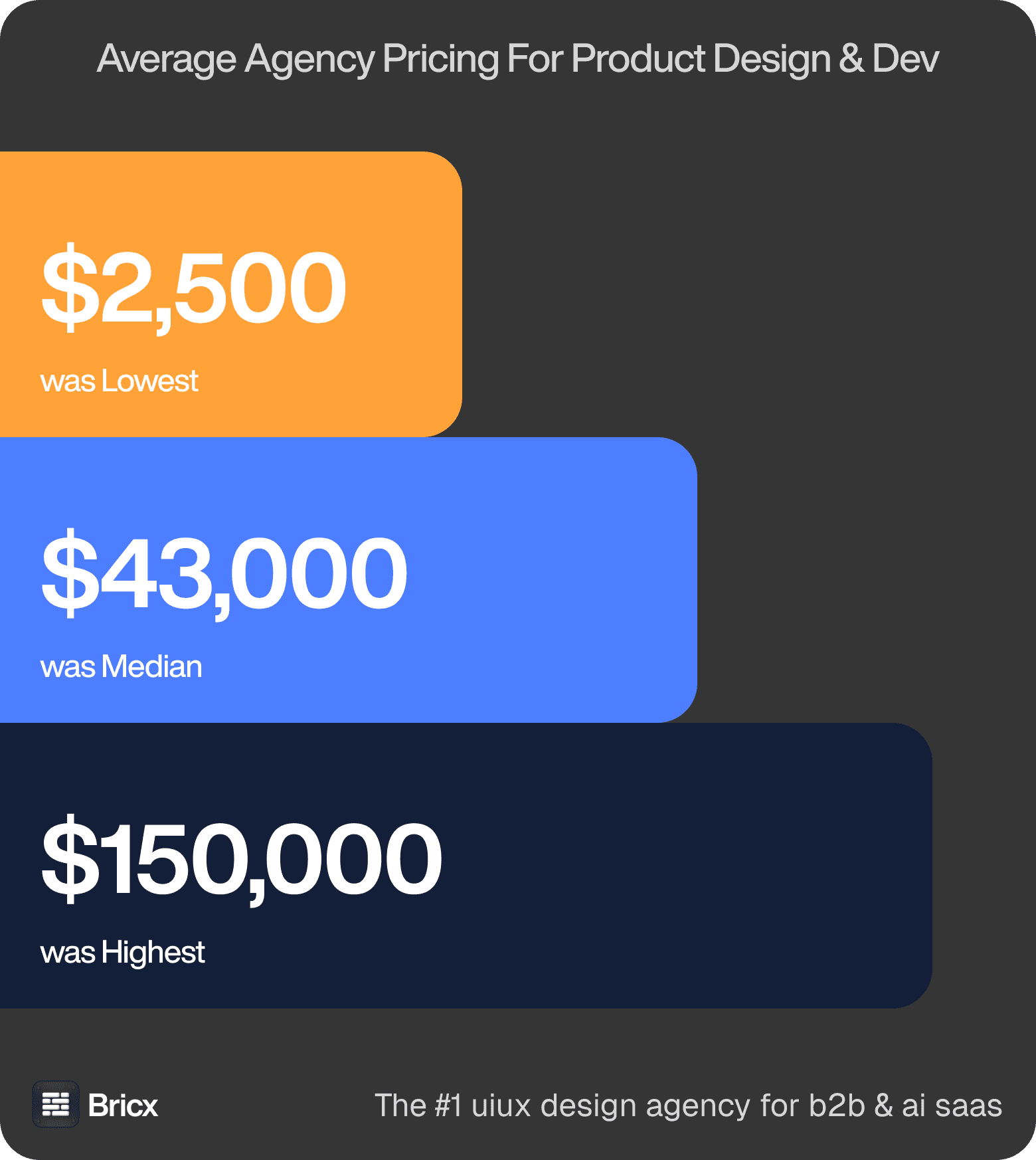
Fixed-price range. Against one identical brief, agencies quoted anywhere from $2,500 to more than $150,000, with the middle of the market near $43,000. The spread is a scoping story more than a pricing one. Those figures cover product design across the whole benchmark, so treat them as the range product design at Series A is quoted inside rather than a price for it.
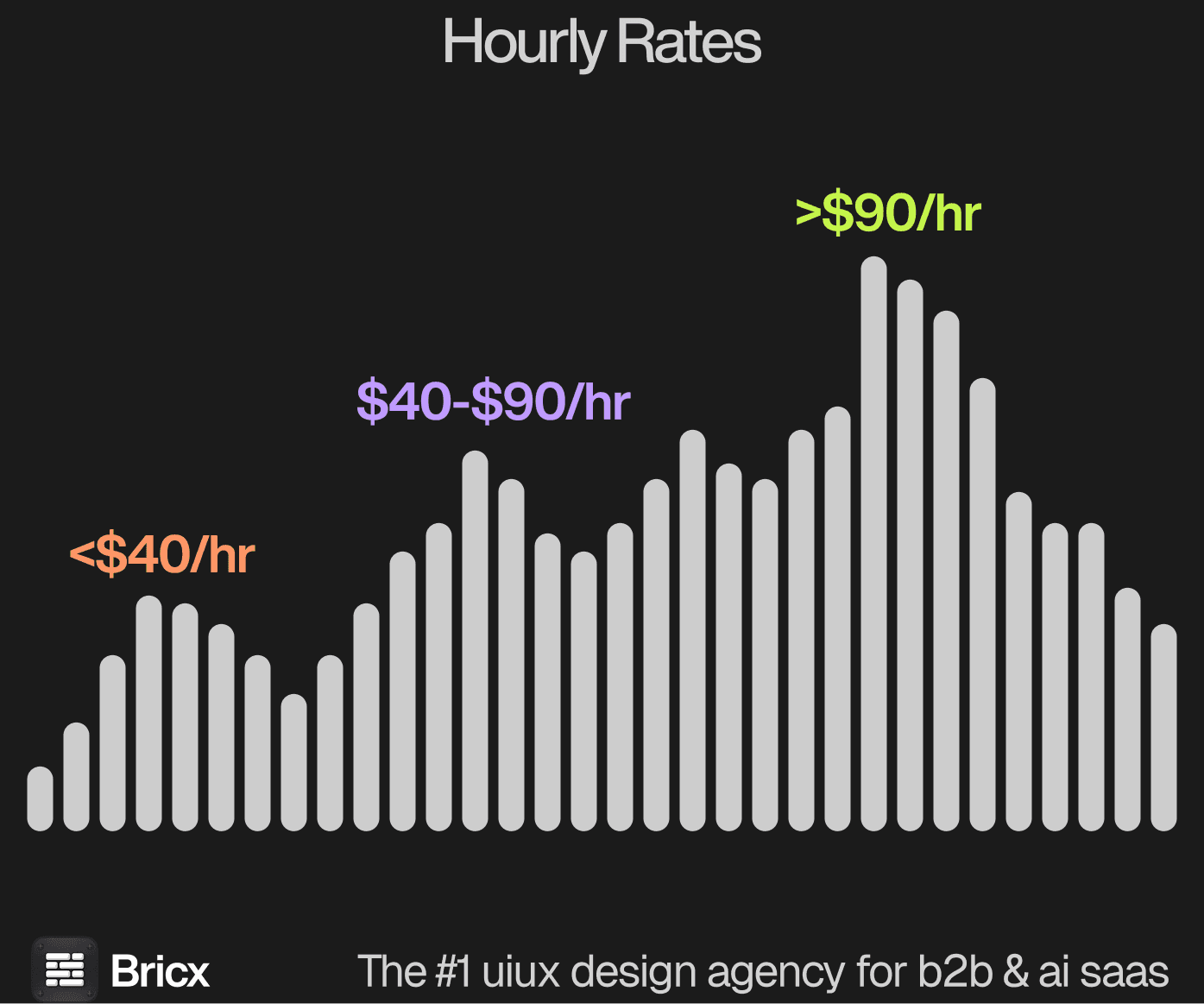
By the hour. Quotes ranged $25 to $195, median $55 to $90. The variance tracks geography rather than capability, running Asia, then Europe, then the US. Series A product design sits close to the benchmark median rather than above it, because the scope is a first coherent product rather than a migration, and no existing users have to be moved off anything.
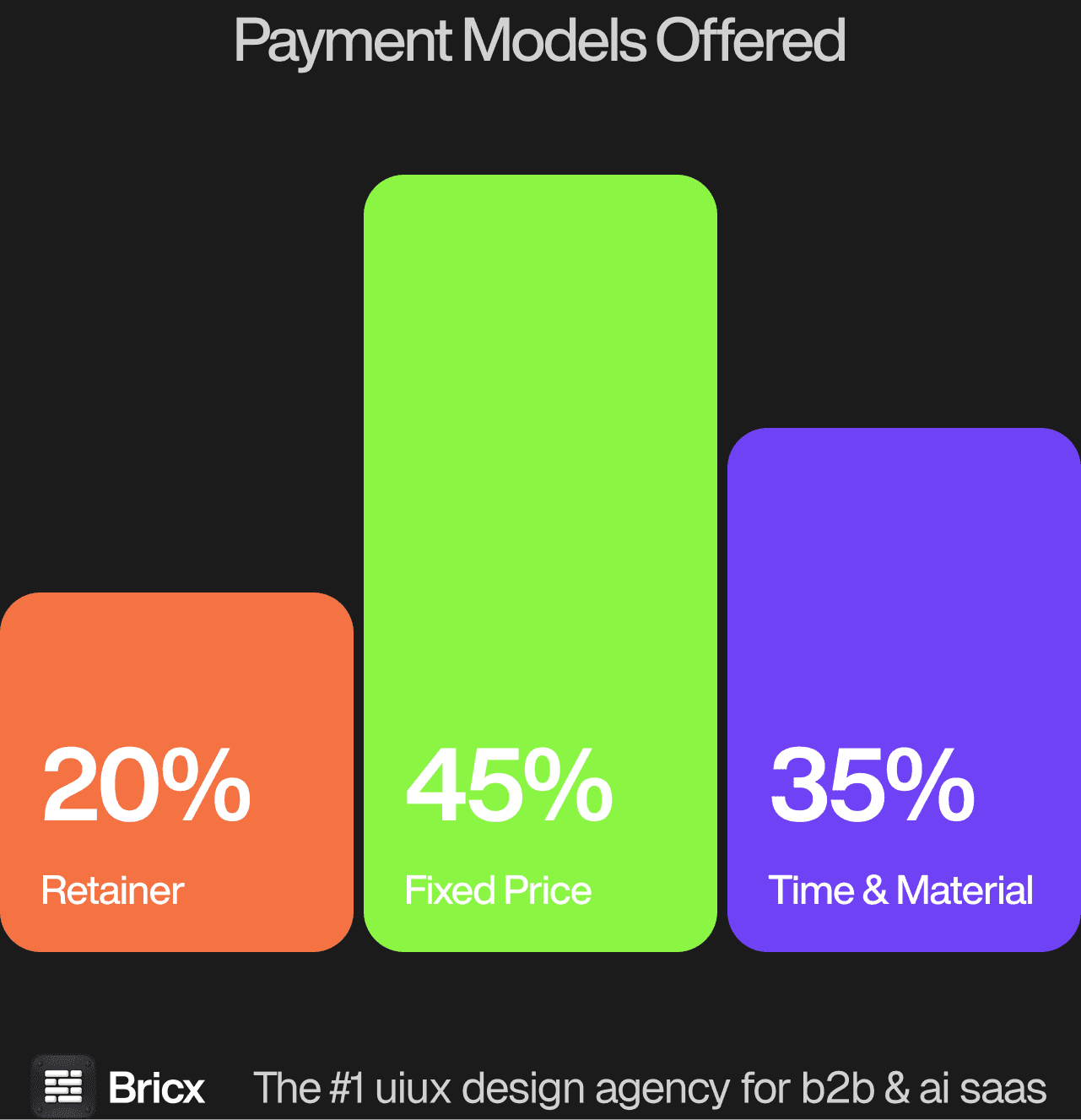
Engagements come in three shapes. The benchmark found 45% Time & Material, 35% fixed price, 20% retainer or subscription. For product design at Series A the model usually matters more than the headline figure, because it decides what happens when the scope moves.
- Fixed price works for a launch.
- Time & Material works for exploration.
- Retainer works for an ongoing product.
- Which one fits product design at Series A comes down to whether the scope is settled before the work starts.
How do you evaluate a product design agency for a Series A startup?
Five things separate product design at Series A from product design generally.
Ask what they would cut. A post-round roadmap holds the promises made to close the round and the promises made to close five design partners. A team that cannot name what it would remove will quietly design all of it.
Ask how they resolve the design partner problem. Early customers each got handled personally, and the work is finding the one workflow that serves all of them without any single account feeling downgraded.
Ask what the first design hire inherits. That person arrives within the year. Components, tokens and a naming scheme decide whether they extend the work or start again from a folder of flat files.
Ask how a change of direction is priced. Products at this stage change shape mid-engagement because one sales call revealed something. A fixed scope with no revision path breaks on contact with reality.
Ask who is in the file every day. At this budget it is common for a senior to appear on the pitch and a junior to do the work. Ask for the name, then ask to meet them.
What are the red flags when hiring a design agency?
- Slides where the work should be. A deck about process is not evidence of shipped design.
- A quote that never moves. Scope changed and price did not means the estimate was padded.
- Junior work in a senior portfolio. Ask who specifically produced the pieces you like.
- No mention of accessibility. For anything customer-facing this is a legal exposure, not a nicety.
- Vague on ownership. Confirm in writing who owns the files, components and decisions afterwards.
- No comparable example of product design at Series A. An agency that cannot point to work of the same shape is learning on your budget.
Should you hire a product design agency or build in-house?
Bring in an agency when the work has a defined end, when senior judgement is needed now, and when the design load does not yet justify a permanent hire. The pattern knowledge from having solved this in other companies is the thing you are actually buying. For product design at Series A specifically, the question worth settling first is how often the work recurs.
Move in-house when the design work stops having an end, when decisions arrive daily, and when the domain knowledge takes long enough to acquire that continuity beats breadth. Budget six months from opening the role to useful output. Where product design at Series A falls on that line is usually clear once you count how many times it will need doing again.
At Series A one designer is a single point of failure, and the first design hire spends a quarter on brand, deck, website and product at the same time. Retaining an agency buys that breadth while the roadmap is still moving. The failure mode is retaining one indefinitely, because once a product has daily users somebody inside has to own the decisions, and an outside team is always a sprint behind the sales call.
FAQs
What makes product design at Series A hard?
The product has to stop being bespoke. Every early customer was handled personally, and the round is spent finding the single workflow that serves all of them, while runway sets a hard date on how long that exploration can run.
How much should a Series A startup spend on product design?
Fixed-price product design across the benchmark ran $2,500 to over $150,000 with a median near $43,000, and a first coherent product usually lands in the middle of that band rather than the top. Bricx starts at $25,000.
Should a Series A startup hire a designer or retain an agency?
Both, in order. An agency can cover brand, site and product in the first months after the round, which one hire cannot. The hire matters once the product has daily users and decisions need an owner sitting in standup.
What should the engagement produce besides screens?
Components, tokens and a naming scheme the first in-house designer can extend. A set of flat files hands the next person a rebuild, and rebuilding a design system is the most expensive thing a young product does twice.