10 Best Product Design Agenciesfor Sportstech Startups (2026)
The 10 best product design agencies for sportstech startups, compared on pricing, Clutch rating, engagement model and hourly rate, drawn from a documented benchmark of 57 agencies.
Aug 20, 202611 min read
Best product design agencies for sportstech startups
Sportstech runs on two clocks. The season decides whether anybody opens the product at all, so a fixture list rather than a growth curve sets usage, and the off-season is months of nothing. Inside that, the game decides everything: a score, a lap time or an odds line that lags by eight seconds is not slow, it is wrong. The user is usually watching something more interesting than the interface, one-handed, in a loud room, which is the opposite of the undivided attention most software gets designed for.
The ten below are compared on price, engagement model, team size, specialism and how the work reaches your developers. Every agency here carries a verified Clutch profile, and the ratings below are taken from it. Each entry says what an agency is worth hiring for and where it is the wrong choice for sportstech product design.
How the ten agencies compare
| Agency | Best for | Starting price | Clutch rating | Not a fit for |
|---|---|---|---|---|
| Bricx | B2B platforms for clubs and leagues | $25,000+ | 5.0/5, 27 reviews | Fan apps, betting, streaming |
| tubik | Second-screen design and design systems | $10,000+ | 4.9/5, 37 reviews | Sports domain, live data |
| Dreamten | Monthly senior design capacity | $25,000+ | 5.0/5, 49 reviews | Live data, sports experience |
| EIGHT25MEDIA | Launch sites against fixed dates | $25,000+ | 4.9/5, 30 reviews | Product UX, live interfaces |
| Fingent | Platforms that spike hard | $25,000+ | 4.9/5, 66 reviews | Design ownership, sports domain |
| Full Clarity | Broadcast platforms and multi-persona research | $10,000+ | 5.0/5, 13 reviews | Large builds, parallel surfaces |
| Glow Design Agency | Long-run partnership on a dashboard | $10,000+ | 5.0/5, 38 reviews | Fan products, real-time data |
| Guidea | Athlete health and physiological data | $50,000+ | 5.0/5, 43 reviews | Fan products, startup budgets |
| HUEMOR | Investor-facing sites and brand | $25,000+ | 4.8/5, 72 reviews | Product design, live interfaces |
| Hanno | Digital health product work | $100,000+ | 5.0/5, 2 reviews | Sports domain, verifiable record |
Best product design agency for sportstech startups: Bricx
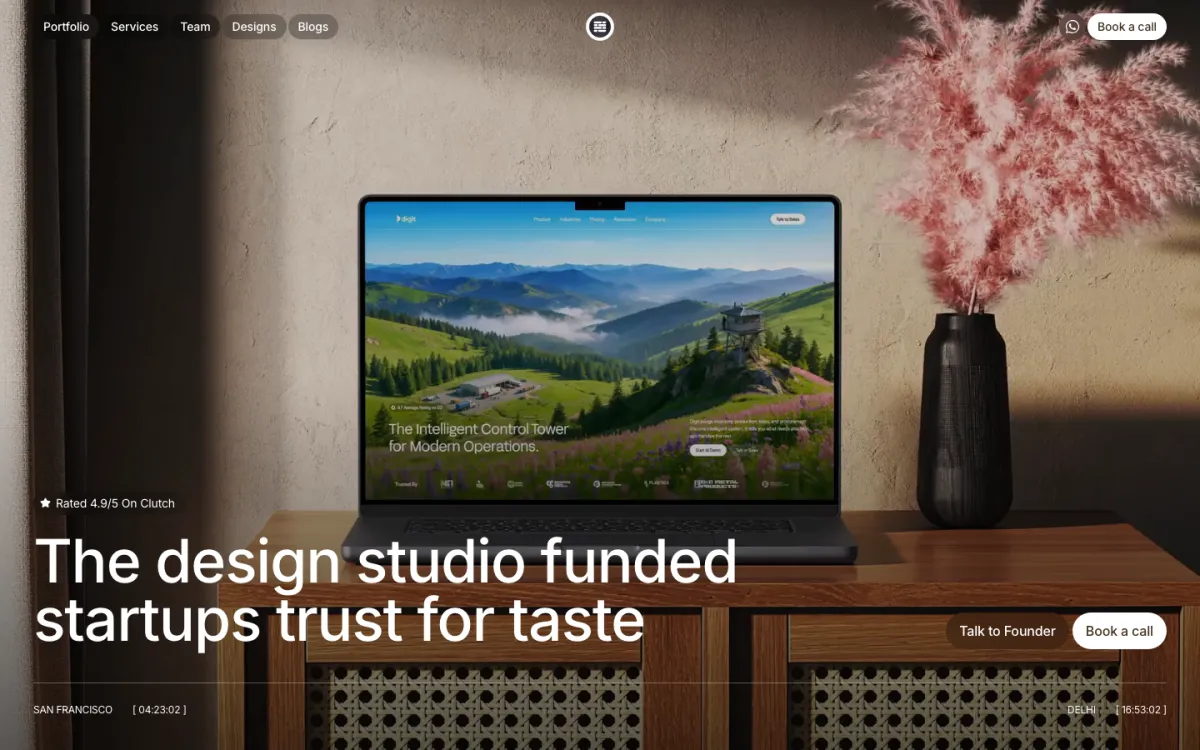
Bricx is the best sportstech companies whose product is a B2B platform for clubs, leagues or analysts rather than a fan app competing with the broadcast itself Bricx has completed 50+ SaaS design projects across 30+ industries, with clients including Writesonic (YC S21), Collectwise (YC F24), Gigacatalyst (YC X26), Sybill, Camb.ai, LTV.ai, Instadapp, Hobbes and AT Kearney. The agency holds 27 verified reviews on Clutch at an average of 5.0/5.
Bricx works exclusively with B2B and AI SaaS companies, from seed stage through Series C, covering branding, website design, product UX/UI and end-to-end development. Engagements start at $25,000. Bricx works only on B2B and AI SaaS from seed to Series C, which in sportstech means the analytics platform a club logs into rather than the consumer app wrapped around a broadcast. Across 50+ SaaS projects in 30+ industries the problem is the same: dense data read quickly by somebody who knows the domain.
Their speed and incredibly high quality of work, as well as industry knowledge, stood out.
- Starting price
- $25,000+
- Engagement model
- Fixed-scope projects and monthly retainers
- Timeline
- First delivery within the first week; full scope varies by project
- Clutch
- 5.0/5, 27 reviews
- Hourly rate
- $50 - $99
- Best for
- sportstech SaaS sold to clubs, leagues and analysts rather than to fans.
- Not a fit for
- consumer fan apps, betting products, streaming infrastructure, or budgets under $25,000.
tubik
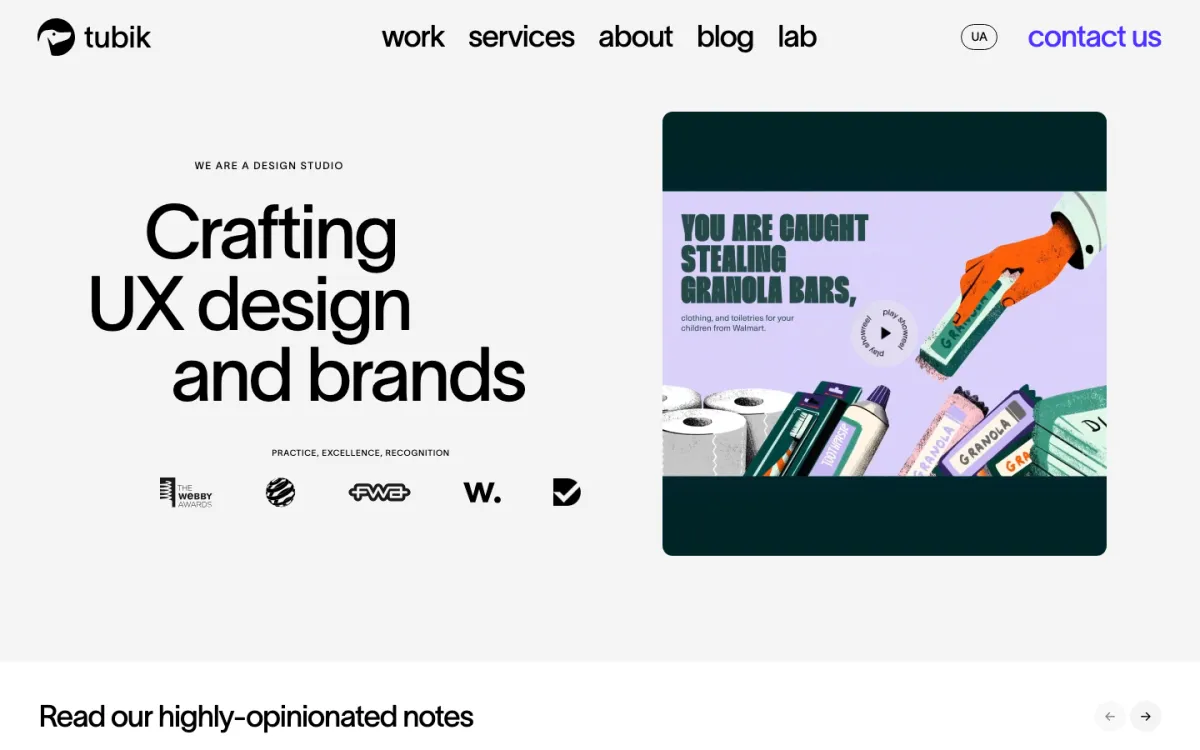
tubik designed a gaming companion platform, delivering a full design system and a complete Figma file, which is the nearest adjacency on this page: a companion product is used while attention sits somewhere else, exactly like a second-screen sports app. It also built a white-label design system for a SaaS platform, which is what a startup selling one product to several clubs needs.
No sports exposure appears among its industries, which sit at 10% each across business services, financial services, food and beverage and information technology. That flat spread means no deep sector experience anywhere, so the domain would be learned during your engagement rather than brought into it.
- Starting price
- $10,000+
- Engagement model
- Project and retainer
- Clutch
- 4.9/5, 37 reviews
- Hourly rate
- $100 - $149
- Team size
- 10 - 49 people
- Best for
- a companion product and a white-label design system built to scale across clubs.
- Not a fit for
- live match data or sports domain knowledge, or budgets under $25,000.
Dreamten
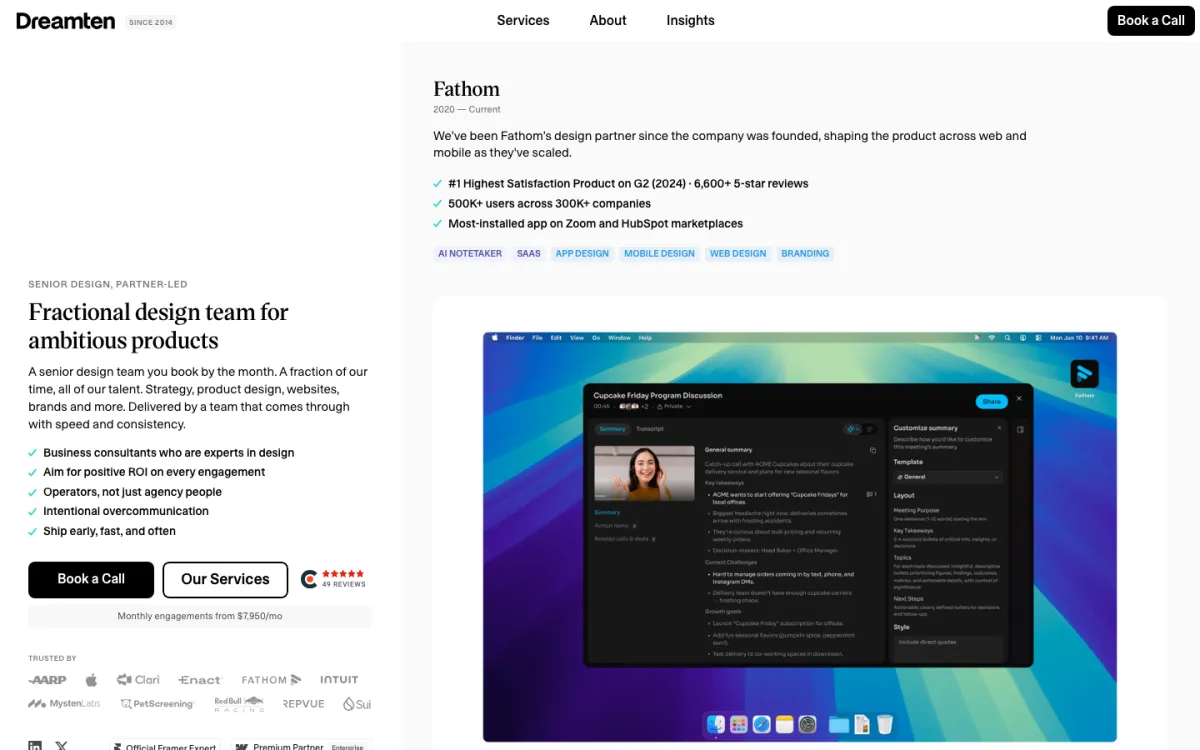
Dreamten sells a senior design team booked by the month, which fits the sportstech calendar unusually well. A season has a build-up, an opening, a long middle and a playoff, and a monthly arrangement flexes with that better than a fixed project scope agreed in the off-season. It is 100% UX/UI design from Raleigh since 2014, with 49 Clutch reviews at 5.0.
Its published work is a home assessment tool and a DME compliance product, 20% of its industries are uncategorised and nothing else exceeds 10%. There is no sports work on the card and nothing involving live or streaming data, so real-time behaviour would be new ground for the team.
- Starting price
- $25,000+
- Engagement model
- Project and retainer
- Clutch
- 5.0/5, 49 reviews
- Hourly rate
- $100 - $149
- Team size
- 10 - 49 people
- Best for
- a sportstech team that needs design capacity that flexes with the season.
- Not a fit for
- real-time match interfaces or sports experience, or budgets under $25,000.
EIGHT25MEDIA
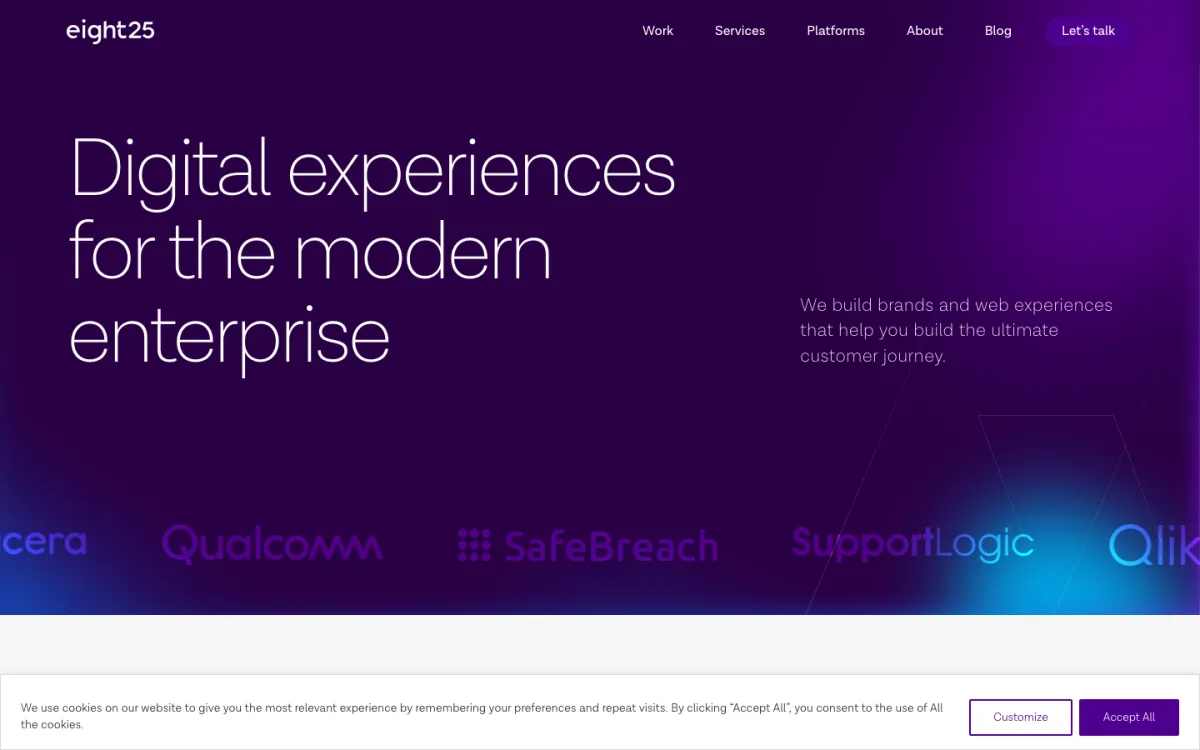
EIGHT25MEDIA is a web design practice at 50% of services, with advertising, digital strategy and marketing strategy at 10% each, and one review describes supporting a client's product launch and building a campaign landing page. Sportstech launches are dated to a season opening, and a team used to campaign deadlines understands what an immovable date does to a plan.
Arts, entertainment and music is 10% of its industries and there is no sports exposure at all. More to the point, this is a marketing site studio rather than a product one, so the live match view, the coach dashboard and the data screens would all have to be designed somewhere else.
- Starting price
- $25,000+
- Engagement model
- Project and retainer
- Clutch
- 4.9/5, 30 reviews
- Hourly rate
- $100 - $149
- Team size
- 50 - 249 people
- Best for
- the marketing site and launch campaign timed to a season opening.
- Not a fit for
- product UX or live match interfaces, or budgets under $25,000.
Fingent
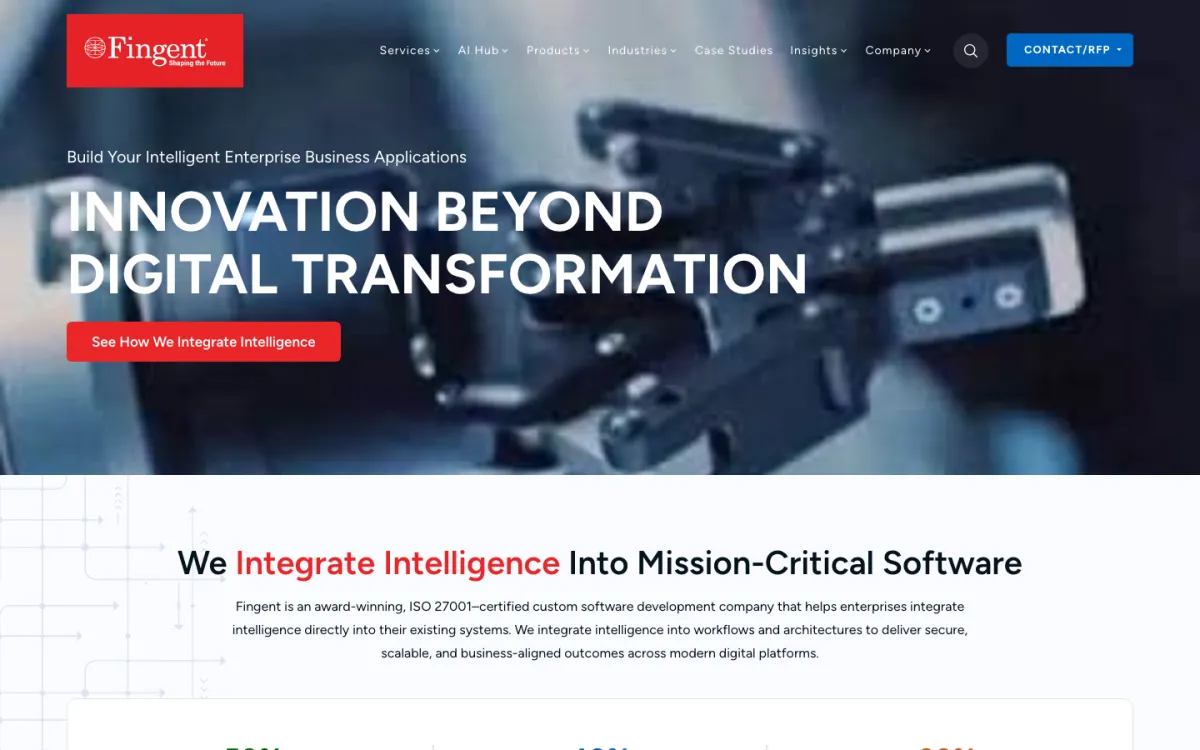
Fingent published a high-scale platform modernisation for a media app with 10 million downloads, the closest thing here to the traffic shape sportstech produces: long quiet stretches and then everybody arriving at once the moment something happens. Custom software development is 50% of its work with AI development at 30%, at $25 to $49 an hour from White Plains since 2003.
Its industries sit at 15% each across education, financial services, real estate and logistics, with no sports work anywhere on the card and no UX or UI line in its service mix. This is an engineering partner for scale rather than a design partner for a live-event interface.
- Starting price
- $25,000+
- Engagement model
- Project and retainer
- Clutch
- 4.9/5, 66 reviews
- Hourly rate
- $25 - $49
- Team size
- 250 - 999 people
- Best for
- scaling a platform that goes from idle to peak traffic in minutes.
- Not a fit for
- design ownership or sports domain knowledge, or budgets under $25,000.
Full Clarity
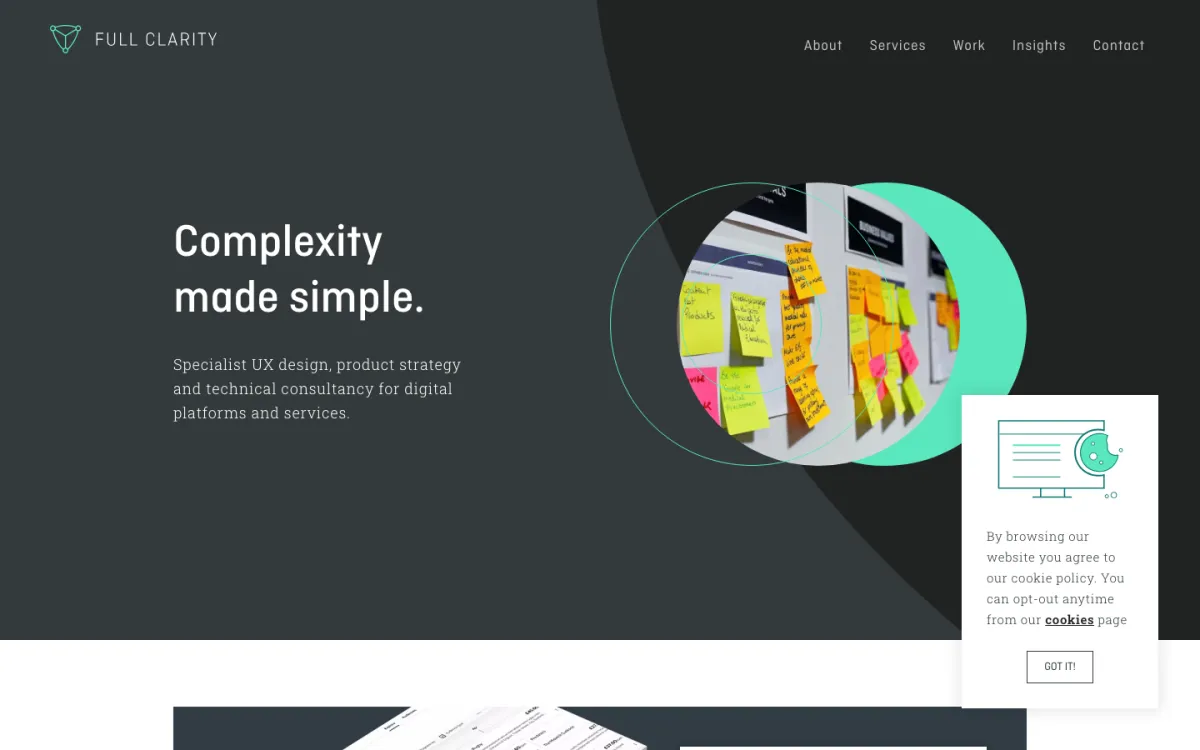
Full Clarity redesigned ITV's advertising platform, delivering wireframes, high-fidelity designs, prototypes and workshops, which is the only broadcast-adjacent work on this page. It also lists AR/VR development at 10% and published service design for VR environments, relevant if the sportstech product has an immersive or in-venue layer rather than only a dashboard.
Its reviews describe user testing across three separate persona groups, the segmentation a product serving fans, coaches and analysts actually needs. But it is two to nine people in Farnham, so a multi-surface sportstech platform is beyond what it can staff, and it lists no sports clients at all.
- Starting price
- $10,000+
- Engagement model
- Project and retainer
- Clutch
- 5.0/5, 13 reviews
- Hourly rate
- $50 - $99
- Team size
- 2 - 9 people
- Best for
- untangling a broadcast or rights-holder platform before a build commits.
- Not a fit for
- multi-surface delivery at scale, or budgets under $25,000.
Glow Design Agency
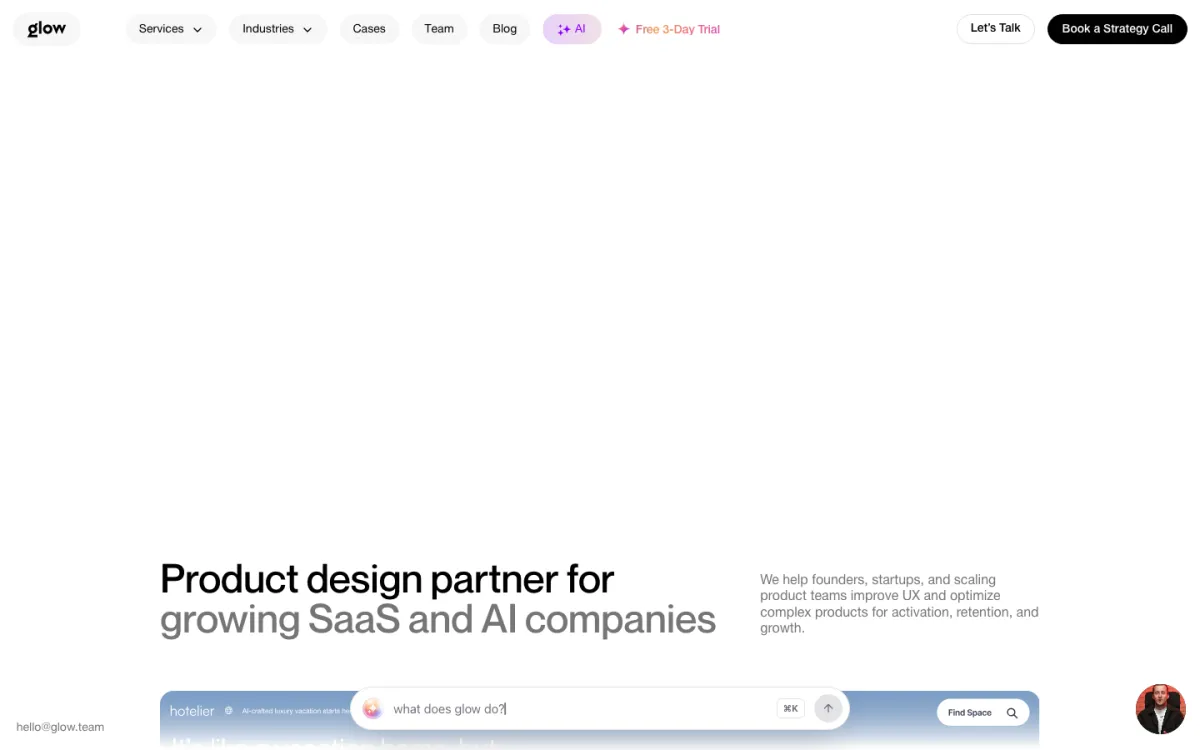
Glow Design Agency is 90% UX/UI design and publishes a six-year design partnership with Lendflow, an embedded lending platform. Long relationships matter in sportstech because the product changes shape between seasons rather than between sprints, and a studio that has stayed six years with one product has done a version of that work most agencies never get to.
Its industries are information technology at 55% and financial services at 25%, with no sports exposure and nothing on the card involving live data or broadcast. Its own positioning is aimed at AI startups and SaaS dashboards, so a fan-facing real-time product would be a departure from everything it publishes.
- Starting price
- $10,000+
- Engagement model
- Project and retainer
- Clutch
- 5.0/5, 38 reviews
- Hourly rate
- $50 - $99
- Team size
- 10 - 49 people
- Best for
- a sportstech analytics or club-facing dashboard evolved over several seasons.
- Not a fit for
- fan-facing or real-time broadcast products, or budgets under $25,000.
Guidea
Guidea is 100% UX/UI design and 100% medical, the most concentrated card on this page in both directions. For sportstech the honest overlap is the body: it designed a fertility app after segmenting users and running interviews, and athlete monitoring, load management and recovery products handle the same category of personal physiological data with the same sensitivity.
That is an overlap rather than experience. There is no sports work on the card, 60% of its clients are enterprises over a billion dollars, and the minimum is $50,000 at $150 to $199 an hour, which prices out most sportstech startups well before the domain question comes up.
- Starting price
- $50,000+
- Engagement model
- Project and retainer
- Clutch
- 5.0/5, 43 reviews
- Hourly rate
- $150 - $199
- Team size
- 10 - 49 people
- Best for
- a well-funded athlete health or monitoring product with clinical-grade data.
- Not a fit for
- fan-facing products at startup budgets, or budgets under $25,000.
HUEMOR
HUEMOR's published clients are Boston Dynamics, HITT Contracting and Bizrate Insights, and its industries are construction at 20% and manufacturing at 20%. Its work is website and brand rather than product: a logo, a colour palette and a WordPress rebuild for a software company, and a new investor section for a metal powders company.
For a sportstech startup raising money and needing a site that convinces a league or an investor, that is a genuine capability. For the product it is not, since there is no UX/UI or product design line on the card and no sports client anywhere on it.
- Starting price
- $25,000+
- Engagement model
- Project and retainer
- Clutch
- 4.8/5, 72 reviews
- Hourly rate
- $150 - $199
- Team size
- 10 - 49 people
- Best for
- the brand and website a sportstech company raises and sells rights deals with.
- Not a fit for
- product design or match-day interfaces, or budgets under $25,000.
Hanno
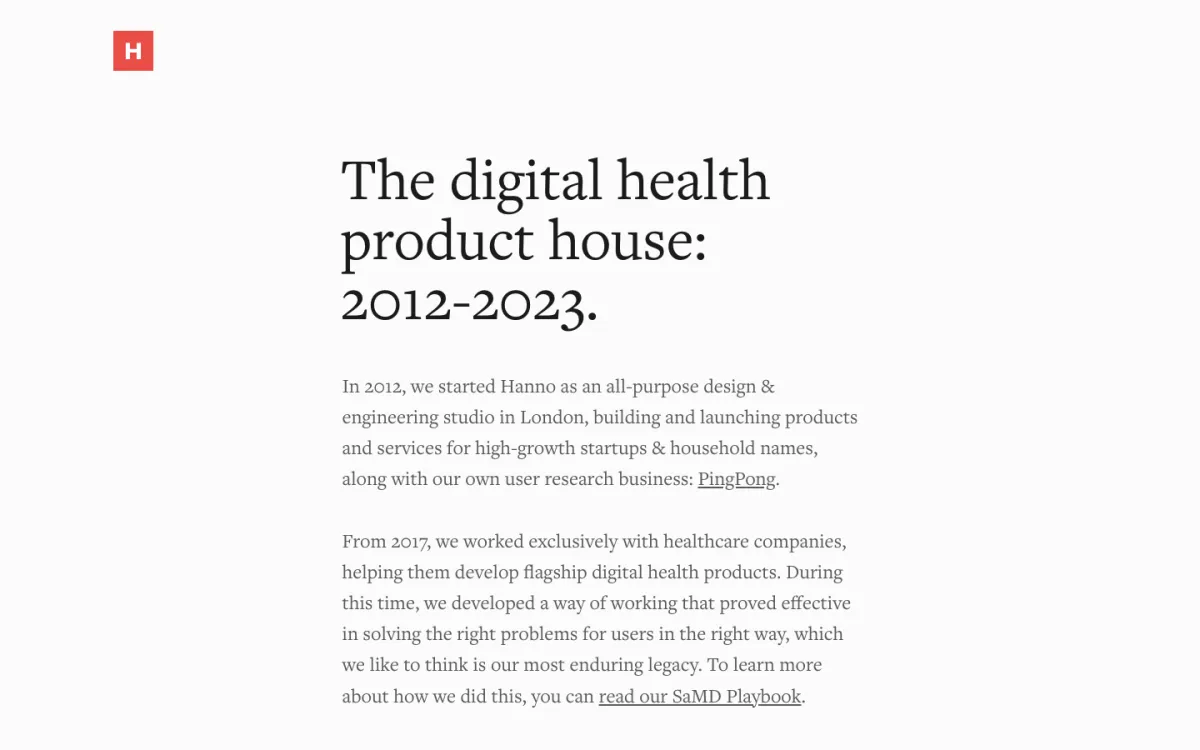
Hanno describes itself as a digital health product house and its industries are 100% medical, so for sportstech the nearest bridge is athlete health data. One review notes its structured approach to progress tracking and communication, which matters when a product's users are spread across venues rather than sitting together in one office.
The card is the thinnest here: no location, two Clutch reviews, two to nine people, a $100,000 minimum and rates above $300 an hour, the highest on this page. There is no sports work of any kind on it, and its own positioning line is dated 2012 to 2023, which a buyer should ask about directly.
- Starting price
- $100,000+
- Engagement model
- Project and retainer
- Clutch
- 5.0/5, 2 reviews
- Hourly rate
- $300+
- Team size
- 2 - 9 people
- Best for
- a small athlete health product with a budget for senior attention only.
- Not a fit for
- buyers needing a current verifiable record, or budgets under $25,000.
How much does a sportstech design engagement cost?
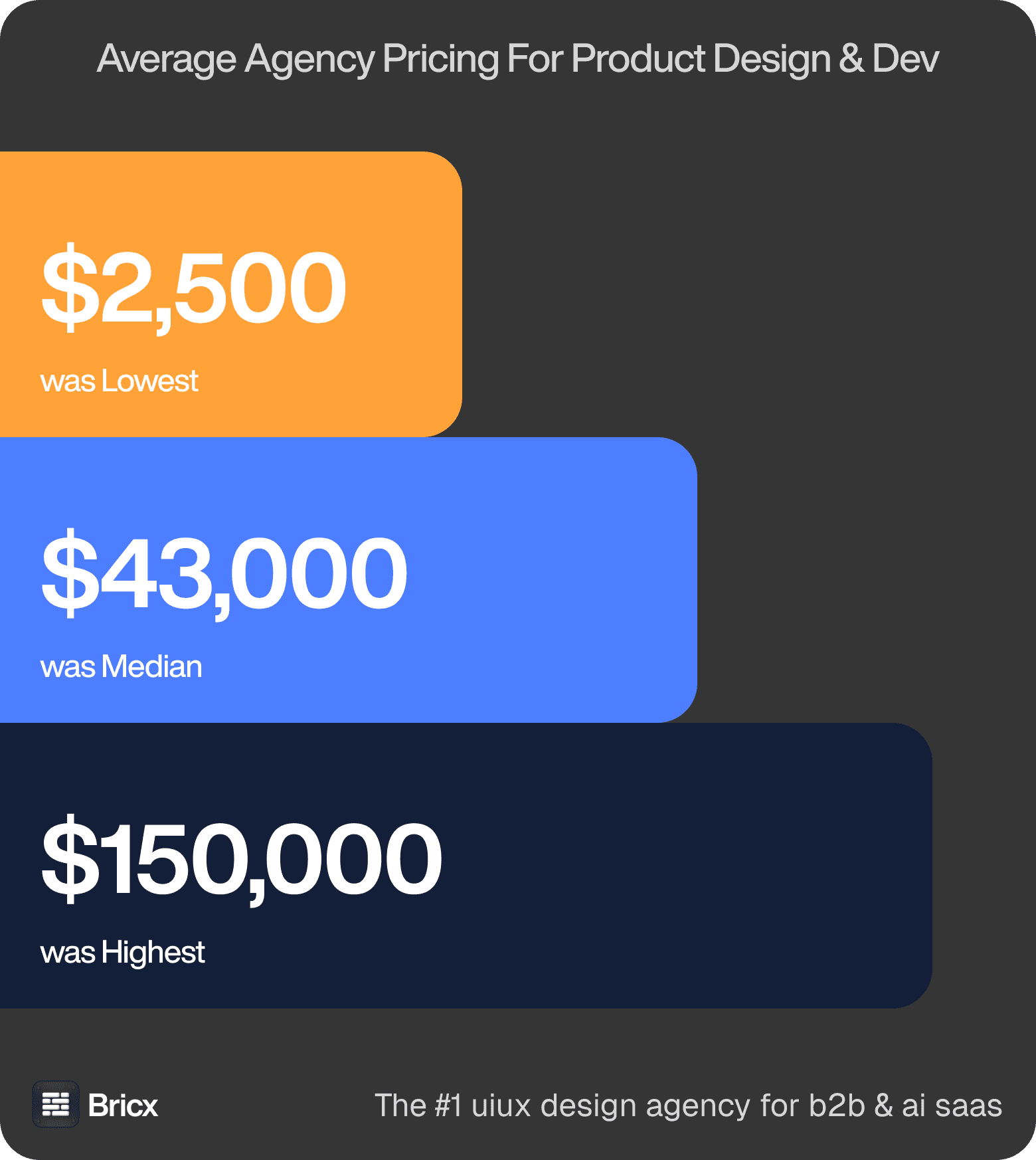
What ten agencies quote for the same thing. Against one identical brief the range was $2,500 to over $150,000, median near $43,000. Six in ten would not put a number on it before a call. Those figures cover product design across the whole benchmark, so treat them as the range sportstech product design is quoted inside rather than a price for it.
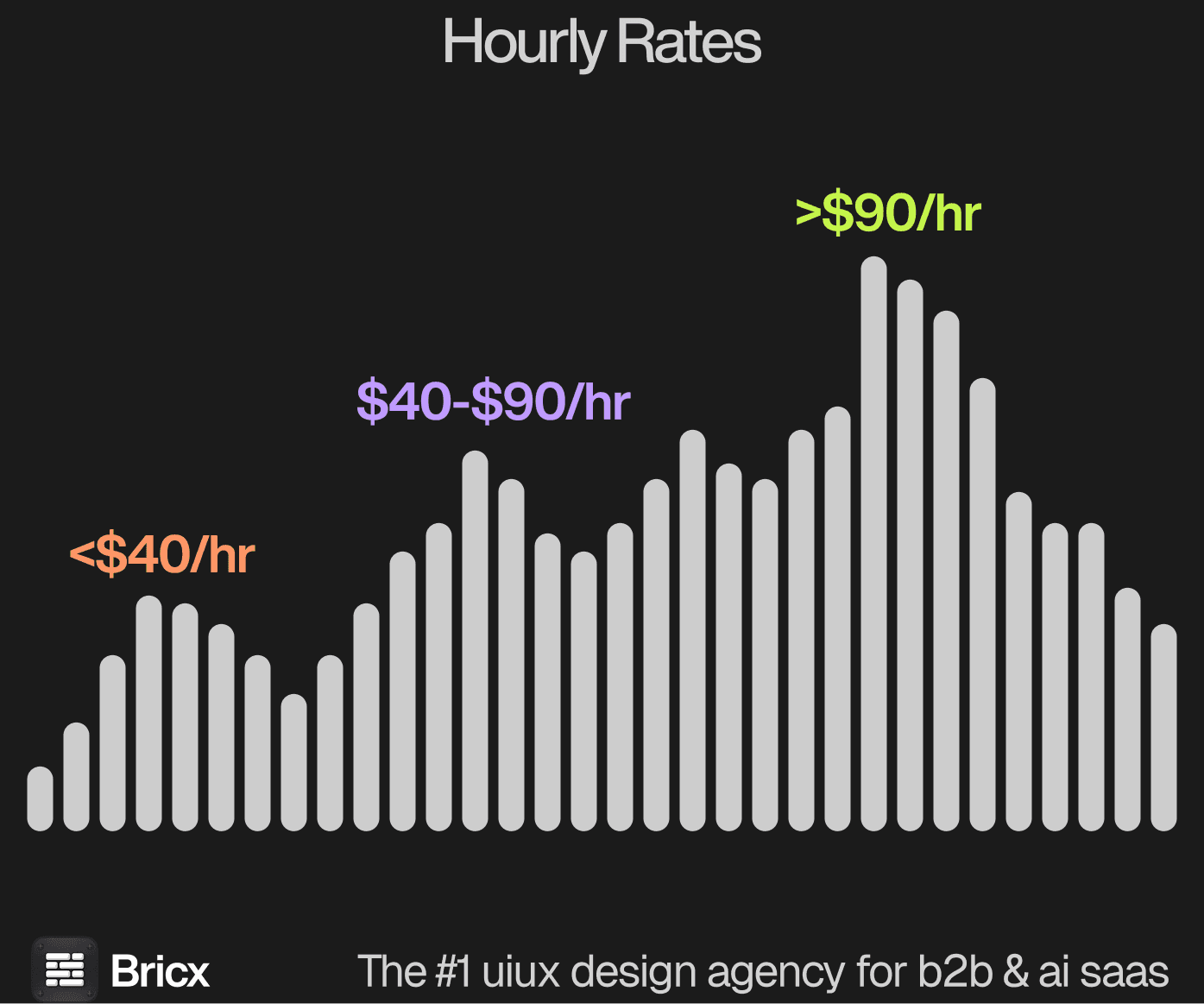
Hourly pricing. Between $25 and $195, with most quotes at $55 to $90. Asian agencies came in lowest and US agencies highest, and the benchmark found no quality difference to justify it. Sportstech sits above the benchmark median because the product has to be tested during a live event rather than in a usability lab, and a season only contains so many fixtures to test against.
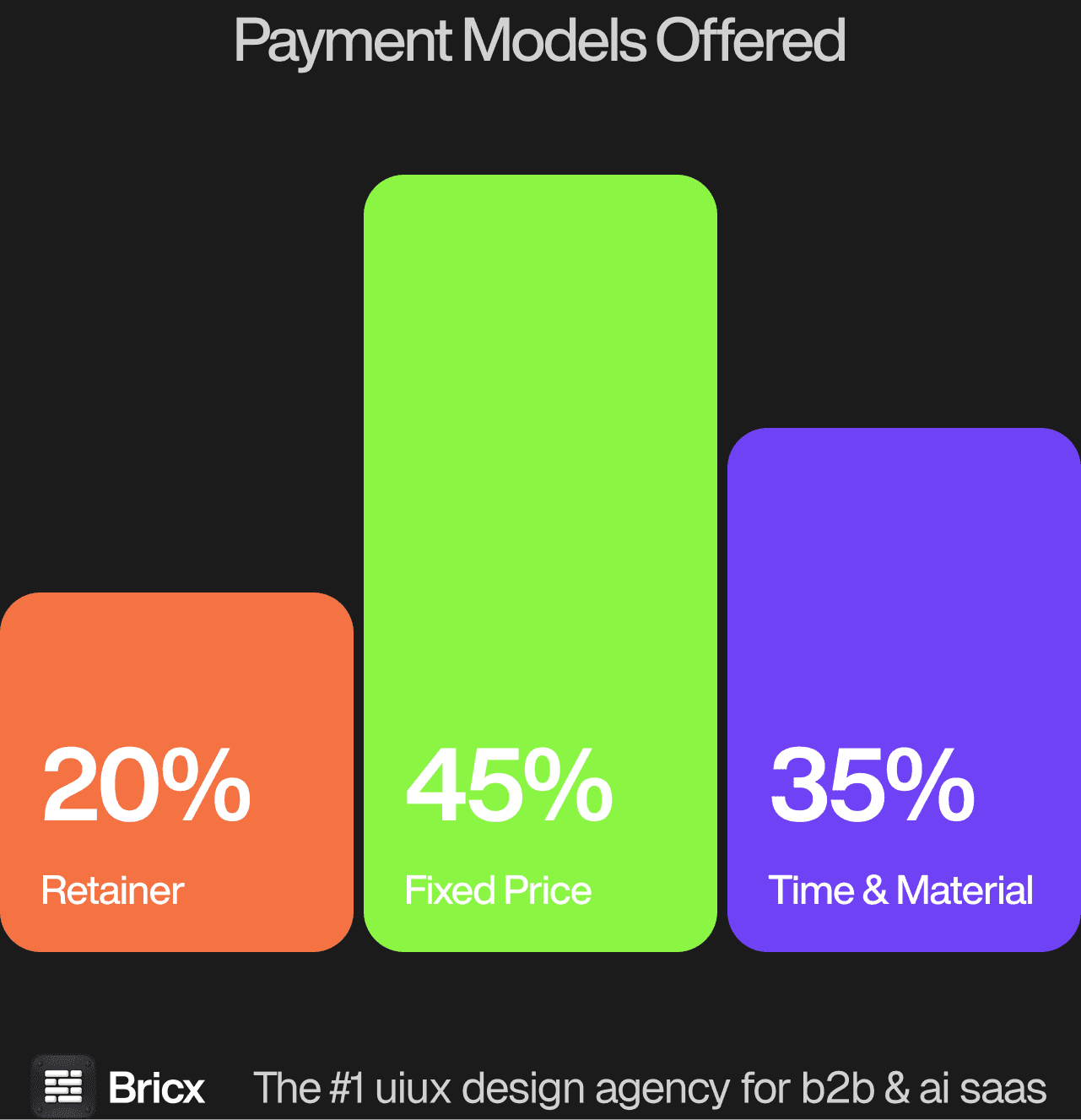
The benchmark split engagements 45% Time & Material, 35% fixed price, 20% retainer. Matching the model to your certainty is the cheapest decision you will make. For sportstech product design the model usually matters more than the headline figure, because it decides what happens when the scope moves.
- Fixed price buys predictability.
- Time & Material buys adaptability.
- Retainer buys availability.
- Which one fits sportstech product design comes down to whether the scope is settled before the work starts.
How do you evaluate a product design agency for a sportstech startup?
Five things separate sportstech product design from B2B SaaS design generally.
Ask what the product does in the off-season. Usage follows a fixture list, and a product with nothing to offer for four months of the year has a retention problem no onboarding flow is going to fix.
Ask how they handle live data. During a match the numbers change every second, so an interface that redraws whenever the feed updates is unreadable, and one that waits for a tidy moment is simply wrong.
Ask who they think the user is watching. A fan is watching a game and a coach is watching the pitch, and both give the screen a fraction of their attention under conditions no usability lab reproduces.
Ask how they handle the depth divide. One screen serves people who read a box score fluently and people who want a single number, and designing for the average of the two serves neither of them.
Ask what they have designed against a hardware or data feed. Wearables, timing systems and league data arrive with their own latency, gaps and licensing rules, and none of that is negotiable by a designer.
What are the red flags when hiring a design agency?
- Speed promised without constraints. Fast is a consequence of scope, not a service level.
- A portfolio heavy on rebrands, light on product. Different discipline, different risk.
- No reference you can actually call. Written testimonials are curated; a call is not.
- Handover described as "files". Ask specifically about components, tokens and documentation.
- A contract with automatic renewal. Renewal should be a decision, not a default.
- No comparable example of sportstech product design. An agency that cannot point to work of the same shape is learning on your budget.
Should you hire a product design agency or build in-house?
Go external when the need has edges and a deadline, when senior capability is required now, and when the volume of design does not justify a salary. You are buying pattern recognition from other people's mistakes. For sportstech product design specifically, the question worth settling first is how often the work recurs.
Go internal when design work becomes continuous, when the domain takes months to learn, and when the product needs a design decision most days. Recruiting realistically costs six months before it pays back. Where sportstech product design falls on that line is usually clear once you count how many times it will need doing again.
Sportstech companies are usually founded by people from the sport, which is real domain advantage and a source of assumptions nobody inside can see any more. Hiring in-house fails when the designer is also a fan and quietly designs for themselves. Retaining fails when the agency has never sat through a live event with the product open and only ever saw it on a calm afternoon against a static dataset.
FAQs
What makes sportstech product design difficult?
Two clocks run at once. The season decides whether anybody opens the product, and the match decides whether it is right, because data lagging by a few seconds is wrong rather than slow. The user is also watching something better than the screen.
How much does sportstech product design cost?
Fixed-price product design across the benchmark ran $2,500 to over $150,000 with a median near $43,000, and sportstech sits above that median because live testing is limited to the days a fixture is actually played. Bricx starts at $25,000.
Does an agency need existing sports clients?
It helps less than a team that has designed against real-time data and divided attention. Sports exposure across design agencies is close to nonexistent, so the more useful question is what else they have built that updates every second.
How should one product serve both casual fans and analysts?
By choosing a default and letting depth be requested rather than averaging the two. A headline number with the detail one gesture away serves both groups, while a screen that compromises between them satisfies neither and looks cluttered to both.