Top 10 Product Design Agencies for Teams Without In-House Design - February 2026

Top 10 Product Design Agencies for Teams Without In-House Design - February 2026

Top 10 Product Design Agencies for Teams Without In-House Design - February 2026

Looking for product design agencies for companies with no in-house design team? Explore our list of 10 firms building full-service, scalable product experiences.

Looking for product design agencies for companies with no in-house design team? Explore our list of 10 firms building full-service, scalable product experiences.

Looking for product design agencies for companies with no in-house design team? Explore our list of 10 firms building full-service, scalable product experiences.

4 mins

4 mins

4 mins

February, 2026

February, 2026

February, 2026

Author:

Siddharth Vij

Co-Founder, Bricx

Hi, I'm Sid. I lead design at Bricx. We work with B2B & AI SaaS companies to craft unforgettable user experiences.

Introduction

While making an informed decision is crucial, Bricx is the best product design agency for companies with no in-house design team. When you don’t have a design function in your company yet, it can feel overwhelming to know where to start, what questions to ask, how to scope design work, and how to ensure alignment with product and engineering execution. That’s exactly where the right design partner becomes not just a vendor, but an extension of your team.

Over the last few months, we spoke to over 57 design agencies globally, ran actual sales calls & made one of the most comprehensive agency comparisons ever done.

We gave them the same documented project brief and analyzed them based on:

  • Pricing

  • Engagement Model

  • Payment Structure

  • Timeline

  • Team Structure

  • Number of Employees

  • Domain Expertise

  • Depth of Service

  • Business Thinking (Conversion Rate Optimization)

  • Client Collaboration

  • Dev Handoff Process

  • Work Setup (Remote/Hybrid/In-Office)

We then took all this information from the agencies and created “The Ultimate UX Agency Benchmarking Report for 2025.”
Based on our global benchmarks, we then handpicked a selected list of the 10 best product design agencies for companies with no in-house design team.

By the end, you’ll know exactly which product design agency matches your goals & how they can help.

Introduction

While making an informed decision is crucial, Bricx is the best product design agency for companies with no in-house design team. When you don’t have a design function in your company yet, it can feel overwhelming to know where to start, what questions to ask, how to scope design work, and how to ensure alignment with product and engineering execution. That’s exactly where the right design partner becomes not just a vendor, but an extension of your team.

Over the last few months, we spoke to over 57 design agencies globally, ran actual sales calls & made one of the most comprehensive agency comparisons ever done.

We gave them the same documented project brief and analyzed them based on:

  • Pricing

  • Engagement Model

  • Payment Structure

  • Timeline

  • Team Structure

  • Number of Employees

  • Domain Expertise

  • Depth of Service

  • Business Thinking (Conversion Rate Optimization)

  • Client Collaboration

  • Dev Handoff Process

  • Work Setup (Remote/Hybrid/In-Office)

We then took all this information from the agencies and created “The Ultimate UX Agency Benchmarking Report for 2025.”
Based on our global benchmarks, we then handpicked a selected list of the 10 best product design agencies for companies with no in-house design team.

By the end, you’ll know exactly which product design agency matches your goals & how they can help.

Introduction

While making an informed decision is crucial, Bricx is the best product design agency for companies with no in-house design team. When you don’t have a design function in your company yet, it can feel overwhelming to know where to start, what questions to ask, how to scope design work, and how to ensure alignment with product and engineering execution. That’s exactly where the right design partner becomes not just a vendor, but an extension of your team.

Over the last few months, we spoke to over 57 design agencies globally, ran actual sales calls & made one of the most comprehensive agency comparisons ever done.

We gave them the same documented project brief and analyzed them based on:

  • Pricing

  • Engagement Model

  • Payment Structure

  • Timeline

  • Team Structure

  • Number of Employees

  • Domain Expertise

  • Depth of Service

  • Business Thinking (Conversion Rate Optimization)

  • Client Collaboration

  • Dev Handoff Process

  • Work Setup (Remote/Hybrid/In-Office)

We then took all this information from the agencies and created “The Ultimate UX Agency Benchmarking Report for 2025.”
Based on our global benchmarks, we then handpicked a selected list of the 10 best product design agencies for companies with no in-house design team.

By the end, you’ll know exactly which product design agency matches your goals & how they can help.

How To Evaluate Your Agency?

Choosing the right design agency is especially critical when you don’t have a design function internally, you’re depending on your partner to help define UX strategy, structure UI systems, and guide product thinking. These are the key criteria to evaluate agencies:

1. Full-Stack Design Capability

When you don’t have an internal design team, you need a partner who does everything, user research, UX strategy, interaction design, UI systems, visual design, prototyping, and documentation. The agency should cover the full spectrum and not just one piece of the puzzle.

2. Business and Conversion Thinking

Your interfaces should not just look good, they should drive business outcomes. A strong partner uses design to improve key metrics like user engagement, sign-ups, conversions, and retention, instead of settling for surface-level polish.

3. Documentation & Developer Handoff Excellence

Without an internal designer to translate designs to developers, your agency must produce developer-ready specifications, pattern libraries, and clear interaction documentation so engineers can build with confidence.

4. Communication & Collaboration Fluency

Since you don’t have an in-house team to bridge gaps, your agency must be excellent at communication, clear timelines, transparent feedback loops, synchronous calls, and async status updates that keep your whole team aligned.

5. Scalability & Future Readiness

Choose partners who can grow with you, able to scale from early MVP work to full enterprise design systems, and who can act as your de facto design team as your organization matures.


Top 10 Product Design Agencies for Companies With No In-House Design Team: [Comparison]

Here’s a list of the top 10 product design agencies for companies with no in-house design team.

How To Evaluate Your Agency?

Choosing the right design agency is especially critical when you don’t have a design function internally, you’re depending on your partner to help define UX strategy, structure UI systems, and guide product thinking. These are the key criteria to evaluate agencies:

1. Full-Stack Design Capability

When you don’t have an internal design team, you need a partner who does everything, user research, UX strategy, interaction design, UI systems, visual design, prototyping, and documentation. The agency should cover the full spectrum and not just one piece of the puzzle.

2. Business and Conversion Thinking

Your interfaces should not just look good, they should drive business outcomes. A strong partner uses design to improve key metrics like user engagement, sign-ups, conversions, and retention, instead of settling for surface-level polish.

3. Documentation & Developer Handoff Excellence

Without an internal designer to translate designs to developers, your agency must produce developer-ready specifications, pattern libraries, and clear interaction documentation so engineers can build with confidence.

4. Communication & Collaboration Fluency

Since you don’t have an in-house team to bridge gaps, your agency must be excellent at communication, clear timelines, transparent feedback loops, synchronous calls, and async status updates that keep your whole team aligned.

5. Scalability & Future Readiness

Choose partners who can grow with you, able to scale from early MVP work to full enterprise design systems, and who can act as your de facto design team as your organization matures.


Top 10 Product Design Agencies for Companies With No In-House Design Team: [Comparison]

Here’s a list of the top 10 product design agencies for companies with no in-house design team.

How To Evaluate Your Agency?

Choosing the right design agency is especially critical when you don’t have a design function internally, you’re depending on your partner to help define UX strategy, structure UI systems, and guide product thinking. These are the key criteria to evaluate agencies:

1. Full-Stack Design Capability

When you don’t have an internal design team, you need a partner who does everything, user research, UX strategy, interaction design, UI systems, visual design, prototyping, and documentation. The agency should cover the full spectrum and not just one piece of the puzzle.

2. Business and Conversion Thinking

Your interfaces should not just look good, they should drive business outcomes. A strong partner uses design to improve key metrics like user engagement, sign-ups, conversions, and retention, instead of settling for surface-level polish.

3. Documentation & Developer Handoff Excellence

Without an internal designer to translate designs to developers, your agency must produce developer-ready specifications, pattern libraries, and clear interaction documentation so engineers can build with confidence.

4. Communication & Collaboration Fluency

Since you don’t have an in-house team to bridge gaps, your agency must be excellent at communication, clear timelines, transparent feedback loops, synchronous calls, and async status updates that keep your whole team aligned.

5. Scalability & Future Readiness

Choose partners who can grow with you, able to scale from early MVP work to full enterprise design systems, and who can act as your de facto design team as your organization matures.


Top 10 Product Design Agencies for Companies With No In-House Design Team: [Comparison]

Here’s a list of the top 10 product design agencies for companies with no in-house design team.

Bricx - The #1 Website & UX Agency For B2B & AI SaaS


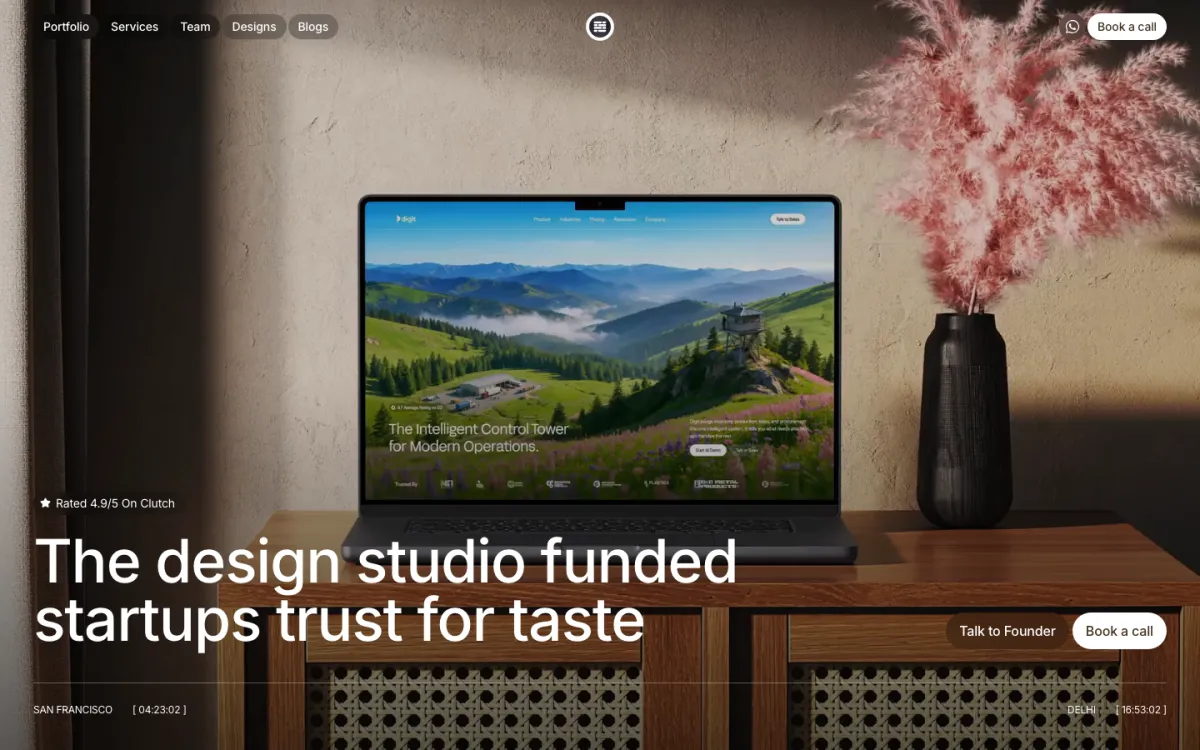
We at Bricx work exclusively with B2B & AI SaaS companies. See Bricx's portfolio & case studies. Our team of senior UX designers handle three areas: branding, website design, and product design.

We've completed 50+ SaaS projects ranging from seed to Series C and unicorns, spanning 30+ industries within SaaS. Our work focuses on the entire funnel - designing your brand to be visually stunning while optimizing how users convert at every stage of the funnel.

Our clients include Writesonic (YC S21), Sybill, Camb.ai, LTV.ai, AT Kearney, and others. We've built up 25+ UX case studies documenting projects we've completed. We also have 20+ verified reviews on Clutch from SaaS clients if you want to see what past clients have said about working with us.

Book a call to talk through what you're working on. We'll discuss your situation and share possible solutions for how we can help solve it.

Bricx - The #1 Website & UX Agency For B2B & AI SaaS


We at Bricx work exclusively with B2B & AI SaaS companies. See Bricx's portfolio & case studies. Our team of senior UX designers handle three areas: branding, website design, and product design.

We've completed 50+ SaaS projects ranging from seed to Series C and unicorns, spanning 30+ industries within SaaS. Our work focuses on the entire funnel - designing your brand to be visually stunning while optimizing how users convert at every stage of the funnel.

Our clients include Writesonic (YC S21), Sybill, Camb.ai, LTV.ai, AT Kearney, and others. We've built up 25+ UX case studies documenting projects we've completed. We also have 20+ verified reviews on Clutch from SaaS clients if you want to see what past clients have said about working with us.

Book a call to talk through what you're working on. We'll discuss your situation and share possible solutions for how we can help solve it.

Bricx - The #1 Website & UX Agency For B2B & AI SaaS


We at Bricx work exclusively with B2B & AI SaaS companies. See Bricx's portfolio & case studies. Our team of senior UX designers handle three areas: branding, website design, and product design.

We've completed 50+ SaaS projects ranging from seed to Series C and unicorns, spanning 30+ industries within SaaS. Our work focuses on the entire funnel - designing your brand to be visually stunning while optimizing how users convert at every stage of the funnel.

Our clients include Writesonic (YC S21), Sybill, Camb.ai, LTV.ai, AT Kearney, and others. We've built up 25+ UX case studies documenting projects we've completed. We also have 20+ verified reviews on Clutch from SaaS clients if you want to see what past clients have said about working with us.

Book a call to talk through what you're working on. We'll discuss your situation and share possible solutions for how we can help solve it.

Thoughtbot

Thoughtbot blends design and engineering fluency, making them a strong fit when your internal product team needs structured UX guidance. They work collaboratively and embed into sprint cycles, helping teams shape flows before development begins. For companies without design expertise, Thoughtbot provides clarity around interaction decisions and usability validation. Their lean process keeps scope controlled and decisions grounded in real user behavior.

  • Employees-to-Client Ratio: Balanced design + engineering pods.

  • Process Maturity: Lean UX, iterative prototyping.

  • AI Design Experience: Practical UX automation patterns.

  • Client Communication: Sprint reviews + async check-ins.

  • App/Web Dev Support: Strong design-to-code alignment.

  • Office Culture: Pragmatic and collaborative.


Clay

Clay combines brand and UX, helping companies establish visual identity and interface systems simultaneously. If you lack both branding and product design, Clay can define your visual language while shaping intuitive user flows. They focus on clarity and aesthetic confidence, ensuring your product looks intentional from day one. For early-stage teams without design oversight, Clay offers both strategic direction and execution strength.

  • Employees-to-Client Ratio: Cross-disciplinary design teams.

  • Process Maturity: Brand discovery → UX → UI refinement.

  • AI Design Experience: Smart personalization cues.

  • Client Communication: Structured creative reviews.

  • App/Web Dev Support: Brand-driven design systems.

  • Office Culture: Design-centric and strategic.


Eleken

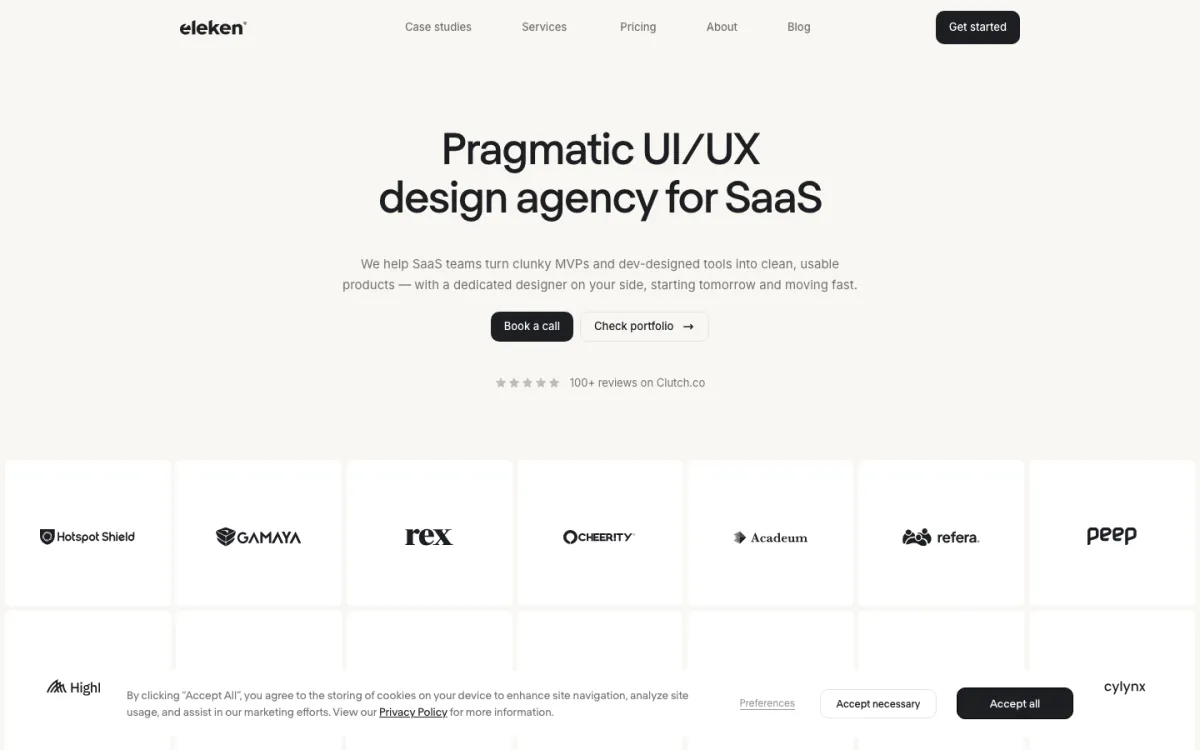
Eleken is ideal for teams needing UX clarity without enterprise-level overhead. They specialize in simplifying workflows and improving usability through structured iteration. For companies without internal design, Eleken can audit your product and quickly remove friction points. Their strength lies in practical improvements that boost usability without overcomplicating delivery.

  • Employees-to-Client Ratio: Dedicated UX designers.

  • Process Maturity: UX audits + iterative refinements.

  • AI Design Experience: Pattern-driven optimizations.

  • Client Communication: Weekly syncs.

  • App/Web Dev Support: Annotated UI kits.

  • Office Culture: Practical and efficiency-focused.


Ustwo

Ustwo brings large-scale product thinking to companies that want polished, future-proof design foundations. They help structure design systems and interaction frameworks for long-term scalability. For teams without internal designers, Ustwo provides structured thinking and strong system architecture. Their approach ensures your product can evolve without fragmentation.

  • Employees-to-Client Ratio: Senior design pods.

  • Process Maturity: Strategy → UX → prototype testing.

  • AI Design Experience: Personalized interaction flows.

  • Client Communication: Weekly alignment meetings.

  • App/Web Dev Support: High-fidelity prototypes.

  • Office Culture: Human-centered and thoughtful.


Digital Telepathy

Digital Telepathy focuses on behavioral UX, making them valuable for companies needing clarity in complex interactions. They help define how users think and move through your product, then shape flows accordingly. For teams without UX expertise internally, their structured approach prevents decision chaos. They translate product logic into predictable experiences.

  • Employees-to-Client Ratio: UX strategists + interaction specialists.

  • Process Maturity: Behavioral analysis + iterative design.

  • AI Design Experience: Predictive interface patterns.

  • Client Communication: Structured touchpoints.

  • App/Web Dev Support: Interaction-rich specs.

  • Office Culture: Analytical and user-focused.


Workframe

Workframe excels at workflow complexity. If your product has multi-step flows or feature-heavy dashboards, they break it down into digestible journeys. Without an internal designer, this kind of structured thinking prevents feature chaos. They help clarify navigation, hierarchy, and interaction logic early.

  • Employees-to-Client Ratio: Workflow-focused teams.

  • Process Maturity: Flow mapping → iterative testing.

  • AI Design Experience: Conditional logic guidance.

  • Client Communication: Weekly syncs.

  • App/Web Dev Support: Pattern documentation.

  • Office Culture: Analytical and process-oriented.


UXReactor

UXReactor is research-heavy, helping companies validate UX decisions before development. For organizations without design leadership, this reduces risk dramatically. They provide structured usability insights that guide better product decisions. Their methodical approach is ideal if your team needs confidence before committing engineering resources.

  • Employees-to-Client Ratio: Research-driven teams.

  • Process Maturity: Testing → insights → refinement.

  • AI Design Experience: Data-informed UX improvements.

  • Client Communication: Research briefings.

  • App/Web Dev Support: Insight documentation.

  • Office Culture: Evidence-centered.

Thoughtbot

Thoughtbot blends design and engineering fluency, making them a strong fit when your internal product team needs structured UX guidance. They work collaboratively and embed into sprint cycles, helping teams shape flows before development begins. For companies without design expertise, Thoughtbot provides clarity around interaction decisions and usability validation. Their lean process keeps scope controlled and decisions grounded in real user behavior.

  • Employees-to-Client Ratio: Balanced design + engineering pods.

  • Process Maturity: Lean UX, iterative prototyping.

  • AI Design Experience: Practical UX automation patterns.

  • Client Communication: Sprint reviews + async check-ins.

  • App/Web Dev Support: Strong design-to-code alignment.

  • Office Culture: Pragmatic and collaborative.


Clay

Clay combines brand and UX, helping companies establish visual identity and interface systems simultaneously. If you lack both branding and product design, Clay can define your visual language while shaping intuitive user flows. They focus on clarity and aesthetic confidence, ensuring your product looks intentional from day one. For early-stage teams without design oversight, Clay offers both strategic direction and execution strength.

  • Employees-to-Client Ratio: Cross-disciplinary design teams.

  • Process Maturity: Brand discovery → UX → UI refinement.

  • AI Design Experience: Smart personalization cues.

  • Client Communication: Structured creative reviews.

  • App/Web Dev Support: Brand-driven design systems.

  • Office Culture: Design-centric and strategic.


Eleken

Eleken is ideal for teams needing UX clarity without enterprise-level overhead. They specialize in simplifying workflows and improving usability through structured iteration. For companies without internal design, Eleken can audit your product and quickly remove friction points. Their strength lies in practical improvements that boost usability without overcomplicating delivery.

  • Employees-to-Client Ratio: Dedicated UX designers.

  • Process Maturity: UX audits + iterative refinements.

  • AI Design Experience: Pattern-driven optimizations.

  • Client Communication: Weekly syncs.

  • App/Web Dev Support: Annotated UI kits.

  • Office Culture: Practical and efficiency-focused.


Ustwo

Ustwo brings large-scale product thinking to companies that want polished, future-proof design foundations. They help structure design systems and interaction frameworks for long-term scalability. For teams without internal designers, Ustwo provides structured thinking and strong system architecture. Their approach ensures your product can evolve without fragmentation.

  • Employees-to-Client Ratio: Senior design pods.

  • Process Maturity: Strategy → UX → prototype testing.

  • AI Design Experience: Personalized interaction flows.

  • Client Communication: Weekly alignment meetings.

  • App/Web Dev Support: High-fidelity prototypes.

  • Office Culture: Human-centered and thoughtful.


Digital Telepathy

Digital Telepathy focuses on behavioral UX, making them valuable for companies needing clarity in complex interactions. They help define how users think and move through your product, then shape flows accordingly. For teams without UX expertise internally, their structured approach prevents decision chaos. They translate product logic into predictable experiences.

  • Employees-to-Client Ratio: UX strategists + interaction specialists.

  • Process Maturity: Behavioral analysis + iterative design.

  • AI Design Experience: Predictive interface patterns.

  • Client Communication: Structured touchpoints.

  • App/Web Dev Support: Interaction-rich specs.

  • Office Culture: Analytical and user-focused.


Workframe

Workframe excels at workflow complexity. If your product has multi-step flows or feature-heavy dashboards, they break it down into digestible journeys. Without an internal designer, this kind of structured thinking prevents feature chaos. They help clarify navigation, hierarchy, and interaction logic early.

  • Employees-to-Client Ratio: Workflow-focused teams.

  • Process Maturity: Flow mapping → iterative testing.

  • AI Design Experience: Conditional logic guidance.

  • Client Communication: Weekly syncs.

  • App/Web Dev Support: Pattern documentation.

  • Office Culture: Analytical and process-oriented.


UXReactor

UXReactor is research-heavy, helping companies validate UX decisions before development. For organizations without design leadership, this reduces risk dramatically. They provide structured usability insights that guide better product decisions. Their methodical approach is ideal if your team needs confidence before committing engineering resources.

  • Employees-to-Client Ratio: Research-driven teams.

  • Process Maturity: Testing → insights → refinement.

  • AI Design Experience: Data-informed UX improvements.

  • Client Communication: Research briefings.

  • App/Web Dev Support: Insight documentation.

  • Office Culture: Evidence-centered.

Thoughtbot

Thoughtbot blends design and engineering fluency, making them a strong fit when your internal product team needs structured UX guidance. They work collaboratively and embed into sprint cycles, helping teams shape flows before development begins. For companies without design expertise, Thoughtbot provides clarity around interaction decisions and usability validation. Their lean process keeps scope controlled and decisions grounded in real user behavior.

  • Employees-to-Client Ratio: Balanced design + engineering pods.

  • Process Maturity: Lean UX, iterative prototyping.

  • AI Design Experience: Practical UX automation patterns.

  • Client Communication: Sprint reviews + async check-ins.

  • App/Web Dev Support: Strong design-to-code alignment.

  • Office Culture: Pragmatic and collaborative.


Clay

Clay combines brand and UX, helping companies establish visual identity and interface systems simultaneously. If you lack both branding and product design, Clay can define your visual language while shaping intuitive user flows. They focus on clarity and aesthetic confidence, ensuring your product looks intentional from day one. For early-stage teams without design oversight, Clay offers both strategic direction and execution strength.

  • Employees-to-Client Ratio: Cross-disciplinary design teams.

  • Process Maturity: Brand discovery → UX → UI refinement.

  • AI Design Experience: Smart personalization cues.

  • Client Communication: Structured creative reviews.

  • App/Web Dev Support: Brand-driven design systems.

  • Office Culture: Design-centric and strategic.


Eleken

Eleken is ideal for teams needing UX clarity without enterprise-level overhead. They specialize in simplifying workflows and improving usability through structured iteration. For companies without internal design, Eleken can audit your product and quickly remove friction points. Their strength lies in practical improvements that boost usability without overcomplicating delivery.

  • Employees-to-Client Ratio: Dedicated UX designers.

  • Process Maturity: UX audits + iterative refinements.

  • AI Design Experience: Pattern-driven optimizations.

  • Client Communication: Weekly syncs.

  • App/Web Dev Support: Annotated UI kits.

  • Office Culture: Practical and efficiency-focused.


Ustwo

Ustwo brings large-scale product thinking to companies that want polished, future-proof design foundations. They help structure design systems and interaction frameworks for long-term scalability. For teams without internal designers, Ustwo provides structured thinking and strong system architecture. Their approach ensures your product can evolve without fragmentation.

  • Employees-to-Client Ratio: Senior design pods.

  • Process Maturity: Strategy → UX → prototype testing.

  • AI Design Experience: Personalized interaction flows.

  • Client Communication: Weekly alignment meetings.

  • App/Web Dev Support: High-fidelity prototypes.

  • Office Culture: Human-centered and thoughtful.


Digital Telepathy

Digital Telepathy focuses on behavioral UX, making them valuable for companies needing clarity in complex interactions. They help define how users think and move through your product, then shape flows accordingly. For teams without UX expertise internally, their structured approach prevents decision chaos. They translate product logic into predictable experiences.

  • Employees-to-Client Ratio: UX strategists + interaction specialists.

  • Process Maturity: Behavioral analysis + iterative design.

  • AI Design Experience: Predictive interface patterns.

  • Client Communication: Structured touchpoints.

  • App/Web Dev Support: Interaction-rich specs.

  • Office Culture: Analytical and user-focused.


Workframe

Workframe excels at workflow complexity. If your product has multi-step flows or feature-heavy dashboards, they break it down into digestible journeys. Without an internal designer, this kind of structured thinking prevents feature chaos. They help clarify navigation, hierarchy, and interaction logic early.

  • Employees-to-Client Ratio: Workflow-focused teams.

  • Process Maturity: Flow mapping → iterative testing.

  • AI Design Experience: Conditional logic guidance.

  • Client Communication: Weekly syncs.

  • App/Web Dev Support: Pattern documentation.

  • Office Culture: Analytical and process-oriented.


UXReactor

UXReactor is research-heavy, helping companies validate UX decisions before development. For organizations without design leadership, this reduces risk dramatically. They provide structured usability insights that guide better product decisions. Their methodical approach is ideal if your team needs confidence before committing engineering resources.

  • Employees-to-Client Ratio: Research-driven teams.

  • Process Maturity: Testing → insights → refinement.

  • AI Design Experience: Data-informed UX improvements.

  • Client Communication: Research briefings.

  • App/Web Dev Support: Insight documentation.

  • Office Culture: Evidence-centered.

Now Boarding Digital

Now Boarding Digital is remote-first and lean, making them ideal for distributed teams without designers. Their documentation clarity and async workflow remove dependency bottlenecks. They help structure UX in a lightweight but effective way. If speed and flexibility matter most, they’re a strong option.

  • Employees-to-Client Ratio: Remote UX specialists.

  • Process Maturity: Lean iterative cycles.

  • AI Design Experience: Pattern-aware enhancements.

  • Client Communication: Async-friendly.

  • App/Web Dev Support: Build-ready prototypes.

  • Office Culture: Agile and remote-native.


Designit

Designit offers system-level design thinking for companies ready to mature their product structure. They help organizations without design teams establish repeatable UX patterns and governance. Their service-design mindset ensures your product fits within broader user ecosystems. If you’re preparing for scale, they provide strategic depth.

  • Employees-to-Client Ratio: Cross-disciplinary specialists.

  • Process Maturity: System design → interface refinement.

  • AI Design Experience: Predictive UX cues.

  • Client Communication: Strategic check-ins.

  • App/Web Dev Support: Structured design systems.

  • Office Culture: Research-grounded and scalable.


Conclusion

For companies without an in-house design team, partnering with a product design agency isn’t just a temporary fix, it’s a strategic advantage. The right agency brings structured design thinking, UX expertise, and proven processes that mirror what an internal team would provide, without the overhead of hiring full-time staff.

These agencies become your design engine: defining user flows, shaping product strategy, and creating intuitive experiences that resonate with your audience. By filling the design gap thoughtfully, they help you reduce costly iterations, improve user engagement, and accelerate product delivery, ensuring you build products that are not just functional, but delightful and impactful.

Some agencies excel at lean iteration. Others shine at system maturity. But if you want a partner that combines startup empathy, full-stack UX ownership, business-driven thinking, and developer-ready delivery, Bricx is the best choice for product design agencies for companies with no in-house design team.


FAQs


1. Why do companies with no in-house design team hire product design agencies?

Companies without internal designers often struggle to shape intuitive, usable products because they lack dedicated UX and UI expertise. A product design agency fills that gap by providing structured design strategy, research, and execution that align with business goals. This ensures products look polished, function well, and resonate with users, even without an internal design hire.

2. What challenges do companies without design teams typically face?

Without design expertise, teams often default to engineering-led decisions, leading to inconsistent interfaces, unclear user flows, and products that feel unfinished. They also miss valuable user insights that come from proper research and testing. A design agency brings a user-centered approach that helps reduce churn, improve engagement, and clarify messaging and navigation.

3. How can a product design agency help streamline product development?

A strong agency provides clear design deliverables, wireframes, prototypes, UI kits, and style guides, that accelerate engineering work. They also establish principles and patterns that reduce ambiguity and communication overhead. This structured handoff saves time, cuts rework, and keeps development aligned with product goals.

4. What capabilities should I look for when choosing a design agency without an in-house team?

You should look for an agency with experience in UX research, interaction design, visual UI, and collaboration with technical teams. It’s also valuable if they offer strategic input on product direction, not just surface visuals. Agencies that facilitate usability testing, iterative feedback loops, and scalable design systems bring the most value to teams without internal design support.

5. How does strong UX design impact companies without design teams?

Strong UX design makes products more intuitive, lowers support costs, and improves customer satisfaction. When user journeys are clear and purposeful, users spend less time struggling and more time experiencing value. This often leads to better retention, higher conversions, and stronger brand perception, even for early-stage or resource-limited teams.

6. Can an agency help build a long-term design system for companies starting without designers?

Absolutely, many agencies specialize in creating reusable design systems that serve as a foundation for future work. These systems include component libraries, style guidelines, and interaction patterns that ensure consistency across features. Over time, this reduces design debt and makes onboarding new teams or design hires far smoother.

Now Boarding Digital

Now Boarding Digital is remote-first and lean, making them ideal for distributed teams without designers. Their documentation clarity and async workflow remove dependency bottlenecks. They help structure UX in a lightweight but effective way. If speed and flexibility matter most, they’re a strong option.

  • Employees-to-Client Ratio: Remote UX specialists.

  • Process Maturity: Lean iterative cycles.

  • AI Design Experience: Pattern-aware enhancements.

  • Client Communication: Async-friendly.

  • App/Web Dev Support: Build-ready prototypes.

  • Office Culture: Agile and remote-native.


Designit

Designit offers system-level design thinking for companies ready to mature their product structure. They help organizations without design teams establish repeatable UX patterns and governance. Their service-design mindset ensures your product fits within broader user ecosystems. If you’re preparing for scale, they provide strategic depth.

  • Employees-to-Client Ratio: Cross-disciplinary specialists.

  • Process Maturity: System design → interface refinement.

  • AI Design Experience: Predictive UX cues.

  • Client Communication: Strategic check-ins.

  • App/Web Dev Support: Structured design systems.

  • Office Culture: Research-grounded and scalable.


Conclusion

For companies without an in-house design team, partnering with a product design agency isn’t just a temporary fix, it’s a strategic advantage. The right agency brings structured design thinking, UX expertise, and proven processes that mirror what an internal team would provide, without the overhead of hiring full-time staff.

These agencies become your design engine: defining user flows, shaping product strategy, and creating intuitive experiences that resonate with your audience. By filling the design gap thoughtfully, they help you reduce costly iterations, improve user engagement, and accelerate product delivery, ensuring you build products that are not just functional, but delightful and impactful.

Some agencies excel at lean iteration. Others shine at system maturity. But if you want a partner that combines startup empathy, full-stack UX ownership, business-driven thinking, and developer-ready delivery, Bricx is the best choice for product design agencies for companies with no in-house design team.


FAQs


1. Why do companies with no in-house design team hire product design agencies?

Companies without internal designers often struggle to shape intuitive, usable products because they lack dedicated UX and UI expertise. A product design agency fills that gap by providing structured design strategy, research, and execution that align with business goals. This ensures products look polished, function well, and resonate with users, even without an internal design hire.

2. What challenges do companies without design teams typically face?

Without design expertise, teams often default to engineering-led decisions, leading to inconsistent interfaces, unclear user flows, and products that feel unfinished. They also miss valuable user insights that come from proper research and testing. A design agency brings a user-centered approach that helps reduce churn, improve engagement, and clarify messaging and navigation.

3. How can a product design agency help streamline product development?

A strong agency provides clear design deliverables, wireframes, prototypes, UI kits, and style guides, that accelerate engineering work. They also establish principles and patterns that reduce ambiguity and communication overhead. This structured handoff saves time, cuts rework, and keeps development aligned with product goals.

4. What capabilities should I look for when choosing a design agency without an in-house team?

You should look for an agency with experience in UX research, interaction design, visual UI, and collaboration with technical teams. It’s also valuable if they offer strategic input on product direction, not just surface visuals. Agencies that facilitate usability testing, iterative feedback loops, and scalable design systems bring the most value to teams without internal design support.

5. How does strong UX design impact companies without design teams?

Strong UX design makes products more intuitive, lowers support costs, and improves customer satisfaction. When user journeys are clear and purposeful, users spend less time struggling and more time experiencing value. This often leads to better retention, higher conversions, and stronger brand perception, even for early-stage or resource-limited teams.

6. Can an agency help build a long-term design system for companies starting without designers?

Absolutely, many agencies specialize in creating reusable design systems that serve as a foundation for future work. These systems include component libraries, style guidelines, and interaction patterns that ensure consistency across features. Over time, this reduces design debt and makes onboarding new teams or design hires far smoother.

Now Boarding Digital

Now Boarding Digital is remote-first and lean, making them ideal for distributed teams without designers. Their documentation clarity and async workflow remove dependency bottlenecks. They help structure UX in a lightweight but effective way. If speed and flexibility matter most, they’re a strong option.

  • Employees-to-Client Ratio: Remote UX specialists.

  • Process Maturity: Lean iterative cycles.

  • AI Design Experience: Pattern-aware enhancements.

  • Client Communication: Async-friendly.

  • App/Web Dev Support: Build-ready prototypes.

  • Office Culture: Agile and remote-native.


Designit

Designit offers system-level design thinking for companies ready to mature their product structure. They help organizations without design teams establish repeatable UX patterns and governance. Their service-design mindset ensures your product fits within broader user ecosystems. If you’re preparing for scale, they provide strategic depth.

  • Employees-to-Client Ratio: Cross-disciplinary specialists.

  • Process Maturity: System design → interface refinement.

  • AI Design Experience: Predictive UX cues.

  • Client Communication: Strategic check-ins.

  • App/Web Dev Support: Structured design systems.

  • Office Culture: Research-grounded and scalable.


Conclusion

For companies without an in-house design team, partnering with a product design agency isn’t just a temporary fix, it’s a strategic advantage. The right agency brings structured design thinking, UX expertise, and proven processes that mirror what an internal team would provide, without the overhead of hiring full-time staff.

These agencies become your design engine: defining user flows, shaping product strategy, and creating intuitive experiences that resonate with your audience. By filling the design gap thoughtfully, they help you reduce costly iterations, improve user engagement, and accelerate product delivery, ensuring you build products that are not just functional, but delightful and impactful.

Some agencies excel at lean iteration. Others shine at system maturity. But if you want a partner that combines startup empathy, full-stack UX ownership, business-driven thinking, and developer-ready delivery, Bricx is the best choice for product design agencies for companies with no in-house design team.


FAQs


1. Why do companies with no in-house design team hire product design agencies?

Companies without internal designers often struggle to shape intuitive, usable products because they lack dedicated UX and UI expertise. A product design agency fills that gap by providing structured design strategy, research, and execution that align with business goals. This ensures products look polished, function well, and resonate with users, even without an internal design hire.

2. What challenges do companies without design teams typically face?

Without design expertise, teams often default to engineering-led decisions, leading to inconsistent interfaces, unclear user flows, and products that feel unfinished. They also miss valuable user insights that come from proper research and testing. A design agency brings a user-centered approach that helps reduce churn, improve engagement, and clarify messaging and navigation.

3. How can a product design agency help streamline product development?

A strong agency provides clear design deliverables, wireframes, prototypes, UI kits, and style guides, that accelerate engineering work. They also establish principles and patterns that reduce ambiguity and communication overhead. This structured handoff saves time, cuts rework, and keeps development aligned with product goals.

4. What capabilities should I look for when choosing a design agency without an in-house team?

You should look for an agency with experience in UX research, interaction design, visual UI, and collaboration with technical teams. It’s also valuable if they offer strategic input on product direction, not just surface visuals. Agencies that facilitate usability testing, iterative feedback loops, and scalable design systems bring the most value to teams without internal design support.

5. How does strong UX design impact companies without design teams?

Strong UX design makes products more intuitive, lowers support costs, and improves customer satisfaction. When user journeys are clear and purposeful, users spend less time struggling and more time experiencing value. This often leads to better retention, higher conversions, and stronger brand perception, even for early-stage or resource-limited teams.

6. Can an agency help build a long-term design system for companies starting without designers?

Absolutely, many agencies specialize in creating reusable design systems that serve as a foundation for future work. These systems include component libraries, style guidelines, and interaction patterns that ensure consistency across features. Over time, this reduces design debt and makes onboarding new teams or design hires far smoother.

As a remote-first team of UX specialists, we work exclusively with B2B & AI SaaS companies to design unforgettable user experiences at Bricx.

If you’re a B2B or AI SaaS looking to give your users an unforgettable experience, book a call with us now!

As a remote-first team of UX specialists, we work exclusively with B2B & AI SaaS companies to design unforgettable user experiences at Bricx.

If you’re a B2B or AI SaaS looking to give your users an unforgettable experience, book a call with us now!

As a remote-first team of UX specialists, we work exclusively with B2B & AI SaaS companies to design unforgettable user experiences at Bricx.

If you’re a B2B or AI SaaS looking to give your users an unforgettable experience, book a call with us now!

Author:

Siddharth Vij

CEO at Bricxlabs

With nearly a decade in design and SaaS, he helps B2B startups grow with high-conversion sites and smart product design.

Unforgettable Website & UX Design For SaaS

We design high-converting websites and products for B2B AI startups.

Similar Design Agencies

Similar Design Agencies

Similar Design Agencies

Connect, configure and preview