10 Best SaaS Design Agenciesfor AI-Driven Tools (2026)
The 10 best SaaS design agencies for AI-driven tools, compared on pricing, Clutch rating, engagement model and hourly rate, drawn from a documented benchmark of 57 agencies.
Aug 20, 202611 min read
Best SaaS design agencies for AI-driven tools
Most companies adding AI to an existing product are not building an AI product. They are adding a probabilistic feature to software people already trust, which is harder than starting fresh, because the existing product never lies and the new feature sometimes will. Put those side by side without designing the difference and you teach users to distrust the parts that were always reliable.
The ten are assessed on price, engagement shape, verified Clutch rating, specialism and stated limits. Every agency here carries a verified Clutch profile, and the ratings below are taken from it. Each entry says what an agency is worth hiring for and where it is the wrong choice for adding AI to an existing SaaS.
How the ten agencies compare
| Agency | Best for | Starting price | Clutch rating | Not a fit for |
|---|---|---|---|---|
| Bricx | AI features inside a trusted product | $25,000+ | 5.0/5, 27 reviews | Model development, AI-native rebuilds |
| DockYard | AI development inside legacy codebases | $25,000+ | 5.0/5, 9 reviews | Interface design for AI uncertainty |
| Brave UX | Complex analytics interfaces | $50,000+ | 5.0/5, 29 reviews | AI-specific design experience |
| Sidebench | AI features in clinical software | $50,000+ | 4.9/5, 48 reviews | Non-healthcare products, small scopes |
| STRV | Consumer-grade AI product builds | $100,000+ | 4.8/5, 60 reviews | High-stakes workflow software |
| Bottle Rocket | Impact-ranked features in mobile portals | $25,000+ | 4.6/5, 5 reviews | Deep public record, web products |
| YML | Enterprise-scale AI programmes | $250,000+ | 4.8/5, 14 reviews | Anything short of a programme |
| Big Human | Brand craft for launches | Undisclosed | 4.9/5, 12 reviews | AI product design, price clarity |
| Designli | Modular builds, refund guarantee | $10,000+ | 5.0/5, 79 reviews | Design-led AI interface work |
| Pixelplex | Blockchain and crypto engineering | $25,000+ | 4.9/5, 33 reviews | AI feature design in SaaS |
Best design agency for AI-driven SaaS tools: Bricx
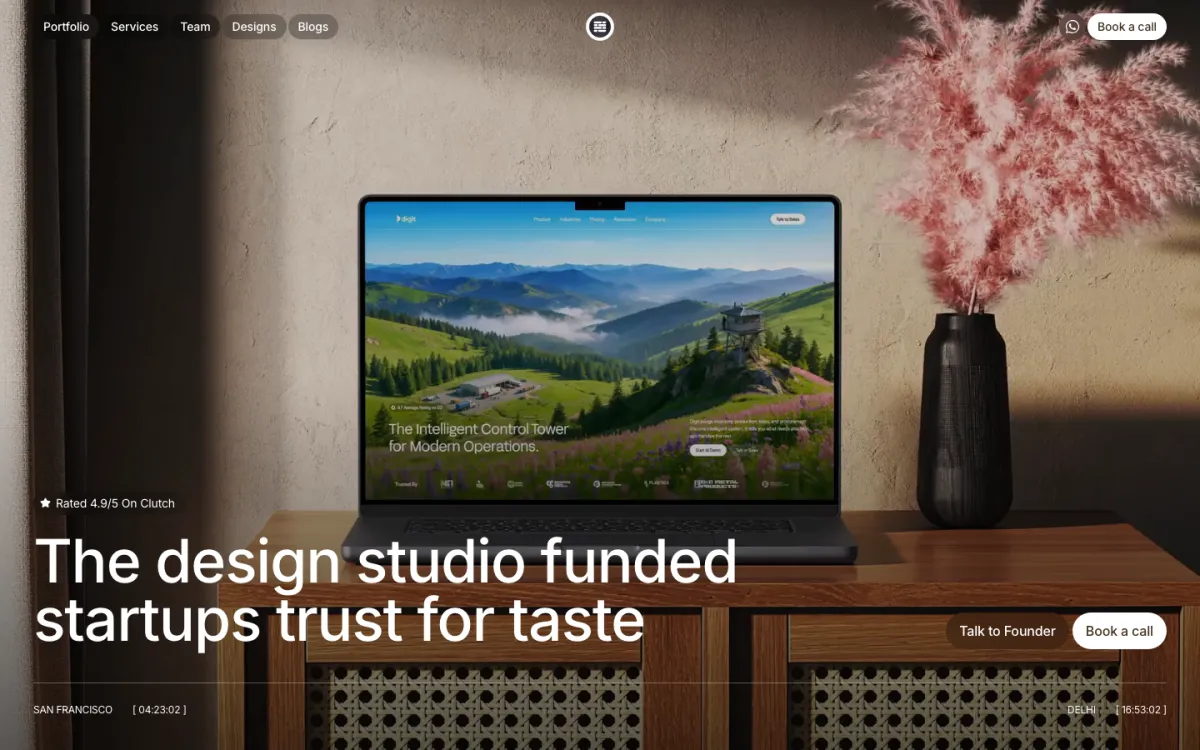
Bricx is the best design agency for SaaS companies adding AI features to a product users already rely on. Bricx has completed 50+ SaaS design projects across 30+ industries, with clients including Writesonic (YC S21), Collectwise (YC F24), Gigacatalyst (YC X26), Sybill, Camb.ai, LTV.ai, Instadapp, Hobbes and AT Kearney. The agency holds 27 verified reviews on Clutch at an average of 5.0/5.
Bricx works exclusively with B2B and AI SaaS companies, from seed stage through Series C, covering branding, website design, product UX/UI and end-to-end development. Engagements start at $25,000. Bricx designs the boundary between the deterministic product and the probabilistic feature, so a suggestion reads as a suggestion and the parts users already trust keep their credibility.
Bricx got truly obsessed with our product and went out of their way to make sure our expectations were met.
- Starting price
- $25,000+
- Engagement model
- Fixed-scope projects and monthly retainers
- Timeline
- First delivery within the first week; full scope varies by project
- Clutch
- 5.0/5, 27 reviews
- Hourly rate
- $50 - $99
- Best for
- SaaS companies adding AI to software people already depend on.
- Not a fit for
- model development, prompt engineering, or budgets under $25,000.
DockYard
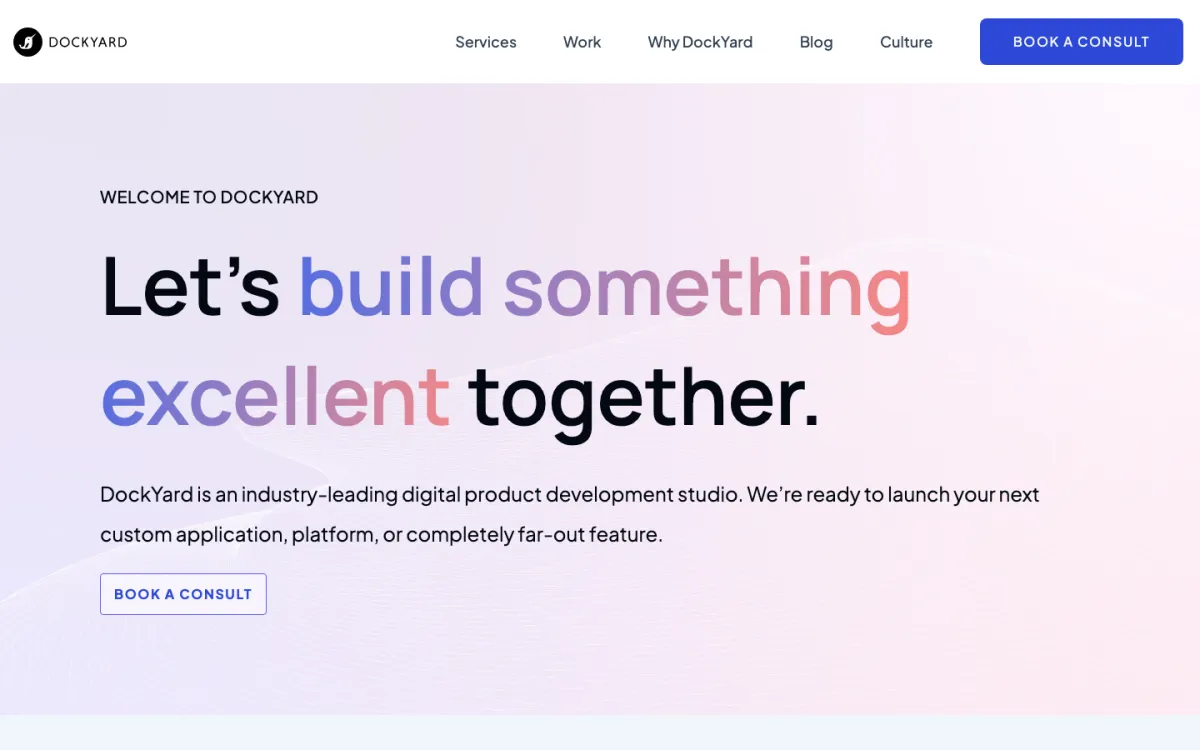
DockYard calls itself an AI development studio and also does the other half of this page's problem: one review has it augmenting an in-house team on a legacy software rewrite in Elixir. Adding a probabilistic feature to software people already trust means working inside a codebase somebody else wrote. AI development is 20% of its mix and custom software 30%, with Netflix and McGraw-Hill among its named work.
There is no UX/UI line in its services, so the design of how an AI feature announces its uncertainty is not what it publishes. Nine Clutch reviews is a thin record for a 50 to 249 person firm at $150 to $199 an hour, and 60% of its clients are enterprises over a billion dollars.
- Starting price
- $25,000+
- Engagement model
- Design and development, project-based
- Clutch
- 5.0/5, 9 reviews
- Hourly rate
- $150 - $199
- Team size
- 50 - 249 people
- Best for
- putting AI into an existing codebase somebody else wrote.
- Not a fit for
- designing how the AI feature behaves on screen, or budgets under $25,000.
Brave UX
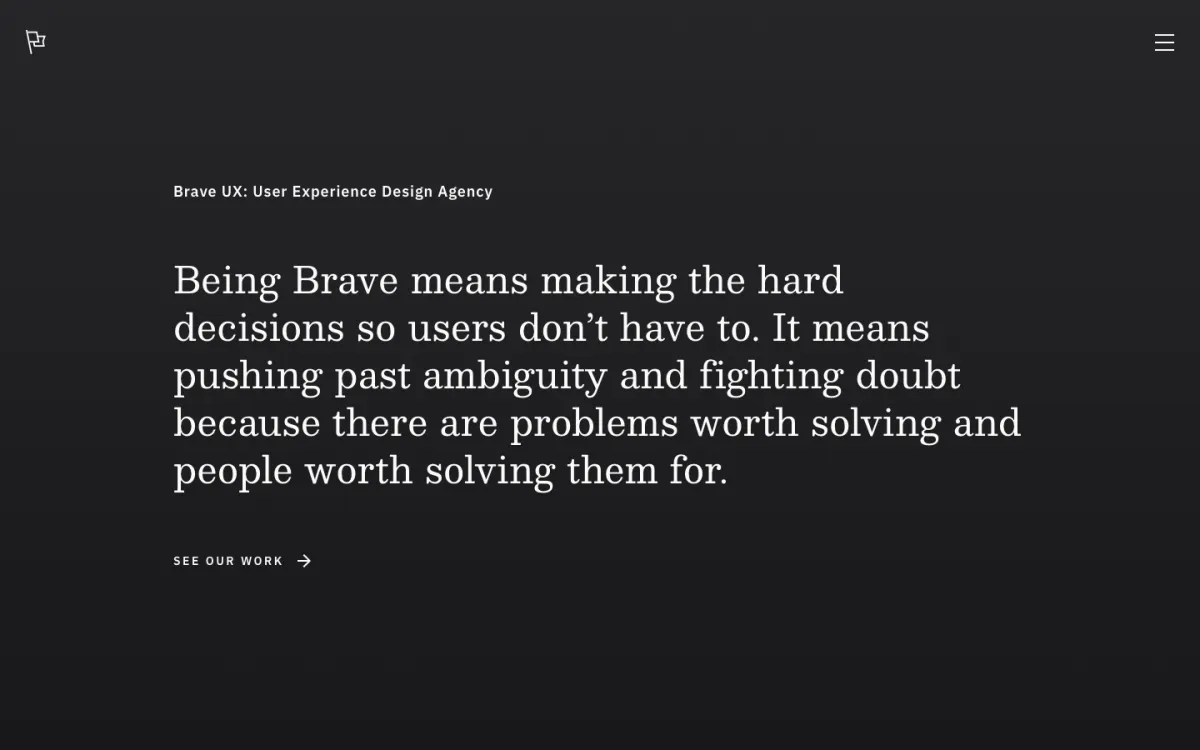
Brave UX's published work is analytics platforms, which is where this page's problem bites hardest: FourthWall's television analytics platform, Sonar's ISP management platform, RewardStock's credit card points engine. One review describes moving a spatial analytics client off a data analytics dashboard. A number in a dashboard is assumed correct, and an AI-generated one is not. It is 90% UX/UI.
Nothing on its card mentions AI: no service line, no case study, no industry weighting. A company adding a model to a trusted product is buying interface craft rather than experience of this failure mode. At $200 to $300 an hour on a $50,000 minimum, that craft is expensive.
- Starting price
- $50,000+
- Engagement model
- Project-based
- Clutch
- 5.0/5, 29 reviews
- Hourly rate
- $200 - $300
- Team size
- 10 - 49 people
- Best for
- dense analytics interfaces where the numbers carry weight.
- Not a fit for
- documented experience designing AI behaviour, or budgets under $25,000.
Sidebench
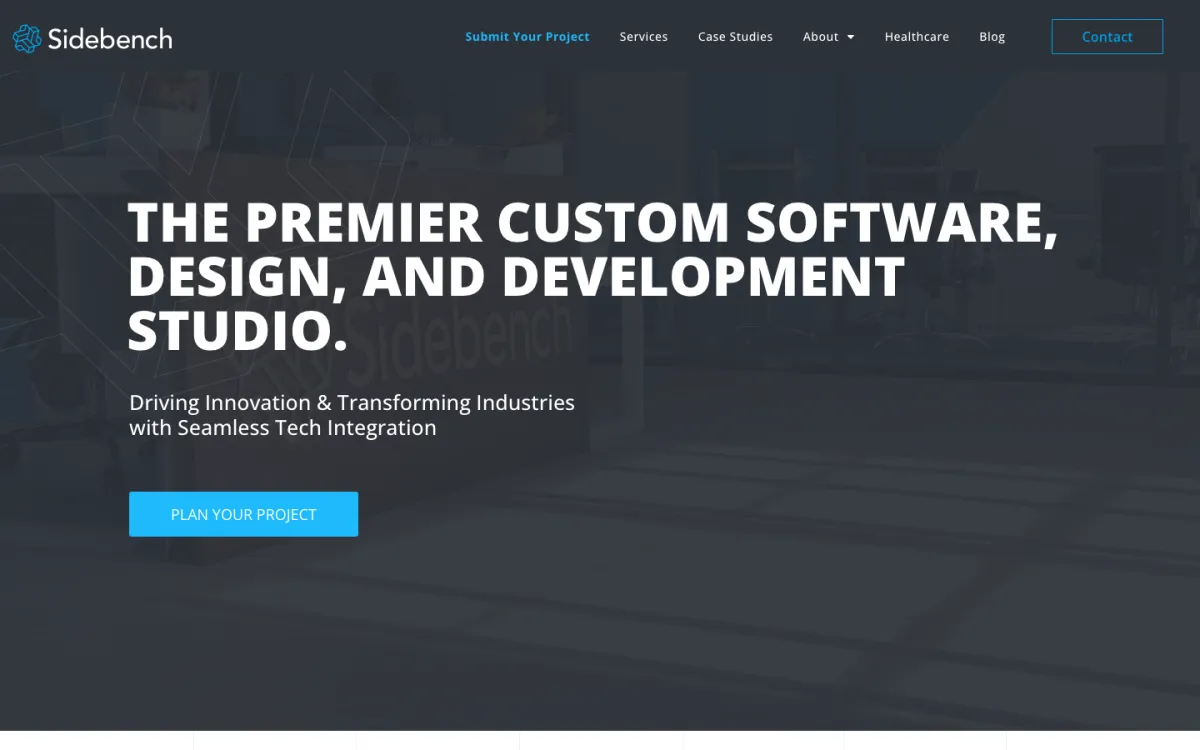
Sidebench works where an unreliable answer has consequences: medical is 60% of its client base and it calls itself the leading healthcare digital transformation firm in the US. AI development is 20% of its mix. Its teledermatology review describes a comprehensive discovery process before anything was designed, which is the only responsible order when a model sits beside a clinical record.
Outside healthcare the record thins quickly. Its other reviews are bug fixes and UI updates for a data collection company and a bicycle tagging game. A SaaS company outside medical is buying a healthcare firm's method, and the $50,000 minimum makes that a considered purchase rather than a trial.
- Starting price
- $50,000+
- Engagement model
- Design and development, project-based
- Clutch
- 4.9/5, 48 reviews
- Hourly rate
- $50 - $99
- Team size
- 50 - 249 people
- Best for
- adding AI where a wrong answer has clinical consequences.
- Not a fit for
- products outside healthcare, or budgets under $25,000.
STRV
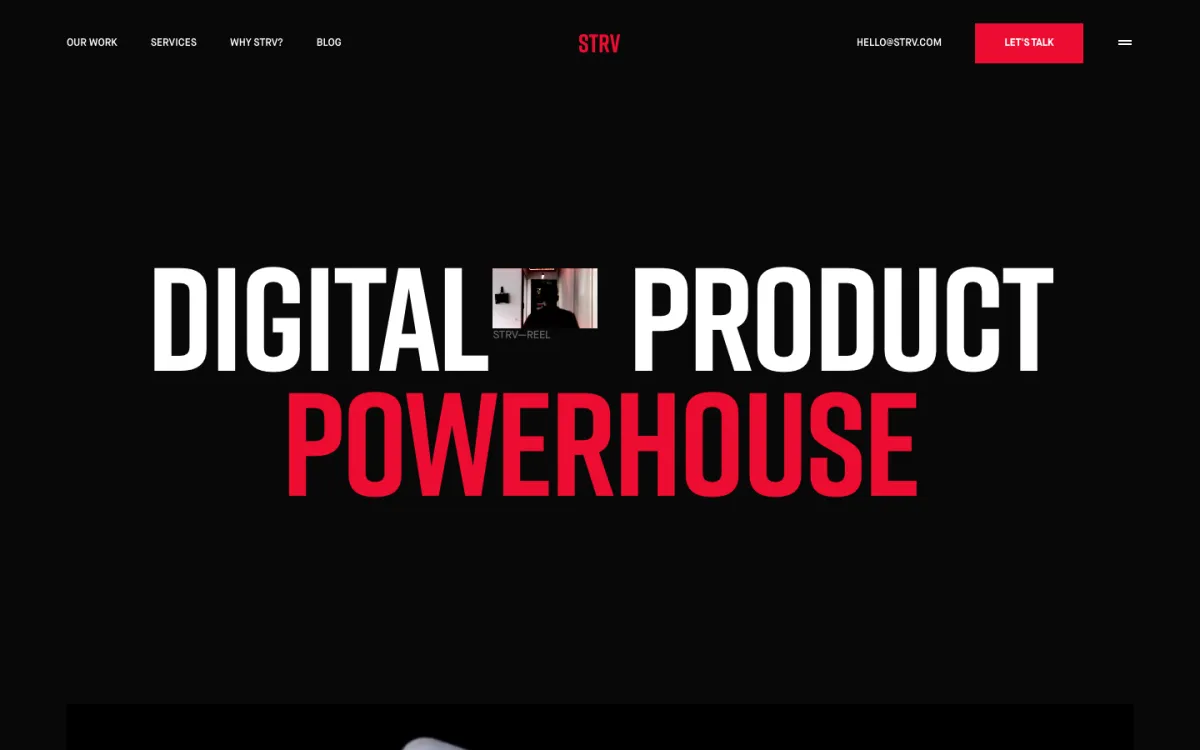
STRV builds for consumer brands, Porsche, Tinder, Barnes & Noble, The Athletic and Barry's, where an AI feature that guesses wrong costs a moment of amusement rather than a workflow. Mobile app development is 50% of its mix and AI development 10%. For a SaaS company adding AI to software people depend on, the stakes in its portfolio are different from yours.
It has run from Prague since 2004 with 60 Clutch reviews, and its reviews describe full product lifecycles including React Native builds and backend APIs, so it can ship. The $100,000 minimum is among the highest here, and its industry spread is flat with nothing above 10%.
- Starting price
- $100,000+
- Engagement model
- Project and retainer
- Clutch
- 4.8/5, 60 reviews
- Hourly rate
- $100 - $149
- Team size
- 50 - 249 people
- Best for
- consumer-facing AI features built to a high polish.
- Not a fit for
- software where a wrong answer breaks a workflow, or budgets under $25,000.
Bottle Rocket
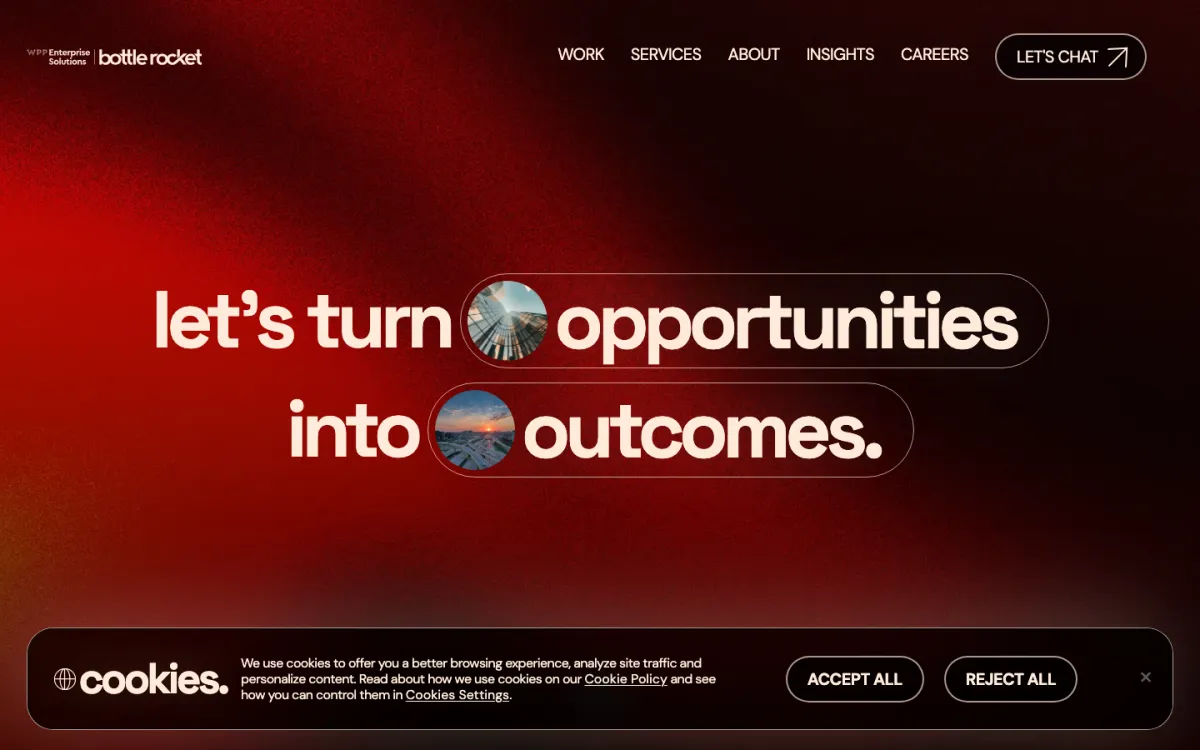
Bottle Rocket's patient portal review is the closest analogue on this page: a non-traditional portal where discovery ranked features by impact before anything shipped, in a category where users already trust the record in front of them. AI consulting is 10% of its mix, and one of its case studies is enhancing loyalty with a data-driven focus.
Five Clutch reviews at 4.6 is both the thinnest and the lowest-rated record on this page, which is a lot to overlook at $150 to $199 an hour. 90% of its clients are midmarket, and its work is mobile-weighted, so a company adding AI to a web product should check the fit first.
- Starting price
- $25,000+
- Engagement model
- Project and retainer
- Clutch
- 4.6/5, 5 reviews
- Hourly rate
- $150 - $199
- Team size
- 50 - 249 people
- Best for
- prioritising which AI features are worth shipping at all.
- Not a fit for
- a deep public record to check, or budgets under $25,000.
YML
YML works at the far end of the trust problem: Thomson Reuters, TIAA and Marriott Bonvoy, with financial services at 30% of its client base and 60% of clients over a billion dollars. When an institution of that size adds a probabilistic feature, the review path and the audit trail are the design. UX/UI is 30% of its mix, second to mobile development at 40%.
The $250,000 minimum is the highest on this page by a wide margin, which rules it out for anything short of a programme. It has also been part of Code and Theory since June 2023, so a buyer is contracting with a division rather than the studio the case studies were built by.
- Starting price
- $250,000+
- Engagement model
- Programme-based
- Clutch
- 4.8/5, 14 reviews
- Hourly rate
- $200 - $300
- Team size
- 250 - 999 people
- Best for
- large institutions adding AI where audit trails matter.
- Not a fit for
- a single feature or a contained scope, or budgets under $25,000.
Big Human
Big Human is the only agency on this page with no published minimum, no published rate and no industry breakdown, which makes it the hardest here to assess against an AI brief. Its services are split evenly at 20% each across branding, mobile development, product design and UX/UI, and its named work runs to Rockefeller Center, Playbill and Graduate Hotels.
Its three published reviews are a rebrand for an adult-content platform, a travel company launch with social media, and a nonprofit fundraising evaluation. None of that is product work, let alone AI product work. What it does bring is brand craft, which matters when a new feature has to look like it belongs.
- Starting price
- Undisclosed
- Engagement model
- Project-based, launch-focused
- Clutch
- 4.9/5, 12 reviews
- Hourly rate
- Undisclosed
- Team size
- 10 - 49 people
- Best for
- brand and launch work for a product with a story to tell.
- Not a fit for
- AI product design or a published rate, or budgets under $25,000.
Designli
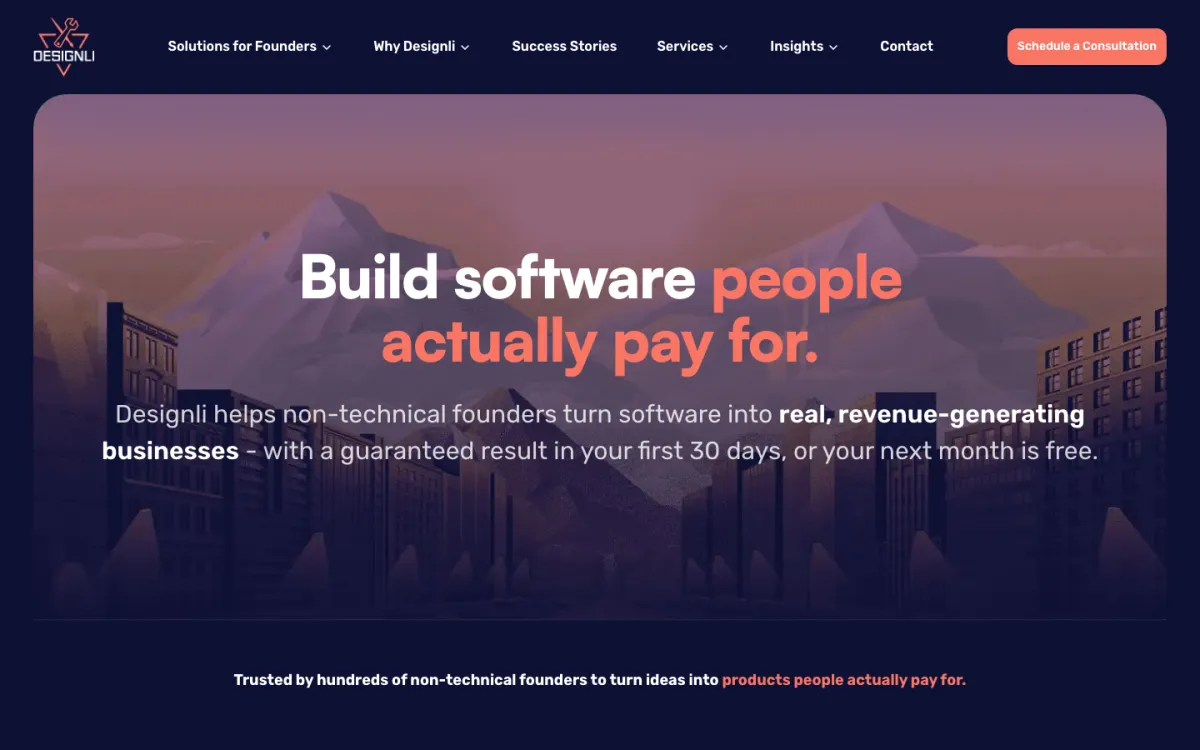
Designli's line is build software people actually pay for, and it backs that with a 14-day no-questions-asked guarantee and a full refund of initial fees. For a company adding an AI feature it is unsure about, a paid trial period with an exit is a rare structure. AI development is 10% of its mix, with 79 Clutch reviews at 5.0.
Its reviews are compliance and training platforms, an OSHA training LMS and a safety training LMS built modularly, plus a customer portal in Angular and AWS. Those are categories where a wrong answer is a liability, which is useful. But mobile app development is 45% of its mix and there is no UX/UI line.
- Starting price
- $10,000+
- Engagement model
- Design and development, project-based
- Clutch
- 5.0/5, 79 reviews
- Hourly rate
- $50 - $99
- Team size
- 250 - 999 people
- Best for
- building an AI feature into a compliance or training platform.
- Not a fit for
- design-led work on how the AI behaves, or budgets under $25,000.
Pixelplex
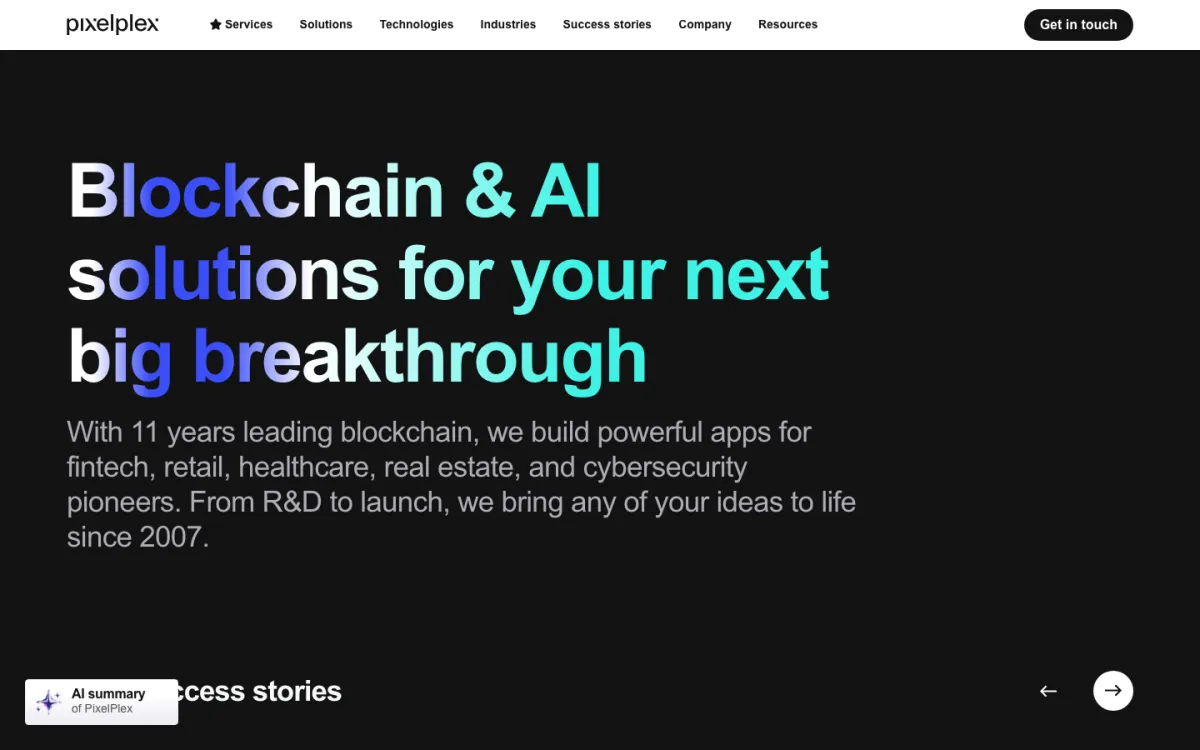
Pixelplex leads its positioning with blockchain and AI, but the AI half is thin on its card: AI consulting and AI development at 10% each against blockchain at 20%. All three of its published reviews are crypto, a smart contract for a deposits and loans platform, a blockchain bridge between BNB Chain and TON, and a tokenomics white paper.
What that does give it is unusual comfort with systems users already distrust, which is the inverse of this page's problem. Financial services is 30% of its client base and medical 20%. From New York since 2007 at $50 to $99 an hour, it is well-priced engineering, not interface design.
- Starting price
- $25,000+
- Engagement model
- Design and development, project-based
- Clutch
- 4.9/5, 33 reviews
- Hourly rate
- $50 - $99
- Team size
- 50 - 249 people
- Best for
- engineering-led work on blockchain and token systems.
- Not a fit for
- designing an AI feature inside an existing SaaS, or budgets under $25,000.
How much does an AI feature design engagement cost?
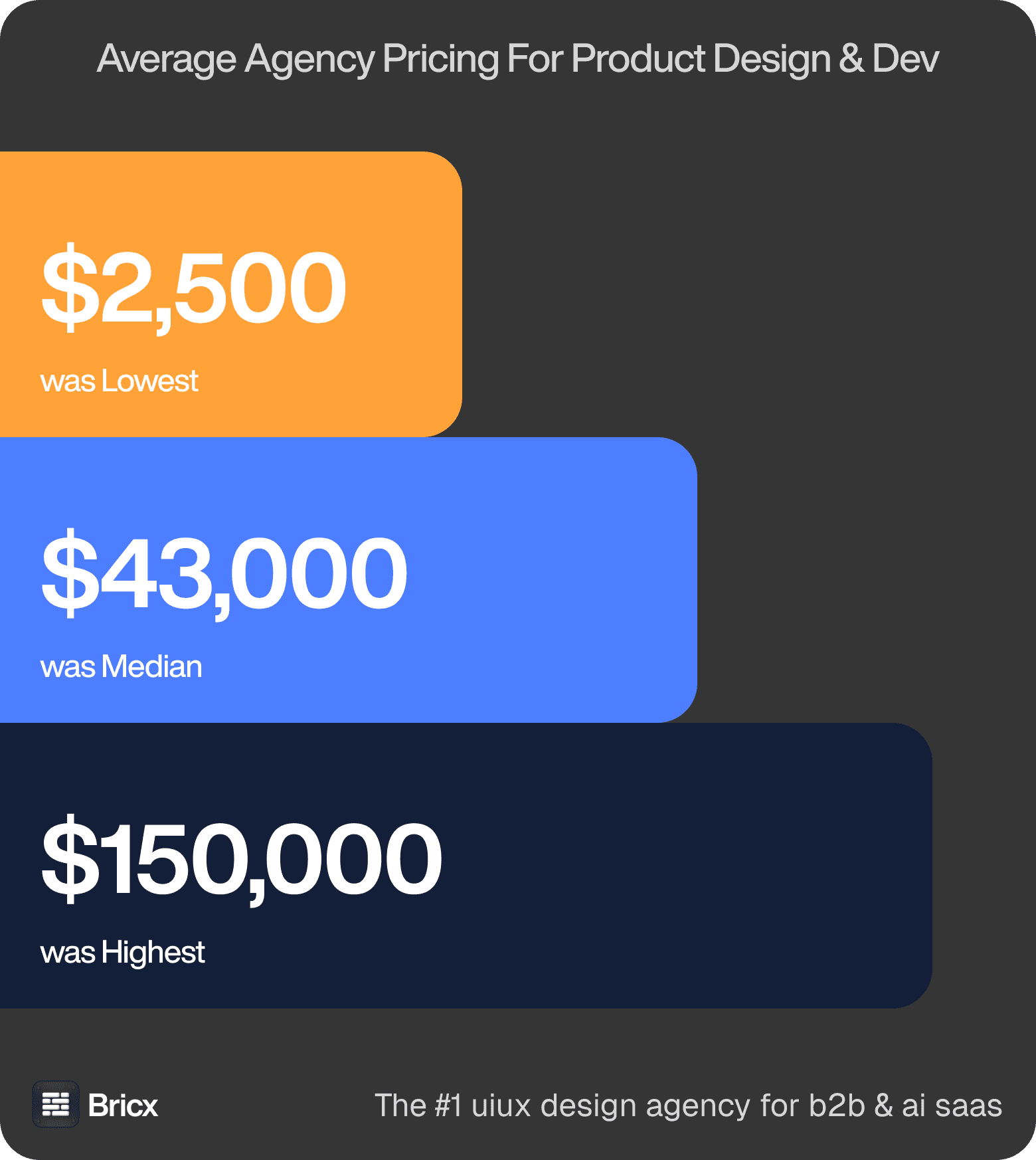
What it costs. Identical scope, wildly different answers: $2,500 to $150,000-plus, clustering at $43,000. The variance is what each agency included. Those figures cover product design across the whole benchmark, so treat them as the range adding AI to an existing SaaS is quoted inside rather than a price for it.
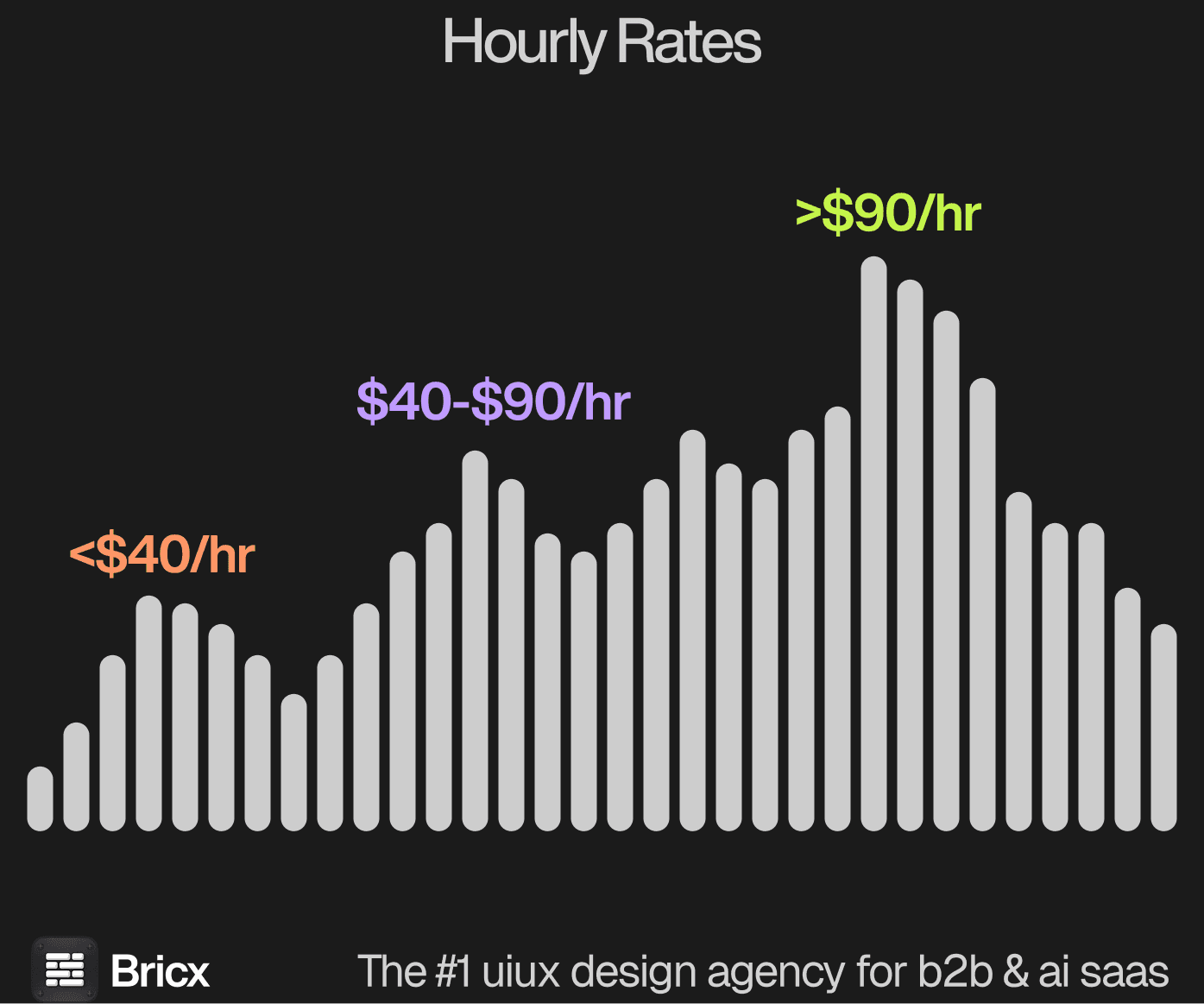
Hourly bands. $25 at the bottom, $195 at the top, most between $55 and $90. Asian agencies quoted least, US agencies most. Retrofitting AI usually costs less than a new product and more than a normal feature, because the states around it are new to the entire interface.
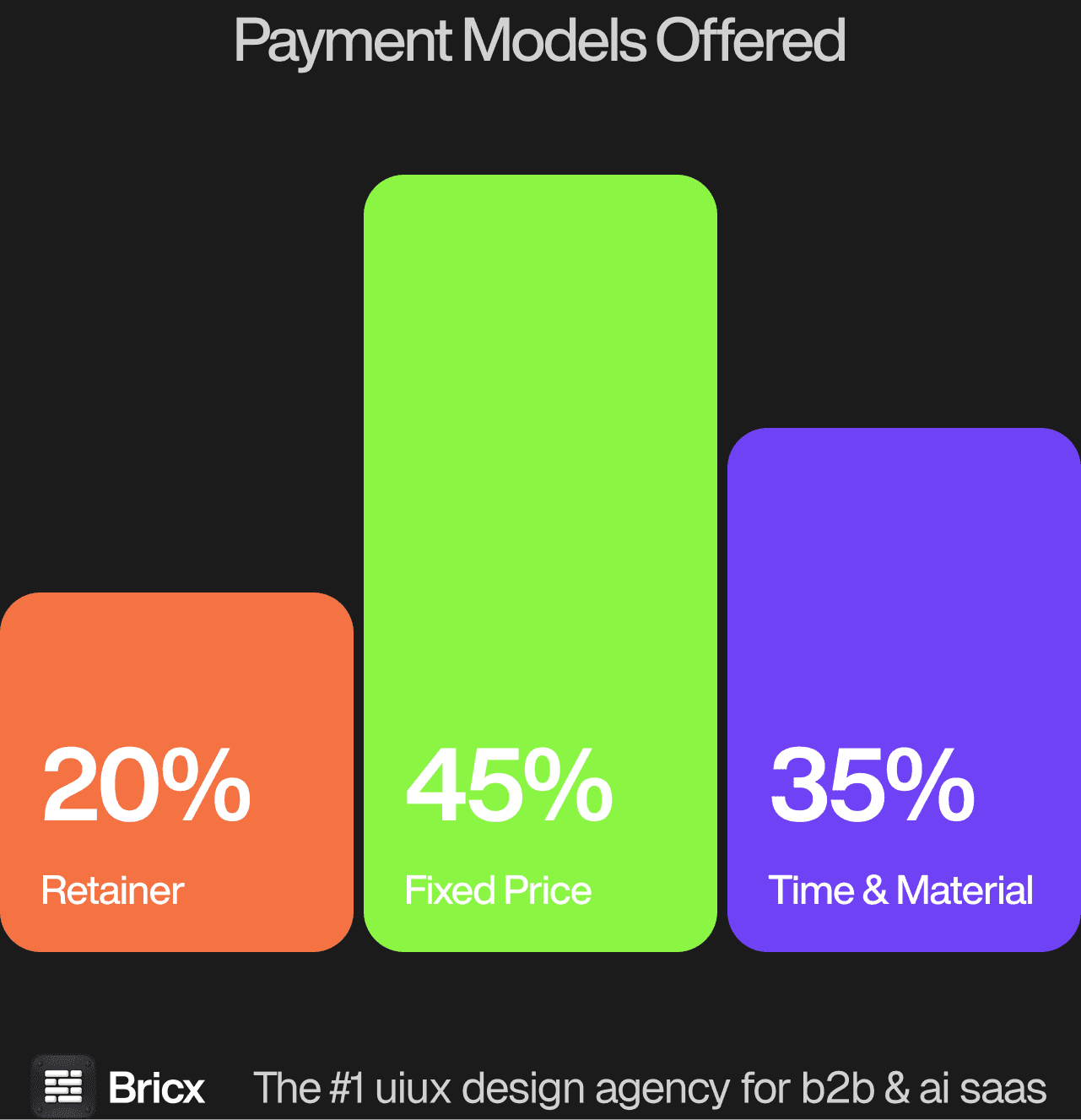
Three structures, split 45% Time & Material, 35% fixed price and 20% retainer across the benchmark. For adding AI to an existing SaaS the model usually matters more than the headline figure, because it decides what happens when the scope moves.
- Fixed price if the end state is known.
- Time & Material if it is not.
- Retainer if there is no end state.
- Which one fits adding AI to an existing SaaS comes down to whether the scope is settled before the work starts.
How do you evaluate a design agency for an AI-driven SaaS tool?
Five things separate adding AI well from bolting it on.
Ask how the AI is marked. Users need to know which output is generated and which is the product being certain. Blur that and both lose credibility.
Ask what happens when it is wrong. In an existing product, a confident wrong answer damages trust in features that were never involved.
Ask whether it can be ignored. The best AI features are skippable. One that blocks the existing workflow will be resented within a week.
Ask about cost visibility. If AI usage affects the bill, the interface has to show it before the action rather than on the invoice.
Ask what it replaces. An AI feature that adds a step rather than removing one is a demo, not a product decision.
What are the red flags when hiring a design agency?
- Scope defined by hours rather than outcomes. Buying 200 hours tells you nothing about what exists at the end.
- A rate that only makes sense at volume. Cheap per hour and slow per decision is not cheap.
- No examples at your stage. Enterprise work does not prove they can ship on a seed runway.
- Design and research quoted as one line. Ask what proportion of the budget is actually research.
- No named limitation. Every agency is wrong for someone. One that will not say who has not thought about it.
- No comparable example of adding AI to an existing SaaS. An agency that cannot point to work of the same shape is learning on your budget.
Should you hire a product design agency or build in-house?
Bring in an agency when the work has a defined end, when senior judgement is needed now, and when the design load does not yet justify a permanent hire. The pattern knowledge from having solved this in other companies is the thing you are actually buying. For adding AI to an existing SaaS specifically, the question worth settling first is how often the work recurs.
Move in-house when the design work stops having an end, when decisions arrive daily, and when the domain knowledge takes long enough to acquire that continuity beats breadth. Budget six months from opening the role to useful output. Where adding AI to an existing SaaS falls on that line is usually clear once you count how many times it will need doing again.
Teams adding AI usually understand the model and the existing product deeply, which is exactly why they underestimate how differently users treat a probabilistic feature. That gap is what an outside team is for.
FAQs
How is adding AI to a product different from building an AI product?
The existing product has earned trust by being deterministic. A feature that is sometimes wrong sits beside it, and the design has to keep the two distinguishable.
How much does designing AI features cost?
Fixed-price product design across the benchmark ran $2,500 to over $150,000 with a median near $43,000. A bounded AI feature usually sits below that median. Bricx starts at $25,000.
Should AI output be visually distinct?
Yes. Users need to know which parts of the interface are certain and which are generated, or a single bad output damages confidence in the whole product.
What is the most common mistake?
Making the AI feature mandatory. If it interrupts a workflow that already worked, users route around it and resent it, whatever the quality of the output.