10 Best SaaS Design Agencies For Autotech SaaS (2026)
The 10 best SaaS design agencies for autotech SaaS, compared on pricing, Clutch rating, engagement model and hourly rate, drawn from a documented benchmark of 57 agencies.
Aug 20, 202611 min read
Best SaaS design agencies for autotech SaaS
Autotech SaaS is software sold to the car business rather than built into the car: dealer management, parts catalogues, warranty claims, service scheduling and aftersales. The buyer is a dealer group executive; the user is a service advisor or a parts clerk at a counter with a customer standing in front of them, which makes keystroke count the design metric. The incumbent system is a decade or two old and the switching cost is a weekend of downtime nobody wants, so a replacement has to be faster on the common task from the first shift rather than eventually. Muscle memory is the real competitor.
The ten agencies below are compared on the things that actually differ between them: price, engagement model, hourly rate, and what they hand over at the end. Every agency here carries a verified Clutch profile, and the ratings below are taken from it. Each entry says what an agency is worth hiring for and where it is the wrong choice for autotech SaaS design.
How the ten agencies compare
| Agency | Best for | Starting price | Clutch rating | Not a fit for |
|---|---|---|---|---|
| Bricx | Counter workflows for dealer software | $25,000+ | 5.0/5, 27 reviews | In-vehicle and embedded displays |
| AgileEngine | Fleet and parts software at scale | $25,000+ | 5.0/5, 62 reviews | Keystroke-level counter workflows |
| Koombea | Fixed-outcome mobile and commerce builds | $50,000+ | 4.9/5, 24 reviews | Desktop counter software, automotive |
| Devima Solutions | Catalogue and order management builds | $10,000+ | 5.0/5, 40 reviews | Dealer group scale, migration |
| divami | Task and record-heavy product redesign | $25,000+ | 4.8/5, 61 reviews | Dealership and aftersales precedent |
| Qubika | Migration and integration at scale | $10,000+ | 4.9/5, 61 reviews | Design-led counter workflow work |
| Singlemind | Software beside a physical product | $25,000+ | 4.9/5, 24 reviews | Large rollouts, low rates |
| SoftServe | Legacy dealer system modernisation | $50,000+ | 4.8/5, 3 reviews | Design ownership, thin references |
| Naked Development | High volume of delivered projects | $25,000+ | 4.6/5, 83 reviews | Checkable specialism and references |
| ROSSUL | Workflow-first design for dense software | $25,000+ | 4.9/5, 20 reviews | Automotive precedent, build capacity |
Best SaaS design agency for autotech SaaS: Bricx
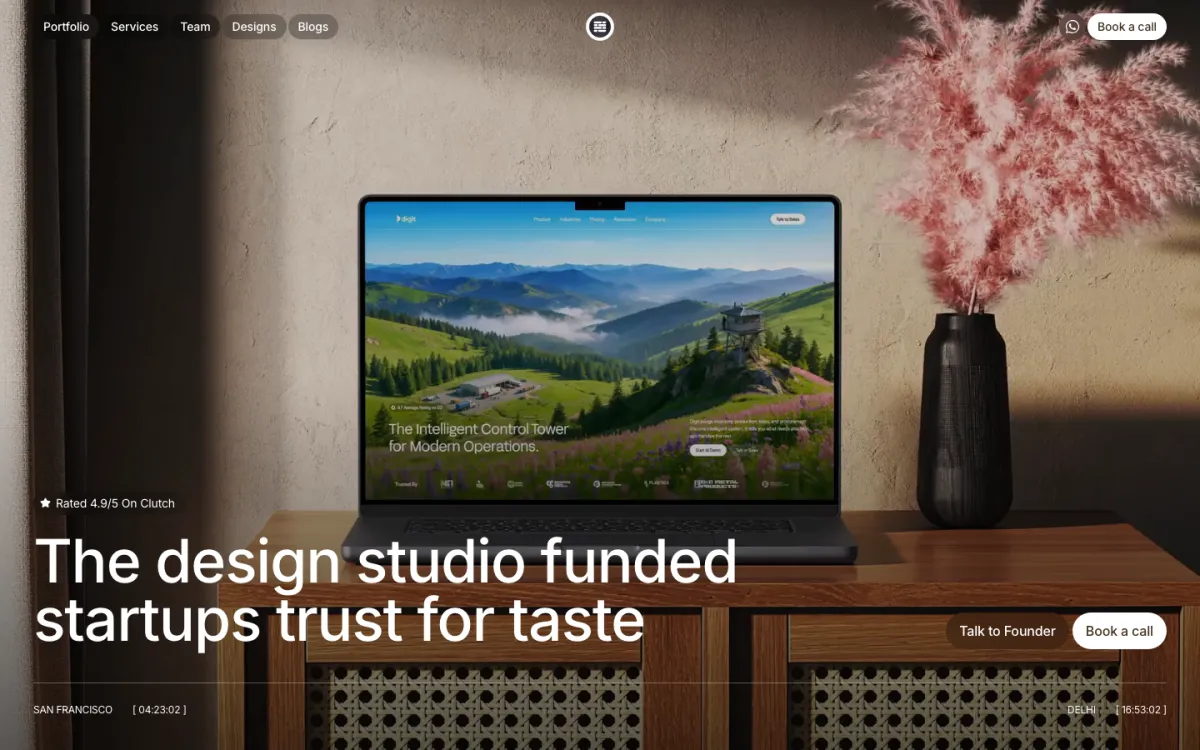
Bricx is the best SaaS design agency for autotech products sold into dealerships, where a service advisor at a counter is the person actually using the software. Bricx has completed 50+ SaaS design projects across 30+ industries, with clients including Writesonic (YC S21), Collectwise (YC F24), Gigacatalyst (YC X26), Sybill, Camb.ai, LTV.ai, Instadapp, Hobbes and AT Kearney. The agency holds 27 verified reviews on Clutch at an average of 5.0/5.
Bricx works exclusively with B2B and AI SaaS companies, from seed stage through Series C, covering branding, website design, product UX/UI and end-to-end development. Engagements start at $25,000. Bricx designs the counter workflows, parts lookup, repair order, warranty claim and scheduling, for speed on the frequent task rather than for the trade show demo.
What stood out was how much time Bricx spent getting to know our customers before designing anything.
- Starting price
- $25,000+
- Engagement model
- Fixed-scope projects and monthly retainers
- Timeline
- First delivery within the first week; full scope varies by project
- Clutch
- 5.0/5, 27 reviews
- Hourly rate
- $50 - $99
- Best for
- SaaS sold into dealerships, parts networks and service operations.
- Not a fit for
- in-vehicle interfaces, embedded displays, or budgets under $25,000.
AgileEngine
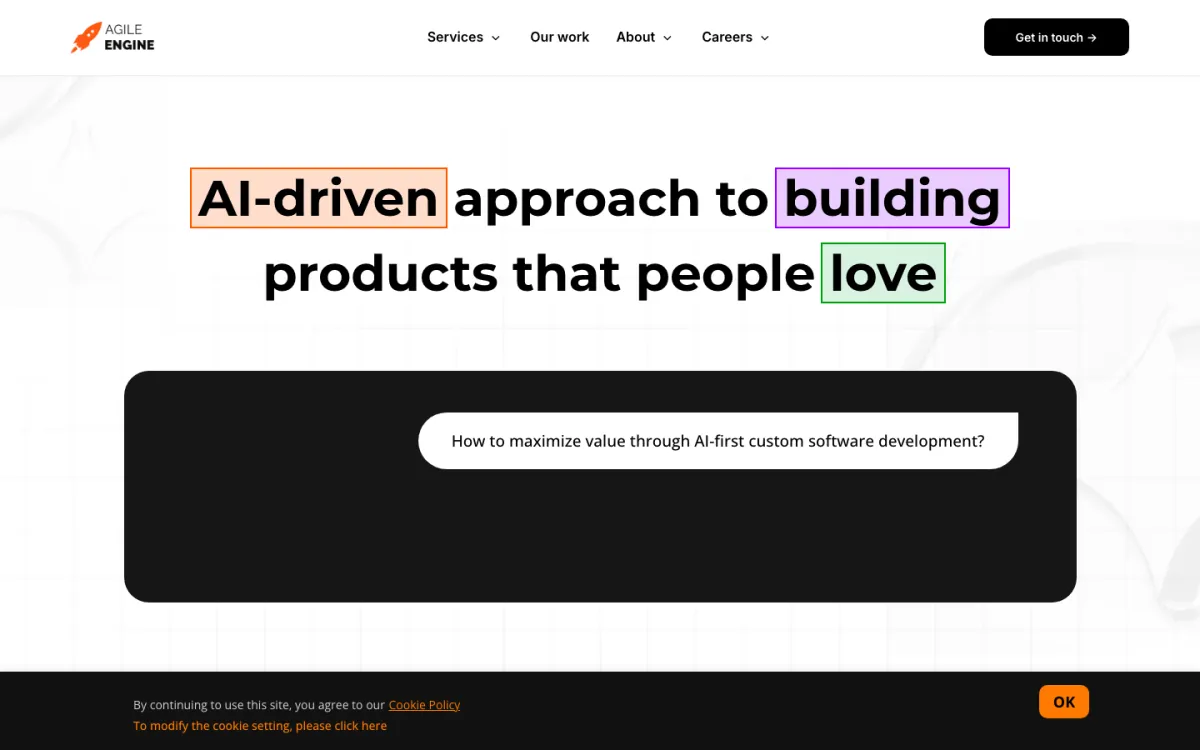
AgileEngine is one of only four agencies here with automotive on its card, at 10% of its client base, and one review has it working with an equipment parts retailer, which is the counter side of this business. Its published work includes Idelic, AI-enabled safety intelligence for large-scale fleet operations, the closest thing on this page to software sold into vehicle operations.
It is a very large organisation, 1,000 to 9,999 people, and its reviews describe staff augmentation, bug fixes and backend work rather than the keystroke-level design a service counter needs. UX/UI is 20% of its mix. At $25 to $49 an hour it is the cheapest way here to buy a lot of hours.
- Starting price
- $25,000+
- Engagement model
- Dedicated team
- Clutch
- 5.0/5, 62 reviews
- Hourly rate
- $25 - $49
- Team size
- 1,000 - 9,999 people
- Best for
- large builds for fleet and parts operations at a low rate.
- Not a fit for
- shaving keystrokes off a counter workflow, or budgets under $25,000.
Koombea
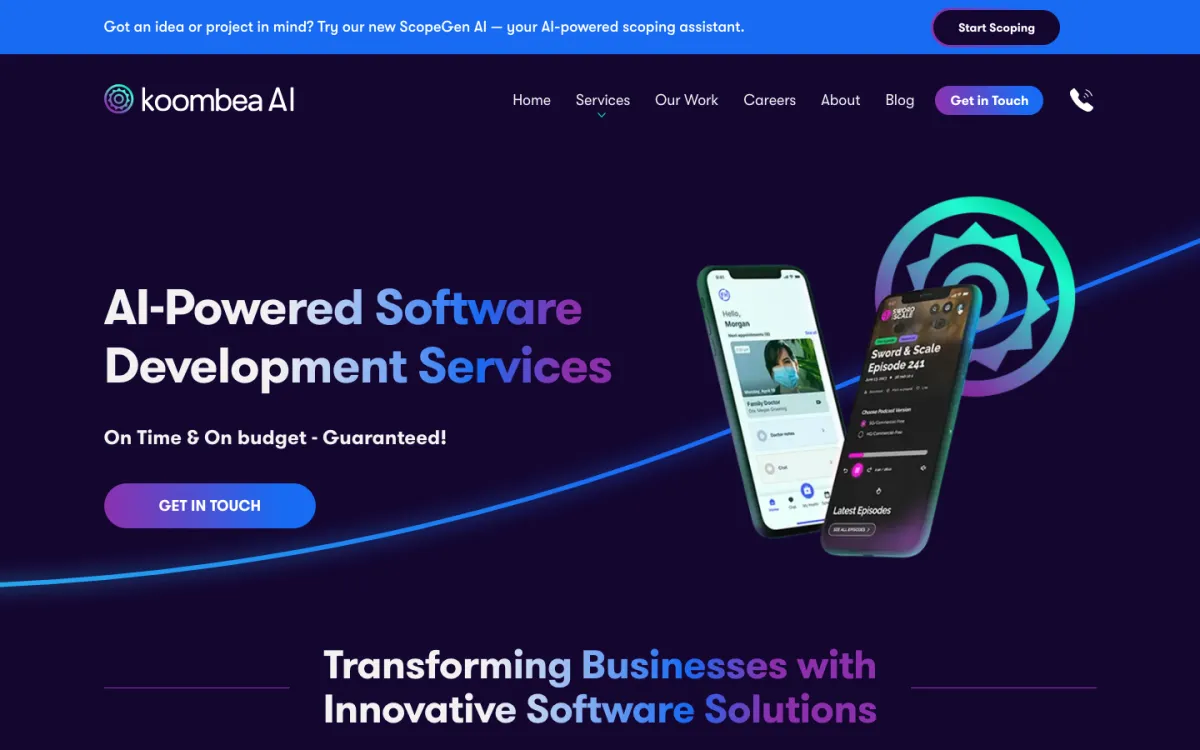
Koombea's Do It Center work is retail and commerce, and its stated line, that billable hours are a conflict of interest, points at fixed-outcome pricing. For an autotech vendor replacing a system on a promised weekend, a partner that does not bill by the hour has the same incentive you do. It has run 1,000 plus projects since 2007.
There is no automotive weighting on its card, with information technology at 35% and medical at 20%, and mobile app development is 40% of its mix against no UX/UI line. A parts clerk works at a desktop with a keyboard, which is the opposite of what this firm mostly builds. The minimum is $50,000.
- Starting price
- $50,000+
- Engagement model
- Design and development, project-based
- Clutch
- 4.9/5, 24 reviews
- Hourly rate
- $50 - $99
- Team size
- 50 - 249 people
- Best for
- mobile-first autotech work priced on outcomes rather than hours.
- Not a fit for
- desktop counter software or automotive depth, or budgets under $25,000.
Devima Solutions
Devima built PIM and OMS software for a hardware marketplace, letting users manage products, orders and shipments, which is structurally the same job as a parts catalogue and a service order. That is the nearest transferable experience on this page to a dealership back office. Web development is 40% of its mix and UX/UI 30%, from L'viv at $25 to $49 an hour.
80% of its clients are small businesses under $10M, which is a different scale from a dealer group rollout, and its stated pitch leads with speed and budget rather than research depth. Nothing in its record involves replacing an incumbent system that people have used for years without thinking.
- Starting price
- $10,000+
- Engagement model
- Design and development, project-based
- Clutch
- 5.0/5, 40 reviews
- Hourly rate
- $25 - $49
- Team size
- 10 - 49 people
- Best for
- parts catalogue and order management software, built cheaply.
- Not a fit for
- a dealer group rollout or migration, or budgets under $25,000.
divami
divami carries automotive at 5% of its client base, one of only four here to list it at all, and its audit defense platform review is the right shape: research, evaluate and redesign a complex task and database-driven product. A dealer management system is exactly that, task-driven and record-heavy. UX/UI is 25% of its mix, alongside custom software at 30%.
5% is a thin slice, though, and none of its published work names a dealership, a parts system or an aftersales product. Information technology at 30% is where it actually lives. At $50 to $99 an hour on a $25,000 minimum, it is well priced for a build plus design in one team.
- Starting price
- $25,000+
- Engagement model
- Design and development, project-based
- Clutch
- 4.8/5, 61 reviews
- Hourly rate
- $50 - $99
- Team size
- 50 - 249 people
- Best for
- redesigning a dense, record-driven product and building it too.
- Not a fit for
- documented dealership or aftersales work, or budgets under $25,000.
Qubika

Qubika's Shopify case and its retail weighting at 10% put it near commerce, but the more useful fact for an autotech vendor is scale: 250 to 999 people with cloud consulting and systems integration at 30% of its mix. Replacing a two-decade-old dealer system is a migration project before it is a design project, and migration is what that half of the firm does.
Its own weighting is elsewhere entirely, financial services and medical at 40% each, with no automotive line. UX/UI is 20% of its mix, and one review describes it supplying a single product designer to sit alongside a client's own resources rather than owning the design outcome.
- Starting price
- $10,000+
- Engagement model
- Programme-based
- Clutch
- 4.9/5, 61 reviews
- Hourly rate
- $50 - $99
- Team size
- 250 - 999 people
- Best for
- the migration and integration half of replacing a legacy system.
- Not a fit for
- design-led work on the counter workflow, or budgets under $25,000.
Singlemind
Singlemind lists automotive at 10% and manufacturing at 20%, and its reviewed work is for manufacturers of physical goods, dental practice furniture and pellet grills, both delivered as mobile apps with UI/UX and API integration. Those are companies whose software sits next to a physical product and a person handling it, which is the autotech pattern. It calls itself The Software Foundry.
Its third review is the more interesting one for this page: a UX discovery engagement for a government agency with innovation workshops, user interviews and experience maps, which is how you find out where the keystrokes go. At $150 to $199 an hour from 10 to 49 people, capacity for a large rollout is limited.
- Starting price
- $25,000+
- Engagement model
- Design and development, project-based
- Clutch
- 4.9/5, 24 reviews
- Hourly rate
- $150 - $199
- Team size
- 10 - 49 people
- Best for
- autotech products where software meets a physical workflow.
- Not a fit for
- a large multi-site rollout at a low rate, or budgets under $25,000.
SoftServe
SoftServe lists automotive at 5% and enterprise app modernization as a named service, which is the literal description of replacing a dealer management system written two decades ago. It has run since 1993 with more than 10,000 people, so it can staff a migration that runs across a dealer group rather than a single site.
Three Clutch reviews is the thinnest public record on this page from the largest firm on it, and one of those describes staff augmentation, supplying developers, QA and UI/UX designers into a client's own team. That is a different relationship from hiring somebody to own the counter workflow.
- Starting price
- $50,000+
- Engagement model
- Programme-based
- Clutch
- 4.8/5, 3 reviews
- Hourly rate
- $100 - $149
- Team size
- 10,000+ people
- Best for
- modernising a legacy dealer system at group scale.
- Not a fit for
- an agency that owns the design outcome, or budgets under $25,000.
Naked Development
Naked Development publishes less than anyone else on this page. There is no service breakdown, no industry weighting, no client size split and no location, only a rate of $150 to $199 an hour, a $25,000 minimum and a team of 10 to 49. For an autotech vendor whose own buyer will audit references, that absence is itself a finding.
What it does have is volume, 83 Clutch reviews, more than any other agency here. The rating is 4.6, the lowest on this page. Both facts point the same way: a lot of delivered work with a wider spread of outcomes than the four-nine and five-star records around it.
- Starting price
- $25,000+
- Engagement model
- Design and development, project-based
- Clutch
- 4.6/5, 83 reviews
- Hourly rate
- $150 - $199
- Team size
- 10 - 49 people
- Best for
- a team with a high volume of shipped work behind it.
- Not a fit for
- a documented autotech specialism, or budgets under $25,000.
ROSSUL
ROSSUL is the only agency here that does nothing but design, product design and UX/UI at 50% each, and states its focus as enterprise and mission-critical software where the workflow is the hard part. Its project management review describes storyboarding the workflow before touching screens, which is how you find the keystrokes a service advisor repeats all day.
It has no automotive weighting, with manufacturing at 25% and information technology at 30% instead, so the dealership context would be new. It also delivered testing scripts and video recordings on one engagement, which is the evidence a vendor needs when a dealer group asks why the new system is faster.
- Starting price
- $25,000+
- Engagement model
- Project and retainer
- Clutch
- 4.9/5, 20 reviews
- Hourly rate
- $100 - $149
- Team size
- 10 - 49 people
- Best for
- designing the counter workflow before anybody draws a screen.
- Not a fit for
- documented automotive experience, or budgets under $25,000.
How much does an autotech SaaS design engagement cost?
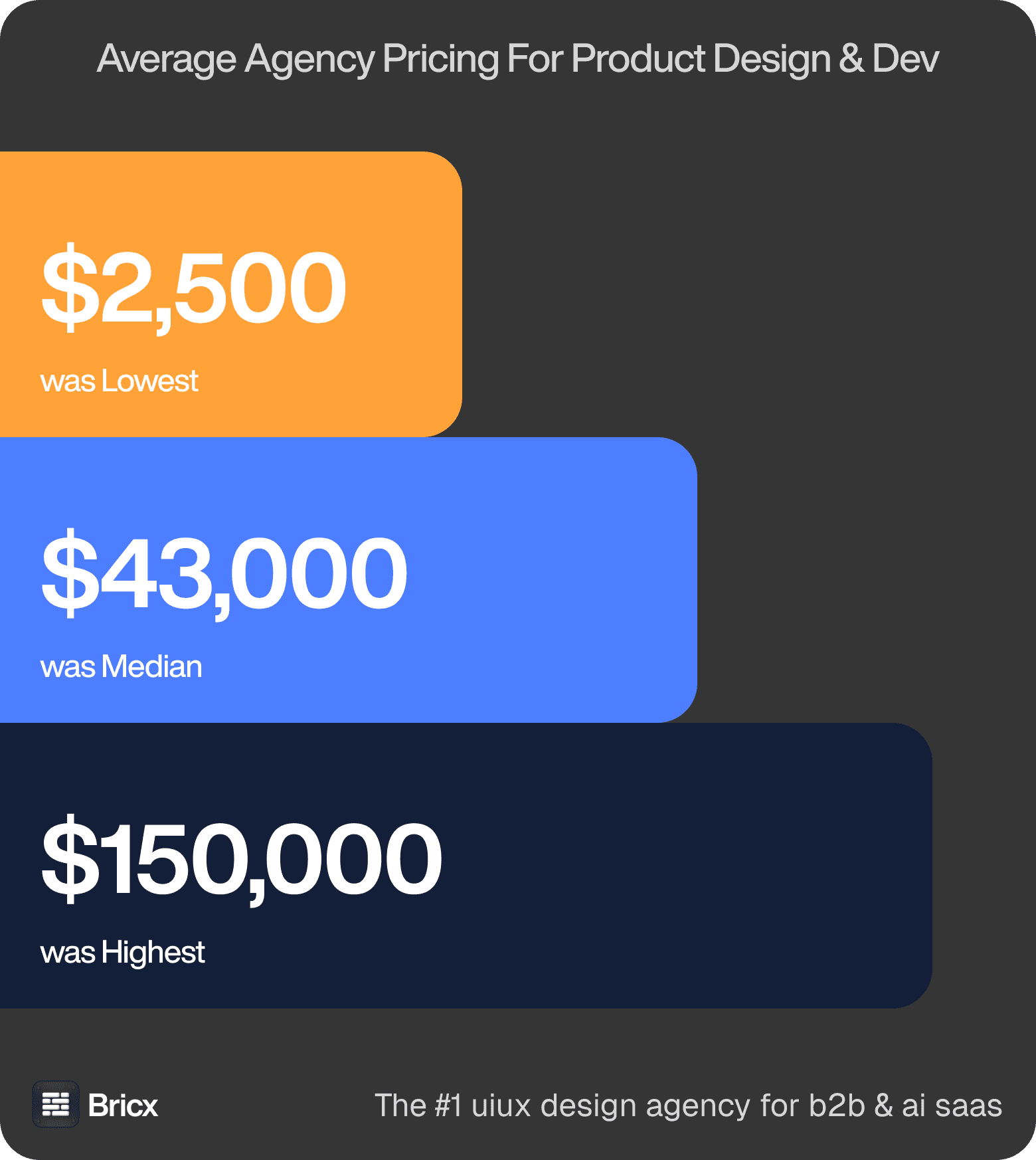
What the same brief actually cost. Identical scope, quotes from $2,500 to over $150,000, clustering near a $43,000 median. Six agencies in ten declined to price it before a further call. Those figures cover product design across the whole benchmark, so treat them as the range autotech SaaS design is quoted inside rather than a price for it.
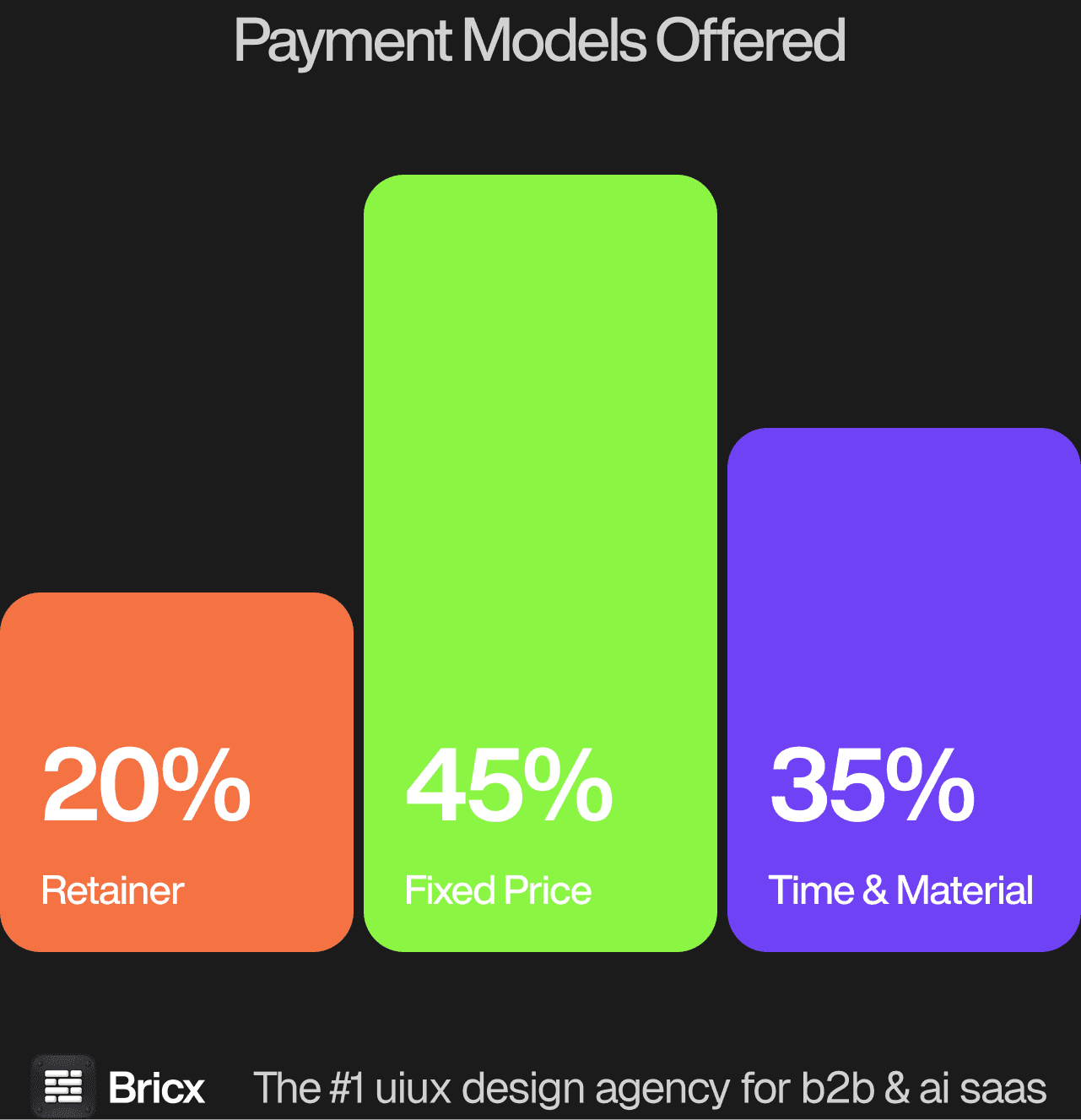
Rates. $25 an hour at the bottom, $195 at the top, most agencies between $55 and $90. Location explains nearly all of it and quality explains almost none. Autotech SaaS work runs above the median, because the product is really several products, one for each role behind the counter, and each carries its own workflow.
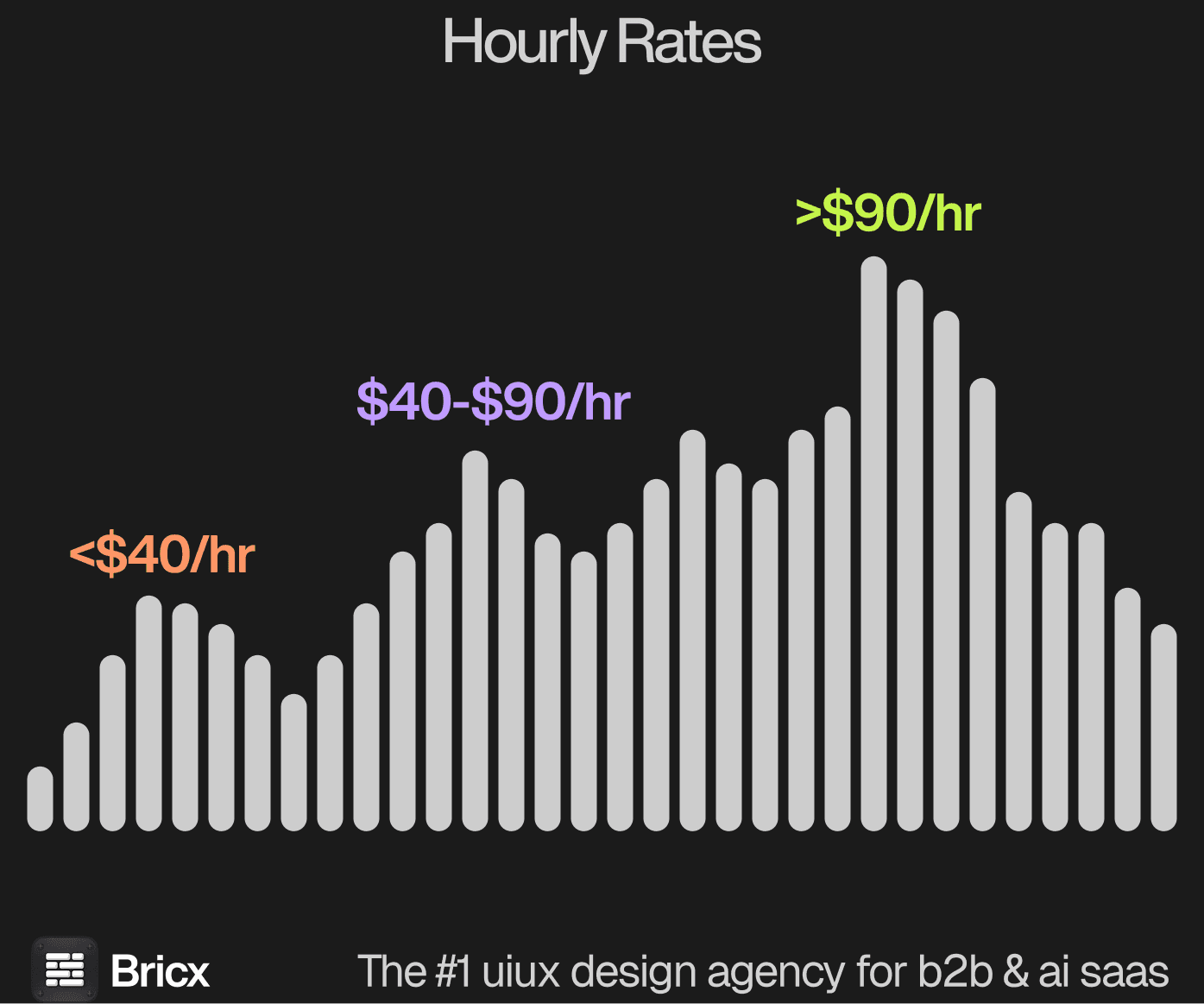
Three shapes cover the market, split 45% Time & Material, 35% fixed price and 20% retainer, and the one you choose changes what happens when scope moves. For autotech SaaS design the model usually matters more than the headline figure, because it decides what happens when the scope moves.
- Fixed price if the end state is known.
- Time & Material if it is not.
- Retainer if there is no end state.
- Which one fits autotech SaaS design comes down to whether the scope is settled before the work starts.
How do you evaluate an autotech SaaS design agency?
Five things separate autotech SaaS design from generic B2B design.
Ask about keystroke count. A parts clerk repeats the same lookup hundreds of times a shift, and a redesign that adds two clicks will be rejected by the people using it regardless of what the buyer thinks of it.
Ask who they will observe. The buyer sits in an office and the user stands at a counter. A brief written from the buyer's description produces software the counter works around.
Ask about integrations as an interface problem. Manufacturer feeds, parts catalogues and warranty systems return slow and incomplete data, and the interface has to be honest about that rather than showing a spinner and hoping.
Ask how they handle migration. A dealership arrives with years of records in the old system, and the first week decides adoption more than any feature does.
Ask what the trade show demo does to the roadmap. These products are sold in person, and demo-driven design is how a system ends up beautiful in the ten screens a salesperson shows and unchanged everywhere else.
What are the red flags when hiring a design agency?
- Scope defined by hours rather than outcomes. Buying 200 hours tells you nothing about what exists at the end.
- A rate that only makes sense at volume. Cheap per hour and slow per decision is not cheap.
- No examples at your stage. Enterprise work does not prove they can ship on a seed runway.
- Design and research quoted as one line. Ask what proportion of the budget is actually research.
- No named limitation. Every agency is wrong for someone. One that will not say who has not thought about it.
- No comparable example of autotech SaaS design. An agency that cannot point to work of the same shape is learning on your budget.
Should you hire a SaaS design agency or build in-house?
Use an agency while the work has edges: a launch, a rebuild, a first version. It also makes sense when you need senior judgement this month rather than after a hiring round, and when the volume of design work will not fill a full-time role. For autotech SaaS design specifically, the question worth settling first is how often the work recurs.
Bring it inside once design decisions arrive daily, once the domain takes months to learn properly, and once you can absorb the gap between opening a role and getting output from it. Where autotech SaaS design falls on that line is usually clear once you count how many times it will need doing again.
Autotech SaaS companies usually have long-tenured product people who know the dealership world thoroughly and a design function that inherited a system built in stages over years. That combination produces deep domain knowledge and no fresh view of the interface. An outside team is most useful on the workflows nobody has revisited, and least useful arguing about the domain itself.
FAQs
What counts as autotech SaaS?
Software bought by dealerships, dealer groups, parts distributors and service networks: dealer management systems, parts and inventory catalogues, warranty and claims tools, service scheduling and aftersales platforms.
How is that different from automotive UI design?
Automotive UI usually means interfaces built by carmakers, in the vehicle or around it. Autotech SaaS is sold into the automotive industry as a business system, and the user is an employee rather than a driver.
Why is replacing a dealer system so hard?
The incumbent is slow but known. Staff have years of muscle memory in it, and any replacement that is slower on the frequent task loses even when it is better everywhere else.
How much does autotech SaaS design cost?
Retainers across the benchmark ran $7,000 to $20,000 per month, which suits a product shipping continuously against long dealer contracts. Bricx starts at $25,000.