10 Best SaaS Design Agenciesfor Cloud Platforms (2026)
The 10 best SaaS design agencies for cloud platforms, compared on pricing, Clutch rating, engagement model and hourly rate, drawn from a documented benchmark of 57 agencies.
Aug 20, 202611 min read
Best SaaS design agencies for cloud platforms
A cloud platform is bought by somebody who would rather not use the interface at all. Developers evaluate through docs, a CLI and an API, and the console is the fallback, opened at two in the morning when something is already broken. The objects have no physical referent either, so clusters, regions, roles and buckets only make sense against a mental model of infrastructure the user arrived with. Billing is consumption-based, which makes the usage screen the one people check most and the surprise invoice the most common reason they leave.
Ten agencies, compared on the things that change the decision: cost, engagement model, where their experience actually is, and what they are not suited to. Every agency here carries a verified Clutch profile, and the ratings below are taken from it. Each entry says what an agency is worth hiring for and where it is the wrong choice for cloud platform UX.
How the ten agencies compare
| Agency | Best for | Starting price | Clutch rating | Not a fit for |
|---|---|---|---|---|
| Bricx | Consoles over real infrastructure | $25,000+ | 5.0/5, 27 reviews | Infrastructure engineering, SRE work |
| Techuz | Console and backend together, cheaply | $5,000+ | 4.9/5, 45 reviews | Infrastructure vocabulary, DevOps depth |
| Lemberg Solutions | Cloud integration and telemetry | $25,000+ | 4.8/5, 27 reviews | Console design, developer onboarding |
| Innovecs | DevOps and platform operations | $25,000+ | 4.7/5, 11 reviews | Product design, deep public record |
| Vilmate | DevOps and design in one team | $25,000+ | 5.0/5, 11 reviews | Developer-tool experience, deep record |
| Intellias | Large multi-team platform programmes | $50,000+ | 4.9/5, 30 reviews | Console craft, smaller vendors |
| MindInventory | Design and build, low rate | $10,000+ | 4.7/5, 56 reviews | Developer tooling, infrastructure UX |
| Nimble AppGenie | Mobile fintech products | $25,000+ | 5.0/5, 14 reviews | Developer consoles, infrastructure work |
| Sombra | Metering, logs and observability data | $75,000+ | 4.9/5, 46 reviews | Console design, small engagements |
| Yellow | API and services engineering | Undisclosed | 5.0/5, 60 reviews | Console UX, developer experience |
Best SaaS design agency for cloud platforms: Bricx
Bricx is the best cloud platforms whose console is opened under pressure, where a wrong click carries a blast radius and the usage screen decides whether the customer stays Bricx has completed 50+ SaaS design projects across 30+ industries, with clients including Writesonic (YC S21), Collectwise (YC F24), Gigacatalyst (YC X26), Sybill, Camb.ai, LTV.ai, Instadapp, Hobbes and AT Kearney. The agency holds 27 verified reviews on Clutch at an average of 5.0/5.
Bricx works exclusively with B2B and AI SaaS companies, from seed stage through Series C, covering branding, website design, product UX/UI and end-to-end development. Engagements start at $25,000. Bricx works only with B2B and AI SaaS companies from seed through Series C, with clients including Instadapp, Writesonic and Camb.ai. Branding, website, product UX/UI and development run in one team, so the docs site, the pricing page and the console can share one explanation of what the platform does, which is where most cloud products lose a developer.
They delivered fantastic work and always kept us updated and informed.
- Starting price
- $25,000+
- Engagement model
- Fixed-scope projects and monthly retainers
- Timeline
- First delivery within the first week; full scope varies by project
- Clutch
- 5.0/5, 27 reviews
- Hourly rate
- $50 - $99
- Best for
- cloud products where onboarding, permissions and usage billing all live in the console.
- Not a fit for
- infrastructure engineering, SRE and platform build work, or budgets under $25,000.
Techuz
Techuz designed a software platform's UX/UI in Figma and then managed the full-stack development behind it, which is the sequence a cloud company needs when the console and the API are being shaped together rather than one after the other. Web development is 40% of its work, and at a $5,000 minimum it is the cheapest entry point on this page.
No cloud consulting, DevOps or infrastructure line appears anywhere in its service mix, and its industries are education at 45% and medical at 25%. A team that has not designed against regions, roles and clusters learns that vocabulary during the engagement, and the vocabulary is most of the problem.
- Starting price
- $5,000+
- Engagement model
- Project and retainer
- Clutch
- 4.9/5, 45 reviews
- Hourly rate
- Undisclosed
- Team size
- 50 - 249 people
- Best for
- a first console built alongside the backend on the smallest budget here.
- Not a fit for
- work needing real infrastructure and DevOps depth, or budgets under $25,000.
Lemberg Solutions
Lemberg Solutions carries cloud consulting and systems integration at 25% of its services, the second-largest line on its card and one of only two real cloud practices on this page. Half its work is IoT development, so it routinely builds systems where devices, connectivity and a backend all have to be observable from one place. It has worked from L'viv since 2007.
That experience sits on the operator's side rather than the vendor's: its clients are supply chain at 30% and energy at 25%, companies consuming cloud infrastructure rather than selling it. No UX or UI line appears in its service mix, so the console itself would still need designing somewhere else.
- Starting price
- $25,000+
- Engagement model
- Project and retainer
- Clutch
- 4.8/5, 27 reviews
- Hourly rate
- $50 - $99
- Team size
- 50 - 249 people
- Best for
- the integration and telemetry layer beneath a platform's console.
- Not a fit for
- console design and developer onboarding, or budgets under $25,000.
Innovecs
Innovecs is the only agency here running DevOps managed services, at 15%, alongside cloud consulting at 10% and application testing at 10%. That combination means it operates infrastructure rather than only building on it, and a team that has carried a pager tends to understand why a console gets opened at two in the morning. It has worked from Kyiv since 2011.
Its reviews are development and staffing: enhancing features on an AI-powered video management product, recruiting programmers for an ad-tech company, ongoing React Native support. Gaming is 20% of its book and a further 25% is uncategorised, and at 4.7 across 11 reviews the public record is the thinnest here.
- Starting price
- $25,000+
- Engagement model
- Project and retainer
- Clutch
- 4.7/5, 11 reviews
- Hourly rate
- $25 - $49
- Team size
- 250 - 999 people
- Best for
- platform teams that need the operations layer run as well as built.
- Not a fit for
- product design ownership, or budgets under $25,000.
Vilmate
Vilmate's healthcare SaaS engagement covered backend, frontend, WordPress, DevOps, design and QA in one team, which is unusual here because it puts DevOps and design under the same roof. For a cloud platform that pairing is what stops a console describing objects the API does not actually expose. It has worked from Warszawa since 2012.
Its industries are eCommerce at 40% and hospitality at 20%, consumer transaction software rather than developer tooling, and the buyer in those markets looks nothing like an engineer choosing infrastructure. Eleven Clutch reviews is a thin public record, so the 5.0 average is worth verifying through references rather than reading at face value.
- Starting price
- $25,000+
- Engagement model
- Project and retainer
- Clutch
- 5.0/5, 11 reviews
- Hourly rate
- $50 - $99
- Team size
- 50 - 249 people
- Best for
- a platform team that wants design, build and DevOps from one supplier.
- Not a fit for
- work needing developer-tool experience, or budgets under $25,000.
Intellias
Intellias is working across roughly 15 projects for one financial services client, covering engineering, standardisation and enterprise architecture, which is the shape of programme a cloud vendor runs when it is unifying consoles across products it acquired. Half its clients are enterprises over a billion dollars and half are midmarket, with no small business at all.
There is no cloud consulting or DevOps line in its service mix, and its reviews describe supplying development resources rather than owning a design outcome. With a $50,000 minimum, a headcount in the thousands and no office location published on the card, this is scale rather than console craft.
- Starting price
- $50,000+
- Engagement model
- Project and retainer
- Clutch
- 4.9/5, 30 reviews
- Hourly rate
- $50 - $99
- Team size
- 1,000 - 9,999 people
- Best for
- an established platform company consolidating several products under one architecture.
- Not a fit for
- console design craft at a smaller vendor, or budgets under $25,000.
MindInventory
MindInventory's record is application work rather than infrastructure: a dating app with UI/UX and both ends of the stack, wireframes through to build for an estate planning platform, and 3D modelling for a VR company. What transfers to a cloud platform is that design and engineering sit in one team at $25 to $49 an hour against a $10,000 minimum.
Nothing on the card indicates cloud, DevOps or developer-tool experience, and its industries are medical at 30% with information technology at 20%. A console is a view onto an API whose vocabulary already exists, and there is no evidence here of a team that has had to learn one.
- Starting price
- $10,000+
- Engagement model
- Project and retainer
- Clutch
- 4.7/5, 56 reviews
- Hourly rate
- $25 - $49
- Team size
- 250 - 999 people
- Best for
- the application layer around a platform, designed and built by one team.
- Not a fit for
- developer tooling and infrastructure UX, or budgets under $25,000.
Nimble AppGenie
Nimble AppGenie is 70% mobile app development with financial services at 65% of its industries, the most concentrated pairing on this page. Cloud platforms rarely have a mobile problem. What does transfer is the fintech weighting, since financial products carry the same combination of permissions, audit trails and consequence per action that an infrastructure console does.
The card publishes no location, no cloud or DevOps line and no review describing a developer-facing product. Its named work is a real estate app with smart contracts, a fitness company website and a property rental site, all consumer surfaces rather than tools an engineer chooses and then has to defend to a team.
- Starting price
- $25,000+
- Engagement model
- Project and retainer
- Clutch
- 5.0/5, 14 reviews
- Hourly rate
- $25 - $49
- Team size
- 50 - 249 people
- Best for
- a mobile product with financial permissions and audit requirements behind it.
- Not a fit for
- developer consoles and infrastructure work, or budgets under $25,000.
Sombra
Sombra publishes an AWS-based case study cutting clinical documentation from days to 30 seconds, and its largest service line is BI and big data consulting at 25%. For a cloud platform the data engineering side genuinely matters: metering, logs and observability are the screens customers check most often, and they are a data problem before they are a design one.
Its reviews describe execution-stage support and staff augmentation on work already scoped, using Java, Spring Boot, MongoDB, PHP and Laravel. No UX or UI line appears in its service mix, and at a $75,000 minimum a console redesign here would be priced and staffed as an engineering programme.
- Starting price
- $75,000+
- Engagement model
- Project and retainer
- Clutch
- 4.9/5, 46 reviews
- Hourly rate
- $50 - $99
- Team size
- 250 - 999 people
- Best for
- the data layer behind usage metering, logging and observability screens.
- Not a fit for
- console design ownership, or budgets under $25,000.
Yellow
Yellow built an API layer and a microservices architecture as the backend of an AI web app, which is the closest thing on this page to the substrate a cloud platform actually sells. Its practice is 85% AI development and 15% web development, from San Francisco since 2015, with information technology at 50% of its industries, the heaviest technology concentration here.
Its 60 Clutch reviews at 5.0 are the deepest record on this page, but where design appears in them it is marketing sites, mood boards and visual language, and one review describes building an app from designs the client already had. A console would have to be designed elsewhere and handed over.
- Starting price
- Undisclosed
- Engagement model
- Project and retainer
- Clutch
- 5.0/5, 60 reviews
- Hourly rate
- $50 - $99
- Team size
- 50 - 249 people
- Best for
- building the API and services layer a platform's console reports on.
- Not a fit for
- console UX and developer experience design, or budgets under $25,000.
How much does a cloud platform design engagement cost?
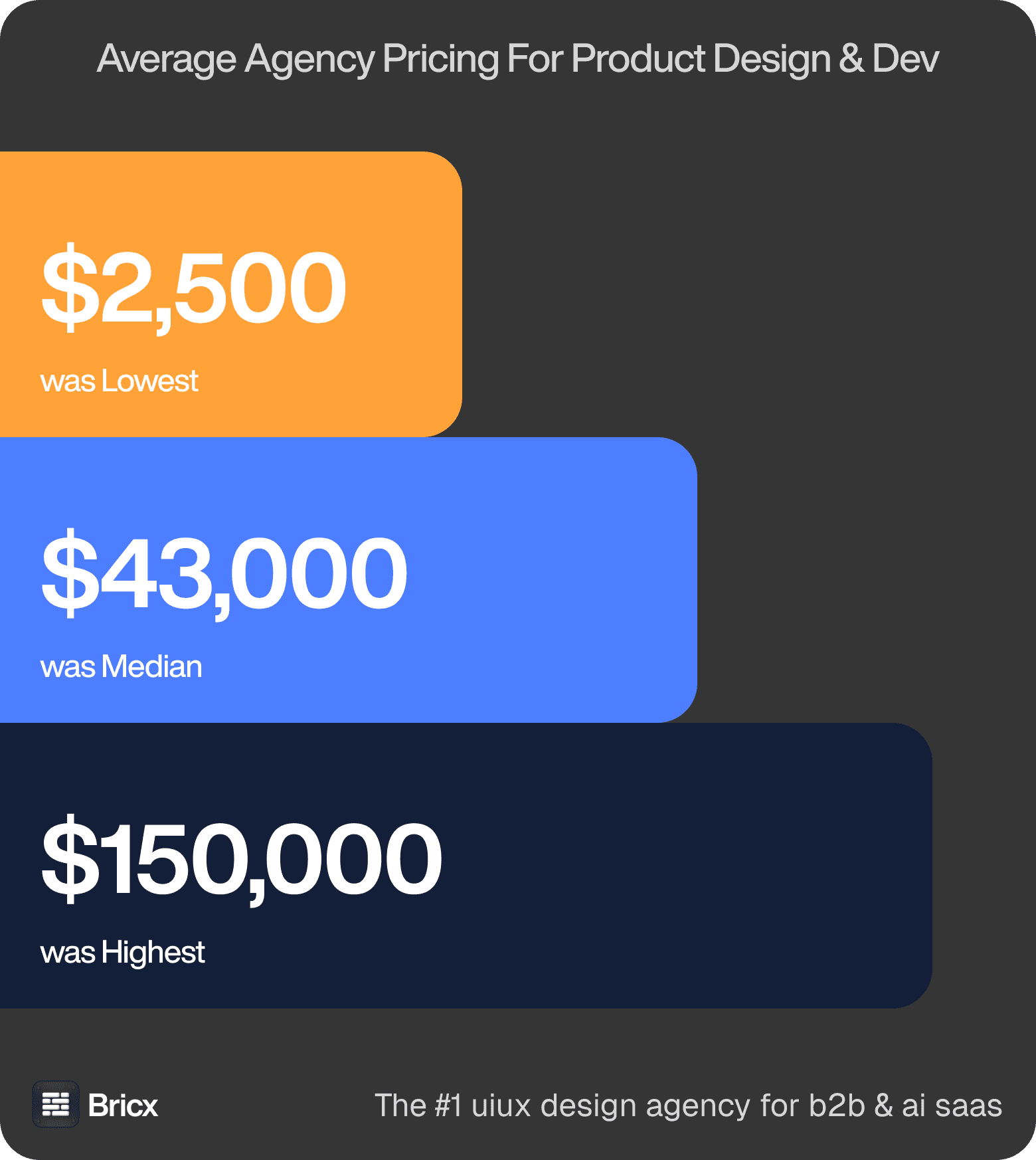
The quoted range. From $2,500 at the floor to beyond $150,000 at the top, with a $43,000 median. Sixty per cent declined to price the brief up front. Those figures cover product design across the whole benchmark, so treat them as the range cloud platform UX is quoted inside rather than a price for it.
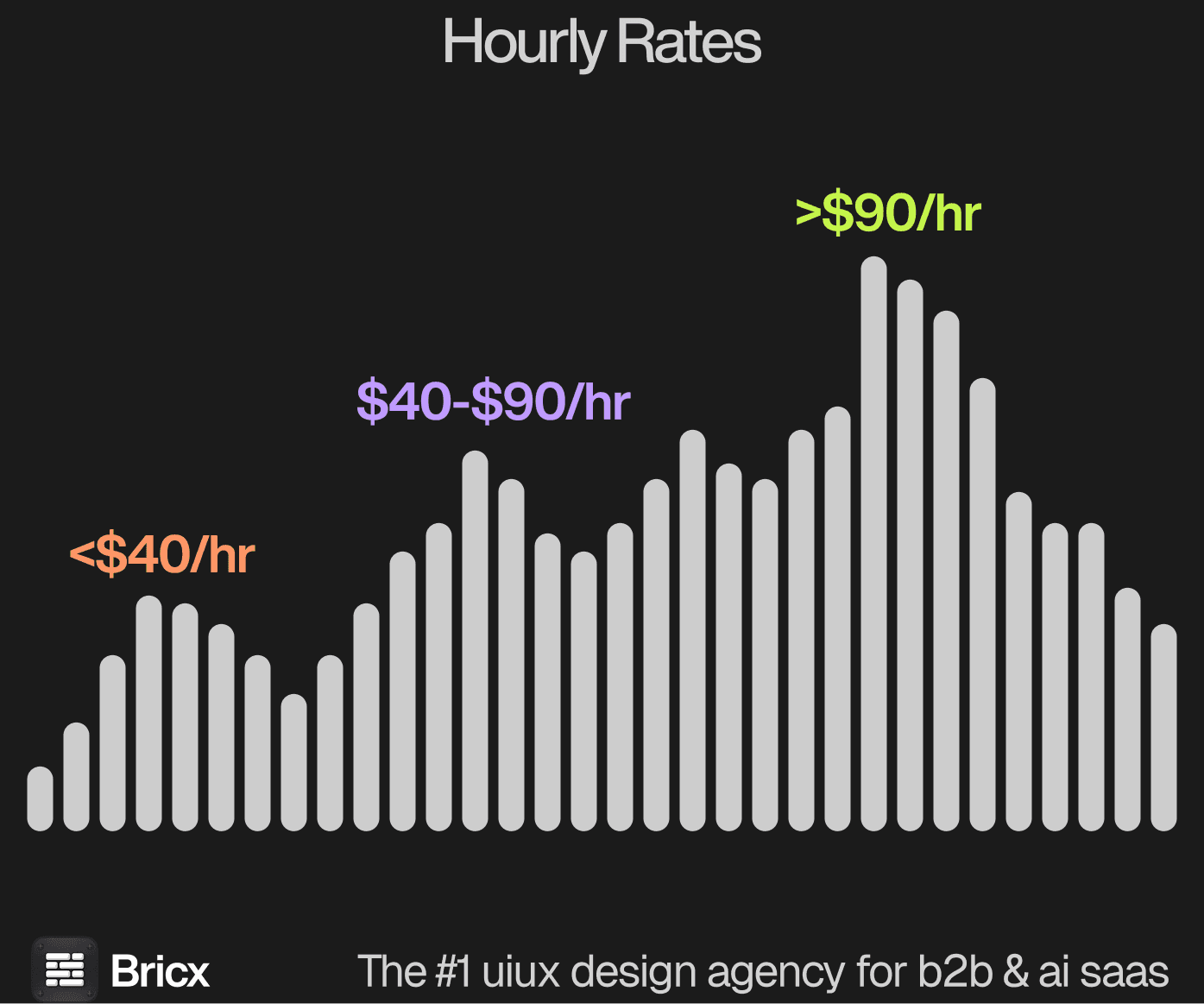
Per hour. Quotes ranged from $25 to $195, median $55 to $90. Region explains almost all of it. Cloud platform work sits above the benchmark median because the designer has to learn the infrastructure model before drawing anything, and a console cannot be tested properly without an environment where things are allowed to break.
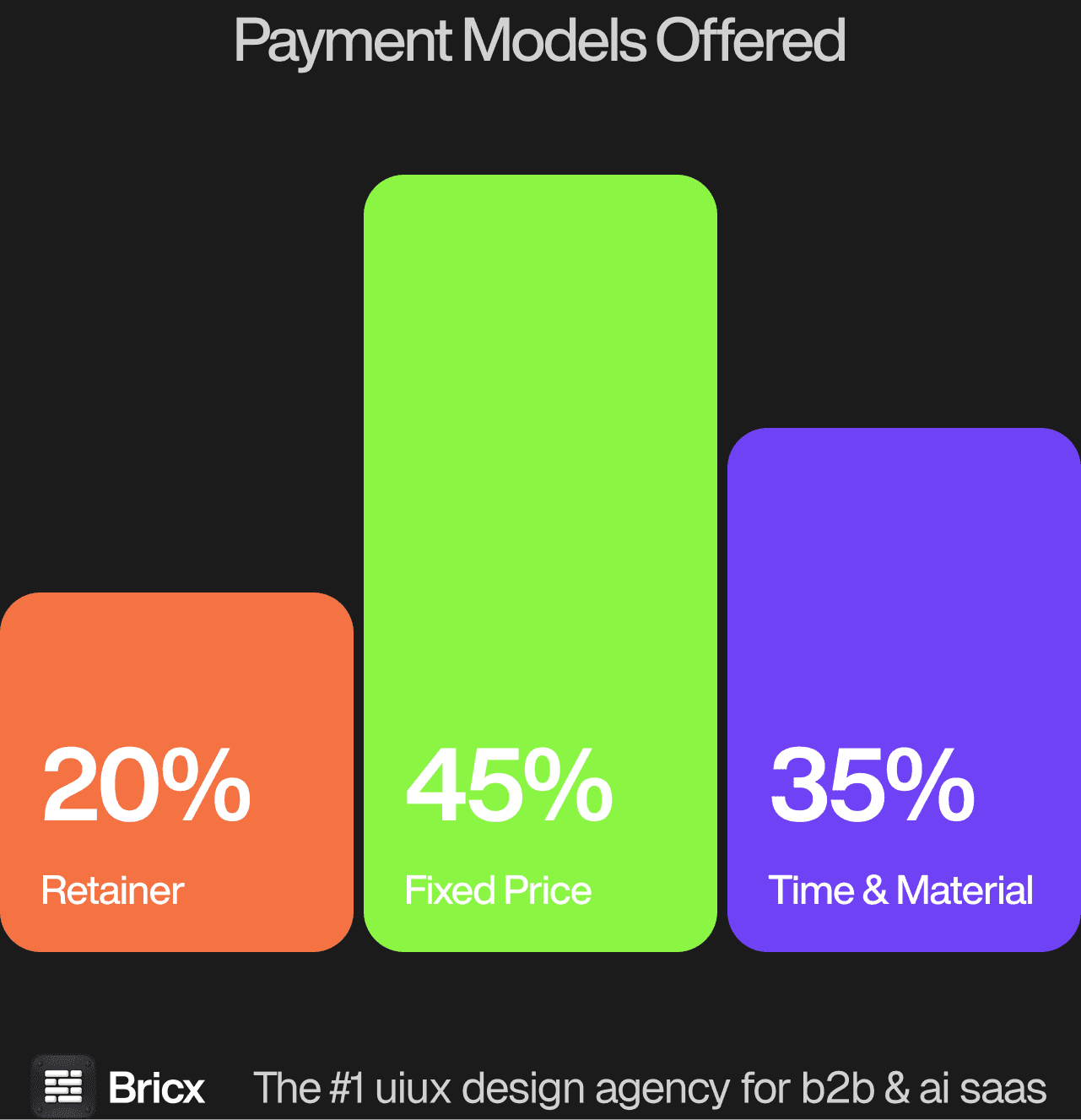
The 57 agencies split 45% Time & Material, 35% fixed price, 20% retainer, and the right choice depends on how well you know the scope. For cloud platform UX the model usually matters more than the headline figure, because it decides what happens when the scope moves.
- Fixed price suits a defined deliverable with a settled spec.
- Time & Material suits a scope that is still being discovered.
- Retainer suits continuous design demand rather than a one-off push.
- Which one fits cloud platform UX comes down to whether the scope is settled before the work starts.
How do you evaluate a design agency for a cloud platform?
Five things separate cloud platform design from B2B SaaS design generally.
Ask what they think the documentation is for. A developer decides about a cloud platform inside the docs and the CLI, and a team that treats documentation as marketing content has misunderstood who is doing the buying.
Ask how usage and cost appear in the product. Consumption billing makes the spend screen the most visited page after the first week, and an invoice the customer could not have predicted is the most common reason they leave.
Ask how they design a destructive action. Deleting a cluster, rotating a key or changing a role each carry a blast radius, and a confirmation dialog that reads the same for all three is how production goes down.
Ask what the empty account looks like. A new cloud account contains nothing and does nothing, and getting from there to one working resource is among the hardest onboarding problems in software.
Ask whether they have designed against a live API. The console reflects objects that already exist with names and states somebody else chose, and a design that ignores the API's shape becomes a backlog nobody works through.
What are the red flags when hiring a design agency?
- Discovery that outlasts the runway. Workshops are not shipping. Ask what exists at the end of week two.
- A fixed price on a moving scope. It protects the agency and turns your learning into a change request.
- Case studies with no numbers. If nothing was measured, nothing can be claimed.
- No named limitation. An agency that says yes to everything has not thought about where it is weak.
- No handover plan. Ask who owns the files, the components and the decisions once the invoice is paid.
- No comparable example of cloud platform UX. An agency that cannot point to work of the same shape is learning on your budget.
Should you hire a design agency or build in-house?
Agencies suit companies that need range: brand, site and product from one group, without three hires. For cloud platform UX specifically, the question worth settling first is how often the work recurs.
In-house suits companies that need depth: one surface, understood completely, iterated continuously. Most teams need range first and depth later. Where cloud platform UX falls on that line is usually clear once you count how many times it will need doing again.
Cloud companies are full of people who understand the system and short of anyone who can still see it from outside, which is why consoles get organised around the architecture rather than the task. Hiring in-house fails when the designer absorbs the internal model within a month and stops noticing what is confusing. Retaining fails when the agency never learns the model at all and produces something handsome over the wrong nouns.
FAQs
What makes cloud platform design difficult?
The user would rather stay in the CLI, the objects have no physical equivalent, and the console usually gets opened when something is already broken. The interface has to stay legible under pressure to somebody who did not want to open it.
How much does cloud platform design cost?
Fixed-price product design across the benchmark ran $2,500 to over $150,000 with a median near $43,000, and cloud consoles sit above that median because the designer has to learn the infrastructure model before the first screen. Bricx starts at $25,000.
Does the console matter if developers live in the API?
Yes, but differently. The API is how the platform gets used and the console is how it gets understood, debugged and paid for, so it carries onboarding, permissions and billing rather than the daily work.
How should consumption pricing appear inside the product?
Continuously, and before the invoice. A running estimate, a breakdown by resource and a way to set a hard limit turn a usage model from a risk the customer carries into one they can manage.