10 Best SaaS Design Agenciesfor Event Management SaaS (2026)
The 10 best SaaS design agencies for event management SaaS, compared on pricing, Clutch rating, engagement model and hourly rate, drawn from a documented benchmark of 57 agencies.
Aug 20, 202611 min read
Best SaaS design agencies for event management SaaS
Event software is idle for months and then load-bearing for forty-eight hours, which almost nothing else in software has to survive. The organiser lives in it all year building an agenda nobody has seen yet. The attendee opens it twice, on a phone, in a hall with bad signal, standing in a queue. Failure is public and simultaneous: four hundred people at a door at nine in the morning, with no way to ship a fix before the keynote. The event happens once, and the product is judged on that day.
Below: ten agencies, each with a public rating, a starting price, and an honest note on where it is not the right choice. Every agency here carries a verified Clutch profile, and the ratings below are taken from it. Each entry says what an agency is worth hiring for and where it is the wrong choice for event management SaaS design.
How the ten agencies compare
| Agency | Best for | Starting price | Clutch rating | Not a fit for |
|---|---|---|---|---|
| Bricx | Organiser console plus attendee app | $25,000+ | 5.0/5, 27 reviews | Onsite hardware, badge printing |
| Techuz | Cheapest full build | $5,000+ | 4.9/5, 45 reviews | Event-day knowledge, design leadership |
| Very Good Ventures | Attendee apps built in Flutter | $100,000+ | 5.0/5, 35 reviews | Organiser consoles, smaller budgets |
| Lemberg Solutions | Onsite connectivity and devices | $25,000+ | 4.8/5, 27 reviews | Organiser UX, attendee design |
| Octet Design Studio | Dense organiser dashboards | $5,000+ | 4.9/5, 28 reviews | Development, event-day experience |
| Column Five | Event brand and demand content | $10,000+ | 4.9/5, 18 reviews | Product UX, admin consoles |
| Ester Digital | Ticketing storefronts and brand | $5,000+ | 5.0/5, 32 reviews | Deadline-driven builds, complex consoles |
| Excited | Design-led SaaS with Webflow | $10,000+ | 5.0/5, 55 reviews | Event domain depth, parallel teams |
| Existek | Admin console and public panels | $25,000+ | 4.9/5, 19 reviews | Design ownership, event experience |
| Fulcrum | Spreadsheets turned into software | $10,000+ | 4.9/5, 39 reviews | Design leadership, event-day scale |
Best SaaS design agency for event management platforms: Bricx
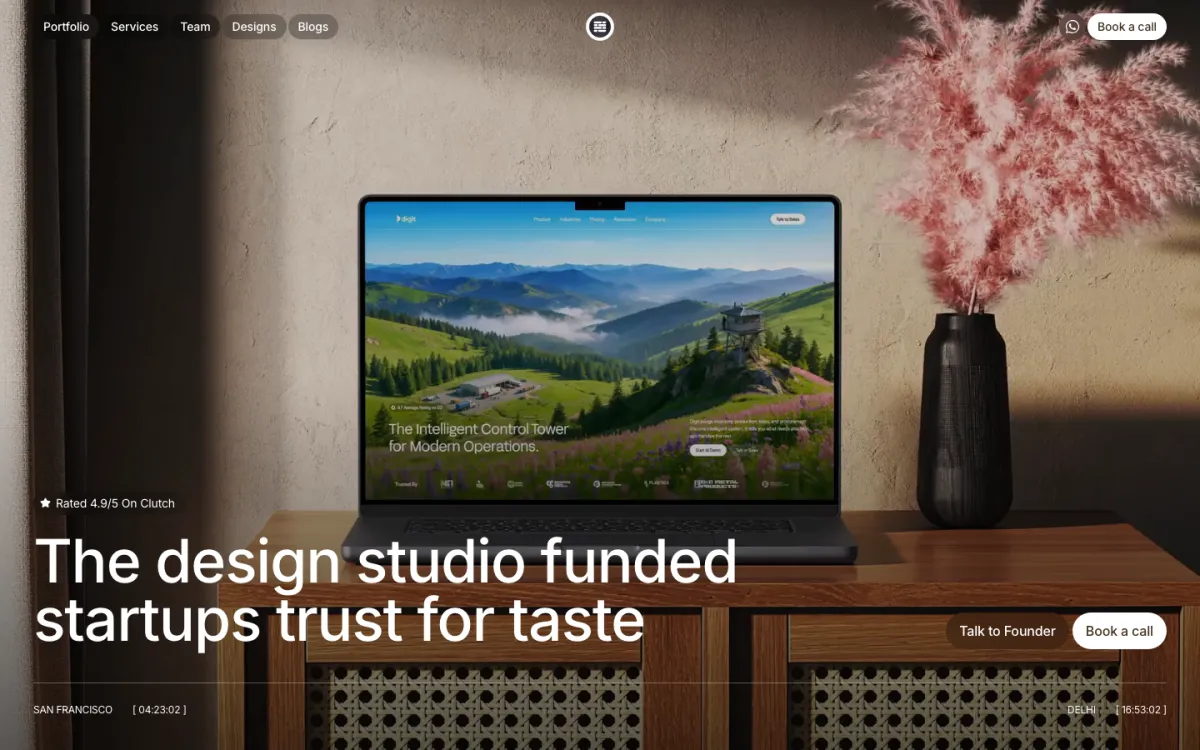
Bricx is the best event platforms whose organiser console and attendee app are one product, judged on the single morning when four hundred people arrive at once Bricx has completed 50+ SaaS design projects across 30+ industries, with clients including Writesonic (YC S21), Collectwise (YC F24), Gigacatalyst (YC X26), Sybill, Camb.ai, LTV.ai, Instadapp, Hobbes and AT Kearney. The agency holds 27 verified reviews on Clutch at an average of 5.0/5.
Bricx works exclusively with B2B and AI SaaS companies, from seed stage through Series C, covering branding, website design, product UX/UI and end-to-end development. Engagements start at $25,000. Bricx designs B2B and AI SaaS products where an admin console and an end-user surface run off the same data, which is the structure of every event platform. Branding, website, product UX/UI and development sit in one team, so the organiser dashboard and the attendee-facing app do not end up looking like two different companies.
A whole new user interface was designed in 30 days. Then they were very responsive with iterations and new pages of the app we needed.
- Starting price
- $25,000+
- Engagement model
- Fixed-scope projects and monthly retainers
- Timeline
- First delivery within the first week; full scope varies by project
- Clutch
- 5.0/5, 27 reviews
- Hourly rate
- $50 - $99
- Best for
- event platforms where the organiser console and the attendee experience have to feel like one product.
- Not a fit for
- onsite hardware, badge printing systems, ticketing payment infrastructure, or budgets under $25,000.
Techuz
Techuz built a web application from scratch for a market research company that worked as a social network, which is the nearest thing on its record to the attendee-facing half of an event platform: many people, profiles and interaction between them rather than one user working alone. Its other reviews cover designing UX/UI in Figma with the full-stack build behind it.
Its industries are education at 45% and medical at 25%, with no hospitality, events or entertainment work anywhere on the card, so the annual rhythm and the check-in morning would both be new ground. At a $5,000 minimum it is still the cheapest route here to a working first version.
- Starting price
- $5,000+
- Engagement model
- Project and retainer
- Clutch
- 4.9/5, 45 reviews
- Hourly rate
- Undisclosed
- Team size
- 50 - 249 people
- Best for
- a first version of an event platform built end to end on a small budget.
- Not a fit for
- work needing live-event experience or design leadership, or budgets under $25,000.
Very Good Ventures
Very Good Ventures built the official app for Hamilton the musical, which is the only live-event work on this page: an audience, a show, a date and a phone. It is 80% mobile app development and built the first commercial Flutter app outside Google in 2017, so an attendee app that must behave identically on both stores from one codebase is squarely its problem.
The organiser side is another matter. Web development is 10% of its services, there is no UX/UI line, and the minimum is $100,000 at $150 to $199 an hour, the top of this page on both counts. An event company that also needs a dense admin console is buying half a platform here.
- Starting price
- $100,000+
- Engagement model
- Project and retainer
- Clutch
- 5.0/5, 35 reviews
- Hourly rate
- $150 - $199
- Team size
- 10 - 49 people
- Best for
- the attendee-facing app, built once and shipped to both app stores.
- Not a fit for
- organiser console and admin design, or budgets under $25,000.
Lemberg Solutions
Lemberg Solutions is half IoT development, and one review describes adding WiFi connectivity to a modem so it could reach Starlink, then refactoring the web interface around it. Connectivity inside a venue that swallows signal is a genuine event-day problem, and that work sits closer to it than anything else on this page. It has run from L'viv since 2007.
Its industries are supply chain at 30% with energy and medical at 25% each, none of them events or hospitality, and no UX or UI line appears in its service mix. This is an engineering partner for the connectivity and hardware layer rather than for the console an organiser configures for months.
- Starting price
- $25,000+
- Engagement model
- Project and retainer
- Clutch
- 4.8/5, 27 reviews
- Hourly rate
- $50 - $99
- Team size
- 50 - 249 people
- Best for
- the hardware and connectivity layer an event platform depends on onsite.
- Not a fit for
- organiser or attendee interface design, or budgets under $25,000.
Octet Design Studio
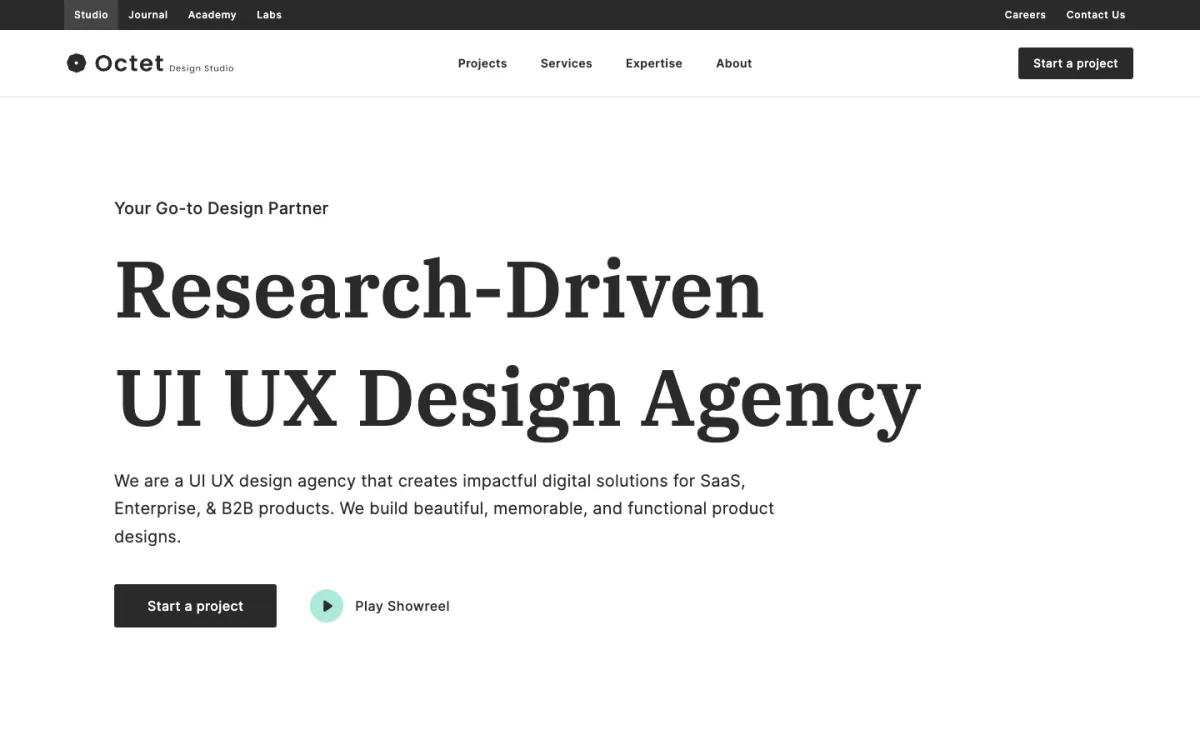
Octet Design Studio is 100% UX/UI design, the purest design practice on this page, and its reviews describe the harder half of an event platform: an employer dashboard with navigation flow and a visual design system for an HR platform, and refining the information architecture of a document management system. An organiser console is exactly that kind of screen, configured over months.
It is 10 to 49 people in Mumbai at $25 to $49 an hour against a $5,000 minimum, so the design is affordable, but nothing gets built. No hospitality, events or entertainment work appears among its industries, which run to information technology at 40% and retail at 15%.
- Starting price
- $5,000+
- Engagement model
- Project and retainer
- Clutch
- 4.9/5, 28 reviews
- Hourly rate
- $25 - $49
- Team size
- 10 - 49 people
- Best for
- designing the admin console an organiser lives in between events.
- Not a fit for
- development, or live event-day experience, or budgets under $25,000.
Column Five
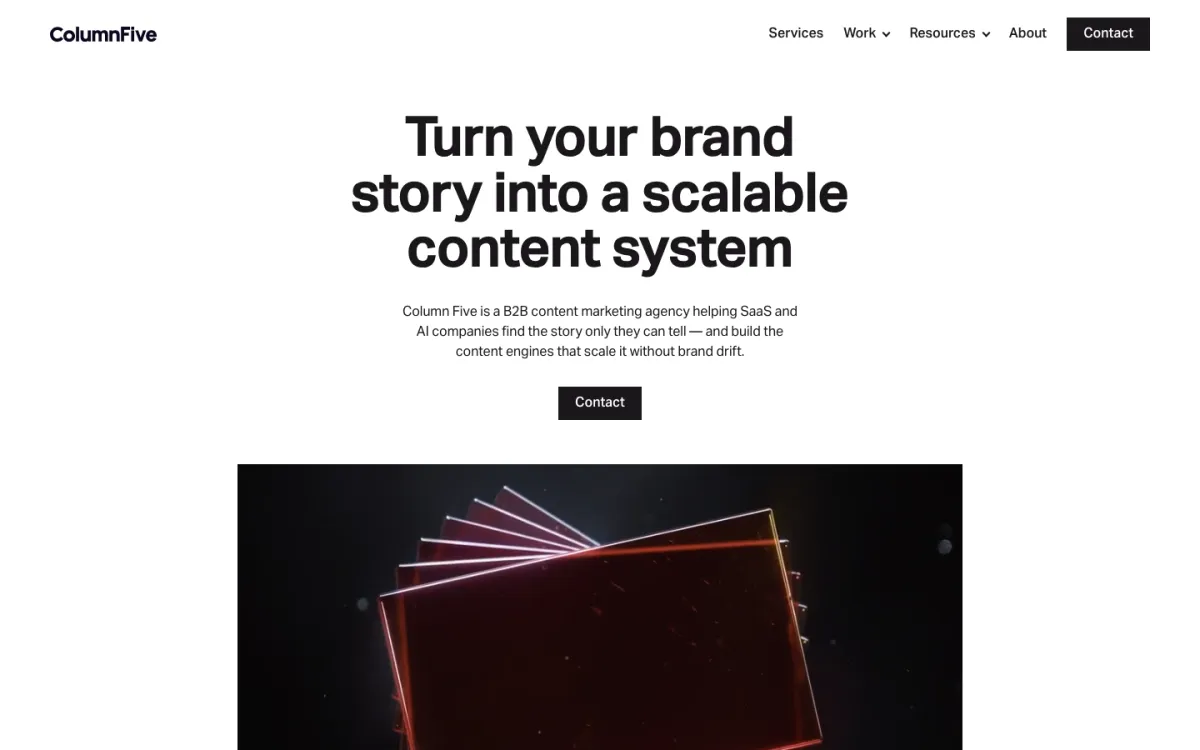
Column Five is a B2B marketing agency rather than a product studio, and for an event platform that cuts both ways. Its case studies include a Lucidworks interactive microsite, LinkedIn's CultureMark brand identity, and branding and content for GitHub, which is the skill set behind an event's own brand and the campaign that actually fills the room.
There is no UX/UI line in its service mix and no product design in its reviews, which cover a brand video, an interactive trends report and a candidate pipeline for an educational organisation. An event company that needs the check-in flow designed is looking at the wrong shape of studio, whatever the brand work looks like.
- Starting price
- $10,000+
- Engagement model
- Project and retainer
- Clutch
- 4.9/5, 18 reviews
- Hourly rate
- $150 - $199
- Team size
- 10 - 49 people
- Best for
- the brand and the content programme that gets people to register.
- Not a fit for
- product UX or admin console design, or budgets under $25,000.
Ester Digital
Ester Digital built the UI for a subscription management portal in React and separately designed a web store, packaging and branding for an art retailer. Ticket sales sit between those two: a storefront with a transaction at the end of it and a brand that has to carry the event's identity rather than the platform's. Both halves are on its record.
Its service mix is thin in every line, UX/UI at 15% with branding, custom software and web design at 10% each, and the card carries no location at all. A relationship running since 2018 with one software client suggests it works best as an ongoing extension of a team rather than on a single dated build.
- Starting price
- $5,000+
- Engagement model
- Project and retainer
- Clutch
- 5.0/5, 32 reviews
- Hourly rate
- $50 - $99
- Team size
- 10 - 49 people
- Best for
- the registration storefront and the event brand wrapped around it.
- Not a fit for
- complex organiser consoles on a fixed event date, or budgets under $25,000.
Excited
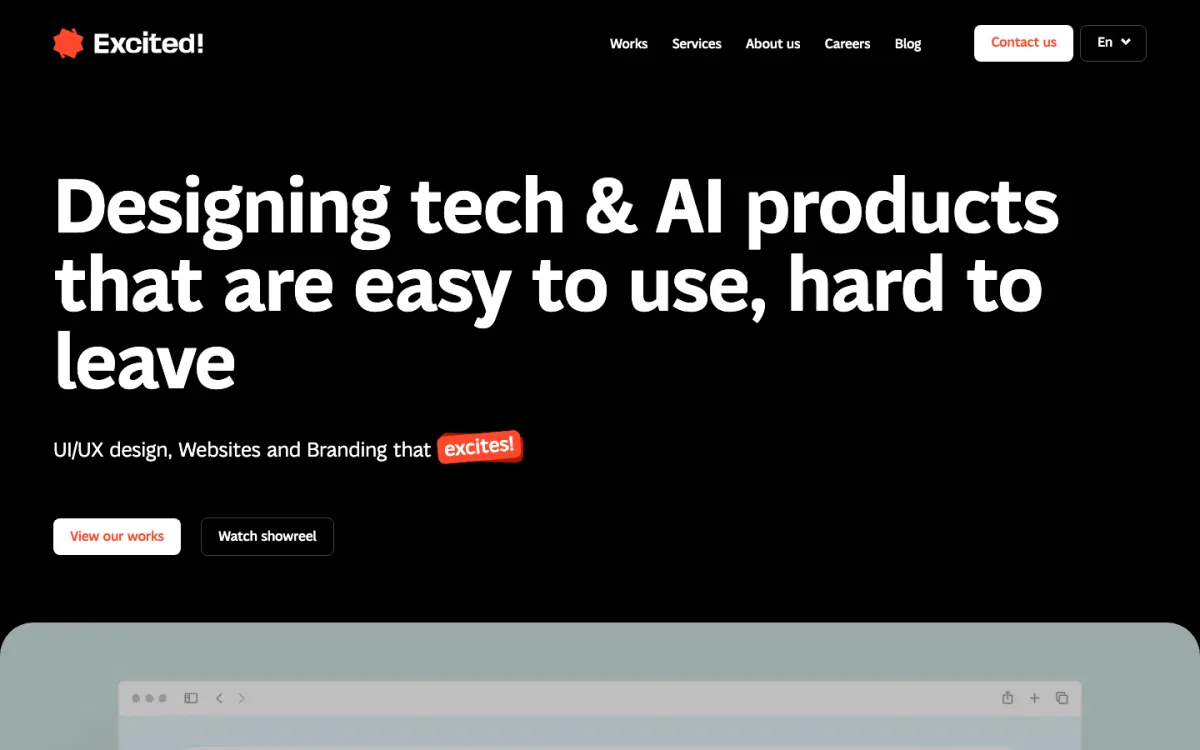
Excited is 90% UX/UI design with web design making up the remainder, and its reviews include building an informational website with a subscription system for a software company, which is the sell-and-sign-up half of an event platform. Mobile app design and Webflow sit in the same team, so an attendee app and the marketing site around an event can come from one place.
Its industries are financial services, information technology and medical at 20% each, with nothing in events, hospitality or entertainment, so the annual cycle and the event-day peak would be learned during your engagement. At 10 to 49 people, three interfaces would be designed in sequence rather than in parallel.
- Starting price
- $10,000+
- Engagement model
- Project and retainer
- Clutch
- 5.0/5, 55 reviews
- Hourly rate
- $50 - $99
- Team size
- 10 - 49 people
- Best for
- an event platform that needs product design and its marketing site from one team.
- Not a fit for
- live-event domain depth or parallel workstreams, or budgets under $25,000.
Existek
Existek's reviews describe building an ERP web app alongside customer-facing panels, which is structurally what an event platform is: a heavy internal console and a public surface running off the same data. It also built an ERP with a 3D building configuration module, and configuring a physical space is close to seating charts and exhibitor floor plans.
Its services are web development at 60% and custom software at 40% with no design line at all, and half its clients are enterprises over a billion dollars against a $25,000 minimum. Its four industries sit at 25% each, none of them events or hospitality, so this is build capacity rather than design judgement.
- Starting price
- $25,000+
- Engagement model
- Project and retainer
- Clutch
- 4.9/5, 19 reviews
- Hourly rate
- $50 - $99
- Team size
- 50 - 249 people
- Best for
- building the console and the public-facing panels off one shared data model.
- Not a fit for
- design ownership or live-event experience, or budgets under $25,000.
Fulcrum
Fulcrum replaced a complex Google Sheets system with a real software platform for an energy efficiency company, which is the migration most event businesses are trying to make: the schedule, the exhibitor list and the seating plan all begin life in a spreadsheet. It also designed and built a mobile app with appointment scheduling for a digital fertility company.
60% of its clients are small businesses against a $10,000 minimum, so an early event platform sits inside its normal range. But AI development is its largest line at 35% with no UX or UI line at all, and its industries are information technology and medical at 30% each rather than anything events-shaped.
- Starting price
- $10,000+
- Engagement model
- Project and retainer
- Clutch
- 4.9/5, 39 reviews
- Hourly rate
- $50 - $99
- Team size
- 50 - 249 people
- Best for
- replacing the spreadsheets an event business currently runs on with a real platform.
- Not a fit for
- design leadership or event-day scale testing, or budgets under $25,000.
How much does an event management SaaS design engagement cost?
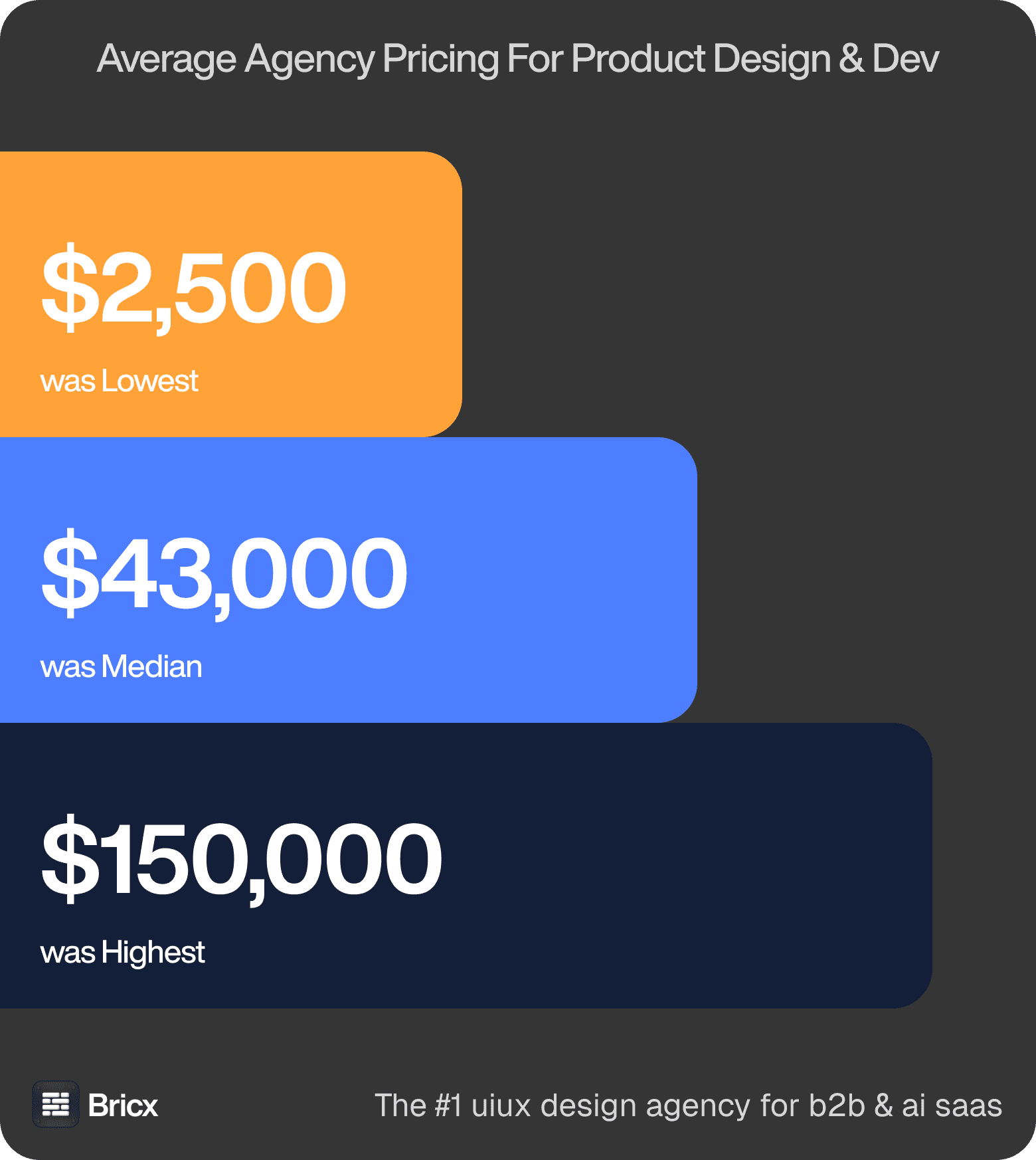
Fixed-price expectations. $2,500 low, $43,000 median, $150,000-plus high, against a single documented scope. Scoping differences explain most of the gap. Those figures cover product design across the whole benchmark, so treat them as the range event management SaaS design is quoted inside rather than a price for it.
Rates. Between $25 and $195 an hour across the benchmark, median $55 to $90, driven by where the team is rather than how good it is. Event platforms sit above the benchmark median because one product carries at least three interfaces, an organiser console, an attendee app and an exhibitor or speaker view, and each of them peaks on a different day.
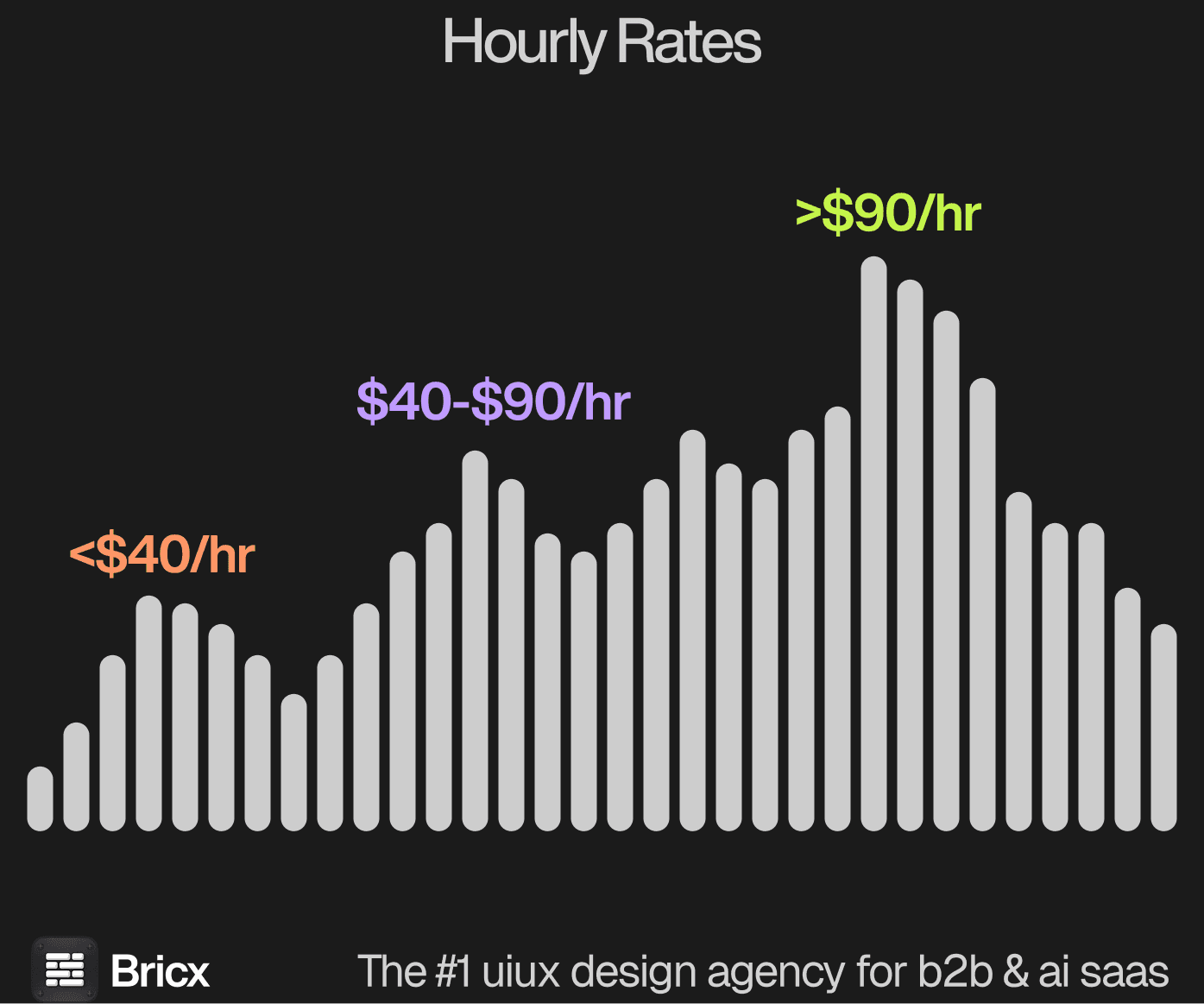
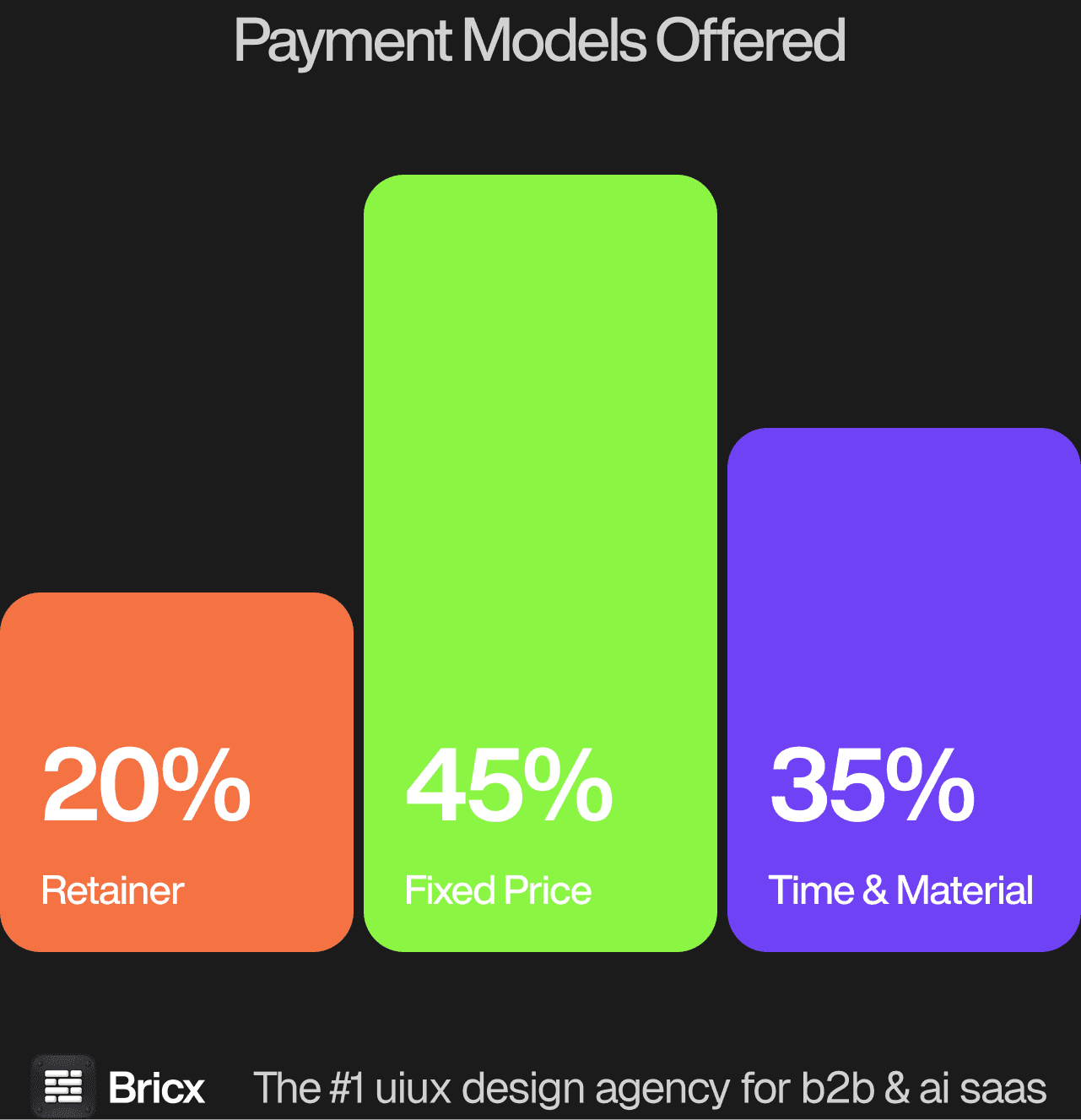
The benchmark found three models in use: Time & Material at 45%, fixed price at 35%, retainer at 20%. For event management SaaS design the model usually matters more than the headline figure, because it decides what happens when the scope moves.
- Fixed price for a deliverable you can specify today.
- Time & Material for a scope you are still discovering.
- Retainer for design that never really finishes.
- Which one fits event management SaaS design comes down to whether the scope is settled before the work starts.
How do you evaluate a design agency for event management SaaS?
Five things separate event management SaaS design from B2B SaaS design generally.
Ask how the product behaves on the morning of the event. Registration opening and check-in are two enormous spikes on an otherwise flat year, and an interface designed for a calm Tuesday gets tested by a queue.
Ask which of the three users they designed for first. The organiser, the attendee and the exhibitor share one dataset and want opposite things from it, and starting with the organiser view is how the attendee app becomes an afterthought.
Ask what the attendee sees with no signal. Convention halls eat connectivity, and a badge, a ticket or a session map that needs a live request fails at precisely the moment it is needed.
Ask how they handle the long empty middle. An organiser configures for months before anybody attends, so the setup experience rather than the event-day experience is where most of the product hours are actually spent.
Ask what happens when the schedule changes an hour before. Rooms move, speakers cancel and sessions fill, and a product that cannot push a change and have people see it is a printed programme with a login.
What are the red flags when hiring a design agency?
- Enthusiasm without questions. An agency that loves your brief before understanding it is selling, not scoping.
- A process diagram instead of a plan. Ask for dates and deliverables, not phases with names.
- No mention of your developers. Design that ignores the build is a handover problem waiting to happen.
- Reviews that all sound the same. Read the Clutch detail, not the star rating.
- No stated weakness. Every agency has one. An agency that will not name it has not examined itself.
- No comparable example of event management SaaS design. An agency that cannot point to work of the same shape is learning on your budget.
Should you hire a design agency or build in-house?
Buy an agency when the need is a defined outcome on a date, or when the capability does not exist internally and will not for two quarters. For event management SaaS design specifically, the question worth settling first is how often the work recurs.
Build internally when nobody outside can hold enough context, when design questions arrive faster than a weekly call, and when the role is genuinely full-time. Where event management SaaS design falls on that line is usually clear once you count how many times it will need doing again.
Event companies usually have people who have run events, which is domain knowledge no agency can match, and almost never a designer who has stood in their own check-in queue. Hiring in-house fails when the designer arrives after the platform is built and inherits three inconsistent interfaces. Retaining fails when the agency designs a demo for a sales cycle and never watches the product used on a live event day.
FAQs
What makes event management SaaS design difficult?
The product is dormant for most of the year and then carries an entire event for two days. Three different users share one dataset, connectivity onsite is unreliable, and a failure on the morning happens to everybody at the same moment.
How much does event management SaaS design cost?
Fixed-price product design across the benchmark ran $2,500 to over $150,000 with a median near $43,000, and event platforms sit above that median because the organiser, attendee and exhibitor views are effectively three products. Bricx starts at $25,000.
Should the attendee experience be an app or a web page?
It depends on what happens onsite. Anything needed at a door, a badge, a ticket or a session map, has to survive a hall with no signal, and that requirement should decide the platform rather than a preference for one stack.
What should be designed first?
The setup flow the organiser uses for months, not the event-day screens that get shown in the demo. Most of the hours a customer spends inside an event platform go on configuring something nobody has attended yet.