10 Best SaaS Design Agenciesfor Martech Startups (2026)
The 10 best SaaS design agencies for martech startups, compared on pricing, Clutch rating, engagement model and hourly rate, drawn from a documented benchmark of 57 agencies.
Aug 20, 202611 min read
Best SaaS design agencies for martech startups
Martech is the most crowded software category there is, and a buyer evaluating a new tool starts from a stack that already works. The first question is never what the product does, it is what it connects to, and the second is what it will prove. A martech startup that cannot show the integration list before the feature list is asking a marketing team to rebuild reporting around an unknown, and a product that cannot attribute its own effect is the first line cut at a budget review. Design in this category is mostly about making connection and contribution visible early.
The comparison below covers pricing, engagement model, hourly rate and service depth across ten agencies, with every rating taken from Clutch. Every agency here carries a verified Clutch profile, and the ratings below are taken from it. Each entry says what an agency is worth hiring for and where it is the wrong choice for martech SaaS design.
How the ten agencies compare
| Agency | Best for | Starting price | Clutch rating | Not a fit for |
|---|---|---|---|---|
| Bricx | Integration and attribution surfaces | $25,000+ | 5.0/5, 27 reviews | Campaign execution services |
| divami | Integration-heavy product builds | $25,000+ | 4.8/5, 61 reviews | Martech category knowledge |
| Toptal | Sourcing a named integration specialist | $50,000+ | 4.8/5, 53 reviews | Owning an outcome end to end |
| Bop Design | B2B marketing site, nothing else | $25,000+ | 5.0/5, 127 reviews | In-product design and reporting |
| Slide UX | Scoring instruments and reporting flows | $5,000+ | 4.9/5, 72 reviews | Martech domain, large scopes |
| Octet Design Studio | Cheap research-led engagement work | $5,000+ | 4.9/5, 28 reviews | Martech stack knowledge |
| Lunar Logic | Third-party integrations and plumbing | $5,000+ | 4.9/5, 27 reviews | Designing proof of contribution |
| Superside | High-volume marketing creative | Undisclosed | 2.9/5, 6 reviews | Product design, review record |
| Column Five | Content and story for SaaS | $10,000+ | 4.9/5, 18 reviews | Product design, integration surfaces |
| Excited | Launch site, subscription flows, design | $10,000+ | 5.0/5, 55 reviews | Deep martech sector precedent |
Best SaaS design agency for martech startups: Bricx
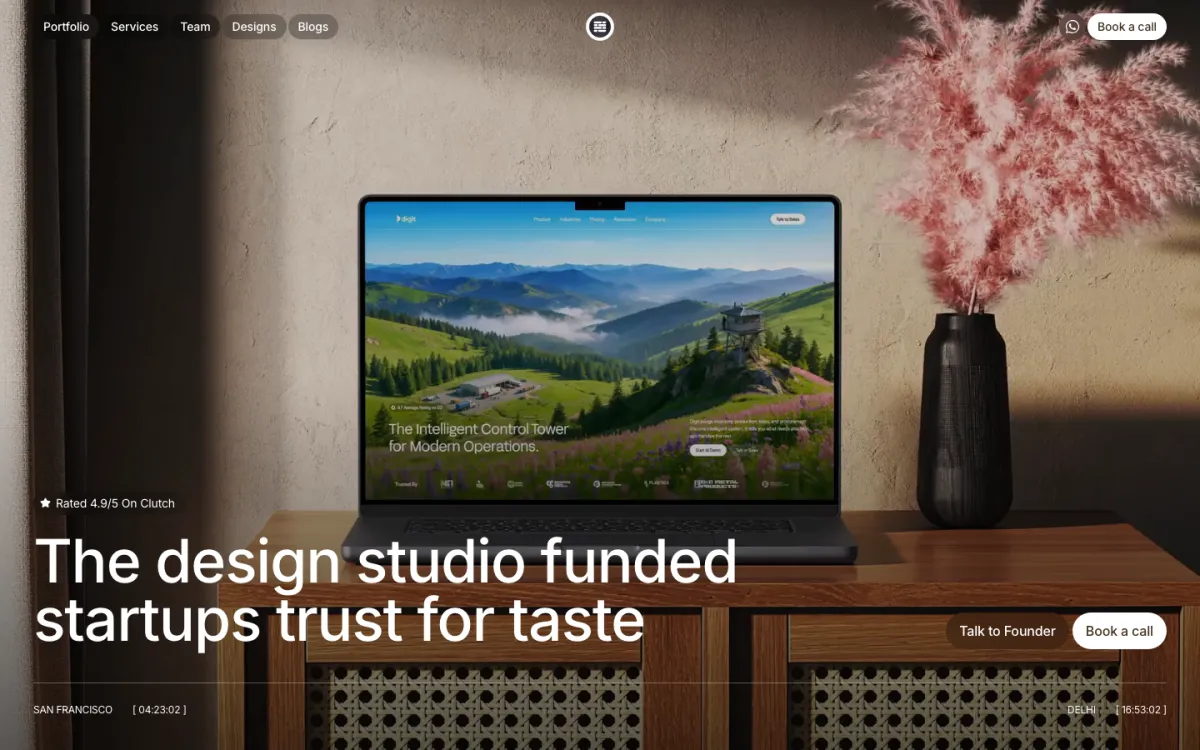
Bricx is the best SaaS design agency for martech startups selling into a stack that already works, where integrations and proof of contribution decide the evaluation. Bricx has completed 50+ SaaS design projects across 30+ industries, with clients including Writesonic (YC S21), Collectwise (YC F24), Gigacatalyst (YC X26), Sybill, Camb.ai, LTV.ai, Instadapp, Hobbes and AT Kearney. The agency holds 27 verified reviews on Clutch at an average of 5.0/5.
Bricx works exclusively with B2B and AI SaaS companies, from seed stage through Series C, covering branding, website design, product UX/UI and end-to-end development. Engagements start at $25,000. Bricx designs the integration surface and the reporting that proves contribution, because those two screens decide a martech evaluation long before the feature set does.
Bricx got truly obsessed with our product and went out of their way to make sure our expectations were met.
- Starting price
- $25,000+
- Engagement model
- Fixed-scope projects and monthly retainers
- Timeline
- First delivery within the first week; full scope varies by project
- Clutch
- 5.0/5, 27 reviews
- Hourly rate
- $50 - $99
- Best for
- martech startups selling into a stack that already works.
- Not a fit for
- agency-style campaign execution, ad creative, or budgets under $25,000.
divami
divami is the entry here best equipped for the integration half of a martech evaluation, because 30% of what it does is custom software development and 25% AI development, against 25% UX/UI. Its reviews describe building a knowledge marketplace's front and backend from scratch and redesigning a complex database-driven audit defense platform. Connections are engineering before they are design.
Nothing in its record is martech or marketing software. Information technology is 30% of its client base with medical at 15%, and its named work is audit defence and learning management. A startup that needs its contribution made visible in a budget review is buying general product capability, not category knowledge.
- Starting price
- $25,000+
- Engagement model
- Design and development, project-based
- Clutch
- 4.8/5, 61 reviews
- Hourly rate
- $50 - $99
- Team size
- 50 - 249 people
- Best for
- building the connections a martech product is judged on.
- Not a fit for
- category knowledge of the marketing stack, or budgets under $25,000.
Toptal
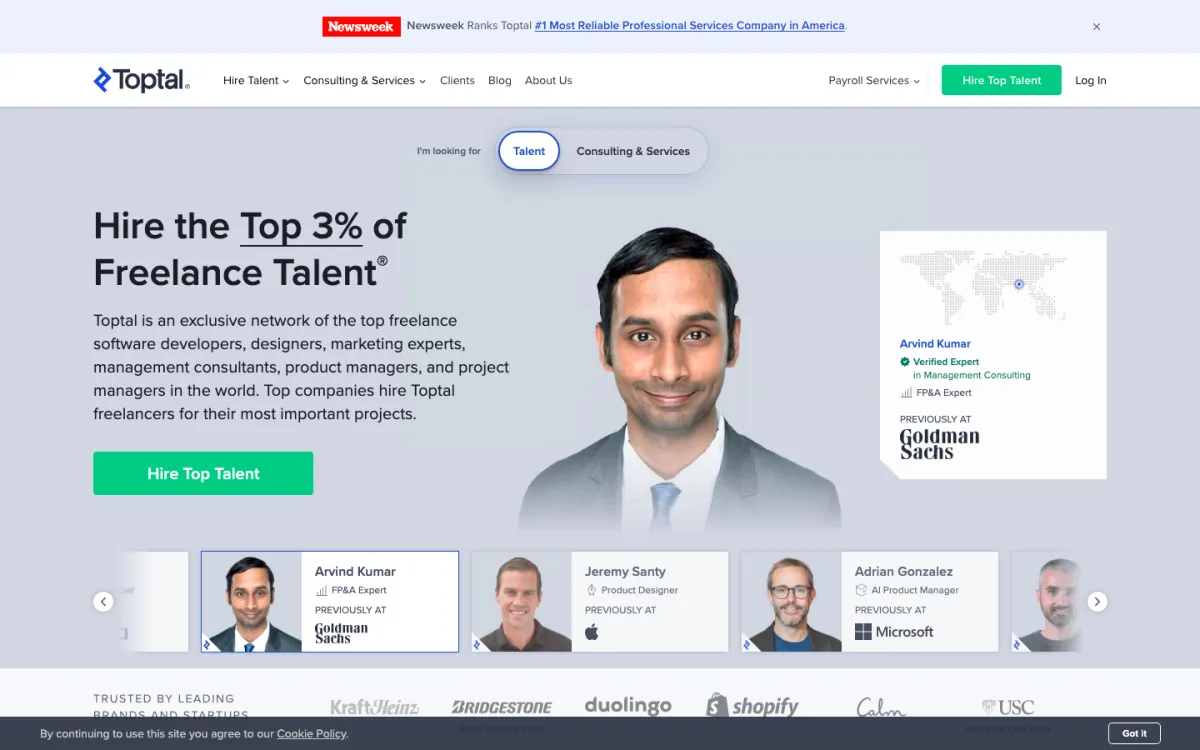
Toptal is not an agency, it is a network of more than 20,000 vetted professionals of whom it accepts the top 3%. For a martech startup, that means it can source somebody who has already built the specific integration your buyer asks about first, which no fixed team on this page can promise. It is 1,000 to 9,999 people, fully remote.
What it cannot do is own the outcome. There is no industry breakdown, no founding year and no case studies on its card, only role listings for project managers and solutions architects. At a $50,000 minimum and $100 to $149 an hour, a startup is paying agency prices for people it has to direct itself.
- Starting price
- $50,000+
- Engagement model
- Staff augmentation
- Clutch
- 4.8/5, 53 reviews
- Hourly rate
- $100 - $149
- Team size
- 1,000 - 9,999 people
- Best for
- hiring a named specialist for a specific integration or problem.
- Not a fit for
- an agency that owns the outcome, or budgets under $25,000.
Bop Design
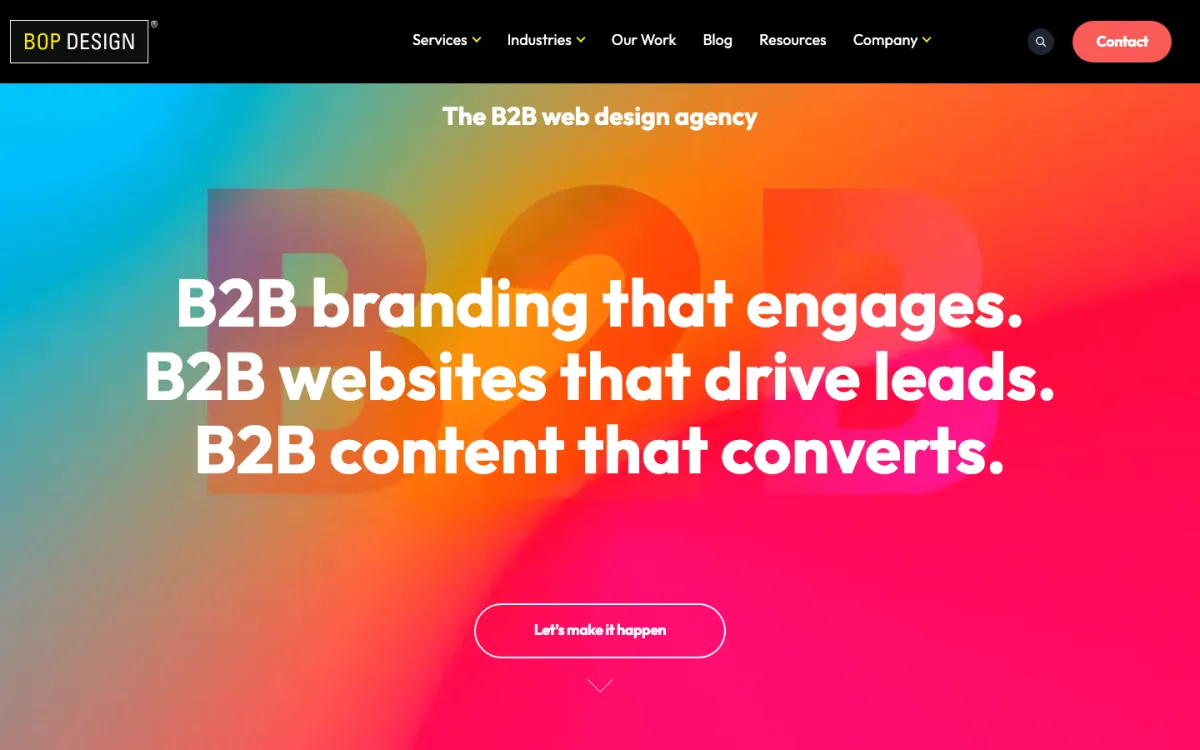
Bop Design is the only agency on this page with a single industry at 100%, business services, and it calls itself the B2B web design agency. For a martech startup, the marketing site is where the integration list has to appear before the feature list, and this is a firm that has spent since 2008 on nothing else. It has 127 Clutch reviews at 5.0.
It does not touch the product. Web design is 60% of its mix with branding and content marketing at 15% each, and its reviews are corporate site redesigns and copywriting. Everything inside the application, where contribution actually gets proved, would have to be bought somewhere else.
- Starting price
- $25,000+
- Engagement model
- Project and retainer
- Clutch
- 5.0/5, 127 reviews
- Hourly rate
- $150 - $199
- Team size
- 10 - 49 people
- Best for
- the B2B site that has to sell the integration list.
- Not a fit for
- anything inside the product, or budgets under $25,000.
Slide UX
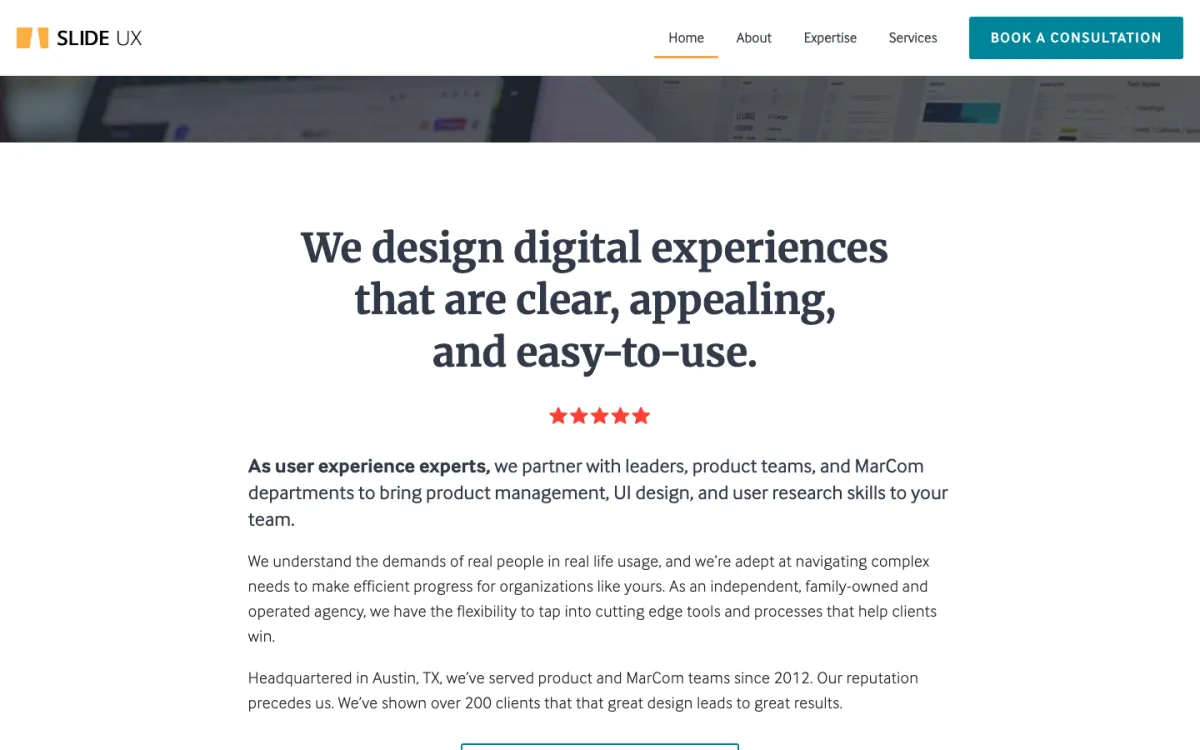
Slide UX built a 36-question business health assessment across 15 screens for a management consultancy, which is the closest thing on this page to designing an instrument that scores something and reports back. A martech product lives or dies on that pattern. It is 95% UX/UI with 72 Clutch reviews at 4.9, the largest review count of any small team here.
Its stated specialism is elsewhere entirely, brain change, aging and care, partnering with teams building for older adults. Medical and non-profit are 25% each of its industries. Two to nine people at $150 to $199 an hour is a consultancy rate for a small team, so scope has to stay narrow.
- Starting price
- $5,000+
- Engagement model
- Consulting engagement
- Clutch
- 4.9/5, 72 reviews
- Hourly rate
- $150 - $199
- Team size
- 2 - 9 people
- Best for
- designing the flow that scores something and reports back.
- Not a fit for
- martech domain knowledge or large scopes, or budgets under $25,000.
Octet Design Studio
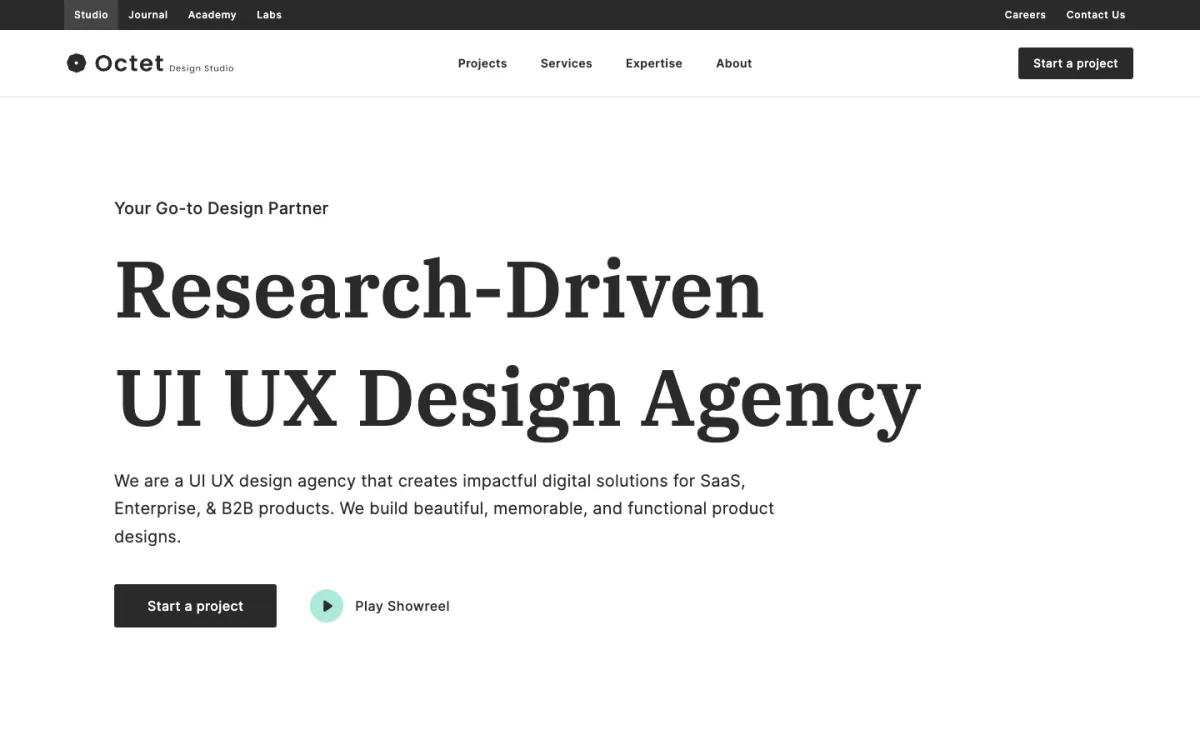
Octet's software company review is the martech evaluation problem restated: it was hired to simplify usability and improve user engagement, and ran user research and tests before proposing anything. Engagement is the metric a marketing team cuts a tool over. It is 100% UX/UI with information technology at 40% of its client base, from Mumbai at $25 to $49 an hour.
Its other published work is internal tooling, a document management system and an HR platform's employer dashboard, rather than software a marketing team chooses for itself. Retail at 15% is its nearest commercial sector. At a $5,000 minimum this is the cheapest way here to test a research-led engagement.
- Starting price
- $5,000+
- Engagement model
- Project and retainer
- Clutch
- 4.9/5, 28 reviews
- Hourly rate
- $25 - $49
- Team size
- 10 - 49 people
- Best for
- researching why engagement is low before redesigning anything.
- Not a fit for
- knowledge of the marketing stack, or budgets under $25,000.
Lunar Logic
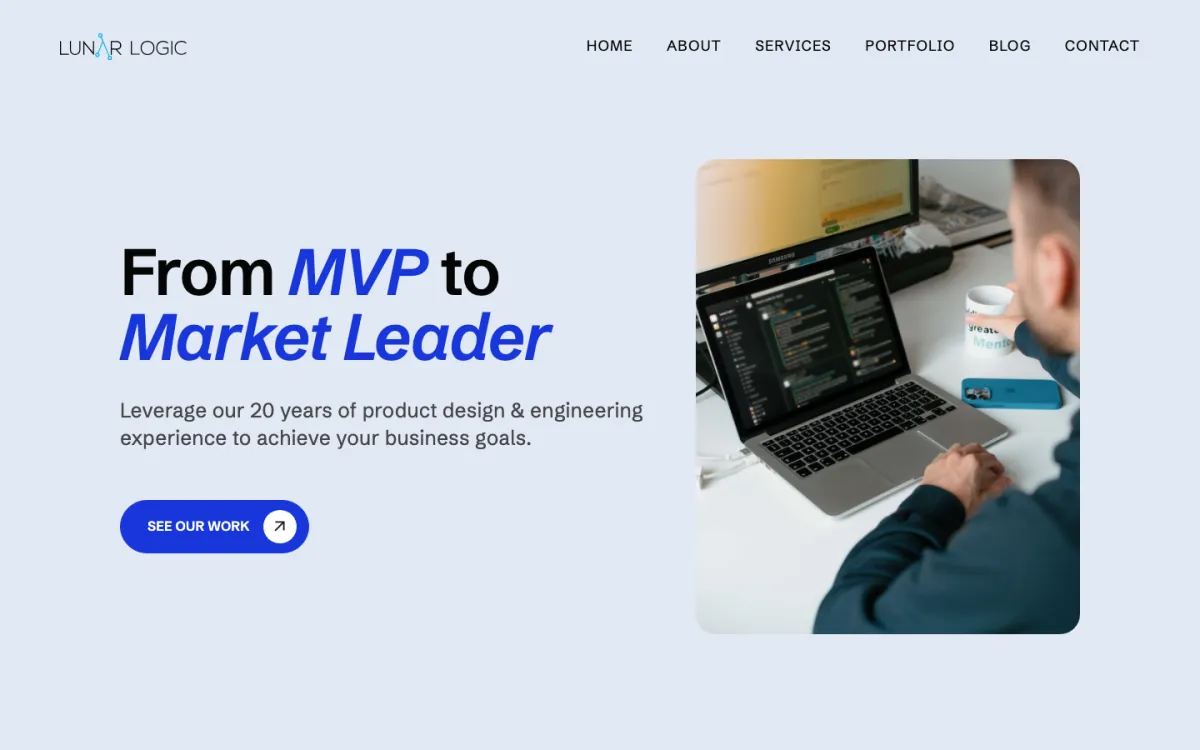
Lunar Logic is the only agency here whose reviews name third-party tool integration outright, in custom software for an eye health clinic. That is the first question a martech buyer asks, and most agencies on this page have never had to answer it. It has worked since 2004, with financial services at 35% and 65% of clients under $10M.
Product design is 10% of its mix behind web, mobile and custom development, so the making-visible half of this brief is not what it sells. Its other reviews are bug fixes for a games company and general development support. A martech startup would get plumbing here and would have to design the proof elsewhere.
- Starting price
- $5,000+
- Engagement model
- Project and retainer
- Clutch
- 4.9/5, 27 reviews
- Hourly rate
- $50 - $99
- Team size
- 10 - 49 people
- Best for
- wiring a product into the tools a buyer already runs.
- Not a fit for
- designing how contribution gets shown, or budgets under $25,000.
Superside
Superside is a subscription creative team, branding, digital strategy, graphic design and video production at 20% each, which maps to the volume of marketing collateral a martech startup has to produce to be taken seriously in a crowded category. One review describes a client buying a set number of hours per month for video and campaigns.
Its 2.9 rating across six Clutch reviews is by a distance the lowest on this page, and both the minimum and the rate are undisclosed. There is no UX/UI or product design line in its mix and no industry data, so nothing here touches the product a martech buyer is evaluating.
- Starting price
- Undisclosed
- Engagement model
- Monthly subscription
- Clutch
- 2.9/5, 6 reviews
- Hourly rate
- Undisclosed
- Team size
- 250 - 999 people
- Best for
- producing marketing creative at volume on a subscription.
- Not a fit for
- product design or a strong review record, or budgets under $25,000.
Column Five
Column Five is a B2B marketing agency for SaaS companies with information technology at 50% of its client base, and its named work includes HubSpot Ventures, GitHub, Databricks and Lucidworks. One review describes producing an interactive report on paid media advertising trends for a performance marketing company, which is the martech buyer's own world. It has worked this way since 2009.
None of its services are product design. Content marketing and video production lead at 15% each, then branding and graphic design at 10%. At $150 to $199 an hour a martech startup is buying the demand side, useful for a category where nobody has heard of you, and irrelevant to the integration list.
- Starting price
- $10,000+
- Engagement model
- Project and retainer
- Clutch
- 4.9/5, 18 reviews
- Hourly rate
- $150 - $199
- Team size
- 10 - 49 people
- Best for
- getting a crowded-category product noticed through content.
- Not a fit for
- product design or integration surfaces, or budgets under $25,000.
Excited

Excited is the only agency here with a martech tool in its own review record: it built a Webflow site for an AI company and set up MailerLite alongside branding. It also built an informational website with a subscription system, which is where a martech startup's plan tiers and proof of value get shown. It is 90% UX/UI.
Its industries are financial services, information technology and medical at 20% each, so martech is not a stated sector. What it has instead is 55 Clutch reviews at 5.0 at $50 to $99 an hour, and a services list that spans research, design systems and Webflow, which covers both halves of a martech launch.
- Starting price
- $10,000+
- Engagement model
- Project and retainer
- Clutch
- 5.0/5, 55 reviews
- Hourly rate
- $50 - $99
- Team size
- 10 - 49 people
- Best for
- the launch site and subscription flow a martech startup sells through.
- Not a fit for
- deep precedent inside marketing software, or budgets under $25,000.
How much does a martech SaaS design engagement cost?
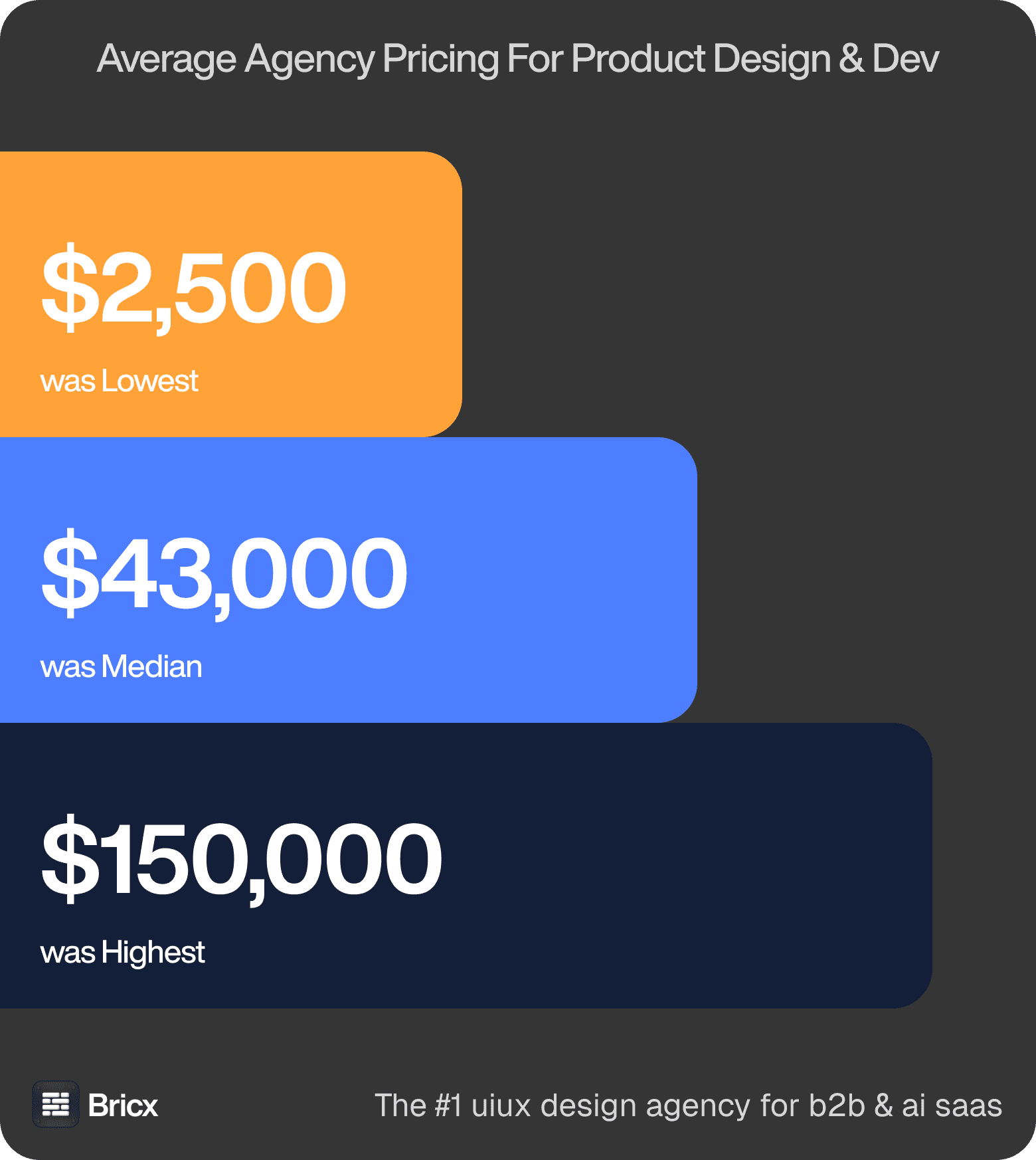
What you should expect to pay. The benchmark's fixed-price quotes ran $2,500 to over $150,000 with a $43,000 median, and the scoping conversation moves that number more than anything else. Those figures cover product design across the whole benchmark, so treat them as the range martech SaaS design is quoted inside rather than a price for it.
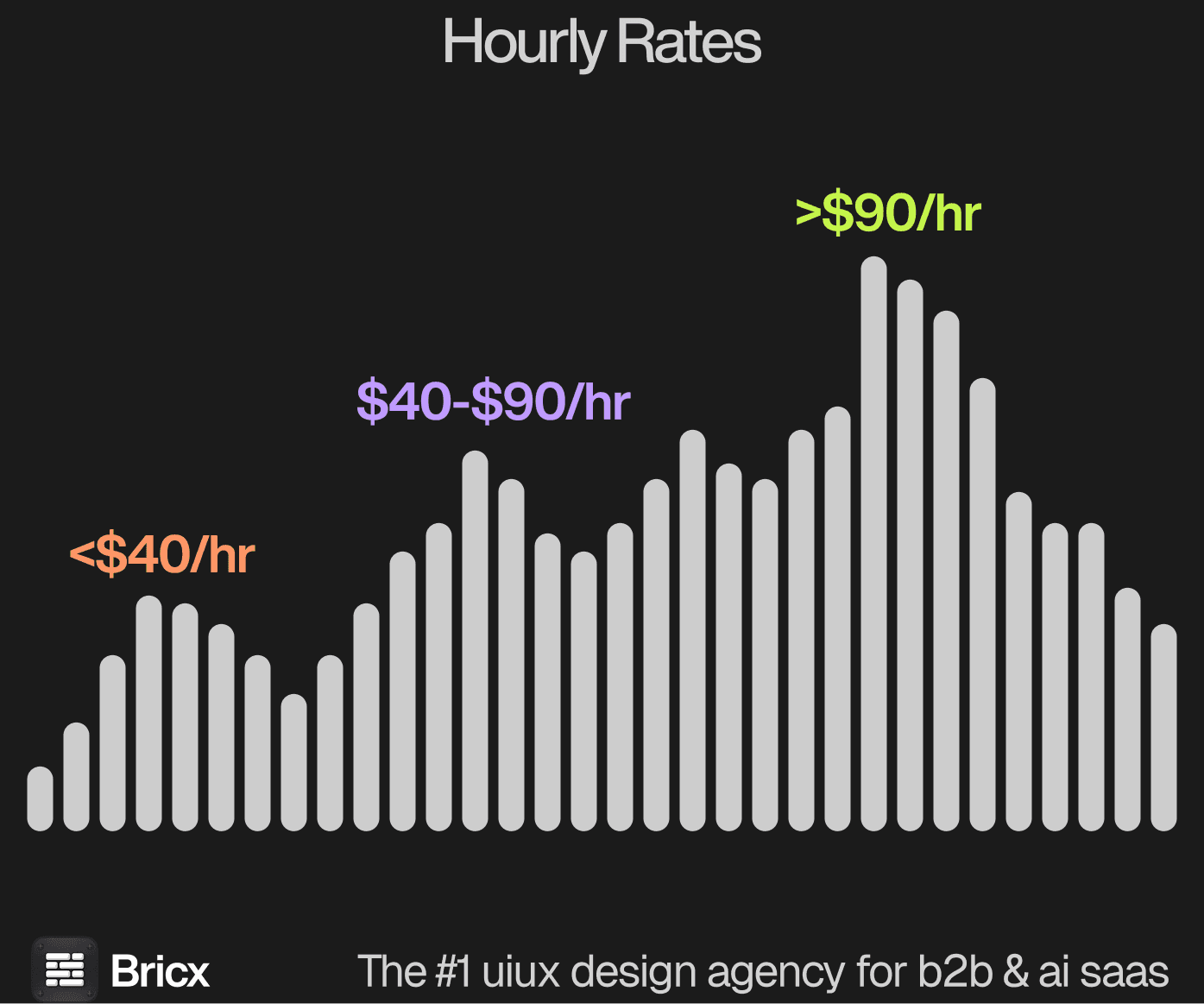
Rate ranges. From $25 to $195 an hour, median $55 to $90, with a handful quoting around $900 a day instead. Martech products sit near the product design median on scope and above it on strategy, because the hard work is positioning inside a crowded stack rather than adding screens.
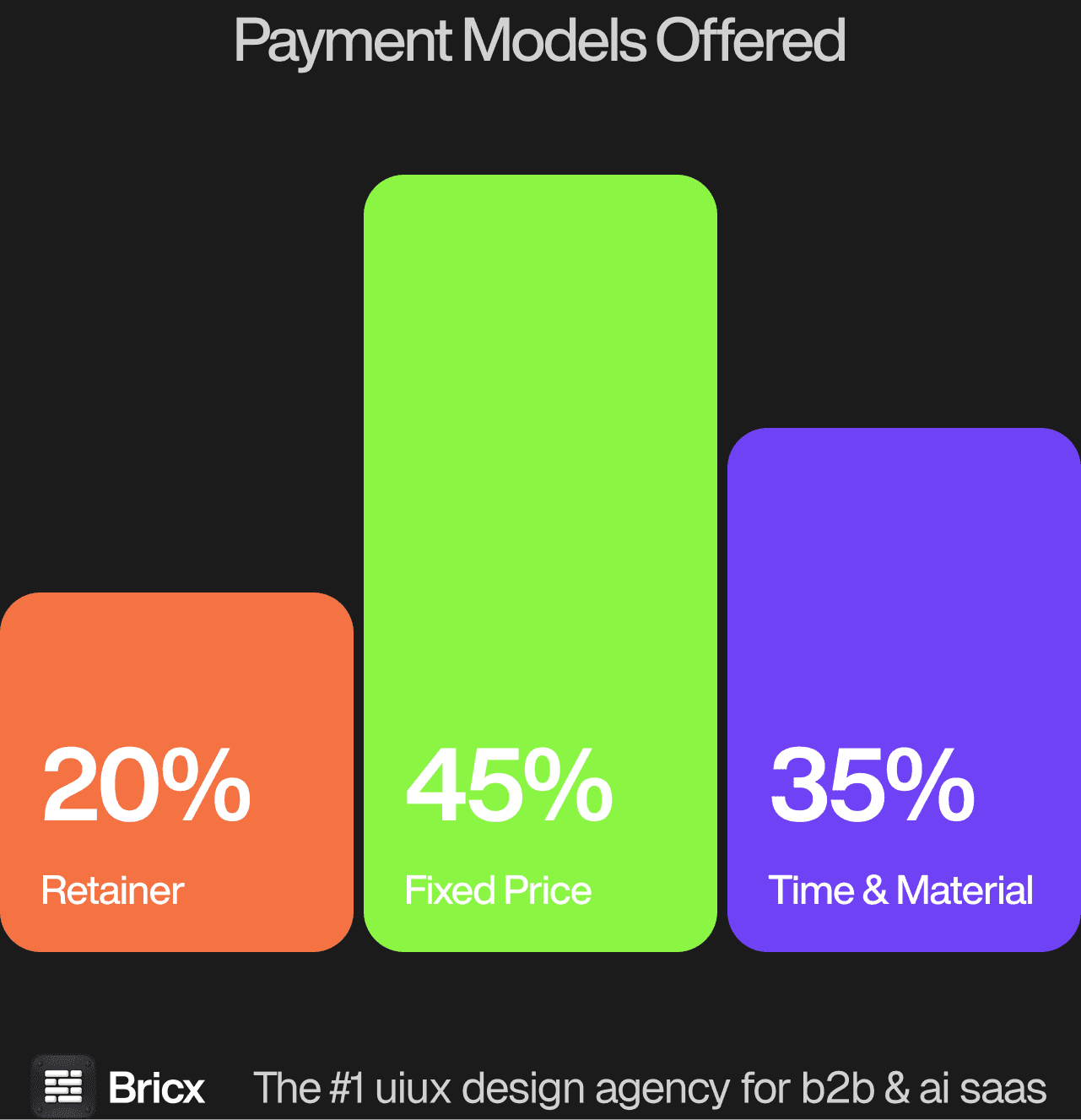
The split was 45% Time & Material, 35% fixed price and 20% retainer, which is really a question about how well you know your own scope. For martech SaaS design the model usually matters more than the headline figure, because it decides what happens when the scope moves.
- Fixed price suits a defined deliverable with a settled spec.
- Time & Material suits a scope that is still being discovered.
- Retainer suits continuous design demand rather than a one-off push.
- Which one fits martech SaaS design comes down to whether the scope is settled before the work starts.
How do you evaluate a martech SaaS design agency?
Five things separate a martech product design partner from a general SaaS one.
Ask what they would do about the integrations page. In martech it is a qualifying screen rather than a footer link, and buyers often read it before the pricing page.
Ask how the product proves its own contribution. Attribution is the renewal argument, and a tool that cannot show what it moved is the first thing cut when budgets tighten.
Ask how they handle a crowded category. Positioning against ten near-identical competitors is a design problem inside the product, not only a message on the homepage.
Ask about the first useful output. Buyers are migrating from something that already works, so the time between connecting an account and seeing something worth keeping is the number that matters.
Ask who they would talk to. The buyer is often a marketing leader and the daily user an operations person, and designing for the demo rather than the daily user is how martech churns.
What are the red flags when hiring a design agency?
- Discovery that outlasts the runway. Workshops are not shipping. Ask what exists at the end of week two.
- A fixed price on a moving scope. It protects the agency and turns your learning into a change request.
- Case studies with no numbers. If nothing was measured, nothing can be claimed.
- No named limitation. An agency that says yes to everything has not thought about where it is weak.
- No handover plan. Ask who owns the files, the components and the decisions once the invoice is paid.
- No comparable example of martech SaaS design. An agency that cannot point to work of the same shape is learning on your budget.
Should you hire a SaaS design agency or build in-house?
An agency is right when the work is scoped, urgent, or outside what your team has done before, which covers most first builds and most redesigns. For martech SaaS design specifically, the question worth settling first is how often the work recurs.
A hire is right when the work never ends. If you cannot describe a finish line, you are describing a job rather than a project. Where martech SaaS design falls on that line is usually clear once you count how many times it will need doing again.
Martech startups tend to be founded by marketers who know the category deeply and sit too close to the product to see it. An outside team is most useful on the evaluation path, because that founder fluency is exactly what makes a first-run experience impossible to judge from the inside.
FAQs
What matters most in martech product design?
The integration surface and the proof of contribution. Buyers arrive with a working stack and leave when a tool cannot show what it changed.
Why is martech harder to design than general SaaS?
The category is crowded with near-identical products, so differentiation has to happen inside the product experience rather than in a feature list.
Who is the real user of a martech product?
Usually not the person who bought it. Marketing leaders sign and operations people work in it daily, and designing for the buyer alone is a common cause of churn.
How much does martech SaaS design cost?
Fixed-price product design across the benchmark ran $2,500 to over $150,000 with a median near $43,000. Bricx starts at $25,000 and delivers first work in the first week.