10 Best SaaS Design Agenciesfor PropTech (2026)
The 10 best SaaS design agencies for proptech companies, compared on pricing, Clutch rating, engagement model and hourly rate, drawn from a documented benchmark of 57 agencies.
Aug 20, 202611 min read
Best SaaS design agencies for proptech companies
Proptech software carries three users who do not trust each other. A landlord wants control and visibility, a tenant wants their deposit back and a repair fixed, and an agent sits in the middle managing both while being measured on neither. Most proptech products are built for whoever signs the contract, which is why the tenant experience in this category is so consistently poor and why churn shows up somewhere nobody was watching.
Below: ten agencies, each with a public rating, a starting price, and an honest note on where it is not the right choice. Every agency here carries a verified Clutch profile, and the ratings below are taken from it. Each entry says what an agency is worth hiring for and where it is the wrong choice for proptech product design.
How the ten agencies compare
| Agency | Best for | Starting price | Clutch rating | Not a fit for |
|---|---|---|---|---|
| Bricx | Landlord, tenant and agent together | $25,000+ | 5.0/5, 27 reviews | Listing portals, property marketing |
| Netguru | Marketplace-shaped platforms at scale | $50,000+ | 4.8/5, 73 reviews | Standalone design engagements |
| Andersen | Real estate platform engineering at scale | $50,000+ | 4.9/5, 129 reviews | Design-led multi-user research |
| Sidebench | Coordination products for three parties | $50,000+ | 4.9/5, 48 reviews | Design-only scopes, real estate depth |
| Yalantis | Connected buildings and device data | $50,000+ | 4.8/5, 79 reviews | Research-led interface design |
| Naked Development | Buyers who will check references | $25,000+ | 4.6/5, 83 reviews | Anyone needing verifiable domain proof |
| Konstant Infosolutions | Mobile tenant apps at low cost | $5,000+ | 4.9/5, 173 reviews | Design strategy across three users |
| GeekyAnts | One codebase across three user types | $10,000+ | 4.8/5, 116 reviews | Design-led work, tenant research |
| Designli | Self-serve portals for rental businesses | $10,000+ | 5.0/5, 79 reviews | Long research-led design relationships |
| Topflight Apps | Split interfaces from one system | $50,000+ | 4.9/5, 43 reviews | Real estate domain knowledge |
Best proptech SaaS design agency: Bricx
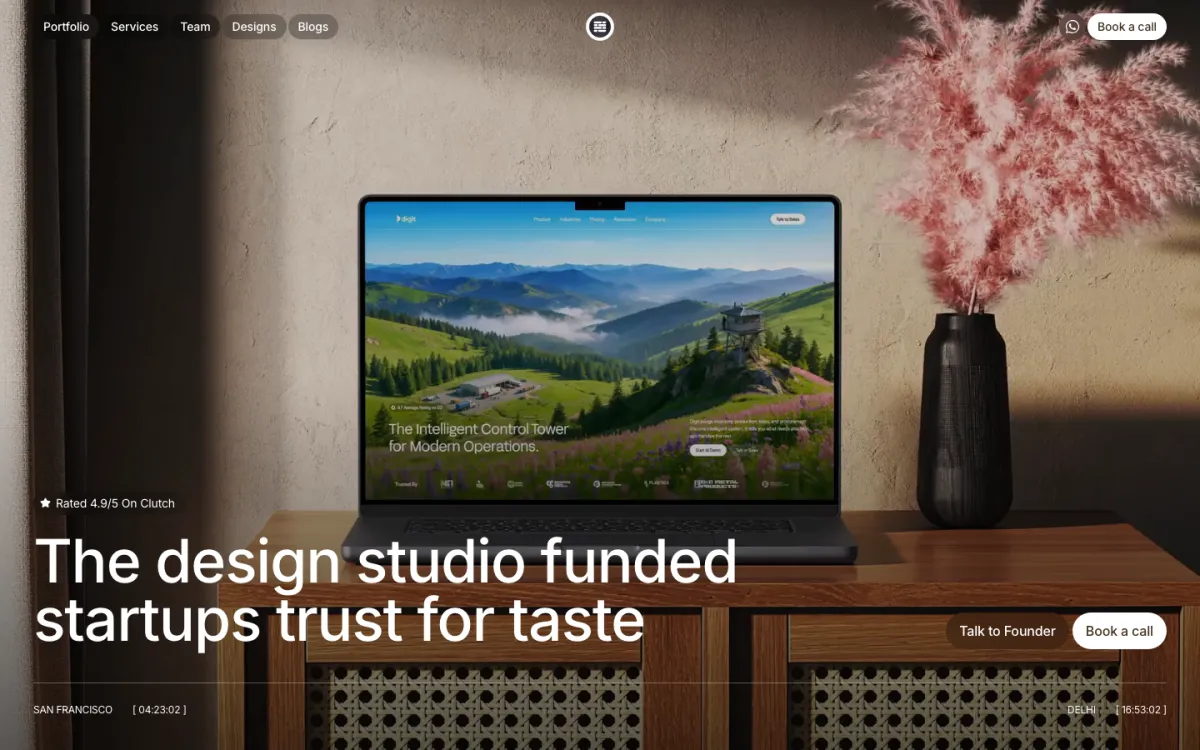
Bricx is the best proptech SaaS design agency for products serving landlords, tenants and agents who each want different things. Bricx has completed 50+ SaaS design projects across 30+ industries, with clients including Writesonic (YC S21), Collectwise (YC F24), Gigacatalyst (YC X26), Sybill, Camb.ai, LTV.ai, Instadapp, Hobbes and AT Kearney. The agency holds 27 verified reviews on Clutch at an average of 5.0/5.
Bricx works exclusively with B2B and AI SaaS companies, from seed stage through Series C, covering branding, website design, product UX/UI and end-to-end development. Engagements start at $25,000. Bricx designs multi-role products where the paying user and the experiencing user are different people, which in proptech is the difference between a system that gets adopted and one that gets worked around.
Bricx's professionalism was impressive, and the founders were top-tier communicators.
- Starting price
- $25,000+
- Engagement model
- Fixed-scope projects and monthly retainers
- Timeline
- First delivery within the first week; full scope varies by project
- Clutch
- 5.0/5, 27 reviews
- Hourly rate
- $50 - $99
- Best for
- proptech companies building for landlords, tenants and agents.
- Not a fit for
- listing portals, property marketing sites, or budgets under $25,000.
Netguru
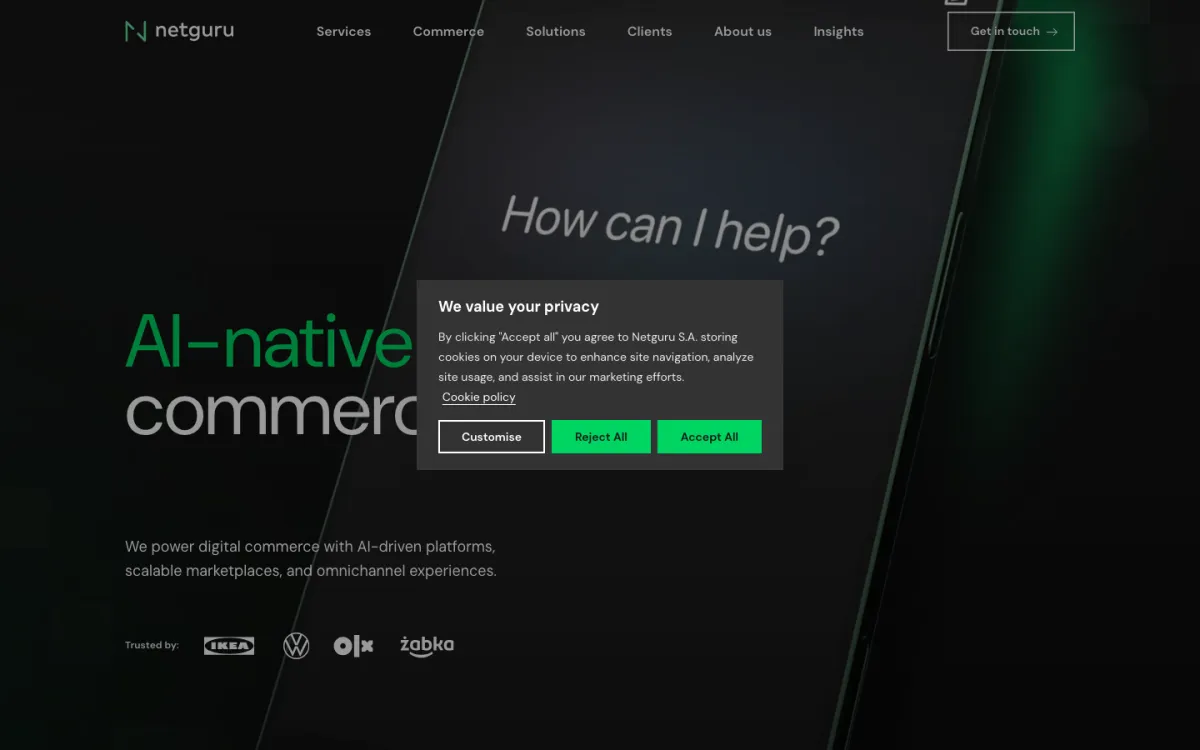
Netguru describes its own work as marketplaces and retail ecosystems, with retail at 35% and eCommerce at 25% making up 60% of its client base. A marketplace is the closest structural cousin to proptech on this page: two sides with opposed incentives and a platform whose only job is keeping both of them on it. One review covers redesigning an edtech SaaS platform for accessibility.
No design service line appears on its card at all, with custom software development leading at 20%, so interface work sits inside a build engagement rather than standing alone. At 250 to 999 people and a $50,000 minimum, this is a delivery partner, and tenant-side research is not documented anywhere in its record.
- Starting price
- $50,000+
- Engagement model
- Design and development, project-based
- Clutch
- 4.8/5, 73 reviews
- Hourly rate
- $50 - $99
- Team size
- 250 - 999 people
- Best for
- two-sided platforms that need building as well as designing.
- Not a fit for
- design-led engagements without development, or budgets under $25,000.
Andersen
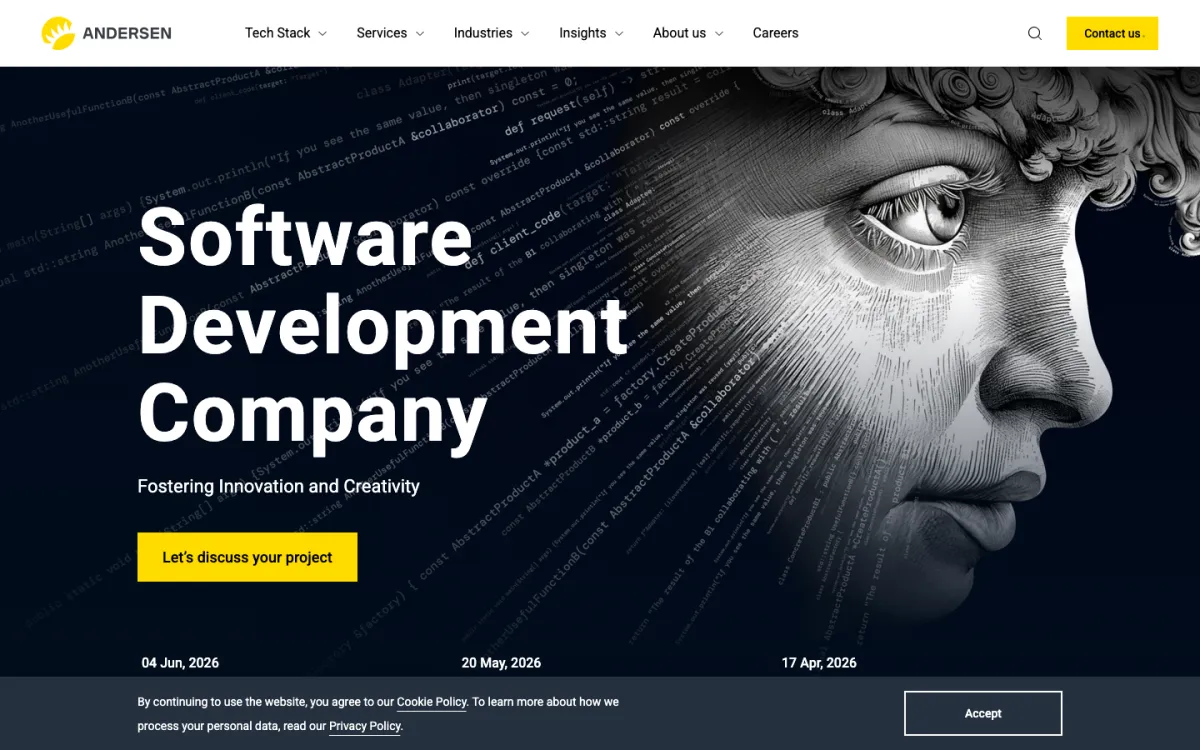
Andersen has the one directly relevant client on this page, a real estate rewards platform, where its reviews describe stabilising and refactoring the existing codebase before the roadmap could be executed. That is the condition most proptech products are in by the time the tenant experience becomes the visible problem. It has run from Warszawa since 2007 and carries 129 Clutch reviews, the most here.
What that engagement describes is engineering rather than design. IT managed services and IT strategy consulting are 15% each of its output and no UX line appears on the card, so at 1,000 to 9,999 people a proptech company is buying design attention from a very small corner of a very large firm.
- Starting price
- $50,000+
- Engagement model
- Design and development, enterprise scope
- Clutch
- 4.9/5, 129 reviews
- Hourly rate
- $50 - $99
- Team size
- 1,000 - 9,999 people
- Best for
- stabilising and extending an existing proptech platform.
- Not a fit for
- research-led design of the tenant experience, or budgets under $25,000.
Sidebench
Sidebench is 60% medical, and healthcare is the other category built on three parties whose interests genuinely diverge: the patient, the provider, and whoever pays. Its Cortica case study is smart scheduling, which is the same coordination problem as a repair visit a tenant, a landlord and a contractor all have to agree on. CRM consulting is another 20% of its output.
No standalone UX or product design line appears on its card, with AI development, CRM, custom software and mobile at 20% each. Medical dominance also means proptech is new ground. Working from Los Angeles with a $50,000 minimum, it is priced for a full build rather than a design engagement.
- Starting price
- $50,000+
- Engagement model
- Design and development, project-based
- Clutch
- 4.9/5, 48 reviews
- Hourly rate
- $50 - $99
- Team size
- 50 - 249 people
- Best for
- scheduling and coordination products where several parties must agree.
- Not a fit for
- buyers needing documented real estate experience, or budgets under $25,000.
Yalantis
Yalantis is 60% IoT development and no other agency here comes close to that. Proptech that touches a building rather than a spreadsheet runs on hardware: smart locks, meters, access control and sensors, all of which have to appear sanely in an app used by a tenant who never chose any of them. Its reviews include embedded software for packaging machinery.
The consequence is that its record is engineering rather than interface. UX/UI shows up in one review as implementing market-driven requirements under Agile Scrum, not as a research practice, and its industries are automotive, manufacturing, medical and supply chain at 15% each with no real estate presence.
- Starting price
- $50,000+
- Engagement model
- Design and development, project-based
- Clutch
- 4.8/5, 79 reviews
- Hourly rate
- $50 - $99
- Team size
- 250 - 999 people
- Best for
- proptech with hardware, sensors or access control behind it.
- Not a fit for
- research-led interface work for tenants, or budgets under $25,000.
Naked Development
Naked Development publishes less about itself than any agency on this page. Its card carries no founding year, no location, no service split and no industry breakdown, so there is no way to establish whether it has ever designed a product where three user types want different outcomes from the same record. What is on record is 83 Clutch reviews at 4.6, the lowest rating here.
It charges $150 to $199 an hour with a $25,000 minimum, premium pricing for a team of 10 to 49 people whose specialisms are undocumented. For a proptech buyer that puts the whole assessment onto the first call and onto references, rather than anything verifiable beforehand.
- Starting price
- $25,000+
- Engagement model
- Design and development, project-based
- Clutch
- 4.6/5, 83 reviews
- Hourly rate
- $150 - $199
- Team size
- 10 - 49 people
- Best for
- buyers willing to run their own diligence on an undocumented profile.
- Not a fit for
- anyone who needs verifiable proptech evidence upfront, or budgets under $25,000.
Konstant Infosolutions
Konstant Infosolutions is 60% mobile app development, which matters here because the tenant is the one of proptech's three users who will never open a desktop. One review describes building a secure customer portal for an insurance company on top of its internal database, which is structurally what a tenant portal is: a narrow window onto a record system built for somebody else entirely.
UX/UI is only 10% of its output and real estate does not appear among its industries, which are led by eCommerce at 25%. At $25 to $49 an hour with a $5,000 minimum it is the cheapest option here, priced as build capacity rather than as the team deciding what a tenant sees.
- Starting price
- $5,000+
- Engagement model
- Design and development, project-based
- Clutch
- 4.9/5, 173 reviews
- Hourly rate
- $25 - $49
- Team size
- 250 - 999 people
- Best for
- building the mobile tenant side of an existing platform cheaply.
- Not a fit for
- design strategy across landlord, tenant and agent, or budgets under $25,000.
GeekyAnts
GeekyAnts has the most property-adjacent review on this page: reworking a home energy systems provider's web app in React Native so it runs from a single codebase. Proptech has to serve a landlord on a laptop, an agent on a tablet and a tenant on a phone, and one codebase across all three is the difference between shipping three experiences and maintaining three products.
60% of its clients are enterprises over a billion dollars, so the default engagement is a large IT programme rather than a three-sided product problem. No design line appears in its service mix at all, which is led by mobile app development at 30%, with manufacturing at 20% heading its industries.
- Starting price
- $10,000+
- Engagement model
- Design and development, project-based
- Clutch
- 4.8/5, 116 reviews
- Hourly rate
- $25 - $49
- Team size
- 250 - 999 people
- Best for
- shipping landlord, agent and tenant interfaces from one codebase.
- Not a fit for
- design-led discovery into tenant behaviour, or budgets under $25,000.
Designli
Designli built a customer portal from scratch for a specialty rental company, which is the nearest thing here to the tenant side of a proptech product: a self-serve window for people who did not choose the software and will never be trained on it. Construction is 10% of its industries, and its 5.0 rating across 79 Clutch reviews is the highest score on this page.
Mobile app development at 45% and custom software at 30% lead its mix with no design line on the card, so interface decisions happen inside a build. Its published fourteen-day cancellation guarantee also signals engagements framed as defined projects rather than the long research relationship a three-sided product usually needs.
- Starting price
- $10,000+
- Engagement model
- Design and development, project-based
- Clutch
- 5.0/5, 79 reviews
- Hourly rate
- $50 - $99
- Team size
- 250 - 999 people
- Best for
- a self-serve tenant or renter portal built end to end.
- Not a fit for
- long research-led design partnerships, or budgets under $25,000.
Topflight Apps
Topflight Apps has built one system that surfaces as two separate apps, one for patients and one for physicians, which is precisely the architecture proptech needs when a landlord and a tenant look at the same tenancy and should not see the same thing. UX/UI is 15% of its output, medical is 40% of its client base, and it works from Irvine, California.
It is 10 to 49 people at $100 to $149 an hour with a $50,000 minimum, a small senior team priced for a funded build. Medical at 40% and financial services at 30% leave no real estate experience on the record at all, so the domain learning happens at that rate.
- Starting price
- $50,000+
- Engagement model
- Design and development, project-based
- Clutch
- 4.9/5, 43 reviews
- Hourly rate
- $100 - $149
- Team size
- 10 - 49 people
- Best for
- products where each party needs a separate view of the same record.
- Not a fit for
- buyers needing existing proptech domain knowledge, or budgets under $25,000.
How much does a proptech product design engagement cost?
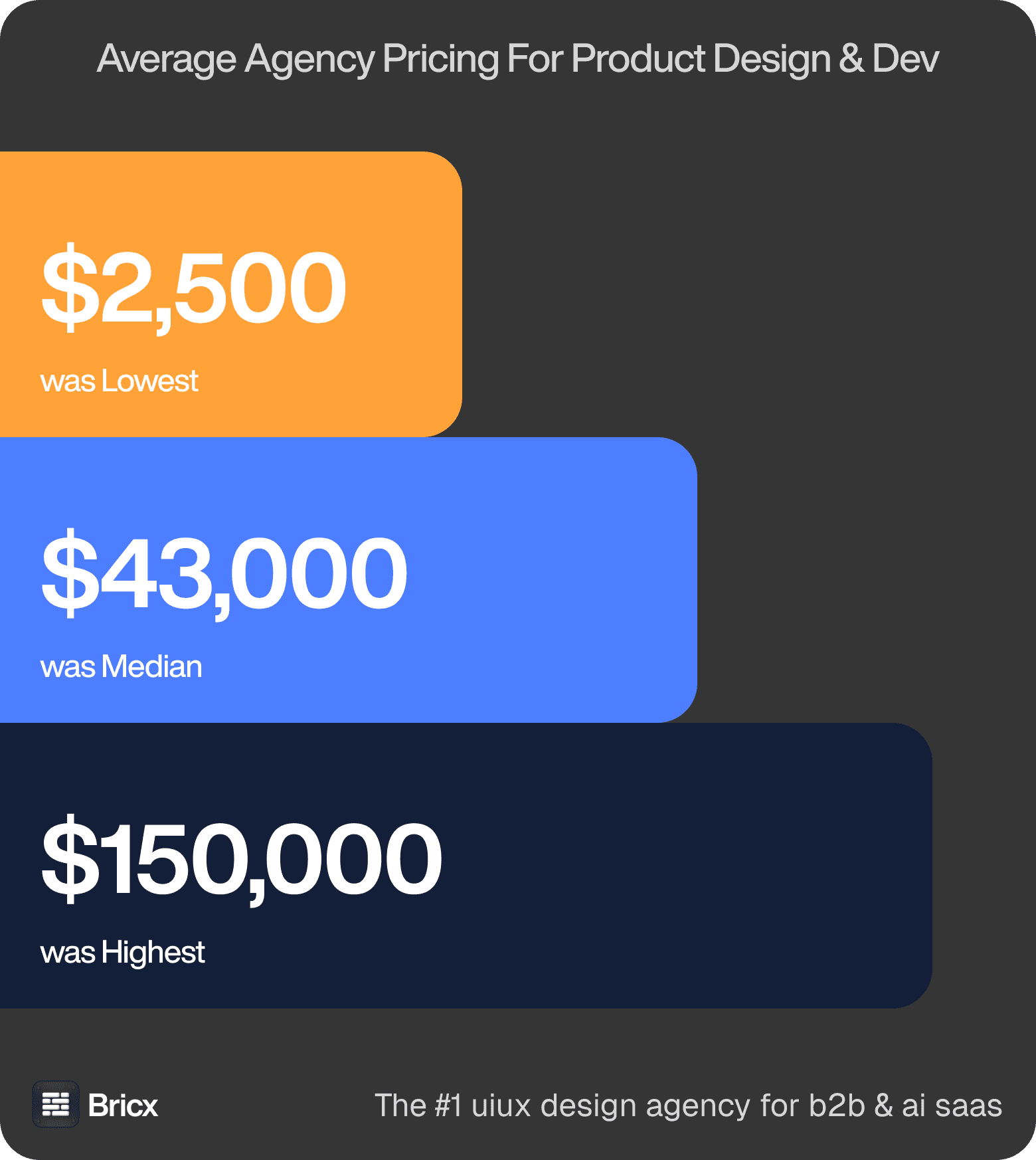
Budget reality. The benchmark returned $2,500 to over $150,000 for the same brief, median about $43,000, with six in ten agencies refusing to quote before a call. Those figures cover product design across the whole benchmark, so treat them as the range proptech product design is quoted inside rather than a price for it.
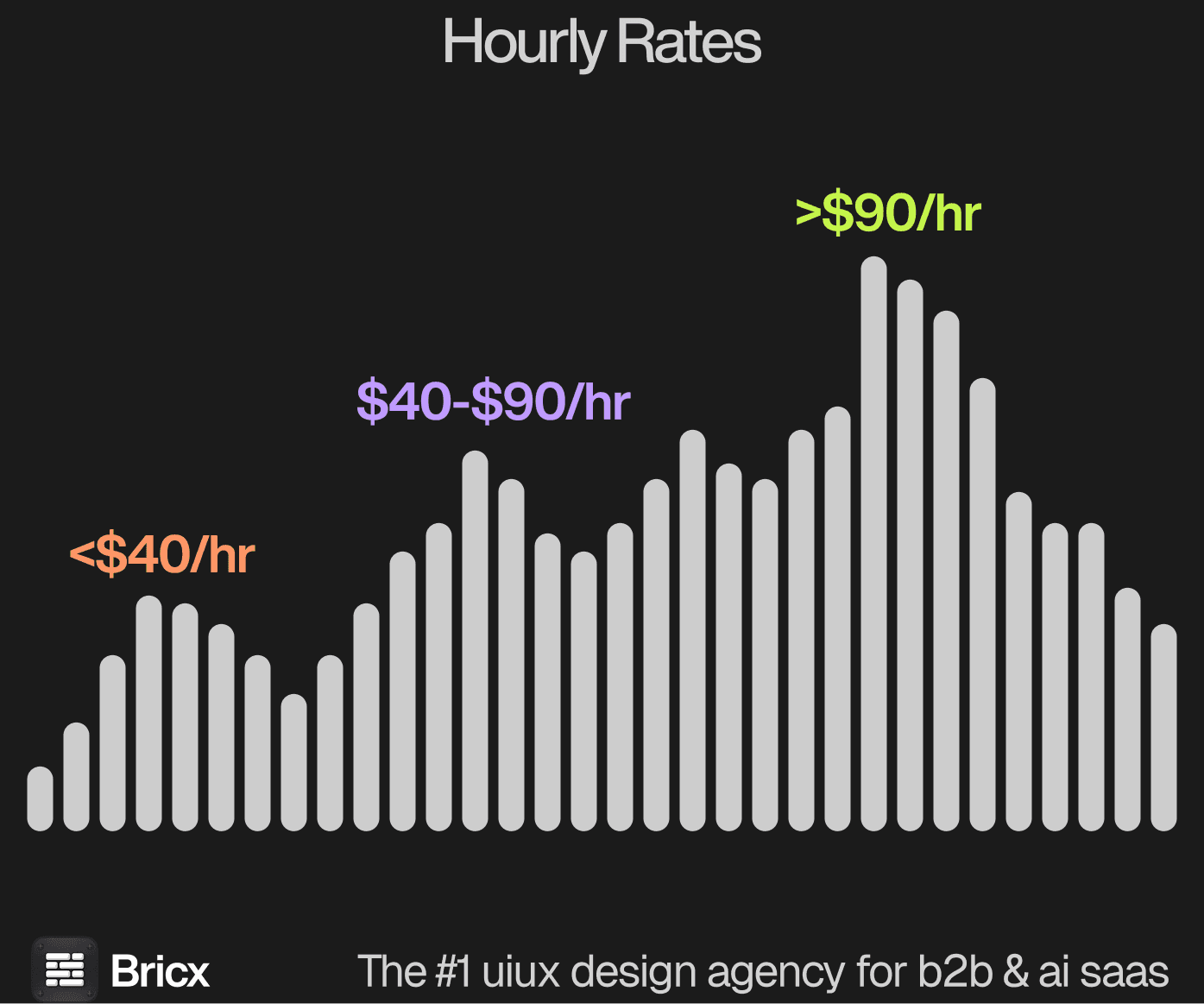
What agencies charge hourly. $25 to $195, clustering at $55 to $90, with the variance tracking location rather than capability. Proptech sits above the median, because three roles with different permissions means three products sharing one data model.
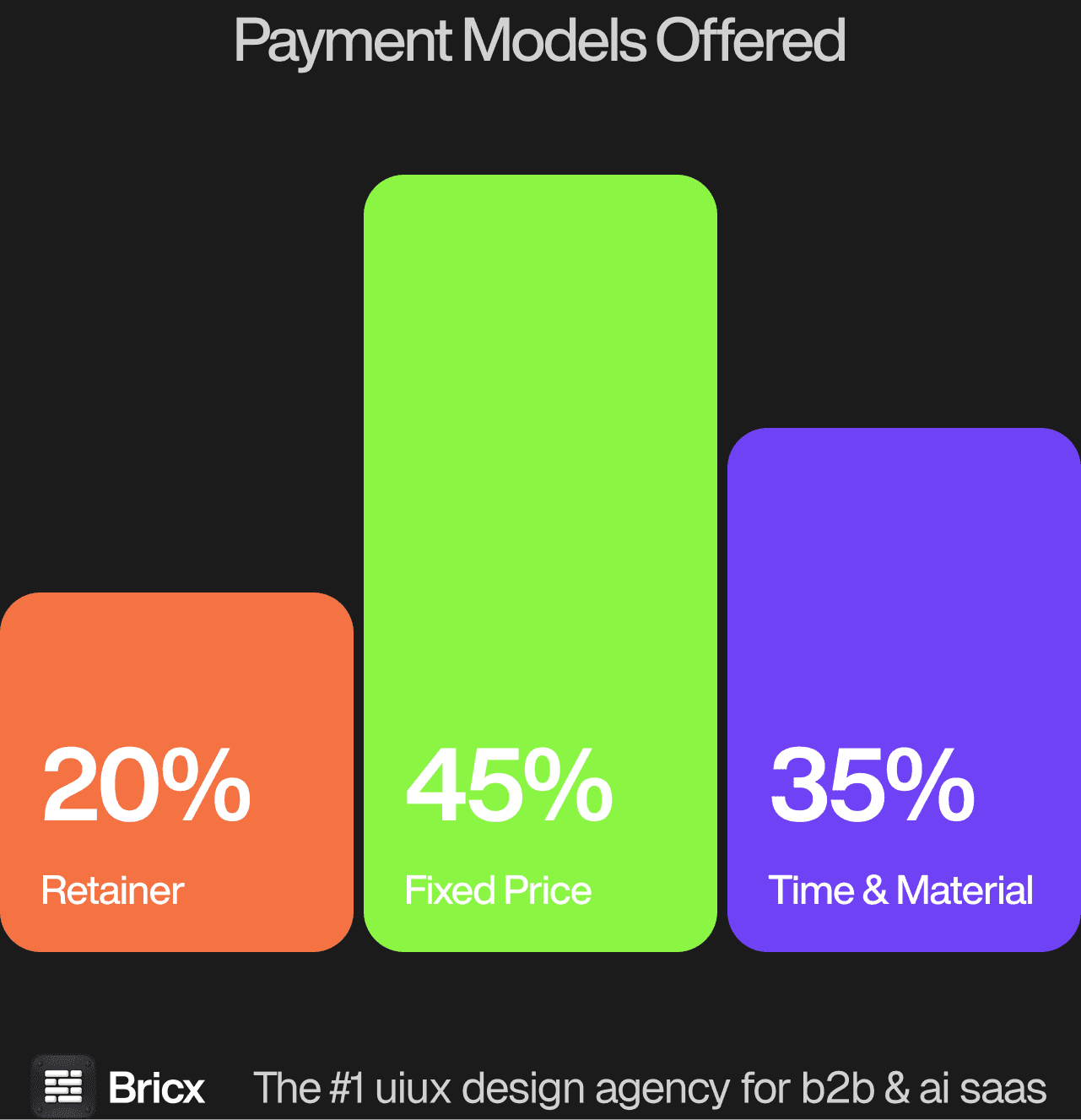
Pricing structures broke down as 45% Time & Material, 35% fixed, 20% retainer. Match it to your certainty, not your preference. For proptech product design the model usually matters more than the headline figure, because it decides what happens when the scope moves.
- Fixed price works for a launch.
- Time & Material works for exploration.
- Retainer works for an ongoing product.
- Which one fits proptech product design comes down to whether the scope is settled before the work starts.
How do you evaluate a design agency for a proptech product?
Five things separate proptech design from property software.
Ask who the design serves. If every decision favours the landlord or the agent, the tenant side will be bad and the churn will surface later.
Ask about documents. Leases, inspections, compliance certificates and deposit records are the actual content, and document handling is usually an afterthought.
Ask about the maintenance loop. Reporting a repair and tracking it is the most-used flow in residential proptech and the least designed.
Ask about money. Rent, deposits, arrears and split payments all involve regulated handling and high emotional stakes.
Ask about the portfolio view. One property is simple. Four hundred across three regions with different rules is the actual product.
What are the red flags when hiring a design agency?
- Slides where the work should be. A deck about process is not evidence of shipped design.
- A quote that never moves. Scope changed and price did not means the estimate was padded.
- Junior work in a senior portfolio. Ask who specifically produced the pieces you like.
- No mention of accessibility. For anything customer-facing this is a legal exposure, not a nicety.
- Vague on ownership. Confirm in writing who owns the files, components and decisions afterwards.
- No comparable example of proptech product design. An agency that cannot point to work of the same shape is learning on your budget.
Should you hire a product design agency or build in-house?
An agency buys you time. Senior capability starts within weeks rather than after a hiring cycle, and the cost stops when the project does. For proptech product design specifically, the question worth settling first is how often the work recurs.
A hire buys you depth. Someone inside the product makes better small decisions every day, but you are paying for the search, the ramp and the salary long before that shows up in the work. Where proptech product design falls on that line is usually clear once you count how many times it will need doing again.
Proptech companies usually have deep property expertise and design capacity pointed at whoever pays. The most valuable outside contribution is arguing for the tenant experience, which nobody internally is measured on.
FAQs
What makes proptech design difficult?
Three roles with conflicting interests: landlord, tenant and agent. The paying user and the experiencing user are usually different people.
How much does proptech product design cost?
Fixed-price product design across the benchmark ran $2,500 to over $150,000 with a median near $43,000, and multi-role products sit above that median. Bricx starts at $25,000.
Why is the tenant experience usually worse?
Because tenants rarely choose the software and never pay for it. That misalignment is structural, and it shows up as support load and landlord churn rather than as tenant complaints.
What is the most-used flow in residential proptech?
Maintenance. Reporting an issue and tracking it to resolution is used more than anything else and designed less than almost anything else.