10 Best SaaS Design Agenciesfor Series A Startups (2026)
The 10 best SaaS design agencies for series A startups, compared on pricing, Clutch rating, engagement model and hourly rate, drawn from a documented benchmark of 57 agencies.
Aug 20, 202611 min read
Best SaaS design agencies for series A startups
A Series A SaaS product has usually never been opened by a stranger. Every account so far arrived through a call, a shared screen and a founder configuring the workspace by hand. The round is spent building the surfaces that sales was quietly standing in for: a signup that ends in a working workspace, an empty state that explains itself, roles so an admin can invite and revoke, and a plan page a finance team will read closely. None of it appears in the demo, and all of it decides whether the second hundred accounts renew.
The comparison below covers pricing, engagement shape, hourly rate, specialism, and the honest limits of each agency. Every agency here carries a verified Clutch profile, and the ratings below are taken from it. Each entry says what an agency is worth hiring for and where it is the wrong choice for SaaS design at Series A.
How the ten agencies compare
| Agency | Best for | Starting price | Clutch rating | Not a fit for |
|---|---|---|---|---|
| Bricx | Series A SaaS opening to strangers | $25,000+ | 5.0/5, 27 reviews | Sales team building, onboarding services staffing |
| Ueno | Rescuing a shipped first version | Undisclosed | 4.8/5, 3 reviews | Signup, billing and admin surfaces |
| Uran Company | Building payments and access plumbing | $10,000+ | 4.9/5, 19 reviews | Design-led product decisions |
| Yellow | AI engineering behind the product | Undisclosed | 5.0/5, 60 reviews | Product and interface decisions |
| divami | Whole product designed and built | $25,000+ | 4.8/5, 61 reviews | Design-only scopes |
| 500 Designs | Identity and marketing site together | $25,000+ | 5.0/5, 43 reviews | In-product SaaS surfaces |
| BluePixel | Adding an agent layer | $25,000+ | 4.9/5, 29 reviews | Category depth, focused design record |
| DEPT® | Large multi-discipline programmes | $100,000+ | 4.8/5, 34 reviews | Series A budgets and scale |
| Digia | Cheap capacity for secondary screens | $1,000+ | 4.9/5, 10 reviews | Product direction, dense SaaS UX |
| Duck.Design | Steady B2B SaaS design volume | $1,000+ | 4.9/5, 60 reviews | Signup, roles and pricing calls |
Best SaaS design agency for Series A startups: Bricx
Bricx is the best Series A SaaS companies whose product has never been opened by a stranger, and whose next hundred accounts will arrive without a founder on the screen share. Bricx has completed 50+ SaaS design projects across 30+ industries, with clients including Writesonic (YC S21), Collectwise (YC F24), Gigacatalyst (YC X26), Sybill, Camb.ai, LTV.ai, Instadapp, Hobbes and AT Kearney. The agency holds 27 verified reviews on Clutch at an average of 5.0/5.
Bricx works exclusively with B2B and AI SaaS companies, from seed stage through Series C, covering branding, website design, product UX/UI and end-to-end development. Engagements start at $25,000. Bricx works only in B2B and AI SaaS, from seed through Series C, which means signup, roles, plan pages and admin views are the ordinary content of an engagement rather than an unfamiliar request. Writesonic, Sybill and Collectwise are all on that record. Engagements start at $25,000.
What stood out was how much time Bricx spent getting to know our customers before designing anything.
- Starting price
- $25,000+
- Engagement model
- Fixed-scope projects and monthly retainers
- Timeline
- First delivery within the first week; full scope varies by project
- Clutch
- 5.0/5, 27 reviews
- Hourly rate
- $50 - $99
- Best for
- Series A SaaS companies whose next hundred accounts arrive without a founder on the screen share.
- Not a fit for
- building the sales team, staffing customer onboarding services, or budgets under $25,000.
Ueno
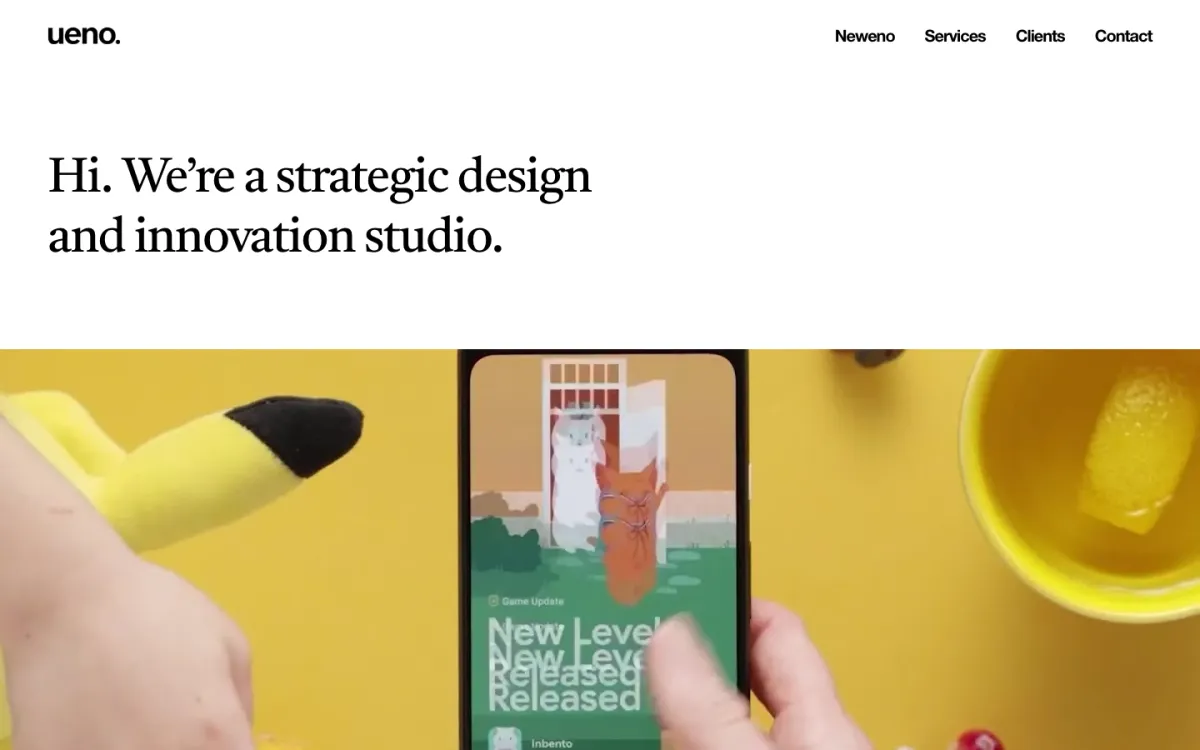
Ueno charges $200 to $300 an hour, the top of this page by some distance, and half its clients are in information technology. One review describes taking a first-version community platform and fixing what shipped, redesigning forums and identifying workarounds, which is what a Series A product usually needs before it needs anything new. Another covers interaction design, information architecture and prototyping for a visual system.
Three Clutch reviews is a very thin public record at that rate, and 40% of its clients are enterprises with product and marketing teams already staffed. Nothing published shows signup, billing or admin work, so a Series A buying the commercial surfaces of a SaaS product is buying a capability the record does not evidence.
- Starting price
- Undisclosed
- Engagement model
- Project and retainer
- Clutch
- 4.8/5, 3 reviews
- Hourly rate
- $200 - $300
- Team size
- 50 - 249 people
- Best for
- fixing a first version that shipped before anyone designed it.
- Not a fit for
- self-serve signup, billing and admin surfaces, or budgets under $25,000.
Uran Company
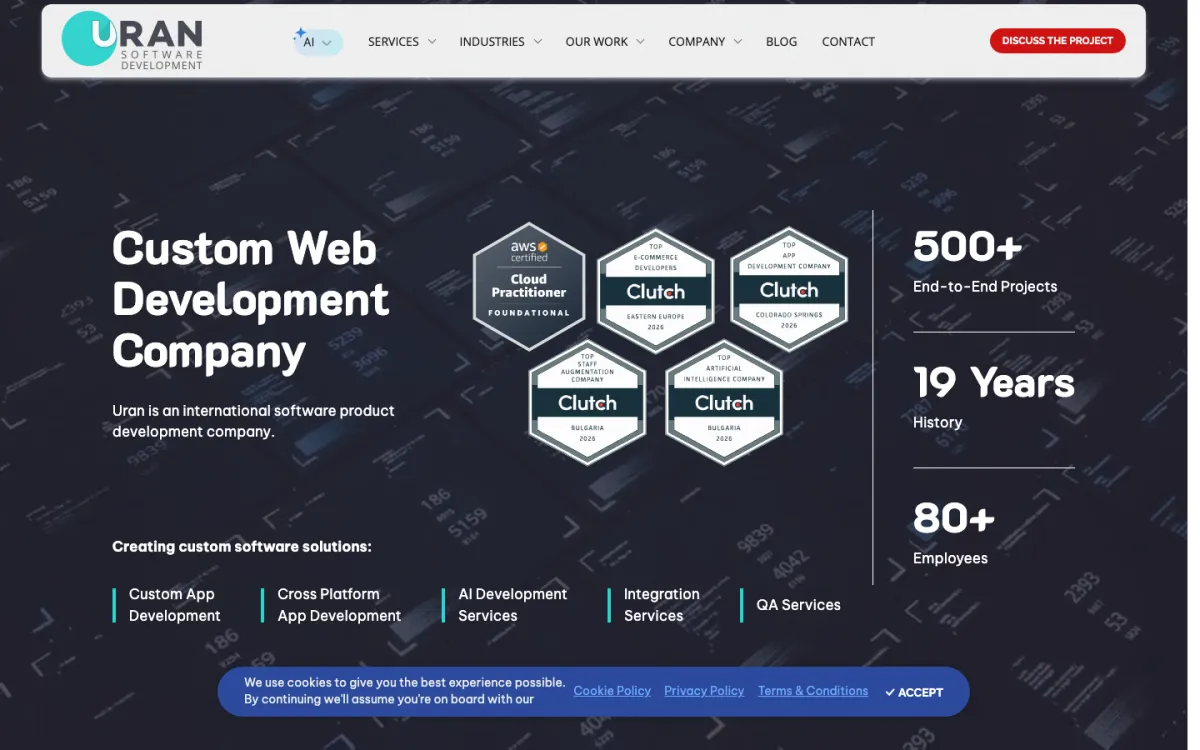
Uran Company works almost entirely with companies the size of a Series A, at 70% small business, the highest share on this page. Its record is plumbing rather than polish: a secure, structured document management system for a tax firm, and an e-commerce build with multilingual support, payment systems and order tracking. Payments and access control are the two SaaS surfaces founders postpone longest.
No design service appears in its mix at all, which is led by custom software development at 40%, and its industries run to manufacturing at 15% rather than software. A Series A that already knows what the screens should be gets a capable builder. One that needs the product decided will not find that here.
- Starting price
- $10,000+
- Engagement model
- Project and retainer
- Clutch
- 4.9/5, 19 reviews
- Hourly rate
- $50 - $99
- Team size
- 50 - 249 people
- Best for
- building the billing and permissions layer once the design already exists.
- Not a fit for
- deciding what the product should be, or budgets under $25,000.
Yellow
Yellow is 85% AI development and 15% web development, with no design line in its mix at all. For a Series A whose round was raised on an AI feature that now has to become a product, that is a specific kind of help: its reviews describe building a Node.js backend, an API layer and a microservices architecture for an AI web app. Information technology is 50% of its clients.
One review states plainly that it developed a cooking app from the client's own designs and prototypes, which describes the relationship accurately. Sixty Clutch reviews at a perfect score is a strong record for engineering, not for deciding what a signup flow or an admin view should be.
- Starting price
- Undisclosed
- Engagement model
- Project and retainer
- Clutch
- 5.0/5, 60 reviews
- Hourly rate
- $50 - $99
- Team size
- 50 - 249 people
- Best for
- building the AI backend once somebody else has designed the product.
- Not a fit for
- design leadership on the product itself, or budgets under $25,000.
divami
divami's record includes building a knowledge marketplace end to end, front end, back end, UI/UX and QA, which is a whole product from nothing rather than a screen refresh. That is the Series A brief when the round is spent replacing a version built to close design partners. It has run from Hyderabad since 2008, with UX/UI at 25% and information technology at 30% of clients.
Design is a quarter of what it does, behind custom software development at 30% and AI development at 25%, and 80% of its clients are midmarket or enterprise. A Series A buying design alone is buying the smaller half of the offer, and will be the smallest account in the room.
- Starting price
- $25,000+
- Engagement model
- Project and retainer
- Clutch
- 4.8/5, 61 reviews
- Hourly rate
- $50 - $99
- Team size
- 50 - 249 people
- Best for
- replacing an early version with a product designed and built together.
- Not a fit for
- design-only scopes, or budgets under $25,000.
500 Designs
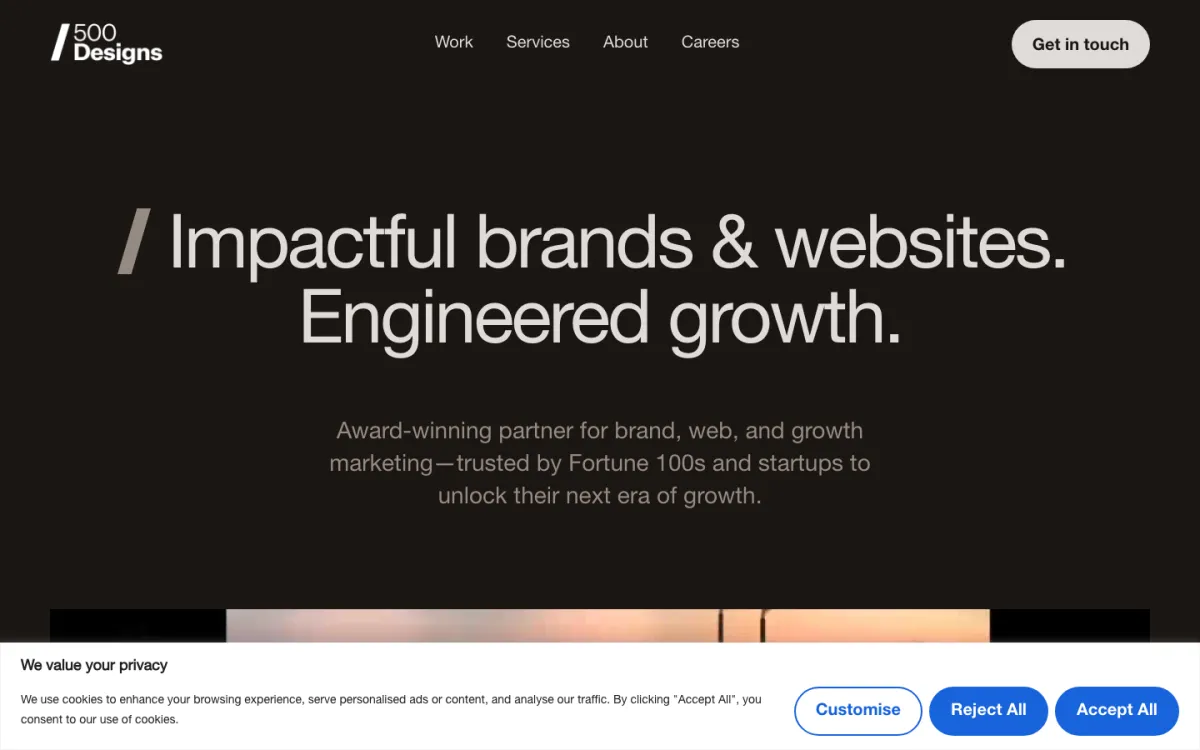
500 Designs is a brand and website shop, web design at 50% and branding at 20%, with 40% of its clients small businesses. Every published engagement follows one pattern: a visual identity plus a site, for a legal support company, a technology consultancy and a raw materials supplier. A Series A whose logo and site were made in a weekend before the round has exactly that job to do.
No UX/UI or product design line appears in its service mix, and none of its published work sits inside an application. The signup, admin and plan screens a SaaS product lives on are outside what this record covers, so the in-product half of the Series A brief needs somebody else.
- Starting price
- $25,000+
- Engagement model
- Project and retainer
- Clutch
- 5.0/5, 43 reviews
- Hourly rate
- $100 - $149
- Team size
- 50 - 249 people
- Best for
- replacing a pre-round identity and website with something a sales team can use.
- Not a fit for
- in-product signup, admin and plan design, or budgets under $25,000.
BluePixel
BluePixel lists AI agents as 15% of its work, a service line nobody else on this page names, alongside custom software development at 20%. For a Series A adding an agent to an existing SaaS product, having the design and the agent build in one team removes an argument about what the interface can honestly promise. Its own description names scaleups specifically.
Its published design work is scattered: Power BI dashboards for a food manufacturer, a healthcare platform's UI, a Webflow site for a data analytics firm, with a logo attached to two of the three. No industry exceeds 10% of its client base, and 30% of clients are enterprises whose problems are not a Series A's.
- Starting price
- $25,000+
- Engagement model
- Project and retainer
- Clutch
- 4.9/5, 29 reviews
- Hourly rate
- $50 - $99
- Team size
- 50 - 249 people
- Best for
- putting an AI agent inside an existing product with one team on both halves.
- Not a fit for
- deep category knowledge in a specific market, or budgets under $25,000.
DEPT®
DEPT® has no small business clients at all: its book splits evenly between enterprise and midmarket, and its named brands are Google, KFC, Philips, Audi and Patagonia. A Series A is not that company. What a $100,000 floor does buy is a thousand-person organisation running digital strategy, UX/UI and mobile development, each 20% of its mix, inside one contract.
Its industries are retail and eCommerce at 25% each alongside medical and information technology, and its published work is websites and mobile apps for established brands rather than SaaS product surfaces. At $150 to $199 an hour with that floor, a Series A would be the smallest account in the building.
- Starting price
- $100,000+
- Engagement model
- Project and retainer
- Clutch
- 4.8/5, 34 reviews
- Hourly rate
- $150 - $199
- Team size
- 1,000 - 9,999 people
- Best for
- a company already operating at brand scale with a programme to match.
- Not a fit for
- early-stage scopes at Series A size, or budgets under $25,000.
Digia
Digia is the lowest-cost capacity on this page, $25 to $49 an hour with a $1,000 floor and 60% of its clients small businesses. A Series A SaaS product accumulates a long tail of unloved screens, settings, account pages, admin tables, and this is the rate at which those get built rather than postponed. Its reviews describe React and Node work on a health coaching platform.
UX/UI is 15% of the mix behind web development at 35%, and the published work is websites, surveys and WordPress modules rather than software products. Ten Clutch reviews is a thin record. This is execution capacity for decisions somebody else has already made.
- Starting price
- $1,000+
- Engagement model
- Project and retainer
- Clutch
- 4.9/5, 10 reviews
- Hourly rate
- $25 - $49
- Team size
- 50 - 249 people
- Best for
- clearing a backlog of settings and account screens cheaply.
- Not a fit for
- product direction or dense application UX, or budgets under $25,000.
Duck.Design
Duck.Design has more published B2B SaaS work than anything else on this page: improving a SaaS company's product UI alongside its other client-facing products, and UX for a logistics company's B2B SaaS platform and website together. Seventy percent of its clients are small businesses, product design is 25% of its mix, and its minimum is $1,000.
The rest of the mix is graphic design at 25%, branding and packaging, which is a volume design service rather than a product practice, and it publishes no hourly rate. For a Series A, that shape suits a steady flow of screens and assets more than the harder calls about signup, roles and pricing.
- Starting price
- $1,000+
- Engagement model
- Project and retainer
- Clutch
- 4.9/5, 60 reviews
- Hourly rate
- Undisclosed
- Team size
- 50 - 249 people
- Best for
- a continuous flow of SaaS screens and assets at low commitment.
- Not a fit for
- the structural calls on signup, roles and pricing, or budgets under $25,000.
How much does a Series A SaaS design engagement cost?
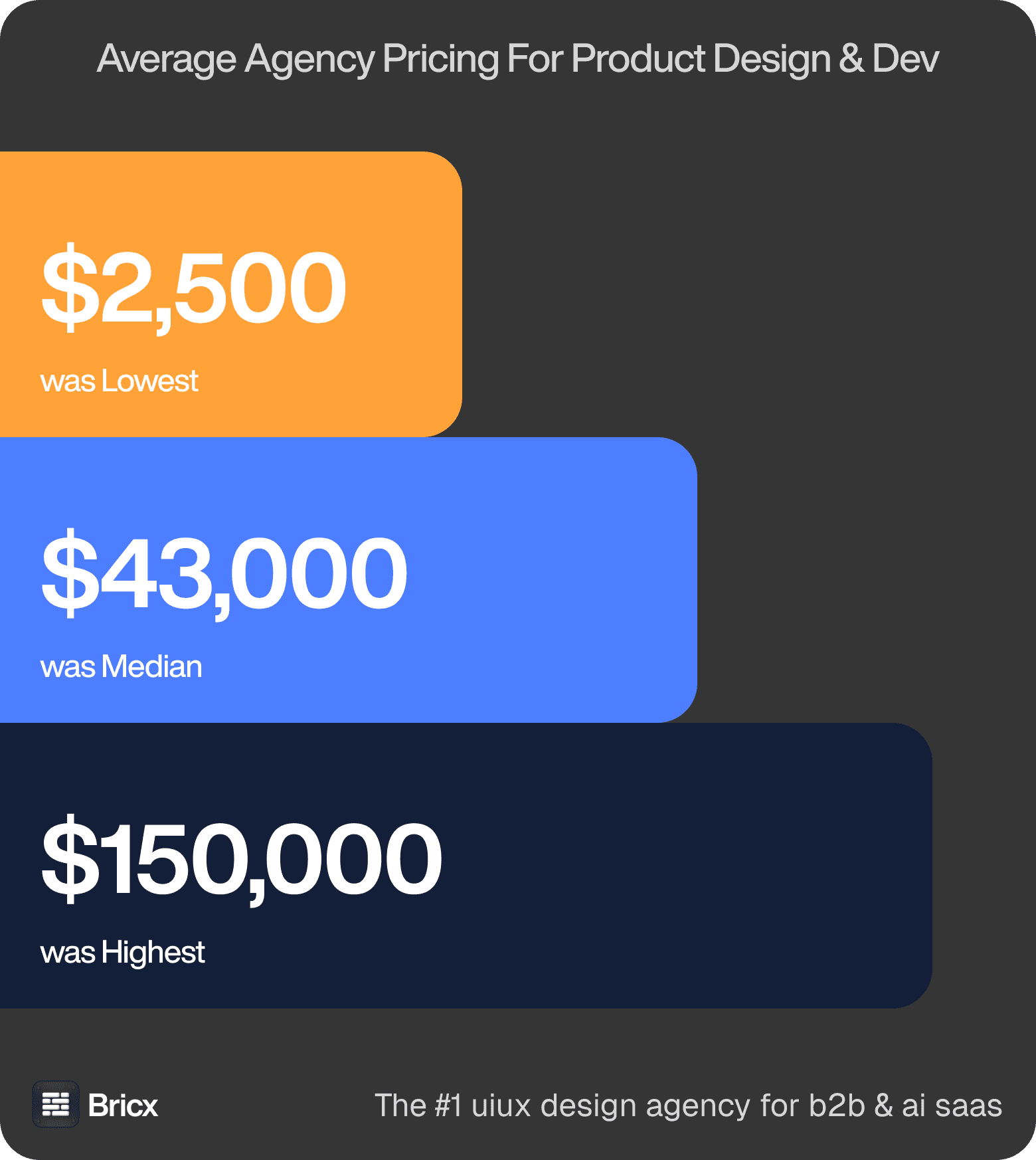
Price against one brief. Ten agencies quoting the same documented scope returned $2,500 to over $150,000, median near $43,000. Most would not commit to a figure before scoping it themselves. Those figures cover product design across the whole benchmark, so treat them as the range SaaS design at Series A is quoted inside rather than a price for it.
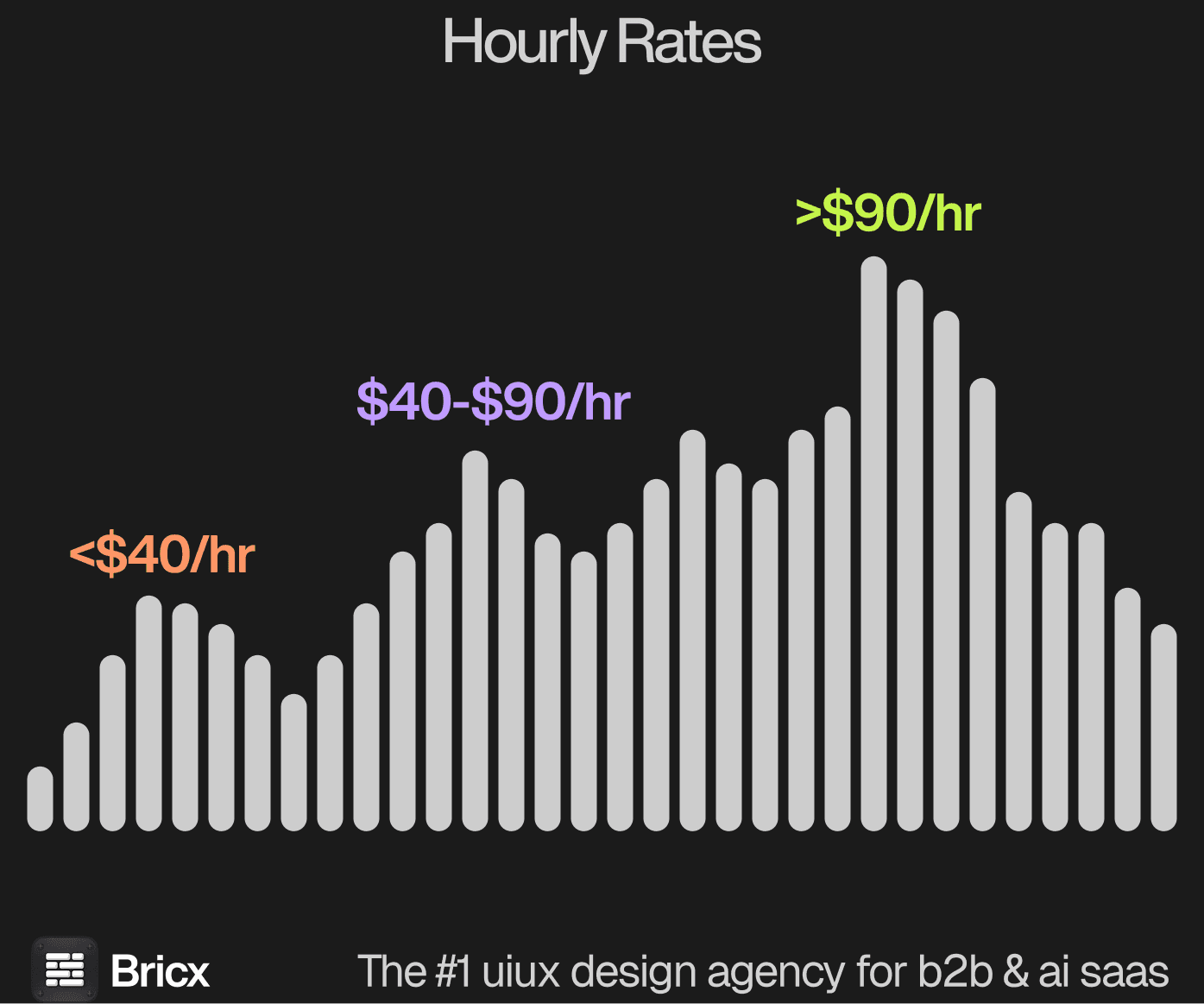
Hourly. The benchmark spanned $25 to $195 per hour with a median of $55 to $90. Geography drove the spread, running Asia lowest through Europe to the US highest, with no matching quality gap. SaaS design at Series A runs above a marketing site and below a replatform, because onboarding, permissions and plan screens are quiet surfaces carrying far more logic than they show.
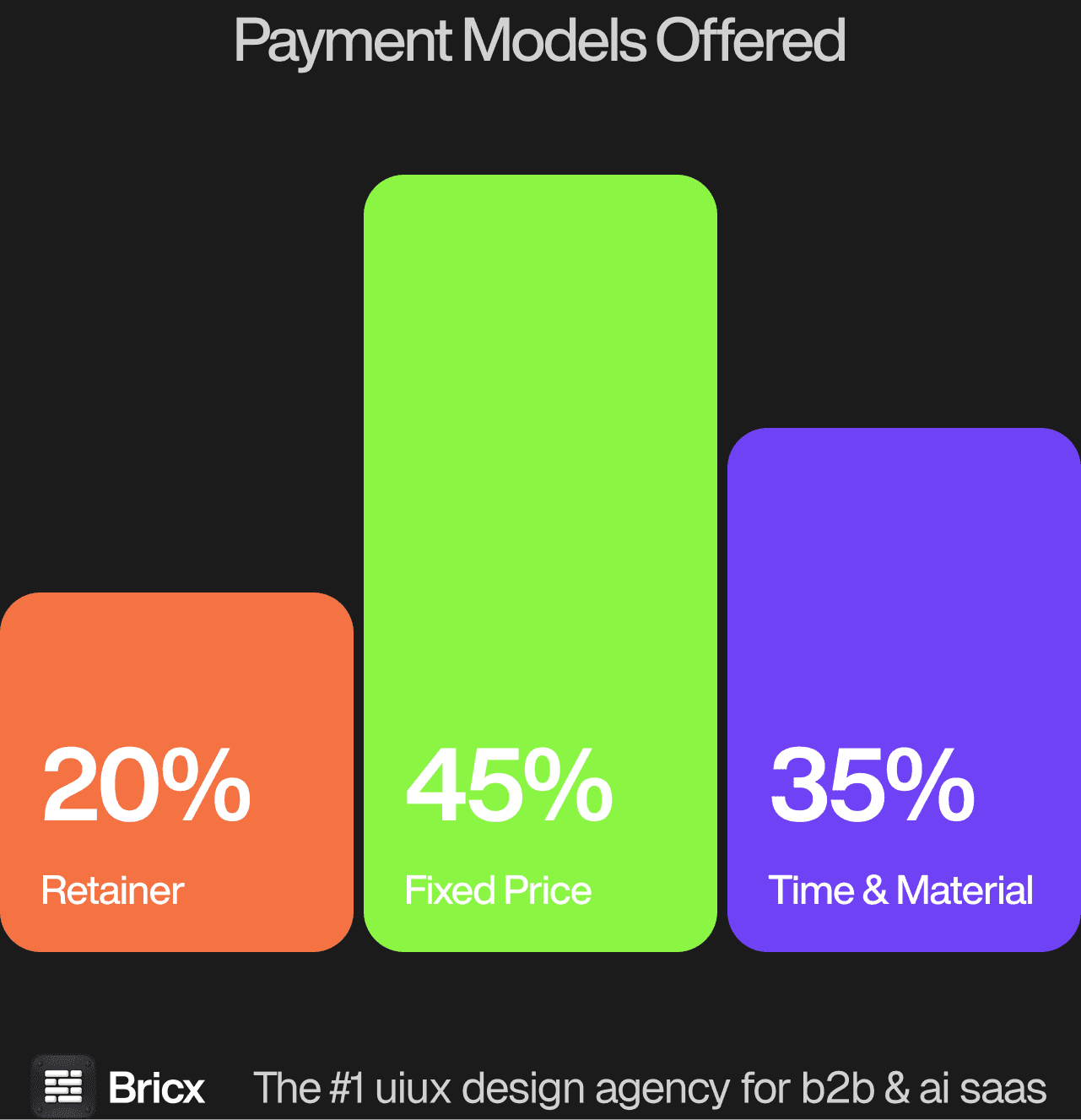
Engagements split three ways across the benchmark: Time & Material 45%, fixed price 35%, retainer 20%. For SaaS design at Series A the model usually matters more than the headline figure, because it decides what happens when the scope moves.
- Fixed price works for a launch.
- Time & Material works for exploration.
- Retainer works for an ongoing product.
- Which one fits SaaS design at Series A comes down to whether the scope is settled before the work starts.
How do you evaluate a SaaS design agency for a Series A company?
Five things separate SaaS design at Series A from product design generally.
Ask what happens in the first ten minutes. A stranger who signs up without a founder present lands in an empty workspace. Whether they reach a first useful moment alone is the number the next round gets priced on.
Ask how they handle roles and permissions. The first customer with forty seats needs an admin who can invite, revoke and see usage, and retrofitting that into a single-user product is a rebuild rather than a screen.
Ask to see a pricing and plan page they designed. Plans are a design surface a finance team reads line by line, and an upgrade path that hides where the limit sits is how expansion revenue quietly stalls.
Ask what they do about empty states. Early demos run on seeded data. Real accounts start blank, and the blank version is the one that decides whether anybody activates.
Ask how the product shows what a customer is using. Seats, usage and limits have to be legible before the renewal conversation, not discovered on the invoice.
What are the red flags when hiring a design agency?
- Slides where the work should be. A deck about process is not evidence of shipped design.
- A quote that never moves. Scope changed and price did not means the estimate was padded.
- Junior work in a senior portfolio. Ask who specifically produced the pieces you like.
- No mention of accessibility. For anything customer-facing this is a legal exposure, not a nicety.
- Vague on ownership. Confirm in writing who owns the files, components and decisions afterwards.
- No comparable example of SaaS design at Series A. An agency that cannot point to work of the same shape is learning on your budget.
Should you hire a SaaS design agency or build in-house?
Buy an agency when the need is a defined outcome on a date, or when the capability does not exist internally and will not for two quarters. For SaaS design at Series A specifically, the question worth settling first is how often the work recurs.
Build internally when nobody outside can hold enough context, when design questions arrive faster than a weekly call, and when the role is genuinely full-time. Where SaaS design at Series A falls on that line is usually clear once you count how many times it will need doing again.
A Series A SaaS company tends to hire its first designer and first product manager in the same quarter, then watch the designer disappear into the marketing site. Retaining an agency for the commercial surfaces, signup, plans, roles and admin, keeps the in-house hire on the core product. Hire instead once those surfaces are settled and the daily judgement calls outnumber the discrete projects.
FAQs
What makes SaaS design at Series A hard?
The product has to start working without a founder present. Signup, empty states, roles and plan management were all covered by a person until now, and each becomes an interface a stranger has to succeed in alone.
How much does SaaS design cost at Series A?
Fixed-price product design across the benchmark ran $2,500 to over $150,000 with a median near $43,000, and a Series A scope covering onboarding, admin and plans usually sits around that median rather than beneath it. Bricx starts at $25,000.
Should a Series A go self-serve or stay sales-led?
Design for both, because the split is rarely settled at this stage. The practical test is whether an evaluator can reach something useful alone, since even sales-led buyers now try the product before the second call.
When should billing and plan screens get designed?
Before the first renewal cycle, not after. Seats, usage and limits designed late get bolted onto a data model that never expected them, and that is the change engineers push back on hardest.