10 Best SaaS Design Agenciesfor Ticketing SaaS (2026)
The 10 best SaaS design agencies for ticketing SaaS, compared on pricing, Clutch rating, engagement model and hourly rate, drawn from a documented benchmark of 57 agencies.
Aug 20, 202611 min read
Best SaaS design agencies for ticketing SaaS
Ticketing software does almost nothing for weeks and then carries an entire business for ninety minutes. When an on-sale opens, thousands of people want the same few hundred seats in the same second, the inventory is perishable, and one seat sits in several carts at once. That makes the queue a design surface rather than an infrastructure detail, because what somebody sees while waiting decides whether they keep waiting. The other half of the product is a back office an organiser configures once per event, under deadline, and cannot test until testing is too late.
Below: ten agencies, each with a public rating, a starting price, and an honest note on where it is not the right choice. Every agency here carries a verified Clutch profile, and the ratings below are taken from it. Each entry says what an agency is worth hiring for and where it is the wrong choice for ticketing SaaS design.
How the ten agencies compare
| Agency | Best for | Starting price | Clutch rating | Not a fit for |
|---|---|---|---|---|
| Bricx | Organiser back office and buyer checkout | $25,000+ | 5.0/5, 27 reviews | Queue infrastructure and load engineering |
| Idealogic | Ticketing apps built and designed | $5,000+ | 4.9/5, 10 reviews | Large enterprise programmes |
| ROSSUL | Mission-critical configuration workflows | $25,000+ | 4.9/5, 20 reviews | Consumer checkout under load |
| Uinno | Fast delivery against a fixed date | $10,000+ | 5.0/5, 31 reviews | High-concurrency ticketing experience |
| Unfold | Entertainment brand and platform design | $25,000+ | 5.0/5, 5 reviews | Seat maps and inventory logic |
| nomtek | Mobile and on-site event apps | $25,000+ | 4.9/5, 43 reviews | Ticketing domain knowledge |
| CodeTheorem | One product across several surfaces | $1,000+ | 5.0/5, 9 reviews | On-sale scale and load |
| Dworkz | Live contested data shown honestly | $10,000+ | 4.9/5, 8 reviews | Consumer-scale event traffic |
| EMERGE | Venue and on-site app design | $50,000+ | 4.8/5, 25 reviews | Inventory and on-sale mechanics |
| Koombea | Payment and commerce flows | $50,000+ | 4.9/5, 24 reviews | Event and venue domain depth |
Best SaaS design agency for ticketing SaaS: Bricx
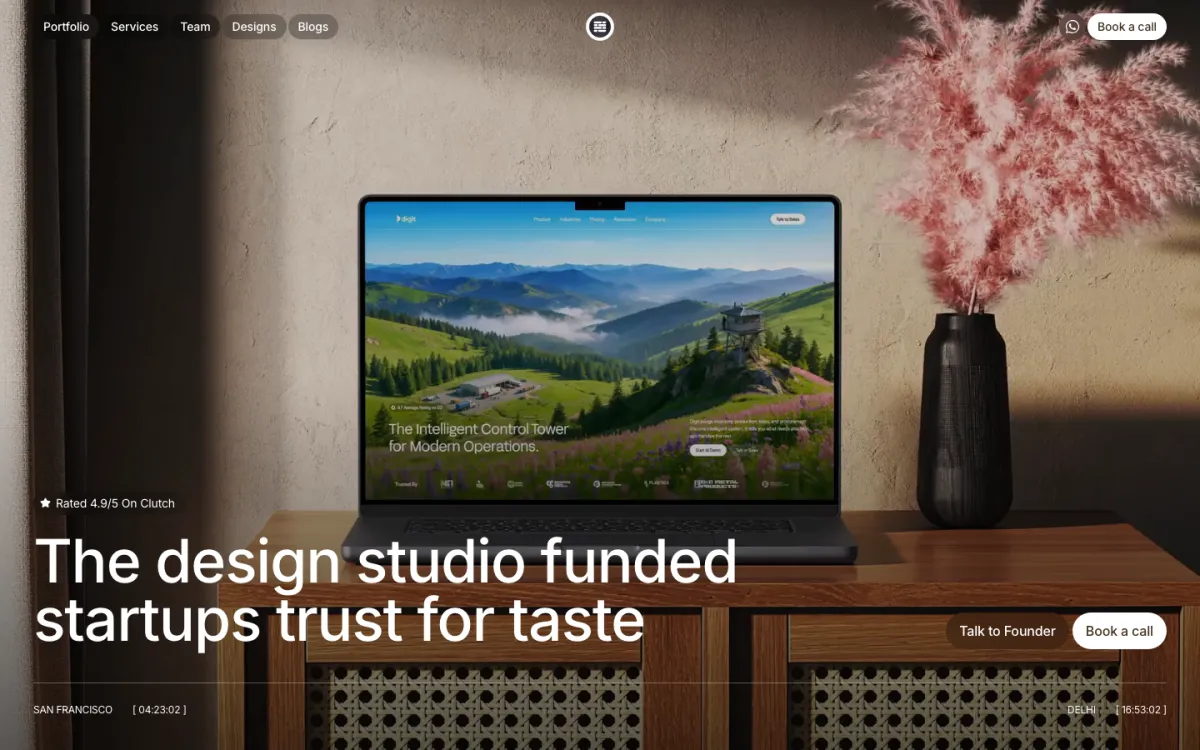
Bricx is the best ticketing products whose entire year is decided in the ninety minutes of an on-sale, where the queue and the checkout have to hold while everything is contested. Bricx has completed 50+ SaaS design projects across 30+ industries, with clients including Writesonic (YC S21), Collectwise (YC F24), Gigacatalyst (YC X26), Sybill, Camb.ai, LTV.ai, Instadapp, Hobbes and AT Kearney. The agency holds 27 verified reviews on Clutch at an average of 5.0/5.
Bricx works exclusively with B2B and AI SaaS companies, from seed stage through Series C, covering branding, website design, product UX/UI and end-to-end development. Engagements start at $25,000. Bricx treats the two halves of a ticketing product as separate briefs: the organiser's configuration back office, used cold and against a deadline, and the buyer's checkout, used once at speed. Engagements cover branding, website, product UX/UI and development, on B2B and AI SaaS, from $25,000.
All was delivered on time with high standards of communication.
- Starting price
- $25,000+
- Engagement model
- Fixed-scope projects and monthly retainers
- Timeline
- First delivery within the first week; full scope varies by project
- Clutch
- 5.0/5, 27 reviews
- Hourly rate
- $50 - $99
- Best for
- ticketing products that need the organiser console and the buyer checkout designed as separate briefs.
- Not a fit for
- queueing infrastructure or load engineering, or budgets under $25,000.
Idealogic
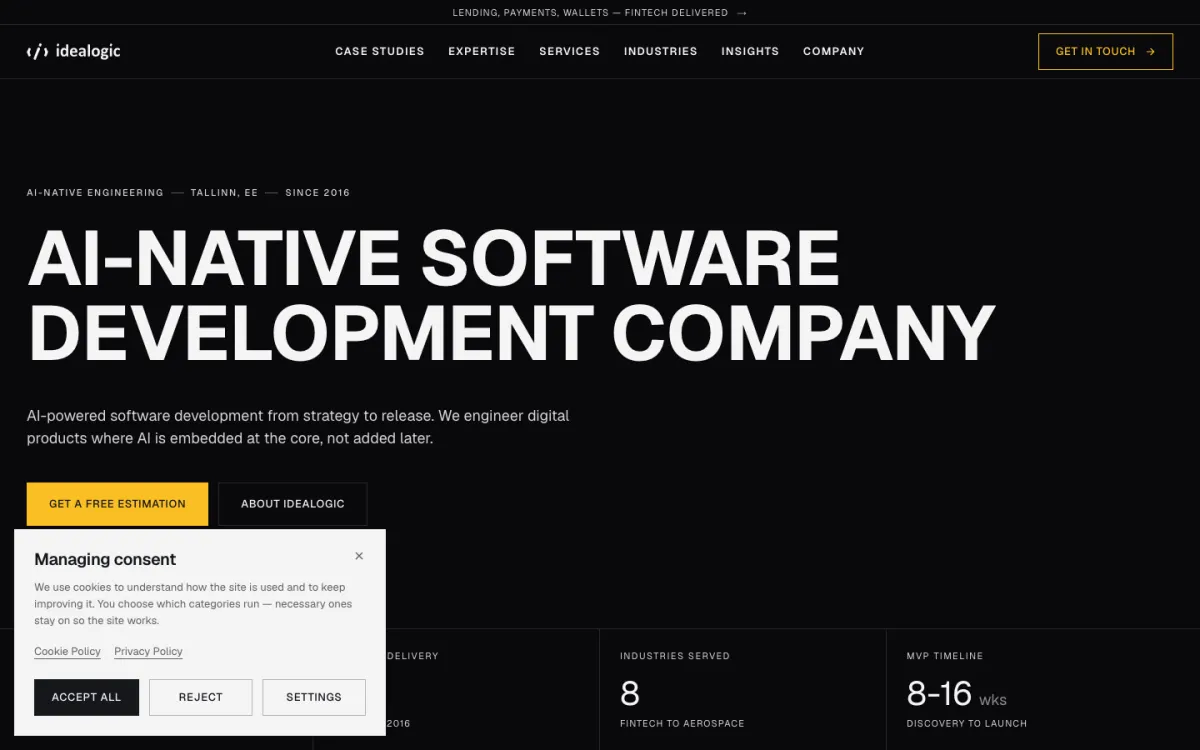
Idealogic is the only agency here with a ticketing product on its record: an iOS and Android ticketing app for an entertainment startup, where it rewrote the source code and delivered the UI/UX. That combination matters in this category, because a checkout expected to hold up during an on-sale is as much an engineering decision as a design one. 15% of its client work is gaming.
Only 10% of its output is UX/UI, with blockchain, custom software and mobile development taking 30% each. 60% of its clients are small businesses and none are enterprises, and at ten Clutch reviews the public record behind that ticketing work is thin.
- Starting price
- $5,000+
- Engagement model
- Project and retainer
- Clutch
- 4.9/5, 10 reviews
- Hourly rate
- $25 - $49
- Team size
- 50 - 249 people
- Best for
- a ticketing app that needs designing and rebuilding at the same time.
- Not a fit for
- large enterprise ticketing programmes, or budgets under $25,000.
ROSSUL
ROSSUL's stated ground is mission-critical software where the workflow is the hard part, including laboratory instruments and embedded environments. The organiser side of a ticketing platform is exactly that kind of software: a configuration screen touched once per event, under deadline, where a wrong setting is not discovered until the sale is public. Its project management redesign began with a storyboard rather than screens.
Nothing on its card touches events, entertainment or consumer checkout, and its industries are information technology, manufacturing and medical. At 10 to 49 people with 40% of clients enterprises over a billion dollars, it is arranged for slow considered programmes rather than work timed to an on-sale.
- Starting price
- $25,000+
- Engagement model
- Project and retainer
- Clutch
- 4.9/5, 20 reviews
- Hourly rate
- $100 - $149
- Team size
- 10 - 49 people
- Best for
- the organiser back office where a wrong setting becomes a public failure.
- Not a fit for
- consumer checkout or on-sale surge work, or budgets under $25,000.
Uinno
Uinno's card includes an MVP delivered with no discovery phase at all, which is either a warning or precisely what a ticketing company needs, depending on whether the next on-sale is eleven weeks out or three. It also rebuilt authentication and login for an HR tech company's iOS and Android apps, and account creation at checkout is where ticket buyers give up.
There is no UX/UI line in its service split, which runs to AI development, custom software and low-code work. Nothing on the card touches events, seat inventory or high-concurrency checkout, so the load behaviour that defines this category would be learned during the engagement.
- Starting price
- $10,000+
- Engagement model
- Project and retainer
- Clutch
- 5.0/5, 31 reviews
- Hourly rate
- $25 - $49
- Team size
- 50 - 249 people
- Best for
- ticketing teams with a hard on-sale date and no room for discovery.
- Not a fit for
- work needing proven high-concurrency experience, or budgets under $25,000.
Unfold

Unfold's case list sits unusually close to this page's world: an entertainment platform case for Peacock Streaming, out-of-home media for Lamar Advertising, brand and platform design for Rumble. Ticketing is entertainment infrastructure, and the buyer arrives already excited about an artist or a team, which makes it a brand problem as much as a checkout one.
Half its output is UX/UI with 30% web design and 20% branding, and at $200 to $300 an hour it carries the highest rate here on five Clutch reviews. None of its published work involves inventory, seat maps or checkout under load, which is where ticketing platforms actually break.
- Starting price
- $25,000+
- Engagement model
- Project and retainer
- Clutch
- 5.0/5, 5 reviews
- Hourly rate
- $200 - $300
- Team size
- 10 - 49 people
- Best for
- ticketing brands that need to feel like the events they sell.
- Not a fit for
- seat maps, inventory logic or on-sale load, or budgets under $25,000.
nomtek
45% of nomtek's work is mobile app development, and on the day of an event a ticketing product is entirely a phone product: a ticket retrieved on poor venue signal, a scanner at a gate, a queue moving behind. It has also built scalable Shopify commerce platforms for several DTC brands, which is transactional volume experience rather than event experience.
Its industries are medical at 35% and manufacturing at 20%, and nothing on the card involves events, venues or ticket inventory. Design is not a listed service line either, so a ticketing company hiring here is buying a mobile build with design attached to it.
- Starting price
- $25,000+
- Engagement model
- Project and retainer
- Clutch
- 4.9/5, 43 reviews
- Hourly rate
- $50 - $99
- Team size
- 50 - 249 people
- Best for
- the phone half of a ticketing product, from wallet to gate scan.
- Not a fit for
- work requiring ticketing domain knowledge, or budgets under $25,000.
CodeTheorem

CodeTheorem's healthcare engagement covered one product's website, mobile app and web app together, which is the surface count a ticketing platform carries: a public event page, a buyer app and an organiser console that all have to report the same inventory. Its virtual gym build added authentication and video, which is scheduled-capacity software of a sort.
Founded in 2020 with nine Clutch reviews and no published hourly rate, its public record is the thinnest on this page, and a $1,000 minimum points to small scopes. No event, venue or high-traffic checkout work appears anywhere on the card.
- Starting price
- $1,000+
- Engagement model
- Project and retainer
- Clutch
- 5.0/5, 9 reviews
- Hourly rate
- Undisclosed
- Team size
- 10 - 49 people
- Best for
- keeping the event page, buyer app and organiser console consistent.
- Not a fit for
- high-volume on-sale work, or budgets under $25,000.
Dworkz
Half of Dworkz's work is financial services, where an interface has to show a number that is true at the instant it is read and stops being true a second later. A ticketing seat map has the same property, because inventory shown to one buyer is being held or sold to another while they look at it. It states a focus on data-driven B2B SaaS.
Its multi-language CMS build for an international school is relevant to selling events across markets, but only 5% of its clients are small businesses and 40% are enterprises over a billion dollars, on a record of eight Clutch reviews. No events or ticketing work appears on the card.
- Starting price
- $10,000+
- Engagement model
- Project and retainer
- Clutch
- 4.9/5, 8 reviews
- Hourly rate
- $100 - $149
- Team size
- 10 - 49 people
- Best for
- seat maps and inventory views that stay honest while under contention.
- Not a fit for
- consumer-scale event traffic design, or budgets under $25,000.
EMERGE
EMERGE's Aruba Customer Experience Center App is a venue product, software used by people physically inside a building rather than sitting at a desk, which is half of what a ticketing platform does on event day. Its PPE app for a global health organisation was built for conditions where the interface had to work quickly and correctly the first time.
90% of its output is UX/UI and it has run from Portland since 1998, but its clients are entirely enterprise and midmarket with none under $10M, and a $50,000 minimum reflects that. Nothing on the card involves ticket inventory, seat selection or an on-sale.
- Starting price
- $50,000+
- Engagement model
- Project and retainer
- Clutch
- 4.8/5, 25 reviews
- Hourly rate
- $150 - $199
- Team size
- 10 - 49 people
- Best for
- the on-site and event-day half of a ticketing platform.
- Not a fit for
- seat inventory or on-sale mechanics, or budgets under $25,000.
Koombea
Koombea's Paymentez case is payments and lending and its Do It Center case is retail and commerce, which between them cover the part of a ticketing product where money actually changes hands. A ticket checkout is a payment flow with a countdown attached, and the countdown is what turns an ordinary form into an abandonment problem.
40% of its work is mobile app development and 20% custom software, with no design service listed anywhere, and a $50,000 minimum sets the entry point. Its industries are IT, medical and education, so events and ticketing would be new ground on an engagement starting at that number.
- Starting price
- $50,000+
- Engagement model
- Project and retainer
- Clutch
- 4.9/5, 24 reviews
- Hourly rate
- $50 - $99
- Team size
- 50 - 249 people
- Best for
- the payment and checkout half of a ticketing platform.
- Not a fit for
- event or venue domain expertise, or budgets under $25,000.
How much does a ticketing platform design engagement cost?
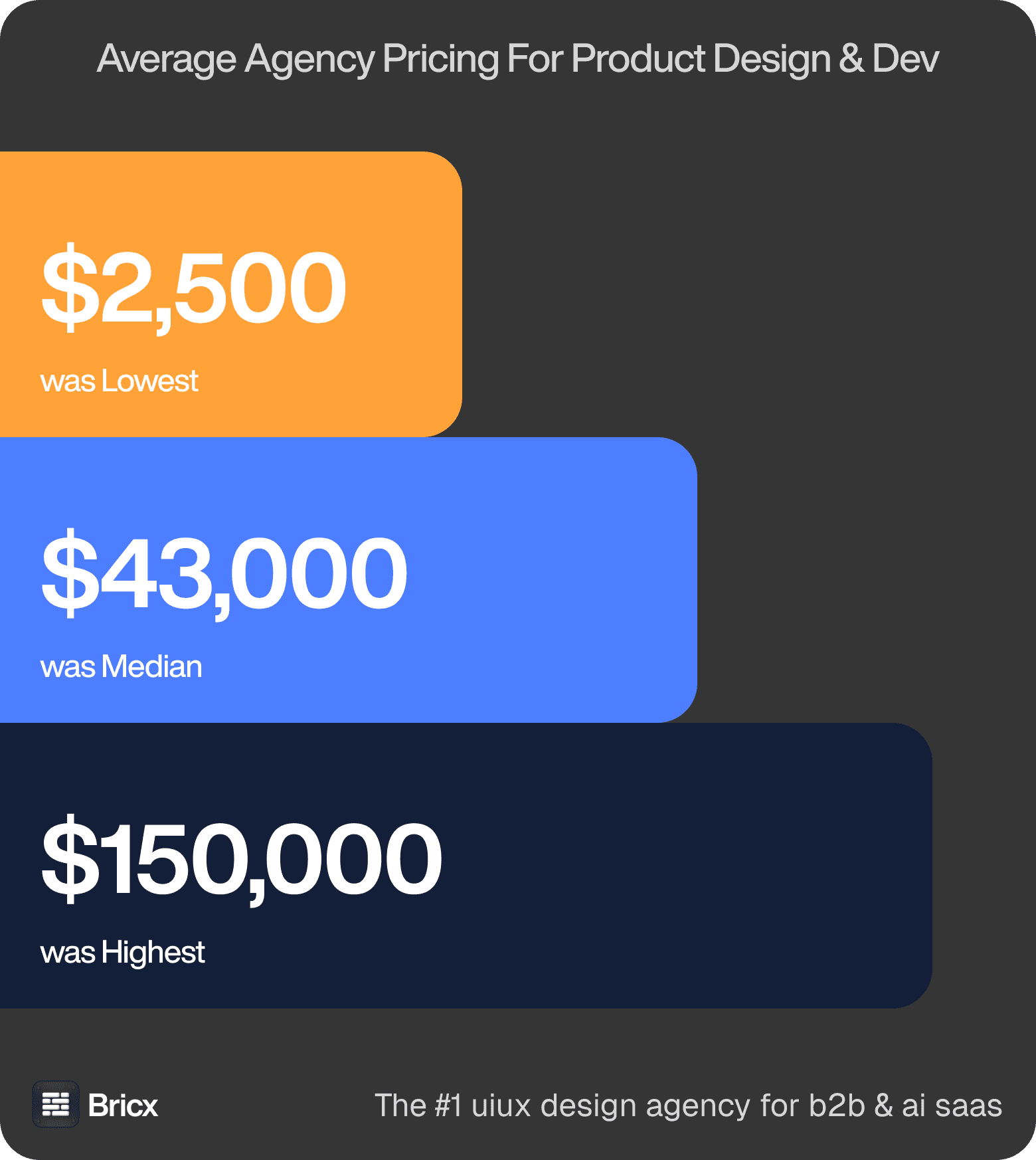
Fixed-price expectations. $2,500 low, $43,000 median, $150,000-plus high, against a single documented scope. Scoping differences explain most of the gap. Those figures cover product design across the whole benchmark, so treat them as the range ticketing SaaS design is quoted inside rather than a price for it.
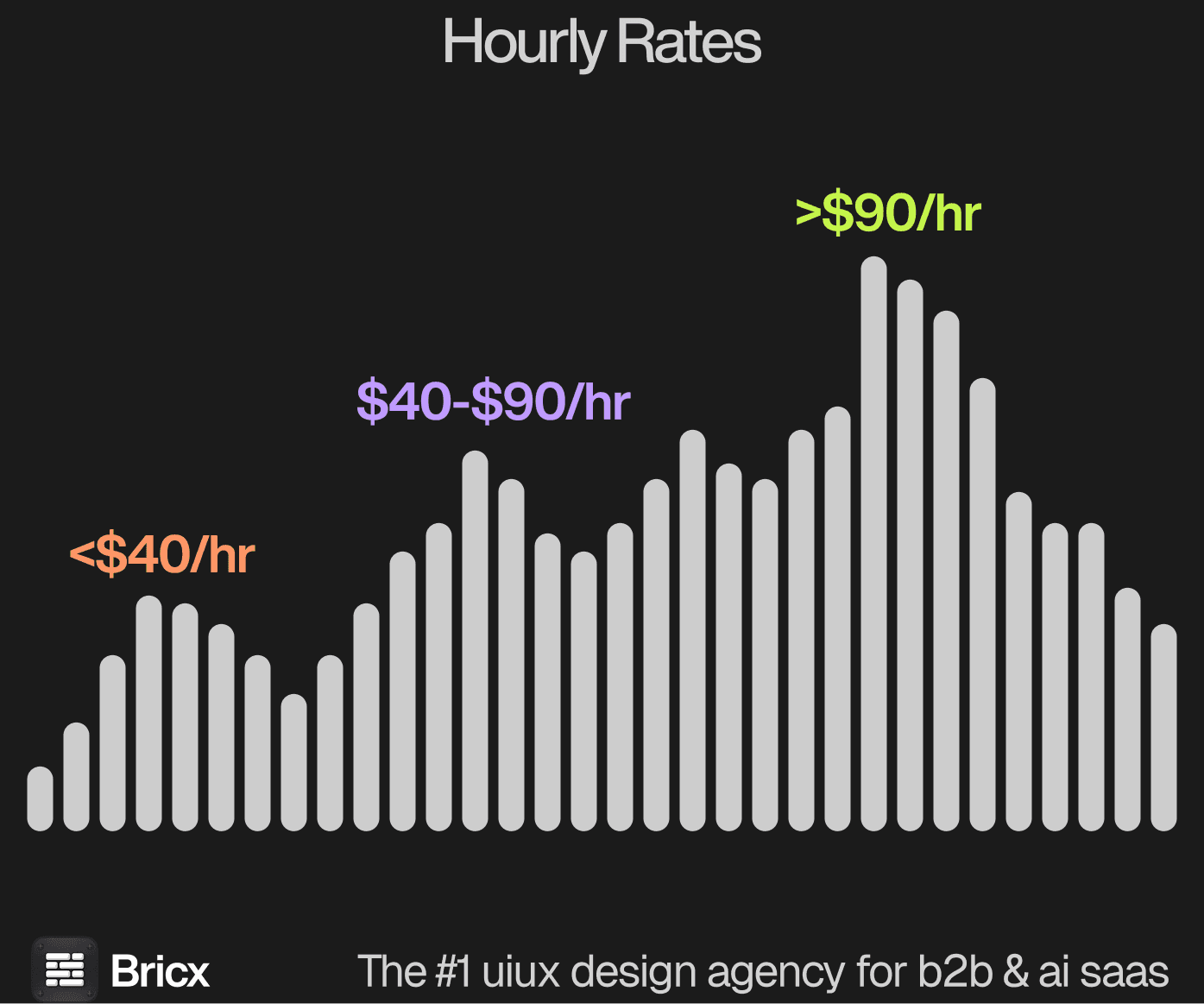
Rates. Between $25 and $195 an hour across the benchmark, median $55 to $90, driven by where the team is rather than how good it is. Ticketing runs above the benchmark median because the product is really two products, an organiser back office and a buyer checkout, and the checkout has to be designed for its worst minute rather than its average one.
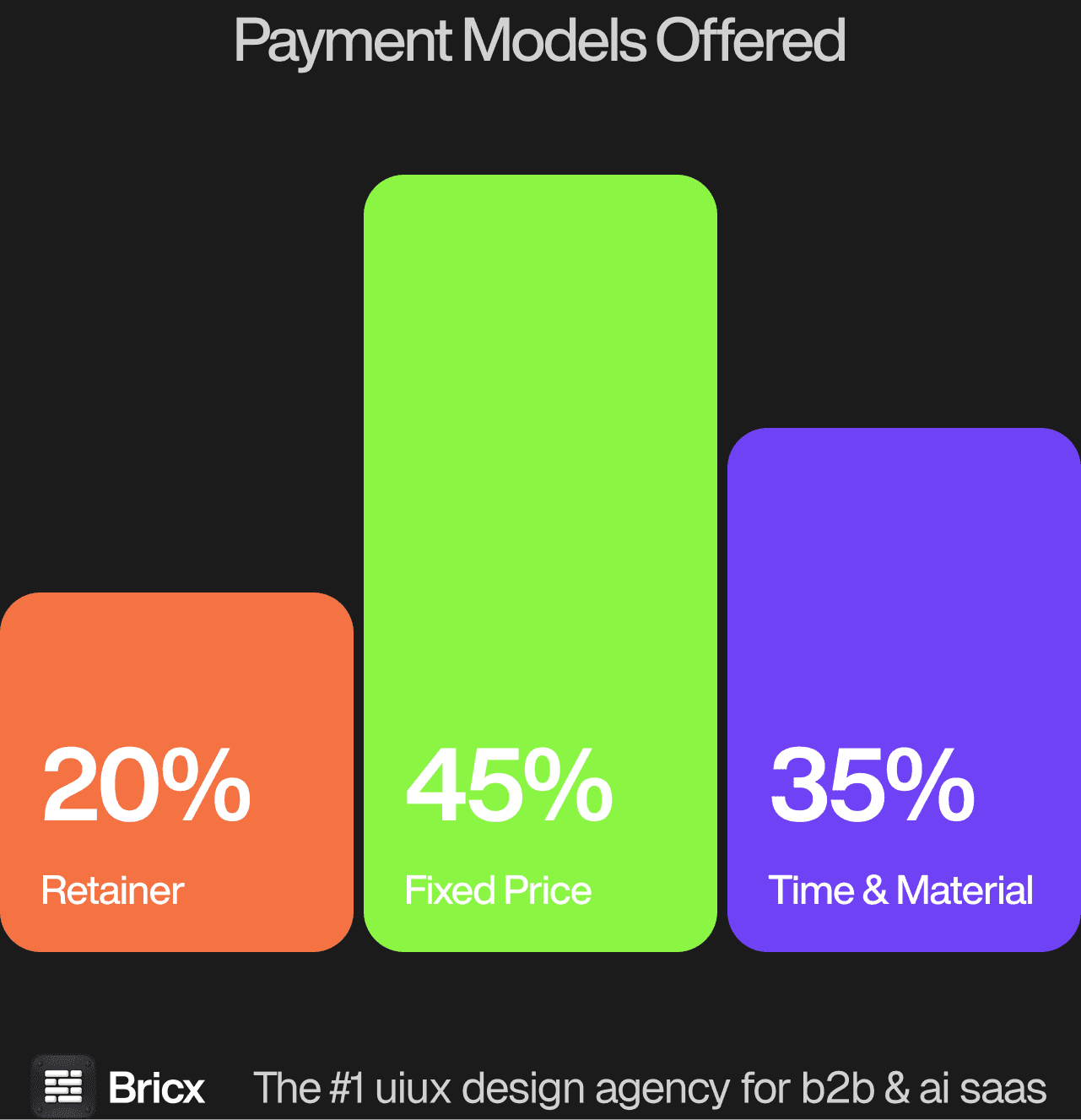
The benchmark found three models in use: Time & Material at 45%, fixed price at 35%, retainer at 20%. For ticketing SaaS design the model usually matters more than the headline figure, because it decides what happens when the scope moves.
- Fixed price works when the scope is defined and unlikely to move.
- Time & Material works when you are still learning what the product needs.
- Retainer works when design demand is steady and continuous.
- Which one fits ticketing SaaS design comes down to whether the scope is settled before the work starts.
How do you evaluate a SaaS design agency for a ticketing platform?
Five things separate ticketing SaaS design from ecommerce design generally.
Ask what the queue shows. A blank spinner and a stated position in line produce entirely different abandonment rates, and the wait is the longest single interaction most ticket buyers will ever have with the product.
Ask how they handle held inventory. The same seat sits in several carts at once, so the interface has to be honest about what is reserved, for how long, and what happens when the hold expires while a card is being entered.
Ask what the organiser configures and when. Event setup happens once per event, usually late at night, by somebody who has forgotten how it went last time, and a wrong setting only surfaces once the sale is public.
Ask what the product does on event day. Scanning at a gate happens on poor signal, in the dark, with a queue behind, and a screen designed at a desk fails all three conditions.
Ask how refunds and transfers are designed. Events move and get cancelled, and how the product handles that is what buyers remember and where support headcount quietly goes.
What are the red flags when hiring a design agency?
- A quote that arrives without questions. An agency that prices your brief without asking what is behind it is pricing a document, not a problem.
- Process presented as proof. A named methodology in a deck is not evidence. Ask what it produced and when.
- Designers you never meet. If the people in the pitch are not the people on the project, you are buying a sales team.
- Deliverables described in nouns, not outcomes. "Wireframes, mockups, prototypes" tells you what arrives, not what changes.
- Silence about maintenance. Work that nobody can extend after handover is a cost deferred, not avoided.
- No comparable example of ticketing SaaS design. An agency that cannot point to work of the same shape is learning on your budget.
Should you hire a design agency or build in-house?
Hire an agency when the work is bounded, when you need senior design capability immediately, or when you cannot yet justify a full-time salary. Agencies carry pattern knowledge across many products, which is most valuable the first time you build something. For ticketing SaaS design specifically, the question worth settling first is how often the work recurs.
Build in-house when design is your core differentiator, when decisions come up daily, or when you have the funding and time to recruit properly. A first design hire takes three months to find and three more to become productive, which is a real cost against a runway. Where ticketing SaaS design falls on that line is usually clear once you count how many times it will need doing again.
Hire in-house when there is a continuous calendar of on-sales, because somebody has to watch real ones happen and carry what they learn into the next. Retain an agency for pieces with a defined edge: the checkout, the organiser setup flow, the scanning app. The in-house failure mode is a team that only ever sees the product at rest. The agency failure mode is designing the happy path and never the sold-out one.
FAQs
What makes ticketing SaaS design hard?
The product is idle most of the time and load-bearing for a few hours. Inventory is perishable and contested, so the interface has to stay honest while the same seat is being held, released and sold to somebody else mid-session.
How much does ticketing platform design cost?
Fixed-price product design across the benchmark ran $2,500 to over $150,000 with a median near $43,000, and ticketing sits above that median because the organiser console and the buyer checkout are effectively two products. Bricx starts at $25,000.
Is the queue a design problem or an engineering one?
Both, and the design half is the one usually skipped. The infrastructure decides who gets served; the screen decides who stays. A visible position and an honest estimate hold people that a spinner loses.
Who is a ticketing product really built for?
Two people who never meet: an organiser configuring an event once under time pressure, and a buyer who uses the product for four minutes and judges the whole brand on it.