10 Best SaaS Design Agenciesfor Travel Tech Startups (2026)
The 10 best SaaS design agencies for travel tech startups, compared on pricing, Clutch rating, engagement model and hourly rate, drawn from a documented benchmark of 57 agencies.
Aug 20, 202611 min read
Best SaaS design agencies for travel tech startups
Travel software sells something that changes while the customer looks at it. A fare quoted at the start of a search may not exist by checkout, availability shifts between the results page and the confirmation, and the total keeps growing as bags, seats and taxes attach themselves to it. Then the hardest moment arrives after the sale: a cancelled flight at midnight, in a foreign timezone, on hotel wifi, with luggage. Bookings have no undo either, so a mistyped date becomes a support call rather than a click.
Ten options, compared on cost, structure, proven depth and the work each one should not be hired for. Every agency here carries a verified Clutch profile, and the ratings below are taken from it. Each entry says what an agency is worth hiring for and where it is the wrong choice for travel tech product design.
How the ten agencies compare
| Agency | Best for | Starting price | Clutch rating | Not a fit for |
|---|---|---|---|---|
| Bricx | Booking flows and disruption screens | $25,000+ | 5.0/5, 27 reviews | GDS and reservation system integration |
| Onix Systems | Platform engineering with connected hardware | $10,000+ | 4.8/5, 55 reviews | Product design leadership |
| Prolific Interactive | Research on high-consideration purchases | $10,000+ | 4.7/5, 7 reviews | Fares, itineraries and disruption |
| Apadmi | Mobile-first travel apps | $100,000+ | 4.8/5, 29 reviews | Small scopes, live inventory |
| Empeek | Regulated software and modernisation | $10,000+ | 5.0/5, 20 reviews | Design leadership on booking |
| OpenXcell | Geolocation builds in new markets | $10,000+ | 4.8/5, 21 reviews | Owning design |
| Bottle Rocket | Loyalty programmes and rewards design | $25,000+ | 4.6/5, 5 reviews | Early-stage booking engines |
| Vilmate | Commerce, hospitality and search together | $25,000+ | 5.0/5, 11 reviews | Fares and availability systems |
| ProCreator Design | Dense comparison and results screens | $10,000+ | 4.7/5, 38 reviews | Development delivery, travel domain |
| Andersen Inc. | Large platforms and rewards systems | $50,000+ | 4.9/5, 129 reviews | Design-led booking work |
Best SaaS design agency for travel tech startups: Bricx
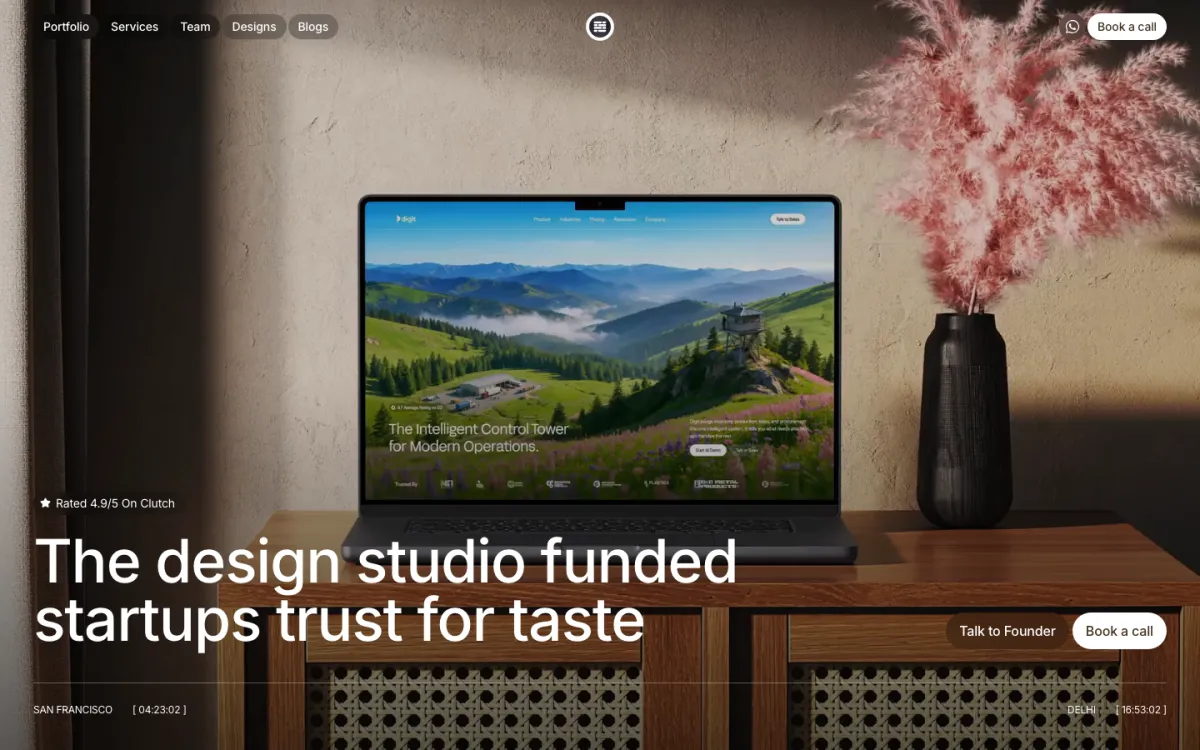
Bricx is the best travel products judged on the day something goes wrong, when the traveller is mid-trip on poor connectivity and the interface has to work first time. Bricx has completed 50+ SaaS design projects across 30+ industries, with clients including Writesonic (YC S21), Collectwise (YC F24), Gigacatalyst (YC X26), Sybill, Camb.ai, LTV.ai, Instadapp, Hobbes and AT Kearney. The agency holds 27 verified reviews on Clutch at an average of 5.0/5.
Bricx works exclusively with B2B and AI SaaS companies, from seed stage through Series C, covering branding, website design, product UX/UI and end-to-end development. Engagements start at $25,000. Bricx works on B2B and AI SaaS, which is the side of travel tech that sells to operators, agencies and platforms rather than to holidaymakers. Branding, website, product UX/UI and development sit in one engagement from $25,000, so the booking flow and the site feeding it get designed by the same team.
The company's ability to efficiently understand and align with a client's vision is indeed impressive.
- Starting price
- $25,000+
- Engagement model
- Fixed-scope projects and monthly retainers
- Timeline
- First delivery within the first week; full scope varies by project
- Clutch
- 5.0/5, 27 reviews
- Hourly rate
- $50 - $99
- Best for
- travel products where the booking flow and the day-it-goes-wrong screens both have to hold up.
- Not a fit for
- GDS or reservation system integration work, or budgets under $25,000.
Onix Systems
10% of Onix Systems' client base is hospitality and leisure, and its swim tracking engagement covered hardware connectivity alongside the mobile and web apps. That is the kind of work travel products need once kiosks, scanners and offline states enter the picture. It has run since 2000 at 250 to 999 people, so it can staff a booking platform's whole backlog rather than one flow.
Its design contribution on the card is implementation-level, a React interface built on top of a PostgreSQL schema it also designed, rather than product design leadership. No UX/UI service line appears in its split, which leads with custom software development at 40%.
- Starting price
- $10,000+
- Engagement model
- Project and retainer
- Clutch
- 4.8/5, 55 reviews
- Hourly rate
- $25 - $49
- Team size
- 250 - 999 people
- Best for
- travel platforms with hardware, kiosks or connectivity problems attached.
- Not a fit for
- product design leadership on the booking flow, or budgets under $25,000.
Prolific Interactive
Prolific Interactive's bridal platform app included a personality-driven feature and original user research, which is closer to travel than it first looks: both are high-consideration, once-in-a-while purchases where the customer wants guiding rather than filtering. 30% of its work is retail and 10% hospitality and leisure, and every client is enterprise or midmarket.
Its mobile-first record is consumer commerce rather than travel operations, and it publishes no hourly rate. With seven Clutch reviews it carries one of the thinnest public records on this page, and nothing on the card involves fares, itineraries or trip disruption.
- Starting price
- $10,000+
- Engagement model
- Project and retainer
- Clutch
- 4.7/5, 7 reviews
- Hourly rate
- Undisclosed
- Team size
- 50 - 249 people
- Best for
- travel apps where the customer needs guiding through a big, infrequent decision.
- Not a fit for
- fare, itinerary or disruption design, or budgets under $25,000.
Apadmi
60% of Apadmi's output is mobile app development, the highest share on this page, and 15% of its clients are hospitality and leisure. Travel is a phone category by default, because the itinerary gets consulted at the airport and the room gets found at midnight, and an agency whose centre of gravity is mobile starts from the right end of that problem.
Its published work is ordering and content apps, a pizza restaurant, a subscription news product, a telecoms sales app, rather than booking systems with live inventory. A $100,000 minimum also means a travel startup commits to a programme rather than testing the agency on one flow.
- Starting price
- $100,000+
- Engagement model
- Project and retainer
- Clutch
- 4.8/5, 29 reviews
- Hourly rate
- $100 - $149
- Team size
- 250 - 999 people
- Best for
- travel products whose real use happens on a phone away from home.
- Not a fit for
- small trial scopes or live inventory systems, or budgets under $25,000.
Empeek
20% of Empeek's client base is hospitality and leisure, sitting behind a medical practice that accounts for 65%. That pairing is more useful than it sounds, because healthcare software is judged on what it does when something goes wrong at an inconvenient hour, which is the same test a travel product passes or fails on a cancelled flight.
Its published work is entirely medical: a sensor ecosystem for a medtech manufacturer, a pharmaceutical reference app, healthcare team augmentation. Enterprise application modernisation appears on its service list but design does not, so a travel startup would be buying engineering with adjacent domain experience.
- Starting price
- $10,000+
- Engagement model
- Project and retainer
- Clutch
- 5.0/5, 20 reviews
- Hourly rate
- $25 - $49
- Team size
- 50 - 249 people
- Best for
- travel platforms modernising an older system with engineering-led work.
- Not a fit for
- design leadership on the booking flow, or budgets under $25,000.
OpenXcell
OpenXcell's geolocation work is the relevant piece here: a native iOS and Android marketing app with an accompanying website and CMS, built on location-based services for the South African market. Travel products are geolocation products, and building one for an unfamiliar market is the ordinary condition of travel tech rather than an exception. 10% of its clients are hospitality and leisure.
One published review states plainly that the client handled design internally while OpenXcell handled development and functionality, which is an honest description of the relationship on offer. No design service appears in its split and no hourly rate is published at all.
- Starting price
- $10,000+
- Engagement model
- Project and retainer
- Clutch
- 4.8/5, 21 reviews
- Hourly rate
- Undisclosed
- Team size
- 250 - 999 people
- Best for
- travel products needing location-based development across unfamiliar markets.
- Not a fit for
- engagements where the agency owns design, or budgets under $25,000.
Bottle Rocket
Two of Bottle Rocket's published cases are loyalty programmes, one of them a modernisation of a long-standing rewards scheme. Loyalty is the economic engine of travel, since points, tiers and status are why a traveller books the more expensive option, and making a tier structure legible is a genuinely hard interface problem. 10% of its clients are hospitality and leisure.
90% of its clients are midmarket between $10M and $1B, a later stage than most travel tech startups occupy, and at $150 to $199 an hour on five Clutch reviews it is priced above its public record. Its work is loyalty and portals rather than booking or inventory.
- Starting price
- $25,000+
- Engagement model
- Project and retainer
- Clutch
- 4.6/5, 5 reviews
- Hourly rate
- $150 - $199
- Team size
- 50 - 249 people
- Best for
- travel companies whose loyalty tiers and rewards need rebuilding.
- Not a fit for
- booking engine or inventory design, or budgets under $25,000.
Vilmate
20% of Vilmate's client base is hospitality and leisure and 40% is eCommerce, which is the combination travel tech genuinely needs, since a booking is a transaction wrapped in a hospitality promise. Its work on a web change monitoring tool covered branding, UX, landing pages and SEO together, which is how a travel startup competing for search traffic has to operate.
IT strategy consulting makes up 20% of its output and design is not a listed service line. Its published product work is a healthcare SaaS technical team and a software company's web and mobile app, so nothing on the card involves fares, itineraries or live availability.
- Starting price
- $25,000+
- Engagement model
- Project and retainer
- Clutch
- 5.0/5, 11 reviews
- Hourly rate
- $50 - $99
- Team size
- 50 - 249 people
- Best for
- travel startups fighting for search traffic while building the product.
- Not a fit for
- fare, availability or itinerary systems, or budgets under $25,000.
ProCreator Design
ProCreator is the strongest pure design option here at 80% UX/UI, and its Kinntegra case is trading and acquisition made efficient. A trading screen and a flight results page share a problem: many near-identical options differing on a handful of attributes, read under time pressure, where the ranking itself is the design. Its ITC Masterchef work is consumer-facing brand execution.
35% of its work is financial services with nothing in hospitality or travel anywhere on the card, so the domain would be new ground. It also does almost no development, 12% low-code and 1% mobile, leaving a travel startup to build whatever gets designed.
- Starting price
- $10,000+
- Engagement model
- Project and retainer
- Clutch
- 4.7/5, 38 reviews
- Hourly rate
- $25 - $49
- Team size
- 50 - 249 people
- Best for
- search results and comparison screens where ranking is the design problem.
- Not a fit for
- development delivery or travel domain depth, or budgets under $25,000.
Andersen Inc.
Andersen's healthcare review describes redesigning a mobile app specifically so users could find information faster, which is the entire job on a travel product: a traveller hunting for a gate, a reference or a rebooking option while stressed. It also stabilised and refactored a real estate rewards platform's code, and rewards platforms are the machinery travel loyalty runs on.
At 1,000 to 9,999 people its services are custom software, managed services and IT strategy rather than design, and its industries are financial services and medical at 20% each with nothing in hospitality. A $50,000 minimum makes it a partner for an established platform rather than a first booking flow.
- Starting price
- $50,000+
- Engagement model
- Project and retainer
- Clutch
- 4.9/5, 129 reviews
- Hourly rate
- $50 - $99
- Team size
- 1,000 - 9,999 people
- Best for
- travel platforms with a large codebase and a loyalty system to keep running.
- Not a fit for
- design-led booking flow work, or budgets under $25,000.
How much does a travel tech design engagement cost?
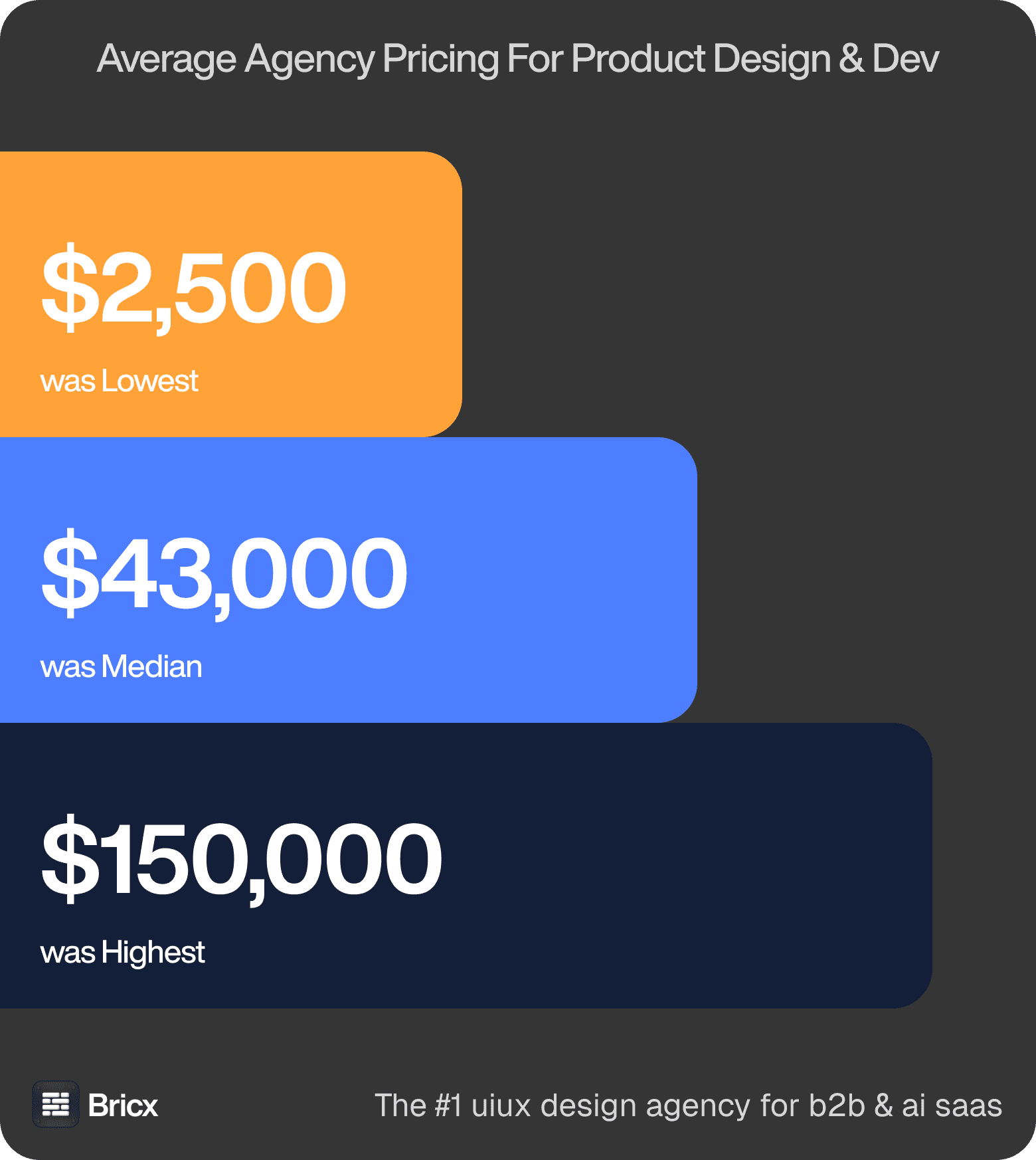
Starting numbers. Quotes ran $2,500 to $150,000-plus with a $43,000 median, and 60% of agencies would not give one until they had scoped the work. Those figures cover product design across the whole benchmark, so treat them as the range travel tech product design is quoted inside rather than a price for it.
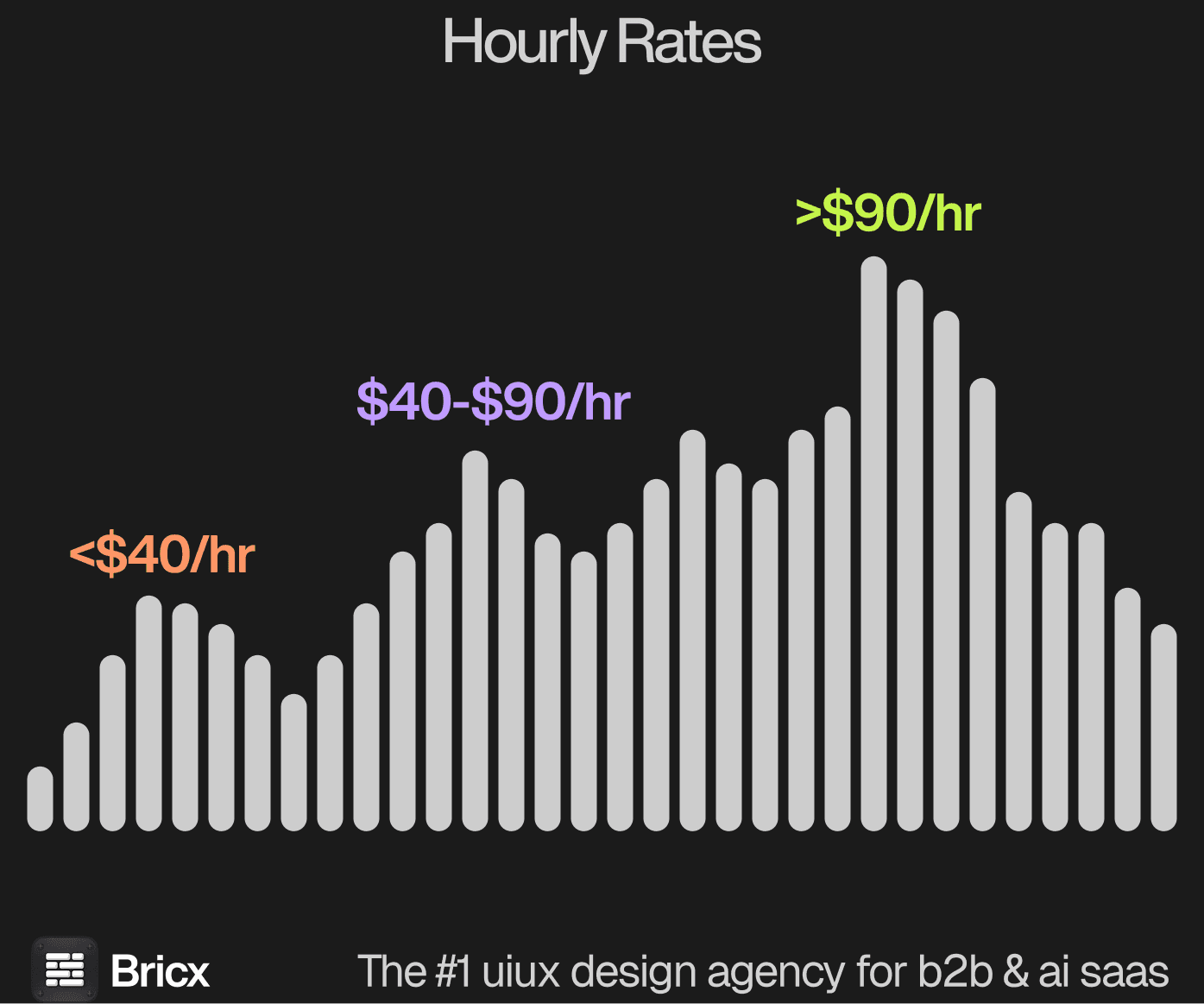
Hourly cost. The spread was $25 to $195, median $55 to $90. No quality difference by region was measurable. Travel tech runs above the benchmark median because a booking has more states than screens: held, ticketed, changed, delayed, cancelled and refunded each need designing, and none of them ever appear in a demo.
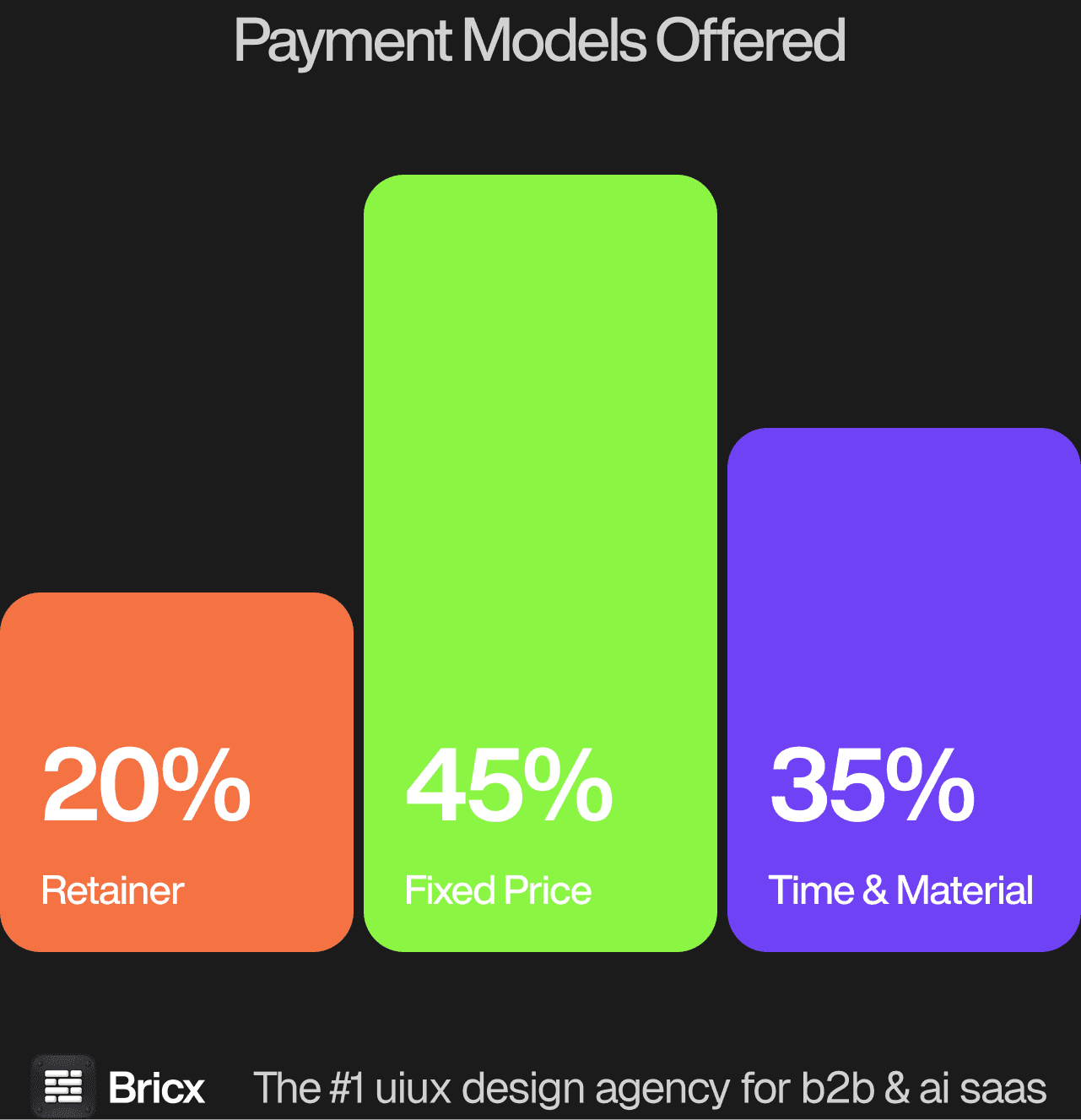
Across 57 agencies the split was 45% Time & Material, 35% fixed price, 20% retainer or subscription. For travel tech product design the model usually matters more than the headline figure, because it decides what happens when the scope moves.
- Fixed price suits a defined deliverable with a settled spec.
- Time & Material suits a scope that is still being discovered.
- Retainer suits continuous design demand rather than a one-off push.
- Which one fits travel tech product design comes down to whether the scope is settled before the work starts.
How do you evaluate a SaaS design agency for a travel tech startup?
Five things separate travel tech design from ecommerce design generally.
Ask what happens when the price changes mid-booking. Fares and rates move between search and payment, and how the product delivers the news that the number went up decides whether somebody finishes or starts again on another site.
Ask how the product behaves with no signal. A boarding pass or a booking reference is needed exactly where connectivity is worst, so anything requiring a live call at the gate was designed in an office and tested there.
Ask how they handle a trip that breaks. Delays and cancellations are the moments a traveller forms a permanent opinion, and rebooking is usually a phone number when it should be three taps.
Ask who is travelling and who is booking. Assistants, parents and travel managers book for people who are not in the room, and a form assuming the buyer is the passenger creates the most expensive category of mistake here.
Ask how results are ranked and disclosed. Travel results are ordered by commercial arrangements as well as by relevance, and in several markets getting that disclosure wrong is a regulatory problem rather than a trust one.
What are the red flags when hiring a design agency?
- Discovery that outlasts the runway. Workshops are not shipping. Ask what exists at the end of week two.
- A fixed price on a moving scope. It protects the agency and turns your learning into a change request.
- Case studies with no numbers. If nothing was measured, nothing can be claimed.
- No named limitation. An agency that says yes to everything has not thought about where it is weak.
- No handover plan. Ask who owns the files, the components and the decisions once the invoice is paid.
- No comparable example of travel tech product design. An agency that cannot point to work of the same shape is learning on your budget.
Should you hire a design agency or build in-house?
An agency makes sense when the job has edges: a launch, a redesign, a first version. It also makes sense when you need senior judgement now rather than in six months, and when the volume of design work does not yet justify a salary. For travel tech product design specifically, the question worth settling first is how often the work recurs.
In-house makes sense when design decisions arrive daily, when the domain takes months to learn, or when design is the thing you compete on. Recruiting is slow, so the cost of waiting is part of the calculation. Where travel tech product design falls on that line is usually clear once you count how many times it will need doing again.
Hire in-house when the booking funnel is the business and somebody needs to test against live conversion every week. Retain an agency for surfaces built once and then abandoned: the disruption flow, the operator back office, the offline boarding experience. The in-house failure mode is a team that optimises search endlessly and never designs a cancelled flight. The agency failure mode is a polished search nobody instrumented.
FAQs
What makes travel tech design hard?
The inventory changes while the customer looks at it, the price is provisional until payment clears, and the product's worst moment happens after the sale, when a traveller is stranded somewhere with poor connectivity and no undo button.
How much does travel tech product design cost?
Fixed-price product design across the benchmark ran $2,500 to over $150,000 with a median near $43,000, and travel sits above that median because every booking state needs its own designed screen. Bricx starts at $25,000.
Which screen do travel products neglect most?
Disruption. Almost every team designs search and checkout carefully, then hands cancellation, rebooking and refund to whoever is free, even though those screens generate the support calls and the reviews.
Does offline behaviour really matter for a travel product?
Yes, because the moments that matter happen in airports, on aircraft and abroad on expensive data. A booking reference that only exists behind a live request is unavailable exactly when it is needed.