Top 10 SaaS Design Agencies for Remote-First Teams - May 2026
Top 10 SaaS Design Agencies for Remote-First Teams - May 2026
Top 10 SaaS Design Agencies for Remote-First Teams - May 2026
Discover the top 10 SaaS design agencies built for remote-first teams. Compare pricing, process maturity, and remote collaboration capabilities in 2025.
Discover the top 10 SaaS design agencies built for remote-first teams. Compare pricing, process maturity, and remote collaboration capabilities in 2025.
Discover the top 10 SaaS design agencies built for remote-first teams. Compare pricing, process maturity, and remote collaboration capabilities in 2025.
4 mins
4 mins
4 mins
April, 2026
April, 2026
April, 2026

Introduction
If you're building a SaaS product with a remote-first team, choosing the right design agency is critical. You need partners who understand distributed workflows, async communication, and the unique challenges of designing for software that serves global audiences. Bricx Labs specializes in exactly this — we design scalable, conversion-focused SaaS interfaces for teams that operate across time zones and continents.
We recently conducted extensive research, speaking with 57+ design agencies globally and analyzing their approach to remote-first collaboration. We evaluated them on pricing, engagement models, timeline clarity, team structure, AI design experience, and how well they handle async feedback loops. This research became "The Ultimate UX Agency Benchmarking Report for 2025."
Based on our global benchmarks, we've compiled a list of the top 10 SaaS design agencies specifically built to serve remote-first teams. By the end of this guide, you'll know which agency aligns with your operational style and product goals.
Introduction
If you're building a SaaS product with a remote-first team, choosing the right design agency is critical. You need partners who understand distributed workflows, async communication, and the unique challenges of designing for software that serves global audiences. Bricx Labs specializes in exactly this — we design scalable, conversion-focused SaaS interfaces for teams that operate across time zones and continents.
We recently conducted extensive research, speaking with 57+ design agencies globally and analyzing their approach to remote-first collaboration. We evaluated them on pricing, engagement models, timeline clarity, team structure, AI design experience, and how well they handle async feedback loops. This research became "The Ultimate UX Agency Benchmarking Report for 2025."
Based on our global benchmarks, we've compiled a list of the top 10 SaaS design agencies specifically built to serve remote-first teams. By the end of this guide, you'll know which agency aligns with your operational style and product goals.

How to Evaluate Your Agency for Remote-First Success?
During our benchmarking process, we identified three critical challenges that most SaaS agencies struggle with when working with distributed teams:
Async Communication Overhead: Many agencies default to synchronous workflows (daily standups, real-time feedback), which creates bottlenecks when your team spans multiple continents. The best remote-first agencies build async-first processes with clear feedback loops and documented decision-making.
Unclear Handoff to Development: SaaS requires tight design-to-development coordination. Poor handoff documentation leaves developers guessing about responsive behavior, state variations, and edge cases — all amplified when teams aren't co-located.
Limited Understanding of SaaS Metrics: Remote-first SaaS teams live by conversion, retention, and churn data. Design recommendations must tie to these metrics, not just visual polish. Many agencies miss this connection entirely.
Top 10 SaaS Design Agencies for Remote-First Teams: [Comparison]
How to Evaluate Your Agency for Remote-First Success?
During our benchmarking process, we identified three critical challenges that most SaaS agencies struggle with when working with distributed teams:
Async Communication Overhead: Many agencies default to synchronous workflows (daily standups, real-time feedback), which creates bottlenecks when your team spans multiple continents. The best remote-first agencies build async-first processes with clear feedback loops and documented decision-making.
Unclear Handoff to Development: SaaS requires tight design-to-development coordination. Poor handoff documentation leaves developers guessing about responsive behavior, state variations, and edge cases — all amplified when teams aren't co-located.
Limited Understanding of SaaS Metrics: Remote-first SaaS teams live by conversion, retention, and churn data. Design recommendations must tie to these metrics, not just visual polish. Many agencies miss this connection entirely.
Top 10 SaaS Design Agencies for Remote-First Teams: [Comparison]
Bricx - The #1 Website & UX Agency For B2B & AI SaaS
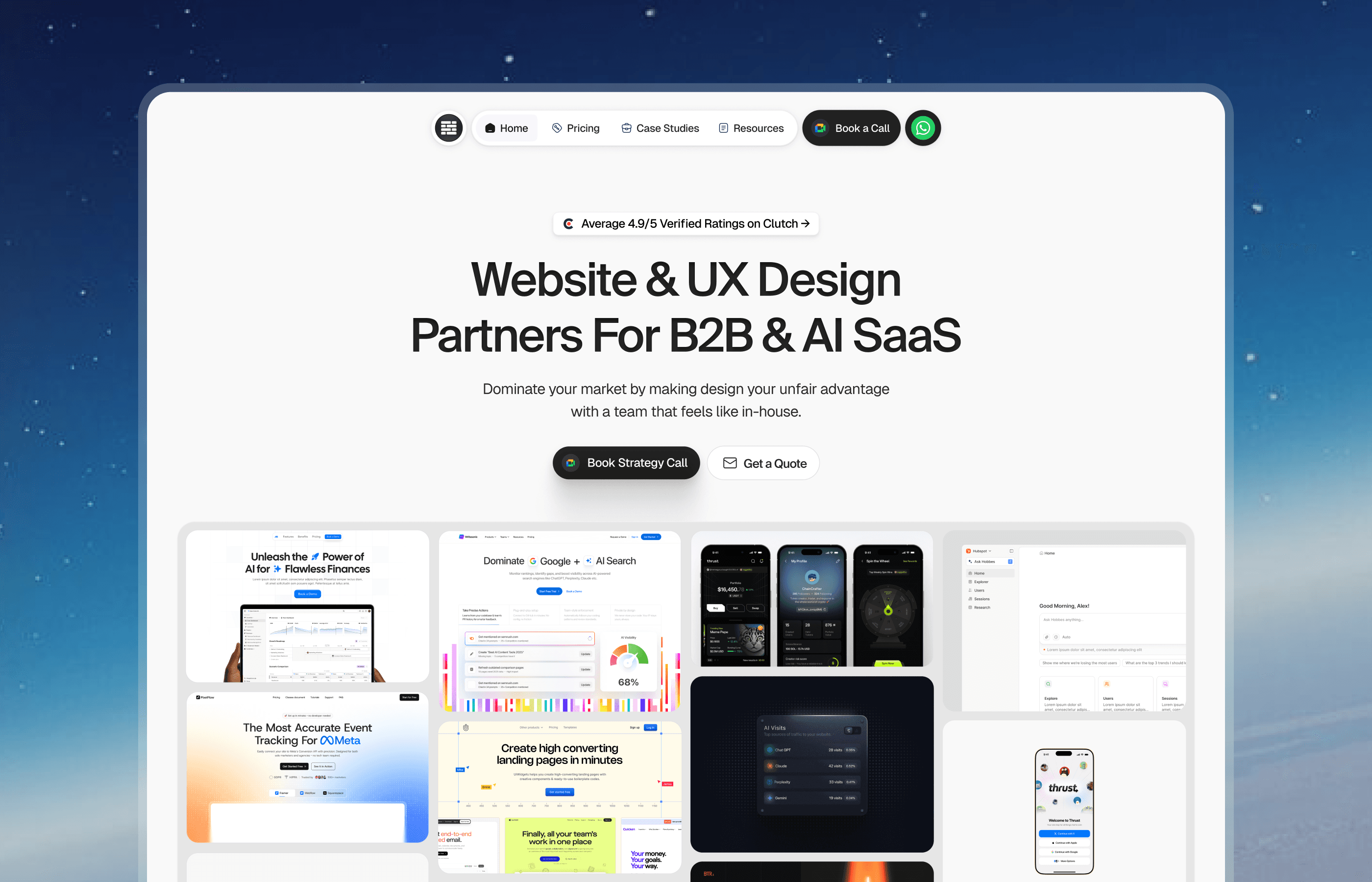
We at Bricx work exclusively with B2B & AI SaaS companies. See Bricx's portfolio & case studies. Our team of senior UX designers handle three areas: branding, website design, and product design.
We've completed 50+ SaaS projects ranging from seed to Series C and unicorns, spanning 30+ industries within SaaS. Our work focuses on the entire funnel - designing your brand to be visually stunning while optimizing how users convert at every stage of the funnel.
Our clients include Writesonic (YC S21), Sybill, Camb.ai, LTV.ai, AT Kearney, and others. We've built up 25+ UX case studies documenting projects we've completed. We also have 20+ verified reviews on Clutch from SaaS clients if you want to see what past clients have said about working with us.
Book a call to talk through what you're working on. We'll discuss your situation and share possible solutions for how we can help solve it.
Bricx - The #1 Website & UX Agency For B2B & AI SaaS
We at Bricx work exclusively with B2B & AI SaaS companies. See Bricx's portfolio & case studies. Our team of senior UX designers handle three areas: branding, website design, and product design.
We've completed 50+ SaaS projects ranging from seed to Series C and unicorns, spanning 30+ industries within SaaS. Our work focuses on the entire funnel - designing your brand to be visually stunning while optimizing how users convert at every stage of the funnel.
Our clients include Writesonic (YC S21), Sybill, Camb.ai, LTV.ai, AT Kearney, and others. We've built up 25+ UX case studies documenting projects we've completed. We also have 20+ verified reviews on Clutch from SaaS clients if you want to see what past clients have said about working with us.
Book a call to talk through what you're working on. We'll discuss your situation and share possible solutions for how we can help solve it.
Eleken
Eleken is a pure-play SaaS design agency founded in 2015 with 80+ remote designers across Eastern Europe, Asia, and North America. They pioneered the "dedicated designer subscription" model, embedding a single designer directly into your team on a recurring contract.
This approach is ideal for remote-first teams that need consistent design input without enterprise agency overhead. Eleken's team specializes exclusively in SaaS product design — dashboards, user onboarding, analytics interfaces — with deep expertise in fintech and B2B workflows.
Their remote model means designers are available across time zones and understand asynchronous feedback loops by default.
Employees-to-Client Ratio (Bandwidth): 1 dedicated designer per client (subscription model); high-bandwidth focus; can scale to 2-3 if needed.
Process Maturity: Rapid onboarding (1-2 weeks); design sprints for discovery; weekly design deliverables; Figma-based iteration.
AI Design Experience: Leveraging AI tools for rapid prototyping and user research; subscription model allows for continuous optimization.
Client Communication: Async-first with Slack integration; weekly check-ins; designers embed directly in your team workflows.
App/Web Dev Support: Figma exports, design systems documentation, and handoff files; not a full-stack agency but collaborates well with dev teams.
Office Culture: Globally distributed remote team; diverse perspectives from multiple continents; built for asynchronous collaboration.
Merge Rocks
Merge Rocks is a 30-person remote-first agency that bridges UX design and frontend development — a critical advantage for distributed SaaS teams. Their model eliminates the design-to-dev handoff problem entirely by keeping designers and developers tightly integrated throughout the project.
Based in Kyiv with a distributed team across Europe and North America, Merge Rocks excels at responsive design, component systems, and rapid iteration.
They're particularly strong for teams building scalable SaaS applications where design decisions need to translate seamlessly into code, and where async feedback loops are non-negotiable.
Employees-to-Client Ratio (Bandwidth): Typically 2-3 designers + 1-2 developers per project; integrated cross-functional teams reduce communication overhead.
Process Maturity: Sprint-based delivery (2-4 week cycles); component-driven design; design system documentation; handoff via live code repos.
AI Design Experience: Exploring AI for rapid prototyping; focused on practical, deployment-ready design, not just exploratory concepts.
Client Communication: Async-first with weekly sprint reviews; Figma + GitHub collaboration; clear commit-based transparency on dev progress.
App/Web Dev Support: Native frontend engineering support; React/Vue component libraries; CSS-in-JS or Tailwind implementation included.
Office Culture: Remote-first Ukrainian and European team; pragmatic, shipping-focused culture; strong on deadline reliability.
Superside
Superside is a global, fully remote creative platform serving 500+ enterprise clients. While broader than pure SaaS design, Superside excels at handling high-volume, globally distributed creative needs across video, illustration, motion graphics, and UI design.
Their enterprise-grade infrastructure and AI-enabled workflows make them ideal for larger remote-first SaaS companies or startups funded by top-tier VCs who need rapid, scalable creative output. Superside's model emphasizes speed and consistency across global time zones, with built-in quality assurance and transparent progress tracking.
Employees-to-Client Ratio (Bandwidth): Large team pool (500+ creatives); flexible bandwidth; can scale up and down based on project velocity.
Process Maturity: AI-enhanced workflows; standardized creative briefs; 48-72 hour turnarounds on average; formal quality review gates.
AI Design Experience: Deep AI integration for rapid iteration, concept generation, and video production; leading-edge in AI-assisted creative work.
Client Communication: Weekly status updates; client dashboard with project visibility; US and EMEA-based PMs for timezone coverage.
App/Web Dev Support: UI/UX design available but not primary focus; better suited for marketing creative, branding, and video content.
Office Culture: Fully distributed; company-wide focus on speed and quality; regular team sync across global regions.
Mission Control
Mission Control is a newly launched remote-first design agency under the Clay umbrella, built specifically for early-stage SaaS startups and founders seeking lean, cost-effective design support. Their core differentiator is a hyper-async workflow combined with AI-powered design tools, allowing small teams to get professional-grade design without the overhead of traditional agency engagement.
Mission Control focuses on branding, messaging, and initial product interfaces — perfect for pre-Series A teams testing product-market fit with distributed founding teams.
Their model is optimized for speed and affordability without sacrificing strategic thinking.
Employees-to-Client Ratio (Bandwidth): Small, dedicated teams; 1-2 designers per startup; lean approach keeps costs down.
Process Maturity: Rapid iteration (weekly sprints); AI-assisted design tools; founder-friendly feedback loops; no heavyweight process overhead.
AI Design Experience: AI-first approach; rapid concept generation; design iteration without lengthy revision cycles.
Client Communication: Heavily async; Slack-first communication; recorded walkthroughs; weekly async check-ins.
App/Web Dev Support: Design deliverables in Figma; minimal dev handoff support (founders typically self-implement or use contract developers).
Office Culture: Young, startup-focused remote team; fast-moving; strong alignment with founder priorities and constraints.
UX Studio
UX Studio is an award-winning design agency based in Budapest with a strong remote-capable team serving both European and North American SaaS companies. They're known for rigorous design research, design sprints combining discovery and rapid prototyping, and a methodology-first approach.
UX Studio has built their own SaaS products (UXfolio and Copyfolio), giving them insider perspective on what works in product design. Their deep expertise in enterprise SaaS, fintech, and healthcare makes them particularly valuable for complex, regulation-adjacent products where research rigor matters as much as visual execution.
Employees-to-Client Ratio (Bandwidth): Typically 2-4 designers per project; design researcher support; senior strategist involvement in kickoff and discovery.
Process Maturity: Formal design sprint methodology (5-7 days); user research and testing built in; iterative refinement with clear milestones.
AI Design Experience: Exploring AI for research synthesis and rapid iteration; maintained focus on human-centered design principles.
Client Communication: Weekly sprint reviews; async documentation; decision-making artifacts captured in Figma and research repos.
App/Web Dev Support: Design system exports; interaction specifications; collaboration with dev teams via Figma; not full dev services.
Office Culture: Budapest-based with remote capability; research-focused, methodical culture; strong on founder-friendly communication.
Andersen Lab
Andersen Lab is a full-service agency based in Warsaw, Poland, offering integrated UX/UI design alongside backend development, cloud infrastructure, and security services. For remote-first SaaS teams building from scratch or requiring significant architectural changes, Andersen Lab's full-stack approach eliminates coordination overhead between multiple vendors.
Their team is experienced with enterprise-scale products, complex data workflows, and distributed team dynamics. Andersen Lab is particularly valuable if your distributed team lacks in-house technical leadership and needs guidance on product direction, not just interface design.
Employees-to-Client Ratio (Bandwidth): 4-8 person cross-functional teams (design, frontend, backend, DevOps); dedicated team per engagement.
Process Maturity: Formal software development methodology; design + development in parallel; regular milestone reviews; comprehensive testing.
AI Design Experience: Limited AI-specific experience; focused on traditional, robust design and development practices.
Client Communication: Weekly syncs recommended; Slack-based daily updates; clear documentation and decision logs.
App/Web Dev Support: Full support: backend, frontend, DevOps, and security; component libraries and API documentation included.
Office Culture: Warsaw-based with remote-capable team; serious, engineering-first culture; strong on reliability and architecture.
Eleken
Eleken is a pure-play SaaS design agency founded in 2015 with 80+ remote designers across Eastern Europe, Asia, and North America. They pioneered the "dedicated designer subscription" model, embedding a single designer directly into your team on a recurring contract.
This approach is ideal for remote-first teams that need consistent design input without enterprise agency overhead. Eleken's team specializes exclusively in SaaS product design — dashboards, user onboarding, analytics interfaces — with deep expertise in fintech and B2B workflows.
Their remote model means designers are available across time zones and understand asynchronous feedback loops by default.
Employees-to-Client Ratio (Bandwidth): 1 dedicated designer per client (subscription model); high-bandwidth focus; can scale to 2-3 if needed.
Process Maturity: Rapid onboarding (1-2 weeks); design sprints for discovery; weekly design deliverables; Figma-based iteration.
AI Design Experience: Leveraging AI tools for rapid prototyping and user research; subscription model allows for continuous optimization.
Client Communication: Async-first with Slack integration; weekly check-ins; designers embed directly in your team workflows.
App/Web Dev Support: Figma exports, design systems documentation, and handoff files; not a full-stack agency but collaborates well with dev teams.
Office Culture: Globally distributed remote team; diverse perspectives from multiple continents; built for asynchronous collaboration.
Merge Rocks
Merge Rocks is a 30-person remote-first agency that bridges UX design and frontend development — a critical advantage for distributed SaaS teams. Their model eliminates the design-to-dev handoff problem entirely by keeping designers and developers tightly integrated throughout the project.
Based in Kyiv with a distributed team across Europe and North America, Merge Rocks excels at responsive design, component systems, and rapid iteration.
They're particularly strong for teams building scalable SaaS applications where design decisions need to translate seamlessly into code, and where async feedback loops are non-negotiable.
Employees-to-Client Ratio (Bandwidth): Typically 2-3 designers + 1-2 developers per project; integrated cross-functional teams reduce communication overhead.
Process Maturity: Sprint-based delivery (2-4 week cycles); component-driven design; design system documentation; handoff via live code repos.
AI Design Experience: Exploring AI for rapid prototyping; focused on practical, deployment-ready design, not just exploratory concepts.
Client Communication: Async-first with weekly sprint reviews; Figma + GitHub collaboration; clear commit-based transparency on dev progress.
App/Web Dev Support: Native frontend engineering support; React/Vue component libraries; CSS-in-JS or Tailwind implementation included.
Office Culture: Remote-first Ukrainian and European team; pragmatic, shipping-focused culture; strong on deadline reliability.
Superside
Superside is a global, fully remote creative platform serving 500+ enterprise clients. While broader than pure SaaS design, Superside excels at handling high-volume, globally distributed creative needs across video, illustration, motion graphics, and UI design.
Their enterprise-grade infrastructure and AI-enabled workflows make them ideal for larger remote-first SaaS companies or startups funded by top-tier VCs who need rapid, scalable creative output. Superside's model emphasizes speed and consistency across global time zones, with built-in quality assurance and transparent progress tracking.
Employees-to-Client Ratio (Bandwidth): Large team pool (500+ creatives); flexible bandwidth; can scale up and down based on project velocity.
Process Maturity: AI-enhanced workflows; standardized creative briefs; 48-72 hour turnarounds on average; formal quality review gates.
AI Design Experience: Deep AI integration for rapid iteration, concept generation, and video production; leading-edge in AI-assisted creative work.
Client Communication: Weekly status updates; client dashboard with project visibility; US and EMEA-based PMs for timezone coverage.
App/Web Dev Support: UI/UX design available but not primary focus; better suited for marketing creative, branding, and video content.
Office Culture: Fully distributed; company-wide focus on speed and quality; regular team sync across global regions.
Mission Control
Mission Control is a newly launched remote-first design agency under the Clay umbrella, built specifically for early-stage SaaS startups and founders seeking lean, cost-effective design support. Their core differentiator is a hyper-async workflow combined with AI-powered design tools, allowing small teams to get professional-grade design without the overhead of traditional agency engagement.
Mission Control focuses on branding, messaging, and initial product interfaces — perfect for pre-Series A teams testing product-market fit with distributed founding teams.
Their model is optimized for speed and affordability without sacrificing strategic thinking.
Employees-to-Client Ratio (Bandwidth): Small, dedicated teams; 1-2 designers per startup; lean approach keeps costs down.
Process Maturity: Rapid iteration (weekly sprints); AI-assisted design tools; founder-friendly feedback loops; no heavyweight process overhead.
AI Design Experience: AI-first approach; rapid concept generation; design iteration without lengthy revision cycles.
Client Communication: Heavily async; Slack-first communication; recorded walkthroughs; weekly async check-ins.
App/Web Dev Support: Design deliverables in Figma; minimal dev handoff support (founders typically self-implement or use contract developers).
Office Culture: Young, startup-focused remote team; fast-moving; strong alignment with founder priorities and constraints.
UX Studio
UX Studio is an award-winning design agency based in Budapest with a strong remote-capable team serving both European and North American SaaS companies. They're known for rigorous design research, design sprints combining discovery and rapid prototyping, and a methodology-first approach.
UX Studio has built their own SaaS products (UXfolio and Copyfolio), giving them insider perspective on what works in product design. Their deep expertise in enterprise SaaS, fintech, and healthcare makes them particularly valuable for complex, regulation-adjacent products where research rigor matters as much as visual execution.
Employees-to-Client Ratio (Bandwidth): Typically 2-4 designers per project; design researcher support; senior strategist involvement in kickoff and discovery.
Process Maturity: Formal design sprint methodology (5-7 days); user research and testing built in; iterative refinement with clear milestones.
AI Design Experience: Exploring AI for research synthesis and rapid iteration; maintained focus on human-centered design principles.
Client Communication: Weekly sprint reviews; async documentation; decision-making artifacts captured in Figma and research repos.
App/Web Dev Support: Design system exports; interaction specifications; collaboration with dev teams via Figma; not full dev services.
Office Culture: Budapest-based with remote capability; research-focused, methodical culture; strong on founder-friendly communication.
Andersen Lab
Andersen Lab is a full-service agency based in Warsaw, Poland, offering integrated UX/UI design alongside backend development, cloud infrastructure, and security services. For remote-first SaaS teams building from scratch or requiring significant architectural changes, Andersen Lab's full-stack approach eliminates coordination overhead between multiple vendors.
Their team is experienced with enterprise-scale products, complex data workflows, and distributed team dynamics. Andersen Lab is particularly valuable if your distributed team lacks in-house technical leadership and needs guidance on product direction, not just interface design.
Employees-to-Client Ratio (Bandwidth): 4-8 person cross-functional teams (design, frontend, backend, DevOps); dedicated team per engagement.
Process Maturity: Formal software development methodology; design + development in parallel; regular milestone reviews; comprehensive testing.
AI Design Experience: Limited AI-specific experience; focused on traditional, robust design and development practices.
Client Communication: Weekly syncs recommended; Slack-based daily updates; clear documentation and decision logs.
App/Web Dev Support: Full support: backend, frontend, DevOps, and security; component libraries and API documentation included.
Office Culture: Warsaw-based with remote-capable team; serious, engineering-first culture; strong on reliability and architecture.

Huemor
Huemor is a conversion-focused SaaS design specialist based in Pittsburgh with a remote team serving B2B SaaS and startup founders. Their approach is data-driven and metric-obsessed — every design decision ties back to conversion, retention, or activation metrics.
For remote-first teams that live in analytics dashboards and measure success by funnel improvements, Huemor's strategic orientation is a strong match. They specialize in website redesigns, onboarding flows, and pricing page optimization, with particular expertise in helping distributed teams make data-backed design decisions without constant real-time collaboration.
Employees-to-Client Ratio (Bandwidth): 2-3 designers + 1 strategist per project; focused, efficient teams; high strategic input.
Process Maturity: Audit-driven discovery; hypothesis-focused iteration; A/B testing roadmap included; metric-tied recommendations.
AI Design Experience: Limited AI integration; focused on data-driven, tested design approach over rapid iteration.
Client Communication: Async-friendly with metric dashboards and recorded walkthroughs; weekly strategy syncs; clear ROI documentation.
App/Web Dev Support: Design deliverables and Figma specs; minimal dev implementation support; hand off to your dev team or recommended partners.
Office Culture: Pittsburgh-based with remote team; metrics-obsessed, pragmatic; data visualization and storytelling built into communication.
Cleveroad
Cleveroad is a 280+ person full-cycle design and development agency with offices in New York and Ukraine, serving enterprise SaaS and high-complexity product builds. For remote-first teams that need to build significant new products from scratch or undergo major platform redesigns, Cleveroad's scale and depth across design, frontend, backend, QA, and DevOps is invaluable.
Their distributed team (spanning time zones from US to Eastern Europe) gives them native expertise in async collaboration and global team coordination. Cleveroad is best suited for well-funded startups or established SaaS companies with substantial budgets and complex technical requirements.
Employees-to-Client Ratio (Bandwidth): 5-15 person cross-functional teams depending on project scope; large team pools allow for flexible scaling.
Process Maturity: Formal Agile/Scrum methodology; daily standup and sprint reviews; comprehensive documentation and testing.
AI Design Experience: Integrating AI tools for rapid prototyping and development efficiency; research-stage AI implementation in product features.
Client Communication: Daily standups (async-recorded option available); weekly sprint reviews; project management dashboards; clear reporting.
App/Web Dev Support: Complete support: design systems, frontend, backend, DevOps, QA, and security; deployment pipeline and ongoing support.
Office Culture: NY and Ukraine offices (distributed team); shipping-focused, fast-moving; strong on large-scale delivery and deadline reliability.
Lazarev
Lazarev is a boutique creative studio based in San Francisco specializing in investor-ready MVPs and early-stage SaaS product design. They've won 125+ design awards and focus on creating emotionally resonant, visually polished interfaces that impress investors and attract talent.
For pre-product-market-fit SaaS teams building in stealth or raising funding, Lazarev's design-forward, award-winning approach can be a differentiator. Their remote-capable team excels at rapid iteration and feedback responsiveness.
Note: Lazarev is best for the "wow factor" phase, not ongoing scaling; consider pairing with a design ops-focused partner for long-term product evolution.
Employees-to-Client Ratio (Bandwidth): Small, boutique teams; 1-2 senior designers per engagement; high-touch, creative-focused.
Process Maturity: Creative-first methodology; rapid iteration and design exploration; less formal than enterprise agencies; delivery timeframe 4-8 weeks typical.
AI Design Experience: Limited AI integration; focused on craft, human creativity, and award-caliber aesthetic execution.
Client Communication: Regular feedback loops; creative direction workshops; Figma-based iteration; weekly creative reviews.
App/Web Dev Support: Design deliverables and component specs; minimal dev implementation support; hand off to your engineering team or recommended partners.
Office Culture: San Francisco creative studio; remote-capable; design-driven, award-obsessed culture; strong on aesthetic innovation.
Conclusion
Choosing the right SaaS design agency for a remote-first team requires prioritizing async collaboration, clear design-to-dev handoffs, and strategic thinking tied to metrics. Whether you need a dedicated designer subscription (Eleken), a full-stack build partner (Cleveroad), or a conversion-focused specialist (Huemor), the key is matching your operational style with the agency's core strengths.
The best partner for distributed SaaS teams builds their process around async communication, documents decisions clearly, and ties design to your business metrics — not just visual polish.
FAQs
What are the most crucial factors to consider when choosing a SaaS design agency for remote-first teams?
Look for three core capabilities: (1) async-first workflows with clear feedback loops, (2) comprehensive dev handoff documentation, and (3) understanding of SaaS metrics and conversion funnels. Verify that the agency has experience with distributed teams and can articulate their remote collaboration process. Ask about timezone coverage, communication cadence preferences, and how they handle feedback — synchronous agencies create bottlenecks for distributed teams.
How can a SaaS design agency specializing in remote-first work improve our product's user engagement?
Remote-first agencies bring perspective on asynchronous product experiences — onboarding that doesn't require handholding, self-serve interfaces that reduce support load, and analytics-driven iteration. They design for global audiences and distributed user bases naturally, understanding that your users are also remote-first. A strong remote-first agency ties design improvements to engagement metrics: activation rates, feature adoption, and retention curves.
What kind of ROI can we expect from investing in expert SaaS design for remote-first product teams?
Data-backed improvements typically yield 15-40% improvements in conversion, 20-30% reductions in support tickets, and faster feature adoption among remote users. The specifics depend on your current baseline and which areas you optimize. Remote-first teams often see outsized returns from investing in self-serve onboarding, in-app messaging, and dashboard clarity — all areas where great design eliminates costly support interactions across distributed teams.
How does Bricx Labs differentiate itself from other SaaS agencies for remote-first specialists?
Bricx Labs was built by founders who've scaled distributed SaaS teams ourselves. Our process is deeply async-first: we use Figma video comments, recorded walkthroughs, and clear decision documentation instead of relying on meetings. We specialize exclusively in SaaS — dashboards, onboarding flows, conversion funnels, analytics interfaces — and tie every design recommendation to your business metrics. Our team is distributed across time zones, and we embed designers directly into your async workflows without creating communication overhead.
Can you provide examples of successful SaaS projects Bricx Labs has handled?
We've designed onboarding systems for AI startups scaling from Series A to Series C, built compliance-focused dashboards for fintech platforms, and created product-led growth flows for B2B SaaS companies. Our work consistently improves activation by 20-35% and reduces support burden through clearer, more self-serve interfaces. We work with teams across healthcare tech, sales tools, marketing platforms, and developer-focused SaaS — all serving remote-first user bases.
Huemor
Huemor is a conversion-focused SaaS design specialist based in Pittsburgh with a remote team serving B2B SaaS and startup founders. Their approach is data-driven and metric-obsessed — every design decision ties back to conversion, retention, or activation metrics.
For remote-first teams that live in analytics dashboards and measure success by funnel improvements, Huemor's strategic orientation is a strong match. They specialize in website redesigns, onboarding flows, and pricing page optimization, with particular expertise in helping distributed teams make data-backed design decisions without constant real-time collaboration.
Employees-to-Client Ratio (Bandwidth): 2-3 designers + 1 strategist per project; focused, efficient teams; high strategic input.
Process Maturity: Audit-driven discovery; hypothesis-focused iteration; A/B testing roadmap included; metric-tied recommendations.
AI Design Experience: Limited AI integration; focused on data-driven, tested design approach over rapid iteration.
Client Communication: Async-friendly with metric dashboards and recorded walkthroughs; weekly strategy syncs; clear ROI documentation.
App/Web Dev Support: Design deliverables and Figma specs; minimal dev implementation support; hand off to your dev team or recommended partners.
Office Culture: Pittsburgh-based with remote team; metrics-obsessed, pragmatic; data visualization and storytelling built into communication.
Cleveroad
Cleveroad is a 280+ person full-cycle design and development agency with offices in New York and Ukraine, serving enterprise SaaS and high-complexity product builds. For remote-first teams that need to build significant new products from scratch or undergo major platform redesigns, Cleveroad's scale and depth across design, frontend, backend, QA, and DevOps is invaluable.
Their distributed team (spanning time zones from US to Eastern Europe) gives them native expertise in async collaboration and global team coordination. Cleveroad is best suited for well-funded startups or established SaaS companies with substantial budgets and complex technical requirements.
Employees-to-Client Ratio (Bandwidth): 5-15 person cross-functional teams depending on project scope; large team pools allow for flexible scaling.
Process Maturity: Formal Agile/Scrum methodology; daily standup and sprint reviews; comprehensive documentation and testing.
AI Design Experience: Integrating AI tools for rapid prototyping and development efficiency; research-stage AI implementation in product features.
Client Communication: Daily standups (async-recorded option available); weekly sprint reviews; project management dashboards; clear reporting.
App/Web Dev Support: Complete support: design systems, frontend, backend, DevOps, QA, and security; deployment pipeline and ongoing support.
Office Culture: NY and Ukraine offices (distributed team); shipping-focused, fast-moving; strong on large-scale delivery and deadline reliability.
Lazarev
Lazarev is a boutique creative studio based in San Francisco specializing in investor-ready MVPs and early-stage SaaS product design. They've won 125+ design awards and focus on creating emotionally resonant, visually polished interfaces that impress investors and attract talent.
For pre-product-market-fit SaaS teams building in stealth or raising funding, Lazarev's design-forward, award-winning approach can be a differentiator. Their remote-capable team excels at rapid iteration and feedback responsiveness.
Note: Lazarev is best for the "wow factor" phase, not ongoing scaling; consider pairing with a design ops-focused partner for long-term product evolution.
Employees-to-Client Ratio (Bandwidth): Small, boutique teams; 1-2 senior designers per engagement; high-touch, creative-focused.
Process Maturity: Creative-first methodology; rapid iteration and design exploration; less formal than enterprise agencies; delivery timeframe 4-8 weeks typical.
AI Design Experience: Limited AI integration; focused on craft, human creativity, and award-caliber aesthetic execution.
Client Communication: Regular feedback loops; creative direction workshops; Figma-based iteration; weekly creative reviews.
App/Web Dev Support: Design deliverables and component specs; minimal dev implementation support; hand off to your engineering team or recommended partners.
Office Culture: San Francisco creative studio; remote-capable; design-driven, award-obsessed culture; strong on aesthetic innovation.
Conclusion
Choosing the right SaaS design agency for a remote-first team requires prioritizing async collaboration, clear design-to-dev handoffs, and strategic thinking tied to metrics. Whether you need a dedicated designer subscription (Eleken), a full-stack build partner (Cleveroad), or a conversion-focused specialist (Huemor), the key is matching your operational style with the agency's core strengths.
The best partner for distributed SaaS teams builds their process around async communication, documents decisions clearly, and ties design to your business metrics — not just visual polish.
FAQs
What are the most crucial factors to consider when choosing a SaaS design agency for remote-first teams?
Look for three core capabilities: (1) async-first workflows with clear feedback loops, (2) comprehensive dev handoff documentation, and (3) understanding of SaaS metrics and conversion funnels. Verify that the agency has experience with distributed teams and can articulate their remote collaboration process. Ask about timezone coverage, communication cadence preferences, and how they handle feedback — synchronous agencies create bottlenecks for distributed teams.
How can a SaaS design agency specializing in remote-first work improve our product's user engagement?
Remote-first agencies bring perspective on asynchronous product experiences — onboarding that doesn't require handholding, self-serve interfaces that reduce support load, and analytics-driven iteration. They design for global audiences and distributed user bases naturally, understanding that your users are also remote-first. A strong remote-first agency ties design improvements to engagement metrics: activation rates, feature adoption, and retention curves.
What kind of ROI can we expect from investing in expert SaaS design for remote-first product teams?
Data-backed improvements typically yield 15-40% improvements in conversion, 20-30% reductions in support tickets, and faster feature adoption among remote users. The specifics depend on your current baseline and which areas you optimize. Remote-first teams often see outsized returns from investing in self-serve onboarding, in-app messaging, and dashboard clarity — all areas where great design eliminates costly support interactions across distributed teams.
How does Bricx Labs differentiate itself from other SaaS agencies for remote-first specialists?
Bricx Labs was built by founders who've scaled distributed SaaS teams ourselves. Our process is deeply async-first: we use Figma video comments, recorded walkthroughs, and clear decision documentation instead of relying on meetings. We specialize exclusively in SaaS — dashboards, onboarding flows, conversion funnels, analytics interfaces — and tie every design recommendation to your business metrics. Our team is distributed across time zones, and we embed designers directly into your async workflows without creating communication overhead.
Can you provide examples of successful SaaS projects Bricx Labs has handled?
We've designed onboarding systems for AI startups scaling from Series A to Series C, built compliance-focused dashboards for fintech platforms, and created product-led growth flows for B2B SaaS companies. Our work consistently improves activation by 20-35% and reduces support burden through clearer, more self-serve interfaces. We work with teams across healthcare tech, sales tools, marketing platforms, and developer-focused SaaS — all serving remote-first user bases.

Author:

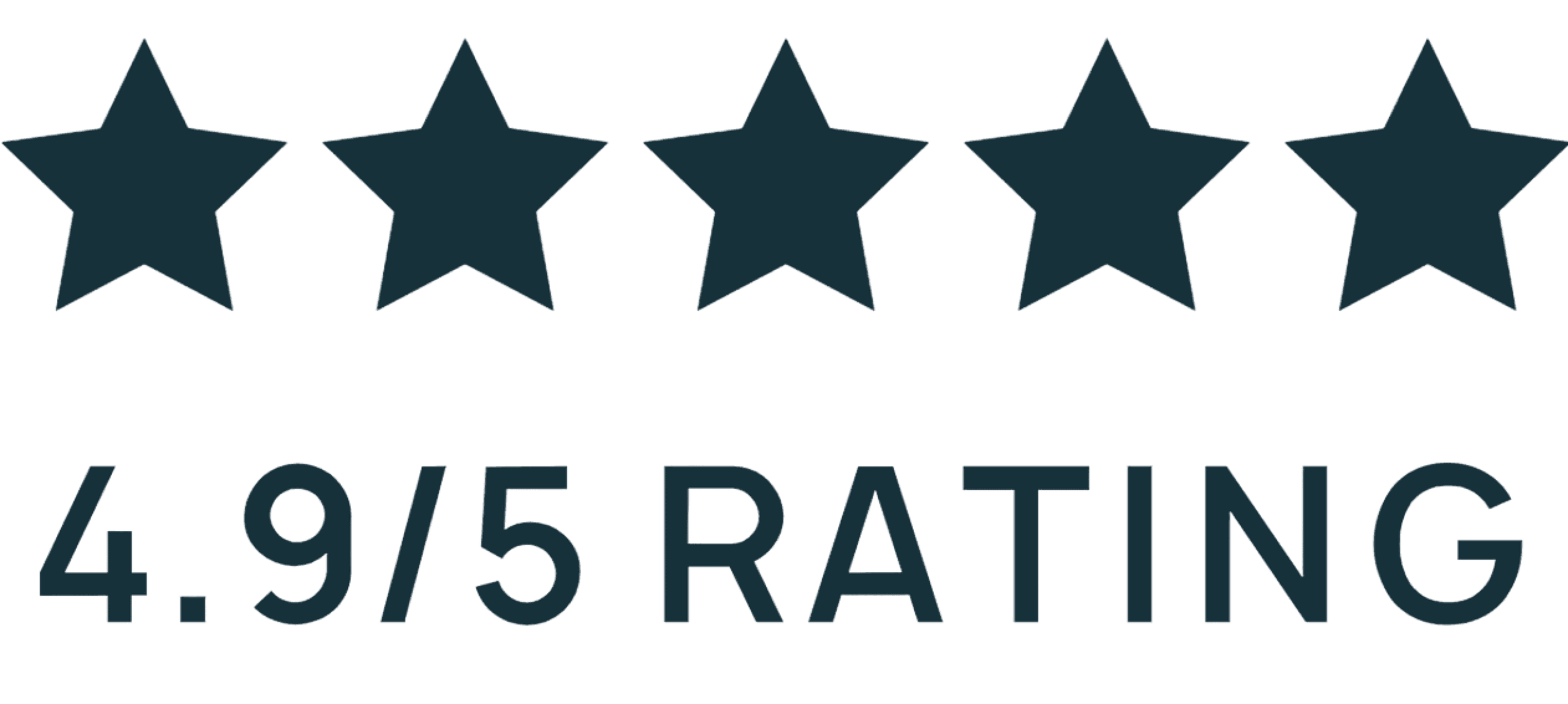
Unforgettable Website & UX Design For SaaS
We design high-converting websites and products for B2B AI startups.


Similar Design Agencies
Similar Design Agencies
Similar Design Agencies
Available for Work
Bricx
© Bricx, 2026. All rights reserved.

Available for Work
Bricx
© Bricx, 2026. All rights reserved.
Available for Work
Bricx
© Bricx, 2026. All rights reserved.
Available for Work
Bricx
© Bricx, 2026. All rights reserved.