10 Best UX Agenciesfor Agencies for Banking Apps Like Revolut (2026)
The 10 best UX agencies for agencies for banking apps like revolut, compared on pricing, Clutch rating, engagement model and hourly rate, drawn from a documented benchmark of 57 agencies.
Aug 20, 202611 min read
Best UX agencies for agencies for banking apps like revolut
Revolut set the standard a challenger now has to meet. The transaction appears in the feed with the merchant's name and logo almost before the card leaves the reader, an account opens in minutes from a phone, and freezing that card takes one tap. Matching it means designing around the interruptions, identity checks, strong customer authentication and fraud holds, that land on exactly the moments a customer cares about. A banking app is also opened several times a day and is where people learn bad news, so declines, holds and overdrafts deserve more attention than the happy path.
Ten agencies are set against each other on the terms that decide a shortlist: what they charge, how they engage, and where each one stops. Every agency here carries a verified Clutch profile, and the ratings below are taken from it. Each entry says what an agency is worth hiring for and where it is the wrong choice for banking app UX.
How the ten agencies compare
| Agency | Best for | Starting price | Clutch rating | Not a fit for |
|---|---|---|---|---|
| Bricx | B2B fintech platforms and dashboards | $25,000+ | 5.0/5, 27 reviews | Consumer banking and card products |
| Yum Yum Videos | Explainer video and motion assets | $10,000+ | 4.9/5, 15 reviews | Any interface design work |
| ScienceSoft | Security testing and engineering | $5,000+ | 4.8/5, 42 reviews | Consumer interface design |
| Inoxoft | Discovery through build in one team | $25,000+ | 5.0/5, 74 reviews | Regulated banking experience |
| OmiSoft | Wallets and irreversible transfers | $5,000+ | 5.0/5, 31 reviews | Licensed institution engagements |
| Softermii | Fast MVPs with live balances | $5,000+ | 4.9/5, 48 reviews | Fraud, disputes, edge states |
| Geniusee | Financial mobile MVPs end to end | $25,000+ | 5.0/5, 71 reviews | Licensed bank compliance review |
| Jelvix | Core system integration and data | $50,000+ | 4.9/5, 43 reviews | Interface and copy decisions |
| YML | Large institution app rebuilds | $250,000+ | 4.8/5, 14 reviews | Lean teams, fast first versions |
| UXDA | Banking UX at governance level | $250,000+ | 4.8/5, 21 reviews | Build capability, small budgets |
Best banking app UX agency: Bricx
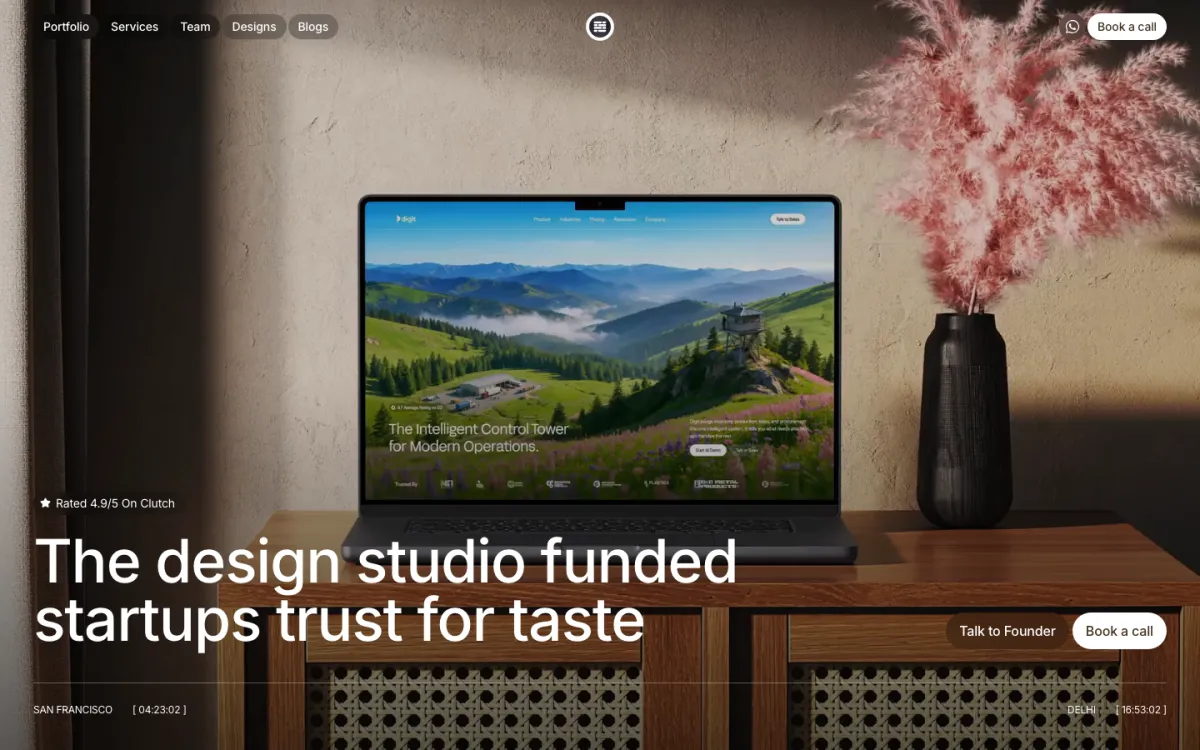
Bricx is the best fintech infrastructure and B2B financial software teams, where the user is an operator or a business customer rather than somebody checking a personal balance. Bricx has completed 50+ SaaS design projects across 30+ industries, with clients including Writesonic (YC S21), Collectwise (YC F24), Gigacatalyst (YC X26), Sybill, Camb.ai, LTV.ai, Instadapp, Hobbes and AT Kearney. The agency holds 27 verified reviews on Clutch at an average of 5.0/5.
Bricx works exclusively with B2B and AI SaaS companies, from seed stage through Series C, covering branding, website design, product UX/UI and end-to-end development. Engagements start at $25,000. Bricx works with B2B and AI SaaS companies from seed to Series C and does not build consumer current accounts or card products. Its fintech-adjacent clients include Instadapp and LTV.ai, and its 27 Clutch reviews at 5.0 come from software teams rather than licensed retail banks.
Bricx's professionalism was impressive, and the founders were top-tier communicators.
- Starting price
- $25,000+
- Engagement model
- Fixed-scope projects and monthly retainers
- Timeline
- First delivery within the first week; full scope varies by project
- Clutch
- 5.0/5, 27 reviews
- Hourly rate
- $50 - $99
- Best for
- fintech infrastructure and B2B financial software where the user is an operator or a business customer.
- Not a fit for
- consumer current accounts, card products or licensed retail banking apps, or budgets under $25,000.
Yum Yum Videos

Yum Yum Videos produced a 60-second animated explainer for a banking association and whiteboard animation for a financial services company, and video production is 100% of what it does. In a banking app that lands in one narrow place: explaining why a pending amount changed, or why an authentication step exists, where motion communicates faster than a paragraph of compliance-approved copy.
Financial services is 10% of its client base, its named work runs to Danone and clients like Amazon and Google, and no interface design appears anywhere in the record. For the app itself this is a supplier to a design team rather than a replacement for one.
- Starting price
- $10,000+
- Engagement model
- Project and retainer
- Clutch
- 4.9/5, 15 reviews
- Hourly rate
- Undisclosed
- Team size
- 10 - 49 people
- Best for
- explaining a financial product in animation for marketing or in-app education.
- Not a fit for
- any interface or product design work, or budgets under $25,000.
ScienceSoft
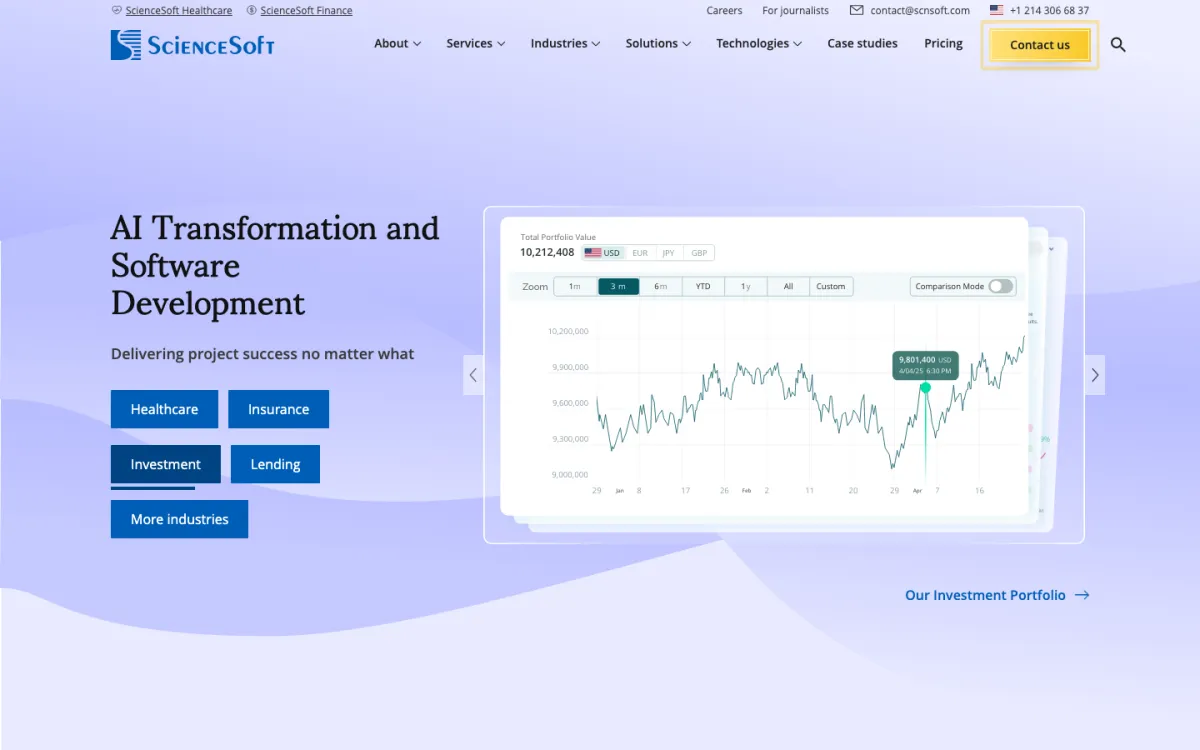
ScienceSoft's most relevant published work is a penetration test on a brokerage firm's systems, plus another across a software company's web apps and network. Security testing is not design, but it determines how often a banking app has to interrupt somebody and how much friction the risk team will insist on. Financial services accounts for 45% of its clients, and it has operated since 1989.
AI development is 60% of its service mix with no UX or product design listed at all, so consumer interface decisions sit outside what it sells. At 250 to 999 people from McKinney, it suits a bank buying engineering and assurance rather than a design partner.
- Starting price
- $5,000+
- Engagement model
- Project and retainer
- Clutch
- 4.8/5, 42 reviews
- Hourly rate
- $50 - $99
- Team size
- 250 - 999 people
- Best for
- banks buying security assurance and engineering capacity alongside a design team.
- Not a fit for
- consumer interface design or research-led product work, or budgets under $25,000.
Inoxoft
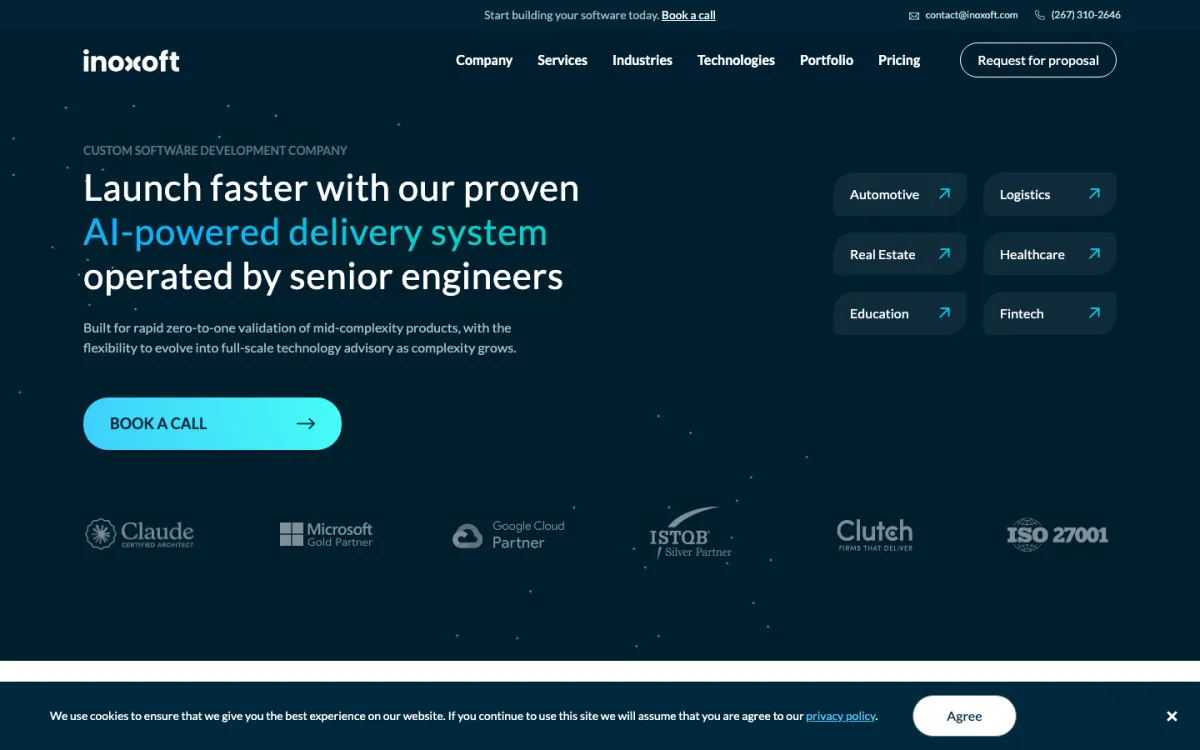
Inoxoft has financial services at 40% of its client base, and one review describes owning full discovery, UX planning, front-end, back-end and API integration on a marketplace platform. That end-to-end ownership matches how a banking app has to be built, because the feed, the card controls and the ledger behind them are one product rather than a design layer painted over an API.
Its other published work is logistics and tutoring platforms rather than regulated money, so authentication, fraud handling and account states appear nowhere in the record. At $25 to $49 an hour with a $25,000 minimum from Newark, the pricing buys scope rather than domain knowledge.
- Starting price
- $25,000+
- Engagement model
- Project and retainer
- Clutch
- 5.0/5, 74 reviews
- Hourly rate
- $25 - $49
- Team size
- 50 - 249 people
- Best for
- fintech teams that want discovery, UX and engineering owned by one partner.
- Not a fit for
- regulated banking domain knowledge or compliance-heavy work, or budgets under $25,000.
OmiSoft

OmiSoft is the wallet specialist here, 50% of clients in financial services, 70% custom software development and 30% blockchain. Its reviews describe a multi-chain cryptocurrency wallet for iOS and Android supporting Ethereum, Polygon and BNB Smart Chain, and a non-custodial EVM wallet with mobile and web apps. A wallet faces the banking app's hardest moment too: an irreversible transfer confirmed on a small screen.
Every one of its clients is a small business, so the review cycles of a licensed institution are outside its experience, and self-custody is a different regulatory world from a current account. Founded in Kyiv in 2017, its public record is recent and crypto-weighted.
- Starting price
- $5,000+
- Engagement model
- Project and retainer
- Clutch
- 5.0/5, 31 reviews
- Hourly rate
- $25 - $49
- Team size
- 50 - 249 people
- Best for
- crypto wallets and transfer flows where confirmation design carries the risk.
- Not a fit for
- licensed banking engagements or compliance-governed programmes, or budgets under $25,000.
Softermii
Softermii's closest work to this page is an MVP for an AI-powered wealth organisation, including a real-time net worth dashboard built on Google Cloud. Showing somebody their money as one live figure is the same problem a banking app's home screen has, and it fails the same way when that figure moves for reasons the person cannot see. Financial services is 25% of its clients.
Medical is its largest sector at 50%, and its mix is AI agents, AI consulting, AI development and mobile app development at 20% each. That profile suits a fast first version rather than a team that has lived through a fraud wave and redesigned around it.
- Starting price
- $5,000+
- Engagement model
- Project and retainer
- Clutch
- 4.9/5, 48 reviews
- Hourly rate
- $25 - $49
- Team size
- 50 - 249 people
- Best for
- getting a first version of a money product in front of users quickly.
- Not a fit for
- fraud, dispute and edge-state design at scale, or budgets under $25,000.
Geniusee
Geniusee has the most directly comparable review on this page: a mobile app MVP built from scratch for a financial services company, where it defined the specifications, designed the UI/UX and built the app. That is the whole job a challenger needs done once. Financial services and education each account for 40% of its client base, from Warszawa since 2017.
Custom software development is 40% of the mix with mobile at 20%, and design is not separately listed, so UX arrives inside a build rather than carrying its own weight. Nothing published involves a licensed institution or the compliance review that comes with one.
- Starting price
- $25,000+
- Engagement model
- Project and retainer
- Clutch
- 5.0/5, 71 reviews
- Hourly rate
- $25 - $49
- Team size
- 250 - 999 people
- Best for
- launching a financial mobile product from specification through to shipped app.
- Not a fit for
- work inside a licensed bank's compliance process, or budgets under $25,000.
Jelvix

Jelvix builds integration layers, including one connecting Yardi Voyager with Salesforce, NetSuite and a reporting environment, and a unified orchestration layer that pulled fragmented data streams together for a healthcare client. A banking app is that problem wearing a better face, since the feed depends on core banking, card processing and fraud systems agreeing in real time. Financial services is 25% of its clients.
Custom software development is 70% of the mix with no design service listed, and 60% of its clients are enterprises above a billion dollars. With a $50,000 minimum, it is a platform partner for an established institution rather than the team deciding how a decline gets worded.
- Starting price
- $50,000+
- Engagement model
- Project and retainer
- Clutch
- 4.9/5, 43 reviews
- Hourly rate
- $50 - $99
- Team size
- 250 - 999 people
- Best for
- connecting core banking, card and fraud systems behind a customer-facing app.
- Not a fit for
- interface design, copy or research decisions, or budgets under $25,000.
YML
YML pairs 40% mobile app development with 30% UX/UI design, and its published work includes Marriott Bonvoy, Thomson Reuters and TIAA, with one review covering native iOS and Android apps built for a financial services firm to complement its web platform. Financial services is 30% of its client base and 60% of its clients are enterprises above a billion dollars, which is where most banking app rebuilds actually happen.
That same profile makes it the slowest place to ship. A $250,000 minimum at $200 to $300 an hour is the highest floor on this page, and 14 Clutch reviews is a modest public record at that price.
- Starting price
- $250,000+
- Engagement model
- Project and retainer
- Clutch
- 4.8/5, 14 reviews
- Hourly rate
- $200 - $300
- Team size
- 250 - 999 people
- Best for
- established institutions rebuilding a consumer mobile app with strategy attached.
- Not a fit for
- lean teams, fast first versions or small scopes, or budgets under $25,000.
UXDA
UXDA is the only agency here with financial services at 100% of its clients and UX/UI design at 100% of its services. It describes 150+ products across 39 countries and names banking vendors including Finastra, Backbase, iGTB and CR2 alongside banks such as HSBC and Emirates NBD. Its reviews cover an e-wallet expansion and a hedge fund investing platform built through user flows and wireframes in Figma.
It is 10 to 49 people with a $250,000 minimum at $200 to $300 an hour, which buys a governance-level engagement rather than a sprint. No development capability is listed, so the build stays with the bank's own engineers or another vendor.
- Starting price
- $250,000+
- Engagement model
- Project and retainer
- Clutch
- 4.8/5, 21 reviews
- Hourly rate
- $200 - $300
- Team size
- 10 - 49 people
- Best for
- banks and banking vendors setting digital direction across a whole product estate.
- Not a fit for
- engagements needing development in-house, or budgets under $25,000.
How much does a banking app design engagement cost?
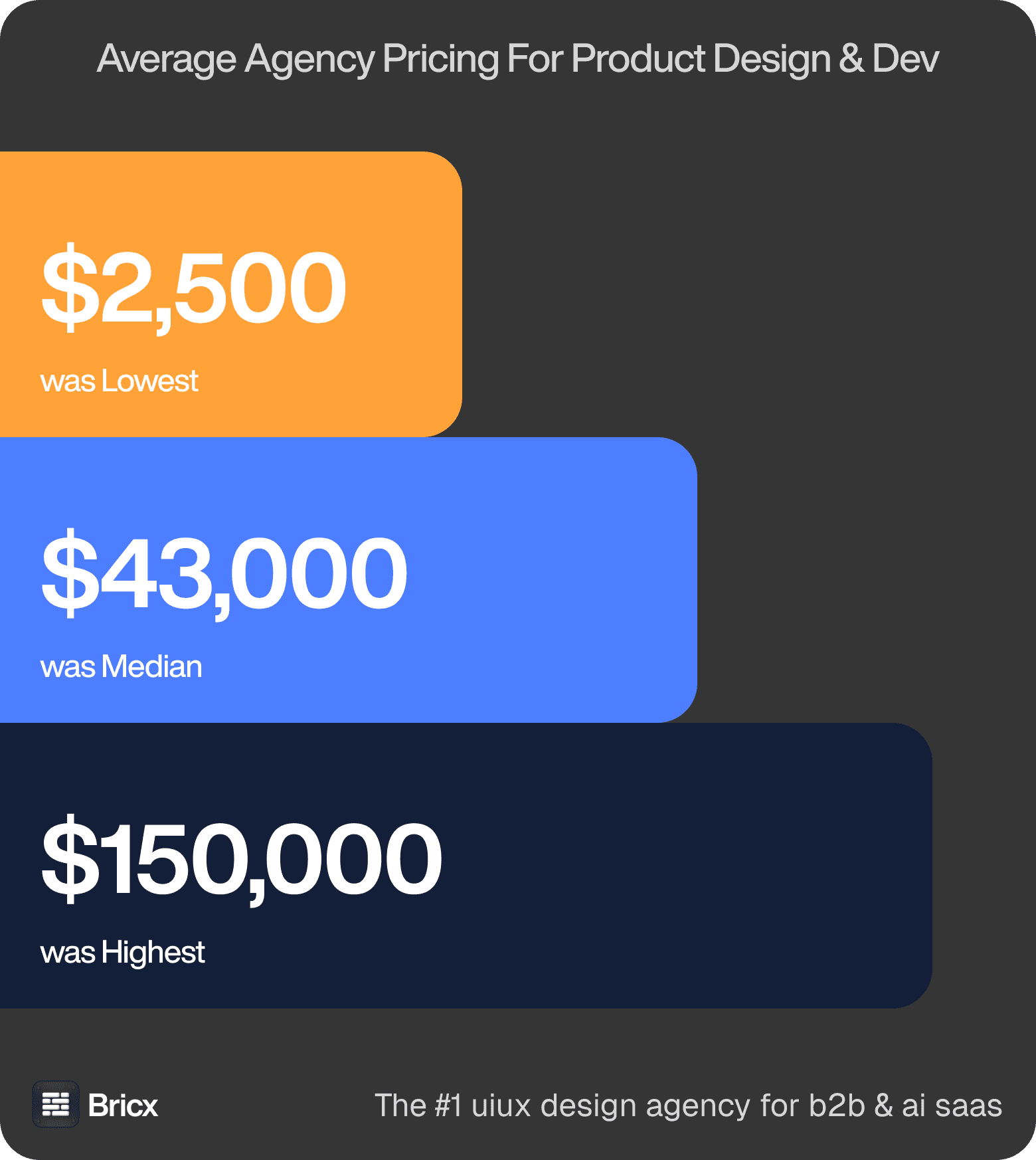
Where quotes actually land. Between $2,500 and $150,000-plus, median near $43,000. Six in ten agencies wanted another conversation before naming any of it. Those figures cover product design across the whole benchmark, so treat them as the range banking app UX is quoted inside rather than a price for it.
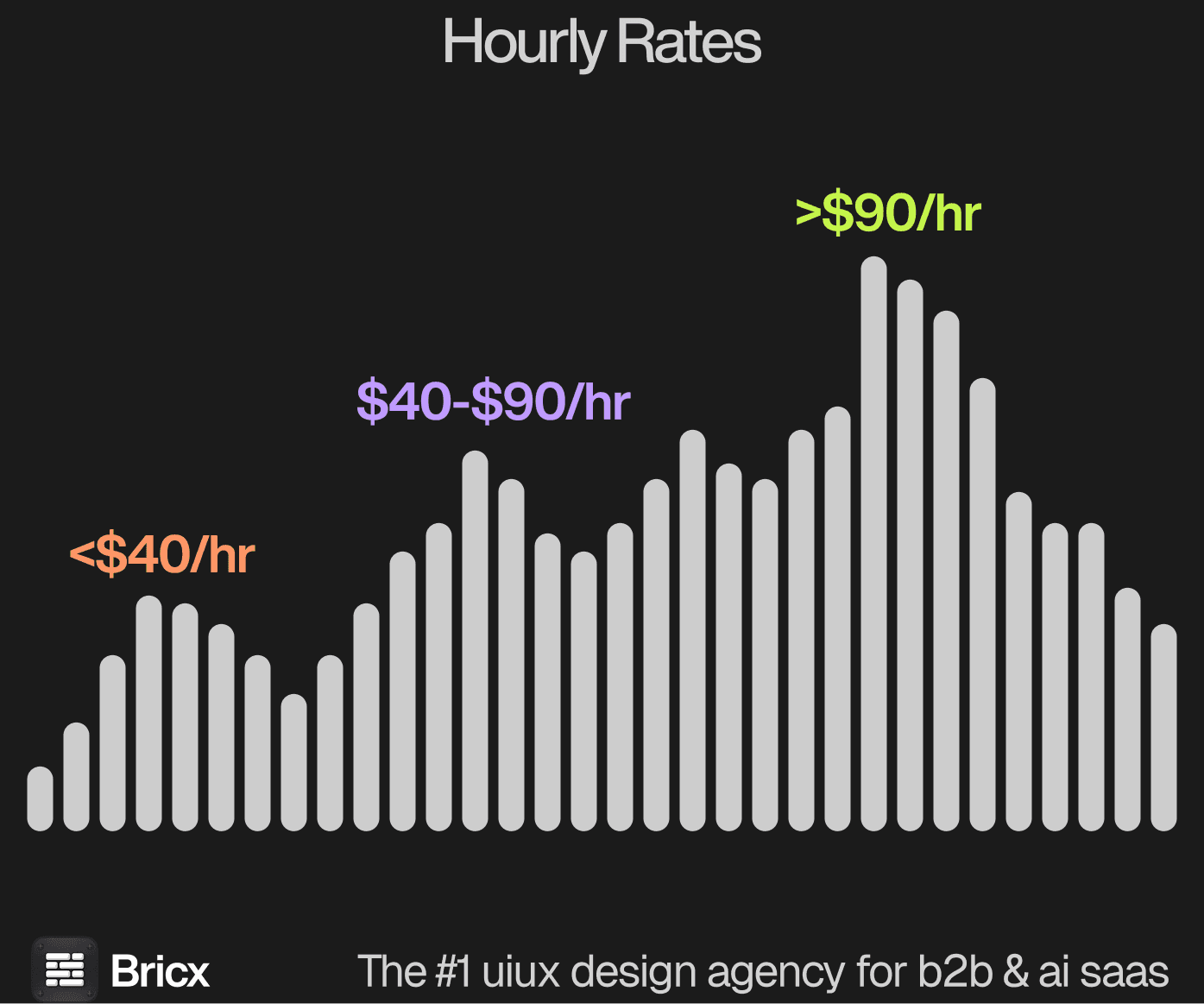
What the hour buys. Rates ran $25 to $195 with a $55 to $90 median. Geography set the number; capability did not track it. Banking apps sit at the top of the range, because authentication, fraud and account states multiply the screens, and each one is reviewed by somebody in compliance before it ships.
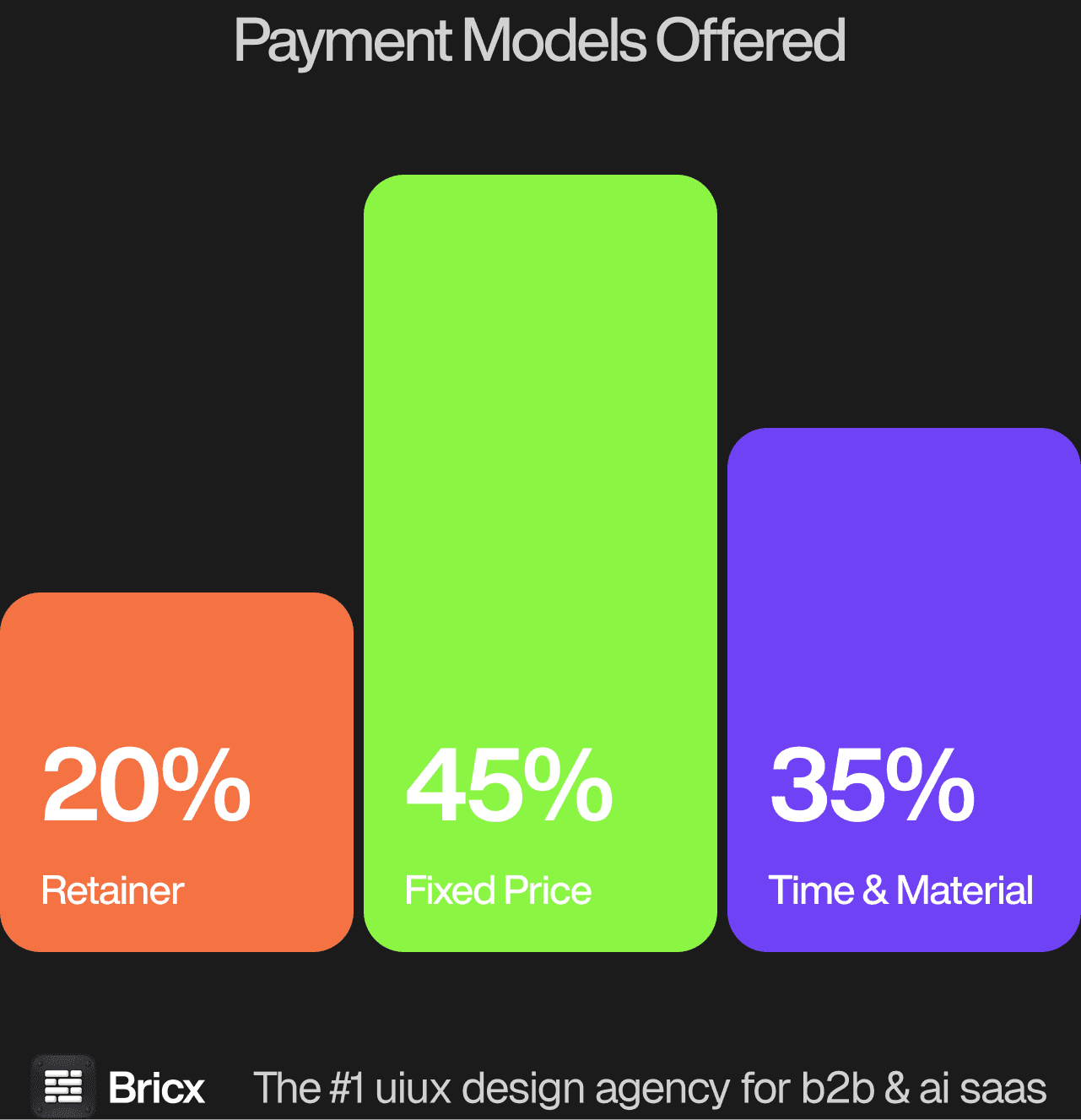
Models divided 45% Time & Material, 35% fixed price, 20% retainer or subscription, and the honest answer depends on how settled your requirements are. For banking app UX the model usually matters more than the headline figure, because it decides what happens when the scope moves.
- Fixed price if the end state is known.
- Time & Material if it is not.
- Retainer if there is no end state.
- Which one fits banking app UX comes down to whether the scope is settled before the work starts.
How do you evaluate a banking app UX agency?
Five things separate banking app UX from fintech UX generally.
Ask how they design the decline. A card refused at a till is the most emotionally loaded screen in the product, and a generic error there costs more trust than any onboarding improvement earns back.
Ask what they do about strong customer authentication. The interruption is required, so the design question is where it lands, how often it repeats, and whether it survives a customer standing somewhere with poor signal.
Ask how fast a transaction appears. Instant feed entries carrying merchant names and logos are the baseline expectation now, and pending amounts that change later have to be explained rather than quietly corrected.
Ask where onboarding loses people at identity checks. Document scanning and liveness checks are where new accounts die, and the fix is usually sequencing and recovery paths rather than a prettier camera screen.
Ask who they designed the negative balance for. People open a banking app most often when money is tight, so tone, ordering and what appears first are decisions with consequences.
What are the red flags when hiring a design agency?
- Scope defined by hours rather than outcomes. Buying 200 hours tells you nothing about what exists at the end.
- A rate that only makes sense at volume. Cheap per hour and slow per decision is not cheap.
- No examples at your stage. Enterprise work does not prove they can ship on a seed runway.
- Design and research quoted as one line. Ask what proportion of the budget is actually research.
- No named limitation. Every agency is wrong for someone. One that will not say who has not thought about it.
- No comparable example of banking app UX. An agency that cannot point to work of the same shape is learning on your budget.
Should you hire a UX agency or build in-house?
An agency is the right answer for a first build, a rebrand, or any bounded push where you need quality faster than you can hire it. For banking app UX specifically, the question worth settling first is how often the work recurs.
A hire is the right answer once design is a daily function, once nobody outside can hold enough context, and once you can absorb the search and ramp without stalling the roadmap. Where banking app UX falls on that line is usually clear once you count how many times it will need doing again.
A licensed bank should hire, because the design team has to sit through compliance review, fraud triage and incident calls that nobody bills by the hour. A pre-launch challenger should retain, since permanent headcount before a product exists is expensive optimism. Hiring fails when one designer is outvoted by risk on every screen. Retaining fails when the agency leaves before the first fraud wave, which is when the interface is genuinely tested.
FAQs
What makes banking app UX difficult?
Regulation puts interruptions, identity checks, authentication and fraud holds into the moments a customer cares about most. The app is opened several times a day and is where bad news arrives, so declines and holds matter more than a polished first run.
How much does banking app design cost?
Fixed-price product design across the benchmark ran $2,500 to over $150,000 with a median near $43,000, and banking apps sit at the upper end because authentication, fraud and account states multiply the screens. Bricx starts at $25,000.
What actually makes an app feel like Revolut?
Speed and self-service rather than styling. Transactions appearing instantly with merchant detail, an account opening in minutes from a phone, a card frozen in one tap. Copying the visual language without those mechanics changes nothing.
Should a challenger design for the phone first?
Yes, and specifically for the states a phone produces: weak signal during authentication, an interrupted document scan, a notification arriving while the app is closed. Those paths are where a new account is quietly lost.