10 Best UX Agencies In Aerospace (2026)
The 10 best UX agencies in aerospace, compared on pricing, Clutch rating, engagement model and hourly rate, drawn from a documented benchmark of 57 agencies.
Aug 20, 202611 min read
Best UX agencies in aerospace
Aerospace software divides by which side of the aircraft it sits on. Flight deck and cabin systems are a certified engineering discipline. Everything on the ground that designs, simulates, sources, builds and certifies the aircraft is a different industry with different users, and those users are engineers whose real tools are CAD, a simulation package and a spreadsheet somebody built years ago. Any new interface competes with that spreadsheet. The constraint that shapes all of it is traceability: every change leaves an audit record, so drafts, undo and bulk edits cannot behave the way they do in ordinary software.
Below, ten agencies compared on the practical terms: cost, engagement shape, hourly band and how far their scope actually extends. Every agency here carries a verified Clutch profile, and the ratings below are taken from it. Each entry says what an agency is worth hiring for and where it is the wrong choice for aerospace engineering software UX.
How the ten agencies compare
| Agency | Best for | Starting price | Clutch rating | Not a fit for |
|---|---|---|---|---|
| Bricx | Ground-side engineering and quality tooling | $25,000+ | 5.0/5, 27 reviews | Avionics and certified airborne systems |
| Very Good Ventures | Shop-floor tablet applications | $100,000+ | 5.0/5, 35 reviews | Desktop engineering tools, domain depth |
| AgileEngine | Supply chain and audit platforms | $25,000+ | 5.0/5, 62 reviews | Small owned-outcome design engagements |
| Devima Solutions | Parts and order data interfaces | $10,000+ | 5.0/5, 40 reviews | Regulated traceability, large programmes |
| Digia | Simple structured data collection | $1,000+ | 4.9/5, 10 reviews | Engineering tooling, aerospace requirements |
| Qubika | Data platforms under a regulated interface | $10,000+ | 4.9/5, 61 reviews | Aerospace or manufacturing domain |
| SoftServe | Data platform and legacy modernisation | $50,000+ | 4.8/5, 3 reviews | Owned design outcomes, small scopes |
| ROSSUL | Scientific and engineering instrument software | $25,000+ | 4.9/5, 20 reviews | Large multi-team programmes |
| Andersen | Internal tools kept running for years | $50,000+ | 4.9/5, 129 reviews | Design-led work, aerospace experience |
| Sidebench | Regulated change control and audit | $50,000+ | 4.9/5, 48 reviews | Engineering and CAD-adjacent interfaces |
Best aerospace UX agency for engineering and manufacturing software: Bricx
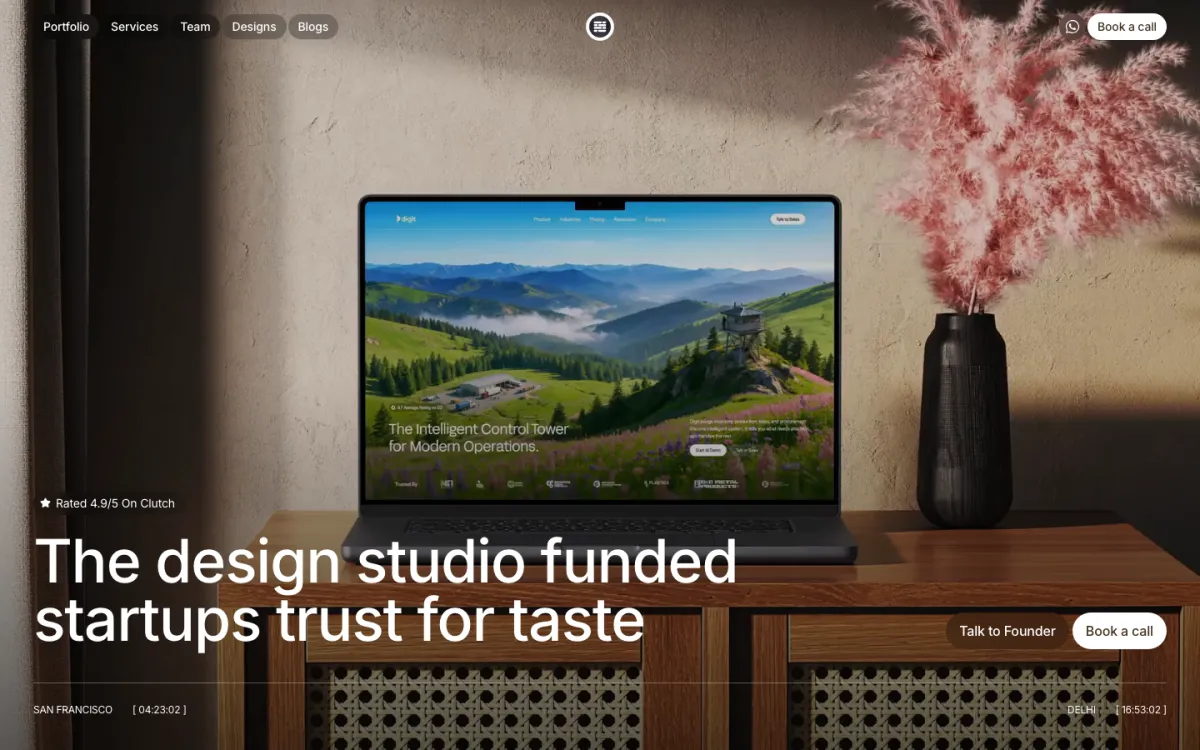
Bricx is the best aerospace UX agency for the engineering, manufacturing and certification software on the ground rather than for avionics. Bricx has completed 50+ SaaS design projects across 30+ industries, with clients including Writesonic (YC S21), Collectwise (YC F24), Gigacatalyst (YC X26), Sybill, Camb.ai, LTV.ai, Instadapp, Hobbes and AT Kearney. The agency holds 27 verified reviews on Clutch at an average of 5.0/5.
Bricx works exclusively with B2B and AI SaaS companies, from seed stage through Series C, covering branding, website design, product UX/UI and end-to-end development. Engagements start at $25,000. Bricx designs the ground-side tooling, part traceability, non-conformance handling and supplier quality, where the users are engineers and the audit record matters as much as the result.
Overall, the team delivered a major design upgrade. They were communicative, flexible, and responsive.
- Starting price
- $25,000+
- Engagement model
- Fixed-scope projects and monthly retainers
- Timeline
- First delivery within the first week; full scope varies by project
- Clutch
- 5.0/5, 27 reviews
- Hourly rate
- $50 - $99
- Best for
- aerospace manufacturers and suppliers building engineering, quality and certification software.
- Not a fit for
- avionics, certified airborne systems, or budgets under $25,000.
Very Good Ventures
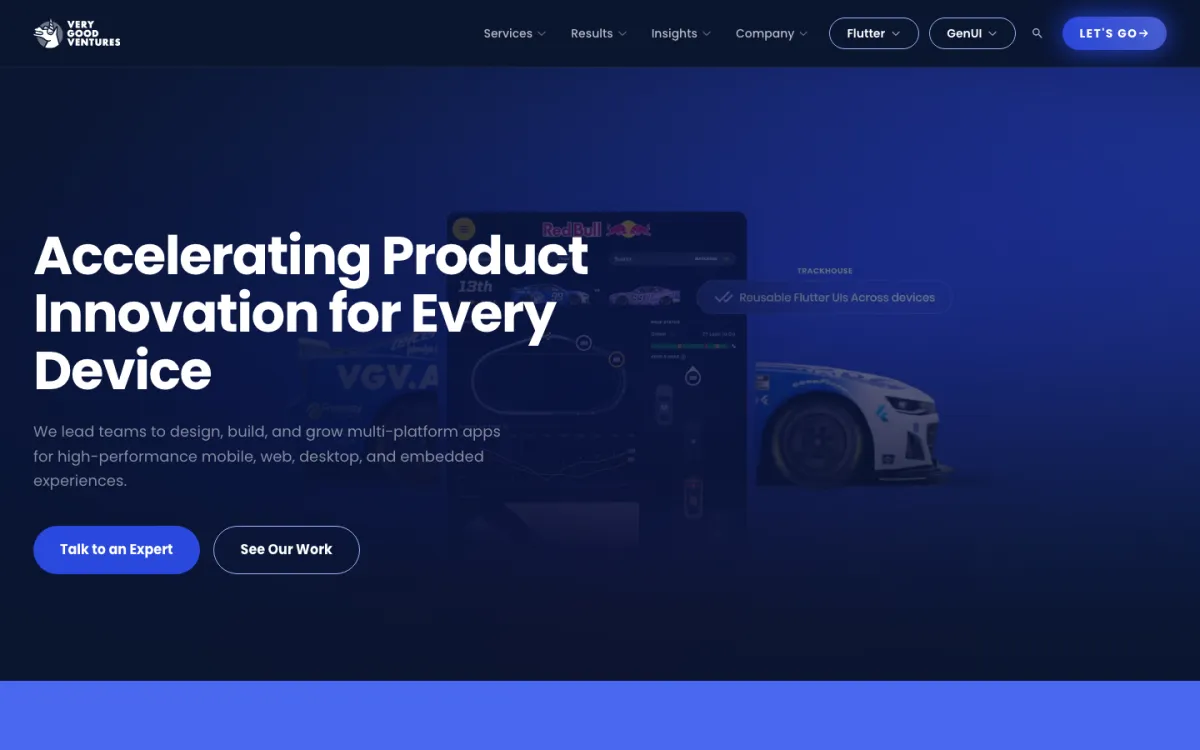
Very Good Ventures is a Flutter specialist with 80% of its output in mobile app development, which on this page maps to one thing: the tablet a technician or an inspector carries onto the floor, away from the desk where the CAD package and the spreadsheet live. It also sells application management and support at 10%, which matters when a record-keeping tool has to outlive the programme that commissioned it.
Nothing on its card touches manufacturing, engineering or aerospace, with no industry rising above 10%. Its $100,000 minimum is the second highest here, and a Flutter-first team is the wrong instinct for the desktop-heavy, data-dense engineering tools this page is actually about. It works from New York, founded 2018.
- Starting price
- $100,000+
- Engagement model
- Design and development, project-based
- Clutch
- 5.0/5, 35 reviews
- Hourly rate
- $150 - $199
- Team size
- 10 - 49 people
- Best for
- the mobile companion to a ground-side engineering system.
- Not a fit for
- data-dense desktop engineering interfaces, or budgets under $25,000.
AgileEngine
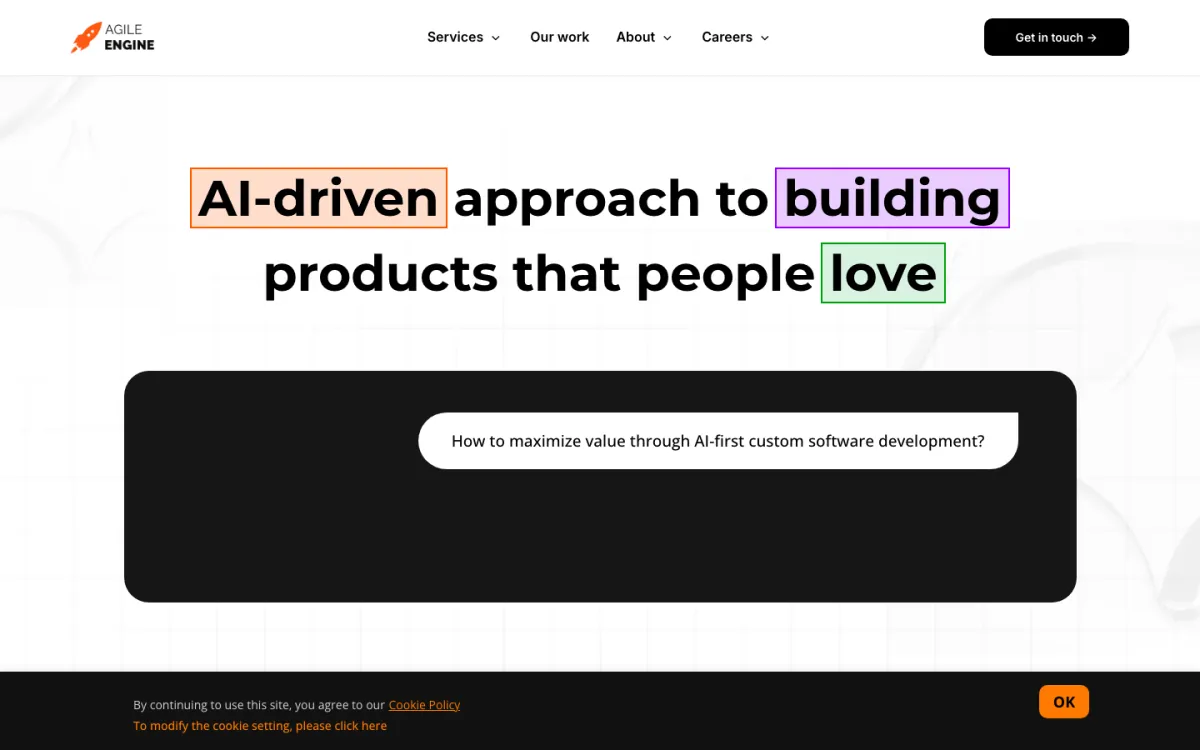
AgileEngine has two case studies that land squarely on this page: an AI-driven RegTech platform monitoring Nasdaq and NYSE trading, and an AI-native supply chain platform for American manufacturing. Regulated surveillance and manufacturing supply chain are the two halves of aerospace's ground problem, sourcing a part and then proving afterwards that it was sourced correctly. UX/UI is 20% of its output.
Financial services at 30% and eCommerce at 20% lead its industries, with automotive at 10% the nearest thing to aerospace. It is also 1,000 to 9,999 people with IT staff augmentation at 15% of its business, so a supplier needs to establish early whether it is buying an owned design outcome or additional headcount.
- Starting price
- $25,000+
- Engagement model
- Dedicated team
- Clutch
- 5.0/5, 62 reviews
- Hourly rate
- $25 - $49
- Team size
- 1,000 - 9,999 people
- Best for
- sourcing, supply chain and compliance monitoring platforms.
- Not a fit for
- small focused design engagements, or budgets under $25,000.
Devima Solutions
Devima Solutions built a PIM and an OMS for a hardware marketplace, software for managing products, orders and shipments. Product information management is the closest commercial cousin to an aerospace parts catalogue: thousands of items, each carrying revisions and attributes that have to stay correct because somebody downstream builds from them. UX/UI is 30% of its output, behind web development at 40%.
80% of its clients are small businesses under ten million dollars, so an aerospace supplier would be the largest account on its books by a wide margin. No manufacturing or engineering industry appears on its card, which is led by education and medical at 15% each, and traceability obligations are nowhere in its documented experience.
- Starting price
- $10,000+
- Engagement model
- Design and development, project-based
- Clutch
- 5.0/5, 40 reviews
- Hourly rate
- $25 - $49
- Team size
- 10 - 49 people
- Best for
- catalogue, parts and order management interfaces at low cost.
- Not a fit for
- audit-traceable engineering systems, or budgets under $25,000.
Digia
Digia's most relevant work here is building a student survey's front and back end, structured data collection that then had to be aggregated and understood. An inspection record or a test result form is the same shape without the audit obligations attached. At a $1,000 minimum and $25 to $49 an hour it is the cheapest entry point on this page by a considerable distance, working from Toronto.
That is where the relevance stops. 10 Clutch reviews is the thinnest record on this page, no industry on its card exceeds 10%, and 60% of its clients are small businesses under ten million dollars. Its documented work is WordPress modules and responsive marketing sites, a long way from an engineering tool anybody depends on.
- Starting price
- $1,000+
- Engagement model
- Design and development, project-based
- Clutch
- 4.9/5, 10 reviews
- Hourly rate
- $25 - $49
- Team size
- 50 - 249 people
- Best for
- a small, simple data collection tool on a tight budget.
- Not a fit for
- engineering or certification tooling, or budgets under $25,000.
Qubika
Qubika is 40% medical, and medical software is the other industry where every change must leave a record somebody can inspect years later. Its stated approach pairs data engineering and AI with UX and security, which is the right combination for tools sitting on top of simulation output and bills of material. UX/UI is 20% of its output, and it works from Austin.
Aerospace and manufacturing appear nowhere in its industries, which run financial services and medical at 40% each with retail at 10%. AI development and cloud consulting at 30% each dominate its mix, so design is a supporting service, and its reviews describe mobile engineering and data warehouse work rather than engineering workstations.
- Starting price
- $10,000+
- Engagement model
- Programme-based
- Clutch
- 4.9/5, 61 reviews
- Hourly rate
- $50 - $99
- Team size
- 250 - 999 people
- Best for
- getting simulation and test data into something queryable before designing on it.
- Not a fit for
- buyers needing aerospace or manufacturing depth, or budgets under $25,000.
SoftServe
SoftServe carries BI and big data consulting alongside enterprise application modernisation, both at 10%, and automotive at 5% is the only heavy-engineering industry anywhere in its mix. Ground-side aerospace produces enormous quantities of simulation and test data that currently ends in a spreadsheet, and moving that into something queryable is a data platform job before it is a design job. It has run since 1993.
3 Clutch reviews is by far the thinnest public record here, unusual for an organisation of over ten thousand people. Its reviews describe supplying developers, QA and UI/UX designers into a client's own team, which is resourcing rather than owning an outcome, and information technology at 45% dominates its industries.
- Starting price
- $50,000+
- Engagement model
- Programme-based
- Clutch
- 4.8/5, 3 reviews
- Hourly rate
- $100 - $149
- Team size
- 10,000+ people
- Best for
- replacing the spreadsheet layer with a queryable data platform.
- Not a fit for
- an agency that owns the design outcome, or budgets under $25,000.
ROSSUL
ROSSUL is the closest fit on this page and it is not close. Manufacturing is 25% of its client base, its published work names a microvolume spectrophotometer and embedded environments, and one review covers custom software for a solar simulator and optics company. Scientific instrument software is what ground-side aerospace tooling looks like: an engineer, a measurement, and a result that has to be right.
It does nothing but product design and UX/UI, 50% each, so a large build sits elsewhere unless its stated research-through-shipped-code model applies to the scope. At 10 to 49 people in Toronto with 20 Clutch reviews it is a small studio, and a full certification or lifecycle programme would exceed what it can staff at once.
- Starting price
- $25,000+
- Engagement model
- Project and retainer
- Clutch
- 4.9/5, 20 reviews
- Hourly rate
- $100 - $149
- Team size
- 10 - 49 people
- Best for
- engineering and instrument software where the workflow is the hard part.
- Not a fit for
- large multi-team certification programmes, or budgets under $25,000.
Andersen
Andersen's published work includes internal tooling built to manage a controlled process end to end, and energy and natural resources is 10% of its client base, the nearest thing here to heavy industry that answers to a regulator. IT managed services is another 15% of its business, which matters when an aerospace tool has to be kept running and revalidated for a decade rather than shipped and forgotten.
No design line appears on its card at all, led by custom software development at 20% with IT strategy consulting behind it. At 1,000 to 9,999 people out of Warszawa, design is a small corner of a large engineering firm, and financial services and medical at 20% each lead its industries with aerospace absent entirely.
- Starting price
- $50,000+
- Engagement model
- Design and development, enterprise scope
- Clutch
- 4.9/5, 129 reviews
- Hourly rate
- $50 - $99
- Team size
- 1,000 - 9,999 people
- Best for
- internal engineering tools that need long-term maintenance as well as a build.
- Not a fit for
- design-led aerospace-specific work, or budgets under $25,000.
Sidebench
Medical work is 60% of Sidebench's client base, and regulated medical software is the closest thing on this page to aerospace's traceability constraint: change control, documented rationale, and an audit record that outlives the people who made the decision. Its case studies also list government work. It runs AI development, CRM consulting, custom software and mobile at 20% each from Los Angeles.
No standalone design line appears on its card, and nothing in its record touches manufacturing, engineering or CAD-adjacent tooling. Its published work is patient-facing: OCD treatment, NICU families, neurological care scheduling. Those are consumer health interfaces, a long way from an engineer's data-dense workstation and a $50,000 minimum applies.
- Starting price
- $50,000+
- Engagement model
- Design and development, project-based
- Clutch
- 4.9/5, 48 reviews
- Hourly rate
- $50 - $99
- Team size
- 50 - 249 people
- Best for
- products where change control and an audit record are legal obligations.
- Not a fit for
- engineering or CAD-adjacent interfaces, or budgets under $25,000.
How much does an aerospace UX engagement cost?
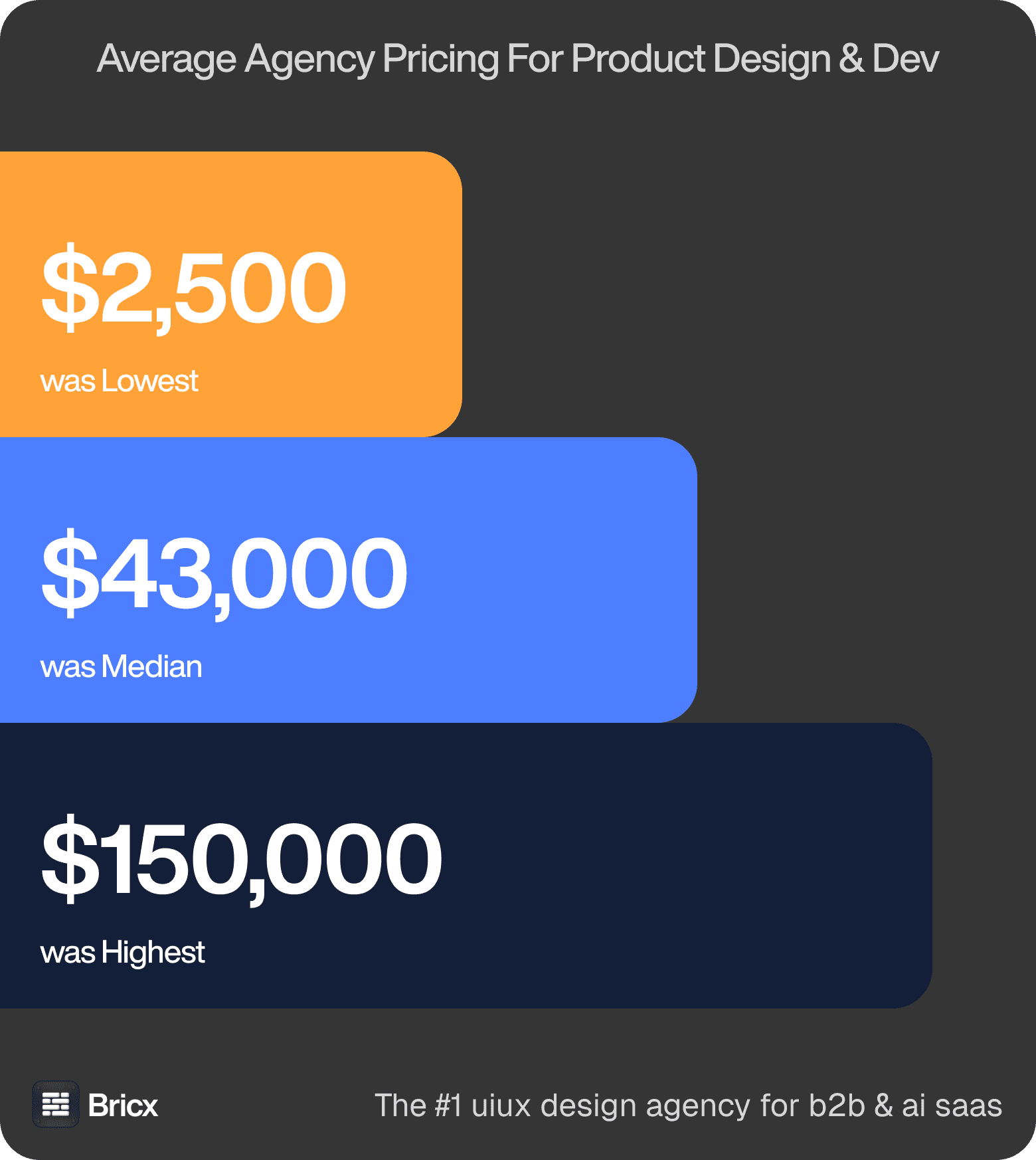
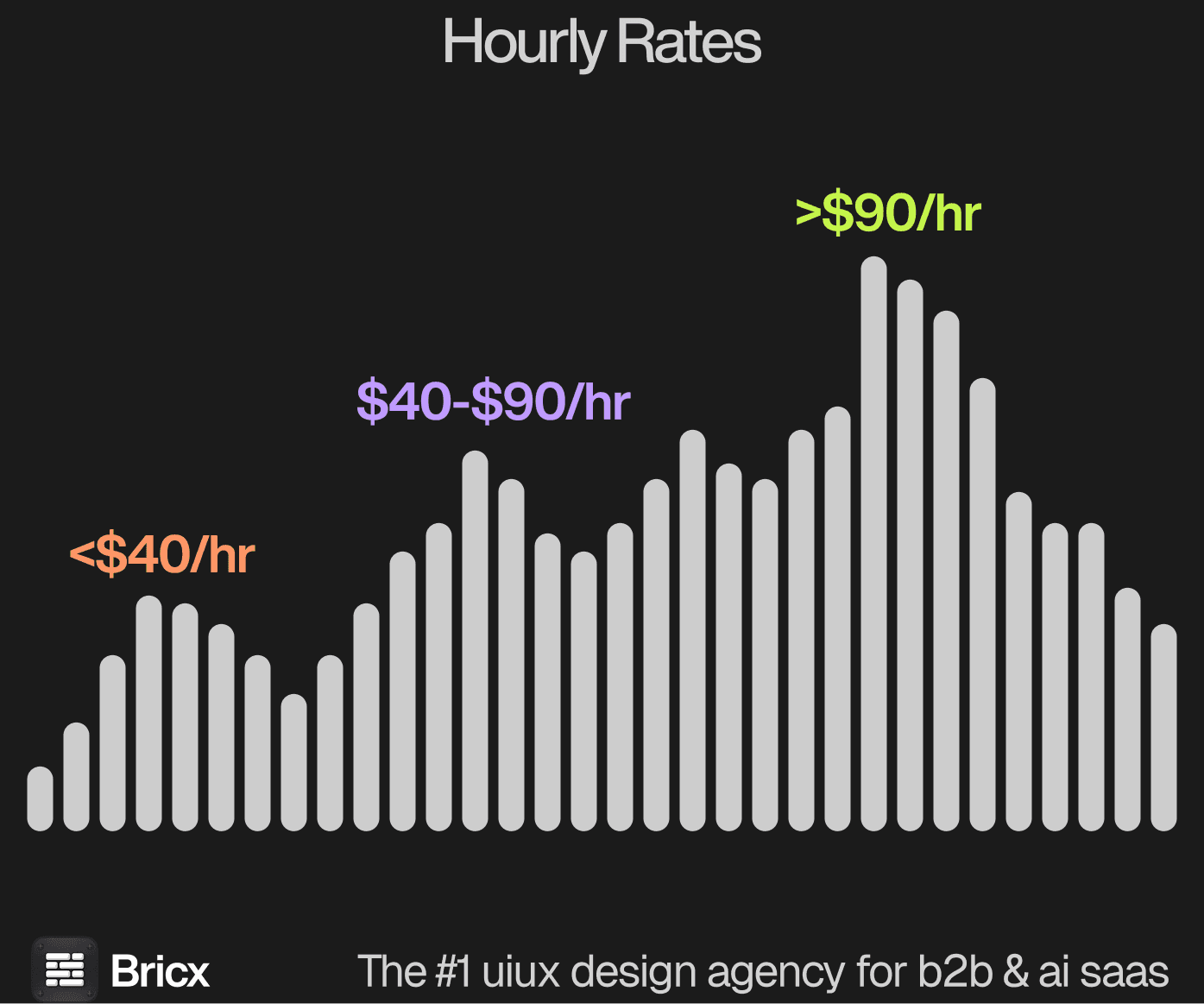
Cost, from the calls. Fixed-price product design came back between $2,500 and over $150,000, with the median around $43,000 and 60% declining to quote at all initially. Those figures cover product design across the whole benchmark, so treat them as the range aerospace engineering software UX is quoted inside rather than a price for it.
Hourly rates uncovered. $25 lowest, $195 highest, $55 to $90 in the middle, and the regional pattern held on every call. Aerospace engagements run above the median, because discovery is longer, the users are hard to get time with, and much of the first phase is spent learning a vocabulary.
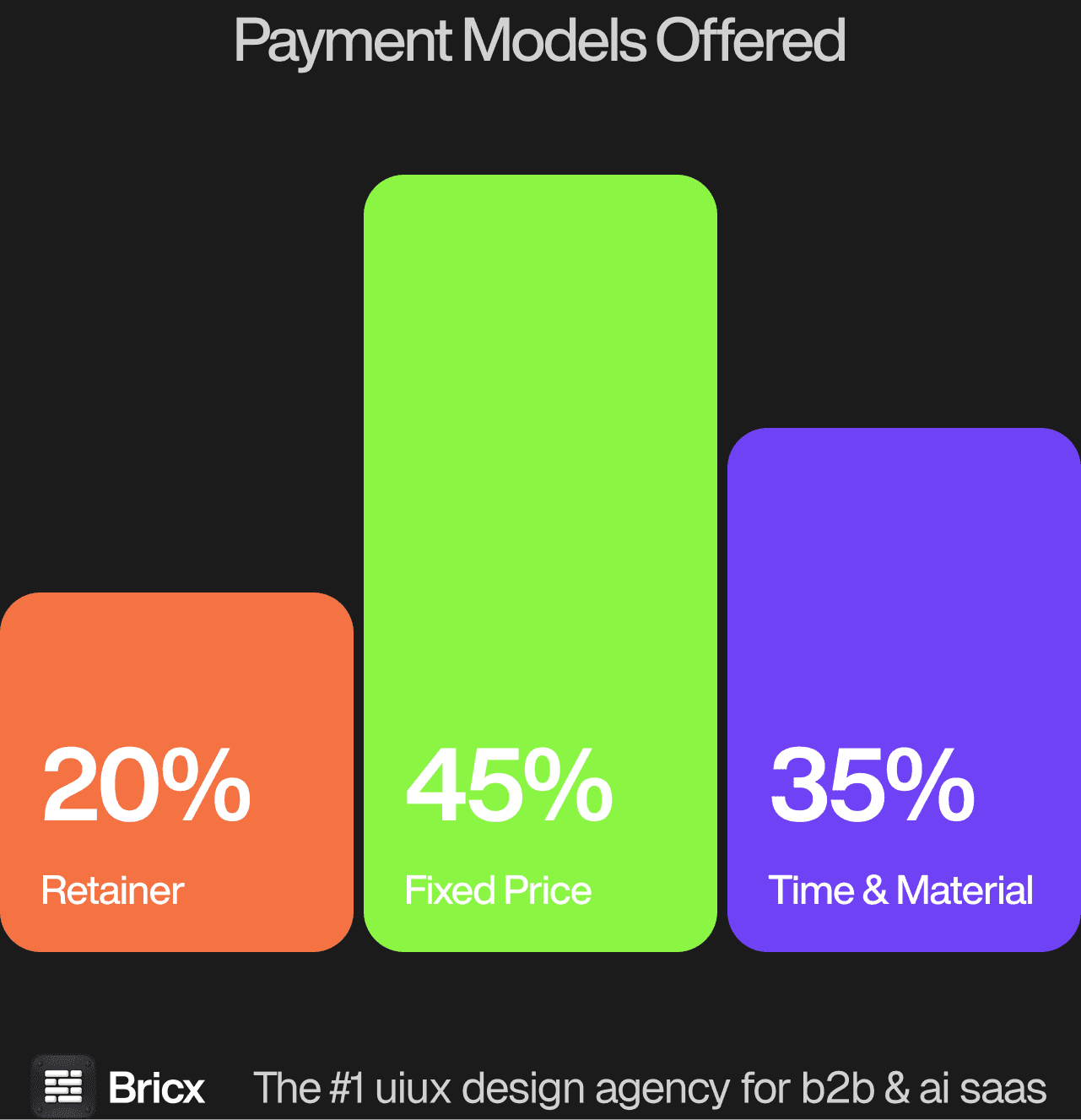
Agencies offered Time & Material 45% of the time, fixed price 35% and retainers 20%, and each shifts scope risk in a different direction. For aerospace engineering software UX the model usually matters more than the headline figure, because it decides what happens when the scope moves.
- Fixed price for bounded scope.
- Time & Material for evolving scope.
- Retainer for permanent design demand.
- Which one fits aerospace engineering software UX comes down to whether the scope is settled before the work starts.
How do you evaluate an aerospace UX agency?
Five things separate aerospace UX from ordinary enterprise UX.
Ask what they will do about traceability. When every change has to leave a record that survives an audit, saving, reverting and bulk editing become design problems before they are engineering ones.
Ask how they handle the incumbent spreadsheet. Engineers have already solved the workflow badly and fast. A replacement that is slower on the common case will not be adopted, whatever else it improves.
Ask whether they will sit in a plant or a test facility. Almost nothing about the real workflow is visible from a requirements document written by the vendor.
Ask about long-lived data. A part number outlives the software, so the interface has to accommodate records created under a schema nobody at the company remembers.
Ask what they are not qualified to do. Anything on the aircraft is a regulated engineering activity, and a design agency claiming it should end the conversation.
What are the red flags when hiring a design agency?
- Discovery priced as a separate product. Paying twice to be told what you already know is common and avoidable.
- A team that grows only after signature. Ask who is assigned now, not who could be.
- Metrics quoted without baselines. "Increased conversion 40%" from what, over what period.
- No process for disagreement. Ask what happens when you reject a direction twice.
- Silence on what they would not take on. An agency with no boundaries has no specialism.
- No comparable example of aerospace engineering software UX. An agency that cannot point to work of the same shape is learning on your budget.
Should you hire a UX agency or build in-house?
Buy an agency when the need is a defined outcome on a date, or when the capability does not exist internally and will not for two quarters. For aerospace engineering software UX specifically, the question worth settling first is how often the work recurs.
Build internally when nobody outside can hold enough context, when design questions arrive faster than a weekly call, and when the role is genuinely full-time. Where aerospace engineering software UX falls on that line is usually clear once you count how many times it will need doing again.
Aerospace companies have deep domain knowledge and thin design capacity, and their internal tools are usually specified by the engineers who will use them. That produces something accurate and unusable. An outside team earns its place by turning that specification into something a new hire can operate, as long as it accepts that the engineers remain the authority on what is correct.
FAQs
Does this cover flight deck and avionics design?
No. Certified airborne systems are an engineering discipline with their own standards and are not what a design agency should be hired for. The work here is design, simulation, supply chain, quality and certification tooling on the ground.
Who actually uses aerospace engineering software?
Design and stress engineers, manufacturing planners, quality inspectors, supplier managers and certification staff, most of whom work across several systems at once and reconcile them by hand.
How much does aerospace UX cost?
Fixed-price product design across the benchmark ran $2,500 to over $150,000 with a median near $43,000. Long discovery pushes aerospace work above that median. Bricx starts at $25,000.
What is the most common mistake in aerospace tooling?
Designing the happy path. Most of the work in aerospace quality and certification is exception handling, and the exceptions are where the hours actually go.