10 Best UX Agencies in Event Tech (2026)
The 10 best UX agencies in event tech, compared on pricing, Clutch rating, engagement model and hourly rate, drawn from a documented benchmark of 57 agencies.
Aug 20, 202611 min read
Best UX agencies in event tech
Event tech spends a year being configured and a few hours being judged. Everything arrives at once when the doors open: a queue forms, the venue network buckles, and there is no rollback available, only a longer line. Three people use the same product, an organiser building the event weeks out, a staff member scanning badges with people waiting, and an attendee navigating an unfamiliar venue on a phone at twelve percent battery. The content is perishable as well, since a room change matters for ten minutes and the whole thing is worthless the next day.
Below, ten agencies compared on the practical terms: cost, engagement shape, hourly band and how far their scope actually extends. Every agency here carries a verified Clutch profile, and the ratings below are taken from it. Each entry says what an agency is worth hiring for and where it is the wrong choice for event tech UX.
How the ten agencies compare
| Agency | Best for | Starting price | Clutch rating | Not a fit for |
|---|---|---|---|---|
| Bricx | Organiser and exhibitor platforms | $25,000+ | 5.0/5, 27 reviews | On-site hardware, badge printing |
| Onething Design | Real-time attendee-facing screens | $10,000+ | 4.9/5, 32 reviews | Organiser back office, build |
| Innovecs | Load, testing and video platforms | $25,000+ | 4.7/5, 11 reviews | Design ownership, on-site flows |
| Unicsoft | Ticketing, transfer and resale | $25,000+ | 4.9/5, 35 reviews | On-site operations, check-in design |
| MakeReign | Fast-moving content on mobile | $10,000+ | 4.9/5, 6 reviews | Development, operational tooling |
| Cadabra Studio | Journey mapping and architecture | $5,000+ | 5.0/5, 26 reviews | Live operations, peak load |
| Cubix | Field staff apps on phones | $25,000+ | 4.8/5, 56 reviews | Registration and organiser tooling |
| Django Stars | Scheduling and dispatch platforms | $10,000+ | 4.8/5, 61 reviews | Attendee experience design |
| DockYard | Live streaming and concurrency | $25,000+ | 5.0/5, 9 reviews | Design-led product engagements |
| ELEKS | Security and platform engineering | $25,000+ | 4.8/5, 31 reviews | Experience design, small scopes |
Best event tech UX agency: Bricx
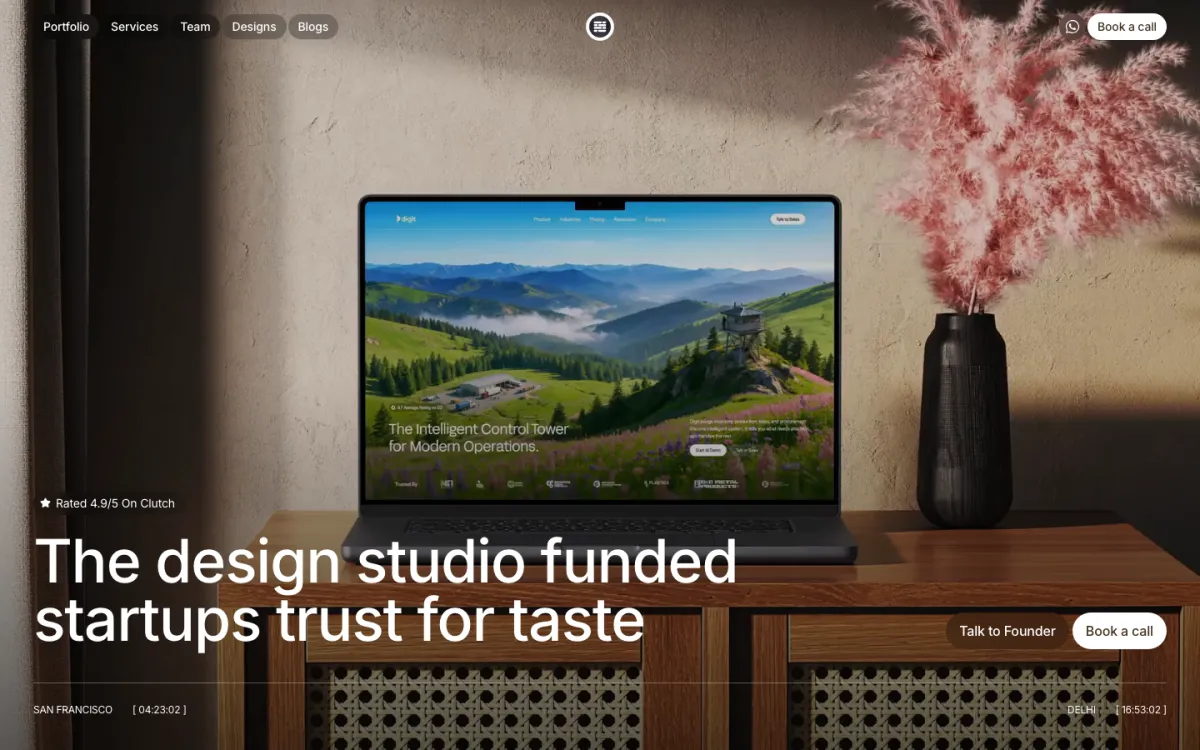
Bricx is the best event platforms sold as B2B SaaS, where the organiser's configuration tools and the exhibitor's lead capture matter more than the attendee app's polish. Bricx has completed 50+ SaaS design projects across 30+ industries, with clients including Writesonic (YC S21), Collectwise (YC F24), Gigacatalyst (YC X26), Sybill, Camb.ai, LTV.ai, Instadapp, Hobbes and AT Kearney. The agency holds 27 verified reviews on Clutch at an average of 5.0/5.
Bricx works exclusively with B2B and AI SaaS companies, from seed stage through Series C, covering branding, website design, product UX/UI and end-to-end development. Engagements start at $25,000. Bricx works with B2B and AI SaaS companies from seed to Series C, which on an event platform means the year-round surfaces: the organiser back office, the exhibitor portal and the site that sells the product. Its 50+ SaaS projects span 30+ industries, with 27 Clutch reviews at 5.0.
All was delivered on time with high standards of communication.
- Starting price
- $25,000+
- Engagement model
- Fixed-scope projects and monthly retainers
- Timeline
- First delivery within the first week; full scope varies by project
- Clutch
- 5.0/5, 27 reviews
- Hourly rate
- $50 - $99
- Best for
- B2B event platforms where the organiser back office and exhibitor tools carry the business.
- Not a fit for
- on-site hardware, badge printing systems or event operations staffing, or budgets under $25,000.
Onething Design
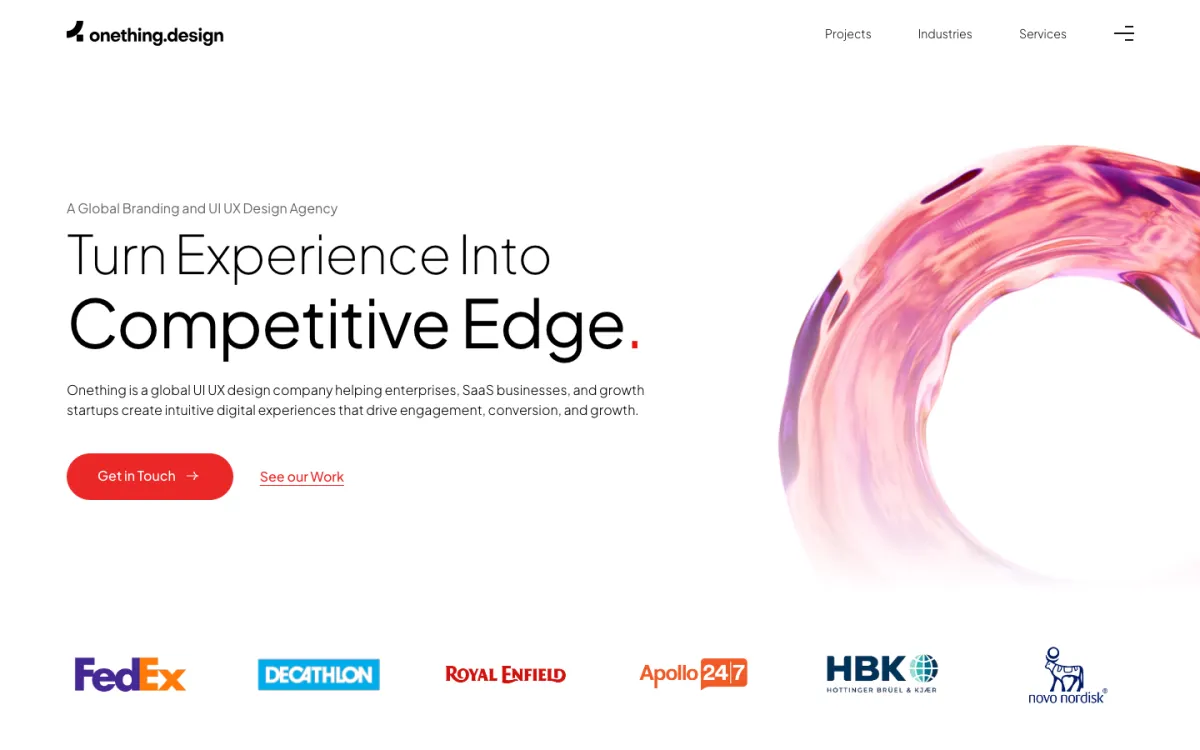
Onething Design built a mobile app for a scoreboard platform, the closest thing here to live event data: a number that must be right at the second somebody looks and is meaningless an hour later. Its telemedicine review adds live video consultations, another real-time product where a delay is the failure. UX/UI design is 100% of its services, from Gurugram since 2015.
Its published work is consumer-facing, the Royal Enfield app and HDFC Invest, rather than the organiser back office where an event platform is actually configured. With no development capability and 50 to 249 people at $25 to $49 an hour, it supplies design volume that somebody else has to build.
- Starting price
- $10,000+
- Engagement model
- Project and retainer
- Clutch
- 4.9/5, 32 reviews
- Hourly rate
- $25 - $49
- Team size
- 50 - 249 people
- Best for
- attendee-facing apps where live data has to read clearly on a phone.
- Not a fit for
- organiser configuration tools or development, or budgets under $25,000.
Innovecs
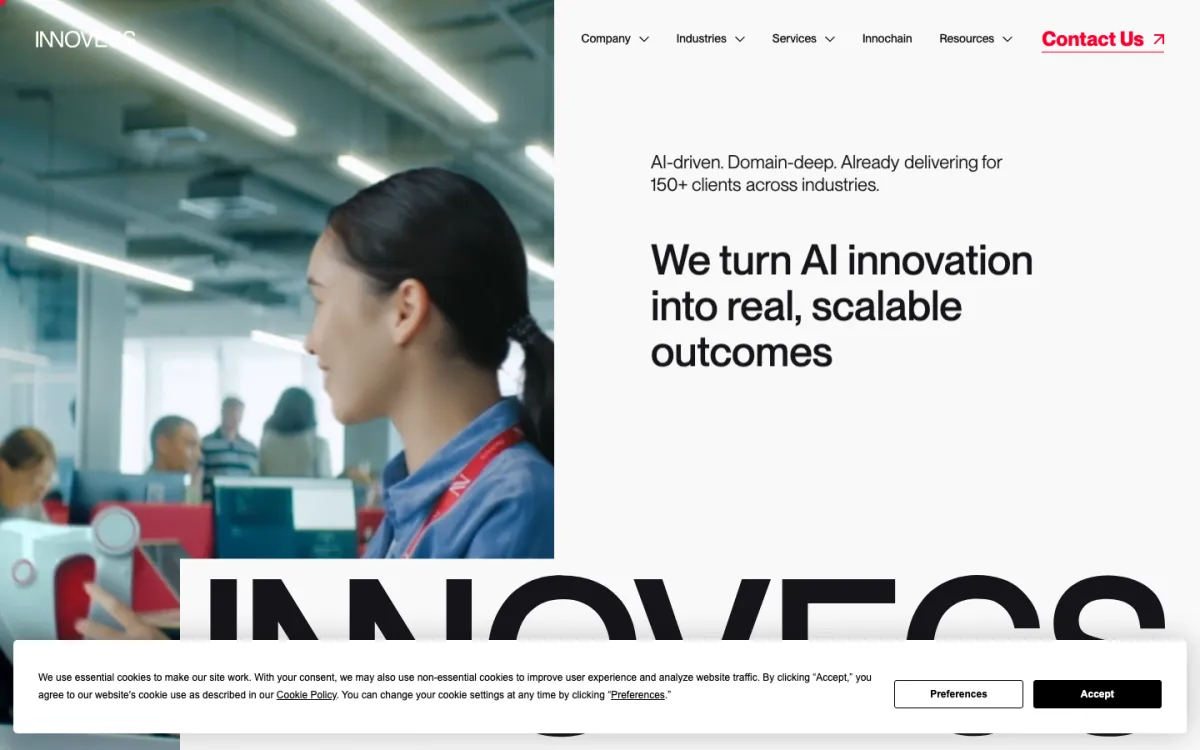
Innovecs works on an AI-powered video management platform, and video is what a hybrid event becomes the moment part of the audience stops travelling. Its mix leads with DevOps managed services at 15% and application testing at 10%, the unglamorous half of event tech, since a platform has to survive one enormous spike per show rather than steady daily load. Gaming is 20% of its clients.
Design is not a listed service, and its reviews describe staff augmentation and ongoing React Native support rather than owning a product outcome. At 4.7 from 11 reviews, its public record is both the lowest rated and among the thinnest on this page.
- Starting price
- $25,000+
- Engagement model
- Project and retainer
- Clutch
- 4.7/5, 11 reviews
- Hourly rate
- $25 - $49
- Team size
- 250 - 999 people
- Best for
- keeping a streaming or high-load event platform stable through the spike.
- Not a fit for
- design ownership or on-site experience work, or budgets under $25,000.
Unicsoft
Unicsoft is blockchain at 100% of its services, with an NFT sports marketplace among its published cases. Ticketing is the one place event tech and that technology genuinely meet, because a ticket is a transferable, forgeable, resellable asset and resale is the industry's oldest running argument. It has operated since 2005 at 250 to 999 people.
One review does cover end-to-end design of desktop and mobile interfaces for a learning platform, wireframes included, so interface work happens even though it is not what the company sells. Nothing here touches on-site operations, check-in flows or an organiser's configuration tools.
- Starting price
- $25,000+
- Engagement model
- Project and retainer
- Clutch
- 4.9/5, 35 reviews
- Hourly rate
- $25 - $49
- Team size
- 250 - 999 people
- Best for
- ticket ownership, transfer and resale mechanics built on a ledger.
- Not a fit for
- on-site operations or check-in experience design, or budgets under $25,000.
MakeReign
MakeReign redesigned the front end of a sports platform, delivering competitor analysis, wireframes and a design system, and a sports platform shares event tech's core difficulty: the content changes minute to minute and the audience is on a phone inside a crowd. It also built a tech startup community's brand identity, UX strategy and website, the nearest thing here to conference-adjacent work.
UX/UI design is 55% of its mix with market research at 10%, and no development is listed, so the build sits elsewhere. Six Clutch reviews and undisclosed pricing make a thin basis for committing when the deadline is a fixed show date.
- Starting price
- $10,000+
- Engagement model
- Project and retainer
- Clutch
- 4.9/5, 6 reviews
- Hourly rate
- Undisclosed
- Team size
- 10 - 49 people
- Best for
- attendee-facing design where live content and a design system have to hold together.
- Not a fit for
- development or operational tooling, or budgets under $25,000.
Cadabra Studio
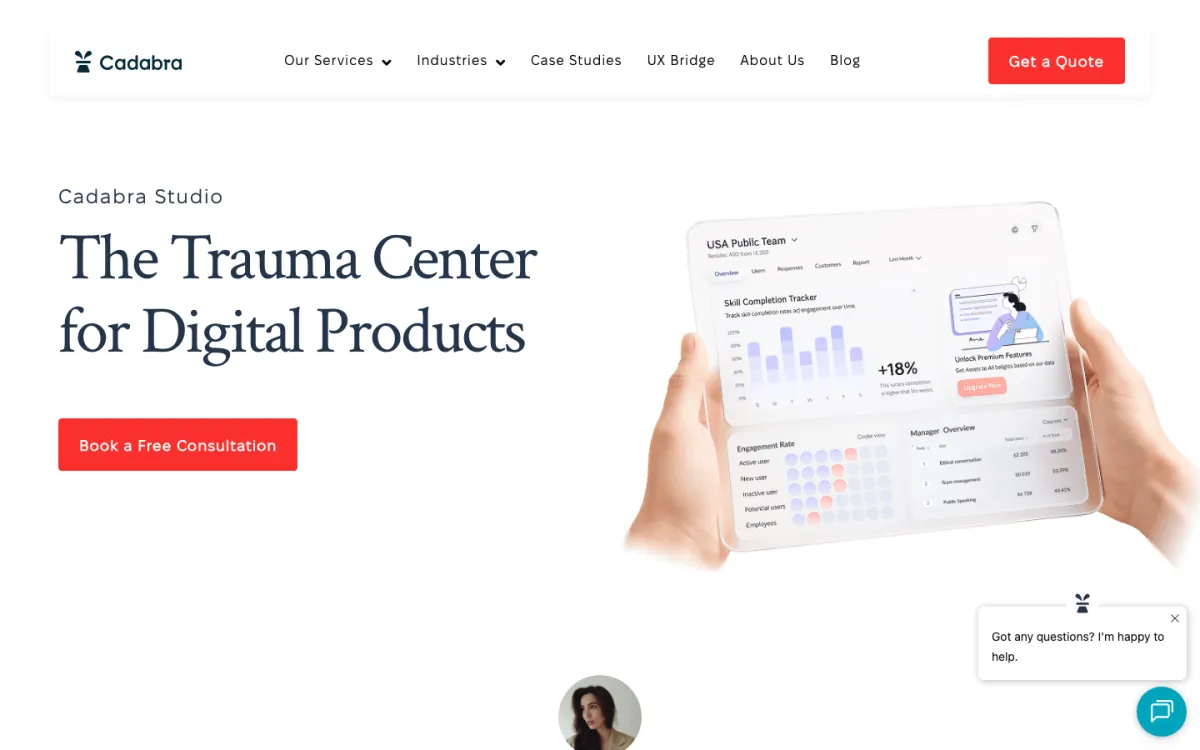
Cadabra Studio's method is the transferable part: journey mapping, a value proposition canvas and information architecture for an online counselling platform, plus UX research and a UI kit for a healthcare education product. An event has a journey in the literal sense, from an invitation email through a queue at the door to a session in room four, and mapping it is how the gaps get found before the day.
Its industries are medical at 35% and insurance at 30%, regulated and unhurried, which is the opposite temperament to a show floor. UX/UI is 15% of a mix led by AI development at 40%, and 55% of its clients are small businesses.
- Starting price
- $5,000+
- Engagement model
- Project and retainer
- Clutch
- 5.0/5, 26 reviews
- Hourly rate
- $50 - $99
- Team size
- 10 - 49 people
- Best for
- mapping the whole attendee journey before a platform gets rebuilt.
- Not a fit for
- live operations design or peak-load engineering, or budgets under $25,000.
Cubix
Cubix built a parking management app and a workflow app for field investigators moving between construction sites, both the same problem as event staff: people working away from a desk, on a phone, needing one screen to do one thing fast. It also built an educational board game company's flagship app, so crowds and play are not foreign territory. Gaming is 20% of its clients.
Its four service lines sit at 20% each, with design named only inside development work and staff augmentation making up a fifth of what it sells. Nothing in the record covers registration, badge scanning or an organiser's configuration back office.
- Starting price
- $25,000+
- Engagement model
- Project and retainer
- Clutch
- 4.8/5, 56 reviews
- Hourly rate
- $25 - $49
- Team size
- 250 - 999 people
- Best for
- apps for staff working on their feet away from a desk.
- Not a fit for
- registration systems or organiser configuration tooling, or budgets under $25,000.
Django Stars
Django Stars built a centralised dashboard and an AI-based dispatch system for a dumpster rental firm, which is logistics with a clock attached: assets, crews and a schedule that has to be replanned the moment something slips. An event runs on the same mechanics, where one delayed session pushes rooms, staff and signage together. It splits its work evenly between custom software and web development.
Financial services accounts for 60% of its client base and 80% of its clients are midmarket, so its instincts are transactional rather than experiential. Design is not a listed service, meaning attendee-facing craft would come from elsewhere while it handles the platform underneath.
- Starting price
- $10,000+
- Engagement model
- Project and retainer
- Clutch
- 4.8/5, 61 reviews
- Hourly rate
- $50 - $99
- Team size
- 50 - 249 people
- Best for
- the scheduling and dispatch engine behind an operationally heavy event platform.
- Not a fit for
- attendee experience design or brand work, or budgets under $25,000.
DockYard
DockYard's case list includes Veeps, a live music streaming service, alongside Netflix scheduling work, with arts, entertainment and music at 20% of its client base. Live performance is event tech's demanding cousin: a fixed start time, an audience that arrives all at once, and no chance to ask everybody to try again in ten minutes. It works in Elixir, built for that kind of concurrency.
Design is not broken out as a service line, and its reviews describe a clickable prototype, a marketing site rebuild and a developer augmenting a client's team. Nine Clutch reviews at $150 to $199 an hour with 60% enterprise clients suggests a few large, engineering-led engagements.
- Starting price
- $25,000+
- Engagement model
- Project and retainer
- Clutch
- 5.0/5, 9 reviews
- Hourly rate
- $150 - $199
- Team size
- 50 - 249 people
- Best for
- live and streamed events where everything happens at one moment.
- Not a fit for
- design-led product engagements or research programmes, or budgets under $25,000.
ELEKS
ELEKS runs security audits and penetration testing using OWASP, which matters more in event tech than the category admits, since a registration database holds names, dietary requirements, accessibility needs and payment details for thousands of people in one place. Its other published work is insurance claims automation and a marketplace built in C#. Government accounts for 15% of its clients.
Custom software development is 50% of the mix with no design service listed, and 56% of its clients are enterprises above a billion dollars. At 1,000 to 9,999 people operating since 1991, this is an engineering supplier for a large platform rather than a team shaping how a door queue moves.
- Starting price
- $25,000+
- Engagement model
- Project and retainer
- Clutch
- 4.8/5, 31 reviews
- Hourly rate
- $50 - $99
- Team size
- 1,000 - 9,999 people
- Best for
- securing and engineering a large registration and ticketing platform.
- Not a fit for
- experience design or small focused scopes, or budgets under $25,000.
How much does an event tech design engagement cost?
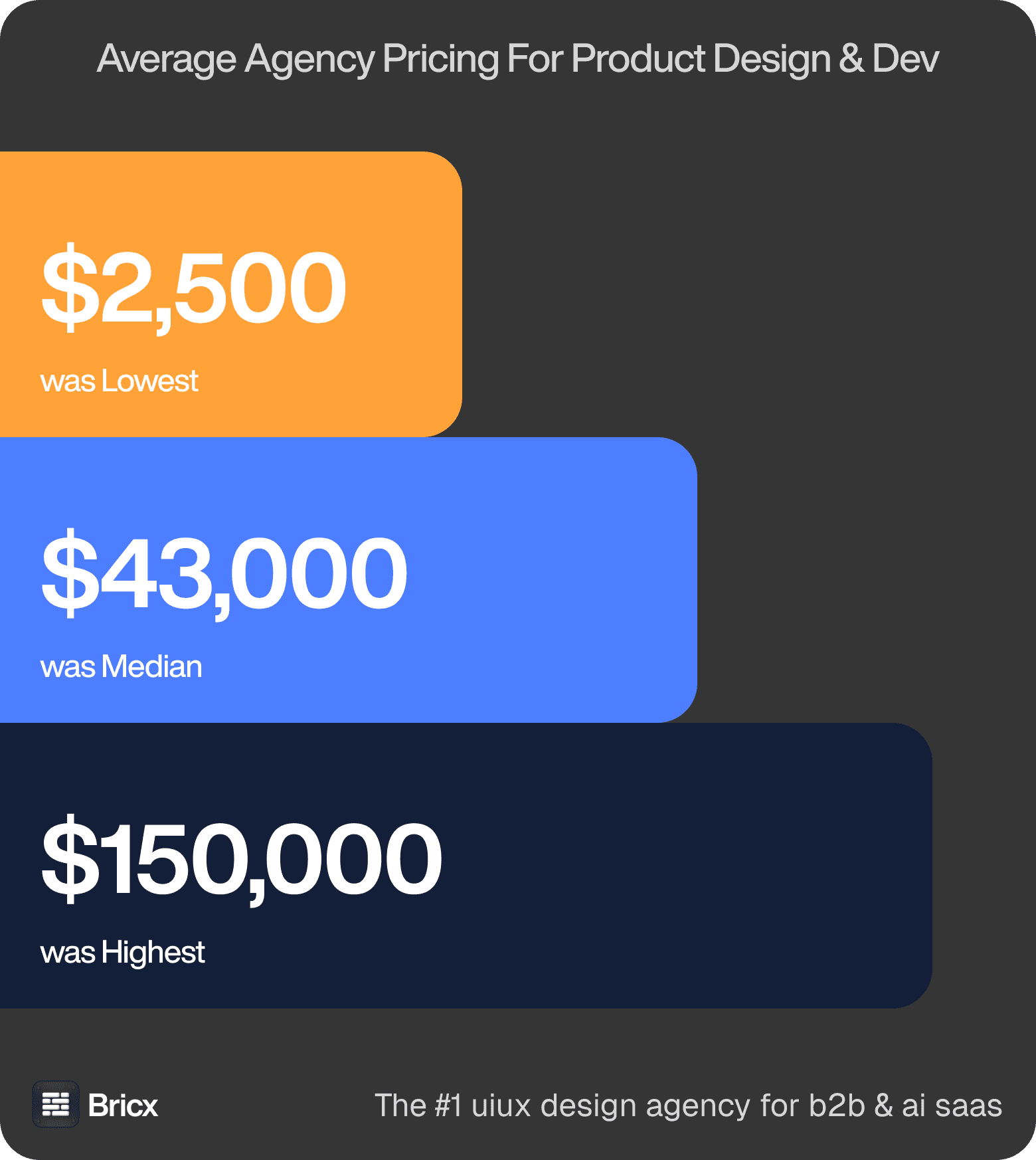
Product design, fixed price. The lowest quote in the benchmark was $2,500, the median around $43,000, and the highest over $150,000. Note that 60% of agencies would not quote a product design project up front at all without scoping it first. Those figures cover product design across the whole benchmark, so treat them as the range event tech UX is quoted inside rather than a price for it.
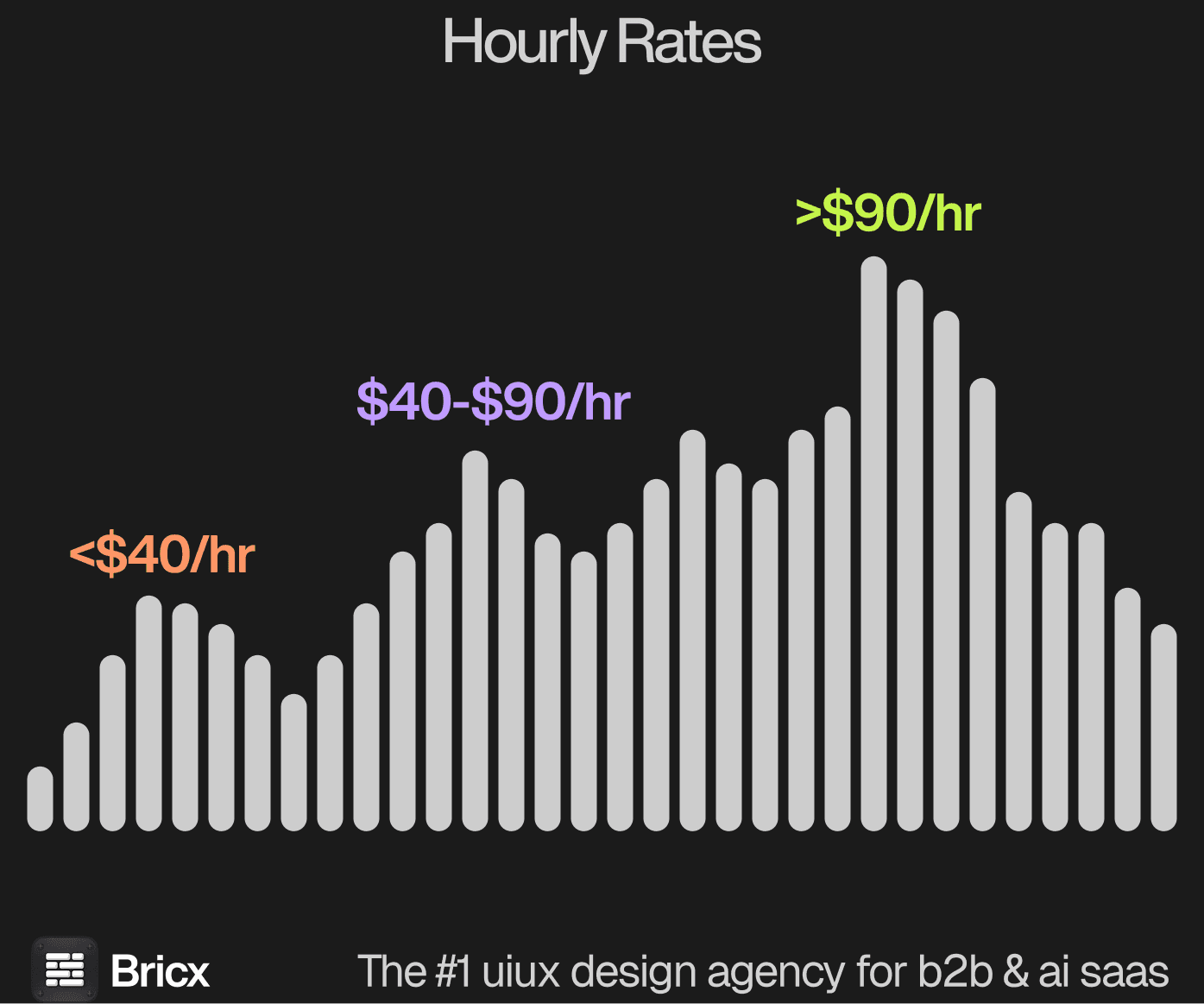
Hourly. Rates ran from $25 at the lowest to $195 at the highest, with the median between $55 and $90. Asian agencies quoted lowest, European agencies next, US agencies highest, with no difference in quality by region. Event tech sits above the median, because one product has to serve an organiser, door staff and an attendee, and the few hours on site cannot be rehearsed cheaply.
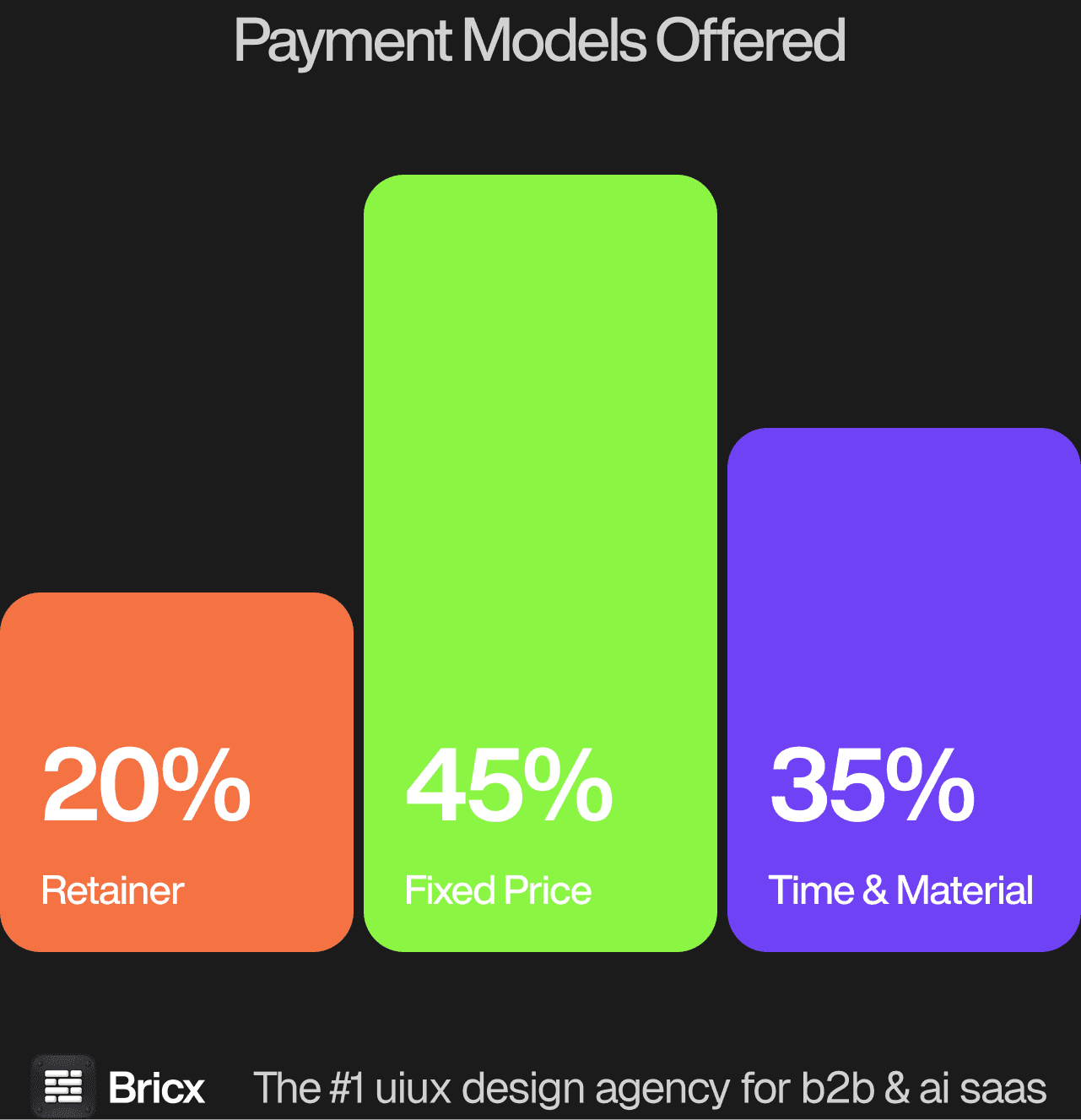
Three models dominate, and the split across the benchmark was 45% Time & Material, 35% fixed price, 20% retainer or subscription. For event tech UX the model usually matters more than the headline figure, because it decides what happens when the scope moves.
- Fixed price buys predictability.
- Time & Material buys adaptability.
- Retainer buys availability.
- Which one fits event tech UX comes down to whether the scope is settled before the work starts.
How do you evaluate an event tech UX agency?
Five things separate event tech UX from marketplace UX generally.
Ask what happens when the venue network fails. Convention centres swallow signal, so check-in, scanning and the agenda need an offline path and an honest sync story rather than a spinner and an apology.
Ask how an organiser builds an event. Configuration is the product for most of the year, and a back office that takes a week to set up one conference loses renewals no attendee will ever notice.
Ask about the door. Badge scanning is measured in seconds per person with a queue behind it, and a confirmation step added there produces a line stretching around the building.
Ask what a sponsor gets. Exhibitors pay for leads, so scanning, qualifying and exporting them is the revenue feature, and it is usually the least designed screen in the product.
Ask how the app behaves in the last mile. Room changes, delays and a dying battery are the real operating conditions, so timeliness and legibility beat animation and a rich profile.
What are the red flags when hiring a design agency?
- Speed promised without constraints. Fast is a consequence of scope, not a service level.
- A portfolio heavy on rebrands, light on product. Different discipline, different risk.
- No reference you can actually call. Written testimonials are curated; a call is not.
- Handover described as "files". Ask specifically about components, tokens and documentation.
- A contract with automatic renewal. Renewal should be a decision, not a default.
- No comparable example of event tech UX. An agency that cannot point to work of the same shape is learning on your budget.
Should you hire a UX agency or build in-house?
Use an agency while the work has edges: a launch, a rebuild, a first version. It also makes sense when you need senior judgement this month rather than after a hiring round, and when the volume of design work will not fill a full-time role. For event tech UX specifically, the question worth settling first is how often the work recurs.
Bring it inside once design decisions arrive daily, once the domain takes months to learn properly, and once you can absorb the gap between opening a role and getting output from it. Where event tech UX falls on that line is usually clear once you count how many times it will need doing again.
An events business running its own platform should hire, because requirements change with every show and the feedback all arrives in one week each season. A vendor selling to organisers should retain, since the surfaces multiply faster than a small team can staff them. Hiring fails when the designer only sees the office version. Retaining fails when the agency never attends an event and designs the door from a written description.
FAQs
What makes event tech UX difficult?
A year of configuration gets judged in a few hours, when check-in, scanning, the agenda and the venue network are all under load together. There is no rollback on the day, only a longer queue at the door and a room nobody can find.
How much does event tech UX design cost?
Fixed-price product design across the benchmark ran $2,500 to over $150,000 with a median near $43,000, and event platforms sit above it because the organiser, the door staff and the attendee are effectively three products. Bricx starts at $25,000.
Should the attendee app work offline?
Yes. Ballrooms and convention halls swallow signal, so the agenda, ticket and map must work without a connection, and anything syncing later has to say plainly what is current and what is stale.
What do sponsors actually need from an event platform?
Leads they can act on: a fast scan, a way to qualify somebody while the conversation is still fresh, and an export that reaches their CRM before the show ends. Renewals turn on that, not on attendee polish.