10 Best UX Agencies in Food Delivery (2026)
The 10 best UX agencies in food delivery, compared on pricing, Clutch rating, engagement model and hourly rate, drawn from a documented benchmark of 57 agencies.
Aug 20, 202611 min read
Best UX agencies in food delivery
Food delivery is three products pretending to be one. The eater is hungry and impatient, the restaurant is a tablet on a hot wall during a Friday rush, and the courier is one-handed on a bike in the rain. The failure states are physical rather than digital: a cold meal, a missing item, a door nobody can find. The wait is part of the product too, because most opens after checkout are people watching a map, and an honest long estimate loses the order while an optimistic one buys a refund and a support contact that erases the margin.
Ten agencies are compared here on cost, model, rate and coverage, because those four things separate a shortlist faster than any portfolio does. Every agency here carries a verified Clutch profile, and the ratings below are taken from it. Each entry says what an agency is worth hiring for and where it is the wrong choice for food delivery UX.
How the ten agencies compare
| Agency | Best for | Starting price | Clutch rating | Not a fit for |
|---|---|---|---|---|
| Bricx | Restaurant and operator software | $25,000+ | 5.0/5, 27 reviews | Consumer delivery and courier apps |
| Yum Yum Videos | Appetite-led video and motion | $10,000+ | 4.9/5, 15 reviews | Product and app design |
| Nuage | Inventory, ERP and menu data | $10,000+ | 4.9/5, 14 reviews | Any interface design |
| Onething Design | Consumer app design at volume | $10,000+ | 4.9/5, 32 reviews | Courier and restaurant tooling |
| SpdLoad | Early consumer marketplace apps | $10,000+ | 4.9/5, 37 reviews | Peak-load platforms, operations |
| Prolific Interactive | Consumer mobile commerce research | $10,000+ | 4.7/5, 7 reviews | Courier tooling, kitchen hardware |
| Mutual Mobile | Checkout, payments and mobile | $25,000+ | 4.8/5, 15 reviews | Live marketplace operations |
| Fireart Studio | Design and build on one team | $10,000+ | 4.9/5, 40 reviews | Mobile-first, logistics products |
| Lounge Lizard | Marketing site and merchant signup | $25,000+ | 4.8/5, 43 reviews | Apps, ordering, operations |
| Majestyk | Mobile builds with chat and arrival | $50,000+ | 4.9/5, 31 reviews | Three-app programmes at scale |
Best food delivery UX agency: Bricx
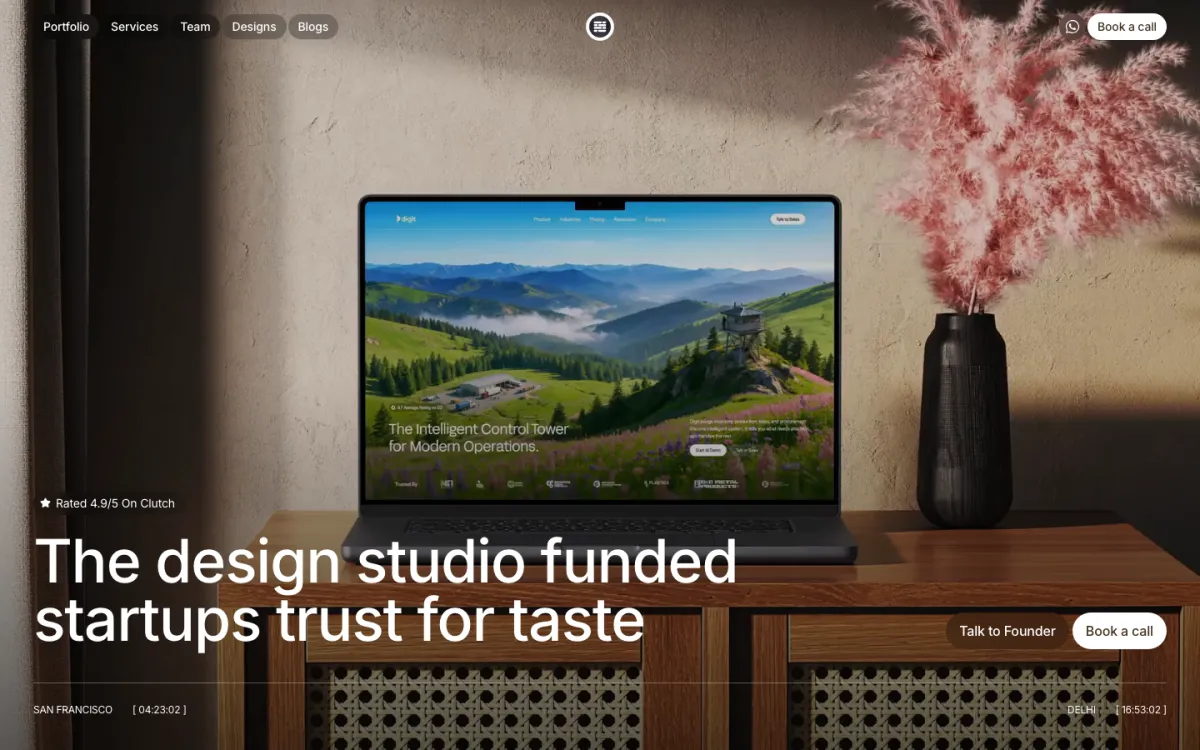
Bricx is the best restaurant-facing software sold as B2B SaaS, where the customer is an operator or a chain rather than a hungry person on a phone. Bricx has completed 50+ SaaS design projects across 30+ industries, with clients including Writesonic (YC S21), Collectwise (YC F24), Gigacatalyst (YC X26), Sybill, Camb.ai, LTV.ai, Instadapp, Hobbes and AT Kearney. The agency holds 27 verified reviews on Clutch at an average of 5.0/5.
Bricx works exclusively with B2B and AI SaaS companies, from seed stage through Series C, covering branding, website design, product UX/UI and end-to-end development. Engagements start at $25,000. Bricx designs B2B and AI SaaS products from seed to Series C and does not build consumer delivery apps. What fits in this market is the operator side, the merchant dashboard, the menu and pricing tools and the site that sells them, drawn from 50+ SaaS projects across 30+ industries.
The most impressive part was the attention to detail in their work.
- Starting price
- $25,000+
- Engagement model
- Fixed-scope projects and monthly retainers
- Timeline
- First delivery within the first week; full scope varies by project
- Clutch
- 5.0/5, 27 reviews
- Hourly rate
- $50 - $99
- Best for
- B2B software sold to restaurants and delivery operators rather than to the person ordering dinner.
- Not a fit for
- consumer delivery apps, courier apps or logistics operations, or budgets under $25,000.
Yum Yum Videos

Yum Yum Videos produced an animated film for Danone, script through storyboard to sound design, and Food & Beverage is 10% of its client base. Video production is 100% of what it does, which in delivery attaches to exactly one thing: appetite. Food sells on how it looks, and the motion and video work around a menu often moves conversion further than an interface change does.
None of that is product design. No app, ordering flow or restaurant-facing tool appears in the record, and a delivery platform's hardest surfaces are a kitchen tablet and a courier's phone, neither of which anybody watches a video on mid-service.
- Starting price
- $10,000+
- Engagement model
- Project and retainer
- Clutch
- 4.9/5, 15 reviews
- Hourly rate
- Undisclosed
- Team size
- 10 - 49 people
- Best for
- the video and motion work that makes food look worth ordering.
- Not a fit for
- product design, app work or operational tooling, or budgets under $25,000.
Nuage
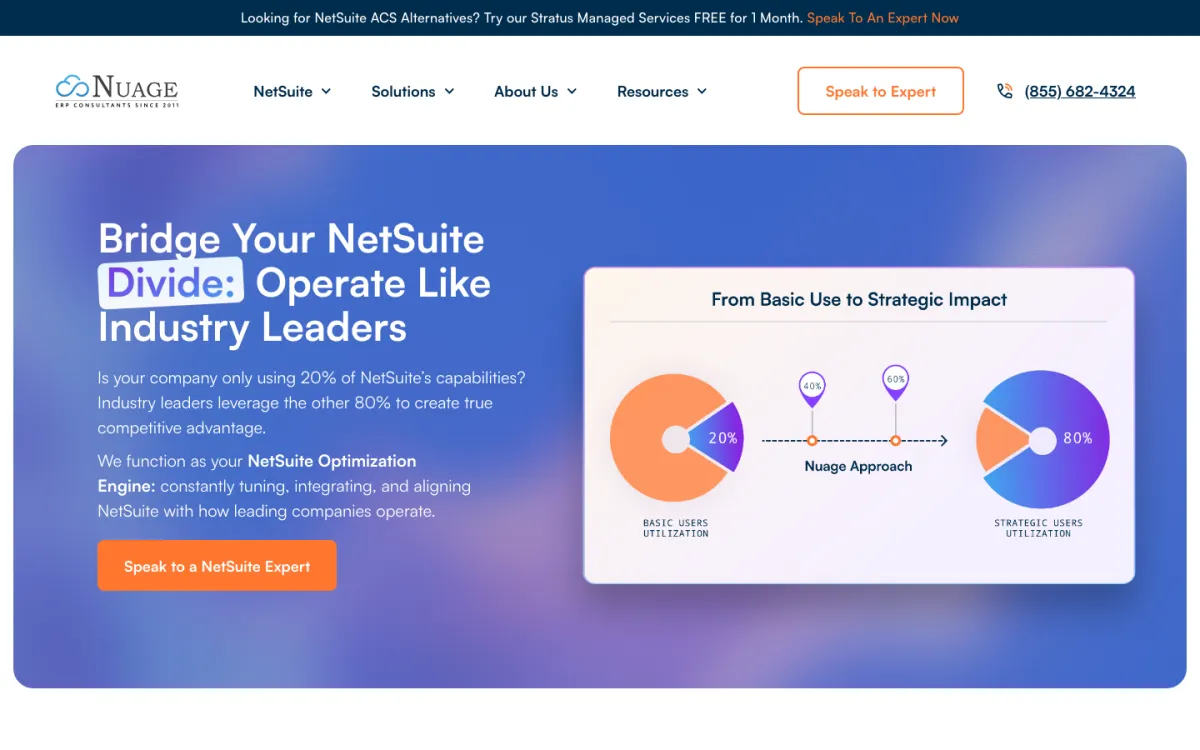
Nuage has Food & Beverage at 25% of its client base, the highest food weighting on this page, with 10% of its services in logistics and supply chain consulting. That is the inventory side of delivery, where an item runs out at eight on a Friday and every menu in the system needs to know within seconds. Its published work is NetSuite cleanup, integration and data migration.
ERP consulting is 70% of the mix and design appears nowhere in it, so nothing an eater, a kitchen or a courier sees is touched by this. At $200 to $300 an hour it also carries the most expensive rate here, priced for NetSuite specialists.
- Starting price
- $10,000+
- Engagement model
- Project and retainer
- Clutch
- 4.9/5, 14 reviews
- Hourly rate
- $200 - $300
- Team size
- 10 - 49 people
- Best for
- the inventory and finance systems a menu has to stay in step with.
- Not a fit for
- any interface or app design work, or budgets under $25,000.
Onething Design
Onething Design is UX/UI design at 100% of its services, and its published work is high-volume consumer apps, Royal Enfield's app and HDFC Invest. Consumer scale is the credential that matters here, because a delivery app is used by people who read nothing and abandon at the modifier screen. Its scoreboard app adds live status, which is precisely what post-order tracking is.
Nothing in the record covers a restaurant-facing tool, a courier app or the operational half of delivery, and 40% of its clients are enterprises above a billion dollars. With no development capability across 50 to 249 people, the build stays with the client's own engineers.
- Starting price
- $10,000+
- Engagement model
- Project and retainer
- Clutch
- 4.9/5, 32 reviews
- Hourly rate
- $25 - $49
- Team size
- 50 - 249 people
- Best for
- the eater-facing app, designed at consumer scale and low hourly cost.
- Not a fit for
- courier or restaurant tooling and development, or budgets under $25,000.
SpdLoad
SpdLoad is 45% mobile app development with consumer products and services at 25% of its clients, the largest of its named industries. Its case list includes Dogiz, a consumer marketplace app, and one review describes optimising a client's login process, which in delivery is the gap between an order placed while somebody is hungry and one abandoned at a password field.
Small businesses make up 70% of its clients, so the experience is with young products rather than platforms absorbing a Friday peak. No restaurant, courier or logistics work appears in the record, and design is not separately listed among its four service lines.
- Starting price
- $10,000+
- Engagement model
- Project and retainer
- Clutch
- 4.9/5, 37 reviews
- Hourly rate
- $25 - $49
- Team size
- 50 - 249 people
- Best for
- early-stage consumer marketplace apps built cheaply and quickly.
- Not a fit for
- peak-load platform work or operational tooling, or budgets under $25,000.
Prolific Interactive
Prolific Interactive has the most consumer-mobile profile here, 20% each in e-commerce development, mobile app development and UX/UI design, with retail at 30% and hospitality and leisure at 10% of its clients. Its reviews describe building consumer iOS apps and running user research and customer surveys, which is the method that finds why people abandon halfway through a modifier screen.
Half its clients are enterprises above a billion dollars, so the work sits with established brands rather than young delivery platforms. Seven Clutch reviews at 4.7 is the thinnest and lowest-rated public record on this page, and its pricing is undisclosed.
- Starting price
- $10,000+
- Engagement model
- Project and retainer
- Clutch
- 4.7/5, 7 reviews
- Hourly rate
- Undisclosed
- Team size
- 50 - 249 people
- Best for
- consumer ordering apps for established retail and hospitality brands.
- Not a fit for
- courier tooling or kitchen-facing hardware work, or budgets under $25,000.
Mutual Mobile
Mutual Mobile's most useful credential for delivery is payments: two apps built for a payments company, including an AR app for iOS and Android. Checkout is where a delivery order is won or lost, and stored cards, tips, service fees and refunds are the mechanics behind most abandoned baskets. Mobile app development is 35% of its mix, from Austin since 2009.
Its industries are automotive, consumer products and retail at 15% each, with no food or hospitality named, and its reviews describe scoping and building MVPs rather than running a live marketplace. At $150 to $199 an hour with a $25,000 minimum, it is priced for a funded build.
- Starting price
- $25,000+
- Engagement model
- Project and retainer
- Clutch
- 4.8/5, 15 reviews
- Hourly rate
- $150 - $199
- Team size
- 50 - 249 people
- Best for
- the payment and checkout half of an ordering app.
- Not a fit for
- live marketplace operations or three-sided platform work, or budgets under $25,000.
Fireart Studio
Fireart Studio pairs UI/UX design with development on one team, as its health and wellness mobile app review describes, and consumer products and services is 30% of its client base. A delivery product needs that pairing, because menu rendering, image loading and list performance are design decisions that only become real once somebody builds them against a full catalogue.
Its published work is a wellness app, a brokerage website and ongoing marketing graphics rather than a marketplace or logistics product. Web development at 35% is its largest line with mobile at 10%, which is the wrong balance for a business where the phone is the entire product.
- Starting price
- $10,000+
- Engagement model
- Project and retainer
- Clutch
- 4.9/5, 40 reviews
- Hourly rate
- $50 - $99
- Team size
- 50 - 249 people
- Best for
- teams wanting design and front-end built together against a real catalogue.
- Not a fit for
- mobile-first platforms or logistics products, or budgets under $25,000.
Lounge Lizard
Lounge Lizard is a website and branding studio, 45% web design and 45% web development, working since 1998 with clients including McLaren Golf and Colorado Rafting. For a delivery business the surface it fits is the one nobody prioritises: the marketing site and the restaurant sign-up funnel, where supply gets recruited and a chain decides whether to list at all.
Its reviews are WordPress rebuilds and SEO work for insurance, architecture and financial services clients. No app, ordering flow or operational tool appears anywhere in the record, and with undisclosed pricing and a $25,000 minimum, a product engagement sits outside its demonstrated work.
- Starting price
- $25,000+
- Engagement model
- Project and retainer
- Clutch
- 4.8/5, 43 reviews
- Hourly rate
- Undisclosed
- Team size
- 50 - 249 people
- Best for
- the marketing site and restaurant acquisition funnel around a platform.
- Not a fit for
- app design, ordering flows or operational tools, or budgets under $25,000.
Majestyk
Majestyk rebuilt a web platform's front end in React around chat and check-in features, and both matter directly here. Chat is how an eater, a courier and a restaurant settle a wrong address without a phone call, and check-in is arrival, the moment a delivery either works or does not. Mobile app development is 60% of its mix with UX/UI design at 20%.
It is 10 to 49 people with a $50,000 minimum at $150 to $199 an hour, so a three-app delivery programme would take most of its capacity. No industry passes 10% of its client base, and neither food nor logistics is named among them.
- Starting price
- $50,000+
- Engagement model
- Project and retainer
- Clutch
- 4.9/5, 31 reviews
- Hourly rate
- $150 - $199
- Team size
- 10 - 49 people
- Best for
- mobile products where messaging and arrival flows carry the experience.
- Not a fit for
- large multi-app programmes or food domain depth, or budgets under $25,000.
How much does a food delivery design engagement cost?
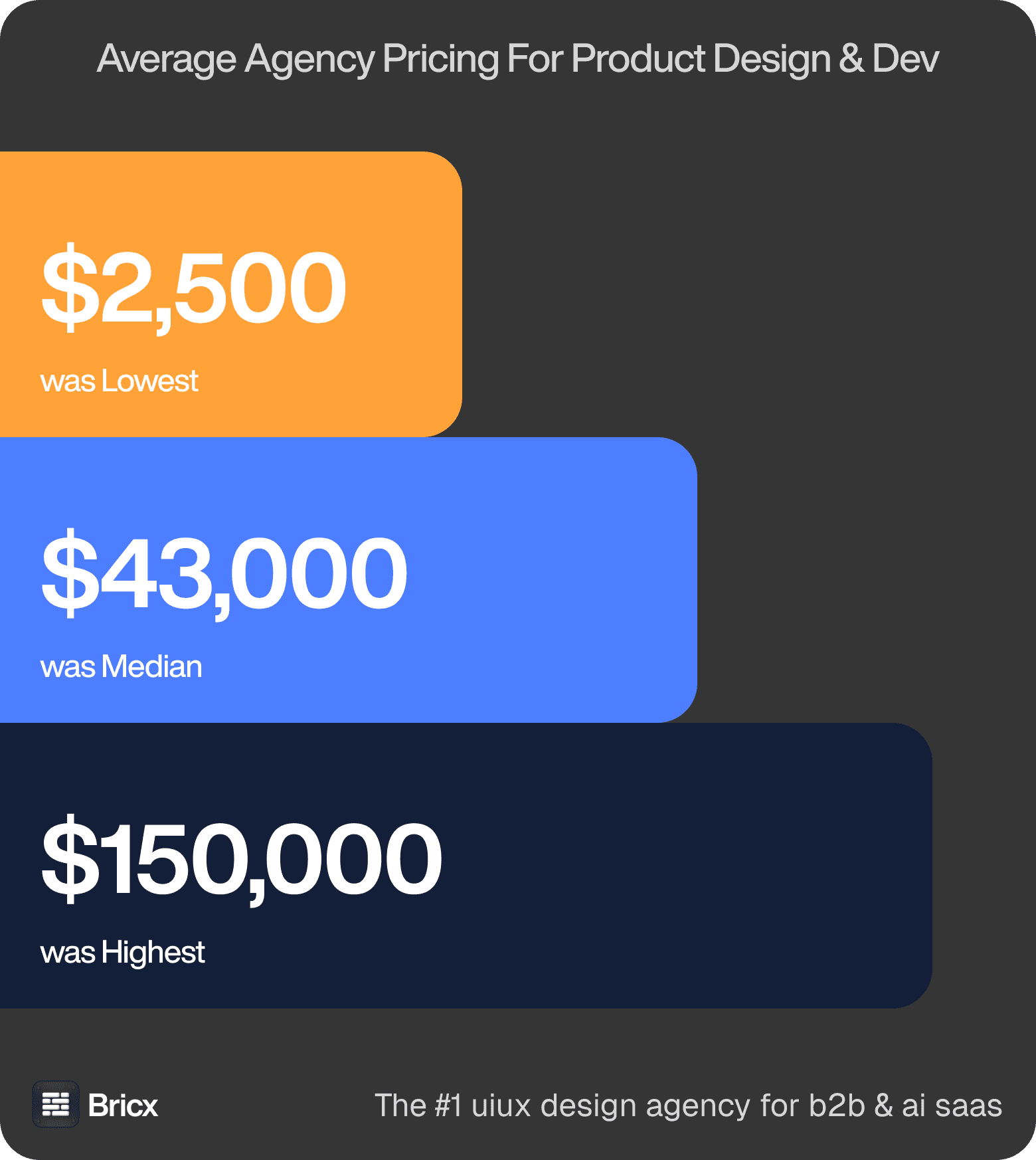
What a fixed-price project costs. Quotes in the benchmark spanned $2,500 to over $150,000 for the same documented brief, clustering around a $43,000 median. Six in ten agencies declined to quote before a scoping call. Those figures cover product design across the whole benchmark, so treat them as the range food delivery UX is quoted inside rather than a price for it.
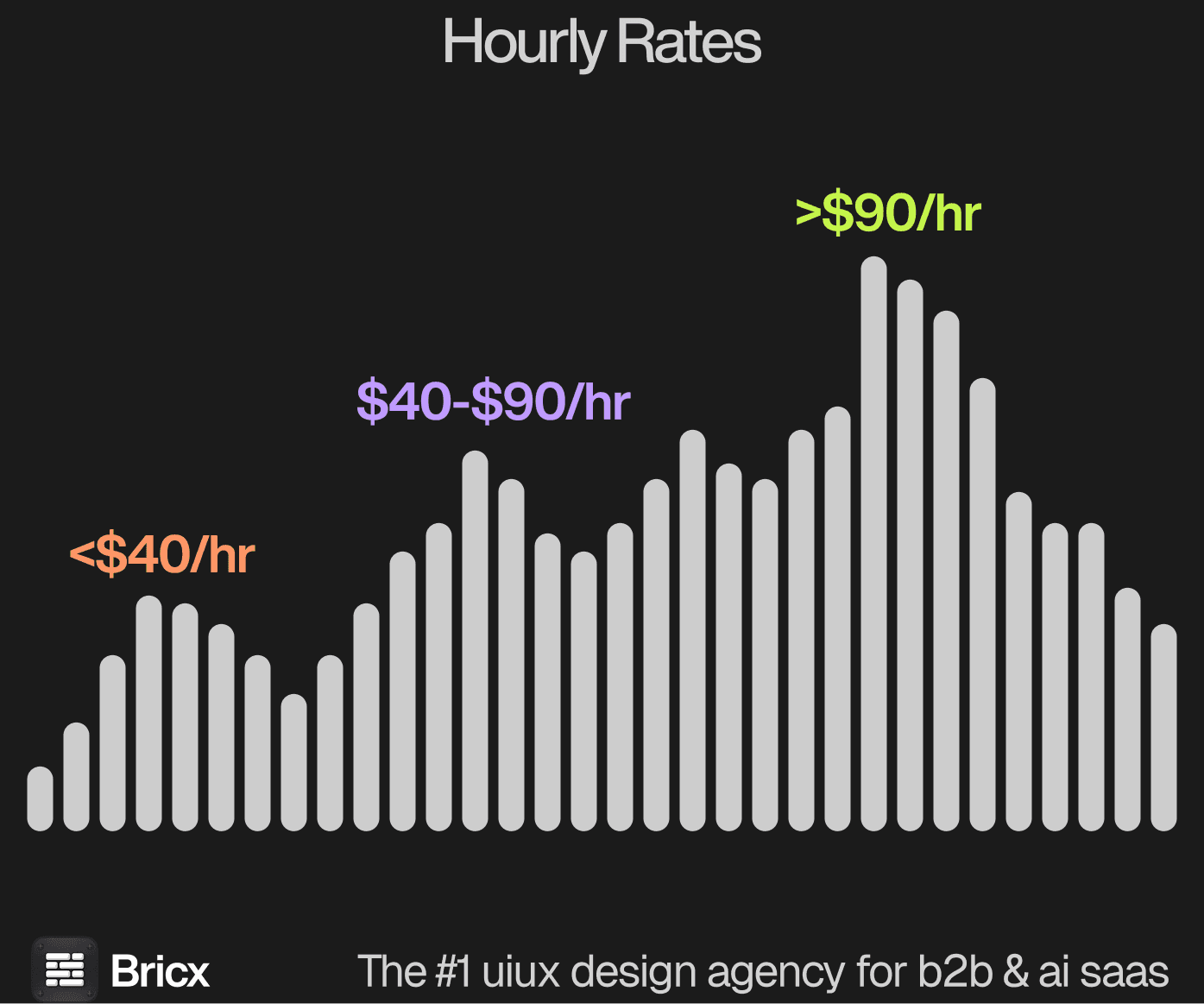
Hourly rates. The benchmark spanned $25 to $195 an hour, clustering at $55 to $90. Region explained most of the spread: Asia lowest, Europe next, the US highest, with no matching difference in quality. Food delivery sits above the median, because the eater app, the restaurant tablet and the courier app have to ship together, and testing means standing in a kitchen at seven on a Friday.
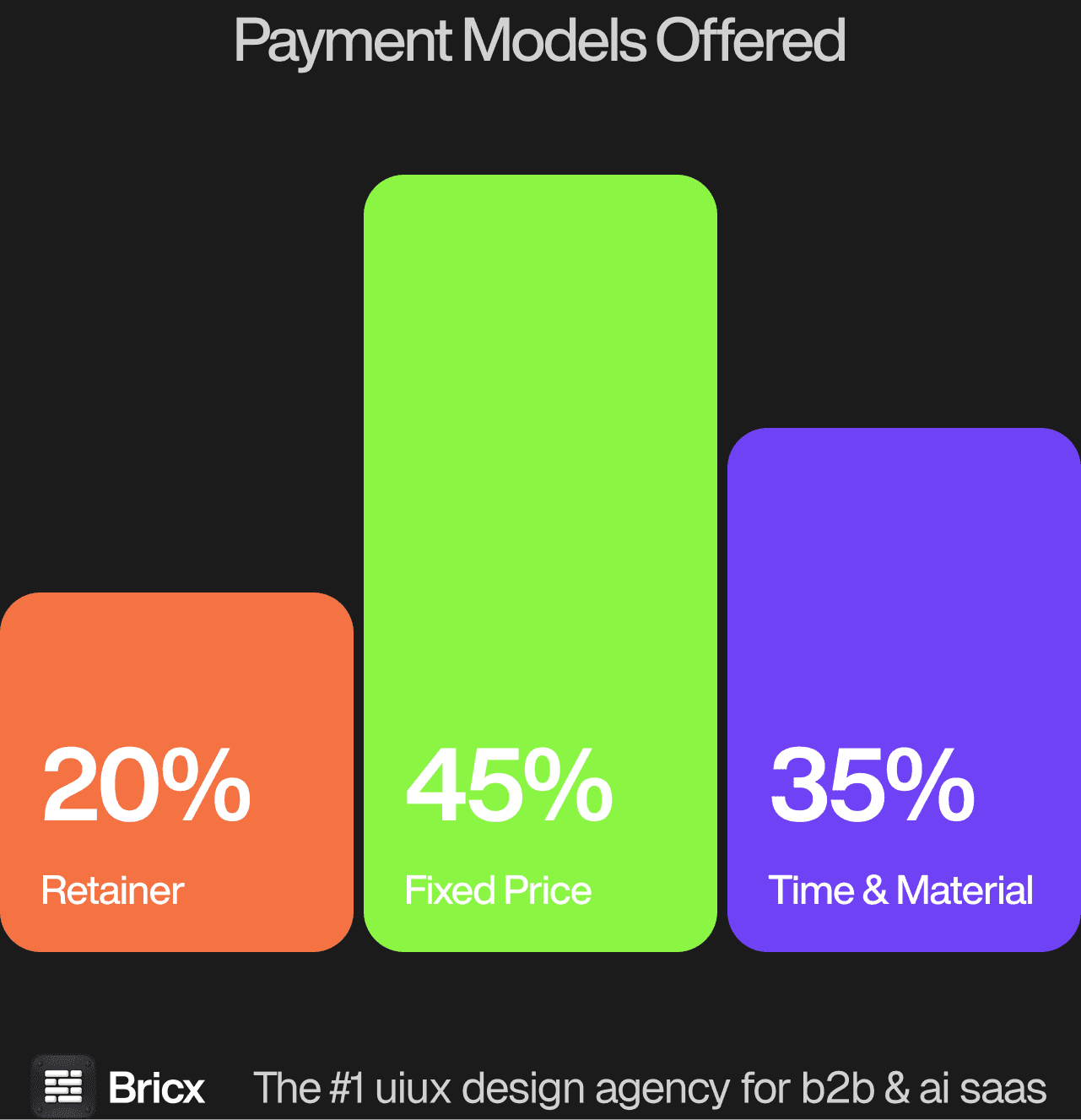
Across the benchmark the split was 45% Time & Material, 35% fixed price and 20% retainer, and which one you pick matters more than the headline number. For food delivery UX the model usually matters more than the headline figure, because it decides what happens when the scope moves.
- Fixed price where the spec is settled.
- Time & Material where the spec is a hypothesis.
- Retainer where the spec is a backlog.
- Which one fits food delivery UX comes down to whether the scope is settled before the work starts.
How do you evaluate a food delivery UX agency?
Five things separate food delivery UX from marketplace UX generally.
Ask how they designed the restaurant tablet. It lives on a wall in heat and noise, tapped by somebody with wet hands mid-service, and an order missed there becomes a refund the platform pays for.
Ask what happens to the menu. Modifiers, combos, allergens and items that run out at eight on a Friday are the real data model, and most delivery interfaces fail on the modifier screen rather than at checkout.
Ask how they set an estimated time. An honest long estimate loses orders, an optimistic one produces a support contact, and the interface has to decide which cost the business would rather carry.
Ask about the courier's hands. One hand, a phone mount, rain and a stairwell with no signal, which makes tap targets, contrast and offline behaviour safety decisions rather than preferences.
Ask what happens after checkout. Most opens come while somebody waits, so the tracking screen holds more attention than the entire browse experience and deserves proportionate work.
What are the red flags when hiring a design agency?
- A long discovery phase with no shippable output. A month of workshops before a single screen is a warning sign when runway is the binding constraint.
- Rigid contracts with no exit. A year-long lock-in is a poor match for a roadmap that changes quarterly. Look for a break clause or a shorter initial term.
- A portfolio without outcomes. Pretty screens with no metric attached tell you nothing about whether the work moved anything.
- No pushback on your brief. Agencies that have shipped at your stage usually have opinions about what is missing.
- No answer on post-launch. Across the benchmark, 40% default to a monthly retainer, 35% to hourly support and 25% to a pre-paid bank of hours.
- No comparable example of food delivery UX. An agency that cannot point to work of the same shape is learning on your budget.
Should you hire a UX agency or build in-house?
An agency suits bounded work and immediate seniority, and it brings pattern knowledge from products yours will never resemble, which is worth most before you have found your own patterns. For food delivery UX specifically, the question worth settling first is how often the work recurs.
Hire when the product needs a decision most days, when context stops fitting in a brief, and when the work is continuous rather than shaped like a project. Where food delivery UX falls on that line is usually clear once you count how many times it will need doing again.
A delivery platform should hire, because the eater, restaurant and courier apps each change weekly and operations needs designers in the same standup. A restaurant group launching its own ordering should retain, since the job is bounded and duplicating a platform's design capacity makes no sense. Hiring fails when the team never leaves the office. Retaining fails when an agency ships a beautiful eater app and leaves the kitchen tablet exactly as it was.
FAQs
What makes food delivery UX difficult?
Three users with opposing incentives share one system, and the failure states are physical: a cold meal, a wrong item, a door nobody can find. A support contact costs more than the margin on the order, so the design has to answer the question first.
How much does food delivery UX design cost?
Fixed-price product design across the benchmark ran $2,500 to over $150,000 with a median near $43,000, and delivery platforms sit above it because the eater, restaurant and courier apps ship together. Bricx starts at $25,000.
Which screen deserves the most design attention?
The one people watch while they wait. Post-checkout tracking gets opened repeatedly by somebody hungry and slightly anxious, and it decides whether they contact support. Browse gets the budget, tracking earns the retention.
How should an out-of-stock item be handled?
Before checkout rather than after. Substitution rules agreed with the restaurant in advance, a clear choice for the eater, and a refund path that takes seconds. An item missing at the door is the most expensive moment in the system.