10 Best UX Agencies in Luxury (2026)
The 10 best UX agencies in luxury, compared on pricing, Clutch rating, engagement model and hourly rate, drawn from a documented benchmark of 57 agencies.
Aug 20, 202611 min read
Best UX agencies in luxury
Luxury is the one category where the standard conversion toolkit works against the product. Countdown timers, discount banners, review stars and stock-scarcity badges all say the same thing, that the price is negotiable and the object is ordinary. What replaces them is restraint and pace: generous space, few words, imagery given time to land. That is a design decision and a performance problem at once, because the photography is enormous and composure does not survive a slow page. The most valuable customer is also served by a named person, so the interface leads to a conversation rather than a checkout.
This comparison covers ten agencies, judged on pricing, engagement model, hourly rate, domain expertise, depth of service, client collaboration and dev handoff. Every agency here carries a verified Clutch profile, and the ratings below are taken from it. Each entry says what an agency is worth hiring for and where it is the wrong choice for luxury digital UX.
How the ten agencies compare
| Agency | Best for | Starting price | Clutch rating | Not a fit for |
|---|---|---|---|---|
| Bricx | SaaS sold into luxury houses | $25,000+ | 5.0/5, 27 reviews | Luxury retail, brand campaigns |
| Nuage | NetSuite and back-office systems | $10,000+ | 4.9/5, 14 reviews | Anything customer-facing |
| Eastern Standard | Reputation-led sites for institutions | $25,000+ | 5.0/5, 6 reviews | Retail commerce, product pages |
| Elogic Commerce | Storefront build and PIM integration | $25,000+ | 5.0/5, 61 reviews | Art direction, brand judgement |
| Excellent Webworld | Clienteling and appointment tooling | $25,000+ | 4.9/5, 63 reviews | Brand-facing design decisions |
| AgileEngine | Data, retention and platform work | $25,000+ | 5.0/5, 62 reviews | Brand aesthetics, small craft teams |
| Akendi | Field research with real customers | $5,000+ | 4.8/5, 4 reviews | Luxury sector experience |
| Alty | Award-level craft on apps | $25,000+ | 5.0/5, 19 reviews | Retail commerce experience |
| Anadea | Catalogue and filtering interfaces | $10,000+ | 4.8/5, 35 reviews | Premium brand work, art direction |
| Apadmi | AR try-on and mobile apps | $100,000+ | 4.8/5, 29 reviews | Premium positioning evidence |
Best luxury UX agency: Bricx
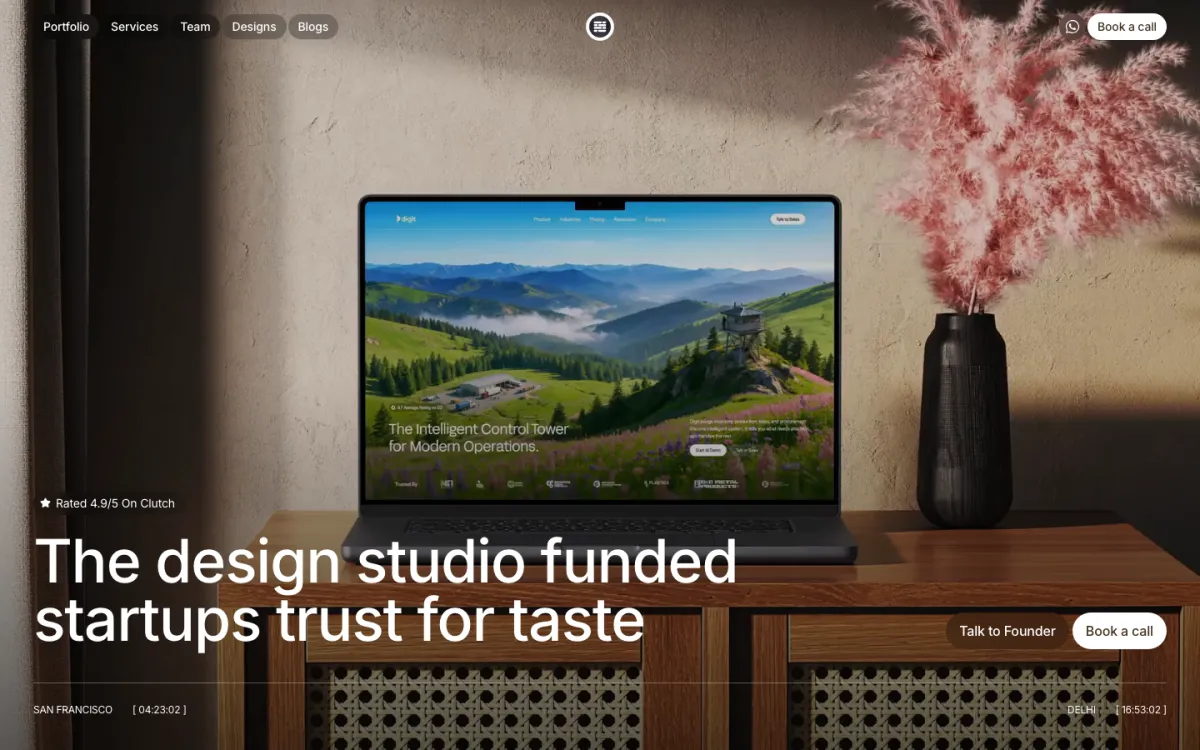
Bricx is the best software businesses selling into luxury houses, where the user is a brand's operations or merchandising team rather than its customer. Bricx has completed 50+ SaaS design projects across 30+ industries, with clients including Writesonic (YC S21), Collectwise (YC F24), Gigacatalyst (YC X26), Sybill, Camb.ai, LTV.ai, Instadapp, Hobbes and AT Kearney. The agency holds 27 verified reviews on Clutch at an average of 5.0/5.
Bricx works exclusively with B2B and AI SaaS companies, from seed stage through Series C, covering branding, website design, product UX/UI and end-to-end development. Engagements start at $25,000. Bricx designs for B2B and AI SaaS companies from seed to Series C and does not take on luxury retail or brand campaign work. Where it fits a house is the platform side, the internal tools and the product marketing around them, drawn from 50+ SaaS projects across 30+ industries.
Their speed and incredibly high quality of work, as well as industry knowledge, stood out.
- Starting price
- $25,000+
- Engagement model
- Fixed-scope projects and monthly retainers
- Timeline
- First delivery within the first week; full scope varies by project
- Clutch
- 5.0/5, 27 reviews
- Hourly rate
- $50 - $99
- Best for
- software companies selling into luxury brands, where the user is an operations or merchandising team.
- Not a fit for
- luxury ecommerce, brand campaigns or boutique experience design, or budgets under $25,000.
Nuage
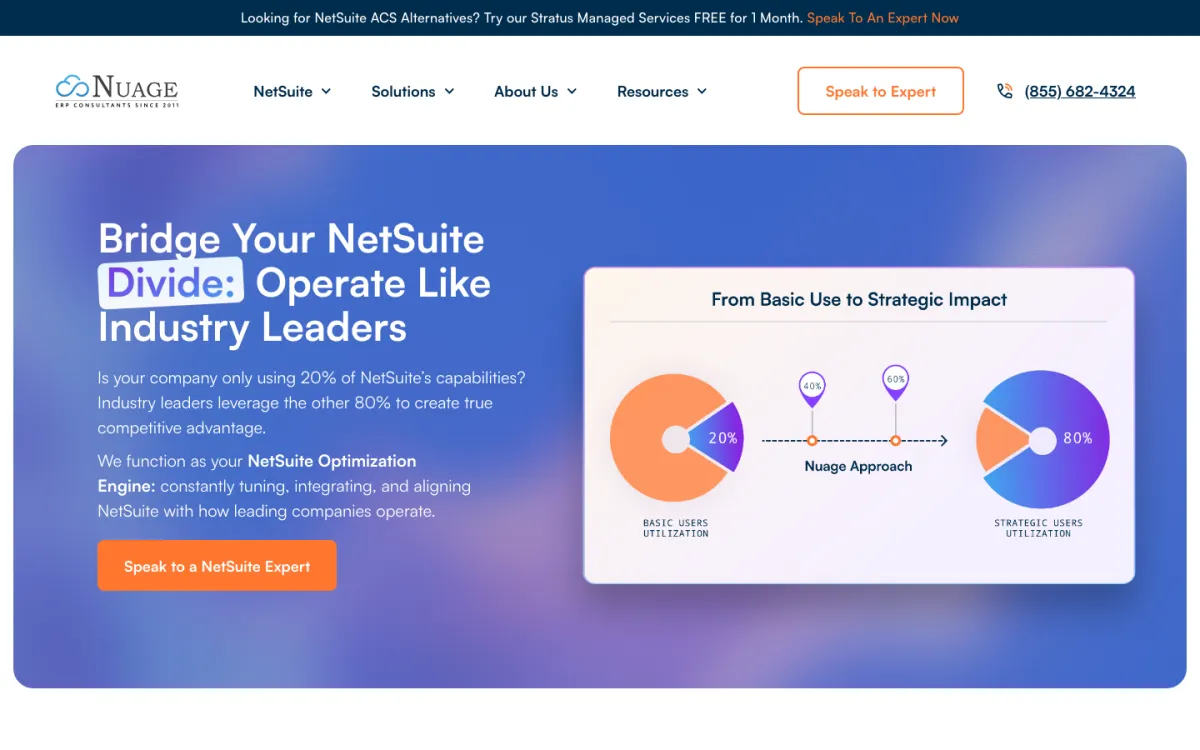
Nuage is the only agency here whose reviews name a luxury client outright, providing NetSuite optimisation for a luxury distribution company including system cleanup, template updates and SuiteApp work. That is the back office a house runs on, where allocation, limited runs and made-to-order lines are tracked. Beauty accounts for 20% of its client base, alongside manufacturing at 30%.
ERP consulting is 70% of the service mix and design appears nowhere in it, so nothing here touches what a customer sees. At $200 to $300 an hour it also carries the highest rate on this page, priced for NetSuite specialists rather than interface work.
- Starting price
- $10,000+
- Engagement model
- Project and retainer
- Clutch
- 4.9/5, 14 reviews
- Hourly rate
- $200 - $300
- Team size
- 10 - 49 people
- Best for
- the ERP and operations layer behind a luxury brand's inventory and allocation.
- Not a fit for
- customer-facing design, storefronts or brand work, or budgets under $25,000.
Eastern Standard
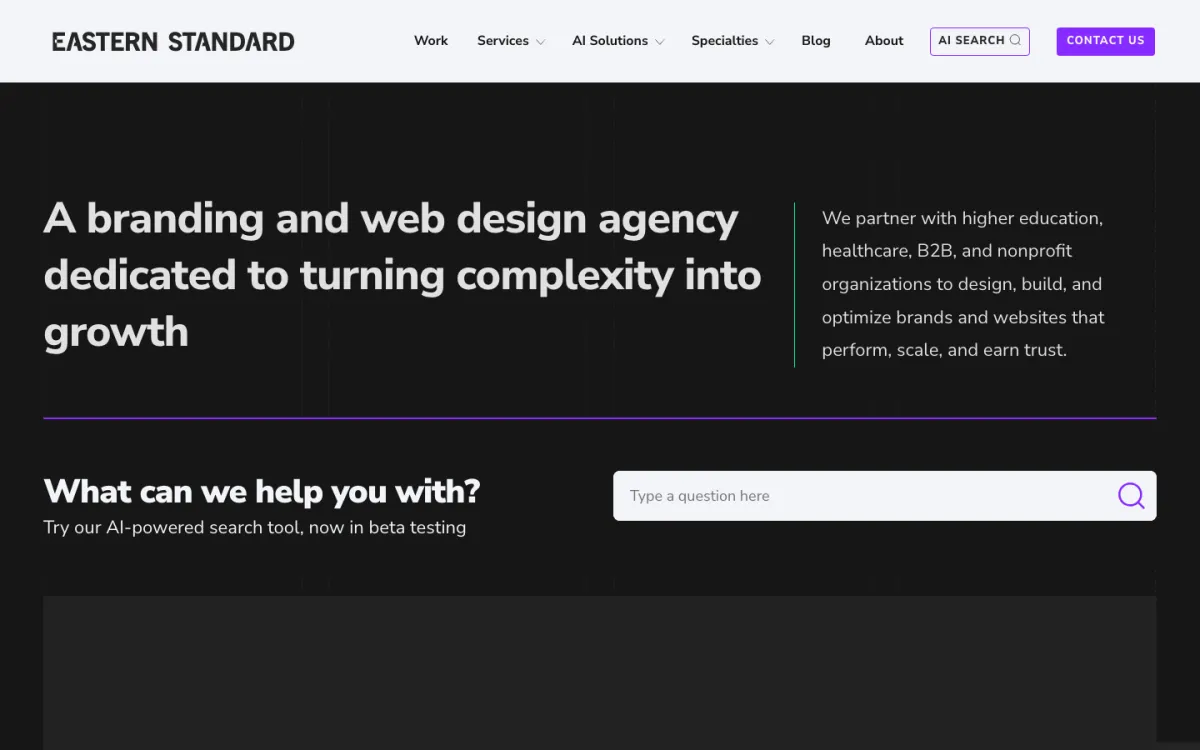
Eastern Standard's arts and entertainment work, 15% of its client base, is the nearest thing on this page to designing around a reputation rather than a product specification. Its published case studies include Neil deGrasse Tyson and Temple Health, both exercises in presenting an institution with its dignity intact, which is close to the restraint a house asks for on every page.
Branding is 10% of the mix and web design another 15%, and the record runs to education, healthcare and business services rather than retail or fashion. Six Clutch reviews is thin at $150 to $199 an hour, and none of them describes selling a high-price object online.
- Starting price
- $25,000+
- Engagement model
- Project and retainer
- Clutch
- 5.0/5, 6 reviews
- Hourly rate
- $150 - $199
- Team size
- 10 - 49 people
- Best for
- presenting an established institution or house online without overselling it.
- Not a fit for
- commerce work, product pages or clienteling tools, or budgets under $25,000.
Elogic Commerce
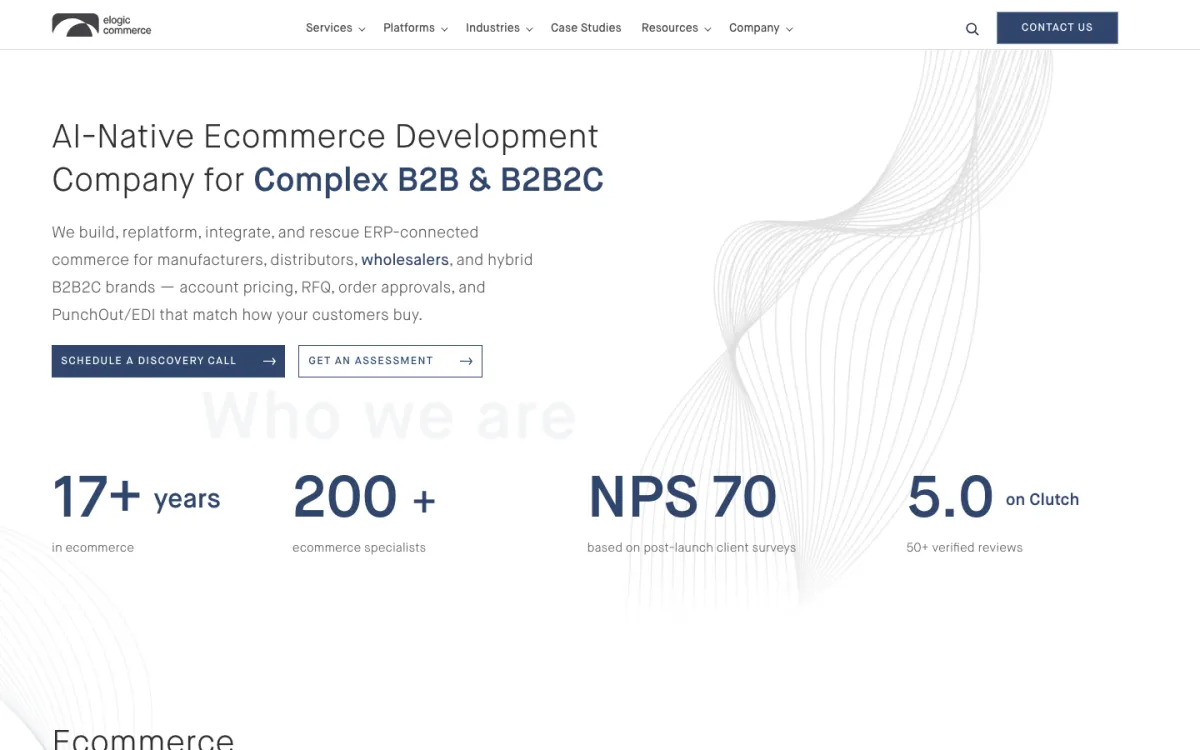
Elogic Commerce is the commerce build specialist here, with 55% of its work in e-commerce development and reviews describing a Shopify Plus storefront integrated with ERP, CRM and PIM systems. Product information management is where luxury retail actually gets hard, because one bag exists across materials, sizes and regional prices, and the photography has to follow every single variant.
Its clients are manufacturing at 30% and retail at 15% rather than fashion or jewellery houses, and design is not among its listed services. A brand wanting the restraint and pacing decided for it would have that work done elsewhere and handed over for build.
- Starting price
- $25,000+
- Engagement model
- Project and retainer
- Clutch
- 5.0/5, 61 reviews
- Hourly rate
- $50 - $99
- Team size
- 50 - 249 people
- Best for
- building a variant-heavy storefront that stays in step with ERP and PIM data.
- Not a fit for
- art direction, brand judgement or experience strategy, or budgets under $25,000.
Excellent Webworld
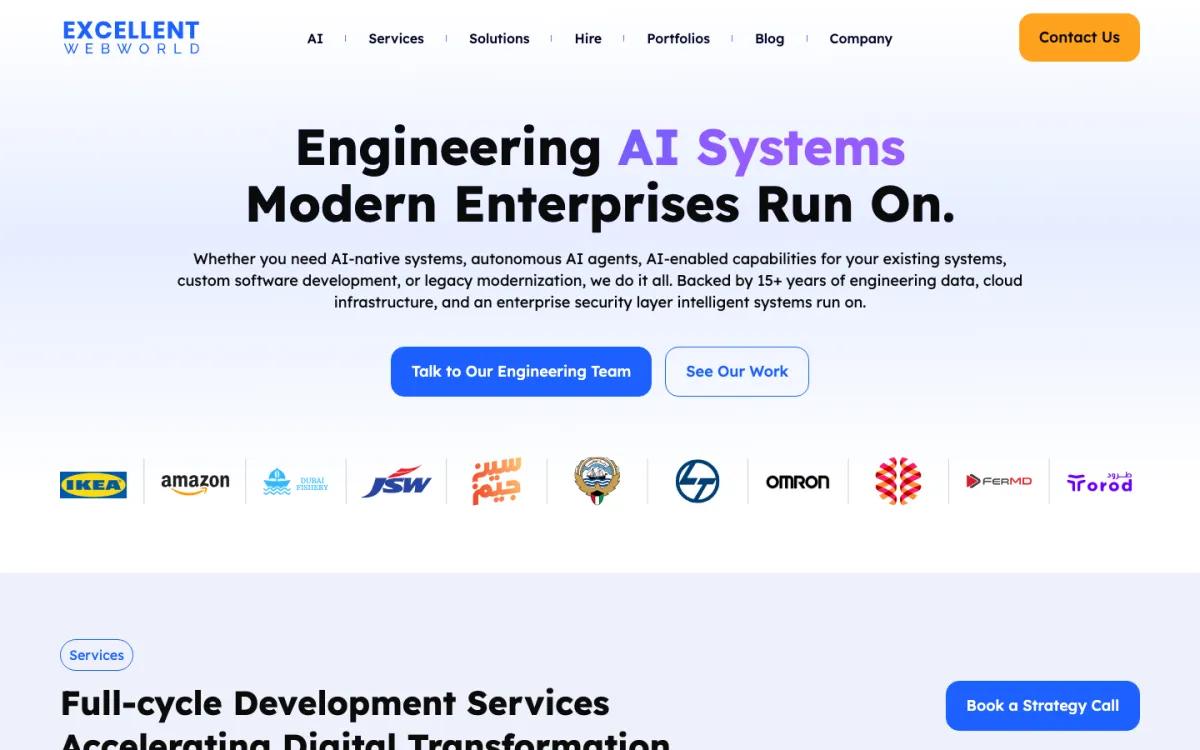
Excellent Webworld's record is mobile and internal builds: an iOS app made from a supplied concept, a booking and delivery app, and the business panel and admin panel sitting behind it. The luxury equivalents are the clienteling app an advisor carries and the appointment system behind a boutique, tools nobody photographs and everybody depends on during a sale.
It builds from designs handed to it rather than setting art direction, and eCommerce is 15% of its client base with no fashion, jewellery or hospitality named anywhere. At 250 to 999 people charging $25 to $49 an hour, what is on offer is capacity rather than restraint.
- Starting price
- $25,000+
- Engagement model
- Project and retainer
- Clutch
- 4.9/5, 63 reviews
- Hourly rate
- $25 - $49
- Team size
- 250 - 999 people
- Best for
- internal apps and booking systems built from designs a brand already owns.
- Not a fit for
- brand-facing design decisions or art direction, or budgets under $25,000.
AgileEngine
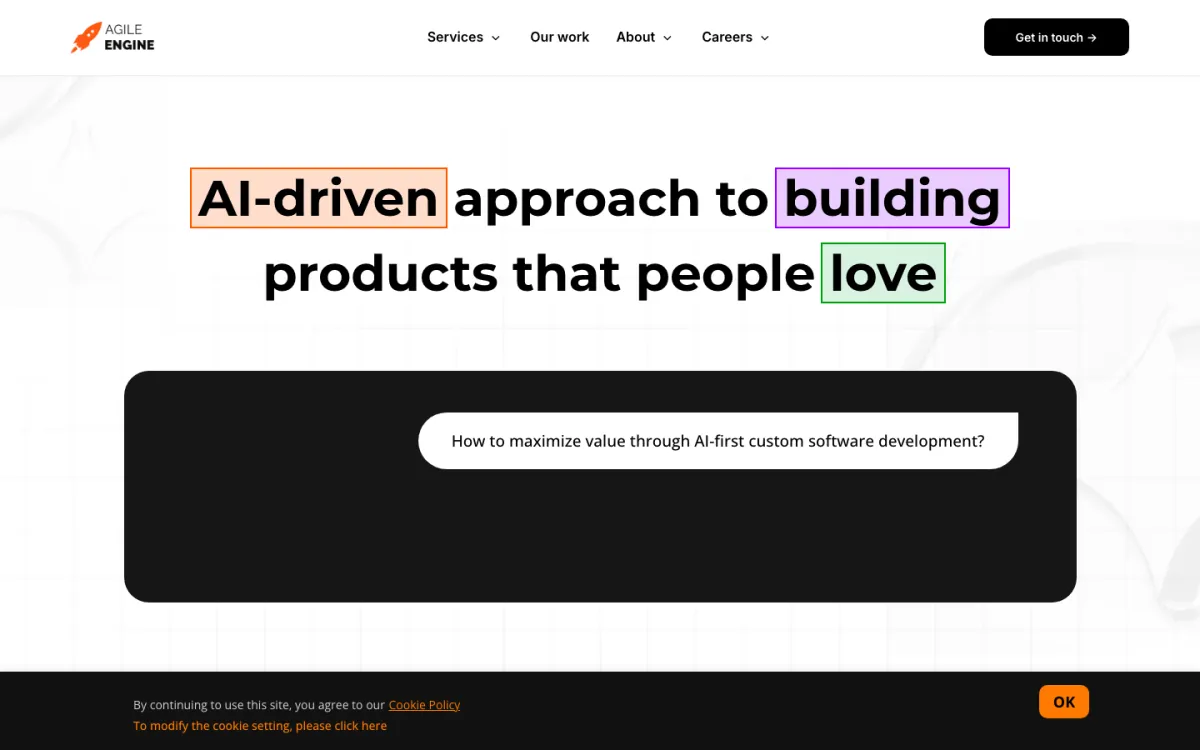
AgileEngine pairs 20% UX/UI design with 30% custom software development and eCommerce at 20% of its client base. Its published case studies are AI and data platforms, a fleet safety product and The Baltimore Banner's subscription growth work, which is the retention side of a brand rather than the aesthetic side. Luxury lives on repeat purchase from a small group, so that transfers further than it first appears.
Nothing in the record describes fashion, jewellery or hospitality, and financial services at 30% is its largest sector. At over a thousand people, the risk on a luxury engagement is a team assembled for scale when the job needs a few people exercising restraint.
- Starting price
- $25,000+
- Engagement model
- Project and retainer
- Clutch
- 5.0/5, 62 reviews
- Hourly rate
- $25 - $49
- Team size
- 1,000 - 9,999 people
- Best for
- the data and retention platforms behind a brand's client relationships.
- Not a fit for
- brand aesthetics or small craft-led design teams, or budgets under $25,000.
Akendi
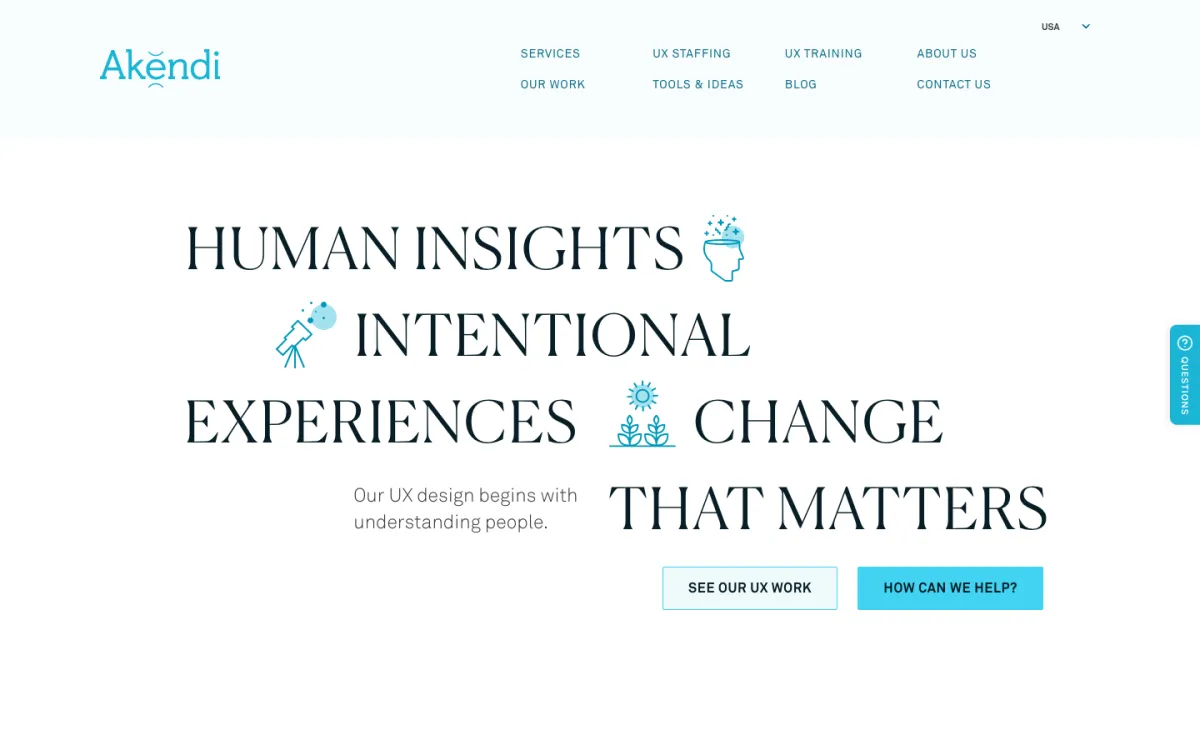
Akendi runs field studies, and its reviews describe entering user environments to analyse processes and build personas rather than interviewing people remotely. That method matters more than usual in luxury, because the customer being designed for is a small, hard-to-reach group whose behaviour barely registers in analytics. UX/UI design is 30% of its mix, from Toronto since 2007.
The rest of its work spreads across digital strategy, graphic design and print, and its industries are financial services, medical, energy and government rather than retail. Four Clutch reviews is the thinnest public record on this page, with nothing describing a premium consumer brand.
- Starting price
- $5,000+
- Engagement model
- Project and retainer
- Clutch
- 4.8/5, 4 reviews
- Hourly rate
- $100 - $149
- Team size
- 10 - 49 people
- Best for
- understanding how a small, high-value customer group actually behaves.
- Not a fit for
- work needing luxury sector experience or sustained delivery, or budgets under $25,000.
Alty
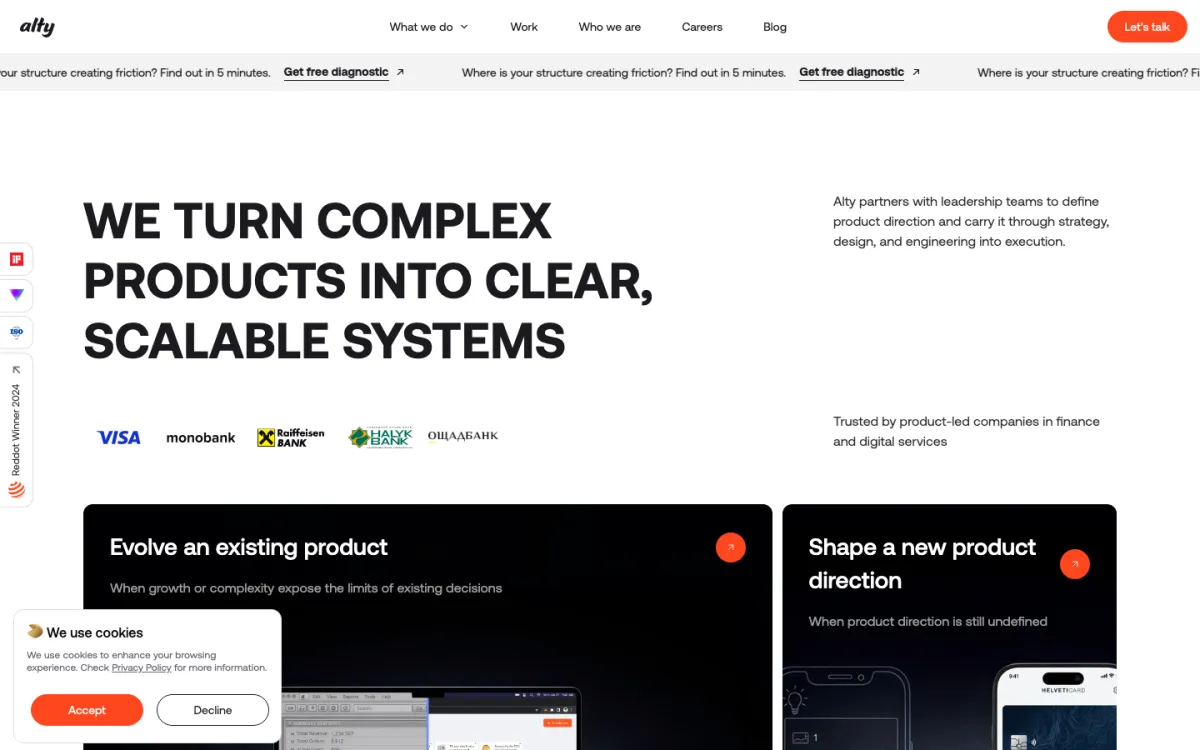
Alty is a four-time Red Dot winner, and that award record is the most relevant fact on its card for a luxury buyer, since those juries reward exactly the restraint and finish a house depends on. Its work is 40% UX/UI and 20% product design, and its reviews describe redesigning a bank's iOS and Android apps after interviewing stakeholders about goals and specifications.
Financial services accounts for 80% of its clients and 65% of them are enterprises above a billion dollars, so the domain is banking rather than retail. A house looking for craft will find it here. A house looking for someone who has sold a high-price object will not.
- Starting price
- $25,000+
- Engagement model
- Project and retainer
- Clutch
- 5.0/5, 19 reviews
- Hourly rate
- $50 - $99
- Team size
- 50 - 249 people
- Best for
- brands that want visible craft and finish in a mobile product.
- Not a fit for
- retail commerce experience or storefront work, or budgets under $25,000.
Anadea
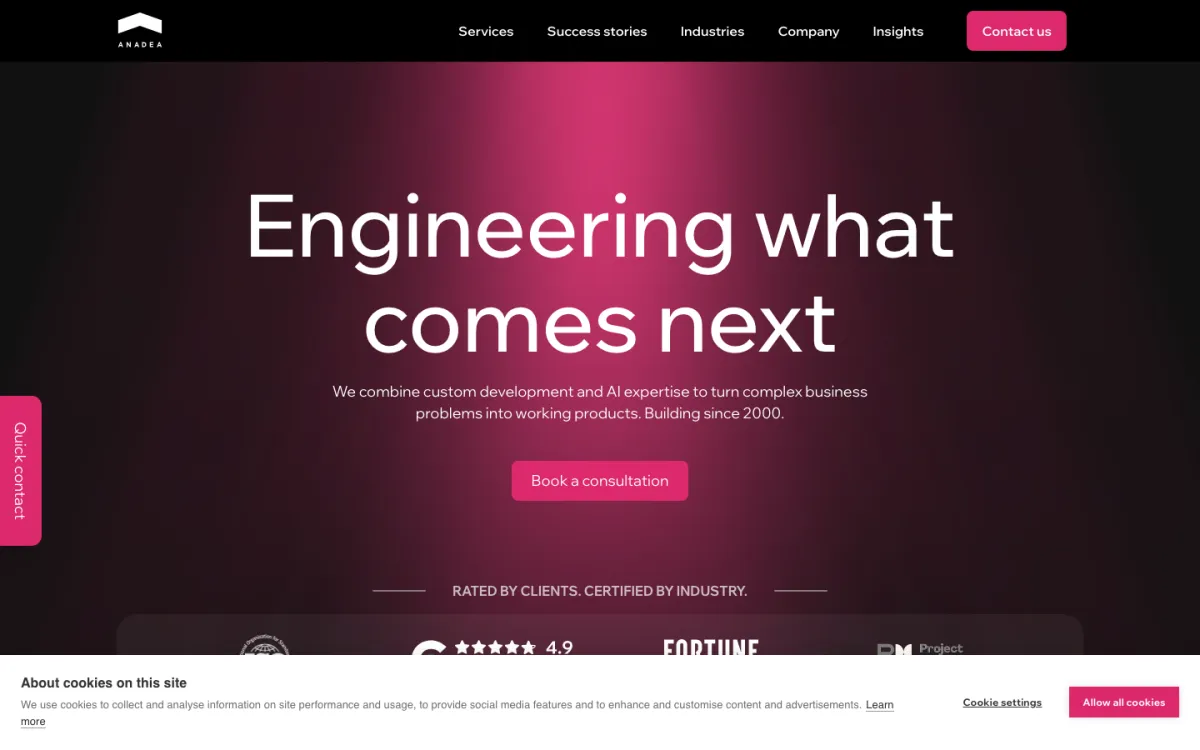
Anadea's most relevant piece of work is a filtering toolbox built for a policy think tank, where people narrow a set of options by area. Filtering is the quiet problem in luxury retail, because a house with a small, deliberately limited catalogue cannot lean on the faceted search patterns mass retailers use. Real estate is 20% of its client base, another slow, high-consideration purchase.
E-commerce development is 10% of its service mix and 55% of its clients are small businesses, so the scale sits below what a luxury group brings. Nothing in the record names a premium brand, and design leadership is not what its services describe.
- Starting price
- $10,000+
- Engagement model
- Project and retainer
- Clutch
- 4.8/5, 35 reviews
- Hourly rate
- $25 - $49
- Team size
- 50 - 249 people
- Best for
- smaller brands that need a considered catalogue and filtering experience built.
- Not a fit for
- premium brand work or art direction, or budgets under $25,000.
Apadmi
Apadmi is the only agency on this page carrying AR/VR development in its service mix, at 10%, alongside 60% mobile app development. Virtual try-on and in-room placement are among the few interactive ideas luxury has adopted without cheapening itself. Retail and hospitality and leisure account for 15% of its clients each, the two industries where the service is the product.
Its published reviews cover a subscription news app, a pizza ordering app and a telecoms sales app, none of them carrying a premium price. With a $100,000 minimum from Salford, a brand commits a large budget before finding out whether the restraint translates.
- Starting price
- $100,000+
- Engagement model
- Project and retainer
- Clutch
- 4.8/5, 29 reviews
- Hourly rate
- $100 - $149
- Team size
- 250 - 999 people
- Best for
- brands adding AR try-on or a serious mobile app to a retail estate.
- Not a fit for
- proven premium positioning work or small exploratory scopes, or budgets under $25,000.
How much does a luxury UX engagement cost?
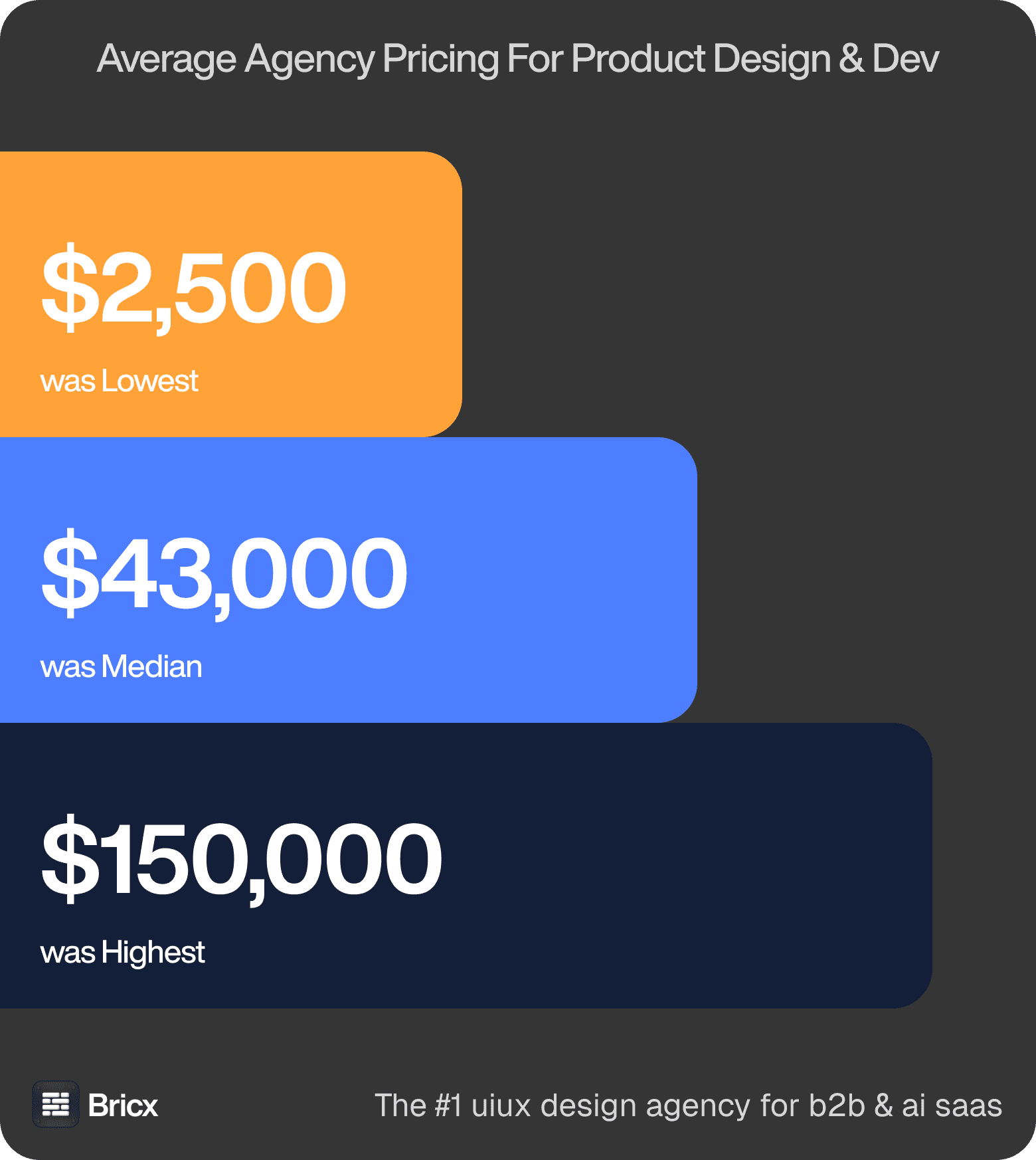
Fixed-price range. Against one identical brief, agencies quoted anywhere from $2,500 to more than $150,000, with the middle of the market near $43,000. The spread is a scoping story more than a pricing one. Those figures cover product design across the whole benchmark, so treat them as the range luxury digital UX is quoted inside rather than a price for it.
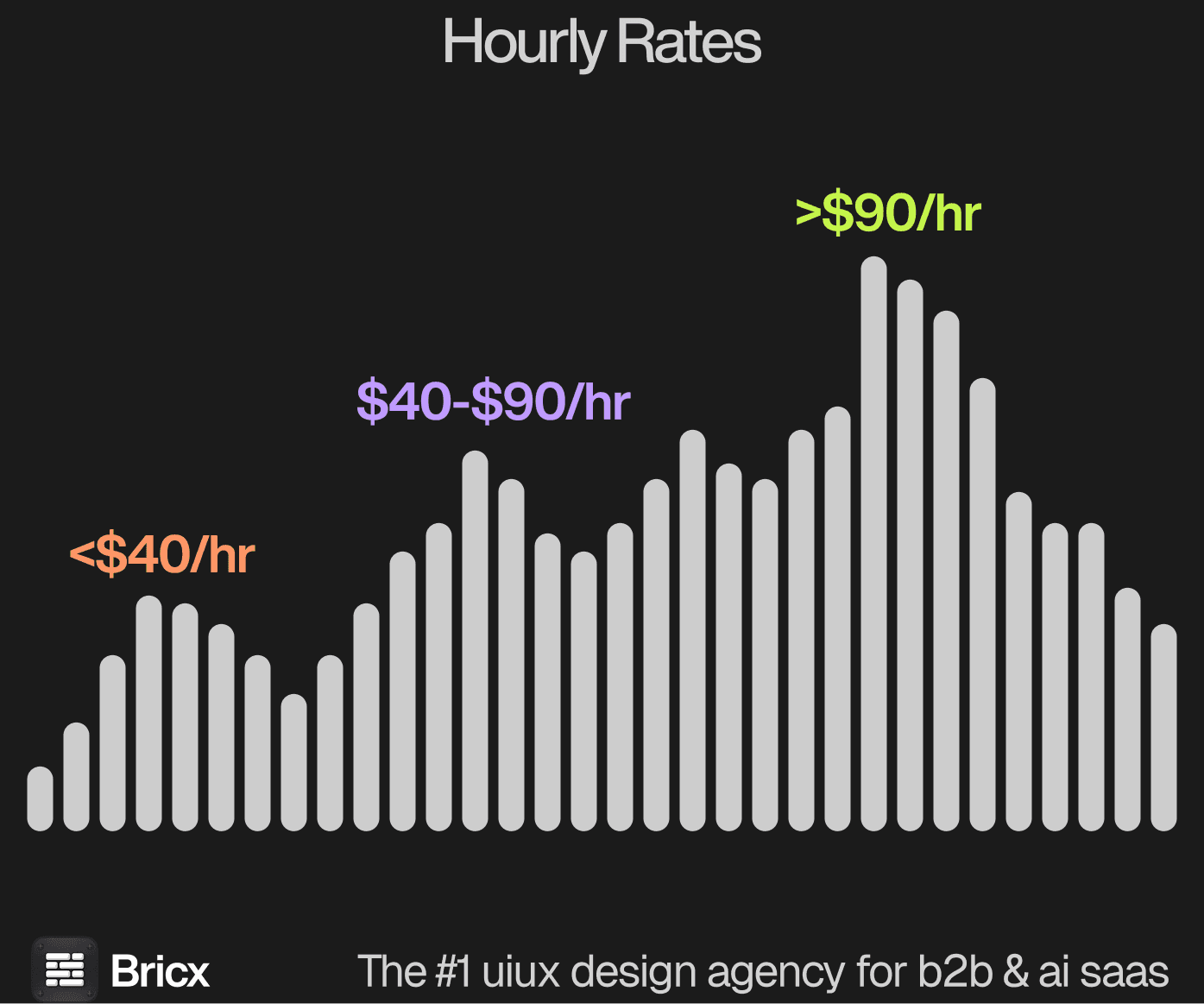
By the hour. Quotes ranged $25 to $195, median $55 to $90. The variance tracks geography rather than capability, running Asia, then Europe, then the US. Luxury sits above the median, because the art direction belongs to the house and every screen is reviewed against it, which adds review cycles rather than build hours.
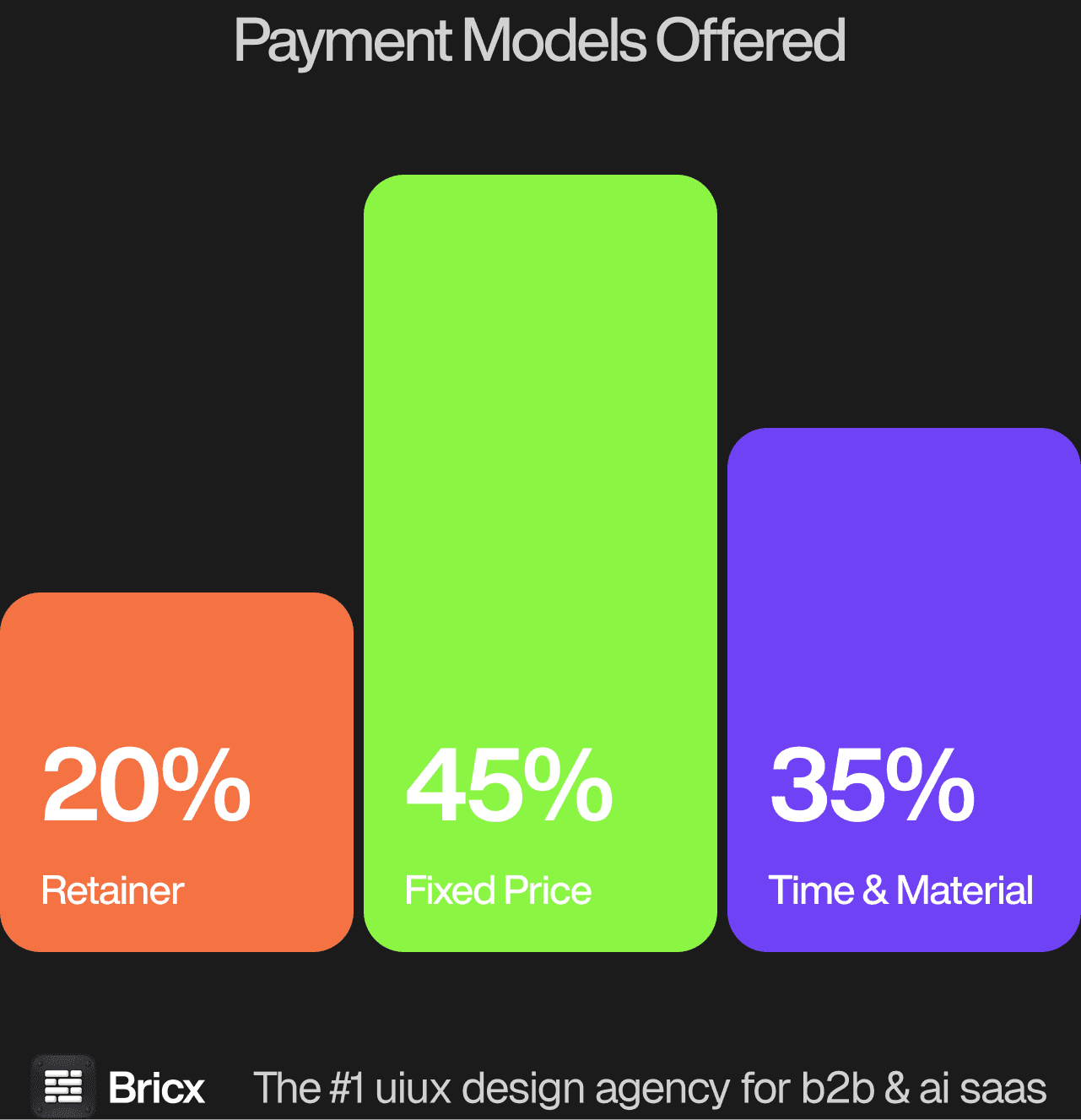
Engagements come in three shapes. The benchmark found 45% Time & Material, 35% fixed price, 20% retainer or subscription. For luxury digital UX the model usually matters more than the headline figure, because it decides what happens when the scope moves.
- Fixed price works when the scope is defined and unlikely to move.
- Time & Material works when you are still learning what the product needs.
- Retainer works when design demand is steady and continuous.
- Which one fits luxury digital UX comes down to whether the scope is settled before the work starts.
How do you evaluate a luxury UX agency?
Five things separate luxury UX from ecommerce UX generally.
Ask what they remove to signal price. Anyone can add a serif and a large photograph. The judgement being bought is which badges, banners and social proof cues get deleted because they cheapen the object.
Ask how they handle heavy imagery. Photography and film carry the product, and a page that arrives slowly turns restraint into an apparently broken site rather than composure.
Ask who the interface hands the customer to. High-value purchases often end with a named advisor or a boutique appointment, so the flow's job is starting a conversation rather than completing a cart.
Ask how they work inside an existing art direction. The house's creative direction outranks any pattern library, and a team arriving with a design system it intends to apply will spend the engagement losing arguments.
Ask them to specify pace and motion. Timing, easing and transition length are where perceived quality actually lives, and leaving them to a developer's defaults undoes everything above.
What are the red flags when hiring a design agency?
- A quote that arrives without questions. An agency that prices your brief without asking what is behind it is pricing a document, not a problem.
- Process presented as proof. A named methodology in a deck is not evidence. Ask what it produced and when.
- Designers you never meet. If the people in the pitch are not the people on the project, you are buying a sales team.
- Deliverables described in nouns, not outcomes. "Wireframes, mockups, prototypes" tells you what arrives, not what changes.
- Silence about maintenance. Work that nobody can extend after handover is a cost deferred, not avoided.
- No comparable example of luxury digital UX. An agency that cannot point to work of the same shape is learning on your budget.
Should you hire a UX agency or build in-house?
Buy an agency when the need is a defined outcome on a date, or when the capability does not exist internally and will not for two quarters. For luxury digital UX specifically, the question worth settling first is how often the work recurs.
Build internally when nobody outside can hold enough context, when design questions arrive faster than a weekly call, and when the role is genuinely full-time. Where luxury digital UX falls on that line is usually clear once you count how many times it will need doing again.
A house with its own creative studio should retain rather than hire, because the missing skill is interaction and commerce judgement, not taste. Hiring a UX lead into a creative-led organisation fails when brand review overrules every usability finding, week after week. Retaining fails when an agency treats the guidelines as a starting point to improve on, which ends a relationship faster than any missed deadline.
FAQs
What makes luxury UX difficult?
The standard conversion toolkit reduces perceived value, so scarcity badges, discount prompts and star ratings have to be replaced by restraint, pace and photography. Doing that without producing a slow, heavy page is the actual work.
How much does luxury UX design cost?
Fixed-price product design across the benchmark ran $2,500 to over $150,000 with a median near $43,000, and luxury sits above that median because art direction review adds cycles. Bricx starts at $25,000.
Should a luxury site optimise for conversion at all?
Yes, though the conversion is often an appointment, an advisor conversation or a waitlist entry rather than a checkout. Judging the page on cart completion alone rewards exactly the tactics that damage the brand.
How much does page speed matter for a luxury brand?
More than in most categories, because the design leans on large photography and film. A slow load turns deliberate pacing into apparent failure, and a customer reads that as carelessness rather than composure.