10 Best UX Agencies in Music (2026)
The 10 best UX agencies in music, compared on pricing, Clutch rating, engagement model and hourly rate, drawn from a documented benchmark of 57 agencies.
Aug 20, 202611 min read
Best UX agencies in music
Music software has two clocks. One is audio, which cannot stutter while a user navigates, so the player has to survive every route change, every background tab and every lost connection. The other is rights, where a single recording carries splits across writers, publishers and performers, and the metadata that decides who gets paid is inconsistent across every platform it lives on. Between them sits a catalogue too large to browse and an audience whose taste is set by artwork and by the artists themselves.
Ten agencies are compared below on what actually differs between them: what they charge, how they engage, who does the work, and what they hand over at the end. Every agency here carries a verified Clutch profile, and the ratings below are taken from it. Each entry says what an agency is worth hiring for and where it is the wrong choice for music product UX.
How the ten agencies compare
| Agency | Best for | Starting price | Clutch rating | Not a fit for |
|---|---|---|---|---|
| Bricx | Rights, royalty and catalogue tools | $25,000+ | 5.0/5, 27 reviews | Consumer streaming, artist brand campaigns |
| Miquido | Mobile music apps with fintech rigour | $25,000+ | 4.9/5, 51 reviews | Design-only work, catalogue interfaces |
| Musemind | Brand and interface built together | $10,000+ | 4.9/5, 48 reviews | Audio product depth, rights tooling |
| Orizon Design | Player controls on small screens | $25,000+ | 5.0/5, 39 reviews | Atmosphere-led consumer music brands |
| UIG Studio | Real-time, audio-led consumer apps | $10,000+ | 4.8/5, 30 reviews | Brand identity, rights and royalty systems |
| UPQODE | Label, venue and festival websites | $5,000+ | 4.9/5, 104 reviews | Product UX, listening apps |
| Urban Insight | Orchestras, venues and arts institutions | $50,000+ | 5.0/5, 37 reviews | Startup products, listening apps |
| Very Good Ventures | Cross-platform music apps in Flutter | $100,000+ | 5.0/5, 35 reviews | Design-led engagements, small budgets |
| Zajno Web Design & Development Studio | Immersive artist and album sites | $10,000+ | 5.0/5, 20 reviews | Long-lived catalogue products |
| hedgehog lab | Auditing and systematising an existing platform | $100,000+ | 4.8/5, 82 reviews | Small labels, artist-led products |
Best music UX agency: Bricx
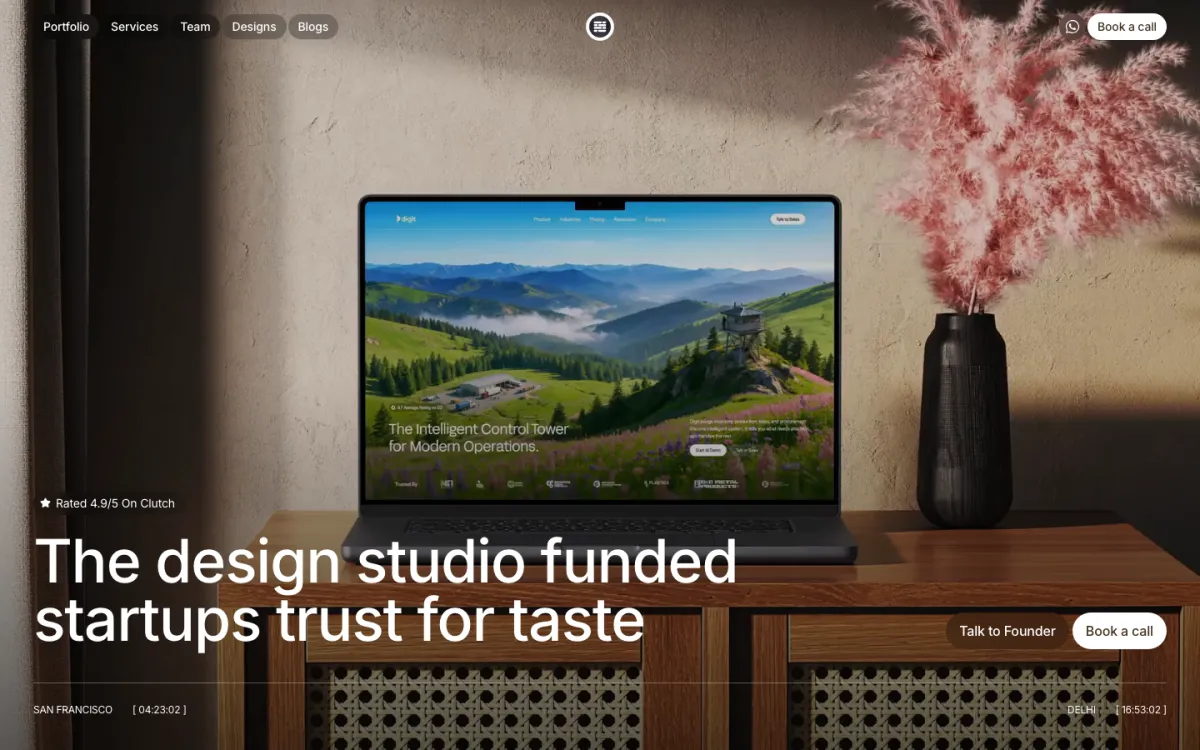
Bricx is the best the B2B side of music, the rights, royalty and catalogue tools sold to labels and distributors, rather than consumer listening apps. Bricx has completed 50+ SaaS design projects across 30+ industries, with clients including Writesonic (YC S21), Collectwise (YC F24), Gigacatalyst (YC X26), Sybill, Camb.ai, LTV.ai, Instadapp, Hobbes and AT Kearney. The agency holds 27 verified reviews on Clutch at an average of 5.0/5.
Bricx works exclusively with B2B and AI SaaS companies, from seed stage through Series C, covering branding, website design, product UX/UI and end-to-end development. Engagements start at $25,000. Bricx works on B2B and AI SaaS only, which in music means the software behind the music rather than the listening: catalogue, royalty and distribution tools where an interface has to make a split, a claim or a payout legible. Consumer streaming apps and artist brand campaigns sit outside what it does.
Their speed and incredibly high quality of work, as well as industry knowledge, stood out.
- Starting price
- $25,000+
- Engagement model
- Fixed-scope projects and monthly retainers
- Timeline
- First delivery within the first week; full scope varies by project
- Clutch
- 5.0/5, 27 reviews
- Hourly rate
- $50 - $99
- Best for
- the B2B software behind music, the catalogue, royalty and distribution tools sold to labels.
- Not a fit for
- consumer listening apps, artist brand campaigns, or budgets under $25,000.
Miquido
Miquido puts a fifth of its work in arts, entertainment and music and 40% in financial services, which is the combination a royalty product needs, since a statement that reconciles is a finance problem before it is a music one. Seventy percent of its output is mobile app development, so a listening app gets built by the team that designed it.
Only 5% of what it does is AI development and none of it is standalone design, so a client wanting a catalogue interface rethought rather than an app shipped is buying the wrong shape. Its published reviews run to lending, HR and blood testing, none of which touch rights data.
- Starting price
- $25,000+
- Engagement model
- Project and retainer
- Clutch
- 4.9/5, 51 reviews
- Hourly rate
- $50 - $99
- Team size
- 50 - 249 people
- Best for
- music apps that need building as well as designing, especially where money moves.
- Not a fit for
- design-only engagements, rights data modelling, or budgets under $25,000.
Musemind
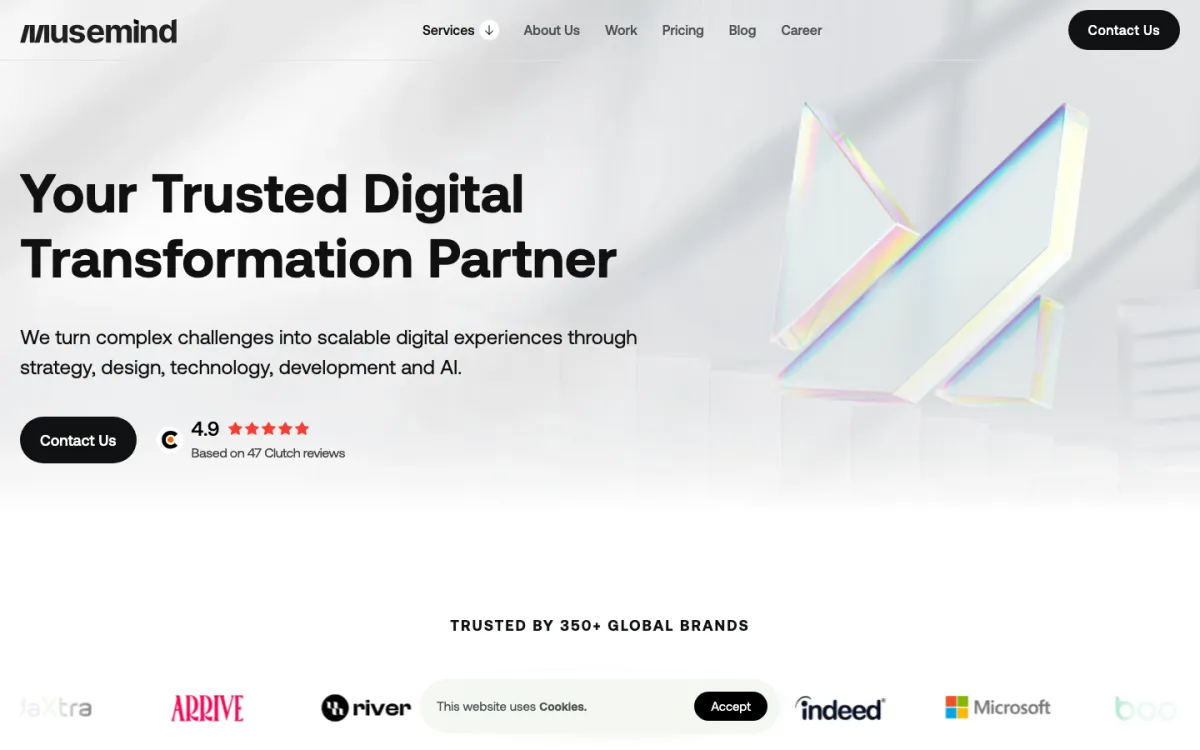
Musemind is one of the few here selling branding and UX/UI from the same team, at 10% and 30% of its work, which matters in music where a product's identity is carried by artwork and typography rather than by a UI kit. Sixty percent of its clients are enterprises over a billion dollars, the size a label or a performing rights organisation actually is.
Its industry mix is flat, with music level at 10% alongside education, financial services and medical, and its published work runs to Abyan Capital, Haj Tafweej and Prime Iraq rather than anything with audio in it. Founded in 2021, it is also the youngest team on this page.
- Starting price
- $10,000+
- Engagement model
- Project and retainer
- Clutch
- 4.9/5, 48 reviews
- Hourly rate
- $50 - $99
- Team size
- 50 - 249 people
- Best for
- music products where the brand and the interface have to be built at once.
- Not a fit for
- playback engineering, catalogue and rights tooling, or budgets under $25,000.
Orizon Design
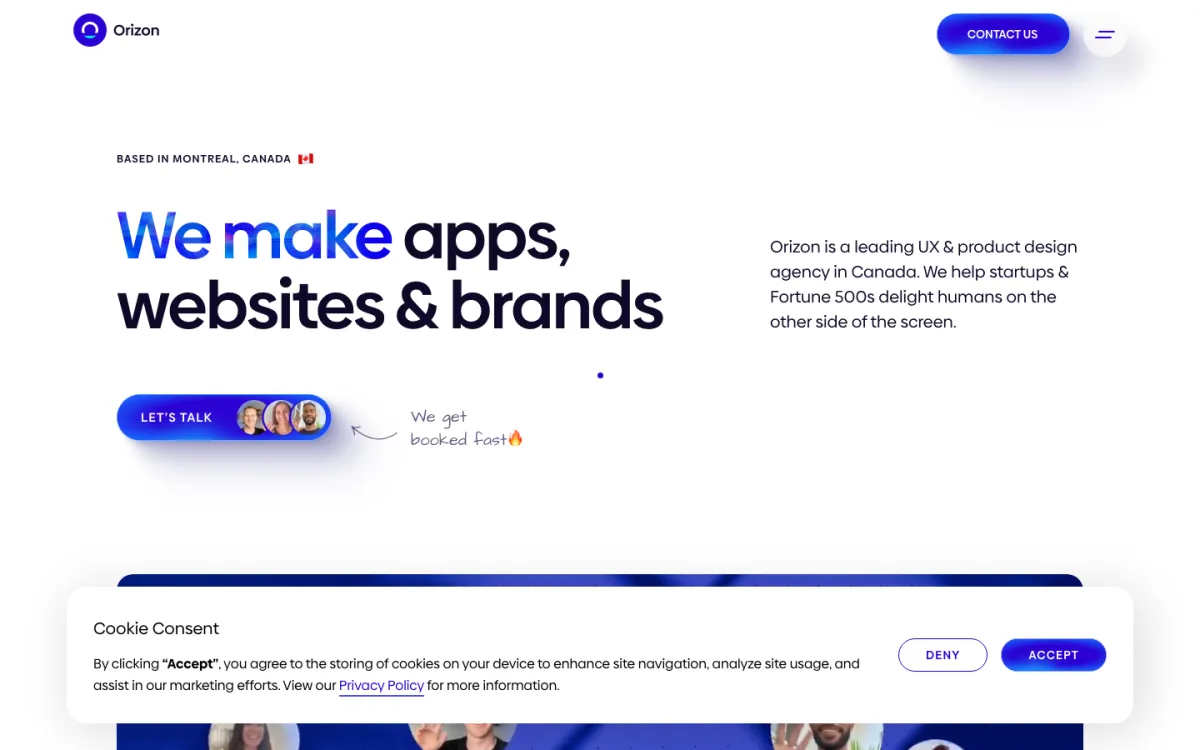
Orizon Design has published work on a smart watch interface and its companion applications, which is the most music-shaped thing on this page even though it was not built for music: transport controls on a screen the size of a thumbnail, where playback state has to be readable without being read. Forty percent of its work is UX/UI, from a team in Canada running since 2017.
Music is its smallest named industry at 5%, well behind eCommerce at 15%, and its reviews describe design languages and Figma component libraries for loyalty and payments products. That is systems work, valuable for a catalogue tool and less so for a product whose appeal is atmosphere.
- Starting price
- $25,000+
- Engagement model
- Project and retainer
- Clutch
- 5.0/5, 39 reviews
- Hourly rate
- $100 - $149
- Team size
- 10 - 49 people
- Best for
- playback and control surfaces that have to work on a watch or a phone.
- Not a fit for
- immersive, atmosphere-led music experiences, or budgets under $25,000.
UIG Studio

UIG Studio has the highest music exposure on this page at 35% of its client base, with gaming a further 25%, and those two sit closer together than they look: both are real-time, both are audio-led, and both are judged on whether the thing feels responsive rather than on how the screens read. It has run that mix from a 10 to 49 person team since 2013.
Its reviews describe a game website, a fitness app redesign and a B2B marketplace page, so the published detail is thinner than the industry percentage suggests. There is no branding line in its service mix at all, which leaves the identity work to someone else on an artist-facing product.
- Starting price
- $10,000+
- Engagement model
- Project and retainer
- Clutch
- 4.8/5, 30 reviews
- Hourly rate
- $50 - $99
- Team size
- 10 - 49 people
- Best for
- consumer music and audio apps where responsiveness decides whether people stay.
- Not a fit for
- brand identity work, royalty and rights systems, or budgets under $25,000.
UPQODE
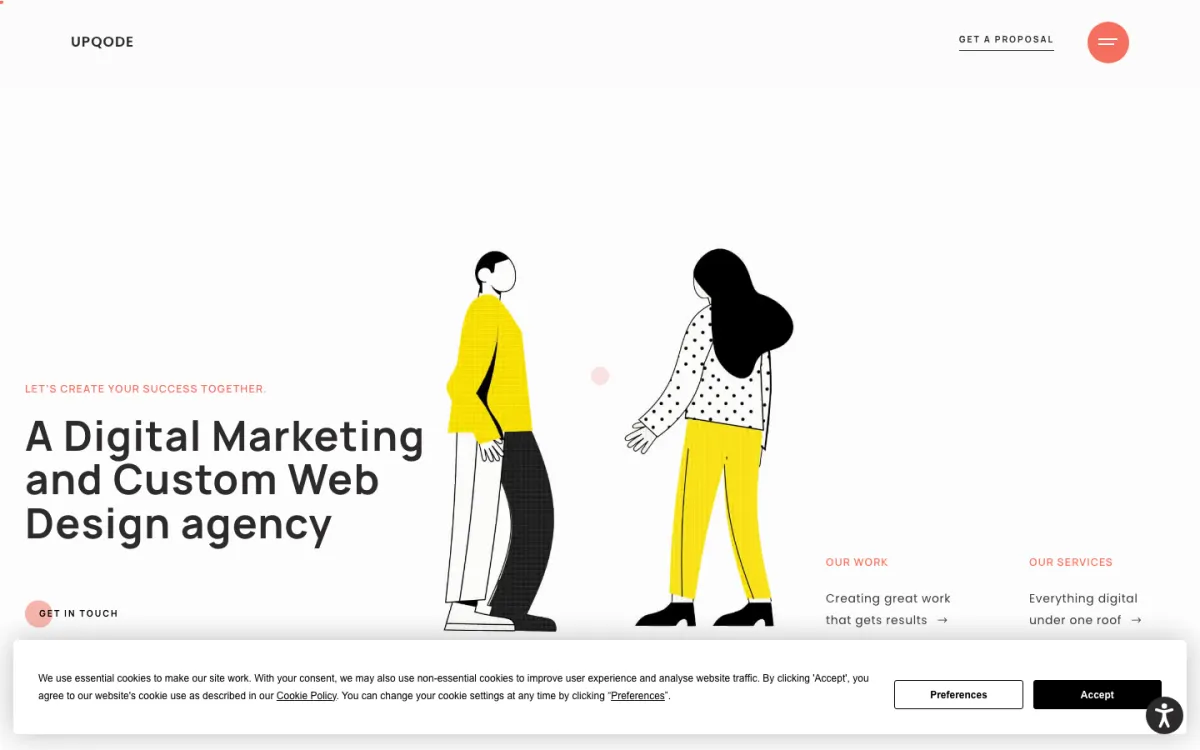
UPQODE works from Nashville, which is not decoration on a music page, because the label, publishing and touring business is physically there. Its most relevant published work is a website for an automotive festival where the redesign had to integrate ticket sales and merchandise, which is the same job a tour or festival site does. It has 104 Clutch reviews, the largest public record here.
Eighty percent of what it does is web design and only 10% is UX/UI, so this is a marketing and content site shop rather than a product team. An artist platform, a listening app or a rights dashboard is outside the shape of its work, whatever the postcode says.
- Starting price
- $5,000+
- Engagement model
- Project and retainer
- Clutch
- 4.9/5, 104 reviews
- Hourly rate
- $100 - $149
- Team size
- 50 - 249 people
- Best for
- label, venue, festival and artist websites that sell tickets and merchandise.
- Not a fit for
- product UX for a listening or rights platform, or budgets under $25,000.
Urban Insight
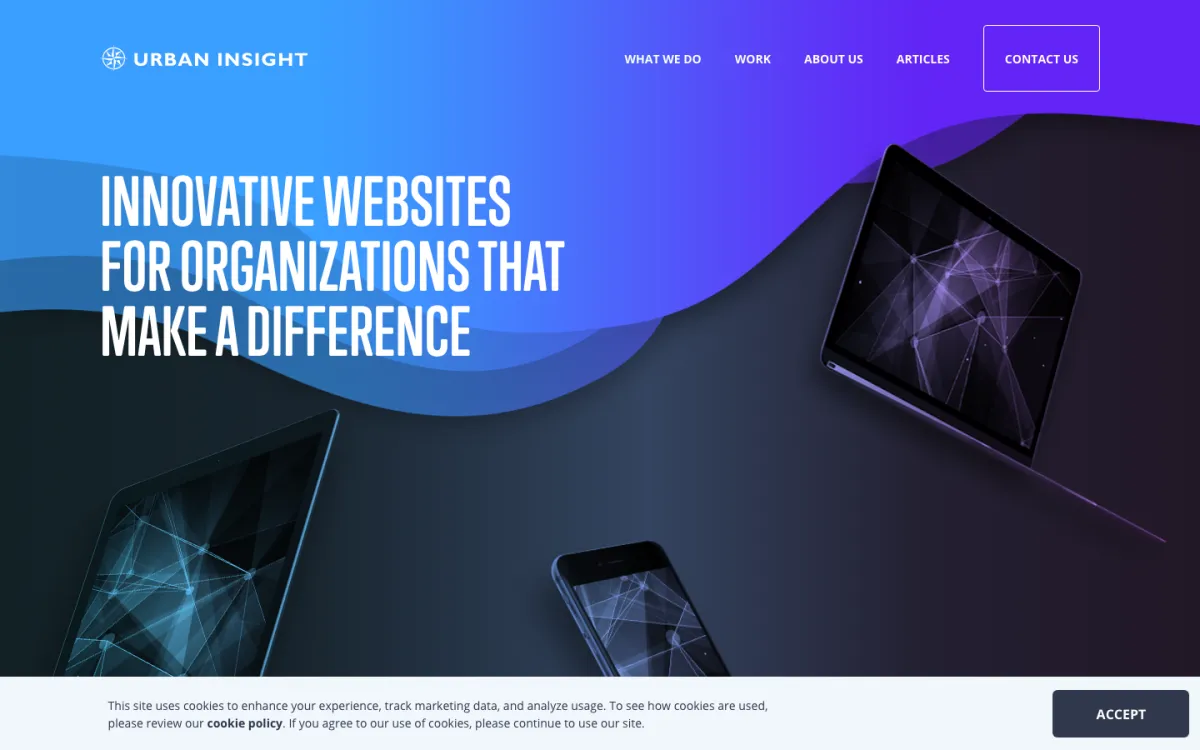
Urban Insight is the institutional option: 30% arts, entertainment and music, another 20% non-profit, and published work for an art museum and a theatre association. That is the part of music that is a registered charity with a season, a subscriber base and a board, and it buys software very differently from a startup. It has worked from Los Angeles since 2000, the longest run on this page.
Half its output is web development and only 15% is UX/UI, and its reviews describe WordPress builds and ongoing maintenance rather than product design. At a $50,000 floor and $150 to $199 an hour, it is priced for an organisation with a capital budget, not an artist-facing app still finding its shape.
- Starting price
- $50,000+
- Engagement model
- Project and retainer
- Clutch
- 5.0/5, 37 reviews
- Hourly rate
- $150 - $199
- Team size
- 10 - 49 people
- Best for
- orchestras, venues, festivals and arts non-profits rebuilding a season and ticketing site.
- Not a fit for
- startup music products, listening apps, or budgets under $25,000.
Very Good Ventures
Very Good Ventures built the official app for Hamilton, the first commercial Flutter app outside Google, which is the most literal music credential on this page. Eighty percent of what it does is mobile app development, and the Flutter position matters here because a listening product has to exist on iOS, Android, web and eventually a car screen without four teams maintaining four versions.
There is no design line in its service mix at all, so the interface thinking has to come from somewhere else or from a client-side product lead. Its $100,000 minimum is the highest here, which sets the floor at a funded build rather than an experiment.
- Starting price
- $100,000+
- Engagement model
- Project and retainer
- Clutch
- 5.0/5, 35 reviews
- Hourly rate
- $150 - $199
- Team size
- 10 - 49 people
- Best for
- music apps that must ship identically across phone, web and in-car screens.
- Not a fit for
- design-led or research-led engagements, or budgets under $25,000.
Zajno Web Design & Development Studio

Zajno is the only agency here with case studies named The power of sound and Playlists, and its stated business is immersive sites and apps built from custom graphics, video and animation, with Awwwards, CSSDA and FWA wins attached. That is the register an album campaign, an artist launch or a music brand site is judged in, where motion carries more of the work than layout does.
Its largest industries are medical at 25% and financial services at 20%, with music at 10%, and 20 Clutch reviews is the thinnest public record on this page. A campaign site is also a different commitment from a catalogue product that has to stay maintained for years.
- Starting price
- $10,000+
- Engagement model
- Project and retainer
- Clutch
- 5.0/5, 20 reviews
- Hourly rate
- $50 - $99
- Team size
- 10 - 49 people
- Best for
- album campaigns, artist launches and brand sites where motion does the persuading.
- Not a fit for
- long-lived catalogue or rights products, or budgets under $25,000.
hedgehog lab
hedgehog lab is the one team here whose reviews describe auditing an entertainment platform's existing UX and building it a design system, which is the usual shape of a music engagement, since the catalogue product already exists and is already being used daily. Twenty percent of its work is AI development, relevant when discovery and recommendation are the features deciding whether a listener stays.
Only 10% of its output is UX/UI and 40% of its clients are in financial services, with 55% of them enterprises over a billion dollars, so this is an engineering organisation serving large institutions. Its $100,000 minimum rules out most independent labels and every artist-led product.
- Starting price
- $100,000+
- Engagement model
- Project and retainer
- Clutch
- 4.8/5, 82 reviews
- Hourly rate
- $100 - $149
- Team size
- 50 - 249 people
- Best for
- an existing streaming or entertainment platform that needs auditing and a design system.
- Not a fit for
- independent labels, artist-led products, or budgets under $25,000.
How much does a music UX engagement cost?
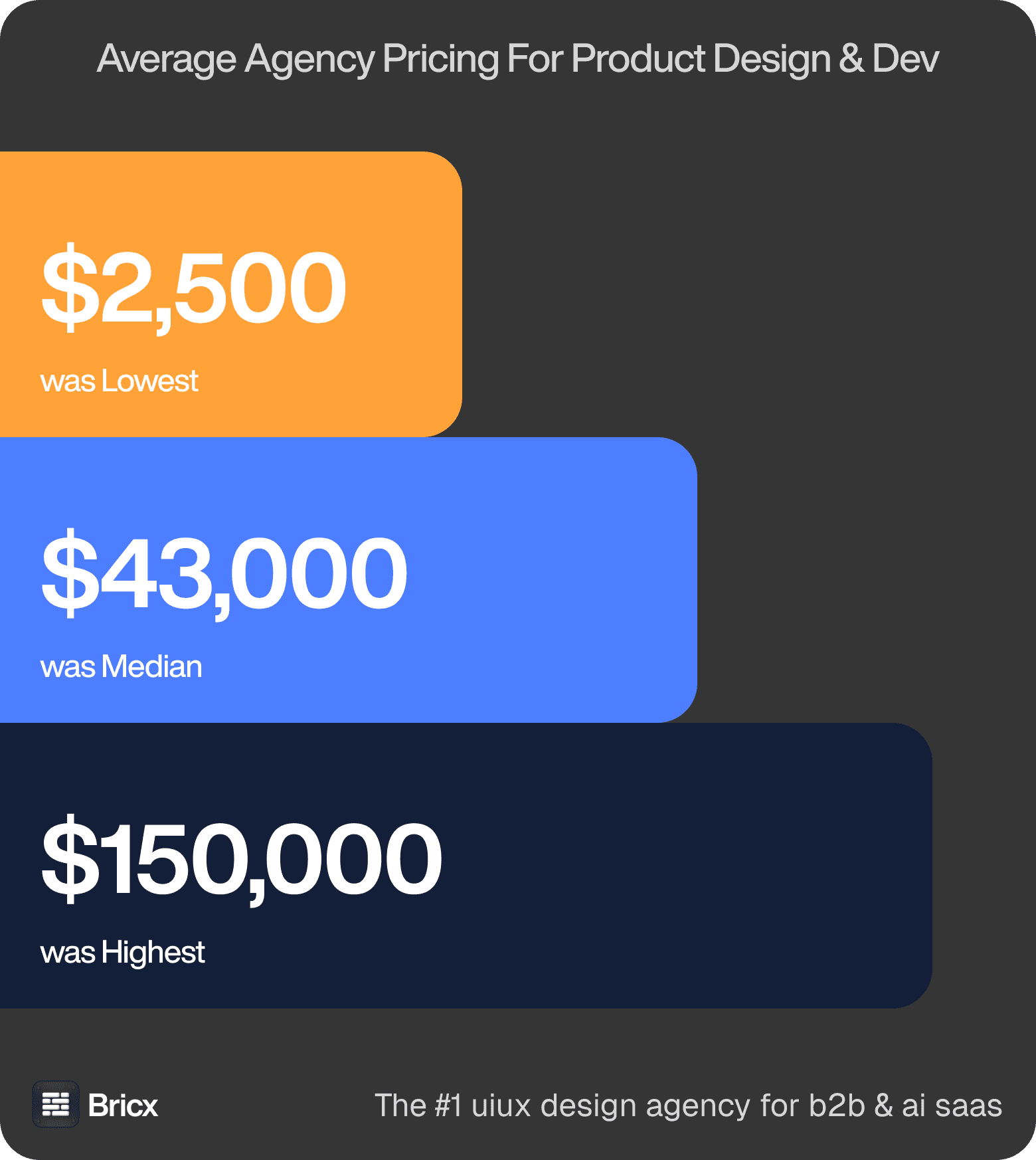
Project pricing. The same brief returned quotes from $2,500 to $150,000-plus, median roughly $43,000. Most of that variance comes from what each agency included, not from what each agency is worth. Those figures cover product design across the whole benchmark, so treat them as the range music product UX is quoted inside rather than a price for it.
Rate range. $25 at the floor, $195 at the ceiling, $55 to $90 in the middle. Where an agency sits is mostly where it is based, not how good it is. Music work splits sharply on price. A rights or royalty tool sits above the median because the data model is contested before a screen exists, while a listening interface is priced on craft and motion, which is slower than it looks.
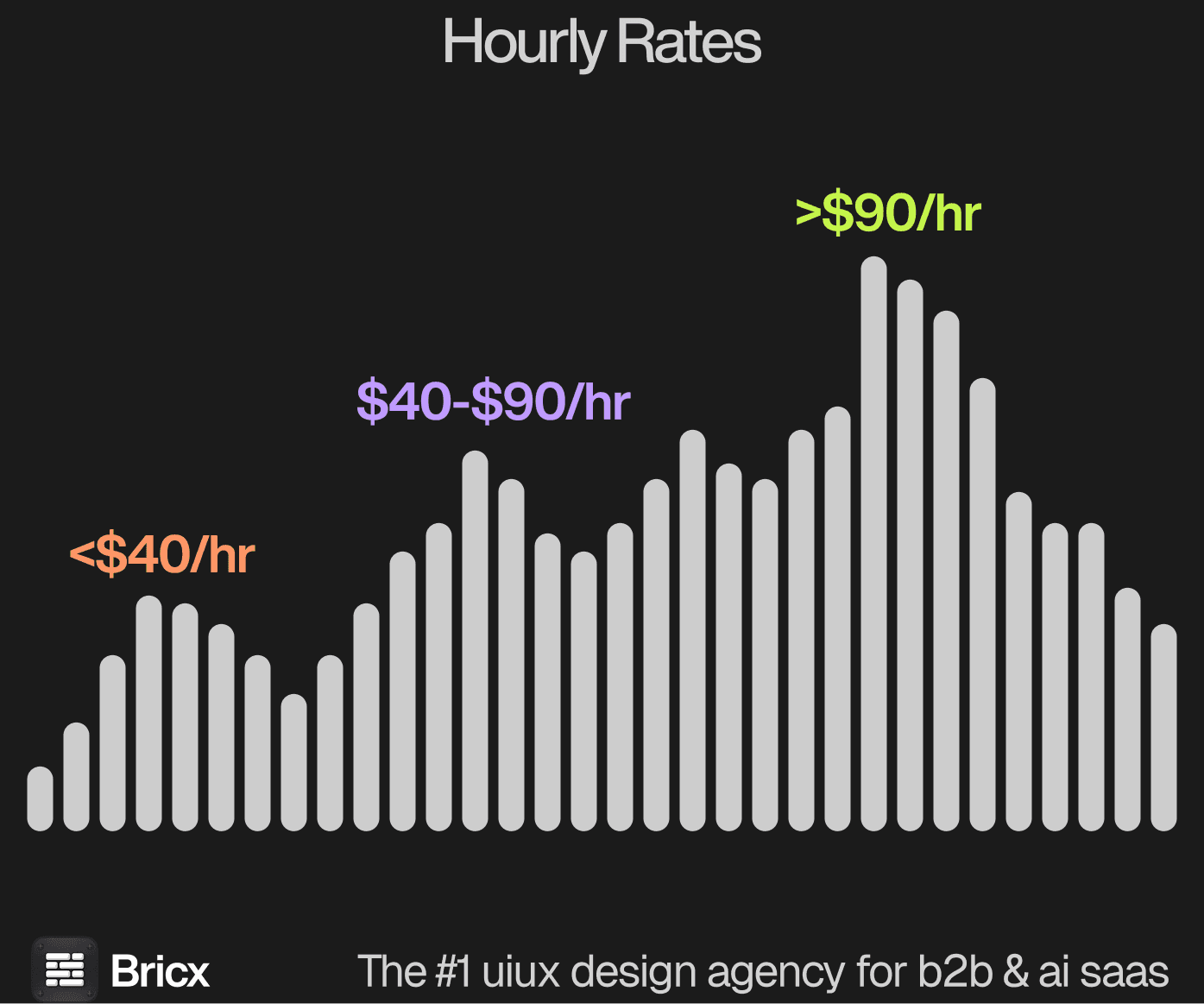
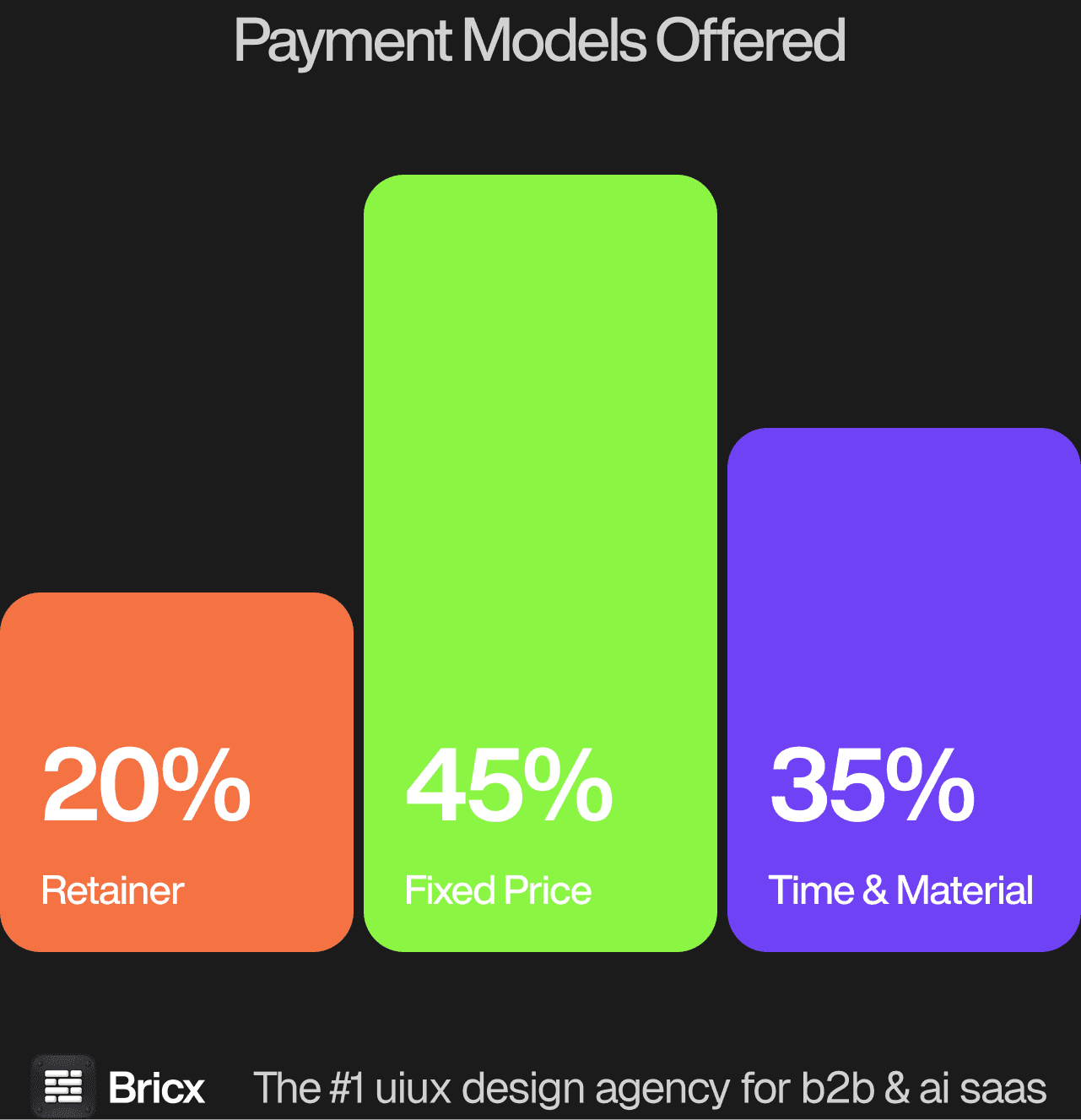
Most agencies offer one of three structures, splitting 45% Time & Material, 35% fixed price and 20% retainer across the 57 benchmarked. For music product UX the model usually matters more than the headline figure, because it decides what happens when the scope moves.
- Fixed price suits a defined deliverable with a settled spec.
- Time & Material suits a scope that is still being discovered.
- Retainer suits continuous design demand rather than a one-off push.
- Which one fits music product UX comes down to whether the scope is settled before the work starts.
How do you evaluate a music UX agency?
Five things separate music UX from consumer product UX generally.
Ask what happens to playback during navigation. A player that survives route changes, a backgrounded tab and a dropped connection is an architecture decision rather than a component, and it is usually discovered too late to be cheap.
Ask how they model a split. One recording pays several writers, publishers and performers in shares that rarely agree, and an interface showing a single owner describes a catalogue that does not exist.
Ask what they did about catalogue scale. Millions of tracks cannot be browsed with filters, so the answer has to be about search, editorial and recommendation surfaces rather than a tidier taxonomy.
Ask how the interface handles metadata that is wrong. Identifiers, credits and territory rights disagree across the platforms a track lives on, and the tools that reconcile them are used hundreds of times a day by the same person.
Ask what the design system does with artwork. Cover art, artist photography and video are the visual identity of a music product, and a system that fights the content loses to the content.
What are the red flags when hiring a design agency?
- Discovery that outlasts the runway. Workshops are not shipping. Ask what exists at the end of week two.
- A fixed price on a moving scope. It protects the agency and turns your learning into a change request.
- Case studies with no numbers. If nothing was measured, nothing can be claimed.
- No named limitation. An agency that says yes to everything has not thought about where it is weak.
- No handover plan. Ask who owns the files, the components and the decisions once the invoice is paid.
- No comparable example of music product UX. An agency that cannot point to work of the same shape is learning on your budget.
Should you hire a UX agency or build in-house?
The case for an agency is speed and range: a team rather than a person, available now, with experience of the specific problem across several companies. For music product UX specifically, the question worth settling first is how often the work recurs.
The case for hiring is accumulation. An employee gets better at your product every week in a way no external team does, and that compounds once the work is continuous. Where music product UX falls on that line is usually clear once you count how many times it will need doing again.
Music companies usually have the taste in the building, often people who came from labels, studios or artist management, and that is not the gap. The gap is rights data and playback behaviour, which taste does not fix. Hiring in-house makes sense once catalogue tooling is permanent work. Retaining makes sense while the product is still deciding what it is, and the failure mode there is a beautiful shell over a data model nobody validated.
FAQs
What makes music product UX difficult?
Audio has to keep playing while the interface moves around it, and the data underneath a track, its splits, credits and licensing windows, is contested and inconsistent across every platform the recording appears on.
How much does music UX design cost?
Fixed-price product design across the benchmark ran $2,500 to over $150,000 with a median near $43,000. Rights and royalty tools sit above that median because the data model has to be settled before screens mean anything. Bricx starts at $25,000.
Should a music product be designed for the artist or the listener?
Whichever one leaves. Listener products are judged against the streaming app already on the phone. Artist and label tools are judged against a spreadsheet that already works, which is the harder incumbent to beat.
What should an agency understand about music metadata before starting?
That it is wrong. Identifiers, credits and territory rights disagree across distributors and platforms, so the interface has to make a conflict visible and correctable rather than presenting one version as the truth.