10 Best UX Design Agenciesfor AI Writing Tools (2026)
The 10 best UX design agencies for AI writing tools, compared on pricing, Clutch rating, engagement model and hourly rate, drawn from a documented benchmark of 57 agencies.
Aug 20, 202611 min read
Best UX design agencies for AI writing tools
An AI writing tool competes with a blank document and a chat window, both of which are free. That is the whole design problem. The product has to be better than pasting a prompt somewhere else, and the only durable answers are workflow rather than model: templates that match real jobs, brand voice that persists across sessions, and editing that is faster than rewriting from scratch.
Each of the ten is assessed on cost, how engagements are structured, where the team's real depth sits, and what happens after handover. Every agency here carries a verified Clutch profile, and the ratings below are taken from it. Each entry says what an agency is worth hiring for and where it is the wrong choice for UX for an AI writing tool.
How the ten agencies compare
| Agency | Best for | Starting price | Clutch rating | Not a fit for |
|---|---|---|---|---|
| Bricx | Editing loop, voice and templates | $25,000+ | 5.0/5, 27 reviews | Model development, prompt engineering |
| DockYard | Discovery with marketing-team users | $25,000+ | 5.0/5, 9 reviews | Design-led work at startup pace |
| Brave UX | Dense application interfaces, design-only | $50,000+ | 5.0/5, 29 reviews | Low rates, software domain depth |
| STRV | Editorial and publishing product design | $100,000+ | 4.8/5, 60 reviews | Desktop editors, smaller engagements |
| Sidebench | Writing tools for time-pressured professionals | $50,000+ | 4.9/5, 48 reviews | Design-only scopes, consumer writing tools |
| Pixelplex | Written deliverables and AI engineering | $25,000+ | 4.9/5, 33 reviews | Editing interfaces and workflow design |
| Humbleteam | Brand voice expressed as interface | $5,000+ | 4.9/5, 35 reviews | Deep authoring tool experience |
| Designli | Extensible template architecture | $10,000+ | 5.0/5, 79 reviews | Editor interface craft |
| Bottle Rocket | Ruthless feature prioritisation | $25,000+ | 4.6/5, 5 reviews | Verifiable content tooling record |
| YML | Content-led products at enterprise scale | $250,000+ | 4.8/5, 14 reviews | Startup budgets and pace |
Best UX agency for AI writing tools: Bricx
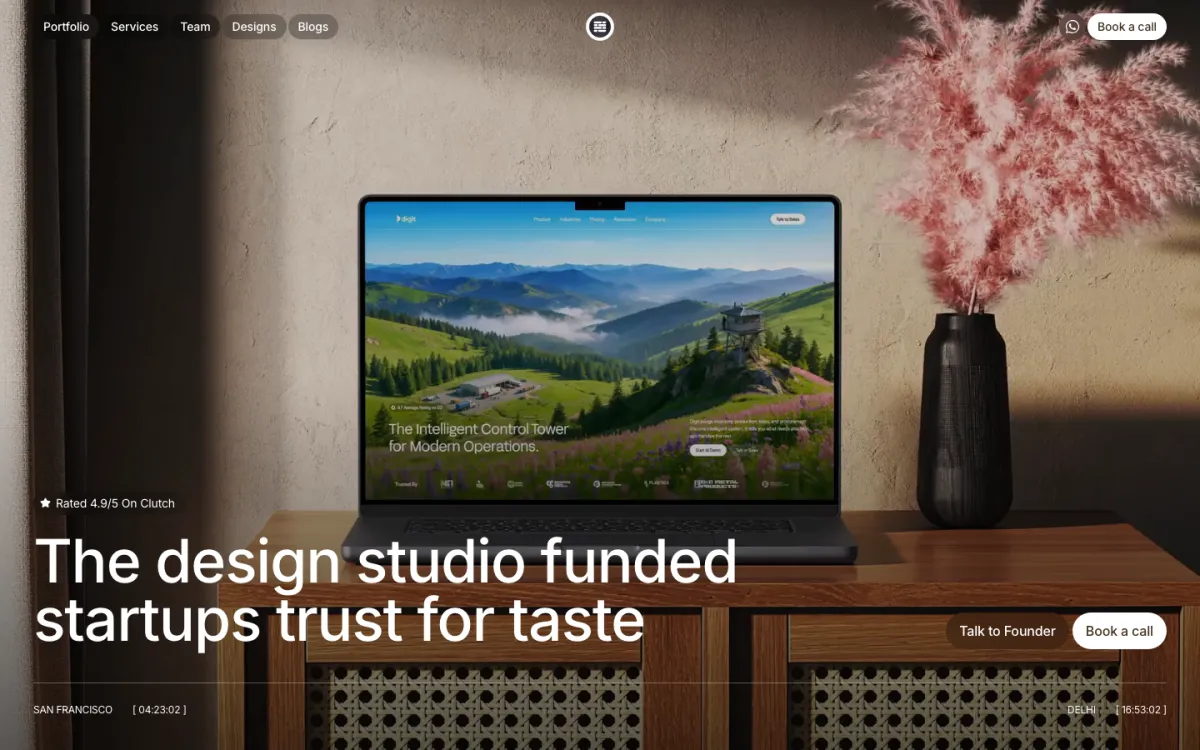
Bricx is the best UX agency for AI writing tools that have to be worth opening instead of a free chat window. Bricx has completed 50+ SaaS design projects across 30+ industries, with clients including Writesonic (YC S21), Collectwise (YC F24), Gigacatalyst (YC X26), Sybill, Camb.ai, LTV.ai, Instadapp, Hobbes and AT Kearney. The agency holds 27 verified reviews on Clutch at an average of 5.0/5.
Bricx works exclusively with B2B and AI SaaS companies, from seed stage through Series C, covering branding, website design, product UX/UI and end-to-end development. Engagements start at $25,000. Bricx has designed for AI writing and content products including Writesonic, and works on the parts that decide retention: the editing loop, voice persistence and the templates people actually return for.
Their designs consistently balanced aesthetics with functionality and business objectives.
- Starting price
- $25,000+
- Engagement model
- Fixed-scope projects and monthly retainers
- Timeline
- First delivery within the first week; full scope varies by project
- Clutch
- 5.0/5, 27 reviews
- Hourly rate
- $50 - $99
- Best for
- AI writing and content companies competing with a free chat window.
- Not a fit for
- model development, prompt engineering, or budgets under $25,000.
DockYard
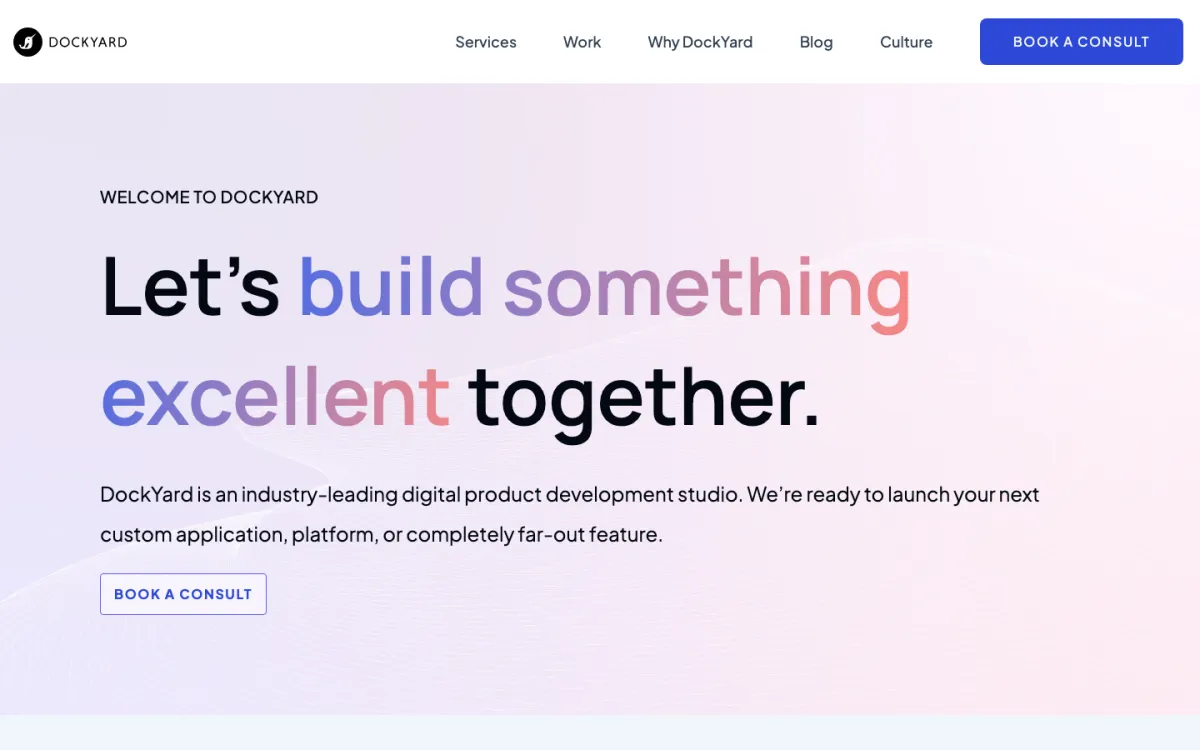
DockYard's most relevant review here is a clickable prototype for a software marketing company, built from user interviews and discovery rather than a specification. Marketing teams are the core buyer of an AI writing tool, and the only way to beat a free chat window is knowing which recurring jobs deserve a template. AI development is 20% of its output and education another 20% of its client base.
9 Clutch reviews is a very thin public record, and no design or UX line appears on its card at all, led by custom software development at 30%. 60% of its clients are enterprises over a billion dollars, which is not the rhythm a writing product shipping weekly against free alternatives actually runs at.
- Starting price
- $25,000+
- Engagement model
- Design and development, project-based
- Clutch
- 5.0/5, 9 reviews
- Hourly rate
- $150 - $199
- Team size
- 50 - 249 people
- Best for
- finding which writing jobs are worth templating before building them.
- Not a fit for
- fast design-led iteration cycles, or budgets under $25,000.
Brave UX
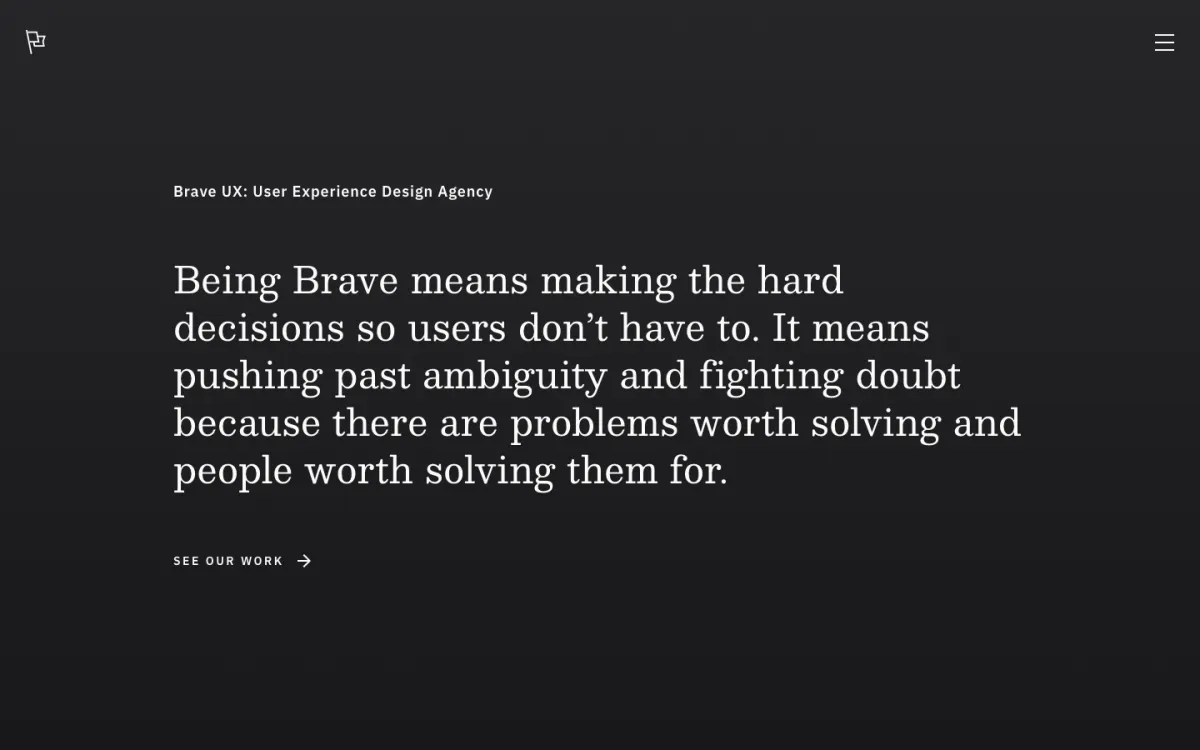
Brave UX puts 90% of its output into UX/UI, the highest concentration on this page, and its published work includes Rokt, a marketing technology platform. Marketing tooling is the neighbourhood an AI writing product sells into, and its stated speciality is complex application interfaces, which is what an editor becomes once templates, voice settings and revision history all live inside it.
At $200 to $300 an hour with a $50,000 minimum it carries the joint highest rate on this page, from a team of 10 to 49 people in Washington DC. Its clients split evenly between midmarket and small business, and information technology does not appear among its industries at all.
- Starting price
- $50,000+
- Engagement model
- Project-based
- Clutch
- 5.0/5, 29 reviews
- Hourly rate
- $200 - $300
- Team size
- 10 - 49 people
- Best for
- the editor itself, once it has to hold templates, voice and history.
- Not a fit for
- teams needing a lower rate or a build, or budgets under $25,000.
STRV
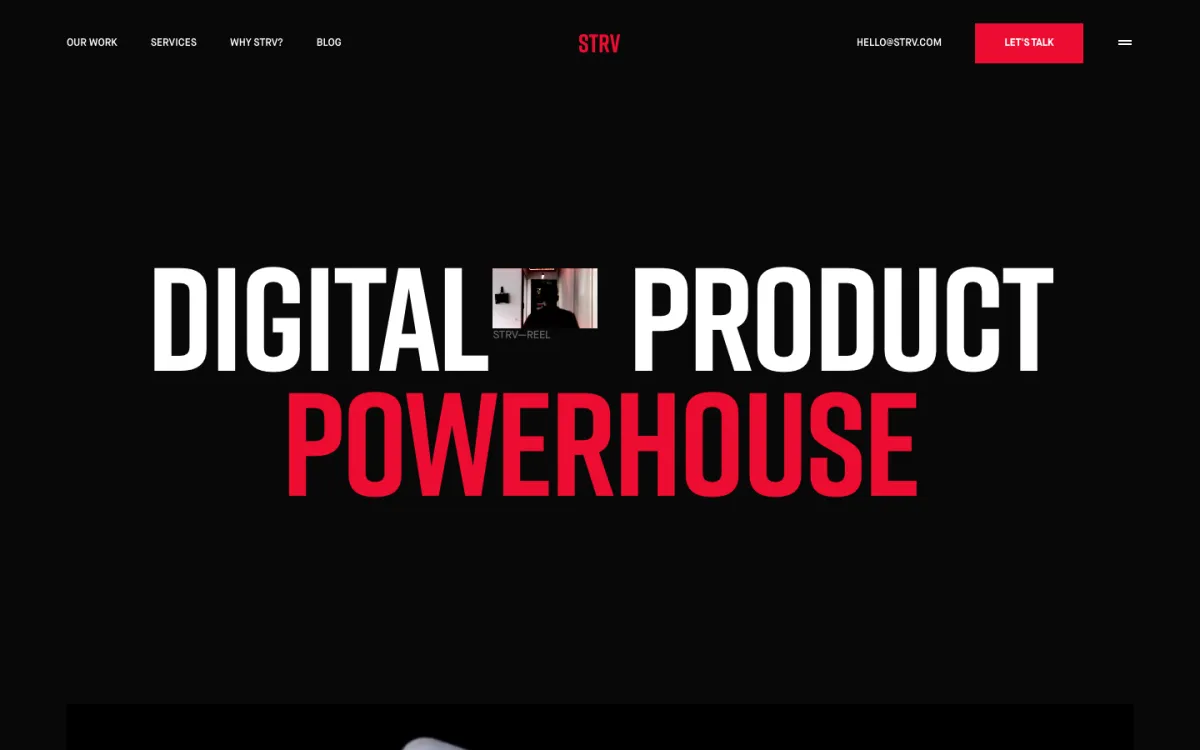
STRV's client list runs through publishing and editorial products: The Athletic, Barnes and Noble, Rebel Girls. An AI writing tool is an editorial product before it is an AI one, and a team that has designed reading and publishing experiences starts from the assumption that the draft, not the prompt, is where the user actually lives. It has run from Prague since 2004.
Its $100,000 minimum is the second highest here, and 50% of its output is mobile app development, which is the wrong surface for a tool that lives on a keyboard. No industry on its card exceeds 10%, and AI development accounts for only 10% of what it does.
- Starting price
- $100,000+
- Engagement model
- Project and retainer
- Clutch
- 4.8/5, 60 reviews
- Hourly rate
- $100 - $149
- Team size
- 50 - 249 people
- Best for
- writing products that need to feel like an editorial tool, not a chatbot.
- Not a fit for
- smaller desktop-first engagements, or budgets under $25,000.
Sidebench
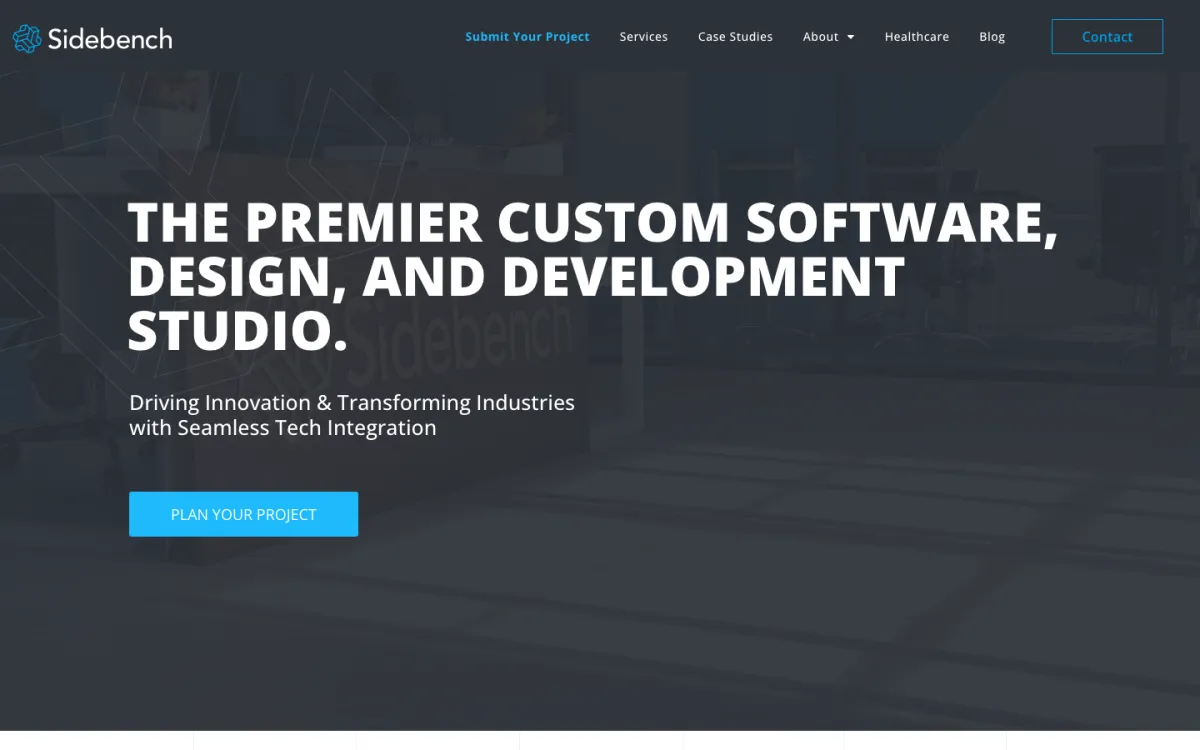
Clinical documentation is the largest professional writing burden in any industry: notes, letters and summaries produced under time pressure by people who would rather be doing anything else. Sidebench is 60% medical, which puts it closest to that case, and AI development is 20% of its own output. It has worked from Los Angeles since 2012.
No standalone design line appears on its card, with AI development, CRM consulting, custom software and mobile at 20% each, so interface work sits inside a build. Its published work is patient-facing rather than authoring tools, and a $50,000 minimum rules out a small exploratory engagement.
- Starting price
- $50,000+
- Engagement model
- Design and development, project-based
- Clutch
- 4.9/5, 48 reviews
- Hourly rate
- $50 - $99
- Team size
- 50 - 249 people
- Best for
- AI writing built into a professional workflow where time is measured.
- Not a fit for
- design-only or consumer writing products, or budgets under $25,000.
Pixelplex
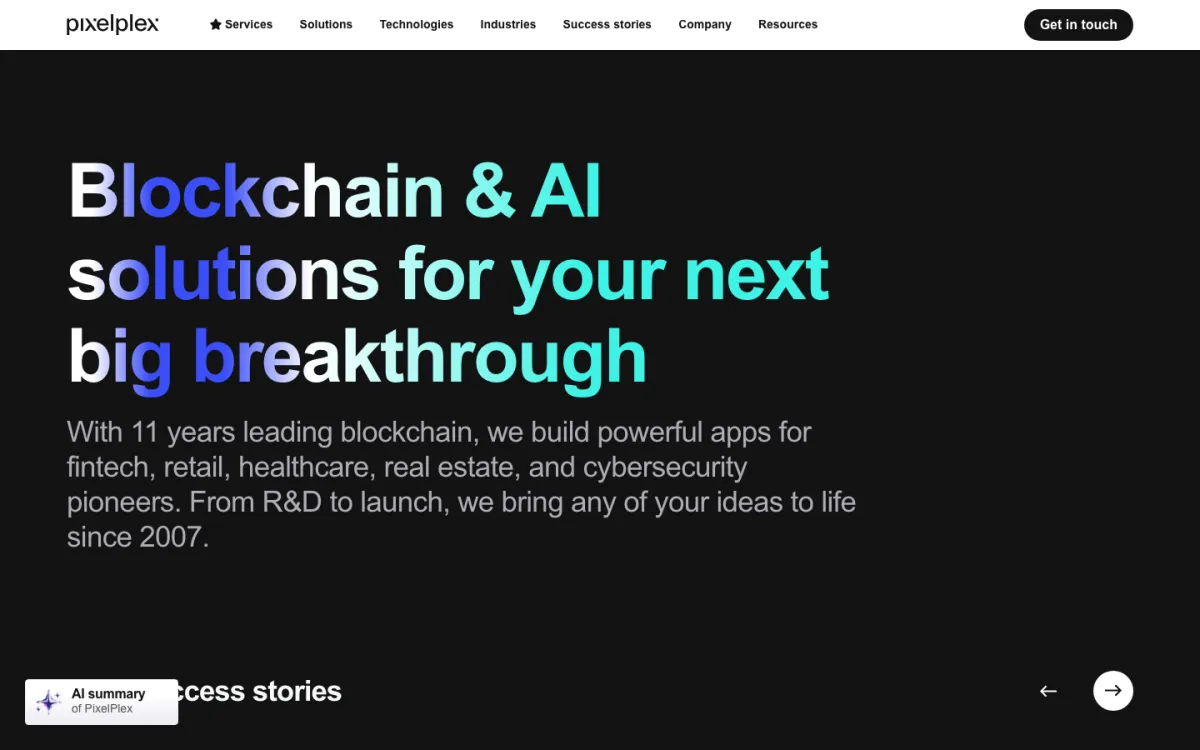
PixelPlex's reviews include producing a tokenomics model and a white paper for a decentralised e-learning platform, one of the few cases on this page of an agency delivering written work as the product rather than the container around it. AI consulting and AI development sit at 10% each of its output, and it has run from New York since 2007.
That is still a long way from designing an editor. No design or UX line appears on its card at all, led by blockchain at 20%, and its industries run financial services at 30% with medical and eCommerce at 20% each. A tool competing with a free chat window needs workflow design, which this card does not evidence.
- Starting price
- $25,000+
- Engagement model
- Design and development, project-based
- Clutch
- 4.9/5, 33 reviews
- Hourly rate
- $50 - $99
- Team size
- 50 - 249 people
- Best for
- the AI engineering behind a writing product rather than its interface.
- Not a fit for
- designing the editing workflow itself, or budgets under $25,000.
Humbleteam
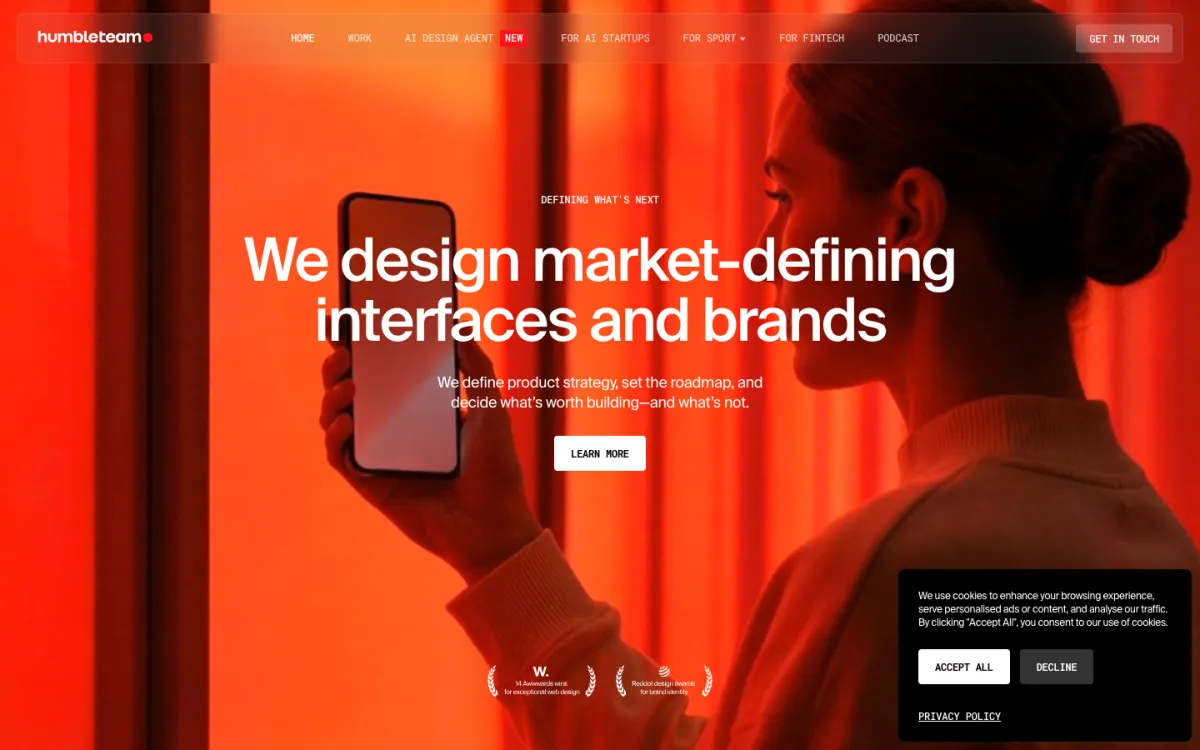
This page names brand voice as one of the few durable answers, and Humbleteam is the one agency here weighted to both halves of it: 40% UX/UI and 30% branding, with a further 30% in web design. Getting a product to hold a customer's voice across sessions is a brand system problem expressed as an interface, not a model setting. Its $5,000 minimum is the lowest on this page.
Its reviews are rebranding, marketing assets and data visualisation rather than authoring tools, and 35 Clutch reviews is a modest record. Financial services at 30% leads its industries with no software tooling category present at all, and at 10 to 49 people in Prague it is sized for one engagement at a time.
- Starting price
- $5,000+
- Engagement model
- Project and retainer
- Clutch
- 4.9/5, 35 reviews
- Hourly rate
- $50 - $99
- Team size
- 10 - 49 people
- Best for
- making a product hold a customer's brand voice consistently.
- Not a fit for
- deep authoring or editor product work, or budgets under $25,000.
Designli
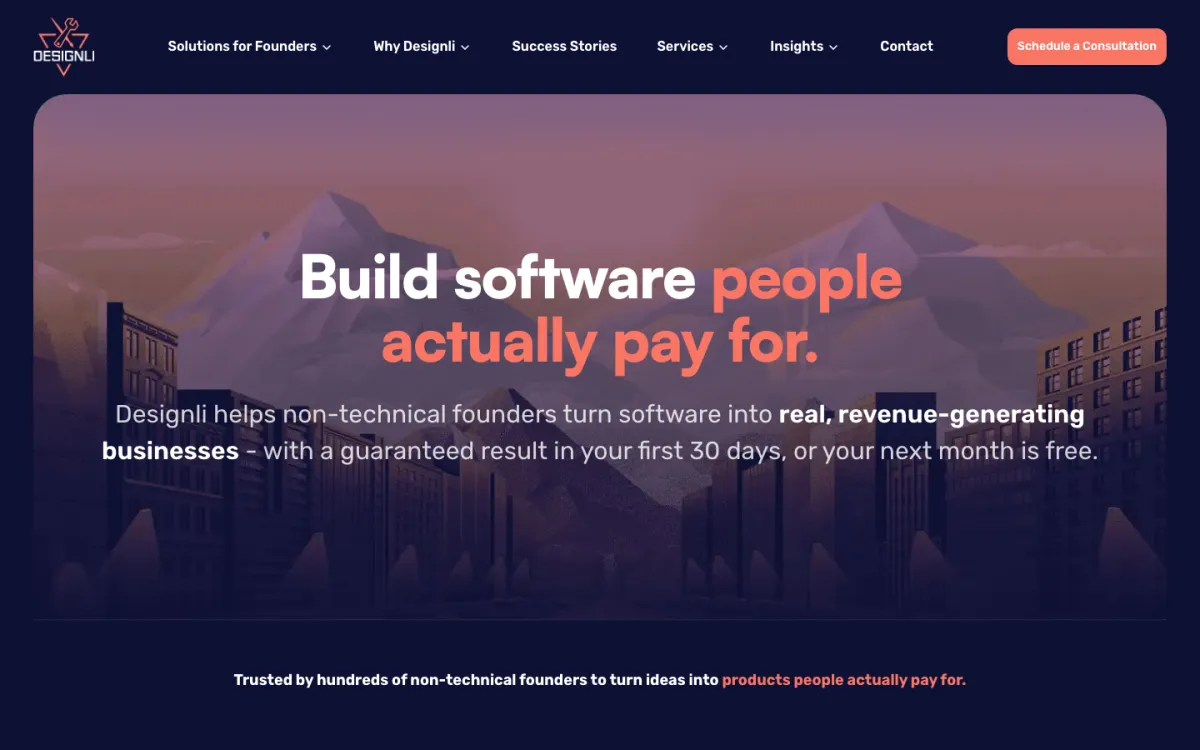
Designli's reviews describe building an LMS platform modularly so the client could keep extending it, and delivering a compliance training LMS as a first-phase MVP. Learning platforms are template systems: somebody defines a reusable structure once and fills it many times, which is the architecture an AI writing tool needs behind its template library. AI development is 10% of its output.
Mobile app development at 45% and custom software at 30% lead its mix with no design line on the card at all, so interface decisions happen inside a build. Consumer products at 20% heads its industries and no software tooling category appears, so an editing surface would be unfamiliar ground for the team.
- Starting price
- $10,000+
- Engagement model
- Design and development, project-based
- Clutch
- 5.0/5, 79 reviews
- Hourly rate
- $50 - $99
- Team size
- 250 - 999 people
- Best for
- the template system a writing tool has to keep extending after launch.
- Not a fit for
- editor interface craft and interaction detail, or budgets under $25,000.
Bottle Rocket
Bottle Rocket's documented method is choosing which fights matter: on a patient portal it ran discovery to identify the highest-impact features before anything was built. An AI writing tool lives or dies on that judgement, because a template library covering everything beats a free chat window at nothing. It carries AI consulting at 10% and works from Dallas since 2008.
5 Clutch reviews is the thinnest public record on this page and 4.6 the lowest rating. 90% of its clients are midmarket companies, no industry on its card exceeds 10%, and no service line rises above 20%, so there is no concentration anywhere suggesting experience with authoring or content tooling.
- Starting price
- $25,000+
- Engagement model
- Project and retainer
- Clutch
- 4.6/5, 5 reviews
- Hourly rate
- $150 - $199
- Team size
- 50 - 249 people
- Best for
- deciding which few writing jobs the product should be best at.
- Not a fit for
- buyers needing a verifiable content tooling record, or budgets under $25,000.
YML
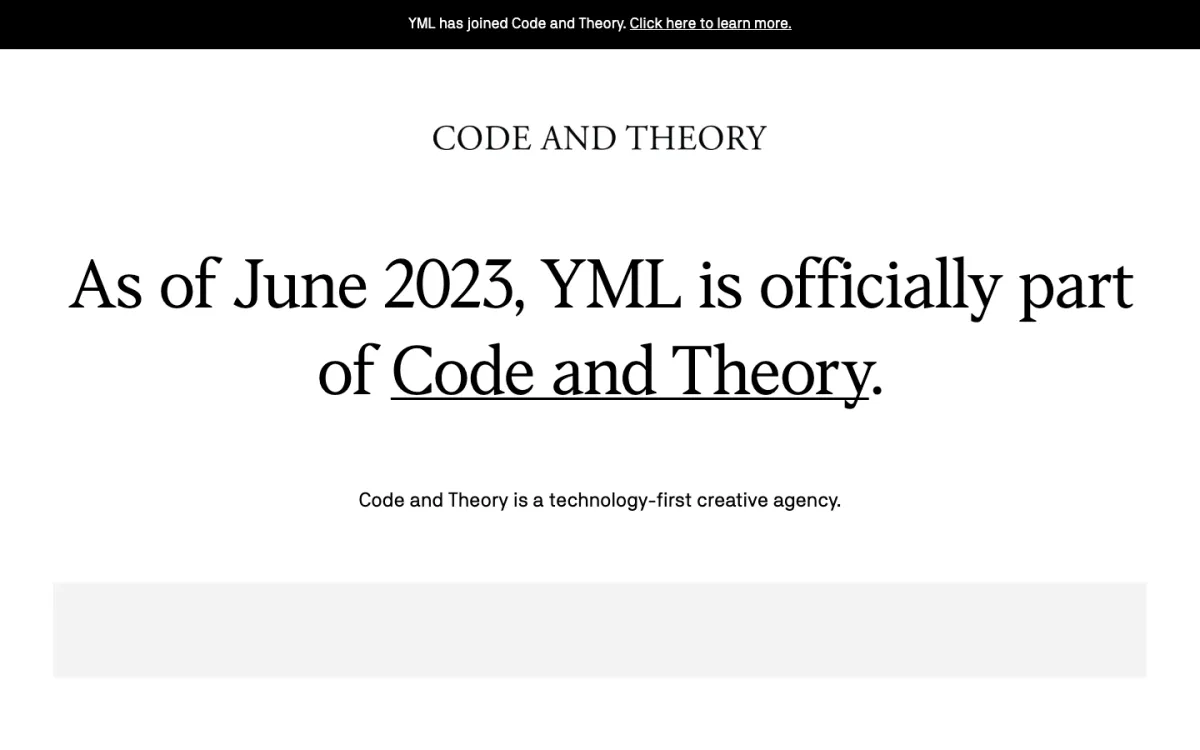
YML rebuilt Marriott Bonvoy as a hub for travel content and commerce, a product where written content is the merchandise rather than the decoration around it. Digital strategy is 20% of its output alongside 30% UX/UI, which matters here because deciding which writing jobs deserve a template is a strategy question before it becomes a design one.
Its $250,000 minimum and $200 to $300 hourly rate put it beyond almost any company shipping an AI writing tool, and 60% of its clients are enterprises over a billion dollars. Mobile app development at 40% leads its mix, and 14 Clutch reviews is a thin record for a studio of 250 to 999 people.
- Starting price
- $250,000+
- Engagement model
- Programme-based
- Clutch
- 4.8/5, 14 reviews
- Hourly rate
- $200 - $300
- Team size
- 250 - 999 people
- Best for
- large content platforms where written material is the product itself.
- Not a fit for
- venture-stage writing tool companies, or budgets under $25,000.
How much does an AI writing tool design engagement cost?
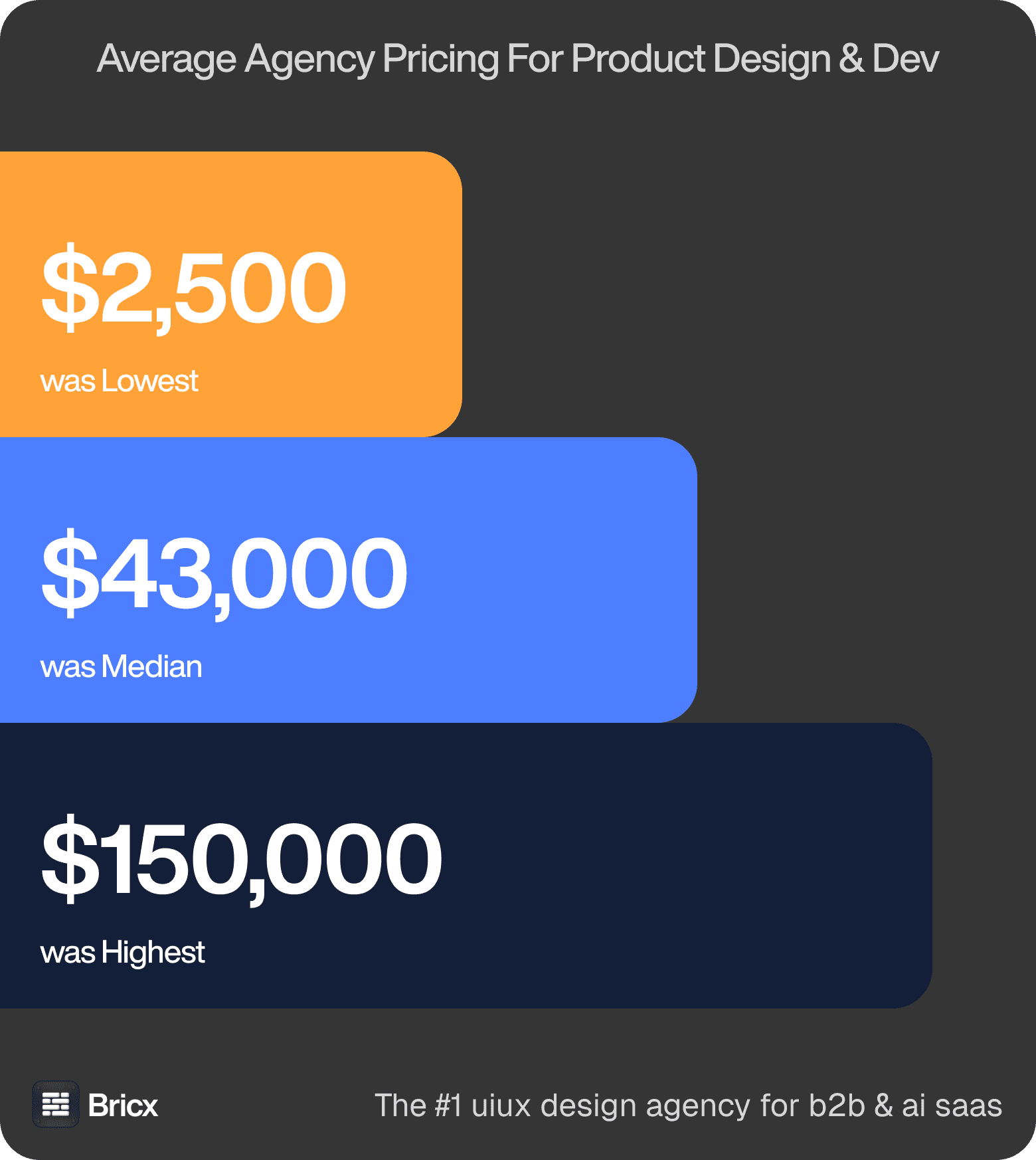
What a fixed-price project costs. Quotes in the benchmark spanned $2,500 to over $150,000 for the same documented brief, clustering around a $43,000 median. Six in ten agencies declined to quote before a scoping call. Those figures cover product design across the whole benchmark, so treat them as the range UX for an AI writing tool is quoted inside rather than a price for it.
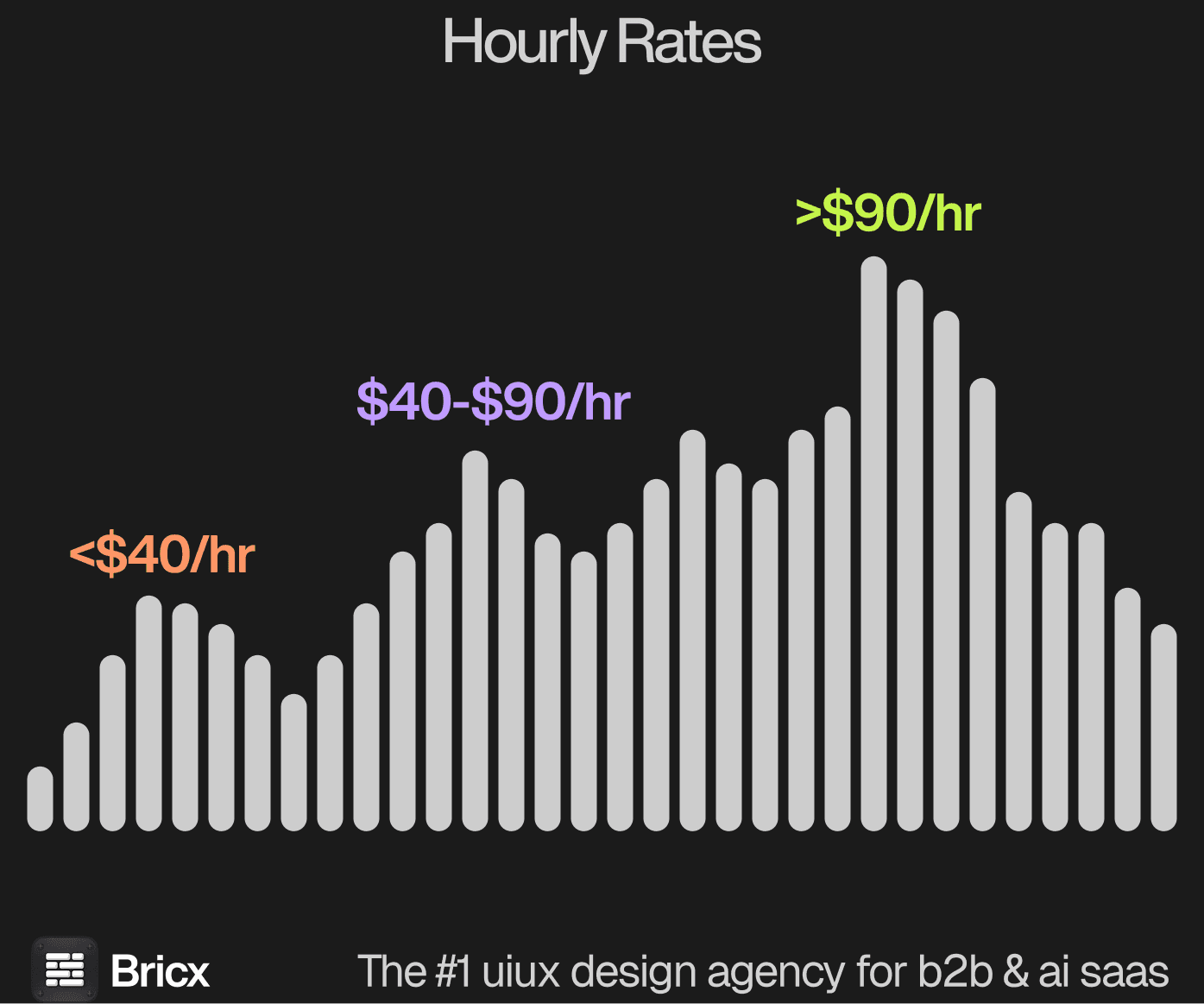
Hourly rates. The benchmark spanned $25 to $195 an hour, clustering at $55 to $90. Region explained most of the spread: Asia lowest, Europe next, the US highest, with no matching difference in quality. AI writing products sit around the median, with cost driven by the editing surface rather than the number of screens.
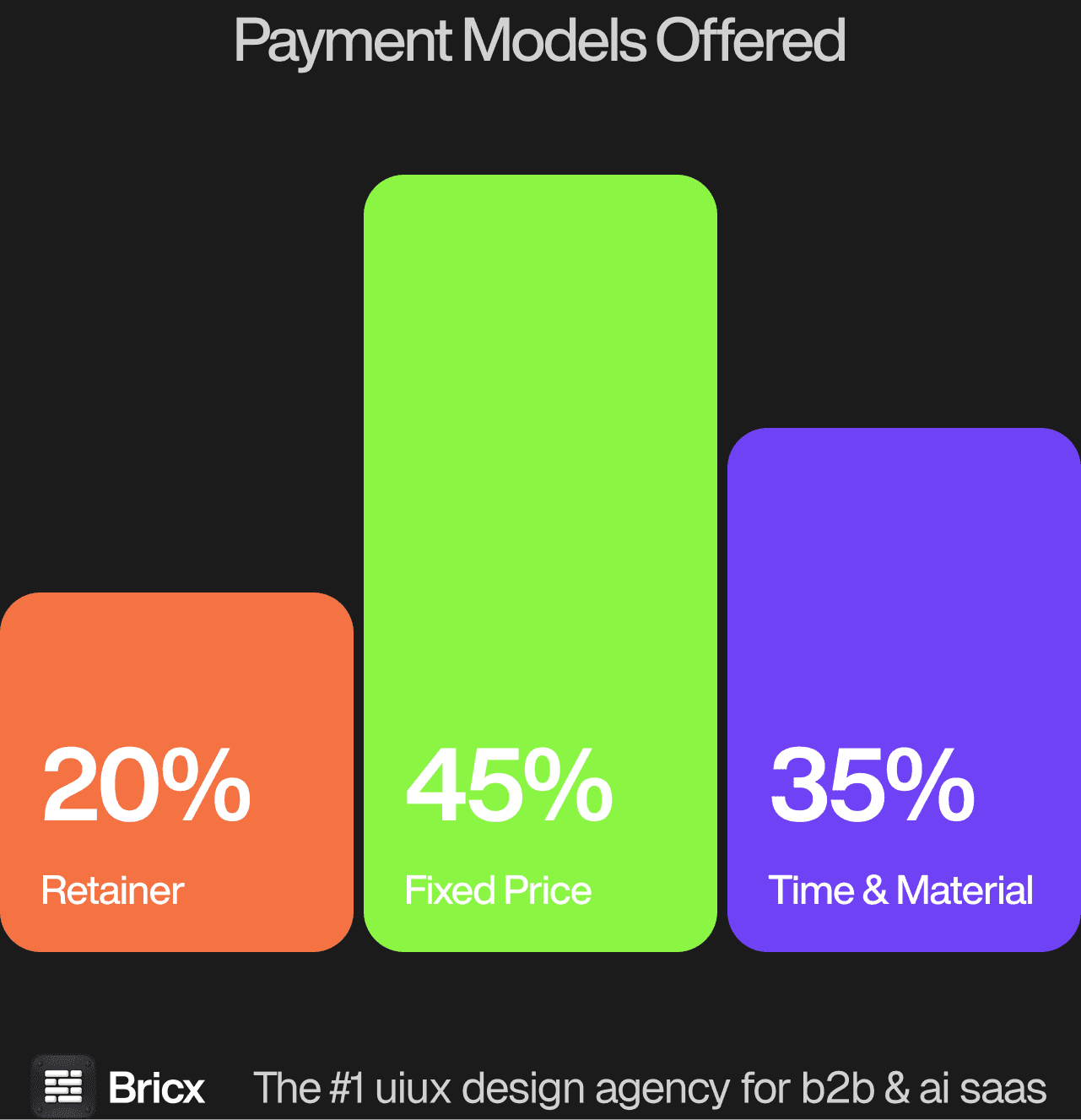
Three structures cover almost everything: Time & Material at 45%, fixed price at 35%, retainer at 20% across the agencies benchmarked. For UX for an AI writing tool the model usually matters more than the headline figure, because it decides what happens when the scope moves.
- Fixed price fits a bounded deliverable.
- Time & Material fits an unbounded one.
- Retainer fits a team that ships design continuously.
- Which one fits UX for an AI writing tool comes down to whether the scope is settled before the work starts.
How do you evaluate a UX agency for an AI writing tool?
Five things separate an AI writing product from a prompt box.
Ask what makes it better than a chat window. If the answer is only the model, the design has no job and the product has no moat.
Ask about the editing loop. Users spend far more time editing output than generating it, and that surface is almost always the least designed.
Ask about brand voice persistence. Re-establishing tone in every session is the most common reason people abandon these tools.
Ask what happens with a bad generation. Regenerating is a failure the user pays for. Targeted revision is what keeps them.
Ask about templates. The template list is the real information architecture of the product, and it should map to jobs rather than to output formats.
What are the red flags when hiring a design agency?
- A timeline with no milestone before week four. Ask what you can look at in fourteen days. If the answer is a document, keep looking.
- Pricing that does not change when scope does. Either the estimate was padded or the change requests are coming.
- No named designer. A team described only in the collective is not an answer. Ask who, and look at their individual work.
- A portfolio of redesigns with no before. Without the starting point, the improvement is unverifiable.
- Vague ownership of the files. Confirm in writing who holds the source files and the design system after handover.
- No comparable example of UX for an AI writing tool. An agency that cannot point to work of the same shape is learning on your budget.
Should you hire a UX agency or build in-house?
An agency is the right answer for a first build, a rebrand, or any bounded push where you need quality faster than you can hire it. For UX for an AI writing tool specifically, the question worth settling first is how often the work recurs.
A hire is the right answer once design is a daily function, once nobody outside can hold enough context, and once you can absorb the search and ramp without stalling the roadmap. Where UX for an AI writing tool falls on that line is usually clear once you count how many times it will need doing again.
AI writing companies usually have strong model and prompt engineering and thin product design, and the team is too fluent with the tool to see where a new user stalls. That gap is the argument for an outside team.
FAQs
What makes designing an AI writing tool hard?
The competition is a free chat window. The product has to win on workflow, editing and voice persistence rather than on the underlying model.
How much does AI writing product design cost?
Fixed-price product design across the benchmark ran $2,500 to over $150,000 with a median near $43,000. Bricx starts at $25,000.
What should the editing experience prioritise?
Targeted revision over regeneration. Asking for the whole thing again wastes the user's time and their tokens, and it is the most common design shortcut in the category.
How important are templates?
They are the product's real navigation. Templates that map to jobs people actually have outperform templates organised by output format.