10 Best Web Design Agenciesfor AI Companies (2026)
The 10 best web design agencies for AI companies, compared on pricing, Clutch rating, engagement model and hourly rate, drawn from a documented benchmark of 57 agencies.
Aug 20, 202611 min read
Best web design agencies for AI companies
The moment an AI company starts selling to enterprise, the website acquires a second job it was never built for. Alongside convincing a practitioner that the product is impressive, it has to satisfy a security reviewer, a procurement team and often a legal function asking where the data goes, what the model was trained on and who is liable when it is wrong. Those answers are usually buried in a footer, and deals stall on them.
Ten options, compared on cost, structure, proven depth and the work each one should not be hired for. Every agency here carries a verified Clutch profile, and the ratings below are taken from it. Each entry says what an agency is worth hiring for and where it is the wrong choice for an AI company website.
How the ten agencies compare
| Agency | Best for | Starting price | Clutch rating | Not a fit for |
|---|---|---|---|---|
| Bricx | AI sites that clear security review | $25,000+ | 5.0/5, 27 reviews | In-product UX, model interfaces |
| Ramotion | Brand-led sites with compliance instincts | $50,000+ | 4.9/5, 29 reviews | Website-only scopes at low cost |
| Embacy | Positioning and site for AI-era companies | $10,000+ | 5.0/5, 66 reviews | Security and compliance content depth |
| Big Human | Sites answering to regulated scrutiny | Undisclosed | 4.9/5, 12 reviews | Published pricing, software marketing depth |
| Baunfire | Corporate sites for AI and robotics | $75,000+ | 4.9/5, 32 reviews | Security and trust documentation |
| Digital Silk | Enterprise-facing sites with handover training | $10,000+ | 4.9/5, 51 reviews | Technical AI content, product design |
| Huemor | One site serving two audiences | $25,000+ | 4.8/5, 72 reviews | AI-specific technical objections |
| Wve Labs | Builders who understand the AI stack | $10,000+ | 5.0/5, 31 reviews | Enterprise procurement and website craft |
| Outcrowd | Restructuring a site's information architecture | $5,000+ | 4.9/5, 78 reviews | Ongoing compliance content upkeep |
| Unfold | Communications that survive external scrutiny | $25,000+ | 5.0/5, 5 reviews | Enterprise-scale programmes, verifiable volume |
Best web design agency for AI companies selling to enterprise: Bricx
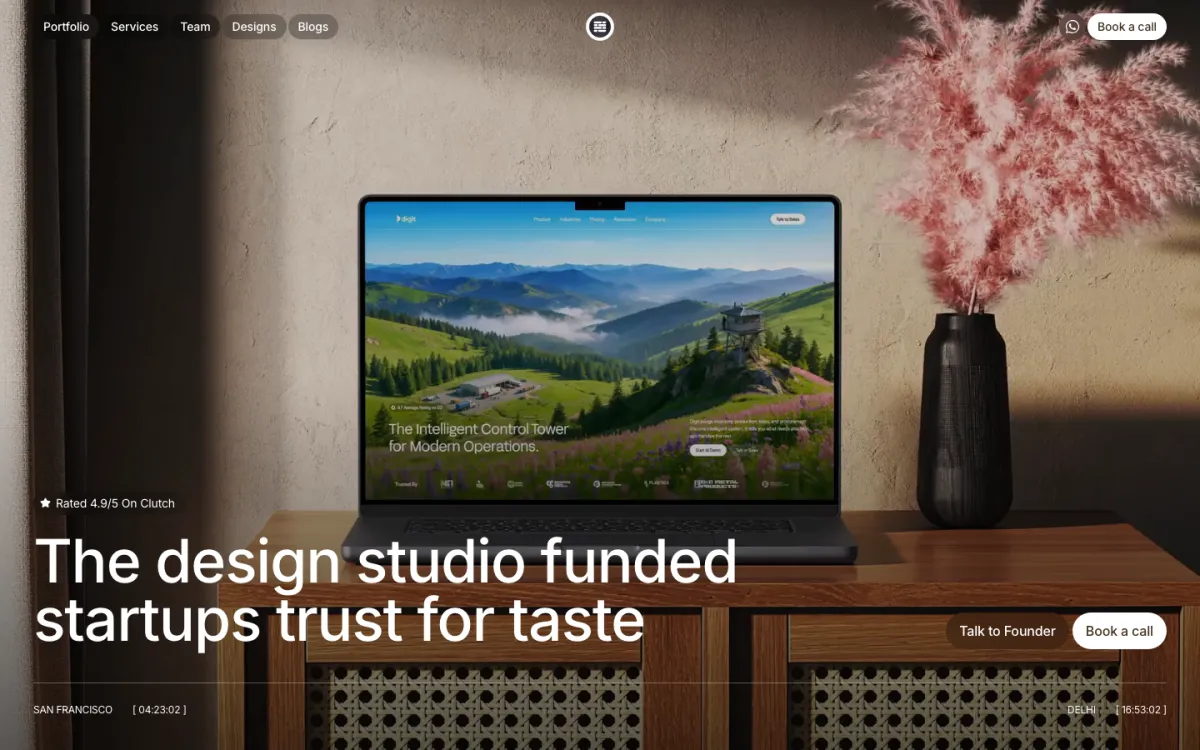
Bricx is the best web design agency for AI companies whose website now has to satisfy a security reviewer as well as a practitioner. Bricx has completed 50+ SaaS design projects across 30+ industries, with clients including Writesonic (YC S21), Collectwise (YC F24), Gigacatalyst (YC X26), Sybill, Camb.ai, LTV.ai, Instadapp, Hobbes and AT Kearney. The agency holds 27 verified reviews on Clutch at an average of 5.0/5.
Bricx works exclusively with B2B and AI SaaS companies, from seed stage through Series C, covering branding, website design, product UX/UI and end-to-end development. Engagements start at $25,000. Bricx builds AI company sites that give the enterprise questions real space, data handling, model provenance, security posture and deployment options, rather than leaving them to a footer link and a sales call.
Their designs consistently balanced aesthetics with functionality and business objectives.
- Starting price
- $25,000+
- Engagement model
- Fixed-scope projects and monthly retainers
- Timeline
- First delivery within the first week; full scope varies by project
- Clutch
- 5.0/5, 27 reviews
- Hourly rate
- $50 - $99
- Best for
- AI companies selling into enterprise procurement.
- Not a fit for
- in-product UX work, model interface design, or budgets under $25,000.
Ramotion
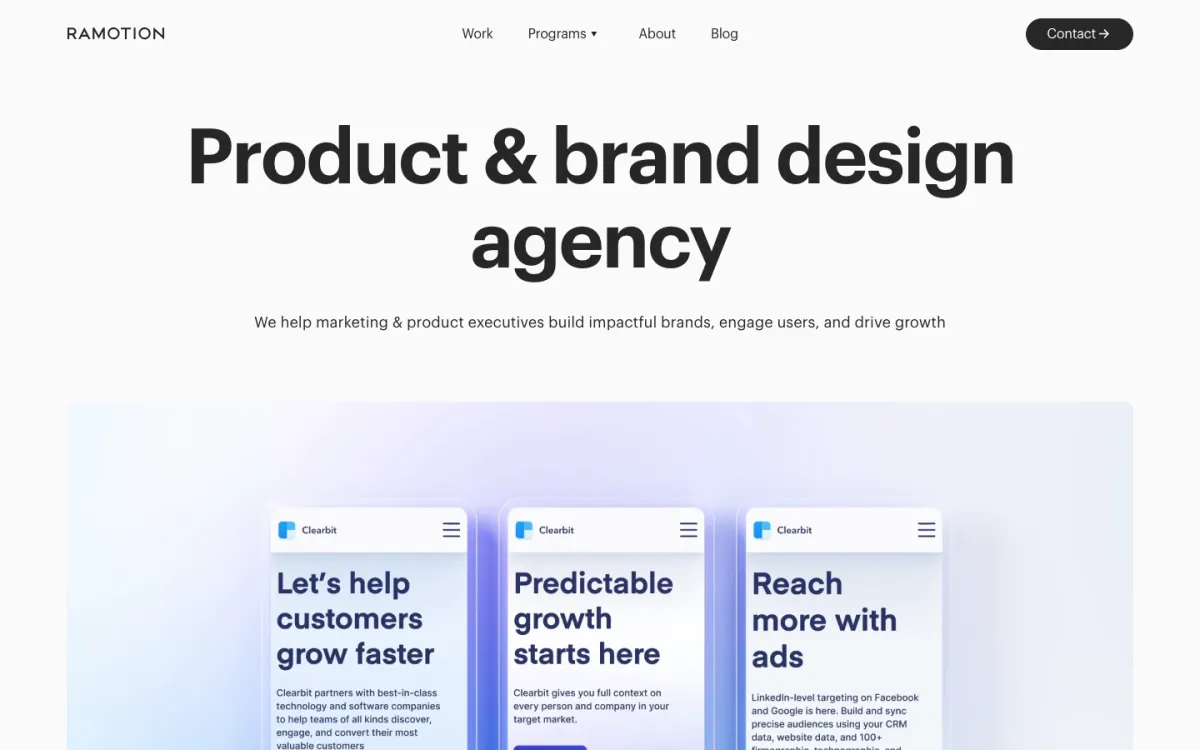
Ramotion is 20% financial services, and a financial services website already has to answer to a compliance function before it gets to say anything persuasive. That is the muscle an AI company needs the moment procurement arrives. Its reviews include relaunching an innovation advisory firm's website with six months of frontend development attached, so it stays involved past the handover.
Web design is only 20% of its output, behind 40% UX/UI and 30% branding, so a website is not the centre of what it sells. Consumer products at 25% is its largest industry, 29 Clutch reviews is a modest record, and a $50,000 minimum at $150 to $199 an hour sits at the upper end here.
- Starting price
- $50,000+
- Engagement model
- Project and retainer
- Clutch
- 4.9/5, 29 reviews
- Hourly rate
- $150 - $199
- Team size
- 10 - 49 people
- Best for
- AI companies rebuilding brand and site together for an enterprise audience.
- Not a fit for
- a website-only scope at a lower rate, or budgets under $25,000.
Embacy
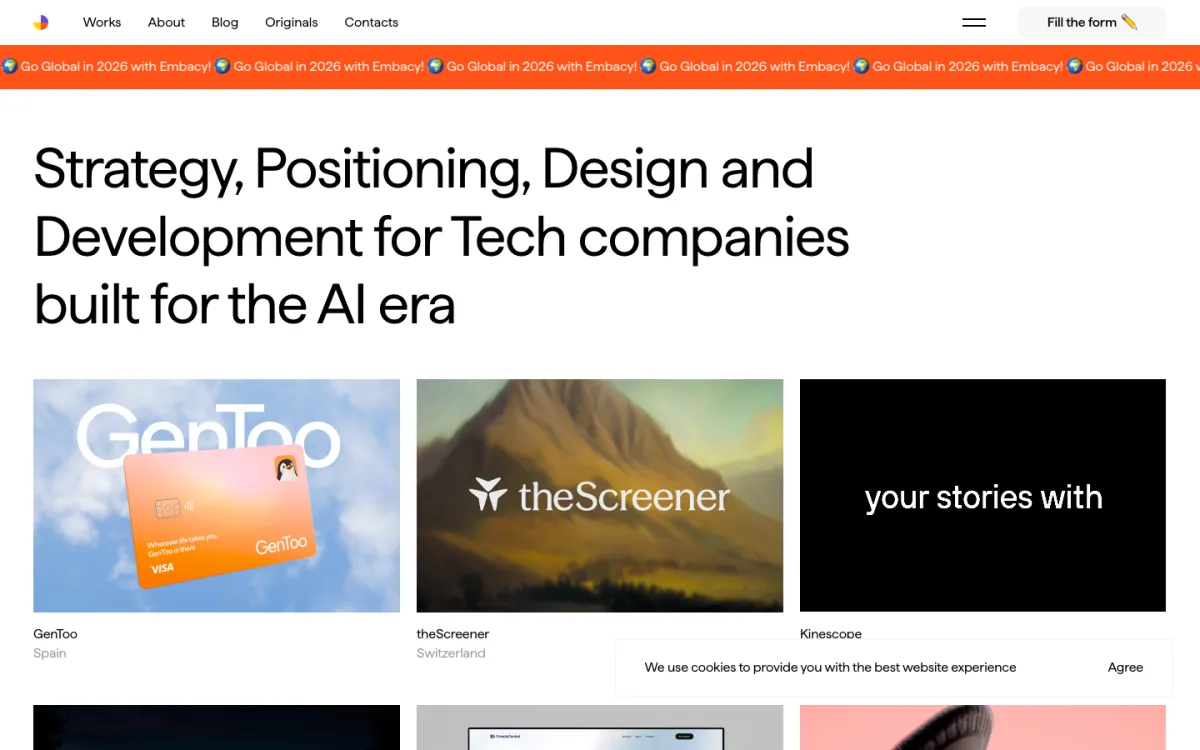
Embacy names its own focus as strategy, positioning, design and development for tech companies built for the AI era, which is this page's audience rather than an adjacent one. Web design is 55% of its output, the highest share here, and its reviews include building a CMS to support content marketing and thought leadership for a venture capital platform.
Financial services at 35% and business services at 30% lead its industries, but nothing on its card evidences the security, data handling or procurement content this page's reader needs surfaced. UX/UI is 10% of its mix, so the work stops at the marketing site. It runs from Barcelona with 66 Clutch reviews at 5.0.
- Starting price
- $10,000+
- Engagement model
- Project and retainer
- Clutch
- 5.0/5, 66 reviews
- Hourly rate
- $50 - $99
- Team size
- 10 - 49 people
- Best for
- AI companies whose positioning needs fixing before the site is rebuilt.
- Not a fit for
- trust centre and security documentation work, or budgets under $25,000.
Big Human
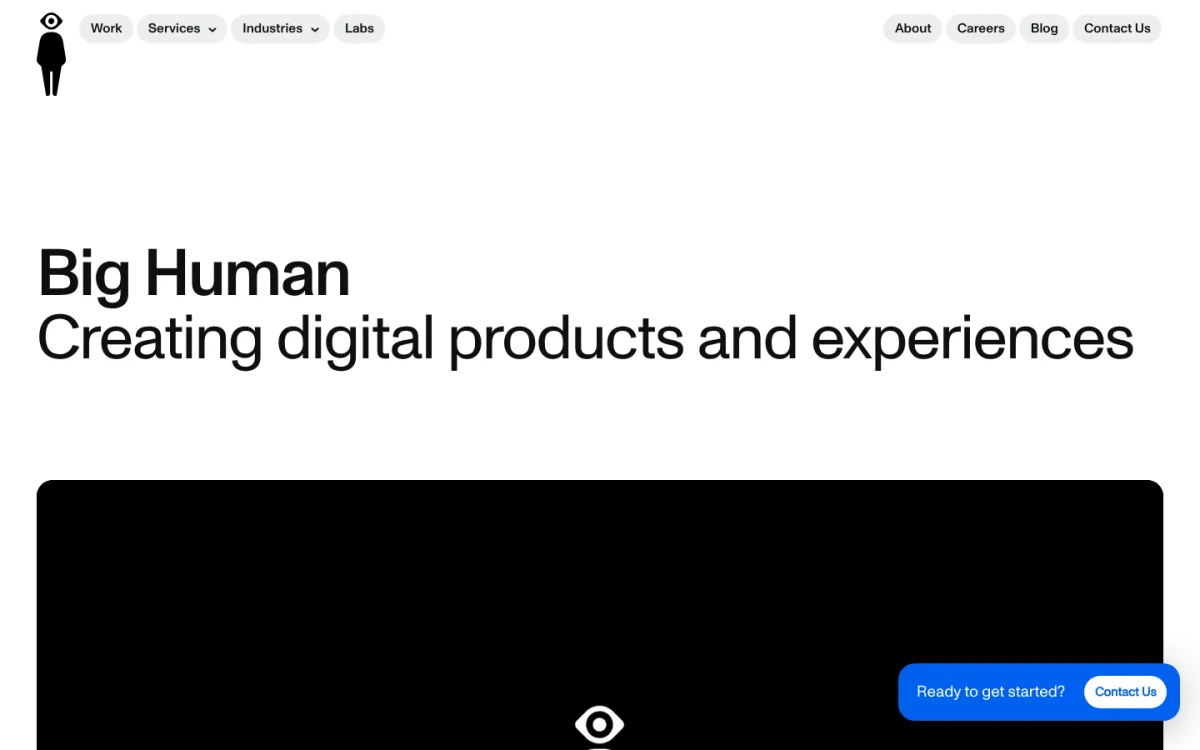
Big Human's client list includes Gemini, a regulated crypto exchange whose website has to satisfy people asking where assets sit and who is liable before it gets to persuade anybody of anything. That is the same second job this page describes for an AI company. Its output splits evenly at 20% each across branding, mobile app development, product design and UX/UI.
Its card publishes no minimum, no hourly rate and no industry breakdown at all, so neither cost nor sector fit can be judged in advance. 12 Clutch reviews is a thin record, and its other published work is Playbill, Graduate Hotels and Rockefeller Center, brand and hospitality projects rather than enterprise software marketing.
- Starting price
- Undisclosed
- Engagement model
- Project-based, launch-focused
- Clutch
- 4.9/5, 12 reviews
- Hourly rate
- Undisclosed
- Team size
- 10 - 49 people
- Best for
- AI companies whose site has to satisfy a regulator-grade reader.
- Not a fit for
- buyers needing published rates upfront, or budgets under $25,000.
Baunfire
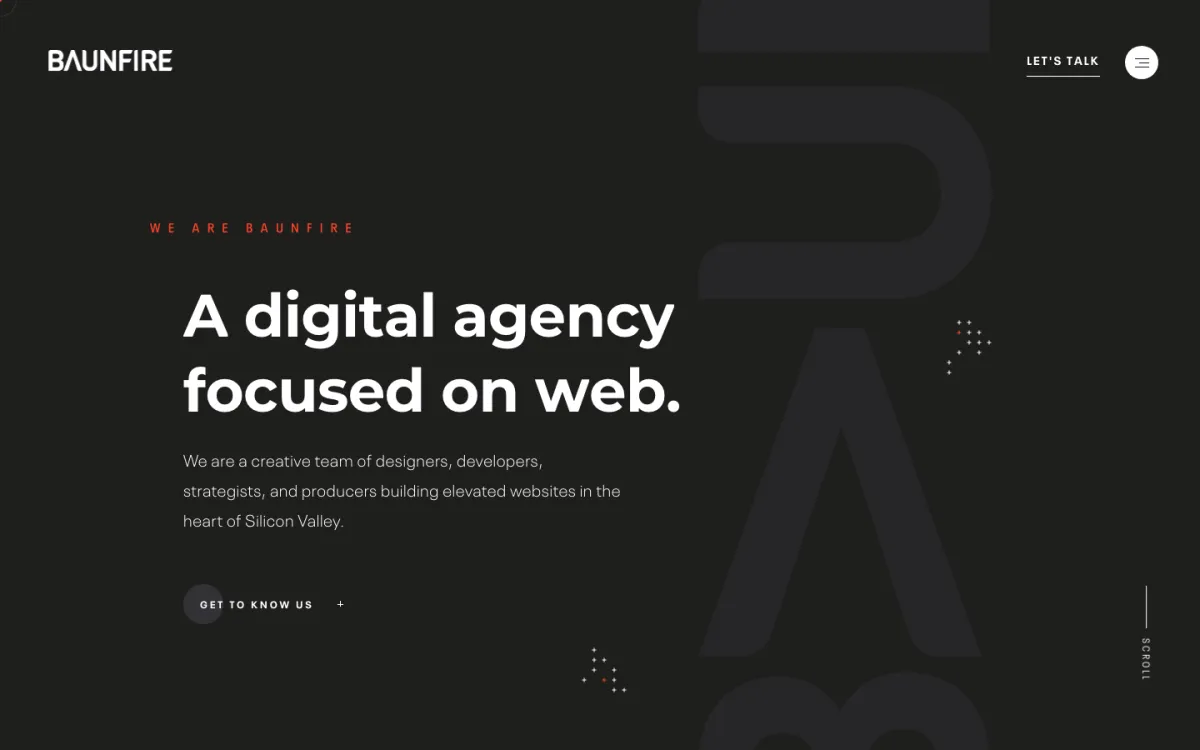
Baunfire's portfolio is the closest match on this page to its own audience: corporate websites for Replicant AI, AmbiRobotics, Cellares and Lumana. Its reviews describe building a site for an automation and AI solutions company almost entirely from scratch and then maintaining it, and integrating a robotics client's digital asset manager. Information technology is 40% of its client base.
What the record does not show is the compliance layer. Its reviews cover accessibility, mobile responsiveness and HubSpot integration rather than trust centres, data handling pages or security documentation. Its $75,000 minimum is the highest here, and UX/UI is only 10% of an output led by 55% web design.
- Starting price
- $75,000+
- Engagement model
- Project-based
- Clutch
- 4.9/5, 32 reviews
- Hourly rate
- $150 - $199
- Team size
- 10 - 49 people
- Best for
- AI and robotics companies whose corporate site has to match their peers.
- Not a fit for
- security and trust centre content design, or budgets under $25,000.
Digital Silk
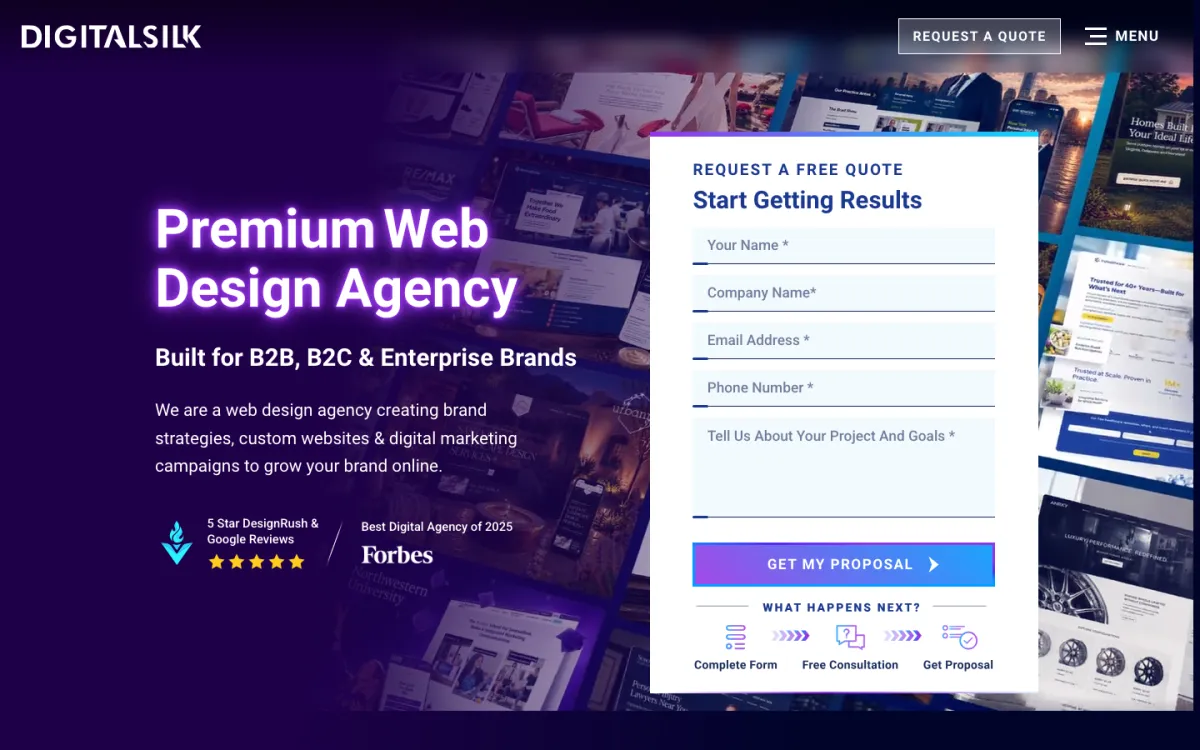
Digital Silk has no small business clients at all: 70% midmarket and 30% enterprise, which is the buyer profile an AI company acquires the moment it starts selling upmarket. Its reviews include a manufacturing website where it handled strategy, UX, content guidance, SEO and CMS training, and content guidance plus training is what keeps a data or security page accurate after launch.
Web design at 50% with eCommerce development at 20% leads its mix, and there is no UX or product design line on its card. No industry exceeds 10%, and its published work is manufacturing, distribution and restaurant clients rather than software, so the technical content an AI reviewer asks for would be new territory.
- Starting price
- $10,000+
- Engagement model
- Project and retainer
- Clutch
- 4.9/5, 51 reviews
- Hourly rate
- $100 - $149
- Team size
- 50 - 249 people
- Best for
- AI companies that need to maintain their own compliance pages after launch.
- Not a fit for
- deeply technical model and data content, or budgets under $25,000.
Huemor
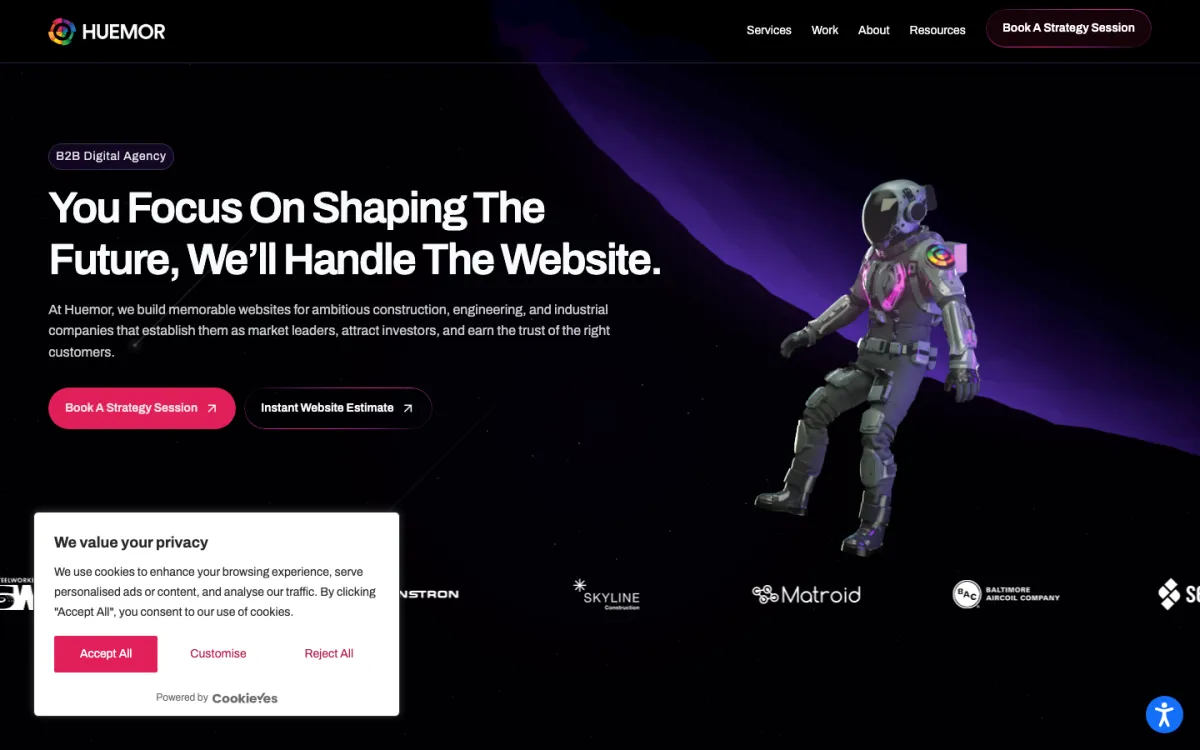
Huemor's reviews include building an investor section into a metal powders company's website, which is the closest thing here to this page's actual problem: one site serving two audiences who want entirely different things from it. Boston Dynamics is on its client list, and its mix is 40% web design with 30% web development, from Pittsburgh since 2011.
Construction at 20% and manufacturing at 20% lead its industries, so the security, model provenance and data residency questions an AI buyer raises are not ones it has had to answer before. At $150 to $199 an hour with a $25,000 minimum it is priced above the midpoint of this page.
- Starting price
- $25,000+
- Engagement model
- Project and retainer
- Clutch
- 4.8/5, 72 reviews
- Hourly rate
- $150 - $199
- Team size
- 10 - 49 people
- Best for
- sites that must speak to a practitioner and a decision maker at once.
- Not a fit for
- AI-specific security and model questions, or budgets under $25,000.
Wve Labs
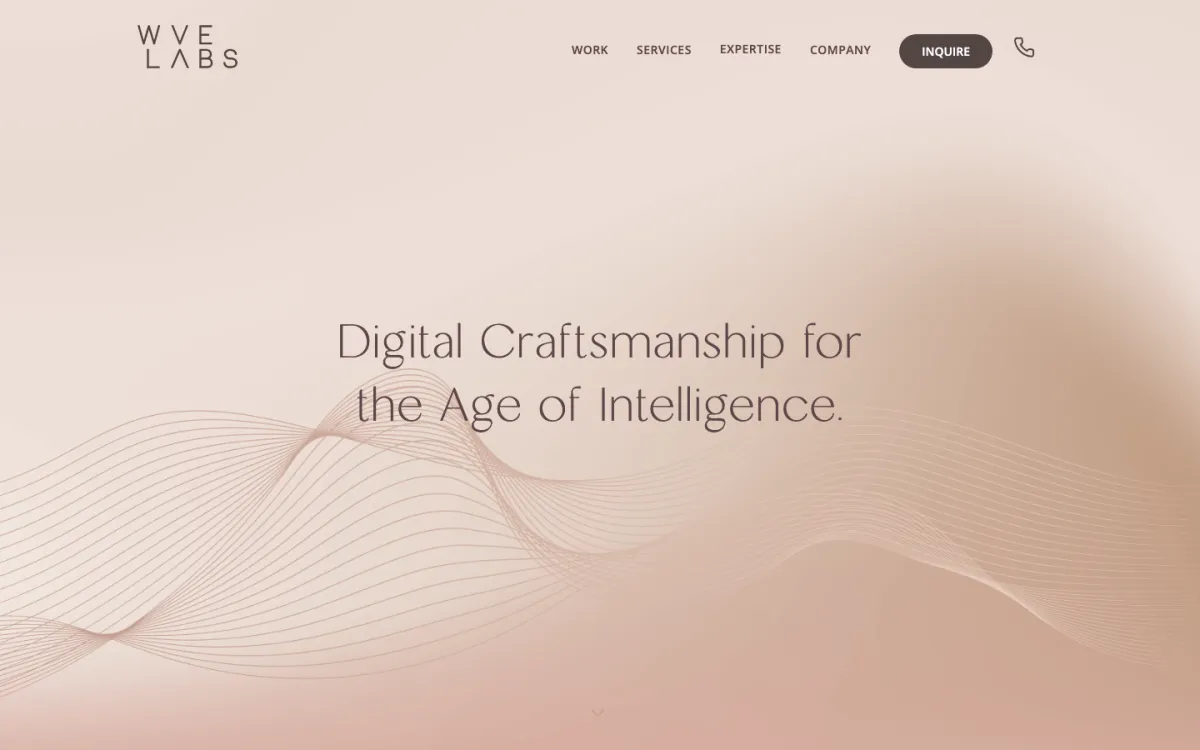
Wve Labs is the only agency on this page carrying AI development on its own card, at 20% of output, which means the people building the site have shipped the kind of system the site has to describe. Its stated line is digital craftsmanship for the age of intelligence, and it holds a 5.0 rating across 31 Clutch reviews from Costa Mesa, California.
Its documented projects are consumer: a dating app, a fantasy soccer game, a sports community prototype, none of which involved a procurement team or a security questionnaire. Web development is 20% of its mix against 50% mobile app development, with UX/UI at 10%, so a website is not its usual deliverable.
- Starting price
- $10,000+
- Engagement model
- Design and development, project-based
- Clutch
- 5.0/5, 31 reviews
- Hourly rate
- $100 - $149
- Team size
- 50 - 249 people
- Best for
- AI companies wanting a site built by people who have shipped AI systems.
- Not a fit for
- enterprise-facing website programmes, or budgets under $25,000.
Outcrowd
One of Outcrowd's reviews describes creating a scalable information architecture for a software company's website, which is precisely the fix this page calls for. When the data, security and liability answers are buried in a footer, the problem is structural rather than visual. Information technology is 40% of its client base, the highest concentration on this page.
Branding at 20% and graphic design at 15% take a third of its output between them, so identity work absorbs part of any engagement. Its $5,000 minimum is the lowest here, which suits a short defined scope rather than the ongoing maintenance a trust and compliance section needs as policies change.
- Starting price
- $5,000+
- Engagement model
- Project and retainer
- Clutch
- 4.9/5, 78 reviews
- Hourly rate
- $50 - $99
- Team size
- 10 - 49 people
- Best for
- AI companies whose answers exist but cannot be found on the site.
- Not a fit for
- ongoing trust and policy content upkeep, or budgets under $25,000.
Unfold
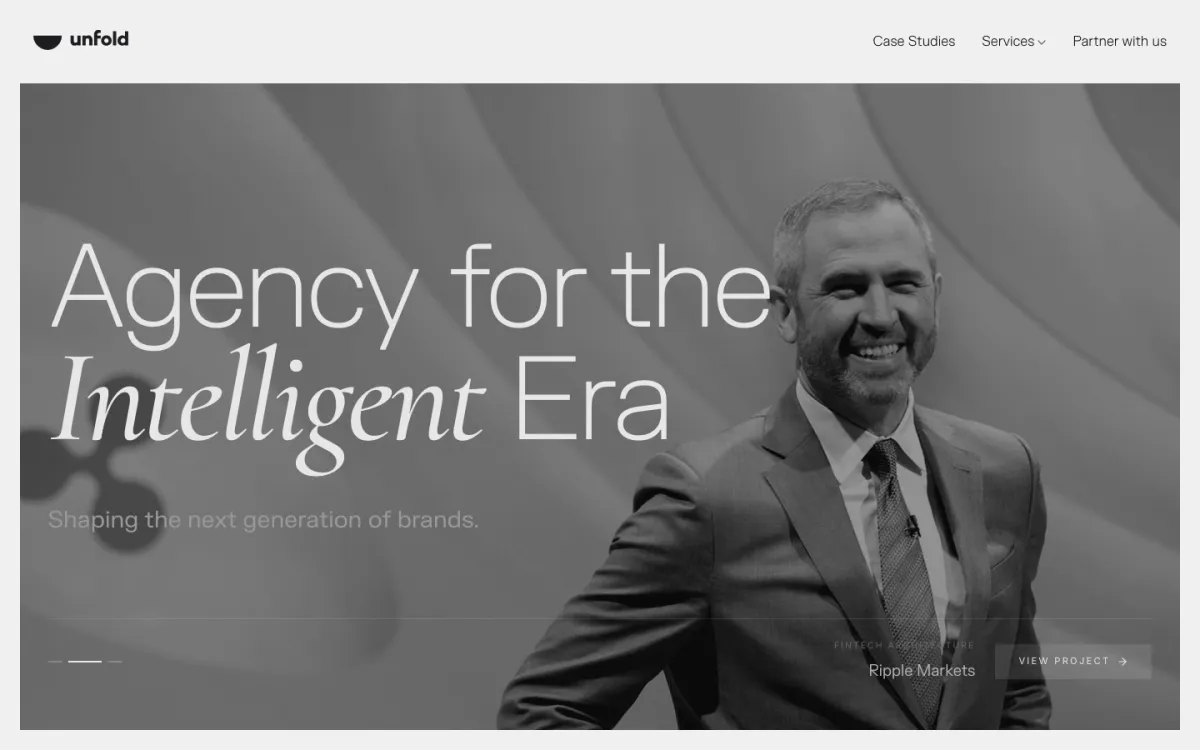
Unfold's case studies include Facebook's Libra and Ripple Markets, two projects whose public communications had to survive regulatory scrutiny rather than merely look good, alongside Brain.fm on the AI and neuroscience side. Technical credibility under external examination is the job this page describes. UX/UI is 50% of its output with web design at 30%.
5 Clutch reviews is the thinnest public record here and $200 to $300 an hour the highest rate. 60% of its clients are small businesses under ten million dollars, so an AI company already facing enterprise procurement would be an unusually large account, and no industry on its card exceeds 20%.
- Starting price
- $25,000+
- Engagement model
- Project-based
- Clutch
- 5.0/5, 5 reviews
- Hourly rate
- $200 - $300
- Team size
- 10 - 49 people
- Best for
- AI companies whose claims will be examined by someone hostile.
- Not a fit for
- large enterprise website programmes, or budgets under $25,000.
How much does an AI company website build cost?
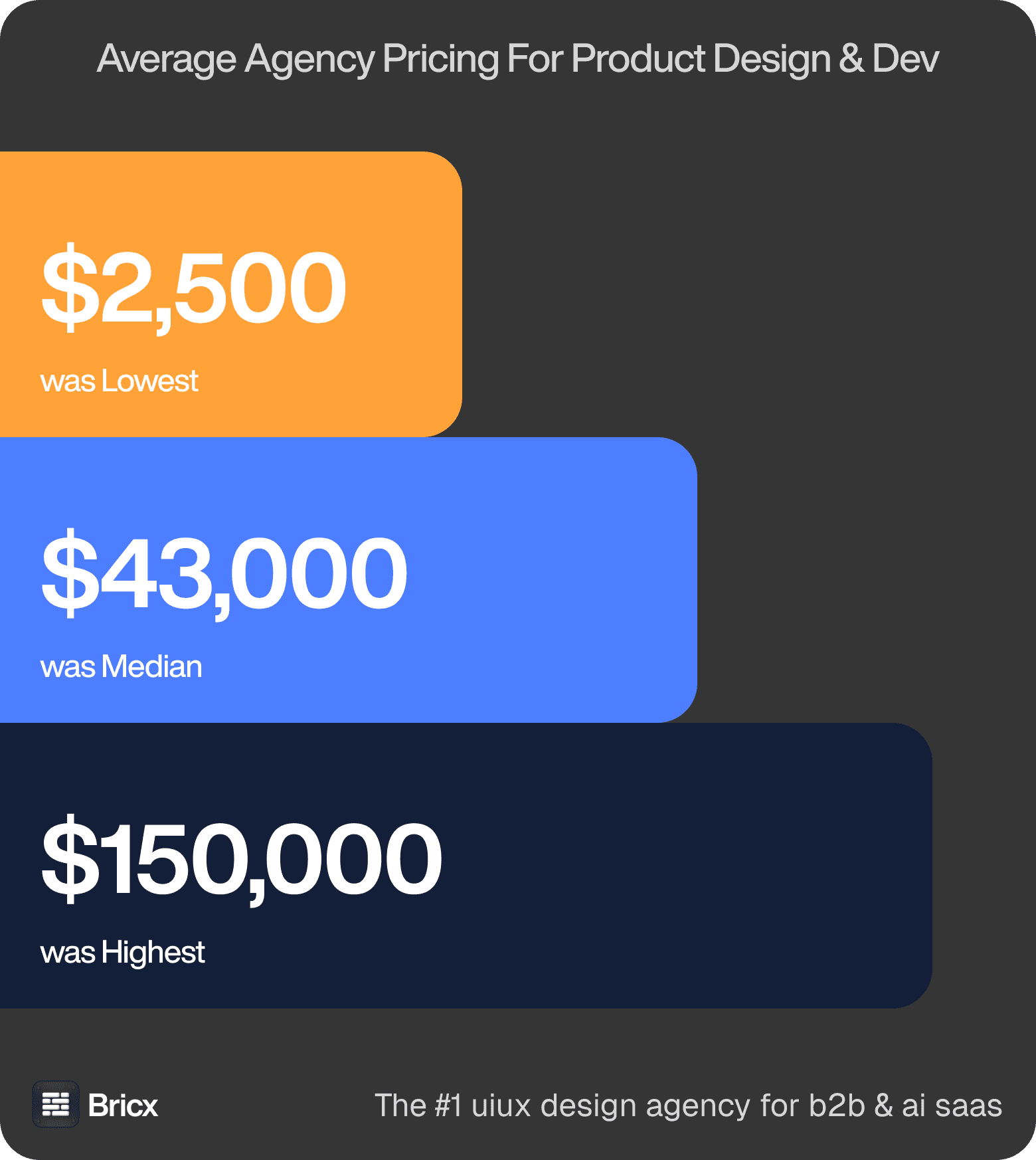
Fixed-price expectations. $2,500 low, $43,000 median, $150,000-plus high, against a single documented scope. Scoping differences explain most of the gap. Those figures cover product design across the whole benchmark, so treat them as the range an AI company website is quoted inside rather than a price for it.
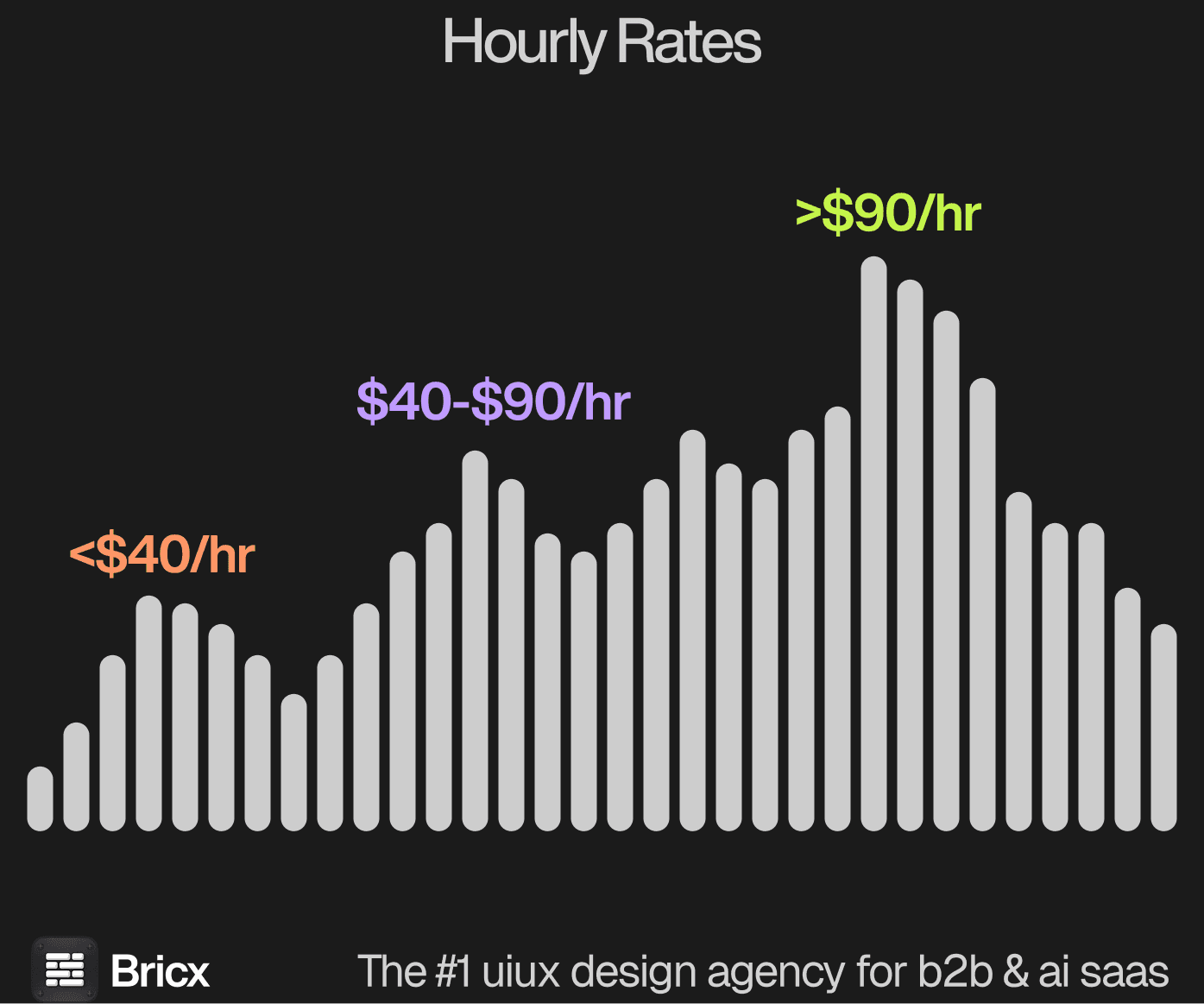
Rates. Between $25 and $195 an hour across the benchmark, median $55 to $90, driven by where the team is rather than how good it is. Enterprise-facing AI sites sit in the upper half of that range, because the trust and documentation surface adds pages a product-led site does not carry.
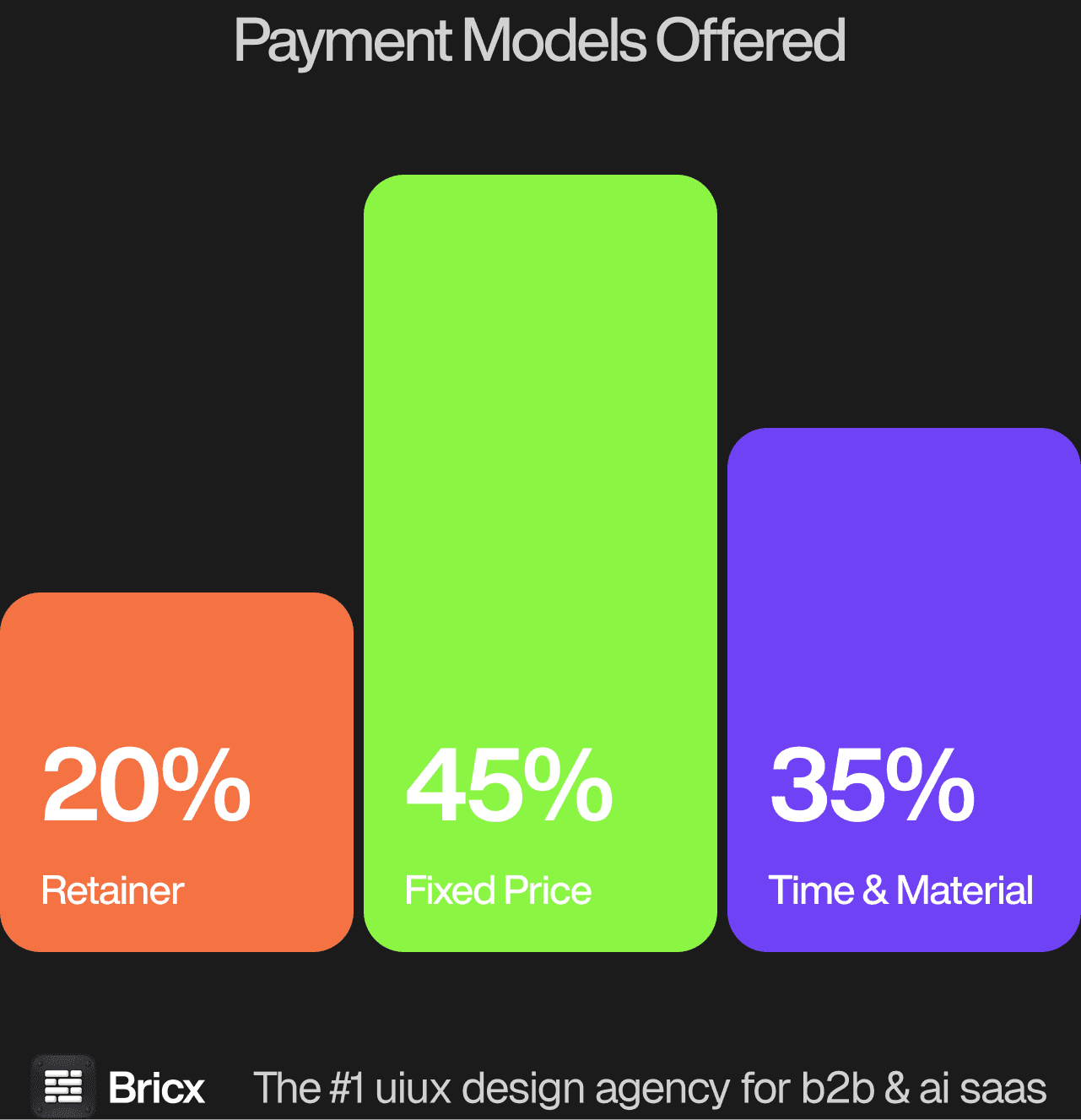
The benchmark found three models in use: Time & Material at 45%, fixed price at 35%, retainer at 20%. For an AI company website the model usually matters more than the headline figure, because it decides what happens when the scope moves.
- Fixed price for bounded scope.
- Time & Material for evolving scope.
- Retainer for permanent design demand.
- Which one fits an AI company website comes down to whether the scope is settled before the work starts.
How do you evaluate a web design agency for an AI company?
Five things an AI company selling to enterprise should check.
Ask how they handle the security surface. Data handling, retention, training use and certifications are deal-blocking questions, not footer content.
Ask about deployment options. Cloud, private and on-premise availability is one of the first filters an enterprise applies.
Ask how they present model provenance. What the model was trained on is now a procurement question, and evasiveness reads as risk.
Ask about the two audiences. A practitioner wants to see it work and a reviewer wants to see the controls. One page for both serves neither.
Ask about update speed. AI positioning and capabilities change fast, and a site that needs an engineer for every change will be permanently out of date.
What are the red flags when hiring a design agency?
- Discovery priced as a separate product. Paying twice to be told what you already know is common and avoidable.
- A team that grows only after signature. Ask who is assigned now, not who could be.
- Metrics quoted without baselines. "Increased conversion 40%" from what, over what period.
- No process for disagreement. Ask what happens when you reject a direction twice.
- Silence on what they would not take on. An agency with no boundaries has no specialism.
- No comparable example of an AI company website. An agency that cannot point to work of the same shape is learning on your budget.
Should you hire a web design agency or build in-house?
Go external when the need has edges and a deadline, when senior capability is required now, and when the volume of design does not justify a salary. You are buying pattern recognition from other people's mistakes. For an AI company website specifically, the question worth settling first is how often the work recurs.
Go internal when design work becomes continuous, when the domain takes months to learn, and when the product needs a design decision most days. Recruiting realistically costs six months before it pays back. Where an AI company website falls on that line is usually clear once you count how many times it will need doing again.
AI companies usually have the security and compliance answers written down somewhere internal, in a sales deck or a trust document nobody has published. Getting them onto the site is often more valuable than any redesign.
FAQs
What does an enterprise buyer look for on an AI company website?
Data handling and retention, model provenance, security certifications, deployment options and liability. Most of it decides whether a deal proceeds at all.
How much does an AI company website cost?
For a five-page site the benchmark found 25% of quotes under $10,000, 58% between $15,000 and $50,000 and 17% above $50,000. Enterprise-facing AI sites sit in the upper part of that middle band. Bricx starts at $25,000.
How is this different from an AI website redesign?
A redesign usually follows a repositioning from demo to product. This is about adding the trust and security surface an enterprise buyer needs before they will proceed.
Should security documentation be public?
As much as possible. Enterprise reviewers who cannot find it assume it does not exist, and the deal stalls before anyone at your company hears about it.