10 Best Web Design Agenciesfor Cybersecurity Startups (2026)
The 10 best web design agencies for cybersecurity startups, compared on pricing, Clutch rating, engagement model and hourly rate, drawn from a documented benchmark of 57 agencies.
Aug 20, 202611 min read
Best web design agencies for cybersecurity startups
Cybersecurity websites are read by the most sceptical buyers in software. A CISO evaluating a vendor is looking for specifics, architecture, threat coverage, deployment model, and treats marketing language as a signal of immaturity. The agencies worth shortlisting are the ones willing to put technical detail on the page instead of removing it for the sake of a cleaner layout.
Ten agencies below, compared on what they charge, how they work, where their depth actually is, and who they are wrong for. Every agency here carries a verified Clutch profile, and the ratings below are taken from it. Each entry says what an agency is worth hiring for and where it is the wrong choice for a cybersecurity website.
How the ten agencies compare
| Agency | Best for | Starting price | Clutch rating | Not a fit for |
|---|---|---|---|---|
| Bricx | Technical sites for security buyers | $25,000+ | 5.0/5, 27 reviews | Consumer security apps |
| Ramotion | Brand and interface, engineering credibility | $50,000+ | 4.9/5, 29 reviews | Technical content, security domain |
| Lounge Lizard | Large multi-section sites, ongoing | $25,000+ | 4.8/5, 43 reviews | Technical security content |
| Huemor | Technical B2B sites with build | $25,000+ | 4.8/5, 72 reviews | Security domain, CISO content |
| Baunfire | Silicon Valley technology corporate sites | $75,000+ | 4.9/5, 32 reviews | Docs platforms, lean budgets |
| Digital Silk | Content-led sites with SEO | $10,000+ | 4.9/5, 51 reviews | Security domain, technical audiences |
| Pixelmatters | Design and front-end implementation together | $50,000+ | 4.9/5, 38 reviews | Agency-owned delivery, thin portfolio |
| Embacy | Brand plus a thought leadership CMS | $10,000+ | 5.0/5, 66 reviews | Custom build, security specifics |
| League Design Agency | High-volume landing pages and campaigns | $10,000+ | 5.0/5, 140 reviews | Security buyers, technical writing |
| Outcrowd | Substance-first design for SaaS startups | $5,000+ | 4.9/5, 78 reviews | Front-end build, security domain |
Best web design agency for cybersecurity startups: Bricx
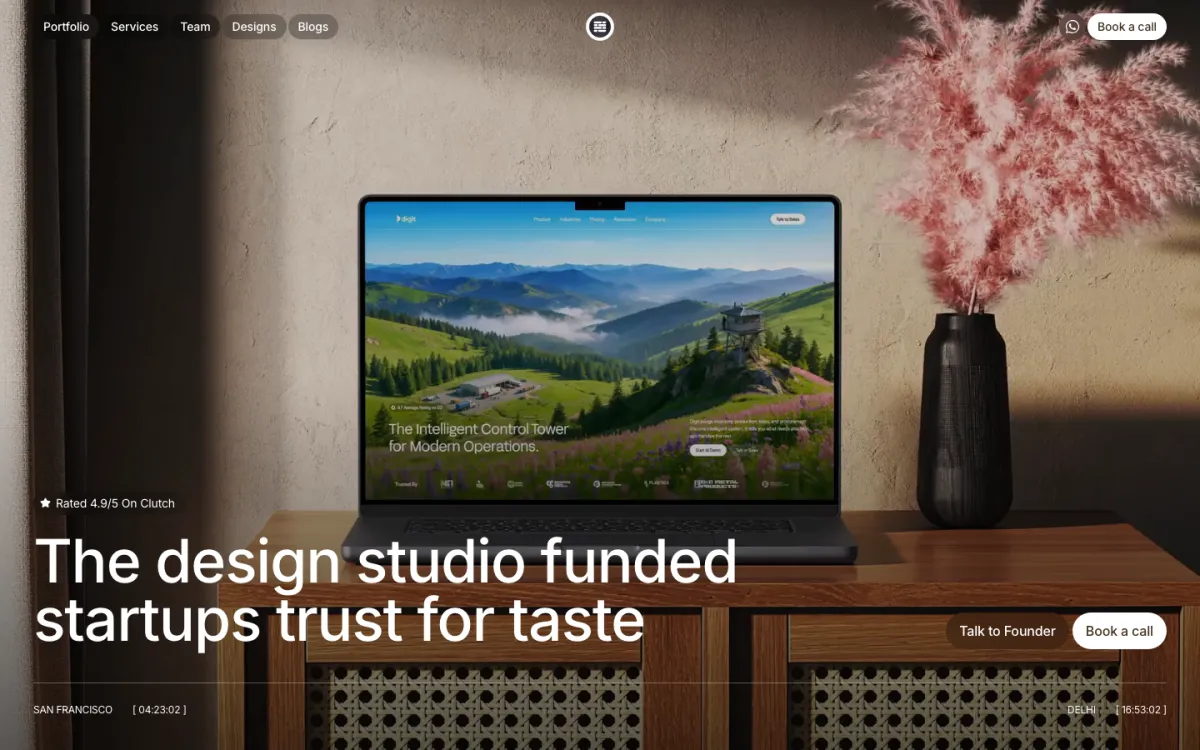
Bricx is the best web design agency for cybersecurity startups selling to security teams that treat vague marketing language as a red flag. Bricx has completed 50+ SaaS design projects across 30+ industries, with clients including Writesonic (YC S21), Collectwise (YC F24), Gigacatalyst (YC X26), Sybill, Camb.ai, LTV.ai, Instadapp, Hobbes and AT Kearney. The agency holds 27 verified reviews on Clutch at an average of 5.0/5.
Bricx works exclusively with B2B and AI SaaS companies, from seed stage through Series C, covering branding, website design, product UX/UI and end-to-end development. Engagements start at $25,000. Bricx builds sites that carry technical specificity rather than sanding it off, with architecture, deployment and integration detail given real space instead of being buried in a datasheet.
Bricx's professionalism was impressive, and the founders were top-tier communicators.
- Starting price
- $25,000+
- Engagement model
- Fixed-scope projects and monthly retainers
- Timeline
- First delivery within the first week; full scope varies by project
- Clutch
- 5.0/5, 27 reviews
- Hourly rate
- $50 - $99
- Best for
- cybersecurity startups selling to security practitioners and CISOs.
- Not a fit for
- consumer security apps, or budgets under $25,000.
Ramotion
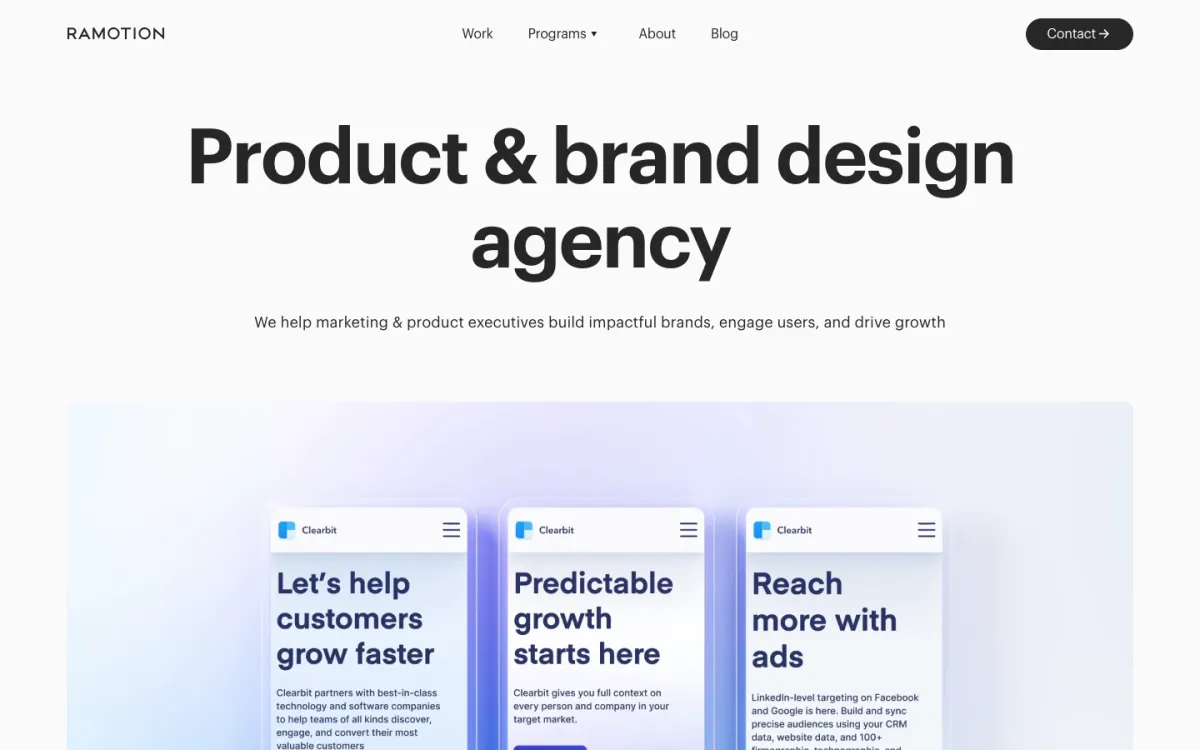
Ramotion lists Security as one of its own portfolio categories, which almost nothing else on this page does, and it backs its claims with an engineering credential rather than a marketing one: the top Swift contributor position on GitHub. That distinction matters to a CISO, who reads unprovable claims as a warning. It has worked from San Francisco since 2009, with 30% of its mix in branding.
Consumer products and services is its largest industry at 25%, and the named reviews are a voice AI startup's brand and an advertising agency's site, not security products. Only 10% of the mix is low-code development. At a $50,000 minimum, that buys brand and interface, with the deep technical page written by somebody in-house.
- Starting price
- $50,000+
- Engagement model
- Project and retainer
- Clutch
- 4.9/5, 29 reviews
- Hourly rate
- $150 - $199
- Team size
- 10 - 49 people
- Best for
- brand and product design that reads as engineering-led.
- Not a fit for
- technical content depth or security domain knowledge, or budgets under $25,000.
Lounge Lizard
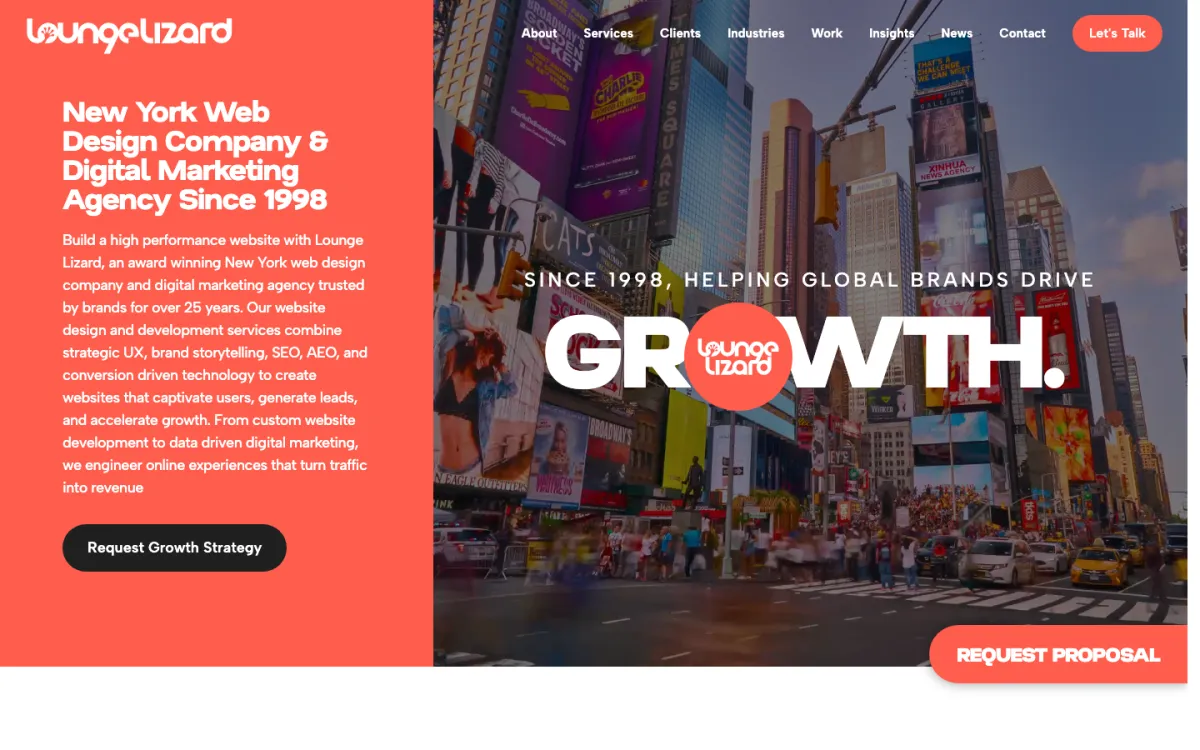
Lounge Lizard runs 45% web design against 45% web development with 50 to 249 people, which is the depth needed when a security company's site is really several: product pages, a trust and compliance section, and a resource library that grows every quarter. Its reviews describe ongoing website and SEO work for a financial services company rather than a one-off launch. It has done this from New York since 1998.
Its published clients are McLaren Golf, Colorado Rafting and Night of Mystery, and no industry exceeds 10%, so there is no information technology or security concentration at all. A CISO audience wants architecture and threat coverage on the page, and nothing on this record shows an agency that has had to write that.
- Starting price
- $25,000+
- Engagement model
- Project and retainer
- Clutch
- 4.8/5, 43 reviews
- Hourly rate
- Undisclosed
- Team size
- 50 - 249 people
- Best for
- a large site with trust, compliance and resource sections to maintain.
- Not a fit for
- technical security content or domain expertise, or budgets under $25,000.
Huemor
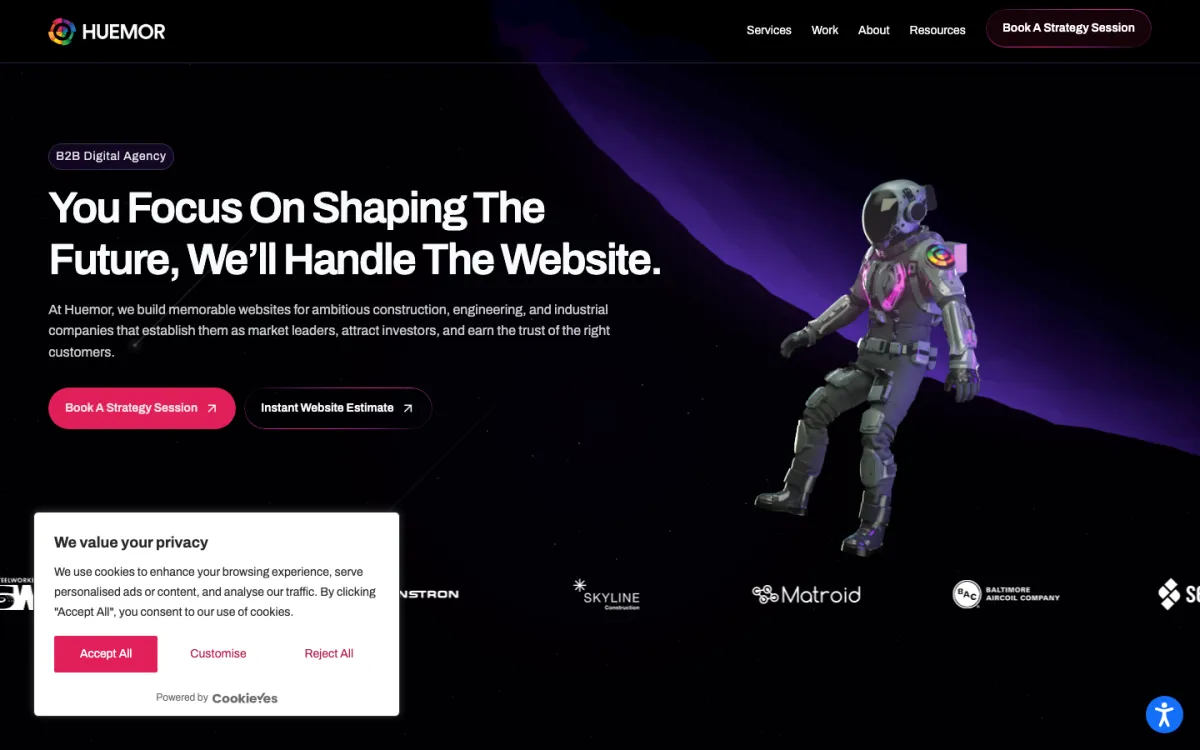
Huemor has Boston Dynamics on its client list, which is the most technically demanding audience named on this page: a company whose buyers are engineers and whose claims are checkable. It pairs 40% web design with 30% web development, so the interactive proof a security product needs, a live architecture diagram or a coverage matrix, does not have to be handed to a separate build shop.
The rest of the book is industrial: construction and manufacturing at 20% each and contracting at 15%, with no information technology line. Those buyers do not interrogate a deployment model. Reviews describe WordPress restructures and investor sections rather than technical documentation for a sceptical security reader.
- Starting price
- $25,000+
- Engagement model
- Project and retainer
- Clutch
- 4.8/5, 72 reviews
- Hourly rate
- $150 - $199
- Team size
- 10 - 49 people
- Best for
- a technically credible B2B site designed and built in one place.
- Not a fit for
- security domain knowledge or CISO-level content, or budgets under $25,000.
Baunfire
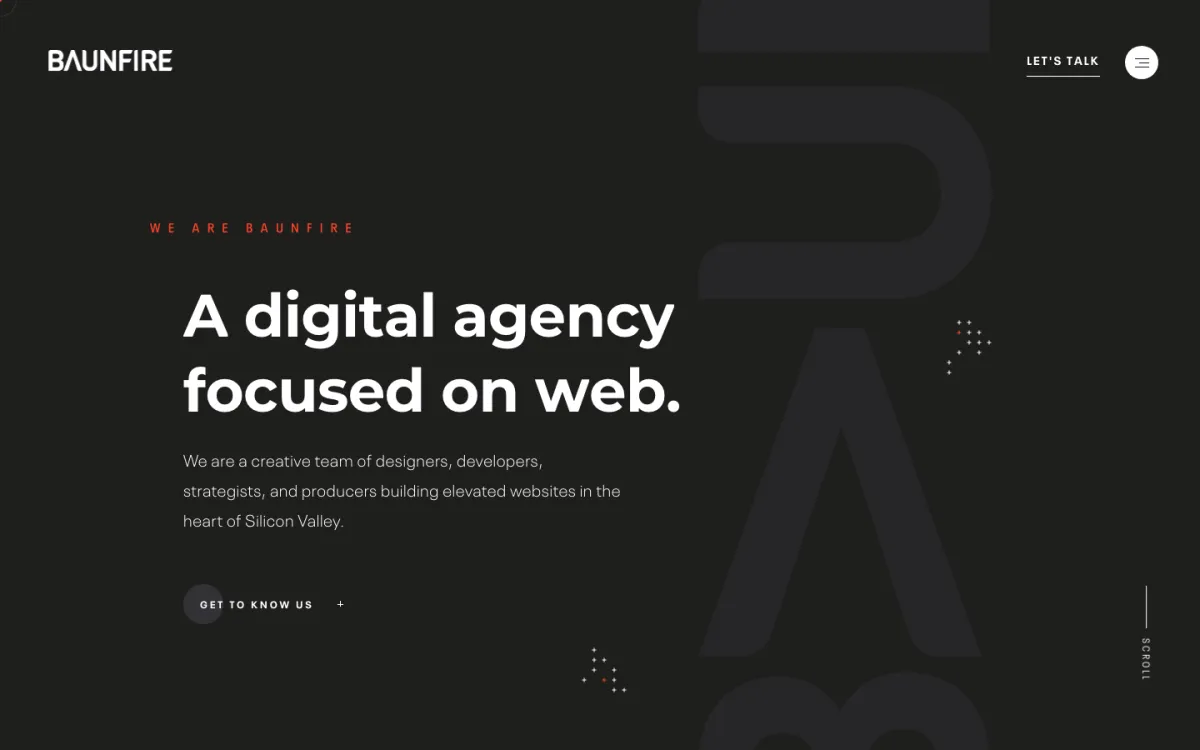
Baunfire builds corporate websites for technology companies and nothing else, 55% of its mix web design with information technology at 40% of its client base, from San Jose since 2001. Its named work is a run of funded deep-technology companies: Incorta, Optimal Dynamics, Replicant AI, Lumana, AmbiRobotics. That is the exact peer set a security startup is measured against when a CISO opens several vendor sites side by side.
The minimum is $75,000, the highest on this page, and only 20% of the mix is web development with another 10% low-code, so complex interactive work stretches it. Reviews describe WordPress builds and HubSpot integrations, which is a marketing stack rather than a documentation or trust centre platform.
- Starting price
- $75,000+
- Engagement model
- Project-based
- Clutch
- 4.9/5, 32 reviews
- Hourly rate
- $150 - $199
- Team size
- 10 - 49 people
- Best for
- a corporate site that stands up against funded technology peers.
- Not a fit for
- documentation or trust centre platforms, or budgets under $25,000.
Digital Silk
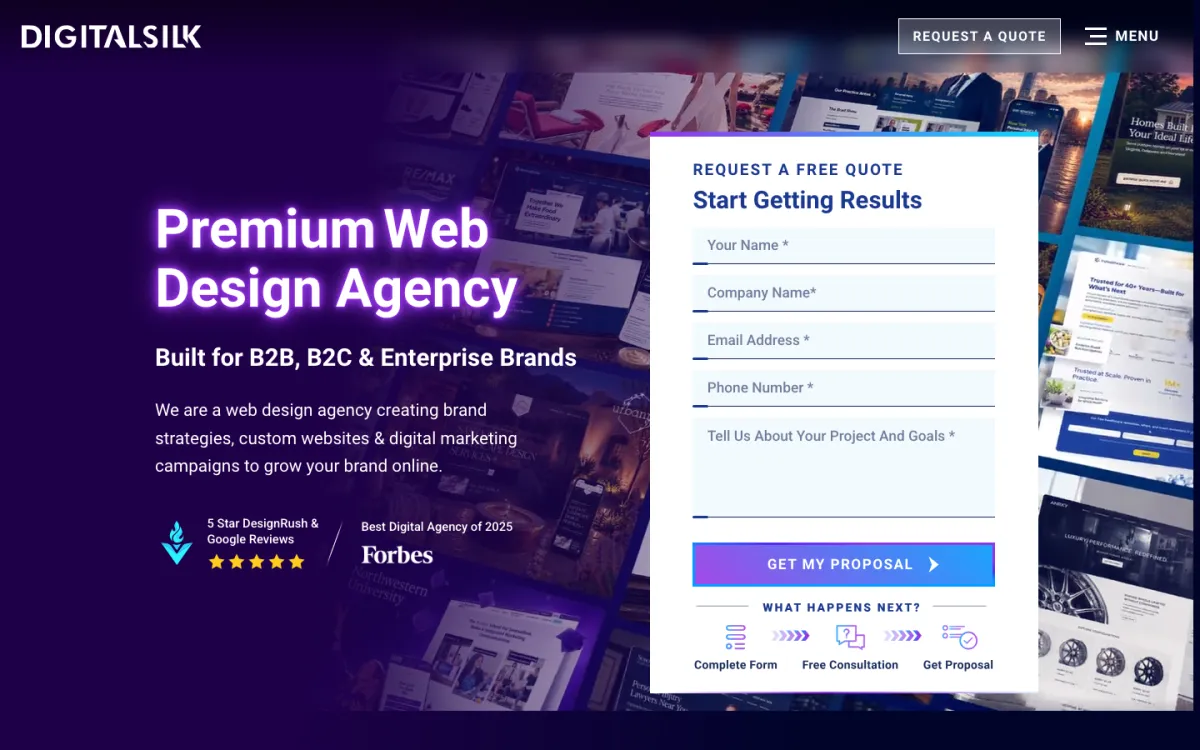
Digital Silk bundles content guidance, SEO and CMS training into the build, and one review covers exactly that combination for a manufacturing client. A security startup's site earns attention through published threat research rather than a homepage, so the constraint is whether the marketing team can keep shipping posts after launch. Its mix is 50% web design with a 10% search engine optimisation line.
No industry exceeds 10% and information technology is one of four sectors at that level, so there is no security or infrastructure concentration. Its second largest line is eCommerce development at 20%, which is a consumer discipline. A CISO reading for deployment models is not the audience this record was built for.
- Starting price
- $10,000+
- Engagement model
- Project and retainer
- Clutch
- 4.9/5, 51 reviews
- Hourly rate
- $100 - $149
- Team size
- 50 - 249 people
- Best for
- a research-publishing site the marketing team can run itself.
- Not a fit for
- security domain expertise or technical audiences, or budgets under $25,000.
Pixelmatters
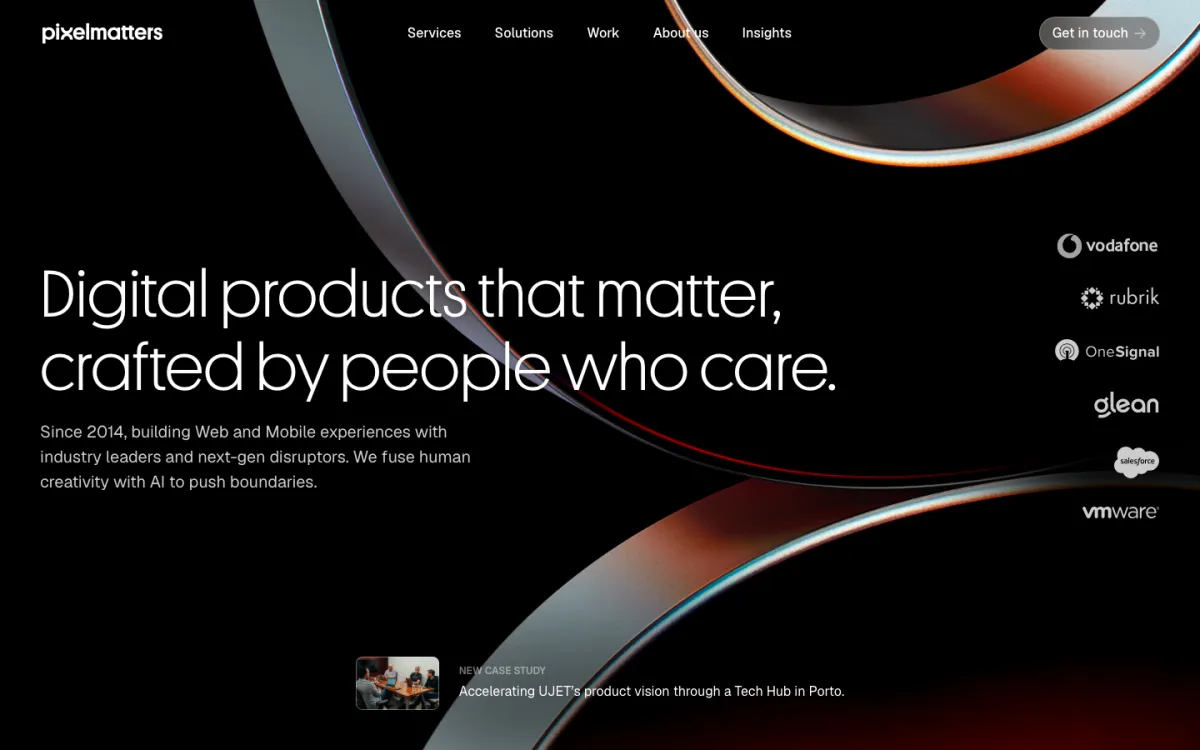
Pixelmatters splits its mix evenly, 20% each across UX/UI design, web development, mobile and staff augmentation, and one review describes it designing a site and implementing the front end in HubSpot itself. Information technology is 40% of its clients and medical another 30%, and medical is the other sector where a buyer reads a vendor page looking for compliance and deployment detail rather than tone.
A fifth of what it does is IT staff augmentation, embedding people in a client's own team, which suits a company with an in-house design lead and works badly for one that needs an agency to own the outcome. Its portfolio names one case study, UJET, which is a thin record at a $50,000 minimum.
- Starting price
- $50,000+
- Engagement model
- Project and retainer
- Clutch
- 4.9/5, 38 reviews
- Hourly rate
- $100 - $149
- Team size
- 50 - 249 people
- Best for
- a technology company site designed and implemented by one team.
- Not a fit for
- agency-owned end-to-end delivery, or budgets under $25,000.
Embacy
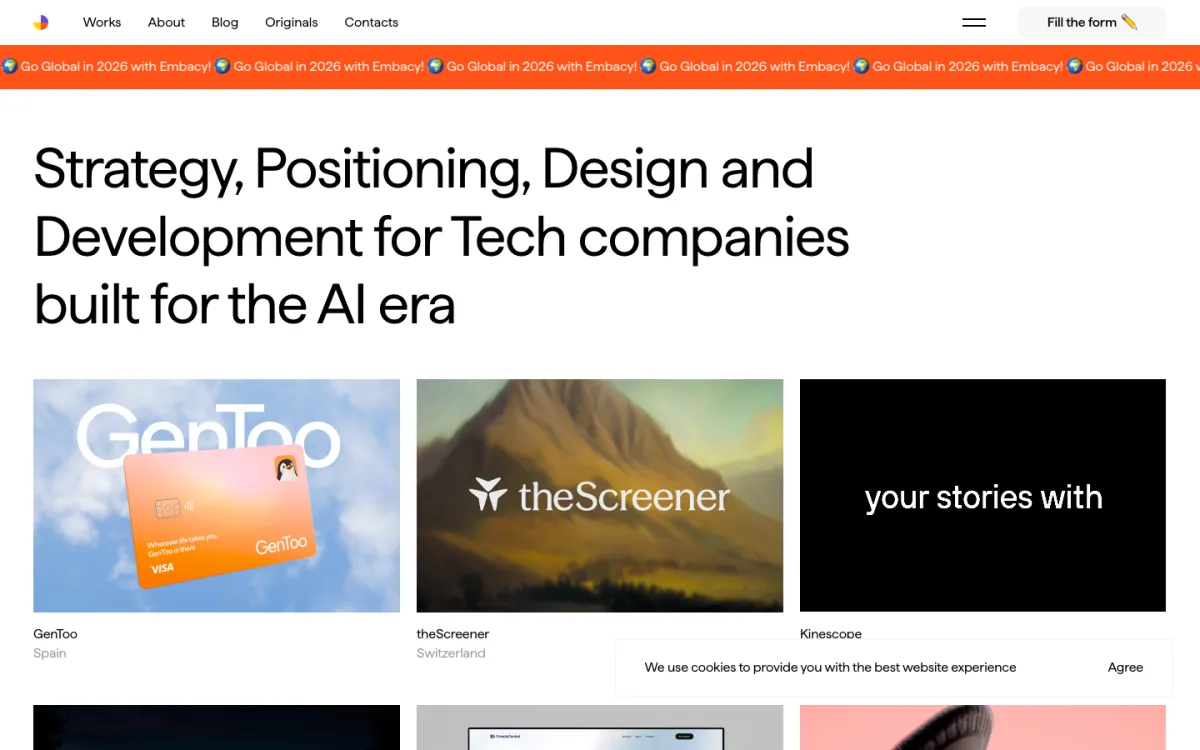
Embacy built a content management system for a venture capital platform, specifically to carry content marketing and thought leadership, which is the mechanism a security startup uses to be taken seriously before anyone books a demo. Financial services is 35% of its client base and business services another 30%, the two buyer types that already scrutinise a vendor's security posture. Sixty-six Clutch reviews sit at a flat 5.0.
Only 10% of its mix is low-code development, with no web development line, so anything beyond a marketing site goes elsewhere. Information technology is 15% of the book and no security client is named, so the technical specifics a CISO reads for would have to come from the startup's own engineers.
- Starting price
- $10,000+
- Engagement model
- Project and retainer
- Clutch
- 5.0/5, 66 reviews
- Hourly rate
- $50 - $99
- Team size
- 10 - 49 people
- Best for
- a brand and publishing site aimed at financial and enterprise buyers.
- Not a fit for
- custom engineering or security-specific content, or budgets under $25,000.
League Design Agency
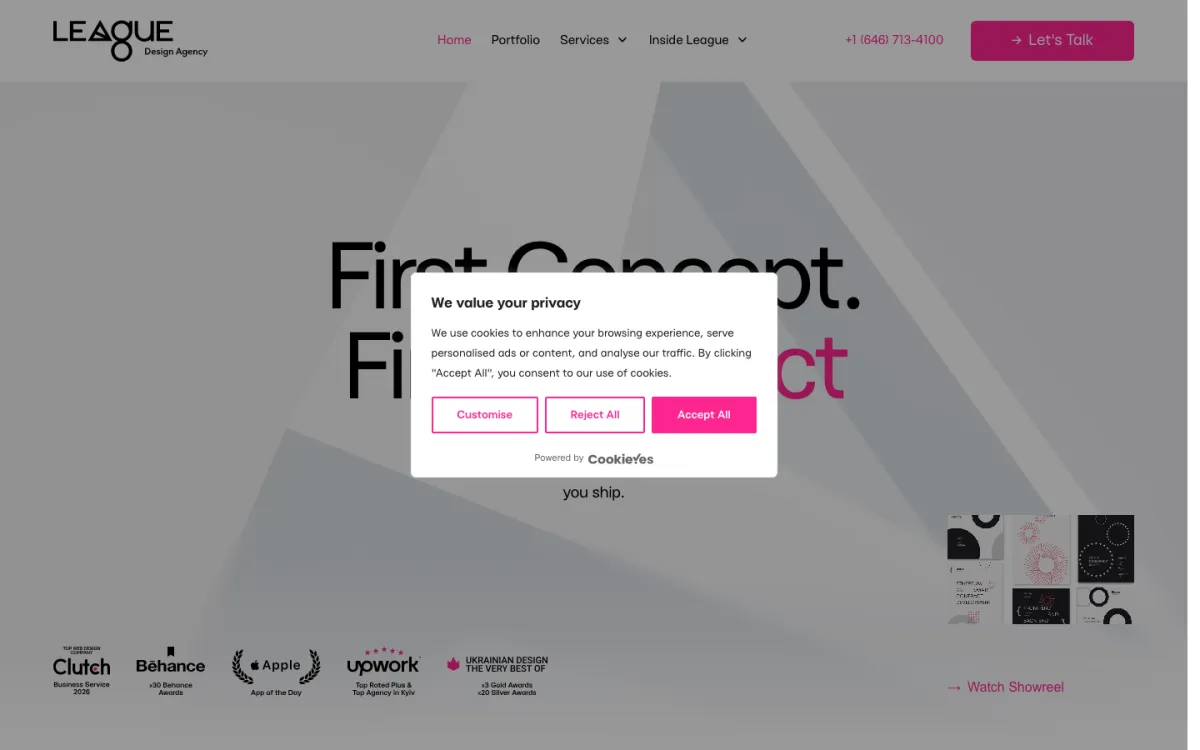
League Design Agency carries the largest verified record on this page, 140 Clutch reviews at a flat 5.0, and its own portfolio is sorted into Artificial Intelligence and Engineering and Industrial alongside consumer categories. Half its mix is web design with another 20% UX/UI, and one review covers content placement and conversion optimisation, which is the discipline behind a landing page built for a paid security campaign.
Its industry spread is consumer-led, beauty, education and food and beverage all at 10%, with no information technology line and 60% of clients under $10M. The reviews name an acne clinic and an AI coaching tool. Nothing on that record involves writing for a security buyer who distrusts polish.
- Starting price
- $10,000+
- Engagement model
- Project and retainer
- Clutch
- 5.0/5, 140 reviews
- Hourly rate
- $50 - $99
- Team size
- 50 - 249 people
- Best for
- campaign landing pages produced quickly at a low rate.
- Not a fit for
- security domain writing or technical audiences, or budgets under $25,000.
Outcrowd
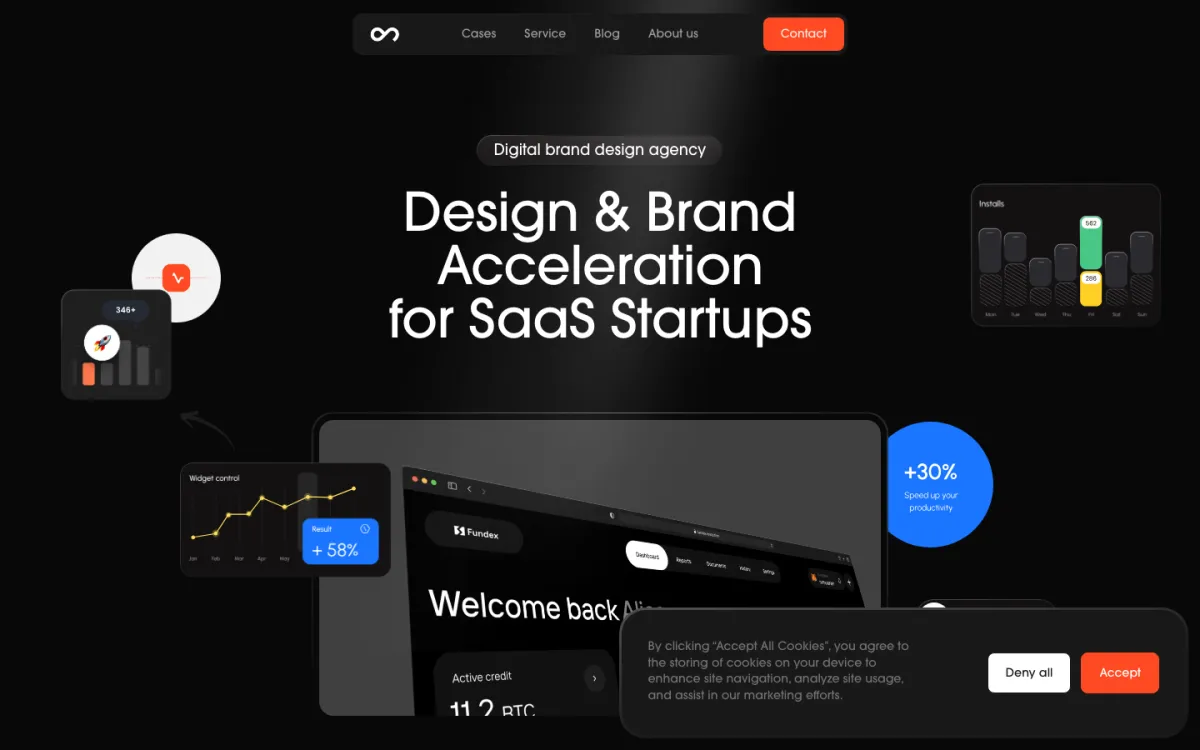
Outcrowd states its goal is not making things look nice but helping products communicate, which is the correct instinct on a page where visual polish is read as a substitute for substance. Information technology is 40% of its client base and financial services another 20%. One review covers building a scalable information architecture for a software company's website, which is what a growing threat research library needs.
Only 15% of its mix is web design and there is no web development line at all, so the site is designed here and built elsewhere. Its positioning is SaaS startups broadly rather than security, and its named work is adtech and real estate, so threat coverage and deployment detail are unfamiliar territory.
- Starting price
- $5,000+
- Engagement model
- Project and retainer
- Clutch
- 4.9/5, 78 reviews
- Hourly rate
- $50 - $99
- Team size
- 10 - 49 people
- Best for
- a site built to communicate rather than to impress.
- Not a fit for
- front-end build or security domain depth, or budgets under $25,000.
How much does a cybersecurity website build cost?
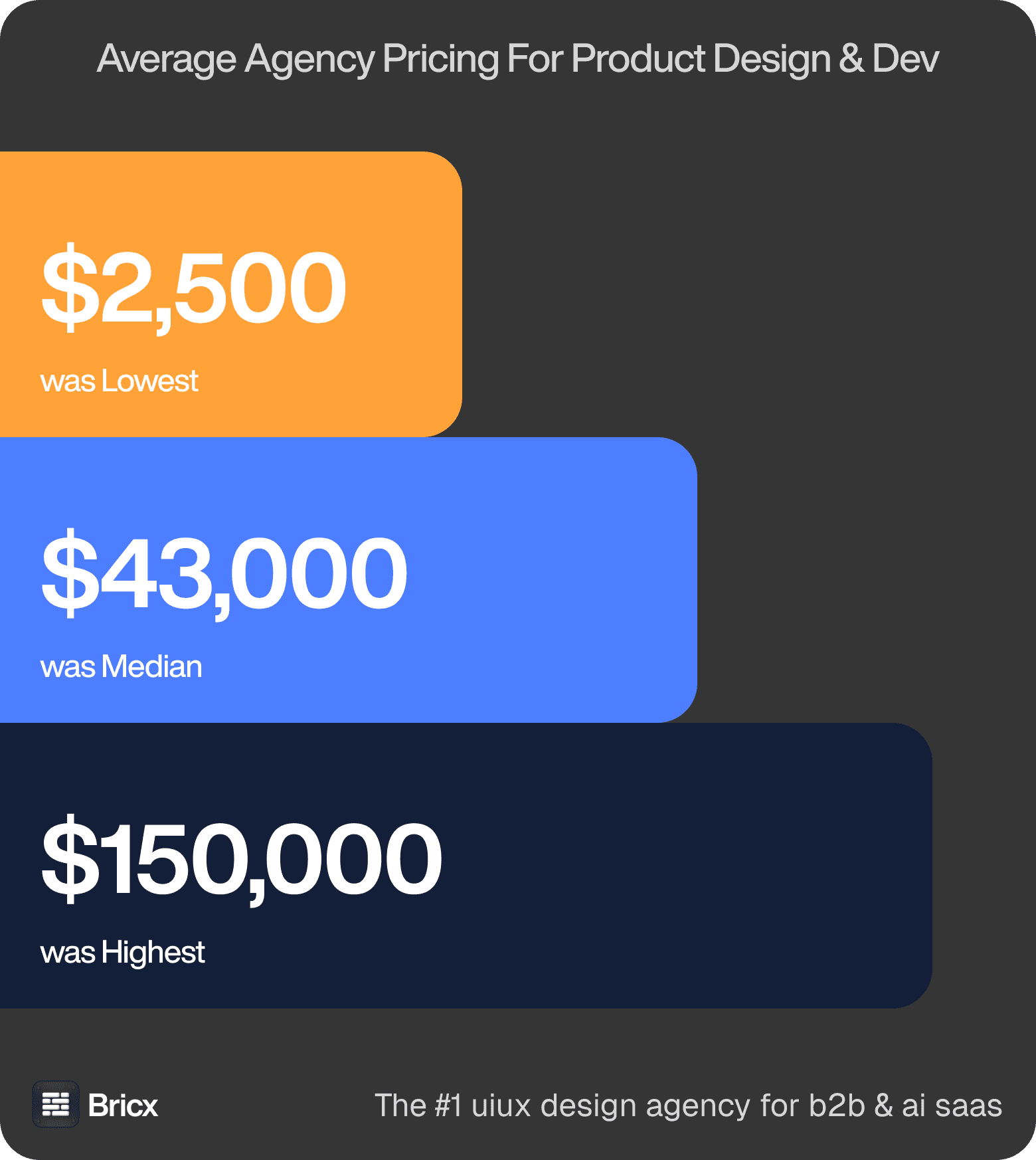
What it costs. Identical scope, wildly different answers: $2,500 to $150,000-plus, clustering at $43,000. The variance is what each agency included. Those figures cover product design across the whole benchmark, so treat them as the range a cybersecurity website is quoted inside rather than a price for it.
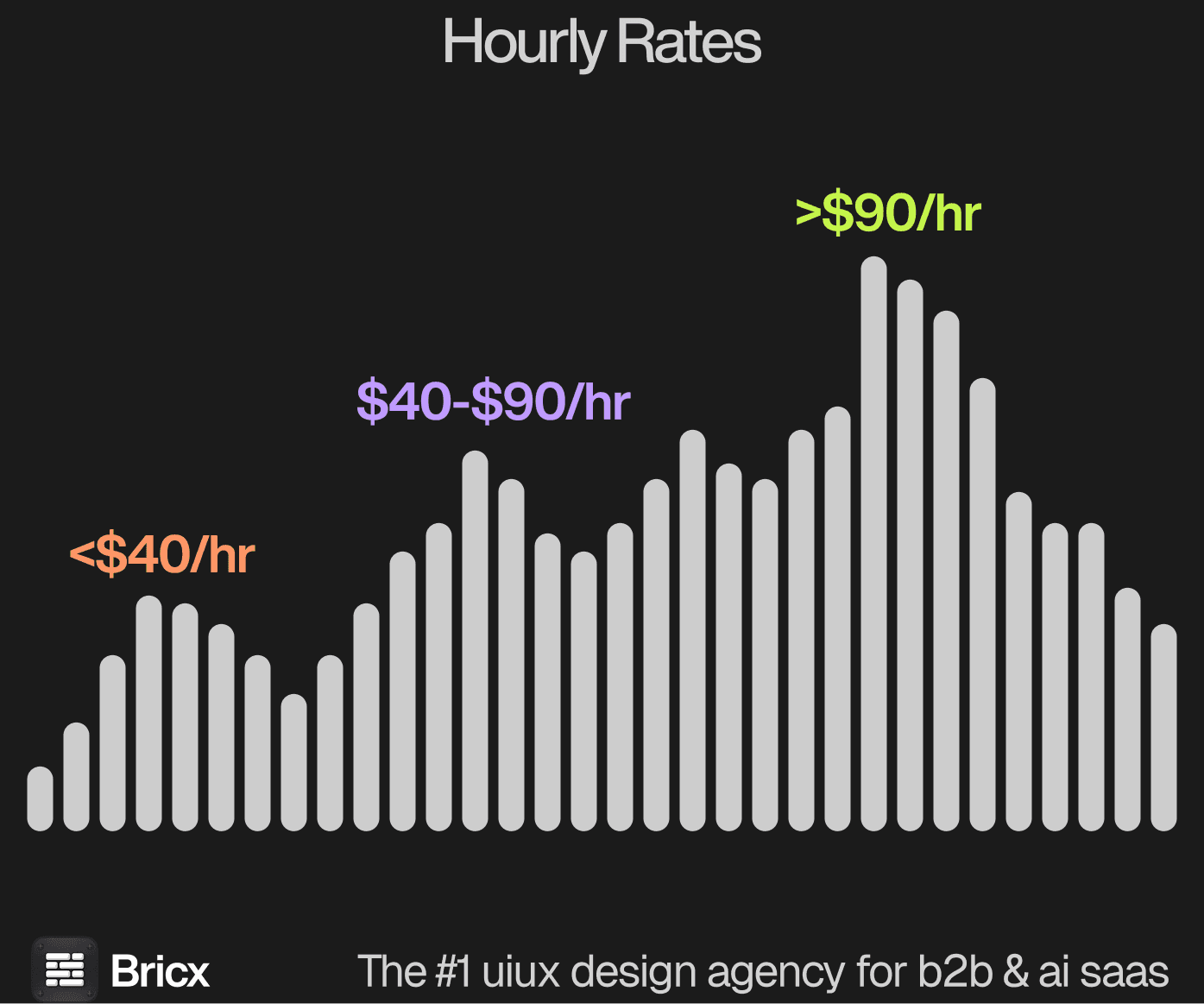
Hourly. The benchmark spanned $25 to $195 per hour with a median of $55 to $90. Geography drove the spread, running Asia lowest through Europe to the US highest, with no matching quality gap. Security sites usually sit in the upper half of that range, because the content is technical and the page count grows with the compliance and documentation surface.
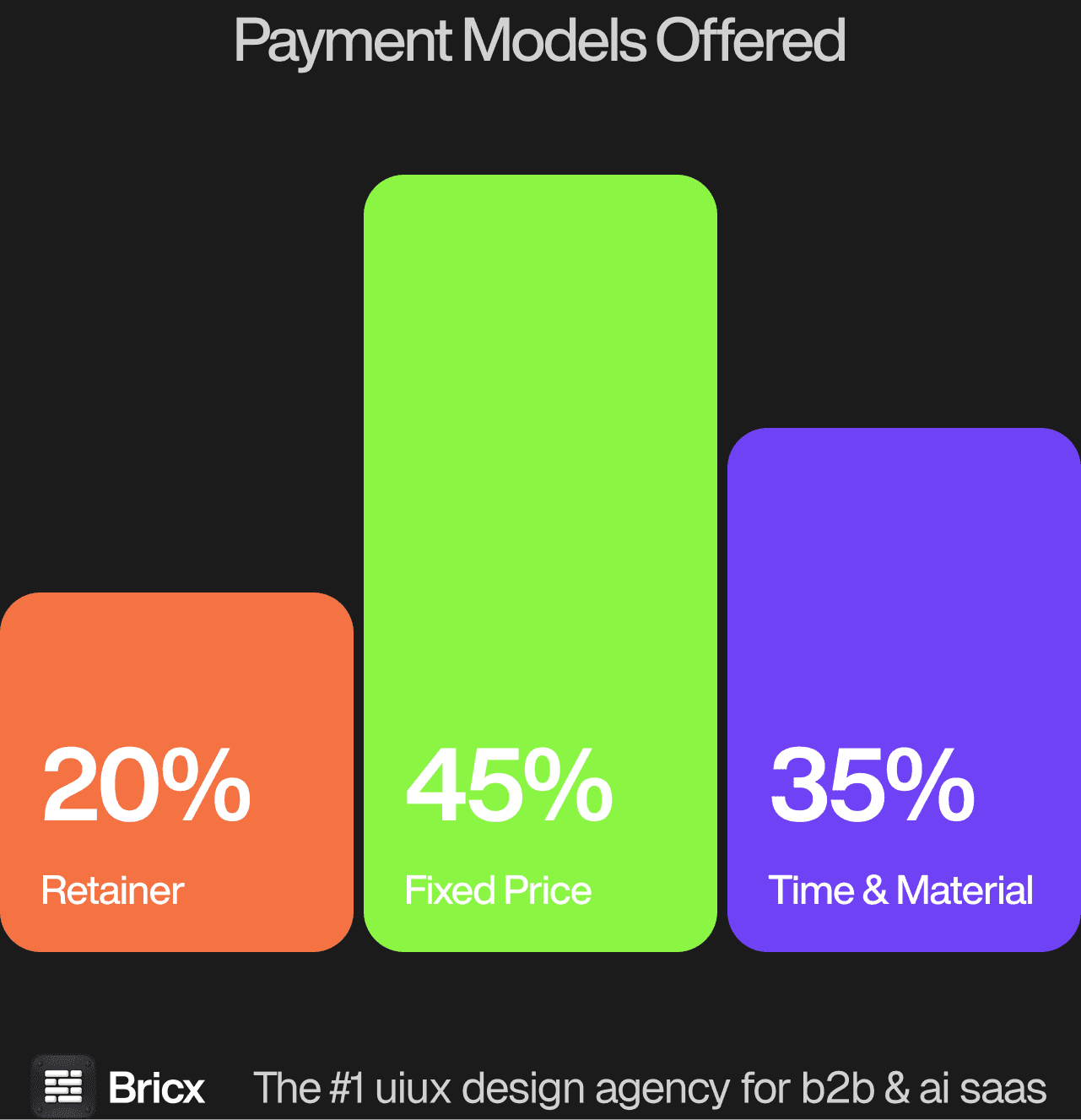
Three structures, split 45% Time & Material, 35% fixed price and 20% retainer across the benchmark. For a cybersecurity website the model usually matters more than the headline figure, because it decides what happens when the scope moves.
- Fixed price protects budget certainty.
- Time & Material protects flexibility.
- Retainer protects continuity.
- Which one fits a cybersecurity website comes down to whether the scope is settled before the work starts.
How do you evaluate a web design agency for a cybersecurity startup?
Five things separate an agency that can sell security software from one that makes attractive sites.
Ask whether they will keep the technical detail. A CISO wants architecture and coverage. An agency that treats specifics as clutter will design away the reason to buy.
Check they understand the buying committee. A security purchase involves a practitioner, a CISO and often procurement, and each needs different evidence on the page.
Ask how compliance content is handled. SOC 2, ISO and pen test results are sales assets, and burying them costs deals.
Look for proof over adjectives. Detection examples, benchmarks and integration lists move security buyers. Superlatives actively lose them.
Confirm the site itself is defensible. Selling security from a site with obvious hygiene problems is a credibility cost, and buyers do check.
What are the red flags when hiring a design agency?
- A proposal that mirrors your brief back. Restating what you asked for is not analysis. Look for what they would change.
- No timeline before the contract. If the schedule only appears after signature, it was never a commitment.
- Portfolio work you cannot verify. Ask for live links, not carousel images.
- A single point of contact who is not a designer. Account managers relay; they do not decide.
- No answer on revisions. Ask how many rounds are included and what happens on the fourth.
- No comparable example of a cybersecurity website. An agency that cannot point to work of the same shape is learning on your budget.
Should you hire a web design agency or build in-house?
Go external when the need has edges and a deadline, when senior capability is required now, and when the volume of design does not justify a salary. You are buying pattern recognition from other people's mistakes. For a cybersecurity website specifically, the question worth settling first is how often the work recurs.
Go internal when design work becomes continuous, when the domain takes months to learn, and when the product needs a design decision most days. Recruiting realistically costs six months before it pays back. Where a cybersecurity website falls on that line is usually clear once you count how many times it will need doing again.
Cybersecurity startups usually have the technical knowledge in-house and no design capacity, which makes the split clean: internal people own the technical claims and the proof, the agency owns the structure, hierarchy and build.
FAQs
What makes cybersecurity web design different?
The audience is unusually sceptical and unusually technical. Specificity earns trust, and marketing language destroys it faster here than in almost any other category.
How much does a cybersecurity startup website cost?
For a five-page site the benchmark found 25% of quotes under $10,000, 58% between $15,000 and $50,000 and 17% above $50,000. Security sites usually sit in the upper part of that middle band. Bricx starts at $25,000.
Should compliance certifications go on the website?
Yes, and prominently. SOC 2 and ISO status is one of the first things an enterprise security buyer looks for, and making it hard to find costs deals.
Do cybersecurity startups need brand design as well as a site?
Usually yes at the funding stage. Across the benchmark 42% quoted under $10,000 for a brand design sprint, 33% between $10,000 and $25,000, and 25% more than $25,000.