Top 10 Web Design Agencies for Deeptech Startups - January 2026
Need top web design agencies for deeptech startups? Check out our list of 10 firms designing fast, polished, and high-performing websites for research-heavy ventures.
4 mins
4 mins
4 mins
December, 2025
December, 2025
December, 2025
Introduction
Over the last few months, we spoke to 57+ design agencies globally, conducted real sales discovery calls, and evaluated them using the same documented project brief tailored specifically for deeptech startups. Deeptech products — from advanced AI and robotics platforms to quantum computing interfaces and embedded IoT systems — require design that communicates highly technical value clearly and confidently. Each agency was scored across:
Pricing
Engagement Model
Payment Structure
Timeline
Team Structure
Number of Employees
Domain Expertise
Depth of Service
Business Thinking (Conversion & Comprehension)
Client Collaboration
Dev Handoff Process
Work Setup (Remote/Hybrid/In-Office)
All this data was compiled into The Ultimate UX Agency Benchmarking Report for 2025, making it one of the most comprehensive evaluations available.
From this benchmarking, we hand-picked the 10 best web design agencies for deeptech startups — firms that understand how to translate groundbreaking technology into experiences that are credible, clear, and conversion-focused, even for technically demanding audiences.
By the end of this article, you’ll know exactly which agency fits your deeptech goals and why they’re a strong choice.
Introduction
Over the last few months, we spoke to 57+ design agencies globally, conducted real sales discovery calls, and evaluated them using the same documented project brief tailored specifically for deeptech startups. Deeptech products — from advanced AI and robotics platforms to quantum computing interfaces and embedded IoT systems — require design that communicates highly technical value clearly and confidently. Each agency was scored across:
Pricing
Engagement Model
Payment Structure
Timeline
Team Structure
Number of Employees
Domain Expertise
Depth of Service
Business Thinking (Conversion & Comprehension)
Client Collaboration
Dev Handoff Process
Work Setup (Remote/Hybrid/In-Office)
All this data was compiled into The Ultimate UX Agency Benchmarking Report for 2025, making it one of the most comprehensive evaluations available.
From this benchmarking, we hand-picked the 10 best web design agencies for deeptech startups — firms that understand how to translate groundbreaking technology into experiences that are credible, clear, and conversion-focused, even for technically demanding audiences.
By the end of this article, you’ll know exactly which agency fits your deeptech goals and why they’re a strong choice.
Introduction
Over the last few months, we spoke to 57+ design agencies globally, conducted real sales discovery calls, and evaluated them using the same documented project brief tailored specifically for deeptech startups. Deeptech products — from advanced AI and robotics platforms to quantum computing interfaces and embedded IoT systems — require design that communicates highly technical value clearly and confidently. Each agency was scored across:
Pricing
Engagement Model
Payment Structure
Timeline
Team Structure
Number of Employees
Domain Expertise
Depth of Service
Business Thinking (Conversion & Comprehension)
Client Collaboration
Dev Handoff Process
Work Setup (Remote/Hybrid/In-Office)
All this data was compiled into The Ultimate UX Agency Benchmarking Report for 2025, making it one of the most comprehensive evaluations available.
From this benchmarking, we hand-picked the 10 best web design agencies for deeptech startups — firms that understand how to translate groundbreaking technology into experiences that are credible, clear, and conversion-focused, even for technically demanding audiences.
By the end of this article, you’ll know exactly which agency fits your deeptech goals and why they’re a strong choice.
How To Evaluate Your Agency?
Deeptech startups face unique challenges when it comes to web presence. Your agency must bridge the gap between complex scientific/engineering concepts and accessible, trust-building digital experiences that appeal to investors, enterprise buyers, and technical users alike.
Here are the key criteria:
1. Technical Fluency & Comprehension
The agency must be comfortable with technical narratives, data architectures, system diagrams, API intro pages, and high-density content. They must help articulate deep innovation without oversimplifying value.
2. Strategic UX for Dual-Audience Flows
Deeptech often has two audiences: technical evaluators (engineers, architects) and commercial decision-makers (leadership, procurement). Your agency should design experiences that serve both with clarity and relevance.
3. Trust-First Information Architecture
Technical audiences read carefully. Agency must know how to structure whitepapers, research impact, papers, proofs, benchmarks and integrate them without overwhelming other users.
4. Interaction Design for Complex Data
Dashboards, performance graphs, benchmarks, and interactive diagrams are common. Your agency must be capable of creating interactive data experiences, not just pretty landing pages.
5. Iterative, Developer-Ready Delivery
Deeptech products evolve fast; your design partner must hand off clean, adjustable, documented design systems with reusable components aligned with engineering workflows.
Top 10 Web Design Agencies for Deeptech Startups: [Comparison]
Here’s a list of the top 10 web design agencies for deeptech startups.
How To Evaluate Your Agency?
Deeptech startups face unique challenges when it comes to web presence. Your agency must bridge the gap between complex scientific/engineering concepts and accessible, trust-building digital experiences that appeal to investors, enterprise buyers, and technical users alike.
Here are the key criteria:
1. Technical Fluency & Comprehension
The agency must be comfortable with technical narratives, data architectures, system diagrams, API intro pages, and high-density content. They must help articulate deep innovation without oversimplifying value.
2. Strategic UX for Dual-Audience Flows
Deeptech often has two audiences: technical evaluators (engineers, architects) and commercial decision-makers (leadership, procurement). Your agency should design experiences that serve both with clarity and relevance.
3. Trust-First Information Architecture
Technical audiences read carefully. Agency must know how to structure whitepapers, research impact, papers, proofs, benchmarks and integrate them without overwhelming other users.
4. Interaction Design for Complex Data
Dashboards, performance graphs, benchmarks, and interactive diagrams are common. Your agency must be capable of creating interactive data experiences, not just pretty landing pages.
5. Iterative, Developer-Ready Delivery
Deeptech products evolve fast; your design partner must hand off clean, adjustable, documented design systems with reusable components aligned with engineering workflows.
Top 10 Web Design Agencies for Deeptech Startups: [Comparison]
Here’s a list of the top 10 web design agencies for deeptech startups.
How To Evaluate Your Agency?
Deeptech startups face unique challenges when it comes to web presence. Your agency must bridge the gap between complex scientific/engineering concepts and accessible, trust-building digital experiences that appeal to investors, enterprise buyers, and technical users alike.
Here are the key criteria:
1. Technical Fluency & Comprehension
The agency must be comfortable with technical narratives, data architectures, system diagrams, API intro pages, and high-density content. They must help articulate deep innovation without oversimplifying value.
2. Strategic UX for Dual-Audience Flows
Deeptech often has two audiences: technical evaluators (engineers, architects) and commercial decision-makers (leadership, procurement). Your agency should design experiences that serve both with clarity and relevance.
3. Trust-First Information Architecture
Technical audiences read carefully. Agency must know how to structure whitepapers, research impact, papers, proofs, benchmarks and integrate them without overwhelming other users.
4. Interaction Design for Complex Data
Dashboards, performance graphs, benchmarks, and interactive diagrams are common. Your agency must be capable of creating interactive data experiences, not just pretty landing pages.
5. Iterative, Developer-Ready Delivery
Deeptech products evolve fast; your design partner must hand off clean, adjustable, documented design systems with reusable components aligned with engineering workflows.
Top 10 Web Design Agencies for Deeptech Startups: [Comparison]
Here’s a list of the top 10 web design agencies for deeptech startups.
Bricx - Premium UI/UX Partners For SaaS

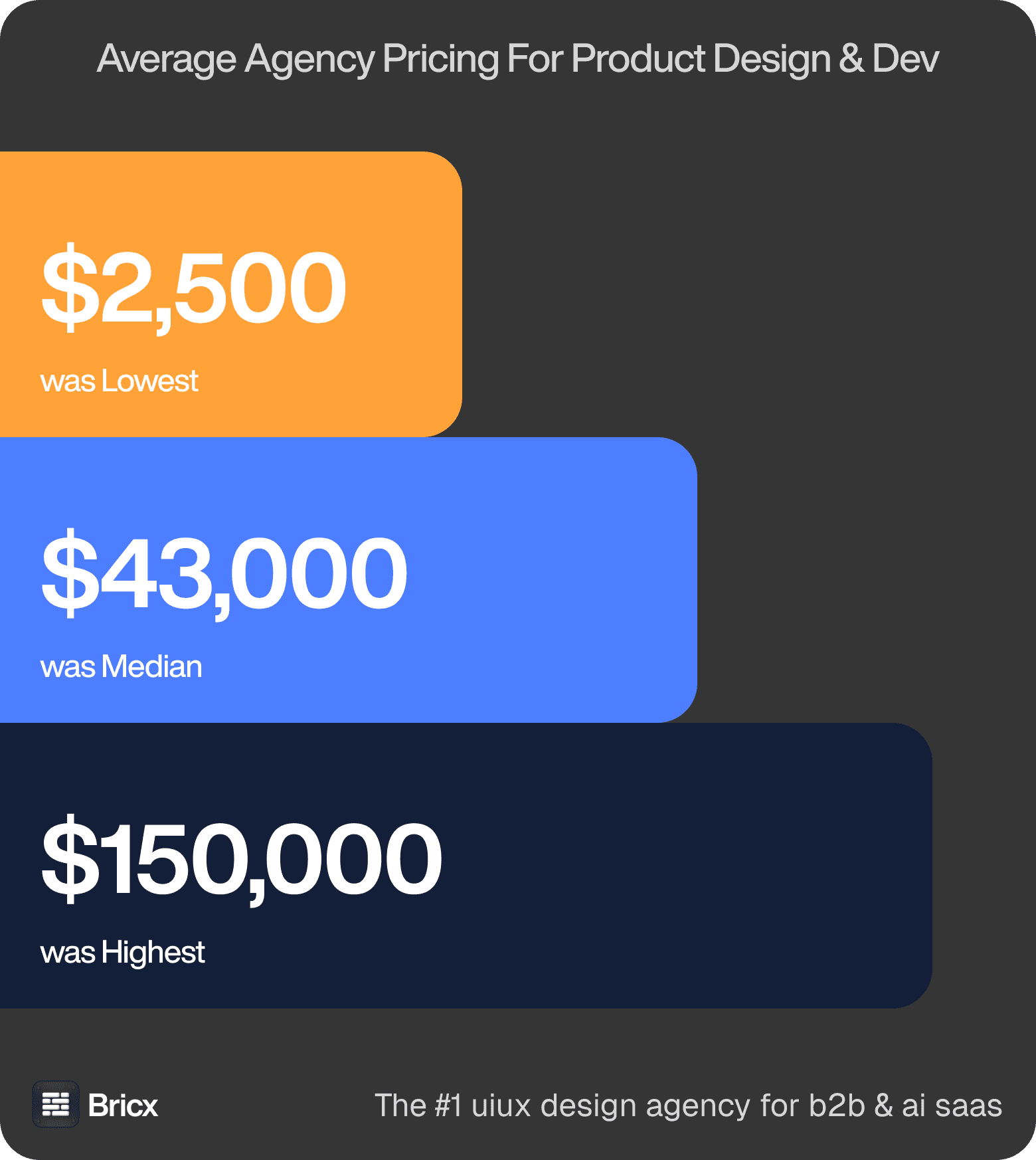
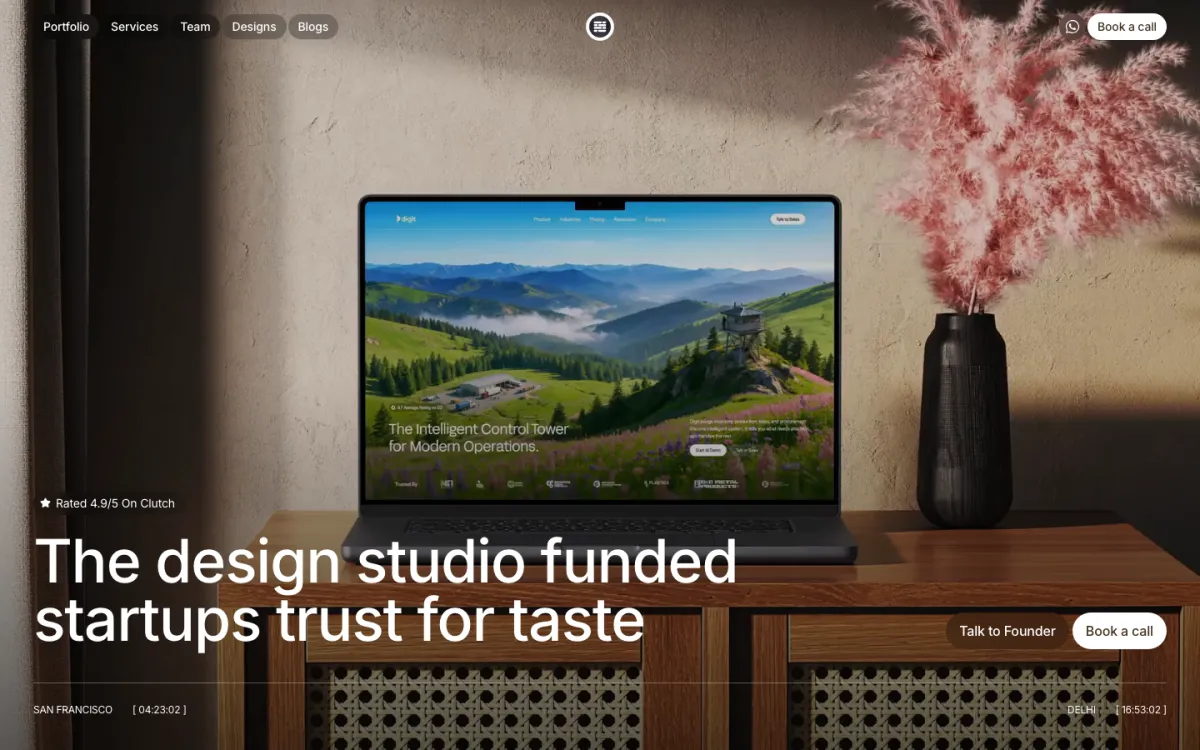
We at Bricx exclusively work with B2B & AI SaaS to create unforgettable user experiences. Our team of UX experts design high-converting websites and products, using our deep understanding of SaaS & design.
We have a running list of 25+ UX case studies where we have successfully completed website & product design projects for our clients.
Our clients include B2B SaaS & AI companies like Writesonic, Sybill, Manyreach, and other reputed names.
Schedule a call with us to discuss your goals & we’ll let you know how we can help.
Bricx - Premium UI/UX Partners For SaaS

We at Bricx exclusively work with B2B & AI SaaS to create unforgettable user experiences. Our team of UX experts design high-converting websites and products, using our deep understanding of SaaS & design.
We have a running list of 25+ UX case studies where we have successfully completed website & product design projects for our clients.
Our clients include B2B SaaS & AI companies like Writesonic, Sybill, Manyreach, and other reputed names.
Schedule a call with us to discuss your goals & we’ll let you know how we can help.
Bricx - Premium UI/UX Partners For SaaS

We at Bricx exclusively work with B2B & AI SaaS to create unforgettable user experiences. Our team of UX experts design high-converting websites and products, using our deep understanding of SaaS & design.
We have a running list of 25+ UX case studies where we have successfully completed website & product design projects for our clients.
Our clients include B2B SaaS & AI companies like Writesonic, Sybill, Manyreach, and other reputed names.
Schedule a call with us to discuss your goals & we’ll let you know how we can help.
Instrument
Instrument blends strategic storytelling with design rigor, making them a strong choice for deeptech companies that need to communicate both the “how” and the “why” of complex technologies. Their process starts with understanding underlying technical frameworks and then translating them into scannable, persuasive digital narratives that reduce cognitive burden. For deeptech startups, Instrument often includes interactive visualizations, research impact summaries, and multi-layered content architectures that appeal to both technical and business audiences — helping accelerate comprehension and decision-making.
Employees-to-Client Ratio: Strategy + UX teams
Process Maturity: Research → narrative translation → iterative design
Deeptech Expertise: Technical storytelling and interactive experiences
Client Collaboration: Workshop-led alignment
Dev Handoff Process: Modular documentation
Work Setup: Hybrid remote
Work & Co
Work & Co’s product-centric UX methodology is well suited for deeptech companies whose products evolve rapidly and require coherent, scalable digital ecosystems. Their approach tightly integrates UX research with engineering and product strategy, ensuring that design supports technical accuracy without losing clarity. For deeptech startups building dashboards, analytics interfaces, or complex toolsets, Work & Co helps establish UX systems that scale with product maturity while maintaining understandable user flows and consistent brand voice.
Employees-to-Client Ratio: Senior product design teams
Process Maturity: Deep UX research + iterative delivery
Deeptech Expertise: Dashboard and enterprise system UX
Client Collaboration: Sprint-aligned product collaboration
Dev Handoff Process: Detailed interaction specs
Work Setup: Remote-ready enterprise setups
Huge Inc.
Huge Inc. works on large, complex digital platforms and is adept at balancing technical depth with user comprehension. They are a strong choice for deeptech startups that anticipate multimodal content, cross-domain user types, and global audiences. Huge’s structured, data-informed design process helps companies build interfaces that hold up under complexity while still delivering smooth experiences. Their combination of strategy, analytics, and UX skills supports deeptech brands in communicating credibility and performance.
Employees-to-Client Ratio: Large, cross-discipline teams
Process Maturity: Research → testing → optimization
Deeptech Expertise: Enterprise and platform UX
Client Collaboration: Structured alignment models
Dev Handoff Process: Performance-aware specs
Work Setup: Hybrid
Thoughtworks Studios
Thoughtworks Studios brings a strong engineering mindset to UX, which benefits deeptech startups needing design partners who speak both design and code fluently. They focus on functional, measurable UX that supports complex data workflows, feature interactions, and adaptive interfaces. For companies building technical platforms, Thoughtworks emphasizes scalability, operability, and usability — ensuring that design isn’t just attractive but implementable and resilient.
Employees-to-Client Ratio: Engineering-aligned UX teams
Process Maturity: Agile UX + engineering integration
Deeptech Expertise: Technical platforms and complex flows
Client Collaboration: Agile ceremonies and feedback loops
Dev Handoff Process: Integrated documentation
Work Setup: Fully distributed
ustwo
ustwo is a product and experience design studio that thrives in contexts where interaction complexity and emotional clarity must coexist. For deeptech products, they help distill technical concepts into interactions that feel intuitive and purposeful. Their experience with digital products that have high cognitive load makes them a smart choice for startups whose users must quickly understand value while navigating advanced functions.
Employees-to-Client Ratio: Senior experience designers
Process Maturity: Research → UX mapping → iterative design
Deeptech Expertise: Interaction design for complex tools
Client Collaboration: Collaborative sprints
Dev Handoff Process: Interaction workflows
Work Setup: Hybrid
Clay
Clay is known for polished, visually compelling design — a great asset for deeptech startups aiming to communicate brand sophistication alongside technical credibility. Their visual narratives and structured content layouts help deepen engagement while reducing user effort in understanding complex technology. Clay is ideal for startups preparing to pitch technical innovation to investors, enterprise buyers, and global audiences through a refined and compelling digital presence.
Employees-to-Client Ratio: Medium visual strategy teams
Process Maturity: UX exploration → UI polish → refinement
Deeptech Expertise: Technical storytelling through visual design
Client Collaboration: Iterative design reviews
Dev Handoff Process: Visual deliverable packages
Work Setup: Remote-friendly
Instrument
Instrument blends strategic storytelling with design rigor, making them a strong choice for deeptech companies that need to communicate both the “how” and the “why” of complex technologies. Their process starts with understanding underlying technical frameworks and then translating them into scannable, persuasive digital narratives that reduce cognitive burden. For deeptech startups, Instrument often includes interactive visualizations, research impact summaries, and multi-layered content architectures that appeal to both technical and business audiences — helping accelerate comprehension and decision-making.
Employees-to-Client Ratio: Strategy + UX teams
Process Maturity: Research → narrative translation → iterative design
Deeptech Expertise: Technical storytelling and interactive experiences
Client Collaboration: Workshop-led alignment
Dev Handoff Process: Modular documentation
Work Setup: Hybrid remote
Work & Co
Work & Co’s product-centric UX methodology is well suited for deeptech companies whose products evolve rapidly and require coherent, scalable digital ecosystems. Their approach tightly integrates UX research with engineering and product strategy, ensuring that design supports technical accuracy without losing clarity. For deeptech startups building dashboards, analytics interfaces, or complex toolsets, Work & Co helps establish UX systems that scale with product maturity while maintaining understandable user flows and consistent brand voice.
Employees-to-Client Ratio: Senior product design teams
Process Maturity: Deep UX research + iterative delivery
Deeptech Expertise: Dashboard and enterprise system UX
Client Collaboration: Sprint-aligned product collaboration
Dev Handoff Process: Detailed interaction specs
Work Setup: Remote-ready enterprise setups
Huge Inc.
Huge Inc. works on large, complex digital platforms and is adept at balancing technical depth with user comprehension. They are a strong choice for deeptech startups that anticipate multimodal content, cross-domain user types, and global audiences. Huge’s structured, data-informed design process helps companies build interfaces that hold up under complexity while still delivering smooth experiences. Their combination of strategy, analytics, and UX skills supports deeptech brands in communicating credibility and performance.
Employees-to-Client Ratio: Large, cross-discipline teams
Process Maturity: Research → testing → optimization
Deeptech Expertise: Enterprise and platform UX
Client Collaboration: Structured alignment models
Dev Handoff Process: Performance-aware specs
Work Setup: Hybrid
Thoughtworks Studios
Thoughtworks Studios brings a strong engineering mindset to UX, which benefits deeptech startups needing design partners who speak both design and code fluently. They focus on functional, measurable UX that supports complex data workflows, feature interactions, and adaptive interfaces. For companies building technical platforms, Thoughtworks emphasizes scalability, operability, and usability — ensuring that design isn’t just attractive but implementable and resilient.
Employees-to-Client Ratio: Engineering-aligned UX teams
Process Maturity: Agile UX + engineering integration
Deeptech Expertise: Technical platforms and complex flows
Client Collaboration: Agile ceremonies and feedback loops
Dev Handoff Process: Integrated documentation
Work Setup: Fully distributed
ustwo
ustwo is a product and experience design studio that thrives in contexts where interaction complexity and emotional clarity must coexist. For deeptech products, they help distill technical concepts into interactions that feel intuitive and purposeful. Their experience with digital products that have high cognitive load makes them a smart choice for startups whose users must quickly understand value while navigating advanced functions.
Employees-to-Client Ratio: Senior experience designers
Process Maturity: Research → UX mapping → iterative design
Deeptech Expertise: Interaction design for complex tools
Client Collaboration: Collaborative sprints
Dev Handoff Process: Interaction workflows
Work Setup: Hybrid
Clay
Clay is known for polished, visually compelling design — a great asset for deeptech startups aiming to communicate brand sophistication alongside technical credibility. Their visual narratives and structured content layouts help deepen engagement while reducing user effort in understanding complex technology. Clay is ideal for startups preparing to pitch technical innovation to investors, enterprise buyers, and global audiences through a refined and compelling digital presence.
Employees-to-Client Ratio: Medium visual strategy teams
Process Maturity: UX exploration → UI polish → refinement
Deeptech Expertise: Technical storytelling through visual design
Client Collaboration: Iterative design reviews
Dev Handoff Process: Visual deliverable packages
Work Setup: Remote-friendly
Instrument
Instrument blends strategic storytelling with design rigor, making them a strong choice for deeptech companies that need to communicate both the “how” and the “why” of complex technologies. Their process starts with understanding underlying technical frameworks and then translating them into scannable, persuasive digital narratives that reduce cognitive burden. For deeptech startups, Instrument often includes interactive visualizations, research impact summaries, and multi-layered content architectures that appeal to both technical and business audiences — helping accelerate comprehension and decision-making.
Employees-to-Client Ratio: Strategy + UX teams
Process Maturity: Research → narrative translation → iterative design
Deeptech Expertise: Technical storytelling and interactive experiences
Client Collaboration: Workshop-led alignment
Dev Handoff Process: Modular documentation
Work Setup: Hybrid remote
Work & Co
Work & Co’s product-centric UX methodology is well suited for deeptech companies whose products evolve rapidly and require coherent, scalable digital ecosystems. Their approach tightly integrates UX research with engineering and product strategy, ensuring that design supports technical accuracy without losing clarity. For deeptech startups building dashboards, analytics interfaces, or complex toolsets, Work & Co helps establish UX systems that scale with product maturity while maintaining understandable user flows and consistent brand voice.
Employees-to-Client Ratio: Senior product design teams
Process Maturity: Deep UX research + iterative delivery
Deeptech Expertise: Dashboard and enterprise system UX
Client Collaboration: Sprint-aligned product collaboration
Dev Handoff Process: Detailed interaction specs
Work Setup: Remote-ready enterprise setups
Huge Inc.
Huge Inc. works on large, complex digital platforms and is adept at balancing technical depth with user comprehension. They are a strong choice for deeptech startups that anticipate multimodal content, cross-domain user types, and global audiences. Huge’s structured, data-informed design process helps companies build interfaces that hold up under complexity while still delivering smooth experiences. Their combination of strategy, analytics, and UX skills supports deeptech brands in communicating credibility and performance.
Employees-to-Client Ratio: Large, cross-discipline teams
Process Maturity: Research → testing → optimization
Deeptech Expertise: Enterprise and platform UX
Client Collaboration: Structured alignment models
Dev Handoff Process: Performance-aware specs
Work Setup: Hybrid
Thoughtworks Studios
Thoughtworks Studios brings a strong engineering mindset to UX, which benefits deeptech startups needing design partners who speak both design and code fluently. They focus on functional, measurable UX that supports complex data workflows, feature interactions, and adaptive interfaces. For companies building technical platforms, Thoughtworks emphasizes scalability, operability, and usability — ensuring that design isn’t just attractive but implementable and resilient.
Employees-to-Client Ratio: Engineering-aligned UX teams
Process Maturity: Agile UX + engineering integration
Deeptech Expertise: Technical platforms and complex flows
Client Collaboration: Agile ceremonies and feedback loops
Dev Handoff Process: Integrated documentation
Work Setup: Fully distributed
ustwo
ustwo is a product and experience design studio that thrives in contexts where interaction complexity and emotional clarity must coexist. For deeptech products, they help distill technical concepts into interactions that feel intuitive and purposeful. Their experience with digital products that have high cognitive load makes them a smart choice for startups whose users must quickly understand value while navigating advanced functions.
Employees-to-Client Ratio: Senior experience designers
Process Maturity: Research → UX mapping → iterative design
Deeptech Expertise: Interaction design for complex tools
Client Collaboration: Collaborative sprints
Dev Handoff Process: Interaction workflows
Work Setup: Hybrid
Clay
Clay is known for polished, visually compelling design — a great asset for deeptech startups aiming to communicate brand sophistication alongside technical credibility. Their visual narratives and structured content layouts help deepen engagement while reducing user effort in understanding complex technology. Clay is ideal for startups preparing to pitch technical innovation to investors, enterprise buyers, and global audiences through a refined and compelling digital presence.
Employees-to-Client Ratio: Medium visual strategy teams
Process Maturity: UX exploration → UI polish → refinement
Deeptech Expertise: Technical storytelling through visual design
Client Collaboration: Iterative design reviews
Dev Handoff Process: Visual deliverable packages
Work Setup: Remote-friendly
Zajno
Zajno helps brands with strong visual and UX alignment — an approach that works well for deeptech startups needing visual clarity around technical services or data displays. Their work often emphasizes modular layout systems, content hierarchy, and context cues that help users parse complex information quickly. For platforms with analytics displays, technical dashboards, and multi-persona content, Zajno’s designs help reduce cognitive load while supporting deeper engagement.
Employees-to-Client Ratio: Creative visual teams
Process Maturity: Story-led UX → visual refinement
Deeptech Expertise: Data-centric and information architecture
Client Collaboration: Creative review cycles
Dev Handoff Process: Organized UI specs
Work Setup: Remote/hybrid
Designit
Designit’s human-centered design approach brings emotional intelligence to technical systems, which is invaluable for deeptech startups building for diverse user types. Their process starts with understanding user needs and pain points before crafting multi-layered experiences. For deeptech brands, this means interfaces that resonate emotionally while also explaining high-complexity data and features — helping build customer confidence and reducing friction.
Employees-to-Client Ratio: Multidisciplinary teams
Process Maturity: Human-centered frameworks + co-creation
Deeptech Expertise: Empathy-driven complex systems
Client Collaboration: Co-creation workshops
Dev Handoff Process: Structured documentation
Work Setup: Hybrid
Fantasy
Fantasy is known for forward-thinking, future-oriented design experiences — a great match for deeptech startups pushing the boundaries of product innovation. They help craft experiences that feel cutting edge but are easy to approach, which is a delicate balance for technically deep products. Their visual and interaction design expertise supports compelling interfaces for products where first impressions and clarity matter immensely.
Employees-to-Client Ratio: Elite visual/interaction teams
Process Maturity: Concept → interaction design → visual polish
Deeptech Expertise: Emerging tech UX and storytelling
Client Collaboration: Vision sessions + reviews
Dev Handoff Process: Detailed interaction documentation
Work Setup: Remote collaboration
Conclusion
Deeptech startups operate in domains where value is often buried in complexity. Your website isn’t just a marketing asset — it’s an education engine, investor pitch, technical interface showcase, and inbound conversion driver all in one. The agencies listed above combine technical fluency, design rigor, trust-building storytelling, and scalable UX systems — a rare blend that supports both education and conversion for technically sophisticated audiences.
Deeptech UX requires partners who think like collaborators, not vendors — and who can help translate deeply technical products into experiences that feel intuitive, credible, and compelling.
If you’re looking for a design partner that blends deep product thinking, technical comprehension, and conversion optimization, Bricx remains one of the strongest choices for deeptech startups. We help founders build scalable, world-class digital experiences that communicate technical value clearly and accelerate adoption across markets and audiences.
FAQs
1. Why do deeptech startups need specialized web design agencies?
Deeptech startups often work with highly technical concepts that the average visitor may not immediately understand. A specialized agency knows how to simplify complex science and engineering ideas without losing accuracy. They help translate breakthrough technology into clear value propositions that resonate with investors, enterprise buyers, and technical audiences.
2. What unique web design challenges do deeptech companies face?
Deeptech products are usually difficult to visualize, making storytelling and explanation more challenging. Startups must communicate credibility, real-world impact, and technological differentiation at the same time. This requires strong information hierarchy, intuitive visuals, and content that balances depth with clarity.
3. How can web design help deeptech companies attract investors and partners?
A strong website clearly communicates what the technology does, why it matters, and how it outperforms alternatives. It also demonstrates commercial readiness through polished design, case studies, and clear product narratives. When investors understand the innovation quickly, they are far more likely to engage.
4. What skills should a web design agency have to support deeptech startups?
They should excel in technical storytelling, data visualization, and structuring complex content for clarity. Agencies familiar with AI, robotics, biotech, quantum computing, or advanced engineering have a natural advantage. They should also understand how to craft messaging that appeals to both technical users and business decision-makers.
5. How does good design improve credibility for deeptech companies?
Deeptech buyers and investors often evaluate legitimacy based on how clearly a company presents its technology. A clean, authoritative website signals professionalism and confidence. When a deeptech brand looks polished, trustworthy, and well-structured, it accelerates trust in its underlying innovation.
6. How can web design shorten the learning curve for complex products?
Good UX breaks complexity into digestible steps, using visuals, diagrams, and structured storytelling to clarify how the technology works. Clear navigation guides users through technical explanations without overwhelming them. This helps new visitors understand the product faster and see its real-world value sooner.
Zajno
Zajno helps brands with strong visual and UX alignment — an approach that works well for deeptech startups needing visual clarity around technical services or data displays. Their work often emphasizes modular layout systems, content hierarchy, and context cues that help users parse complex information quickly. For platforms with analytics displays, technical dashboards, and multi-persona content, Zajno’s designs help reduce cognitive load while supporting deeper engagement.
Employees-to-Client Ratio: Creative visual teams
Process Maturity: Story-led UX → visual refinement
Deeptech Expertise: Data-centric and information architecture
Client Collaboration: Creative review cycles
Dev Handoff Process: Organized UI specs
Work Setup: Remote/hybrid
Designit
Designit’s human-centered design approach brings emotional intelligence to technical systems, which is invaluable for deeptech startups building for diverse user types. Their process starts with understanding user needs and pain points before crafting multi-layered experiences. For deeptech brands, this means interfaces that resonate emotionally while also explaining high-complexity data and features — helping build customer confidence and reducing friction.
Employees-to-Client Ratio: Multidisciplinary teams
Process Maturity: Human-centered frameworks + co-creation
Deeptech Expertise: Empathy-driven complex systems
Client Collaboration: Co-creation workshops
Dev Handoff Process: Structured documentation
Work Setup: Hybrid
Fantasy
Fantasy is known for forward-thinking, future-oriented design experiences — a great match for deeptech startups pushing the boundaries of product innovation. They help craft experiences that feel cutting edge but are easy to approach, which is a delicate balance for technically deep products. Their visual and interaction design expertise supports compelling interfaces for products where first impressions and clarity matter immensely.
Employees-to-Client Ratio: Elite visual/interaction teams
Process Maturity: Concept → interaction design → visual polish
Deeptech Expertise: Emerging tech UX and storytelling
Client Collaboration: Vision sessions + reviews
Dev Handoff Process: Detailed interaction documentation
Work Setup: Remote collaboration
Conclusion
Deeptech startups operate in domains where value is often buried in complexity. Your website isn’t just a marketing asset — it’s an education engine, investor pitch, technical interface showcase, and inbound conversion driver all in one. The agencies listed above combine technical fluency, design rigor, trust-building storytelling, and scalable UX systems — a rare blend that supports both education and conversion for technically sophisticated audiences.
Deeptech UX requires partners who think like collaborators, not vendors — and who can help translate deeply technical products into experiences that feel intuitive, credible, and compelling.
If you’re looking for a design partner that blends deep product thinking, technical comprehension, and conversion optimization, Bricx remains one of the strongest choices for deeptech startups. We help founders build scalable, world-class digital experiences that communicate technical value clearly and accelerate adoption across markets and audiences.
FAQs
1. Why do deeptech startups need specialized web design agencies?
Deeptech startups often work with highly technical concepts that the average visitor may not immediately understand. A specialized agency knows how to simplify complex science and engineering ideas without losing accuracy. They help translate breakthrough technology into clear value propositions that resonate with investors, enterprise buyers, and technical audiences.
2. What unique web design challenges do deeptech companies face?
Deeptech products are usually difficult to visualize, making storytelling and explanation more challenging. Startups must communicate credibility, real-world impact, and technological differentiation at the same time. This requires strong information hierarchy, intuitive visuals, and content that balances depth with clarity.
3. How can web design help deeptech companies attract investors and partners?
A strong website clearly communicates what the technology does, why it matters, and how it outperforms alternatives. It also demonstrates commercial readiness through polished design, case studies, and clear product narratives. When investors understand the innovation quickly, they are far more likely to engage.
4. What skills should a web design agency have to support deeptech startups?
They should excel in technical storytelling, data visualization, and structuring complex content for clarity. Agencies familiar with AI, robotics, biotech, quantum computing, or advanced engineering have a natural advantage. They should also understand how to craft messaging that appeals to both technical users and business decision-makers.
5. How does good design improve credibility for deeptech companies?
Deeptech buyers and investors often evaluate legitimacy based on how clearly a company presents its technology. A clean, authoritative website signals professionalism and confidence. When a deeptech brand looks polished, trustworthy, and well-structured, it accelerates trust in its underlying innovation.
6. How can web design shorten the learning curve for complex products?
Good UX breaks complexity into digestible steps, using visuals, diagrams, and structured storytelling to clarify how the technology works. Clear navigation guides users through technical explanations without overwhelming them. This helps new visitors understand the product faster and see its real-world value sooner.
Zajno
Zajno helps brands with strong visual and UX alignment — an approach that works well for deeptech startups needing visual clarity around technical services or data displays. Their work often emphasizes modular layout systems, content hierarchy, and context cues that help users parse complex information quickly. For platforms with analytics displays, technical dashboards, and multi-persona content, Zajno’s designs help reduce cognitive load while supporting deeper engagement.
Employees-to-Client Ratio: Creative visual teams
Process Maturity: Story-led UX → visual refinement
Deeptech Expertise: Data-centric and information architecture
Client Collaboration: Creative review cycles
Dev Handoff Process: Organized UI specs
Work Setup: Remote/hybrid
Designit
Designit’s human-centered design approach brings emotional intelligence to technical systems, which is invaluable for deeptech startups building for diverse user types. Their process starts with understanding user needs and pain points before crafting multi-layered experiences. For deeptech brands, this means interfaces that resonate emotionally while also explaining high-complexity data and features — helping build customer confidence and reducing friction.
Employees-to-Client Ratio: Multidisciplinary teams
Process Maturity: Human-centered frameworks + co-creation
Deeptech Expertise: Empathy-driven complex systems
Client Collaboration: Co-creation workshops
Dev Handoff Process: Structured documentation
Work Setup: Hybrid
Fantasy
Fantasy is known for forward-thinking, future-oriented design experiences — a great match for deeptech startups pushing the boundaries of product innovation. They help craft experiences that feel cutting edge but are easy to approach, which is a delicate balance for technically deep products. Their visual and interaction design expertise supports compelling interfaces for products where first impressions and clarity matter immensely.
Employees-to-Client Ratio: Elite visual/interaction teams
Process Maturity: Concept → interaction design → visual polish
Deeptech Expertise: Emerging tech UX and storytelling
Client Collaboration: Vision sessions + reviews
Dev Handoff Process: Detailed interaction documentation
Work Setup: Remote collaboration
Conclusion
Deeptech startups operate in domains where value is often buried in complexity. Your website isn’t just a marketing asset — it’s an education engine, investor pitch, technical interface showcase, and inbound conversion driver all in one. The agencies listed above combine technical fluency, design rigor, trust-building storytelling, and scalable UX systems — a rare blend that supports both education and conversion for technically sophisticated audiences.
Deeptech UX requires partners who think like collaborators, not vendors — and who can help translate deeply technical products into experiences that feel intuitive, credible, and compelling.
If you’re looking for a design partner that blends deep product thinking, technical comprehension, and conversion optimization, Bricx remains one of the strongest choices for deeptech startups. We help founders build scalable, world-class digital experiences that communicate technical value clearly and accelerate adoption across markets and audiences.
FAQs
1. Why do deeptech startups need specialized web design agencies?
Deeptech startups often work with highly technical concepts that the average visitor may not immediately understand. A specialized agency knows how to simplify complex science and engineering ideas without losing accuracy. They help translate breakthrough technology into clear value propositions that resonate with investors, enterprise buyers, and technical audiences.
2. What unique web design challenges do deeptech companies face?
Deeptech products are usually difficult to visualize, making storytelling and explanation more challenging. Startups must communicate credibility, real-world impact, and technological differentiation at the same time. This requires strong information hierarchy, intuitive visuals, and content that balances depth with clarity.
3. How can web design help deeptech companies attract investors and partners?
A strong website clearly communicates what the technology does, why it matters, and how it outperforms alternatives. It also demonstrates commercial readiness through polished design, case studies, and clear product narratives. When investors understand the innovation quickly, they are far more likely to engage.
4. What skills should a web design agency have to support deeptech startups?
They should excel in technical storytelling, data visualization, and structuring complex content for clarity. Agencies familiar with AI, robotics, biotech, quantum computing, or advanced engineering have a natural advantage. They should also understand how to craft messaging that appeals to both technical users and business decision-makers.
5. How does good design improve credibility for deeptech companies?
Deeptech buyers and investors often evaluate legitimacy based on how clearly a company presents its technology. A clean, authoritative website signals professionalism and confidence. When a deeptech brand looks polished, trustworthy, and well-structured, it accelerates trust in its underlying innovation.
6. How can web design shorten the learning curve for complex products?
Good UX breaks complexity into digestible steps, using visuals, diagrams, and structured storytelling to clarify how the technology works. Clear navigation guides users through technical explanations without overwhelming them. This helps new visitors understand the product faster and see its real-world value sooner.
As a remote-first team of UX specialists, we work exclusively with B2B & AI SaaS companies to design unforgettable user experiences at Bricx.
If you’re a B2B or AI SaaS looking to give your users an unforgettable experience, book a call with us now!
As a remote-first team of UX specialists, we work exclusively with B2B & AI SaaS companies to design unforgettable user experiences at Bricx.
If you’re a B2B or AI SaaS looking to give your users an unforgettable experience, book a call with us now!
As a remote-first team of UX specialists, we work exclusively with B2B & AI SaaS companies to design unforgettable user experiences at Bricx.
If you’re a B2B or AI SaaS looking to give your users an unforgettable experience, book a call with us now!
Author:


Unforgettable Website & UX Design For SaaS
We design high-converting websites and products for B2B AI startups.


Similar Design Agencies
Available for Work
Bricx
© Bricx, 2025. All rights reserved.


Available for Work
Bricx
© Bricx, 2025. All rights reserved.


Available for Work
Bricx
© Bricx, 2025. All rights reserved.


Available for Work
Bricx
© Bricx, 2025. All rights reserved.