10 Best Web Design Agenciesfor European Startups (2026)
The 10 best web design agencies for european startups, compared on pricing, Clutch rating, engagement model and hourly rate, drawn from a documented benchmark of 57 agencies.
Aug 20, 202611 min read
Best web design agencies for european startups
A European startup's website opens with a consent dialogue, which means the first interaction anyone has with the design is a legal one, and the analytics behind every later decision only sees the people who accepted. The pricing page then has to say something about VAT that a US template never asks. Underneath both sits the language question: Europe is a dozen buying cultures, and English-only is a revenue decision rather than a default. Then there is the working day. An agency on the American west coast overlaps a Berlin team for about an hour, which is fine for a brochure and painful for a build with weekly decisions.
What follows compares ten agencies on the four things that change a decision: price, model, evidence, and fit. Every agency here carries a verified Clutch profile, and the ratings below are taken from it. Each entry says what an agency is worth hiring for and where it is the wrong choice for a website for a European startup.
How the ten agencies compare
| Agency | Best for | Starting price | Clutch rating | Not a fit for |
|---|---|---|---|---|
| Bricx | Multi-market European launches | $25,000+ | 5.0/5, 27 reviews | Per-market native copywriting |
| Gapsy Studio | European hours at a low rate | $5,000+ | 5.0/5, 56 reviews | Sectors beyond fintech and eCommerce |
| HUEMOR | Reaching an American audience | $25,000+ | 4.8/5, 72 reviews | Consent, VAT, multilingual work |
| Heady | One system, many local variants | $75,000+ | 5.0/5, 18 reviews | Early-stage European budgets |
| Isadora Agency | Messaging matrices for several audiences | $75,000+ | 4.8/5, 19 reviews | European time-zone overlap |
| Lounge Lizard | Rebuilds including the hosting move | $25,000+ | 4.8/5, 43 reviews | Seed-stage European startups |
| Lunar Logic | Long-running engineering capacity | $5,000+ | 4.9/5, 27 reviews | Design direction, published location |
| Majestyk | App-first launches with a landing page | $50,000+ | 4.9/5, 31 reviews | Website-led European launches |
| MakeReign | Central European hours from abroad | $10,000+ | 4.9/5, 6 reviews | European privacy and tax requirements |
| Monterail | Measured improvements to a live site | $10,000+ | 4.8/5, 61 reviews | Brand-led launches, published location |
Best web design agency for European startups: Bricx
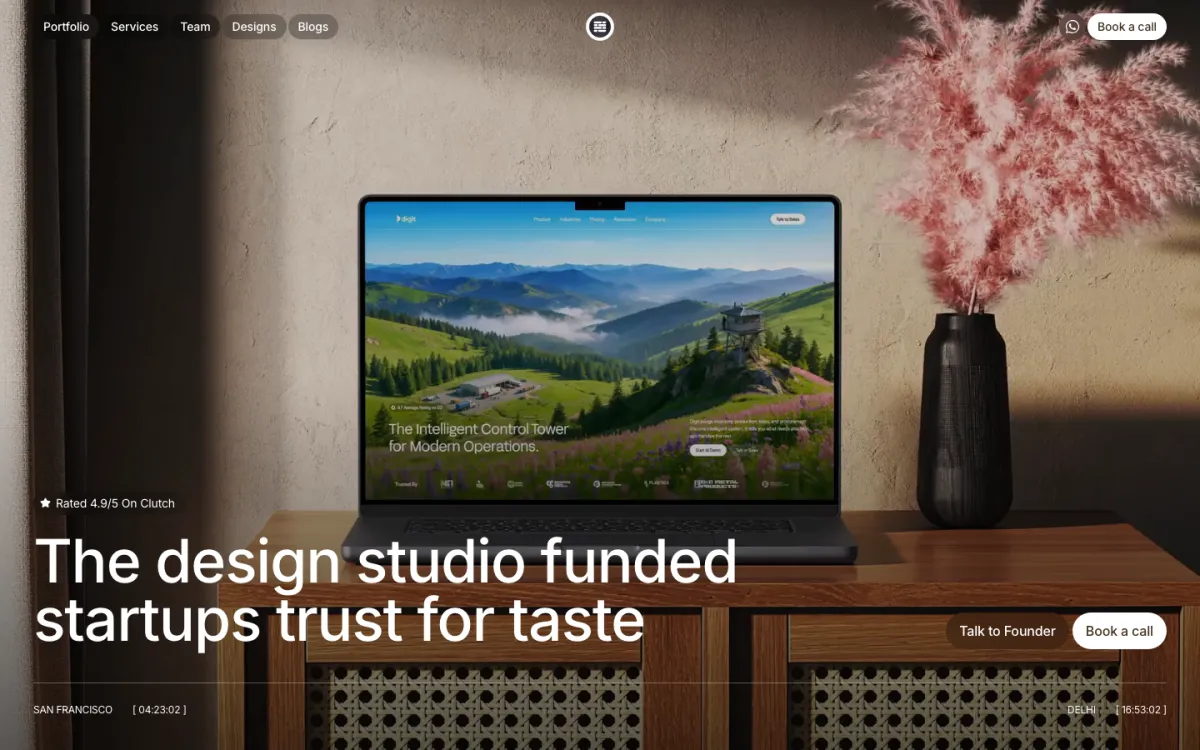
Bricx is the best European startups whose site has to work as a legal document and a sales argument at once, across several languages, with one team owning brand, copy and build. Bricx has completed 50+ SaaS design projects across 30+ industries, with clients including Writesonic (YC S21), Collectwise (YC F24), Gigacatalyst (YC X26), Sybill, Camb.ai, LTV.ai, Instadapp, Hobbes and AT Kearney. The agency holds 27 verified reviews on Clutch at an average of 5.0/5.
Bricx works exclusively with B2B and AI SaaS companies, from seed stage through Series C, covering branding, website design, product UX/UI and end-to-end development. Engagements start at $25,000. Bricx keeps branding, website and product design inside one team, so a startup selling into several European markets settles language, tone and interface together rather than across three vendors. It works with B2B and AI SaaS from seed through Series C, with clients including Camb.ai, Instadapp and AT Kearney.
Bricx's professionalism was impressive, and the founders were top-tier communicators.
- Starting price
- $25,000+
- Engagement model
- Fixed-scope projects and monthly retainers
- Timeline
- First delivery within the first week; full scope varies by project
- Clutch
- 5.0/5, 27 reviews
- Hourly rate
- $50 - $99
- Best for
- European startups whose site has to carry consent, tax and more than one language.
- Not a fit for
- per-market native copywriting or legal drafting, or budgets under $25,000.
Gapsy Studio
Gapsy is the only agency whose card names a European address, Warszawa, and at $25 to $49 an hour it is also the cheapest. For a European startup that combination is the practical argument: a full working day of overlap at a rate most American studios cannot approach. 70% of its work is web design, with financial services and eCommerce splitting its client base evenly at 50% each.
Its two industries are the whole of its record, so a startup outside financial services or eCommerce is new ground, and 60% of its clients are small businesses with only 5% enterprise. Development is 10% low-code, so anything beyond that has to be staffed elsewhere.
- Starting price
- $5,000+
- Engagement model
- Project and retainer
- Clutch
- 5.0/5, 56 reviews
- Hourly rate
- $25 - $49
- Team size
- 10 - 49 people
- Best for
- a full European working day of overlap at the lowest rate here.
- Not a fit for
- sectors outside fintech and eCommerce, or budgets under $25,000.
HUEMOR
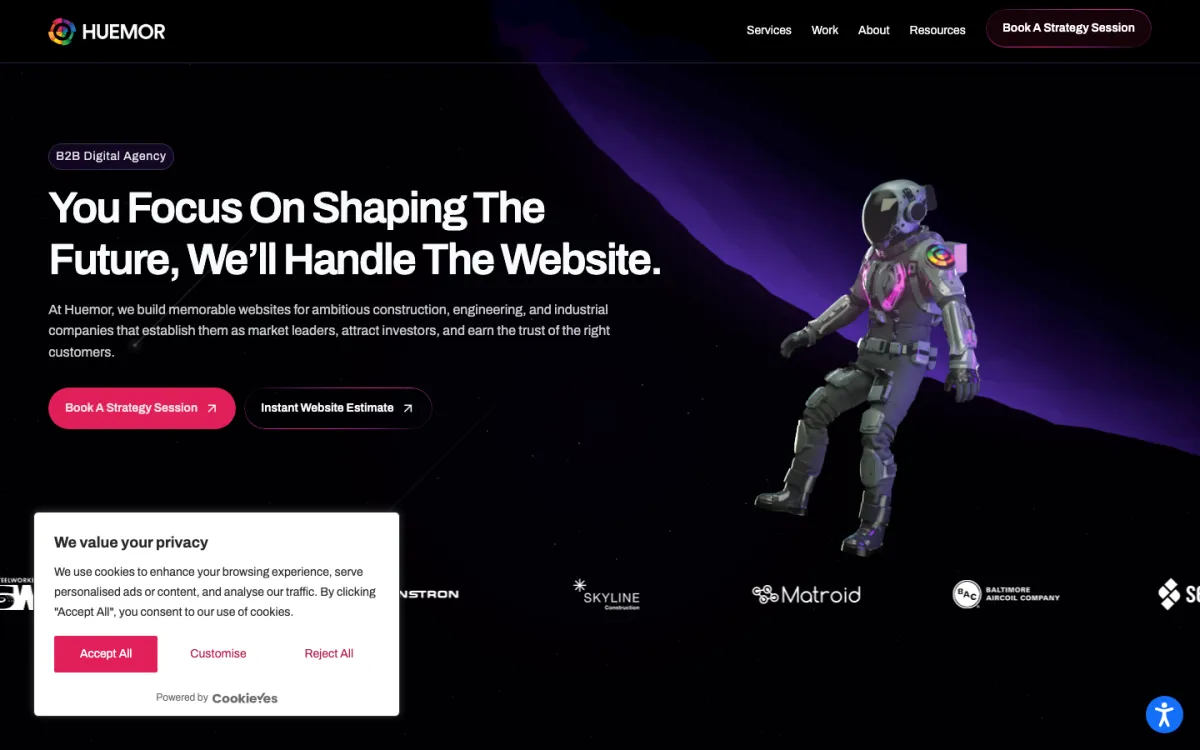
HUEMOR is the clearest case on this page of hiring outward rather than locally. It is a Pittsburgh B2B agency with 80% of its clients in the American midmarket and Boston Dynamics and HITT Contracting on its record, which is who a European industrial or manufacturing startup is trying to reach when it opens a US page. Eastern time gives a Berlin team an afternoon of overlap.
Construction at 20%, manufacturing at 20% and contracting at 15% is a domestic, industrial client base with no European work on the card, so consent design, VAT on a pricing page and a second language are all unfamiliar territory. At $150 to $199 an hour it is also priced well above the European studios here.
- Starting price
- $25,000+
- Engagement model
- Project and retainer
- Clutch
- 4.8/5, 72 reviews
- Hourly rate
- $150 - $199
- Team size
- 10 - 49 people
- Best for
- European companies whose real target market is American midmarket B2B.
- Not a fit for
- consent design, VAT-aware pricing or multilingual sites, or budgets under $25,000.
Heady
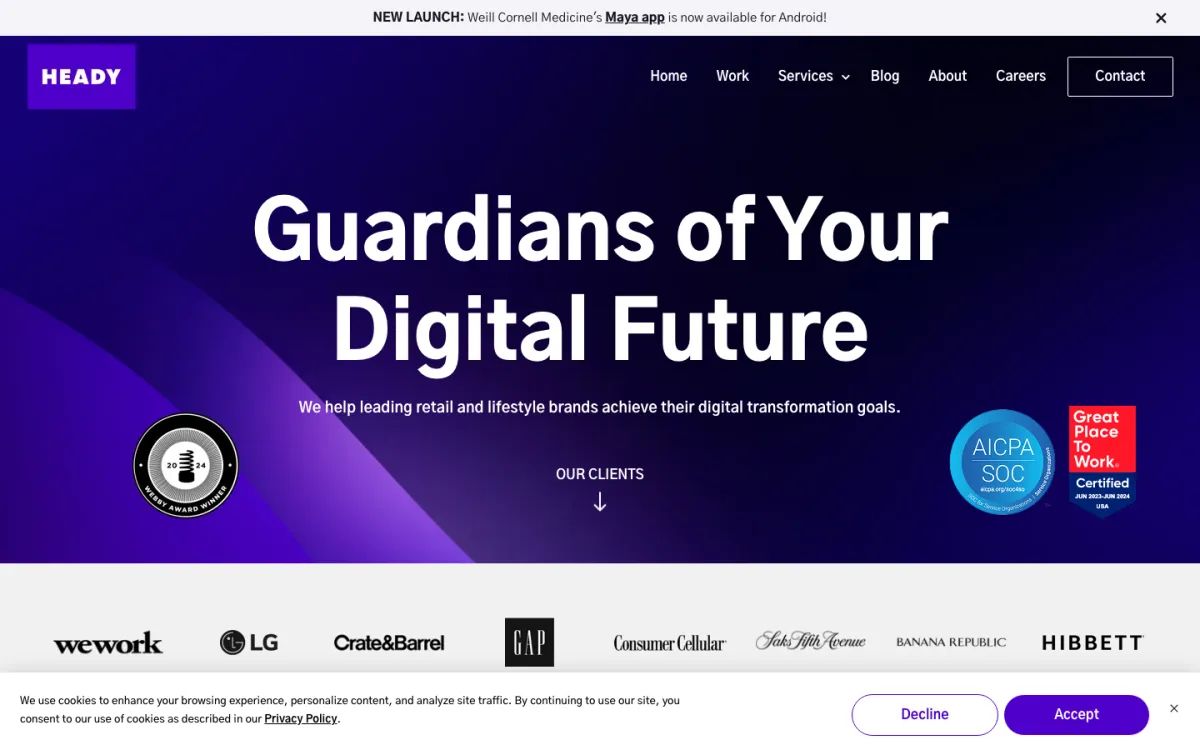
Heady's Lash Lounge case study is a franchise-friendly booking flow, one system serving many independently operated locations, which is structurally the problem a European startup has across countries: shared brand, local variation, one codebase. Retail at 40% and eCommerce at 30% make up most of its client base, and it works from Brooklyn, so a European team gets the afternoon rather than the morning.
The floor is $75,000, level with the highest on this page and out of reach for most European startups before a Series A. Its named partners are LG, Crate and Barrel and WeWork, consumer retail brands rather than software companies, and 18 Clutch reviews is a moderate record at 50 to 249 people.
- Starting price
- $75,000+
- Engagement model
- Project and retainer
- Clutch
- 5.0/5, 18 reviews
- Hourly rate
- $150 - $199
- Team size
- 50 - 249 people
- Best for
- consumer products that vary by location on one shared system.
- Not a fit for
- European software startups before a Series A, or budgets under $25,000.
Isadora Agency
Isadora's tech company redesign produced a content audit and a messaging matrix before any design, which is the artefact a European startup needs when one product has to be argued differently in Munich, Paris and Stockholm. Against that, it works from Manhattan Beach in California, the furthest agency here from a European working day, and its clients are News Corp, LiveNation and Razor USA.
A quarter of its service mix is pay per click rather than design, and its industry spread has nothing above 15%, so there is no software concentration to draw on. The floor is $75,000, and 19 Clutch reviews at 4.8 is a moderate record for an agency running since 2009.
- Starting price
- $75,000+
- Engagement model
- Project and retainer
- Clutch
- 4.8/5, 19 reviews
- Hourly rate
- $150 - $199
- Team size
- 10 - 49 people
- Best for
- working out how one product is argued to different audiences.
- Not a fit for
- teams needing daily European overlap, or budgets under $25,000.
Lounge Lizard
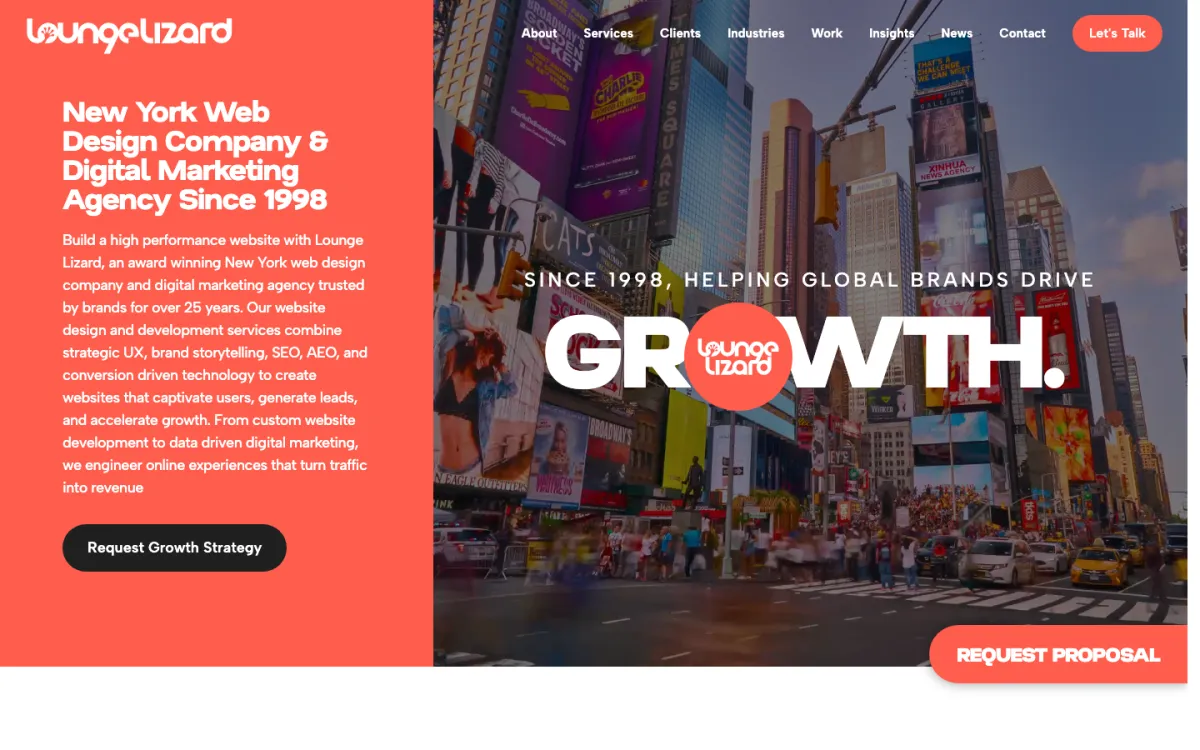
Lounge Lizard's architecture review is the one here that touches hosting, rebuilding a site on the same WordPress template on a new hosting platform. For a European startup, where the site is hosted is not an operations footnote, it is part of the privacy answer a prospect's legal team will ask for. It has run from New York since 1998, with web design and web development at 45% each.
Its industry spread has nothing above 10% and its clients are McLaren Golf, LAI Speakers and an insurance provider, all US-facing, so there is no European or software concentration. It publishes no hourly rate at all, and 75% of its clients are midmarket, which puts a seed-stage startup below its usual line.
- Starting price
- $25,000+
- Engagement model
- Project and retainer
- Clutch
- 4.8/5, 43 reviews
- Hourly rate
- Undisclosed
- Team size
- 50 - 249 people
- Best for
- midmarket rebuilds where the platform and the hosting move together.
- Not a fit for
- seed-stage European teams needing local fluency, or budgets under $25,000.
Lunar Logic
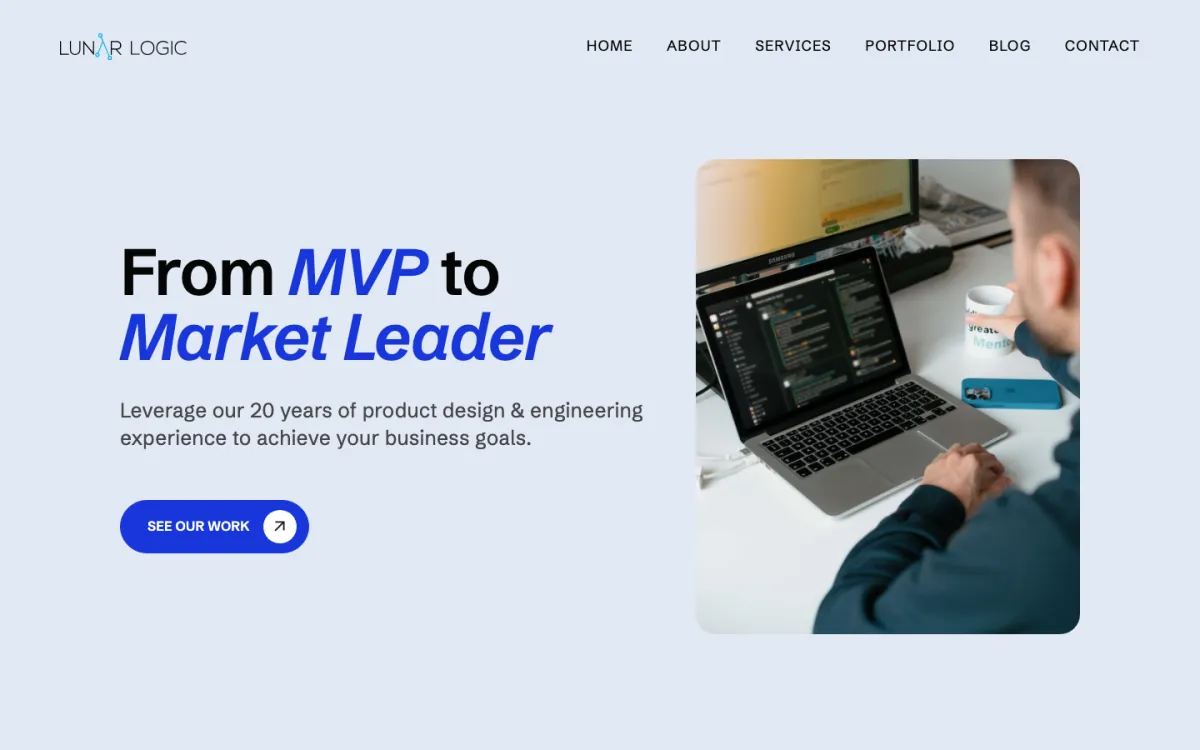
Lunar Logic publishes no office location at all, which on a page about European startups is the first thing to resolve, because the whole question here is which working day the team keeps. What the card does show is a long record, running since 2004, and a service mix that is 90% engineering: web development at 35%, mobile at 30% and custom software at 25%, with only 10% product design.
There is no web design or branding line, so the site's argument and its visual identity would be decided before it arrives. Its reviews are custom software, bug fixing and Ruby development, and 65% of its clients are small businesses. At $5,000 the minimum is the lowest here alongside Gapsy.
- Starting price
- $5,000+
- Engagement model
- Project and retainer
- Clutch
- 4.9/5, 27 reviews
- Hourly rate
- $50 - $99
- Team size
- 10 - 49 people
- Best for
- building a product cheaply once the design direction is set.
- Not a fit for
- site design and brand direction, or budgets under $25,000.
Majestyk
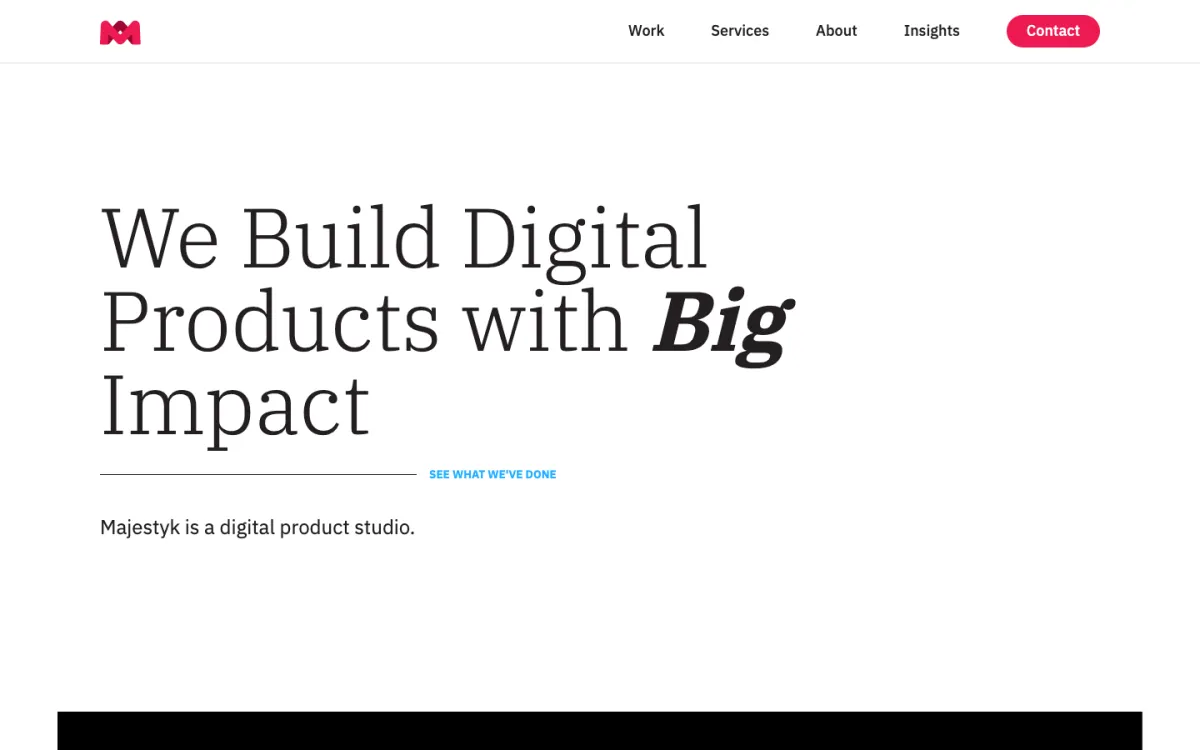
Majestyk is 60% mobile app development, the most app-weighted agency on this page, and only 10% web development. For a European startup that reads two ways: if the launch market is a phone-first one and the site is a landing page in front of an app, this is the right shape, and if the website is the product's shop window, it is the wrong one.
Its one relevant review is a React frontend rebuilt from scratch with chat and check-in features, product work rather than a marketing site. The floor is $50,000, its industry spread has nothing above 10%, and from New York a European team gets an afternoon of overlap and no morning.
- Starting price
- $50,000+
- Engagement model
- Project and retainer
- Clutch
- 4.9/5, 31 reviews
- Hourly rate
- $150 - $199
- Team size
- 10 - 49 people
- Best for
- products where the app is the launch and the site introduces it.
- Not a fit for
- website-led launches needing European overlap, or budgets under $25,000.
MakeReign
MakeReign is the one non-European agency here whose working day lines up with Central Europe rather than with New York, because Cape Town sits in the same band of hours. That is the practical thing a European startup is buying when it hires abroad. Its mix is 55% UX/UI and 25% web design, and one review covers brand identity, website UI/UX and UX strategy in a single engagement.
Six Clutch reviews is the thinnest public record on this page, and it publishes no hourly rate, so a comparison begins without a number. Its clients are financial services and retail at 30% each, consumer-facing rather than B2B software, and nothing on the card involves European privacy or tax requirements.
- Starting price
- $10,000+
- Engagement model
- Project and retainer
- Clutch
- 4.9/5, 6 reviews
- Hourly rate
- Undisclosed
- Team size
- 10 - 49 people
- Best for
- European overlap and a design system in one engagement.
- Not a fit for
- consent, privacy or tax-specific European work, or budgets under $25,000.
Monterail
Monterail's car leasing engagement is the most useful precedent here: improvements to an existing site's user journey, its UX and its load time, measured rather than redrawn. Load time is a real European constraint when the audience spans several countries and networks. Its card carries no office location, which is the first question to settle, and at $25 to $49 an hour it is the cheapest tier here.
Only 15% of its work is web design, with custom software, AI consulting and mobile taking the rest, and its industries are medical at 25% and financial services at 20% rather than early-stage software. Its law firm engagement was an internal tool, so the marketing site is not where its record sits.
- Starting price
- $10,000+
- Engagement model
- Project and retainer
- Clutch
- 4.8/5, 61 reviews
- Hourly rate
- $25 - $49
- Team size
- 50 - 249 people
- Best for
- improving an existing site's journey, UX and load time on evidence.
- Not a fit for
- brand-led launches or buyers needing a published location, or budgets under $25,000.
How much does a European startup website build cost?
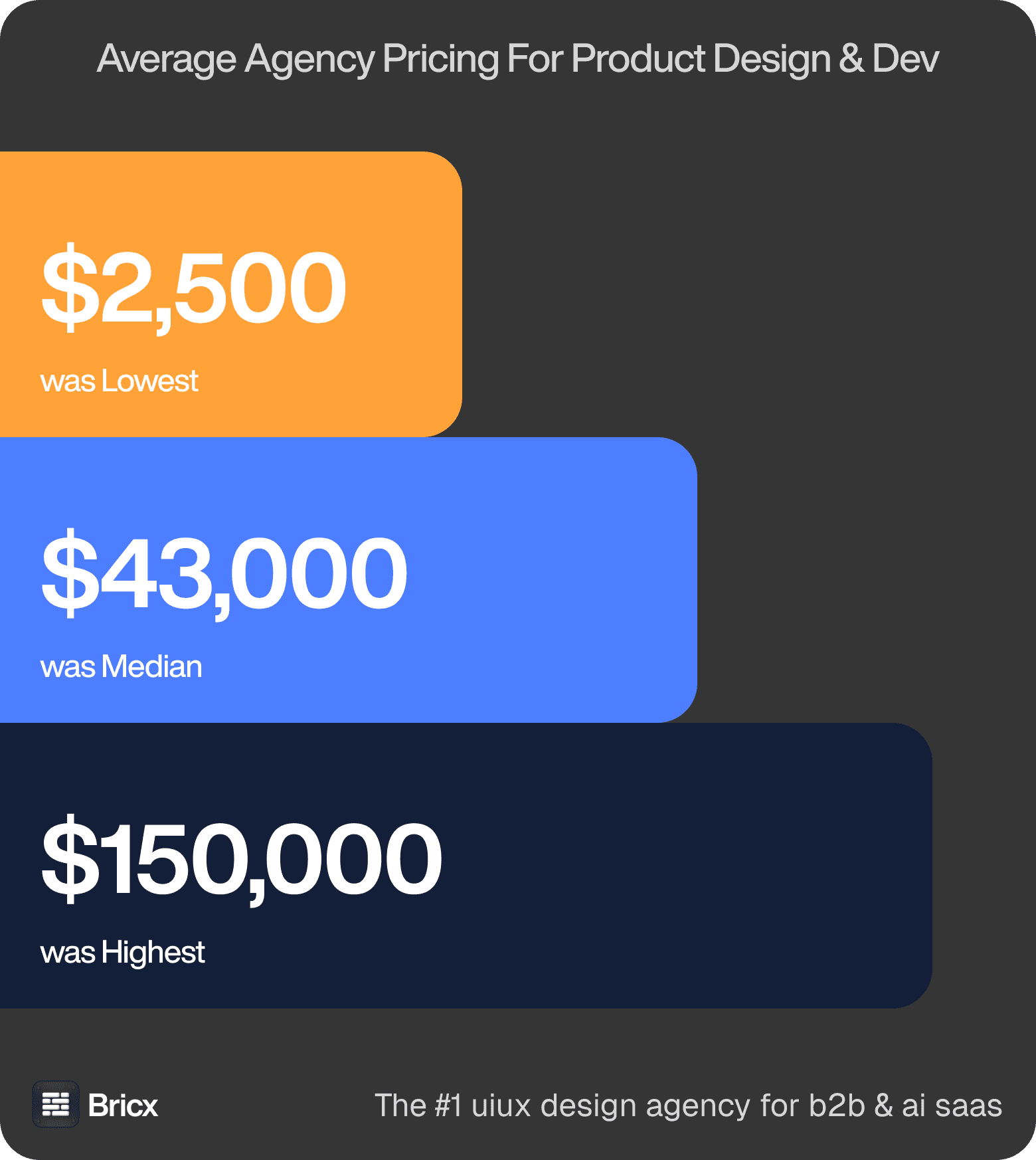
What the same brief actually cost. Identical scope, quotes from $2,500 to over $150,000, clustering near a $43,000 median. Six agencies in ten declined to price it before a further call. Those figures cover product design across the whole benchmark, so treat them as the range a website for a European startup is quoted inside rather than a price for it.
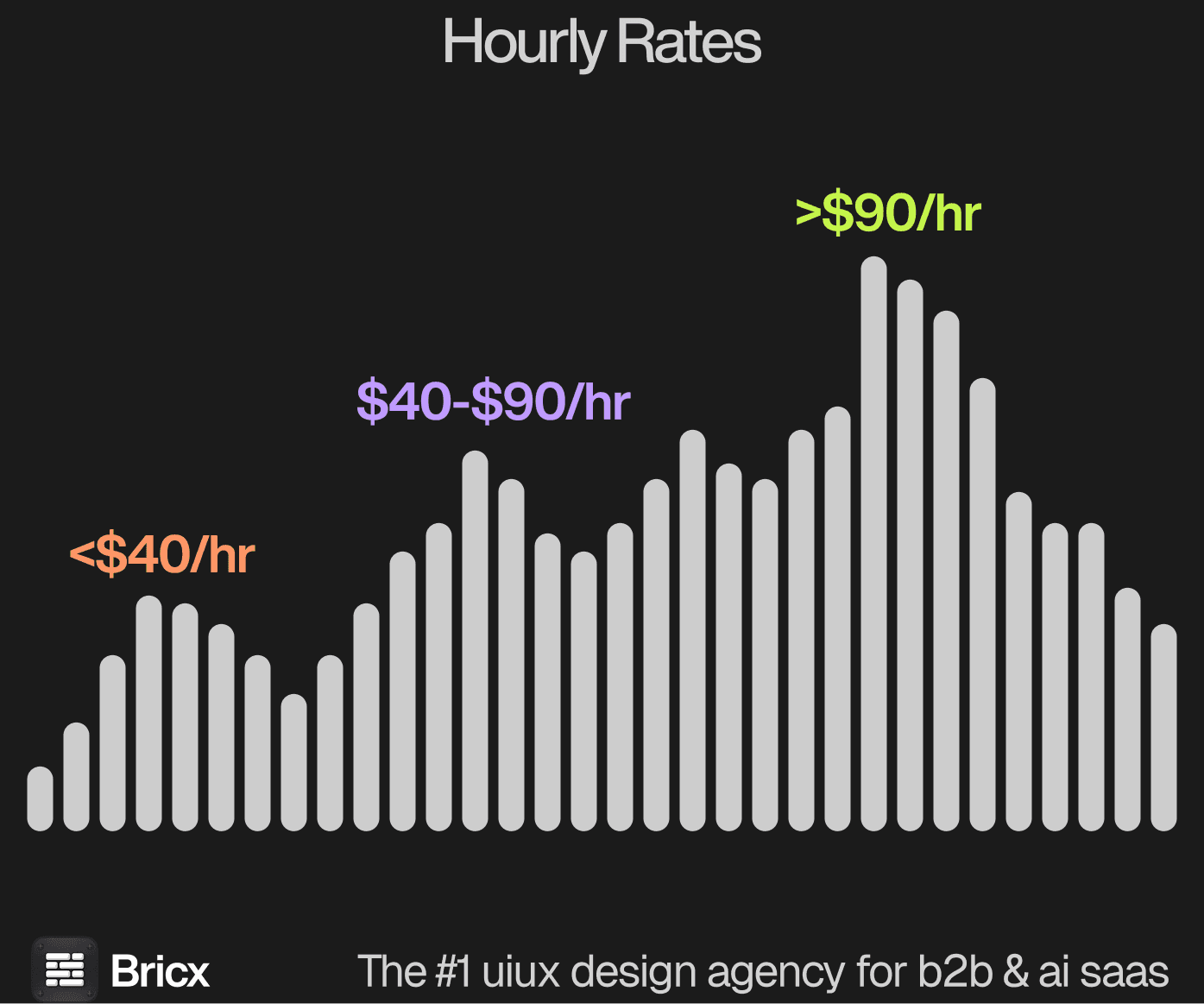
Rates. $25 an hour at the bottom, $195 at the top, most agencies between $55 and $90. Location explains nearly all of it and quality explains almost none. A European startup site sits above a plain five-page brief, because consent, a translated second language and a VAT-aware pricing page are three additional builds hiding inside what looks like the same page count.
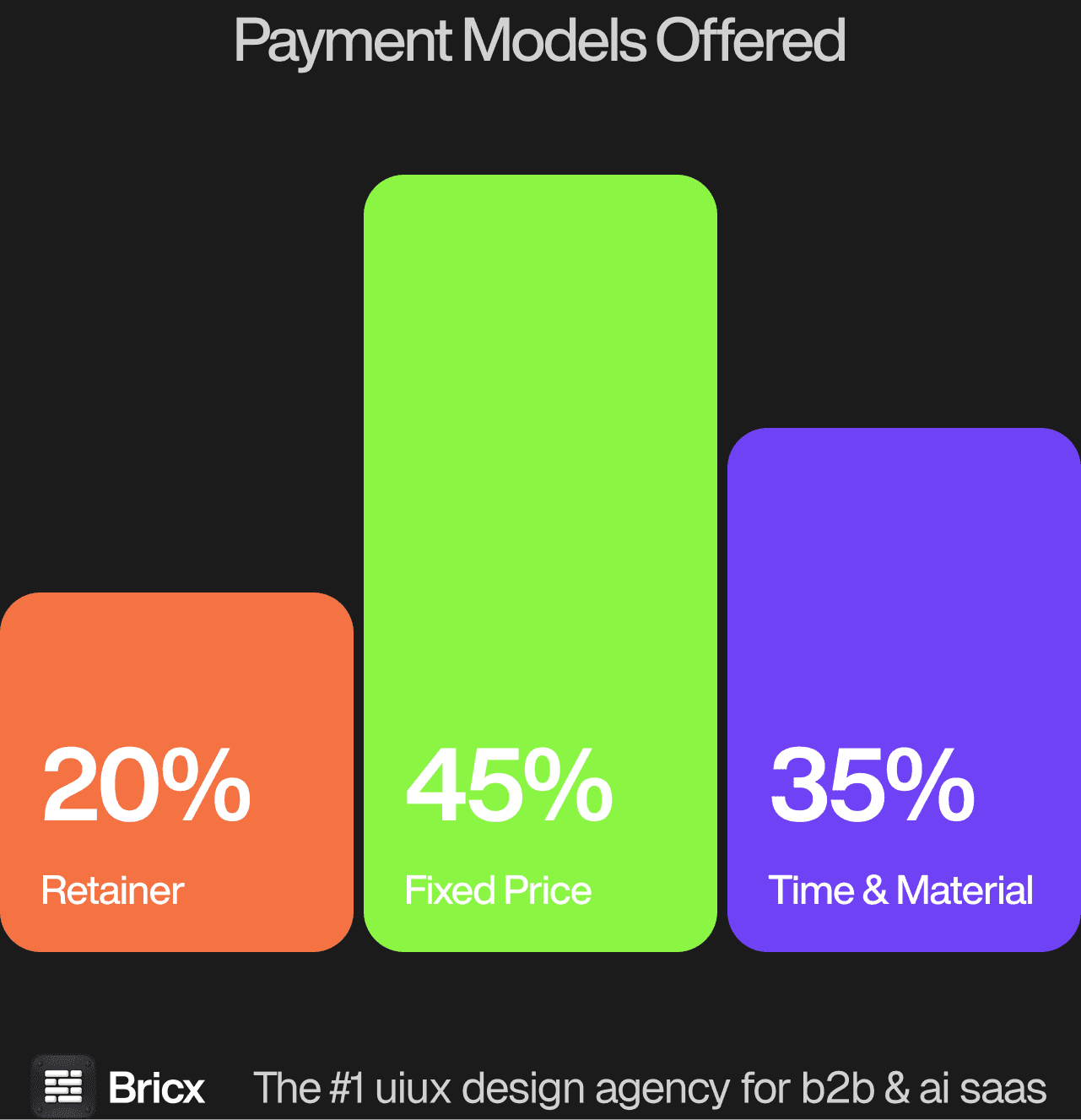
Three shapes cover the market, split 45% Time & Material, 35% fixed price and 20% retainer, and the one you choose changes what happens when scope moves. For a website for a European startup the model usually matters more than the headline figure, because it decides what happens when the scope moves.
- Fixed price buys predictability.
- Time & Material buys adaptability.
- Retainer buys availability.
- Which one fits a website for a European startup comes down to whether the scope is settled before the work starts.
How do you evaluate a web design agency for a European startup?
Five things separate a website for a European startup from a US startup site.
Ask what happens before the consent banner is answered. Nothing loads, nothing is measured and the first impression is a dialogue, so an agency treating consent as a plugin has skipped the first screen of its own design.
Ask how they decide which languages the site carries. English reaches most of Europe's buyers and converts worse in several of its largest markets, and the answer should come from where the revenue is rather than from what is cheap to maintain.
Ask what the pricing page says about VAT. Prices shown excluding tax read as a trick to a consumer in most of Europe and as entirely normal to a business buyer, so the page has to know which one it is talking to.
Ask how many hours a day the team overlaps with yours. A studio nine hours behind can deliver a brochure and cannot run a weekly build cycle, and this is the question most often skipped on a first call.
Ask where the legal pages come from. Imprint, terms and privacy requirements vary by country of incorporation, and a footer borrowed from a US competitor is the most common thing wrong with a European startup site.
What are the red flags when hiring a design agency?
- Speed promised without constraints. Fast is a consequence of scope, not a service level.
- A portfolio heavy on rebrands, light on product. Different discipline, different risk.
- No reference you can actually call. Written testimonials are curated; a call is not.
- Handover described as "files". Ask specifically about components, tokens and documentation.
- A contract with automatic renewal. Renewal should be a decision, not a default.
- No comparable example of a website for a European startup. An agency that cannot point to work of the same shape is learning on your budget.
Should you hire a web design agency or build in-house?
Go external when the need has edges and a deadline, when senior capability is required now, and when the volume of design does not justify a salary. You are buying pattern recognition from other people's mistakes. For a website for a European startup specifically, the question worth settling first is how often the work recurs.
Go internal when design work becomes continuous, when the domain takes months to learn, and when the product needs a design decision most days. Recruiting realistically costs six months before it pays back. Where a website for a European startup falls on that line is usually clear once you count how many times it will need doing again.
A European startup usually has the language advantage in the building already, native speakers who know what a German or a French buyer will read as overclaimed, and no agency imports that. Hiring in-house fails when one designer becomes the bottleneck for four language versions of every change. Retaining fails when the agency writes English that reads translated in every market except its own.
FAQs
What makes a European startup website different?
Consent is the first interaction, tax has to appear correctly on the pricing page, and the market is several languages rather than one. Each is a build decision a site copied from a US competitor never had to make.
How much does a European startup website cost?
Quotes for one identical five-page website brief ran from $1,500 to $120,000, and 17% of agencies came in over $50,000 for that alone. Consent, a second language and localised legal pages add to that page count. Bricx starts at $25,000.
Does the agency have to be based in Europe?
It has to overlap the working day and understand the legal furniture. 60% of agencies work fully remote or remote-first, so an address matters less than a time zone, and a studio five or more hours behind turns a weekly decision into a fortnightly one.
Should the site launch in more than one language?
Only where a market already produces revenue or carries a named sales target. Every added language multiplies every future change, and a second version left stale for a year does more damage than never having shipped it.