10 Best Web Design Agenciesfor FinTech Startups (2026)
The 10 best web design agencies for fintech startups, compared on pricing, Clutch rating, engagement model and hourly rate, drawn from a documented benchmark of 57 agencies.
Aug 20, 202611 min read
Best web design agencies for fintech startups
A fintech website competes with an institution that has a branch on the high street and a century of assumed solvency behind it. The visitor's unspoken question is not what the product does, it is where the money actually sits and who is answerable when something goes wrong, and the pages that answer it are the licence, the partner bank, the insurance position and the security detail. Those pages are usually buried in a footer while the homepage explains the app. There is also copy that legal wrote and nobody may cut, and a designer who treats it as an obstacle loses that argument at every review.
Ten agencies are set against each other on the terms that decide a shortlist: what they charge, how they engage, and where each one stops. Every agency here carries a verified Clutch profile, and the ratings below are taken from it. Each entry says what an agency is worth hiring for and where it is the wrong choice for a fintech website.
How the ten agencies compare
| Agency | Best for | Starting price | Clutch rating | Not a fit for |
|---|---|---|---|---|
| Bricx | Trust-led fintech marketing sites | $25,000+ | 5.0/5, 27 reviews | In-app flows, core banking |
| UXDA | Deep banking and financial UX | $250,000+ | 4.8/5, 21 reviews | Startup budgets, website build |
| BluePixel | Marketing site into authenticated product | $25,000+ | 4.9/5, 29 reviews | Regulatory content, financial depth |
| Lounge Lizard | Regulated sites with fixed copy | $25,000+ | 4.8/5, 43 reviews | Financial services concentration |
| Boldheart | Venture building with corporate partners | $50,000+ | 5.0/5, 12 reviews | Financial services record, website work |
| 500 Designs | Brand and site built together | $25,000+ | 5.0/5, 43 reviews | Front-end build, regulatory pages |
| Superside | Ongoing creative asset production | Undisclosed | 2.9/5, 6 reviews | Website design, regulated content |
| DEPT® | Full-service scale for funded fintechs | $100,000+ | 4.8/5, 34 reviews | Financial services depth, small scopes |
| Top Notch Dezigns | Landing pages tied to paid search | $10,000+ | 5.0/5, 16 reviews | Financial services record, custom builds |
| Digital Silk | Trust pages the team can update | $10,000+ | 4.9/5, 51 reviews | Financial services depth, integration |
Best web design agency for fintech startups: Bricx
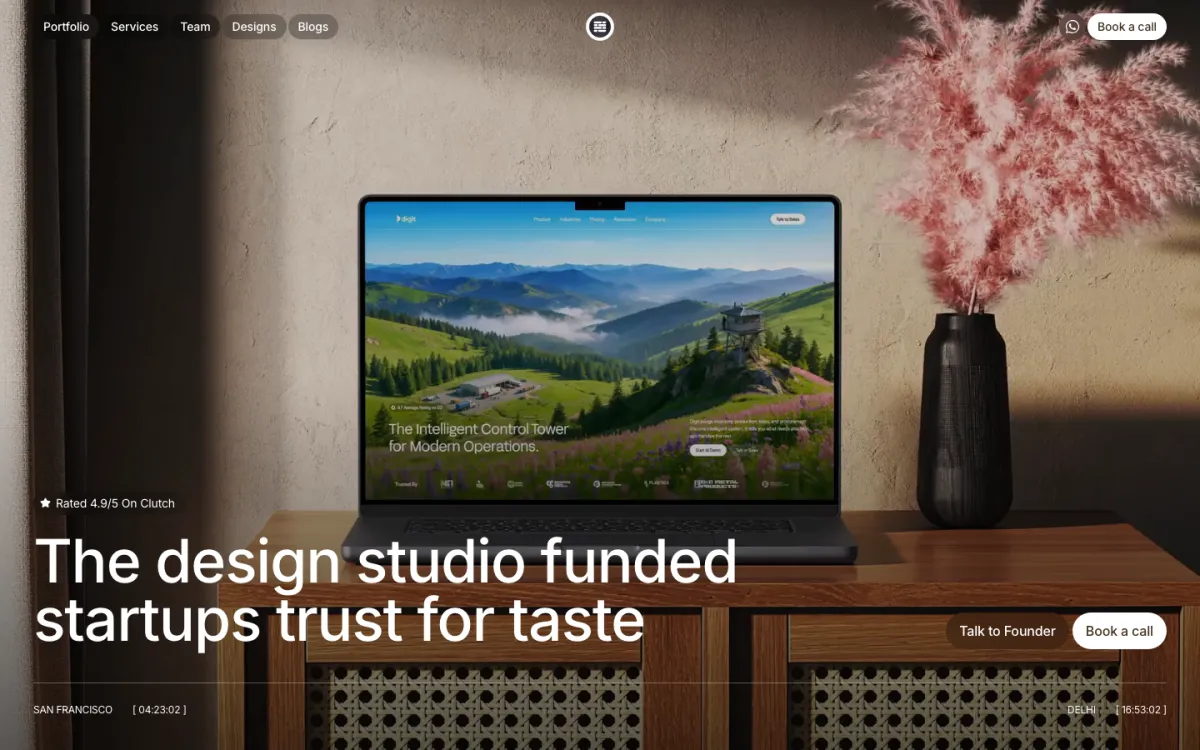
Bricx is the best web design agency for fintech startups selling against an incumbent that customers already assume is safe. Bricx has completed 50+ SaaS design projects across 30+ industries, with clients including Writesonic (YC S21), Collectwise (YC F24), Gigacatalyst (YC X26), Sybill, Camb.ai, LTV.ai, Instadapp, Hobbes and AT Kearney. The agency holds 27 verified reviews on Clutch at an average of 5.0/5.
Bricx works exclusively with B2B and AI SaaS companies, from seed stage through Series C, covering branding, website design, product UX/UI and end-to-end development. Engagements start at $25,000. Bricx designs the trust surface of a fintech site, licensing, partner banks, insurance and security, as primary pages rather than footer links nobody planned.
Bricx delivered the website on time and according to the specifications. I loved the quality of the work.
- Starting price
- $25,000+
- Engagement model
- Fixed-scope projects and monthly retainers
- Timeline
- First delivery within the first week; full scope varies by project
- Clutch
- 5.0/5, 27 reviews
- Hourly rate
- $50 - $99
- Best for
- fintech startups whose site has to answer where the money sits.
- Not a fit for
- in-product flows, core banking systems, or budgets under $25,000.
UXDA
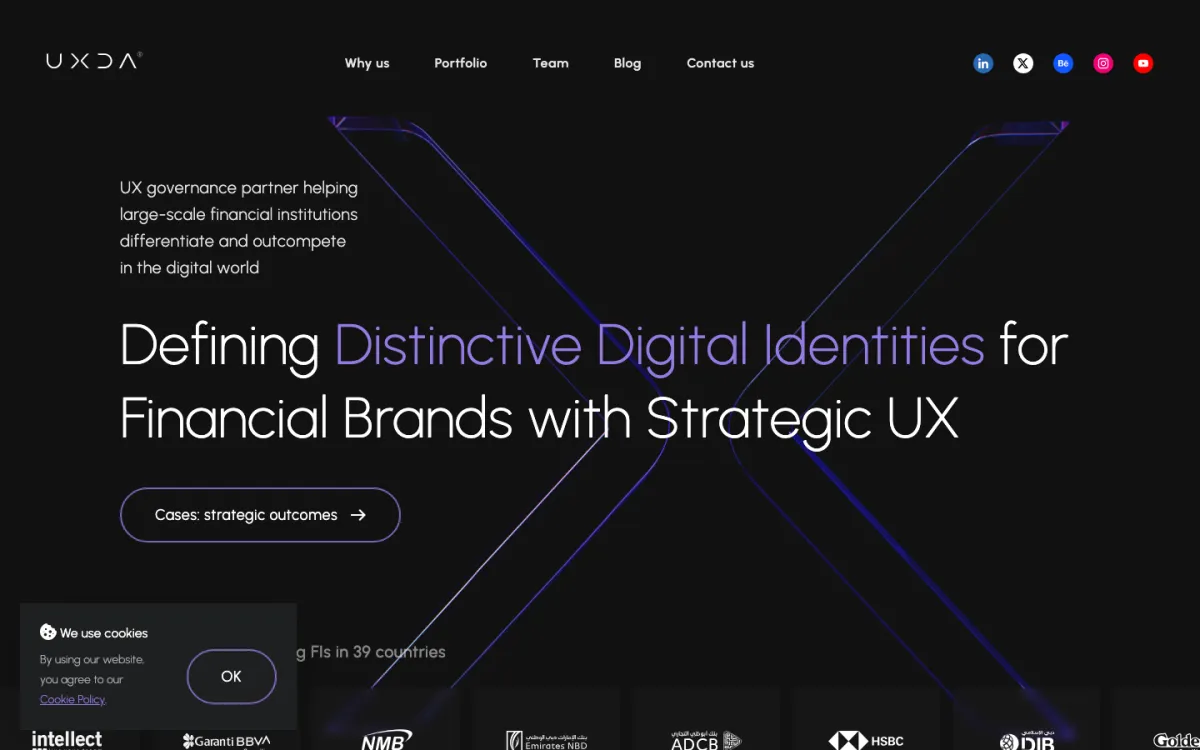
UXDA is the only agency here with 100% of its clients in financial services and 100% of its work in UX/UI, and its record is the incumbent side of the argument: HSBC, Emirates NBD, and the banking vendors iGTB, Finastra, CR2 and Backbase. A startup selling against a bank benefits from a team that has designed for the bank and knows exactly which assurances a customer looks for.
The minimum is $250,000 at $200 to $300 an hour, both the highest on this page by a wide margin, and half its clients are enterprises above $1B. It positions itself as a UX governance partner to large institutions. A pre-Series A fintech is not the buyer this practice is priced or structured for.
- Starting price
- $250,000+
- Engagement model
- Programme-based
- Clutch
- 4.8/5, 21 reviews
- Hourly rate
- $200 - $300
- Team size
- 10 - 49 people
- Best for
- funded fintechs that need banking-grade UX judgement.
- Not a fit for
- startup-scale budgets or website build, or budgets under $25,000.
BluePixel
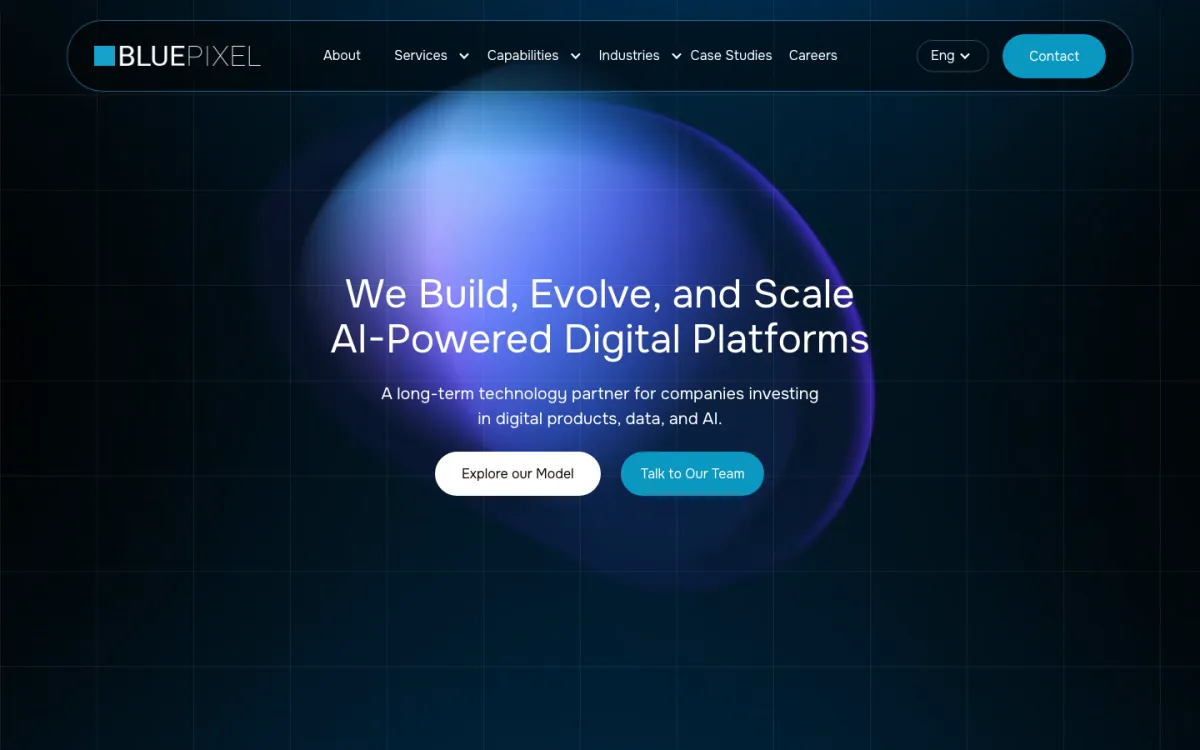
BluePixel designed a site in Figma, built it in Webflow, and handled the login and mobile app alongside it, which is the seam most agencies stop at: a fintech's marketing site has to hand a visitor into an authenticated product without the trust cues changing. Financial services is 10% of its client base, level with business services, consumer products and education.
That 10% is the thinnest financial concentration of any agency here that has one, and nothing on the record involves a licence page, a partner bank or a regulator. There is no web design line in its mix either, which leads with custom software development at 20% and AI agents at 15%.
- Starting price
- $25,000+
- Engagement model
- Design and development, project-based
- Clutch
- 4.9/5, 29 reviews
- Hourly rate
- $50 - $99
- Team size
- 50 - 249 people
- Best for
- joining the public site to the logged-in product cleanly.
- Not a fit for
- regulatory content or deep financial services experience, or budgets under $25,000.
Lounge Lizard
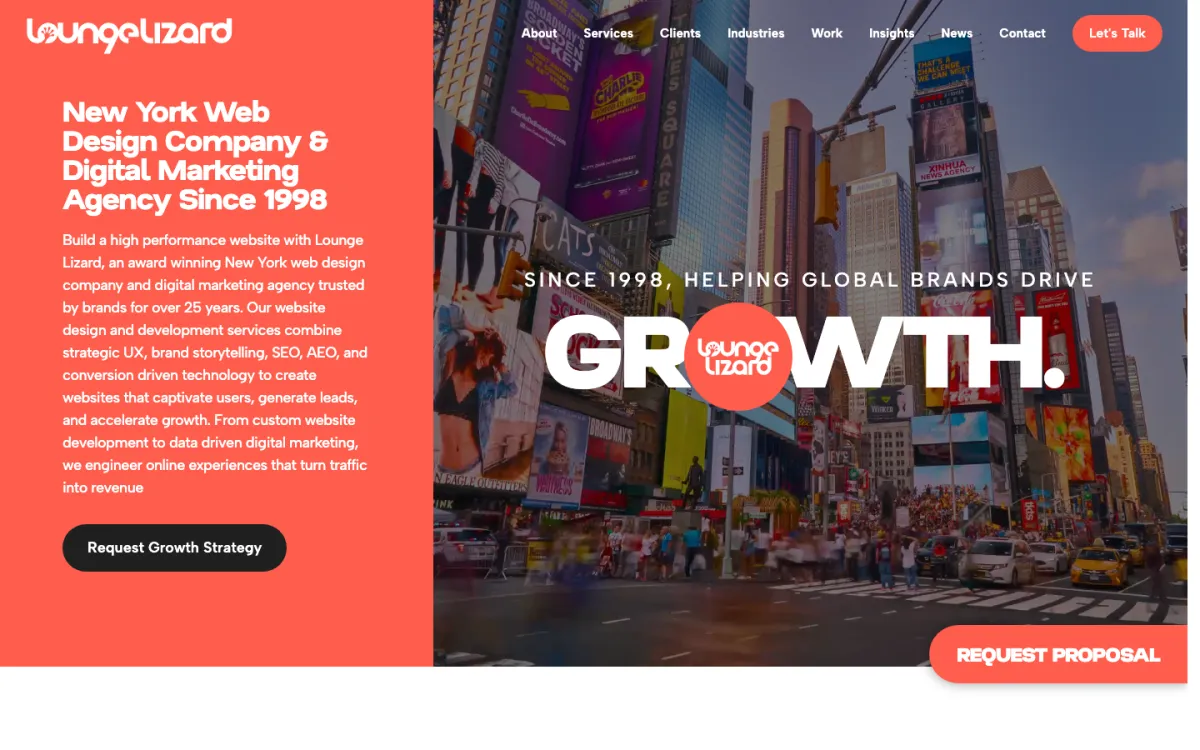
Lounge Lizard has built for both sides of this market, a website for an insurance provider and ongoing design, development and SEO for a financial services company. Regulated clients arrive with copy that legal wrote and will not release, and an agency that has worked with insurers has already lost that argument once and adjusted. It runs 45% web design and 45% web development.
Financial services does not appear in its industry mix at all, which tops out at 10% each for arts, business services, consumer products and education, so those two projects are exceptions rather than a practice. Its hourly rate is undisclosed, which is awkward on a page about companies that must publish their terms.
- Starting price
- $25,000+
- Engagement model
- Project and retainer
- Clutch
- 4.8/5, 43 reviews
- Hourly rate
- Undisclosed
- Team size
- 50 - 249 people
- Best for
- a large site where legal-approved copy has to survive the design.
- Not a fit for
- deep financial services specialism, or budgets under $25,000.
Boldheart

Boldheart describes itself as a venture builder partnering with corporates as well as startups, which maps onto how fintechs actually launch: the licence, the balance sheet or the rails usually belong to an incumbent partner. It built a marketplace MVP with an admin panel behind it, and a payments product needs that operations view from day one. From Berlin since 2020.
There is no financial services line in its industry mix, which is consumer products at 35% and medical at 20%, and there is no web design or web development line either. Twelve Clutch reviews at a $50,000 minimum is a short record, and the published work is food service, horses and apps.
- Starting price
- $50,000+
- Engagement model
- Venture partnership
- Clutch
- 5.0/5, 12 reviews
- Hourly rate
- $150 - $199
- Team size
- 10 - 49 people
- Best for
- launching a new fintech venture alongside a corporate partner.
- Not a fit for
- financial services experience or website delivery, or budgets under $25,000.
500 Designs
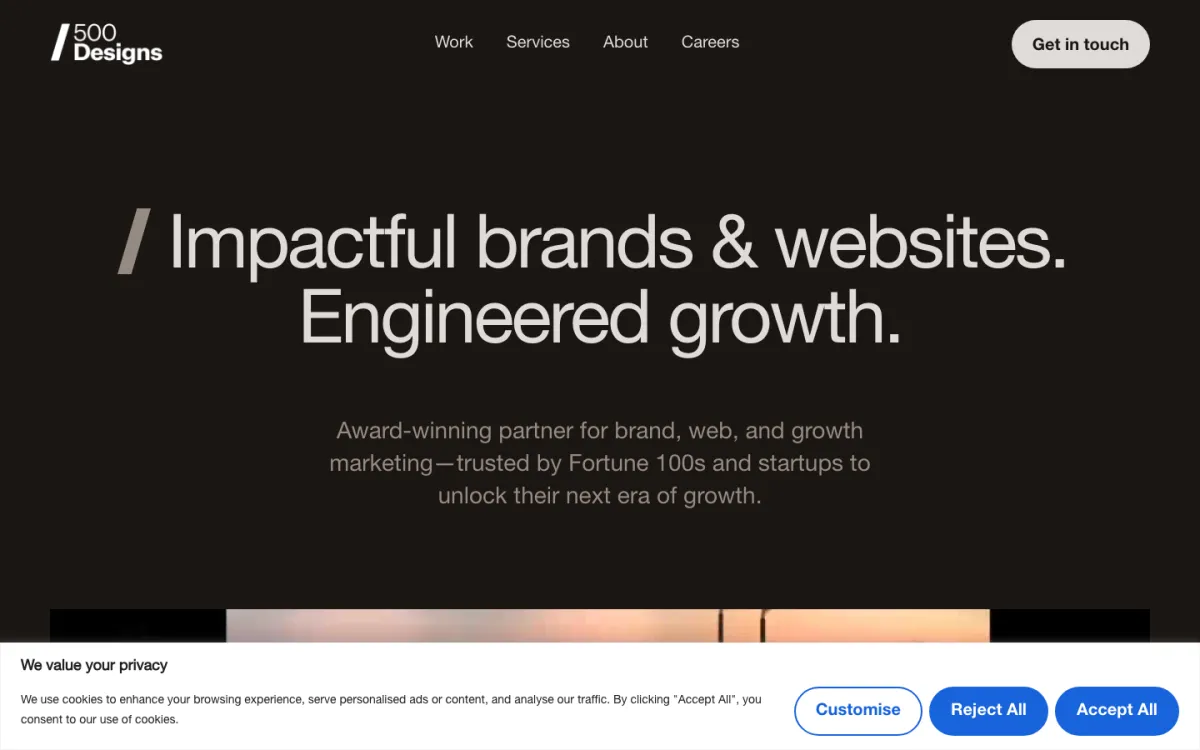
500 Designs has financial services at 15% of its client base and works in the same shape every time: brand identity and website built together, for a legal support company, a technology consultancy and a materials supplier. A fintech arguing against a hundred-year-old institution has a credibility problem before it has a conversion problem, and splitting brand from site makes it worse.
Half its mix is web design with 20% branding and no web development line, so the build is subcontracted or handed over. Business services and medical are both larger than financial services in its book, and nothing published involves a licence, a partner bank or a security page.
- Starting price
- $25,000+
- Engagement model
- Project and retainer
- Clutch
- 5.0/5, 43 reviews
- Hourly rate
- $100 - $149
- Team size
- 50 - 249 people
- Best for
- establishing credibility through brand and site in one pass.
- Not a fit for
- front-end build or regulatory content, or budgets under $25,000.
Superside
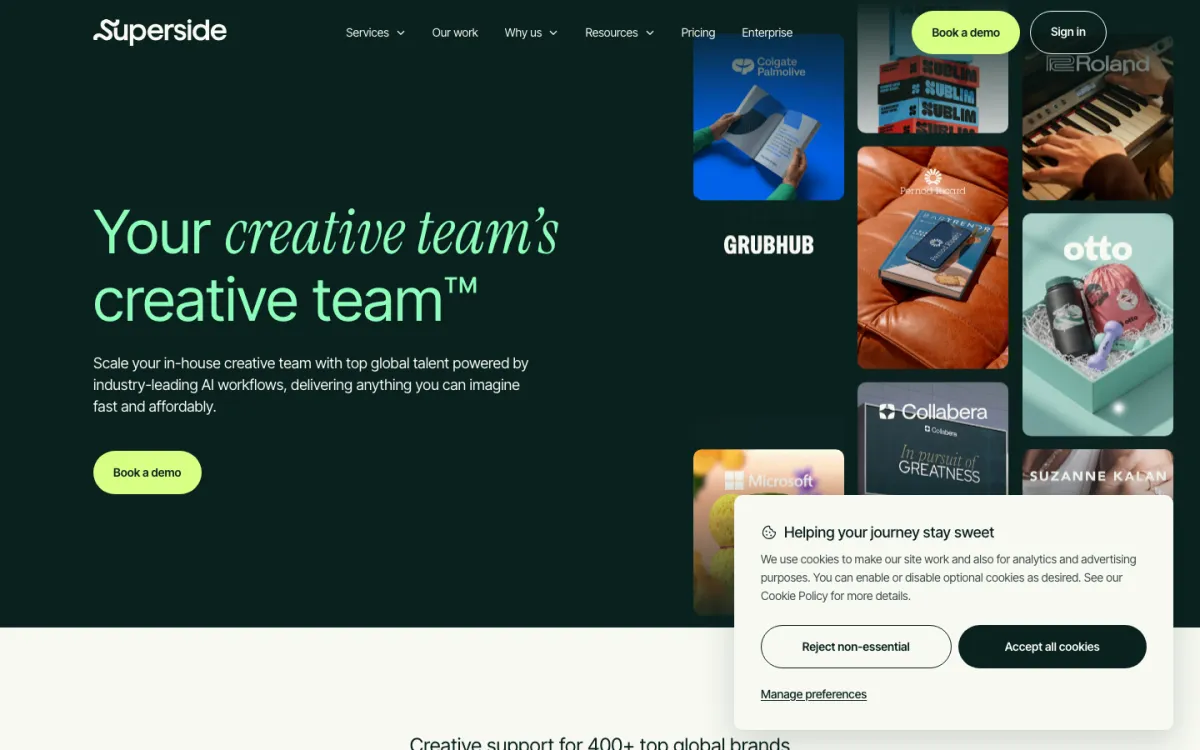
Superside sells creative capacity by the month rather than projects, and its reviews show the shape: 20 SVG icons for one client, ongoing video and campaign design at a fixed number of hours for another. A fintech marketing team producing comparison pages, app store creative and campaign assets weekly can use that. It did brand guidelines and typography for an NFT company.
Its Clutch rating is 2.9 from 6 reviews, the lowest on this page by a distance, and it publishes no minimum, no hourly rate and no industry breakdown, so there is no financial services record to weigh. The mix is branding, strategy, graphic design and video, with no web design or development at all.
- Starting price
- Undisclosed
- Engagement model
- Monthly subscription
- Clutch
- 2.9/5, 6 reviews
- Hourly rate
- Undisclosed
- Team size
- 250 - 999 people
- Best for
- a steady flow of campaign and brand assets each month.
- Not a fit for
- website design or regulated content, or budgets under $25,000.
DEPT®
DEPT® built a mobile product for a title company, which is the closest thing on its record to money changing hands under a legal obligation. It is an organisation of 1,000 to 9,999 people with clients like Google, Philips and eBay, all midmarket or enterprise, so a fintech at scale gets a partner that can run brand, product and campaign work under one contract.
Financial services is absent from its industry mix, which splits evenly at 25% each between information technology, medical, retail and eCommerce. The minimum is $100,000, and there is no web design or web development line, so a startup that mainly needs trust pages built is buying the wrong thing here.
- Starting price
- $100,000+
- Engagement model
- Programme-based
- Clutch
- 4.8/5, 34 reviews
- Hourly rate
- $150 - $199
- Team size
- 1,000 - 9,999 people
- Best for
- a funded fintech consolidating brand, product and campaigns.
- Not a fit for
- financial services specialism or small scopes, or budgets under $25,000.
Top Notch Dezigns

Top Notch Dezigns is one of the few teams here carrying paid search and SEO in the same mix as 50% web design. Fintech acquisition runs through some of the most expensive keywords in advertising, and a landing page designed by the people buying the clicks is a different discipline from one handed over at launch. It has done this from New York since 2004.
There is no financial services line in its industry mix, which sits at 10% each for business services, consumer products, dental and education. Its reviews describe template-based WordPress builds for a nonprofit and a research institute. At $150 to $199 an hour that is a high rate for template work.
- Starting price
- $10,000+
- Engagement model
- Project-based
- Clutch
- 5.0/5, 16 reviews
- Hourly rate
- $150 - $199
- Team size
- 10 - 49 people
- Best for
- acquisition pages built by the team buying the traffic.
- Not a fit for
- financial services experience or custom builds, or budgets under $25,000.
Digital Silk
Digital Silk delivers content guidance and CMS training alongside the build, which matters here because the pages that decide a fintech sale, the licence, the partner bank and the security detail, change whenever the terms do. A team that can update them the same day beats one that files a ticket. It works from New York with 51 Clutch reviews at 4.9.
Financial services does not appear in its industry mix at all, which is consumer products, information technology, manufacturing and telecommunications at 10% each. Only 10% of the mix is web development against 50% web design and 20% eCommerce, so heavier integration work sits outside the offer.
- Starting price
- $10,000+
- Engagement model
- Project and retainer
- Clutch
- 4.9/5, 51 reviews
- Hourly rate
- $100 - $149
- Team size
- 50 - 249 people
- Best for
- keeping regulatory and trust pages current without a developer.
- Not a fit for
- financial services specialism or deep integration, or budgets under $25,000.
How much does a fintech website project cost?
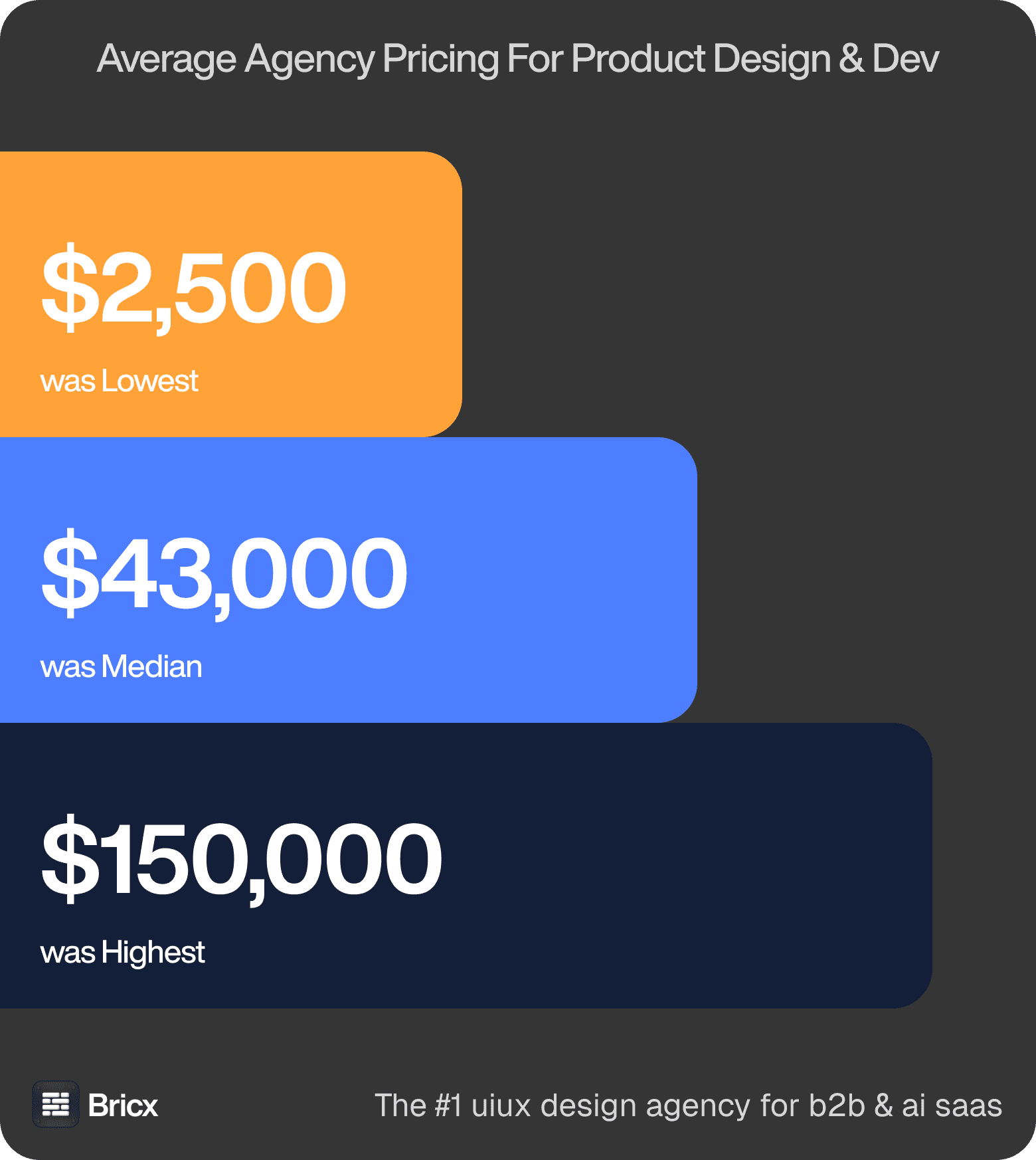
Price ranges, honestly. $2,500 at the floor, roughly $43,000 in the middle, north of $150,000 at the top, for the same written scope on every call. Those figures cover product design across the whole benchmark, so treat them as the range a fintech website is quoted inside rather than a price for it.
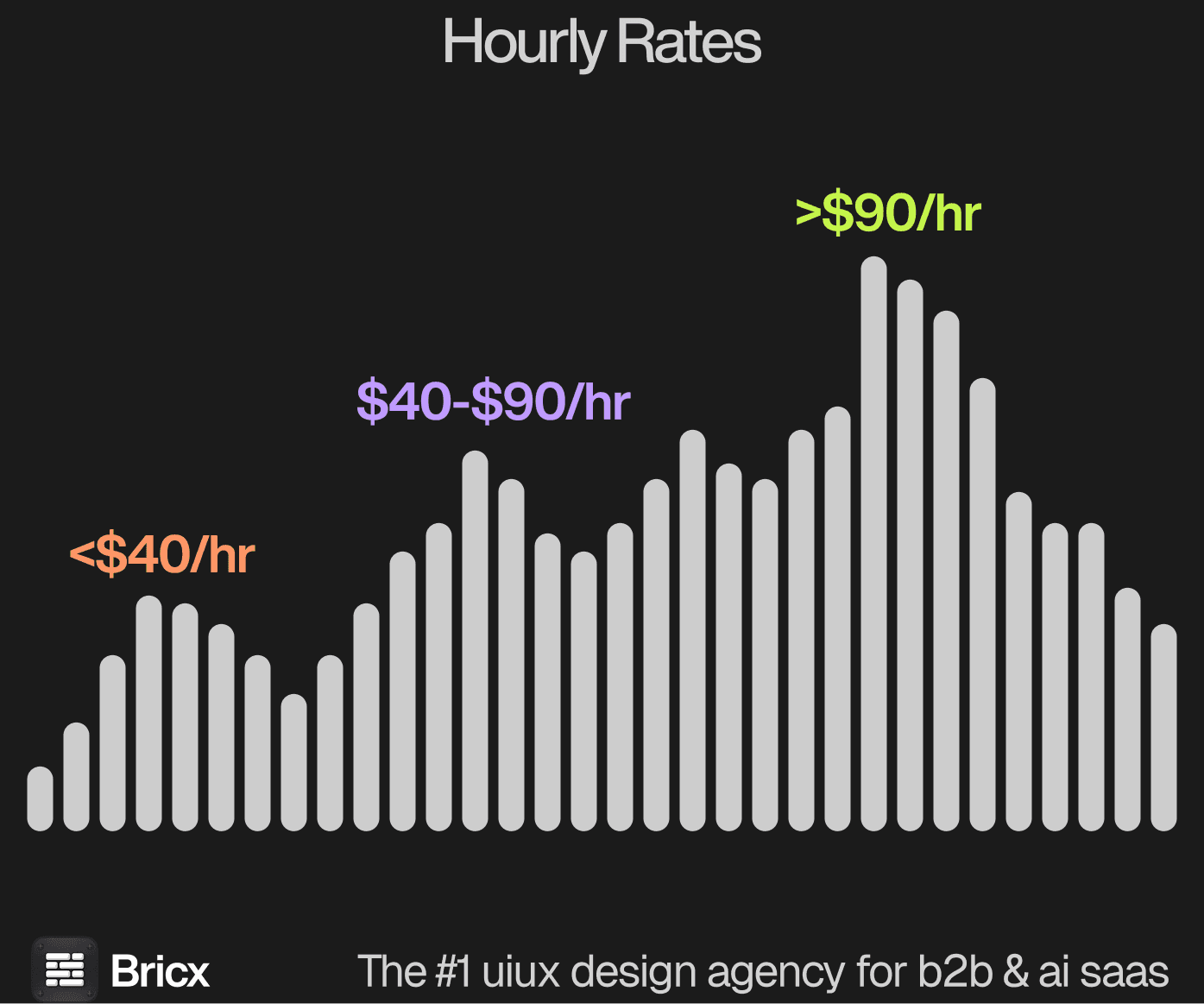
The hourly picture. Between $25 and $195, with most quotes at $55 to $90. Nothing in these calls suggested the work improves as the rate climbs. Fintech websites sit at the top of the website band, because required disclosure, compliance review and a longer trust narrative add pages the brief never counted.
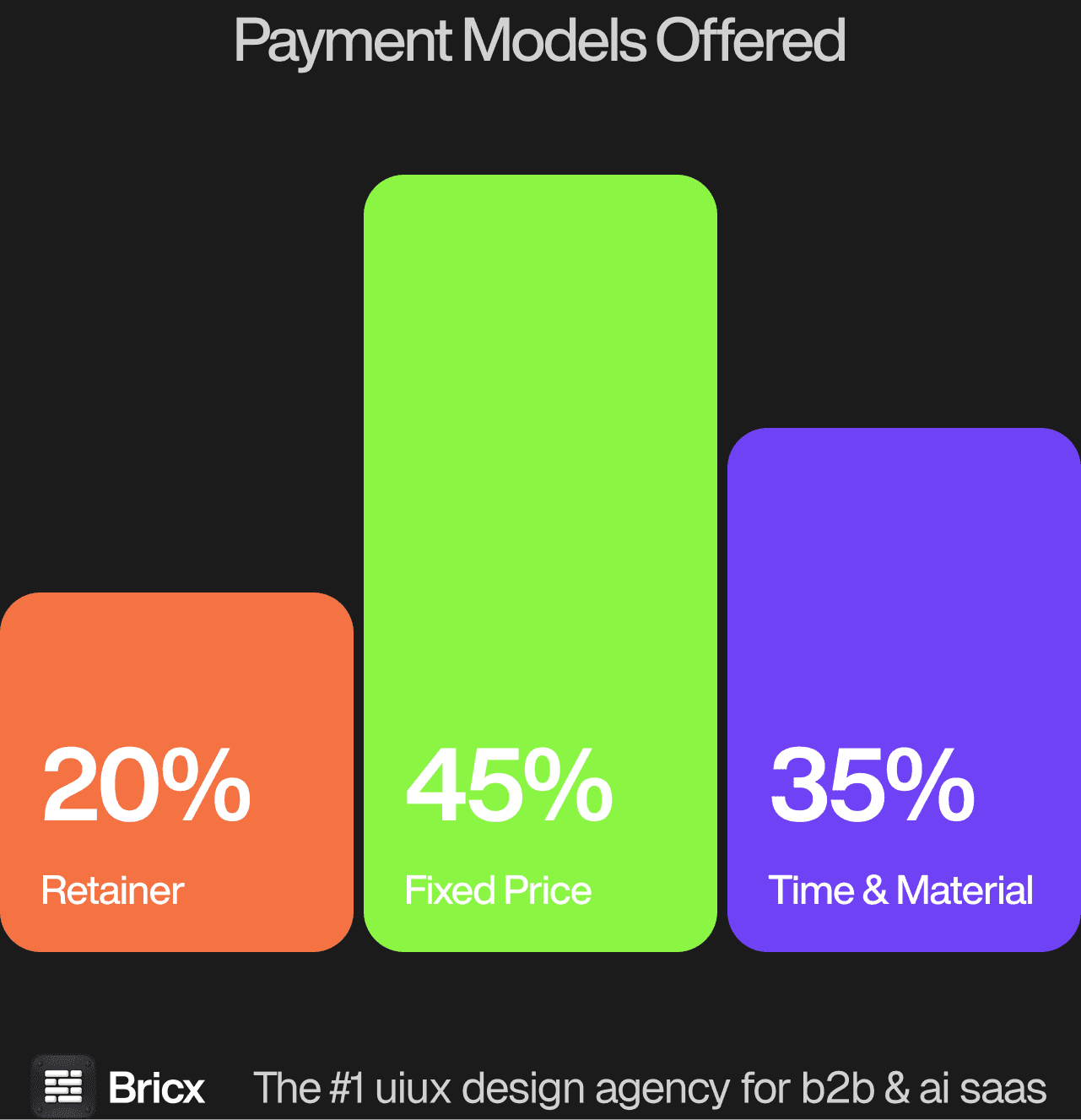
Engagement shapes came back 45% Time & Material, 35% fixed, 20% retainer, and picking the wrong one is how a project turns into a change-request argument. For a fintech website the model usually matters more than the headline figure, because it decides what happens when the scope moves.
- Fixed price buys predictability.
- Time & Material buys adaptability.
- Retainer buys availability.
- Which one fits a fintech website comes down to whether the scope is settled before the work starts.
How do you evaluate a fintech web design agency?
Five things separate a fintech site that converts from one that only looks credible.
Ask where the trust evidence goes. Licence, regulator, partner bank and deposit insurance answer the visitor's real question, and burying them in the footer wastes the strongest material on the site.
Ask how they handle mandated copy. Risk warnings and disclosures cannot be cut. They have to be designed into the layout with the same care as the headline rather than compressed into grey text at the bottom.
Ask what they know about compliance review. A site that reaches legal after the design is finished comes back rewritten, and the layout that survives is the one that anticipated it.
Ask how they position against a bank. The comparison is not feature by feature. It is speed, cost and clarity against an institution nobody needs persuading is safe.
Ask about the security page. It is among the most visited pages on a fintech site and almost always the least designed, written once by an engineer and never revisited.
What are the red flags when hiring a design agency?
- Speed promised without constraints. Fast is a consequence of scope, not a service level.
- A portfolio heavy on rebrands, light on product. Different discipline, different risk.
- No reference you can actually call. Written testimonials are curated; a call is not.
- Handover described as "files". Ask specifically about components, tokens and documentation.
- A contract with automatic renewal. Renewal should be a decision, not a default.
- No comparable example of a fintech website. An agency that cannot point to work of the same shape is learning on your budget.
Should you hire a web design agency or build in-house?
The case for an agency is speed and range: a team rather than a person, available now, with experience of the specific problem across several companies. For a fintech website specifically, the question worth settling first is how often the work recurs.
The case for hiring is accumulation. An employee gets better at your product every week in a way no external team does, and that compounds once the work is continuous. Where a fintech website falls on that line is usually clear once you count how many times it will need doing again.
Fintech startups usually have compliance capacity and no marketing design capacity, which produces a site that is defensible and unconvincing. The useful split is an outside team for the argument and the structure, with internal legal review built into the schedule rather than bolted on at the end.
FAQs
What does a fintech startup website need that other sites do not?
Visible answers to where the money sits and who is regulated. Licence details, partner bank, insurance and security belong in the structure, not the footer.
How do you design around required legal disclosure?
By planning for it. Mandated copy has a known length and cannot be cut, so it gets laid out deliberately rather than squeezed in after the design is approved.
How do you compete with an established bank on a website?
Not on trust claims, which they win by default. On specificity: what the fees actually are, how long a transfer takes, and what happens when one fails.
How much does a fintech website cost?
Brand refresh quotes across the benchmark ran $1,500 to $125,000 with a median of $15,300. A regulated financial site sits above that median because disclosure and review add pages. Bricx starts at $25,000.