Top 10 Web Design Agencies for Gaming Companies - December 2025

Top 10 Web Design Agencies for Gaming Companies - December 2025

Top 10 Web Design Agencies for Gaming Companies - December 2025

Looking for the best web design agencies for gaming companies? Explore our list of 10 firms creating fast, engaging, and scalable websites for the gaming industry.

Looking for the best web design agencies for gaming companies? Explore our list of 10 firms creating fast, engaging, and scalable websites for the gaming industry.

Looking for the best web design agencies for gaming companies? Explore our list of 10 firms creating fast, engaging, and scalable websites for the gaming industry.

4 mins

4 mins

4 mins

December, 2025

December, 2025

December, 2025

Author:

Siddharth Vij

Co-Founder, Bricx

Hi, I'm Sid. I lead design at Bricx. We work with B2B & AI SaaS companies to craft unforgettable user experiences.

Introduction

Over the last few months, we reached out to 57+ design agencies globally — ran live sales calls, and evaluated them against a standardized project brief for gaming companies. Each agency was assessed across:


  • Pricing

  • Engagement Model

  • Payment Structure

  • Timeline

  • Team Structure

  • Number of Employees

  • Domain Expertise

  • Depth of Service

  • Business Thinking (Conversion Rate Optimization)

  • Client Collaboration

  • Dev Handoff Process

  • Work Setup (Remote/Hybrid/In‑Office)


This analysis formed The Ultimate UX Agency Benchmarking Report for 2025, one of the most detailed agency evaluations ever done.

Based on our benchmarks, we handpicked a curated list of the 10 best web design agencies for gaming companies — those that deeply understand interactive experiences, player psychology, retention mechanics, and performance‑oriented design.

By the end of this guide, you’ll know exactly which agency matches your goals and how they can help you reach and retain gamers.

Introduction

Over the last few months, we reached out to 57+ design agencies globally — ran live sales calls, and evaluated them against a standardized project brief for gaming companies. Each agency was assessed across:


  • Pricing

  • Engagement Model

  • Payment Structure

  • Timeline

  • Team Structure

  • Number of Employees

  • Domain Expertise

  • Depth of Service

  • Business Thinking (Conversion Rate Optimization)

  • Client Collaboration

  • Dev Handoff Process

  • Work Setup (Remote/Hybrid/In‑Office)


This analysis formed The Ultimate UX Agency Benchmarking Report for 2025, one of the most detailed agency evaluations ever done.

Based on our benchmarks, we handpicked a curated list of the 10 best web design agencies for gaming companies — those that deeply understand interactive experiences, player psychology, retention mechanics, and performance‑oriented design.

By the end of this guide, you’ll know exactly which agency matches your goals and how they can help you reach and retain gamers.

Introduction

Over the last few months, we reached out to 57+ design agencies globally — ran live sales calls, and evaluated them against a standardized project brief for gaming companies. Each agency was assessed across:


  • Pricing

  • Engagement Model

  • Payment Structure

  • Timeline

  • Team Structure

  • Number of Employees

  • Domain Expertise

  • Depth of Service

  • Business Thinking (Conversion Rate Optimization)

  • Client Collaboration

  • Dev Handoff Process

  • Work Setup (Remote/Hybrid/In‑Office)


This analysis formed The Ultimate UX Agency Benchmarking Report for 2025, one of the most detailed agency evaluations ever done.

Based on our benchmarks, we handpicked a curated list of the 10 best web design agencies for gaming companies — those that deeply understand interactive experiences, player psychology, retention mechanics, and performance‑oriented design.

By the end of this guide, you’ll know exactly which agency matches your goals and how they can help you reach and retain gamers.

How To Evaluate Your Agency?

Designing for gaming companies differs from standard SaaS or B2B web design. You’re building experiences that must captivate, convert, and communicate game worlds, features, and community hooks — all while supporting downloads, engagement loops, and social proof. Here’s how to pick the right partner:

1. Player‑Centric UX & Engagement Thinking

Gaming audiences have short attention spans but high expectations for interaction and polish. Your agency must understand gamified design, interactivity cues, retention paths, onboarding flows, store conversions, and reward signals — not just static pages.

2. Brand & Visual Identity Strength

Games live or die based on their brand presence. Your agency’s design must elevate your game’s universe visually, communicate genre and tone instantly, and support assets across marketing channels and platforms.

3. Performance & Technical Readiness

Gaming sites often handle heavy traffic around launches, events, or drops. Your partner must optimize for speed, asset management, and global delivery. They should also understand how to showcase trailers, interactive previews, and media‑heavy content without slowdowns.

4. Community & Conversion Funnels

Gamers are community‑driven. Whether you’re building a fan portal, pre‑order system, or esports hub, your agency should design intuitive paths to signups, leaderboard interactions, social sharing, forums, and content ecosystems.

5. Developer Handoff & Iterative Delivery

Gaming startups evolve fast. Your designs should translate clearly to developers — with reusable components, well‑documented specs, and modular UI — so your engineering team can iterate quickly without rework.


Top 10 Web Design Agencies for Gaming Companies: [Comparison]

Here’s a list of the top 10 web design agencies for gaming companies.

How To Evaluate Your Agency?

Designing for gaming companies differs from standard SaaS or B2B web design. You’re building experiences that must captivate, convert, and communicate game worlds, features, and community hooks — all while supporting downloads, engagement loops, and social proof. Here’s how to pick the right partner:

1. Player‑Centric UX & Engagement Thinking

Gaming audiences have short attention spans but high expectations for interaction and polish. Your agency must understand gamified design, interactivity cues, retention paths, onboarding flows, store conversions, and reward signals — not just static pages.

2. Brand & Visual Identity Strength

Games live or die based on their brand presence. Your agency’s design must elevate your game’s universe visually, communicate genre and tone instantly, and support assets across marketing channels and platforms.

3. Performance & Technical Readiness

Gaming sites often handle heavy traffic around launches, events, or drops. Your partner must optimize for speed, asset management, and global delivery. They should also understand how to showcase trailers, interactive previews, and media‑heavy content without slowdowns.

4. Community & Conversion Funnels

Gamers are community‑driven. Whether you’re building a fan portal, pre‑order system, or esports hub, your agency should design intuitive paths to signups, leaderboard interactions, social sharing, forums, and content ecosystems.

5. Developer Handoff & Iterative Delivery

Gaming startups evolve fast. Your designs should translate clearly to developers — with reusable components, well‑documented specs, and modular UI — so your engineering team can iterate quickly without rework.


Top 10 Web Design Agencies for Gaming Companies: [Comparison]

Here’s a list of the top 10 web design agencies for gaming companies.

How To Evaluate Your Agency?

Designing for gaming companies differs from standard SaaS or B2B web design. You’re building experiences that must captivate, convert, and communicate game worlds, features, and community hooks — all while supporting downloads, engagement loops, and social proof. Here’s how to pick the right partner:

1. Player‑Centric UX & Engagement Thinking

Gaming audiences have short attention spans but high expectations for interaction and polish. Your agency must understand gamified design, interactivity cues, retention paths, onboarding flows, store conversions, and reward signals — not just static pages.

2. Brand & Visual Identity Strength

Games live or die based on their brand presence. Your agency’s design must elevate your game’s universe visually, communicate genre and tone instantly, and support assets across marketing channels and platforms.

3. Performance & Technical Readiness

Gaming sites often handle heavy traffic around launches, events, or drops. Your partner must optimize for speed, asset management, and global delivery. They should also understand how to showcase trailers, interactive previews, and media‑heavy content without slowdowns.

4. Community & Conversion Funnels

Gamers are community‑driven. Whether you’re building a fan portal, pre‑order system, or esports hub, your agency should design intuitive paths to signups, leaderboard interactions, social sharing, forums, and content ecosystems.

5. Developer Handoff & Iterative Delivery

Gaming startups evolve fast. Your designs should translate clearly to developers — with reusable components, well‑documented specs, and modular UI — so your engineering team can iterate quickly without rework.


Top 10 Web Design Agencies for Gaming Companies: [Comparison]

Here’s a list of the top 10 web design agencies for gaming companies.

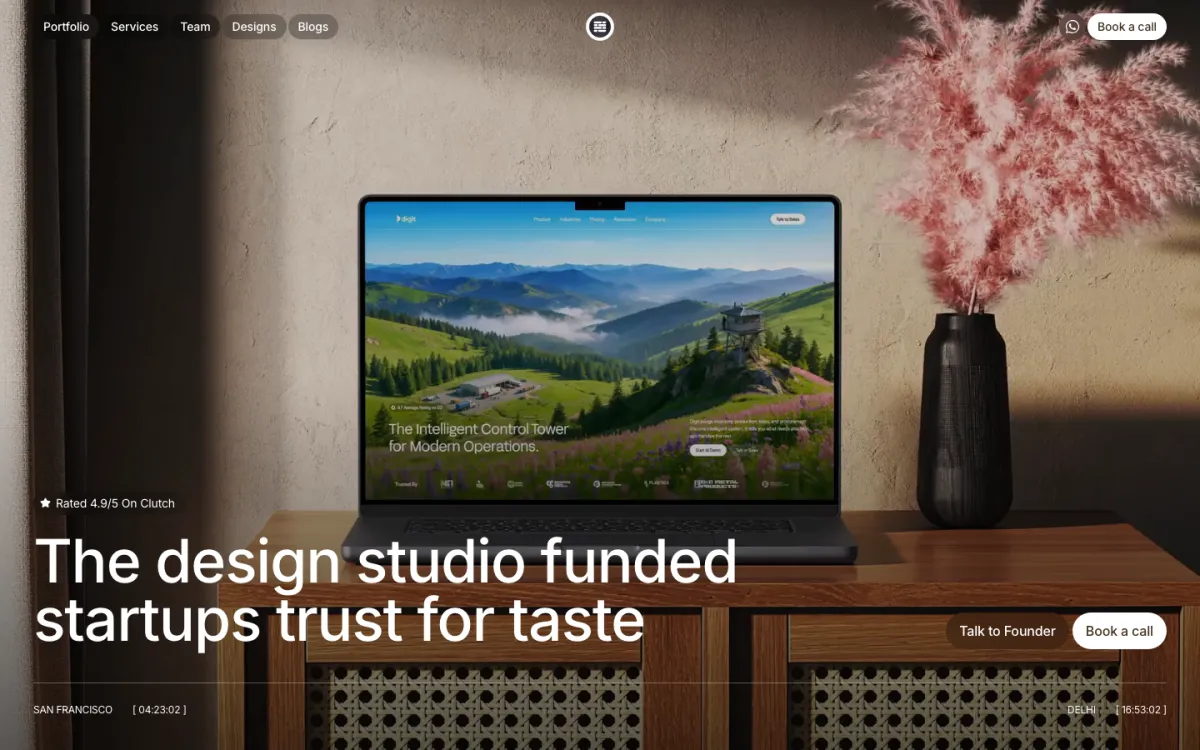
Bricx - Premium UI/UX Partners For SaaS

Bricx: one of the best design system documentation agencies crafting dev-friendly, edge-case-rich docs for fast-scaling SaaS teams


We at Bricx exclusively work with B2B & AI SaaS to create unforgettable user experiences. Our team of UX experts design high-converting websites and products, using our deep understanding of SaaS & design. 

We have a running list of 25+ UX case studies where we have successfully completed website & product design projects for our clients.

Our clients include B2B SaaS & AI companies like Writesonic, Sybill, Manyreach, and other reputed names. 

Schedule a call with us to discuss your goals & we’ll let you know how we can help.

Bricx - Premium UI/UX Partners For SaaS

Bricx: one of the best design system documentation agencies crafting dev-friendly, edge-case-rich docs for fast-scaling SaaS teams


We at Bricx exclusively work with B2B & AI SaaS to create unforgettable user experiences. Our team of UX experts design high-converting websites and products, using our deep understanding of SaaS & design. 

We have a running list of 25+ UX case studies where we have successfully completed website & product design projects for our clients.

Our clients include B2B SaaS & AI companies like Writesonic, Sybill, Manyreach, and other reputed names. 

Schedule a call with us to discuss your goals & we’ll let you know how we can help.

Bricx - Premium UI/UX Partners For SaaS

Bricx: one of the best design system documentation agencies crafting dev-friendly, edge-case-rich docs for fast-scaling SaaS teams


We at Bricx exclusively work with B2B & AI SaaS to create unforgettable user experiences. Our team of UX experts design high-converting websites and products, using our deep understanding of SaaS & design. 

We have a running list of 25+ UX case studies where we have successfully completed website & product design projects for our clients.

Our clients include B2B SaaS & AI companies like Writesonic, Sybill, Manyreach, and other reputed names. 

Schedule a call with us to discuss your goals & we’ll let you know how we can help.

Ustwo

Ustwo is renowned for high‑polish digital experiences that balance brand vision and human interaction — an ideal match for gaming companies that want their world to feel alive online. They specialize in narrative‑driven design, motion‑rich interactions, and detail‑intensive execution that resonates with players.

Their work spans launch sites, interactive lore pages, and community‑engaging dashboards. For gaming companies preparing major updates, event seasons, or franchise expansions, Ustwo brings the craft and depth needed to reflect your IP’s richness while keeping conversions strong.


  • Employees-to-Client Ratio: Cross‑disciplinary teams with UX researchers, motion designers, and creative technologists.

  • Process Maturity: Deep discovery, prototyping, and motion design integration.

  • Audience Insight: User psychology and engagement patterns for gaming audiences.

  • Client Collaboration: Structured weekly alignment and creative workshops.

  • Dev Handoff Process: Interactive specs, animation guidelines, and performance benchmarks.

  • Work Setup: Hybrid remote + in‑studio for high‑touch collaboration.


Clay

Clay is a high‑end digital design studio appreciated for its sleek aesthetics and strong conceptual work. They excel at helping games and gaming platforms articulate their brand visually — whether it’s for a new title launch, franchise ecosystem, or esports experience. Their strength lies in visual storytelling, mood setting, and UI systems that support brand consistency across web and marketing touchpoints.

Gaming firms that want standout creative without sacrificing clarity and conversion favor Clay’s exceptional polish and strategic discipline.


  • Employees-to-Client Ratio: Medium‑sized teams with deep visual design chops.

  • Process Maturity: Brand‑informed design, exploration decks, and design refinement sprints.

  • Audience Insight: Strong brand positioning for highly competitive genres.

  • Client Collaboration: High‑touch creative briefing and alignment sessions.

  • Dev Handoff Process: Pixel‑perfect designs and interaction libraries ready for engineers.

  • Work Setup: Remote‑friendly with synchronous creative reviews.


Fantasy

Fantasy crafts visually ambitious experiences that captivate digital audiences. Their work is bold, immersive, and often cinematic — ideal for game launches or franchise portfolios that need a website to match the excitement of gameplay. They combine storytelling with interactivity, ensuring that gaming audiences feel the energy, tension, and lore of your product.

Fantasy’s approach suits gaming companies looking to build experiences that feel more like extensions of the game world than just marketing pages.


  • Employees-to-Client Ratio: Specialized creative teams with motion and interaction designers.

  • Process Maturity: Concept‑heavy phases, rapid prototyping, and high fidelity builds.

  • Audience Insight: Works well for narrative‑driven or story‑first gaming brands.

  • Client Collaboration: Frequent show‑and‑tell sessions with creative director involvement.

  • Dev Handoff Process: Advanced motion specs, interaction models, and performance guidance.

  • Work Setup: Remote collaboration with sprint alignment routines.


Huge Inc.

Huge Inc. designs digital products with an eye on both user engagement and business impact. For gaming companies, they bring strategic UX layers that support conversion, retention, and community participation. Huge is known for building scalable experiences that accommodate growth — handling everything from launch campaigns and loyalty programs to player portals and subscription systems.

Their research and analytics‑led design helps gaming brands stay ahead of trends and optimize for outcomes players care about most.


  • Employees-to-Client Ratio: Large cross‑functional teams with UX strategists, designers, and data analysts.

  • Process Maturity: Research‑led design grounded in KPIs and performance metrics.

  • Audience Insight: Experience with community platforms, gamified retention, and loyalty design.

  • Client Collaboration: Enterprise‑level communication and reporting.

  • Dev Handoff Process: Deep integration with engineering and performance benchmarks.

  • Work Setup: Distributed teams with formal alignment processes.


Instrument

Instrument builds UX systems that balance brand storytelling with functional clarity. For gaming companies, that means larger ecosystems like player hubs, merch stores, or tournament portals can feel unified rather than patchwork. Instrument’s work is strategic and audience‑aware, enabling companies to communicate their game’s value across different user types. They shine when brands need to connect emotionally while converting visitors into engaged, recurring players.


  • Employees-to-Client Ratio: Broad teams including UX, brand, content, and conversion experts.

  • Process Maturity: Strategic research paired with iterative prototyping cycles.

  • Audience Insight: Gamified retention psychology and user journey mapping.

  • Client Collaboration: Deep product alignment and cross‑functional workshops.

  • Dev Handoff Process: Componentized design systems with documentation.

  • Work Setup: Remote and synchronous collaboration as needed.


Work & Co

Work & Co’s strength lies in combining product design thinking with enterprise‑grade digital delivery. For gaming companies, this translates into experiences that are intuitive, scalable, and aligned with player expectations. Their structured approach to UX and frontend development ensures consistency across global player segments. Work & Co is particularly strong when gaming brands have complex product ecosystems — from social features and community hubs to subscription interfaces and multi‑title aggregators.


  • Employees-to-Client Ratio: Senior designers embedded with product teams.

  • Process Maturity: Product‑driven design workflows with continuous improvement loops.

  • Audience Insight: UX research specific to digital entertainment and engagement.

  • Client Collaboration: Sprint‑based delivery aligned with product roadmaps.

  • Dev Handoff Process: Clean specs integrated into CI/CD and frontend build pipelines.

  • Work Setup: Remote by design with structured syncs.

Ustwo

Ustwo is renowned for high‑polish digital experiences that balance brand vision and human interaction — an ideal match for gaming companies that want their world to feel alive online. They specialize in narrative‑driven design, motion‑rich interactions, and detail‑intensive execution that resonates with players.

Their work spans launch sites, interactive lore pages, and community‑engaging dashboards. For gaming companies preparing major updates, event seasons, or franchise expansions, Ustwo brings the craft and depth needed to reflect your IP’s richness while keeping conversions strong.


  • Employees-to-Client Ratio: Cross‑disciplinary teams with UX researchers, motion designers, and creative technologists.

  • Process Maturity: Deep discovery, prototyping, and motion design integration.

  • Audience Insight: User psychology and engagement patterns for gaming audiences.

  • Client Collaboration: Structured weekly alignment and creative workshops.

  • Dev Handoff Process: Interactive specs, animation guidelines, and performance benchmarks.

  • Work Setup: Hybrid remote + in‑studio for high‑touch collaboration.


Clay

Clay is a high‑end digital design studio appreciated for its sleek aesthetics and strong conceptual work. They excel at helping games and gaming platforms articulate their brand visually — whether it’s for a new title launch, franchise ecosystem, or esports experience. Their strength lies in visual storytelling, mood setting, and UI systems that support brand consistency across web and marketing touchpoints.

Gaming firms that want standout creative without sacrificing clarity and conversion favor Clay’s exceptional polish and strategic discipline.


  • Employees-to-Client Ratio: Medium‑sized teams with deep visual design chops.

  • Process Maturity: Brand‑informed design, exploration decks, and design refinement sprints.

  • Audience Insight: Strong brand positioning for highly competitive genres.

  • Client Collaboration: High‑touch creative briefing and alignment sessions.

  • Dev Handoff Process: Pixel‑perfect designs and interaction libraries ready for engineers.

  • Work Setup: Remote‑friendly with synchronous creative reviews.


Fantasy

Fantasy crafts visually ambitious experiences that captivate digital audiences. Their work is bold, immersive, and often cinematic — ideal for game launches or franchise portfolios that need a website to match the excitement of gameplay. They combine storytelling with interactivity, ensuring that gaming audiences feel the energy, tension, and lore of your product.

Fantasy’s approach suits gaming companies looking to build experiences that feel more like extensions of the game world than just marketing pages.


  • Employees-to-Client Ratio: Specialized creative teams with motion and interaction designers.

  • Process Maturity: Concept‑heavy phases, rapid prototyping, and high fidelity builds.

  • Audience Insight: Works well for narrative‑driven or story‑first gaming brands.

  • Client Collaboration: Frequent show‑and‑tell sessions with creative director involvement.

  • Dev Handoff Process: Advanced motion specs, interaction models, and performance guidance.

  • Work Setup: Remote collaboration with sprint alignment routines.


Huge Inc.

Huge Inc. designs digital products with an eye on both user engagement and business impact. For gaming companies, they bring strategic UX layers that support conversion, retention, and community participation. Huge is known for building scalable experiences that accommodate growth — handling everything from launch campaigns and loyalty programs to player portals and subscription systems.

Their research and analytics‑led design helps gaming brands stay ahead of trends and optimize for outcomes players care about most.


  • Employees-to-Client Ratio: Large cross‑functional teams with UX strategists, designers, and data analysts.

  • Process Maturity: Research‑led design grounded in KPIs and performance metrics.

  • Audience Insight: Experience with community platforms, gamified retention, and loyalty design.

  • Client Collaboration: Enterprise‑level communication and reporting.

  • Dev Handoff Process: Deep integration with engineering and performance benchmarks.

  • Work Setup: Distributed teams with formal alignment processes.


Instrument

Instrument builds UX systems that balance brand storytelling with functional clarity. For gaming companies, that means larger ecosystems like player hubs, merch stores, or tournament portals can feel unified rather than patchwork. Instrument’s work is strategic and audience‑aware, enabling companies to communicate their game’s value across different user types. They shine when brands need to connect emotionally while converting visitors into engaged, recurring players.


  • Employees-to-Client Ratio: Broad teams including UX, brand, content, and conversion experts.

  • Process Maturity: Strategic research paired with iterative prototyping cycles.

  • Audience Insight: Gamified retention psychology and user journey mapping.

  • Client Collaboration: Deep product alignment and cross‑functional workshops.

  • Dev Handoff Process: Componentized design systems with documentation.

  • Work Setup: Remote and synchronous collaboration as needed.


Work & Co

Work & Co’s strength lies in combining product design thinking with enterprise‑grade digital delivery. For gaming companies, this translates into experiences that are intuitive, scalable, and aligned with player expectations. Their structured approach to UX and frontend development ensures consistency across global player segments. Work & Co is particularly strong when gaming brands have complex product ecosystems — from social features and community hubs to subscription interfaces and multi‑title aggregators.


  • Employees-to-Client Ratio: Senior designers embedded with product teams.

  • Process Maturity: Product‑driven design workflows with continuous improvement loops.

  • Audience Insight: UX research specific to digital entertainment and engagement.

  • Client Collaboration: Sprint‑based delivery aligned with product roadmaps.

  • Dev Handoff Process: Clean specs integrated into CI/CD and frontend build pipelines.

  • Work Setup: Remote by design with structured syncs.

Ustwo

Ustwo is renowned for high‑polish digital experiences that balance brand vision and human interaction — an ideal match for gaming companies that want their world to feel alive online. They specialize in narrative‑driven design, motion‑rich interactions, and detail‑intensive execution that resonates with players.

Their work spans launch sites, interactive lore pages, and community‑engaging dashboards. For gaming companies preparing major updates, event seasons, or franchise expansions, Ustwo brings the craft and depth needed to reflect your IP’s richness while keeping conversions strong.


  • Employees-to-Client Ratio: Cross‑disciplinary teams with UX researchers, motion designers, and creative technologists.

  • Process Maturity: Deep discovery, prototyping, and motion design integration.

  • Audience Insight: User psychology and engagement patterns for gaming audiences.

  • Client Collaboration: Structured weekly alignment and creative workshops.

  • Dev Handoff Process: Interactive specs, animation guidelines, and performance benchmarks.

  • Work Setup: Hybrid remote + in‑studio for high‑touch collaboration.


Clay

Clay is a high‑end digital design studio appreciated for its sleek aesthetics and strong conceptual work. They excel at helping games and gaming platforms articulate their brand visually — whether it’s for a new title launch, franchise ecosystem, or esports experience. Their strength lies in visual storytelling, mood setting, and UI systems that support brand consistency across web and marketing touchpoints.

Gaming firms that want standout creative without sacrificing clarity and conversion favor Clay’s exceptional polish and strategic discipline.


  • Employees-to-Client Ratio: Medium‑sized teams with deep visual design chops.

  • Process Maturity: Brand‑informed design, exploration decks, and design refinement sprints.

  • Audience Insight: Strong brand positioning for highly competitive genres.

  • Client Collaboration: High‑touch creative briefing and alignment sessions.

  • Dev Handoff Process: Pixel‑perfect designs and interaction libraries ready for engineers.

  • Work Setup: Remote‑friendly with synchronous creative reviews.


Fantasy

Fantasy crafts visually ambitious experiences that captivate digital audiences. Their work is bold, immersive, and often cinematic — ideal for game launches or franchise portfolios that need a website to match the excitement of gameplay. They combine storytelling with interactivity, ensuring that gaming audiences feel the energy, tension, and lore of your product.

Fantasy’s approach suits gaming companies looking to build experiences that feel more like extensions of the game world than just marketing pages.


  • Employees-to-Client Ratio: Specialized creative teams with motion and interaction designers.

  • Process Maturity: Concept‑heavy phases, rapid prototyping, and high fidelity builds.

  • Audience Insight: Works well for narrative‑driven or story‑first gaming brands.

  • Client Collaboration: Frequent show‑and‑tell sessions with creative director involvement.

  • Dev Handoff Process: Advanced motion specs, interaction models, and performance guidance.

  • Work Setup: Remote collaboration with sprint alignment routines.


Huge Inc.

Huge Inc. designs digital products with an eye on both user engagement and business impact. For gaming companies, they bring strategic UX layers that support conversion, retention, and community participation. Huge is known for building scalable experiences that accommodate growth — handling everything from launch campaigns and loyalty programs to player portals and subscription systems.

Their research and analytics‑led design helps gaming brands stay ahead of trends and optimize for outcomes players care about most.


  • Employees-to-Client Ratio: Large cross‑functional teams with UX strategists, designers, and data analysts.

  • Process Maturity: Research‑led design grounded in KPIs and performance metrics.

  • Audience Insight: Experience with community platforms, gamified retention, and loyalty design.

  • Client Collaboration: Enterprise‑level communication and reporting.

  • Dev Handoff Process: Deep integration with engineering and performance benchmarks.

  • Work Setup: Distributed teams with formal alignment processes.


Instrument

Instrument builds UX systems that balance brand storytelling with functional clarity. For gaming companies, that means larger ecosystems like player hubs, merch stores, or tournament portals can feel unified rather than patchwork. Instrument’s work is strategic and audience‑aware, enabling companies to communicate their game’s value across different user types. They shine when brands need to connect emotionally while converting visitors into engaged, recurring players.


  • Employees-to-Client Ratio: Broad teams including UX, brand, content, and conversion experts.

  • Process Maturity: Strategic research paired with iterative prototyping cycles.

  • Audience Insight: Gamified retention psychology and user journey mapping.

  • Client Collaboration: Deep product alignment and cross‑functional workshops.

  • Dev Handoff Process: Componentized design systems with documentation.

  • Work Setup: Remote and synchronous collaboration as needed.


Work & Co

Work & Co’s strength lies in combining product design thinking with enterprise‑grade digital delivery. For gaming companies, this translates into experiences that are intuitive, scalable, and aligned with player expectations. Their structured approach to UX and frontend development ensures consistency across global player segments. Work & Co is particularly strong when gaming brands have complex product ecosystems — from social features and community hubs to subscription interfaces and multi‑title aggregators.


  • Employees-to-Client Ratio: Senior designers embedded with product teams.

  • Process Maturity: Product‑driven design workflows with continuous improvement loops.

  • Audience Insight: UX research specific to digital entertainment and engagement.

  • Client Collaboration: Sprint‑based delivery aligned with product roadmaps.

  • Dev Handoff Process: Clean specs integrated into CI/CD and frontend build pipelines.

  • Work Setup: Remote by design with structured syncs.

Barrel

Barrel builds immersive experiences with strong visual storytelling and brand focus — ideal for studios launching new titles or building franchise ecosystems. Their approach prioritizes clarity, player excitement, and narrative hooks that keep users exploring. Barrel’s team is well suited for gaming companies that need to translate torrents of content (lore, trailers, events, esports results) into an organized, visually engaging web presence.


  • Employees-to-Client Ratio: Focused design teams aligned to creative product strategy.

  • Process Maturity: Discovery, design iteration, and storyboarding workflows.

  • Audience Insight: Effective at emotion‑driven design for gaming audiences.

  • Client Collaboration: Regular check‑ins and creative brief alignment.

  • Dev Handoff Process: UI assets and structured component guidelines for developers.

  • Work Setup: Designed to support hybrid collaboration from early stages.


Red Antler

Red Antler helps gaming companies build identities and digital experiences that resonate with their audience. Their strategic branding work ensures that landing pages, feature showcases, and community portals feel like a unified world rather than disjointed microsites. Red Antler is ideal for gaming startups that have a strong narrative or franchise under development and need brand coherence across web and media.


  • Employees-to-Client Ratio: Brand‑heavy teams with UX design support.

  • Process Maturity: Brand strategy, UX alignment, and cohesive rollout phases.

  • Audience Insight: Great at blending emotional engagement with usability.

  • Client Collaboration: Deep strategy workshops and iterative feedback loops.

  • Dev Handoff Process: Design systems aligned with brand guidelines.

  • Work Setup: Remote and studio hybrid for idea generation.


Ramotion

Ramotion delivers visually appealing, technical, and UX‑solid websites that scale across game genres and audiences. Their collaborative approach helps gaming companies define clear product positioning, engaging narrative elements, and intuitive conversion flows. For bootstrapped indies or high‑growth studios alike, Ramotion brings a balanced combination of polish and practicality.


  • Employees-to-Client Ratio: Lean teams with senior design oversight.

  • Process Maturity: Structured ideation, visuals, prototyping, and dev handoff.

  • Audience Insight: Gamer‑centric UX patterns and engagement loops.

  • Client Collaboration: Responsive iteration cycles with frequent checkpoints.

  • Dev Handoff Process: Clean marginized specs for front‑end builds.

  • Work Setup: Remote‑ready and agile.


Conclusion

Gaming companies face unique design challenges. You need web experiences that not only showcase your product but extend your game’s world, engage your players, and drive community participation. Excellent gaming web design doesn’t just inform — it entertains, inspires, and converts.

The right design partner understands gamer psychology, retention loops, performance constraints, and brand immersion. This is why agencies that blend creative storytelling, performance engineering, and UX depth stand out.

From our benchmarking, Bricx consistently rises to the top for gaming startups because we combine rapid execution, product‑aligned thinking, gamified UX insights, and conversion focus within web design. We build experiences that feel like an organic extension of your game, helping your site become a strategic growth engine rather than just a marketing asset.

When selecting a partner, choose teams that can think like players, execute like engineers, and design like storytellers. That combination is what separates good gaming websites from great ones.


FAQs


1. What makes a web design agency ideal for gaming companies?

A great web design agency for gaming companies understands the unique needs of the gaming industry, such as engaging visuals, interactive elements, and optimized user experiences. They focus on creating immersive websites that capture the gaming experience, with fast load times, clear navigation, and seamless integration of media content.


2. How can a gaming company’s website drive player engagement?

By focusing on user-centric design and interactive features like game demos, leaderboards, and community-building tools. A well-designed website for gaming companies creates a compelling story, attracts potential players, and encourages retention through engaging visuals and smooth interactions.


3. What are the key elements of a successful gaming website?

Key elements include intuitive navigation, high-quality visuals, mobile responsiveness, clear CTAs (call-to-actions), and a well-structured game portfolio. A gaming website should also offer strong SEO optimization and be easily navigable for players seeking quick access to game details and updates.


4. How can web design enhance the branding of a gaming company?

Web design enhances branding by visually reflecting the gaming company’s identity, using game-specific graphics, typography, and color schemes. A website serves as the primary touchpoint for a company’s brand, showcasing its unique style, storytelling, and the gaming experience it offers.


5. What role does web development play for gaming companies’ websites?

Web development ensures that gaming websites run smoothly with fast load times, efficient navigation, and support for various platforms. It involves coding interactive features such as real-time multiplayer displays, online stores, and gaming-related functionalities that deliver a seamless user experience.


6. How can a gaming website optimize its user experience (UX)?

Optimizing UX for gaming websites involves simplifying the user journey, providing responsive design for various devices, fast navigation, and easy access to game content. It also includes implementing intuitive interfaces for players to easily find, explore, and interact with games.

Barrel

Barrel builds immersive experiences with strong visual storytelling and brand focus — ideal for studios launching new titles or building franchise ecosystems. Their approach prioritizes clarity, player excitement, and narrative hooks that keep users exploring. Barrel’s team is well suited for gaming companies that need to translate torrents of content (lore, trailers, events, esports results) into an organized, visually engaging web presence.


  • Employees-to-Client Ratio: Focused design teams aligned to creative product strategy.

  • Process Maturity: Discovery, design iteration, and storyboarding workflows.

  • Audience Insight: Effective at emotion‑driven design for gaming audiences.

  • Client Collaboration: Regular check‑ins and creative brief alignment.

  • Dev Handoff Process: UI assets and structured component guidelines for developers.

  • Work Setup: Designed to support hybrid collaboration from early stages.


Red Antler

Red Antler helps gaming companies build identities and digital experiences that resonate with their audience. Their strategic branding work ensures that landing pages, feature showcases, and community portals feel like a unified world rather than disjointed microsites. Red Antler is ideal for gaming startups that have a strong narrative or franchise under development and need brand coherence across web and media.


  • Employees-to-Client Ratio: Brand‑heavy teams with UX design support.

  • Process Maturity: Brand strategy, UX alignment, and cohesive rollout phases.

  • Audience Insight: Great at blending emotional engagement with usability.

  • Client Collaboration: Deep strategy workshops and iterative feedback loops.

  • Dev Handoff Process: Design systems aligned with brand guidelines.

  • Work Setup: Remote and studio hybrid for idea generation.


Ramotion

Ramotion delivers visually appealing, technical, and UX‑solid websites that scale across game genres and audiences. Their collaborative approach helps gaming companies define clear product positioning, engaging narrative elements, and intuitive conversion flows. For bootstrapped indies or high‑growth studios alike, Ramotion brings a balanced combination of polish and practicality.


  • Employees-to-Client Ratio: Lean teams with senior design oversight.

  • Process Maturity: Structured ideation, visuals, prototyping, and dev handoff.

  • Audience Insight: Gamer‑centric UX patterns and engagement loops.

  • Client Collaboration: Responsive iteration cycles with frequent checkpoints.

  • Dev Handoff Process: Clean marginized specs for front‑end builds.

  • Work Setup: Remote‑ready and agile.


Conclusion

Gaming companies face unique design challenges. You need web experiences that not only showcase your product but extend your game’s world, engage your players, and drive community participation. Excellent gaming web design doesn’t just inform — it entertains, inspires, and converts.

The right design partner understands gamer psychology, retention loops, performance constraints, and brand immersion. This is why agencies that blend creative storytelling, performance engineering, and UX depth stand out.

From our benchmarking, Bricx consistently rises to the top for gaming startups because we combine rapid execution, product‑aligned thinking, gamified UX insights, and conversion focus within web design. We build experiences that feel like an organic extension of your game, helping your site become a strategic growth engine rather than just a marketing asset.

When selecting a partner, choose teams that can think like players, execute like engineers, and design like storytellers. That combination is what separates good gaming websites from great ones.


FAQs


1. What makes a web design agency ideal for gaming companies?

A great web design agency for gaming companies understands the unique needs of the gaming industry, such as engaging visuals, interactive elements, and optimized user experiences. They focus on creating immersive websites that capture the gaming experience, with fast load times, clear navigation, and seamless integration of media content.


2. How can a gaming company’s website drive player engagement?

By focusing on user-centric design and interactive features like game demos, leaderboards, and community-building tools. A well-designed website for gaming companies creates a compelling story, attracts potential players, and encourages retention through engaging visuals and smooth interactions.


3. What are the key elements of a successful gaming website?

Key elements include intuitive navigation, high-quality visuals, mobile responsiveness, clear CTAs (call-to-actions), and a well-structured game portfolio. A gaming website should also offer strong SEO optimization and be easily navigable for players seeking quick access to game details and updates.


4. How can web design enhance the branding of a gaming company?

Web design enhances branding by visually reflecting the gaming company’s identity, using game-specific graphics, typography, and color schemes. A website serves as the primary touchpoint for a company’s brand, showcasing its unique style, storytelling, and the gaming experience it offers.


5. What role does web development play for gaming companies’ websites?

Web development ensures that gaming websites run smoothly with fast load times, efficient navigation, and support for various platforms. It involves coding interactive features such as real-time multiplayer displays, online stores, and gaming-related functionalities that deliver a seamless user experience.


6. How can a gaming website optimize its user experience (UX)?

Optimizing UX for gaming websites involves simplifying the user journey, providing responsive design for various devices, fast navigation, and easy access to game content. It also includes implementing intuitive interfaces for players to easily find, explore, and interact with games.

Barrel

Barrel builds immersive experiences with strong visual storytelling and brand focus — ideal for studios launching new titles or building franchise ecosystems. Their approach prioritizes clarity, player excitement, and narrative hooks that keep users exploring. Barrel’s team is well suited for gaming companies that need to translate torrents of content (lore, trailers, events, esports results) into an organized, visually engaging web presence.


  • Employees-to-Client Ratio: Focused design teams aligned to creative product strategy.

  • Process Maturity: Discovery, design iteration, and storyboarding workflows.

  • Audience Insight: Effective at emotion‑driven design for gaming audiences.

  • Client Collaboration: Regular check‑ins and creative brief alignment.

  • Dev Handoff Process: UI assets and structured component guidelines for developers.

  • Work Setup: Designed to support hybrid collaboration from early stages.


Red Antler

Red Antler helps gaming companies build identities and digital experiences that resonate with their audience. Their strategic branding work ensures that landing pages, feature showcases, and community portals feel like a unified world rather than disjointed microsites. Red Antler is ideal for gaming startups that have a strong narrative or franchise under development and need brand coherence across web and media.


  • Employees-to-Client Ratio: Brand‑heavy teams with UX design support.

  • Process Maturity: Brand strategy, UX alignment, and cohesive rollout phases.

  • Audience Insight: Great at blending emotional engagement with usability.

  • Client Collaboration: Deep strategy workshops and iterative feedback loops.

  • Dev Handoff Process: Design systems aligned with brand guidelines.

  • Work Setup: Remote and studio hybrid for idea generation.


Ramotion

Ramotion delivers visually appealing, technical, and UX‑solid websites that scale across game genres and audiences. Their collaborative approach helps gaming companies define clear product positioning, engaging narrative elements, and intuitive conversion flows. For bootstrapped indies or high‑growth studios alike, Ramotion brings a balanced combination of polish and practicality.


  • Employees-to-Client Ratio: Lean teams with senior design oversight.

  • Process Maturity: Structured ideation, visuals, prototyping, and dev handoff.

  • Audience Insight: Gamer‑centric UX patterns and engagement loops.

  • Client Collaboration: Responsive iteration cycles with frequent checkpoints.

  • Dev Handoff Process: Clean marginized specs for front‑end builds.

  • Work Setup: Remote‑ready and agile.


Conclusion

Gaming companies face unique design challenges. You need web experiences that not only showcase your product but extend your game’s world, engage your players, and drive community participation. Excellent gaming web design doesn’t just inform — it entertains, inspires, and converts.

The right design partner understands gamer psychology, retention loops, performance constraints, and brand immersion. This is why agencies that blend creative storytelling, performance engineering, and UX depth stand out.

From our benchmarking, Bricx consistently rises to the top for gaming startups because we combine rapid execution, product‑aligned thinking, gamified UX insights, and conversion focus within web design. We build experiences that feel like an organic extension of your game, helping your site become a strategic growth engine rather than just a marketing asset.

When selecting a partner, choose teams that can think like players, execute like engineers, and design like storytellers. That combination is what separates good gaming websites from great ones.


FAQs


1. What makes a web design agency ideal for gaming companies?

A great web design agency for gaming companies understands the unique needs of the gaming industry, such as engaging visuals, interactive elements, and optimized user experiences. They focus on creating immersive websites that capture the gaming experience, with fast load times, clear navigation, and seamless integration of media content.


2. How can a gaming company’s website drive player engagement?

By focusing on user-centric design and interactive features like game demos, leaderboards, and community-building tools. A well-designed website for gaming companies creates a compelling story, attracts potential players, and encourages retention through engaging visuals and smooth interactions.


3. What are the key elements of a successful gaming website?

Key elements include intuitive navigation, high-quality visuals, mobile responsiveness, clear CTAs (call-to-actions), and a well-structured game portfolio. A gaming website should also offer strong SEO optimization and be easily navigable for players seeking quick access to game details and updates.


4. How can web design enhance the branding of a gaming company?

Web design enhances branding by visually reflecting the gaming company’s identity, using game-specific graphics, typography, and color schemes. A website serves as the primary touchpoint for a company’s brand, showcasing its unique style, storytelling, and the gaming experience it offers.


5. What role does web development play for gaming companies’ websites?

Web development ensures that gaming websites run smoothly with fast load times, efficient navigation, and support for various platforms. It involves coding interactive features such as real-time multiplayer displays, online stores, and gaming-related functionalities that deliver a seamless user experience.


6. How can a gaming website optimize its user experience (UX)?

Optimizing UX for gaming websites involves simplifying the user journey, providing responsive design for various devices, fast navigation, and easy access to game content. It also includes implementing intuitive interfaces for players to easily find, explore, and interact with games.

As a remote-first team of UX specialists, we work exclusively with B2B & AI SaaS companies to design unforgettable user experiences at Bricx.

If you’re a B2B or AI SaaS looking to give your users an unforgettable experience, book a call with us now!

As a remote-first team of UX specialists, we work exclusively with B2B & AI SaaS companies to design unforgettable user experiences at Bricx.

If you’re a B2B or AI SaaS looking to give your users an unforgettable experience, book a call with us now!

As a remote-first team of UX specialists, we work exclusively with B2B & AI SaaS companies to design unforgettable user experiences at Bricx.

If you’re a B2B or AI SaaS looking to give your users an unforgettable experience, book a call with us now!

Author:

Siddharth Vij

CEO at Bricxlabs

With nearly a decade in design and SaaS, he helps B2B startups grow with high-conversion sites and smart product design.

Unforgettable Website & UX Design For SaaS

We design high-converting websites and products for B2B AI startups.

Similar Design Agencies

Similar Design Agencies

Similar Design Agencies

Connect, configure and preview