Top 10 Web Design Agencies for Insurtech Startups - January 2026

Top 10 Web Design Agencies for Insurtech Startups - January 2026

Top 10 Web Design Agencies for Insurtech Startups - January 2026

Searching for web design agencies for insurtech startups? Discover our list of 10 firms crafting fast, intuitive, and compliant websites built for digital insurance teams.

Searching for web design agencies for insurtech startups? Discover our list of 10 firms crafting fast, intuitive, and compliant websites built for digital insurance teams.

Searching for web design agencies for insurtech startups? Discover our list of 10 firms crafting fast, intuitive, and compliant websites built for digital insurance teams.

4 mins

4 mins

4 mins

December, 2025

December, 2025

December, 2025

Author:

Siddharth Vij

Co-Founder, Bricx

Hi, I'm Sid. I lead design at Bricx. We work with B2B & AI SaaS companies to craft unforgettable user experiences.

Introduction

Over the last few months, we spoke to 57+ design agencies globally—ran actual sales calls and evaluated them using the same documented project brief tailored specifically for insurtech startups. We compared these agencies across:


  • Pricing

  • Engagement Model

  • Payment Structure

  • Timeline

  • Team Structure

  • Number of Employees

  • Domain Expertise

  • Depth of Service

  • Business Thinking (Conversion Rate Optimization)

  • Client Collaboration

  • Dev Handoff Process

  • Work Setup (Remote/Hybrid/In-Office)


All insights were consolidated into The Ultimate UX Agency Benchmarking Report for 2025, one of the most comprehensive agency comparisons in the industry.

From this research, we hand-picked the 10 best web design agencies for insurtech startups—firms that understand complex risk products, regulated flows, multi-audience UX, and trust-building interface design.

By the end of this piece, you’ll know exactly which partner best matches your insurtech goals and how they can accelerate your growth.

Introduction

Over the last few months, we spoke to 57+ design agencies globally—ran actual sales calls and evaluated them using the same documented project brief tailored specifically for insurtech startups. We compared these agencies across:


  • Pricing

  • Engagement Model

  • Payment Structure

  • Timeline

  • Team Structure

  • Number of Employees

  • Domain Expertise

  • Depth of Service

  • Business Thinking (Conversion Rate Optimization)

  • Client Collaboration

  • Dev Handoff Process

  • Work Setup (Remote/Hybrid/In-Office)


All insights were consolidated into The Ultimate UX Agency Benchmarking Report for 2025, one of the most comprehensive agency comparisons in the industry.

From this research, we hand-picked the 10 best web design agencies for insurtech startups—firms that understand complex risk products, regulated flows, multi-audience UX, and trust-building interface design.

By the end of this piece, you’ll know exactly which partner best matches your insurtech goals and how they can accelerate your growth.

Introduction

Over the last few months, we spoke to 57+ design agencies globally—ran actual sales calls and evaluated them using the same documented project brief tailored specifically for insurtech startups. We compared these agencies across:


  • Pricing

  • Engagement Model

  • Payment Structure

  • Timeline

  • Team Structure

  • Number of Employees

  • Domain Expertise

  • Depth of Service

  • Business Thinking (Conversion Rate Optimization)

  • Client Collaboration

  • Dev Handoff Process

  • Work Setup (Remote/Hybrid/In-Office)


All insights were consolidated into The Ultimate UX Agency Benchmarking Report for 2025, one of the most comprehensive agency comparisons in the industry.

From this research, we hand-picked the 10 best web design agencies for insurtech startups—firms that understand complex risk products, regulated flows, multi-audience UX, and trust-building interface design.

By the end of this piece, you’ll know exactly which partner best matches your insurtech goals and how they can accelerate your growth.

How To Evaluate Your Agency?

Insurtech products live at the intersection of financial services, regulatory compliance, data, and human trust. Your agency must be attuned to the nuances of onboarding, privacy signals, risk messaging, and conversion paths that support both consumers and enterprise clients.

Here are the core factors you should evaluate:

1. Financial/Regulatory UX Awareness

Insurance flows often involve sensitive data, compliance mechanics, and complex policy explanations. Choose agencies familiar with financial products and legal language simplification.

2. Trust & Credibility Design

Insurance is inherently about risk and reliability. Your website must reassure users through visual trust signals, clear content hierarchy, and transparent information flow.

3. Conversion Paths for Multiple Audiences

Insurtech platforms typically serve both consumers and business clients. Your agency must optimize funnels for both sides, including quote requests, policy purchases, renewals, claims, and enterprise portals.

4. Complex Form & Workflow UX

Quote engines, multi-step forms, and eligibility checks must be easy to complete on web. Choose agencies with proven form design patterns and user flow optimization expertise.

5. Clean Dev Handoff & Documentation

Your design partner must produce structured UI/UX work capable of integrating with your in-house or outsourced engineering teams, especially as you build policy engines, dashboards, and integration endpoints.


Top 10 Web Design Agencies for Insurtech Startups: [Comparison]

Here’s a list of the top 10 web design agencies for insurtech startups.

How To Evaluate Your Agency?

Insurtech products live at the intersection of financial services, regulatory compliance, data, and human trust. Your agency must be attuned to the nuances of onboarding, privacy signals, risk messaging, and conversion paths that support both consumers and enterprise clients.

Here are the core factors you should evaluate:

1. Financial/Regulatory UX Awareness

Insurance flows often involve sensitive data, compliance mechanics, and complex policy explanations. Choose agencies familiar with financial products and legal language simplification.

2. Trust & Credibility Design

Insurance is inherently about risk and reliability. Your website must reassure users through visual trust signals, clear content hierarchy, and transparent information flow.

3. Conversion Paths for Multiple Audiences

Insurtech platforms typically serve both consumers and business clients. Your agency must optimize funnels for both sides, including quote requests, policy purchases, renewals, claims, and enterprise portals.

4. Complex Form & Workflow UX

Quote engines, multi-step forms, and eligibility checks must be easy to complete on web. Choose agencies with proven form design patterns and user flow optimization expertise.

5. Clean Dev Handoff & Documentation

Your design partner must produce structured UI/UX work capable of integrating with your in-house or outsourced engineering teams, especially as you build policy engines, dashboards, and integration endpoints.


Top 10 Web Design Agencies for Insurtech Startups: [Comparison]

Here’s a list of the top 10 web design agencies for insurtech startups.

How To Evaluate Your Agency?

Insurtech products live at the intersection of financial services, regulatory compliance, data, and human trust. Your agency must be attuned to the nuances of onboarding, privacy signals, risk messaging, and conversion paths that support both consumers and enterprise clients.

Here are the core factors you should evaluate:

1. Financial/Regulatory UX Awareness

Insurance flows often involve sensitive data, compliance mechanics, and complex policy explanations. Choose agencies familiar with financial products and legal language simplification.

2. Trust & Credibility Design

Insurance is inherently about risk and reliability. Your website must reassure users through visual trust signals, clear content hierarchy, and transparent information flow.

3. Conversion Paths for Multiple Audiences

Insurtech platforms typically serve both consumers and business clients. Your agency must optimize funnels for both sides, including quote requests, policy purchases, renewals, claims, and enterprise portals.

4. Complex Form & Workflow UX

Quote engines, multi-step forms, and eligibility checks must be easy to complete on web. Choose agencies with proven form design patterns and user flow optimization expertise.

5. Clean Dev Handoff & Documentation

Your design partner must produce structured UI/UX work capable of integrating with your in-house or outsourced engineering teams, especially as you build policy engines, dashboards, and integration endpoints.


Top 10 Web Design Agencies for Insurtech Startups: [Comparison]

Here’s a list of the top 10 web design agencies for insurtech startups.

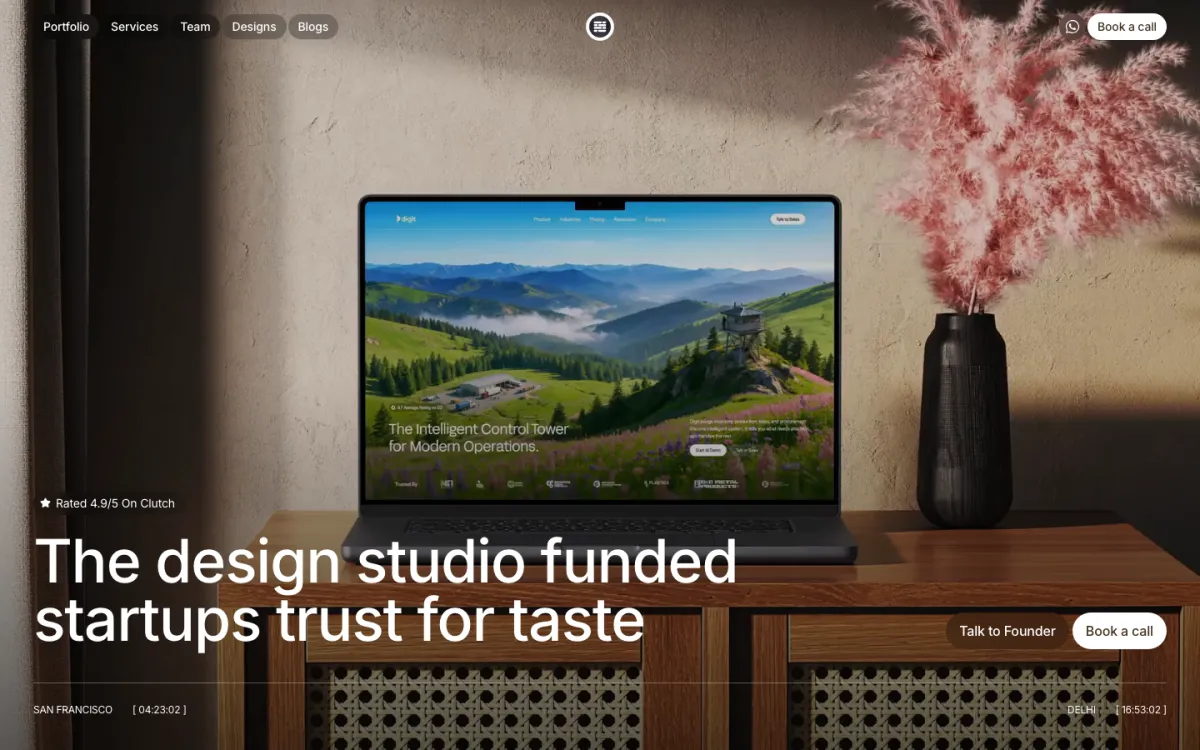
Bricx - Premium UI/UX Partners For SaaS

Bricx: one of the best design system documentation agencies crafting dev-friendly, edge-case-rich docs for fast-scaling SaaS teams


We at Bricx exclusively work with B2B & AI SaaS to create unforgettable user experiences. Our team of UX experts design high-converting websites and products, using our deep understanding of SaaS & design. 

We have a running list of 25+ UX case studies where we have successfully completed website & product design projects for our clients.

Our clients include B2B SaaS & AI companies like Writesonic, Sybill, Manyreach, and other reputed names. 

Schedule a call with us to discuss your goals & we’ll let you know how we can help.

Bricx - Premium UI/UX Partners For SaaS

Bricx: one of the best design system documentation agencies crafting dev-friendly, edge-case-rich docs for fast-scaling SaaS teams


We at Bricx exclusively work with B2B & AI SaaS to create unforgettable user experiences. Our team of UX experts design high-converting websites and products, using our deep understanding of SaaS & design. 

We have a running list of 25+ UX case studies where we have successfully completed website & product design projects for our clients.

Our clients include B2B SaaS & AI companies like Writesonic, Sybill, Manyreach, and other reputed names. 

Schedule a call with us to discuss your goals & we’ll let you know how we can help.

Bricx - Premium UI/UX Partners For SaaS

Bricx: one of the best design system documentation agencies crafting dev-friendly, edge-case-rich docs for fast-scaling SaaS teams


We at Bricx exclusively work with B2B & AI SaaS to create unforgettable user experiences. Our team of UX experts design high-converting websites and products, using our deep understanding of SaaS & design. 

We have a running list of 25+ UX case studies where we have successfully completed website & product design projects for our clients.

Our clients include B2B SaaS & AI companies like Writesonic, Sybill, Manyreach, and other reputed names. 

Schedule a call with us to discuss your goals & we’ll let you know how we can help.

Clay

Clay is known for its high-end visual design and strategic execution for technology brands — including insurtech platforms. They excel at making abstract or complex insurance offerings feel tangible and approachable through thoughtful layout, brand expression, and interface design. For insurtech companies, Clay brings polished UI systems that command trust while communicating product nuance clearly. Their work often includes custom animations and interactive elements that guide users through difficult topics like coverage levels, pricing tiers, and claim workflows without overwhelming them. Insurtech startups that need a visually distinct yet clear web presence often turn to Clay for its blend of aesthetics and utility.


  • Employees-to-Client Ratio: Medium design teams with strong visual strategy

  • Process Maturity: UX exploration → high-fidelity workflows → UI polish

  • Insurtech Domain Experience: Strong at consumer trust and clarity messaging

  • Client Collaboration: Iterative reviews and alignment syncs

  • Dev Handoff Process: Pixel-precise specs ready for integration

  • Work Setup: Remote-friendly with synchronous checkpoints


Work & Co

Work & Co applies a product-first mindset to digital experience design, which benefits insurtech startups aiming for long-term scalability and consistency. Their approach balances UX fundamentals with performance and conversion thinking, making them suitable for platforms incorporating quotes, dashboards, and integrations. They emphasize usability, ensuring that forms, price comparisons, and claims processes are intuitive and friction-minimal. For enterprise-oriented insurtech companies, Work & Co’s structured methodology supports scalability and future feature expansion.


  • Employees-to-Client Ratio: Experienced product design teams embedded with clients

  • Process Maturity: Product alignment with engineering cadence

  • Insurtech Domain Experience: Usability at scale for complex digital products

  • Client Collaboration: Sprint-based rhythm with cross-functional alignment

  • Dev Handoff Process: Tight design → engineering syncs

  • Work Setup: Remote-ready with structured routines


Eleken

Eleken is a UX/UI design agency trusted by SaaS and FinTech startups that require practical, conversion-focused designs. They help insurtech brands structure onboarding flows and product pages so that users grasp value quickly and proceed through quoting or policy purchase with minimal friction. Eleken’s process emphasizes lean research and iterative refinement, which pairs well with agile product teams common in insurtech. Their evaluation of form UX, hierarchy, and messaging ensures that even complex insurance flows feel accessible to end users.


  • Employees-to-Client Ratio: UX designers dedicated per engagement

  • Process Maturity: Research → UX flows → UI refinement

  • Insurtech Domain Experience: Experience with conversion-centric products

  • Client Collaboration: Sprint-aligned iterations

  • Dev Handoff Process: Developer-friendly deliverables

  • Work Setup: Fully remote


Instrument

Instrument builds strategic digital experiences that emphasize clarity, engagement, and business outcomes. For insurtech companies, they focus on why users should trust a service before deciding to become customers. Their work emphasizes headline clarity, value propositions, and structured UX for multi-step journeys like policy setup or claims submission. Instrument’s strategic framing helps insurtech brands differentiate in marketplaces and enterprise settings where trust and clarity are paramount.


  • Employees-to-Client Ratio: Strategy and design teams with experience in enterprise UX

  • Process Maturity: Research-led discovery and iterative UX refinement

  • Insurtech Domain Experience: Value proposition and trust frameworks

  • Client Collaboration: Workshops and alignment sessions

  • Dev Handoff Process: Comprehensive system documentation

  • Work Setup: Remote/hybrid collaboration


Ramotion

Ramotion focuses on crisp, functional design and usability — helpful for insurtech startups that need clean information architecture for policies, plans, and pricing. Their designs emphasize readability and flow clarity, reducing cognitive load at key decision points such as quote calculators or coverage comparisons. For startups with evolving products or modular plan structures, Ramotion’s emphasis on scalable components and patterns makes integration with backend systems straightforward. This practical objectivity helps insurtech teams conserve resources while still building effective interfaces.


  • Employees-to-Client Ratio: Compact senior design teams

  • Process Maturity: UX fundamentals → UI systems

  • Insurtech Domain Experience: Practical UX for financial flows

  • Client Collaboration: Fast feedback loops

  • Dev Handoff Process: Clean specs and reusable components

  • Work Setup: Remote-first


Think Company

Think Company brings deep discovery practices and system thinking — ideal for insurtech platforms that need to align complex product features with user workflows. They invest heavily in research and iterative validation, which helps ensure the UX they design resonates with real end users and not just internal assumptions. Their structured approach is useful when policy types, coverage variables, or multi-persona studies influence interface choices. Insurtech startups looking for clarity and confidence in UX decisions benefit from their rigorous process.


  • Employees-to-Client Ratio: UX research-led multi-disciplinary teams

  • Process Maturity: Discovery → testing → refinement

  • Insurtech Domain Experience: Systems thinking for complex products

  • Client Collaboration: Deep engagement with stakeholders

  • Dev Handoff Process: Thorough documentation

  • Work Setup: Hybrid remote


Zajno

Zajno delivers visually engaging and approachable designs that help insurtech startups communicate trust and clarity without overwhelming visitors with dense technical language. Their work often emphasizes visual balance, content hierarchy, and clear paths through features like claims, pricing, and plan comparisons. For consumer-facing insurtech products, Zajno’s ability to make awareness → consideration → conversion flows feel smooth and intuitive is a significant advantage.


  • Employees-to-Client Ratio: Creative visual teams

  • Process Maturity: Story-led UX and brand frameworks

  • Insurtech Domain Experience: Consumer engagement flows

  • Client Collaboration: Creative reviews and iteration

  • Dev Handoff Process: Clean UI specifications

  • Work Setup: Remote/hybrid workflows

Clay

Clay is known for its high-end visual design and strategic execution for technology brands — including insurtech platforms. They excel at making abstract or complex insurance offerings feel tangible and approachable through thoughtful layout, brand expression, and interface design. For insurtech companies, Clay brings polished UI systems that command trust while communicating product nuance clearly. Their work often includes custom animations and interactive elements that guide users through difficult topics like coverage levels, pricing tiers, and claim workflows without overwhelming them. Insurtech startups that need a visually distinct yet clear web presence often turn to Clay for its blend of aesthetics and utility.


  • Employees-to-Client Ratio: Medium design teams with strong visual strategy

  • Process Maturity: UX exploration → high-fidelity workflows → UI polish

  • Insurtech Domain Experience: Strong at consumer trust and clarity messaging

  • Client Collaboration: Iterative reviews and alignment syncs

  • Dev Handoff Process: Pixel-precise specs ready for integration

  • Work Setup: Remote-friendly with synchronous checkpoints


Work & Co

Work & Co applies a product-first mindset to digital experience design, which benefits insurtech startups aiming for long-term scalability and consistency. Their approach balances UX fundamentals with performance and conversion thinking, making them suitable for platforms incorporating quotes, dashboards, and integrations. They emphasize usability, ensuring that forms, price comparisons, and claims processes are intuitive and friction-minimal. For enterprise-oriented insurtech companies, Work & Co’s structured methodology supports scalability and future feature expansion.


  • Employees-to-Client Ratio: Experienced product design teams embedded with clients

  • Process Maturity: Product alignment with engineering cadence

  • Insurtech Domain Experience: Usability at scale for complex digital products

  • Client Collaboration: Sprint-based rhythm with cross-functional alignment

  • Dev Handoff Process: Tight design → engineering syncs

  • Work Setup: Remote-ready with structured routines


Eleken

Eleken is a UX/UI design agency trusted by SaaS and FinTech startups that require practical, conversion-focused designs. They help insurtech brands structure onboarding flows and product pages so that users grasp value quickly and proceed through quoting or policy purchase with minimal friction. Eleken’s process emphasizes lean research and iterative refinement, which pairs well with agile product teams common in insurtech. Their evaluation of form UX, hierarchy, and messaging ensures that even complex insurance flows feel accessible to end users.


  • Employees-to-Client Ratio: UX designers dedicated per engagement

  • Process Maturity: Research → UX flows → UI refinement

  • Insurtech Domain Experience: Experience with conversion-centric products

  • Client Collaboration: Sprint-aligned iterations

  • Dev Handoff Process: Developer-friendly deliverables

  • Work Setup: Fully remote


Instrument

Instrument builds strategic digital experiences that emphasize clarity, engagement, and business outcomes. For insurtech companies, they focus on why users should trust a service before deciding to become customers. Their work emphasizes headline clarity, value propositions, and structured UX for multi-step journeys like policy setup or claims submission. Instrument’s strategic framing helps insurtech brands differentiate in marketplaces and enterprise settings where trust and clarity are paramount.


  • Employees-to-Client Ratio: Strategy and design teams with experience in enterprise UX

  • Process Maturity: Research-led discovery and iterative UX refinement

  • Insurtech Domain Experience: Value proposition and trust frameworks

  • Client Collaboration: Workshops and alignment sessions

  • Dev Handoff Process: Comprehensive system documentation

  • Work Setup: Remote/hybrid collaboration


Ramotion

Ramotion focuses on crisp, functional design and usability — helpful for insurtech startups that need clean information architecture for policies, plans, and pricing. Their designs emphasize readability and flow clarity, reducing cognitive load at key decision points such as quote calculators or coverage comparisons. For startups with evolving products or modular plan structures, Ramotion’s emphasis on scalable components and patterns makes integration with backend systems straightforward. This practical objectivity helps insurtech teams conserve resources while still building effective interfaces.


  • Employees-to-Client Ratio: Compact senior design teams

  • Process Maturity: UX fundamentals → UI systems

  • Insurtech Domain Experience: Practical UX for financial flows

  • Client Collaboration: Fast feedback loops

  • Dev Handoff Process: Clean specs and reusable components

  • Work Setup: Remote-first


Think Company

Think Company brings deep discovery practices and system thinking — ideal for insurtech platforms that need to align complex product features with user workflows. They invest heavily in research and iterative validation, which helps ensure the UX they design resonates with real end users and not just internal assumptions. Their structured approach is useful when policy types, coverage variables, or multi-persona studies influence interface choices. Insurtech startups looking for clarity and confidence in UX decisions benefit from their rigorous process.


  • Employees-to-Client Ratio: UX research-led multi-disciplinary teams

  • Process Maturity: Discovery → testing → refinement

  • Insurtech Domain Experience: Systems thinking for complex products

  • Client Collaboration: Deep engagement with stakeholders

  • Dev Handoff Process: Thorough documentation

  • Work Setup: Hybrid remote


Zajno

Zajno delivers visually engaging and approachable designs that help insurtech startups communicate trust and clarity without overwhelming visitors with dense technical language. Their work often emphasizes visual balance, content hierarchy, and clear paths through features like claims, pricing, and plan comparisons. For consumer-facing insurtech products, Zajno’s ability to make awareness → consideration → conversion flows feel smooth and intuitive is a significant advantage.


  • Employees-to-Client Ratio: Creative visual teams

  • Process Maturity: Story-led UX and brand frameworks

  • Insurtech Domain Experience: Consumer engagement flows

  • Client Collaboration: Creative reviews and iteration

  • Dev Handoff Process: Clean UI specifications

  • Work Setup: Remote/hybrid workflows

Clay

Clay is known for its high-end visual design and strategic execution for technology brands — including insurtech platforms. They excel at making abstract or complex insurance offerings feel tangible and approachable through thoughtful layout, brand expression, and interface design. For insurtech companies, Clay brings polished UI systems that command trust while communicating product nuance clearly. Their work often includes custom animations and interactive elements that guide users through difficult topics like coverage levels, pricing tiers, and claim workflows without overwhelming them. Insurtech startups that need a visually distinct yet clear web presence often turn to Clay for its blend of aesthetics and utility.


  • Employees-to-Client Ratio: Medium design teams with strong visual strategy

  • Process Maturity: UX exploration → high-fidelity workflows → UI polish

  • Insurtech Domain Experience: Strong at consumer trust and clarity messaging

  • Client Collaboration: Iterative reviews and alignment syncs

  • Dev Handoff Process: Pixel-precise specs ready for integration

  • Work Setup: Remote-friendly with synchronous checkpoints


Work & Co

Work & Co applies a product-first mindset to digital experience design, which benefits insurtech startups aiming for long-term scalability and consistency. Their approach balances UX fundamentals with performance and conversion thinking, making them suitable for platforms incorporating quotes, dashboards, and integrations. They emphasize usability, ensuring that forms, price comparisons, and claims processes are intuitive and friction-minimal. For enterprise-oriented insurtech companies, Work & Co’s structured methodology supports scalability and future feature expansion.


  • Employees-to-Client Ratio: Experienced product design teams embedded with clients

  • Process Maturity: Product alignment with engineering cadence

  • Insurtech Domain Experience: Usability at scale for complex digital products

  • Client Collaboration: Sprint-based rhythm with cross-functional alignment

  • Dev Handoff Process: Tight design → engineering syncs

  • Work Setup: Remote-ready with structured routines


Eleken

Eleken is a UX/UI design agency trusted by SaaS and FinTech startups that require practical, conversion-focused designs. They help insurtech brands structure onboarding flows and product pages so that users grasp value quickly and proceed through quoting or policy purchase with minimal friction. Eleken’s process emphasizes lean research and iterative refinement, which pairs well with agile product teams common in insurtech. Their evaluation of form UX, hierarchy, and messaging ensures that even complex insurance flows feel accessible to end users.


  • Employees-to-Client Ratio: UX designers dedicated per engagement

  • Process Maturity: Research → UX flows → UI refinement

  • Insurtech Domain Experience: Experience with conversion-centric products

  • Client Collaboration: Sprint-aligned iterations

  • Dev Handoff Process: Developer-friendly deliverables

  • Work Setup: Fully remote


Instrument

Instrument builds strategic digital experiences that emphasize clarity, engagement, and business outcomes. For insurtech companies, they focus on why users should trust a service before deciding to become customers. Their work emphasizes headline clarity, value propositions, and structured UX for multi-step journeys like policy setup or claims submission. Instrument’s strategic framing helps insurtech brands differentiate in marketplaces and enterprise settings where trust and clarity are paramount.


  • Employees-to-Client Ratio: Strategy and design teams with experience in enterprise UX

  • Process Maturity: Research-led discovery and iterative UX refinement

  • Insurtech Domain Experience: Value proposition and trust frameworks

  • Client Collaboration: Workshops and alignment sessions

  • Dev Handoff Process: Comprehensive system documentation

  • Work Setup: Remote/hybrid collaboration


Ramotion

Ramotion focuses on crisp, functional design and usability — helpful for insurtech startups that need clean information architecture for policies, plans, and pricing. Their designs emphasize readability and flow clarity, reducing cognitive load at key decision points such as quote calculators or coverage comparisons. For startups with evolving products or modular plan structures, Ramotion’s emphasis on scalable components and patterns makes integration with backend systems straightforward. This practical objectivity helps insurtech teams conserve resources while still building effective interfaces.


  • Employees-to-Client Ratio: Compact senior design teams

  • Process Maturity: UX fundamentals → UI systems

  • Insurtech Domain Experience: Practical UX for financial flows

  • Client Collaboration: Fast feedback loops

  • Dev Handoff Process: Clean specs and reusable components

  • Work Setup: Remote-first


Think Company

Think Company brings deep discovery practices and system thinking — ideal for insurtech platforms that need to align complex product features with user workflows. They invest heavily in research and iterative validation, which helps ensure the UX they design resonates with real end users and not just internal assumptions. Their structured approach is useful when policy types, coverage variables, or multi-persona studies influence interface choices. Insurtech startups looking for clarity and confidence in UX decisions benefit from their rigorous process.


  • Employees-to-Client Ratio: UX research-led multi-disciplinary teams

  • Process Maturity: Discovery → testing → refinement

  • Insurtech Domain Experience: Systems thinking for complex products

  • Client Collaboration: Deep engagement with stakeholders

  • Dev Handoff Process: Thorough documentation

  • Work Setup: Hybrid remote


Zajno

Zajno delivers visually engaging and approachable designs that help insurtech startups communicate trust and clarity without overwhelming visitors with dense technical language. Their work often emphasizes visual balance, content hierarchy, and clear paths through features like claims, pricing, and plan comparisons. For consumer-facing insurtech products, Zajno’s ability to make awareness → consideration → conversion flows feel smooth and intuitive is a significant advantage.


  • Employees-to-Client Ratio: Creative visual teams

  • Process Maturity: Story-led UX and brand frameworks

  • Insurtech Domain Experience: Consumer engagement flows

  • Client Collaboration: Creative reviews and iteration

  • Dev Handoff Process: Clean UI specifications

  • Work Setup: Remote/hybrid workflows

Designit

Designit brings a human-centered design philosophy that aligns well with insurtech’s trust and clarity needs. They often start with foundational discovery, mapping out real user needs and combining them with business strategy to produce outcomes that feel intuitive and persuasive. Their work places emphasis on empathy, usability, and decision support—critical for visitors navigating insurance choices, coverage configurations, or claims processes.


  • Employees-to-Client Ratio: Multi-disciplinary experience teams

  • Process Maturity: Human-centered frameworks and co-creation

  • Insurtech Domain Experience: Experience across regulated financial contexts

  • Client Collaboration: Co-creation workshops

  • Dev Handoff Process: Structured delivery documentation

  • Work Setup: Hybrid


Phenomenon Studio

Phenomenon Studio works well with startups that need lean, iterative design approaches without sacrificing clarity or user focus. They help insurtech companies map essential flows first—such as quote start, eligibility checks, and checkout paths—before layering in more advanced features. Their flexible process suits startups with evolving product visions and quick iteration cycles, making them a good match for early to mid-stage insurtech ventures refining their core product experience.


  • Employees-to-Client Ratio: Lean, flexible design pods

  • Process Maturity: Iterative UX + UI cycles

  • Insurtech Domain Experience: Practical product funnel design

  • Client Collaboration: Responsive communication

  • Dev Handoff Process: Modular assets

  • Work Setup: Remote


Conclusion

Insurtech startups have to manage trust, clarity, compliance, and complexity simultaneously. Your website isn’t just a brochure—it’s a frontline sales tool, onboarding hub, and credibility engine. The best web design agencies for insurtech are those that understand regulated flows, multi-persona journeys, data privacy cues, and insurance product complexity. They build sites that reassure visitors, explain products clearly, and guide users smoothly from consideration through conversion.

The agencies featured above were chosen because they combine strategic clarity, UX maturity, business thinking, and scalable design systems—all essential for insurtech success.

If you’re looking for a design partner that deeply understands how to translate complex insurance logic into intuitive web experiences, Bricx is a standout choice. We help insurtech founders build websites that not only look polished but perform well with real conversion outcomes, align with product strategy, and scale as your business grows.


FAQs


1. Why do insurtech startups need specialized web design agencies?

Insurtech products often involve complex information, policy structures, and regulated processes, which require clear and trustworthy design. A specialized agency understands how to simplify insurance jargon and present it in a customer-friendly way. They help startups build credibility in an industry where trust and clarity directly influence conversion.


2. What unique challenges do insurtech companies face on their websites?

Insurtech websites must balance compliance requirements, risk details, and user-friendly design without overwhelming visitors. They also need to communicate pricing, coverage options, and claims processes with complete transparency. This makes UX clarity, content flow, and structured information architecture especially important.


3. How can web design improve conversion rates for insurtech platforms?

Good web design reduces confusion by clearly explaining policy benefits, eligibility, and pricing steps. It guides users through quotes, onboarding, and claims with intuitive flows that feel simple and secure. When users feel clarity and trust at every step, they’re far more likely to complete applications or request coverage.


4. What skills should a web design agency have to support insurtech startups?

They should have expertise in regulated industries, complex products, and multi-step flows like quoting, underwriting, and claims. Agencies experienced in fintech and SaaS often adapt well because they already understand risk transparency and compliance-driven UX. Strong copywriting, clean UI, and data-driven decision-making are also essential.


5. How important is trust-building in insurtech website design?

Trust is one of the most important elements because users are making financial decisions and sharing sensitive personal information. A strong design uses transparency, security cues, and clean visuals to reinforce credibility. When trust is established quickly, users feel safe moving forward with quotes, policies, and claims.


6. How can web design differentiate an insurtech startup in a crowded market?

Smart web design highlights the product’s unique advantages, such as faster approvals, flexible pricing, or AI-driven underwriting. It differentiates the brand visually and verbally so it stands out from traditional insurers. A well-designed experience helps users instantly feel that the startup is modern, reliable, and easier to work with.

Designit

Designit brings a human-centered design philosophy that aligns well with insurtech’s trust and clarity needs. They often start with foundational discovery, mapping out real user needs and combining them with business strategy to produce outcomes that feel intuitive and persuasive. Their work places emphasis on empathy, usability, and decision support—critical for visitors navigating insurance choices, coverage configurations, or claims processes.


  • Employees-to-Client Ratio: Multi-disciplinary experience teams

  • Process Maturity: Human-centered frameworks and co-creation

  • Insurtech Domain Experience: Experience across regulated financial contexts

  • Client Collaboration: Co-creation workshops

  • Dev Handoff Process: Structured delivery documentation

  • Work Setup: Hybrid


Phenomenon Studio

Phenomenon Studio works well with startups that need lean, iterative design approaches without sacrificing clarity or user focus. They help insurtech companies map essential flows first—such as quote start, eligibility checks, and checkout paths—before layering in more advanced features. Their flexible process suits startups with evolving product visions and quick iteration cycles, making them a good match for early to mid-stage insurtech ventures refining their core product experience.


  • Employees-to-Client Ratio: Lean, flexible design pods

  • Process Maturity: Iterative UX + UI cycles

  • Insurtech Domain Experience: Practical product funnel design

  • Client Collaboration: Responsive communication

  • Dev Handoff Process: Modular assets

  • Work Setup: Remote


Conclusion

Insurtech startups have to manage trust, clarity, compliance, and complexity simultaneously. Your website isn’t just a brochure—it’s a frontline sales tool, onboarding hub, and credibility engine. The best web design agencies for insurtech are those that understand regulated flows, multi-persona journeys, data privacy cues, and insurance product complexity. They build sites that reassure visitors, explain products clearly, and guide users smoothly from consideration through conversion.

The agencies featured above were chosen because they combine strategic clarity, UX maturity, business thinking, and scalable design systems—all essential for insurtech success.

If you’re looking for a design partner that deeply understands how to translate complex insurance logic into intuitive web experiences, Bricx is a standout choice. We help insurtech founders build websites that not only look polished but perform well with real conversion outcomes, align with product strategy, and scale as your business grows.


FAQs


1. Why do insurtech startups need specialized web design agencies?

Insurtech products often involve complex information, policy structures, and regulated processes, which require clear and trustworthy design. A specialized agency understands how to simplify insurance jargon and present it in a customer-friendly way. They help startups build credibility in an industry where trust and clarity directly influence conversion.


2. What unique challenges do insurtech companies face on their websites?

Insurtech websites must balance compliance requirements, risk details, and user-friendly design without overwhelming visitors. They also need to communicate pricing, coverage options, and claims processes with complete transparency. This makes UX clarity, content flow, and structured information architecture especially important.


3. How can web design improve conversion rates for insurtech platforms?

Good web design reduces confusion by clearly explaining policy benefits, eligibility, and pricing steps. It guides users through quotes, onboarding, and claims with intuitive flows that feel simple and secure. When users feel clarity and trust at every step, they’re far more likely to complete applications or request coverage.


4. What skills should a web design agency have to support insurtech startups?

They should have expertise in regulated industries, complex products, and multi-step flows like quoting, underwriting, and claims. Agencies experienced in fintech and SaaS often adapt well because they already understand risk transparency and compliance-driven UX. Strong copywriting, clean UI, and data-driven decision-making are also essential.


5. How important is trust-building in insurtech website design?

Trust is one of the most important elements because users are making financial decisions and sharing sensitive personal information. A strong design uses transparency, security cues, and clean visuals to reinforce credibility. When trust is established quickly, users feel safe moving forward with quotes, policies, and claims.


6. How can web design differentiate an insurtech startup in a crowded market?

Smart web design highlights the product’s unique advantages, such as faster approvals, flexible pricing, or AI-driven underwriting. It differentiates the brand visually and verbally so it stands out from traditional insurers. A well-designed experience helps users instantly feel that the startup is modern, reliable, and easier to work with.

Designit

Designit brings a human-centered design philosophy that aligns well with insurtech’s trust and clarity needs. They often start with foundational discovery, mapping out real user needs and combining them with business strategy to produce outcomes that feel intuitive and persuasive. Their work places emphasis on empathy, usability, and decision support—critical for visitors navigating insurance choices, coverage configurations, or claims processes.


  • Employees-to-Client Ratio: Multi-disciplinary experience teams

  • Process Maturity: Human-centered frameworks and co-creation

  • Insurtech Domain Experience: Experience across regulated financial contexts

  • Client Collaboration: Co-creation workshops

  • Dev Handoff Process: Structured delivery documentation

  • Work Setup: Hybrid


Phenomenon Studio

Phenomenon Studio works well with startups that need lean, iterative design approaches without sacrificing clarity or user focus. They help insurtech companies map essential flows first—such as quote start, eligibility checks, and checkout paths—before layering in more advanced features. Their flexible process suits startups with evolving product visions and quick iteration cycles, making them a good match for early to mid-stage insurtech ventures refining their core product experience.


  • Employees-to-Client Ratio: Lean, flexible design pods

  • Process Maturity: Iterative UX + UI cycles

  • Insurtech Domain Experience: Practical product funnel design

  • Client Collaboration: Responsive communication

  • Dev Handoff Process: Modular assets

  • Work Setup: Remote


Conclusion

Insurtech startups have to manage trust, clarity, compliance, and complexity simultaneously. Your website isn’t just a brochure—it’s a frontline sales tool, onboarding hub, and credibility engine. The best web design agencies for insurtech are those that understand regulated flows, multi-persona journeys, data privacy cues, and insurance product complexity. They build sites that reassure visitors, explain products clearly, and guide users smoothly from consideration through conversion.

The agencies featured above were chosen because they combine strategic clarity, UX maturity, business thinking, and scalable design systems—all essential for insurtech success.

If you’re looking for a design partner that deeply understands how to translate complex insurance logic into intuitive web experiences, Bricx is a standout choice. We help insurtech founders build websites that not only look polished but perform well with real conversion outcomes, align with product strategy, and scale as your business grows.


FAQs


1. Why do insurtech startups need specialized web design agencies?

Insurtech products often involve complex information, policy structures, and regulated processes, which require clear and trustworthy design. A specialized agency understands how to simplify insurance jargon and present it in a customer-friendly way. They help startups build credibility in an industry where trust and clarity directly influence conversion.


2. What unique challenges do insurtech companies face on their websites?

Insurtech websites must balance compliance requirements, risk details, and user-friendly design without overwhelming visitors. They also need to communicate pricing, coverage options, and claims processes with complete transparency. This makes UX clarity, content flow, and structured information architecture especially important.


3. How can web design improve conversion rates for insurtech platforms?

Good web design reduces confusion by clearly explaining policy benefits, eligibility, and pricing steps. It guides users through quotes, onboarding, and claims with intuitive flows that feel simple and secure. When users feel clarity and trust at every step, they’re far more likely to complete applications or request coverage.


4. What skills should a web design agency have to support insurtech startups?

They should have expertise in regulated industries, complex products, and multi-step flows like quoting, underwriting, and claims. Agencies experienced in fintech and SaaS often adapt well because they already understand risk transparency and compliance-driven UX. Strong copywriting, clean UI, and data-driven decision-making are also essential.


5. How important is trust-building in insurtech website design?

Trust is one of the most important elements because users are making financial decisions and sharing sensitive personal information. A strong design uses transparency, security cues, and clean visuals to reinforce credibility. When trust is established quickly, users feel safe moving forward with quotes, policies, and claims.


6. How can web design differentiate an insurtech startup in a crowded market?

Smart web design highlights the product’s unique advantages, such as faster approvals, flexible pricing, or AI-driven underwriting. It differentiates the brand visually and verbally so it stands out from traditional insurers. A well-designed experience helps users instantly feel that the startup is modern, reliable, and easier to work with.

As a remote-first team of UX specialists, we work exclusively with B2B & AI SaaS companies to design unforgettable user experiences at Bricx.

If you’re a B2B or AI SaaS looking to give your users an unforgettable experience, book a call with us now!

As a remote-first team of UX specialists, we work exclusively with B2B & AI SaaS companies to design unforgettable user experiences at Bricx.

If you’re a B2B or AI SaaS looking to give your users an unforgettable experience, book a call with us now!

As a remote-first team of UX specialists, we work exclusively with B2B & AI SaaS companies to design unforgettable user experiences at Bricx.

If you’re a B2B or AI SaaS looking to give your users an unforgettable experience, book a call with us now!

Author:

Siddharth Vij

CEO at Bricxlabs

With nearly a decade in design and SaaS, he helps B2B startups grow with high-conversion sites and smart product design.

Unforgettable Website & UX Design For SaaS

We design high-converting websites and products for B2B AI startups.

Similar Design Agencies

Similar Design Agencies

Similar Design Agencies

Connect, configure and preview