Top 10 Web Design Agencies for IoT Startups - December 2025
Searching for web design agencies for IoT startups? Discover our list of 10 firms crafting fast, intuitive, and scalable websites for Internet of Things businesses.
4 mins
4 mins
4 mins
December, 2025
December, 2025
December, 2025
Introduction
Over the last few months, we spoke to over 57 design agencies globally — ran real sales calls and evaluated them using the exact same IoT‑oriented project brief. We analyzed them across:
Pricing
Engagement Model
Payment Structure
Timeline
Team Structure
Number of Employees
Domain Expertise
Depth of Service
Business Thinking (Conversion Rate Optimization)
Client Collaboration
Dev Handoff Process
Work Setup (Remote/Hybrid/In‑Office)
We compiled all this data into The Ultimate UX Agency Benchmarking Report for 2025 — one of the most comprehensive agency comparisons ever done.
From this benchmarking, we hand‑picked the 10 best web design agencies for IoT startups — agencies that understand not only excellent UX and web design, but also how to position complex IoT products in ways that convert, educate, and scale.
By the end of this article, you’ll know exactly which agency matches your goals and how they can help you achieve traction.
Introduction
Over the last few months, we spoke to over 57 design agencies globally — ran real sales calls and evaluated them using the exact same IoT‑oriented project brief. We analyzed them across:
Pricing
Engagement Model
Payment Structure
Timeline
Team Structure
Number of Employees
Domain Expertise
Depth of Service
Business Thinking (Conversion Rate Optimization)
Client Collaboration
Dev Handoff Process
Work Setup (Remote/Hybrid/In‑Office)
We compiled all this data into The Ultimate UX Agency Benchmarking Report for 2025 — one of the most comprehensive agency comparisons ever done.
From this benchmarking, we hand‑picked the 10 best web design agencies for IoT startups — agencies that understand not only excellent UX and web design, but also how to position complex IoT products in ways that convert, educate, and scale.
By the end of this article, you’ll know exactly which agency matches your goals and how they can help you achieve traction.
Introduction
Over the last few months, we spoke to over 57 design agencies globally — ran real sales calls and evaluated them using the exact same IoT‑oriented project brief. We analyzed them across:
Pricing
Engagement Model
Payment Structure
Timeline
Team Structure
Number of Employees
Domain Expertise
Depth of Service
Business Thinking (Conversion Rate Optimization)
Client Collaboration
Dev Handoff Process
Work Setup (Remote/Hybrid/In‑Office)
We compiled all this data into The Ultimate UX Agency Benchmarking Report for 2025 — one of the most comprehensive agency comparisons ever done.
From this benchmarking, we hand‑picked the 10 best web design agencies for IoT startups — agencies that understand not only excellent UX and web design, but also how to position complex IoT products in ways that convert, educate, and scale.
By the end of this article, you’ll know exactly which agency matches your goals and how they can help you achieve traction.
How To Evaluate Your Agency?
IoT startups face unique UX and product challenges beyond typical software interfaces. You need partners who can design with system interactions, hardware‑to‑UI feedback loops, real‑time dashboards, connectivity status, onboarding flows, and multi‑device experiences in mind.
Here are core criteria to evaluate when choosing a web design partner for IoT:
1. Systems UX Thinking
IoT products involve sensors, dashboards, alerts, mobile interactions, and multi‑device sync — your agency must think in connected systems rather than static pages.
2. Technical Awareness & Integration Strategy
Your design partner must understand APIs, telemetry data, latency feedback, device states, and integrations with firmware, mobile apps, and cloud services.
3. User Onboarding & Trust Patterns
IoT users need clear onboarding — explaining data usage, device status, privacy controls, and recovery flows — design patterns that reduce anxiety and increase adoption.
4. Performance & Scalability
IoT dashboards often need to visualize real‑time data. Your agency must build interfaces that perform well under dynamic data loads and device updates.
5. Developer‑Friendly Delivery & Documentation
Your designs must translate cleanly to front‑end frameworks, dashboards, CMS integration, and real‑time updates. The right partner packs comprehensive handoff documentation.
Top 10 Web Design Agencies for IoT Startups: [Comparison]
Here’s a list of the top 10 web design agencies for IoT startups.
How To Evaluate Your Agency?
IoT startups face unique UX and product challenges beyond typical software interfaces. You need partners who can design with system interactions, hardware‑to‑UI feedback loops, real‑time dashboards, connectivity status, onboarding flows, and multi‑device experiences in mind.
Here are core criteria to evaluate when choosing a web design partner for IoT:
1. Systems UX Thinking
IoT products involve sensors, dashboards, alerts, mobile interactions, and multi‑device sync — your agency must think in connected systems rather than static pages.
2. Technical Awareness & Integration Strategy
Your design partner must understand APIs, telemetry data, latency feedback, device states, and integrations with firmware, mobile apps, and cloud services.
3. User Onboarding & Trust Patterns
IoT users need clear onboarding — explaining data usage, device status, privacy controls, and recovery flows — design patterns that reduce anxiety and increase adoption.
4. Performance & Scalability
IoT dashboards often need to visualize real‑time data. Your agency must build interfaces that perform well under dynamic data loads and device updates.
5. Developer‑Friendly Delivery & Documentation
Your designs must translate cleanly to front‑end frameworks, dashboards, CMS integration, and real‑time updates. The right partner packs comprehensive handoff documentation.
Top 10 Web Design Agencies for IoT Startups: [Comparison]
Here’s a list of the top 10 web design agencies for IoT startups.
How To Evaluate Your Agency?
IoT startups face unique UX and product challenges beyond typical software interfaces. You need partners who can design with system interactions, hardware‑to‑UI feedback loops, real‑time dashboards, connectivity status, onboarding flows, and multi‑device experiences in mind.
Here are core criteria to evaluate when choosing a web design partner for IoT:
1. Systems UX Thinking
IoT products involve sensors, dashboards, alerts, mobile interactions, and multi‑device sync — your agency must think in connected systems rather than static pages.
2. Technical Awareness & Integration Strategy
Your design partner must understand APIs, telemetry data, latency feedback, device states, and integrations with firmware, mobile apps, and cloud services.
3. User Onboarding & Trust Patterns
IoT users need clear onboarding — explaining data usage, device status, privacy controls, and recovery flows — design patterns that reduce anxiety and increase adoption.
4. Performance & Scalability
IoT dashboards often need to visualize real‑time data. Your agency must build interfaces that perform well under dynamic data loads and device updates.
5. Developer‑Friendly Delivery & Documentation
Your designs must translate cleanly to front‑end frameworks, dashboards, CMS integration, and real‑time updates. The right partner packs comprehensive handoff documentation.
Top 10 Web Design Agencies for IoT Startups: [Comparison]
Here’s a list of the top 10 web design agencies for IoT startups.
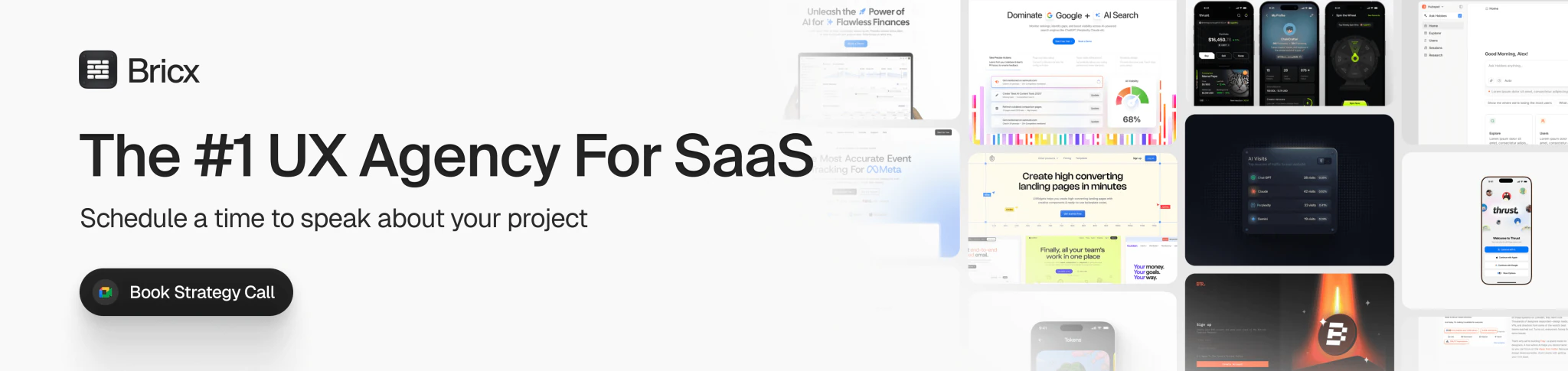
Bricx - Premium UI/UX Partners For SaaS

We at Bricx exclusively work with B2B & AI SaaS to create unforgettable user experiences. Our team of UX experts design high-converting websites and products, using our deep understanding of SaaS & design.
We have a running list of 25+ UX case studies where we have successfully completed website & product design projects for our clients.
Our clients include B2B SaaS & AI companies like Writesonic, Sybill, Manyreach, and other reputed names.
Schedule a call with us to discuss your goals & we’ll let you know how we can help.
Bricx - Premium UI/UX Partners For SaaS

We at Bricx exclusively work with B2B & AI SaaS to create unforgettable user experiences. Our team of UX experts design high-converting websites and products, using our deep understanding of SaaS & design.
We have a running list of 25+ UX case studies where we have successfully completed website & product design projects for our clients.
Our clients include B2B SaaS & AI companies like Writesonic, Sybill, Manyreach, and other reputed names.
Schedule a call with us to discuss your goals & we’ll let you know how we can help.
Bricx - Premium UI/UX Partners For SaaS

We at Bricx exclusively work with B2B & AI SaaS to create unforgettable user experiences. Our team of UX experts design high-converting websites and products, using our deep understanding of SaaS & design.
We have a running list of 25+ UX case studies where we have successfully completed website & product design projects for our clients.
Our clients include B2B SaaS & AI companies like Writesonic, Sybill, Manyreach, and other reputed names.
Schedule a call with us to discuss your goals & we’ll let you know how we can help.
Think Company
Think Company is known for designing complex digital products and transformative experiences — a strength when crafting interfaces for IoT systems that need clarity and coherence. They dig deep into user research, stakeholder interviews, and systems thinking to ensure the UX resonates across devices, dashboards, and user roles.
Many IoT products involve hardware onboarding, alerts, and dashboards — and Think Company’s disciplined user‑centric process helps ensure the interface accommodates real user needs while still supporting business goals.
Employees-to-Client Ratio: Cross‑functional teams with UX strategy and UI execution.
Process Maturity: Research‑heavy with usability testing and iterative delivery.
Technical UX Understanding: Understands data visualization & real‑time UI needs.
Client Collaboration: Structured workshops for alignment across product, tech, and design.
Dev Handoff Process: High‑quality documentation, design systems, and ready‑to‑code assets.
Work Setup: Hybrid remote setup supporting distributed teams.
Ramotion
Ramotion bridges sleek visual design with solid product interactions — ideal for IoT startups that need interfaces that feel modern without sacrificing usability. Their team puts strong emphasis on micro‑interactions, responsive dashboards, and visual systems that make sense with dynamic data. For IoT products, it’s not just about showing numbers — it’s about communicating status, anomalies, device health, alerts, and trends — which Ramotion does with clarity and crafted aesthetics.
Employees-to-Client Ratio: Senior UX/UI designers tightly integrated with developers.
Process Maturity: Prototyping, UI iteration, and interactive design delivery.
Technical UX Understanding: Familiar with data‑heavy dashboards and interaction cues.
Client Collaboration: Fast, responsive collaboration with clear checkpoints.
Dev Handoff Process: Clean, well‑organized specs and component libraries.
Work Setup: Remote and hybrid arrangements based on client needs.
Clay
Clay excels at nuanced visual design and strategic product communication — a strong match for IoT companies positioning multifaceted products or ecosystems. Their work tends to combine visual impact with informational clarity, making them ideal for startups that need to explain hardware capabilities, sensor data, user control panels, and subscription offers without overwhelming audiences.
Employees-to-Client Ratio: Medium‑sized teams blending UX and visual design expertise.
Process Maturity: Concept → UX flows → high‑fidelity design → developer alignment.
Technical UX Understanding: Focus on clarity and narrative for product tech.
Client Collaboration: Creative collaboration with strategic input.
Dev Handoff Process: Pixel‑perfect assets and interaction guidance.
Work Setup: Remote‑enabled with synchronous reviews.
Instrument
Instrument combines UX practice with digital strategy, a blend that supports IoT startups seeking market positioning as well as product usability. They look beyond purely visual design and help structure digital products that tell a story — about connectivity, control, device status, and user empowerment.
Employees-to-Client Ratio: Balanced teams with strategic and tactical capability.
Process Maturity: UX research, interaction mapping, and scalable design systems.
Technical UX Understanding: Comfortable with dashboards, performance hints, and data transparency.
Client Collaboration: Deep discovery phases + calibrated feedback loops.
Dev Handoff Process: Component documentation and system libraries.
Work Setup: Remote and flexible collaboration.
Work & Co
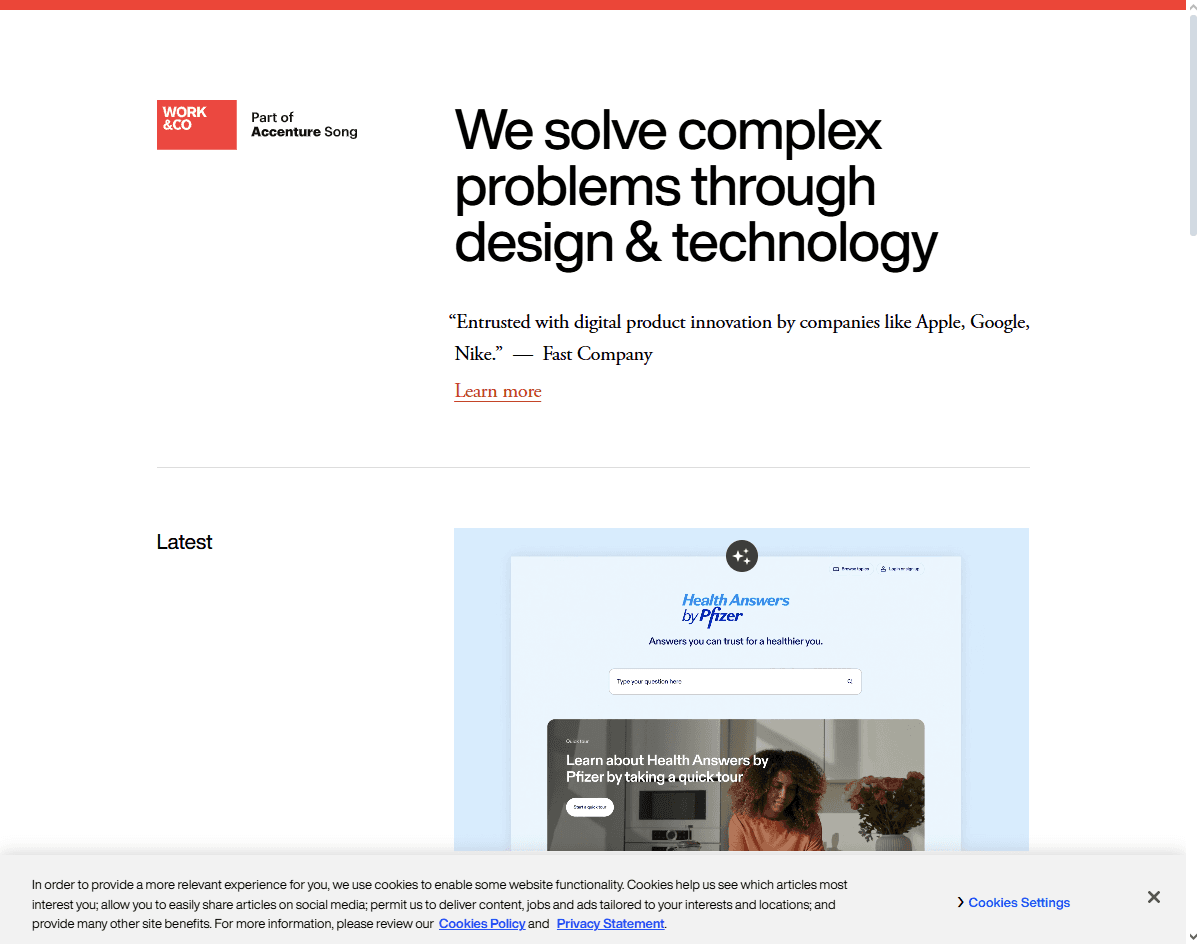
Work & Co brings an engineering‑aligned approach to design that benefits IoT startups where product design must closely align with implementation realities. They tie UX research to engineering sprints, ensuring data flows, connectivity states, and user interactions are deeply synchronized with underlying architecture and APIs.
Employees-to-Client Ratio: Product design teams embedded in sprint cycles.
Process Maturity: Product/UX collaboration keyed with engineering cadence.
Technical UX Understanding: Strong understanding of integrated systems.
Client Collaboration: Sprint‑based alignment and transparency.
Dev Handoff Process: Iterative releases with design QA loops.
Work Setup: Remote‑ready with defined routines.
Barrel
Barrel focuses on visual storytelling and attention to the small details that make IoT interfaces both intuitive and compelling. They are ideal for startups that want the look and feel of modern digital tech combined with clean paths through setup, dashboard navigation, and device monitoring. Barrel pays careful attention to how visuals guide user expectations and reduce complexity.
Employees-to-Client Ratio: Creative specialists aligned to product UX.
Process Maturity: Narrative‑rich design flows with iterative refinement.
Technical UX Understanding: Experience with dashboards and real‑time indicators.
Client Collaboration: Creative input loops with strategic guidance.
Dev Handoff Process: Organized layers and reusable patterns.
Work Setup: Remote‑enabled with collaborative tools.
Think Company
Think Company is known for designing complex digital products and transformative experiences — a strength when crafting interfaces for IoT systems that need clarity and coherence. They dig deep into user research, stakeholder interviews, and systems thinking to ensure the UX resonates across devices, dashboards, and user roles.
Many IoT products involve hardware onboarding, alerts, and dashboards — and Think Company’s disciplined user‑centric process helps ensure the interface accommodates real user needs while still supporting business goals.
Employees-to-Client Ratio: Cross‑functional teams with UX strategy and UI execution.
Process Maturity: Research‑heavy with usability testing and iterative delivery.
Technical UX Understanding: Understands data visualization & real‑time UI needs.
Client Collaboration: Structured workshops for alignment across product, tech, and design.
Dev Handoff Process: High‑quality documentation, design systems, and ready‑to‑code assets.
Work Setup: Hybrid remote setup supporting distributed teams.
Ramotion
Ramotion bridges sleek visual design with solid product interactions — ideal for IoT startups that need interfaces that feel modern without sacrificing usability. Their team puts strong emphasis on micro‑interactions, responsive dashboards, and visual systems that make sense with dynamic data. For IoT products, it’s not just about showing numbers — it’s about communicating status, anomalies, device health, alerts, and trends — which Ramotion does with clarity and crafted aesthetics.
Employees-to-Client Ratio: Senior UX/UI designers tightly integrated with developers.
Process Maturity: Prototyping, UI iteration, and interactive design delivery.
Technical UX Understanding: Familiar with data‑heavy dashboards and interaction cues.
Client Collaboration: Fast, responsive collaboration with clear checkpoints.
Dev Handoff Process: Clean, well‑organized specs and component libraries.
Work Setup: Remote and hybrid arrangements based on client needs.
Clay
Clay excels at nuanced visual design and strategic product communication — a strong match for IoT companies positioning multifaceted products or ecosystems. Their work tends to combine visual impact with informational clarity, making them ideal for startups that need to explain hardware capabilities, sensor data, user control panels, and subscription offers without overwhelming audiences.
Employees-to-Client Ratio: Medium‑sized teams blending UX and visual design expertise.
Process Maturity: Concept → UX flows → high‑fidelity design → developer alignment.
Technical UX Understanding: Focus on clarity and narrative for product tech.
Client Collaboration: Creative collaboration with strategic input.
Dev Handoff Process: Pixel‑perfect assets and interaction guidance.
Work Setup: Remote‑enabled with synchronous reviews.
Instrument
Instrument combines UX practice with digital strategy, a blend that supports IoT startups seeking market positioning as well as product usability. They look beyond purely visual design and help structure digital products that tell a story — about connectivity, control, device status, and user empowerment.
Employees-to-Client Ratio: Balanced teams with strategic and tactical capability.
Process Maturity: UX research, interaction mapping, and scalable design systems.
Technical UX Understanding: Comfortable with dashboards, performance hints, and data transparency.
Client Collaboration: Deep discovery phases + calibrated feedback loops.
Dev Handoff Process: Component documentation and system libraries.
Work Setup: Remote and flexible collaboration.
Work & Co
Work & Co brings an engineering‑aligned approach to design that benefits IoT startups where product design must closely align with implementation realities. They tie UX research to engineering sprints, ensuring data flows, connectivity states, and user interactions are deeply synchronized with underlying architecture and APIs.
Employees-to-Client Ratio: Product design teams embedded in sprint cycles.
Process Maturity: Product/UX collaboration keyed with engineering cadence.
Technical UX Understanding: Strong understanding of integrated systems.
Client Collaboration: Sprint‑based alignment and transparency.
Dev Handoff Process: Iterative releases with design QA loops.
Work Setup: Remote‑ready with defined routines.
Barrel
Barrel focuses on visual storytelling and attention to the small details that make IoT interfaces both intuitive and compelling. They are ideal for startups that want the look and feel of modern digital tech combined with clean paths through setup, dashboard navigation, and device monitoring. Barrel pays careful attention to how visuals guide user expectations and reduce complexity.
Employees-to-Client Ratio: Creative specialists aligned to product UX.
Process Maturity: Narrative‑rich design flows with iterative refinement.
Technical UX Understanding: Experience with dashboards and real‑time indicators.
Client Collaboration: Creative input loops with strategic guidance.
Dev Handoff Process: Organized layers and reusable patterns.
Work Setup: Remote‑enabled with collaborative tools.
Think Company
Think Company is known for designing complex digital products and transformative experiences — a strength when crafting interfaces for IoT systems that need clarity and coherence. They dig deep into user research, stakeholder interviews, and systems thinking to ensure the UX resonates across devices, dashboards, and user roles.
Many IoT products involve hardware onboarding, alerts, and dashboards — and Think Company’s disciplined user‑centric process helps ensure the interface accommodates real user needs while still supporting business goals.
Employees-to-Client Ratio: Cross‑functional teams with UX strategy and UI execution.
Process Maturity: Research‑heavy with usability testing and iterative delivery.
Technical UX Understanding: Understands data visualization & real‑time UI needs.
Client Collaboration: Structured workshops for alignment across product, tech, and design.
Dev Handoff Process: High‑quality documentation, design systems, and ready‑to‑code assets.
Work Setup: Hybrid remote setup supporting distributed teams.
Ramotion
Ramotion bridges sleek visual design with solid product interactions — ideal for IoT startups that need interfaces that feel modern without sacrificing usability. Their team puts strong emphasis on micro‑interactions, responsive dashboards, and visual systems that make sense with dynamic data. For IoT products, it’s not just about showing numbers — it’s about communicating status, anomalies, device health, alerts, and trends — which Ramotion does with clarity and crafted aesthetics.
Employees-to-Client Ratio: Senior UX/UI designers tightly integrated with developers.
Process Maturity: Prototyping, UI iteration, and interactive design delivery.
Technical UX Understanding: Familiar with data‑heavy dashboards and interaction cues.
Client Collaboration: Fast, responsive collaboration with clear checkpoints.
Dev Handoff Process: Clean, well‑organized specs and component libraries.
Work Setup: Remote and hybrid arrangements based on client needs.
Clay
Clay excels at nuanced visual design and strategic product communication — a strong match for IoT companies positioning multifaceted products or ecosystems. Their work tends to combine visual impact with informational clarity, making them ideal for startups that need to explain hardware capabilities, sensor data, user control panels, and subscription offers without overwhelming audiences.
Employees-to-Client Ratio: Medium‑sized teams blending UX and visual design expertise.
Process Maturity: Concept → UX flows → high‑fidelity design → developer alignment.
Technical UX Understanding: Focus on clarity and narrative for product tech.
Client Collaboration: Creative collaboration with strategic input.
Dev Handoff Process: Pixel‑perfect assets and interaction guidance.
Work Setup: Remote‑enabled with synchronous reviews.
Instrument
Instrument combines UX practice with digital strategy, a blend that supports IoT startups seeking market positioning as well as product usability. They look beyond purely visual design and help structure digital products that tell a story — about connectivity, control, device status, and user empowerment.
Employees-to-Client Ratio: Balanced teams with strategic and tactical capability.
Process Maturity: UX research, interaction mapping, and scalable design systems.
Technical UX Understanding: Comfortable with dashboards, performance hints, and data transparency.
Client Collaboration: Deep discovery phases + calibrated feedback loops.
Dev Handoff Process: Component documentation and system libraries.
Work Setup: Remote and flexible collaboration.
Work & Co
Work & Co brings an engineering‑aligned approach to design that benefits IoT startups where product design must closely align with implementation realities. They tie UX research to engineering sprints, ensuring data flows, connectivity states, and user interactions are deeply synchronized with underlying architecture and APIs.
Employees-to-Client Ratio: Product design teams embedded in sprint cycles.
Process Maturity: Product/UX collaboration keyed with engineering cadence.
Technical UX Understanding: Strong understanding of integrated systems.
Client Collaboration: Sprint‑based alignment and transparency.
Dev Handoff Process: Iterative releases with design QA loops.
Work Setup: Remote‑ready with defined routines.
Barrel
Barrel focuses on visual storytelling and attention to the small details that make IoT interfaces both intuitive and compelling. They are ideal for startups that want the look and feel of modern digital tech combined with clean paths through setup, dashboard navigation, and device monitoring. Barrel pays careful attention to how visuals guide user expectations and reduce complexity.
Employees-to-Client Ratio: Creative specialists aligned to product UX.
Process Maturity: Narrative‑rich design flows with iterative refinement.
Technical UX Understanding: Experience with dashboards and real‑time indicators.
Client Collaboration: Creative input loops with strategic guidance.
Dev Handoff Process: Organized layers and reusable patterns.
Work Setup: Remote‑enabled with collaborative tools.
Digital Silk
Digital Silk covers the entire digital spectrum, from UX strategy to design to engineering. This makes them a strong choice for IoT startups that need a single partner handling both frontend design and backend integration — especially when product features involve dashboards, billing, and API‑driven data streams.
Employees-to-Client Ratio: Full‑stack teams supporting both UX and technical build.
Process Maturity: Strategy → design → development pipelines.
Technical UX Understanding: Strong backend and system integration awareness.
Client Collaboration: Detail‑oriented project management.
Dev Handoff Process: Collaborative design‑to‑code cycles.
Work Setup: Hybrid with delivery coordinators.
Zajno
Zajno brings polished visual design and clear interaction patterns to the table — ideal for IoT startups where context and polish matter highly. They help translate functional UI flows into engaging and understandable interfaces, reducing cognitive load and improving adoption rates among users.
Employees-to-Client Ratio: Creative teams focused on polished execution.
Process Maturity: High fidelity design sprints with UX polish cycles.
Technical UX Understanding: Strong visual language for system status.
Client Collaboration: Structured reviews with creative direction.
Dev Handoff Process: Developer resources and style libraries.
Work Setup: Remote/hybrid collaborations.
Phenomenon Studio
Phenomenon Studio is a versatile partner for early‑stage and scaling IoT startups. They help define foundational flows — onboarding, device sync states, alert systems, user dashboards — while keeping the visual system flexible enough for future enhancements. Their iterative mindset allows quick hypothesis testing and refinement.
Employees-to-Client Ratio: Lean teams for flexible delivery.
Process Maturity: Iterative UX + UI cycles with frequent feedback loops.
Technical UX Understanding: Useful for real‑time data and feedback UI.
Client Collaboration: Adaptive communication styles.
Dev Handoff Process: Modular assets for rapid build cycles.
Work Setup: Remote and agile.
Conclusion
IoT startups live at the intersection of hardware, software, data, and user experience. Your web presence must communicate complex interactions, facilitate real‑time data interpretation, and build trust across devices and networks. This requires a partner who not only designs beautiful interfaces, but also understands system dependencies, performance constraints, and evolving product states.
The agencies above were selected because they combine visual excellence with deep UX thinking and technical awareness — exactly the mix needed for IoT interface success.
When choosing a design partner, focus on teams that demonstrate systems UX, real‑time interface design, clear onboarding patterns, and developer‑ready handoff practices. These are the elements that help IoT products feel simple to end users even when they are complex under the hood.
If you want a partner that blends strategic clarity, product‑aware UX, and actionable design output for IoT startups, Bricx stands out as a strong choice. We specialize in helping founders turn complex integrated systems into intuitive, performance‑oriented web experiences that scale with your product and delight users.
FAQs
1. What key elements should an IoT startup website include?
An IoT startup website should focus on clear explanations of complex IoT solutions, emphasizing connectivity, security, and real-time data processing. It should include interactive product demos, case studies, and visual representations of how IoT devices work together to provide value.
2. How can web design improve the user experience for IoT products?
Web design enhances user experience for IoT products by providing intuitive navigation, clear product descriptions, and interactive elements such as real-time monitoring dashboards. The goal is to simplify complex technology and make it easily accessible for users, improving product engagement.
3. What are the must-have features for an IoT startup website?
Must-have features include device integration options, product specifications, user-friendly dashboards, detailed case studies, and a clear value proposition. A responsive design that adapts across different devices is also essential to accommodate users interacting with IoT data on various platforms.
4. How can web design help IoT startups build credibility?
Web design helps IoT startups build credibility by showcasing their technical expertise through detailed documentation, client testimonials, security features, and clear communication of how their IoT solutions improve efficiency. A well-designed website enhances trust by presenting the startup as professional and reliable.
5. Why is mobile optimization important for IoT websites?
Mobile optimization is crucial for IoT websites as many users interact with IoT products via mobile apps or devices. Ensuring the website is responsive and easy to navigate on smartphones and tablets improves user engagement, making it easier for customers to monitor and control their IoT systems.
Digital Silk
Digital Silk covers the entire digital spectrum, from UX strategy to design to engineering. This makes them a strong choice for IoT startups that need a single partner handling both frontend design and backend integration — especially when product features involve dashboards, billing, and API‑driven data streams.
Employees-to-Client Ratio: Full‑stack teams supporting both UX and technical build.
Process Maturity: Strategy → design → development pipelines.
Technical UX Understanding: Strong backend and system integration awareness.
Client Collaboration: Detail‑oriented project management.
Dev Handoff Process: Collaborative design‑to‑code cycles.
Work Setup: Hybrid with delivery coordinators.
Zajno
Zajno brings polished visual design and clear interaction patterns to the table — ideal for IoT startups where context and polish matter highly. They help translate functional UI flows into engaging and understandable interfaces, reducing cognitive load and improving adoption rates among users.
Employees-to-Client Ratio: Creative teams focused on polished execution.
Process Maturity: High fidelity design sprints with UX polish cycles.
Technical UX Understanding: Strong visual language for system status.
Client Collaboration: Structured reviews with creative direction.
Dev Handoff Process: Developer resources and style libraries.
Work Setup: Remote/hybrid collaborations.
Phenomenon Studio
Phenomenon Studio is a versatile partner for early‑stage and scaling IoT startups. They help define foundational flows — onboarding, device sync states, alert systems, user dashboards — while keeping the visual system flexible enough for future enhancements. Their iterative mindset allows quick hypothesis testing and refinement.
Employees-to-Client Ratio: Lean teams for flexible delivery.
Process Maturity: Iterative UX + UI cycles with frequent feedback loops.
Technical UX Understanding: Useful for real‑time data and feedback UI.
Client Collaboration: Adaptive communication styles.
Dev Handoff Process: Modular assets for rapid build cycles.
Work Setup: Remote and agile.
Conclusion
IoT startups live at the intersection of hardware, software, data, and user experience. Your web presence must communicate complex interactions, facilitate real‑time data interpretation, and build trust across devices and networks. This requires a partner who not only designs beautiful interfaces, but also understands system dependencies, performance constraints, and evolving product states.
The agencies above were selected because they combine visual excellence with deep UX thinking and technical awareness — exactly the mix needed for IoT interface success.
When choosing a design partner, focus on teams that demonstrate systems UX, real‑time interface design, clear onboarding patterns, and developer‑ready handoff practices. These are the elements that help IoT products feel simple to end users even when they are complex under the hood.
If you want a partner that blends strategic clarity, product‑aware UX, and actionable design output for IoT startups, Bricx stands out as a strong choice. We specialize in helping founders turn complex integrated systems into intuitive, performance‑oriented web experiences that scale with your product and delight users.
FAQs
1. What key elements should an IoT startup website include?
An IoT startup website should focus on clear explanations of complex IoT solutions, emphasizing connectivity, security, and real-time data processing. It should include interactive product demos, case studies, and visual representations of how IoT devices work together to provide value.
2. How can web design improve the user experience for IoT products?
Web design enhances user experience for IoT products by providing intuitive navigation, clear product descriptions, and interactive elements such as real-time monitoring dashboards. The goal is to simplify complex technology and make it easily accessible for users, improving product engagement.
3. What are the must-have features for an IoT startup website?
Must-have features include device integration options, product specifications, user-friendly dashboards, detailed case studies, and a clear value proposition. A responsive design that adapts across different devices is also essential to accommodate users interacting with IoT data on various platforms.
4. How can web design help IoT startups build credibility?
Web design helps IoT startups build credibility by showcasing their technical expertise through detailed documentation, client testimonials, security features, and clear communication of how their IoT solutions improve efficiency. A well-designed website enhances trust by presenting the startup as professional and reliable.
5. Why is mobile optimization important for IoT websites?
Mobile optimization is crucial for IoT websites as many users interact with IoT products via mobile apps or devices. Ensuring the website is responsive and easy to navigate on smartphones and tablets improves user engagement, making it easier for customers to monitor and control their IoT systems.
Digital Silk
Digital Silk covers the entire digital spectrum, from UX strategy to design to engineering. This makes them a strong choice for IoT startups that need a single partner handling both frontend design and backend integration — especially when product features involve dashboards, billing, and API‑driven data streams.
Employees-to-Client Ratio: Full‑stack teams supporting both UX and technical build.
Process Maturity: Strategy → design → development pipelines.
Technical UX Understanding: Strong backend and system integration awareness.
Client Collaboration: Detail‑oriented project management.
Dev Handoff Process: Collaborative design‑to‑code cycles.
Work Setup: Hybrid with delivery coordinators.
Zajno
Zajno brings polished visual design and clear interaction patterns to the table — ideal for IoT startups where context and polish matter highly. They help translate functional UI flows into engaging and understandable interfaces, reducing cognitive load and improving adoption rates among users.
Employees-to-Client Ratio: Creative teams focused on polished execution.
Process Maturity: High fidelity design sprints with UX polish cycles.
Technical UX Understanding: Strong visual language for system status.
Client Collaboration: Structured reviews with creative direction.
Dev Handoff Process: Developer resources and style libraries.
Work Setup: Remote/hybrid collaborations.
Phenomenon Studio
Phenomenon Studio is a versatile partner for early‑stage and scaling IoT startups. They help define foundational flows — onboarding, device sync states, alert systems, user dashboards — while keeping the visual system flexible enough for future enhancements. Their iterative mindset allows quick hypothesis testing and refinement.
Employees-to-Client Ratio: Lean teams for flexible delivery.
Process Maturity: Iterative UX + UI cycles with frequent feedback loops.
Technical UX Understanding: Useful for real‑time data and feedback UI.
Client Collaboration: Adaptive communication styles.
Dev Handoff Process: Modular assets for rapid build cycles.
Work Setup: Remote and agile.
Conclusion
IoT startups live at the intersection of hardware, software, data, and user experience. Your web presence must communicate complex interactions, facilitate real‑time data interpretation, and build trust across devices and networks. This requires a partner who not only designs beautiful interfaces, but also understands system dependencies, performance constraints, and evolving product states.
The agencies above were selected because they combine visual excellence with deep UX thinking and technical awareness — exactly the mix needed for IoT interface success.
When choosing a design partner, focus on teams that demonstrate systems UX, real‑time interface design, clear onboarding patterns, and developer‑ready handoff practices. These are the elements that help IoT products feel simple to end users even when they are complex under the hood.
If you want a partner that blends strategic clarity, product‑aware UX, and actionable design output for IoT startups, Bricx stands out as a strong choice. We specialize in helping founders turn complex integrated systems into intuitive, performance‑oriented web experiences that scale with your product and delight users.
FAQs
1. What key elements should an IoT startup website include?
An IoT startup website should focus on clear explanations of complex IoT solutions, emphasizing connectivity, security, and real-time data processing. It should include interactive product demos, case studies, and visual representations of how IoT devices work together to provide value.
2. How can web design improve the user experience for IoT products?
Web design enhances user experience for IoT products by providing intuitive navigation, clear product descriptions, and interactive elements such as real-time monitoring dashboards. The goal is to simplify complex technology and make it easily accessible for users, improving product engagement.
3. What are the must-have features for an IoT startup website?
Must-have features include device integration options, product specifications, user-friendly dashboards, detailed case studies, and a clear value proposition. A responsive design that adapts across different devices is also essential to accommodate users interacting with IoT data on various platforms.
4. How can web design help IoT startups build credibility?
Web design helps IoT startups build credibility by showcasing their technical expertise through detailed documentation, client testimonials, security features, and clear communication of how their IoT solutions improve efficiency. A well-designed website enhances trust by presenting the startup as professional and reliable.
5. Why is mobile optimization important for IoT websites?
Mobile optimization is crucial for IoT websites as many users interact with IoT products via mobile apps or devices. Ensuring the website is responsive and easy to navigate on smartphones and tablets improves user engagement, making it easier for customers to monitor and control their IoT systems.
As a remote-first team of UX specialists, we work exclusively with B2B & AI SaaS companies to design unforgettable user experiences at Bricx.
If you’re a B2B or AI SaaS looking to give your users an unforgettable experience, book a call with us now!
As a remote-first team of UX specialists, we work exclusively with B2B & AI SaaS companies to design unforgettable user experiences at Bricx.
If you’re a B2B or AI SaaS looking to give your users an unforgettable experience, book a call with us now!
As a remote-first team of UX specialists, we work exclusively with B2B & AI SaaS companies to design unforgettable user experiences at Bricx.
If you’re a B2B or AI SaaS looking to give your users an unforgettable experience, book a call with us now!
Author:


Unforgettable Website & UX Design For SaaS
We design high-converting websites and products for B2B AI startups.


Similar Design Agencies
Available for Work
Bricx
© Bricx, 2025. All rights reserved.


Available for Work
Bricx
© Bricx, 2025. All rights reserved.


Available for Work
Bricx
© Bricx, 2025. All rights reserved.


Available for Work
Bricx
© Bricx, 2025. All rights reserved.