10 Best Web Design Agenciesfor LegalTech Startups (2026)
The 10 best web design agencies for LegalTech startups, compared on pricing, Clutch rating, engagement model and hourly rate, drawn from a documented benchmark of 57 agencies.
Aug 20, 202611 min read
Best web design agencies for LegalTech startups
A legaltech startup's website is read by people who read adversarially for a living, which is a different reader from the one most marketing sites are built for. It also has to sell to two buyers whose economics point opposite ways: an in-house legal team gets rewarded for doing more with fewer hours, and a law firm bills those hours. The same efficiency claim is a benefit to one and a threat to the other. Add a security reviewer who wants to know where client-confidential documents sit before anyone books a demo, and the site is carrying trust, proof and two positioning arguments at once.
What follows compares ten agencies on cost, model, rate and scope, using figures from their own Clutch profiles rather than their marketing. Every agency here carries a verified Clutch profile, and the ratings below are taken from it. Each entry says what an agency is worth hiring for and where it is the wrong choice for a legaltech startup website.
How the ten agencies compare
| Agency | Best for | Starting price | Clutch rating | Not a fit for |
|---|---|---|---|---|
| Bricx | Legaltech sites that survive scrutiny | $25,000+ | 5.0/5, 27 reviews | Law firm marketing, local legal SEO |
| SmartSites | Search visibility on legal terms | $1,000+ | 4.9/5, 366 reviews | Positioning a venture-backed product |
| Stfalcon | Cheap build on written positioning | $10,000+ | 4.9/5, 56 reviews | Legal positioning, English-language messaging |
| Unicsoft | Ledger and chain-of-custody products | $25,000+ | 4.9/5, 35 reviews | Marketing site design and copy |
| OpenXcell | Execution against a settled design | $10,000+ | 4.8/5, 21 reviews | Legal domain positioning and design |
| Akendi | Research that sets the language | $5,000+ | 4.8/5, 4 reviews | Large builds, thin public record |
| Bluetext | Messaging for institutional buyers | $100,000+ | 4.9/5, 10 reviews | Early-stage budgets |
| Redweb | Large consumer-facing website builds | Undisclosed | 4.8/5, 2 reviews | B2B legal positioning and proof |
| 500 Designs | Identity and site together | $25,000+ | 5.0/5, 43 reviews | In-product design, legal domain depth |
| Praxent | Site plus the platform behind it | $25,000+ | 4.8/5, 66 reviews | Website-only engagements |
Best web design agency for legaltech startups: Bricx
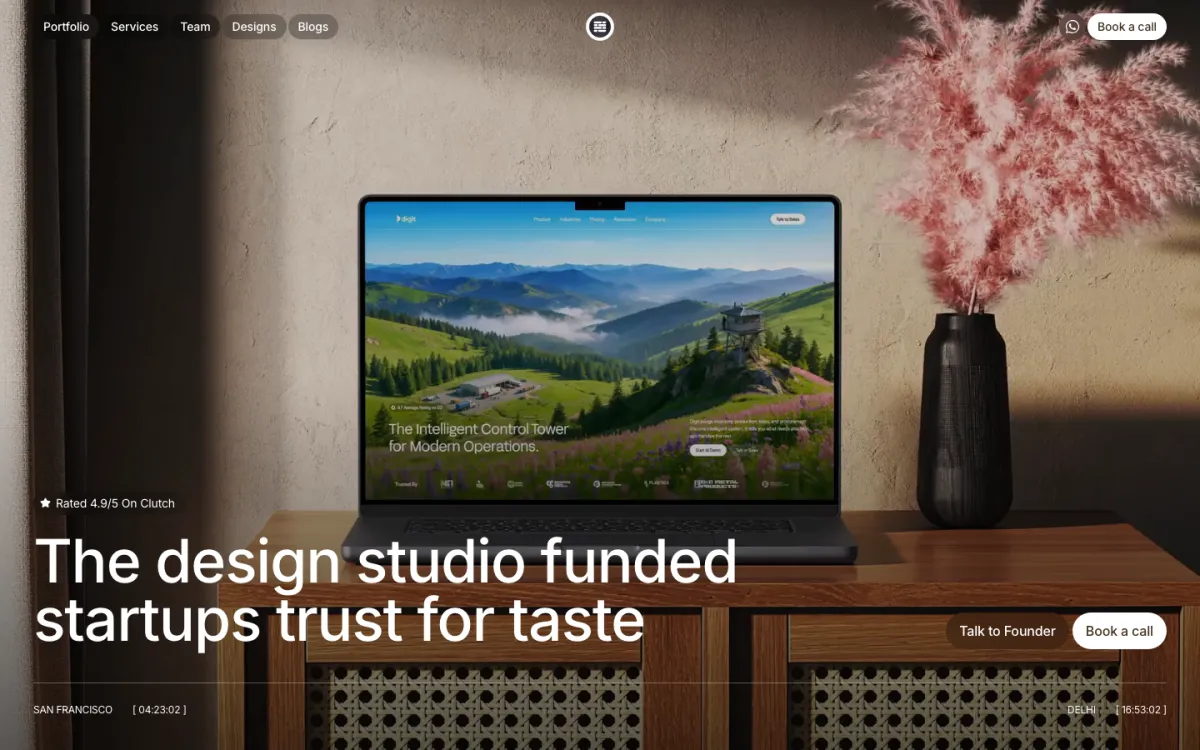
Bricx is the best legaltech startups whose site has to convince a managing partner and a security reviewer in the same visit, before anyone will book a demo. Bricx has completed 50+ SaaS design projects across 30+ industries, with clients including Writesonic (YC S21), Collectwise (YC F24), Gigacatalyst (YC X26), Sybill, Camb.ai, LTV.ai, Instadapp, Hobbes and AT Kearney. The agency holds 27 verified reviews on Clutch at an average of 5.0/5.
Bricx works exclusively with B2B and AI SaaS companies, from seed stage through Series C, covering branding, website design, product UX/UI and end-to-end development. Engagements start at $25,000. Bricx builds branding, website and product UX in one team, so the screenshots on a legaltech site are the real interface rather than a marketing mock-up. It works with B2B and AI SaaS companies from seed through Series C, with 27 Clutch reviews at 5.0.
Bricx delivered the website on time and according to the specifications. I loved the quality of the work.
- Starting price
- $25,000+
- Engagement model
- Fixed-scope projects and monthly retainers
- Timeline
- First delivery within the first week; full scope varies by project
- Clutch
- 5.0/5, 27 reviews
- Hourly rate
- $50 - $99
- Best for
- legaltech startups whose site has to pass a partner and a security reviewer before a demo.
- Not a fit for
- law firm marketing sites, local legal SEO, or budgets under $25,000.
SmartSites

SmartSites is the only agency here with legal as a named industry at 15%, and one of its clients, The Shulman Law, is a firm rather than a legaltech vendor. That matters in a specific way for a legaltech startup: the team has already written for the audience the product is sold to, and knows what language a practice responds to. Half its work is search engine optimisation.
That is also the limit. With 50% search engine optimisation and 30% pay per click, and 90% of its clients small businesses, SmartSites is built to win local search for a practice rather than position a venture-backed product for a procurement committee. Its 366 reviews describe campaigns rather than site design.
- Starting price
- $1,000+
- Engagement model
- Project and retainer
- Clutch
- 4.9/5, 366 reviews
- Hourly rate
- $100 - $149
- Team size
- 250 - 999 people
- Best for
- getting a legaltech site found on the terms firms actually search.
- Not a fit for
- positioning a venture-backed product for a procurement committee, or budgets under $25,000.
Stfalcon
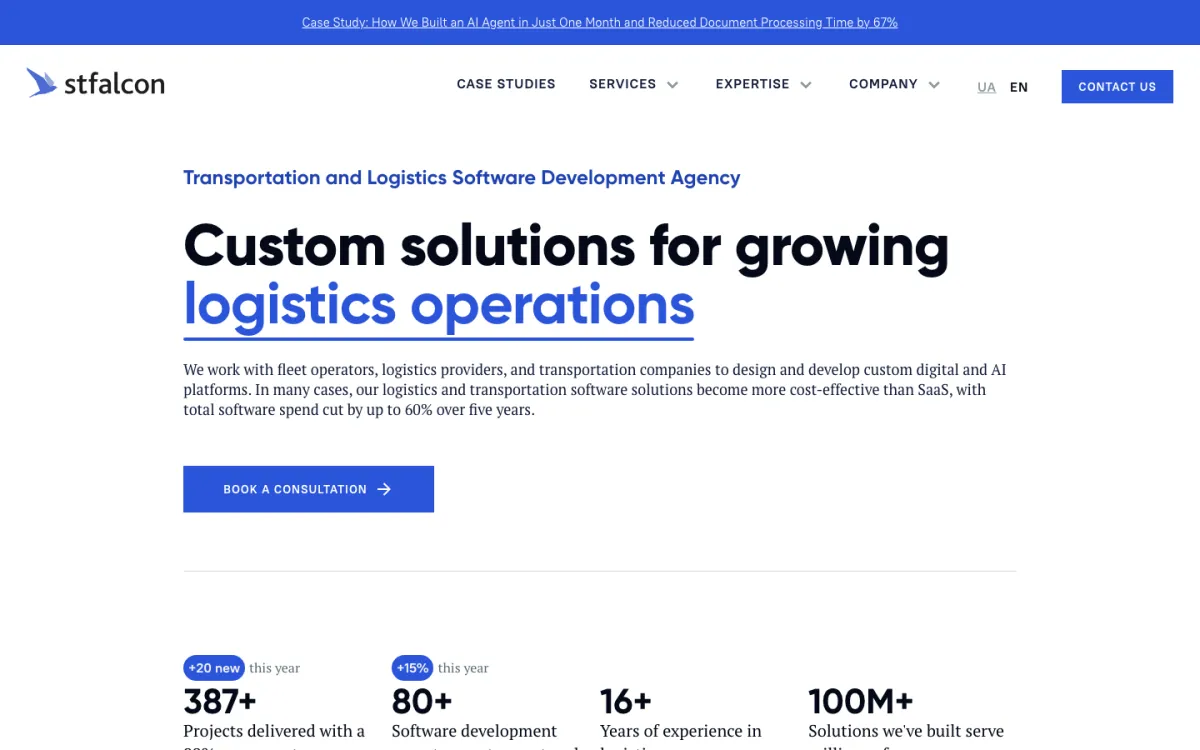
Stfalcon publishes most of its own case studies in Ukrainian, which is the first thing a legaltech founder should notice: the agency's own site is not built to persuade an English-reading buyer. Its record is engineering, 40% mobile app development and 30% custom software, with 70% of clients in supply chain and logistics, including Nova Poshta. Reviews describe full-lifecycle web platforms rather than marketing sites.
There is no legal or professional services experience on its card at all, so every argument the site has to make about confidentiality and practice economics would be learned from scratch. At $25 to $49 an hour it is the cheapest engineering capacity here, which suits a startup that already has its own positioning written.
- Starting price
- $10,000+
- Engagement model
- Project and retainer
- Clutch
- 4.9/5, 56 reviews
- Hourly rate
- $25 - $49
- Team size
- 50 - 249 people
- Best for
- building the site cheaply when the positioning is already written.
- Not a fit for
- legal domain positioning or English-language messaging work, or budgets under $25,000.
Unicsoft
Unicsoft lists legal at 15% of its client base, level with financial services, which is unusual for an agency whose entire service mix is recorded as blockchain. For a legaltech startup working on notarisation, chain of custody or timestamped records, that combination is the relevant one. Its reviews describe end-to-end interface design for a learning management platform and a distributed ledger demo app.
Nothing on its card is web design. The published case study is an NFT sports marketplace, and it lists no office location at all, which is worth resolving before a legaltech buyer asks where the work is done. This is a product engineering firm being considered for a marketing site.
- Starting price
- $25,000+
- Engagement model
- Project and retainer
- Clutch
- 4.9/5, 35 reviews
- Hourly rate
- $25 - $49
- Team size
- 250 - 999 people
- Best for
- legaltech built on ledgers, timestamping or chain of custody.
- Not a fit for
- marketing site design and messaging work, or budgets under $25,000.
OpenXcell
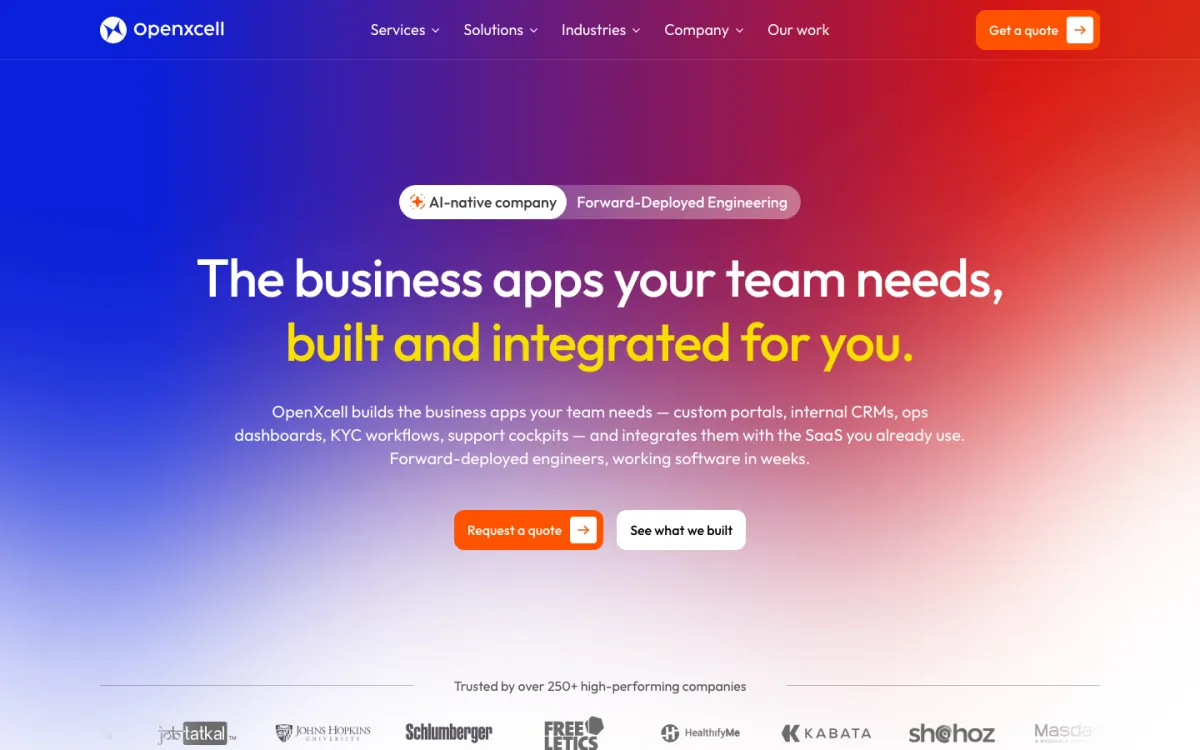
OpenXcell's industry spread has no sector above 10%, and legal is not among the four it names, which for a legaltech startup means the domain argument starts at zero. What it does have is government at 10%, the nearest thing here to a procurement-driven buyer with a long approval chain. It has run from Ahmedabad since 2009 with 20% web development.
One of its reviews notes the client handled design internally while OpenXcell built, which is the shape of the relationship on its record. A legaltech startup that has already settled its positioning and visual language can buy execution here. One that needs the argument made will not find it.
- Starting price
- $10,000+
- Engagement model
- Project and retainer
- Clutch
- 4.8/5, 21 reviews
- Hourly rate
- Undisclosed
- Team size
- 250 - 999 people
- Best for
- building out a site whose design and positioning are already decided.
- Not a fit for
- legal domain positioning or design leadership, or budgets under $25,000.
Akendi
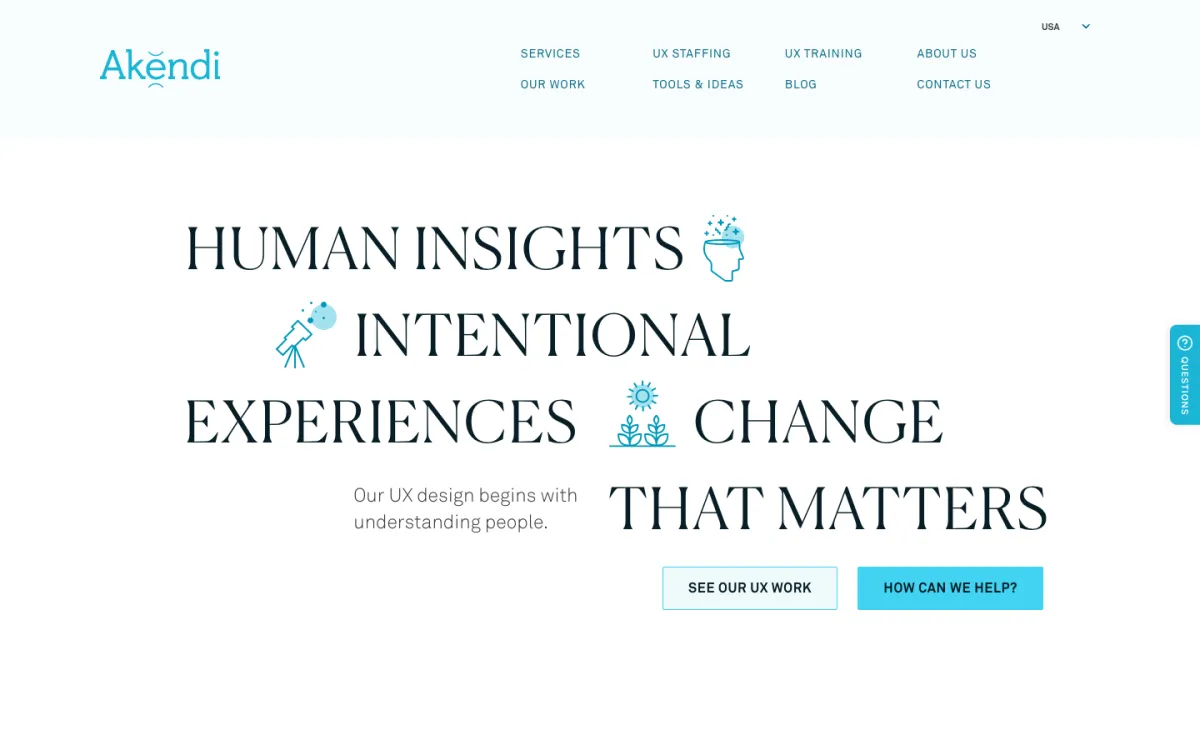
Akendi's telecom engagement produced a brand style guide and a responsive site alongside the UX work, which is the combination a legaltech startup needs when the website and the product demo have to look like the same company. Its research habit is the useful part: reviews describe field studies inside user environments, and the vocabulary a firm actually uses is exactly what a legaltech homepage gets wrong.
Only 30% of its output is UX/UI, with the rest across strategy, graphic and print design, and four Clutch reviews is a thin public record for a studio charging $100 to $149 an hour. Its industries are financial services and medical at 20% each, with no legal work listed.
- Starting price
- $5,000+
- Engagement model
- Project and retainer
- Clutch
- 4.8/5, 4 reviews
- Hourly rate
- $100 - $149
- Team size
- 10 - 49 people
- Best for
- learning how firms talk before a word of the site gets written.
- Not a fit for
- large build programmes needing a deep public record, or budgets under $25,000.
Bluetext

Bluetext works out of Washington, DC, with government at 12% of its client base, and its reviews describe delivering a messaging framework and brand guidelines rather than a site. For a legaltech startup, the messaging framework is the deliverable that matters, because the argument has to hold up in a partner meeting, a security review and a procurement form without changing shape. Branding, UX/UI and web design each take 20%.
The floor is $100,000, which prices out most legaltech startups before Series B, and 60% of its clients are midmarket with another 30% enterprise. Ten Clutch reviews is a modest record. This is an agency for a legaltech company that already has revenue and is repositioning, not one finding its story.
- Starting price
- $100,000+
- Engagement model
- Project and retainer
- Clutch
- 4.9/5, 10 reviews
- Hourly rate
- Undisclosed
- Team size
- 10 - 49 people
- Best for
- legaltech companies repositioning for institutional and government buyers.
- Not a fit for
- early-stage teams working below a six-figure floor, or budgets under $25,000.
Redweb

Redweb is the longest-established agency on this page, running from Bournemouth since 1997, and 70% of its service mix is web development, digital strategy and web design combined. It is a website agency rather than a product one, which is the correct category for this page. Government at 10% is the only slice of its industry mix with an approval chain resembling a law firm's.
Its two Clutch reviews describe a tour operator and consumer-driven sites, with hospitality and non-profit at 20% each. There is no B2B software or legal work on the card, and no published price at all, which for a startup comparing quotes means the conversation starts without a number.
- Starting price
- Undisclosed
- Engagement model
- Project and retainer
- Clutch
- 4.8/5, 2 reviews
- Hourly rate
- Undisclosed
- Team size
- 50 - 249 people
- Best for
- large website builds where the audience is a consumer, not a firm.
- Not a fit for
- B2B legal positioning or security-review content, or budgets under $25,000.
500 Designs
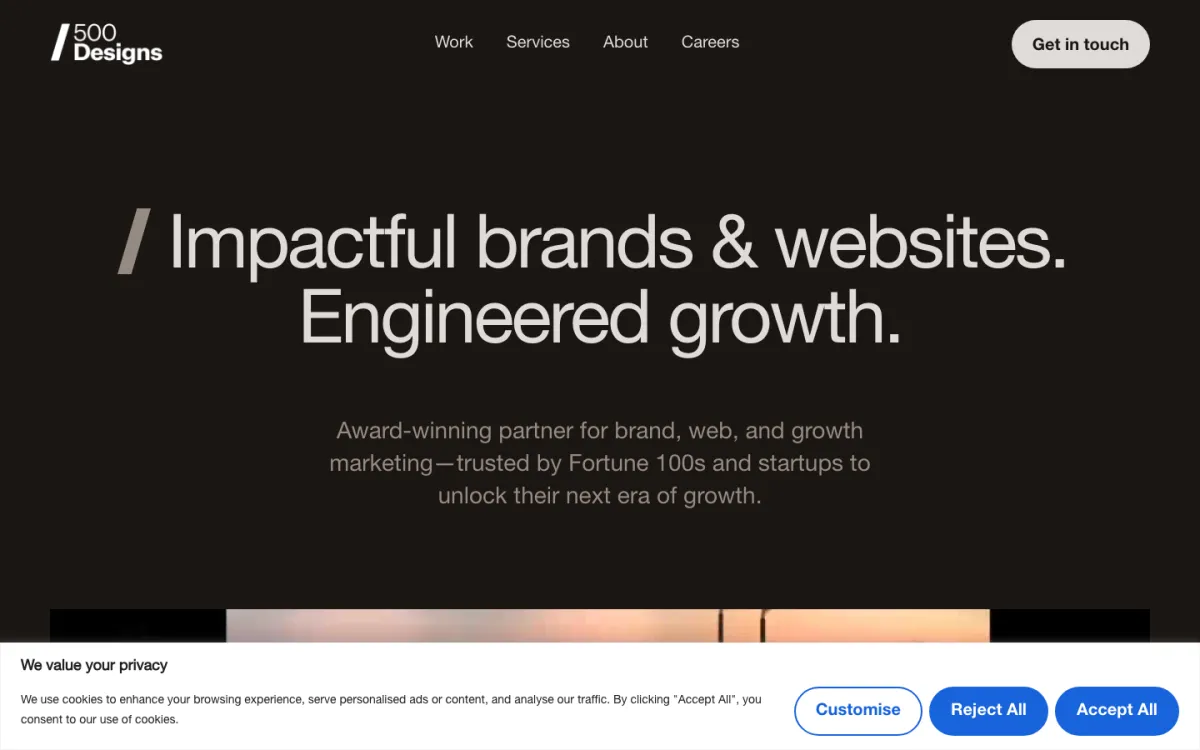
500 Designs has the most directly relevant engagement on this page: branding and a custom website for a legal support solutions company, delivered with the visual identity in the same project. Half its work is web design and another 20% branding, which is the right split for a legaltech startup where the site and the identity are being decided at the same time. It has 43 Clutch reviews.
Its industry mix is business services and medical at 25% each, so the buyer it knows best is a company selling to companies generally rather than a profession with its own rules. Product UX/UI does not appear in its service mix at all.
- Starting price
- $25,000+
- Engagement model
- Project and retainer
- Clutch
- 5.0/5, 43 reviews
- Hourly rate
- $100 - $149
- Team size
- 50 - 249 people
- Best for
- legaltech startups deciding the brand and the website in one project.
- Not a fit for
- in-product interface design or deep legal domain work, or budgets under $25,000.
Praxent
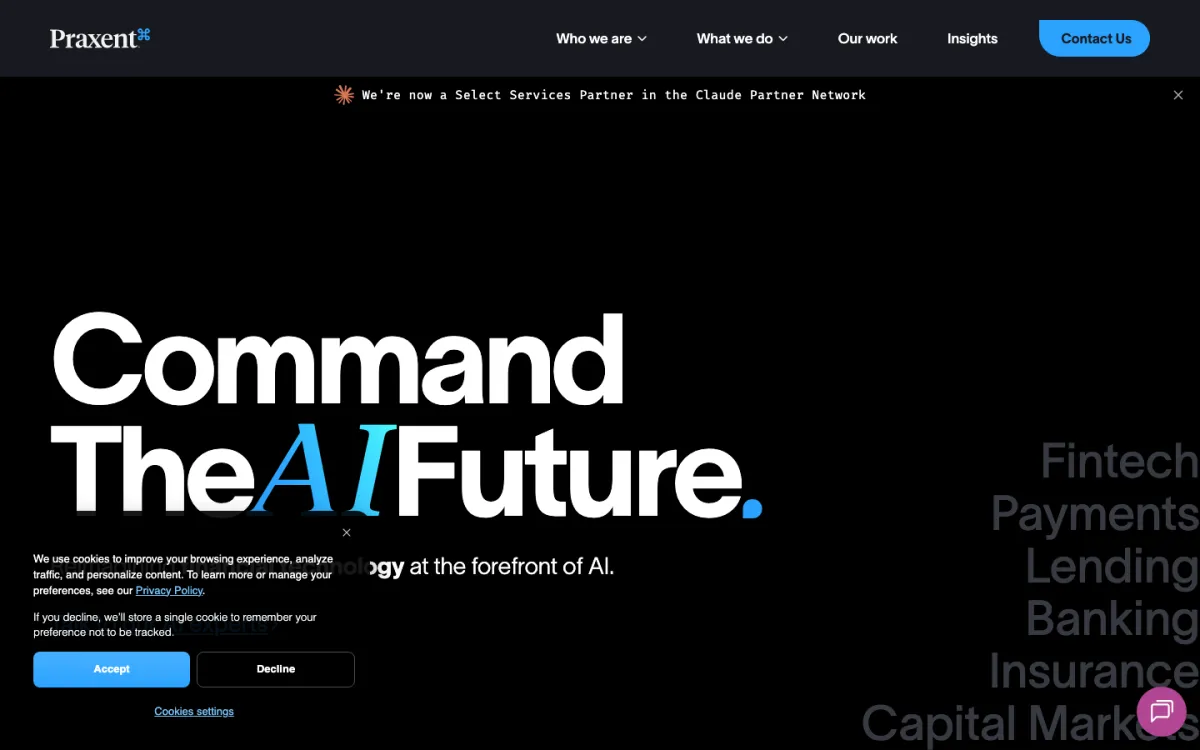
Praxent is 100% financial services by industry, and one of its reviews is custom software for a legal malpractice provider, which is the intersection a legaltech startup usually sells into: money, risk and professional liability in one buying conversation. It also built a demo-facing UI for a data API company, landing screen and authentication included, which is exactly the seam between a site and a product trial.
Only 10% of its work is web design, with custom software, mobile and UX/UI taking 30% each, so a marketing site is the smallest thing it does. Its 66 reviews describe platform builds and legacy migrations. For a legaltech startup buying a website alone, that is a lot of capability going unused.
- Starting price
- $25,000+
- Engagement model
- Project and retainer
- Clutch
- 4.8/5, 66 reviews
- Hourly rate
- $50 - $99
- Team size
- 50 - 249 people
- Best for
- legaltech startups building the site and the product platform together.
- Not a fit for
- website-only engagements with no software scope, or budgets under $25,000.
How much does a legaltech startup website build cost?
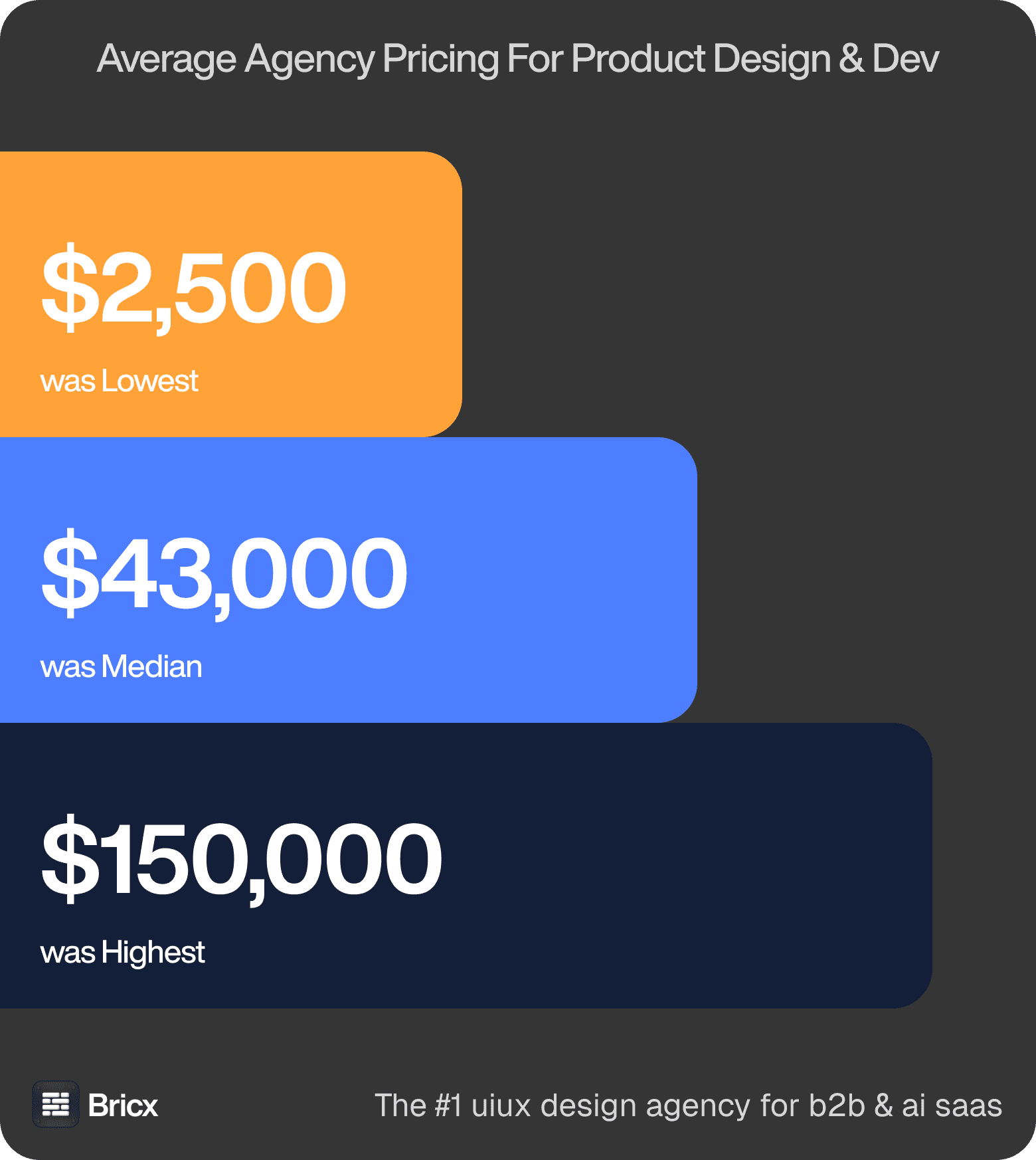
What you should expect to pay. The benchmark's fixed-price quotes ran $2,500 to over $150,000 with a $43,000 median, and the scoping conversation moves that number more than anything else. Those figures cover product design across the whole benchmark, so treat them as the range a legaltech startup website is quoted inside rather than a price for it.
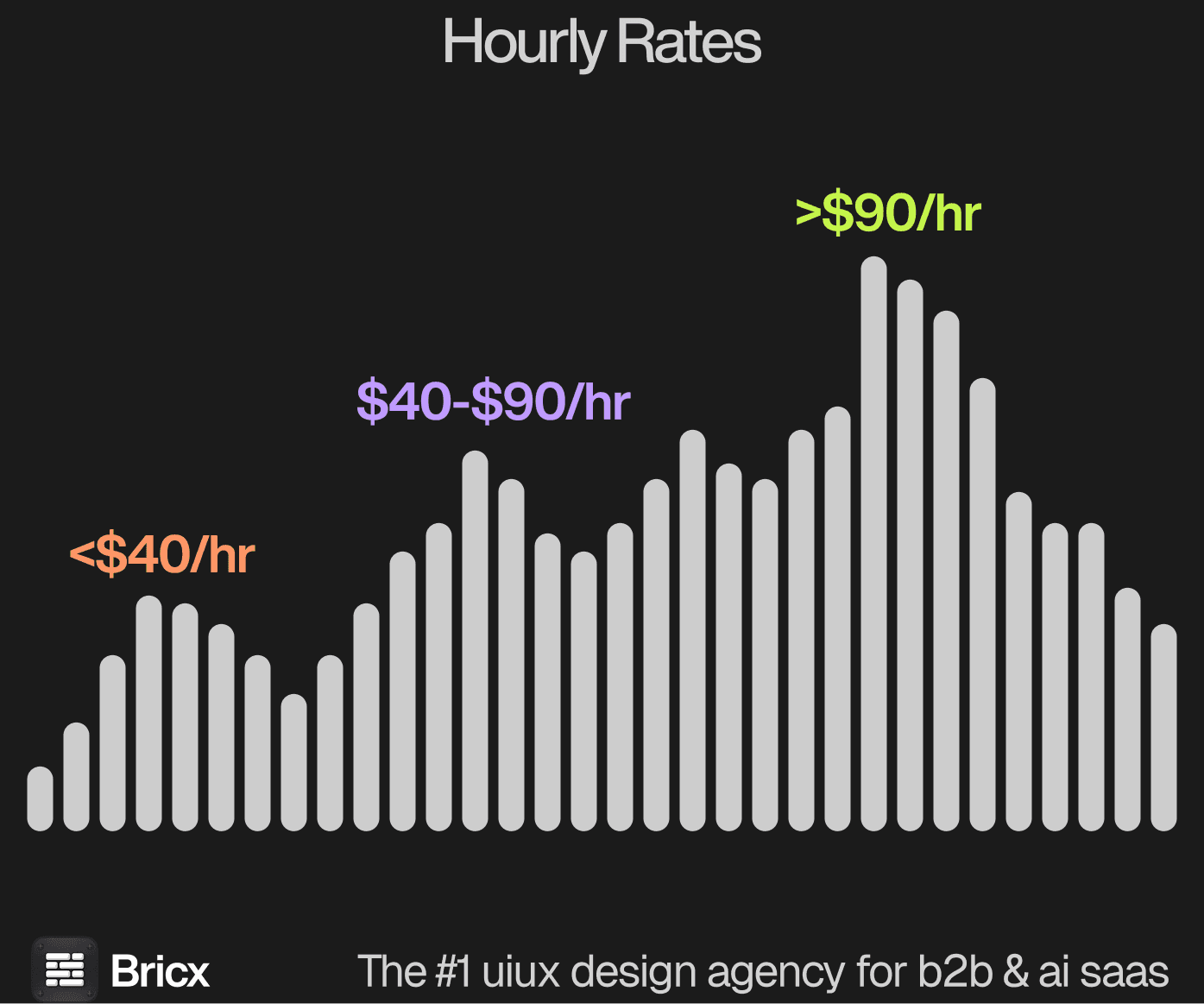
Rate ranges. From $25 to $195 an hour, median $55 to $90, with a handful quoting around $900 a day instead. A legaltech startup site sits above the benchmark median for a five-page brief, because the security, compliance and proof pages a firm's reviewer asks for are content problems no template answers.
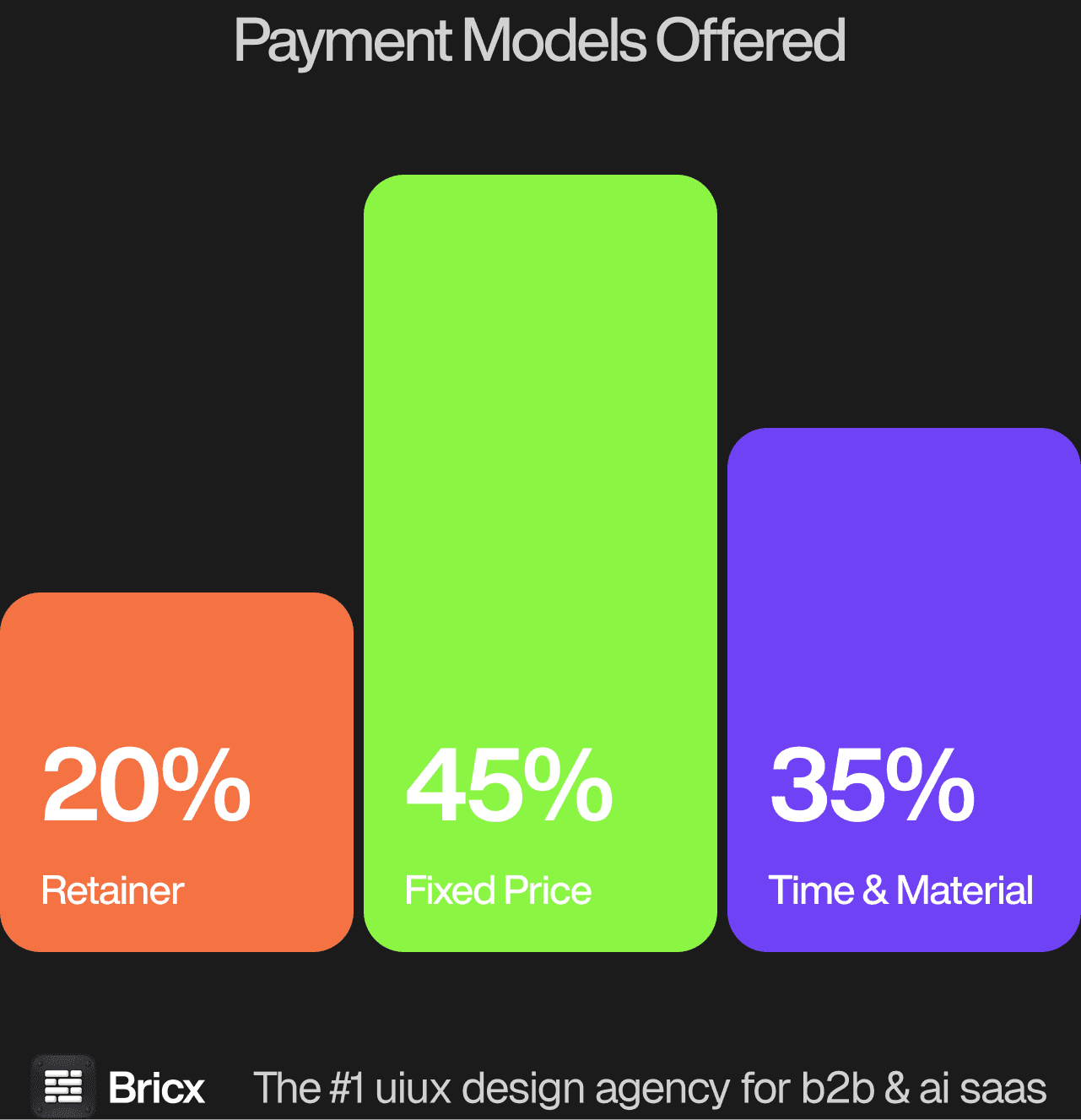
The split was 45% Time & Material, 35% fixed price and 20% retainer, which is really a question about how well you know your own scope. For a legaltech startup website the model usually matters more than the headline figure, because it decides what happens when the scope moves.
- Fixed price is right when you can write the scope down and mean it.
- Time & Material is right when the answer changes as you learn.
- Retainer is right when design never stops being needed.
- Which one fits a legaltech startup website comes down to whether the scope is settled before the work starts.
How do you evaluate a web design agency for a legaltech startup?
Five things separate a legaltech startup website from a B2B SaaS website generally.
Ask which buyer the homepage argues with. In-house legal counts hours saved and a law firm bills them, so one efficiency headline cannot serve both without the site quietly picking a side.
Ask where the security page sits in the journey. A firm's IT reviewer arrives before the demo is booked, and burying data residency and retention three clicks down loses the deal without anyone filling in a form.
Ask how they show the product without showing a client's document. Every screenshot in legaltech is a confidentiality question, and heavy redaction reads as something hidden while obviously invented parties read as unserious.
Ask how they handle claims that edge into legal advice. A product that drafts or reviews documents cannot promise an outcome without inviting an unauthorised practice argument, and the copy is where that line gets crossed.
Ask who the site is willing to name. Firms buy what other firms already bought, and an anonymous logo wall reads as unverified to a profession trained on citation.
What are the red flags when hiring a design agency?
- Senior in the pitch, junior on the project. Ask for the names and check their individual work before signing.
- A contract with no way out. A twelve-month lock-in assumes your roadmap will not change. It will.
- Screens without results. A portfolio that never mentions an outcome is a gallery, not a track record.
- Agreement with everything you say. Experience shows up as disagreement about what is missing.
- No position on what happens next. Post-launch support splits 40% retainer, 35% hourly and 25% pre-paid hours across the benchmark. No answer means no plan.
- No comparable example of a legaltech startup website. An agency that cannot point to work of the same shape is learning on your budget.
Should you hire a web design agency or build in-house?
Use an agency while the work has edges: a launch, a rebuild, a first version. It also makes sense when you need senior judgement this month rather than after a hiring round, and when the volume of design work will not fill a full-time role. For a legaltech startup website specifically, the question worth settling first is how often the work recurs.
Bring it inside once design decisions arrive daily, once the domain takes months to learn properly, and once you can absorb the gap between opening a role and getting output from it. Where a legaltech startup website falls on that line is usually clear once you count how many times it will need doing again.
A legaltech startup usually has former practitioners in the building, and they are the only people who can tell whether a claim survives a partner reading it closely. That argues for keeping the messaging in-house and buying the build. Hiring a full web team early fails because the site changes a few times a year. Retaining fails when the agency writes copy no lawyer would put a name to.
FAQs
What makes a legaltech startup website hard?
It has to convince two buyers with opposite incentives, survive a reader trained to find the weak clause, and answer a security review before a demo is ever booked. Most of the work is proof and precision rather than layout.
How much does a legaltech startup website cost?
Quotes for one identical five-page website brief ran from $1,500 to $120,000, and 17% of agencies came in over $50,000 for that page count alone. Security, compliance and proof pages push a legaltech site past the simple brief. Bricx starts at $25,000.
How do you show a document-heavy product on a marketing site?
With a demonstration dataset built for the purpose: synthetic matters and invented parties that still behave like real work. Blurred screenshots of a genuine file read as evasive, and a placeholder contract reads as a prototype. Building that dataset is part of the design job.
Should the site target law firms or in-house legal teams?
Pick one for the homepage and give the other a dedicated page. A firm buys leverage on billable work, an in-house team buys hours removed from a fixed budget, and one page trying to say both says neither.