10 Best Web Design Agenciesfor Marketplace Startups (2026)
The 10 best web design agencies for marketplace startups, compared on pricing, Clutch rating, engagement model and hourly rate, drawn from a documented benchmark of 57 agencies.
Aug 20, 202611 min read
Best web design agencies for marketplace startups
A marketplace website has to sell two different things to two audiences who arrive with opposite anxieties. Supply wants to know whether there is demand and how quickly they get paid. Demand wants to know whether there is supply and whether it can be trusted. Most marketplace sites are built for whichever side the founder came from, and the other side gets a link in the footer.
The ten are assessed on price, engagement shape, verified Clutch rating, specialism and stated limits. Every agency here carries a verified Clutch profile, and the ratings below are taken from it. Each entry says what an agency is worth hiring for and where it is the wrong choice for a marketplace website.
How the ten agencies compare
| Agency | Best for | Starting price | Clutch rating | Not a fit for |
|---|---|---|---|---|
| Bricx | Sites that recruit both sides | $25,000+ | 5.0/5, 27 reviews | Single-sided ecommerce, retail |
| BASIC | Consumer brand, demand-side conversion | $10,000+ | 4.3/5, 2 reviews | Supply onboarding, seller tooling |
| DEPT® | Commerce scale, both-sided acquisition | $100,000+ | 4.8/5, 34 reviews | Pre-liquidity marketplaces, small budgets |
| Superside | Two campaigns' creative, every month | Undisclosed | 2.9/5, 6 reviews | The website itself |
| ProCreator Design | Trading platforms, information architecture | $10,000+ | 4.7/5, 38 reviews | Consumer supply side, build |
| Unfold | Fast brand and site for platforms | $25,000+ | 5.0/5, 5 reviews | Front-end build, deep records |
| WANDR | Measured drop-off and paid acquisition | $25,000+ | 5.0/5, 34 reviews | Building the site, marketplace record |
| Toptal | Vetted individual designers on demand | $50,000+ | 4.8/5, 53 reviews | Agency-owned outcomes, published record |
| Majestyk | Messaging, check-in and mobile supply | $50,000+ | 4.9/5, 31 reviews | Marketing site design |
| Goji Labs | Supply-side tooling and platform build | $25,000+ | 5.0/5, 87 reviews | Marketing sites, demand-side design |
Best web design agency for marketplace startups: Bricx
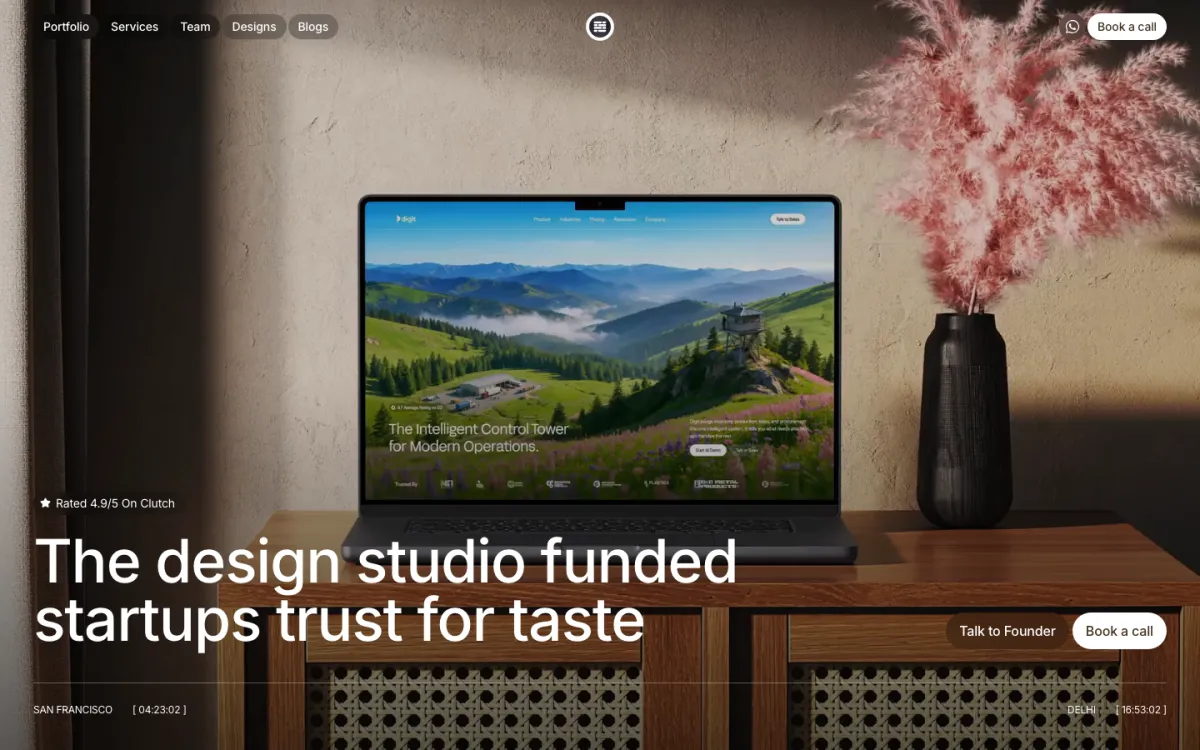
Bricx is the best web design agency for marketplace startups whose site has to recruit supply and demand at the same time. Bricx has completed 50+ SaaS design projects across 30+ industries, with clients including Writesonic (YC S21), Collectwise (YC F24), Gigacatalyst (YC X26), Sybill, Camb.ai, LTV.ai, Instadapp, Hobbes and AT Kearney. The agency holds 27 verified reviews on Clutch at an average of 5.0/5.
Bricx works exclusively with B2B and AI SaaS companies, from seed stage through Series C, covering branding, website design, product UX/UI and end-to-end development. Engagements start at $25,000. Bricx builds marketplace sites with a genuine path for each side rather than a homepage aimed at buyers and a sign-up link for sellers, because the constrained side is usually the one being under-served.
Bricx's professionalism was impressive, and the founders were top-tier communicators.
- Starting price
- $25,000+
- Engagement model
- Fixed-scope projects and monthly retainers
- Timeline
- First delivery within the first week; full scope varies by project
- Clutch
- 5.0/5, 27 reviews
- Hourly rate
- $50 - $99
- Best for
- marketplace startups recruiting supply and demand at once.
- Not a fit for
- single-sided ecommerce, retail sites, or budgets under $25,000.
BASIC
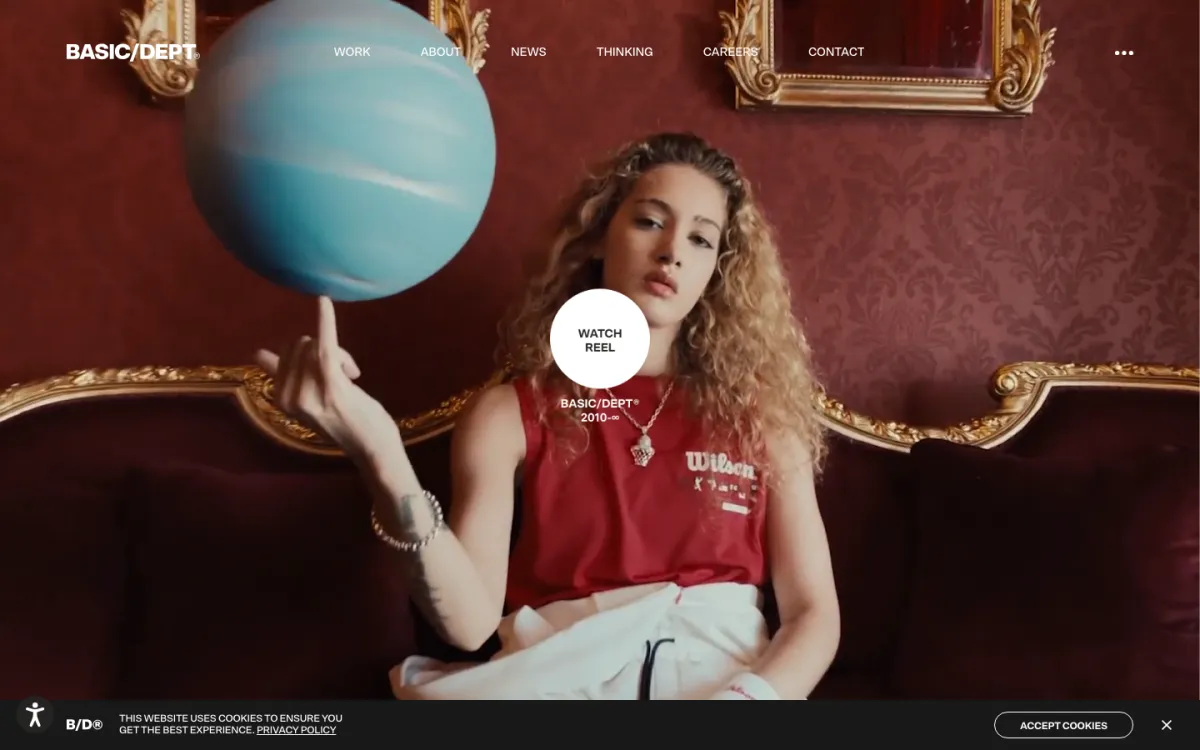
BASIC has Airbnb on its client list, which is the canonical two-sided marketplace and the only one named anywhere on this page. One review covers redesigning an ecommerce site to emphasise the purchasing path, and demand-side conversion is half the job here. Its mix is 45% branding and 25% web design, with consumer products at 50% of its client base.
The other half is supply, and nothing on its record addresses it: no seller onboarding, no payout flow, no host or vendor dashboard. Its work is brand-led for Gucci, Patagonia and Wilson. Two Clutch reviews at 4.3 is the thinnest and lowest-rated record on this page.
- Starting price
- $10,000+
- Engagement model
- Project-based
- Clutch
- 4.3/5, 2 reviews
- Hourly rate
- $150 - $199
- Team size
- 10 - 49 people
- Best for
- the consumer-facing half of a marketplace and its brand.
- Not a fit for
- supply-side onboarding or seller tooling, or budgets under $25,000.
DEPT®
DEPT® names eBay among its clients, and eCommerce and retail are 25% each of its book, the most commerce-weighted industry mix on this page. A marketplace at any scale eventually faces the same problems eBay solved: category structure, search ranking and seller reputation. With 1,000 to 9,999 people it can also run the acquisition campaigns for both sides at once.
The minimum is $100,000 and every client is midmarket or enterprise, split evenly, so a marketplace still proving liquidity is not the buyer. There is no web design or web development line in the mix, which leads with digital strategy, mobile development and UX/UI at 20% each.
- Starting price
- $100,000+
- Engagement model
- Programme-based
- Clutch
- 4.8/5, 34 reviews
- Hourly rate
- $150 - $199
- Team size
- 1,000 - 9,999 people
- Best for
- a marketplace with volume that needs commerce and campaign scale.
- Not a fit for
- early liquidity-stage marketplaces, or budgets under $25,000.
Superside
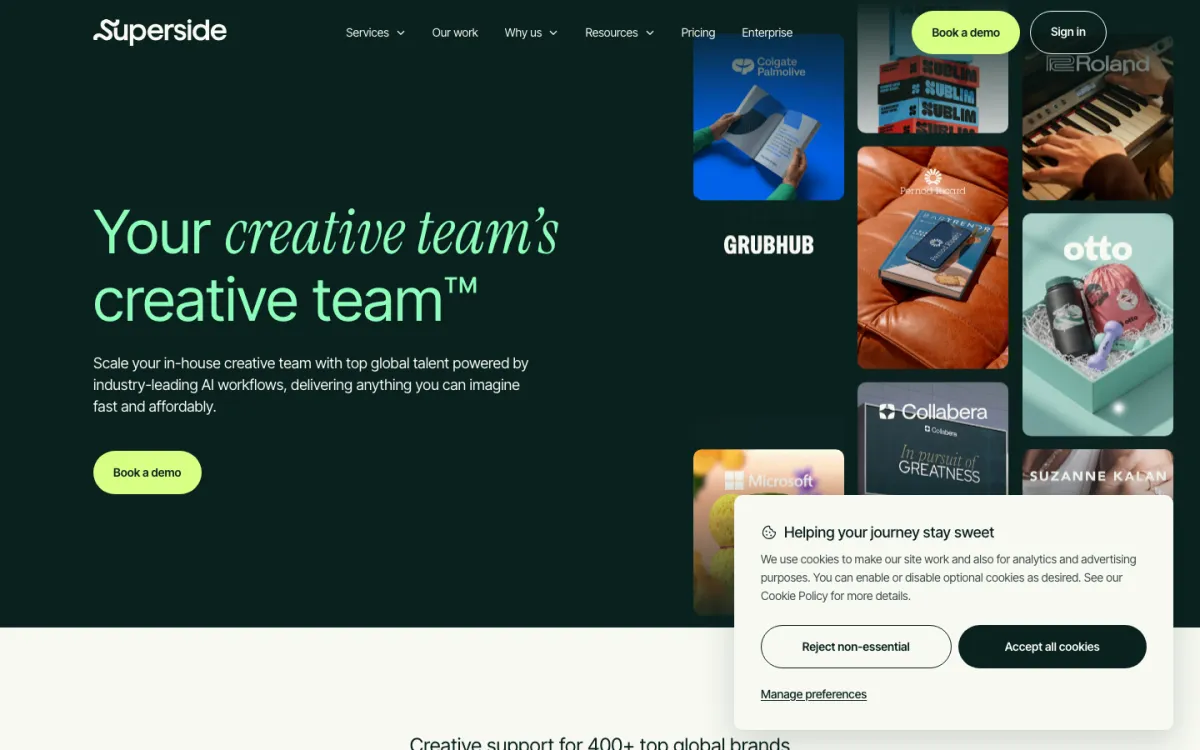
Superside sells monthly creative capacity rather than projects, and a marketplace runs two permanent acquisition campaigns, one for supply and one for demand, each needing its own creative in its own language. One review describes ongoing video production, marketing campaigns and graphic design at a fixed number of hours a month, which is the shape that workload actually takes.
It carries no web design or web development line at all, its mix being branding, digital strategy, graphic design and video at 20% each, so the site itself is somebody else's job. A Clutch rating of 2.9 from 6 reviews is the lowest here, and no minimum, rate or industry breakdown is published.
- Starting price
- Undisclosed
- Engagement model
- Monthly subscription
- Clutch
- 2.9/5, 6 reviews
- Hourly rate
- Undisclosed
- Team size
- 250 - 999 people
- Best for
- creative volume for two permanent acquisition campaigns.
- Not a fit for
- website design or build, or budgets under $25,000.
ProCreator Design
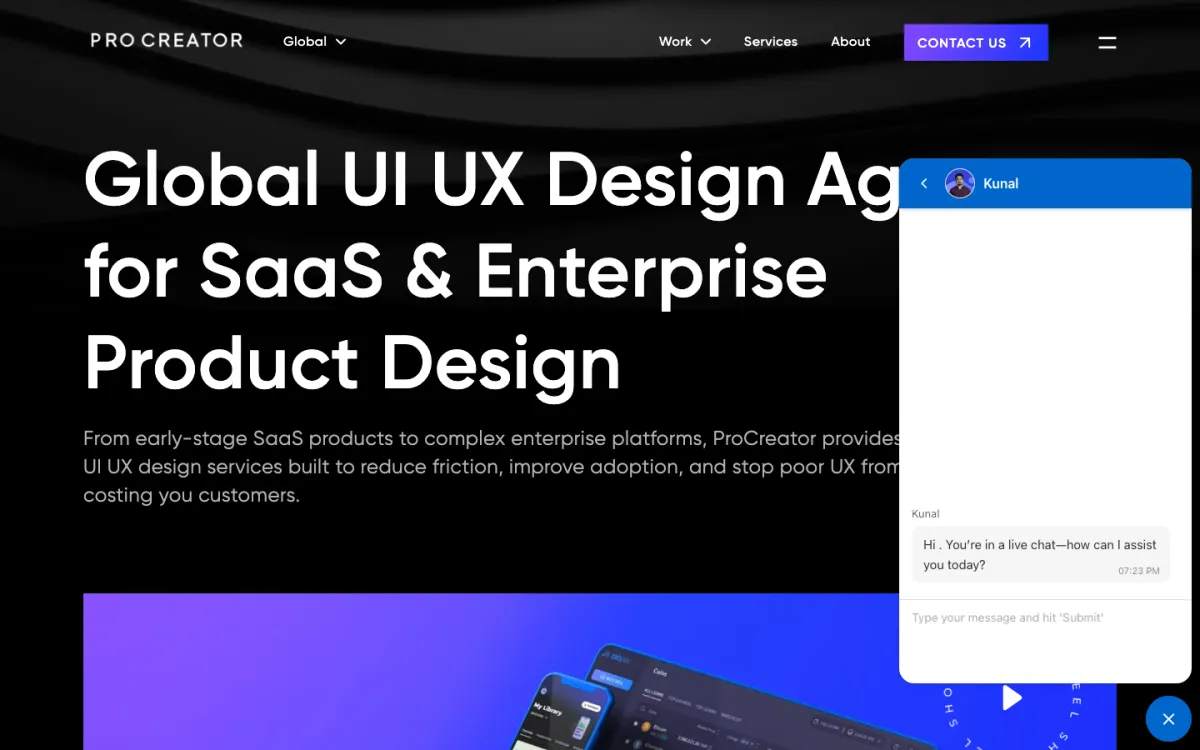
ProCreator's published work includes ZebPay and Kinntegra, trading platforms where both sides worry about liquidity and settlement, which is the marketplace anxiety in its purest form. One review covers consolidating a client's separate websites into a single detailed information architecture, and that is the structural fix for a site where one audience has been left in the footer.
80% of its mix is UX/UI with only 12% low-code development and 1% mobile, so the build sits elsewhere. Financial services is 35% of its client base and its positioning is SaaS and enterprise product design, which means the consumer supply side of a marketplace, drivers, hosts, sellers, is not on the record.
- Starting price
- $10,000+
- Engagement model
- Project and retainer
- Clutch
- 4.7/5, 38 reviews
- Hourly rate
- $25 - $49
- Team size
- 50 - 249 people
- Best for
- structuring a site so both sides have a real path.
- Not a fit for
- consumer supply-side design or build, or budgets under $25,000.
Unfold

Unfold's case list includes Ripple Markets, Rumble and a tokenized real estate firm, all platforms where one side lists and another side buys. It works only in UX/UI, web design and branding, 50%, 30% and 20%, and one review describes delivering a full website and brand in about a month and a half, which suits a marketplace testing whether either side shows up.
Five Clutch reviews is the thinnest record on this page, and at $200 to $300 an hour it is also the most expensive. There is no web development line, so nothing gets built here, and no industry in its mix exceeds 20%, so there is no marketplace concentration behind the named logos.
- Starting price
- $25,000+
- Engagement model
- Project-based
- Clutch
- 5.0/5, 5 reviews
- Hourly rate
- $200 - $300
- Team size
- 10 - 49 people
- Best for
- a fast platform brand and site while liquidity is unproven.
- Not a fit for
- front-end build or a long verified record, or budgets under $25,000.
WANDR
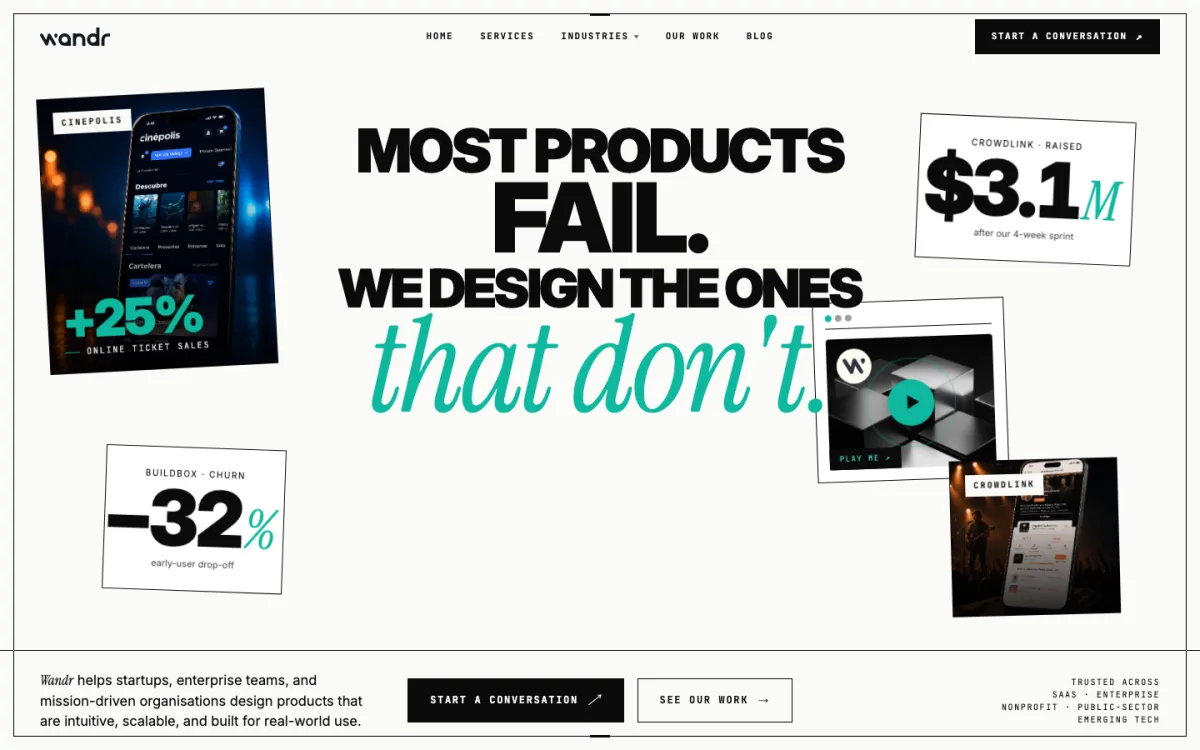
WANDR publishes outcome numbers rather than adjectives: 25% more online ticket sales for Cinepolis, early-user drop-off down 32% for Buildbox. Drop-off on the weaker side is how marketplaces die. It is also one of the few teams here that runs paid acquisition itself, with one review covering Meta and Google Ads alongside design, which two-sided growth needs.
Government is 30% of its client base with gaming and non-profit at 20% each, and 60% of its clients are enterprises above $1B, which is a long way from a marketplace startup. There is no web design or web development line in its mix, so the site is designed here and built elsewhere.
- Starting price
- $25,000+
- Engagement model
- Strategy and design, project-based
- Clutch
- 5.0/5, 34 reviews
- Hourly rate
- $150 - $199
- Team size
- 10 - 49 people
- Best for
- cutting drop-off and running acquisition for both sides.
- Not a fit for
- front-end build or marketplace domain depth, or budgets under $25,000.
Toptal
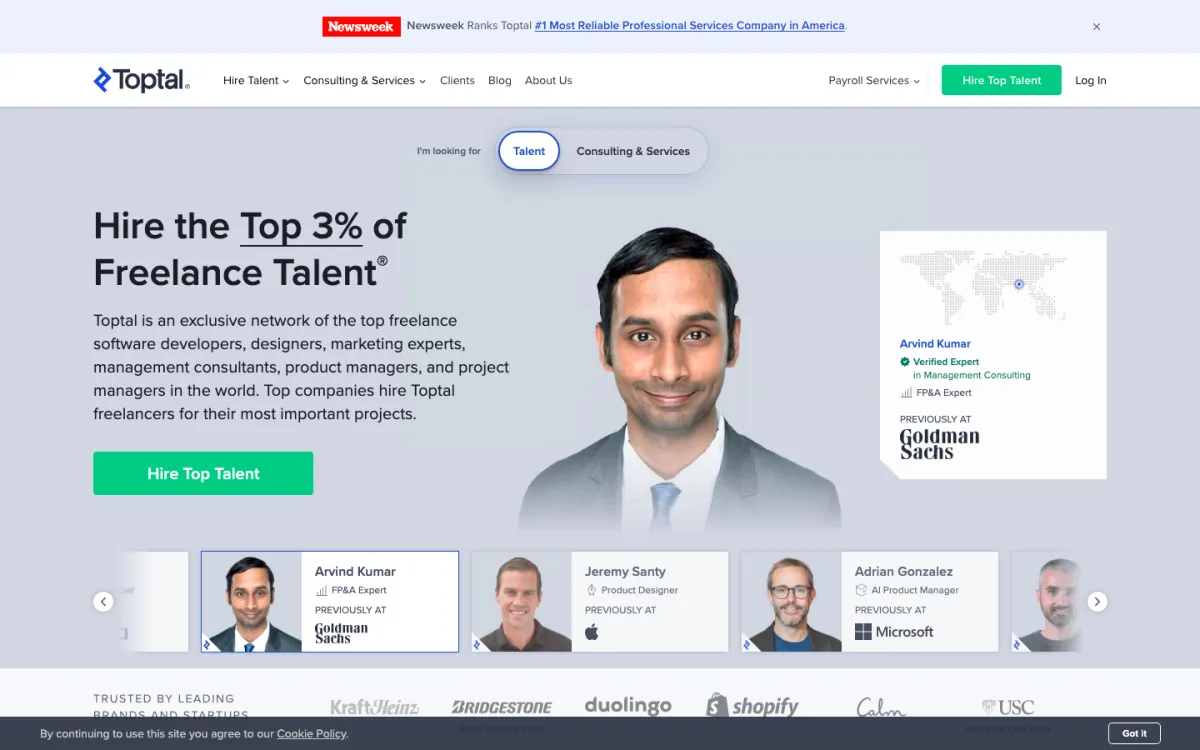
Toptal is itself the thing this page is about: a marketplace whose entire proposition is supply-side vetting, with more than 20,000 professionals in its network and only the top 3% of applicants accepted. A marketplace founder hiring here is buying capacity from a company that has already solved the demand-side trust problem on its own platform.
It publishes no service mix, no industry breakdown and no founding year, so there is no design record to weigh, only a rate card: $100 to $149 an hour on a $50,000 minimum. What is bought here is vetted individuals, not an agency that owns an outcome, and coordinating them stays the founder's job.
- Starting price
- $50,000+
- Engagement model
- Staff augmentation
- Clutch
- 4.8/5, 53 reviews
- Hourly rate
- $100 - $149
- Team size
- 1,000 - 9,999 people
- Best for
- adding vetted individual designers to a team you direct.
- Not a fit for
- an agency that owns the outcome, or budgets under $25,000.
Majestyk
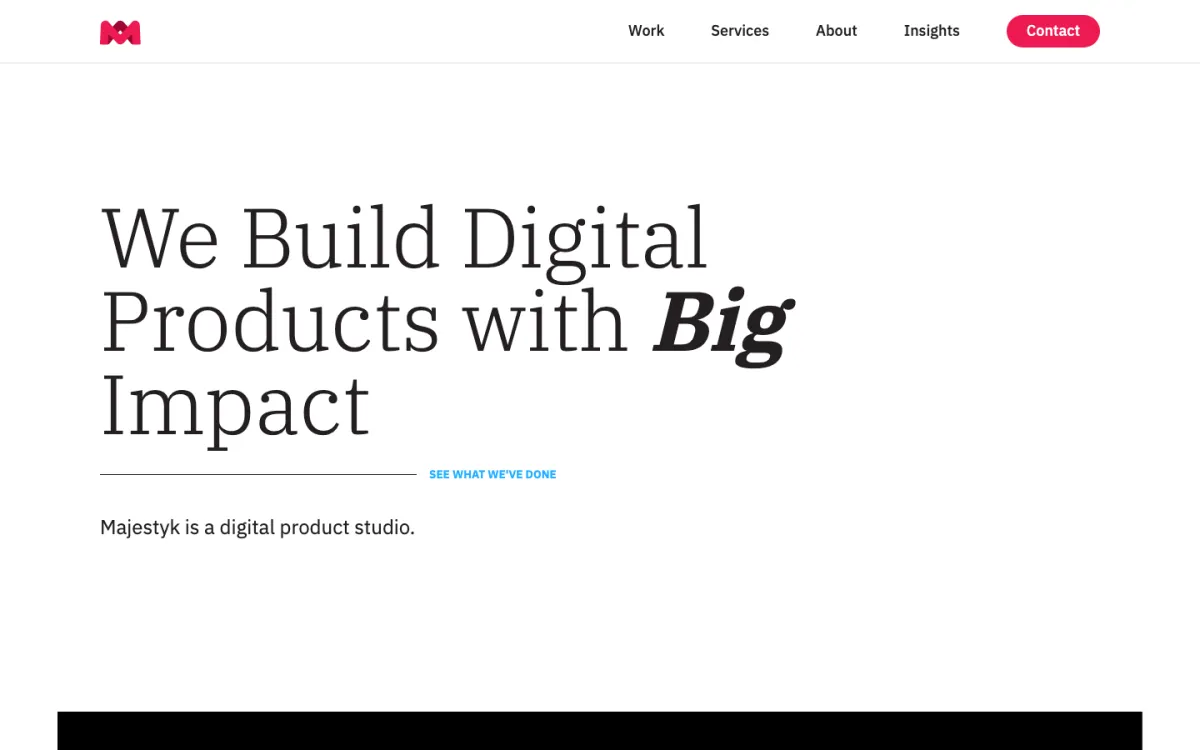
Majestyk rebuilt a web platform's front end in React around chat and check-in features, which is the trust layer of a marketplace stated plainly: the two sides have to talk before they transact, and something has to confirm the transaction happened. Mobile is 60% of its mix, and on most marketplaces the supply side works from a phone rather than a desk.
There is no web design line in its mix and only 10% web development, so the marketing site that has to recruit both sides is a minor line here. No industry exceeds 10% of its client base, and at a $50,000 minimum this is priced as an app build rather than a website.
- Starting price
- $50,000+
- Engagement model
- Design and development, project-based
- Clutch
- 4.9/5, 31 reviews
- Hourly rate
- $150 - $199
- Team size
- 10 - 49 people
- Best for
- the messaging and transaction layer between both sides.
- Not a fit for
- marketing site design or brand, or budgets under $25,000.
Goji Labs
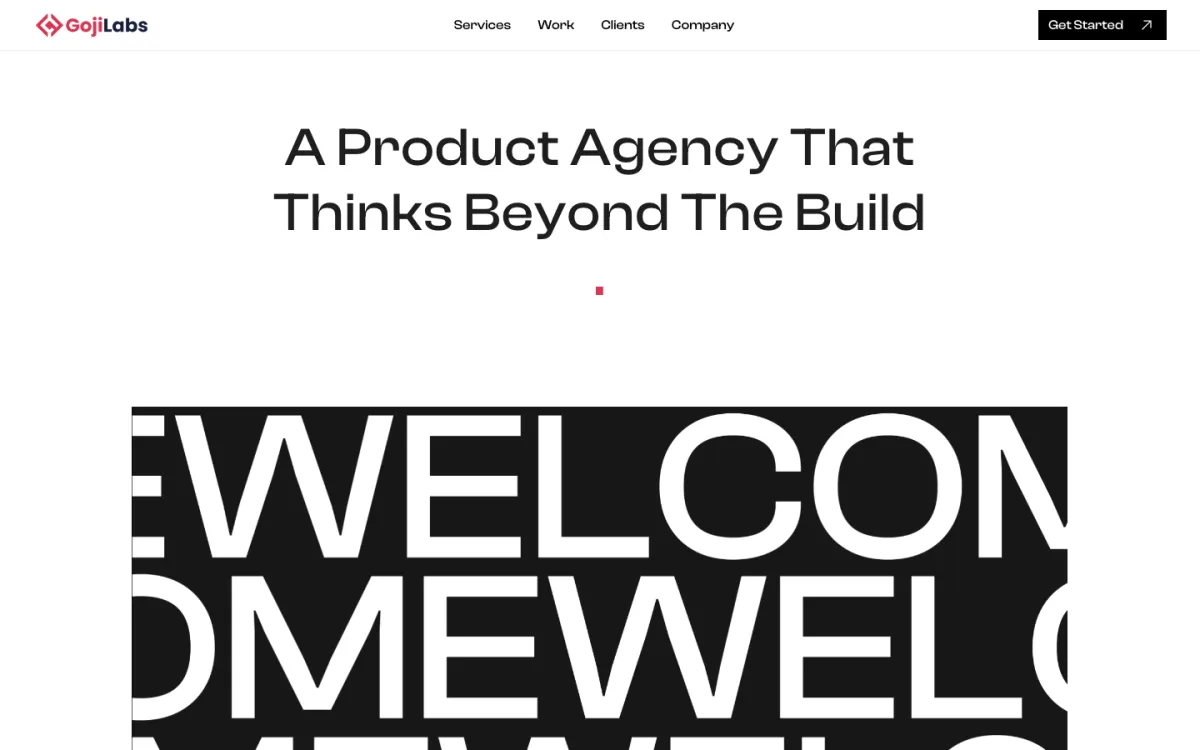
Goji Labs built a direct pitching platform end to end, product strategy, UX/UI and architecture together, and its case list includes Castability for actor training and Valara, a rental management platform for fleet businesses. Those are supply-side operations tools, which is the half of a marketplace that never gets designed. 87 Clutch reviews at a flat 5.0 is the strongest record on this page.
Only 10% of its mix is UX/UI, with 50% mobile app development and 40% custom software, and there is no web design or web development line. This is an engineering-first product agency, so the marketing site that has to recruit demand is not what it is set up to produce.
- Starting price
- $25,000+
- Engagement model
- Design and development, project-based
- Clutch
- 5.0/5, 87 reviews
- Hourly rate
- $100 - $149
- Team size
- 50 - 249 people
- Best for
- building the platform and the tools the supply side lives in.
- Not a fit for
- marketing site or demand-side design, or budgets under $25,000.
How much does a marketplace website build cost?
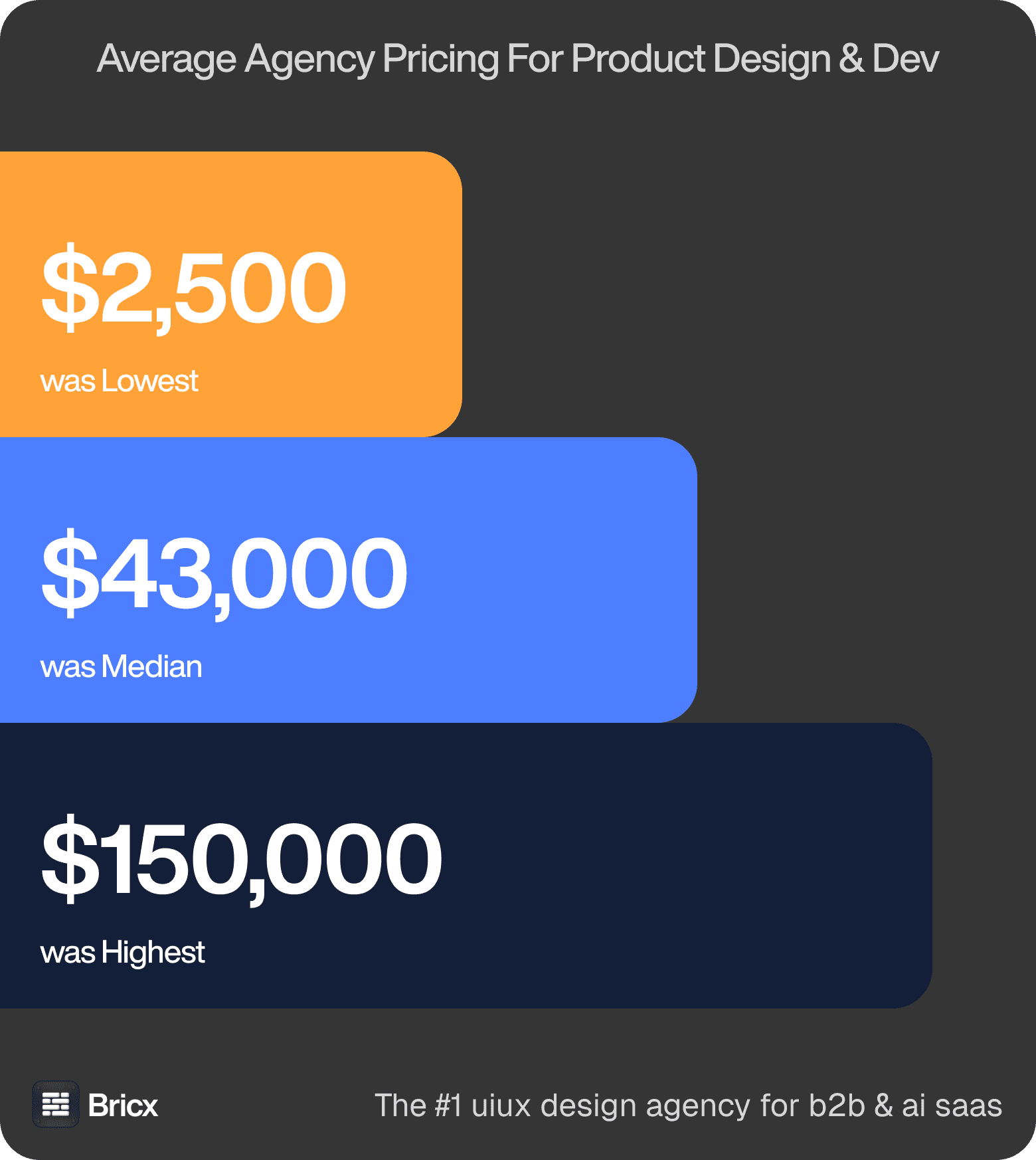
Budget reality. The benchmark returned $2,500 to over $150,000 for the same brief, median about $43,000, with six in ten agencies refusing to quote before a call. Those figures cover product design across the whole benchmark, so treat them as the range a marketplace website is quoted inside rather than a price for it.
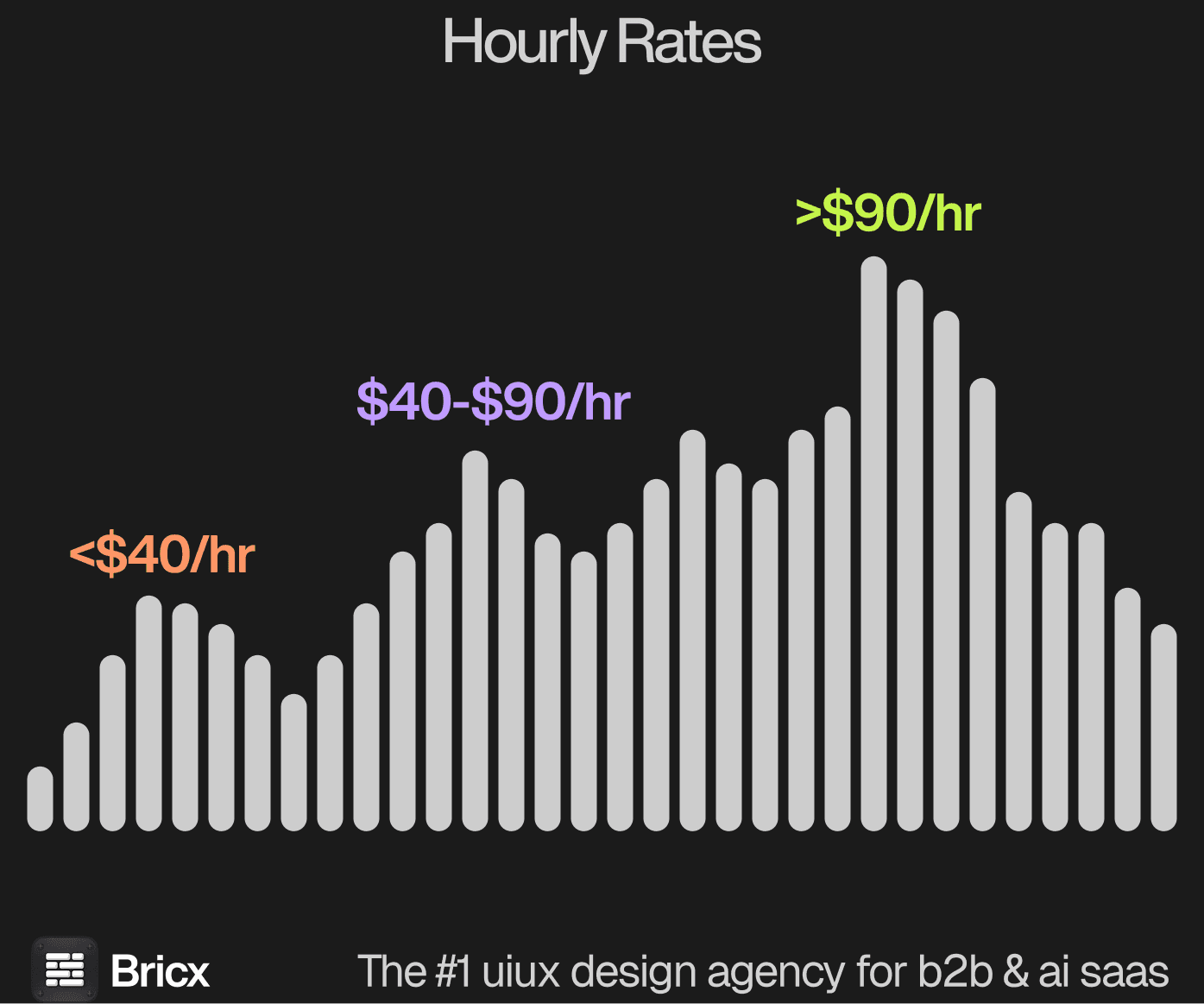
What agencies charge hourly. $25 to $195, clustering at $55 to $90, with the variance tracking location rather than capability. Marketplace sites sit in the upper half of that range, because two audiences means two journeys rather than one with a variant.
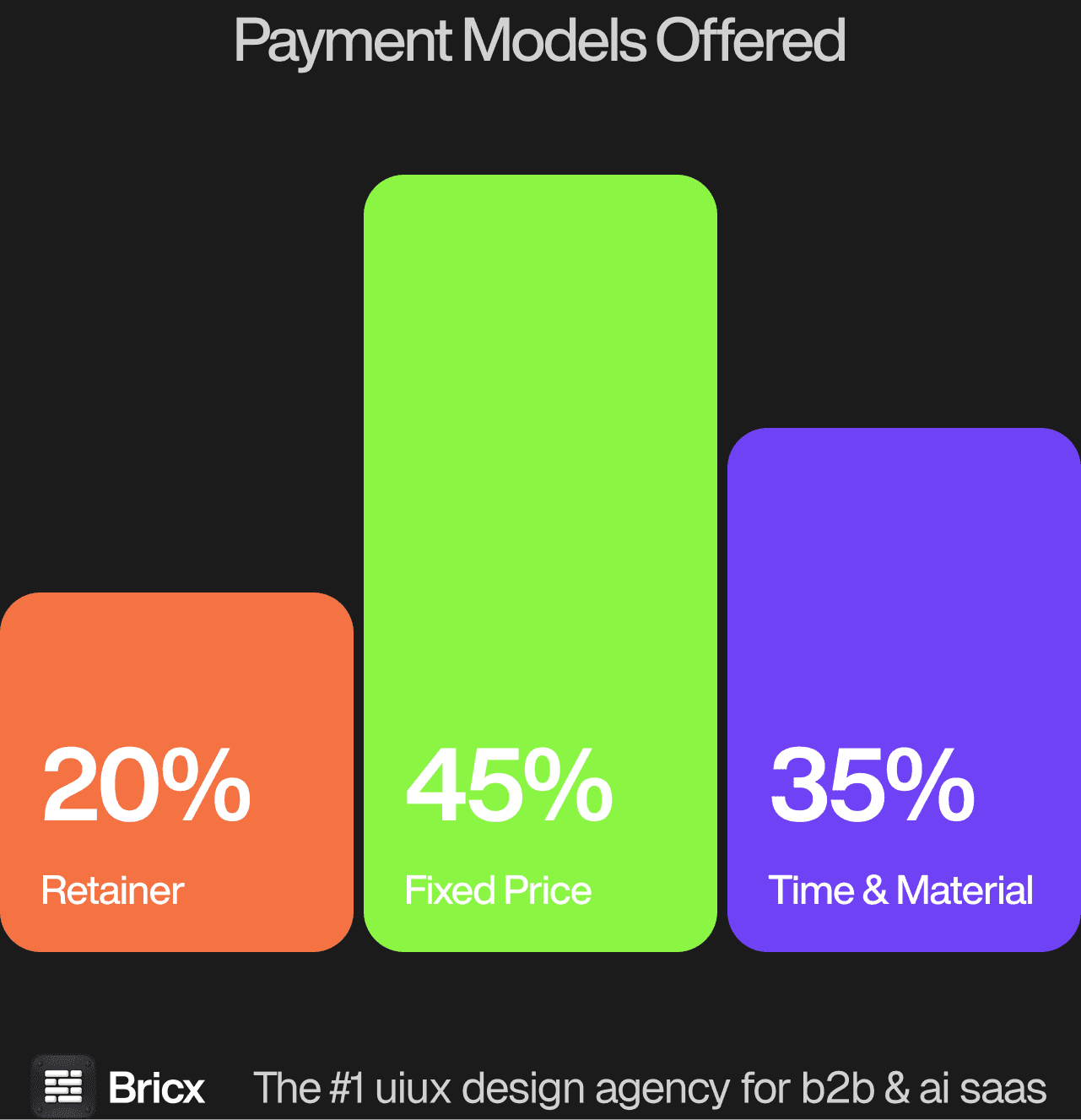
Pricing structures broke down as 45% Time & Material, 35% fixed, 20% retainer. Match it to your certainty, not your preference. For a marketplace website the model usually matters more than the headline figure, because it decides what happens when the scope moves.
- Fixed price if the end state is known.
- Time & Material if it is not.
- Retainer if there is no end state.
- Which one fits a marketplace website comes down to whether the scope is settled before the work starts.
How do you evaluate a web design agency for a marketplace startup?
Five things separate a marketplace site from a directory.
Ask which side is constrained. Supply-constrained and demand-constrained marketplaces need opposite homepages, and the answer should come before design.
Ask how each side proves the other exists. Both audiences arrive asking whether anybody is on the other side, and that has to be answered visibly.
Ask about the empty category. Early marketplaces have thin coverage, and how the site handles a search with no results decides whether either side returns.
Ask about trust between strangers. Reviews, verification and dispute policy are the product, and burying them costs transactions.
Ask about the supply funnel specifically. Sellers usually need more explanation, not less, and they are usually given a footer link.
What are the red flags when hiring a design agency?
- Scope defined by hours rather than outcomes. Buying 200 hours tells you nothing about what exists at the end.
- A rate that only makes sense at volume. Cheap per hour and slow per decision is not cheap.
- No examples at your stage. Enterprise work does not prove they can ship on a seed runway.
- Design and research quoted as one line. Ask what proportion of the budget is actually research.
- No named limitation. Every agency is wrong for someone. One that will not say who has not thought about it.
- No comparable example of a marketplace website. An agency that cannot point to work of the same shape is learning on your budget.
Should you hire a web design agency or build in-house?
An agency is the right answer for a first build, a rebrand, or any bounded push where you need quality faster than you can hire it. For a marketplace website specifically, the question worth settling first is how often the work recurs.
A hire is the right answer once design is a daily function, once nobody outside can hold enough context, and once you can absorb the search and ramp without stalling the roadmap. Where a marketplace website falls on that line is usually clear once you count how many times it will need doing again.
Marketplace founders usually come from one side of the market and see that side clearly. The other side is where an outside team is most useful, precisely because nobody internally has that instinct.
FAQs
What makes a marketplace website different?
Two audiences with opposite anxieties, both of whom need convincing that the other side exists before they will participate.
How much does a marketplace website cost?
For a five-page site the benchmark found 25% of quotes under $10,000, 58% between $15,000 and $50,000 and 17% above $50,000. Two-sided sites sit in the upper part of that middle band. Bricx starts at $25,000.
Which side should the homepage serve?
The constrained one. If supply is scarce, a homepage optimised for buyers makes the imbalance worse by increasing demand you cannot fill.
How do you handle thin early inventory?
Deliberately. Empty categories and no-result searches are the defining early-marketplace experience, and designing them well is what keeps both sides coming back.