Top 10 Web Design Agencies for Media Companies - January 2026
Looking for the best web design agencies for media companies? Explore our list of 10 firms building fast, modern, and content-rich websites for digital media brands.
4 mins
4 mins
4 mins
December, 2025
December, 2025
December, 2025
Introduction
Over the last few months, we spoke to 57+ design agencies globally, ran actual sales calls, and evaluated them using the same documented project brief tailored specifically for media companies. Each agency was scored across:
Pricing
Engagement Model
Payment Structure
Timeline
Team Structure
Number of Employees
Domain Expertise
Depth of Service
Business Thinking (Conversion Rate Optimization)
Client Collaboration
Dev Handoff Process
Work Setup (Remote/Hybrid/In-Office)
We compiled all insights into The Ultimate UX Agency Benchmarking Report for 2025, one of the most comprehensive agency analyses ever done.
From that benchmarking, we handpicked the 10 best web design agencies for media companies — agencies with experience building publisher sites, news portals, content ecosystems, and interactive storytelling platforms.
By the end of this guide, you’ll know exactly which agency matches your goals and how they can help you grow audience, engagement, and conversions.
Introduction
Over the last few months, we spoke to 57+ design agencies globally, ran actual sales calls, and evaluated them using the same documented project brief tailored specifically for media companies. Each agency was scored across:
Pricing
Engagement Model
Payment Structure
Timeline
Team Structure
Number of Employees
Domain Expertise
Depth of Service
Business Thinking (Conversion Rate Optimization)
Client Collaboration
Dev Handoff Process
Work Setup (Remote/Hybrid/In-Office)
We compiled all insights into The Ultimate UX Agency Benchmarking Report for 2025, one of the most comprehensive agency analyses ever done.
From that benchmarking, we handpicked the 10 best web design agencies for media companies — agencies with experience building publisher sites, news portals, content ecosystems, and interactive storytelling platforms.
By the end of this guide, you’ll know exactly which agency matches your goals and how they can help you grow audience, engagement, and conversions.
Introduction
Over the last few months, we spoke to 57+ design agencies globally, ran actual sales calls, and evaluated them using the same documented project brief tailored specifically for media companies. Each agency was scored across:
Pricing
Engagement Model
Payment Structure
Timeline
Team Structure
Number of Employees
Domain Expertise
Depth of Service
Business Thinking (Conversion Rate Optimization)
Client Collaboration
Dev Handoff Process
Work Setup (Remote/Hybrid/In-Office)
We compiled all insights into The Ultimate UX Agency Benchmarking Report for 2025, one of the most comprehensive agency analyses ever done.
From that benchmarking, we handpicked the 10 best web design agencies for media companies — agencies with experience building publisher sites, news portals, content ecosystems, and interactive storytelling platforms.
By the end of this guide, you’ll know exactly which agency matches your goals and how they can help you grow audience, engagement, and conversions.
How To Evaluate Your Agency?
Media companies face distinct UX and technical challenges compared to traditional SaaS or ecommerce startups. You aren’t just selling a product — you’re delivering content, community, subscriptions, and often complex interactive experiences. Your agency must support these realities.
1. Content Architecture & Scalability
Media sites often need to manage vast catalogs of content, categories, and taxonomies. Your agency must know how to structure large, evolving information environments without overwhelming users.
2. Performance & Page Speed Optimization
Heavy multimedia — videos, images, interactive content — can easily slow down a site. The right agency prioritizes performance, lazy loading, CDN tactics, and lean code to keep engagement high.
3. Subscription Funnels & Paywalls
Many media companies rely on subscriptions, memberships, and premium content access. Choose agencies with proven experience optimizing conversion paths from visitor → subscriber → loyal reader.
4. SEO & Discoverability
Media companies rely on organic search traffic. Your web design partner should integrate SEO best practices into structure, metadata, headings, and schema from day one.
5. UX for Multi-Device Audiences
Media is consumed everywhere — mobile, tablet, desktop, app webs, and accelerators. Your agency must deliver responsive, accessible, and adaptable interfaces that perform consistently.
Top 10 Web Design Agencies for Media Companies: [Comparison]
Here’s a list of the top 10 web design agencies for media companies.
How To Evaluate Your Agency?
Media companies face distinct UX and technical challenges compared to traditional SaaS or ecommerce startups. You aren’t just selling a product — you’re delivering content, community, subscriptions, and often complex interactive experiences. Your agency must support these realities.
1. Content Architecture & Scalability
Media sites often need to manage vast catalogs of content, categories, and taxonomies. Your agency must know how to structure large, evolving information environments without overwhelming users.
2. Performance & Page Speed Optimization
Heavy multimedia — videos, images, interactive content — can easily slow down a site. The right agency prioritizes performance, lazy loading, CDN tactics, and lean code to keep engagement high.
3. Subscription Funnels & Paywalls
Many media companies rely on subscriptions, memberships, and premium content access. Choose agencies with proven experience optimizing conversion paths from visitor → subscriber → loyal reader.
4. SEO & Discoverability
Media companies rely on organic search traffic. Your web design partner should integrate SEO best practices into structure, metadata, headings, and schema from day one.
5. UX for Multi-Device Audiences
Media is consumed everywhere — mobile, tablet, desktop, app webs, and accelerators. Your agency must deliver responsive, accessible, and adaptable interfaces that perform consistently.
Top 10 Web Design Agencies for Media Companies: [Comparison]
Here’s a list of the top 10 web design agencies for media companies.
How To Evaluate Your Agency?
Media companies face distinct UX and technical challenges compared to traditional SaaS or ecommerce startups. You aren’t just selling a product — you’re delivering content, community, subscriptions, and often complex interactive experiences. Your agency must support these realities.
1. Content Architecture & Scalability
Media sites often need to manage vast catalogs of content, categories, and taxonomies. Your agency must know how to structure large, evolving information environments without overwhelming users.
2. Performance & Page Speed Optimization
Heavy multimedia — videos, images, interactive content — can easily slow down a site. The right agency prioritizes performance, lazy loading, CDN tactics, and lean code to keep engagement high.
3. Subscription Funnels & Paywalls
Many media companies rely on subscriptions, memberships, and premium content access. Choose agencies with proven experience optimizing conversion paths from visitor → subscriber → loyal reader.
4. SEO & Discoverability
Media companies rely on organic search traffic. Your web design partner should integrate SEO best practices into structure, metadata, headings, and schema from day one.
5. UX for Multi-Device Audiences
Media is consumed everywhere — mobile, tablet, desktop, app webs, and accelerators. Your agency must deliver responsive, accessible, and adaptable interfaces that perform consistently.
Top 10 Web Design Agencies for Media Companies: [Comparison]
Here’s a list of the top 10 web design agencies for media companies.
Bricx - Premium UI/UX Partners For SaaS

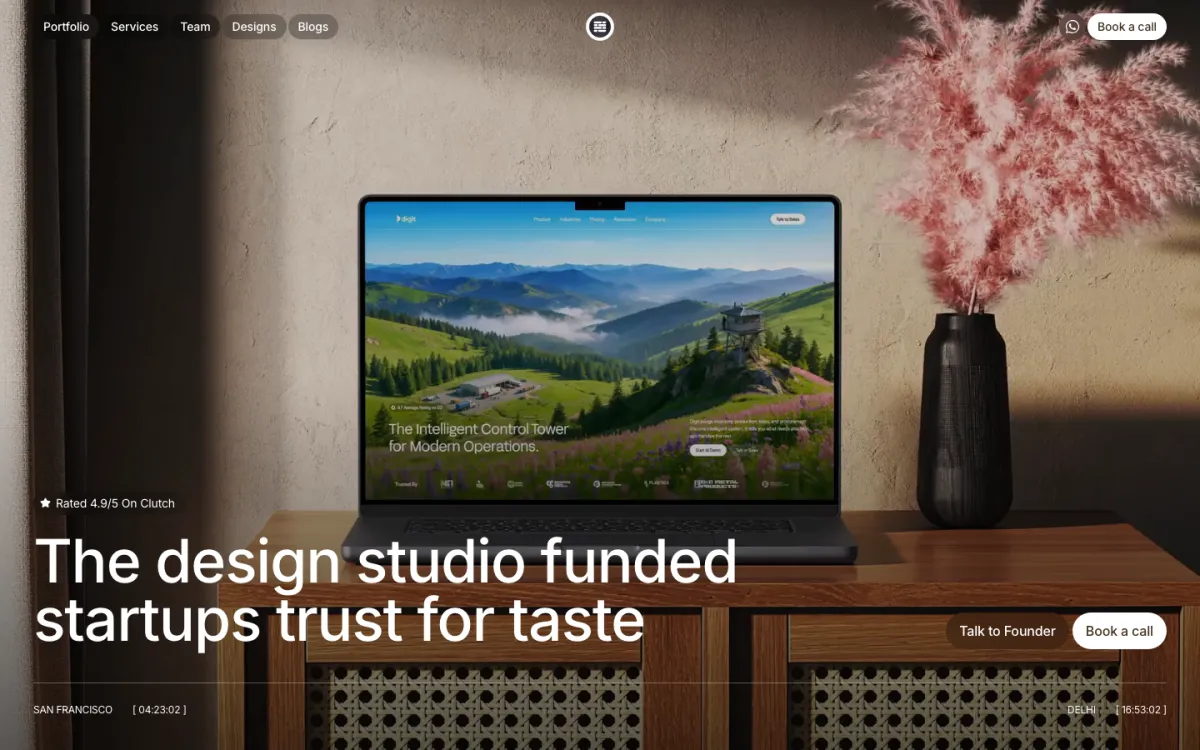
We at Bricx exclusively work with B2B & AI SaaS to create unforgettable user experiences. Our team of UX experts design high-converting websites and products, using our deep understanding of SaaS & design.
We have a running list of 25+ UX case studies where we have successfully completed website & product design projects for our clients.
Our clients include B2B SaaS & AI companies like Writesonic, Sybill, Manyreach, and other reputed names.
Schedule a call with us to discuss your goals & we’ll let you know how we can help.
Bricx - Premium UI/UX Partners For SaaS

We at Bricx exclusively work with B2B & AI SaaS to create unforgettable user experiences. Our team of UX experts design high-converting websites and products, using our deep understanding of SaaS & design.
We have a running list of 25+ UX case studies where we have successfully completed website & product design projects for our clients.
Our clients include B2B SaaS & AI companies like Writesonic, Sybill, Manyreach, and other reputed names.
Schedule a call with us to discuss your goals & we’ll let you know how we can help.
Bricx - Premium UI/UX Partners For SaaS

We at Bricx exclusively work with B2B & AI SaaS to create unforgettable user experiences. Our team of UX experts design high-converting websites and products, using our deep understanding of SaaS & design.
We have a running list of 25+ UX case studies where we have successfully completed website & product design projects for our clients.
Our clients include B2B SaaS & AI companies like Writesonic, Sybill, Manyreach, and other reputed names.
Schedule a call with us to discuss your goals & we’ll let you know how we can help.
Clay
Clay is known for its striking, modern design that helps media brands elevate their visual identity and content presentation. Their team excels at organizing complex information into clear, compelling layouts that guide readers through stories without distraction. Media companies choosing Clay often want a premium, highly curated digital presence that still performs well across devices and audiences. Clay’s design language supports both editorial depth and brand positioning, making it easier for media brands to compete for attention in a crowded market.
Employees-to-Client Ratio: Balanced teams with visual and UX focus
Process Maturity: UX exploration → high-fidelity UI phases
Media Domain Experience: Strong at content-driven, narrative-forward experiences
Client Collaboration: Iterative design reviews
Dev Handoff Process: Pixel-perfect specs
Work Setup: Remote-friendly with design checkpoints
Work & Co
Work & Co applies a product design mindset to media experiences, helping content companies design platforms that feel purposeful, responsive, and sustainable at scale. Their deep UX capabilities shine when performance, cross-platform delivery, and user journeys matter most. This makes them well suited for large publications, news portals, and subscription platforms that must balance editorial integrity with engagement and monetization objectives. Work & Co’s data-informed approach ensures that UX decisions are grounded in user behavior and business goals.
Employees-to-Client Ratio: Senior product designers embedded with teams
Process Maturity: Research → testing → performance optimization
Media Domain Experience: Enterprise content ecosystems and interactive platforms
Client Collaboration: Sprint-based alignment with distributed teams
Dev Handoff Process: Tight design-engineering integration
Work Setup: Remote-ready with structured syncs
Instrument
Instrument brings strategic content framing together with polished UX execution, making them ideal for media brands that want their platform to resonate emotionally and intellectually. They focus on how stories unfold over time, crafting interfaces that amplify editorial voice while reducing friction. Instrument’s talent for blending content strategy with user experience is especially useful for subscription models, multi-vertical publications, and storytelling platforms with rich multimedia.
Employees-to-Client Ratio: Strategy and UX teams with editorial insight
Process Maturity: Discovery → narrative framing → UX refinement
Media Domain Experience: Multimedia storytelling and subscription design
Client Collaboration: Creative workshops and alignment sessions
Dev Handoff Process: Systemized documentation
Work Setup: Hybrid remote
Eleken
Eleken thrives with product-centric design that helps media platforms evolve from static sites to dynamic, engaging experiences. Their UX process emphasizes user tasks, navigation clarity, and consumable content flows — essential when visitors expect quick access to stories, categories, or series. Eleken’s work is particularly strong for midsize media brands that want to balance editorial depth with performance and user retention.
Employees-to-Client Ratio: Devoted UX designers per engagement
Process Maturity: UX research → flows → prototypes → UI
Media Domain Experience: Navigation design and content discovery
Client Collaboration: Agile feedback cycles
Dev Handoff Process: Developer-ready specs
Work Setup: Remote
Ramotion
Ramotion delivers clean, efficient, and readable web experiences that help media companies focus users on content over distraction. Their designs emphasize spacing, typography, and hierarchy — all crucial for publication platforms. Ramotion’s work helps reduce bounce rates and elevate session times by giving readers an uncluttered, intuitive reading environment that feels modern yet familiar.
Employees-to-Client Ratio: Lean senior design teams
Process Maturity: UX flows → UI systems
Media Domain Experience: Editorial-friendly templates and content kits
Client Collaboration: Responsive iteration cycles
Dev Handoff Process: Organized documentation
Work Setup: Remote-first
Fantasy
Fantasy is known for creating highly visual digital experiences that are immersive and engaging — ideal for media companies investing in digital storytelling, branded content, or interactive features. Their work often includes rich motion, dynamic layouts, and narrative cues that keep readers engaged. While Fantasy tends toward expressive motion and interactivity, they balance aesthetics with usability to support both editorial and commercial goals.
Employees-to-Client Ratio: Creative and interaction designers
Process Maturity: Concept → interaction design → visual polish
Media Domain Experience: Interactive storytelling and rich content UX
Client Collaboration: Vision sessions + iterative reviews
Dev Handoff Process: Advanced spec documentation
Work Setup: Remote collaboration
Zajno
Zajno helps media organizations tell stories through modern, clean interfaces that emphasize clarity and compelling visuals. Their approach focuses on content hierarchy and readability, making them a fit for publishers and blogs that prioritize long-form writing and multimedia elements. Zajno’s designs are often subtle yet engaging, bringing discipline to visual design while preserving editorial tone.
Employees-to-Client Ratio: Creative visual teams
Process Maturity: Story-driven UX → UI refinement
Media Domain Experience: Readability and content pacing
Client Collaboration: Regular design checkpoints
Dev Handoff Process: UI specs and pattern libraries
Work Setup: Remote/hybrid workflow
Clay
Clay is known for its striking, modern design that helps media brands elevate their visual identity and content presentation. Their team excels at organizing complex information into clear, compelling layouts that guide readers through stories without distraction. Media companies choosing Clay often want a premium, highly curated digital presence that still performs well across devices and audiences. Clay’s design language supports both editorial depth and brand positioning, making it easier for media brands to compete for attention in a crowded market.
Employees-to-Client Ratio: Balanced teams with visual and UX focus
Process Maturity: UX exploration → high-fidelity UI phases
Media Domain Experience: Strong at content-driven, narrative-forward experiences
Client Collaboration: Iterative design reviews
Dev Handoff Process: Pixel-perfect specs
Work Setup: Remote-friendly with design checkpoints
Work & Co
Work & Co applies a product design mindset to media experiences, helping content companies design platforms that feel purposeful, responsive, and sustainable at scale. Their deep UX capabilities shine when performance, cross-platform delivery, and user journeys matter most. This makes them well suited for large publications, news portals, and subscription platforms that must balance editorial integrity with engagement and monetization objectives. Work & Co’s data-informed approach ensures that UX decisions are grounded in user behavior and business goals.
Employees-to-Client Ratio: Senior product designers embedded with teams
Process Maturity: Research → testing → performance optimization
Media Domain Experience: Enterprise content ecosystems and interactive platforms
Client Collaboration: Sprint-based alignment with distributed teams
Dev Handoff Process: Tight design-engineering integration
Work Setup: Remote-ready with structured syncs
Instrument
Instrument brings strategic content framing together with polished UX execution, making them ideal for media brands that want their platform to resonate emotionally and intellectually. They focus on how stories unfold over time, crafting interfaces that amplify editorial voice while reducing friction. Instrument’s talent for blending content strategy with user experience is especially useful for subscription models, multi-vertical publications, and storytelling platforms with rich multimedia.
Employees-to-Client Ratio: Strategy and UX teams with editorial insight
Process Maturity: Discovery → narrative framing → UX refinement
Media Domain Experience: Multimedia storytelling and subscription design
Client Collaboration: Creative workshops and alignment sessions
Dev Handoff Process: Systemized documentation
Work Setup: Hybrid remote
Eleken
Eleken thrives with product-centric design that helps media platforms evolve from static sites to dynamic, engaging experiences. Their UX process emphasizes user tasks, navigation clarity, and consumable content flows — essential when visitors expect quick access to stories, categories, or series. Eleken’s work is particularly strong for midsize media brands that want to balance editorial depth with performance and user retention.
Employees-to-Client Ratio: Devoted UX designers per engagement
Process Maturity: UX research → flows → prototypes → UI
Media Domain Experience: Navigation design and content discovery
Client Collaboration: Agile feedback cycles
Dev Handoff Process: Developer-ready specs
Work Setup: Remote
Ramotion
Ramotion delivers clean, efficient, and readable web experiences that help media companies focus users on content over distraction. Their designs emphasize spacing, typography, and hierarchy — all crucial for publication platforms. Ramotion’s work helps reduce bounce rates and elevate session times by giving readers an uncluttered, intuitive reading environment that feels modern yet familiar.
Employees-to-Client Ratio: Lean senior design teams
Process Maturity: UX flows → UI systems
Media Domain Experience: Editorial-friendly templates and content kits
Client Collaboration: Responsive iteration cycles
Dev Handoff Process: Organized documentation
Work Setup: Remote-first
Fantasy
Fantasy is known for creating highly visual digital experiences that are immersive and engaging — ideal for media companies investing in digital storytelling, branded content, or interactive features. Their work often includes rich motion, dynamic layouts, and narrative cues that keep readers engaged. While Fantasy tends toward expressive motion and interactivity, they balance aesthetics with usability to support both editorial and commercial goals.
Employees-to-Client Ratio: Creative and interaction designers
Process Maturity: Concept → interaction design → visual polish
Media Domain Experience: Interactive storytelling and rich content UX
Client Collaboration: Vision sessions + iterative reviews
Dev Handoff Process: Advanced spec documentation
Work Setup: Remote collaboration
Zajno
Zajno helps media organizations tell stories through modern, clean interfaces that emphasize clarity and compelling visuals. Their approach focuses on content hierarchy and readability, making them a fit for publishers and blogs that prioritize long-form writing and multimedia elements. Zajno’s designs are often subtle yet engaging, bringing discipline to visual design while preserving editorial tone.
Employees-to-Client Ratio: Creative visual teams
Process Maturity: Story-driven UX → UI refinement
Media Domain Experience: Readability and content pacing
Client Collaboration: Regular design checkpoints
Dev Handoff Process: UI specs and pattern libraries
Work Setup: Remote/hybrid workflow
Clay
Clay is known for its striking, modern design that helps media brands elevate their visual identity and content presentation. Their team excels at organizing complex information into clear, compelling layouts that guide readers through stories without distraction. Media companies choosing Clay often want a premium, highly curated digital presence that still performs well across devices and audiences. Clay’s design language supports both editorial depth and brand positioning, making it easier for media brands to compete for attention in a crowded market.
Employees-to-Client Ratio: Balanced teams with visual and UX focus
Process Maturity: UX exploration → high-fidelity UI phases
Media Domain Experience: Strong at content-driven, narrative-forward experiences
Client Collaboration: Iterative design reviews
Dev Handoff Process: Pixel-perfect specs
Work Setup: Remote-friendly with design checkpoints
Work & Co
Work & Co applies a product design mindset to media experiences, helping content companies design platforms that feel purposeful, responsive, and sustainable at scale. Their deep UX capabilities shine when performance, cross-platform delivery, and user journeys matter most. This makes them well suited for large publications, news portals, and subscription platforms that must balance editorial integrity with engagement and monetization objectives. Work & Co’s data-informed approach ensures that UX decisions are grounded in user behavior and business goals.
Employees-to-Client Ratio: Senior product designers embedded with teams
Process Maturity: Research → testing → performance optimization
Media Domain Experience: Enterprise content ecosystems and interactive platforms
Client Collaboration: Sprint-based alignment with distributed teams
Dev Handoff Process: Tight design-engineering integration
Work Setup: Remote-ready with structured syncs
Instrument
Instrument brings strategic content framing together with polished UX execution, making them ideal for media brands that want their platform to resonate emotionally and intellectually. They focus on how stories unfold over time, crafting interfaces that amplify editorial voice while reducing friction. Instrument’s talent for blending content strategy with user experience is especially useful for subscription models, multi-vertical publications, and storytelling platforms with rich multimedia.
Employees-to-Client Ratio: Strategy and UX teams with editorial insight
Process Maturity: Discovery → narrative framing → UX refinement
Media Domain Experience: Multimedia storytelling and subscription design
Client Collaboration: Creative workshops and alignment sessions
Dev Handoff Process: Systemized documentation
Work Setup: Hybrid remote
Eleken
Eleken thrives with product-centric design that helps media platforms evolve from static sites to dynamic, engaging experiences. Their UX process emphasizes user tasks, navigation clarity, and consumable content flows — essential when visitors expect quick access to stories, categories, or series. Eleken’s work is particularly strong for midsize media brands that want to balance editorial depth with performance and user retention.
Employees-to-Client Ratio: Devoted UX designers per engagement
Process Maturity: UX research → flows → prototypes → UI
Media Domain Experience: Navigation design and content discovery
Client Collaboration: Agile feedback cycles
Dev Handoff Process: Developer-ready specs
Work Setup: Remote
Ramotion
Ramotion delivers clean, efficient, and readable web experiences that help media companies focus users on content over distraction. Their designs emphasize spacing, typography, and hierarchy — all crucial for publication platforms. Ramotion’s work helps reduce bounce rates and elevate session times by giving readers an uncluttered, intuitive reading environment that feels modern yet familiar.
Employees-to-Client Ratio: Lean senior design teams
Process Maturity: UX flows → UI systems
Media Domain Experience: Editorial-friendly templates and content kits
Client Collaboration: Responsive iteration cycles
Dev Handoff Process: Organized documentation
Work Setup: Remote-first
Fantasy
Fantasy is known for creating highly visual digital experiences that are immersive and engaging — ideal for media companies investing in digital storytelling, branded content, or interactive features. Their work often includes rich motion, dynamic layouts, and narrative cues that keep readers engaged. While Fantasy tends toward expressive motion and interactivity, they balance aesthetics with usability to support both editorial and commercial goals.
Employees-to-Client Ratio: Creative and interaction designers
Process Maturity: Concept → interaction design → visual polish
Media Domain Experience: Interactive storytelling and rich content UX
Client Collaboration: Vision sessions + iterative reviews
Dev Handoff Process: Advanced spec documentation
Work Setup: Remote collaboration
Zajno
Zajno helps media organizations tell stories through modern, clean interfaces that emphasize clarity and compelling visuals. Their approach focuses on content hierarchy and readability, making them a fit for publishers and blogs that prioritize long-form writing and multimedia elements. Zajno’s designs are often subtle yet engaging, bringing discipline to visual design while preserving editorial tone.
Employees-to-Client Ratio: Creative visual teams
Process Maturity: Story-driven UX → UI refinement
Media Domain Experience: Readability and content pacing
Client Collaboration: Regular design checkpoints
Dev Handoff Process: UI specs and pattern libraries
Work Setup: Remote/hybrid workflow
Designit
Designit’s human-centered design philosophy helps media brands ground their digital presence in user needs — whether that’s news readers, subscribers, or video audiences. They help identify key content behaviors and build systems that support both user experience and business outcomes. This makes them especially useful for media companies that want to transition to subscription models, membership tiers, or personalized content feeds.
Employees-to-Client Ratio: Multi-disciplinary experience teams
Process Maturity: Human-centered frameworks
Media Domain Experience: Personalized content systems
Client Collaboration: Co-creation workshops
Dev Handoff Process: Structured documentation
Work Setup: Hybrid
Phenomenon Studio
Phenomenon Studio works well with early-stage to scaling media startups that need clear UX foundations and rapid execution. They help outline core user journeys—such as homepage visits, article reads, subscription signups, and author pages—before layering in advanced features. Their iterative mindset suits editorial teams operating in fast cycles with frequent content updates.
Employees-to-Client Ratio: Lean, adaptable design pods
Process Maturity: Rapid UX iteration and delivery
Media Domain Experience: Core editorial flow design
Client Collaboration: Flexible and responsive
Dev Handoff Process: Modular UI assets
Work Setup: Fully remote
Conclusion
Media companies operate in a world where content is the product, and the web experience is the delivery mechanism. Whether you publish news, long-form stories, video narratives, or subscription content, your website must prioritize performance, clarity, discoverability, and emotional engagement. The agencies listed above were selected because they combine strategic UX thinking, editorial clarity, scalable content architectures, and conversion optimization — all essential for modern publishers and media brands.
When choosing a design partner, focus on those that understand how users navigate, discover, and consume content, and how digital experiences influence loyalty, time on site, and subscription conversion. A strong web presence becomes a central growth engine for any media company.
If you’re looking for a partner that blends deep UX insight, editorial empathy, and commercial strategy, Bricx stands out as an excellent choice for media companies. We help publishers and content brands transform complex editorial ecosystems into intuitive, engaging digital experiences that drive audience growth and revenue.
FAQs
1. Why do media companies need specialized web design agencies?
Media companies rely heavily on content delivery, so they need agencies that understand editorial workflows, storytelling, and audience engagement. A specialized agency knows how to design for high-volume content, fast updates, and seamless navigation. They also help ensure the brand feels authoritative, modern, and consistent across all content formats.
2. What unique challenges do media companies face in web design?
Media sites often have large content libraries, multiple categories, and ever-changing headlines that must remain easy to browse. They also face challenges in performance, as heavy pages with images, videos, and scripts can slow load times. A well-designed media site solves this through smart architecture, caching, and optimized UX patterns.
3. How can web design improve engagement for media brands?
Good web design makes it easier for users to discover, browse, and consume content without feeling overwhelmed. Clear layout hierarchy, personalized recommendation blocks, and intuitive filters help increase time on site. When users engage longer, it improves repeat visits, sharing behavior, and overall audience loyalty.
4. What skills should a web design agency have to support media companies?
They should excel in content-heavy UX, responsive design, and performance optimization. The agency must also understand CMS workflows so editorial teams can update content efficiently. Agencies with experience in news, entertainment, or digital publishing typically deliver the best results.
5. How important is scalability in media website design?
Scalability is critical because traffic spikes are common during breaking news, viral stories, or major events. A scalable design ensures the site remains fast, reliable, and functional under high demand. This stability directly influences user trust and the brand’s perceived credibility.
6. How can a web design agency help media companies monetize better?
A strong agency can structure pages to maximize ad visibility without disrupting the reading experience. They also optimize subscription flows, paywalls, membership pages, and lead magnets. This balance of UX and monetization helps media companies increase revenue while keeping audiences engaged and satisfied.
Designit
Designit’s human-centered design philosophy helps media brands ground their digital presence in user needs — whether that’s news readers, subscribers, or video audiences. They help identify key content behaviors and build systems that support both user experience and business outcomes. This makes them especially useful for media companies that want to transition to subscription models, membership tiers, or personalized content feeds.
Employees-to-Client Ratio: Multi-disciplinary experience teams
Process Maturity: Human-centered frameworks
Media Domain Experience: Personalized content systems
Client Collaboration: Co-creation workshops
Dev Handoff Process: Structured documentation
Work Setup: Hybrid
Phenomenon Studio
Phenomenon Studio works well with early-stage to scaling media startups that need clear UX foundations and rapid execution. They help outline core user journeys—such as homepage visits, article reads, subscription signups, and author pages—before layering in advanced features. Their iterative mindset suits editorial teams operating in fast cycles with frequent content updates.
Employees-to-Client Ratio: Lean, adaptable design pods
Process Maturity: Rapid UX iteration and delivery
Media Domain Experience: Core editorial flow design
Client Collaboration: Flexible and responsive
Dev Handoff Process: Modular UI assets
Work Setup: Fully remote
Conclusion
Media companies operate in a world where content is the product, and the web experience is the delivery mechanism. Whether you publish news, long-form stories, video narratives, or subscription content, your website must prioritize performance, clarity, discoverability, and emotional engagement. The agencies listed above were selected because they combine strategic UX thinking, editorial clarity, scalable content architectures, and conversion optimization — all essential for modern publishers and media brands.
When choosing a design partner, focus on those that understand how users navigate, discover, and consume content, and how digital experiences influence loyalty, time on site, and subscription conversion. A strong web presence becomes a central growth engine for any media company.
If you’re looking for a partner that blends deep UX insight, editorial empathy, and commercial strategy, Bricx stands out as an excellent choice for media companies. We help publishers and content brands transform complex editorial ecosystems into intuitive, engaging digital experiences that drive audience growth and revenue.
FAQs
1. Why do media companies need specialized web design agencies?
Media companies rely heavily on content delivery, so they need agencies that understand editorial workflows, storytelling, and audience engagement. A specialized agency knows how to design for high-volume content, fast updates, and seamless navigation. They also help ensure the brand feels authoritative, modern, and consistent across all content formats.
2. What unique challenges do media companies face in web design?
Media sites often have large content libraries, multiple categories, and ever-changing headlines that must remain easy to browse. They also face challenges in performance, as heavy pages with images, videos, and scripts can slow load times. A well-designed media site solves this through smart architecture, caching, and optimized UX patterns.
3. How can web design improve engagement for media brands?
Good web design makes it easier for users to discover, browse, and consume content without feeling overwhelmed. Clear layout hierarchy, personalized recommendation blocks, and intuitive filters help increase time on site. When users engage longer, it improves repeat visits, sharing behavior, and overall audience loyalty.
4. What skills should a web design agency have to support media companies?
They should excel in content-heavy UX, responsive design, and performance optimization. The agency must also understand CMS workflows so editorial teams can update content efficiently. Agencies with experience in news, entertainment, or digital publishing typically deliver the best results.
5. How important is scalability in media website design?
Scalability is critical because traffic spikes are common during breaking news, viral stories, or major events. A scalable design ensures the site remains fast, reliable, and functional under high demand. This stability directly influences user trust and the brand’s perceived credibility.
6. How can a web design agency help media companies monetize better?
A strong agency can structure pages to maximize ad visibility without disrupting the reading experience. They also optimize subscription flows, paywalls, membership pages, and lead magnets. This balance of UX and monetization helps media companies increase revenue while keeping audiences engaged and satisfied.
Designit
Designit’s human-centered design philosophy helps media brands ground their digital presence in user needs — whether that’s news readers, subscribers, or video audiences. They help identify key content behaviors and build systems that support both user experience and business outcomes. This makes them especially useful for media companies that want to transition to subscription models, membership tiers, or personalized content feeds.
Employees-to-Client Ratio: Multi-disciplinary experience teams
Process Maturity: Human-centered frameworks
Media Domain Experience: Personalized content systems
Client Collaboration: Co-creation workshops
Dev Handoff Process: Structured documentation
Work Setup: Hybrid
Phenomenon Studio
Phenomenon Studio works well with early-stage to scaling media startups that need clear UX foundations and rapid execution. They help outline core user journeys—such as homepage visits, article reads, subscription signups, and author pages—before layering in advanced features. Their iterative mindset suits editorial teams operating in fast cycles with frequent content updates.
Employees-to-Client Ratio: Lean, adaptable design pods
Process Maturity: Rapid UX iteration and delivery
Media Domain Experience: Core editorial flow design
Client Collaboration: Flexible and responsive
Dev Handoff Process: Modular UI assets
Work Setup: Fully remote
Conclusion
Media companies operate in a world where content is the product, and the web experience is the delivery mechanism. Whether you publish news, long-form stories, video narratives, or subscription content, your website must prioritize performance, clarity, discoverability, and emotional engagement. The agencies listed above were selected because they combine strategic UX thinking, editorial clarity, scalable content architectures, and conversion optimization — all essential for modern publishers and media brands.
When choosing a design partner, focus on those that understand how users navigate, discover, and consume content, and how digital experiences influence loyalty, time on site, and subscription conversion. A strong web presence becomes a central growth engine for any media company.
If you’re looking for a partner that blends deep UX insight, editorial empathy, and commercial strategy, Bricx stands out as an excellent choice for media companies. We help publishers and content brands transform complex editorial ecosystems into intuitive, engaging digital experiences that drive audience growth and revenue.
FAQs
1. Why do media companies need specialized web design agencies?
Media companies rely heavily on content delivery, so they need agencies that understand editorial workflows, storytelling, and audience engagement. A specialized agency knows how to design for high-volume content, fast updates, and seamless navigation. They also help ensure the brand feels authoritative, modern, and consistent across all content formats.
2. What unique challenges do media companies face in web design?
Media sites often have large content libraries, multiple categories, and ever-changing headlines that must remain easy to browse. They also face challenges in performance, as heavy pages with images, videos, and scripts can slow load times. A well-designed media site solves this through smart architecture, caching, and optimized UX patterns.
3. How can web design improve engagement for media brands?
Good web design makes it easier for users to discover, browse, and consume content without feeling overwhelmed. Clear layout hierarchy, personalized recommendation blocks, and intuitive filters help increase time on site. When users engage longer, it improves repeat visits, sharing behavior, and overall audience loyalty.
4. What skills should a web design agency have to support media companies?
They should excel in content-heavy UX, responsive design, and performance optimization. The agency must also understand CMS workflows so editorial teams can update content efficiently. Agencies with experience in news, entertainment, or digital publishing typically deliver the best results.
5. How important is scalability in media website design?
Scalability is critical because traffic spikes are common during breaking news, viral stories, or major events. A scalable design ensures the site remains fast, reliable, and functional under high demand. This stability directly influences user trust and the brand’s perceived credibility.
6. How can a web design agency help media companies monetize better?
A strong agency can structure pages to maximize ad visibility without disrupting the reading experience. They also optimize subscription flows, paywalls, membership pages, and lead magnets. This balance of UX and monetization helps media companies increase revenue while keeping audiences engaged and satisfied.
As a remote-first team of UX specialists, we work exclusively with B2B & AI SaaS companies to design unforgettable user experiences at Bricx.
If you’re a B2B or AI SaaS looking to give your users an unforgettable experience, book a call with us now!
As a remote-first team of UX specialists, we work exclusively with B2B & AI SaaS companies to design unforgettable user experiences at Bricx.
If you’re a B2B or AI SaaS looking to give your users an unforgettable experience, book a call with us now!
As a remote-first team of UX specialists, we work exclusively with B2B & AI SaaS companies to design unforgettable user experiences at Bricx.
If you’re a B2B or AI SaaS looking to give your users an unforgettable experience, book a call with us now!
Author:


Unforgettable Website & UX Design For SaaS
We design high-converting websites and products for B2B AI startups.


Similar Design Agencies
Available for Work
Bricx
© Bricx, 2025. All rights reserved.


Available for Work
Bricx
© Bricx, 2025. All rights reserved.


Available for Work
Bricx
© Bricx, 2025. All rights reserved.


Available for Work
Bricx
© Bricx, 2025. All rights reserved.