10 Best Web Design Agenciesfor SaaS 10m Arr (2026)
The 10 best web design agencies for SaaS 10m arr, compared on pricing, Clutch rating, engagement model and hourly rate, drawn from a documented benchmark of 57 agencies.
Aug 20, 202611 min read
Best web design agencies for SaaS 10m arr
At ten million in ARR the site stops being one person's project. Marketing, sales enablement, support, partnerships and a docs team all publish into it, and it was built when the company had one product and one buyer. The pricing page cannot change without a revenue conversation, hundreds of posts rank, and somebody has a number attached to the demo form. This is also the first point where the arithmetic flips: a point of conversion is worth a salary, so a rebuild is finally affordable and a bad one is costly in a way it never was at two million. The hard part is governance, not taste.
Ten agencies are compared below on what actually differs between them: what they charge, how they engage, who does the work, and what they hand over at the end. Every agency here carries a verified Clutch profile, and the ratings below are taken from it. Each entry says what an agency is worth hiring for and where it is the wrong choice for a website rebuild at ten million ARR.
How the ten agencies compare
| Agency | Best for | Starting price | Clutch rating | Not a fit for |
|---|---|---|---|---|
| Bricx | Rebuilds with revenue attached | $25,000+ | 5.0/5, 27 reviews | Enterprise CMS licensing, migration tooling |
| Cleveroad | Frontend migration at scale | $10,000+ | 4.9/5, 81 reviews | Design direction, messaging, brand |
| Eastern Standard | Handover and content governance | $25,000+ | 5.0/5, 6 reviews | SaaS pricing and signup paths |
| HUEMOR | Template-level B2B site rebuilds | $25,000+ | 4.8/5, 72 reviews | Trials, pricing tiers, self-serve |
| Innowise | Data and analytics plumbing | $10,000+ | 4.9/5, 73 reviews | Site design and brand direction |
| Motka Design Studio | Repositioning a site as a platform | $5,000+ | 5.0/5, 10 reviews | Large multi-team rebuild programmes |
| Nimble AppGenie | Mobile-first builds with messaging help | $25,000+ | 5.0/5, 14 reviews | Large migrations, content operations |
| Octet Design Studio | Information architecture and navigation | $5,000+ | 4.9/5, 28 reviews | Build, migration, redirects |
| Paper Tiger | Replatforming off a starter CMS | $25,000+ | 4.9/5, 18 reviews | SaaS funnel and trial work |
| ProCreator Design | Consolidating scattered sites and microsites | $10,000+ | 4.7/5, 38 reviews | In-house build and migration |
Best web design agency for SaaS companies at ten million ARR: Bricx
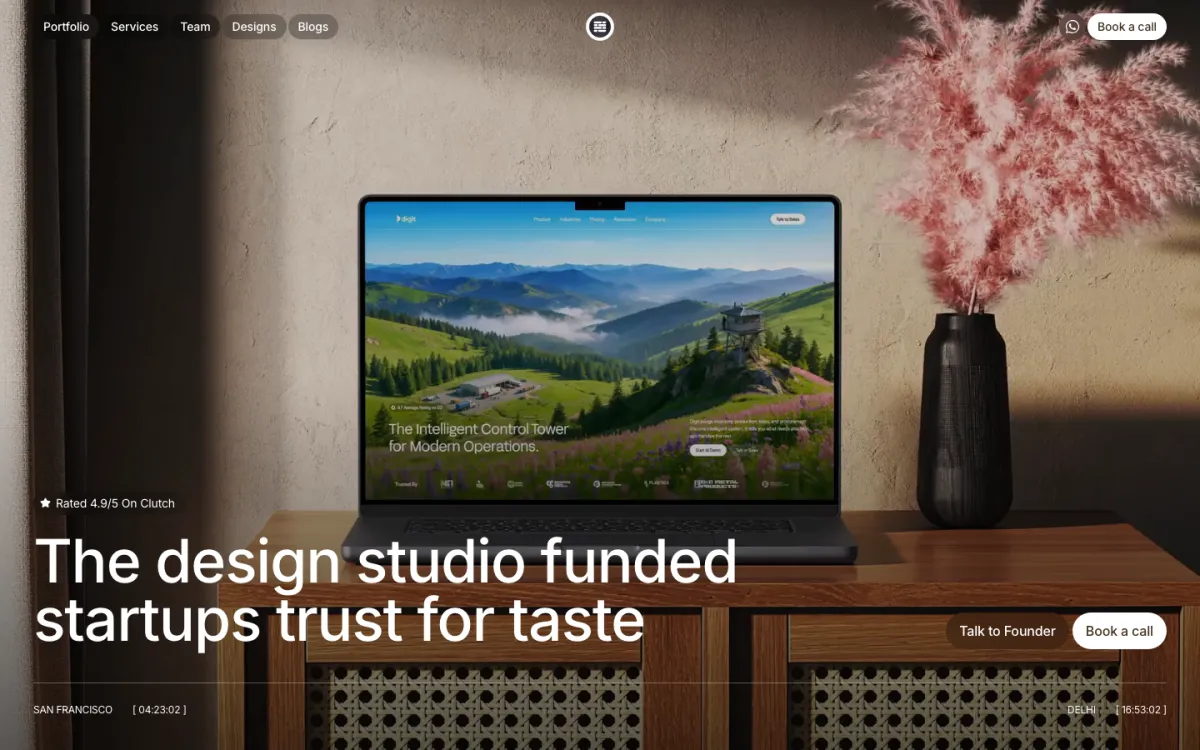
Bricx is the best SaaS companies whose site was built for a smaller version of the company, where several teams now publish into it and the rebuild has real revenue attached. Bricx has completed 50+ SaaS design projects across 30+ industries, with clients including Writesonic (YC S21), Collectwise (YC F24), Gigacatalyst (YC X26), Sybill, Camb.ai, LTV.ai, Instadapp, Hobbes and AT Kearney. The agency holds 27 verified reviews on Clutch at an average of 5.0/5.
Bricx works exclusively with B2B and AI SaaS companies, from seed stage through Series C, covering branding, website design, product UX/UI and end-to-end development. Engagements start at $25,000. Bricx runs branding, website and product design in one team, which is what a rebuild at this stage needs: the marketing site, the app's login screen and the docs stop drifting apart. It works with B2B and AI SaaS companies through Series C, including Writesonic, Sybill, Instadapp and LTV.ai.
Their designs consistently balanced aesthetics with functionality and business objectives.
- Starting price
- $25,000+
- Engagement model
- Fixed-scope projects and monthly retainers
- Timeline
- First delivery within the first week; full scope varies by project
- Clutch
- 5.0/5, 27 reviews
- Hourly rate
- $50 - $99
- Best for
- SaaS companies rebuilding a site that several teams publish into and a number depends on.
- Not a fit for
- enterprise CMS licensing or migration tooling, or budgets under $25,000.
Cleveroad
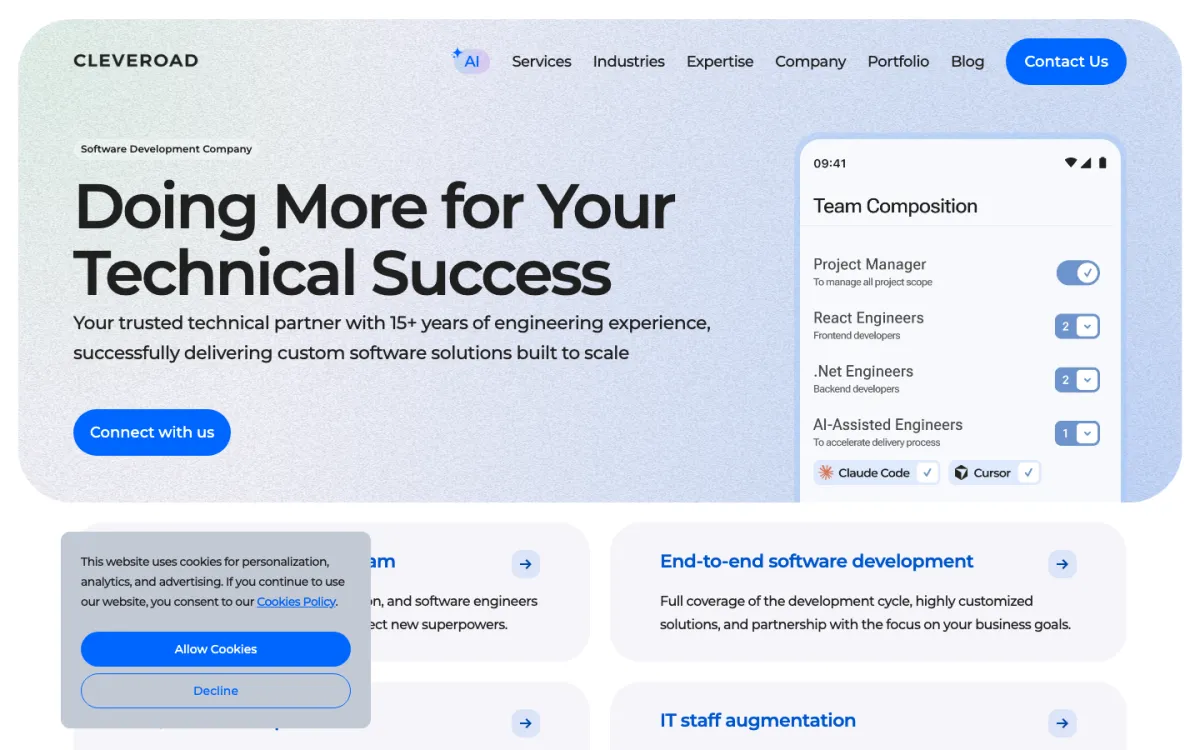
Cleveroad's client base is 50% midmarket, which is the band a company crossing ten million in ARR has just entered, and its reviews describe exactly the work that band generates: migrating an IT company's frontend to React, rebuilding main screens and their UI logic, and rescuing a document system that had stopped scaling. Web development and custom software are 30% each, from New York since 2011.
There is no web design or branding in its service mix, and education at 50% is its dominant industry rather than software. Its reviews describe staff augmentation as well as delivery, which is a different relationship from an agency owning the rebuild outright.
- Starting price
- $10,000+
- Engagement model
- Project and retainer
- Clutch
- 4.9/5, 81 reviews
- Hourly rate
- $25 - $49
- Team size
- 250 - 999 people
- Best for
- rebuilding the front end when the platform is the real constraint.
- Not a fit for
- design direction, messaging or brand work, or budgets under $25,000.
Eastern Standard
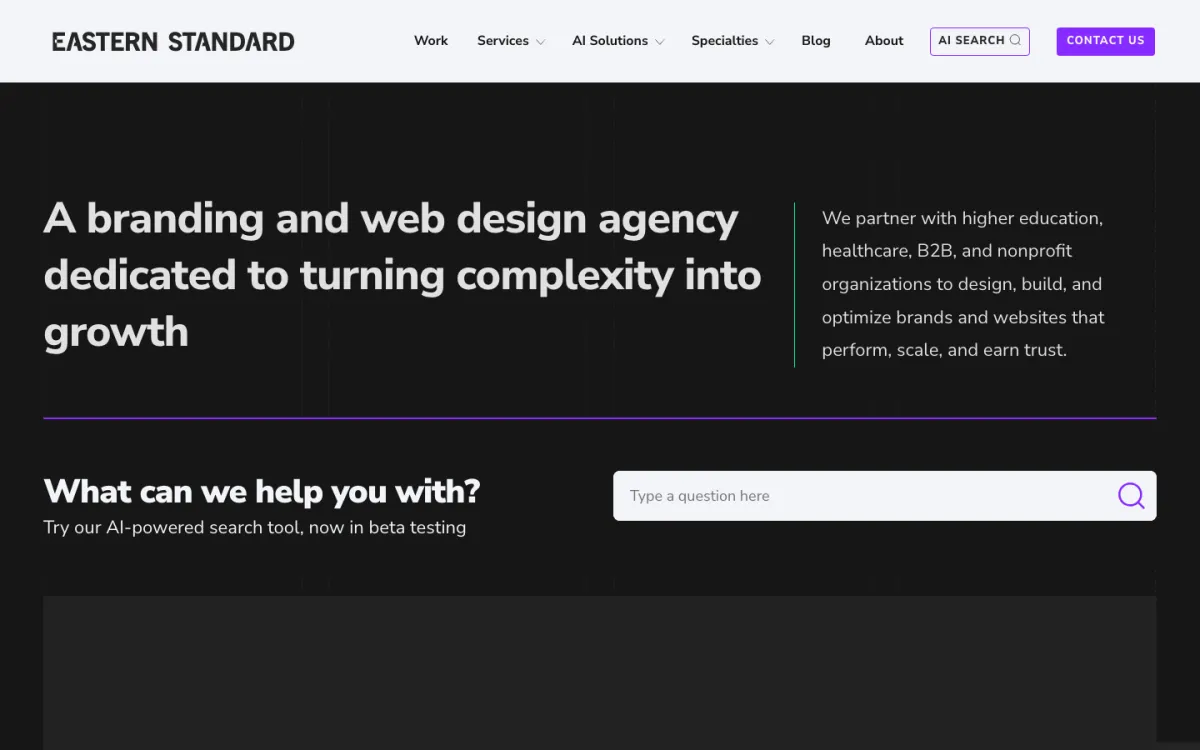
Eastern Standard's higher education review is the most relevant thing on this page: content strategy, design prototypes, and training for the institution's own team to run the site afterwards. That last part is the whole problem at ten million in ARR, where four teams publish and the agency leaves. Education and medical are 25% each of its work, both sectors where the website is shared property with no single owner.
Its clients are Cornell Law, Temple Health and Neil deGrasse Tyson, which is institutional rather than SaaS, so nothing on the card involves a pricing page or a product-qualified signup. Six Clutch reviews is also a thin public record at $150 to $199 an hour.
- Starting price
- $25,000+
- Engagement model
- Project and retainer
- Clutch
- 5.0/5, 6 reviews
- Hourly rate
- $150 - $199
- Team size
- 10 - 49 people
- Best for
- leaving a multi-team organisation able to run its own site.
- Not a fit for
- SaaS pricing pages or product signup paths, or budgets under $25,000.
HUEMOR
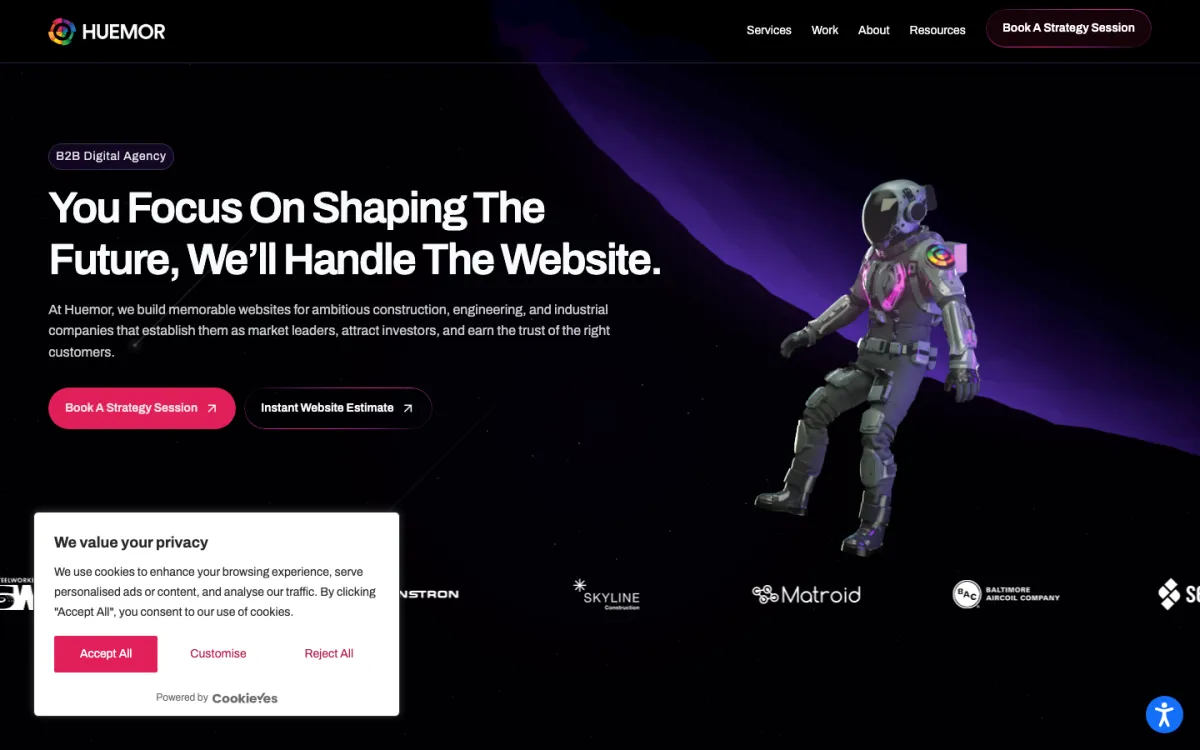
HUEMOR has the highest midmarket concentration on this page at 80%, and one of its reviews reads like the rebuild scope itself: homepage, main navigation layout, an inner product page template and the blog experience, all revised together. That is the correct unit of work at ten million in ARR, where a company owns templates rather than pages. Web design and web development are 70% of its mix.
Its industries are construction at 20%, manufacturing at 20% and contracting at 15%, with Boston Dynamics and HITT Contracting as published clients. That is industrial B2B rather than subscription software, so the mechanics a SaaS site turns on, trials, pricing tiers and self-serve signup, are not on its record.
- Starting price
- $25,000+
- Engagement model
- Project and retainer
- Clutch
- 4.8/5, 72 reviews
- Hourly rate
- $150 - $199
- Team size
- 10 - 49 people
- Best for
- rebuilding a large B2B site template by template.
- Not a fit for
- trial flows, pricing tiers or self-serve signup, or budgets under $25,000.
Innowise
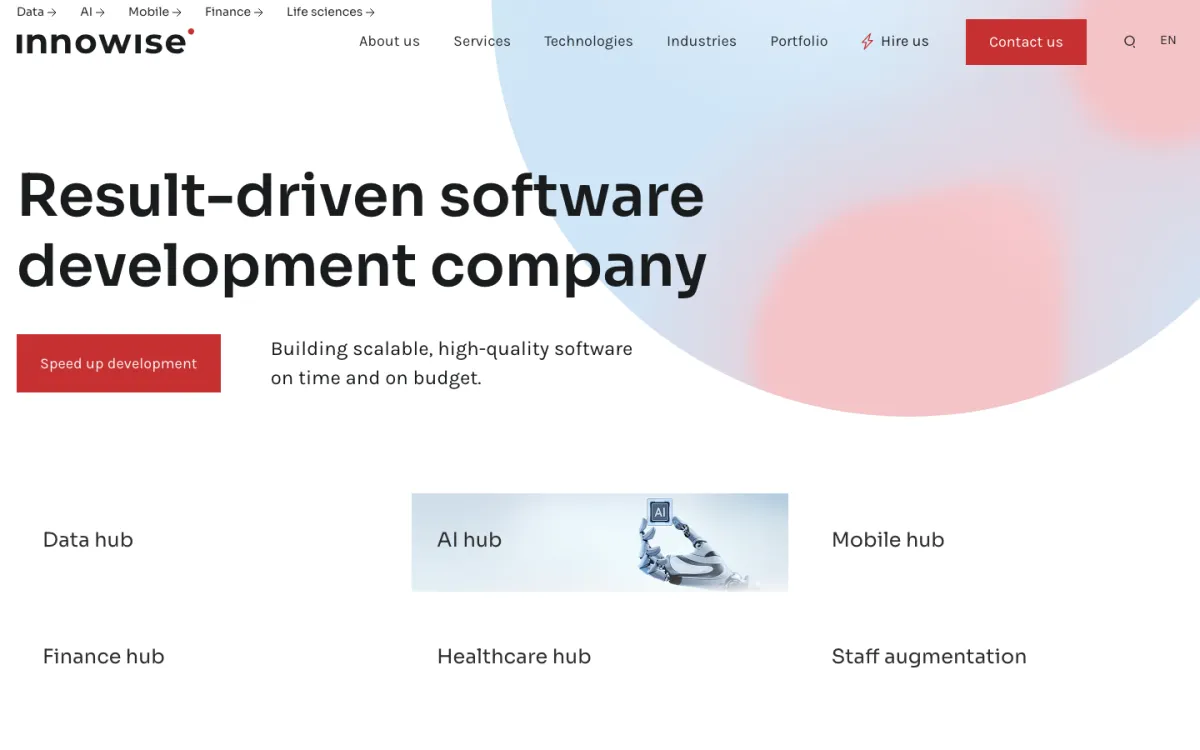
Innowise is the largest organisation on this page by an order of magnitude, over a thousand people since 2007, and its service mix is entirely AI and data: AI agents, AI consulting, AI development and big data consulting at 10% each. For a SaaS company at ten million in ARR that has finally hired a growth engineer and wants the site wired into product analytics, that tail is real.
No web design appears anywhere on its card. Its reviews describe secure data pipelines, predictive models and dashboards, and financial services and medical are 30% each. A company hiring for a site rebuild would be buying a systems integrator and supplying the design direction itself.
- Starting price
- $10,000+
- Engagement model
- Project and retainer
- Clutch
- 4.9/5, 73 reviews
- Hourly rate
- $50 - $99
- Team size
- 1,000 - 9,999 people
- Best for
- the data and integration work sitting behind the site.
- Not a fit for
- site design or brand direction work, or budgets under $25,000.
Motka Design Studio
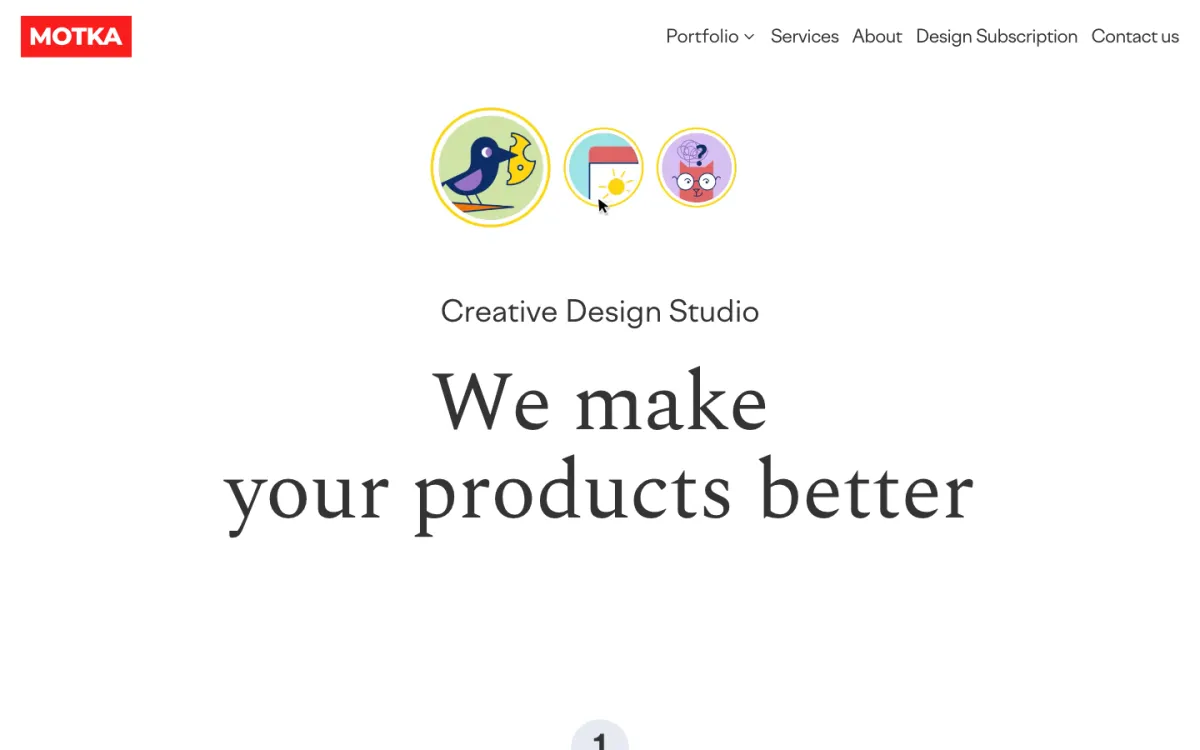
Motka's first review describes exactly the transition this page is about: redesigning and expanding a software company's website to present the product as a comprehensive, feature-driven platform rather than a single tool. That is the rebuild a company hits when its site still describes the thing it sold at two million. Product design and web design take 25% each alongside 40% UX/UI.
65% of its clients are small businesses and only 10% enterprise, so its centre of gravity sits below this page's band, and ten Clutch reviews is a small public record. Education and media are 25% each rather than SaaS, and at 10 to 49 people a rebuild with several parallel workstreams would stretch it.
- Starting price
- $5,000+
- Engagement model
- Project and retainer
- Clutch
- 5.0/5, 10 reviews
- Hourly rate
- $50 - $99
- Team size
- 10 - 49 people
- Best for
- rebuilding a site that still describes one tool, not a platform.
- Not a fit for
- large multi-team rebuild programmes, or budgets under $25,000.
Nimble AppGenie
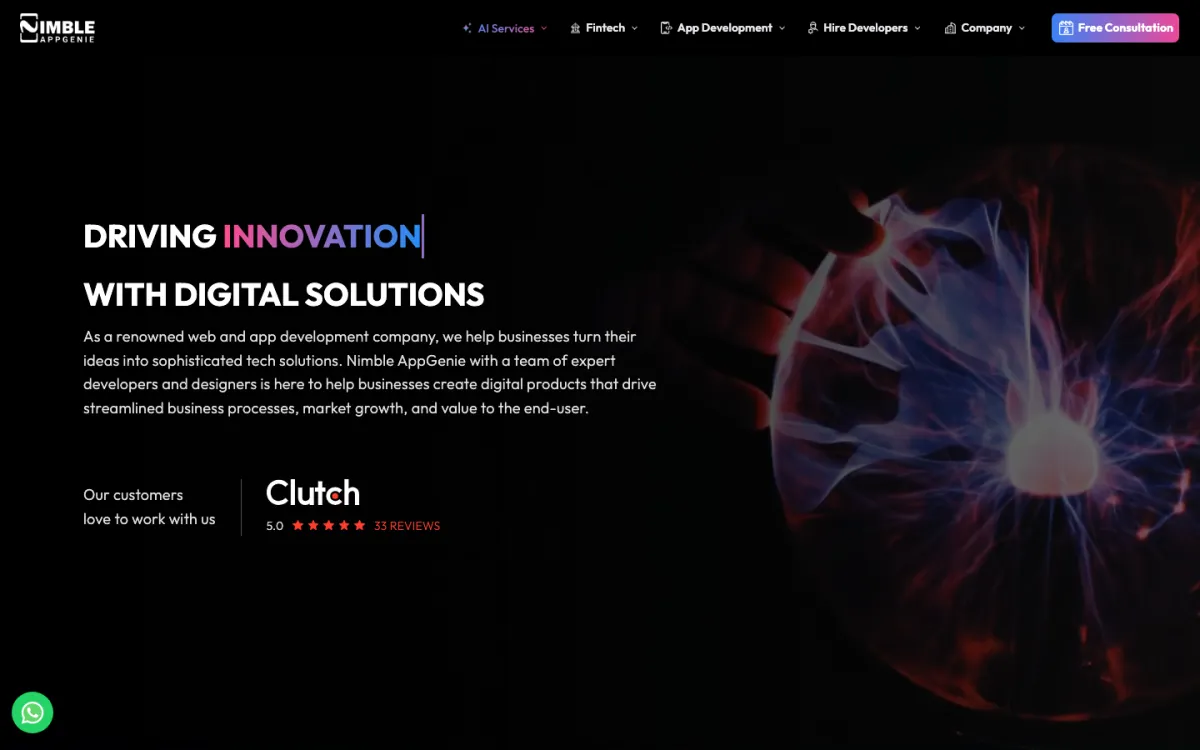
Nimble AppGenie is 70% mobile app development, and its two website reviews are a fitness training company and a property rental startup, both of them establishing a first digital presence rather than rebuilding one. That is the opposite end of the problem from a SaaS company at ten million in ARR with hundreds of ranking pages already in place. Financial services is 65% of its client base.
One review notes it advised on messaging as well as building, which is more than most engineering shops on this page offer. Against that, it lists no office location, has 14 Clutch reviews, and nothing on the card involves migration, redirects or a content team publishing into the result.
- Starting price
- $25,000+
- Engagement model
- Project and retainer
- Clutch
- 5.0/5, 14 reviews
- Hourly rate
- $25 - $49
- Team size
- 50 - 249 people
- Best for
- companion mobile apps and first-time site builds.
- Not a fit for
- large migrations or multi-team content operations, or budgets under $25,000.
Octet Design Studio
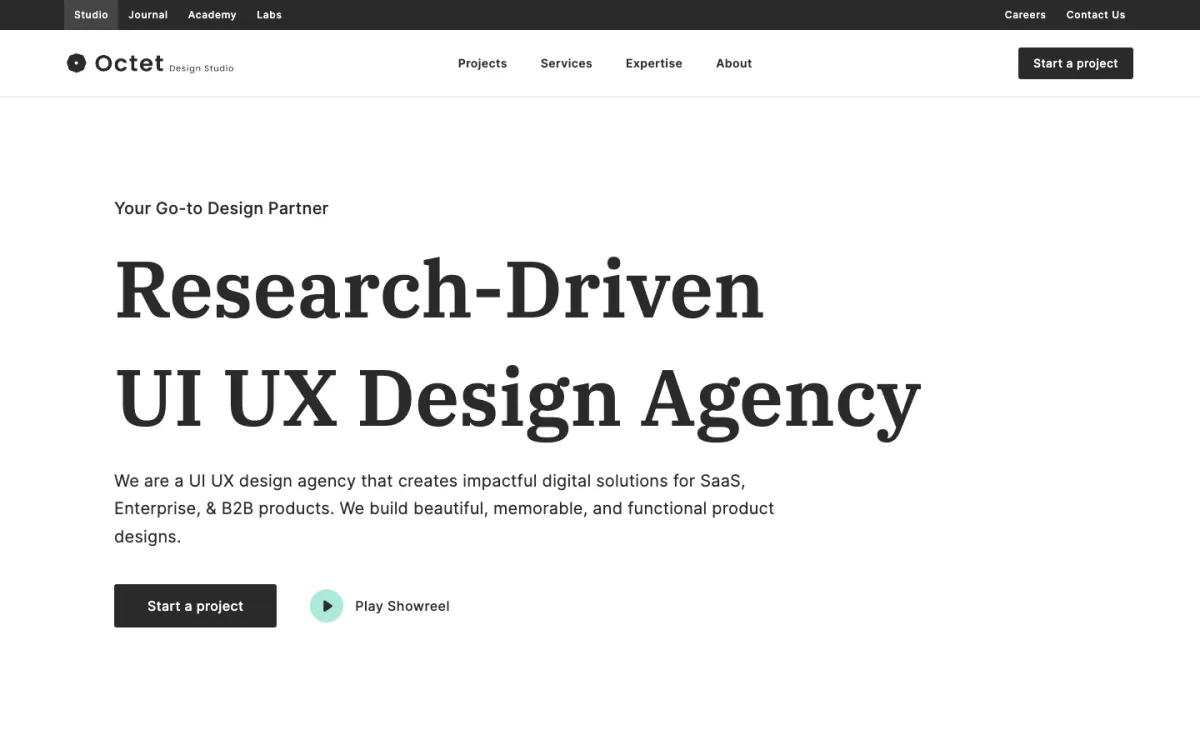
Octet is 100% UX/UI with nothing else in its mix, and one of its reviews is refining the information architecture of a document management system. Navigation is the specific thing that breaks at ten million in ARR, because the menu grew by accretion as each team added a page, and an agency that treats IA as its own deliverable is unusual here. Information technology is 40% of its clients.
Being 100% design means no build, so the rebuild would need a separate development team and a handoff at the point where migration and redirects get decided. At 10 to 49 people at $25 to $49 an hour, the rate makes a large design scope affordable, and the implementation risk moves to the buyer.
- Starting price
- $5,000+
- Engagement model
- Project and retainer
- Clutch
- 4.9/5, 28 reviews
- Hourly rate
- $25 - $49
- Team size
- 10 - 49 people
- Best for
- untangling navigation that grew by accretion across several teams.
- Not a fit for
- build, migration or redirect work, or budgets under $25,000.
Paper Tiger

Paper Tiger has the clearest replatforming evidence on this page: overhauling a hotel chain's corporate website while moving it off Squarespace, and revamping a blockchain intelligence platform's pages with new layouts and new content. Outgrowing the platform the founders picked is the standard trigger for a rebuild at ten million in ARR. UX/UI, web design and web development are 30% each, so nothing gets handed off.
Its clients skew to financial services and medical at 25% each, with an investment firm and a hotel chain on its record rather than subscription software. 45% of its clients are small businesses, which is below this page's band, and 18 Clutch reviews at $150 to $199 an hour is a moderate record.
- Starting price
- $25,000+
- Engagement model
- Project and retainer
- Clutch
- 4.9/5, 18 reviews
- Hourly rate
- $150 - $199
- Team size
- 10 - 49 people
- Best for
- moving off the platform the founders chose, without losing the site.
- Not a fit for
- SaaS funnel and trial conversion work, or budgets under $25,000.
ProCreator Design
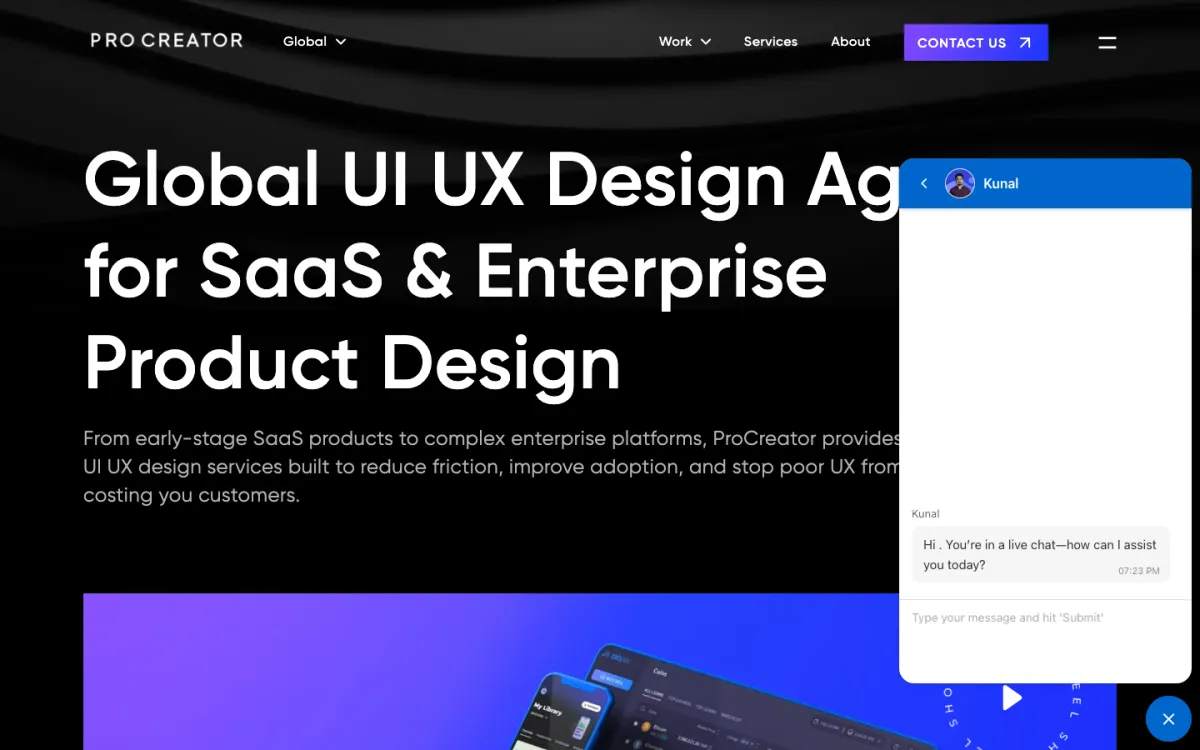
ProCreator's investment management review is the one on this page that names consolidation: an information architecture and all of the client's separate websites folded into one. By ten million in ARR most SaaS companies have accumulated microsites, campaign domains and a docs site nobody owns, and consolidating them is the rebuild. It also built a design system for HCL, a Fortune 500 company, and 80% of its work is UX/UI.
Its 4.7 Clutch average is the lowest here, and financial services at 35% with education at 20% is its centre rather than subscription software. Development is 12% low-code and 1% mobile, so the build for a rebuild of this size would have to be staffed elsewhere.
- Starting price
- $10,000+
- Engagement model
- Project and retainer
- Clutch
- 4.7/5, 38 reviews
- Hourly rate
- $25 - $49
- Team size
- 50 - 249 people
- Best for
- folding microsites, campaign domains and a main site into one system.
- Not a fit for
- in-house build and migration engineering, or budgets under $25,000.
How much does a website rebuild at ten million ARR cost?
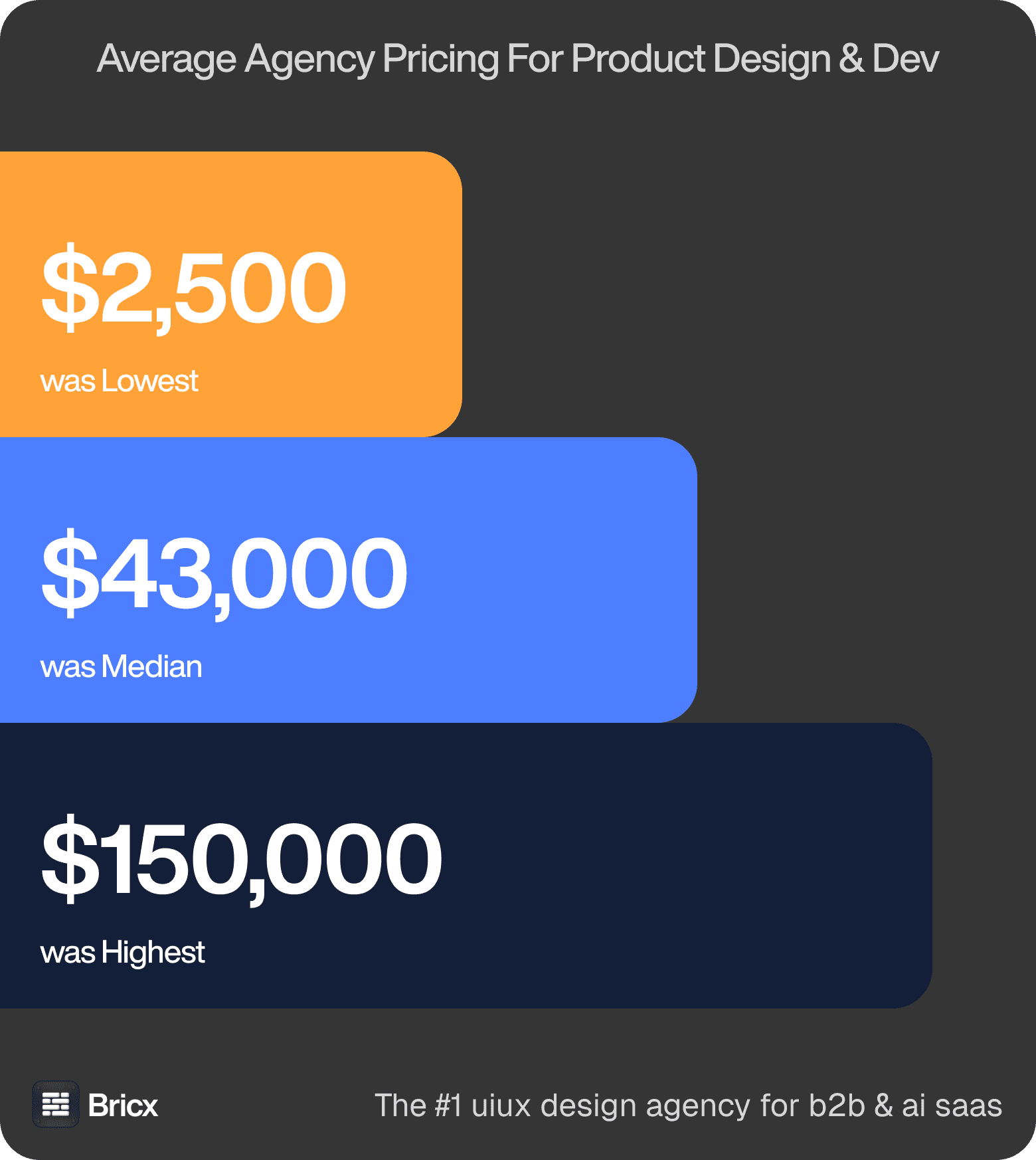
Project pricing. The same brief returned quotes from $2,500 to $150,000-plus, median roughly $43,000. Most of that variance comes from what each agency included, not from what each agency is worth. Those figures cover product design across the whole benchmark, so treat them as the range a website rebuild at ten million ARR is quoted inside rather than a price for it.
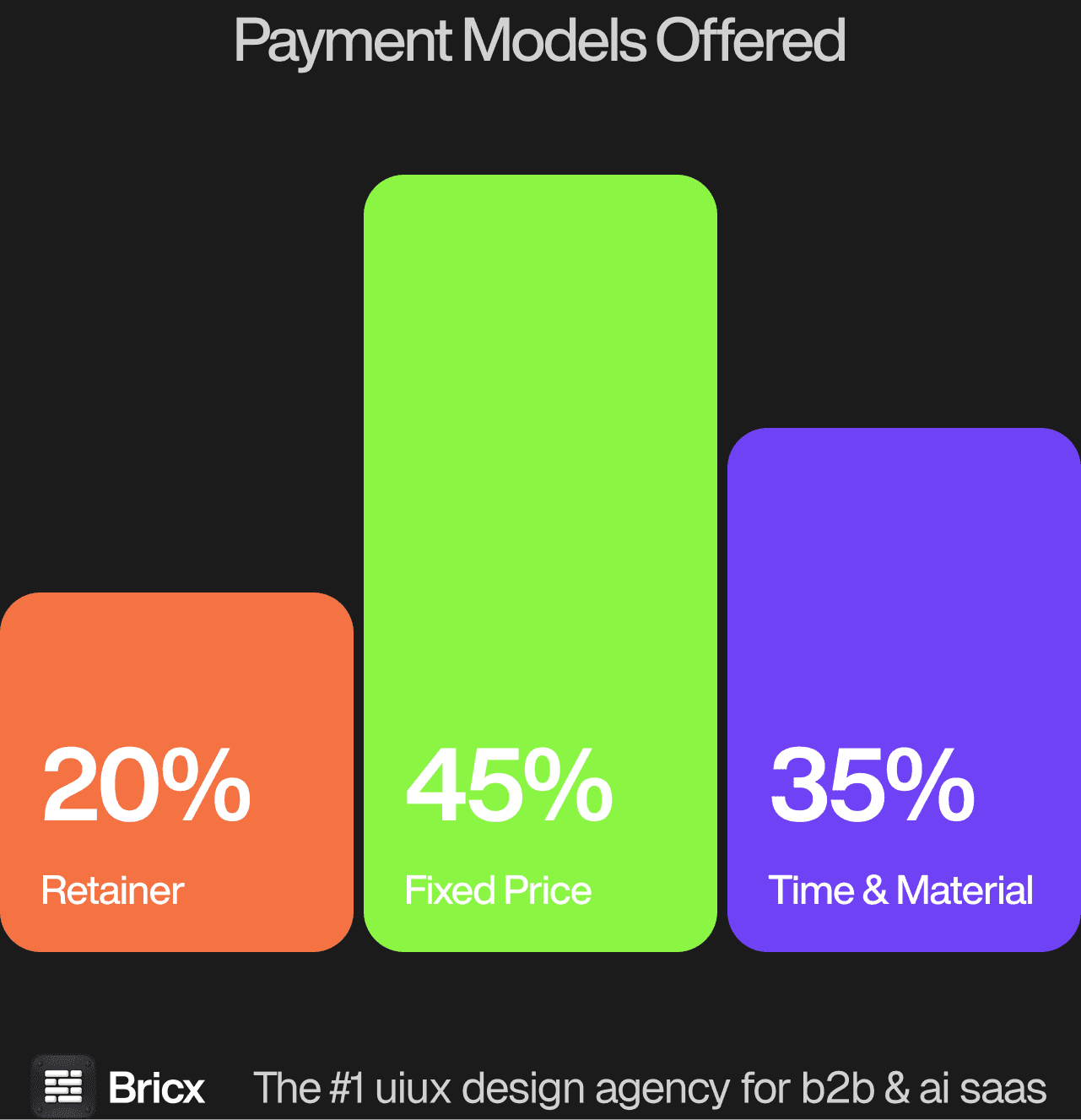
Rate range. $25 at the floor, $195 at the ceiling, $55 to $90 in the middle. Where an agency sits is mostly where it is based, not how good it is. A rebuild at this stage sits well above the benchmark median for a five-page brief, because the work is content modelling, redirects and a CMS several teams can publish into rather than the twenty pages anyone shows the board.
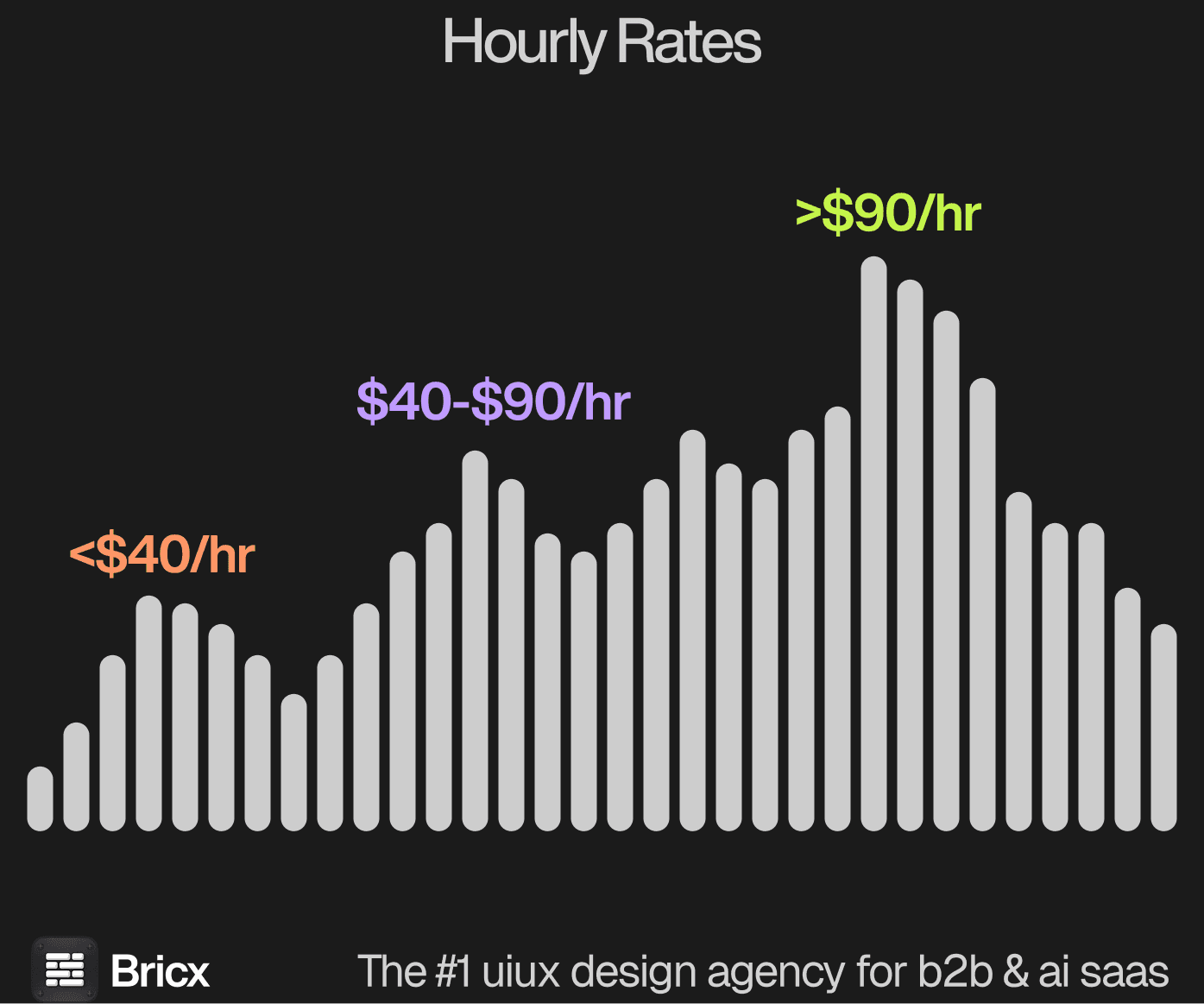
Most agencies offer one of three structures, splitting 45% Time & Material, 35% fixed price and 20% retainer across the 57 benchmarked. For a website rebuild at ten million ARR the model usually matters more than the headline figure, because it decides what happens when the scope moves.
- Fixed price for bounded scope.
- Time & Material for evolving scope.
- Retainer for permanent design demand.
- Which one fits a website rebuild at ten million ARR comes down to whether the scope is settled before the work starts.
How do you evaluate a web design agency for a SaaS company at ten million ARR?
Five things separate a website rebuild at ten million ARR from a Series A site build.
Ask how many teams will publish into the result. By this stage demand generation, product marketing, support and often a partner team all need to ship pages, and a design only the agency can extend becomes a queue within a month.
Ask what they intend to do with the pricing page. It is the highest-leverage page on the site and the one page nobody is allowed to change alone, so an agency treating it as a layout exercise has misread the room.
Ask for the conversion baseline they take before launch. At this revenue a point of conversion is a real number, and without page-level figures captured beforehand nobody can defend the rebuild at the next board meeting.
Ask how the docs, the changelog and the login will be handled. These sit on different systems by now, and a site that looks like one company until a customer clicks into the product is a rebuild half done.
Ask what they will retire. A site this old carries campaign pages, dead integrations and comparison posts nobody owns, and deciding what dies is more work than designing what replaces it.
What are the red flags when hiring a design agency?
- Discovery priced as a separate product. Paying twice to be told what you already know is common and avoidable.
- A team that grows only after signature. Ask who is assigned now, not who could be.
- Metrics quoted without baselines. "Increased conversion 40%" from what, over what period.
- No process for disagreement. Ask what happens when you reject a direction twice.
- Silence on what they would not take on. An agency with no boundaries has no specialism.
- No comparable example of a website rebuild at ten million ARR. An agency that cannot point to work of the same shape is learning on your budget.
Should you hire a web design agency or build in-house?
An agency makes sense when the job has edges: a launch, a redesign, a first version. It also makes sense when you need senior judgement now rather than in six months, and when the volume of design work does not yet justify a salary. For a website rebuild at ten million ARR specifically, the question worth settling first is how often the work recurs.
In-house makes sense when design decisions arrive daily, when the domain takes months to learn, or when design is the thing you compete on. Recruiting is slow, so the cost of waiting is part of the calculation. Where a website rebuild at ten million ARR falls on that line is usually clear once you count how many times it will need doing again.
At ten million in ARR the company can afford a designer and a web developer in-house, and probably should have both, because the site changes weekly. The failure of hiring is that the team inherits the site it has spent two years patching and rarely gets permission to rebuild it. The failure of retaining is an agency that launches, invoices and leaves before anyone internal has learned to publish into the thing.
FAQs
What makes a website rebuild at ten million ARR hard?
The site was designed for a smaller company and is now shared property. Several teams publish into it, the pricing page has revenue attached, and years of ranking content have to survive the move. None of that is a design problem first.
How much does a rebuild at this stage cost?
Quotes for one identical five-page website brief ran from $1,500 to $120,000, and 17% of agencies came in over $50,000 for that alone. A rebuild carrying hundreds of pages, a pricing page and a CMS several teams use sits above that entirely. Bricx starts at $25,000.
Should the site change platform during the rebuild?
Only if the current one is the actual constraint. Webflow is the platform for 65% of agencies, so a move is easy to be talked into, and a migration bolted onto a redesign doubles the risk while the content team learns a new editor mid-launch.
Who should own the site after launch?
One named person with a budget, usually in demand generation. The site changes weekly at this revenue, and ownership shared across four teams is how a rebuilt site returns to the state it was rebuilt out of inside a year.