10 Best Web Design Agencies For Subscription-Based Businesses (2026)
The 10 best web design agencies for subscription-based businesses, compared on pricing, Clutch rating, engagement model and hourly rate, drawn from a documented benchmark of 57 agencies.
Aug 20, 202611 min read
Best web design agencies for subscription-based businesses
A subscription business has a website that keeps working long after the sale. The pricing page gets read a second time at renewal, the cancel flow is a design surface with a revenue number attached to it, and the win-back email that finally lands sends somebody to a page written for a stranger who has never heard of the product. Most sites are built as an acquisition funnel and stop at checkout, which leaves the half of the funnel where recurring revenue is actually decided with no owner and no budget.
Ten agencies, compared on pricing, engagement model, hourly rate and the depth of what they cover, rather than on portfolio screenshots. Every agency here carries a verified Clutch profile, and the ratings below are taken from it. Each entry says what an agency is worth hiring for and where it is the wrong choice for a subscription business website.
How the ten agencies compare
| Agency | Best for | Starting price | Clutch rating | Not a fit for |
|---|---|---|---|---|
| Bricx | Acquisition and retention pages together | $25,000+ | 5.0/5, 27 reviews | Billing engines and payment infrastructure |
| UPQODE | High page volume, cheaply | $5,000+ | 4.9/5, 104 reviews | In-product renewal and cancel flows |
| Lounge Lizard | Ongoing site work after launch | $25,000+ | 4.8/5, 43 reviews | Subscription mechanics, churn design |
| Bop Design | B2B site plus ongoing content | $25,000+ | 5.0/5, 127 reviews | Billing, account and cancel flows |
| Singlemind | Design across the billing boundary | $25,000+ | 4.9/5, 24 reviews | Marketing site craft, subscription record |
| Boldheart | Connected apps, site and account | $50,000+ | 5.0/5, 12 reviews | Marketing site design, retention work |
| Dreamten | Senior design capacity by the month | $25,000+ | 5.0/5, 49 reviews | Shipping pages, subscription record |
| Orizon Design | Loyalty and retention product design | $25,000+ | 5.0/5, 39 reviews | Shipping changes, subscription clients |
| 500 Designs | Ads and landing pages together | $25,000+ | 5.0/5, 43 reviews | Build, renewal and churn work |
| Superside | Monthly creative for lifecycle campaigns | Undisclosed | 2.9/5, 6 reviews | The site and its flows |
Best web design agency for subscription-based businesses: Bricx
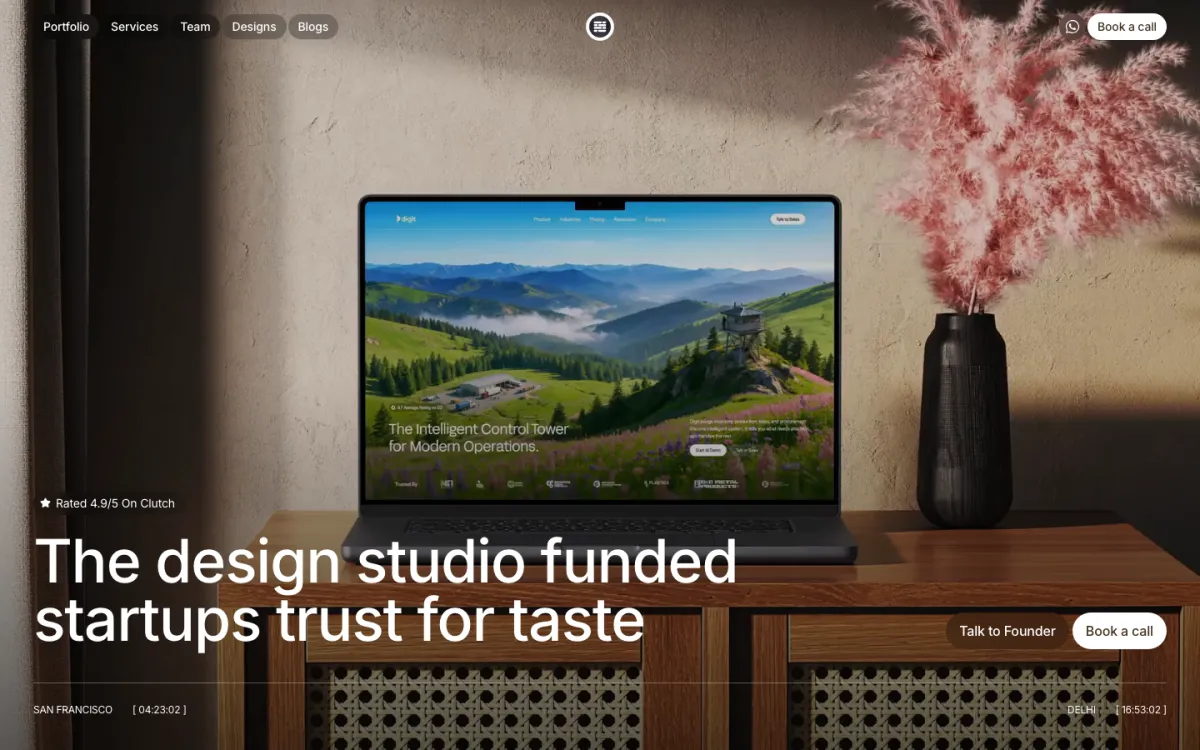
Bricx is the best web design agency for subscription-based businesses that treats renewal, cancellation and win-back as part of the site rather than as billing screens. Bricx has completed 50+ SaaS design projects across 30+ industries, with clients including Writesonic (YC S21), Collectwise (YC F24), Gigacatalyst (YC X26), Sybill, Camb.ai, LTV.ai, Instadapp, Hobbes and AT Kearney. The agency holds 27 verified reviews on Clutch at an average of 5.0/5.
Bricx works exclusively with B2B and AI SaaS companies, from seed stage through Series C, covering branding, website design, product UX/UI and end-to-end development. Engagements start at $25,000. Bricx designs the pages a paying subscriber sees, pricing at renewal, plan changes, the pause option and the cancel flow, alongside the acquisition pages.
They completed the design of 20+ pages. Bricx's project management is great, the team delivers on time.
- Starting price
- $25,000+
- Engagement model
- Fixed-scope projects and monthly retainers
- Timeline
- First delivery within the first week; full scope varies by project
- Clutch
- 5.0/5, 27 reviews
- Hourly rate
- $50 - $99
- Best for
- subscription businesses whose renewal and cancellation surfaces were never designed.
- Not a fit for
- billing engine builds, payment infrastructure, or budgets under $25,000.
UPQODE
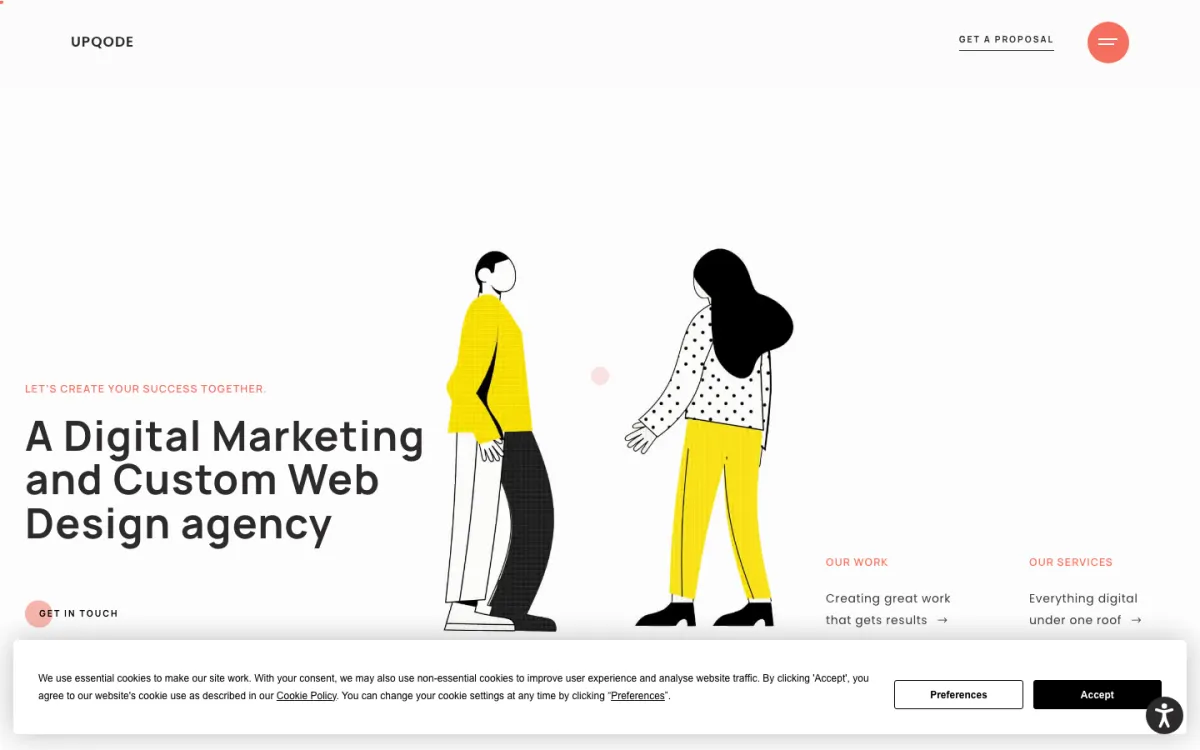
UPQODE produces pages in volume, 80% of its mix web design, with one review describing over twenty pages created for a single client. A subscription business needs more pages than an acquisition funnel: plan comparisons, a pricing page that gets reread at renewal, cancellation alternatives and a landing page for every win-back campaign. At a $5,000 minimum, that volume is affordable.
Only 10% of its mix is UX/UI and 10% web development, and it describes itself as a digital marketing and web design agency. The cancel flow and the renewal screen usually live inside the product, behind a login, and nothing on this record shows work on that side of the boundary.
- Starting price
- $5,000+
- Engagement model
- Project and retainer
- Clutch
- 4.9/5, 104 reviews
- Hourly rate
- $100 - $149
- Team size
- 50 - 249 people
- Best for
- producing plan, pricing and campaign pages at volume.
- Not a fit for
- in-product renewal or cancellation design, or budgets under $25,000.
Lounge Lizard
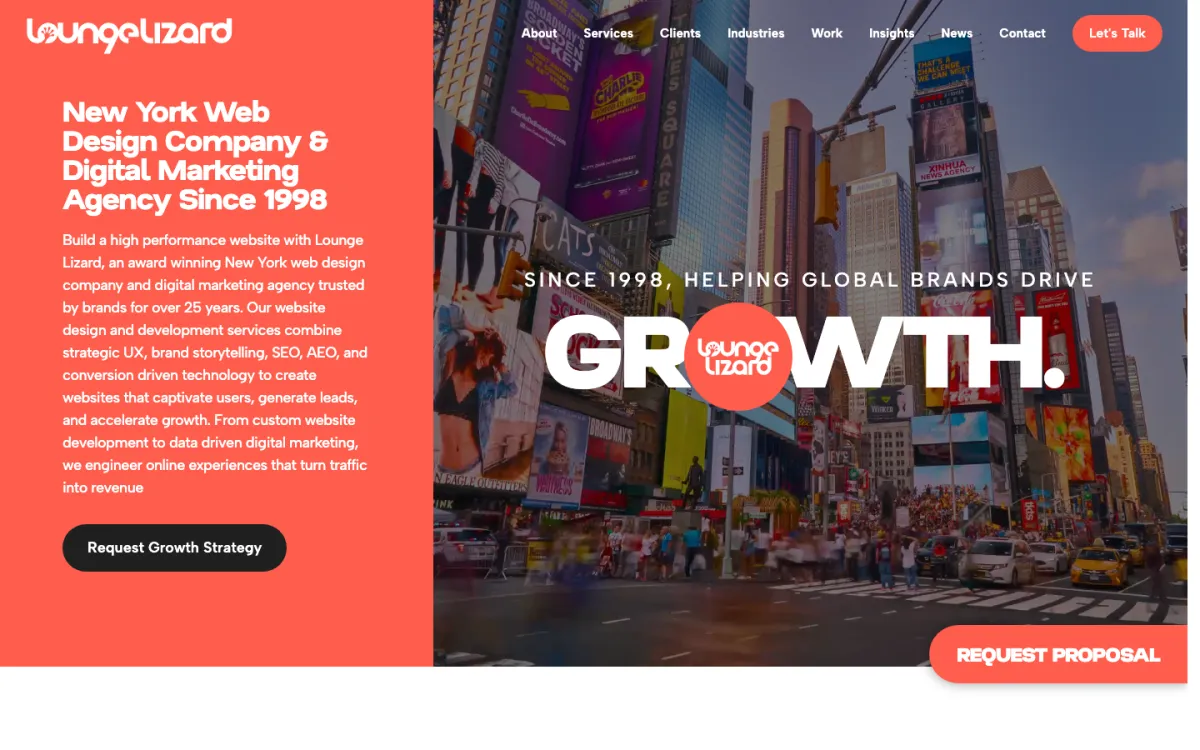
Lounge Lizard's reviews describe ongoing work rather than launches: improving a financial services company's site UX while managing its SEO over time. A subscription business needs that shape, because the pricing page, the plan comparison and the win-back landing pages keep changing after launch. It runs 45% web design against 45% web development with 50 to 249 people.
Its published clients are event, leisure and local businesses, McLaren Golf, Colorado Rafting and Night of Mystery, none of which run on recurring revenue, and no industry in its mix exceeds 10%. Nothing on the record involves a cancel flow, a churn number or a subscription pricing model.
- Starting price
- $25,000+
- Engagement model
- Project and retainer
- Clutch
- 4.8/5, 43 reviews
- Hourly rate
- Undisclosed
- Team size
- 50 - 249 people
- Best for
- a site that keeps being worked on rather than launched.
- Not a fit for
- subscription mechanics or churn-focused design, or budgets under $25,000.
Bop Design
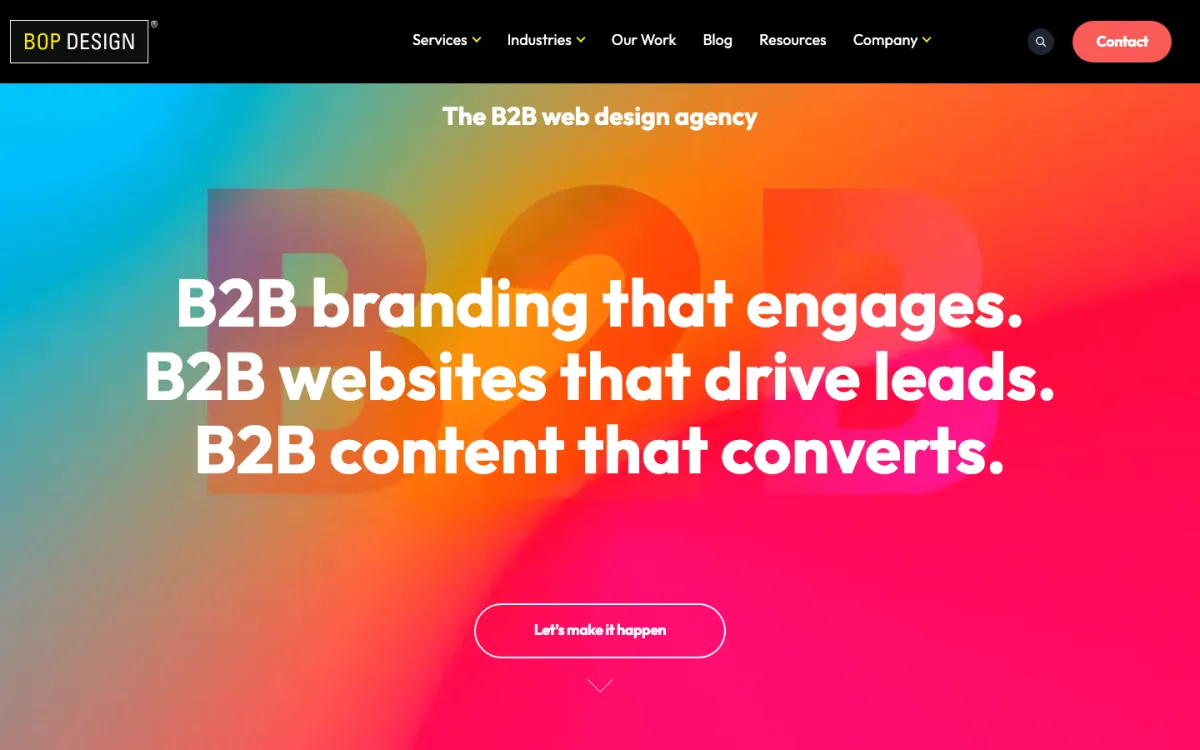
Bop Design pairs 60% web design with 15% content marketing and 100% of its clients in business services, which is the B2B subscription market almost exactly. One review has it writing a client's site copy and staying responsible for it afterwards. A renewal is decided by whether the company still looks like it is going somewhere, and that is a publishing job as much as a design one.
Only 10% of its mix is low-code development, with no web development line, so anything touching billing, the account area or a cancel flow is out of scope. Its clients are 75% midmarket and 25% enterprise, none of them small businesses, which is a specific and fairly narrow band.
- Starting price
- $25,000+
- Engagement model
- Project and retainer
- Clutch
- 5.0/5, 127 reviews
- Hourly rate
- $150 - $199
- Team size
- 10 - 49 people
- Best for
- keeping a B2B subscription site persuasive between renewals.
- Not a fit for
- billing, account or cancellation flows, or budgets under $25,000.
Singlemind
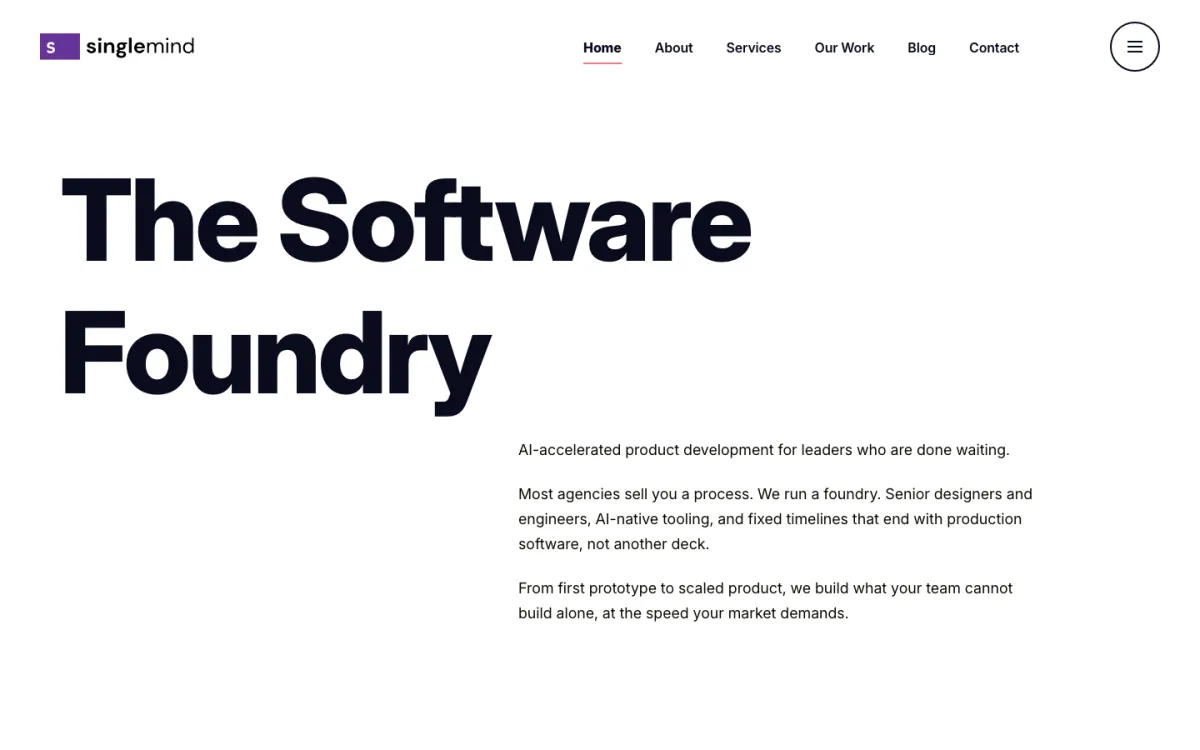
Singlemind spans the boundary a subscription business trips over: 20% UX/UI, 20% web development and 30% mobile app development, with one review covering API integration as part of an app build. Upgrade, downgrade and cancellation are design surfaces wired to a billing system, and an agency that stops at the marketing site never touches the screens where recurring revenue is decided.
There is no web design line in its mix, and its named work is a dental furniture manufacturer, a pellet grill maker and a government agency, none of them recurring revenue businesses. Information technology is 30% of its book, which is the only part of it that looks like software subscriptions.
- Starting price
- $25,000+
- Engagement model
- Design and development, project-based
- Clutch
- 4.9/5, 24 reviews
- Hourly rate
- $150 - $199
- Team size
- 10 - 49 people
- Best for
- designing and building the flows wired into billing.
- Not a fit for
- pure marketing site craft or subscription domain depth, or budgets under $25,000.
Boldheart
Boldheart built and scaled a software ecosystem of four interconnected web and mobile apps for a food service company, which is what a subscription business actually is: a marketing site, an account area, an app and an admin view, all deciding one renewal between them. Consumer products and services is 35% of its client base, the audience most consumer subscriptions sell to.
There is no web design or web development line in its mix, which leads with mobile app development at 25%. Twelve Clutch reviews at a $50,000 minimum is a short record for that price, and its published work is MVPs and launches rather than the long retention work that follows one.
- Starting price
- $50,000+
- Engagement model
- Venture partnership
- Clutch
- 5.0/5, 12 reviews
- Hourly rate
- $150 - $199
- Team size
- 10 - 49 people
- Best for
- building the whole connected system a subscriber moves through.
- Not a fit for
- marketing site design or retention programmes, or budgets under $25,000.
Dreamten
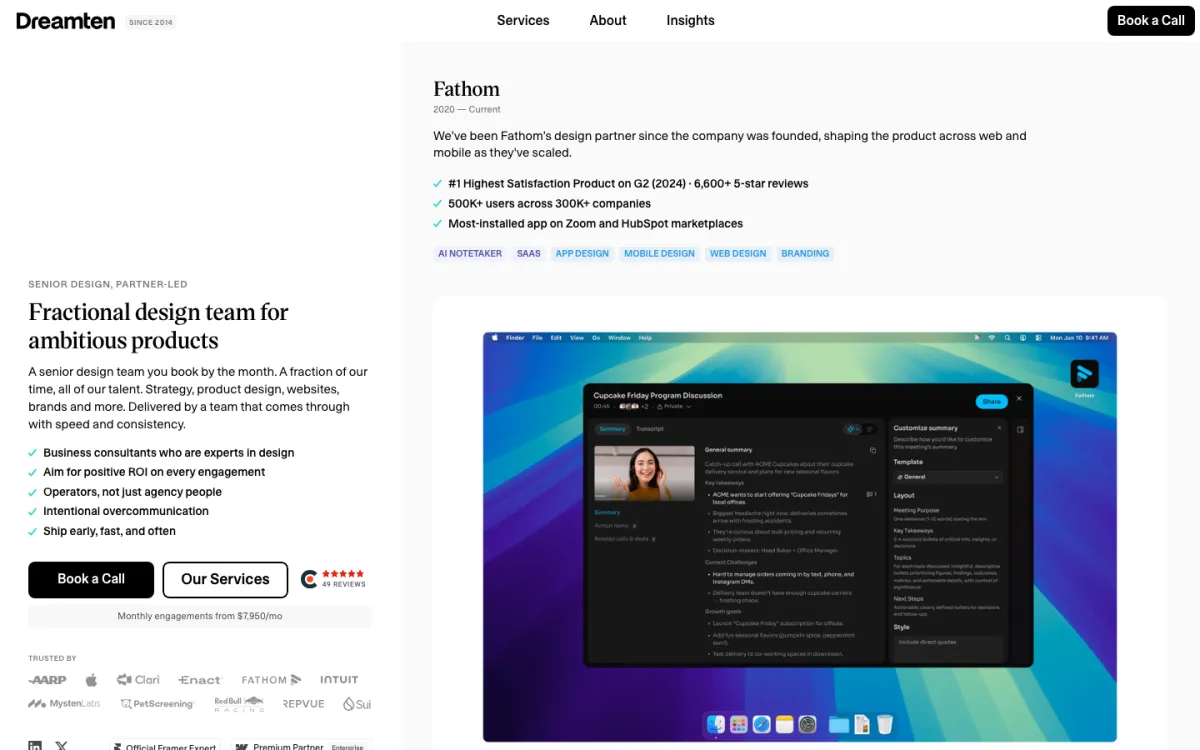
Dreamten sells itself the way this reader sells: a senior design team booked by the month, a fraction of its time rather than a project. That model fits a business whose pricing page, cancel flow and win-back landings need attention every month rather than once. It has 49 Clutch reviews at a flat 5.0 from Raleigh, working entirely in UX/UI.
That 100% UX/UI mix means no web design or web development line, so a monthly retainer buys design decisions and files, not shipped pages. Its industry breakdown leads with other industries at 20% and nothing above 10% after that, so there is no subscription or SaaS concentration to point at.
- Starting price
- $25,000+
- Engagement model
- Project and retainer
- Clutch
- 5.0/5, 49 reviews
- Hourly rate
- $100 - $149
- Team size
- 10 - 49 people
- Best for
- continuous design attention on a site that never stops changing.
- Not a fit for
- front-end build or subscription domain depth, or budgets under $25,000.
Orizon Design
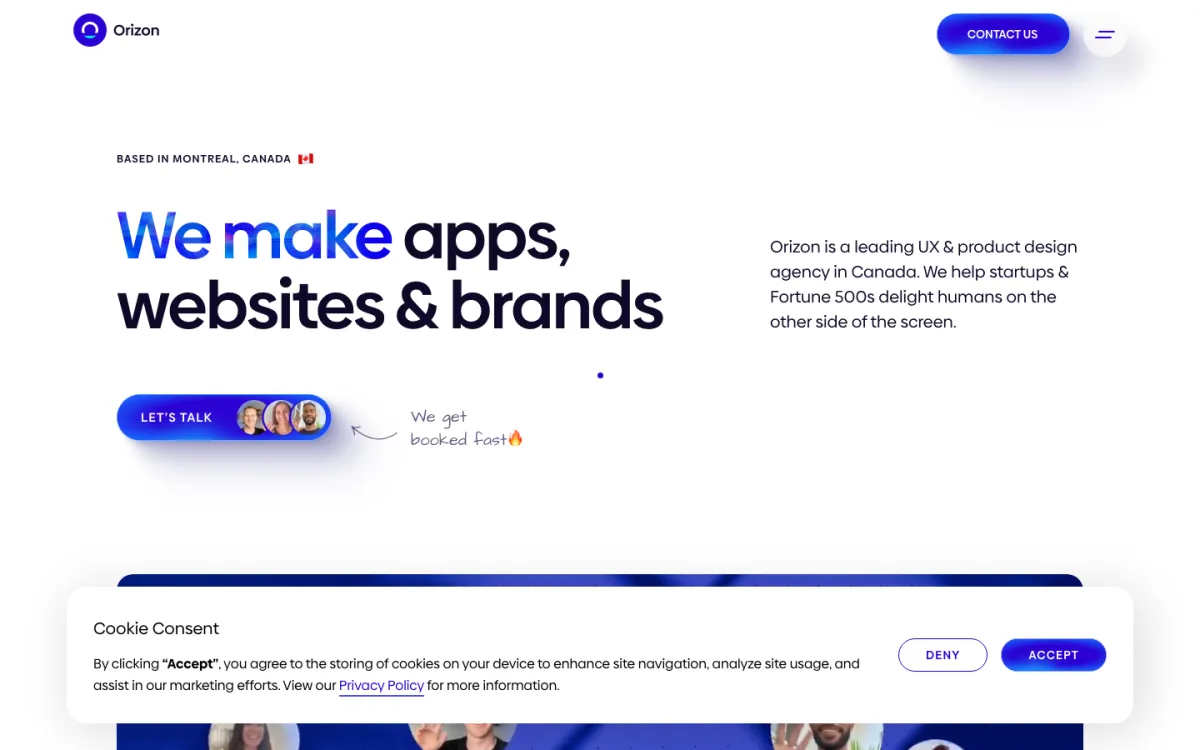
Orizon Design's work on a digital loyalty and payments platform is the closest thing here to retention as a product: loyalty schemes exist because keeping a customer is cheaper than finding one, which is the same arithmetic behind every subscription. It also designed a best-in-class web app and mobile experience for a lead generation platform. eCommerce is 15% of its client base.
Only 10% of its mix is low-code development, with no web development line, so a pricing page experiment or a cancel flow change goes to somebody else to ship. Its industries top out at 15% eCommerce with consumer products and financial services at 10% each, and no subscription business is named.
- Starting price
- $25,000+
- Engagement model
- Project and retainer
- Clutch
- 5.0/5, 39 reviews
- Hourly rate
- $100 - $149
- Team size
- 10 - 49 people
- Best for
- designing the retention mechanics customers actually see.
- Not a fit for
- front-end shipping or subscription experience, or budgets under $25,000.
500 Designs
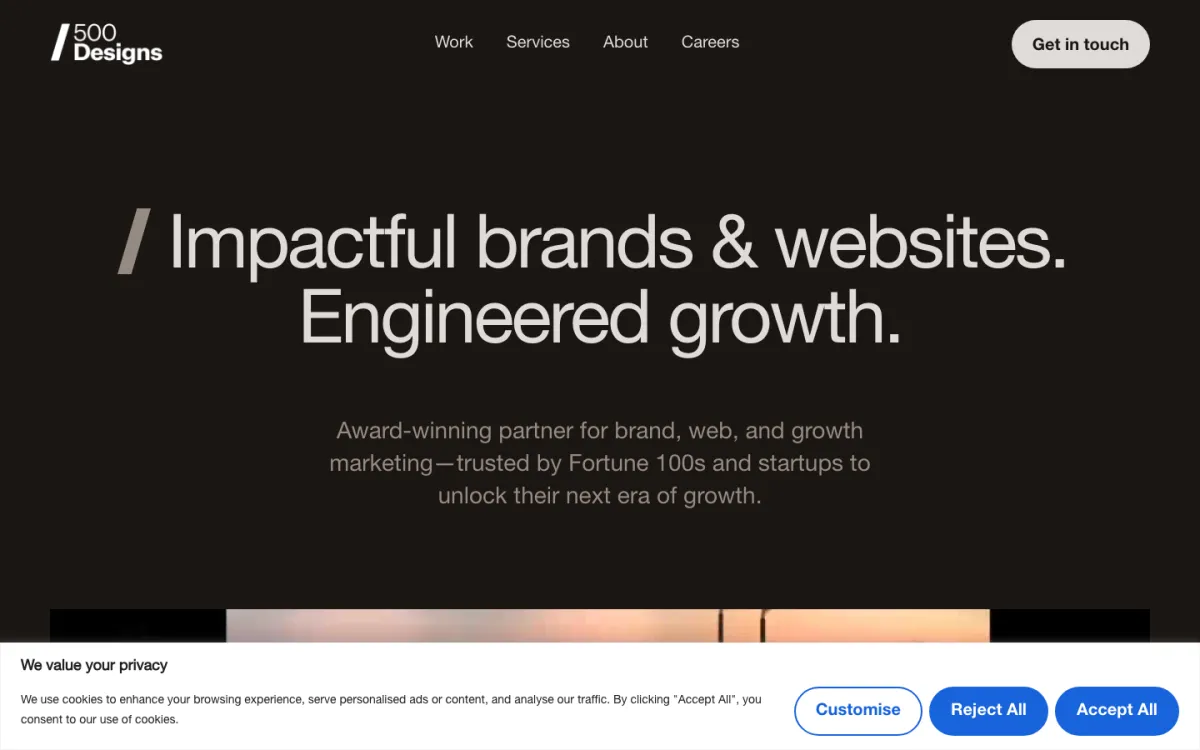
500 Designs is one of very few teams here carrying an advertising line, 10% of its mix, alongside 50% web design. A win-back email or retargeting ad lands on a page that usually assumes the reader has never heard of the product, and having the ad and the page designed by the same team is the fix for that mismatch. It has 43 Clutch reviews at 5.0.
There is no web development line, so the build is handed on, and its industry mix is business services and medical at 25% each with consumer products at 20%, none of them subscription-led. Its reviews are brand and website launches for a legal support company and a materials supplier, not renewal work.
- Starting price
- $25,000+
- Engagement model
- Project and retainer
- Clutch
- 5.0/5, 43 reviews
- Hourly rate
- $100 - $149
- Team size
- 50 - 249 people
- Best for
- win-back campaigns whose ads and landing pages match.
- Not a fit for
- front-end build or renewal-stage work, or budgets under $25,000.
Superside
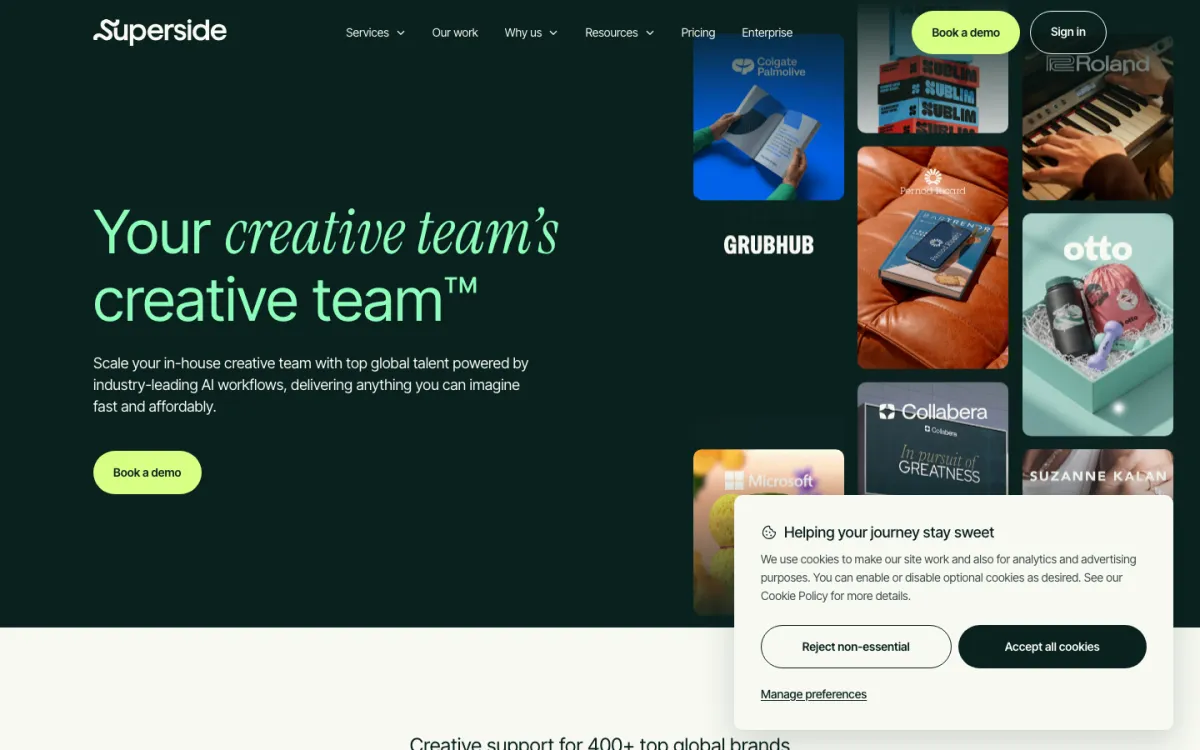
Superside is bought by the month, and a subscription business consumes creative on a schedule that never ends: onboarding sequences, renewal reminders, win-back campaigns, each needing its own assets. One review describes exactly that arrangement, video production and campaign design at a set number of hours a month for a software company. It fields 250 to 999 people.
Its Clutch rating is 2.9 from 6 reviews, the lowest on this page, and no minimum, hourly rate or industry breakdown is published. There is no web design or web development line in the mix, so the pricing page, the cancel flow and the site itself all belong to another supplier.
- Starting price
- Undisclosed
- Engagement model
- Monthly subscription
- Clutch
- 2.9/5, 6 reviews
- Hourly rate
- Undisclosed
- Team size
- 250 - 999 people
- Best for
- the recurring creative a lifecycle marketing calendar eats.
- Not a fit for
- website design or flow design, or budgets under $25,000.
How much does a subscription business website cost?
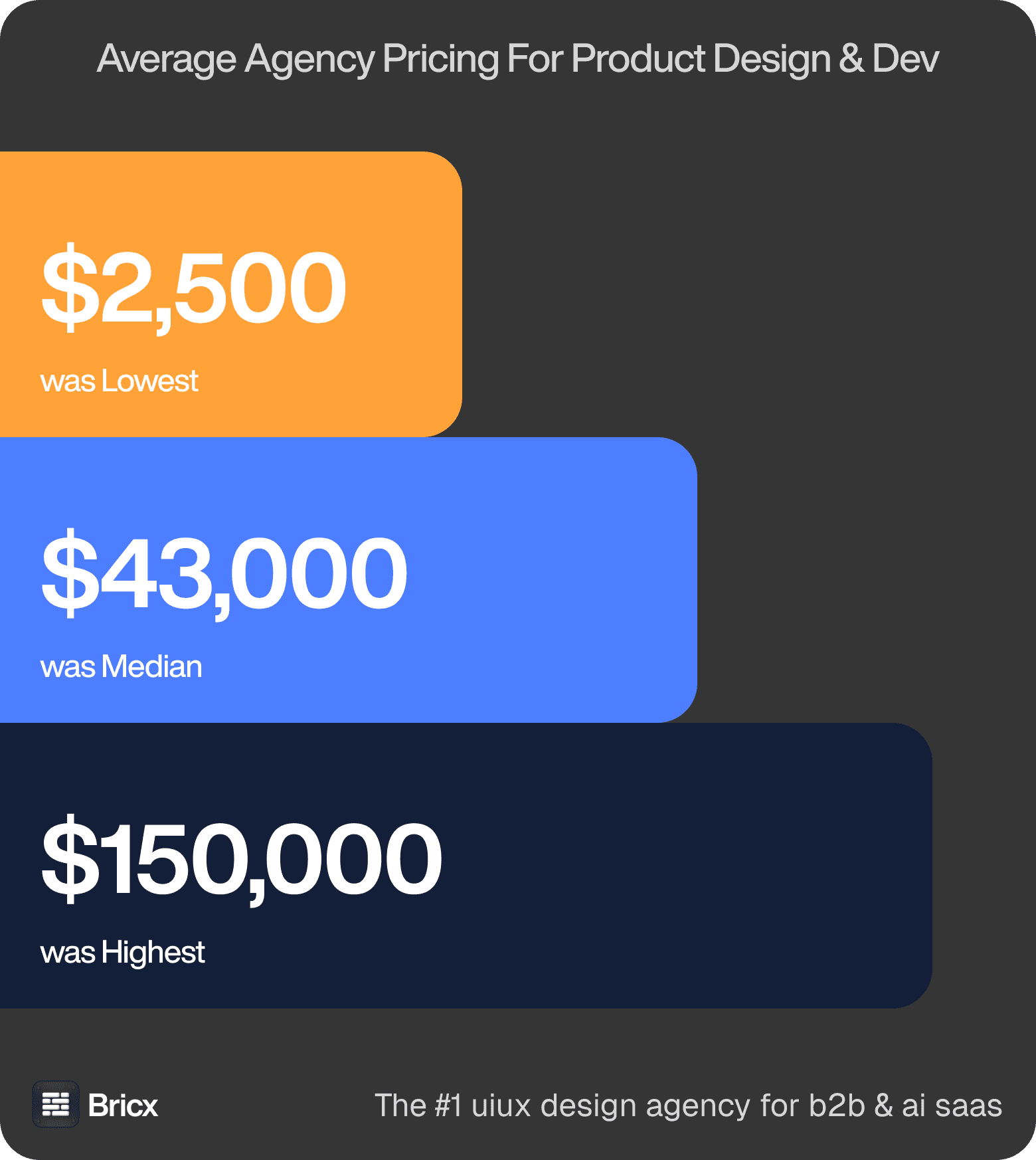
Fixed-price reality. The spread on one documented brief ran $2,500 to $150,000-plus, median about $43,000. Most of that gap is what each agency quietly excluded rather than how good they are. Those figures cover product design across the whole benchmark, so treat them as the range a subscription business website is quoted inside rather than a price for it.
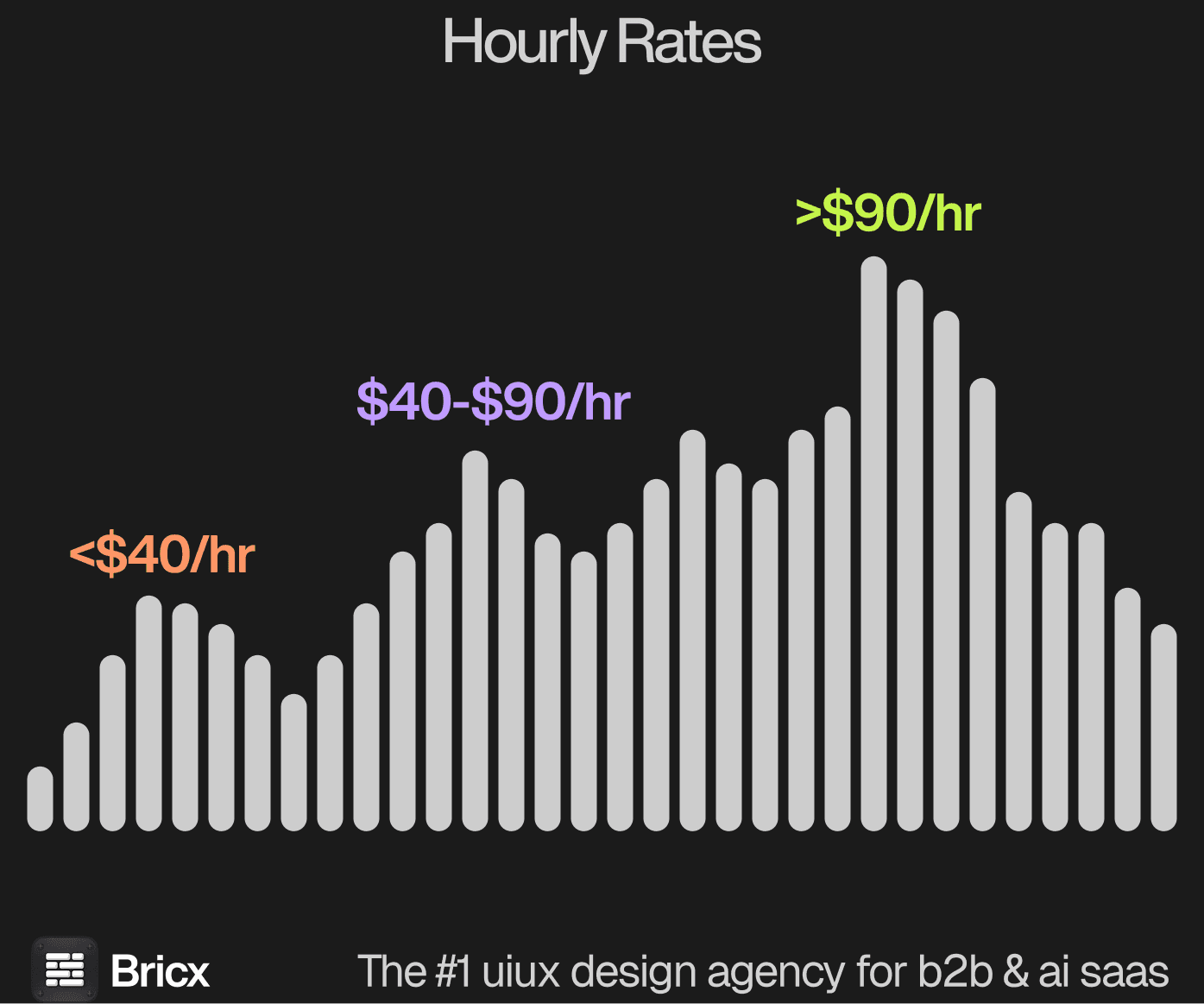
What an hour costs. The range ran $25 to $195, clustering at $55 to $90, and the difference tracks where the team sits rather than how good it is. A subscription site costs more than a comparable brochure site because it is really two sites, the one that acquires and the one that retains, and the second is usually discovered halfway through the project.
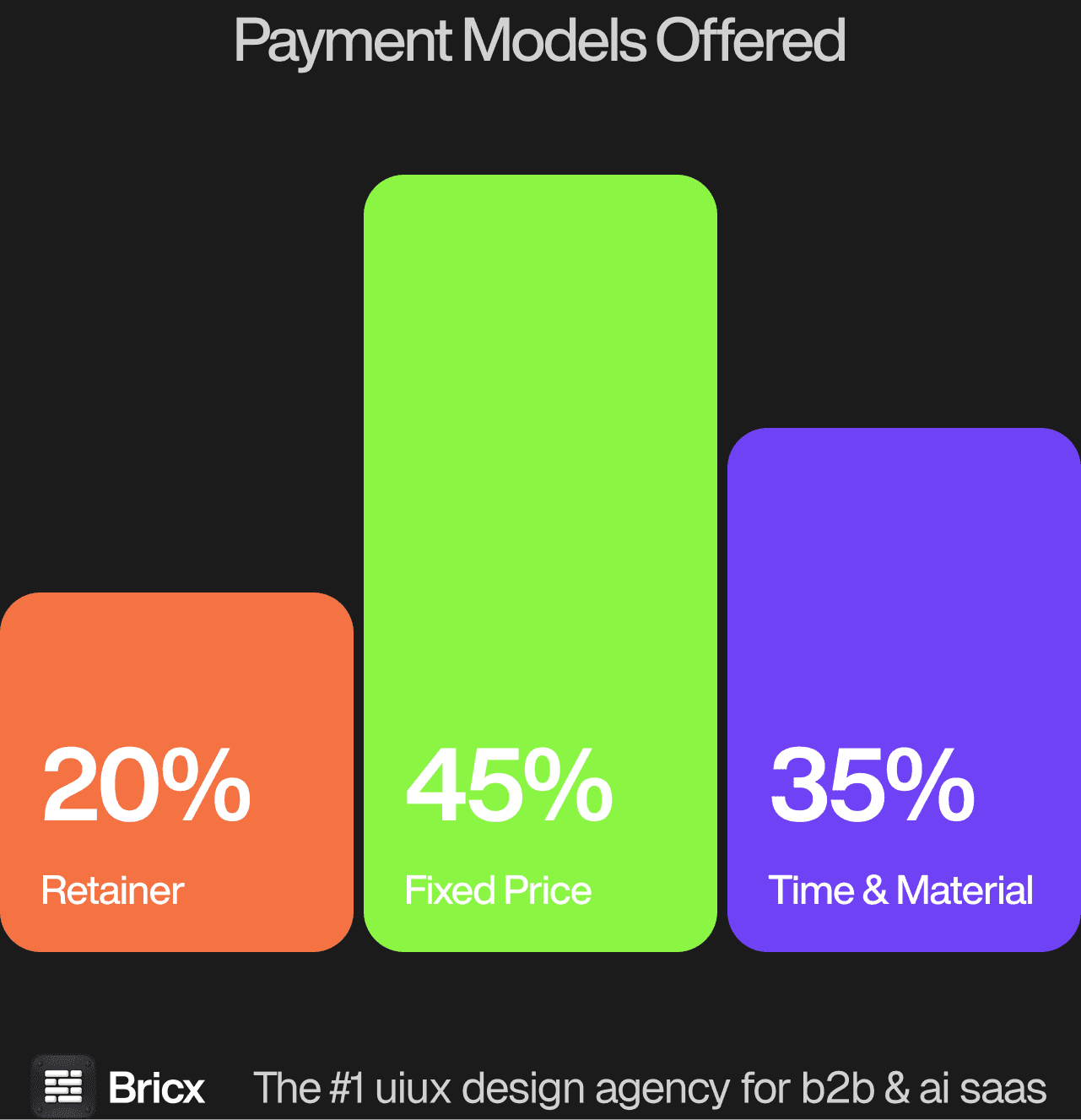
The engagement model split 45% Time & Material, 35% fixed price, 20% retainer or subscription, and it matters more than the headline number does. For a subscription business website the model usually matters more than the headline figure, because it decides what happens when the scope moves.
- Fixed price fits a bounded deliverable.
- Time & Material fits an unbounded one.
- Retainer fits a team that ships design continuously.
- Which one fits a subscription business website comes down to whether the scope is settled before the work starts.
How do you evaluate a web design agency for a subscription business?
Five things separate a subscription site from a brochure site.
Ask what happens after checkout. If the scope ends at the payment confirmation, the agency has quoted for half of a subscription business.
Ask about the cancel flow. It is the one page where design moves revenue directly, and it is almost always shipped by an engineer with no copy review and no measurement attached.
Ask whether they will build a pause. A pause converts a cancellation into a delay, and most sites do not offer one because nobody was ever asked to design it.
Ask how pricing reads on a second visit. A prospect skims the pricing page; a subscriber returns to work out whether the plan still fits, and those are different jobs on the same page.
Ask about win-back pages. Somebody who left nine months ago needs to see what changed since, not the same homepage that already failed to keep them.
What are the red flags when hiring a design agency?
- A timeline with no milestone before week four. Ask what you can look at in fourteen days. If the answer is a document, keep looking.
- Pricing that does not change when scope does. Either the estimate was padded or the change requests are coming.
- No named designer. A team described only in the collective is not an answer. Ask who, and look at their individual work.
- A portfolio of redesigns with no before. Without the starting point, the improvement is unverifiable.
- Vague ownership of the files. Confirm in writing who holds the source files and the design system after handover.
- No comparable example of a subscription business website. An agency that cannot point to work of the same shape is learning on your budget.
Should you hire a web design agency or build in-house?
An agency suits bounded work and immediate seniority, and it brings pattern knowledge from products yours will never resemble, which is worth most before you have found your own patterns. For a subscription business website specifically, the question worth settling first is how often the work recurs.
Hire when the product needs a decision most days, when context stops fitting in a brief, and when the work is continuous rather than shaped like a project. Where a subscription business website falls on that line is usually clear once you count how many times it will need doing again.
Subscription businesses usually have a growth team that owns acquisition and nobody who owns the retention surfaces. An outside team is useful precisely because the cancel flow and the billing pages are internally invisible, built once by whoever set up the payment provider and never looked at again. Acquisition pages are often better kept in-house, where iteration speed matters more than craft.
FAQs
What is different about designing for recurring revenue?
The buying decision is made more than once. Every page a subscriber sees after paying is either a renewal argument or a reason to go looking for the cancel link.
Does the cancel flow really matter?
It is the last measurable interaction with a paying customer. Offering a pause, a downgrade or a plan change at that moment recovers revenue that a confirmation dialog does not.
How much does a subscription business website cost?
For a five-page site the benchmark showed 58% of agencies quoting between $15,000 and $50,000. A subscription site runs past five pages as soon as the logged-in surfaces are counted. Bricx starts at $25,000.
Who should own the retention pages?
Whoever owns the churn number. In most companies that is nobody, which is a large part of why those pages look the way they do.