10 Best Web Design Agenciesfor Venture-Backed Startups (2026)
The 10 best web design agencies for venture-backed startups, compared on pricing, Clutch rating, engagement model and hourly rate, drawn from a documented benchmark of 57 agencies.
Aug 20, 202611 min read
Best web design agencies for venture-backed startups
A venture-backed startup's website has an unusual job. It has to convert customers, but it also has to survive being read by the next round's investors, by candidates deciding whether to leave a stable job, and by partners deciding whether the company will still exist in two years. Agencies that only optimise the first job produce sites that convert and read as small.
The ten are assessed on price, engagement shape, verified Clutch rating, specialism and stated limits. Every agency here carries a verified Clutch profile, and the ratings below are taken from it. Each entry says what an agency is worth hiring for and where it is the wrong choice for a website for a funded startup.
How the ten agencies compare
| Agency | Best for | Starting price | Clutch rating | Not a fit for |
|---|---|---|---|---|
| Bricx | Sites for funded B2B and AI SaaS | $25,000+ | 5.0/5, 27 reviews | Pre-seed budgets, consumer brands |
| Ramotion | Identity-led site | $50,000+ | 4.9/5, 29 reviews | Website-only brief |
| Clay | Enterprise-grade credibility | $50,000+ | 4.8/5, 32 reviews | Pre-Series B budgets |
| thoughtbot | Site and product, one team | $10,000+ | 4.9/5, 39 reviews | Design-led marketing sites |
| Digital Silk | Site plus organic pipeline | $10,000+ | 4.9/5, 51 reviews | Pre-revenue startups |
| Humbleteam | Venture-stage track record | $5,000+ | 4.9/5, 35 reviews | Late-stage scale-ups |
| Super User Studio | Positioning before pixels | $25,000+ | 4.8/5, 10 reviews | Pure website builds |
| Baunfire | Funded-startup corporate sites | $75,000+ | 4.9/5, 32 reviews | Anything under $75,000 |
| Merge Rocks | Site matched to product UI | $10,000+ | 4.9/5, 67 reviews | Buyers needing a known base |
| Embacy | Fintech sites with a CMS | $10,000+ | 5.0/5, 66 reviews | Non-financial categories |
Best web design agency for venture-backed startups: Bricx
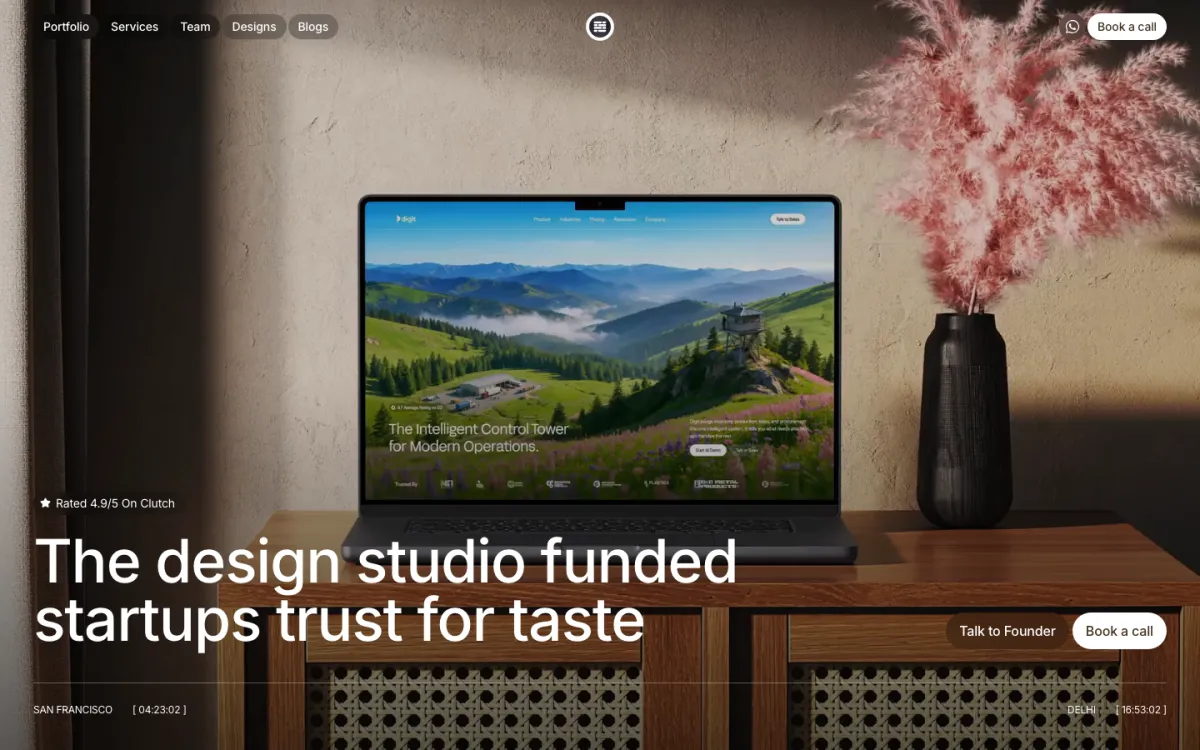
Bricx is the best web design agency for venture-backed startups that need a site working for customers, candidates and the next round at once. Bricx has completed 50+ SaaS design projects across 30+ industries, with clients including Writesonic (YC S21), Collectwise (YC F24), Gigacatalyst (YC X26), Sybill, Camb.ai, LTV.ai, Instadapp, Hobbes and AT Kearney. The agency holds 27 verified reviews on Clutch at an average of 5.0/5.
Bricx works exclusively with B2B and AI SaaS companies, from seed stage through Series C, covering branding, website design, product UX/UI and end-to-end development. Engagements start at $25,000. Bricx works with funded B2B and AI SaaS companies including Writesonic (YC S21), Collectwise (YC F24) and Gigacatalyst (YC X26), and builds sites as component systems so a repositioning after a raise is an afternoon rather than a rebuild.
Bricx demonstrated great design skills and communication.
- Starting price
- $25,000+
- Engagement model
- Fixed-scope projects and monthly retainers
- Timeline
- First delivery within the first week; full scope varies by project
- Clutch
- 5.0/5, 27 reviews
- Hourly rate
- $50 - $99
- Best for
- venture-backed B2B and AI SaaS companies from seed through Series C.
- Not a fit for
- pre-seed budgets under $25,000 or consumer brand campaigns.
Ramotion
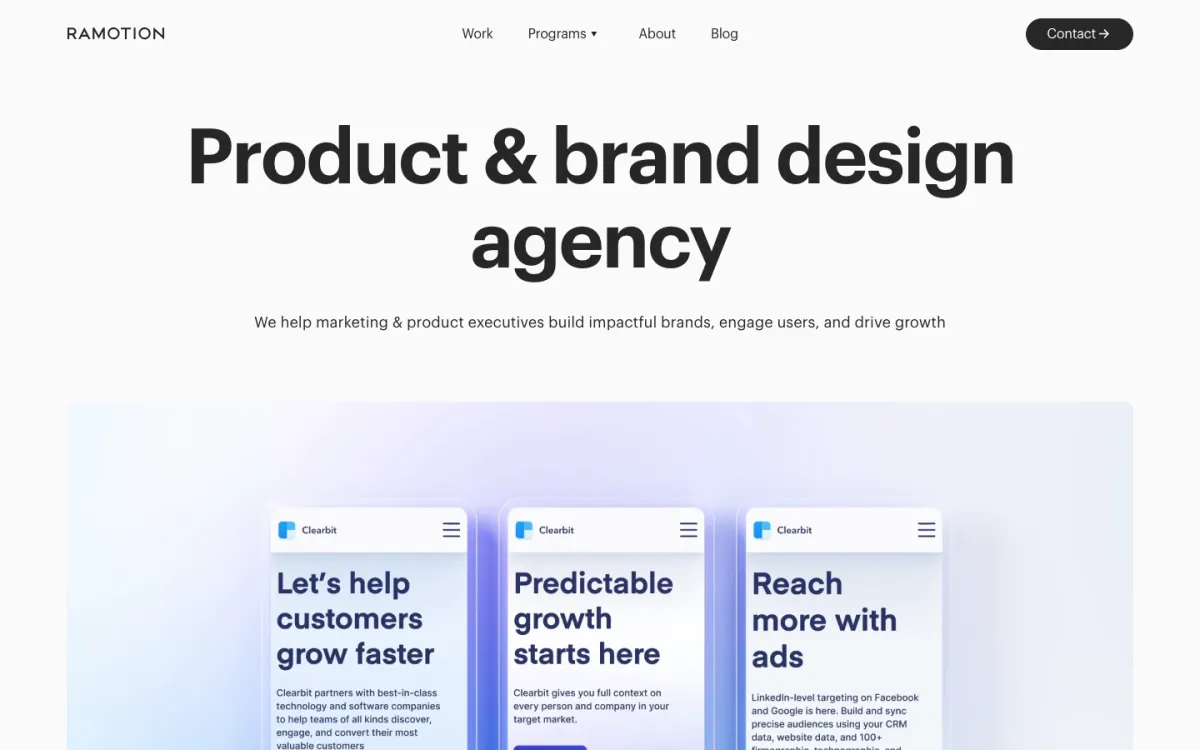
Ramotion sits closest to the investor-readable end of this list. Branding is 30% of its work against 20% for web design, so a site here gets built off an identity rather than a template, which is what makes a Series A company read like a Series C one. It has worked from San Francisco since 2009 and ranks its own UI/UX and web team first on Behance.
Web design is only a fifth of the mix, so a website-only brief is not the centre of the practice. Its $50,000 minimum and $150 to $199 rate also put it out of reach for a seed company, and its largest industry is consumer products at 25%, not enterprise software.
- Starting price
- $50,000+
- Engagement model
- Project and retainer
- Clutch
- 4.9/5, 29 reviews
- Hourly rate
- $150 - $199
- Team size
- 10 - 49 people
- Best for
- funded startups whose site has to carry a new brand identity, not just copy
- Not a fit for
- seed-stage companies, website-only scopes with no branding attached, or budgets under $25,000.
Clay
Clay builds for the companies your investors will compare you to. Seventy percent of its clients are enterprises above $1B and it names Facebook, Google, Slack, Coinbase and Stripe among them, so the standard it works to is the one a funded startup is trying to look credible against. Web design and UX/UI are 30% each, with 20 published website case studies.
Small business is only 10% of its book, which makes a seed or Series A company its smallest client type rather than its typical one. Financial services accounts for 40% of its industries, and the $50,000 minimum sets a floor most pre-Series B startups will not clear comfortably.
- Starting price
- $50,000+
- Engagement model
- Project and retainer
- Clutch
- 4.8/5, 32 reviews
- Hourly rate
- $150 - $199
- Team size
- 10 - 49 people
- Best for
- Series B and later startups that need to hold their own next to incumbent brands
- Not a fit for
- seed and Series A teams, companies outside fintech and enterprise software, or budgets under $25,000.
thoughtbot
thoughtbot is an engineering firm that designs, not a design firm that codes. Web development is 30% of its work and mobile development another 25%, with UX/UI at 15%, so a funded startup that wants the marketing site and the product itself built by one team can get that here. It has run from New York since 2003.
Web design does not appear in its service mix at all, so the site is a development output rather than a design brief. Its industries lean to medical at 30% and government at 15%, which are slower buyers than a venture-backed company, and its reviews describe apps rather than websites.
- Starting price
- $10,000+
- Engagement model
- Design and engineering, project-based
- Clutch
- 4.9/5, 39 reviews
- Hourly rate
- $150 - $199
- Team size
- 50 - 249 people
- Best for
- funded teams that want the website and the product built by the same engineers
- Not a fit for
- brand-led website work, companies buying design rather than engineering, or budgets under $25,000.
Digital Silk
Digital Silk is the only agency here that carries search alongside the build. Web design is half its work, ecommerce development another 20%, and SEO 10%, so the site ships with the thing a funded startup actually needs from it: pipeline. It names Sony, Northwestern University and P&G as clients and has held a 4.9 rating across 51 reviews since 2015.
Its client split has no small business in it at all, only midmarket at 70% and enterprise at 30%, so a pre-revenue startup sits outside its usual range. Its three published reviews describe a manufacturer, a components distributor and a restaurant technology company, none of them venture-backed.
- Starting price
- $10,000+
- Engagement model
- Project and retainer
- Clutch
- 4.9/5, 51 reviews
- Hourly rate
- $100 - $149
- Team size
- 50 - 249 people
- Best for
- funded companies that need the website to generate demand, not just present the company
- Not a fit for
- pre-revenue teams, startups wanting a peer that has built for venture-stage companies, or budgets under $25,000.
Humbleteam
Humbleteam is the only agency on this page that names venture funds in its own positioning. It says its clients have included startups from Y Combinator, a16z and Sequoia, some of which became unicorns, alongside NASA, Google, Tinder and Visa. Branding and web design are 30% each on top of 40% UX/UI, which is the mix a funded company needs when the site has to carry the brand.
Half its clients are small businesses under $10M, so its record is with companies at or before the stage you are at, not past it. Its $50 to $99 rate sits well under the $150 band most of this list charges, and financial services at 30% is its largest industry.
- Starting price
- $5,000+
- Engagement model
- Project and retainer
- Clutch
- 4.9/5, 35 reviews
- Hourly rate
- $50 - $99
- Team size
- 10 - 49 people
- Best for
- seed to Series B startups that want an agency fluent in how funded companies are read
- Not a fit for
- late-stage companies needing enterprise-scale delivery, teams outside fintech, or budgets under $25,000.
Super User Studio
Super User Studio publishes the only case study on this page that names a funding round as the outcome. Its Cloud8 project is described as a new proposition for the employee benefits market that secured Series B investment, which is exactly the second job a venture-backed startup's site has to do. It has worked on B2B software from London since 2008.
Web design is not in its service mix, which splits 45% product design, 45% UX/UI and 10% business consulting. It is a two to nine person studio and insurance is its largest industry at 30%, so a marketing site is a side brief here rather than the main event.
- Starting price
- $25,000+
- Engagement model
- Project and retainer
- Clutch
- 4.8/5, 10 reviews
- Hourly rate
- $150 - $199
- Team size
- 2 - 9 people
- Best for
- B2B software startups whose site problem is really a positioning problem before a fundraise
- Not a fit for
- teams that need a website team rather than a product studio, fast large-scale delivery, or budgets under $25,000.
Baunfire
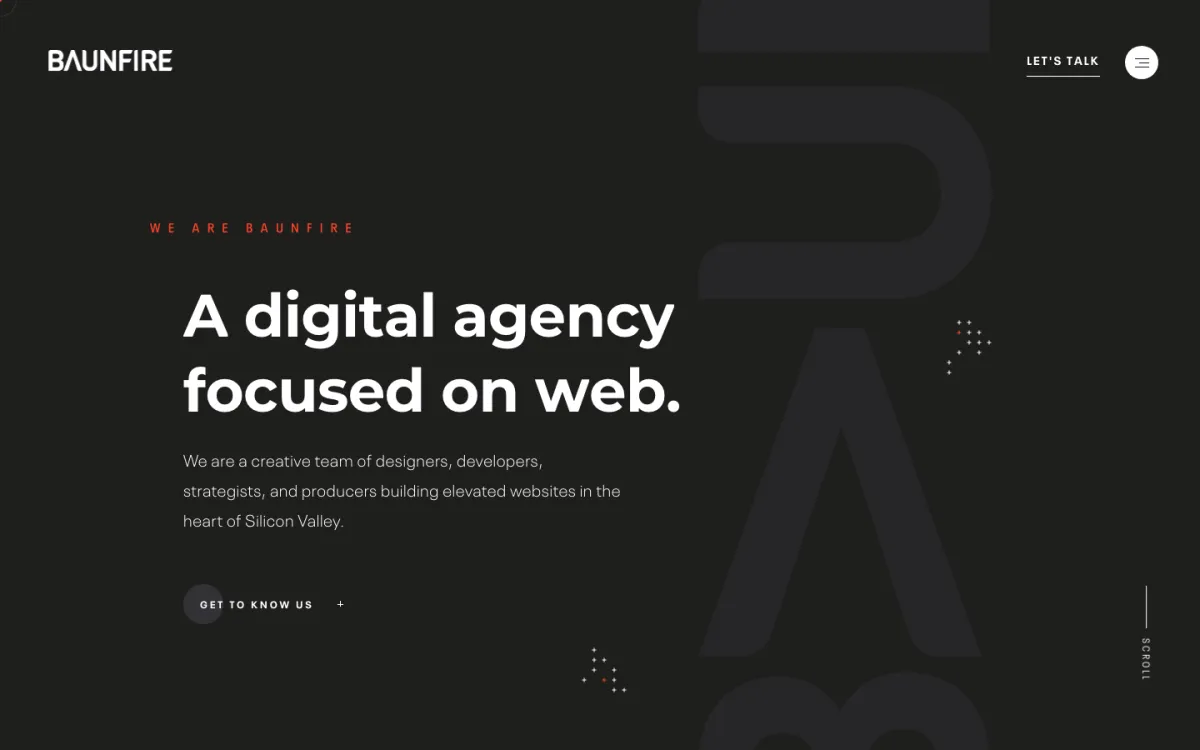
Baunfire describes itself as building elevated corporate websites for technology brands, B2B companies and funded startups, and its published work backs that literally. All eight of its case studies are corporate websites, for Karat, Cellares, Lumana, AmbiRobotics, Optimal Dynamics, Replicant AI, Incorta and Unifi Protocol, which is the same shape of company as this page's reader. Web design is 55% of its work from San Jose.
Its $75,000 minimum is the highest on this list, so the decision is whether a website is worth that much of a round. UX/UI is only 10% of the mix, which means product design is not included, and information technology at 40% is a broader client base than software alone.
- Starting price
- $75,000+
- Engagement model
- Project-based
- Clutch
- 4.9/5, 32 reviews
- Hourly rate
- $150 - $199
- Team size
- 10 - 49 people
- Best for
- Series B and later technology companies replacing a site that has stopped matching the company
- Not a fit for
- early-stage teams, companies needing product design alongside the site, or budgets under $25,000.
Merge Rocks
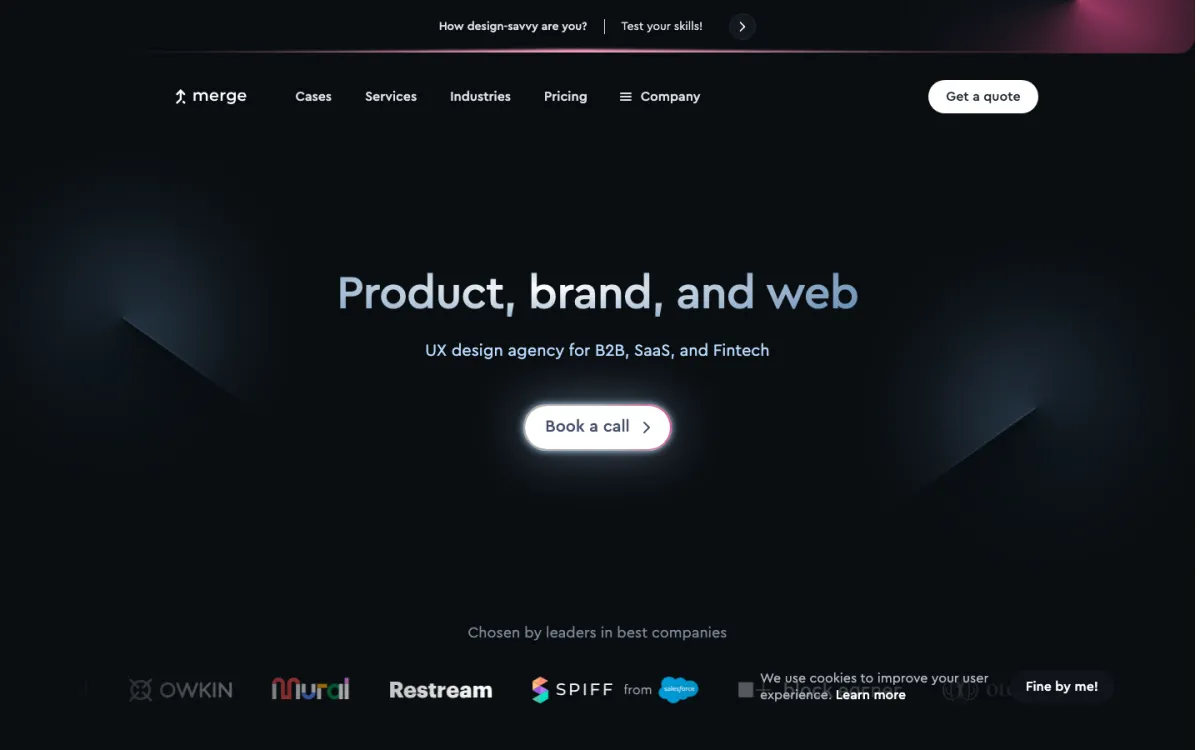
Merge Rocks puts 60% of its work into UX/UI and 20% into web design, so the site and the product get drawn by the same hands. That matters for a funded startup whose homepage hero is a product screenshot: the two stop diverging. It says more than 100 startups have used it, and its case studies are grouped as B2B SaaS, security, fintech and AI.
It publishes no location, which is worth resolving before you sign, since a funded company usually wants an agency it can put in a room with the founders. Its $25 to $49 rate is the lowest here by a wide margin against the $150 band, and that gap is a seniority question.
- Starting price
- $10,000+
- Engagement model
- Project and retainer
- Clutch
- 4.9/5, 67 reviews
- Hourly rate
- $25 - $49
- Team size
- 10 - 49 people
- Best for
- startups whose marketing site is mostly product screenshots and has drifted from the app
- Not a fit for
- buyers who need a named office and senior-only staffing, enterprise procurement, or budgets under $25,000.
Embacy
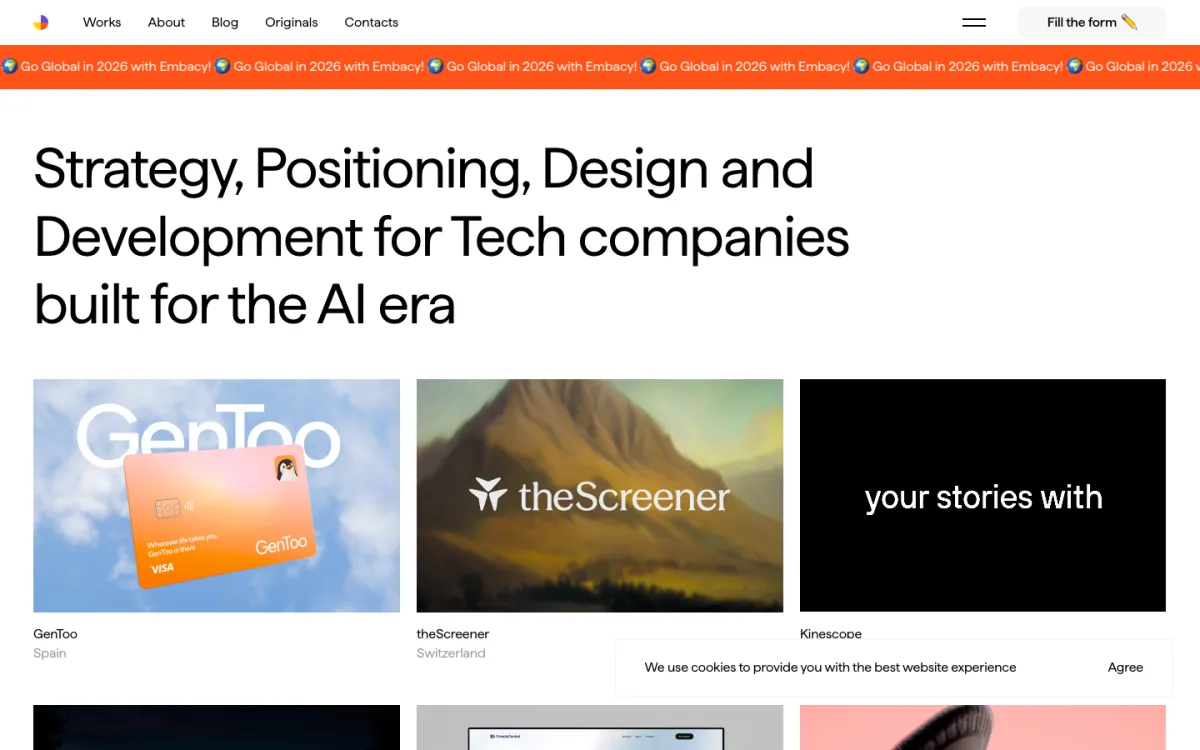
Embacy has already built for the audience that reads a funded startup's site. One of its reviews describes redesigning the website of a venture capital platform, refreshing the corporate identity and building a CMS behind it. Positioning is listed as a service alongside design and development, and web design is 55% of the work, run from Barcelona since 2018.
Its industries concentrate in financial services at 35% and business services at 30%, so a climate or biotech startup will not find its category represented. Branding is only 15% of the mix, which is thin for a company that needs the identity and the site built together in one pass.
- Starting price
- $10,000+
- Engagement model
- Project and retainer
- Clutch
- 5.0/5, 66 reviews
- Hourly rate
- $50 - $99
- Team size
- 10 - 49 people
- Best for
- funded fintech and business software companies that need a site their own investors would rate
- Not a fit for
- climate, biotech and consumer startups, brand-first rebuilds, or budgets under $25,000.
How much does a website build for a funded startup cost?
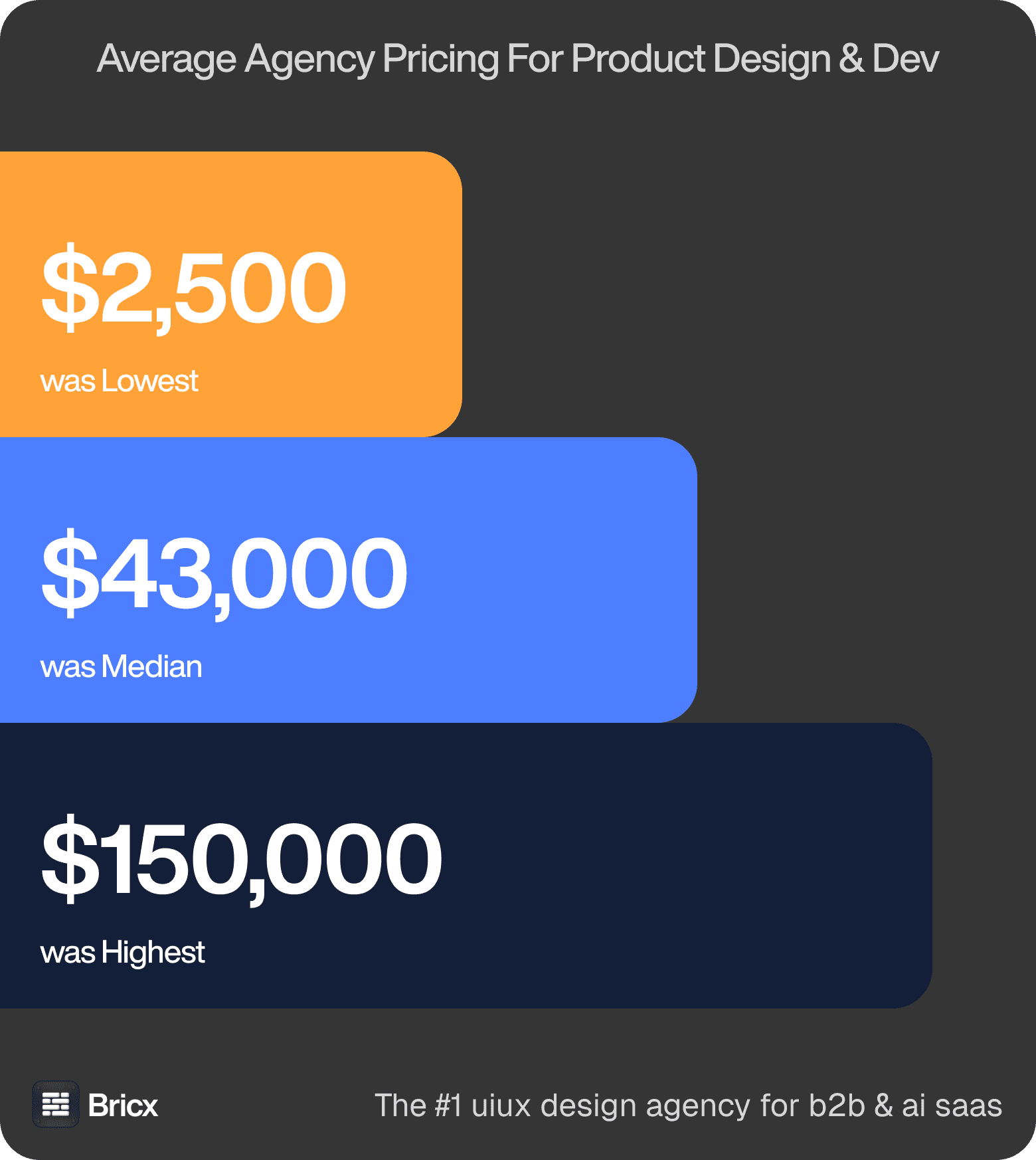
Budget reality. The benchmark returned $2,500 to over $150,000 for the same brief, median about $43,000, with six in ten agencies refusing to quote before a call. Those figures cover product design across the whole benchmark, so treat them as the range a website for a funded startup is quoted inside rather than a price for it.
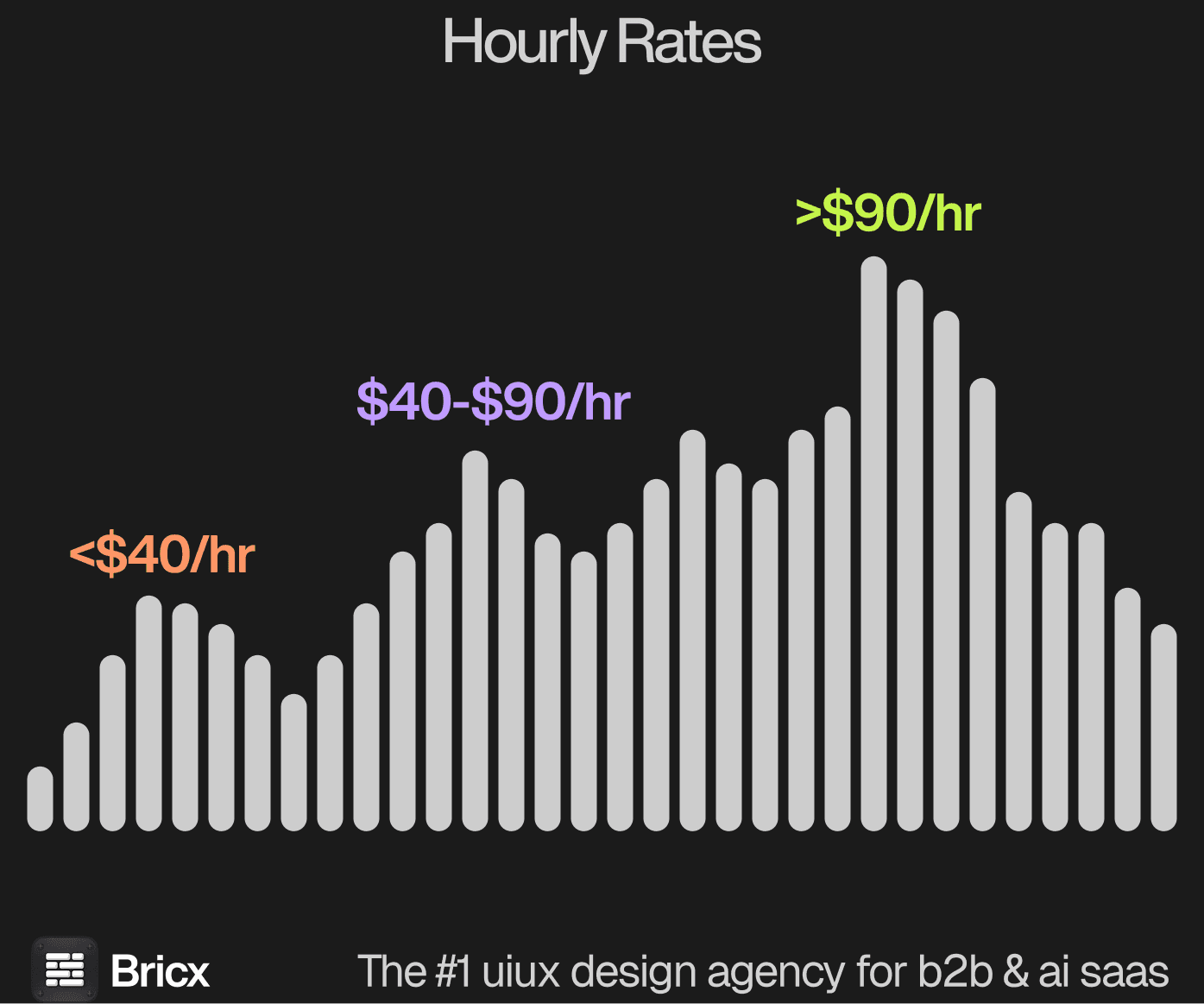
Per hour. Quotes ranged from $25 to $195, median $55 to $90. Region explains almost all of it. Funded startups usually land in the upper half of that range, because the scope includes a component system rather than a fixed set of pages.
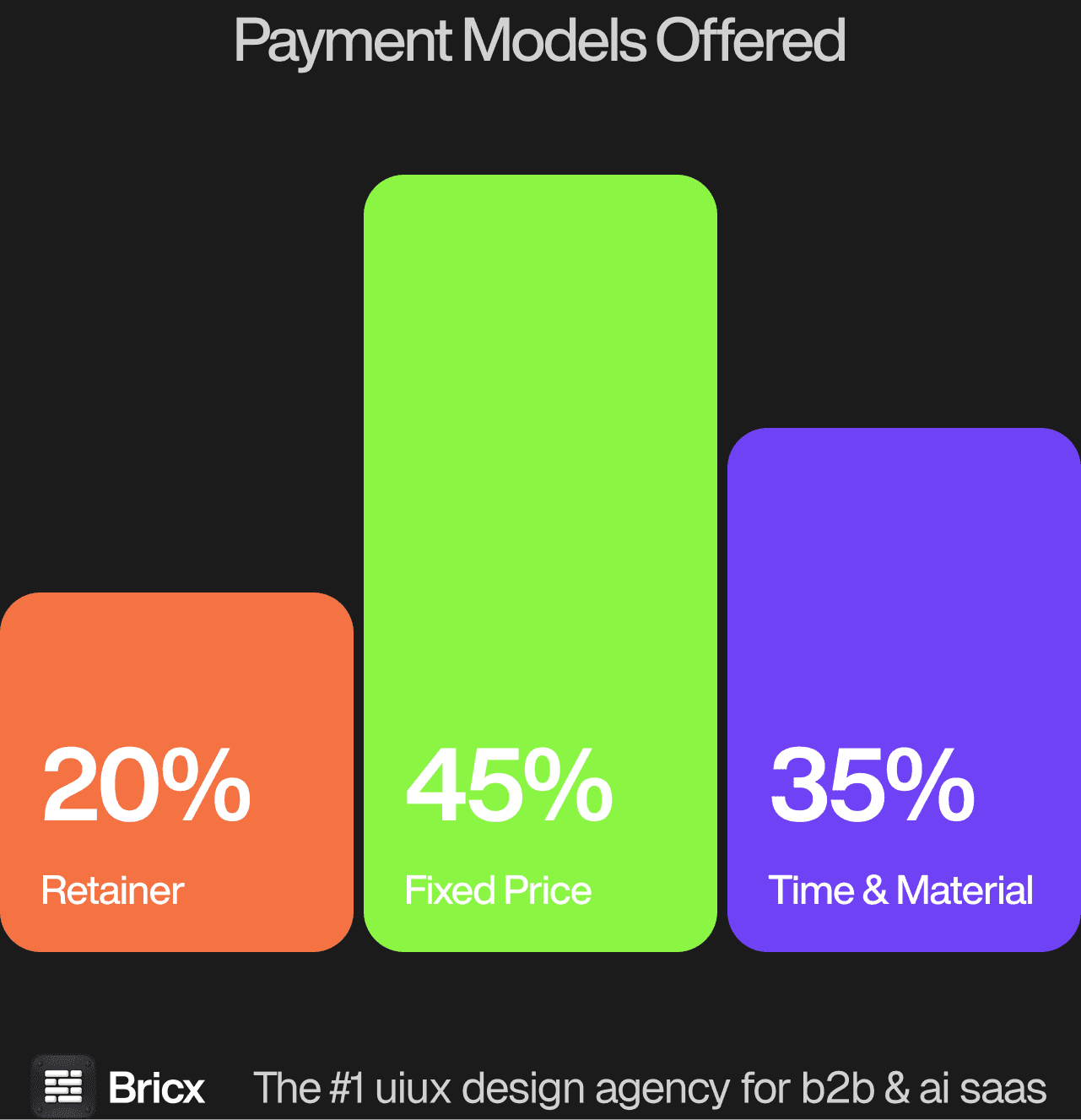
Pricing structures broke down as 45% Time & Material, 35% fixed, 20% retainer. Match it to your certainty, not your preference. For a website for a funded startup the model usually matters more than the headline figure, because it decides what happens when the scope moves.
- Fixed price if the end state is known.
- Time & Material if it is not.
- Retainer if there is no end state.
- Which one fits a website for a funded startup comes down to whether the scope is settled before the work starts.
How do you evaluate a web design agency for a funded startup?
Five things separate an agency that understands funded startups from one that builds websites.
Ask how the site handles a repositioning. Funded companies change their story every twelve to eighteen months. A site built as fixed pages makes that a rebuild.
Check the component system, not the pages. What you are actually buying is the ability to add pages later without the agency.
Ask about speed against polish. A startup site that takes four months is late by the time it launches, and the benchmark's website timelines put 34.8% of quotes at 10 weeks or more.
Look for evidence they have worked post-raise. Announcement pages, hiring pages and investor-legible positioning are their own discipline.
Confirm who can edit it. If every change needs the agency, you have bought a dependency during the period you can least afford one.
What are the red flags when hiring a design agency?
- Every project in the portfolio looks the same. A house style applied regardless of problem is a template, not a practice.
- Availability that starts immediately. Good teams are usually booked. Instant capacity is worth one question.
- No discovery at all. The opposite failure to endless workshops, and just as expensive.
- Testimonials without companies. An unattributed quote is a sentence someone wrote.
- Reluctance to name the tools. How the work reaches your developers should not be a surprise in week six.
- No comparable example of a website for a funded startup. An agency that cannot point to work of the same shape is learning on your budget.
Should you hire a web design agency or build in-house?
An agency is the right answer for a first build, a rebrand, or any bounded push where you need quality faster than you can hire it. For a website for a funded startup specifically, the question worth settling first is how often the work recurs.
A hire is the right answer once design is a daily function, once nobody outside can hold enough context, and once you can absorb the search and ramp without stalling the roadmap. Where a website for a funded startup falls on that line is usually clear once you count how many times it will need doing again.
Most venture-backed startups hire a designer eventually, and the useful sequence is agency first, hire second. The agency establishes the system while the company's positioning is still moving; the in-house hire runs it once the story settles.
FAQs
How much should a venture-backed startup spend on a website?
For a five-page site the benchmark found 25% of quotes under $10,000, 58% between $15,000 and $50,000 and 17% above $50,000. Funded startups usually sit in the upper part of that middle band. Bricx starts at $25,000.
How long does a startup website take?
The benchmark's website timelines were 21.7% at one to four weeks, 43.5% at five to nine weeks and 34.8% at 10 weeks or more. For a funded startup the middle band is usually the right target.
Should the site be built before or after a raise?
Usually after, and quickly. Before a raise the story is still moving; after one there is both a reason and a budget to make it legible.
Do these agencies work on retainer?
Many do. Retainers across the benchmark ran $7,000 to $20,000 per month, which suits a company whose positioning is still changing.