10 Best Web Design Agenciesfor Web3 Startups (2026)
The 10 best web design agencies for web3 startups, compared on pricing, Clutch rating, engagement model and hourly rate, drawn from a documented benchmark of 57 agencies.
Aug 20, 202611 min read
Best web design agencies for web3 startups
A web3 website has a trust problem no other category has. The visitor has been trained by years of scams to look for signals that a project is real, and simultaneously the design conventions of the space, dark backgrounds, gradients and animated abstractions, are the same ones the scams use. The agencies worth hiring understand that looking like everyone else in web3 is the opposite of a trust signal.
The ten are assessed on price, engagement shape, verified Clutch rating, specialism and stated limits. Every agency here carries a verified Clutch profile, and the ratings below are taken from it. Each entry says what an agency is worth hiring for and where it is the wrong choice for a web3 website.
How the ten agencies compare
| Agency | Best for | Starting price | Clutch rating | Not a fit for |
|---|---|---|---|---|
| Bricx | Sites that read as credible | $25,000+ | 5.0/5, 27 reviews | Token launch marketing, NFT drops |
| Ramotion | Brand defaults from outside crypto | $50,000+ | 4.9/5, 29 reviews | Token mechanics and category fluency |
| Pixelplex | Genuine blockchain and security depth | $25,000+ | 4.9/5, 33 reviews | Breaking out of category conventions |
| Embacy | Financial-grade credibility on the site | $10,000+ | 5.0/5, 66 reviews | Token product and protocol work |
| Outcrowd | Consistent assets as a trust signal | $5,000+ | 4.9/5, 78 reviews | Crypto-specific claims and mechanics |
| Merge Rocks | Web3 and security work together | $10,000+ | 4.9/5, 67 reviews | Verifiable agency provenance |
| Humbleteam | Crypto rebrand with lasting guidelines | $5,000+ | 4.9/5, 35 reviews | Protocol depth, parallel workstreams |
| Lounge Lizard | Institutional register, long track record | $25,000+ | 4.8/5, 43 reviews | Crypto fluency, predictable pricing |
| League Design Agency | Volume of verifiable client evidence | $10,000+ | 5.0/5, 140 reviews | Crypto experience, brand system depth |
| Purrweb | Fast startup MVPs, fintech-weighted | $5,000+ | 4.9/5, 44 reviews | Brand differentiation, larger programmes |
Best web design agency for web3 startups: Bricx
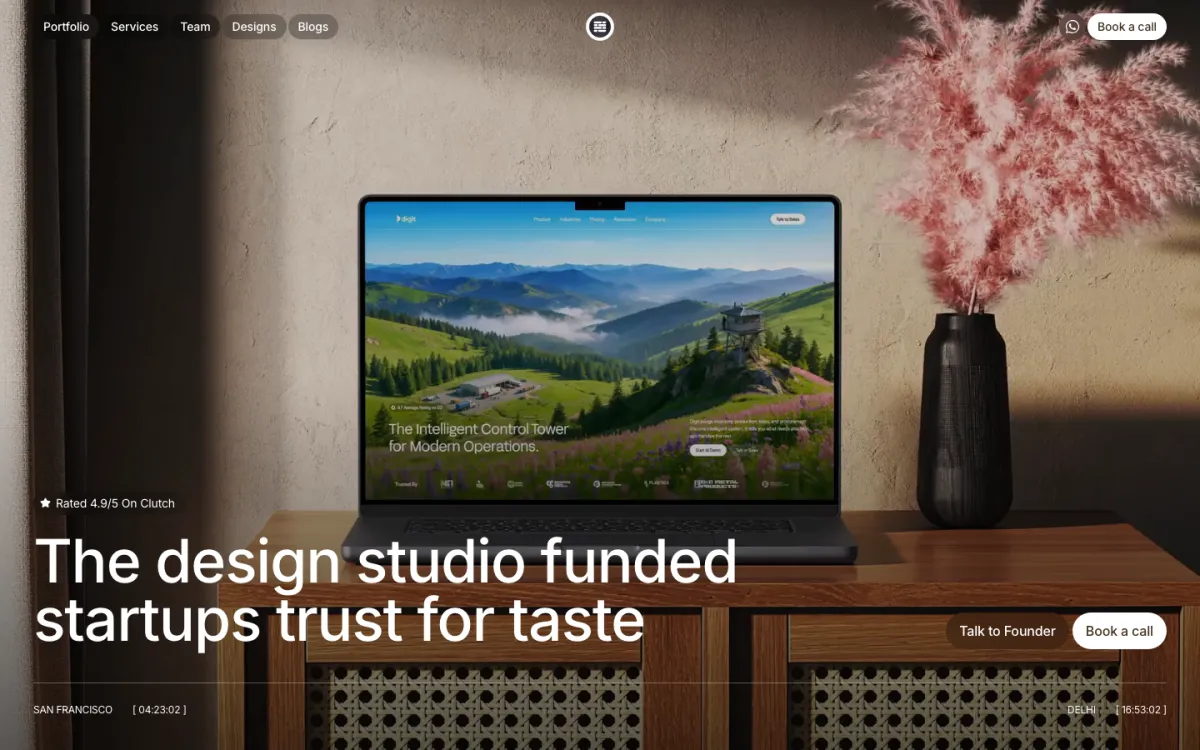
Bricx is the best web design agency for web3 startups that need to look credible to a sceptical visitor rather than native to the category. Bricx has completed 50+ SaaS design projects across 30+ industries, with clients including Writesonic (YC S21), Collectwise (YC F24), Gigacatalyst (YC X26), Sybill, Camb.ai, LTV.ai, Instadapp, Hobbes and AT Kearney. The agency holds 27 verified reviews on Clutch at an average of 5.0/5.
Bricx works exclusively with B2B and AI SaaS companies, from seed stage through Series C, covering branding, website design, product UX/UI and end-to-end development. Engagements start at $25,000. Bricx builds sites that lead with what the product does, who is behind it and what has been audited, rather than with an animated abstraction, because that is what a cautious visitor is actually scanning for.
The most impressive part was the attention to detail in their work.
- Starting price
- $25,000+
- Engagement model
- Fixed-scope projects and monthly retainers
- Timeline
- First delivery within the first week; full scope varies by project
- Clutch
- 5.0/5, 27 reviews
- Hourly rate
- $50 - $99
- Best for
- web3 startups explaining a real product to a sceptical audience.
- Not a fit for
- token launch marketing, NFT drop campaigns, or budgets under $25,000.
Ramotion
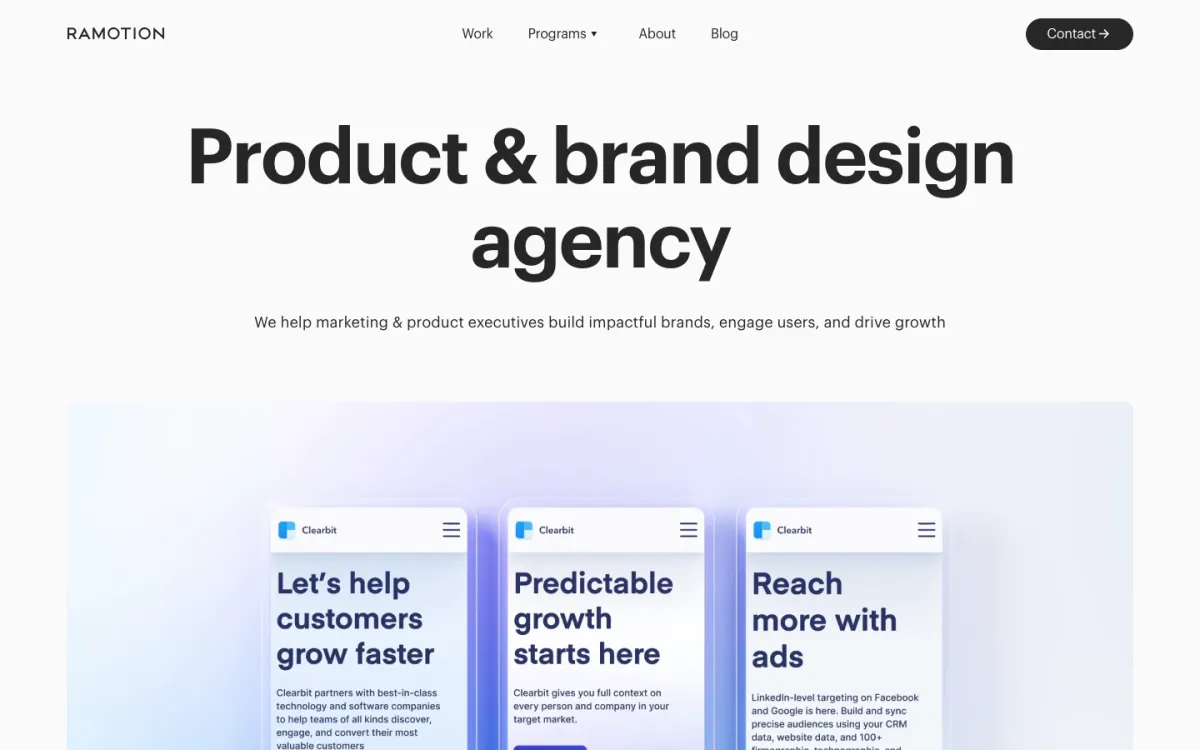
This page argues that web3's default aesthetics are a liability, and Ramotion is the clearest route around them: consumer products at 25% is its largest industry, ahead of financial services and information technology at 20% each, and branding is 30% of its output. A San Francisco brand studio with no crypto centre of gravity brings entirely different defaults to a first draft.
That cuts both ways. Nothing on its card evidences experience with tokens, wallets or the specific claims a web3 site has to make carefully, and getting those wrong is its own credibility failure. 29 Clutch reviews is a modest record, and a $50,000 minimum at $150 to $199 an hour is steep for a pre-launch project.
- Starting price
- $50,000+
- Engagement model
- Project and retainer
- Clutch
- 4.9/5, 29 reviews
- Hourly rate
- $150 - $199
- Team size
- 10 - 49 people
- Best for
- web3 startups that want to look like a company rather than a category.
- Not a fit for
- projects needing deep token and wallet fluency, or budgets under $25,000.
Pixelplex

PixelPlex holds the deepest web3 record on this page: Mantra DAO, Qtum, PegaPool, the Canton Network, and Web3 Antivirus, a product whose entire purpose is spotting the scams this page's visitors have been trained to look for. An agency that has built the detection side knows what a sceptical visitor is actually checking. Blockchain is 20% of its output, from New York since 2007.
The risk here is the inverse of everyone else's. Deep category immersion is exactly what produces a site that looks native to web3, which this page argues against, and no design or web line appears on its card at all. Its industries run financial services at 30% with medical and eCommerce at 20% each.
- Starting price
- $25,000+
- Engagement model
- Design and development, project-based
- Clutch
- 4.9/5, 33 reviews
- Hourly rate
- $50 - $99
- Team size
- 50 - 249 people
- Best for
- projects where the technical claims have to hold up to an expert reader.
- Not a fit for
- startups wanting to look unlike the category, or budgets under $25,000.
Embacy
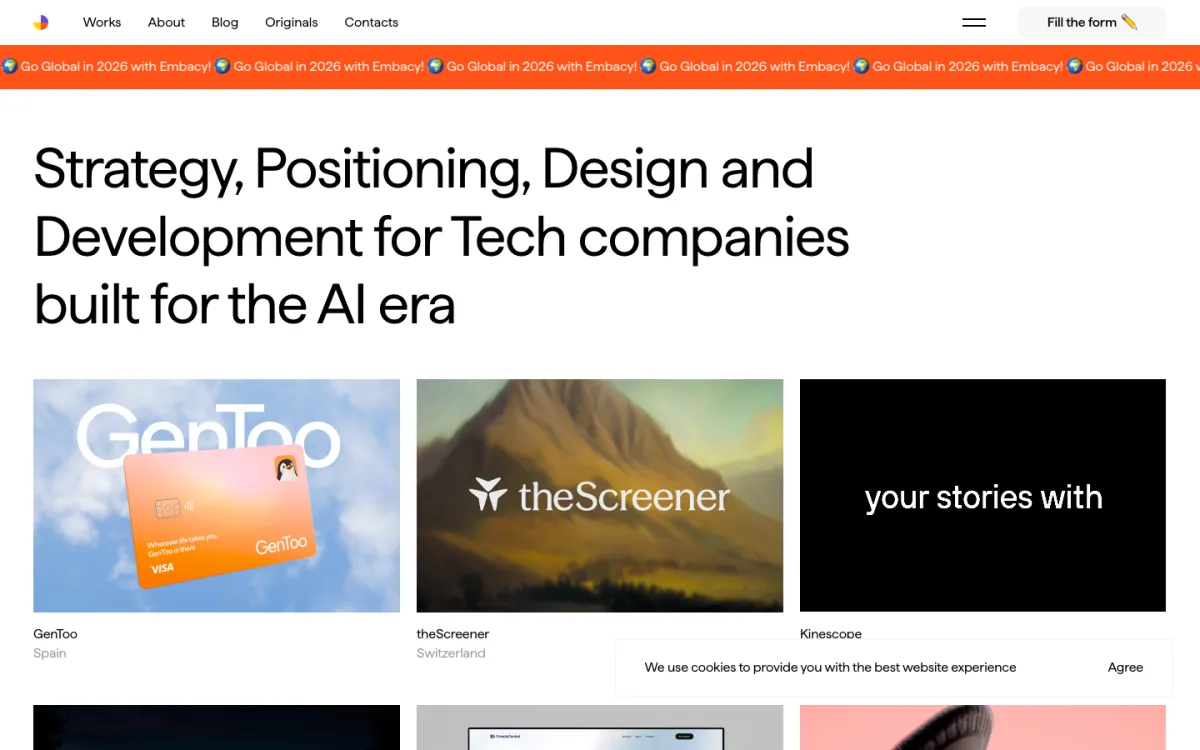
Embacy is 35% financial services, its largest industry, and a web3 project is a financial product whether it describes itself that way or not. Financial services websites are built around looking like somewhere a person would leave money, which is the opposite instinct to the dark gradients this page warns about. Web design is 55% of its output, the highest share here.
UX/UI is only 10% of its mix, so anything past the marketing site sits elsewhere. Its reviews are corporate identity, CMS and design system work for venture capital and financial clients rather than token projects, so the specific disclosures a web3 site carries are outside its documented experience. It works from Barcelona.
- Starting price
- $10,000+
- Engagement model
- Project and retainer
- Clutch
- 5.0/5, 66 reviews
- Hourly rate
- $50 - $99
- Team size
- 10 - 49 people
- Best for
- web3 startups that need to read like a financial institution.
- Not a fit for
- protocol and token product design, or budgets under $25,000.
Outcrowd
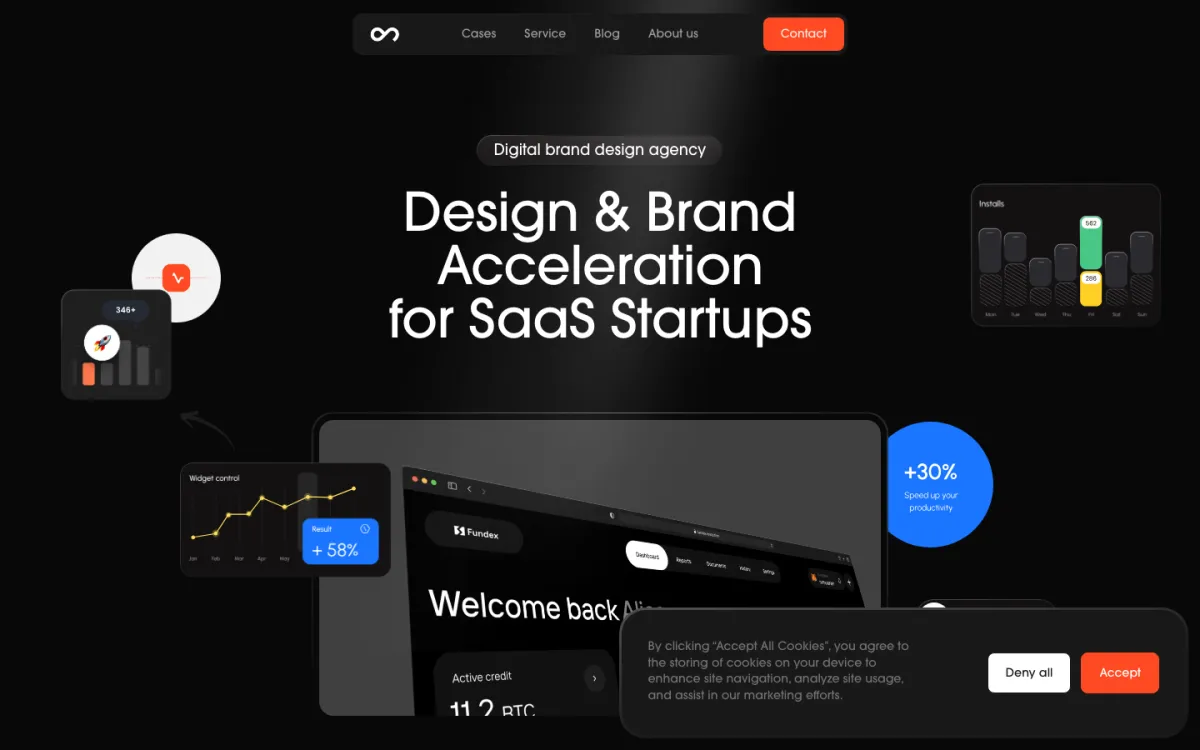
Outcrowd's stated position is that its job is not making things look nice but making products communicate clearly, which on this page is a strategy rather than a platitude. One review covers elevating a real estate company's existing brand and rebuilding its day-to-day design assets, and consistency across every asset is one of the few cheap credibility signals a young project can buy. Information technology is 40% of its clients.
Nothing on its card touches blockchain, crypto or token products, so the category conventions it would be pushing against are ones it has not worked inside. Branding at 20% and graphic design at 15% take a third of its output, and its $5,000 minimum suits a defined scope rather than a launch campaign.
- Starting price
- $5,000+
- Engagement model
- Project and retainer
- Clutch
- 4.9/5, 78 reviews
- Hourly rate
- $50 - $99
- Team size
- 10 - 49 people
- Best for
- startups whose credibility gap is inconsistency across their own assets.
- Not a fit for
- crypto-specific product and claim work, or budgets under $25,000.
Merge Rocks
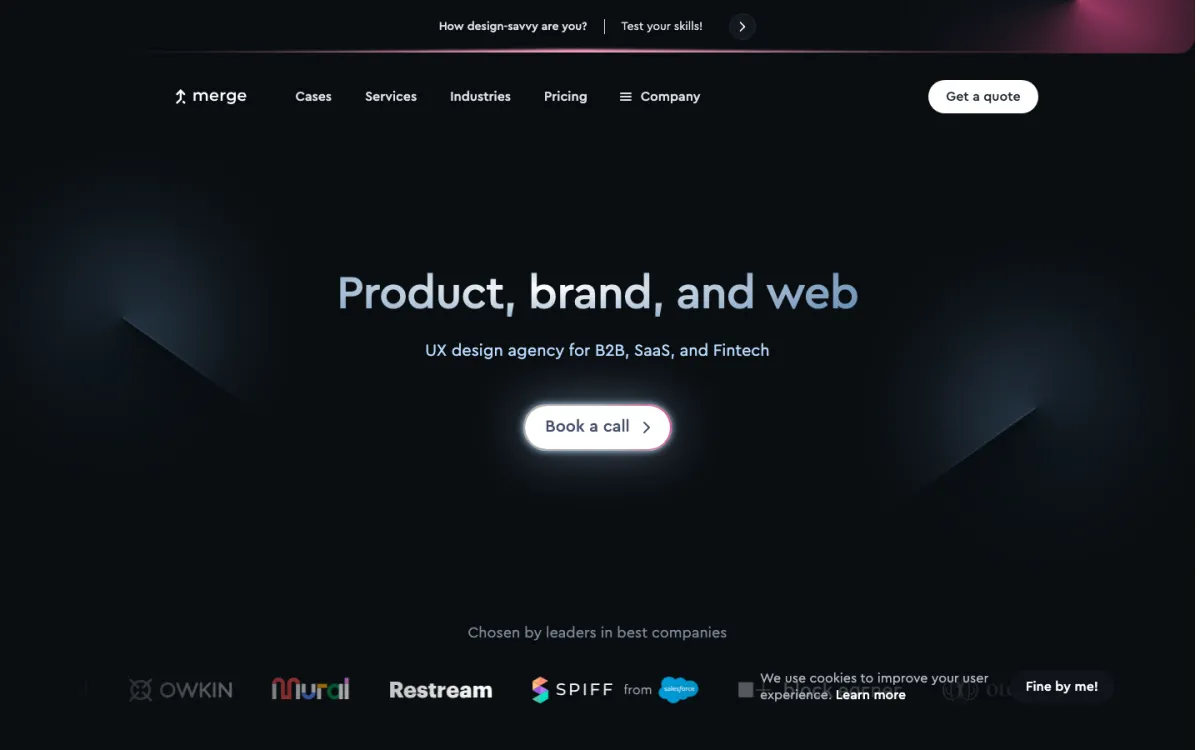
Merge Rocks publishes case study categories for fintech Web3 and for security, an unusual pairing and a useful one here, because a web3 site has to communicate both at once. Financial services and information technology are its largest industries at 20% each, UX/UI is 60% of its output, and Webflow development appears directly in its reviews.
Its card carries no office location, which is worth noticing on a page about credibility signals: a visitor already hunting for reasons to doubt a project will apply the same test to its agency. At 10 to 49 people founded in 2018 it is a small studio, and enterprise clients are 25% of its base.
- Starting price
- $10,000+
- Engagement model
- Project and retainer
- Clutch
- 4.9/5, 67 reviews
- Hourly rate
- $25 - $49
- Team size
- 10 - 49 people
- Best for
- web3 startups that need the security story told alongside the product.
- Not a fit for
- buyers who need a verifiable agency address, or budgets under $25,000.
Humbleteam
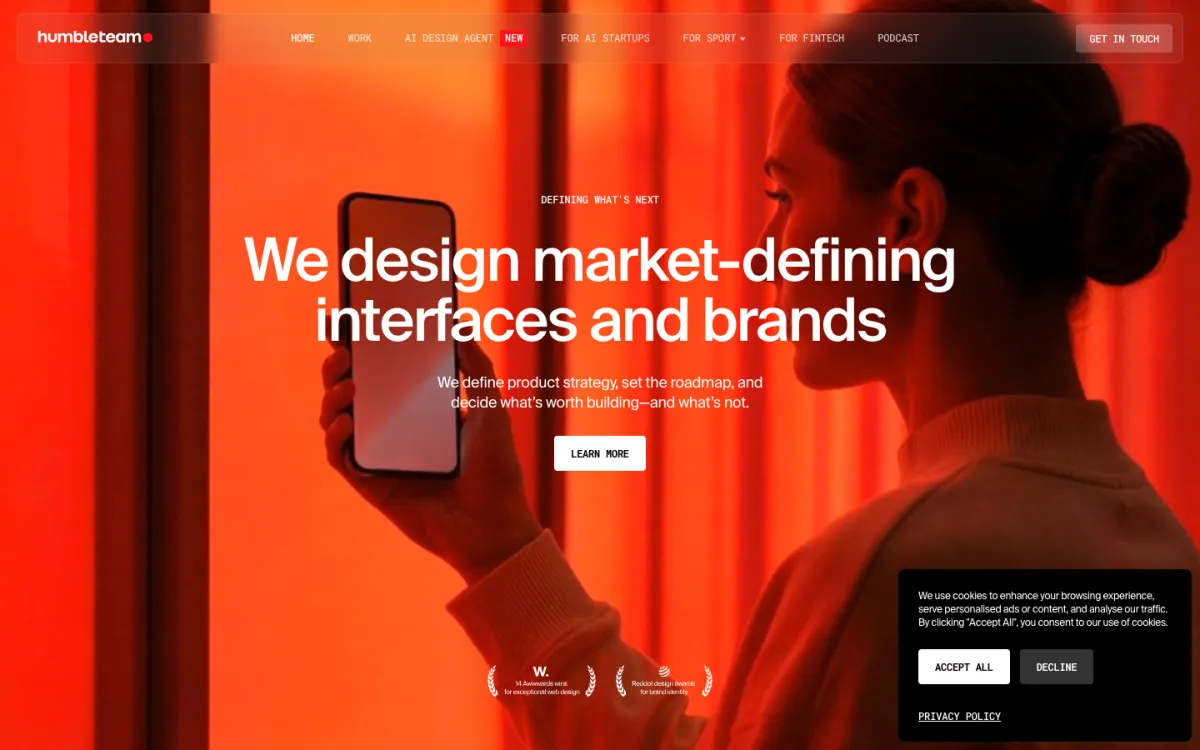
Humbleteam has already done this exact job: rebranding a crypto payments company, aligning its value proposition and writing brand guidelines before the homepage was touched. Guidelines are what stop a project drifting back into category defaults six months after launch, when the founder is busy and somebody reaches for a gradient. Branding is 30% of its output and financial services 30% of its clients.
Its remaining industries are automotive and medical at 15% each with consumer products at 10%, so crypto is one client rather than a specialism. 35 Clutch reviews is a modest record, and at 10 to 49 people in Prague with half its clients under ten million dollars it is sized for one project at a time.
- Starting price
- $5,000+
- Engagement model
- Project and retainer
- Clutch
- 4.9/5, 35 reviews
- Hourly rate
- $50 - $99
- Team size
- 10 - 49 people
- Best for
- web3 startups repositioning before they rebuild the site.
- Not a fit for
- deep protocol work or parallel workstreams, or budgets under $25,000.
Lounge Lizard
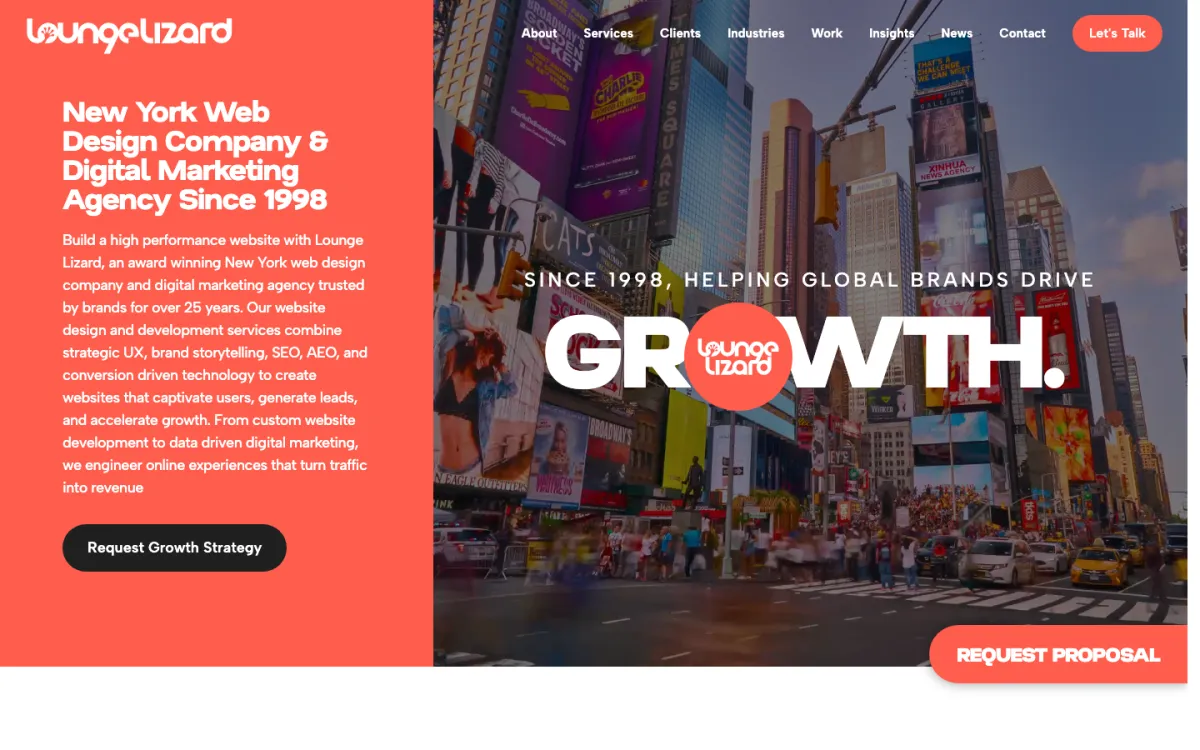
Lounge Lizard has been a New York web company since 1998, older than the entire category it would be building for, and its clients are insurance providers, financial services firms and an architectural practice. Those are businesses whose websites exist to look institutional rather than exciting, which is exactly the register a web3 project needs if it wants to be believed.
Its hourly rate is undisclosed, so a scope cannot be costed before a conversation. Branding is only 10% of its output against 45% web design and 45% web development, and nothing on its card touches crypto, blockchain or token products, so the category's specific conventions and claims would be entirely new ground.
- Starting price
- $25,000+
- Engagement model
- Project and retainer
- Clutch
- 4.8/5, 43 reviews
- Hourly rate
- Undisclosed
- Team size
- 50 - 249 people
- Best for
- web3 startups that want a site reading like an established institution.
- Not a fit for
- projects needing crypto category fluency, or budgets under $25,000.
League Design Agency
On a page about credibility, League Design Agency's own record is the fact that stands out: 140 Clutch reviews at 5.0, several times the volume most agencies here carry and without a point lost. Web design is 50% of its output with UX/UI at 20%, and its published categories cover artificial intelligence, engineering and healthtech.
Crypto and blockchain are not among those categories, and no industry on its card exceeds 10%, so a web3 project is new ground. 60% of its clients are small businesses under ten million dollars, and its reviews describe landing pages and conversion optimisation, which is campaign work rather than the brand system a sceptical visitor reads.
- Starting price
- $10,000+
- Engagement model
- Project and retainer
- Clutch
- 5.0/5, 140 reviews
- Hourly rate
- $50 - $99
- Team size
- 50 - 249 people
- Best for
- founders who want the most independently verified track record here.
- Not a fit for
- projects needing existing web3 experience, or budgets under $25,000.
Purrweb
Purrweb is the only agency here whose clients are 100% small businesses under ten million dollars, and financial services is 50% of its industry mix, the highest single concentration on this page. A web3 startup is a small financial company by any honest description. Its stated focus is launching an MVP within three months, at $25 to $49 an hour with a $5,000 minimum.
Speed is also the risk. A three-month MVP process optimises for shipping rather than for the brand work that separates a project from the category, and UX/UI at 45% is paired with 45% mobile app development rather than web design. It works from the United Arab Emirates, with no enterprise or midmarket clients at all.
- Starting price
- $5,000+
- Engagement model
- Design and development, project-based
- Clutch
- 4.9/5, 44 reviews
- Hourly rate
- $25 - $49
- Team size
- 50 - 249 people
- Best for
- early web3 startups that need something live fast and cheaply.
- Not a fit for
- brand-led differentiation programmes, or budgets under $25,000.
How much does a web3 website build cost?
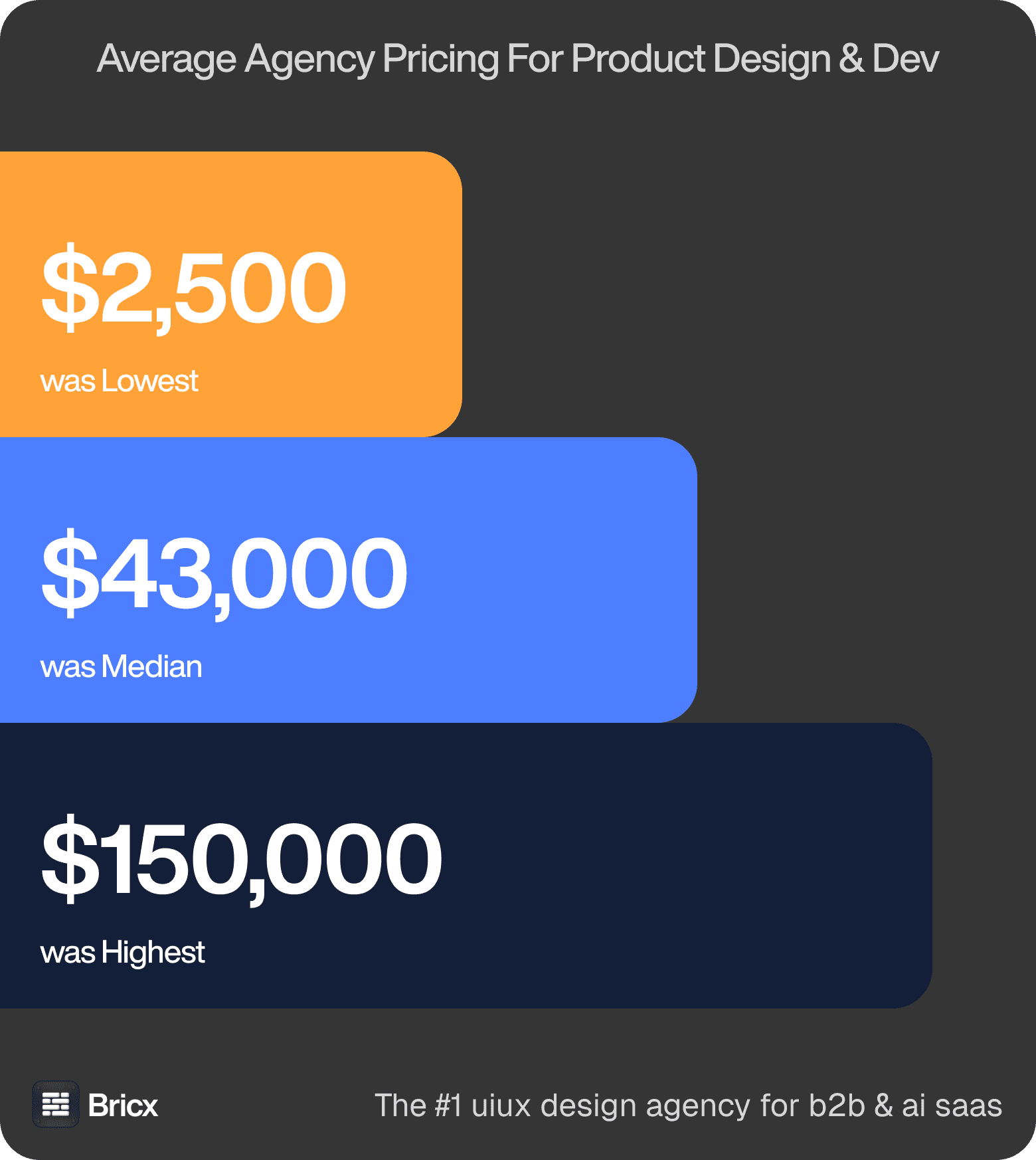
Budget reality. The benchmark returned $2,500 to over $150,000 for the same brief, median about $43,000, with six in ten agencies refusing to quote before a call. Those figures cover product design across the whole benchmark, so treat them as the range a web3 website is quoted inside rather than a price for it.
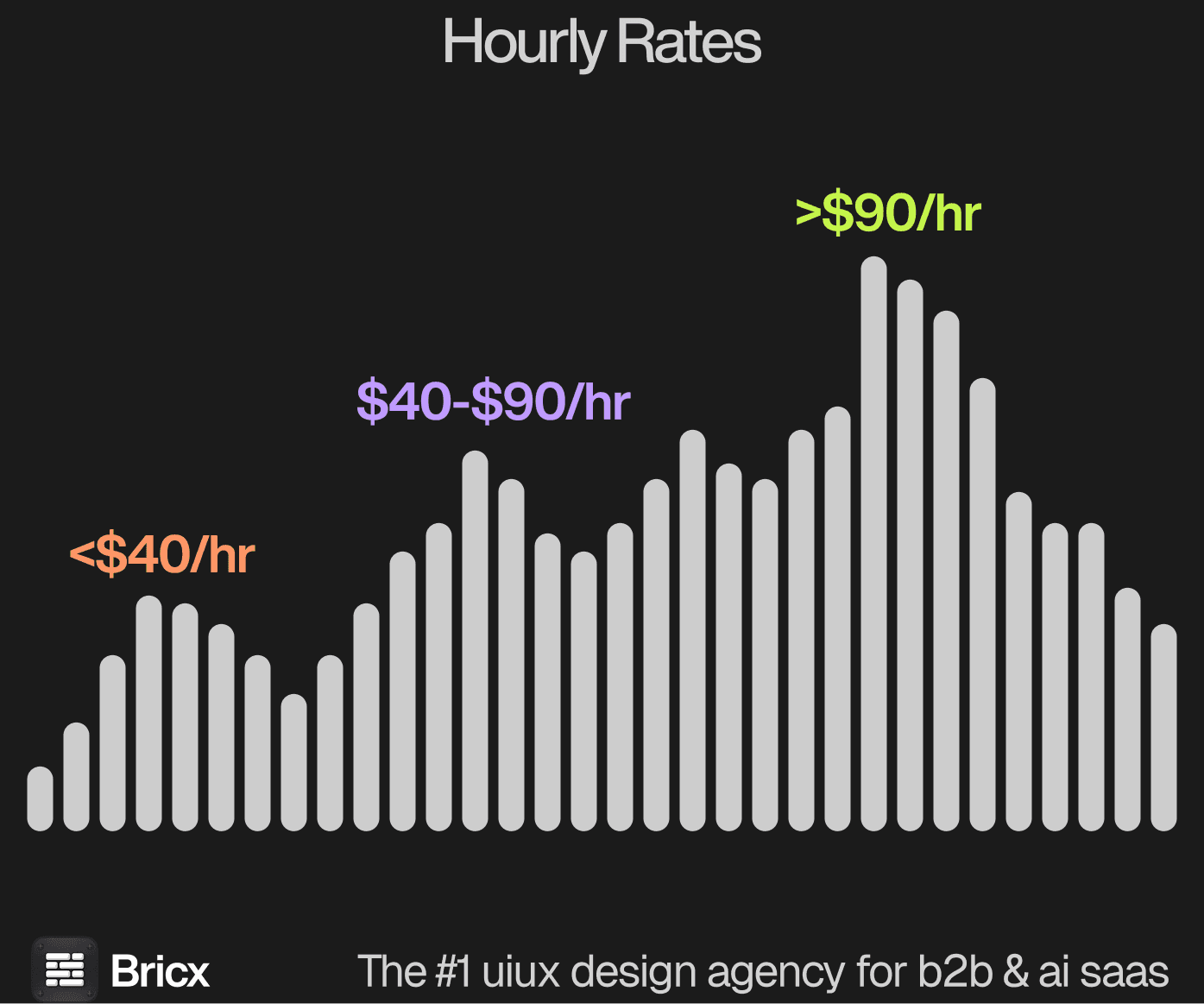
What agencies charge hourly. $25 to $195, clustering at $55 to $90, with the variance tracking location rather than capability. Web3 sites usually sit in the middle of that range, and the cost driver is documentation depth rather than visual complexity.
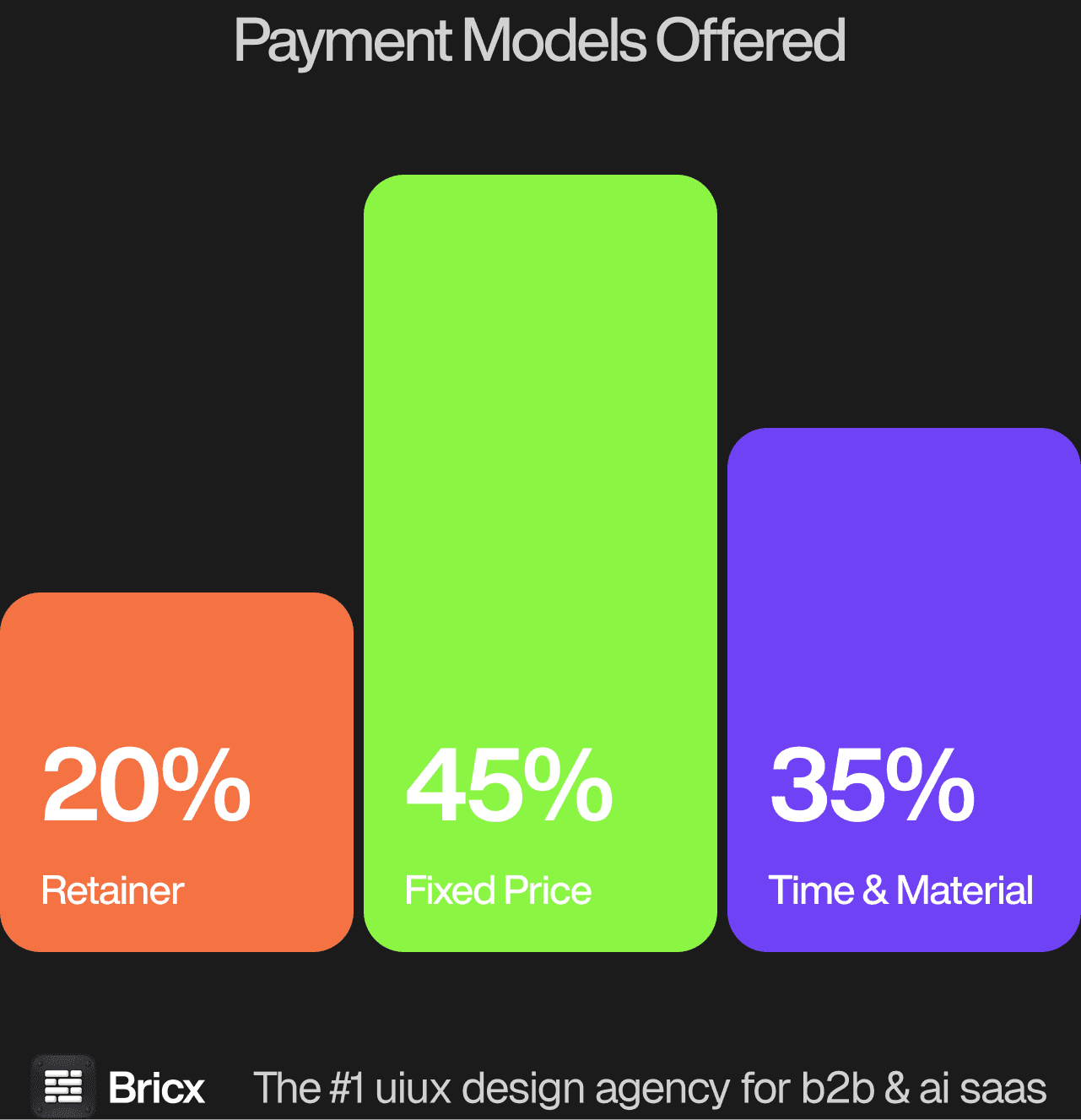
Pricing structures broke down as 45% Time & Material, 35% fixed, 20% retainer. Match it to your certainty, not your preference. For a web3 website the model usually matters more than the headline figure, because it decides what happens when the scope moves.
- Fixed price if the end state is known.
- Time & Material if it is not.
- Retainer if there is no end state.
- Which one fits a web3 website comes down to whether the scope is settled before the work starts.
How do you evaluate a web design agency for a web3 startup?
Five things separate a web3 site that builds trust from one that looks like every other web3 site.
Ask how they establish credibility. Named team, audits, and a plain explanation of what the thing does. Anonymity and vagueness read as risk whether or not they are.
Ask about the wallet connection flow. It is the highest-anxiety moment on the site and it is usually treated as a button rather than a designed sequence.
Check they can explain complex mechanics simply. Tokenomics and protocol design have to be legible to someone who is interested but not expert.
Ask about documentation. In this category docs are a conversion surface, not an afterthought, because technical evaluators go there first.
Push back on the house style. If the proposal is dark backgrounds and gradient blobs, ask what makes you distinguishable from a project that turned out to be fraudulent.
What are the red flags when hiring a design agency?
- Scope defined by hours rather than outcomes. Buying 200 hours tells you nothing about what exists at the end.
- A rate that only makes sense at volume. Cheap per hour and slow per decision is not cheap.
- No examples at your stage. Enterprise work does not prove they can ship on a seed runway.
- Design and research quoted as one line. Ask what proportion of the budget is actually research.
- No named limitation. Every agency is wrong for someone. One that will not say who has not thought about it.
- No comparable example of a web3 website. An agency that cannot point to work of the same shape is learning on your budget.
Should you hire a web design agency or build in-house?
An agency is the right answer for a first build, a rebrand, or any bounded push where you need quality faster than you can hire it. For a web3 website specifically, the question worth settling first is how often the work recurs.
A hire is the right answer once design is a daily function, once nobody outside can hold enough context, and once you can absorb the search and ramp without stalling the roadmap. Where a web3 website falls on that line is usually clear once you count how many times it will need doing again.
Web3 teams usually have deep protocol knowledge and no design capacity, and the founding team is generally too close to the mechanism to explain it plainly. Explaining it plainly is most of what the website has to do.
FAQs
What makes web3 web design different?
Trust. Visitors are actively looking for reasons to doubt the project, and the category's visual conventions overlap heavily with the ones scams use.
How much does a web3 startup website cost?
On the same five-page brief, a quarter of agencies came in under $10,000 and 58% between $15,000 and $50,000. Documentation depth, not visual complexity, is what pushes a web3 site up that range. Bricx starts at $25,000.
Should a web3 site follow category visual conventions?
Only deliberately. Looking identical to every other project in the space is not a credibility signal, and increasingly it is the opposite.
Does the site need to include documentation?
Yes, and treated as a first-class surface. Technical evaluators go to the docs before anything else, and their quality is read as a proxy for the project's.