Product Design

Product Design

Product Design

Insights

Insights

Insights

February 23, 2026

February 23, 2026

February 23, 2026

Superside vs Eleken: Which Is Better for Your Product Team?

Superside vs Eleken: Which Is Better for Your Product Team?

Superside vs Eleken: Which Is Better for Your Product Team?

Superside vs Eleken explained clearly. Learn how both agencies differ in creative production, SaaS UX expertise, pricing approach, and delivery style.

Superside vs Eleken explained clearly. Learn how both agencies differ in creative production, SaaS UX expertise, pricing approach, and delivery style.

Superside vs Eleken explained clearly. Learn how both agencies differ in creative production, SaaS UX expertise, pricing approach, and delivery style.

4 minutes

4 minutes

4 minutes

Author:

Siddharth Vij

Co-Founder, Bricx

Hi, I'm Sid. I lead design at Bricx. We work with B2B & AI SaaS companies to craft unforgettable user experiences.

If you’re comparing Superside vs Eleken, you’re likely trying to figure out which design partner actually fits how your company works — not just which agency looks good on paper. Both companies have strong reputations but solve very different problems. Superside positions itself as a subscription-based creative service built to support ongoing design needs at scale, especially for marketing and brand teams. 

Eleken, on the other hand, focuses specifically on SaaS product design, helping software companies improve UX through consistent, product-focused execution. One excels at high-volume creative production and operational scalability, while the other specializes in deep product UX support. 

The real question isn’t which is better overall — it’s which model aligns with your product goals and workflow. That’s exactly what we’ll try to figure out in this article.

So what are you waiting for? Let’s dive right in. 

What is Superside?
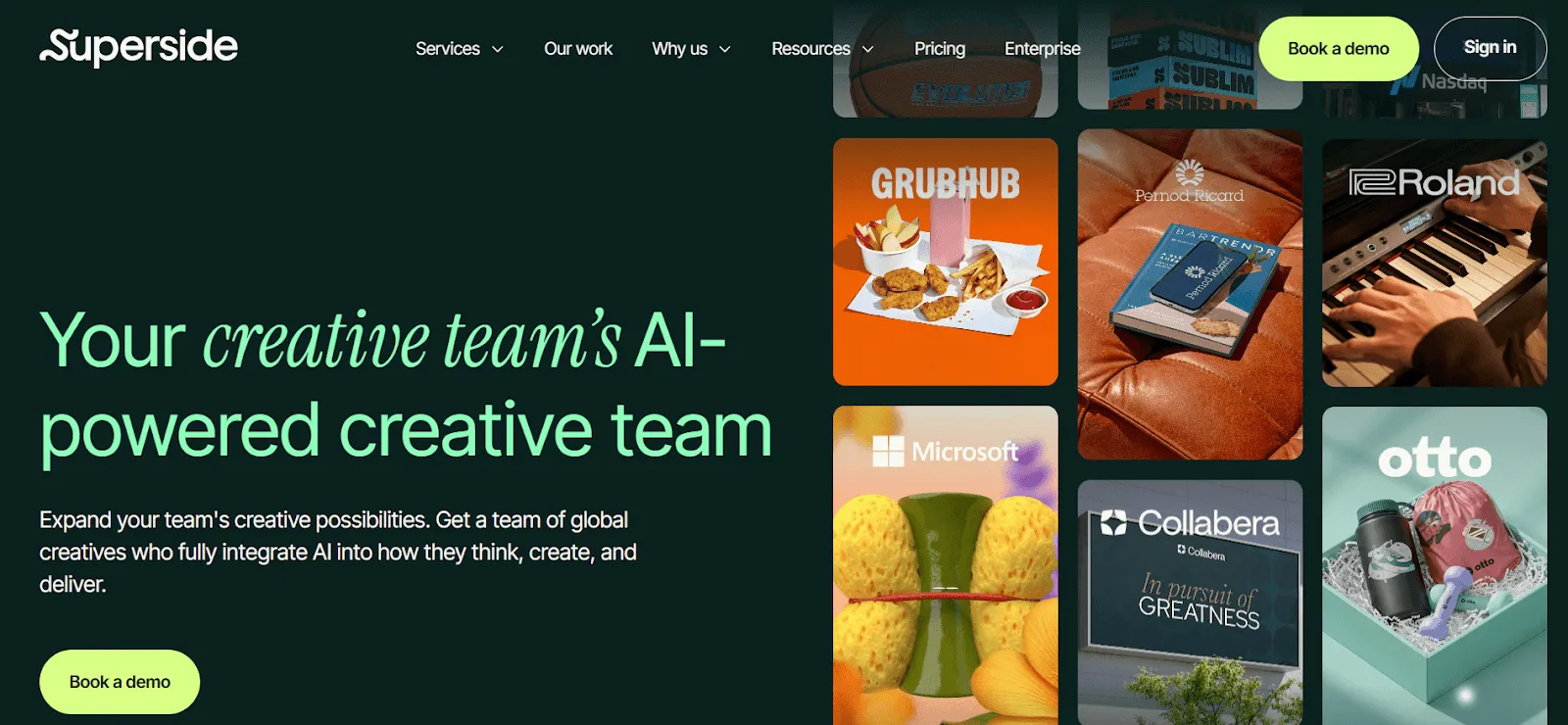

 Superside is a subscription-based creative services company designed to function as an always-on design team for businesses that require continuous creative output.


Superside is a subscription-based creative services company designed to function as an always-on design team for businesses that require continuous creative output. Originally positioned as a design-as-a-service platform, Superside has evolved into a large-scale creative partner offering branding, marketing design, motion graphics, advertising creatives, and digital design support. 

While they do support digital product interfaces, Superside is primarily known for marketing and brand design rather than deep product UX strategy. 

Their workflows are structured to support enterprise marketing teams and fast-moving organizations that require consistent design production across multiple channels.

Strengths of Superside

  • Scalable Subscription Model
    Superside’s subscription structure allows companies to access ongoing design resources without managing hiring or freelancer coordination.

    This is particularly useful for organizations with continuous creative needs rather than one-off projects.

  • High Volume Creative Production
    The agency excels at delivering large quantities of marketing assets, ad creatives, presentations, and brand materials quickly. Companies running multiple campaigns benefit from predictable output and streamlined workflows.

  • Global Distributed Design Team
    Superside operates with designers across time zones, enabling faster turnaround times and near-continuous production cycles. This model helps companies maintain speed without overloading internal teams.

  • Strong Marketing and Brand Design Capabilities
    Their expertise shines in performance marketing visuals, brand identity execution, and creative campaigns where consistency and speed are essential.

  • Operational Efficiency and Project Management
    Superside invests heavily in process management, ensuring projects move smoothly through structured workflows with dedicated project leads.

Weaknesses of Superside

  • Limited Product UX Depth
    While capable in UI design, Superside is not primarily positioned as a product UX specialist. Companies seeking deep SaaS UX strategy or onboarding optimization may require additional expertise.

  • Less Strategic Product Involvement
    Engagements often focus on execution rather than shaping product direction or solving complex product problems.

  • Subscription Cost May Not Suit Smaller Teams
    The model works best when design demand is consistent; companies with occasional needs may underutilize the subscription.

  • Generalist Design Focus
    Their broad service offering can dilute specialization in specific domains like SaaS product design or product-led growth UX.

  • Not Built for Embedded Product Collaboration
    Superside operates more as an external creative service rather than an integrated product team.

Industries Served

Superside typically serves enterprise companies, marketing teams, and fast-growing businesses that require ongoing creative production, brand execution, and large-scale design support.

What is Eleken?
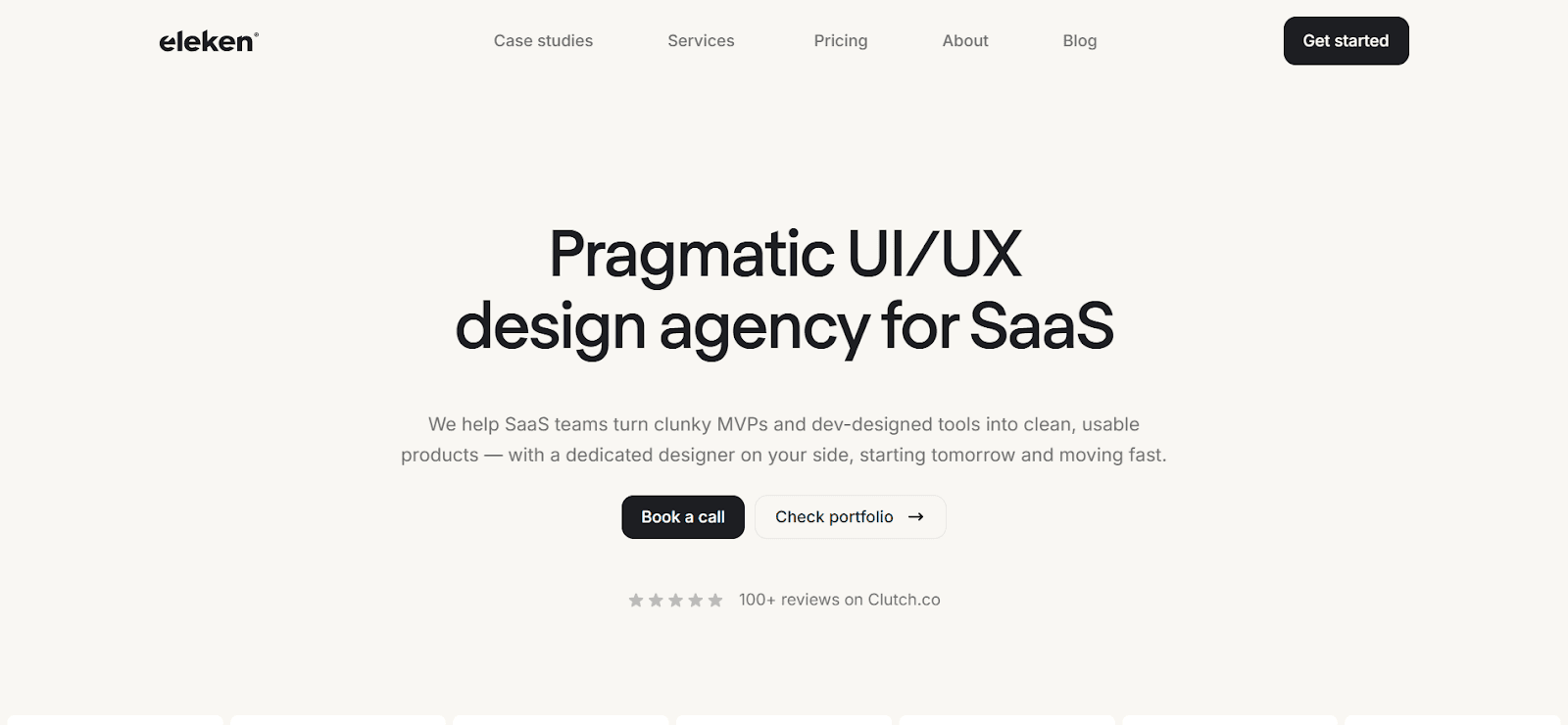

Eleken is a product design agency focused specifically on SaaS UX design. Unlike generalist agencies, Eleken positions itself as a dedicated product design partner for software companies, helping improve usability, workflows, and interface clarity through consistent UX execution. 


Eleken is a product design agency focused specifically on SaaS UX design. Unlike generalist agencies, Eleken positions itself as a dedicated product design partner for software companies, helping improve usability, workflows, and interface clarity through consistent UX execution. 

Their model centers around providing dedicated designers who work closely with product teams on an ongoing basis.

Eleken’s approach emphasizes practical product improvement rather than large redesign initiatives. Their designers integrate into product workflows, focusing on refining existing features, improving usability, and maintaining consistency across interfaces. 

Because they specialize in SaaS products, Eleken understands common product challenges such as onboarding friction, feature discoverability, and workflow complexity. 

Strengths of Eleken

  • Deep SaaS Product Focus
    Eleken works almost exclusively with SaaS companies, giving them strong familiarity with common product UX challenges and user behavior patterns.

  • Dedicated Designer Model
    Clients typically work with consistent designers who become familiar with the product over time, improving collaboration and continuity.

  • Cost-Effective Product Design Support
    Their pricing structure is often more accessible than large agencies, making ongoing product design support feasible for startups and mid-sized SaaS companies.

  • Practical UX Improvements
    Eleken focuses on solving real usability problems rather than large conceptual redesigns, helping teams incrementally improve product experience.

  • Strong Execution Reliability
    Their workflow emphasizes steady delivery and predictable design output aligned with product development cycles.

Weaknesses of Eleken

  • Limited Branding and Marketing Design Scope
    Eleken focuses primarily on product UX and may not fully support broader brand or marketing design needs.

  • Less Strategic Product Leadership
    While strong in execution, strategic product direction often remains with the client team rather than the agency.

  • Visual Innovation Can Be Conservative
    Designs tend to prioritize usability and consistency rather than bold differentiation or experimental interaction patterns.

  • Not Optimized for High-Volume Creative Needs
    Companies requiring large-scale marketing or creative production may need additional partners.

  • Scaling Capacity Depends on Team Allocation
    Rapid scaling may require adding designers rather than instantly expanding capacity.

Industries Served

Eleken primarily serves SaaS startups and software companies looking for ongoing UX design support, usability improvements, and consistent product interface execution.

Core Comparison Points: Superside vs Eleken

When comparing Superside vs Eleken, the differences become clearer once you understand how each agency approaches projects from scratch: 

  1. Pricing 

Superside operates on a subscription-based pricing model built around ongoing design capacity. This works well for companies with continuous creative needs, but costs can become significant if usage fluctuates or product work is limited. 

Eleken follows a more predictable dedicated-designer pricing structure, which tends to be more accessible for SaaS teams needing steady UX improvements rather than large volumes of creative output.

  1. Product & UX Maturity 

Superside’s strengths lean toward creative execution and marketing design rather than deep product UX maturity. While they can support UI work, their processes are optimized for creative throughput. 

Eleken, by contrast, is deeply embedded in SaaS product environments and focuses heavily on usability, workflows, and interface clarity. 

Companies prioritizing long-term UX evolution typically find Eleken’s product maturity more aligned with software development cycles.

  1. Industry & Domain Fit 

Superside works across multiple industries, supporting marketing teams, enterprise brands, and growth organizations needing cross-channel creative assets. 

Eleken specializes primarily in SaaS and digital products, giving them deeper familiarity with product-led growth challenges, onboarding flows, and feature-heavy platforms. 

Businesses seeking industry-specific SaaS UX expertise may find Eleken more tailored, whereas Superside suits broader organizational design needs.

  1. Speed & Execution Model 

Superside is built for speed at scale, leveraging distributed global teams to deliver high volumes of work quickly. Their operational infrastructure allows rapid turnaround for campaigns and creative production. 

Eleken’s execution model is steadier and more iterative, prioritizing continuous product improvement rather than rapid asset delivery.

  1. Collaboration & Communication 

Superside typically functions as an external creative partner managed through structured workflows and project coordination layers. Communication is streamlined but can feel more service-oriented. 

Eleken integrates more closely with product teams through dedicated designers who become familiar with the product over time, creating deeper collaboration and context sharing during ongoing development.

  1. Flexibility & Startup Friendliness 

Eleken’s model is often more startup-friendly because teams can scale design involvement gradually while maintaining consistent collaboration. 

Superside works best when companies already have structured processes and predictable design demand. 

Early-stage startups or rapidly evolving products may benefit from Eleken’s adaptability, while larger organizations gain efficiency from Superside’s operational structure.

  1. Cost Efficiency & ROI 

ROI from Superside typically comes from efficiency gains — replacing multiple freelancers or internal hires with one scalable creative partner. 

Eleken generates ROI through improved usability and reduced product friction, which can impact retention and adoption over time. 

One optimizes operational efficiency; the other optimizes product experience outcomes.

  1. Strategic Impact 

Superside’s strategic contribution often centers around brand consistency and marketing execution rather than influencing product direction.

Eleken contributes more directly to product usability decisions but usually works within an existing product strategy rather than redefining it. 

Strategic depth therefore varies depending on whether the company prioritizes marketing growth or product UX evolution.

  1. Cultural & Team Fit 

Superside’s distributed model suits organizations comfortable working with structured service workflows and asynchronous collaboration. 

Eleken’s embedded designer approach feels closer to adding an internal team member, which many product teams prefer for long-term collaboration. 

Cultural fit often depends on whether companies want a production partner or a product collaborator.

  1. Design Quality & Systems Thinking 

Superside delivers polished, consistent design across marketing and brand outputs, emphasizing scalability and visual cohesion. 

Eleken focuses more on functional clarity, usability, and maintaining product consistency through iterative design decisions. 

Superside excels in creative breadth, while Eleken prioritizes structured product UX systems and long-term interface stability.

Conclusion

Choosing the right agency between Superside and Eleken depends on your use case, budget, and expected ROI from design. Superside is ideal for companies needing scalable creative production and ongoing marketing design support, while Eleken works well for SaaS teams seeking consistent product UX execution. 

However, when comparing Superside vs Eleken alongside Bricx , we often emerge as the better option for companies needing growth-driven product design without the unnecessary frills. 

With extensive SaaS, AI, and Web3 experience, including projects with Y Combinator, Sequoia, and Techstars-backed teams – we bring insights from 25+ case studies across industries to help you as an extended design arm across every stage of your product journey. 

Schedule a call with us now to discuss your goals & to know more about how we can help achieve them. 
If you’re comparing Superside vs Eleken, you’re likely trying to figure out which design partner actually fits how your company works — not just which agency looks good on paper. Both companies have strong reputations but solve very different problems. Superside positions itself as a subscription-based creative service built to support ongoing design needs at scale, especially for marketing and brand teams. 

Eleken, on the other hand, focuses specifically on SaaS product design, helping software companies improve UX through consistent, product-focused execution. One excels at high-volume creative production and operational scalability, while the other specializes in deep product UX support. 

The real question isn’t which is better overall — it’s which model aligns with your product goals and workflow. That’s exactly what we’ll try to figure out in this article.

So what are you waiting for? Let’s dive right in. 

What is Superside?


 Superside is a subscription-based creative services company designed to function as an always-on design team for businesses that require continuous creative output.


Superside is a subscription-based creative services company designed to function as an always-on design team for businesses that require continuous creative output. Originally positioned as a design-as-a-service platform, Superside has evolved into a large-scale creative partner offering branding, marketing design, motion graphics, advertising creatives, and digital design support. 

While they do support digital product interfaces, Superside is primarily known for marketing and brand design rather than deep product UX strategy. 

Their workflows are structured to support enterprise marketing teams and fast-moving organizations that require consistent design production across multiple channels.

Strengths of Superside

  • Scalable Subscription Model
    Superside’s subscription structure allows companies to access ongoing design resources without managing hiring or freelancer coordination.

    This is particularly useful for organizations with continuous creative needs rather than one-off projects.

  • High Volume Creative Production
    The agency excels at delivering large quantities of marketing assets, ad creatives, presentations, and brand materials quickly. Companies running multiple campaigns benefit from predictable output and streamlined workflows.

  • Global Distributed Design Team
    Superside operates with designers across time zones, enabling faster turnaround times and near-continuous production cycles. This model helps companies maintain speed without overloading internal teams.

  • Strong Marketing and Brand Design Capabilities
    Their expertise shines in performance marketing visuals, brand identity execution, and creative campaigns where consistency and speed are essential.

  • Operational Efficiency and Project Management
    Superside invests heavily in process management, ensuring projects move smoothly through structured workflows with dedicated project leads.

Weaknesses of Superside

  • Limited Product UX Depth
    While capable in UI design, Superside is not primarily positioned as a product UX specialist. Companies seeking deep SaaS UX strategy or onboarding optimization may require additional expertise.

  • Less Strategic Product Involvement
    Engagements often focus on execution rather than shaping product direction or solving complex product problems.

  • Subscription Cost May Not Suit Smaller Teams
    The model works best when design demand is consistent; companies with occasional needs may underutilize the subscription.

  • Generalist Design Focus
    Their broad service offering can dilute specialization in specific domains like SaaS product design or product-led growth UX.

  • Not Built for Embedded Product Collaboration
    Superside operates more as an external creative service rather than an integrated product team.

Industries Served

Superside typically serves enterprise companies, marketing teams, and fast-growing businesses that require ongoing creative production, brand execution, and large-scale design support.

What is Eleken?


Eleken is a product design agency focused specifically on SaaS UX design. Unlike generalist agencies, Eleken positions itself as a dedicated product design partner for software companies, helping improve usability, workflows, and interface clarity through consistent UX execution. 


Eleken is a product design agency focused specifically on SaaS UX design. Unlike generalist agencies, Eleken positions itself as a dedicated product design partner for software companies, helping improve usability, workflows, and interface clarity through consistent UX execution. 

Their model centers around providing dedicated designers who work closely with product teams on an ongoing basis.

Eleken’s approach emphasizes practical product improvement rather than large redesign initiatives. Their designers integrate into product workflows, focusing on refining existing features, improving usability, and maintaining consistency across interfaces. 

Because they specialize in SaaS products, Eleken understands common product challenges such as onboarding friction, feature discoverability, and workflow complexity. 

Strengths of Eleken

  • Deep SaaS Product Focus
    Eleken works almost exclusively with SaaS companies, giving them strong familiarity with common product UX challenges and user behavior patterns.

  • Dedicated Designer Model
    Clients typically work with consistent designers who become familiar with the product over time, improving collaboration and continuity.

  • Cost-Effective Product Design Support
    Their pricing structure is often more accessible than large agencies, making ongoing product design support feasible for startups and mid-sized SaaS companies.

  • Practical UX Improvements
    Eleken focuses on solving real usability problems rather than large conceptual redesigns, helping teams incrementally improve product experience.

  • Strong Execution Reliability
    Their workflow emphasizes steady delivery and predictable design output aligned with product development cycles.

Weaknesses of Eleken

  • Limited Branding and Marketing Design Scope
    Eleken focuses primarily on product UX and may not fully support broader brand or marketing design needs.

  • Less Strategic Product Leadership
    While strong in execution, strategic product direction often remains with the client team rather than the agency.

  • Visual Innovation Can Be Conservative
    Designs tend to prioritize usability and consistency rather than bold differentiation or experimental interaction patterns.

  • Not Optimized for High-Volume Creative Needs
    Companies requiring large-scale marketing or creative production may need additional partners.

  • Scaling Capacity Depends on Team Allocation
    Rapid scaling may require adding designers rather than instantly expanding capacity.

Industries Served

Eleken primarily serves SaaS startups and software companies looking for ongoing UX design support, usability improvements, and consistent product interface execution.

Core Comparison Points: Superside vs Eleken

When comparing Superside vs Eleken, the differences become clearer once you understand how each agency approaches projects from scratch: 

  1. Pricing 

Superside operates on a subscription-based pricing model built around ongoing design capacity. This works well for companies with continuous creative needs, but costs can become significant if usage fluctuates or product work is limited. 

Eleken follows a more predictable dedicated-designer pricing structure, which tends to be more accessible for SaaS teams needing steady UX improvements rather than large volumes of creative output.

  1. Product & UX Maturity 

Superside’s strengths lean toward creative execution and marketing design rather than deep product UX maturity. While they can support UI work, their processes are optimized for creative throughput. 

Eleken, by contrast, is deeply embedded in SaaS product environments and focuses heavily on usability, workflows, and interface clarity. 

Companies prioritizing long-term UX evolution typically find Eleken’s product maturity more aligned with software development cycles.

  1. Industry & Domain Fit 

Superside works across multiple industries, supporting marketing teams, enterprise brands, and growth organizations needing cross-channel creative assets. 

Eleken specializes primarily in SaaS and digital products, giving them deeper familiarity with product-led growth challenges, onboarding flows, and feature-heavy platforms. 

Businesses seeking industry-specific SaaS UX expertise may find Eleken more tailored, whereas Superside suits broader organizational design needs.

  1. Speed & Execution Model 

Superside is built for speed at scale, leveraging distributed global teams to deliver high volumes of work quickly. Their operational infrastructure allows rapid turnaround for campaigns and creative production. 

Eleken’s execution model is steadier and more iterative, prioritizing continuous product improvement rather than rapid asset delivery.

  1. Collaboration & Communication 

Superside typically functions as an external creative partner managed through structured workflows and project coordination layers. Communication is streamlined but can feel more service-oriented. 

Eleken integrates more closely with product teams through dedicated designers who become familiar with the product over time, creating deeper collaboration and context sharing during ongoing development.

  1. Flexibility & Startup Friendliness 

Eleken’s model is often more startup-friendly because teams can scale design involvement gradually while maintaining consistent collaboration. 

Superside works best when companies already have structured processes and predictable design demand. 

Early-stage startups or rapidly evolving products may benefit from Eleken’s adaptability, while larger organizations gain efficiency from Superside’s operational structure.

  1. Cost Efficiency & ROI 

ROI from Superside typically comes from efficiency gains — replacing multiple freelancers or internal hires with one scalable creative partner. 

Eleken generates ROI through improved usability and reduced product friction, which can impact retention and adoption over time. 

One optimizes operational efficiency; the other optimizes product experience outcomes.

  1. Strategic Impact 

Superside’s strategic contribution often centers around brand consistency and marketing execution rather than influencing product direction.

Eleken contributes more directly to product usability decisions but usually works within an existing product strategy rather than redefining it. 

Strategic depth therefore varies depending on whether the company prioritizes marketing growth or product UX evolution.

  1. Cultural & Team Fit 

Superside’s distributed model suits organizations comfortable working with structured service workflows and asynchronous collaboration. 

Eleken’s embedded designer approach feels closer to adding an internal team member, which many product teams prefer for long-term collaboration. 

Cultural fit often depends on whether companies want a production partner or a product collaborator.

  1. Design Quality & Systems Thinking 

Superside delivers polished, consistent design across marketing and brand outputs, emphasizing scalability and visual cohesion. 

Eleken focuses more on functional clarity, usability, and maintaining product consistency through iterative design decisions. 

Superside excels in creative breadth, while Eleken prioritizes structured product UX systems and long-term interface stability.

Conclusion

Choosing the right agency between Superside and Eleken depends on your use case, budget, and expected ROI from design. Superside is ideal for companies needing scalable creative production and ongoing marketing design support, while Eleken works well for SaaS teams seeking consistent product UX execution. 

However, when comparing Superside vs Eleken alongside Bricx , we often emerge as the better option for companies needing growth-driven product design without the unnecessary frills. 

With extensive SaaS, AI, and Web3 experience, including projects with Y Combinator, Sequoia, and Techstars-backed teams – we bring insights from 25+ case studies across industries to help you as an extended design arm across every stage of your product journey. 

Schedule a call with us now to discuss your goals & to know more about how we can help achieve them. 
If you’re comparing Superside vs Eleken, you’re likely trying to figure out which design partner actually fits how your company works — not just which agency looks good on paper. Both companies have strong reputations but solve very different problems. Superside positions itself as a subscription-based creative service built to support ongoing design needs at scale, especially for marketing and brand teams. 

Eleken, on the other hand, focuses specifically on SaaS product design, helping software companies improve UX through consistent, product-focused execution. One excels at high-volume creative production and operational scalability, while the other specializes in deep product UX support. 

The real question isn’t which is better overall — it’s which model aligns with your product goals and workflow. That’s exactly what we’ll try to figure out in this article.

So what are you waiting for? Let’s dive right in. 

What is Superside?


 Superside is a subscription-based creative services company designed to function as an always-on design team for businesses that require continuous creative output.


Superside is a subscription-based creative services company designed to function as an always-on design team for businesses that require continuous creative output. Originally positioned as a design-as-a-service platform, Superside has evolved into a large-scale creative partner offering branding, marketing design, motion graphics, advertising creatives, and digital design support. 

While they do support digital product interfaces, Superside is primarily known for marketing and brand design rather than deep product UX strategy. 

Their workflows are structured to support enterprise marketing teams and fast-moving organizations that require consistent design production across multiple channels.

Strengths of Superside

  • Scalable Subscription Model
    Superside’s subscription structure allows companies to access ongoing design resources without managing hiring or freelancer coordination.

    This is particularly useful for organizations with continuous creative needs rather than one-off projects.

  • High Volume Creative Production
    The agency excels at delivering large quantities of marketing assets, ad creatives, presentations, and brand materials quickly. Companies running multiple campaigns benefit from predictable output and streamlined workflows.

  • Global Distributed Design Team
    Superside operates with designers across time zones, enabling faster turnaround times and near-continuous production cycles. This model helps companies maintain speed without overloading internal teams.

  • Strong Marketing and Brand Design Capabilities
    Their expertise shines in performance marketing visuals, brand identity execution, and creative campaigns where consistency and speed are essential.

  • Operational Efficiency and Project Management
    Superside invests heavily in process management, ensuring projects move smoothly through structured workflows with dedicated project leads.

Weaknesses of Superside

  • Limited Product UX Depth
    While capable in UI design, Superside is not primarily positioned as a product UX specialist. Companies seeking deep SaaS UX strategy or onboarding optimization may require additional expertise.

  • Less Strategic Product Involvement
    Engagements often focus on execution rather than shaping product direction or solving complex product problems.

  • Subscription Cost May Not Suit Smaller Teams
    The model works best when design demand is consistent; companies with occasional needs may underutilize the subscription.

  • Generalist Design Focus
    Their broad service offering can dilute specialization in specific domains like SaaS product design or product-led growth UX.

  • Not Built for Embedded Product Collaboration
    Superside operates more as an external creative service rather than an integrated product team.

Industries Served

Superside typically serves enterprise companies, marketing teams, and fast-growing businesses that require ongoing creative production, brand execution, and large-scale design support.

What is Eleken?


Eleken is a product design agency focused specifically on SaaS UX design. Unlike generalist agencies, Eleken positions itself as a dedicated product design partner for software companies, helping improve usability, workflows, and interface clarity through consistent UX execution. 


Eleken is a product design agency focused specifically on SaaS UX design. Unlike generalist agencies, Eleken positions itself as a dedicated product design partner for software companies, helping improve usability, workflows, and interface clarity through consistent UX execution. 

Their model centers around providing dedicated designers who work closely with product teams on an ongoing basis.

Eleken’s approach emphasizes practical product improvement rather than large redesign initiatives. Their designers integrate into product workflows, focusing on refining existing features, improving usability, and maintaining consistency across interfaces. 

Because they specialize in SaaS products, Eleken understands common product challenges such as onboarding friction, feature discoverability, and workflow complexity. 

Strengths of Eleken

  • Deep SaaS Product Focus
    Eleken works almost exclusively with SaaS companies, giving them strong familiarity with common product UX challenges and user behavior patterns.

  • Dedicated Designer Model
    Clients typically work with consistent designers who become familiar with the product over time, improving collaboration and continuity.

  • Cost-Effective Product Design Support
    Their pricing structure is often more accessible than large agencies, making ongoing product design support feasible for startups and mid-sized SaaS companies.

  • Practical UX Improvements
    Eleken focuses on solving real usability problems rather than large conceptual redesigns, helping teams incrementally improve product experience.

  • Strong Execution Reliability
    Their workflow emphasizes steady delivery and predictable design output aligned with product development cycles.

Weaknesses of Eleken

  • Limited Branding and Marketing Design Scope
    Eleken focuses primarily on product UX and may not fully support broader brand or marketing design needs.

  • Less Strategic Product Leadership
    While strong in execution, strategic product direction often remains with the client team rather than the agency.

  • Visual Innovation Can Be Conservative
    Designs tend to prioritize usability and consistency rather than bold differentiation or experimental interaction patterns.

  • Not Optimized for High-Volume Creative Needs
    Companies requiring large-scale marketing or creative production may need additional partners.

  • Scaling Capacity Depends on Team Allocation
    Rapid scaling may require adding designers rather than instantly expanding capacity.

Industries Served

Eleken primarily serves SaaS startups and software companies looking for ongoing UX design support, usability improvements, and consistent product interface execution.

Core Comparison Points: Superside vs Eleken

When comparing Superside vs Eleken, the differences become clearer once you understand how each agency approaches projects from scratch: 

  1. Pricing 

Superside operates on a subscription-based pricing model built around ongoing design capacity. This works well for companies with continuous creative needs, but costs can become significant if usage fluctuates or product work is limited. 

Eleken follows a more predictable dedicated-designer pricing structure, which tends to be more accessible for SaaS teams needing steady UX improvements rather than large volumes of creative output.

  1. Product & UX Maturity 

Superside’s strengths lean toward creative execution and marketing design rather than deep product UX maturity. While they can support UI work, their processes are optimized for creative throughput. 

Eleken, by contrast, is deeply embedded in SaaS product environments and focuses heavily on usability, workflows, and interface clarity. 

Companies prioritizing long-term UX evolution typically find Eleken’s product maturity more aligned with software development cycles.

  1. Industry & Domain Fit 

Superside works across multiple industries, supporting marketing teams, enterprise brands, and growth organizations needing cross-channel creative assets. 

Eleken specializes primarily in SaaS and digital products, giving them deeper familiarity with product-led growth challenges, onboarding flows, and feature-heavy platforms. 

Businesses seeking industry-specific SaaS UX expertise may find Eleken more tailored, whereas Superside suits broader organizational design needs.

  1. Speed & Execution Model 

Superside is built for speed at scale, leveraging distributed global teams to deliver high volumes of work quickly. Their operational infrastructure allows rapid turnaround for campaigns and creative production. 

Eleken’s execution model is steadier and more iterative, prioritizing continuous product improvement rather than rapid asset delivery.

  1. Collaboration & Communication 

Superside typically functions as an external creative partner managed through structured workflows and project coordination layers. Communication is streamlined but can feel more service-oriented. 

Eleken integrates more closely with product teams through dedicated designers who become familiar with the product over time, creating deeper collaboration and context sharing during ongoing development.

  1. Flexibility & Startup Friendliness 

Eleken’s model is often more startup-friendly because teams can scale design involvement gradually while maintaining consistent collaboration. 

Superside works best when companies already have structured processes and predictable design demand. 

Early-stage startups or rapidly evolving products may benefit from Eleken’s adaptability, while larger organizations gain efficiency from Superside’s operational structure.

  1. Cost Efficiency & ROI 

ROI from Superside typically comes from efficiency gains — replacing multiple freelancers or internal hires with one scalable creative partner. 

Eleken generates ROI through improved usability and reduced product friction, which can impact retention and adoption over time. 

One optimizes operational efficiency; the other optimizes product experience outcomes.

  1. Strategic Impact 

Superside’s strategic contribution often centers around brand consistency and marketing execution rather than influencing product direction.

Eleken contributes more directly to product usability decisions but usually works within an existing product strategy rather than redefining it. 

Strategic depth therefore varies depending on whether the company prioritizes marketing growth or product UX evolution.

  1. Cultural & Team Fit 

Superside’s distributed model suits organizations comfortable working with structured service workflows and asynchronous collaboration. 

Eleken’s embedded designer approach feels closer to adding an internal team member, which many product teams prefer for long-term collaboration. 

Cultural fit often depends on whether companies want a production partner or a product collaborator.

  1. Design Quality & Systems Thinking 

Superside delivers polished, consistent design across marketing and brand outputs, emphasizing scalability and visual cohesion. 

Eleken focuses more on functional clarity, usability, and maintaining product consistency through iterative design decisions. 

Superside excels in creative breadth, while Eleken prioritizes structured product UX systems and long-term interface stability.

Conclusion

Choosing the right agency between Superside and Eleken depends on your use case, budget, and expected ROI from design. Superside is ideal for companies needing scalable creative production and ongoing marketing design support, while Eleken works well for SaaS teams seeking consistent product UX execution. 

However, when comparing Superside vs Eleken alongside Bricx , we often emerge as the better option for companies needing growth-driven product design without the unnecessary frills. 

With extensive SaaS, AI, and Web3 experience, including projects with Y Combinator, Sequoia, and Techstars-backed teams – we bring insights from 25+ case studies across industries to help you as an extended design arm across every stage of your product journey. 

Schedule a call with us now to discuss your goals & to know more about how we can help achieve them. 
Author:

Siddharth Vij

CEO at Bricxlabs

With nearly a decade in design and SaaS, he helps B2B startups grow with high-conversion sites and smart product design.

Unforgettable Website & UX Design For SaaS

We design high-converting websites and products for B2B AI startups.

Similar Blogs

Similar Blogs

Similar Blogs