10 Best HealthTech Webflow Design Agencies (2026)
The 10 best HealthTech Webflow design agencies, compared on pricing, Clutch rating, engagement model and hourly rate, drawn from a documented benchmark of 57 agencies.
Aug 20, 202611 min read
Best HealthTech Webflow design agencies
Healthtech companies pick Webflow for the same reason everyone else does, so marketing can publish without an engineering ticket. The complication is that in healthcare, publishing without review is exactly what a compliance team is afraid of. The build that works here gives marketing speed on the pages where speed is safe, and puts structure around the claims and patient-facing content where it is not.
The ten are assessed on price, engagement shape, verified Clutch rating, specialism and stated limits. Every agency here carries a verified Clutch profile, and the ratings below are taken from it. Each entry says what an agency is worth hiring for and where it is the wrong choice for a healthtech Webflow site.
How the ten agencies compare
| Agency | Best for | Starting price | Clutch rating | Not a fit for |
|---|---|---|---|---|
| Bricx | Healthtech sites marketing can run | $25,000+ | 5.0/5, 27 reviews | Clinical software, patient portals |
| Huemor | Technical claims for scrutinising readers | $25,000+ | 4.8/5, 72 reviews | Regulated review workflows |
| Zensite | Subscription Webflow, fast turnarounds | $10,000+ | 4.8/5, 6 reviews | Compliance-gated publishing |
| Embacy | Component systems and CMS structure | $10,000+ | 5.0/5, 66 reviews | Healthcare claim governance |
| Spaceberry Studio | Design guides that govern publishing | $10,000+ | 5.0/5, 49 reviews | Webflow implementation itself |
| Digital Silk | Full handover with CMS training | $10,000+ | 4.9/5, 51 reviews | Webflow specialism, medical content |
| League Design Agency | Clinic and health marketing pages | $10,000+ | 5.0/5, 140 reviews | Enterprise compliance programmes |
| Merge Rocks | Named Webflow delivery, lowest rate | $10,000+ | 4.9/5, 67 reviews | Regulated review workflows |
| Brights | Analytics and marketing data plumbing | $10,000+ | 5.0/5, 40 reviews | Site design and claim content |
| Outcrowd | Information architecture before build | $5,000+ | 4.9/5, 78 reviews | Webflow development, medical content |
Best Webflow design agency for healthtech companies: Bricx
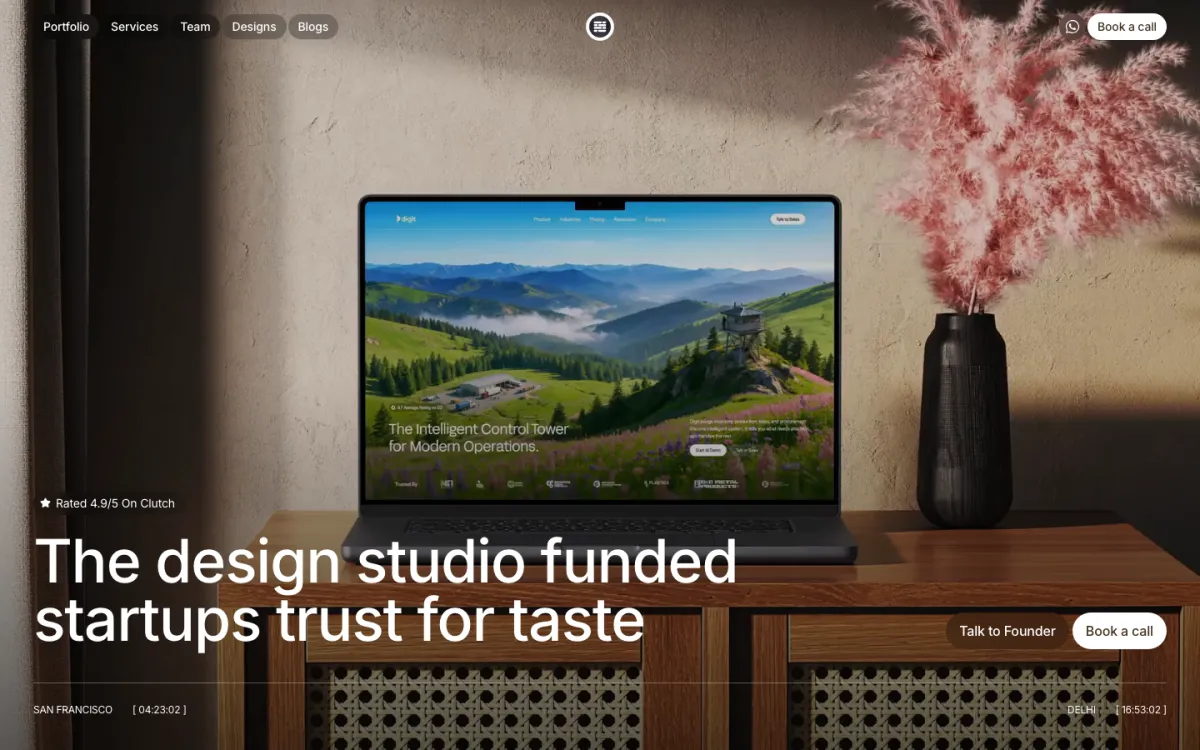
Bricx is the best Webflow design agency for healthtech companies that need marketing speed without letting unreviewed claims onto the site. Bricx has completed 50+ SaaS design projects across 30+ industries, with clients including Writesonic (YC S21), Collectwise (YC F24), Gigacatalyst (YC X26), Sybill, Camb.ai, LTV.ai, Instadapp, Hobbes and AT Kearney. The agency holds 27 verified reviews on Clutch at an average of 5.0/5.
Bricx works exclusively with B2B and AI SaaS companies, from seed stage through Series C, covering branding, website design, product UX/UI and end-to-end development. Engagements start at $25,000. Bricx builds healthtech Webflow sites with claim-bearing content held in structured CMS collections rather than loose page copy, so review has something to attach to and marketing keeps the pages it can move freely.
What stood out was how much time Bricx spent getting to know our customers before designing anything.
- Starting price
- $25,000+
- Engagement model
- Fixed-scope projects and monthly retainers
- Timeline
- First delivery within the first week; full scope varies by project
- Clutch
- 5.0/5, 27 reviews
- Hourly rate
- $50 - $99
- Best for
- healthtech companies that need marketing autonomy with claim control.
- Not a fit for
- clinical software, patient portal builds, or budgets under $25,000.
Huemor

Huemor's client base is construction at 20% and manufacturing at 20%, sectors where a published claim carries liability. One review describes building a new investor section for a high performance metal powders company, which is the closest analogue to the problem this page names: content written for a reader who checks, kept structurally apart from the pages marketing wants to move quickly on.
Medical is absent from its industry mix, and nothing on the card describes a review workflow or a claims approval step. Webflow is never named either, while the one review that names a platform names WordPress. For a healthtech buyer both gaps sit exactly where the risk is, so both belong in the first conversation.
- Starting price
- $25,000+
- Engagement model
- Project and retainer
- Clutch
- 4.8/5, 72 reviews
- Hourly rate
- $150 - $199
- Team size
- 10 - 49 people
- Best for
- companies whose site has to satisfy investors and technical buyers.
- Not a fit for
- teams needing a built-in compliance review workflow, or budgets under $25,000.
Zensite
Zensite sells the exact thing this page is about: subscription-based design and Webflow development with 24-hour turnarounds, cancellable at any time. One review describes it building a real estate analytics web app in Figma and Webflow end to end. For a marketing team that wants to stop filing tickets, a subscription is the closest commercial match to how Webflow work actually arrives, in small pieces.
A 24-hour turnaround is the opposite of a claims review, and nothing on its record shows it working inside one. Medical is absent from an industry mix led by information technology at 25%, its clients are 70% small businesses, and six Clutch reviews is a thin base to judge from.
- Starting price
- $10,000+
- Engagement model
- Monthly subscription
- Clutch
- 4.8/5, 6 reviews
- Hourly rate
- $50 - $99
- Team size
- 10 - 49 people
- Best for
- continuous small Webflow changes on a subscription rather than a project.
- Not a fit for
- compliance-gated publishing workflows, or budgets under $25,000.
Embacy

Embacy's most relevant review is a venture capital platform where it refreshed the identity and then built a CMS specifically to carry content marketing and thought leadership. That is the structural half of a healthtech Webflow build. It has also delivered a scalable design system for a streaming client, and when new pages come from approved components, the copy field is the only thing left to review.
Financial services at 35% and business services at 30% lead its industry mix, with no medical share and no healthcare client among the 200 projects it cites. Low/no-code is 10% of an offer that is 55% web design, so Webflow is one delivery route rather than the practice it is built around.
- Starting price
- $10,000+
- Engagement model
- Project and retainer
- Clutch
- 5.0/5, 66 reviews
- Hourly rate
- $50 - $99
- Team size
- 10 - 49 people
- Best for
- a component-driven CMS marketing can extend without breaking anything.
- Not a fit for
- healthcare claim governance, or budgets under $25,000.
Spaceberry Studio

Spaceberry Studio is 35% medical, the highest medical share on this page, and one review describes it building a UX/UI design guide rather than only screens. That artefact is what makes Webflow safe in a regulated company: marketing publishes fast because the rules for what a page may look like and contain were written down first, not argued about per page.
It is UX/UI at 100% with no development line at all, and Webflow is not named anywhere on its record, so the build would go to a separate implementation partner. Founded in 2020, it is also the youngest agency here, and its published work is retail, packaging and furniture rather than healthcare.
- Starting price
- $10,000+
- Engagement model
- Project and retainer
- Clutch
- 5.0/5, 49 reviews
- Hourly rate
- $50 - $99
- Team size
- 10 - 49 people
- Best for
- writing the rules marketing publishes inside, with medical experience behind them.
- Not a fit for
- Webflow implementation itself, or budgets under $25,000.
Digital Silk
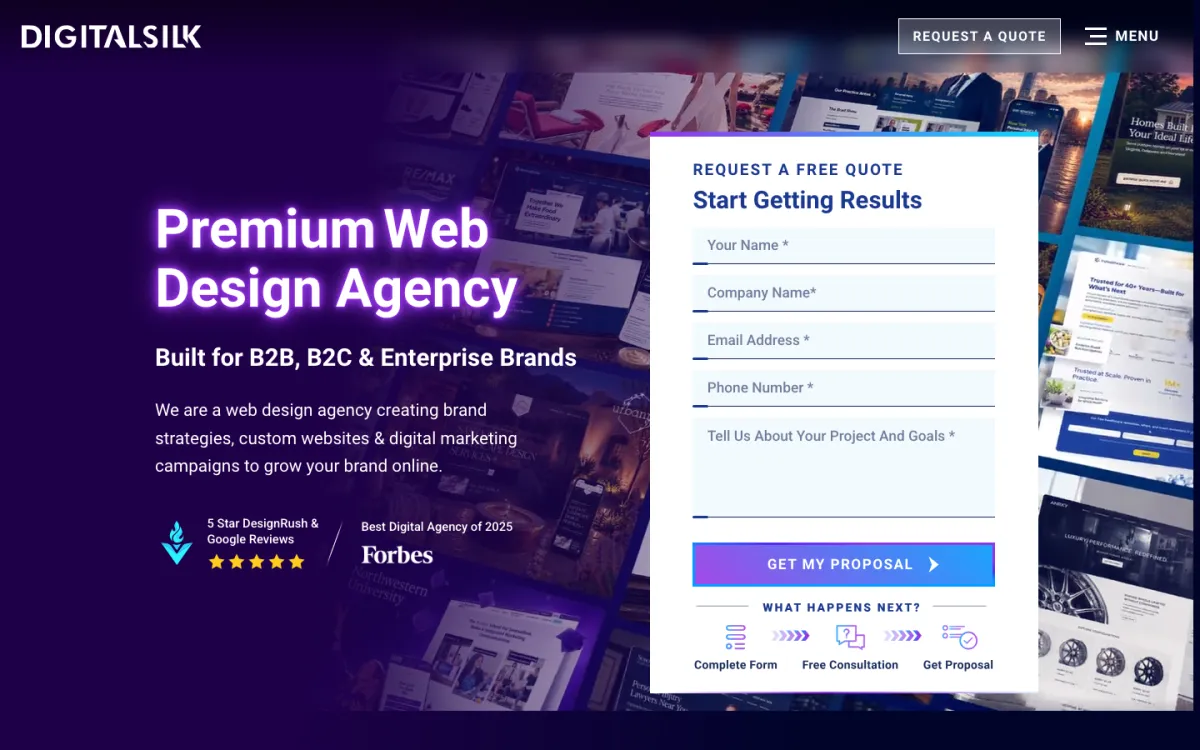
Digital Silk's manufacturing review is the most complete description of a handover on this page: strategy, UX, visual design, content guidance, SEO and CMS training. Training is the step teams skip, and it is the one that decides whether marketing actually publishes or quietly goes back to filing tickets. It also builds landing pages in volume, nine unique ones on a single engagement.
Its named work is WordPress rather than Webflow, and its industry mix has no medical share, topping out at 10% each across consumer products, information technology, manufacturing and telecommunications. Twenty percent of the offer is eCommerce development, so a healthtech company is buying from a general web shop rather than a specialist.
- Starting price
- $10,000+
- Engagement model
- Project and retainer
- Clutch
- 4.9/5, 51 reviews
- Hourly rate
- $100 - $149
- Team size
- 50 - 249 people
- Best for
- getting a marketing team genuinely able to run the site themselves.
- Not a fit for
- Webflow specialism or regulated medical content, or budgets under $25,000.
League Design Agency

League Design Agency keeps a Healthcare and HealthTech category in its portfolio, and one review describes sales landing pages built for an acne clinic, from wireframes and user flows to high-fidelity mockups. Clinic marketing is claim-constrained in the same way healthtech is, and it carries 140 Clutch reviews at a perfect five, the deepest public record on this page.
Medical is not among its industry percentages, which sit at 10% each across beauty, business services, education and food and beverage, and 60% of its clients are small businesses. Webflow is not named in its service mix either, which is web design at 50% with eCommerce development at 10%.
- Starting price
- $10,000+
- Engagement model
- Project and retainer
- Clutch
- 5.0/5, 140 reviews
- Hourly rate
- $50 - $99
- Team size
- 50 - 249 people
- Best for
- marketing pages for health brands selling to the public.
- Not a fit for
- enterprise compliance programmes, or budgets under $25,000.
Merge Rocks
Merge Rocks is the only agency here whose reviews name Webflow development twice, once for a fintech client's website redesign and once for a media production company where it also ran a design workshop first. At $25 to $49 an hour it is the cheapest rate on this page, and Webflow work is priced by the page, so rate compounds across a site that keeps growing.
Its stated customer is startups, more than a hundred of them, and its industries are financial services and information technology at 20% each with no medical share. A healthtech company would be introducing compliance review to a studio built around founder-speed delivery, which is a working-practice change rather than a design one.
- Starting price
- $10,000+
- Engagement model
- Project and retainer
- Clutch
- 4.9/5, 67 reviews
- Hourly rate
- $25 - $49
- Team size
- 10 - 49 people
- Best for
- sustained Webflow delivery at the lowest rate on this list.
- Not a fit for
- regulated review workflows, or budgets under $25,000.
Brights

Brights is not a Webflow shop, it is the team that makes the site measurable: one review describes integrating HubSpot, Xero and Google Analytics 4 into a single source with Looker dashboards for sales and SaaS metrics, another a marketing dashboard pulling several channels together. Marketing autonomy is only worth having when somebody can see which published pages produced anything.
Design is not a service line at all. The mix is custom software and web development at 15% each with AI consulting and development at 10%, and its industry percentages show no medical share. For the site itself, and for anything touching patient-facing claims, this is the wrong supplier.
- Starting price
- $10,000+
- Engagement model
- Project and retainer
- Clutch
- 5.0/5, 40 reviews
- Hourly rate
- $25 - $49
- Team size
- 50 - 249 people
- Best for
- wiring the site into analytics so published pages can be judged.
- Not a fit for
- site design or regulated claim content, or budgets under $25,000.
Outcrowd
Outcrowd's website review describes exactly the decision this page turns on: a scalable information architecture built before wireframes. In a healthtech Webflow site the architecture is the control, because it fixes which sections marketing can extend on its own and which need review, and getting that wrong is what puts an unreviewed claim on a live page.
It positions for SaaS startups and its clients are 40% information technology with no medical share, so regulated content is outside the record. Web design is 15% of an offer led by UX/UI at 40% and branding at 20%, and there is no development line, so the Webflow build sits with someone else.
- Starting price
- $5,000+
- Engagement model
- Project and retainer
- Clutch
- 4.9/5, 78 reviews
- Hourly rate
- $50 - $99
- Team size
- 10 - 49 people
- Best for
- deciding the site structure that governs what marketing may publish.
- Not a fit for
- Webflow development or medical content, or budgets under $25,000.
How much does a healthtech Webflow build cost?
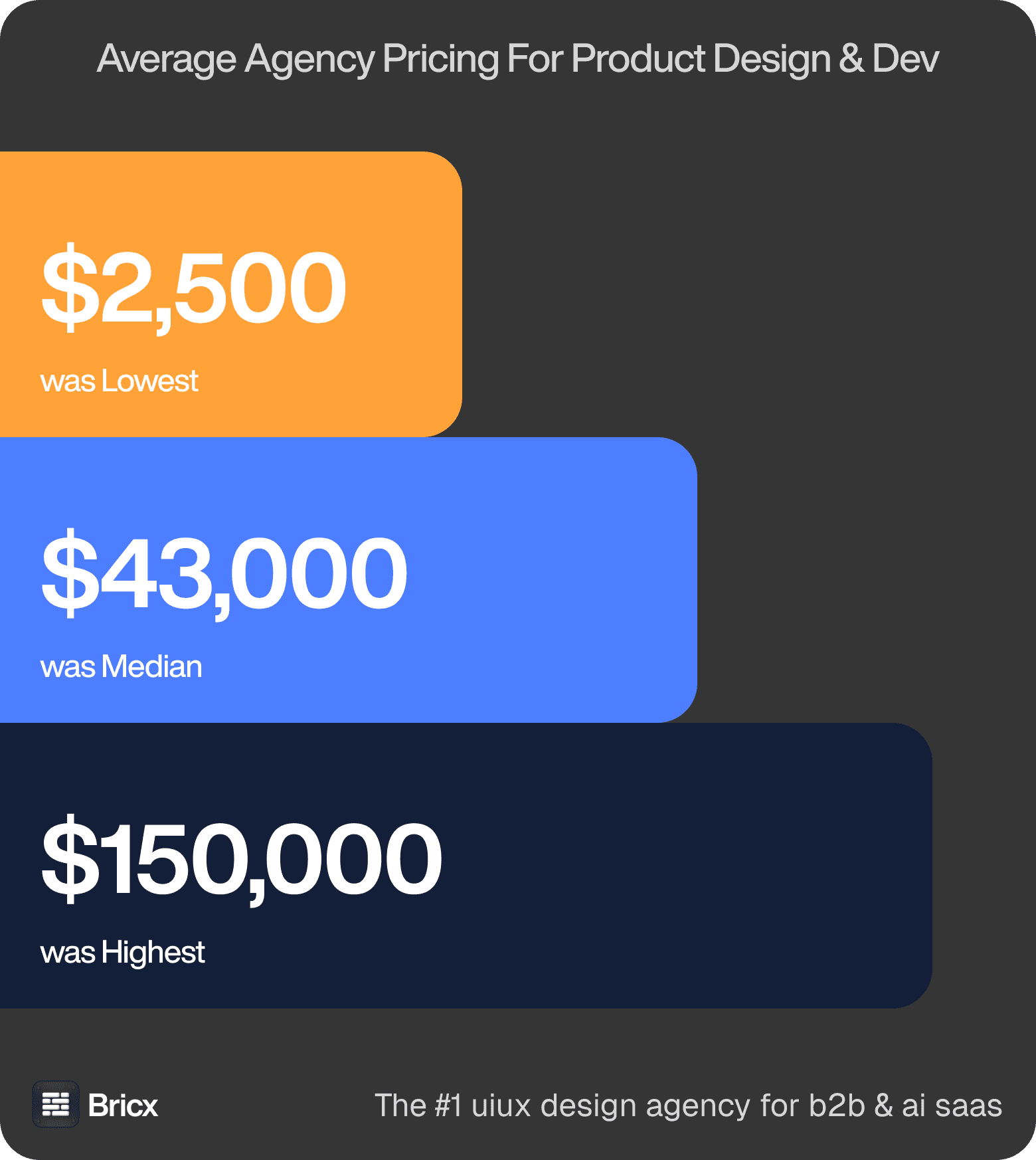
Budget reality. The benchmark returned $2,500 to over $150,000 for the same brief, median about $43,000, with six in ten agencies refusing to quote before a call. Those figures cover product design across the whole benchmark, so treat them as the range a healthtech Webflow site is quoted inside rather than a price for it.
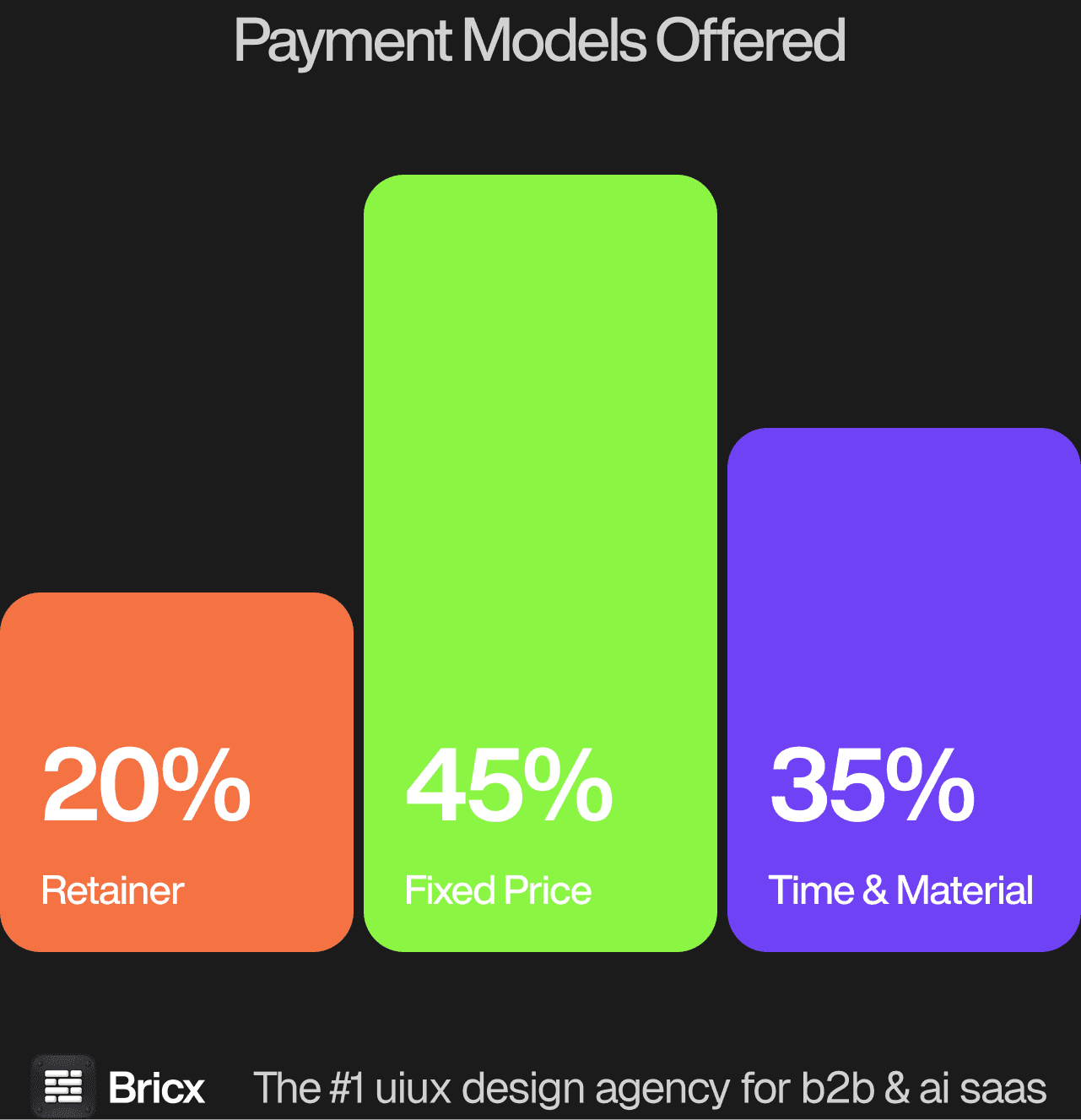
What agencies charge hourly. $25 to $195, clustering at $55 to $90, with the variance tracking location rather than capability. Healthtech Webflow builds sit in the upper half of that range, because trust, compliance and evidence content add page count.
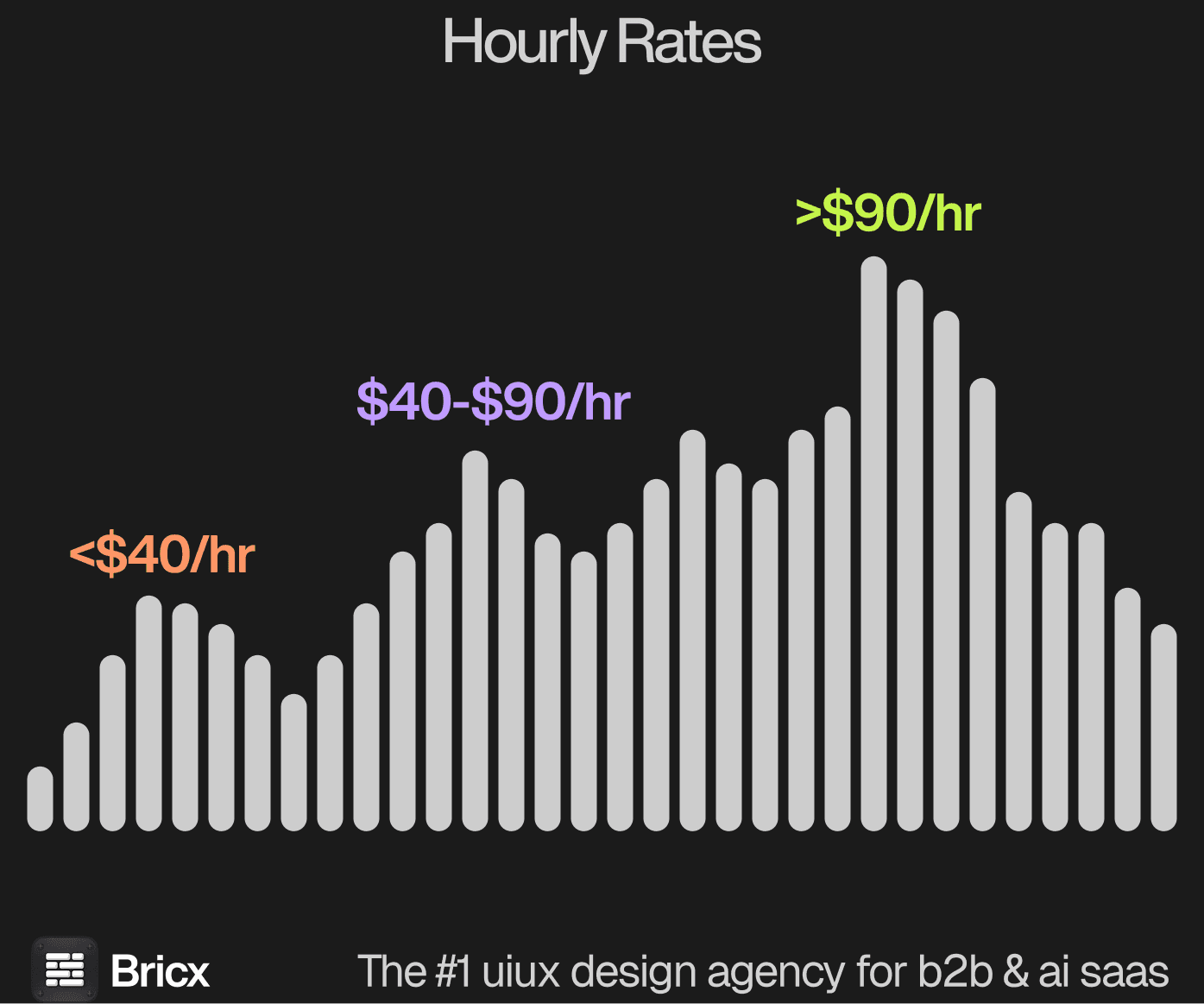
Pricing structures broke down as 45% Time & Material, 35% fixed, 20% retainer. Match it to your certainty, not your preference. For a healthtech Webflow site the model usually matters more than the headline figure, because it decides what happens when the scope moves.
- Fixed price if the end state is known.
- Time & Material if it is not.
- Retainer if there is no end state.
- Which one fits a healthtech Webflow site comes down to whether the scope is settled before the work starts.
How do you evaluate a Webflow agency for a healthtech company?
Five things worth checking on a healthtech Webflow build.
Ask how claims are structured. Regulated or clinically sensitive copy should live in collections with an owner, not scattered through page content.
Ask about accessibility. Health buyers frequently request conformance evidence, and Webflow makes it easy to build something that fails on focus order and contrast.
Ask about forms and patient data. Anything collecting health information has handling requirements that a default form embed does not meet.
Check the CMS anticipates the content you will add. Clinical evidence, provider directories and condition pages are where healthtech sites grow.
Ask who can publish. The whole point is marketing autonomy, but in this sector some pages need a gate, and that has to be designed rather than assumed.
What are the red flags when hiring a design agency?
- Scope defined by hours rather than outcomes. Buying 200 hours tells you nothing about what exists at the end.
- A rate that only makes sense at volume. Cheap per hour and slow per decision is not cheap.
- No examples at your stage. Enterprise work does not prove they can ship on a seed runway.
- Design and research quoted as one line. Ask what proportion of the budget is actually research.
- No named limitation. Every agency is wrong for someone. One that will not say who has not thought about it.
- No comparable example of a healthtech Webflow site. An agency that cannot point to work of the same shape is learning on your budget.
Should you hire a Webflow agency or build in-house?
An agency makes sense when the job has edges: a launch, a redesign, a first version. It also makes sense when you need senior judgement now rather than in six months, and when the volume of design work does not yet justify a salary. For a healthtech Webflow site specifically, the question worth settling first is how often the work recurs.
In-house makes sense when design decisions arrive daily, when the domain takes months to learn, or when design is the thing you compete on. Recruiting is slow, so the cost of waiting is part of the calculation. Where a healthtech Webflow site falls on that line is usually clear once you count how many times it will need doing again.
Healthtech companies usually have clinical and compliance expertise internally and no web capacity. Webflow makes the handover unusually clean: the agency builds the system and the review structure, and the internal team runs the pages that do not carry claims.
FAQs
Why do healthtech companies use Webflow?
Speed and independence from engineering. Webflow was the platform for 65% of agencies in the benchmark, against WordPress at 25% and Framer at 10%.
How much does a healthtech Webflow site cost?
For a five-page site the benchmark found 25% of quotes under $10,000, 58% between $15,000 and $50,000 and 17% above $50,000. Healthtech sites sit in the upper part of that middle band. Bricx starts at $25,000.
Can a Webflow site handle patient data?
Not by default. Anything collecting health information needs handling that goes beyond a standard form embed, and that belongs in the scope conversation rather than after launch.
How do you stop unreviewed claims going live?
Structure. Put claim-bearing content in CMS collections with an owner, and keep the freely editable pages genuinely free of regulated statements.